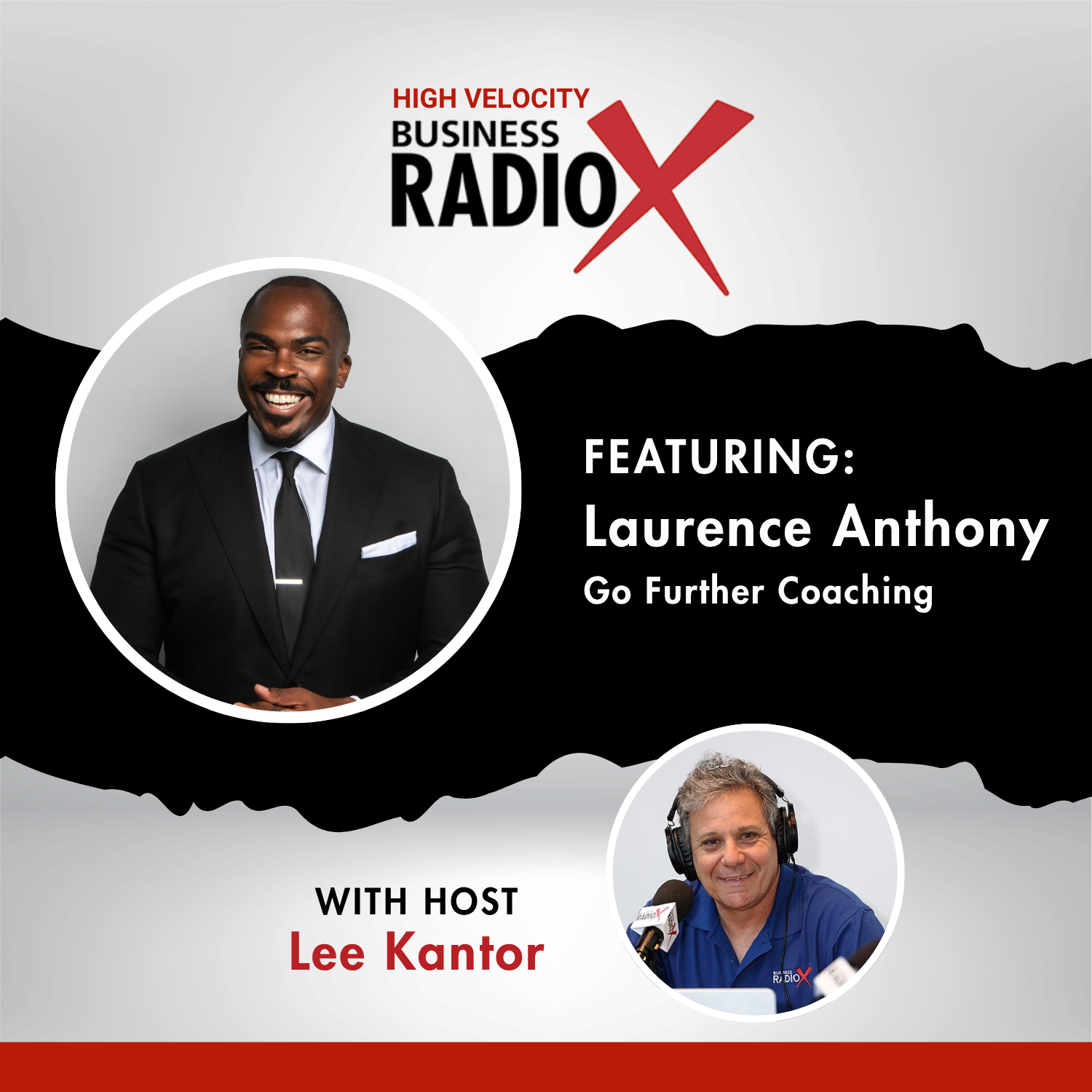


 Laurence Anthony is the founder of
 He has delivered leadership and performance engagements for organizations including Google, RBC, and United Airlines, bringing practical, real-world frameworks that help leaders build trust, alignment, and performance in high-expectation environments.
Connect with Laurence on LinkedIn.
What You’ll Learn In This Episode
- How high-performing individuals and teams can overcome fear and take action with confidence.
- The difference between confidence and self-esteem, and why both matter for personal and professional growth.
- Practical strategies for slowing down, reflecting, and making better decisions under pressure.
- How to shift from “should” to “could” to unlock creativity, possibilities, and authentic leadership.
- Signs it might be the right time to invest in coaching for career, relationships, or life transitions.
- Stories and insights from coaching executives, athletes, and everyday individuals to reach their full potential.
 This transcript is machine transcribed by Sonix.
TRANSCRIPT
Intro: Broadcasting live from the Business RadioX Studios in Atlanta, Georgia. It’s time for High Velocity Radio.
Lee Kantor: Lee Kantor here. Another episode of High Velocity Radio and this is going to be a good one. Today on the show we have Laurence Anthony with Go Further Coaching. Welcome.
Laurence Anthony: It is such a pleasure. Lee. It is. It is such a pleasure. How are you?
Lee Kantor: I am doing great. I am so excited to learn about your practice. Tell us about Go Further Coaching. How are you serving folks?
Laurence Anthony: Well, that’s such a great question. It’s such an honor to be on. That’s an interesting question because the best way to say it is that my purpose is changing lives professionally and personally, and that’s the work that I get to do every single day. I work with individuals, top performers, athletes, executives, CEOs, leaders, and taking them from where they are to where they want to be. These are sometimes elite, high performing individuals and teams. Sometimes these are folks who are looking to get to the next level, or who are looking to kind of expand their horizons or maybe just make a big change in their lives.
Lee Kantor: So what is your backstory? How’d you get involved in this line of work?
Laurence Anthony: Great question. So I got involved with this line of work. And you know, it’s funny, I don’t even consider it to be a job, right? This is who I am and it’s the best way to answer it is I grew up working with individuals who were at the top of their game. I’ve done everything but flown a plane. I have run two restaurants in New York, got best restaurant in the country. I used to be in film and TV, had a movie that opened number one in the world, but I wasn’t really fulfilled or luxury real estate in New York. I’d done a bunch, but I wasn’t finding my fulfillment. I didn’t find my purpose. And so for me, the purpose became, let’s look back in the past. What is the evidence that I have to kind of give me a signal as to what I enjoy doing. When I looked at the past, when I looked at the things that I had done, there was always a linear story and a through line of working with individuals, wanting folks to kind of be at their best potential to maximize their potential and to help and serve. I tell everyone I’m a servant. I get to serve great performers, great leaders. That’s what I’ve done throughout it. And I would have folks, CEOs, executives, leaders, athletes ask me, Laurence, what do you think about this? You know, what are you what’s your what’s your insight? What’s your take on this? And I said, well, I’m always in that position and I always find myself wanting to give unsolicited advice or unsolicited guidance anyway, so there’s something here. And I said, you know what? I think I’m a coach. I’ve always loved motivating people. I’ve always loved listening to people, and I’ve always loved seeing people win, which is ultimately at the core of what I do is I get to see teams and individuals win.
Lee Kantor: So did you have kind of a mentor or some sort of a philosophy template like, or does this just stuff that you’ve learned over time and you’ve kind of created a coaching, um, methodology around?
Laurence Anthony: It’s a great question, you know, and that’s a question that a lot of folks ask me. Like, you know, how did you, how did you get involved with this? And I didn’t have a mentor at all. Uh, my mentor, I tell everyone was life. You know, a lot of my mentorships came from experiences, came from some tough challenges, but also some great wins and successes. So my mentors were all those people around me. My mentors were my mom, my grandparents, uh, my successful friends, my friends who maybe weren’t quote unquote successful, but trying to get to that level. My mentors were just life and all the different experiences. I think that’s why it’s really important that I list all the things that I’ve been a part of is because a lot of those experiences allowed me to show up the way that I am now. So working in restaurants taught me how to interact with different personalities, how to interact with different people. Working in luxury real estate in New York taught me how to sell, how to be around high performing individuals, people who are absolutely demanding the best not just of their home, but life. Working in a consulting and coaching firm for eight and a half years taught me to have presence, how to be in a room full of people, whether it’s one person I’m interacting with or over 150, 200, which I’ve been in. So all those kind of experiences served as mentors for me in terms of what I was able to do. So by the time that I left my consulting firm and I started my own coaching firm, I had already had 15 plus years of experience and mentorship.
Lee Kantor: Now, when you’re working with your clients, how do you help them when they’re in a world like you mentioned earlier, that you started or, or at least some part of your career was involved in show business and acting in that world. There’s a lot of, um, pick me kind of mentality where you’re you and the people who hire you are picking you amongst a pile of other people that are kind of like you. How do you, um, move a person from this pick me mentality to I have more agency and I can, I have more control over some elements of these things.
Laurence Anthony: It’s a great question. And one of the things that comes up, you know, what I’m really hearing from you is, you know, what I’m taking from that question is how you believe in yourself. And you know, when you’re working in film and TV, as I was, and I was very fortunate that, you know, when I got into TV and film, you know, I booked auditions my first year, you know, I started saw one of the saw movies, a horror franchise, and the movie opened up one in the world on my birthday. You know, I was on Degrassi with with Drake. I did 30 Rock, right? And so I had had some relatively early success early in my career. And what got me to leave the arts from a film and TV standpoint was exactly what you’re talking about. This idea of pick me. I couldn’t wrap my head around walking into an audition and letting other folks determine my fate, and letting other folks determine essentially, my capability or my worth. And it just didn’t sit right for me. And so for me, I said, well, I know what I’m worth. I know how I can perform it. A lot of it is very subjective, right? A lot of it is whether the cast and director, director or producer woke up one day and said, oh, you know, this person’s got it, or I like this person.
Laurence Anthony: It was just too much out of my control. And as someone who is somewhat of, of a control freak while also understanding that we don’t really have much control. I said, no, I want to be the master of my own fate, and I want to be the one who’s going to be the decision maker in the ways that I move. And I said, well, that’s risky, but it’s going to have to pay off because I’m going to choose that. And I just, I just didn’t, I couldn’t wrap my head around waiting for someone to choose me. So I ended up choosing myself. I ended up choosing my path. I ended up choosing the, you know, the things that I believe in. And that’s a gamble and that’s a risk. But I’m also someone who is not risk averse. I tell everyone I’m like, Captain Kirk, I am ready to adventure and check out some new planet. So for me, it was just a matter of betting on myself.
Lee Kantor: Now, since you’re right now dealing with a lot of, uh, high level executives, obviously they also decided to to bet on themselves. Um, how do you kind of advise the person who isn’t there yet but aspires to be? How do they get the confidence to believe in themselves and bet on themselves rather than just kind of going along for the ride?
Laurence Anthony: You know, Lee, in my experience and in my profession as a coach, I see a number of individuals and the individuals to me that I get the luxury of speaking to and working with and coaching are the ones who say, there’s something inside me. There’s a little voice that I want to listen to. Now, I genuinely think we all have that. And for some people, they don’t want to listen to that voice. And that’s absolutely okay. Some people want security, want stability. Um, and some folks are just very fine being comfortable, not taking a risk. And I do not judge that whatsoever because it takes all shapes and sizes. The, the coach in me gets to work with people who say, okay, maybe I have been stable, but there’s been a voice inside me calling me to do something else. Or maybe I have been on this path, but maybe it’s not my path. Maybe I thought I wanted this, but I actually don’t. And for me, it’s. I tell everyone I’m kind of like Rafiki from The Lion King. My job is to help you remember who you are. My job is to help. My job is to help. You kind of listen to that inner voice and plant that seed and just try to give a little bit of space for that inner voice to be a little bit louder and to be a little bit more authentic, a little bit true.
Lee Kantor: So do you think that it’s fear that’s holding these people back? Like what is where, what is the thing that, um, because I’m with you and I’ve always been the one like you, I’m willing to bet on myself because I have a lot of confidence in myself, but a lot of folks out there just are kind of, I don’t know, it’s a belief of security, which I don’t think is real. I think that’s kind of a rationalization. But how do you move them to believe in themselves enough to invest in themselves and to take the action that is needed, not just the, you know, to turn a dream into a reality. Even though it may not go as planned, it will definitely go somewhere.
Laurence Anthony: You hit the word on the head. It’s my favorite four letter F word. Li it’s fear and we all encounter it. We all experience it. Look, you know, fear is such an interesting element. I’m fascinated by fear because fear can serve as a paralyzer or it can serve as a motivator. And for many individuals, fear serves as a paralyzer. Many folks encounter fear and say, oh my gosh, this is too much. This mountain is too big. I can’t scale it. What happens if I fail? Which is a fair thought. The interesting thing with fear is that we cannot be fearless. It is impossible to be fearless. What I coach a number of individuals and teams of successful brands companies on is. Since you can’t be fearless. The goal is how to reduce fear. How to fear less in order to go further. That is essentially what I am invested in doing. That is one of my life purposes, is how do we get folks to confront their fear? Because we all have it personally. Professionally, either fear from our past experiences that we’ve had to encounter. And so it’s looking at that fear confronting and saying, I’m going to do it scared anyway. Okay, yeah, this is a little scary, but I’m going to step into that job. I’m going to go for that promotion. I’m going to maybe try that new career. I’m going to step into that relationship. It is acknowledging the fear and going beyond that. That’s not for everyone. And that’s absolutely okay. But I do think all of us could benefit from acknowledging the truth. I’m a little scared about this or I’m a little worried. Okay, now what do I do? What could I do with it now?
Lee Kantor: How do you coach folks that are, you know, That moment of decision of should I pursue this or that? They can rationalize not making a move for ways that seem logical, but maybe it’s fear that’s holding them back. Like how do they even have the self-awareness? Or how do you help them get the self-awareness to look at that kind of, um, point of inflection in a way that, hey, you think you’re being, uh, prudent here, but you’re really being fearful.
Laurence Anthony: Well, you really were you really talking about is the self-awareness and having that moment and what I do, what I specialize in, one of the things is getting you to slow down. Lee. We work and operate and live in such a fast paced life, and it’s only getting faster. The goal is how to slow things down. If you think about, think about some of the great athletes. You think about what they all say whenever they’re either doing well in a game or a match, or maybe when it’s over and they’re being interviewed. Often you’ll hear them say the game just slowed down or time seems to slow down. Now, we can’t scientifically slow things down and slow time down, but what we can do is slow ourselves down and we can check in with ourselves and regulate ourselves and start to ask questions. Okay, what am I experiencing? What am I feeling? What could I do next? By slowing things down, it allows us to do a number of things. It allows us to confront fear, acknowledge that it exists, and then say, okay, what do I want to do about it? By slowing things down, the second thing that it does, it allows us to think about the next action that we want to take and to either mitigate the risk or to kind of just evaluate, all right, I know this is going to be a challenge yet how am I going to embrace this challenge? The problem becomes we don’t slow things down. And so then we end up reacting. And I always tell everyone, it’s not how you act, it’s how you react. And the best way to control your reaction is by slowing things down, giving yourself time to pause and think and asking, okay, how do I want to react to this situation, this circumstance? What do I want to do next?
Lee Kantor: Now, I read a book, um, that says kind of humanity lives in that space between stimulus and response. Uh, that’s your choice. That’s where you can make a decision. Um, but when there’s fear involved or you’re, you’re kind of not really living towards your true, true north or your values and you’re in a situation where you’re making a, a bad decision or a self-destructive decision. How do you help your clients kind of take that moment that you describe? Are there kind of exercises or there’s tools because everyone has that point where it’s like, okay, right here, this is I have to choose, am I going to go down this road where this does not. You know this. Maybe this doesn’t look or feel right, but it seems like fun or whatever the rationalization is. Or do I make maybe a harder decision to say, you know what? Not tonight. I’m not going to do this behavior. How do you help them in that in that moment of, um, you know, I have to make a call and I don’t want to do something that might feel fun or, um, good today, but may not really help me get to the outcome I ultimately desire. Whatever my values are true, North is.
Laurence Anthony: Yeah. And that is, that is a challenge that a number of my clients experience, right? A number of my clients who I work with will ask, okay, or I’ll ask them rather, I’ll ask my clients, where do you see yourself? Now, that’s not where do you see yourself in five years? I don’t, I don’t, you know, I don’t care about that as much. But I asked, what version of yourself do you want to live with? And this is the important question because you’re asking, okay, how do I decide essentially in a moment, how do I make a decision within that moment to propel me forward? Now that could be anything as small as working out. It’s 6 a.m., 7 a.m., and you’re torn. I don’t really want to get up in the morning and and work out. It’s cold. But then you ask yourself, okay, what version of myself am I working out for? And am I working out for the version of myself that I want to be better? Am I work out for that version of myself where you know what, I kind of want to live a little bit longer.
Laurence Anthony: I want to have a healthy life. So the commitment isn’t necessarily to the version of you. Now, it’s a commitment that you’re making to the version of yourself in the future. So what that means is asking, what kind of individual do I want to be? And I think when we ask that, it becomes a lot clearer because then essentially we’ve got either two paths and sometimes more than two paths, and you get to explore, okay, play the tape forward. If I go down path A, this is what is going to happen. How comfortable am I going down path A? If I’m not, then that answer is right there. Then it’s path B. What about path B excites me. What about path B? Even though it might be challenging? What about path B is calling to me? And is that the kind of world that I want to live in? Do I want to pursue that path to get to the end destination? Because both of those paths are going to lead to a destination. The question becomes, which destination are you going to be comfortable living in?
Lee Kantor: Now, who is kind of the ideal client for you? What type of organization or what type of individual, um, is kind of your perfect fit client?
Laurence Anthony: You’re asking who is my ideal client? Who is a perfect fit? You know, that’s an easy answer. Anyone who is looking to no pun intended, go further. I’ll tell you this. I can’t work with individuals who have no desire to ask questions or no desire to think. What could I do? If you are not someone who is looking to either improve your life, improve your relationship, improve, improve your career, or even just be curious. I work with curious individuals and that’s what lights me up. I want to work with people who are curious now. Don’t get me wrong, some folks are stuck. Some folks are trying to figure it out. And that’s also where I step in. But I work with individuals who at least there’s a strong desire, or at least even a tiny, tiny voice that says, I want more. I want to be better. I want to live, lead, and love better. And if you’ve got that, I can work with you. Some of my clients are fortune 100 companies. I coach folks at United Airlines, right? I’m the person who’s responsible for going in to teams within one of the top airlines in the country to coach their teams. I am the person responsible. I just gave a talk at Google. So I’m working with top elite performers and executives, but I also work with individuals who are trying to find their way. And for me, that’s what lights me up, is working with people who are maybe unsure of what their next step is, or are going through a life transition or career transition. And that’s where I get fuel, is how I can help navigate that, because I think it’s a little challenging and all of us experience that. So if you can do it with someone who is seasoned, who’s got the expertise, who’s been trained as I am, then it becomes an enjoyable journey. That journey becomes a lot less enjoyable when we’re doing it on our own, and we’re somehow stumbling around in the dark.
Lee Kantor: Now, what are some symptoms or signals for a person listening right now that, hey, maybe I should get in touch with Laurence and his team? What what’s happening right now for me that maybe I’m misinterpreting or I’m not seeing as, hey, this is a time, this is a perfect time for me to start talking to a coach.
Laurence Anthony: Yeah. I think if you ask yourself a few questions, I think the ideal questions you want to ask yourself. If you think about working with a coach, are am I satisfied with who I am right now? Or is there something more. Do I find myself questioning my career choice? Do I find myself questioning my leadership style? Am I thinking, you know what? Maybe I want to be a better leader. Maybe I want to have a better communication, uh, funnel with my team. Maybe I want to listen more. Maybe I find that I’ve heard some feedback that might sound tough to hear, but there might be a kernel of truth. Maybe I want to change my life. And I think a lot of us have that mirror in our room where we go into that room and we look in the mirror, and that’s the one place we can be truthful with ourselves. And if you can go into that room and look in that mirror and ask yourself, am I happy with where I am right now? Am I happy in the position I’m in? I’m happy in the relationship I’m in? Do I think I could be better? Even just start with that. Do I think it. Or I could be better. Then that’s an amazing place to start with me as a coach.
Lee Kantor: Now, is there a story you can share? Maybe. Um, don’t name their names, but maybe share. Uh. A person came to you with a challenge, and you were able to help them get to a new level and maybe surprise you and themselves.
Laurence Anthony: I’m doing that every day of my life, working with individuals and teams who constantly surprise me in terms of their capabilities and possibly surprise me in their capacity for change. And, you know, there’s so many different stories. I’ll tell you this one I had, I had an individual who came to me, it was a very successful individual. Um, works in, in the military. God bless. And came to me and this, this man has extreme high confidence. You have to have high confidence to be able to perform at some of the highest levels in our armed forces. And he said, you know, I know I can fly, I know I can, you know, be in the military, I know I can lead my troops, I know I can do all this, but I, I’m unsure about some areas of my life. I’m unsure about, you know, how I kind of move forward, right? And so it was a confidence issue. It was a confidence issue. And I kind of boil things down to confidence and self-esteem. And you have individuals who have very high confidence and sometimes low self-esteem, and you have individuals who have very high self-esteem and sometimes low confidence. I work with both of those and with this particular individual, again, who’s just massively amazing and successful, just so much integrity. One of the works that we needed to kind of invest in was how to increase his confidence, not necessarily in his profession, but in his personal life, because the two go hand in hand. And to see that that transition, to see that shift, you know, was just one of the best experiences of my life. Because not only am I serving, which I get a lot of joy out of, but I’m serving someone who is serving his country and that is beyond rewarding.
Lee Kantor: Now, is there any kind of actionable advice you can give a leader? Right now, they can do today that would make them more effective?
Laurence Anthony: Absolutely. Except one thing. I never give advice and I tell every single one of my clients, teams, individuals, brands, I don’t give advice. And here’s why. That’s a two part answer. I’m going to give you both answers. One, if I give advice to a client or a team or company, and if that client team or company succeeds, then that victory is not theirs. It becomes my victory. So that’s why I don’t give advice. However, if I give them advice and it doesn’t pan out, then that loss they don’t own either. It becomes. Laurence gave us bad advice. Ultimately, my job. My purpose is to empower individuals and teams To make their decisions and to feel confident and to step forward with conviction. I’m not saying step forward with perfection, but with conviction and be able to own their wins. And sometimes when things don’t work out and know that I’m also there to support them across the board, win, lose or not. That’s the first part. The second part is, since I don’t give advice, I give frameworks, I give lessons, I give stories, and I think one of the best things I can say to anyone is move from should to could. I talk about this all the time. If you think about it, all of us are really just little children in grown up bodies. And why do we love kids? We love kids and we love seeing kids play and use their imagination because anything is possible.
Laurence Anthony: Something happens when we become older. We stop thinking anything is possible and we stop living in. What could I do? What could this look like? Imagination. Imagination. And we start moving into what should I do? What do I have to do? What do I need to do now? Of course, responsibilities happen and life happens where we’ve got to. We’ve got to step into those roles and we’ve. And there’s things that we’re much more responsible for. But that balance is important is. I think a lot of us spend a lot of time and should need and have, which all it does is create pressure and we don’t spend as much time and could. And what’s possible and what do I really want? So I would encourage any single leader, any single individual, any single team listening to this to think about what you could do. What could it look like? How could you lead better? How could you love better? How could you live better? Instead of what do I have to do? Have to ensure all that does is create pressure and force us into roles that we don’t necessarily love, or could allows us to maybe step into roles that we feel are much more authentic to who we are.
Lee Kantor: So if somebody wants to learn more, have a more substantive conversation with you or somebody on the team, what is the website? What’s the best way to connect?
Laurence Anthony: Oh, well, they’ll speak to me directly. I’ve got a phenomenal team who I am beyond grateful for. There’s no way that I get anywhere, uh, where I am now without my team. None of us do it alone, which is the absolute truth. But if folks want to reach out, they can get us on our website, which is www.gofurther.com. We’re on Instagram at Go Further as well. And of course, a lot of our clients, a lot of our friends, a lot of individuals who look for us can find us on LinkedIn. I’m at Laurence Anthony.
Lee Kantor: Well, Laurence, thank you so much for sharing your story today. You’re doing such important work and we appreciate you.
Laurence Anthony: Uh, Lee, thank you for the time. Thank you for the great questions and thanks for the conversation. It’s a pleasure.
Lee Kantor: All right. This is Lee Kantor. We’ll see you all next time on High Velocity Radio.















