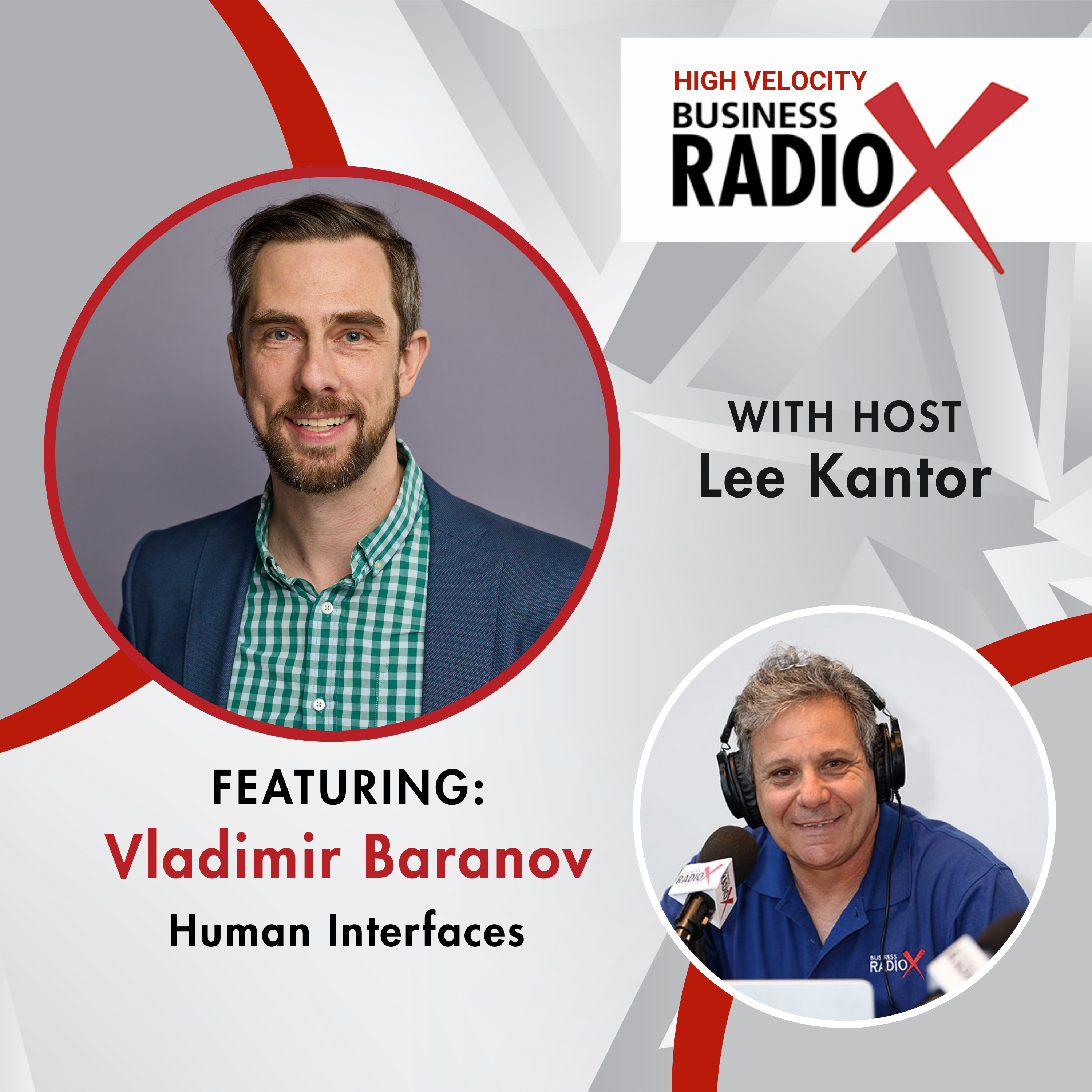


 Vladimir Baranov is an Executive Coach at Human Interfaces for Founders and Technical Leaders. He coached and mentored at various U.S. and U.K. incubators and accelerators, with a primary focus on launching, developing, and sustaining startups. He champions innovation, particularly in transforming ideas into tangible businesses (zero-to-one approach). He also focuses on integration of frequently misaligned perspectives of business and technical challenges.
He’s a serial entrepreneur, having founded three companies with successful exits in fintech and spacetech, demonstrating proficiency in scaling businesses through various funding stages. His entrepreneurial journey, encompassing roles such as Founder, CTO, COO, and CISO, lends him a comprehensive perspective on creating optimal data and technology services.
Vladimir holds MBAs from Columbia and London Business Schools and dual degrees in Computer Science and Computer Engineering from Stony Brook University, where his studies spanned software development and robotics. He is passionate about enhancing communication strategies, studies organizational and social behavior, and is an avid reader.
Connect with Vladimir on LinkedIn.
What You’ll Learn In This Episode
- How engineers and scientists struggle at running the business
- Getting mindset right is one of the important things when running a company
- Analogies help cross knowledge gaps
- AI makes a lot of things easier
 This transcript is machine transcribed by Sonix.
TRANSCRIPT
Intro: Broadcasting live from the Business RadioX studios in Atlanta, Georgia. It’s time for High Velocity Radio.
Lee Kantor: Lee Kantor here. Another episode of High Velocity Radio, and this is going to be a good one. Today on the show we have Vladimir Baranov, who is a founder coach of Human Interfaces. Welcome.
Vladimir Baranov: Thank you. Thank you for having me. Lee. Excited to talk with you.
Lee Kantor: Well, I’m excited to learn what you’re up to. Tell us about human interfaces. How you serving folks?
Vladimir Baranov: Yeah, yeah. So I serve a lot of tech founders and help them embrace the human side. A lot of technologists, including myself, have spent so much time with computers. We don’t spend enough time with people and figure them out. And as you go and grow your own business, it’s one of the most important things to master is how do you interact with market? How do you interact with your own team? How do you be a leader to the teams that you are leading.
Lee Kantor: So what’s your backstory?
Vladimir Baranov: Yeah, that’s a great question. I started out as an engineer. I spent about 15 years in finance. Uh, one is exposure to large banks, building trading systems. And then I co-founded a business in wealth management, SaaS, and grew that from two people from about 150 and eventually selling after seven years to a larger company. Then I had a little bit of realignment to purpose. Uh, and I joined a aerospace company as a third person. We grew that to about 35 people with a few million dollars in government contracts. We were able to launch two space instruments. So it was a very exciting journey, but I wanted to see how much more impact can I make. I was, uh, basically having a proverbial lever in my hands, and I was looking for a pivot point. If I’m to quote Archimedes, and I feel that right now I’m in the right place where I am helping others to start their businesses and be better leaders, and I could be the small multiplier in their success.
Lee Kantor: So why did you choose coaching rather than consulting?
Vladimir Baranov: That is a great question. I feel consulting is a great profession, but it is predetermined by the client who is asking you what you want to consult for. Well, in coaching it’s a lot of conversational interpersonal discovery, the Socratic method of that, that is very attractive to me. You get to know the client much better and then together you define what is their destination. Well, in the consulting, I feel when you are coming in and obviously there are different variations of everything in consulting, you come in already for a task that has been predetermined for you, and sometimes you cannot refine the problem statement.
Lee Kantor: Now, when you’re doing coaching, is it difficult for you to see maybe some engineering solutions that would be easy for you to either implement or do when the client that may be struggling. And in coaching, obviously you’re asking a lot of questions. You’re not you know, you’re not the doer anymore. You’re just the asker.
Vladimir Baranov: Yeah, yeah, yeah, that is a very interesting question and actually comes down to the nature of coaching in a sense. I always tell the people that I work with is I’m very careful with my mentorship kind of moves or advice because I can teach them how to catch tuna in the pond, but their reality in their context, is catching shark in the ocean. And I do appreciate the Socratic method of coaching, where it helps us discover their context together, because the best person who can make the right decision in that context is my client, and my responsibility there is to provide them with instruments and questions which help them discover that context. By me. Introducing my own bias of my experience kind of shatters the connections that they can make between my experience and their reality, if they’re still in the process of discovering it themselves.
Lee Kantor: So have you landed on kind of that ideal client profile for yourself?
Vladimir Baranov: Oh, that’s a that’s a great question. I’d say there is a two different people that I work with. One is a founder who is pre idea, uh, who perhaps maybe is hesitant to kick the project off. They might not know where to start. They might not know what kind of business they want to work on. And the second kind is somebody who’s been in the business for maybe a few years, and now they’re starting to encounter those, uh, leadership, uh, issues where team starts growing and their ambitions start growing, but they’re lacking, uh, the experience or perhaps they’re ignorant of their reality, which prevents them from moving forward.
Lee Kantor: So they get to a point, um, where they they need kind of the fresh eyes on things.
Vladimir Baranov: It’s a fresh eyes and fresh questions if it comes from coaching, because one of the biggest things that we do for ourselves, unfortunately, is we lie to ourselves all the time about our own reality, and I’m not in the process of calling somebody a liar, it’s more highlighting the opportunities that might exist on somebody’s plate, but they’re not visible because they obscured by our own belief in our own greatness.
Lee Kantor: Now, are there kind of symptoms that these people are going through that are maybe signals that they should open themselves up to some coaching with you or any coach, really?
Vladimir Baranov: That is a fantastic question. Actually, I’m going to write it down for my own purposes. Um, what, uh, I generally notice is that a lot of founders who are getting help through coaching might experience things like overwhelm there, where now they start seeing that they have so many things to do, and there is no way that they accomplish them all. And they need, uh, help figuring out the context of prioritization and figuring out which one to start working on. Um, another one is, uh, going through options. One of the privileged and non-privileged and stressful position of the leader is that sometimes there are decisions that needs to be discussed in a very private and confidential way, where somebody who is not in any way involved with the company, um, and that is another opportunity to kind of walk through the options, to kind of have a hold that space, hold that privileged, uh, hold that, um, confidential space to process the options and help the client, uh, through questions to select the right approach. So the two components that I see, one is, uh, figuring out how to get things off the plate, uh, to, um, how to process options and three, how to get started. Uh, because sometimes when we haven’t done things, that’s where a lot of ignorance and help, uh, helps.
Lee Kantor: So now when you’re working with somebody, Um, what does the first conversation look like? Is it just you asking questions, or is it them asking questions like, what are those initial conversations like? Can you give us kind of a rundown of what that experience feels like?
Vladimir Baranov: Yeah, yeah. If I have to label that our first initial conversation is more bound in discovery. Uh, I am not in my client’s context. And also, uh, this is the first time I’m meeting the person, and we haven’t talked about it before. And also, sometimes client themselves might not have the thing which they want to discuss figure it out on their own. Structured, labeled uh, approached, organized. And first a session or two we spend doing two things. One is discover a context where they’re coming from, what is actually the problem and where they would like to end up, and the kind of the last part of the conversation. We try to work out the outcomes, which we can quantify and certify as we’re going through coaching in a sense, like, are we actually able to see whether or not coaching is being successful?
Lee Kantor: So you’re really going to, um, hold your coaching to kind of a really strict ROI, like, are you getting something tangible out of this? I expect this to happen at the end of this amount of time. Like, so you’re looking at it like you would as an engineer.
Vladimir Baranov: That is that is correct. I would say as an engineer, as a business person who likes their KPIs. And a lot of my founders who I work with, they also like, uh, KPIs to work with. Um, there is a slight challenge with coaching and because of the nature of the conversations, can get esoteric. Like how would somebody know that they are now a better leader? And we have to rely on more qualitative measures of where the client themselves assesses whether or not they have achieved certain outcomes. But for most of the outcomes, we try to get it down to more specific accomplishment. Like, for example, I was feeling more overwhelmed or less overwhelmed. Do you feel like you have figured out prioritization? I have not figured out prioritization. Do you feel the conflict with your team or your co-founders, or your C-suite is at the same level or below? Uh, before you start a coaching.
Lee Kantor: So at the beginning, are you are you asking them those same questions to get some sort of a baseline?
Vladimir Baranov: Uh, yes. And my question would be very much open ended in the sense, like, what kind of outcomes would you like to achieve and how would we know we get there? And once they list out those priorities, we’ll have a conversation about how we would know for sure that we got there. So then you can walk away with a positive feeling that we’ve done good work.
Lee Kantor: So now, um, how I mean, how does or does it, um, does I have anything to do with your work nowadays? It seems like every business is, um, playing around, at least at some level with AI.
Vladimir Baranov: Yeah. No, absolutely. Um, I think AI is here to stay. It’s a marvelous tool. Um, for me, it helps me with a lot of things, like, uh, thought patterns, uh, creating options. Uh, in a sense, if I have an inkling of certain scenarios, um, I would like to plug it in sometimes into a limb and say, like, tell me like 25 different ways this can evolve. And then I would select the scenario which is more applicable to what I’m thinking about, and then develop further on my own. Um, I can go ahead and plug in multiple podcasts that I’m listening to and ask it to summarize, say, saving me countless of hours. Um, sometimes with, uh, agreement of the client, I would record our calls to keep our notes for the following conversations. Uh, ready? Um, I think it’s also pretty good for suggesting posts. It’s a really good for crafting plans. Coaching plans? Um, so I’d say, like, I’m using it a lot.
Lee Kantor: So that’s how you’re using it. How do you recommend your clients use it?
Vladimir Baranov: That’s that’s that’s a great clarification. Um, what actually happens is that, uh, when I speak to founders, there’s definitely tends to conversations to go towards, uh, social presence and marketing and advertising. And I think that’s where I right now is the greatest, where it can generate almost infinite amount of, uh, different kinds of ads and presentations. And those are the kind of tools that I, uh, hand off, uh, with certain instructions, uh, for my clients. Um, I definitely, uh, suggest that, uh, anytime they get stuck, that LM is really one of the best ways as a first step to get options for the ways forward.
Lee Kantor: Now, um, in your work previously, you were part of startups that scaled and were able to you were able to exit, um, does does the wins in that world. Can you share a little bit about emotionally how that makes you feel, as opposed to working with one of your coaching clients and they get some aha moment or they move to a new level. How does that compare?
Vladimir Baranov: Yeah, I can tell you, um, if I can be open for a little bit, uh, when I started a coaching, initially, it felt incredibly lonely that I had no team around me to with who I can process things with. I feel like as if I need a coach at that point. Um, no wins to share. Um, what I have discovered as becoming coach and become more experienced coach myself is that through the longer relationships, not one off coaching, not like two session coaching, but with the clients that I have, uh, worked with for six, seven months, a year and longer. Um, I am in tune with what they’re going through in a way that their wins become my wins. Um, and their struggles become my struggles. And I feel responsible to, uh, serve them in a way that they become wins over a longer period of time. So I would say that sort of feeling of loneliness eventually disappeared, and my clients became an extension of that team and that transfer of emotion that I was able to give, uh, there. Now, I have inkling that working with a smaller team and working on specific project together, having the same context, will give me a different kind of satisfaction, but I think I will have to try it at the same time, if I’m ever done with coaching and report back to you.
Lee Kantor: So when you decided to become a coach, um, did you was this just kind of based on your own knowledge in your life of, hey, I’ve talked to a lot of people. I’ve mentored people in my job, so I think I can pull this off. Or did you kind of go through some sort of a methodology to learn a certain style of coaching? Um, like how did you develop your own kind of authentic coaching voice.
Vladimir Baranov: Yeah, that’s that’s a great question. Um, I has been always a student of self-improvement. Uh, since my early 20s. I was fascinated by the fact that you can go ahead, read something on the internet or in a book, try it yourself and just be a become a little bit better in whatever thing you’re trying to perfect. Communication, presentation, your speech, uh, your body language, your business habits. And it kind of that habit stayed with me throughout my life, um, as part of being executive at my startups and the companies that I’ve scaled, I was able to experience, uh, mentoring and coaching at work when I was working with my coworkers and my employees, and it gave me inkling and understanding of what that might be. Um, what I did to formalize that is I went ahead and I took training with the Berkeley Coaching Executive Institute, and thereafter also got certified with International Coaching Federation to make it more formal. So, um, I was able to get, uh, that understanding how to data properly. And on top of that, I had a privilege of experience of being coached by other great coaches, which led me to the path which I’m on now, and I’m able to leverage that experience to be a better coach myself.
Lee Kantor: So do you have any advice for other coaches out there when it comes to growing their own practice? Um, did you have, um, a built in pipeline for your kind of initial discovery calls and the, and the path towards clients? Um, and any advice you can share for others when it comes to growing a practice, you know, from scratch, like like you’ve done.
Vladimir Baranov: Yeah. No, that’s that’s a great question. And one of the discoveries that I had to make for myself, uh, is that coaching is 30% coaching and 70%, uh, marketing. So creating that pipeline, um, some of us are privileged to be in the highest echelons of corporations, and that becomes a little bit easier. I actually have an anecdote where I spoke with one of the coaches recently. They retired after a while, and they and I asked them, so what? How did you create your pipeline? And the person said, well, I send an email to 14 of my reports and ask them, like, would they sign up as coaches? And and they said that, uh, 12 out of 14 signed up right away. So that’s that does not reflect reality for a lot of coaches who are trying to build a pipeline. Uh, for me, I would say I had to build it from scratch, leveraging my own network and eventually studying more of art, of marketing and advertising and sales in order to develop that. But for more specific, um, uh, kind of, uh, tips if, uh, your audience is looking for that, um, the best people to match is the ones who already support you, the ones supported you in the past and have a conversation with them of where whether or not they or maybe somebody around them could be a client for you. Um, I can obviously dive into many details, but I’d say that’s where the core of it. Because in a sense, like supports like. And people who were champion or champions before will be your champions again now as you’re developing this pipeline.
Lee Kantor: So now is um, what do you need more of? How can we help you?
Vladimir Baranov: I love it. Um, I would like, uh, more introductions to people who are running into types of issues that I mentioned before because I would like to help them change their life.
Lee Kantor: And then so is it tech startups? Is that a sweet spot? Or it could be any business.
Vladimir Baranov: Good question. So, uh, the sweet point is, um, a technology founder, somebody with a lot of engineering and technology background who is either about to start a business or have been working a business for a few years. Um, this is where, uh, they start encountering the problems as the as far as prioritization, team conflict, uh vision, uh setting option selection, uh which I can help process uh, for them.
Lee Kantor: And if somebody wants to learn more, have a more substantive conversation with you or somebody on your team, what is the website? What’s the best way to connect?
Vladimir Baranov: Great question Lee. Uh, so I’ve created a link and it’s, uh, human interfaces SEO slash podcast. Uh, and if you go through that link, uh, you can, uh, reserve a complimentary coaching session as part of being audience for this great show.
Lee Kantor: Well, Vladimir, thank you so much for sharing your story today. You’re doing such important work and we appreciate you.
Vladimir Baranov: Thank you so much, Lee.
Lee Kantor: All right. This is Lee Kantor. We’ll see you all next time on High Velocity Radio.














