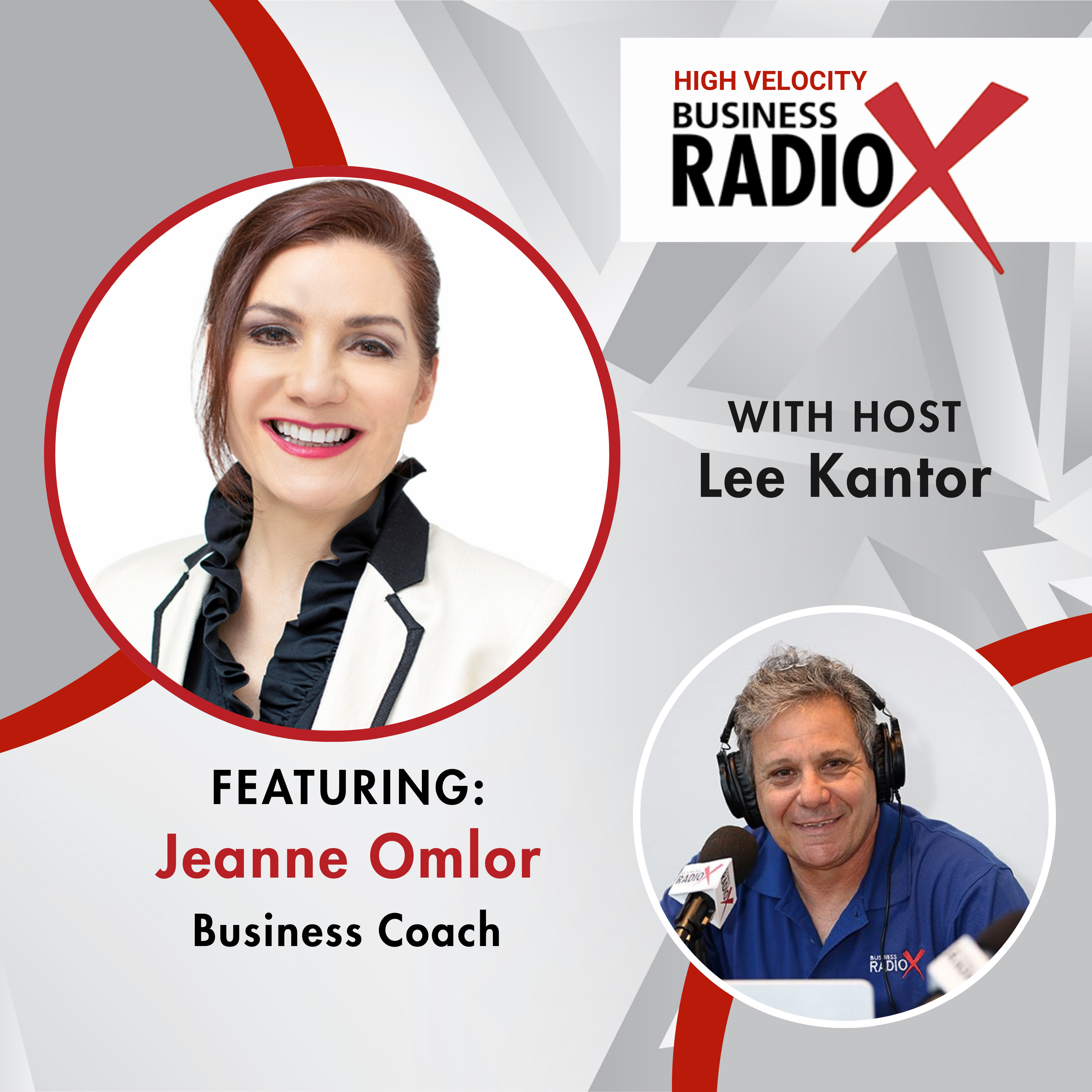


 Jeanne Omlor is a Business Strategist, multi 7-Figure Online Business Coach, and Certified Servant Leadership Executive Coach at Jeanne Omlor International. At 54 years old she was a solo parent in deep debt and got herself online and to $1M in 17 months, without ads, and has since scaled to multi-millions in 5 years.
Her company has helped almost 500 businesses to thrive online. She is emotionally connected to helping others prosper, as she lived in lack for years and overcame that mindset.
She is now helping as many people as she can to maximize profits and reach their full potential while being the visionary they’re destined to be.
Connect with Jeanne on LinkedIn and follow her on Facebook.
What You’ll Learn In This Episode
- How to leverage what you already know to help others.
- Launching and scaling your business online without ads or complicated tech.
- How to make a good living while creating impact.
- Navigating overall marketing challenges.
 This transcript is machine transcribed by Sonix.
TRANSCRIPT
Intro: Broadcasting live from the Business RadioX studios in Atlanta, Georgia. It’s time for High Velocity Radio.
Lee Kantor: Lee Kantor here. Another episode of High Velocity Radio and this is going to be a good one. So excited to be talking to my guest today, Jeanne Omlor with Jeanne Omlor International. Welcome.
Jeanne Omlor: Thank you. Nice to meet you, Lee.
Lee Kantor: Well, nice to meet you. For those who aren’t familiar, can you share a little bit about your practice? How are you serving folks?
Jeanne Omlor: Sure. So I’m a coach for coaches and consultants with my company, and we help coaches and consultants and certain online businesses as well to get more sales, get more clients without ads. So it’s organic social media marketing.
Lee Kantor: What’s your backstory? How’d you get involved in this line of work?
Jeanne Omlor: Well, I’ve been a coach for 13 years and I’ve been coaching people offline. I was coaching people offline, all sorts of businesses with business coaching and consulting, and I did that for eight years and also executive leadership. And then I realized, you know, there’s an easier way to it must be an easier way to get clients. So I got online and I figured out how to get clients not having to run the funnels and the ads, although I have tried those and they don’t work. You know, I got to $1 million in 17 months at very high profits, and I started showing other people how to do that. And it’s been a very big solution for people that don’t want to go down the high tech funnels ads sort of fiasco route.
Lee Kantor: Now, at the beginning of your career, were you working in corporate as a coach or were you always kind of self-employed coaching other coaches, and were those your typical?
Jeanne Omlor: Yeah, I always had my own business because to me, if you’re going to be a coach, I mean, you really I mean, I know people do that, but you really want to make it that it’s your own business because otherwise you still just have a job.
Lee Kantor: So, um, so you started coaching individuals. What’s kind of the ideal profile for at the beginning of your career? Who was the ideal client for you?
Jeanne Omlor: It was always business owners. So small business owners and entrepreneurs, all sorts of businesses, lawyers, people that were in beauty and all sorts of any designers, you name it. Uh, some coaches and consultants as well. So any small business, I’m just really good at helping people make money. That’s kind of my jam is how do we help people make money? So. And marketing. So it really didn’t matter. Like anybody that had a business that needed help, I would coach them.
Lee Kantor: And then initially, how were you going about getting your leads before you figured things out, or did this just come to you naturally?
Jeanne Omlor: No, nothing comes naturally in business. We’ve got to completely alleviate ourself of that la la land that things are just going to come to us. Very few people that happens. So when you have a business you have to market. So I always marketed and I knew that from the very beginning because I got to coach from day one. So I used to do networking, speaking at events, public speaking, and that was it. That was how I got my clients just meeting people offline. This is great, but there is hard to get critical mass when everything you do is depending upon you getting in a car, driving somewhere, and meeting a handful of people because the numbers just aren’t there. Online, there’s millions of people you can meet, and you don’t have to get in a car and drive around. And that’s the beauty of online marketing.
Lee Kantor: So when you start working with somebody, walk me through, like, what are those initial conversations? What do you need to get clarity around in order to help them?
Jeanne Omlor: Okay, so we get a lot of people that are just starting coaching. Some people have been coaching a while and haven’t been able to get, you know, a sustainable monthly income. So just depends where they are. So let’s just say it’s a new coach, somebody that says, Hey John, I’ve been wanting to coach for years, I don’t know what to do. We will actually help craft their offer, their coaching offer from scratch. So okay. You don’t know. What do you want? Well, I think I want to coach these people. Okay, great. You want to coach men on, you know, leadership and the relationships. Great. Okay. So let’s build an offer around that. And I help them build an offer. We get price and then we have an offer. And from there we show them how to position the offer online, create content lead generation and how to do a sales call and sell a high ticket offer.
Lee Kantor: Now, how is that, um, like what? What part of this is different than a funnel? How are how are you differentiating this from the typical funnel sales strategy?
Jeanne Omlor: Okay, so with marketing, everything technically that you do is a funnel. But when we say funnel because you’re funneling and it’s a step by step funnel. But when we’re talking about funnels, we’re normally talking about tech funnels that are landing pages, and then you get the landing page and then you run an ad to it, and then they click on it, and then it goes to something else and then something else. Then they get on a call or they buy a product. That’s when we say funnels. We are talking about those sequences. Make sense?
Lee Kantor: Yeah.
Jeanne Omlor: Yeah. Okay. So the difference is we’re not creating a funnel of landing pages and this and click on that and upsell a downsell then they get a $20 product and then they get this. Then they get a sales call and then you get a client. We don’t have that kind of a tech funnel the funnel. For instance, my funnel used to be I would drive my car to a networking event. I would meet people, I would get their card, and I would go. And if they said they were interested and sure, I want to get on a call with you. Then I would go home. I would email them and say, hey, so nice to meet you. Book a call. And then they would get on a call with me and they would either hire me or not. That’s a funnel. That’s a marketing a very simple marketing funnel. So they’re all funnels actually. But when people talk about funnels and ads, they’re talking about the landing pages. Okay. So I just wanted to explain what a funnel is and the different types of funnels. So this funnel is not a landing page funnel. It is a kind of like the offline funnel. But it’s organic social organic. So it’s not hey click on this and book a call. It’s reaching out online. Kind of like how you I was reaching out offline, but now it’s online and we do it differently. Make sense.
Lee Kantor: So I’m still unclear on how you do it differently. So if it’s similar in the sense of it’s an offline conversation but it’s online, how is it done online?
Jeanne Omlor: Okay. So offline I would be getting in a car and I’d be driving to an event. Correct.
Lee Kantor: Right.
Jeanne Omlor: Okay. Online there is no car. There’s no well, there are some events, but, you know, I’m not in a car. I’m sitting in front of my computer like I am right now. But instead of going to an event, I’m going to go to LinkedIn or Facebook or Instagram, a platform, and that we’re getting the clients on the social media platforms because there’s millions, billions of people. Actually, I think at this point on these platforms. So we’re reaching out through the platform. We’re creating content. People see our content. We’re saying, hey, you want to get on a call? So it’s, uh, it’s using the social media platform. So if I were going out and I go to a networking event, the networking event is the platform. That’s where the people are. Right.
Lee Kantor: Right.
Jeanne Omlor: Online, it’s let’s just say as an example, for instance, LinkedIn. So that’s the platform. That’s the difference is I’m not driving to the local networking chamber networking event with a few people there. I’m staying at home and I’m logging into LinkedIn and there’s my platform. Does that make sense?
Lee Kantor: Right. So now you’re on LinkedIn. So anybody can get on LinkedIn at any point and then post anything you’d like. So your recommendation is to do more posting on social platforms.
Jeanne Omlor: No no no it’s much more involved than that. Yes, people should post, but just I’ve heard that so much and it’s just such bad advice. Just post more really. Just just post more. That’s no strategy. That’s just posting more. It’s not a strategy. And what we teach is actual strategy posting with reach out with sales. But before that, the very first thing we help people do, I’ll repeat that, is we help them craft a really good offer so they have something. First. First thing, who are you selling it to? What’s the offer? How much does it cost? Now we have an offer. Now we have a product. Then you work on your messaging, which I can’t just tell people how to do that in three seconds. You need coaching on that messaging. Then there’s content and different types of content. It’s not just posting more. Absolutely not. Please don’t. Don’t go post more. Folks of random stuff won’t work. So it’s really about what you’re posting and what kinds of posts and which ones work. And then from there, lead generation, which is reaching out to people and what you say when you’re reaching out to them. This is very involved. Even though it’s simple, it’s not easy. Does that make sense?
Lee Kantor: So how are you defining lead generation?
Jeanne Omlor: Lead generation is the content is lead generation. So the content you’re doing that for lead generation because some of that content pulls people in. Okay. And then there’s the same way at a networking event, I walk up to Lee, who’s standing on a corner with his hand cards, his business card in his hand. I say, hey, Lee, how are you? And you go, I’m great. Same exact thing, but on social media.
Lee Kantor: So how do you do that interaction in an elegant kind of non-salesy way. Or do you? You don’t mind if it’s salesy?
Jeanne Omlor: Yeah, I do mind if it’s salesy. And we coach people to not be salesy.
Lee Kantor: So how do you do it? In an elegant manner.
Jeanne Omlor: Uh, we coach you on how to do it in an elegant manner by creating those, uh, messages for you.
Lee Kantor: And that’s all part of the coaching program that you offer?
Jeanne Omlor: Absolutely. In fact, I will work with people on their particular messaging so that it’s not salesy and spammy and weird, because that’s not what people want. People don’t want that anymore. And they’ve seen through it. And there’s just a whole new way of selling. And we teach that. We call we call it heart based sales. People don’t want to be tricked and treated like you’re tricking them. And it’s just very not not good. And I believe that the way that people have been sold to how we’ve been sold to for hundreds of years is just unethical. It’s like about tricking people. So you don’t want to trick somebody, you want to just reach out to somebody in a very normal way without any kind of tricking or weirdness or spammy or or just strange. I mean, people, they’re not good at this. Generally. I get such weird messages on LinkedIn and all over the place. So teaching people how to to sell in a heart based way and the messaging, well, there’s a lot of coaching on that. I can’t like tell you now here on the podcast exactly what you would say, because it depends. It’s different for every person because it can’t be the same for everybody else. So that’s just weird because if I’m a business coach, it’s going to be a certain way. And if there’s a relationship coach, they can’t do my messaging. Does that make sense that it can’t be exactly the same for everybody?
Lee Kantor: Absolutely. I think that’s the problem with the thing. My pet peeve on LinkedIn is someone says, hey, do you want to connect? And then you say, yes. And then the very next message is buy my stuff. And like.
Jeanne Omlor: That’s not good. That’s like, that’s a bait and switch, right?
Lee Kantor: Like I’m not I mean, you got to at least have a conversation first. Um, exactly.
Jeanne Omlor: Yeah. And there’s different ways of doing that. Um, but 100%. If, you know, I had people say, hey, well, the other thing is nobody really wants to read your latest post or your article. We don’t. We have so much to read. You know how backed up I am on my audible right now. So it’s not like the old days where it was so amazing that you sent somebody an article. Nobody thinks, gee, thank you. They’re like, oh great. Another thing you want me to read? It’s almost an insult because if we’re really aware of what’s going on in the world, there’s so much media, books, articles for us to have to act like we’re grateful because somebody sends us. Their article is insanity.
Lee Kantor: So did you, um, how did you kind of discover that there is a more elegant, more heart centered way of communicating? Was that something that was just natural for you, or was this something you learned through trial and error?
Jeanne Omlor: This was something I learned offline when I’d go to a networking event and people would throw five of their cards at me and like, I’m going to go out and sell for them. And I was always amazed that I would go to a networking event and they’d go, hi. And they would just start talking at me. And I thought, wow, these people really have no idea about human nature. So I started developing this offline and I would coach my clients on this. And I used to actually do whole talks about this at NYU, NYU, MBA, alumni, and all sorts of business places on how to act in a networking event, how to actually get your little, you know, intro. I didn’t call it a pitch either. I called it an intro. How to do this? Well, and guess what? We’re human beings, so doing this well offline translates to doing it well online. Basically, when somebody walks up to you, do you know that? What do you know that I never tell anybody what I do unless they ask me. Never. I never tell somebody what I do unless they ask me why. Permission based selling. So people meet me and they start telling me everything, and I listen and I listen. I listen and then I go, that’s that’s interesting. And then I ask them questions and, and sometimes they don’t even say, what do you do? And I’m okay with that because that was what they wanted that interaction to be, was me being like having to listen about them selling to me. And it’s so disingenuous. And they think it’s so great that they just told me, I’m just thinking, well, wait a minute, you didn’t even ask me what I did, you know? And at that point, I don’t even care because I’m thinking, this is not somebody that’s interested in what I do, so I’m not going to force it on them.
Lee Kantor: So how do you, um, with that philosophy, how how do you incorporate, uh, any level of proactivity into that if you’re just kind of absorbing the person initially before and you’re waiting for permission to, um, you know, share what you do.
Jeanne Omlor: Most human beings will turn around and say, tell me what you do. Some do not.
Lee Kantor: So that’s your first level of vetting. If they don’t do that, that’s probably not the right fit for me.
Jeanne Omlor: Probably not. Because the thing is this if they don’t have the social aptitude to ask another human being, after basically talking at me for a long time, what do you do? This is not the kind of client I’m looking for, so I’m good because I only coach people that are high achievers and high achievers. They have enough social grace to say, well, look, tell me about what you do. I’m like, yeah, sure. Here’s what I do. Now, this rarely happens that somebody just talks at me and doesn’t every now and then. And I’m not criticizing. I’m just saying human beings are all wonderful and beautiful and they’re different, different styles. Now that’s great, but they’re just showing me that they have zero interest in what I do. If they have zero interest in what I’m doing, I’m not going to force it on them. Why would I do that? I just I’m zen about it. Great. Nice to meet you. Thank you so much for sharing that. And I move on. Most people say, hey, what do you. By the way, John, I really wanted to hear what you do.
Jeanne Omlor: Actually, I’m like, yeah, sure. And they go, yeah, I wanted to hear about that. Most people don’t get on a call with me unless they’re actually interested in what I’m doing, because they’ve seen all over social media the help that I provide. And they’re just like, okay, I want to talk with this woman. So usually there’s no problem there. I’m talking about, you know, it’s not really. All of this is so easy for me at this point. People see me, they say, sure, I want to get on a call. We do a 15 minute just, you know, connection, uh, on Facebook, on on LinkedIn, on other places. They go straight into the booking, the one hour, um, with me like a sales call. So, yeah, it’s really about, um, you know, everybody knows you have something to sell, right? We all know that. It’s. How are you doing that? Are you getting on a call? And just like, oh, okay, here’s my chance just to tell somebody exactly what I do, that desperation doesn’t work.
Lee Kantor: So should a coach have, um, kind of tiers of things? They sell a lower price thing, a mid-price thing, a high price thing.
Jeanne Omlor: That depends. There’s no actual rule. Like exactly what every single person needs to do. It depends on their offer. Lee, are you a coach?
Lee Kantor: I am not a coach.
Jeanne Omlor: Okay, I was just wondering. So. So that depends. It just depends on the offer. It’s just really. There’s no. I think people are too attached to everything being set in stone. And my answer is it depends.
Lee Kantor: So when you’re working with a new coach, um, how do you help them decide what is the appropriate offer for them?
Jeanne Omlor: Well, we work with them. And the very first, um, first session, and I work that out with them. I just work back and forth, and I figure that out.
Lee Kantor: And then what are some of the criteria you use to decide the type of offer?
Jeanne Omlor: Uh, it depends what they’re doing. So let’s say it’s a relationship coach then that might be different. Might be different than somebody that’s a business coach, for instance. And whether they’re coaching a corporation will be very different from an individual.
Lee Kantor: And then is the offer different or the pricing different or both?
Jeanne Omlor: Everything will be different because if you’re coaching a corporation to do go in and do a team coaching, it’s going to be very different deliverable than some individual that needs a relationship coaching because their boyfriend left them.
Lee Kantor: And then but the offer would be different and the pricing obviously would be different.
Jeanne Omlor: Everything’s different. The pricing and the offer completely different because it’s a different context. Yes.
Lee Kantor: And then when you’re working with the coaches, is there something you’ve learned over time, like the typical objection that they might face when.
Jeanne Omlor: Well, you know, with sales there’s always the same objections with all sales. Do you know what they are? Help me out here. What are the sales objections?
Lee Kantor: Um, time and money effort.
Jeanne Omlor: Yep, yep.
Jeanne Omlor: It’s always the same for anything you’re selling. You’re going to get the same objections.
Lee Kantor: So, um, what are some of your advice to them? In order to get past some of those objections?
Jeanne Omlor: You need to be so good that those objections don’t matter when you show that you have had great results with somebody, or even not have had that. But when you give them an offer that is a grand slam offer that they’re like, can’t lose, then those objections are easier. And I don’t say to deal with because some people don’t want to get past their objections, and I don’t if they don’t want to get past the objections, I don’t try. So it’s all it’s not about forcing people. It’s about just peeling back, the peeling back the obstacles to them wanting to do it. That’s that’s more how I look at it. So somebody goes, oh, John, I really, really, really want to do this, but I don’t have any money. I’m like, well, you know, do you really, really want it? Yeah I do okay. Well what would that look like if you don’t get coaching? Well I’m never going to make this business work. Okay. What would you rather have the risk of investing or never make your business work and then it’s their choice.
Lee Kantor: And, um, early on, when you were developing this and you were selling it to other people, can you share the first story of maybe one of the early wins you had where you’re like, okay, I’m on to something. This is definitely transferable. I’m able to help people get to new levels.
Jeanne Omlor: Exactly. My very first client with this particular offer signed up, and we had a couple calls and he and his wife, he said, do you have any testimonials? I said, not for this. I said, I’m not going to lie to you. You would be my first client for this online offer. He went, aha, okay, cool, because everybody needs to start somewhere. I said, yep. So I’m not going to give you testimonials from another offer, which was the one on one coaching. I said because it wouldn’t be true. So I’m not going to give you that. You would be my first client. He said, wow, my wife and I are so amazed that you did not lie to us and make up some fake stuff. We’re hiring you. I said great. Then before he got on the first call, he said, guess what? He gets on the call. And he said, I just got a 30 K client. Just by being in your world, just the mindset. I never would have gotten that. Just just those two sales calls and what you were telling me, I went and got a 30 K client even without actual coaching. Now that’s pretty good.
Lee Kantor: And then is your offer one on one coaching or is it group coaching or. You have both.
Jeanne Omlor: Is it a group? It’s neither. It’s actually a group one on one hybrid model. So there I have other coaches that work with me. I have a mindset coach who’s also a theta healer. I have a heart based sales coach because that’s what we teach. And we have a content and copy coach that used to run Universal Studios video content department. I have another head coach, client success director, and me. So you have a very, very dialed in professional high level team of coaches. And there’s also unlimited one on one. It’s a very unusual model in the marketplace.
Lee Kantor: And then so, uh, a person signs up, they have a call with you at some point, or you just get information.
Jeanne Omlor: Because they have unlimited one on ones.
Lee Kantor: Right? But before they make the buying decision.
Jeanne Omlor: The very first call is we are going to craft that offer and get them their pathway.
Lee Kantor: So there’s this is an introductory paid for call is the first call.
Jeanne Omlor: No, the first call is actually a sales call, which is free.
Lee Kantor: Okay. So there’s a free sales call, I guess, for each of you to vet to see if this is a good fit.
Jeanne Omlor: Absolutely.
Lee Kantor: And then from there, there’s a paid offer call where you craft the offer.
Jeanne Omlor: Nope. There’s not a paid offer call. There’s there’s two offers that we sell. They get one or the other. And that first. No we don’t we don’t. We’re very professional. We’re not like bits and pieces. And that’s what I teach is to run an actual coaching business. That’s not like we’re, you know, like actually professional. So people get a free call, of course, to see if they want to do it. They sign up or not. Sometimes they want a second call. Sure. That’s also free, of course. Then they’re in a program and it’s all included. It’s not. Then one call and then we pay. No, it’s the hire. They hire us for a program and it’s all included. So that first coaching call we do is all included in a program. Does that make sense? We’re not then doing one column. We pay for that. That’s not very professional.
Lee Kantor: And then is a program a month, 90 days a year. Like what’s the how’s the program defined?
Jeanne Omlor: We have a 12 week program and a year program.
Lee Kantor: So those are the two programs.
Jeanne Omlor: Yep.
Lee Kantor: And then um, and then is it something that people just keep signing up for? Or if you go through the 12 week or the year, you’re kind of self-sufficient at that point.
Jeanne Omlor: Some people do the 12 weeks and then they want to continue because they want to keep building it. But we do the 12 weeks because the 12 weeks is geared to giving people the fishing rod how to go get clients online. Some people just want to learn that, hey, show me how to go fish. And we say here, sure, 12 weeks, you’re good. They’re starting to get clients, so now they know how to do that over and over again. Some people want to build the business. They want mentorship as well. They want to learn other things other than just getting clients. They want to get on podcasts. They want to monetize that. They want to start a podcast, maybe get speaking gigs. We coach on all of that in our longer program, team building, all that.
Lee Kantor: But either one you get access to the team.
Jeanne Omlor: Yes.
Jeanne Omlor: Both of them just. And some people do the 12 weeks and then sign up for the year. One of my clients signed up for three years. He just kept signing up because he enjoyed the mentorship. It was working. He just wanted to keep building.
Lee Kantor: What rewarding work. I mean, you must sleep well at night knowing the impact you’ve had on so many people.
Jeanne Omlor: It’s amazing actually, and I’m actually very proud of me and my team. Um, because, you know, during Covid when people were dropping like flies, not just dying, but I mean, like, they were just like, what am I doing? I have no job. We helped a lot of people position and offer online and start selling it, and they were putting food on the table. So what we provide, what we help with is a very simple solution.
Lee Kantor: Well, I mean, it’s meaningful work and you’re really impacting a lot of individuals, their families and their communities. So it’s important.
Jeanne Omlor: Exactly.
Jeanne Omlor: And you know what what people need is they need to thrive. They need. It’s the worst feeling because I’ve been there, you know, I have been very poor. Deep debt. It’s the worst feeling in the world to wake up and think, gee, how am I? Going to how am I going to provide for my children? Worst feeling in the world. And my thing is, once you get to a point where you’re not worried about paying the rent or the mortgage and all your daily expenses, that’s a level of freedom where it’s like, you know, it’s just taken care of. That’s the first level of freedom, and I want everybody to feel that level of freedom where they have no worry about their day to day livelihood. And then from there, then you go to the next level.
Lee Kantor: So if somebody wants to learn more, have a more substantive conversation with you or somebody on the team, what’s the website? What’s the best way to connect?
Jeanne Omlor: Best way is we’re going to give you that link. But it’s just com. And if you look you’ll see, you know, reviews and you can click on that page. And then there’s a place where you can see hundreds of client testimonials. And there’s also a place where they can book a call.
Lee Kantor: And that’s j e e m l o r.com.
Jeanne Omlor: Yep. That’s it.
Lee Kantor: Com and then do you are you on all the socials or do you have a main social that you’re active on?
Jeanne Omlor: Linkedin Instagram, Facebook are the three main socials. I also am on YouTube TV. I have a podcast that’s uh, we put on YouTube as well, and other videos.
Lee Kantor: Well, congratulations on all the success. You’re doing important work and we appreciate you.
Jeanne Omlor: Well thank you. Thank you for the opportunity to speak with you about this today.
Lee Kantor: All right. This is Lee Kantor. We’ll see you all next time on High Velocity Radio.














