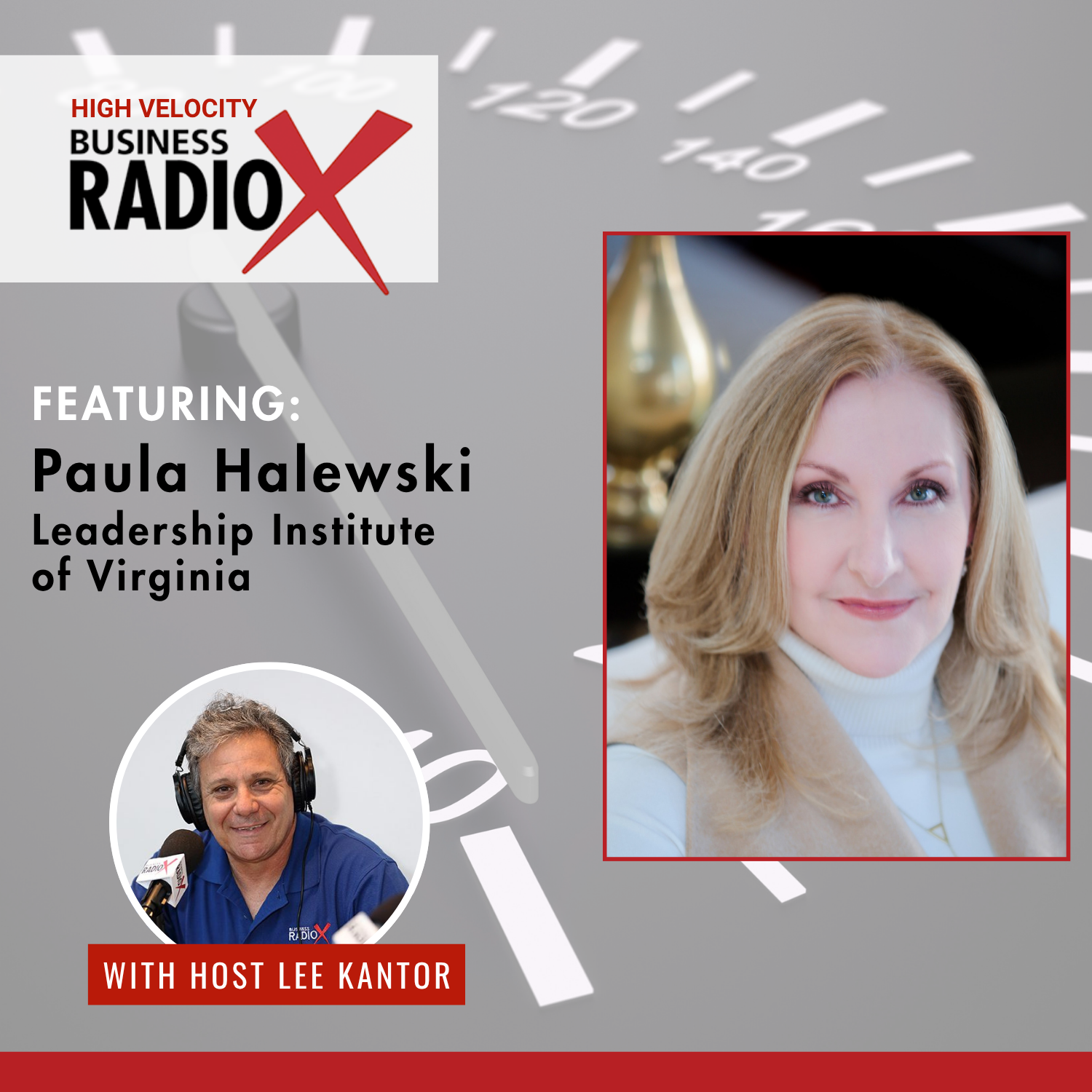

In this episode of High Velocity Radio, Lee interviews Paula Halewski from the Leadership Institute of Virginia. Paula discusses her unique integrated approach combining therapy and coaching to help high-functioning professionals and organizations achieve lasting change. She explains how therapy uncovers emotional patterns while coaching transforms insights into action. Topics include challenges faced by high achievers like perfectionism, addressing organizational culture issues such as departmental silos, and the importance of thorough assessment before implementing solutions. Paula emphasizes that sustainable change requires understanding underlying beliefs, not just modifying behaviors.

 Paula Halewski has been a therapist since 1986. Since 2016, she has also worked as a coach and is a Professional Certified Coach (PCC) through the International Coaching Federation (ICF). This dual background allows her to offer a truly integrated approach that bridges deep therapeutic work with forward-focused coaching
Her extensive experience as an executive coach and mental health therapist, coupled with her leadership roles and education, allows her to offer a well-rounded and comprehensive approach to coaching and company. Her focus on empowering individuals, increasing team productivity, and fostering healthy workplace cultures reflects her dedication to creating positive change in organizations.
Her experience in various leadership roles, such as Team Leader, Director, and CEO, provides her with firsthand knowledge of the challenges and opportunities that leaders face. This background allows her to relate to her clients’ experiences and guide them towards becoming exceptional leaders.
As an author, speaker, facilitator, and former senior instructor at the University of Rochester, she has a track record of sharing her knowledge and expertise with others. Her commitment to continuous learning and growth is evident through her various certifications and her lifelong dedication to expanding her knowledge and skills.
Connect with Paula on LinkedIn.
What You’ll Learn In This Episode
- Integrated approach to leadership coaching and therapy.
- The complementary roles of therapy and coaching in personal development.
- Challenges faced by high-functioning professionals, including perfectionism and work-life balance.
- Importance of understanding emotional patterns in leadership behaviors.
- Addressing organizational culture issues, such as departmental silos and communication breakdowns.
- The significance of thorough assessments before implementing solutions in organizations.
- The need for sustainable change through understanding and addressing underlying beliefs.
- Common mistakes made by high achievers in their personal and professional lives.
- The role of leadership in fostering a positive organizational culture and employee engagement.
- Strategies for organizations to diagnose issues before jumping to solutions.
 This transcript is machine transcribed by Sonix.
TRANSCRIPT
Intro: Broadcasting live from the Business RadioX Studios in Atlanta, Georgia. It’s time for High Velocity Radio.
Lee Kantor: Lee Kantor here another episode of High Velocity Radio and this is going to be a good one. Today on the show, we have Paula Halewski and she is with the Leadership Institute of Virginia. Welcome, Paula.
Paula Halewski: Thank you. Thanks for having me.
Lee Kantor: Well, I’m excited to learn about your practice. How are you serving folks?
Paula Halewski: Well, in my practice, we serve a lot of different people. We serve organizations and we serve individuals and we serve teams. So if we do an organizational, organizational culture project that usually involves a much more comprehensive assessment, team coaching, group coaching, and individual coaching, in particular for senior leaderships. And then of course, there’s team coaching. If a team is is experiencing some distress or dysfunction, we’ll go in and do some team coaching, often with a retreat and then some individual and continued team coaching. And group coaching is a natural part of any organizational culture project, but some organizations really like to have group coaching available for their employees because we can serve all different levels of the organization through group coaching.
Lee Kantor: Now, in your practice, you use an integrated approach combining coaching and therapy. How did that come about?
Paula Halewski: Well, that’s a great question. So that’s primarily with individual coaching. Individual coaching. I I’m a licensed therapist. I’m licensed in Virginia and New York. And, um, and then of course, I’m a PCC, a professional certified coach. So I think that with certain, I tend to work with, you know, high functioning professionals. But what makes the therapy and the coaching very effective is that they serve differing but complementary purposes. So the therapy is about understanding the emotional roots of patterns that that could be interfering with someone’s ability to lead their attachment style, their, you know, relationship skills, all those types of things. So, you know, we the emotional roots of anxiety, perfectionism, conflict avoidance and relationship struggles. And the therapy sort of, you know, helps to understand that, uncover that, you know, understand why it’s happening in the first place. So it helps to make a more informed choice about whether that behavior pattern or that defense is still needed. What coaching does is coaching helps us move forward. It turns insight into action. So better decisions, stronger boundaries, healthier leadership, and real behavioral change. So that’s, you know, they complement each other nicely. So therapy helps explain the under and understand the pattern and coaching helps to interrupt it. And what I find is many high functioning people need both need both of that.
Lee Kantor: So what came first in your backstory, the therapy or the coaching? And then what was kind of the impetus to combine them?
Paula Halewski: That’s good. Okay. So I, I’ve been a therapist for a very long time, over over 35 years. I’ve been a therapist. And then I started, um, doing coaching. And you know what I recognized when I was, I went to Georgetown University, I was trained in leadership, transformational leadership coaching. Um, but when I actually started doing the coaching and I was, you know, more sort of in that lane of, you know, just coaching, um, sometimes, you know, sometimes it was very effective for many, many people and other times it wasn’t as effective. And what I realized is that for real sustainable change, people needed to understand their backstory. They understood they needed to understand how, how this happened in the first place. And it’s often related to our attachment styles. It’s related to how we were raised. It was, you know, what defenses we needed to use to protect ourselves when we were young. And sometimes people use those defenses that were very, very helpful at one point, but they’re not helpful anymore. But they continued to use them because of the fear and the protection that they offered, but they don’t need their protection anymore. So it’s become a habit, more of a pattern. So when I recognize that the change wasn’t being sustained in coaching, I thought, okay, so I need to integrate a little bit of therapy here so they can truly understand why this is even happening in the first place, so they can make a better informed choice. And so that’s when the integration really started is when I was noticing change wasn’t being sustained.
Lee Kantor: Now, is this something that you have to talk to your clients about? Um, you know, ahead of time that it might. We’re starting here, but it might kind of turn into a little therapy too. Like how much of how much do you communicate? Kind of the, the, the choices really in front of the client of which Adventure they want to go on.
Paula Halewski: Okay, that’s a great question also. So, um, it happens more organically. Sometimes people come to me and they say, I want that. I want that integrated approach. I know I need it. And sometimes they, they, they’re not sure that they need it. They’re there. But, you know, people tend to recognize and know they have patterns that aren’t helpful to them. That’s kind of why they come in in the first place. And so since I’m very, you know, clear and transparent, what I tend to do is if I’m noticing that that, you know, these behavioral steps that people are practicing aren’t being done, aren’t being sustained. Um, there’s, you know, you know, a failure to try and, you know, new behaviors is, is inevitable. But if there is a pattern of failure, then they have a transparent conversation with them. Um, talking about their what they’d like to gain out of this experience and that they would really like behavioral change to make their, their lives easier, their relationships better, their leadership more, you know, functional. Then we might need to delve a little bit more into understanding what the barriers are, what’s the, what’s interfering with the ability to go forward. And so I introduce it as the integrated approach and combining some, you know, therapeutic interventions in with their coaching and most oftenly, they, they, that’s what they want. They want that because they’re here with me for a reason. They’re experiencing some type of distress, whatever that distress is. Maybe they’re very successful on the outside, but internally they feel unsatisfied, unhappy, or they’re struggling in relationships, or they know they’re conflict avoidant and avoiding difficult conversations. And that pattern is continuing. Um, so that’s how I introduce it. I introduce it as maybe we need to understand the barriers a little bit better.
Lee Kantor: Now, is it something that the client, I mean, they just have an outcome they desire, do they really care what it’s called, what you’re doing? Like, is that honestly.
Paula Halewski: Not so much that, you know, I, you know, I developed this integrated approach as a way to, you know, help people understand it. So they, if they know that they feel that this is, this is what’s going to benefit them, That’s what they’re going to come in for. Um, but I, I think that you’re on to something. I think that if people that are really invested in becoming the best version of themselves, they don’t really. They don’t really have a care about what, what it’s called or what it truly is. As long as it’s, it’s going to be of assistance to them.
Lee Kantor: Yeah, the Apollo process might be enough just to get them through the door, you know, and, and it’s based on your unique background. So.
Paula Halewski: Right. That’s why, you know, I’ve never thought about calling it the whole process. I might need to use that.
Lee Kantor: So a lot of your work is with kind of the high achievers. Um, is there something you’ve learned from dealing with so many high achievers of maybe mistakes that they commonly make or they all fall into certain patterns, or maybe they delay even asking for help? Are there some things you’ve learned and maybe some answers to those kind of basic. Yeah. Challenges.
Paula Halewski: Yeah. That’s that’s a good question. You know, oftentimes when people are like, you know, Uber successful, sometimes the success can become a camouflage, right? They, you know, they maybe some of the exact things that is causing them the distress, the perfectionism, right? The drive, the needing to succeed, you know, all of that, all of that has helped them to become successful. But then the, the success is a camouflage. Being successful doesn’t necessarily mean being happy or being satisfied or having, you know, wonderful work life balance or healthy relationships. And so what I, what I find is when people come in and they’re Uber successful, you know, very competent. However, some of the behavioral patterns are Uber successful in this arena, but not Uber successful over here. You know, and how how can we integrate, you know, some of those behaviors that have been functional for them at the same time, having them allow for better relationships, more closeness, more intimacy, um, better leadership style? Those types of things. So often, you know, uh, a kinder, gentler approach not only to other people, but to themselves.
Lee Kantor: Now is, uh, there are some times that the leader attributes their success or their progress to something that, like you mentioned earlier, it might have served them back in the day, but really isn’t the reason that they are successful nowadays. They’re just attributing it to it. Uh, and you know what? At one point might have been, yeah, that’s a great trait to have. Just doesn’t isn’t serving them currently, or it’s almost sabotaging them in their current position.
Paula Halewski: That’s an excellent way to put it. And those are often questions that get, get asked, like, how is this, how is this behavior serving you now? And if they really think about it, they can say, well, you know, it’s helped me X, Y, and Z. And the next question is, so how is it not serving you? You know, to sort of really start, you know, getting them to think about bring it into their awareness? Well, because, you know, I work 12 hours a day. It really is. It’s not conducive to having a healthy home life with my wife and I barely see my kids. So it’s not serving me that way. And so the next question is, well, you know, what would you like to see? What would you like it to be? Because if they, they need to be able to envision it. Because if they if they’re struggling to even envision something different, then what, what is it that they’re working towards? So when you ask, like, how would you like it to go? How would you like, how would you like to feel at home? How, who would you like to be at home? They can, they can answer that question. I want to go to my I want to go to my son’s Little League games. I want to go to my daughter’s, you know, cheerleading tournaments. I, you know, I want to do that. Right. So that’s kind of the goal, right? And so what are the stepping stones to get there? So how do how to remain successful. They may not need to work 12 hour days. They may believe they have to work 12 hour days, but in reality, maybe they don’t. So, you know, understanding that who they want to be there. And in this section, who do they want to be over here at home and then to it’s all it’s a lot of it’s about integration. How to integrate the two. So they’re the best version of themselves in each part of their life, their lives.
Lee Kantor: But isn’t um, how do you help them with, uh, they’re saying one thing, but their behavior is something else. So like they can say, oh, I want to be the person that goes to my kid’s recital. And then the reality is, oh, a meeting came up or there’s a fire that only I can put out or whatever the reasoning is. But their action is I’m not going to make that recital because my priority obviously was to either have the status that I have in this organization or I’m the only one qualified or whatever their rationale is. How do you kind of hold them accountable to if they’re saying, I want to be the parent that is there for my kid to actually take the actions, to be the parent that is there for their kids and not just say it because there’s a lot of organizations, I’m sure it trickles down to the teamwork you do. A lot of organizations say, you know, our people are our most important asset. And then there’s, you know, high levels of distrust or there’s kind of a dysfunctional workplace that the leader just tolerates. And, you know, they’re and they’re demonstrating their people aren’t the most important thing because of the culture that they have.
Paula Halewski: Right? So when we’re talking about two different things now.
Lee Kantor: Well, to me, they’re the same thing in the sense that they, they’re, they’re having, they’re giving lip service to one aspiration, but their behavior is something else. So how do you help them? Number one, have the awareness that this is the case. And number two, I don’t know if you can make them, but at least encourage them to make the change they say they want to make.
Paula Halewski: Okay. So I think then, you know, we’re talking about, um, a person’s beliefs and mindset like so. And, you know, it’s not, it’s not only behaviors that may need to shift. It’s also beliefs and mindset. Like I get, I get people that come in and they say, I’m the only person that can do this. That’s a, that’s a belief. So does this person have difficulty delegating because they have difficulty trusting that it’s going to go well? So that that’s, you know, that’s the issue is that is that connected to their attachment style, meaning when they were, you know, growing up, were they disappointed a lot by their parent? Right. So were they disappointed a lot by their parents or they learned to be independent? So they learned that, you know, they could only rely on themselves. Okay. So that’s a belief that is based in a past experience with very influential and important people in their lives. Does that is that true today? Is that belief necessary? Because what might be happening is they’re not if that belief is, you know, held on very tightly, they might may not be developing their people to be able to delegate things to. So that’s a, that’s a leadership issue. Okay. So I’m the only person that can do this. So let’s, let’s take a look at that belief. Let’s try to understand that belief and how is that impacting you at work? Well, I’ve been getting feedback that I’m not developing my staff. Okay, so if you’re not developing, your staff might want to then be able to do that meeting to lead that meeting so you can go, this is a very simplified version, so you can go over to your daughters. So let’s, let’s challenge that belief a little bit. You see what you see what I’m getting at. It’s kind of like it’s not just behaviors, it’s beliefs and, you know, entrenched beliefs, mindsets. And that also needs to shift. And a lot of beliefs and mindsets are based on people’s styles, where they came from, their attachment style, you know, how they learned to survive. But is that survival mode still needed today?
Lee Kantor: And that’s to me where the beauty of this combo package of therapy and coaching comes together. You can kind of play in both sandboxes to help these people because you have such a wide array of tools to use.
Paula Halewski: Right? Thank you for saying that. But correct. Correct. So that, you know, if I’m running up against someone that’s saying, um, exactly the, the scenario that you gave, well, I can’t go to my daughter’s, you know, chair competition because I have to do this meeting because I’m the only one that that can do it. I know I’m going to need to work, you know, on beliefs and mindset before I can get to the behaviors. You know, I know, and that might be the time that the conversation comes up about the integrated approach, if they hadn’t already come in for that. And I do a lot of education about this, I have a lot of written information about this. So when people have different learning styles, we could talk about it, they can read about it, they can watch a video about it. So whatever their learning style is, it starts to kind of seep in and they can relate it to themselves. And so there’s, you know, combination of education as well as, you know, um, various, you know, therapeutic interventions, um, noticing things with people, noticing the patterns, noticing the beliefs and how they’re a barrier to a behavioral change.
Lee Kantor: Now, how do you manage the expectations amongst the clients who might be looking for a, you know, kind of a quick fix of just, you know, I have this problem here and just fix this and then I’m good to go when you know that once you unlock this thing, you know, we might be having to work through a lot of those things. You described mindset and the past and issues, you know, with attachment and all that, which are much more complex and take more time to really affect the change that they want.
Paula Halewski: Yeah. Yeah. I think that that is, you know, sometimes, um, that’s true, but see, they may not be a client that would be best to work with me. And I need to be transparent about that because, um, sometimes there are quick fixes and if it’s truly a quick fix, if it’s truly, if there’s, if there’s, you know, neither one of us is noticing that the barriers and they really just want to learn, um, something and, um, try something new. Okay. But if, if there is, you know, during the, um, the initial sort of assessment, um, opportunity assessment appointment that this, this isn’t a quick fix. I say I’m not, I’m not, I’m not here for quick fixes. Quick fixes often backfire and don’t really create the change that’s needed. Um, so I might not be the coach for you because what I’m noticing is this? What are you noticing? You know, that type of a thing because quick fix, quick fixes, you know, whether it’s a person or an organization, sometimes, you know, organizations, especially if the organizational culture is like move to, you know, quick fix, quick fix. They don’t address the underlying issues, then they’re always going to be putting out fires always. And there’s enough fires to put out without creating them, without realizing that there is a systemic pattern to creating these fires. Um, and I talk about it with individuals just like that. You know, there’s, there’s something going on that’s creating this and that’s not a quick fix. That’s understanding, that’s, um, trying out new behaviors. That’s, you know, changing beliefs and mindsets that are, you know, pushing you down this particular path. So it isn’t quick, you know, it’s kind of like thinking you’re going to sit down at the piano and just bang out Beethoven. It doesn’t work like that unless you’re a prodigy. You gotta practice, practice, practice. You have to learn and grow and practice some more.
Lee Kantor: And when you’re working with teams or organizations, what is the typical challenge they’re coming to you for? Like what? Why are they thinking? Okay, Paula will be able to help us here. Is there a kind of a sweet spot for your work that people are aware of and that want to hire you for?
Paula Halewski: Um, well, one of the main focuses of, of my, um, company is the organizational culture. So people come, um, to, to live, live leadership Institute of Virginia, people come to live because there’s, they’re noticing that there’s, you know, there’s departments that need to work together rather seamlessly in order for the work to get done. The product to go out the door. And what they notice is that there is a breakdown between the departments or silos, and they really need to work together. They’re interdependent and but they’re not behaving that way. Like, you know, they want to stay in their lane and they don’t want to, um, because, you know, their section is doing a okay, but their, you know, their section is slowing down the next section. So, and that’s an organizational culture. And so I worked with several organizations where the leader of those departments are, you know, sort of have the blinders on. They want their department to be successful when they’re not recognizing that the departments are interdependent and they need to work better together. Um, and that that can really slow, you know, and it slows down agility. It it just slows everything down. And there’s often, um, unresolved conflict and resentment, um, that builds up. So those kind of organizations tend to come to live and say, we’re noticing this, but we’re not sure how to, how to resolve this.
Paula Halewski: Um, and we’ll go in and do an assessment. We won’t go in and just say, this is the issue. We’ll do an assessment first and then create a plan that will address their concerns. Um, I’ve had companies come in and say, this is the problem and we want you to come in and solve it. And my question is, how do you know? How do you know that’s the problem? And oftentimes it’s assumptions or opinions or and I, you know, very transparent, you know, let’s, let’s make sure you may be right, but let’s make sure and let’s do an assessment to really take into account, you know, your thoughts, other people’s thoughts, because people at different levels in the organization may have different experiences of the exact same problem. So let’s understand that before we jump in, it’s like, um, you know, you go to your doctor and you say, oh, I have a, you know, I have a pain in my belly. And they say, oh, yeah, here’s some, you know, here’s some Pepto Bismol. Take that without first. What’s, what’s going on? What is, what is causing this stomach problem. So it’s very similar. Let’s understand what the problem is. So we can create an experience, a successful treatment. Or in the case of coaching, a successful engagement, a successful intervention.
Lee Kantor: Now, is there a story you can share that illustrates how that could work? Don’t name the name of the organization, but maybe, uh, explain the challenge that they came to you with and how you were able to help them get to a new level.
Paula Halewski: Sure. That, um, that exact scenario that I said, or I was actually coaching an individual person and then they, they were noticing these issues. And so they went to the GM and the GM called and hired, called me and hired live. And we had a year long organizational culture project. And we did, uh, like I said, an assessment. And what we found was silos. We found silos. And we found that the, the leaders of each, uh, each one of the departments was really sort of stay in your lane. And they had some, you know, practices that were demoralizing to, to staff. Um, and so we had to, you know, do the assessment, bring, bring what we learned into their awareness. And then we created a plan from that. And that included, um, because you have to, you know, you have to start at the top really. And we started with a, you know, we had two retreats along the way with, um, senior leadership. Each senior leader received individual coaching to address, you know, some of their behaviors that was creating the silos and creating the demoralization. Um, and then we also did, you know, group coaching with the next layer down. Um, and the senior leaders were actually, we helped train them to continue to do group coaching and, you know, offer the ability to.
Paula Halewski: To share openly so they could address concerns in real time, um, as opposed to having them bottle up. And during that, during that, um, that engagement, we also developed a, an advisory committee to leadership that included members of, you know, from all levels of, of the staff because they need to know how each layer of the staff was experiencing what was happening in the organization. Um, so it was a very comprehensive and, you know, true organizational culture change. We worked with them for a year and got them ready to continue to do the work. You know, true organizational change takes 2 to 3 years that they were able to learn and grow and, you know, spread the wealth to not only their organization, but to other organizations because they were, um, a subsidiary of a larger organization. They had other subsidiaries. Um, so, you know, that’s, that’s a perfect example of how, um, if organizations recognize that something is going on that is, and, you know, so in their case, it was really, really slowing down, actually even getting proposals out the door. So how are you going to get business if you can’t even get the proposal out the door? The proposal had to go through like three different departments before it got out the door.
Paula Halewski: And for the longest time it would sit in one department, uh, just for the longest time, you know, and people couldn’t understand why that was and that everybody was getting angry about that. So also taking a look at processes and systemic issues and things like that. Um, you know, doing time frames and just helping to organize the, the organization and understanding the behaviors around, you know, behind the disorganization behind the practices that were happening. And then, you know, when we were, you know, completed working with them, they were able to move things out the door and they were able to land, um, business, you know, much faster because, you know, of course the competitors are going to come in and swoop in and get their proposal in. So they were able to do that much faster. And, um, their, you know, cash flow improved, everything improved, right? It just improved their getting, getting, their getting the, the job, the cash flow, the, the morale of the employees of the organization because they could see their work that they do every single day mattering. Making a difference. You know, it’s hard to feel good about, you know, you did something and six months later, you still have no idea if it mattered.
Lee Kantor: Right? I mean, I think that, uh, nowadays, especially people are hungry for bringing humanity back into work and to just appreciate, be appreciated and treat each other like humans. And I think that when leadership looks at an org chart and thinks they’re moving pieces like it, like they’re chess pieces on a board, and these people don’t have feelings or opinions and they can just move as a cog in a machine. I think they’re missing out. And I think that they’re going to get a dysfunctional organization.
Paula Halewski: Yeah, sure. And here’s another thing, Lee. What if your bonus, I mean, money is actually not the number one motivator. And that’s been proven over and over again, researched very, very well. However, what if your bonus is tied to this job? Do you know what I mean? Like, and your and your bonus is not coming because it’s sitting in, in somebody’s inbox. So all of that, you know, and not feeling like what you’re doing matters. Like it doesn’t fulfill your purpose. And you’re right. I think that organizations, if, if anyone is reading the research out there are learning that humanity and, you know, making people, people feel valued, making, making sure people feel like their work is purposeful and matters is making a difference in some way, not just monetarily, but it’s, you know, you know, helping another company set up, you know, their ability to. You know, get out information in a timely manner or, or whatever it is, you know, but that brings that purpose. And, you know, organizations need to address that.
Lee Kantor: Now, is there a piece of advice you can share for an organization that might maybe they’re not ready for you right now, but they sense that something must might be a little off. Maybe they’re noticing things like you said that, hey, we used to be able to turn this around in a week and now it’s taking a month, like, or whatever they’re having, or we’re having a hard time hiring. If you’re in a position of leadership, is there some kind of low hanging fruit or some, uh, baby steps you can take or that you would recommend, uh, just to get some relief or to make some difference?
Paula Halewski: Uh. Um, I’m a firm believer in understanding what’s actually happening. That’s, you know, creating the issue. So my recommendation would be, um, if you aren’t sure if you want to, you know, hire this and have this year long project, at least bring somebody in to help assess what’s happening and what’s happening that’s creating these issues. You know, and there’s some really great assessments out there that somebody could use. And my assessments usually involve, um, an actual objective, you know, assessment and then interviewing people, interviewing people and, you know, what’s their understanding of what’s happening. Um, because if you start throwing solutions, um, at the problem, and the solutions are backfiring because they haven’t clearly identified the problem that could actually increase, um, decrease, decrease morale from, you know, the already the state that it’s in. It could, it could lower it because then people won’t have confidence in their, in, in the leaders and the organization to, to resolve the issue. So if, if it’s just step one, just bring, just bring me in to understand what’s going on.
Lee Kantor: Yeah. You need the information before you can make a diagnosis. Like you can’t.
Paula Halewski: Like you need the data, right.
Lee Kantor: And the data is there. The data is there. If you ask the right people the right questions.
Paula Halewski: Right?
Paula Halewski: And you need to, you need to not only ask, you know, people way up here, you need to ask people here and here, you know, you.
Paula Halewski: Need to ask.
Lee Kantor: It’s holistic. It’s it’s a it’s a living organism that isn’t just six people.
Paula Halewski: Correct. Correct. And someone three layers down from you might have insight that you will, you’ll never have because that’s not your experience. And it’s equally as important as, as the insight from up here, because these are the people, you know, at this layer that are actually doing the bulk of the work, right. So it’s really important. Um, and then, you know, once you have a better understanding, then there can be a, a richer dialog about what to do.
Lee Kantor: So Paula, if somebody wants to learn more about your organization or get on your calendar, um, is there a website? What’s the best way to connect.
Paula Halewski: In.
Paula Halewski: My website Is, um, Leadership Institute of virginia.com because live was taken. So it’s the full name leadership Institute of virginia.com. Um, or you could just call and the phone number is, well, it’s on the website, but the phone number is (703) 201-1490.
Paula Halewski: Well thank you.
Lee Kantor: Thank you so much for sharing. Thank you so much for sharing your story today. You’re doing such important work and we appreciate you.
Paula Halewski: Okay.
Paula Halewski: Well, thank you so much for asking me to be on the show. It’s been fun.
Lee Kantor: All right. This is Lee Kantor. We’ll see you all next time on High Velocity Radio.















