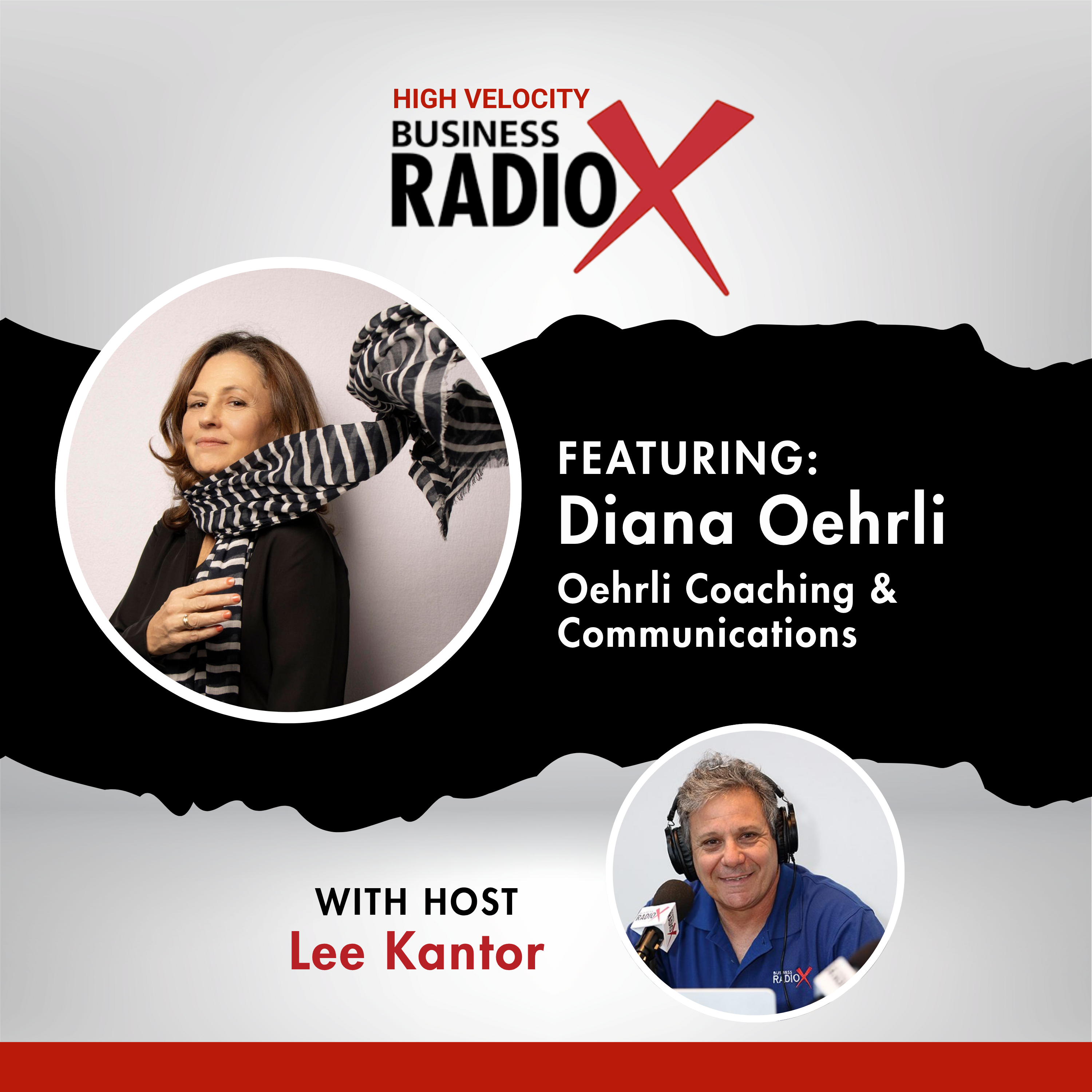

 Diana Oehrli, Founder of Oehrli Coaching & Communications LLC.
She is an ICF-certified coach, wellness advocate, Substack writer, podcaster, and executive director and trustee of a charitable foundation. Drawing on wisdom from five of the world’s longest-living cultures—and holding a 2nd-degree black belt in Shotokan karate—she integrates real-world wellness practices into all of her work.
A Barnard College graduate and great-grandniece of philosopher Charles Sanders Peirce, Diana blends intellectual rigor with lived experience. Sober since 2006, she holds certifications in Designing Your Life, Tiny Habits, and Recovery Specialization, and completed Harvard’s Certificate in Lifestyle Medicine.
She splits her time between Manhattan, Newport, and the Swiss Alps, where she maintains a private practice exclusively focused on serving high-net-worth clients navigating the pressures of privilege and the complex challenges of generational wealth.
Connect with Diana on LinkedIn, Facebook and Twitter.
What You’ll Learn in This Episode
- The wealth wellness paradox
- The five-culture longevity authority
- The contrarian business model
- In vivo vs in vitro coaching
- The Costa Rican chef partnership (in planning)
- The longevity investment opportunity
- Protecting wisdom from corporate culture
- The future of executive health
 This transcript is machine transcribed by Sonix.
TRANSCRIPT
Intro: Broadcasting live from the Business RadioX studios in Atlanta, Georgia. It’s time for High Velocity Radio.
Lee Kantor: Lee Kantor here. Another episode of High Velocity Radio in this is going to be a good one. Today on the show, we have Diana Oehrli and she is a Coach, a Writer, and the Founder of Oehrli Coaching and Communications. Welcome.
Diana Oehrli: Thank you for having me.
Lee Kantor: Well, I’m so excited to learn what you’re up to. Tell us a little bit about early coaching and communications. How are you serving folks?
Diana Oehrli: Well, I work with folks in groups in one on one sessions, and I help them get healthier and find purpose in their lives and find more success.
Lee Kantor: And so what’s your backstory? Have you always been a coach and involved in this line of work?
Diana Oehrli: No no no. I started off as a as a cub reporter, a journalist, and I worked for community newspapers in Rhode Island. Then I transitioned. I’m half Swiss and half American. My dad was a mountain guide from the Swiss Alps, and I moved to Switzerland to take care of my grandparents. And while I was in the Swiss Alps, I worked for the local newspaper here and started an English language magazine for or co-founded an English language magazine for sort of wealthy clients that come to stud, which is a fancy ski resort here in the Swiss Alps. And so journalism and newspapers and magazines have been my my past career. I still write because I have a blog called The Pressures of Privilege, where I write about the good and the bad side of having wealth and privilege. And I’ve in 2016, I got I started becoming a coach, a life coach, and then became an executive coach. I graduated from the corporate coaching program at coach U You and I. I just love helping people one on one. And, uh, and I sorry, I married the my background as a writer and my my love of helping people through the one on one work I do with them and through the groups that I also lead.
Lee Kantor: So do you have kind of a niche within the coaching realm that you focus in on?
Diana Oehrli: Yeah, I think more and more I’m finding that like the wealthy have a health crisis, they have a too much choice. They complicate their lives. You know, they want longevity, but they get sort of blocked. Some of them, they, they, they love using fitness trackers. But then when it comes time to actually implementing what they want to change, they, you know, they get sidetracked. And, you know, a lot of there’s a lot of factors that play into that, including isolation, feeling like not trusting some, you know, not trusting others. And also this sort of hyper agency which which I don’t know if you know what that is, but it’s the ability to change your your your lifestyle because it becomes uncomfortable. So I focus a lot on that.
Lee Kantor: Do people who have that level of wealth, do they feel a sense that I’m very good at something that obviously because I have a lot of wealth, so therefore I can just translate this to my health at, you know, a drop of a hat.
Diana Oehrli: Yeah. I mean, they that’s why these trackers, you know, these longevity trackers are so popular, but it takes more than just an eye chat bot and a hoop to to get you healthy. I think what’s what they’re missing right now. And this is sort of I think this this goes beyond just that, that one demographic. I think we’re seeing, you know, sort of the rise of AI and the depersonalization of, of coaching and therapy, actually, people are turning to ChatGPT and other kind of chatbots to find relief and to find advice and to find support And but, you know, 38% of communication is nonverbal. So, you know, I is missing a lot actually. And actually some chatbots are actually quite dangerous. Um, they, they’ve they’ve been known to give bad advice. And uh, so, you know, there is there is a cultural marker with the wealthy that they just are very distrustful and they, they tend to isolate. And so this, this right now we’re in this perfect storm where, you know, we’ve got probably the greatest wealth disparity in history, uh, combined with this technology that is making it easier to isolate. Um, and so I’m trying to focus on that and trying to get people to kind of go back to common sense and to in person, um, in person activities to help them feel better.
Lee Kantor: Now, are they receptive to this idea? I mean, they must feel that there is something a little off or they wouldn’t be tracking stuff. Yeah.
Diana Oehrli: Well, it’s it’s strange. Like, I think now it’s pretty popular to not drink alcohol. I don’t know if you’ve noticed that, but there’s a lot of, you know, celebrity people who are who have given up drinking and it’s, you know, um, and it’s become like an inn thing. And, and there’s also a rise in like non-religious spirituality. People are into going to 12 step meetings. They’re um, they’re actually talking about it on podcasts. And, um, so I think that we’re at a really good and an interesting point right now where I think there’s some that get it, um, and there’s some that don’t. And I think a lot of them are using booze to compensate.
Lee Kantor: So they’re using alcohol to compensate. But but they’re not drinking the alcohol anymore.
Diana Oehrli: Some are and some aren’t. But yeah. No, what I’m saying is that we have two things going on. On the positive side, you know, there is it’s pretty popular to not drink right now. Um, and, and, and the rise of 12 step meetings that people are now embracing that more and there’s, there’s, there’s less, um, um, stigma when it comes to mental health now. And it’s also more common that, you know, commonly known that the more mentally healthy you are, the more productive you will be. So, so there’s there’s an interesting thing happening where on one side, things have gotten tougher for for people to get healthy, but on the other side it’s getting easier. And um, and. Yeah. So I’m, I’m. Yeah.
Lee Kantor: So so you’re just you’re trying to help them kind of navigate through this. I mean, it’s obviously a disruption because like you mentioned, on one side, you have this wealth disparity. So they have to see that. And they have to either say, oh well that’s the way it goes. Work harder next time. You know they have to have some rationalization to make themselves feel okay about being on the good side of the wealth disparity, but also they realize that something’s missing. That they’re still struggling. Uh, at least emotionally or mentally in some areas, or else they wouldn’t be, you know, taking all these steps to track things if they didn’t think it was worth tracking.
Diana Oehrli: Yeah. Yeah. And they also have lifestyles that are not conducive to mental health. You know, you know, living, um, living all around the world, not having, um, community that’s consistent. Um, you know, going to places where they’re, you know, where they get less taxed, but then they, you know, they’re kind of they’re kind of rootless. They they don’t belong anywhere. Um, that those, those, those make life more difficult. And, and also there’s sort of this whole sort of guilt about about the climate. To add to add to it all. Um, it’s not easy. There’s a lot of pressure that people with wealth have that, um, make it harder for them to, to lead healthy lives.
Lee Kantor: And then on the flip side, they have the resources to take the steps necessary to kind of solve the problem if they really, really wanted to.
Diana Oehrli: They could. But a lot of them don’t. And it’s weird. And I think from what I understand about human nature is that it’s our thinking, you know? Uh, humans can get into negative thinking cycles, and if you think negatively for long enough, it’s going to create depression. And then where do you go when you’re depressed, when you’re you’ve got this, these these negative thought patterns. Who are you going to trust? It’s very. And then, you know, people who are very wealthy are really afraid of being taken advantage of. You know, who are they going to trust in their circle, you know? Um, so it’s, um, it’s I think it’s quite difficult for them.
Lee Kantor: So when you started working with them, did you have kind of an aha moment of, I’m going to be able to reach this person. They’re going to, you know, I have the skills, the unique skills because of my background, because of, uh, what I’ve done in my life that I’m going to be able to kind of open their eyes to a healthier path.
Diana Oehrli: Well, I’ve been writing this blog called The Pressures of Privilege, where I write about some of these struggles that people have. You know, some of my clients have had people I’ve known, friends I’ve had, and people have reached out to me and they’re like, wow, first of all, you’re pretty courageous, Diana, to write about this because it’s it’s kind of like, you know, being wealthy people love to hate rich people, but they also love them. They sort of glorify them on, you know, the sort of the cult of celebrity. They love to glorify them, too. But it’s usually people don’t want to read about, you know, the poor little rich girl, you know, they don’t have a lot of sympathy for for rich people. Um, so a lot of my friends and people who are reading my stuff have have commented and said, wow, that’s pretty courageous that you’re writing about this. And a lot of them have said, Diana, you’ve got it. You know, you’ve actually tapped into exactly the struggle that people with wealth are having. And, um, and, and, and I, you know, I think now it’s. Yeah. So I think they reach out to me because they read my stuff and they and they identify with the stuff that they’re reading.
Lee Kantor: And then have you, um, started coaching some of these folks?
Diana Oehrli: Yeah. Yeah, I have, uh, I’ve been coaching since 2016. Now I, you know, obviously I haven’t only coached people who are wealthy because, um, in order to get the hours to become ICF certified, you know, I had to, to log a lot of hours. And, uh, and honestly, I love helping people no matter. You know what? You know what background they have. I’ve. I’ve had a, uh, a sliding scale for people who can’t afford me at times. I will give away some of my time. Um, because I just think that’s the right thing to do. Um, but, um, I think that it’s easier to work with people or who, um, you know, who kind of like me, you know, who have had sort of who’ve lived in multiple countries who understand the pain of, you know, not belonging anywhere but being everywhere. If that makes any sense.
Lee Kantor: So when you start working with folks, uh, when it comes to let’s just tackle this kind of lack of community that seems to be, um, you know, more and more commonplace that, uh, and, and, and some people have even attributed to the lack of drinking. Actually, I’ve heard some people say that that’s not helping when it comes to especially young people, you know, socializing and pairing off and things like that. Is there any kind of advice you give people to at least dip their toe into reconnecting in the real world with, you know, an actual human being?
Diana Oehrli: Well, I’m a big fan of 12 step meetings. I mean, that’s that’s my background, but not that’s not for everybody. Um, but I there’s there’s so many groups and, um, like church, I don’t know if you’re a big churchgoer. Um, or or hobbies, like I practice. Um, I’m a second degree black belt in Shotokan karate. I derive a huge amount of community through the dojos I belong to. Like, I moved to Sarasota because of karate at one point. Um, and and Sarasota down there has a wonderful community where they go out to dinner after training. Um, and, and I never like, even though I didn’t know a soul in Sarasota, I never felt lonely because I had that community there. And, um, so I think finding a community somehow whether, you know, depending on your interests. So it’s important.
Lee Kantor: Finding your people like that’s important to kind of find people that kind of at least are like, you believe in what you believe in and are interested in a similar thing, at least as a place to plug in and find kind of a safe space where you fit in and, and, uh, you can meet a lot of people, probably in a pretty short period of time.
Diana Oehrli: I also really do believe in this sort of non-religious spirituality. I think that, you know, more and more people are espousing that, whether it’s going to yoga or doing martial arts or, um, I don’t know, do you do anything like that?
Lee Kantor: Lee? Um, what I do, I mean, the way I meet a lot of people is in my business. Um, part of what I do interviewing people, I meet most of the people that way. And a lot of my work is done in person, face to face. So I. I’ve met a lot of my closest friends just through doing the work that I do. It’s just kind of built into the fabric of the activity. Um, and that happens to coincide with one of my interests. I’m curious. I’m interested about business, and I like learning. So when I interview people, um, it just kind of helps me build my community that way.
Diana Oehrli: Yeah. When I worked for newspapers, I had the same. I was so curious. I loved doing, uh, you know, profiles on people, like, what makes people tick, right?
Lee Kantor: Right. And just, um, I mean, I try to have a beginner’s mindset and just want to, um, learn and not judge and just try to kind of my role as the host of these shows. I try to be kind of the listener of what would they ask? And I don’t, even though I may or may not know something about what they’re doing or what their, um, you know what their business is. I tried to ask. Kind of that beginner’s question. Uh, to help them articulate, uh, the heart of what they’re doing and to really get them to share their passion and their wisdom.
Diana Oehrli: Nice. Well, you’d make a great coach.
Lee Kantor: Well. Thank you. Uh, but, um. Now, getting back to your work, is there any advice you can give people like you? You came from a journalistic background and then got into coaching. Was that kind of a shift? Do you have to to do different things in order to kind of grow a coaching practice or, uh, because on one side, it sounds like your activity as a journalist, the writing and blogging has kind of opened the doors for you to get, you know, at least the eyes of the people that you’re trying to coach on your work and then on you.
Diana Oehrli: Yeah. I’m also doing a podcast, by the way, which is really a lot of fun. So I’m in your shoes sometimes too. And I love it. It’s so fun. How did I switch over? Well, there was a period in time when I moved out of the Swiss Alps to a city in Switzerland, and I didn’t know anyone, and and I was writing a memoir, and I was feeling really lonely, and I was working and and let me, let me back up a little bit in order to move to the city. I worked with a coach to help me with that transition. It’s it’s hard to move as a single mother with two kids, um, out of a place I loved. But I did it to give my kids a better education. I worked with a coach who helped me with that process, and through that process, I realized the power of coaching, actually. Um, and then while I was working on this memoir, I was feeling a little alone. I missed being in an office. You know, having colleagues to talk to. So I decided to become a coach myself. And, um. And I loved it. I realized I realized all my blind spots. Thanks to coaching. I realized that, you know, when I run a newspaper back in, I had become. I was a general manager of a community paper in Newport.
Diana Oehrli: I had done an organizational change. I actually computerized the business. We went from, you know, waxing boards to sending the entire paper digitally to the printer. And I and I did that in a very kind of, um, um, dictatorial way. I didn’t get buy in from the staff. I just said, this is what we’re going to do. And we did it in like a two weeks time. And it was kind of a bumpy transition. I would do that differently today. I would get, you know, the whole staff to to understand what was going to happen. And we were going to do it. And I would have it, I would have them actually come up with how to, how to do that whole transition. And I realized, oh my God, I have a lot of blind spots that I need to work on. And um, coaching really, really put, put a light on what I needed to work on myself. So I’m grateful for that. And, uh, and it’s a and it’s a consistent it’s a continual growth. Like I find that, as you say, this sort of beginner’s mindset. I feel like I’m always a beginner. I’m always learning and and growing, and I love that. That’s that’s one of my values, actually.
Lee Kantor: So you mentioned kind of coaching in a, um, kind of offhandedly coaching in a business setting. Are you seeing more and more businesses embrace coaching as maybe a benefit to their people in order to help them kind of become the best them while they’re there at the office?
Diana Oehrli: Yeah. It’s interesting. Um, when I have clients go, you know, they do like the Wheel of Life, um, exercise where they, you know, they sort of look at their whole life together, including their, their romantic, you know, partnership, health. Um, there’s a section called Spiritual and Personal Growth. And they always ask me like, what’s that? And that’s I see that as, like leadership fits under that. And part of leadership is being Self-Aware and and that’s that’s usually why companies hire coaches to help their leaders develop their leadership skills so that they can get more out of their their staff and get more, you know, the happier staff. If you’ve got happy people working for you, you’re going to get more productivity. Um, and, um, and especially here in Europe, I mean, I live very close to to Lausanne and Vevey, which is where Nestle and Philip Morris have their headquarters. And they, they, they definitely use coaches to, um, to improve, you know, productivity within their, uh, leadership teams.
Lee Kantor: Is there? I mean, I think there’s an opportunity to bring coaching to the entire staff, not just the leadership team, especially with this hunger amongst young people. And like you mentioned earlier, their embrace of the 12 step programs or therapy or even, you know, they’re even like you said, they’re kind of going even with these AI chat bots there. They’re so hungry for more kind of self-knowledge and and embracing this self-awareness. I think there’s an opportunity for businesses to really lean into coaching to help their, their whole staff, um, become just their best selves in order, which will in turn, I believe, improve productivity, improve, uh, employee retention, improve, improve acquisition of new talent because their employees are going to want their friends and people they love as part of the team as well. Mhm.
Diana Oehrli: Yeah. But it’s so hard for people to solve problems at work if they don’t have a place to go that’s confidential. That’s, that’s neutral. Like they don’t I don’t have a vested interest in any you know, in, in my client’s outcome. I just want them to, to reach their goals. So you know sometimes they don’t have a like. I had a client once. Who? He wasn’t a CEO. He he worked for a big multinational company and he was having he wanted to quit his job. And he came to me and he he started talking about why he wanted to quit his job. And he started to talk about communication with his boss. And I had him, do you know, like a map of communication and how the communication worked within his firm? And while he was drawing that map, he he all of a sudden had a light bulb moment that made him realize what the problem was, communication wise with his boss. And he realized that he didn’t want to quit his job, but actually he could solve the problem. So sometimes it’s just finding somebody who’s not in your world, who’s completely neutral, who doesn’t have a vested interest, who’s you know, who’s sign an ethical agreement to keep everything confidential like a therapist and who can act, who can ask open ended questions and use certain tools to kind of like get into somebody’s creative side to come up with solutions that they have the solutions within themselves. So I don’t believe in this. Like I, I’m also designing your life coach. I don’t know if you’re familiar with that.
Lee Kantor: No.
Diana Oehrli: Um, it’s, um, it’s the most popular elective at Stanford University. It’s, um, a course that was created by an engineer and a designer for students who were becoming disillusioned with their chosen major. And it’s it’s the most popular course there. And they use creative thinking to come up with, you know, to design their lives literally. And there are all kinds of really cool creative exercises that we use to help people come up with a plan, you know, prototyping different, you know, options. And, um, yeah. So yeah, I’m forgetting what I was saying, but the, uh, using designing your life, for example, with, um, with, with clients is super powerful because once you get them out of there, um, like, kind of like they’re you get them into a more creative way of thinking. They actually tap into what they really want. Oh, yeah, I was I was going to tell you about in vitro versus in vivo. And this is something that I learned from Bill Burnett and and Dave Evans at Stanford, the two professors. Um, in vitro means like through glass, literally, literally. And that’s a type of coaching where people have a course and you do, you know, chapter one, chapter two, chapter three. And literally only 10% of people who buy courses online actually finish them. I mean, I’ve got a bunch of unfinished courses. I haven’t I haven’t finished because it’s I’m just not unless I have a deadline and somebody I’m accountable to. I just have a really hard time finishing those courses. Um, in vivo is meeting the client where they’re at. So I have a wealth of information and knowledge I can teach a client who comes on a call, but I’m not going to say, well, we’re going to go chapter one. Chapter two. I’m going to say to them, well, what’s going on? Like, why are you here? Why are you asking for help? And then we, we dive right into the very thing that they want to address, you know, in the session, rather than having them go through a course. And that’s how I prefer to work. It’s very individualized.
Lee Kantor: And then is that more effective? The people stay with it longer. If it’s kind of dealing in the immediacy of whatever their issue is at that moment.
Diana Oehrli: Yes, definitely. Yeah. That people resist having to do a course unless they’re getting like some kind of educational credit for it or I mean, I just I just finished a course at Harvard on wellness coaching and, you know, lifestyle and wellness coaching. And I finished it. And it was great because they had homework and they had deadlines and they had, you know, they had zoom calls. I thrive in that kind of an academic environment. But if it’s going to be an asynchronous course where I have to finish stuff and there’s nobody really expecting my work, I have a really hard time with that.
Lee Kantor: So when you’re kind of on your own and they’re saying, here, do these, you know, whatever, this ten part course and there’s tests at the end or whatever deliverables at the end, that’s people tend to not do that, but if it’s kind of in the moment and you’re working on it in real time, on real things that are important to them, they will, um, stick with it.
Diana Oehrli: Yeah. Well, actually, this Harvard course had some little quizzes, which were quite fun. They were like puzzles and, um, so maybe that’s why Harvard has such a name. Because they were able to deliver, you know, academic content in a way that actually is palatable. I’ve actually signed up for a lot of courses that I found very difficult to get through, not because it was hard, but because I just lacked the motivation. But in terms of coaching, um, I just love being coached, by the way, um, in order to be a coach, one has to be coached the same way that therapists need to have therapy if they’re going to be therapists. Um, I actually also have a therapist, so I’m constantly working on myself and and and trying to be, you know, trying to walk the talk. You know, if I’m going to help people with their health and wellness, like I’m working on my own health and wellness.
Lee Kantor: Now, how do you help people kind of determine is it more appropriate to have a therapist or a coach or both? Like how do you what’s kind of the the line that separates the two in your mind?
Diana Oehrli: Well, they say typically a coach helps is more forward thinking. Like we’re you know, we’re we’re not going back into your childhood to figure out, like why you have a block that would be more a therapist. Um, uh, area. Um, coaching is is definitely more setting goals and, and and coming up with, um, you know, breaking down the goals so that, so that they become, you know, you know, they become actionable, you know, maybe getting through some limiting beliefs that people might have that are holding you back, but it’s that I would say that’s the biggest distinction. Like, we’re not going to go into your childhood trauma. I mean, I’m definitely trauma informed, but I’m not um, I’m definitely not going to, you know, dig into your childhood to find out, like, you know, what your mother did to you, and that’s why it’s holding you back. That’s that’s definitely a therapist job.
Lee Kantor: But I. But you’re working with them in terms of. Okay, what do you you know, what’s important to you today? And then what can we do to help that dream come true?
Diana Oehrli: Yeah. And identifying your values like what do you like. What’s your what’s your work view. What’s your life view. What do you really care about. And then, you know, if during a session somebody, you know, one of as a client is, um, maybe out of alignment and not being totally authentic, and I can say, well, you know, you’ve told me that X, Y, and Z is really important to you, but right now it seems like you’re you’re not, you know, in alignment with what you’ve said you really care about? Um, you know. I think that’s why people pay for coaches is to have that challenge, that being being challenged that way. You know, and of course, in a very kind way. But if somebody told me, you know, that they care about something and then they’re going against it, you know, that’s why they hire coaches.
Lee Kantor: Right. So you’re the one that’s kind of an accountability partner is like, look, you know, for the last two months we’ve been talking about X and then now you’re doing Y. And where do X go. You know. Yeah.
Diana Oehrli: Yeah. And obviously I definitely strengths based. I definitely, um, really need to um, you know I’m I’m all about focusing on people’s strengths and, um, and and trying to help them. You know, I, I’m not a CBT therapist, but I definitely believe in cognitive behavioral coaching. And there is such a thing which is, you know, identifying some thought patterns that might be. So it’s the same as sort of limiting beliefs. Like if somebody’s saying, you know, things that are a little all black or all white, you know, you can call them out there or if, um, you know, there’s certain distortions, thought distortions that can come up in a session that I can say, oh, well, that sounds like what do you think? Um, this is sounding a little black and white and, uh. Yeah. And then you you you know, I don’t say that that is a distortion, but, you know, I just ask them, what do you think? And, uh, that’s usually welcomed.
Lee Kantor: Now, you mentioned earlier one of your clients, you were able to help them. They thought they needed to quit their job, but they, you know, after talking with you, they were able to kind of navigate a different path. Is there any other stories you can share about how you’ve helped clients get to a new level? You don’t obviously don’t name them, but maybe share the challenge that they had and how you were able to open their mind to maybe a different path.
Diana Oehrli: Oh gosh, I’m just trying to think, you know, I had one who was a vet and she had signed a non-compete and. And then her boss made life really difficult for her, and she ended up quitting, and she ended up working for somebody else. And he tried to sue her. And it was just she just needed a lot of support to get through that. Um, and in the end, she found in the end, she found a job that, um. No, I think she stuck with it. And in the end, I think I think it just worked out. But I just remember at the time, it was really, really hard because he was not a very nice boss, the ex-boss. And, um, she just needed support through that.
Lee Kantor: And, uh, and you were kind of a sounding board and, and helping her kind of kind of work through the, the mental spiral that was happening in her own head. But by talking about it with you, she was able to kind of find peace.
Diana Oehrli: Yeah. And also, she figured out a way through her lawyer to make it less expensive. Um, I think in the end, I think he ended up working for her pro bono. I think in the end. But it was, you know, it required, you know, some brainstorming, like, like analyzing different possibilities, different ways forward. And, um, and sometimes, you know, she didn’t want to take that home to her husband. And where else is she going to go to talk about that?
Lee Kantor: Right. Where else? I mean, that’s the the problem. They I think that they just hold it all in and they just can’t sleep at night because their mind is just trying to solve these problems that they need kind of fresh eyes on.
Diana Oehrli: Mhm. Yeah I’m trying to think of another, another. Um I don’t want to divulge too much right now.
Lee Kantor: No I understand but that’s a that gives the listener a couple good ideas on the types of clients that you’re able to help and, and kind of the way that you go about doing it is there if somebody wants to connect with you and learn more about your writing, your coaching, your podcast. Is there a website? What’s the best way to kind of plug into, your world.
Diana Oehrli: I have a website called Diana. Dot com. Um, if they can’t spell that, which I understand, it’s a Swiss last name. Um, uh, they can go to the pressures of privilege on Substack and all the links are there. And, uh, yeah, those I would say are the easiest ways to find me.
Lee Kantor: And that’s d a n a o e h i.com is the website.
Diana Oehrli: Yeah. That’s correct.
Lee Kantor: Well, Diana, thank you so much for sharing your story today, doing such important work. And we appreciate you.
Diana Oehrli: Oh, thank you so much, Lea. I love talking about this stuff.
Lee Kantor: All right. This is Lee Kantor. We’ll see you all next time on High Velocity Radio.














