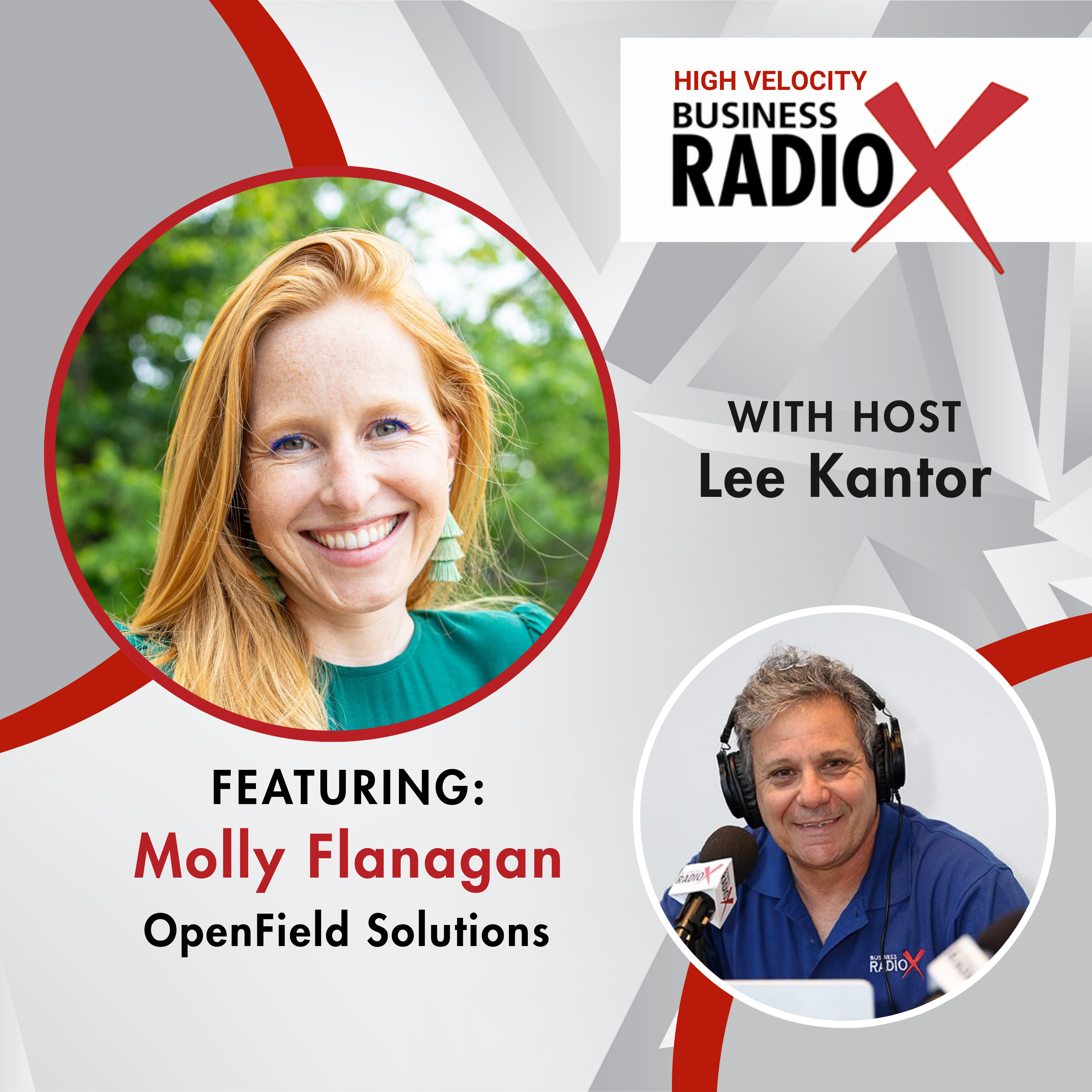

 Molly Flanagan is a coach, facilitator, and organizational-culture expert who champions Pleasure-Powered Leadership—the idea that joy is a strategic asset, not a side effect.
With 19 years’ experience, including 16 as a United Nations international civil servant, she helps visionary leaders harmonize personal well-being with high-impact results.
Through her firm, Molly Flanagan Coaching, she guides purpose-driven executives to stop over-giving, align with their deepest values, and create lives that are abundant and fun.
As co-founder of OpenField Solutions, she partners with organizations to craft intentional, values-driven cultures that boost engagement and performance.
Her mission: to weave intimacy, embodiment, and flourishing into the systems that shape our world.
Connect with Molly on LinkedIn and Facebook.
What You’ll Learn In This Episode
- When Molly realized that bringing pleasure—not just productivity—into your day-to-day leadership was the key to beating burnout
- What Pleasure-Powered Leadership means for business owners and executives
- How pleasure shows up on a P&L
 This transcript is machine transcribed by Sonix.
TRANSCRIPT
Intro: Broadcasting live from the Business RadioX studios in Atlanta, Georgia. It’s time for High Velocity Radio.
Lee Kantor: Lee Kantor here, another episode of High Velocity Radio, and this is going to be a good one. Today on the show we have Molly Flanagan, who is a founder and coach with Openfield Solutions and Molly Flanagan coaching. Welcome.
Molly Flanagan: Thank you Lee. Great to be here.
Lee Kantor: Well I’m so excited to learn what you’re up to. Let’s start first with Openfield solutions. How are you serving folks there.
Molly Flanagan: Yeah. So Openfield solutions is an organizational culture design firm. So we work with mid-sized companies and organizations to support them in designing an intentional workplace culture. And really that means aligning their business strategy, what they do with their culture. So how they do their work together, how they be in relationship with each other.
Lee Kantor: Now, isn’t it true that even if you aren’t putting much effort or thought into a culture, it’s happening anyway?
Molly Flanagan: That’s absolutely true. And so we talk about the difference between culture by design and culture by default. So at the end of the day, if you’re not intentionally designing your culture, then you have a culture by default. And eventually maybe not right away, but eventually it’s going to stand in the way of your success.
Lee Kantor: Now, um, who is the the type of client that you have for this kind of work? Are they kind of startups, people at the beginning, or are they people that are like, what happened here? We I’m not happy with the culture we have.
Molly Flanagan: So we do work with some very enlightened startups, but more often than not, it’s an organization that’s gotten a little further down the road and realizing, uh oh, some things have gone awry. So there might be conflict within their leadership team. There might be silos. Often organizations come to culture design when there’s been some kind of a merger and acquisition, and there’s two cultures clashing, or there’s a big pivot that needs to happen, and there’s the realization that the culture that worked when they were, say, 50 or 100 employees doesn’t really work when they’re now scaling and redirecting at, you know, 1000 or 2000 employees. So those are some of the times when we find that organizations are really ready to take on culture design.
Lee Kantor: Now, you mentioned silos. Are there other symptoms that, hey, maybe my culture has gone awry. Is it like, maybe you’re losing people or it’s hard to hire the right person? Are there some clues that maybe you need some help?
Molly Flanagan: Yeah, absolutely. Certainly attrition is one big signal. And today there’s many different surveys out there in terms of engagement and culture surveys that can give you that data. But we really take a more bespoke approach. And so we’re looking at primarily the starting point is usually what’s happening in your leadership team. So how is the communication flow between the leaders. Are we able to actually talk about the difficult things or what’s really going on, or are we sort of pretending that everything’s fine here, just move along. And and so usually the, the symptoms are going to be an executive saying like something’s really off in my leadership team and I’m not sure what it is. And that’s when we come in and we observe and diagnose and and come up with a strategy.
Lee Kantor: So how is your work different as working in the open field solutions with your open field solutions hat on as opposed to the Molly Flanagan coaching hat?
Molly Flanagan: Yeah. So open Field solutions is really about systemic transformation at the organizational level. And we can’t have successful organizational transformation if we’re not also doing that deep personal transformation. And so in my own private coaching practice, I’m working with visionary leaders who are doing that deep inner work to transform themselves so that they can have the impact that they want out in the world.
Lee Kantor: So what was the impetus to have a private coaching practice separate from the open field solutions business?
Molly Flanagan: Well, my open Field Solutions is a partnership. I have a co-founder and we work together and we each have our own separate executive coaching business. Um, in my private practice, I do blend both coaching with energy work. And so it’s a much more holistic approach, you could say, with different modalities than I use in my open field solutions practice.
Lee Kantor: And what was the, um, kind of what’s the backstory of getting involved in just coaching in general?
Molly Flanagan: Yeah, well, I worked in human resources for about a decade and round about, yeah, ten years into the United Nations, which is where I sort of came up as a professional. I had my marriage, my first marriage fell apart, and the UN implemented a major ERP system, which completely changed my role as an HR professional. And those two events happened in the same week. So, um, it was it was one of those signals from the universe for me that it was time for me to look at relationships, because in my personal life, as well as mirrored in my professional life, I was really being asked to change how I related and how I led. And it was it was really a faded moment for me. So a few months later, I landed myself in a coaching class and the rest was history. It was. It was the medicine I needed both to heal my own marriage and transform that relationship into something else. And also to it showed me, you know, this is what I’m here for. Actually.
Lee Kantor: Now, was that coaching class pre-scheduled before all that, you know, change was thrust upon you, or was that something you decided in the midst of that? Hey, maybe let me check out this coaching class.
Molly Flanagan: That’s a good question. Thinking back it all. It’s all a little bit of a blur, to be honest, but it was scheduled right around the same time. Yeah. So there was certainly a faded aspect to it.
Lee Kantor: Sometimes the universe knows some things.
Molly Flanagan: Yeah, indeed.
Lee Kantor: Um, so then you go through, you go through that coaching. Um, class did that, was that an aha moment of, hey, maybe I should look into coaching. Um, or did they give you a methodology that you were just really liked and said, oh, I can help other people with this methodology.
Molly Flanagan: Well, it’s been a journey and I’m I’m really a lifelong learner. So that was just the first of many programs and certifications and, um, ongoing learning journeys that I’ve been on. But certainly something clicked for me in the Co-active classroom, which was my first coach training school. And then I also heard about something called Organization and Relationship Systems coaching. And that’s where the real light bulb went off for me, because I realized that there are certain life skills when it comes to communication, in particular, that most of us don’t get, uh, in our families of origin. It’s just not taught. And and so when I realized, oh, there are things that I can learn, there’s ways for me to become a more effective communicator and to have more generative relationships and be able to engage in conflict in a way that doesn’t make me want to Retreat or put up a wall, but that that can actually be part of a creative process. I felt like this is the thing I need to bring to the world.
Lee Kantor: So do you have kind of your own, uh, Molly Flanagan secret sauce that you add to your coaching based on all, you know, all the different modalities you’ve learned over the years?
Molly Flanagan: Yeah, absolutely. And that’s really what I’ve been spending the last several months, um, birthing out into the world. And really, my focus now is on what I call pleasure powered leadership. So it’s really about centering pleasure in our work and in our lives. Um, as, as the, the the primary orienting framework. Yeah.
Lee Kantor: So how did that come about?
Molly Flanagan: Well, going back to really still to the early days of my UN career, you know, I joined the UN at a very entry level and I rapidly ascended. So I had like seven promotions in ten years, and I had my eye on the prize. I was going to become an HR leader in the organization, and I had to pass a big competitive exam to get there, and I had to sacrifice a lot along the way. I had to do a master’s degree while I was working full time, and I finally got this big promotion that I had been striving towards, and the immediate feeling that I felt was disappointment. And that really surprised me. And I realized that I had been working towards something that I wasn’t even sure why I wanted that in hindsight. And so from that point on, I really started orienting towards this core question of what would please me now? And that’s a question that I keep coming back to. And when I get lost or confused or I’m dissatisfied if I can attune to that question and come back to not just my mental desires, but my whole body desires. I find that I can usually get clarity, not just usually. Without a doubt. I can get clarity of, um, perspective and purpose in a much faster way than any of the other strategies that I’ve tried to date.
Lee Kantor: So, um, how are you defining pleasure?
Molly Flanagan: Mm. Good question. It’s it’s a little bit audacious these days to be standing for pleasure when our world is upside down in so many ways. But for me, I take a much broader lens on pleasure. So my definition of pleasure is it’s a movement towards wholeness. But how do we hold pleasure in that way? It helps us discern from behaviors that may feel like pleasure, or we may think they’re pleasurable, but they’re not actually moving us towards wholeness. And so they’re not actually life giving, their life diminishing. So that’s a really important aspect of discernment. That’s that’s essential to be at what I call a pleasure powered leader.
Lee Kantor: Right? Because, I mean, I, I could see some people saying, oh, you’re just giving me permission to, you know, get high and play video games all day.
Molly Flanagan: Right? And and so the key here is awareness. So pleasure is something that can only happen in the present moment. And so in order to find out am I enjoying myself right now. Are we enjoying ourselves together. We need to actually get present. We need to be able to say, is this actually serving me? Not just is it feeding some addiction that I have or, um, protecting me from feeling something uncomfortable. And so it really is a deep, a deep personal inquiry to be on a path of pleasure.
Lee Kantor: And I would think that, um, this is something you need an expert to guide you through. Because if you’re doing this yourself or you just hear these words, it’s easy to maybe fall into bad habits that aren’t really serving you. But they might feel good in the moment.
Molly Flanagan: Yeah, absolutely. Um, and that’s why I developed my six part framework called Pleasure on Purpose. And that includes what I look at as the aperture for pleasure. So how can we actually expand our capacity for and experience of pleasure? How can we increase our wholeness both as individuals and as organizations? And it includes first pausing. So if we can’t pause, if we can’t interrupt our downward spirals, it’s going to be hard to have pleasure. The second one is presence. So having some kind of a practice to come into present moment awareness and connect with our essence and what, what’s really true for us. The third part is pruning. So moving the stuff out of the way that’s actually no longer needed or actively obstructing our path. And then we can get into giving ourselves permission to what do we really want? And not again, just at a mental level, but as at a whole body level. And once we start to give ourselves permission for maybe many desires that we never thought that we could have, then we need to start bringing more focus. So the next step is to prioritize. So what is it that I really want? Among all of these amazing choices that I could make, what’s the most important thing? And from there we move on to pursuit. So that’s not only about can I take action inspired action towards my desires, but can I also allow myself to receive? And that’s really where the question becomes, am I willing to be changed by my desire? So, so many times I have clients that come. They want a new job, they want to change careers. But it’s like, but are you actually willing to be changed by that desire? Because things are going to come up that are going to need to shift. So that’s when it gets really real and the cycle starts again.
Lee Kantor: Now when you’re working with clients, are they coming to you, um, with their I’m in business hat or their, um, you know, this is my personal life hat or does this work? Does this type of coaching work in the business setting, or is this something that is kind of an after hours? This is more my life rather than my business? Or is there even do people even separate the two anymore?
Molly Flanagan: Yeah. I mean, I think it varies, but like I said, my definition of pleasure is a movement towards wholeness. And so that does mean not looking at ourselves as a work persona separate from our private life. Although, of course we have boundaries and that’s healthy. It’s not about bringing every aspect of yourself into your work life. But yeah, most of my clients are organizational leaders. They’ve had a lot of success. They’ve mastered, um, drive and ambition and discipline. But something’s not working. Usually they’re encountering some level of burnout. They’re aware that they’ve been sacrificing or over giving and that it’s not sustainable. And they care about their careers. They’re passionate. They’re mission driven. So they’re really feeling like they’re faced with a tough choice between, well, do I have to give up on this life and this career that I’m actually committed to and care about? Or do I have to give up on my satisfaction and my well-being and my happiness? And so that’s where pleasure on purpose comes in.
Lee Kantor: Now, do you help your potential client. Um, with the language or the framework to get this in their boss’s hands to approve it, uh, for them to go through the class. Like. Like how does that. Hey, I’m taking this pleasure powered leadership class. Um, can you sign off on this? Like, does. You know, I would think that that’s not an easy. Yes, that there has to be some explaining to do.
Molly Flanagan: Certainly. And, you know, the truth is that we could probably have this whole conversation without using the word pleasure. Um, if you notice in the framework that I shared with you, none of those six P’s are actually the word pleasure.
Lee Kantor: Right? But you didn’t choose that word accidentally. Like there’s semantic weight to that word. That wasn’t an accident, I’m sure.
Molly Flanagan: No, no, it wasn’t an accident at all. And, you know, this is still a fairly new offering. I only launched pleasure on purpose as a as a course in the last few months, so it’s still a bit early to answer your question on that front, but I would say that this is a movement that’s not new or unique to me. So we’ve been having conversations at the organizational level around engagement, employee wellbeing. And um, and, you know, psychological safety. I think these are all adjacent to the question about pleasure. And pleasure is really just taking it up a notch. That to say that we’re not just here to be okay, we’re actually here to thrive. We’re actually here to have a great time. And that that is as important as our financial bottom line.
Lee Kantor: And you’re not hedging about it. Like you’re not saying that this is like a small ask. This is a big thing. Like we can shoot for pleasure. It’s okay.
Molly Flanagan: Yeah, absolutely.
Lee Kantor: Now, um, is there some, uh, thing that you can share with our listeners maybe that can illustrate what some of the activities or some of the exercises you do with your clients to give some people an idea of how this can work and the impact it can make in the in themselves.
Molly Flanagan: Absolutely. Thanks for asking. Um, we can do that right now. So, you know, Lee, you can do it too. If you just think about a thorny work challenge that you’ve been dealing with, something where you feel stuck or dissatisfied or you know it’s not working, but you can’t quite figure out what the solution is yet. And probably it’s been spinning around in your mind for some time. So you and our listeners can all bring bring that first thing that pops into your mind, um, and just put it on the shelf and close your eyes and take a couple breaths. And just allow your body to settle into your seat. Connecting with the ground beneath you. And we’ll start with our mind. This is a quick body scan, and we’ll ask one simple question of different wisdom centers in our bodies. So starting with the mind, the question is what would please me now about this thorny work issue that you’ve identified? And probably the mind will start to spin, but just catch like the first word or two that comes to mind. So this isn’t about doing a deep analysis. It’s about trusting what shows up first. So what would please you now at a mental level around this issue and capture that word. Take a deep breath in, and as you exhale, drop down into your heart. Maybe a less familiar place for some of us, but as you bring your attention down into your heart, you’re going to ask the question again about this topic. What would please me now? And listen to what your heart says. Probably a different word. Capture that 1 or 2 words. And drop down once more into your belly. A third wisdom center in our bodies and our final destination on today’s tour. Maybe also less familiar. And here again, ask the question. What would please me now? And listening to the response in your belly. Capturing that word or two. And when you’re ready, you can open your eyes, take a look around. Come back into full present moment awareness. And just take a look at those three words or five words that you captured from your quick body scan.
Lee Kantor: And then what do you do with those words?
Molly Flanagan: Yeah. Well it’s data. It’s data to look at. And whenever I’ve done this exercise and when I do this with clients, what I find is it’s about expanding our perception. So at the mental level, I might think that what I need is, you know, new clients. But at the heart level, what I need is resonance with the clients that I do have. And at a gut level, what I need is transformation for those clients. So taking these words then is a starting place for a whole other exploration and really fleshing out well, what would that look like and how can we weave them all together?
Lee Kantor: And then you find that when you’re working with clients on this, is this something that they kind of get it right away, or is it something you have to do several times to really kind of hone in on what you’re really feeling and not maybe some of the distractions that happen when you are in silence.
Molly Flanagan: Mm. Well, there’s always a learning, a learning curve. If we’re not used to becoming present and connecting with our body. Wisdom. So, yeah, sometimes it takes a few rounds to not necessarily to get access to the information, but to trust it and to start to listen more intently to our bodies. But look, we have neurons all over our bodies. They don’t just live in our minds. So it behooves us to access that whole body wisdom if we want to be able to bring our full creativity to the challenges in front of us.
Lee Kantor: Now, you mentioned that you’re just kind of, um, at the early stages of building out, um, this information and presenting it. Is there any advice you can give when it comes to launching a new initiative like this? Some of the things that you’ve learned thus far.
Molly Flanagan: Yeah, absolutely. Um, you know, I’ve been self-employed for a little over two years now, and I’ve done every marketing course under the sun. Uh, or at least that’s how it feels to me. Um, and I still feel that the best advice that I’ve gotten in any from any of the people that I’ve learned from is really that marketing is about being findable. So for me personally, the like, pushy sales tactics of, um, you know, being aggressively trying to, um, uh, land clients, it really first of all, it’s at odds with my personal ethics. Um, it doesn’t feel good for me or for them. And so I take a much more organic approach. And I will say that the first time I tried to launch pleasure on purpose, I didn’t wait for that attention to come to me. I tried to push it out into the world too fast. And and so it didn’t it didn’t take. But I was able to listen to the feedback I was getting from the people who were tuning in. And I realized, this is really something that people want more as a one on one offering. And once I put that out, I started finding that people were coming to me asking for it. So I think it’s really about tuning in and listening to your audience and also embodying the work that you’re here to bring out into the world. So the more that I focus on that embodiment myself, the more that I find myself naturally connecting with the people that I’m meant to serve.
Lee Kantor: So if somebody wants to connect with you and learn more about either Molly Flanagan coaching or the open field solutions, what are the websites for each?
Molly Flanagan: Yeah. So Molly Flanagan Coaching.com is my personal website, and there’s lots of information about pleasure on purpose there and open field solutions. Dot net is the Open Field solutions website. And then and for folks listening today I have a special that I’m running for pleasure amplification. It’s a three session intensive and you can use the code podcast for 20% off through the end of May.
Lee Kantor: And uh, can you share, like, who the ideal client is for each of those?
Molly Flanagan: Yeah, absolutely. So like I said, my one on one clients tend to be, um, mid to senior level managers or leaders who are experiencing some degree of burnout or loss of, um, enjoyment in their work and are looking for another way, a way that’s more sustainable and generally tend to be going through some kind of major life transition. So I really look with my clients at how does what’s happening in our personal life inform or mirror what’s happening in our professional life. And how do those two how can we get those two in a more harmonious relationship? And in terms of our open field solutions clients, like I said, those tend to be mid mid-sized organizations in the anywhere between 200 and 5000 employees. And they’re usually having to navigate some kind of pivot or they’re scaling or they’re in a merger and acquisition and they’re noticing that their culture isn’t aligned with their business strategy. And so we come in to help with that.
Lee Kantor: Well, Molly, thank you so much for sharing your story today, doing such important work. And we appreciate you.
Molly Flanagan: Thanks, Lee. It’s been a pleasure to be here.
Lee Kantor: All right. This is Lee Kantor. We’ll see you all next time on High Velocity Radio.














