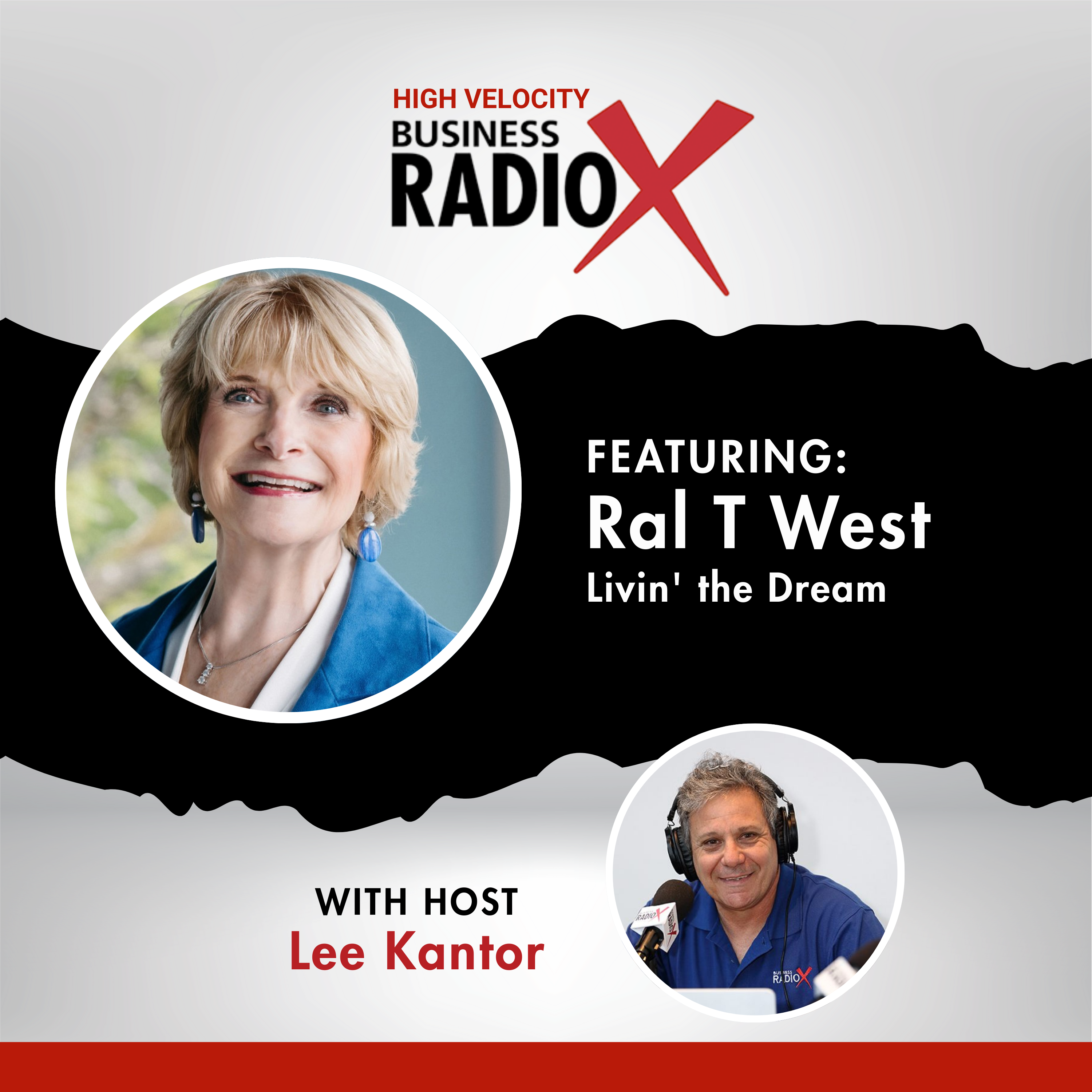


 Ral West is a Visionary Business Leader and Systemization Expert, who employs her 4+ decades of entrepreneurial experience and her passion for business in her newest endeavor: “Ral West Livin’ The Dream”. She teaches entrepreneurs how to be the owner rather than operator of their business, so they can have a successful business and live the life they deserve.
She has an online course and a Mastermind program. She and her husband have founded several businesses, one notably achieving 8 digits in annual revenue before being acquired by Alaska Airlines in 2008. She has invaluable experience in scaling businesses and mastering the art of effective systemization. She honed her business acumen with real life experience.
She is a master at the practical implementation of business theories to create effective processes that transform businesses and multiply success. A respected figure in the tourism industry and multifamily real estate circles, she has been a guest speaker on numerous podcasts and has authored courses.
Ral and her husband live in Alaska and Hawaii when they are not jet-setting on their worldwide travel adventures.
Connect with Ral on LinkedIn and Facebook.
What You’ll Learn In This Episode
- 6 Principles for Lasting Business Success;
- How to organize your business to create personal freedom;
- How delighting your customers boosts your success;
- The Entrepreneurial Mindset;
- Build your business to support your life goals, not the other way around
 This transcript is machine transcribed by Sonix.
TRANSCRIPT
Intro: Broadcasting live from the Business RadioX studios in Atlanta, Georgia. It’s time for High Velocity Radio.
Lee Kantor: Lee Kantor here. Another episode of High Velocity Radio, and this is going to be a good one. Today on the show, we have Ral West, who is the owner of Ral West Livin’ the Dream. Welcome.
Speaker3: Hi, how are you?
Lee Kantor: I am doing well. I am so excited to learn what you’re up to. Tell us about Raul West. Living the dream. How you serving, folks?
Speaker3: Okay, well, I am using my 40 plus years of entrepreneurial experience to teach business owners how to be the owner of their business and not the operator. You know, get out of the day to day and step back and work on your business instead of in it, so that you can have some freedom and enjoy your life.
Lee Kantor: Now, in your experience, you find that most entrepreneurs just get on this hamster wheel of just kind of doing the work, doing the work, doing the work, and they never really kind of maximize their efforts and their talents and delegate a lot of the activities.
Speaker3: I yeah, I would say that many entrepreneurs, too many are doing that. I certainly did a couple of decades ago, and I was pretty exhausted and miserable. So I want to teach any entrepreneur that’s doing that where they think they have to do it all, and they can’t let go of any of the tasks. I need to teach them how, how not to do that so that they can actually enjoy life and get sleep and have some self-care and spend time with their family and that kind of thing.
Lee Kantor: So what was that moment in your life where you said, enough is enough? There has to be a better way. Let me learn some systems and processes that can help make my life easier.
Speaker3: Yeah, well, it was over 30 years ago, and I had a young daughter, and, you know, she was having to do her homework and eat dinner at the office because we we were working late just about every night. And, and the diet consisted of like McDonald’s and pizza and Chinese and, you know, any kind of takeout. And I realized this was not healthy. I mean, I was certainly not healthy. I was overweight and out of shape. And, you know, I was starting to feel the, the stress and the the toll that that was taking on me and on my relationship with my husband and all of that. So, yes, something had to change. It was not sustainable. So I started learning. I went back to college, I started reading books. I got recommendations from our mentor who was Robert Kiyosaki, and this was before he wrote Rich Dad, Poor Dad. He told us to pick up a book called The E-myth by Michael Gerber and that kind of, you know, saved our life. So it goes back that far.
Lee Kantor: Now, can you share a little bit for folks who aren’t familiar with the E-myth. I read that as well when I was younger, but I don’t know if you know this current generation is that fluent in in the terminology that he was using. But can you share a little bit about some of the basic principles that he was espousing?
Speaker3: Yeah. You bet. And actually he’s done many versions of that book since then. He’s he is updating and keeping current so you can still find it out there. And there’s e-myth for contractors and E-myth for, you know, all kinds of different lines of work. And basically what he says is that the, the e in the e-myth is entrepreneur. And he says that the people become entrepreneurs because they have this grandiose idea that they know, they know how to do it all, and they’re going to have this wonderful life and freedom. They don’t have to do what anybody else tells them to do. And then they find that, you know, doing the particular craft or talent that they had is not enough. They also need to know how to manage, and they need to have wear all the hats in a business like marketing and finance and operations and the things that maybe they weren’t having to do if they were just doing their particular craft, you know, whether it’s plumbing, accounting, law or whatever. And that you you need to be able to take care of all aspects of your business and step back and be the manager.
Speaker3: And then in order to grow the company, you need to duplicate yourself. You need to be able to teach others how you do things. So that means you need to document your processes and your procedures so that you can have the same outcome no matter who’s doing it. Um, he used the example of McDonald’s, where it doesn’t matter where on the planet you walk into a McDonald’s, your Big Mac is going to taste the same. And that’s because they have fine tuned their procedures right down to the number of seconds that the burger is on the grill at such and such a temperature and so forth. So it is so finely tuned and finely defined that, you know it’s the same all the time, and that’s what you need to do in your business and create those systems and document all of the processes and your procedures and your rules and your guidelines and so forth, so that you can duplicate everything and step back, and then you can start it all over again and, you know, open up another location if you want, or you can just sit back and enjoy your life a little bit.
Lee Kantor: Now, is that kind of the first step that if anybody who’s out there, maybe solopreneurs or business coaches out there listening. Is it something that the first step is this kind of documentation of all of the processes that you’re doing currently, that at some point you got to write everything down? There’s no way around that. If you really want to delegate or you want to scale.
Speaker3: Yes. And of course, nowadays you can just do a Vimeo, you know, or a loom or something. You don’t have to write it. You could speak it into a video and and but basically you have to document it in some way. Um, if you want consistency and if you want your customers to be served the same way over and over again so that their expectations are always being met. Yes, yes, you have to be able to duplicate that that excellent product over and over and over again and don’t leave it to chance. So it starts with it’s documenting what you do. And then also you have to take a look at what you’re doing and see how you’re spending your time. You know how many of your tasks that make up your day are a small, repetitive tasks that someone else could do, or that you could find automation to do it for you? Something to gain some leverage so that you can save time. And that’s that’s very important. And I do that in my personal life as well as in my business. You know, you don’t want to be bogged down by minutia.
Lee Kantor: Now, what do you tell the entrepreneur out there that’s saying, well, that sounds good if I was making hamburgers, but I’m a consultant, you know, like people, I’m getting paid to be creative and problem solving and critical thinking. I don’t have it’s difficult for me to write down how to answer every possible scenario that could exist in order for me to delegate this kind of skill.
Speaker3: Well, sure, you’ve got some things that are, you know, intellectual property type of talent and, you know, you you might not be able to take everything out of your brain and duplicate that. But there are some things that are like the same questions or the same issues that come up over and over again. And you can certainly document that and create some guidelines, um, create some frameworks that you can use to teach and, and help your clients. Um, I think that there’s many ways that you can organize your, your knowledge and your information, And I do remember, you know, we had a business with about 50 employees, and I was in charge of the marketing department, among other departments. But, um, there was a point in time where my marketing team asked me, how did you know that it was the right time to increase our spending in advertising? And it took me back because I didn’t know how. I knew it was instinctive. It’s just like you’re saying, you know, if you’re a consultant, there’s some things that you just know they’re in your brain. And so this was something that was just in my brain. But I had to to be very intentional and conscious about trying to figure out what my thought process was that could guide me to make that decision. And I finally was able to break it down to the metrics that needed to be watched and that if, uh, sales data, for example, showed that there was a decline over a period of like three days, you know, reducing sales calls for three days. Ah, that’s a trigger. Now you need to increase your advertising to to pump up your business. So there are some things that you can document and systematize.
Lee Kantor: Now part of your, uh, title I guess is visionary business leader and systemization expert. Um, when did you go from having your own business that was your business to coaching other people and helping other people, uh, learn from all that you accomplished in your career?
Speaker3: Well, for years and years, I’ve been helping other businesses to grow and to scale. Um, not that I did it for a living or, you know, as a business. Um, but I’ve helped others, you know, ten-x their business by following my advice. And it was just a couple of years ago that it was suggested to me that I actually teach people how to have the kind of life that we have, because not only am I good at systematizing businesses, I’m good at systematizing our life and we’re able to live the dream. We travel all the time. We have two homes, we have a yacht, we still manage several businesses. And you know, it all seems to go very easily and people can’t can’t grasp how I can keep so many balls in the air and still be able to have all of this free time and enjoy my life. So that’s when I decided that, you know, maybe it’s time for me to, uh, give back and use my 40 plus years of experience to help other people.
Lee Kantor: So when you decided to get into this type of coaching and helping other people, business as a business, what were some of the things you did to launch and get the escape velocity that’s needed for any successful business?
Speaker3: Well, the first thing I did was I, I do what what I tell people to do, which is to design the business around your lifestyle, not the other way around. I want my business to to support me in the way I want to live. So I opted not to do one on one coaching because that kind of ties me down and demands an awful lot of my time. So I wanted to use leverage. So I decided to create an online course where I could teach many people and do the course once, record it and have it available online, and then anybody can take advantage of it at any time. So that was one thing. And then I have hired coaches and mentors to help me get my products out there, and have guided me as to what are the next steps. And I’ve been advised my next step should be to start a mastermind. So that’s what I’m doing right now. And the mastermind will be a small group of entrepreneurs who are running a seven and eight figure businesses where they’re too much involved in the operations and need help getting out of that day to day and stepping back so that they can And work on their business and become the owner rather than the operator.
Lee Kantor: So at what point did you develop these six principles for lasting business success? Was this at the beginning? And this was what kind of is the foundation that the all the entire business is built around?
Speaker3: Yes. Um, so two years ago when I started this, I had to take some time to sift through my 40 plus years of memory and determine what were the things that set us apart. Why was our business so successful? Why were we able to grow it to eight digits in revenue and sell it to Alaska Airlines? And why were we able to go on and create other multimillion dollar businesses after that? What were the tools? And, you know, I call them my principles. So I, I determined that there were six. And and those are the six principles that are the foundation of my course. And also, I believe, the foundation of any business that wants to be successful for the long term and be able to be operated with an owner versus an operator. And so I yes, those those six principles have been employed by us for decades. But I just pulled them out, identified them, and created a framework around them. And as I said, I’ve gotten mentors and guides to help me figure out how to do that. And, you know, personal branding is something that’s, you know, relatively new. So I had to learn how to get online, how to use social media, how to put my name out there, you know, website, YouTube channel, all these things that are so new to me because that was not part of our, our business formula before.
Lee Kantor: Do you mind sharing some of the principles?
Speaker3: I would be happy to. Uh, the first principle is systems. You know, you have to create the systems. The second principle is to track your data. Measure and track your performance and create reports so that you always know what your KPIs are and make sure that you’re measuring the right KPIs. Um, then there’s, um, leverage. You know, many ways to use leverage. One of them being education and others are learning how to delegate properly. There’s an art to delegating. Um, so anytime you delegate, that’s giving yourself leverage. Using automation is a form of leverage. And social media is a form of leverage. Getting getting your word out to many people with relatively little effort. And then there’s creating your culture, creating a very intentional culture that it just absolutely is imbued throughout your organization and is communicated to your customers and to your community. And the next is your team. You have to nurture your team, empower your team. Give them the authority and the ability to to operate, you know, on their own and do what needs to be done and give them guidelines. So you need to keep all of these things going and they’re all in conjunction with each other. And then that’s principle number five. Number six is customer service. And you want to have the ability to delight your customers, not just serve them well. I mean that’s good. That’s important. But if you delight your customers, you’re going to have customers who keep coming back over and over and who refer other people to you. And that’s really a key to lasting business success. And then you rinse and reuse all of these principles. They are not a set it and forget it. You have to keep working them. They’re like a six legged stool. And if you let any of those six legs get too short or not pay enough attention, your whole organization is wobbly. So you need to pay attention over time to all six principles.
Lee Kantor: Yeah, I think that, um, delighting your customers is one of those things that a lot of entrepreneurs fall short in. They they spend so much energy in trying to get a client and doing whatever they have to do to attract and and get that client that once they have the client, they kind of move on to the next client, and they don’t invest the time and resources to really surprise and delight their existing customers. And I think that’s an untapped opportunity for growth for a lot of business owners.
Speaker3: I believe yes, absolutely. And, you know, it’s not just entrepreneurs. There’s large corporations that are really missing the boat on that too. How many of us, as customers, uh, feel frustrated, uh, and annoyed by the way we are treated by some of these large corporations? So, yes, they all could use a little lessons in delighting their customers.
Lee Kantor: Now, what are the symptoms that an entrepreneur is having? Uh, that might be a signal that, Hey, I got to get in touch with Ralph.
Speaker3: Oh, uh, working too many hours, not having time for your family. Not having time for yourself. Being exhausted, uh, feeling like you want to grow the business, but you just can’t because there’s only one of you and only so many hours to go around. And, you know, if you’re feeling kind of stuck, um, that’s a good sign that you. You need me to help you get over that, because oftentimes the, the, the business owner who’s involved in the operations becomes the roadblock to growth because too many of the decisions and too many of the problem solving, uh, needs are going through that person instead of being handled by the team. So if you’re in that position, please reach out to me. I can help you. You don’t have to go through the agony that I went through. I can help you.
Lee Kantor: Now, is there a story you can share that maybe illustrates how this can work for somebody? You don’t have to name the client, but maybe, uh, explain the situation they were in and how you were able to help them get to a new level.
Speaker3: Well, sure. I mean, obviously, we did it for ourselves, um, in our own business, um, and, and were able to step away from the day to day operations and, and hand things over to a COO and a CFO. And then many years later, we sold the business to Alaska Airlines. But I’ve also helped, like another business, a small business, um, who the business owner was working, you know, like, around the clock. We couldn’t go out to dinner with this person without her taking several phone calls during dinner, because she just had to be doing it all herself. She wasn’t using any kind of team, and, uh, she wasn’t able to to, like, take a break, go away for a weekend or anything because she had to stay glued to that business. And so we started teaching her how to document her systems, how to create systems, how to use technology, and and how to how to onboard a team member, and in such a way that she felt confident that they could take care of her customers the same way that she would. And we explained to her how, you know, you need to create like a manual and outline all of the the guidelines, all of the processes, all of your, um, you know, your rules and how to how to handle a customer that has an issue, what do you do for them? And all of these things? She gradually started to employ them. And then over a period of about, oh, I’d say about ten years, she annexed her business and now she’s able to take month long vacations.
Lee Kantor: Wow. I mean, the impact is real, you know, that’s it sounds, in some ways simple. Oh, just systematize, delegate it. Just for a lot of entrepreneurs, that’s a big ask.
Speaker3: Well, yeah. And I’ve heard a lot of people say, well, I don’t have time to write down what I do. I don’t have time to, to create this system. And my response is, well, if you don’t take the time now, you’re never going to have the time for yourself in the future. You you have to invest the time now so that you can reap the benefits of that later.
Lee Kantor: And amen to that. Amen to that. Well, if somebody wants to learn more or have more substantive conversation with you or somebody on the team, um, or get into one of these masterminds or take the course, what is the website? What’s the best way to connect?
Speaker3: It’s very easy. If you know my name, you know how to find me. It’s Rahel West. So the website is Rahel West.com. You can find me on LinkedIn under Rahel West, a YouTube channel, Rahel West. And any of those, uh, have ways to reach me. And on LinkedIn, I have a weekly newsletter that you can subscribe to. It’s free. And every week there’s tons of information. Every week, of course, is a different topic. And there are actionable strategies for you to use in your business right now. And also on my website, there’s a lot of podcasts like this one that I have done guest appearances on, and they’re all available there and on YouTube to watch and learn. So yes, and please do sign up for my mastermind. I would love to to have a bright, ambitious entrepreneur come on board and and have me help create the life that they really want.
Lee Kantor: And that’s real West r w e m.
Speaker3: Yes. Thank you.
Lee Kantor: Well, thank you so much for sharing your story today, doing such important work. And we appreciate you.
Speaker3: Well thank you Lee.
Lee Kantor: All right. This is Lee Kantor. We’ll see you all next time on High Velocity Radio.














