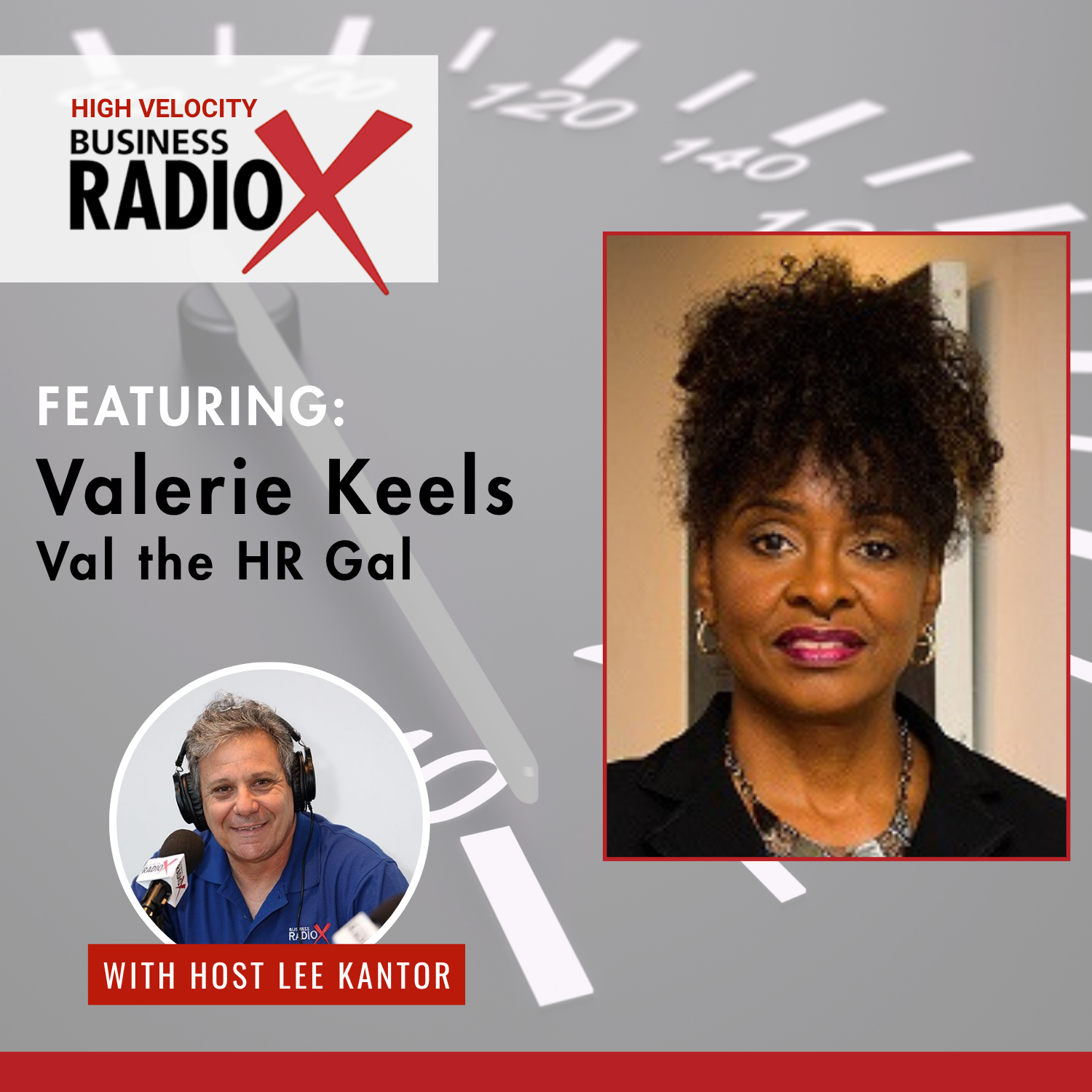

Lee Kantor interviews Valerie Keels, known as Val the HR Gal, about her journey from HR consulting for nonprofits to a focus on leadership and emotional intelligence coaching. Valerie shares insights on the growing demand for coaching, especially post-COVID, and discusses her client-centered approach using self-reflection and emotional intelligence tools. She highlights the importance of relationships, self-awareness, and creativity in career development, and offers practical advice for individuals and teams seeking greater fulfillment and effectiveness in their work lives.

 Valerie Keels, Coaching Fundamentals with Val the HR Gal. A human resources practitioner with over 25 years’ experience in non-profit association management in the DC metropolitan area, she has proven success in creating cultures of collaboration and implementing change to achieve workforce excellence.
As an ICF certified coach, she has built her practice in the aeras of transformational leadership, as well as developing emotional intelligence, team building, and managing career change.
Connect with Valerie on LinkedIn.
What You’ll Learn In This Episode
- The value proposition of coaching
- Why the business tagline is, “Success through Relationships”
- How to distinguish between what’s good from what’s right
 This transcript is machine transcribed by Sonix.
TRANSCRIPT
Intro: Broadcasting live from the Business RadioX studios in Atlanta, Georgia. It’s time for High Velocity Radio.
Lee Kantor: Lee Kantor hear another episode of High Velocity Radio in. This is going to be a good one. Today on the show we have Valerie Keels and she is with Val the HR Gal. Welcome.
Speaker3: Hi, Lea. Thank you. Glad to be here.
Lee Kantor: Well, I’m so excited to learn about your practice. Tell us about Val, the hr gal. How are you serving, folks?
Speaker3: Absolutely. So I thought of Val, the air gal in a dream. And I manifested my my business probably about 15 years ago as a consulting, just HR consulting business. I’ve been 20 plus years as an HR generalist for nonprofit organizations in the Washington, DC area. And I’m thinking, you know, future thinking. You know, how can I expand my knowledge base and my my network and to also prepare for whatever retirement means when it’s that time? So I’ve been doing about air golf for about 15 years, and most recently have been concentrating mostly on leadership coaching and emotional intelligence coaching.
Lee Kantor: So you started out doing actual consulting and then now you’ve pivoted towards coaching or you do both?
Speaker3: I do both. I started out doing mostly HR consulting, but it seems that the nature of work and business people seem to need coaching a bit more, and I get more people coming to me for for the coaching than anything else.
Lee Kantor: Well, I find that pretty encouraging because I think coaching is so valuable and that not enough people are taking advantage of all the great coaches that are out there.
Speaker3: Absolutely. It’s an emerging market. As I said when I started, it was mostly emotional intelligence. I am a Ekiti 2.0 certified emotional intelligence coach, and when I started doing that about eight years ago, you know, that was when this whole big thing about emotional intelligence was very prominent. And, you know, people wanting to build teams, build better teams and communicate with leaders, wanted to communicate with staff better and work better together. You know, we have multigenerational, multi-ethnic, very diverse workforces. And I think people really needed help relating to one another. In addition to that, you know, I also do the leadership coaching, career coaching, just whatever people need in their lives at that moment.
Lee Kantor: And then your niche is primarily nonprofits.
Speaker3: Primarily nonprofits. But I do have clients from the whole spectrum.
Lee Kantor: And then so when they’re coming to you for coaching, what are they hoping to get out of it? Like leadership is kind of a general term, but do they? Are they trying to get promoted or are they trying to look for their next opportunity? What like what are they trying to get out of coaching?
Speaker3: Absolutely. So people come to me for various reasons. Sometimes they’re in a program and coaching is part of their leadership development. Maybe they’re middle management and looking to move into leadership roles. Sometimes people are new in their career, um, and need some help, you know, kind of charting a career path. And then I have others who have been in a career for a while, and they want to pivot and change. I think the time around Covid, when people were really being very self-reflective and thinking about what’s important to them. Um, they really started digging deep and saying, am I really doing what I want to do? Um, and if that wasn’t the case, how do I break out and do something that’s more fulfilling and brings more purpose to my life.
Lee Kantor: So what are some exercises you do for people who are having those kind of thoughts? Like, are there some things they could be doing that will help them kind of chart a more fulfilling path in their career?
Speaker3: Absolutely. I mean, I always encourage people, and it doesn’t have to be any of the tools that I use, like Myers-Briggs or, um, disc, or I even have an emotional intelligence tool that I use as well with the EQ 2.0, but just to allow people to do some self-reflection first, like what are what are my goals? Like, what am I strong at? Um, what brings me joy? Identifying those things and how how do I communicate with others? You know, all those things go into that kind of self-reflection to try to figure out, you know, what’s important to me, and what do I need to be successful now?
Lee Kantor: Do you find an area that people maybe aren’t leveraging enough, or maybe they take for granted? Are there relationships?
Speaker3: Um, yeah. And I think, you know, when you think about relationships, everything that we do, both personal and professional, is centered around some sort of relationship, whether it’s, you know, your parental relationships, your sibling relationships or friendships, you know, spouses, whomever, bosses, coworkers, they’re all relationships that we have to maneuver and manage through our lives. And I think when we think about some of the things that inhibit us, it is our reluctance sometimes to explore those relationships a little deeper and dig deeper into understanding why we’re not always getting the best results.
Lee Kantor: So is there any kind of anything actionable for our listeners in order to kind of, you know, get more out of those relationships. Are there some activity or exercise that I’m doing right now to maybe kind of, um, either reboot or jumpstart, uh, some of their relationships?
Speaker3: Absolutely. Lee, I think, again, I have a three part kind of approach. Um, I call it consciousness and self-reflection. So that’s all about that kind of self-discovery. Who am I? What do I want? What brings me joy? Then looking at, um, rhythm and flow. Like, how am I showing up? What’s my way of doing and being? And how is that working for me? That’s a quote from Doctor Phil when he’s interviewing people, how is that really working for you? And sometimes we approach life like we’ve always done it this way or this way has often got the best results. But we live in a very dynamic world and things change. People change. I keep going back to Covid because that that was really an explosion of change Age and opportunity. I think people saw that as, you know, I really need to reboot and do some things differently to bring some better happiness and joy into my life, and then allowing a space for, um, creativity and spaciousness and thinking outside of the box, you know, being counterintuitive and allowing for that openness for new ideas to flow.
Lee Kantor: Now, when you’re working with your clients, um, how do you kind of open their mind to doing things maybe a different way or auditing, like you were saying, you know, how’s this working for you? In order to determine that, you have to kind of look and see what your track record is, and you got to kind of you’re holding them accountable to some past that has actually occurred, not some theoretical future, but some past. So how do you kind of create that safe space for them to feel vulnerable enough to share and in order to get the most out of the coaching experience.
Speaker3: Absolutely. I am a ICF certified coach, and part of the ethics of that coaching environment is stating, you know, that the coaching experience is led by the client. The client determines what they want to work on. The client determines what they want to bring to the coaching relationship and what they want to get out of it. And we generally start with a individual development plan that we co-create. Um, there’s generally like a hypothesis or a question or something that they want to get to, to get to the other side. Like, you know, how can I show up differently at work to present myself as a candidate for a promotion? Or what do I need to do differently to bring more joy into my life or whatever it is that the client wants to work on. It’s there. There. This is the process is them and they drive it. Um, so we open it up. We we really create kind of like a personal Swot analysis. We look at, you know, the strengths and weaknesses of what they’re doing and also the opportunities and threats for them to get to where they want to go.
Lee Kantor: Now is there a story you can share? Um, that kind of demonstrates how this could work or potentially, um, how you can help someone get to a new level? Don’t name the name of the individual, but maybe share the problem that they had and how you were able to help them.
Speaker3: Sure. Um, I think well, my clients, I’m not going to say many people, a lot of my clients are open to what the universe has for them, even though they may be employed or self-employed or whatever it is they’re doing in their lives. They’re always looking for something better or more or more enriching. And I had this one client. He worked for a municipality, but he always had this inkling to be an entrepreneur. I mean, but he had a family, you know, a wife, and he, you know, had to make sure that, you know, his home is taken care of, that, um, you know, the bills are paid and that sort of thing. But I encouraged him, just as I’m doing kind of, you know, to explore entrepreneurship on the side as his schedule allows and to feed into, you know, some of his desires outside of work. So we worked out a plan where he’s scheduled in some time to do some investigations to build up his network, to do the sorts of things that were going to enable him to explore that in a safe space for him where he could still meet the responsibilities of his 9 to 5. But to also expand and to see what the possibilities were. The good thing in that situation is that his wife was not, um, American, and the plan had always been to move to her home country at some point. So, you know, we explored some of the contacts that he had in his wife’s home country and worked out, you know, some marketing and some things like that. So I’m not sure we didn’t, you know, when we worked together for about six months, I’m not sure where he landed, but he was definitely at a point where he had a roadmap to get him to that next place.
Lee Kantor: And that’s really all you could hope for, right, is give them kind of the pathway they have to take the steps in order to be successful. You you can’t want it more than them.
Speaker3: No, not at all. Exactly. And they have to do the work. And as you mentioned earlier in our conversation. You know, I’m an accountability partner, right? I’m not a taskmaster. I’m not a drill sergeant. You know, I’m only here to help the client fulfill what they want.
Lee Kantor: Now, do you ever work with boards of directors at some of these nonprofits to, um, you know, put into place some, uh, some coaching program for the organization or certain people within the organization? Or do you primarily work with individual contributors?
Speaker3: Yeah, it’s about HR. I do primarily work with individuals, but as an employee, I’m still employed. I do work within the HR team. We have a cadre of certified coaches within the organization, and my organization has a retreat kind of mentality. The teams, um, typically will go away for 2 or 3 day offsite, um, type of activity. And with that, I can bring in group coaching, you know, to to do some team building and identifying areas that the team need to work on. Um, to be better. We can also work with individuals within teams or leaders of teams to help them manage their teams better.
Lee Kantor: Now, do you enjoy that work or retreat work?
Speaker3: Absolutely. That’s what I started doing. And, um, it’s been very fulfilling. My, my employer has been very supportive of my coaching work. And because I can use it internally, it’s a win win for us both.
Lee Kantor: Have you learned anything about how to put on a good retreat? Some do’s and don’ts.
Speaker3: Um, I would say have a good plan in place first. Like, what do you want to get out of the retreat? I think it’s also important to have a good balance of the work, like the the planning and and you know what the team needs to accomplish, but also some down fun time. You have to make sure you have some getting to know. Um, allowing people to let their hair down a little bit and get to know one another on a very personal level, I think that’s very important as well.
Lee Kantor: So if somebody wants to learn more about working with you, uh, what is the website? Is there a place to connect?
Speaker3: Sure. My website is WW. Vale the HR gal t h e hr.com. Um, I can also be reached in LinkedIn. Um, and I can provide you those, um, digits if that’s necessary, but.
Lee Kantor: I think it’ll be on the post. But Val, the HR gal com is a pretty easy way to find you.
Speaker3: Pretty easy way, yes.
Lee Kantor: Yeah, that dream was pretty efficient to get you the URL for the website as well. That worked out pretty well.
Speaker3: Like years before I even launched the business. I was like, I think it was a vision. So I pounced on that and secured the URL. And then a couple years later I actually moved on it.
Lee Kantor: Wow. That’s a it’s a catchy URL. Good. Good job. I think most people don’t spend the $12 to get to lock that down. That’s a good investment. Well, congratulations on all the success and thank you so much for sharing your story. You’re doing such important work and we appreciate you.
Speaker3: Thank you for having me, Lee.
Lee Kantor: All right. This is Lee Kantor. We’ll see you all next time on High Velocity Radio.














