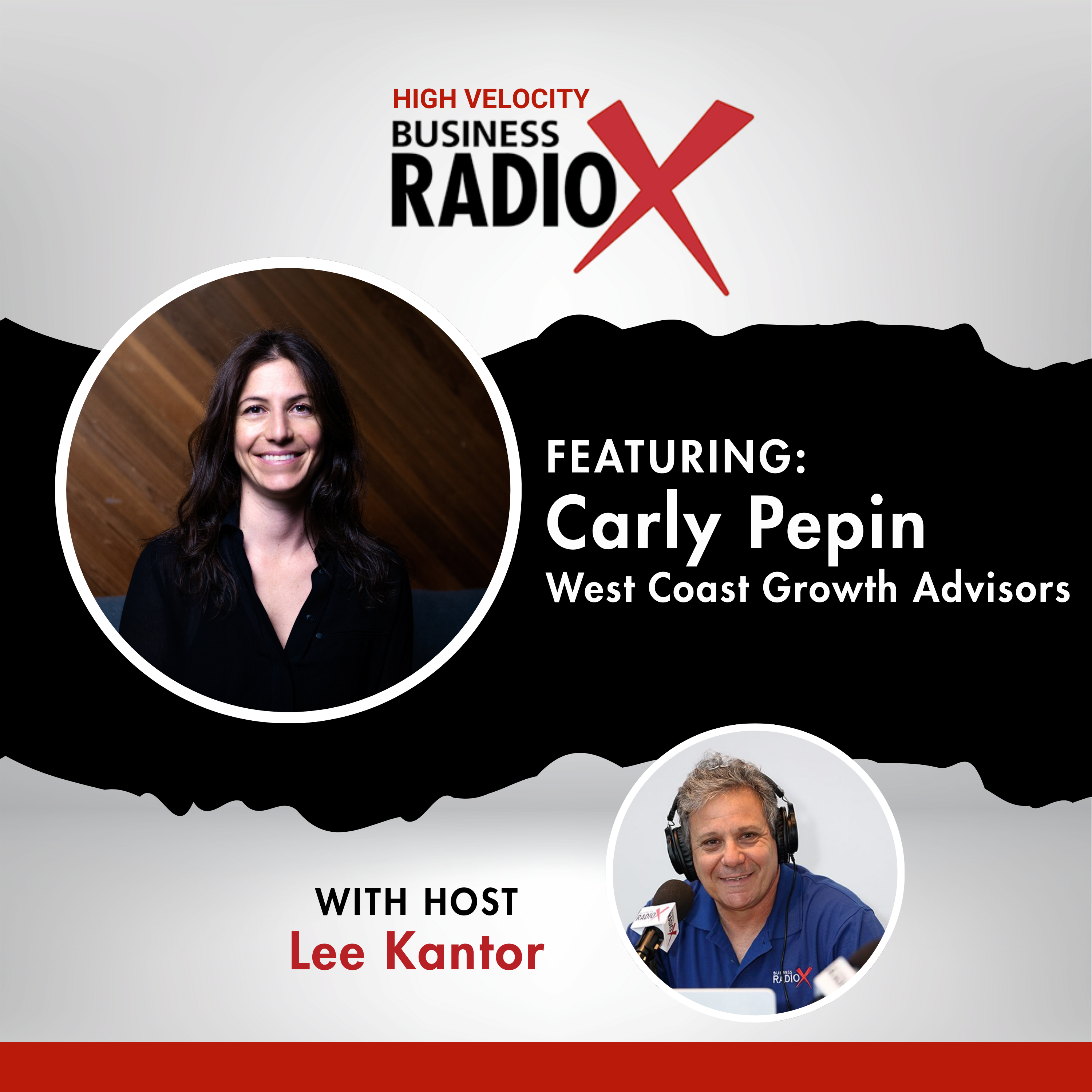


 Carly Pepin, International Business Coach and Human at West Coast Growth Advisors.
She is an International Speaker and Consultant with a specialized focus on leadership and scaling business utilizing human behavior principles and strategic growth strategies. She shares the message that regardless of one’s background, occupation, or origin, every individual encounters personal and professional challenges stemming from their own perceived flaws.
She highlights the transformative power of reinterpreting these narratives to lead a fulfilling life. Having devoted her life to mastering the intricacies of human behavior, she integrates this knowledge with strategic business processes and systems to empower clients both professionally and personally.
Through her guidance, individuals and businesses alike learn to purposefully design their trajectories, moving beyond obligation to genuine fulfillment and achievement.
Connect with Carly on LinkedIn.
What You’ll Learn In This Episode
- Burned Out & Overwhelmed: How to Fall Back in Love with Your Business
- Scaling With Purpose: How to 3–5X Your Business Valuation Without Losing Your Vision
- From Operator to Visionary: The Leadership Shift Every CEO Must Make to Scale
- The Human Side of Scaling: How Behavior Shapes Business Growth
- Balancing Pride & Shame: The Untold Leadership Skill That Changes Everything
 This transcript is machine transcribed by Sonix.
TRANSCRIPT
Intro: Broadcasting live from the Business RadioX studios in Atlanta, Georgia. It’s time for High Velocity Radio.
Lee Kantor: Lee Kantor here. Another episode of High Velocity Radio, and this is going to be a good one. Today on the show we have Carly Pepin. She is an international business coach and human behavior specialist with West Coast Growth Advisors. Welcome.
Carly Pepin: Thank you so much for having me, Lee.
Lee Kantor: Well, I’m excited to learn what you’re up to. Tell us about West Coast Growth Advisors. How you serving folks?
Carly Pepin: Yeah. So we really help bring life to business owners, entrepreneurs to their vision. So we work with them on an external level to help them scale their companies. We focus on the people, strategy, execution and cash side. And then we’re also doing the internal dynamic where we’re doing a lot of leadership development and personal development as well to help them along the way.
Lee Kantor: So what’s your backstory? How did you get involved in this line of work?
Carly Pepin: Yeah, absolutely. And definitely when I first began, I kind of began just doing the personal development dynamic. It was trying to solve my own problem. Couldn’t figure it out. Uh, once I did find a really inspiring solution, a few of them. I just really wanted to share it with other individuals. So I turned it into a business, and it kind of spiraled into the business scaling and strategy after realizing we continued to attract entrepreneurs, business owners, and that all this stuff that was going on on the inside was affecting what was going on on the outside. Um, so we started to incorporate a lot of the scaling strategies to ensure that they could basically focus on both simultaneously.
Lee Kantor: Is this a methodology you developed, or you partnered with an organization that kind of gave you a structure?
Carly Pepin: Yeah. So I partnered with an organization. So we use the scaling up system and that is by Verne Harnish. So we love that one. It’s definitely stood the test of time. And for me, when I pick something, I pick something that usually most people are pulling from. So it’s the most comprehensive and definitely the origin point of a lot of the offshoots. So I really love it. It’s been amazing.
Lee Kantor: So now are you working with typical people that have had coaching in the past and are switching to you, or are you sometimes the first coach they’ve ever had?
Carly Pepin: I’ve done both. Yeah, sometimes you’re the first person and sometimes they’ve had previous coaching. So definitely it just depends on the person and yeah, sometimes both.
Lee Kantor: Now if you were coaching a person about getting a coach, what are some of the do’s and don’ts when you’re choosing, you know, to make sure it’s the right fit for both of you?
Carly Pepin: Yeah. Remember, when you’re on a sales call, I think sometimes people get nervous on being on a sales call. I don’t even think like, to me, they’re not sales calls. They’re Conversations. And when you’re on one of those conversations with people, you’re also interviewing them. So you’re checking in. You can ask them for some extra insights, some extra details to make sure that the individual that can get you what you want, but also that you like them. You know, when I’m working with clients, we’re working for a year minimum generally. And so part of those conversational components is making sure we actually get along like you want to hang out with me for the next year minimum. So that’s part of the dynamic too, is you don’t just want to pick someone who has like what you need, but also someone you like because it’s generally a pretty intimate dynamic.
Lee Kantor: So, um, some of your clients come to you because they have a desire to grow their business. Maybe they plateaued, or maybe they aren’t growing as fast as they would like it to grow. Can you share a little bit about what those early conversations are at the beginning? Uh, to make sure they’re the right fit and then managing their expectations of what’s possible.
Carly Pepin: Absolutely. I’ll just be asking a lot of questions, basically in the sense of first, I have them go through a few really in-depth questionnaires because I want to find out what’s going on in their business. Right. And so by the time I get on the phone, I have a good idea whether you’re kind of lacking in people, strategy, execution, cash, what’s going on with your mindset. Right. So I’ll have a general pretty general idea. Then I’ll ask questions to dive a bit deeper into those dynamics. There’s going to be the things that you can see and that you know are a challenge. But we’re also looking for like, what are what are the things beyond what. You know, in a sense, what are the levers that are actually controlling the more obvious challenges that you’re focused on? So it’s a lot of question asking, you know, basically that first initial conversation is me gathering data to ensure that I know exactly what you’re looking for and know exactly what you need. You know, and it’s cool because, you know, you ask the right questions. You can pull up that information pretty quickly. And there have been times when I’ve just been very transparent and said, I’m said. Definitely not a fit for you. I don’t do this, but let me check my network and see if there’s someone I can refer to you to instead of, you know, trying to do everything. There’s a lot of things that I don’t do, but there are things that I very specifically do.
Carly Pepin: So that’s part of it as well. And then also just engaging in the dynamic to see if they’re able to invest that kind of time of energy into their company. There’s going to be a degree that, yes, it may be challenging. It’s going to be challenging on a regular basis to make these kind of shifts, but more so I’m looking to see if you really want to. Right. So it’s kind of checking in on the desire level, like does this person really want to do this because it is hard to implement these systems and processes. But at the end of it, you’re really grateful because in the beginning it’s challenging. It’s hard because shifts like that are constantly challenging and hard, especially in a company. But at the end of it, you’re grateful, and it makes life easier if you’re willing to go through that effort, you’re great to be on the team with. But if I can tell that, yeah, you just you’re not going to and you’re not going to do the stuff in between. It’s a waste of time and money for you as well. So I really check in to see all those different dynamics to make sure that this person, if they’re making that investment, will not only get the best out of me, but also get the best out of themselves.
Lee Kantor: What are some kind of clues that you pick up on that the person isn’t kind of all in? Maybe they feel like that they should do this, but they’re not actually doing. A friend of mine calls it doing the do. They’re not, you know, kind of doing the the work of the grind.
Carly Pepin: Yeah, absolutely. And it’ll be interesting because it’s, um, it’s funny, it’s not even so much that they’re not doing the grind. It’s that they just don’t want to switch it up. Right. And so there’ll be a dynamic when I’m talking to someone where I’m kind of giving them the information of how and what it looks like to work with an individual like myself or one of my other team members. And it’s like, okay, so if we’re going to do this and we’re going to go through this process, this, this, this and that, if I keep coming up with obstacles And, you know, barriers. And we can’t do this. We can’t do that. If it gets to a point where, you know, and I keep saying, well, this is how we would do it, this and this. And you kind of give them examples and you’re showing them the possibility and they keep coming back with no, like I’ll ask the question like, do you really think this is a good fit? Because these are the things that I’m going to ask you to do, and you just keep giving me no. Right. Sometimes at that point, I’ll get a response where they’re like, no, no, no. I just I’m really stressed out. And it’s like, okay, well let’s focus on the internal part as well and see if working through that would help you with getting this stuff done on the outside.
Carly Pepin: And sometimes they just look at me and they’re like, yeah, I think you’re right. And I’m like, okay, cool. If you’re ever interested, they can always reach back out, right? Like it’s not a big deal, but it’s really just checking in and asking those questions and seeing the resistance that comes forward immediately. You know, like, um, I even talked to someone about like a couple things recently, and, yeah, they wanted me to do something and I just I told them no. And I was like, I’m not your ideal client. It’s not how I run and structure my business. And I don’t actually want to do that because it’s not something that works for me. Like, genuinely, it wouldn’t work for me, you know? And I had to tell them, like, I’m not your ideal client, right. And so it’s an interesting dynamic because when you’re talking to someone, you’ll know, like, you know, pretty fast if they’re an ideal client because they’ll be engaged and interesting and they’re like, even though this is hard, I want to try it versus I don’t want to do any of this. This sounds awful. Like I’m a no, no, no all the way, you know? So then you’re just not a fit to work together, which is fine. You know, tons of people, 8 billion people on this planet, lots of coaches, consultants, individuals who can help. I don’t have to be the one.
Lee Kantor: Right? Everyone doesn’t have to be the right one. No, no. Choose. Choose wisely.
Carly Pepin: Choose wisely. Yes.
Lee Kantor: Um. So are there some kind of like, um, fundamentals when it comes to scaling your business? Are there certain kind of must haves in your playbook that a business leader should be doing in order to scale?
Carly Pepin: Yeah. So we. The must haves are your people. So you want to get your culture and your people. You have teams of eight players. You want all of them on board and you have your execution, right. So no strategy is going to work if you don’t have a great execution plan day to day where people are held accountable. You know what’s going on. You have measurable KPIs. The strategy which is part of your vision. It’s part of like the mission of the company, the core values of the company and making sure everyone’s engaged in that. That’s also really helpful with the culture. And it’s the thing that’s going to drive the execution, right. And again, the execution is going to make sure the strategy comes into place. And then we focus heavily on cash flow as well. Just because it’s very hard to scale a business without cash flow. So it does require money to scale a business. So if a company is low on cash flow, then we’ll focus on that immediately, which often still stems into your people and strategy and execution. We figure out which one’s pulling that lever, and we make sure that the cash flow gets healthy so you can actually continue to scale the business. And even if the company has healthy cash flow, we still dive in to figure out ways to actually make it healthier.
Carly Pepin: Like, how do we make it more profitable? You know, how do we bring in more revenue? And how do we make sure that you guys have that liquidity to help you to continue to scale? And leadership mindset, you know, leadership mindset because the people at the top, it goes from the top all the way down to the bottom. So we work a lot with the CEOs, you know, and the founders to make sure that we’re understanding what challenges they’re going through. What are they struggling with, both personally or professionally, that’s causing them to have a hard time leading the team, leading the business into this vision, because generally these businesses, they’re not picking small things to achieve, you know. So it’s a pretty big deal. And sometimes we work with the leadership team as well, depending on which one it is, just to get them aligned, get them together to a greater degree, and also if they need some one on one assistance as well, because you never know what’s going on with someone just to make sure they can show up every day without getting burnt out during this process.
Lee Kantor: And do you mind if we dig in and a little on some of those, uh, elements that you shared?
Carly Pepin: Sure.
Lee Kantor: So you mentioned, uh, people and and try to have a, a players on your team. How do you know you don’t have an A player? And what do you how do you find a players? Because it sounds like. Yeah that yeah. We only want a players that that sounds simple. But obviously it’s not easy to identify and to recruit people to your team.
Carly Pepin: I think the fun thing about business is everything when we talk about it is quite simple, but implementing it is difficult. So if you are accurate there. Yeah. So when we think about a players, if I asked you if you would enthusiastically rehire everyone on your team, you’re probably going to say no, right? And so the ones that you wouldn’t enthusiastically rehire are not your A players. They could be B or C players, or sometimes a mix of like BC players. Right? So what we do when we’re we go through scorecards, right. So we’re actually checking in to see and rate these individuals. And when we’re rating someone, we’re rating them not only on their job duties. Right. So the job duties, this is why when we’re going into a company, we really focus on understanding the individuals in each role that they play in the company and also assigning them KPIs to make sure we have something to measure their job against. Right? And every job, every position can have a specific KPI. It’s just figuring out which one works the best for the position. So we kind of dive into those in our longer workshops and stuff. It’s it’s cool. It’s fun. So if they’re not meeting those KPIs, that shows us that we’re already seeing they’re not an A player, right? If they are, they’re already on the way to being the A player. But the other key component is if they’re aligning with the core values of the company, right. So if we look at the core values of a company, these are the things that the company stands for.
Carly Pepin: These are the things that the company is the culture of a company. And you could have someone who’s the best at meeting KPIs, but nobody wants to work with because they’re not aligned with the core values of the company. And that’s not an A player. Right. If you have someone who’s very aligned with core values and meeting KPIs. That’s awesome. They’re an A player. You could have someone that’s really aligned. With core values but can’t meet their KPIs. They’re not doing their job. Not an A player. So we want both, right? We want someone who has the core values of the company and simultaneously meets their KPIs. And those are our A players right? So again, obviously there’s a lot of things to put into place to make sure we gather that data and have that information. But at the end of the day, if you have a team full of people who basically do their jobs, meet their KPIs, and are team players with the core values of the company, it’s like, wow, I love those people. It’s worth putting the work in as opposed to hiring and firing and training, which costs a fortune in time and energy as well. And yeah, just having the wrong people in the wrong seats can really ruin your company and your culture often. So that’s why we really emphasize, of course it takes work, but business is going to take work anyways. Why not focus your time and energy on the work that’s actually going to get you the results that you’re really looking for.
Lee Kantor: So what do you do if the leader that hired you isn’t an A player?
Carly Pepin: So usually the leader that’s hiring me is going to be the founder, right? So that’s who I’m going to be working directly with. If the founder is not an A player in their own company, that’s where the mindset component comes in. And I find out, are they actually going to be engaged in this company if they’re just struggling with something? I’ll actually do a lot of personal development work to get them realigned and re-inspired reinvigorated by their business. But sometimes, genuinely, there are people who want to transition out of the business. And so at that point it’s like, okay, well, let’s get an either an exit strategy put together if you want to sell the company. Sometimes they still don’t want to sell the company. It’s like, well, let’s get an exit strategy for you. Which means all of a sudden we’re going to try to figure out how to have other individuals take his role. Right? So him or her. Right. So this individual at the top is like, how can we get these individuals out of this role, so they can be more of an observer in the company instead of an active participant. If it’s someone in the leadership team we actually like, share this with our customers. When we start where this is going to stir up some stuff. This is going to make people feel uncomfortable because once I put this scorecard out and I’ve given you KPIs and even on the leadership team, right.
Carly Pepin: Even on the leadership team, someone’s going to get uncomfortable being held accountable and someone’s going to quit. You know, it could be one person, it could be a couple people. It depends on the size of the teams. Realistically, though, what’s really quite fascinating is when that occurs, I’ll usually hear from the founder later and they’re like, they quit. But you know what? We were questioning them the most. We weren’t sure if they were the right fit. And lo and behold, we put some pressure on them to actually get to work. And they left, you know. So it’s kind of like you give them the opportunity to leave the position that they’re not meant for anyways. If you put pressure on someone and they leave, they don’t want to do that job. If you put that pressure on someone and hold them accountable and they stay and they actually try. That’s your a-players. Those are people who really, really, really want to do a great job, who love working for you, love working for the company, and even if they struggle, they’re really grateful to see that there’s some improvement and they want to be held accountable. They want to grow, you know? So it’s kind of a cool exercise. It really weeds out a lot of people sometimes, again, depending on the size of the company.
Lee Kantor: Now another foundational element was cash, which I find interesting. Uh, not a lot of coaches kind of get into that side of the business, you know, this, uh, overtly. Can you talk about why cash is important? I know as a business leader, you know, cash flow is critical that that’s at the heart of if you don’t have good cash flow, you could be out of business no matter how good your product is. So can you talk about how you, um, kind of weave cash in as part of the coaching?
Carly Pepin: Yeah. I mean, you said it right there. Like, if you don’t have cash, where’s the business? Right. How are you going to maintain the business? How the business is going to survive? Covid is a great example when we went through that, and there’s a lot of businesses that weren’t able to actually sustain themselves because they didn’t have enough cash. So we’re having cash for those reasons. But also one day when you’re like, hey, I think it’s time to grow. That requires cash. You take on another person, that’s cash. You know, you got to do more research and development innovation. That’s cash. Right? Everything that’s going on with AI right now and people really working to incorporate AI into their companies, that’s cash. That takes cash. So having cash is a really healthy opportunity to make sure your company is going to thrive. And it’s not just profit, right? A lot of people focus on profit and revenue alone. But you really want cash. Cash is king in this case. And we really like to focus on it in the sense that yes, it can be challenging, but it doesn’t have to be that hard. So we look at where we can make small changes. It’s the power of one 1% changes here and there, just tiny little changes here and there that really make a difference on a company’s cash flow.
Carly Pepin: And you make sure to do this. It’s a lot of stuff that’s going on. And it’s just to remember too. It’s like when you’re trying to focus on this, um, there’s we we have a beautiful software that we use within our team. And within this, we actually take all of your actual data and your financials from the past few years, and we input it all so that we can pull all the levers of the different areas of cash from, you know, per se, like a balance sheet and profit and loss, the most common ones. And we pull the levers to see what would work best. Right? Because in some instances people will be like, well, let’s just sell more not realizing that. And this is fun. We show this in our software. It’s fun. If you increase your sales, basically what occurs, it could possibly require you to have to increase and get a new sales representative, right. You might have to get more employees, you might have to create more product. And all of a sudden, even though you’re making more money, you made less because your overhead went so high, right? And so that may not be the lever to pull, right? We were just doing this the other day with a larger company, and it was really fun to see their lever, and the best lever for them to pull was actually just reducing cost of goods sold by 1%.
Carly Pepin: You know, 1% would save them almost $500,000 every year, which is amazing. And it’s like, okay, cool. Like, can you do that? Is that something you can implement? And they just came up with a strategy and a system to actually just pay vendors in advance, like really far ahead of time. They’re already great at payments just to entice them to take a bit of a discount. And even though it’s only 1%, they’re going to try for five, right? Because they’re they’re good at paying. They have great cash flow. And so this is pretty cool because it’s like, what are those opportunities. How can you take advantage of in your company. And we use that like dynamic and the software as well to make sure that we’re looking at it, to pull levers correctly, to increase your cash flow in the specific way that works best for you. It’s really inspiring because sometimes it’s not even about like getting more sales. Sometimes you’re are is just taking way too long and just shortening it by like, you know, five days or something. Really gets that cash flowing in your account more effectively, more efficiently, more quickly. Right. So it’s a really fun process. It’s. Obviously I love it. I could talk about that in a while.
Lee Kantor: So who is who is the ideal client for you and your team?
Carly Pepin: Yeah. So we love to focus on hospitality and construction companies. So people in hospitality industry and construction industry and it’s individuals who really value they really want to scale their company. They may have a vision and they’re not quite sure how to execute it yet. They may feel disconnected from a vision, maybe a little bit burnt out, just trying to get there and are not just invested in doing the work in their company, but also in themselves, right. Because that’s a big goal of ours, is we want you to have a thriving company, but we also want you to thrive, right? So if your company’s having an off day, I don’t want you to have an off day. Like, I still want you to be inspired and feel live and not be as burnt out when the shit hits the fan in a sense. So we really want to work from the inside out, and we look for people who are willing to work from the inside out.
Lee Kantor: Now, is there a story you can share? Don’t name the name of the company or the person, but maybe what the problem they had when they started working with you, and how you were able to help them get to a new level?
Carly Pepin: Yeah. So they first came to me just because they were frustrated. They did feel a bit burnt out, right? So they were starting to get burnt out. They were feeling disconnected from their vision, and they were feeling like they just didn’t know what the next steps are. They knew they wanted to scale the company, but they didn’t know what the next steps were. And so when we actually went on the diagnosis, they did have a healthy cash flow, but again, still did a little bit of work on that. We really focused on their strategy and their people. They were actually pretty great at execution as a company. So whenever we expanded on the strategy and we worked on the culture of the company and leadership training and all this dynamics. They were really great at execution, so we didn’t have to do a ton of stuff there, but we still dive into it a bit, and that was really cool to witness because we worked on all that on the outside, while I focused with the CEO and founder on working on what was going on within. Right, only to find out that they were having some challenges in their personal relationship and that was really impacting them at work. So once we kind of did all of that work and got the business on from the inside out, we did the personal development work with the founder. We got the opportunity to really invigorate them and they really fell in love with their business again. So they’re very excited. They kind of went from, I think I might sell this to I don’t want to sell it like I’m going to go for it. I want to leave a legacy behind. It’s like, all right, let’s do this. Um, and their companies also scaled, so I’ve worked with them for quite some time now. It’s been about five years, and they started out at about 8 million when we started. And now they’re up to almost 65. So that’s really inspiring.
Lee Kantor: So is that the size of the companies you typically work with multi-million dollar companies.
Carly Pepin: I’ll start with companies as low as 2 million and up. That’s usually the time when we can implement something like this to that degree. And then we just go up. Yeah, yeah, you can work with it at any scale. So it really depends on the business. But yeah.
Lee Kantor: Good stuff. Well congratulations on all the momentum. If somebody wants to learn more, have a more substantive conversation with you or somebody on the team. What’s the website?
Carly Pepin: Definitely head over to West Coast Growth advisors.com. And they can reach out to me directly there.
Lee Kantor: All right. Well thank you again for sharing your story. Do an important work and we appreciate you.
Carly Pepin: Thank you.
Lee Kantor: All right. This is Lee Kantor. We’ll see you all next time on High Velocity Radio.














