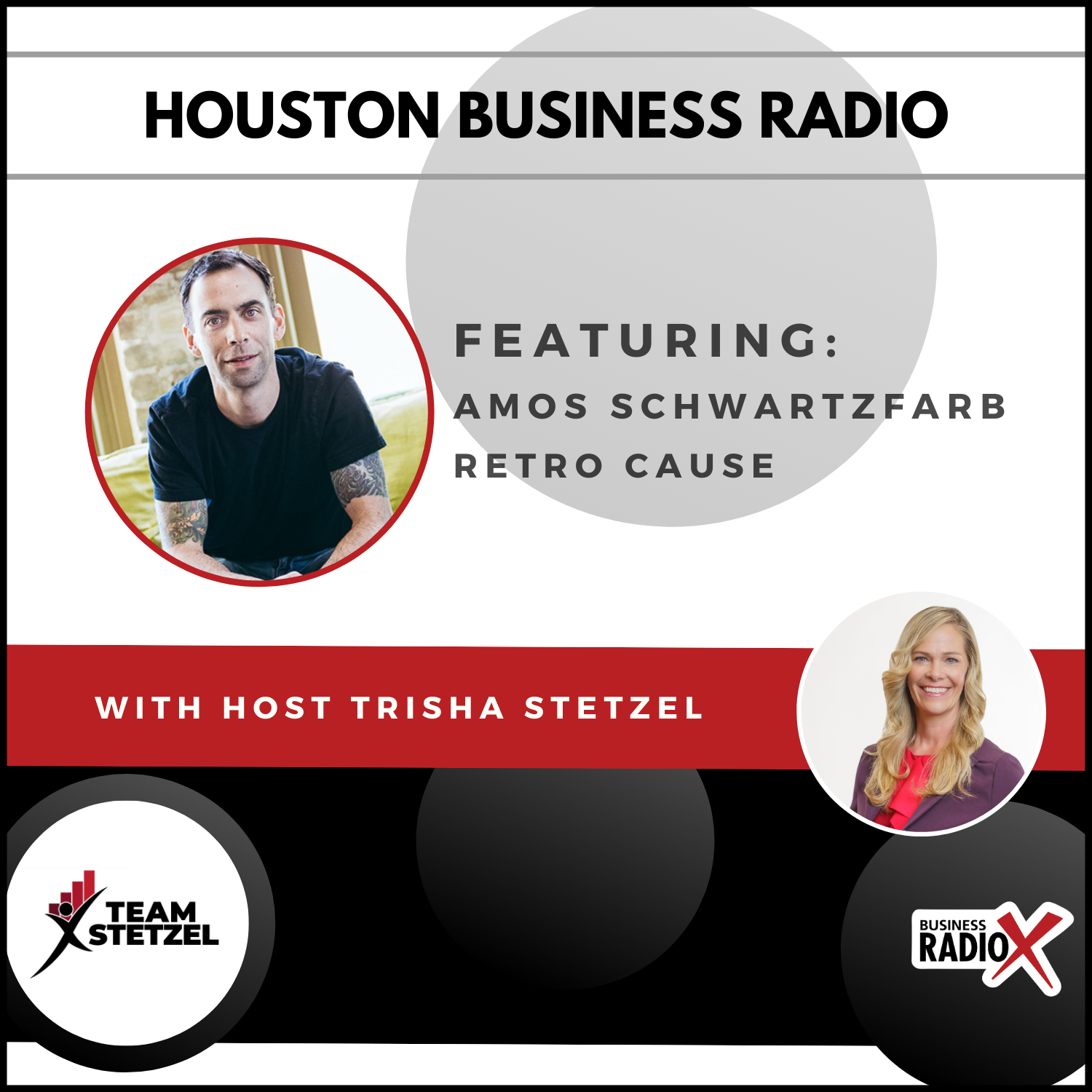

 Amos Schwartzfarb—one of the most influential figures in the startup ecosystem, known for his decades of hands-on operating experience, investing expertise, and founder-first mindset.
Amos’s career began unexpectedly in the early days of e-commerce, packing boxes at Shoreline Mountain Project—an experience that led him into a 25+ year journey through seven startups, multiple acquisitions, and some of the most iconic early-stage companies in the U.S., including HotJobs (Yahoo), Work.com, Business.com, and Black Locust (Home Depot).
In 2015, he shifted into investing as Managing Director of Techstars Austin, where he backed more than 70 seed-stage companies and became a central pillar in Texas’s startup growth. He is also the bestselling author of Sell More Faster and Levers, two of the most practical frameworks ever written for founders who want clarity, traction, and repeatable scale.
Now, as CEO and advisor at Retro Cause, Amos continues helping early-stage companies build momentum by combining metrics, mindset, and operational discipline. When he’s not advising founders, you’ll find him outdoors—mountain biking, climbing, or cooking with his family.
Connect with Amos on LinkedIn.
 This transcript is machine transcribed by Sonix
TRANSCRIPT
Intro: Broadcasting live from the Business RadioX studios in Houston, Texas. It’s time for Houston Business Radio. Now, here’s your host.
Trisha Stetzel: Hello, Houston. Trisha Stetzel here bringing you another episode of Houston Business Radio. It’s my pleasure to introduce you to my guest today, Amos Schwartzfarb, a legendary startup author, operator, author, investor, athlete, and advisor whose career has shaped some of the most successful early stage companies in the country. Amos started his journey packing boxes at Shoreline Mountain Project, helping convert it into one of the earliest e-commerce companies, kicking off a 25 plus year career across seven startups including Hotjobs, acquired by Yahoo! Work.com. Business.com. Black Locust acquired by Home Depot and even more. In 2015, he shifted to the investor side as managing director of Techstars Austin, where he invested in more than 70 seed stage startups across Texas and became one of the region’s most respected early stage investors. He is also the best selling author of Sell More, Faster and Lovers, which we’re going to talk about. Known for giving founders the frameworks, metrics and mindset to build repeatable, scalable businesses. Today, as CEO and advisor at Retro Cause, he continues advising founders while spending his free time mountain biking, rock climbing, and cooking with his family. Amos, welcome to the show.
Amos Schwartzfarb: Thank you so much for having me, Tricia, and what a fantastic introduction.
Trisha Stetzel: Oh, I’m so glad that you said that I spend time on this Because, Amos, the truth is, we don’t do that for ourselves. So I like to give that as my gift to you.
Amos Schwartzfarb: Oh my gosh, it’s so true. If you would have asked me to do that, I would have glossed over all of it and just said, yeah, I worked with startups a couple of times and we did some cool stuff.
Trisha Stetzel: Okay, so I avoided a word and we’re going to talk about it before we even talk about you. Okay. Consiglieri as I as I think it’s pronounced.
Amos Schwartzfarb: So yeah.
Trisha Stetzel: Tell us what in the world that word means. Amos, before we get into talking.
Amos Schwartzfarb: Yeah. So maybe maybe the way that I’ll describe, I’m not sure it’s the right word to use. It’s where it comes from. Is actually, I don’t know, maybe all over the world, but at least I’m from North Jersey, from the North Jersey Mafia. And but the reason I use that word is because what I do with my clients, I’m not really a CEO coach. I think when people think of a CEO coach, they think of someone who’s going to help with organizational skills or some soft skills. And that’s not really what I do, and I haven’t figured out the right way to talk about it, even though I’ve been doing this for so many years. So what I do with my clients is I’m really I work directly with CEOs and I am the the person that they come to and talk to and trust more than anyone, more than their co-founder, more than their board. And we and we do everything. I am their trusted source. Whether it’s, um, a problem with an executive managing the board, fundraising, building out an executive team, figuring out the right people, whether it’s problems at home because it affects their business. It’s literally everything. And so I use that word because that is essentially what it is to the Mafia boss. Um, so I hope I’m not insulting anyone out there, but that really is the role that I play with my clients.
Trisha Stetzel: Yeah, I love that. And I’m I’m glad that we started there because advisor doesn’t do what you that word doesn’t do what you do for your clients justice. And I appreciate that. You have a complicated word.
Amos Schwartzfarb: Yeah, yeah. Thank you. Yeah. It’s. If nothing else, it sparks a good conversation.
Trisha Stetzel: It does? Yeah, absolutely.
Trisha Stetzel: Okay, so tell us a little bit more about Amos.
Amos Schwartzfarb: Oh, gosh. Uh, here, I’ll do this. I, I have been noodling on this thought for a long time, but a lot lately. And I actually wrote something down yesterday, and I don’t know what I’m going to do with it yet. Um. Which is, I don’t know. I think this goes for all people, but I’m going to just speak of it as if I’m the only person with this challenge in the world, even though I know that I’m not. I don’t know how to speak about just Amos, because there’s the just Amos, the expectation of what have I done professionally? And that’s probably what most people want to talk about here. There’s the Amos that was, um, I mean, I’ll pat myself on the back. An elite athlete for many, many years in multiple sports. There’s the Amos that’s an author. There’s Amos that is a musician and is in the middle of dropping an album and has a new band. There’s the Amos that is a dad, and it is really the thing that is most important to me in the world. Um, there’s the Amos that’s from new Jersey and the people that I grew up with that know me one way. And then there’s the folks here in Austin that have no idea who that dude is. Um, so I don’t know, like, that’s me and a little bit more.
Trisha Stetzel: Okay. No, I love it because it really gives us some insight into the things that make you tick. Yeah, right. It really does. Yeah. Okay.
Amos Schwartzfarb: You know, here’s what I might say as you think. Like, here’s the here’s the Amos. Rather than trying to identify myself in a in a box or several boxes. I think who I am is a person that has been really fortunate that I had an upbringing, that that gave me the opportunity to keep a really open mind and do a lot of cool stuff. And and not that I haven’t been afraid a lot in my life. I’ve been afraid a lot in my life. But fear has never stopped me from doing anything. At a young age till now. And so the Amos that I like to think about is the person who brings to the world, um, hopefully inspiration for other people to do the same, to not let the fears get in the way of their dreams.
Trisha Stetzel: Mhm. Well I love that. That is fantastic.
Amos Schwartzfarb: I stole that, I stole that from the no company no fear. They’re probably out of business 20 years but I. But I did love it.
Trisha Stetzel: Okay I’m glad we noodled around on this because something really profound came out. Thank you for sharing that. Uh, can we talk about mindset, uh, a little bit in the, in the, in the business place. So I think I’ve heard you say business is math mindset is the multiplier. So what do founders get wrong when we’re looking at that equation?
Amos Schwartzfarb: Yeah. Um, maybe a little context here on the business is math part. And this is this is me projecting. I, um, I will start with I’ve always been good at math, and I stopped taking math in 10th grade because I never thought it was important. I think differently now, much differently now. Um, and I was always I’ve always been really creative. I’ve always been a writer. I was a creative writing major in college. Um, and when I, and I was in my early, early years of business, I operated largely on intuition and, and really didn’t put a lot of stock or faith into the importance of understanding metrics and the math of business. And, um, fortunately, I had some good intuition along the way. And also, fortunately, I had a phenomenal mentor and boss at, uh, at a company that, um, Business.com which was acquired, I was acquired into. And then I was an executive there. Um, Who? That not just the CEO, but the CEO and the CEO were so metrics driven. They to me, they are the poster children for what it means to run a really good business. And I and they I will say they beat it out of me to it’s okay to have your intuition, but then how do you back it up with math and that that was back in, you know, almost 20 years ago now.
Amos Schwartzfarb: So I 17, 18 years ago. And so the journey since then, um, and, and maybe the lessons over and over and over again is that. Yeah. Intuition is, is a really important thing to help, like pick up and say what direction should I look at? But knowing whether or not you’re actually heading in that direction is math. And at the end of the day, and as much as like a visionary founder who doesn’t have a financial background does not want to hear this, I being one of them at one point in my life. Um, your business is really nothing more than a than a calculus equation. And and it’s our responsibility as leaders of that organization to figure out, um, what how to make the math work so that your business can work so that you can actually achieve, achieve your vision, and so that, you know, you can step away from the math and change the world in the way that you want, want to change the world.
Trisha Stetzel: All right. So this makes me like, want to talk about mindset because you have experience with more than 70 seed stage startups and probably lots more than, uh, that’s just what I know. Um, people who start businesses, true entrepreneurs want to go open a business doing something that they love. And most of them, at least the ones that I work with, are afraid of the numbers. So how do we shift besides the words that you used, which is your business, is basically a calculus equation. How do we get people to shift the way they think about their businesses from I love underwater basket weaving. I’m afraid of the numbers to this is a business and I need to care about the numbers.
Amos Schwartzfarb: Yeah. Um, I, I feel like there’s a couple of different ways. Like a couple. I have a few different opinions, and some of them are sort of, like, very surfacey like, hey, we can talk about how to, you know, how to look at math as a positive thing versus a negative thing. And, but I actually think it’s it’s much, much, much deeper and probably even outside of my, my, my depth of, uh, teaching, but not outside of my depth of exploring, which is why are you afraid of the numbers? What is it about looking at it as math? Do you feel like you’re going to lose the passion? Do you feel like you don’t understand what the math is supposed to be? And so I think maybe there’s two like like sort of core level things I would think about, which is like under try to understand what it is about the math that you’re reluctant to leaning into, and maybe it’s okay that you don’t lean into it, but understand what that is so you can find someone that can help you do it. Um, and, uh, you know, I think the other thing is which which is this is something that I have, um, I’ve been practicing for the last couple of years with, like, in such intensity.
Amos Schwartzfarb: And it’s it’s it’s amazing. I don’t even know how to explain it to somebody. And it sounds crazy. It will sound crazy to someone who doesn’t believe this. Um, but just the the the there’s an art, I think, to looking at everything and having a different perception. So instead of saying to yourself, the math scares me, or I don’t believe it, or I don’t want to do the math, what if you say, gosh, this math is really fun? And yeah, you’re not going to believe it at first, and you might not believe it for a long time. And not that you’re trying to hypnotize yourself, but you. There’s an opportunity to literally change your perception by trying to find the things in it that could be fun, because guess what? What if you love basket weaving and you love selling baskets, and you get to sell 100,000 baskets instead of 100 baskets because you not only have figured out the greatest basket, but the people who want the greatest basket. And you’re you’re making their lives better. How much more awesome are you going to feel about selling baskets?
Trisha Stetzel: I love that, and and you’re right. You know, the the thoughts that we have, the language that we use eventually become our thoughts and our beliefs. And if we can shift the things that we’re saying to ourselves and we can actually shift the outcome eventually. Yeah, I love that.
Amos Schwartzfarb: I mean, you’re going somewhere like, we can we can take a real left turn here if we want. But like that whole thing of like what we say to ourselves is so important because I do a lot of like mindset work and spiritual work recently too. And the thing that I have come to believe, and this is not my original thought by any stretch, but but I believe this is those thoughts are not actually us. They’re just thoughts. And so when we can learn to detach ourselves from those thoughts and realize, like we can say anything to ourselves, it kind of doesn’t matter. So if we’re going to say something, let’s say the positive thing. Let’s say the thing that gets us what we want, not the thing that doesn’t get us what we want.
Trisha Stetzel: Okay, so I’m going to reel it back in because I don’t know about detached thoughts for the rest of the conversation, but it’s it’s it’s very interesting. And I would love to have you come back because I would like to talk about that. I’m very interested in hearing more, but I want to roll us back to the numbers. Um, metrics. Numbers actually matter when and and a lot of companies may not see that those particularly matter with a product market fit. So what are your thoughts around those metrics early in a business?
Amos Schwartzfarb: Yeah, I love the question. And it is one of the things we talk about in the book lovers a lot. And um, you know, maybe like the quick step backwards is a big reason that, um, Trevor and I decided to write the book lovers was because of exactly the thing we’re talking about, the fear of trying to figure out what are the right numbers. And so the thing we talk about a lot is get them wrong, but get but start doing something. Because as soon as you get that, as soon as you start doing something and you see that they’re wrong, you will want to as a problem solver, as an entrepreneur, inherently in your DNA, you will want to figure out what is right and you’ll get there. And sometimes that there might take a month, and sometimes that there might take ten years. And I’m not exaggerating it. Sometimes it takes a really, really long time. It’s that journey and going back to the mindset like, enjoy the journey. That’s why you’re doing this, right? Yes. You want the end result. You know, one gets the end result without the journey. So let’s let’s figure out the math along the way so that that’s that’s what we profess in the book over and over again, which is like, here are some frameworks to help you start to figure out what the math is. And you’re going to get it wrong, period. Just own it and then we’ll figure it out. Start with something.
Trisha Stetzel: Oh, I love that. Take action. Start with something. Okay, uh, before we take a little bit deeper, dive into levers, tell people how they can connect with you because I know they’re already interested in picking your brain.
Amos Schwartzfarb: Yeah. Uh, absolutely. Um, the probably the two best ways you can reach out to me on LinkedIn. Um, I do respond to every single message? Um, even maybe not all the ones that are clearly spam, but everyone that is personal I respond to, um, not always super fast. And then my email, which I’m actually probably slower than LinkedIn, I’m embarrassed to say is Amos at Retro Coscom. So it’s almos at retro cause are are you?
Trisha Stetzel: Okay. And I know they’re guessing how to spell your last name, so I’ll do it for you. Let me try. Okay. S c h w a r t z f a r b. How about that? Yeah. Okay.
Amos Schwartzfarb: So it took me like 16 years so that was great.
Trisha Stetzel: There’s not enough room. There’s not enough room for that. I’m just saying especially as a professional athlete, if you ever wore a jersey with your name on the back of it, it was a problem.
Amos Schwartzfarb: Yeah. My my daughter’s jersey. I think it like, curves around and goes.
Trisha Stetzel: It goes down one sleeve. Who knew? Okay, so back to levers. I would love to, if you don’t mind sharing, uh, share a little bit more about the framework that you talked about and something that might really stand out and a reason why people should go and grab your book.
Amos Schwartzfarb: Yeah. Um, I think what I can do and stop me if this is too much, but I think in a minute to a minute and a half, I can describe the whole book. Yeah. Um, so firstly, it’s a book you do, not a book you read. So if you’re interested in checking it out, you’ll read through it. You’ll read through it really fast, but really quickly you’ll figure out like, oh, I need to actually do work. It’s not like, this isn’t, not like, oh, I’m going to philosophize about cool stuff. And you’re like, yeah, it’s a great philosophy. No, we’re actually giving you tangible things to do. So the book has five chapters. There’s actually six frameworks. The sixth one is in the appendix, where when we do a second edition, we’re actually going to move it up front. And it’s really what everything starts with, which is you have to have a vision and a mission. It doesn’t really matter what it is, and it doesn’t have to be articulated well, but you have to know where you’re going. So I want to make baskets. Great, I want to I want to bring baskets to the world. Cool. But you have to have that to start. Um, and then it’s a series of five frameworks that are actually all data oriented. The first one is a framework to help you start to identify not just who you think your customer is or will be or should be, but who your customer actually actually is.
Amos Schwartzfarb: How do you figure out who it actually is, not just who you think it is with data. So the first framework helps you do that. The second framework helps you figure out your business model. So it’s, you know, you have an idea of how you’re going to make money. That’s great. And literally we have you write that out as a math equation. This is how I think I’m going to make money. The important work for this framework is what comes down. And I say underneath, and it’s a visual thing for me. What is all the work that has to go in to prove that your math equation is right? And that could be anything from your your marketing, but like getting very, very granular to your sales, to your finance team to anyone who you might be hiring. What are all the things that have to happen? What do you have to build? What do you have to buy? Do you need money? Can you do it with a pickax? Doesn’t matter. What are all the things? And then the that takes us to the third framework. So if you think about the first two frameworks, we’re basically creating a massive list of things to do and things we need to learn.
Amos Schwartzfarb: The third framework, which is we call validating assumptions. It actually helps you take all of that and anything you may have missed and prioritize it. And what we like to say is you can never do more than 2 or 3 things well at a time. So we the framework gives you ultimately a matrix at the end, which is things that are high priority, low priority, low priority. We don’t even talk about until it becomes high priority someday in the future. And then high priority breaks out into validated and unvalidated validated. You’re going, you’re building. You’re doing it Unvalidated you don’t get the you don’t earn the right to go do it until you learn whether or not you’ve earned the right to do it. So what do you have to learn in order to move it and make it validated so that you can go do it? The fourth framework this gets into like the metrics part of it, which is okay, now that we’re doing things, how do we measure what we’re doing and whether or not we’re heading in the right direction or not. And an important point here is doesn’t matter if you’re going in the right direction or not, it’s a failure if you don’t know why it’s a success. If you do know why you cannot hit your numbers, but you know why you have succeeded. Because now, if you know why, you know what you can do.
Amos Schwartzfarb: If you don’t know why you’re. If you don’t know why you’re crushing your numbers, then when your numbers start to worsen, you won’t know why. So it’s a framework tied into all this. How do I measure what I’m what I’m actually doing and what matters? And then the final framework and this is really like it’s scary for some people. And to me it’s the most exciting has become the most exciting part, which is how do you take all this and how do you build a financial model. And I’ll use a different word and I use these interchangeably. How do you create a plan that’s based off of all the data you have, that tells you what you’re supposed to do on a day to day, week to week, and month to month basis? That is something that you can measure what you’re doing and how you’re doing against it. So if you say, hey, I’m going to do these ten things and it should result in X, Y, and Z. Well, I only did eight of those ten things and it resulted in x and y. I didn’t do the last two things because of time, money, resource, whatever. I learned something cool. I didn’t hit all my goals. I think I understand why, how do I keep going forward? That’s it. That’s the book.
Trisha Stetzel: That’s it. That’s the whole book. Okay. But we still but people still want to buy it. I’m just saying. All right, uh, all the usual places they can find.
Amos Schwartzfarb: Yeah, yeah. Uh, any place. Yeah. I don’t think you can get it in bookstores anymore. Maybe some random ones have it, but. Amazon. Yeah. Amazon. And we’ve done something. This is very intentional. And I like to say this. It may maybe it’s self-soothing, but, um, we’re not trying to make money on this, but you don’t make money on a business book anyway. But if you want the audible copy, it’s like a $0.99 or $1.99, like it was the least that we can charge. And the book is like, again, the paper copy is the least that we were able to charge just to recoup some costs. But like we have kept it super, super inexpensive. Our goal is to just empower as many entrepreneurs as possible to control their own destiny.
Trisha Stetzel: So it sounds like you might be using this tool with the businesses that you decide to maybe invest in or be a part of.
Amos Schwartzfarb: Absolutely.
Trisha Stetzel: Which is amazing. It’s such a great start. Right? Uh, do you know where you’re at? Do you know where you want to go? And how are you going to, you know, get through the, the, uh, the gaps or what are the consequences of not getting where you want to go? So, um, I’m curious because you’ve done this so many times and you’ve built a tool for people who want to start a business. Um, what patterns do you consistently see with founders who win?
Amos Schwartzfarb: Um. The probably the number one pattern I see is that they know their metrics inside and out, period.
Trisha Stetzel: Okay. Comes back to the.
Amos Schwartzfarb: Numbers and the and the and the thing is an interesting thing about win though, because win comes in a lot of forms like you can you might be able to create like a relatively successful business but have no idea what’s going on. So you’re stressed out all the time. Someone might call that a win. I would not, because I don’t want to be stressed out. I I’m doing this because I love it. It should bring me joy, not stress. And I do think that the command of your numbers will allow you to live a less stressful existence.
Trisha Stetzel: Okay, so I’m going to go to the whole I don’t even I hate calling it work life balance. Can we just call it integration or whatever language you want to use around that? So not being stressed out in your business and being able to spend time with your family or go rock climbing or cook or whatever it is that you want to do, how do you get there? How do you get to have that work life balance or integration?
Amos Schwartzfarb: Yeah. Um, gosh, if I knew how to really, really answer this, I think I’d probably solve a lot of the world’s problems. It’s something that I continue to work on. I think that it’s driven people and, you know, and entrepreneurs, by definition, are driven people. Um, and, and most really, you know, true entrepreneurs that I know also, they have their own version of focus or tunnel vision or whatever you want to call it. You find yourself in something. Um, it’s really, really hard. And, and so there’s like, you know, sort of like basic things you can do on the surface, like, how do I what how do I identify what my boundaries are and how do I stick to my boundaries. Like, yeah, those are all important tactical things to do. I think there’s a almost always a much deeper root cause of why we are driving ourselves in this way. And this is the work that I like, the exploration I’m doing on myself. Like what allows me to say, how do I define what’s most important to me? 2 or 3 things, right? This is. I’m not talking about me and my life. What are the 2 or 3 most important things in my life? And I can tell you what they are. And any time that I start to feel myself get stressed or tensed up because it will happen, because I’m driven and I find myself focused and in tunnel vision, I step back and say, what am I doing that doesn’t support those three things? What can I take off my plate or what? Or is there an imbalance in how this is happening? And how can I look at that over a longer period of time? And how can I create something that is going to intuitively feel more balanced?
Trisha Stetzel: Yeah. So we often talk about this idea of moving somewhat away from the business so that we can do the things that we love in life. But what if we flipped it and we talked about the things that we do in life that actually have shaped your leadership style? So you’re really into, um, Sports, adventure racing, rock climbing, probably a few other things that I don’t even know about. How have those extreme sports shaped your leadership style?
Amos Schwartzfarb: Um, I think it’s done a couple of things. One, particularly at times when I’m doing more than one thing that requires a tremendous amount of focus and attention. It has. It has taught me how to really, like, say no. How to not do the things that don’t support those things and and lead by example. Right. So being comfortable when you have an employee who is prioritizing the most important things and and and modeling for them, let’s focus on the most important things. Don’t just do busywork. Don’t just keep yourself reading emails because you’ve got a full inbox. Like, if that’s not serving what you’re actually supposed to do to move your business forward, let’s find our time to do that. So I think the modeling of that behavior is that of understanding where to focus and where to not spend your time is one. Um, and I think, uh, you know, I think it probably goes back to modeling also, which is, um, making sure that, um, how do I say this? Like. I think that I’ll say it like this. I don’t agree anymore. And there was a time that I fell into this culture, but I do not agree with the culture that we should be working 15 to 20 hours a day, seven days a week to run our business. I don’t think if you look at any other system in the world, engines like it doesn’t matter. You will see that everything has a point where it will max out and break because everything has a a shelf life of some amount. And so if I think about what it takes to build a business, and maybe this is like a thing that as a society we’ve kind of ruined a little bit, it really takes ten plus years to build a meaningful business.
Amos Schwartzfarb: And I believe lots of people think that, um, well, if I’m not, if this isn’t up and running in 18 months or two years, like I’m a failure or like I can’t, I can’t make it work because I don’t have the the, you know, the money or the resources or whatever it might be. Maybe that’s true. Um, but I think that the idea that something meaningful takes a long time. And if I want to be able to stay excited about it for a long time, I have to find the right. I’ll use the word balance, the right balance, the right amount of effort. Like think of it like a marathon runner or ultramarathon runner. They’re not running a five minute mile pace, right? And like, this is a cliche, but they’re finding the pace right below their threshold, their heart rate threshold where they can go for the longest amount of time. And I think that’s what it takes to build a business. And, and and it’s okay if you redline a little bit like and actually I would say I learned that way. Like I have to cross a barrier and then say, oops, that was too much and pull back so I know where the barrier is. That’s okay. Like it’s going to happen for all of us, but like but but but recognize that you can’t actually nobody no matter how you might be able to go for 2 or 3 years really really hard. Everyone is going to burn out at some point if they don’t have the right support around them, and they’re throttling too high.
Trisha Stetzel: Okay, so we’re at the back end of our time. And I have one last question and it has to do with support. Thanks for bringing that up. How important is it to surround yourself with the right people as you’re going through this journey?
Amos Schwartzfarb: Oh it’s everything. It’s absolutely everything. I, I have known a very, very small amount of entrepreneurs. And when I and when I say this, I don’t mean tech entrepreneurs. I mean people that, you know, they own a store on Main Street or something that have done it themselves and had a bunch of people that they tell what to do versus. Help them be better. And my judgment of them is always the same. You’re not seeing your potential because you can’t get out of your own way. So I am making a judgment there, but it’s just the pattern recognition that I’ve seen over and over again. I think having the right people around you is is the most important thing. And you know what I tell all the CEOs that I work with. So, so the work that I do with my CEOs, one of the things that I do with all of them is I help them mature alongside their businesses. So if they if I come in when they’re in a stage company and they’re, you know, three, four years later, they’re, you know, seed stage company and they’re making, you know, tens or hundreds of millions of dollars, like the business changes and their role changes. When you start a business, you are doing everything, and little by little you’re doing less and less. The, the, the CEO’s job is not to actually do the work anymore. It’s to understand the work and have people that are way better than you, helping you strategize and helping you execute and helping guide you. Right? So I think like finding the right people around you to help guide you is so, so and I don’t none of the most successful people that I know in the world, every one of them and myself included, have coaches, all of them. And this whole stigma that you have to do it alone. I mean, from, you know, I’m a Gen Xer, so I like I get it, I was there at one point like, yeah, like get a coach, get great people around you. Um, yeah.
Trisha Stetzel: Okay. This has been so much fun. I definitely you definitely have to come back because there’s so many other things that I want to dig deeper on. This was absolutely amazing. Thank you for taking the time. I really appreciate it. Amos. So tell us one more time how folks can connect with you.
Amos Schwartzfarb: Yeah. Um, so LinkedIn, Amos Schwartz but LinkedIn, or you can email me at Amos at com at C a.com.
Trisha Stetzel: Perfect. Uh, as always, you guys, I will put those links in the show notes. So if you happen to be sitting in front of your computer and you just want to point and click, you can do that. Please do not do that from your car. I beg of you, Amos. Thank you again. I appreciate your time today. I look forward to our next conversation.
Amos Schwartzfarb: Likewise. Me too. Thanks for having me.
Trisha Stetzel: All right, guys, that’s all the time we have for today. If you found value in this conversation that Amos and I had, please share it with a fellow entrepreneur, a veteran or a Houston leader ready to grow. And be sure to follow, rate, and review the show. Of course, it helps us reach more bold business minds just like yours and your business. Your leadership and your legacy are built one intentional step at a time. So stay inspired, stay focused, and keep building the business and the life you deserve.














