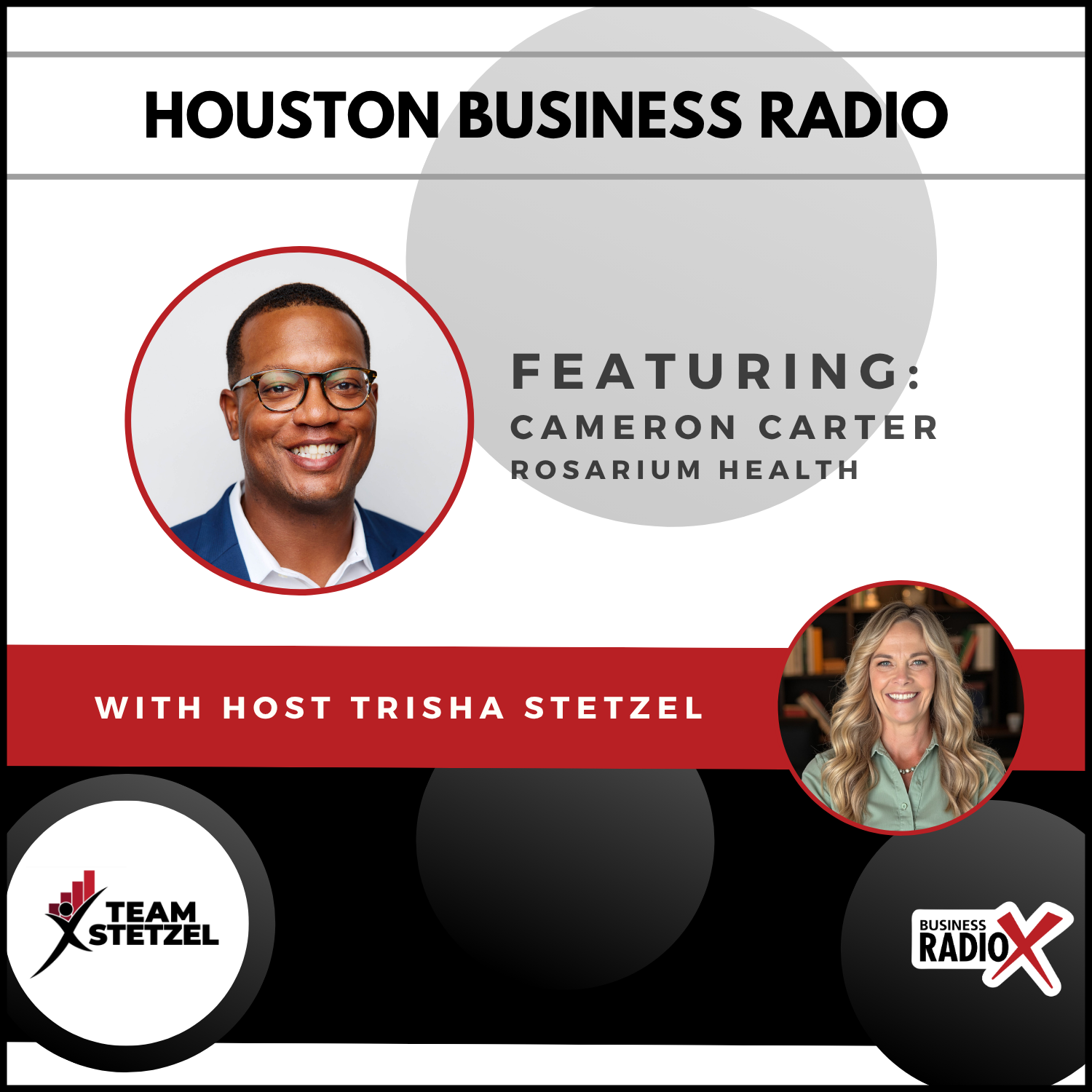


 Cameron Carter is the CEO and Founder of Rosarium Health (Rosarium), a healthtech startup that is reimagining the home as a core site of healthcare delivery.
As CEO, he is changing how health plans, clinicians, and contractors work together to deliver home safety evaluations and modifications that prevent falls, reduce readmissions, and lower total medical costs. Previously, he spent a decade in value-based care operations and business development at DaVita, Bright Health, Evolent Health, and Truven Health Analytics.
Cameron began his career in academia studying the physiological effects of healthcare disparities, a foundation that drives his belief that the home is one of the most underutilized sites of care in the entire health system.
Cameron brings this perspective to leading healthcare and technology stages, like HLTH and CES, where he has contributed to the broader conversation on the future of home-based care.
LinkedIn: https://www.linkedin.com/company/rosariumhealth/posts/?feedView=all
Website: https://www.rosariumhealth.com/
 This transcript is machine transcribed by Sonix.
TRANSCRIPT
Intro: Broadcasting live from the Business RadioX Studios in Houston, Texas. It’s time for Houston Business Radio. Now, here’s your host.
Trisha Stetzel: Hello, Houston. Trisha Stetzel here bringing you another amazing episode of Houston Business Radio. Today, I am joined by Cameron Carter, founder and CEO of Rosarium Health, a health tech company reimagining the home as a core site of healthcare delivery. Cameron and his team are changing how health care, how health plans, clinicians and contractors work together to deliver home safety evaluations and modifications designed to prevent falls, reduce hospital readmissions and lower medical costs. Before founding Rosarium Health, Cameron spent a decade in value based care operations and business development, and his career began in academia, studying the physiological effects of health care disparities. Today, we’re going to talk about something affecting a growing number of families. How we help the people we love remain safely and confidently in their homes as they age, and why there may be more solutions available than many of us realize. Cameron, welcome to the show.
Cameron Carter: Thank you for having me. Appreciate it.
Trisha Stetzel: I’m so excited about having you on the show. And I think your team reached out to me and said, Cameron needs to be on your show. And I read your story and I said, yes, he does. And I really enjoyed our Pre-call a few weeks back as well. So besides the background that I just gave about you, what else do we need to know about Cameron before we start this conversation?
Cameron Carter: Um, about Cameron, you did a great introduction as far as my background in academia and my time in healthcare. And the only thing I would add is, um, you know, a big fan of Houston. My family is from Lake Charles. Um, but spent time in California. So Houston itself is like a second home. Um, so excited to bring Roseanna here. Um, spend time with this conversation talking about Houston broadly, but I think more than anything, just happy to be here. Yeah.
Trisha Stetzel: Yeah, absolutely. Well, and I’m excited that you’re bringing what you do here locally. I, it’s, I, I believe there’s so many people that are listening today that are really going to resonate. They’ll resonate with, number one, your story, but also the work that you’re doing. Um, I mentioned when I introduced you that your career has taken you from studying healthcare disparities to spending a decade inside a value based healthcare. Uh, so applying what you were studying and then eventually becoming an entrepreneur. So what did you experience personally and professionally along the way that ultimately led you to create Rosarium health?
Cameron Carter: Throughout my time, I think what was very clear was that populations and communities are looking for innovation, looking for new ways to both receive care, pay for care, even find care. And they’re on my time working as, um, working with fortune 500 companies and the employer benefit side building software for hospital systems during the Obama administration and even helping to operate a health plan that went public. Um, you can see through all these years that individuals really want to take ownership in their health care, understanding health care outcomes. And specifically when we think about value based care, maybe a unique term, but it’s really paying for outcomes, not just paying for services. So it’s a different model of care. And to be able to deliver that model of care, the consumer has to be very aware of the health benefits, very aware of the health outcomes. And that desire hasn’t changed. If anything, it’s intensified over the last, I would say, 5 to 6 years since the pandemic. So I would say throughout my time in health care. You’re starting to see consumers really take agency and understand what they want in their health care continuum. And we think about health that’s even personified. We think about a modification to someone’s home being very specific to their home and their need. So I think about that personalization throughout my time in healthcare and it really showing up readily in rosarium helping the work that we do every day.
Trisha Stetzel: Mhm. All right. So you’re already in the market and now you’re moving into Houston. So the the folks that are listening are probably curious. Tell us exactly what Rosarium health does.
Cameron Carter: Absolutely. So Rosarium health helps people live safely and independently at their home. We work with health plans, health care organizations, and even state agencies to coordinate everything from in-home clinical assessments to actually getting a ramp, built a bathroom, changed, a sterile app installed, or whatever the person needs to age with dignity. Uh, specifically as you think about home modifications, which is our core thesis right now, Home modifications have been a covered benefit since the GI Bill in the 1940s. They’ve been in Medicaid since the 1960s. But what’s been missing for that benefit to be delivered at scale is the infrastructure to support any anybody from a rural setting, a suburban setting, or an urban setting? So we think about what health does. It’s really focused on being that infrastructure layer, such that a Houston Methodist or Blue Cross of Texas can deliver home modifications just as they do dental benefits or transportation benefits. And these are things that are core thesis of someone’s health. We talk about social determinants of health, and we talk a lot about access to care. So you think about your doctor, the hospital, you go to, the food you eat, the exercise you’re doing. But the built environment, the neighborhood and built environment is a whole other subset that affects your health. And what’s been a challenge for health care organizations is that they don’t have the brand permission, nor the infrastructure to deliver that benefit to a child, to an adult with an amputation, or even an older adult trying to age in place where health helps them to close that gap and ensure it’s done in a compliant, uh, equitable way as well.
Trisha Stetzel: Yeah, absolutely. So really thinking about moving from my aging parent or grandparent needs to be in a facility or in, um, not in their home to really being able to support them in their home. So what do you believe? Or why do you believe the, that the home, even in my own space here, uh, is one of the most underutilized sites of care in our health care system.
Cameron Carter: Underutilized. That’s a great question. Um, when I think about research thus far, AARP s latest national research found that around three, around 75% of all adults 50 years and older wanted to remain in their current home. Um, while anticipating needing modifications such as bathroom improvements, ramps, and stair lifts. We know that people already want to stay in their home. We know that people want to invest in their forever home and not so much liquidate that home and then move into a nursing facility or assisted living facility. We know there’s a consumer choice in that regard. Additionally, there’s an affordability conversation when you think about the cost of a nursing home or even a private room nursing home, you’re looking at between 10 to $15,000 a month in perpetuity. For many families, particularly those in Houston, that’s not an attractive option. And the ability to not only support an elderly parent or a child or even a sibling, it’s easier to do when they’re in the home that they know in the home that you already live in. And then additionally, when we think about, we want people to know is that this there’s a lot of options out there. A lot of solutions out there.
Cameron Carter: And what’s critical is that we don’t want individuals to believe that the only option for them is to put someone into a home or to go into a home. Um, and I think what’s really critical about the use case of the home we think about healthcare is that you’re starting to see high acuity home care be brought into the home. Before I started at Rozerem, I used to work at DaVita, leading health plan sales and payor partnerships there where we saw an influx of in-home dialysis. And that’s something that used to not be available for many years. But now you’re starting to see people do in-home dialysis during their sleep. You start seeing things like in-home chemotherapy, in-home palliative care. And as you start to have these chronic conditions to be supported in the home, many individuals realize that their home is not a hospital. Their home is not a clinic. Their home is not an outpatient setting. So to be able to modify or update that home, to be able to support that care continuum is going to be more critical. As you have an aging population and an aging population that desires to be in their home longer.
Trisha Stetzel: Mhm. Yeah. Okay. So let’s talk about that because you probably have some statistics or numbers since you since you’ve done so much research. Let’s talk about that aging population. Many of us, um, in my generation, I’m just going to call it sex. Genders, um, are caring for aging parents and grandparents. So what does that population look like right now? Cameron.
Cameron Carter: It’s, uh, I can give you a lot of different stats. The one that I always sort of like lean to is that by 2030, uh, in America, there will be over 75 million people over the age of 60. Uh, today in 2026, you have four different generations aging rapidly for the first time in US history or actually world history. So we’re still at Roseanne. I’m still serving the silent generation. We serve individuals over the age of 100 all the time. Uh, we support their baby boomer children who are in their 70s and 80s taking care of their parents, the Gen X population. As you mentioned before, this is the first year that Gen X population will turn 60.
Speaker 4: I just got goosebumps.
Trisha Stetzel: Cameron.
Cameron Carter: Um, and I and the other stuff that I give people is by 2031, the first millennial will turn 50. And this is a blessing. I mean, I, I think about it a lot differently than I think some folks may look at age and have sort of a negative opinion on it. My thought process, for the first time in US history, anybody gets to age how they choose to, how they can afford to. We don’t have the discrimination and the policies that hinder folks to have that dignity in their home. And I think that’s more critical when you think about the sandwich generation and folks who are caring for older adults and children, they want as many options as possible. They want as much information as possible. And companies like Rosarum Health want to do our part to really complement their work in their home as effectively as possible. But when you think about this aging population, it’s a consequence of modern medicine. It’s a consequence of a of a advanced Western civilization. It’s the consequences of just a choosing to take care of our health. And but there are consequences to longer life, right? Whether it’s retirement, whether it’s housing. But more specifically on the conversation today, it’s thinking through how does your home change as you change? And that’s something we’re going to have to really start having this conversation ahead of time because we don’t want to discuss this after you’ve had a fall, after you’ve had an incident, when to plan for it, much like you apply for anything else. And, um, a life that can easily be 80, 100, 110 years, which is what we expect for most of these generations and for folks who live over 106 60. Yeah, yeah.
Speaker 4: It’s.
Cameron Carter: It’s, um, it’s, it’s, I, I, I, I. Someone had told me the other day, I brought this up, they said, well, you know, we’ve had two presidents back to back over the age of 80.
Speaker 4: Yeah.
Cameron Carter: So we have to stop looking at these numbers as 60 means x. 70 means y or 25 means z. You know, I wouldn’t say age, just a number. But in America, you can do a lot of things throughout your entire life. And one of the things that we think about a lot at Rosarium and I started to write about, this is really your third act. So what does it mean when you turn 50 or 60 and you have another 30, 40 years of life in front of you? You get two more careers, a whole different, you know, whatever the case may be, we should really champion that and not look at, you know, this aging population and look down on them or look like it’s something that we should be concerned about. We should uplift them. And I think that’s something we’re really passionate about at Rosarum Health as well.
Trisha Stetzel: Yeah, absolutely. So I’m almost only halfway there. I’m just saying, I’m just saying, Cameron now, what I heard you say, and I think this is really important for people to hear is planning is key. So we’ve got a plan before the actual incident or accident or crisis. So how how does that work? Cameron. It sounds like the business that you’re in is, um, a, there was a, there was a big gap there and you’re filling that gap. It is actually a benefit that most people don’t take advantage of, both from the bigger business hospital side as well as the individual side. So how do people get started? Where do they start building this plan and engaging with you?
Cameron Carter: It’s a great question where I would immediately says it does not start with a contractor. It starts with a clinical conversation. Uh. At Rosarium Health, we prioritize using occupational therapists and physical therapists to go in and conduct an in-home safety assessment. This assessment is not just focused on Ada, but really focused on what are your goals in your home? What is the environment that your home is? And then what are you focused on to be able to achieve in your home? So for instance, if someone lives on the second floor of their house, it looks much different than someone lives in the first floor of their home. And then understanding what that home can actually withstand from a modification perspective, that clinician needs to be able to recommend. Maybe it’s a stair lift, maybe it’s a platform lift, maybe it’s grab bars at this angle versus this angle. Those small details really do matter. When you think about the frailty or the changing of someone’s body over time from working with that clinician, and like I said before, an occupational therapist or physical therapist, they’re really going to talk to you about what are your options, not only from a home modification perspective, but also a non modification perspective. What durable medical equipment should I be buying? What additional environmental adaptations can I be making? What additional technology can I bring into the home. And once you have that plan, now you have a number of solutions to a to a number of problems that you may not have thought about because you haven’t thought about where you may be in five to 10 or 12 years.
Cameron Carter: Additionally, once you have that plan, then you’re able to go to a remodeling company. Commercial remodeling or residential remodeling company have a very keen understanding of why do I need my bathroom to be a curbless shower versus some other esthetic modification you may see on HGTV? Because what we’re making sure people have to understand is that you’re making a construction decision that impacts your health. And it’s, it’s a very unique component because in some instances, individuals may not think about their Hvac unit affecting their COPD or affecting their child who has asthma. These are things that we’re starting to see more and more show up in our data as we’re starting to support younger adults starting to support children. Because when people think about the four walls they live in, it can really elevate and also hinder your health. But it starts with that assessment by that clinician who can help walk you through. Here’s the primary room and the modifications you may need. Here’s the hallway. It’s great. You don’t need to change anything in your hallway. Or here’s other things to consider. Nicer to have a much more broadened plan that’s personalized to yourself, your clinical needs, and the home that you reside in.
Trisha Stetzel: Wow. All right. So, Cameron, I want to make sure that we give people a way to learn more. Uh, and while they’re thinking about all of this amazing information that you’re giving us, so if someone listening has an aging parent navigating caregiving themselves or simply just wants to understand what’s available, how can they connect with you and learn more about Rosarium health?
Cameron Carter: There’s two ways that we always advocate to, to connect with us. The first is um, at support at rosarium health.com. We use that channel to really help anyone who’s starting from zero or sometimes starting from negative one. I don’t know what to do. So for instance, at Rozerem health, we may not be available in every single state, but we know how to help you in every single state. We know where to start in every single state. And as an organization that’s built with healthcare executives in mind, we understand how to navigate the healthcare ecosystem when it comes to this new benefit. So support at Rozerem health.com is one of the first entry points that we always advocate for. The second is for our social media. We do a lot of work on LinkedIn and Instagram specifically for two reasons. One, we can really produce long form essays. We can produce long form media that help folks understand, hey, if you’re a veteran, here are the six home modification grants available to you. As a matter of fact, here’s the fifth one for your children, right? We’re able to actually articulate these details and link things out to individuals. So you’re not having to Google everything. So the first is support@health.com. And then the second is our LinkedIn or our Instagram where you’ll see troves of data, troves of information that we just really give away because we feel like that’s what’s critical in this time. We don’t want to put a paywall in front of this information or make people have to, you know, mezzanine their way through the internet. It’s just, here it is. Here’s information for you. And we try to keep everything updated and consistent with that communication too.
Trisha Stetzel: I love that. Okay. All my veteran friends, did you guys hear that? I think Cameron gave us some information we need to go find on LinkedIn or Instagram, whichever social channel you happen to be following right now. And of course, I’ll put these links that Cameron just talked about in the email, in the show notes. So if you’re sitting in front of your computer, you can always just point and click. All right. Cameron, um, I do I want to talk about the Houston market, uh, one more time and just dig a little bit deeper. And, um, so Rosarium has roots here through the Texas Medical Center accelerator. Yep.
Speaker 4: That’s correct.
Trisha Stetzel: So what made Houston a fit for Rosarium health? And why is this conversation particularly important for Houston families right now?
Cameron Carter: We don’t have enough time to talk about my love and and appreciate Houston, Texas. But, um, I can, I can kind of give it in three buckets. I think Houston, Texas has the workforce, the work ethic and the environment to create a number of multibillion dollar startups from scratch. We love to be one of them. Um, when we think about the Texas Medical Center, we were in their accelerator in 2023 and it was competitive. As I mentioned, I told you before, there’s eight companies. We were the only company from America that actually got in that year. And we learned, you know, what TMC has to offer. Learn how to really support the community at large. Worked with groups like the Department of Health, worked with the mayor’s department, worked with a lot of city planners to understand what does it mean to help 4 or 5 million people a day in Houston? And we think about the workforce. As I mentioned before, it’s extremely strong in Houston across a number of different segments. We think also about the population of Houston wanting to live here. This isn’t a transient city like a Washington, D.C., where people come for a couple of years and leave, or they come in their early 20s, like Los Angeles, and leave. People come here and they want to place roots here. It’s much more likely to find someone who wants a forever home in Houston, Texas, or The Woodlands or Katy or Missouri City than maybe Boise, Idaho.
Cameron Carter: That really matters to creating a sustainable business. We want people who want to live in the city that you’re working in. That’s the other piece to it is in the last part about Houston. Um, it is centrally located to anywhere in this country. And I think sometimes that gets lost. You know, I think about, like I mentioned before, I grew up in California, having to take a trip from LA to New York is, is a stretch. It’s tough. But Houston allows you to get anywhere really quickly. And that’s really important for our business development, but also our growth as a as an organization where right now we’re in network for around 2.5 million Medicaid lives in California. We’re now growing into long term care in the state of Washington, but we’ve been serving, uh, the better part of the eastern corridor of New York, new Jersey, Massachusetts for two years. So to be able to live in a place like Houston easily get to these different areas is really critical to me as an executive. And then the core part of Houston is that it’s a place that people want to live, a place that people want to grow. And that’s really important as you’re building a business that you want to thrive over the next several decades, as we want for Rozerem health.
Trisha Stetzel: Yeah. Oh, I love that. So a couple of things came up for me. Texas is the number one landing place for female veterans coming out of the military. Uh, and I think it was either number two or number three for all veterans. Wow. Texas is a state where people come to land, uh, coming out of the military or retiring. So yeah, uh, big population there. So maybe another place that, um, certainly people would have lots of interest in the work that you’re doing. Um, so I want to you during our first conversation, you said something that I want to unpack a little bit. That the the idea that families may be able to stack different programs and resources, what does that mean? And how should someone begin figuring out what they or their family member may qualify for?
Cameron Carter: It’s a great question. And I, I think of the term stacking or braiding kind of these two verbs as how do you link two programs together that have the same benefit but different allowances together? So we go back to the example with veterans. You have a program called the history Grant, the Home Improvement Special Adaptation Grant. I think it’s around $60,000 per grant, but you can re-up it three times. So it’s up to $180,000 if you have that grant. And you’re also on Medicaid and there’s a home modification benefit and Medicaid, you can combine those benefits together. And we’ve done that for families. Go one step further. If you have two individuals in the same home who have the cover benefit, you can combine that benefit for home modifications to do a larger job. This is really critical in areas where you have a husband and a wife who insert their age, need their homes to be modified, but if the benefit is only $8,000, you can do a lot with $8,000. You do a lot with $16,000, though, and that’s something we’ve seen a lot. And a lot of our payer partnerships are all outlined. Can we inform the family they can braid the benefit, or they can actually stack the benefit. And what you end up having is, yes, you can still do that bathroom renovation, but you also do the stair lift.
Cameron Carter: You can also work in the kitchen, and you’re not having to delay that second modification project for the next tax return. Or maybe another thing down the line when a lot of families don’t have that type of time. So the ability to actually do all that work as soon as possible with the right allowance is critical. So when you’re looking at any program, whether it’s Medicaid, whether it’s Medicare Advantage, whether it’s a number of VA grants, always acts that care. And case manager, is there any limitation in my ability to stack this benefit. And what’s unique about the home modification benefit is that it’s one of the few benefits people would want to stack. Meaning that people don’t necessarily want extra dental benefits. People don’t always want extra vision benefits. People don’t want, you know, six hearing aids. But the reality of this benefit is that it’s such a new territory that, yes, capital is important, but it’s important that you are able to use every bit of dollars for your needs, and you’re not limited to, hey, I think you should only have $800 for a couple of grab bars. You may need 12 grab bars. That’s what you need in your home.
Cameron Carter: So when you stack these benefits, it’s important to ask your caring case manager, am I eligible? Is there any issue? But the reason why I always say ask is because you as a person have to consent into that. The payer, the government is not going to tell you what you’re eligible for. It’s not going to inform you about the other benefits. We all know how that works. So you have to advocate for yourself and really ensure that, hey, what else have access to? What are the benefits for? And this is something that we see kind of like a tangent, where we’ve had situations where you have a grandparent living in a home with a grandchild who both have a home modification benefit and have never thought about this benefit applying to both of them. So we’ll go into the home and we’ve assessed it for grandma. We’ve assessed it for the child. They both benefit from updated Hvac systems. They both benefit from wider threshold doors. They both benefit from having levers, not door handles throughout the home. And these small things create a more independent environment. And that’s what we want for any American in their home, is to be able to live how they choose to in their home.
Trisha Stetzel: Wow. Okay, so much information here. Thank you for sharing all of this. And for those veterans out there who didn’t know that they had access to, to grants like this or to government money that would cover, please, for gosh sakes, reach out.
Cameron Carter: To your job.
Trisha Stetzel: Yeah. Yes, exactly. Reach out to Cameron’s team support at Rosarium Health. Yes.com.
Cameron Carter: Right.com or.com.
Trisha Stetzel: Okay, perfect. Um, all right. For those people who are listening today, Cameron, that may not maybe this whole conversation doesn’t apply to them. I want to bring this back to leadership and those entrepreneurs that are listening today and remind them that, um, they may also need to understand about the people on their teams who may be quietly trying to manage children or aging parents work finances and caregiving all at once. What would you say to those people as a leader, knowing that they may have people on their teams that are struggling with this same thing that we’ve talked about today?
Cameron Carter: As a leader. It’s important that you leave with like authenticity and, and curiosity. Um, I say that because as much as you as a leader may be aware of what someone’s going through, you may not be aware when that need has changed. You may not be aware of when that reality has changed. And that could be, hey, my grandmother is dealing with X, Y, and Z now. My grandmother is in a nursing home. Much different reality they got to go solve. So as a leader, that could be. Advocating for PTO, advocating for time off. Hey, I, I’m going to turn your computer off. You need to go and be with your family because at the end of the day, this is still just a job. And family comes first. You got to take. You can’t pour from an empty cup. There’s a lot of sayings out there. But when you think about an aging population, a sandwich generation, for a lot of individuals, this is the first time in their family history anyone’s have to deal with these responsibilities at the same exact time. So I would say grace is something that I show up every single day with asking questions, checking in on individuals. Um, I try to not be too busy to listen, if that makes sense. So I don’t want to rush through things and things like that.
Cameron Carter: And it also is very critical. And I said this to other leaders out there, if you’re like us ever, were you ever a distributed company where you don’t physically see everybody every single day? The texts, the slacks, the check ins, the birthday reminders, all those little things matter. Um, and it’s really critical that you stay consistent with that as well, because as your organization grows, those small things that you’re doing, those check ins, those birthdays, you know, showing up with curiosity, showing up with grace, that becomes the culture that you’re able to engender in an organization that is looking for a leader to, um, really understand and really kind of lean into because this is hard work. I tell people all the time. It’s any startup, doesn’t matter if it’s home or, I don’t know, selling, you know, wallets. Like it’s all hard. So you have to make sure that if anyone’s on this journey with you, that you are supporting them, you are demonstrating, you know, compassion for them. And these soft skills are what helps you create, you know, a meaningful company, not just fire and brimstone and yelling and being this football coach, it’s like really showing up and being a caring leader and a servant leader. And that’s something I would advocate for anybody who wants to start a company, whether it’s VC backed or otherwise.
Trisha Stetzel: Yeah, okay, I love that. I want to know how it’s how your journey has changed you as a leader, going from standing in front of an established organization or doing work for someone else to being an entrepreneur. So what is building Rosarium Health taught you about yourself as a leader?
Cameron Carter: Um. I would say that, um, what is it about being a leader? Um, I would say it’s really critical to understand decision velocity. Um, over the years, I was so intentional about making a decision and moving to the next thing and, and move fast and break things. Some of the frame you may hear in the startup world, it doesn’t work in this arena. You can burn out really quickly. You can find it doesn’t really have the the meaningfulness that maybe people want to have on a podcast. But, um, I would say it’s that ability to slow myself down, collect my thoughts, collect the data that’s needed, and be confident about making a decision and also be confident about changing my mind. I think a lot of times we as leaders think everything is a one way door, and that isn’t the world that we really want to find ourselves into. We just may feel that way because everything is so quarter to quarter, month to month KPIs and dashboards that we have to realize we’re in a living, breathing organization, an organization. It changes over time. And, um, you as a leader, again, you have to take care of yourself, right? Your, you know, your, your health is really critical to the business. And that includes your mental health, that includes your emotional health. And you got to take stock of all those things. I didn’t, when I first started, I thought I could just like run through walls and just like, be this invincible person.
Cameron Carter: But you realize over time that that isn’t the right infrastructure, at least for me as a working dad, to to do that. So what I find to be critical for a lot of leaders, and I give this, and I’m not saying just mostly men, but I say this a lot of male founders is that be in touch with that emotional side, you know, be open about what you’re going through. Um, tell people if you need help, you know, tell people you’re struggling through things because people want you to be successful. They can’t help someone if they don’t know something is a challenge. So I would say that’s the last piece, which is, you know, again, you want to be a servant leader. You want to be consistently supportive. Um, but you also have a lot of people support you. And I would say that’s one thing that when I first started, I wasn’t really interested in, I was like, I know all the ideas. This is my PowerPoint slide. Look at my, you know, my Excel spreadsheet. And then you get to a point where like Rozerem health, you’re delivering hundreds of modifications across several states at once. You can’t do everything. So it’s critical that you build that team that, um, that you can look to and learn from and be inspired by as well.
Trisha Stetzel: Absolutely. So I heard you say it’s okay to change your mind. That is a huge nugget. Uh, the second thing is surround yourself with the right people because you are not the guy with all of the answers or gal. Correct. Right. Um, and take care of yourself because we need to fill our own cups so that we can support the others around us, particularly those who are supporting kids at home, those that may need extra help, and even aging parents and grandparents, which I’ve been part of that sandwich generation. All right. As we wrap up, although I could I could talk to you for another hour because you just keep dropping nuggets in my lap and I want to talk about them. Uh, as we wrap up, what if you could just pick one thing from our conversation today that you could leave with someone who’s worried about an aging parent or grandparent, or a child at home that needs extra care or special care. Um, what’s one thing that you would leave our, you would want them to leave our conversation with knowing today.
Cameron Carter: Um, one thing, um, uh, I’d want people to think about the home differently. We spend a lot of time talking about doctors, hospitals, medication and technology when we talk about health. But people spend most of their lives somewhere else. They spend it at home. A doorway, a staircase, a bathroom can either support someone’s independence or slowly take it away. So the simple idea behind Rosarium is that better homes can create better health outcomes. And ideally, we shouldn’t wait for a crisis before we make the home work for the person living there. So when you think about what I want someone to take away from is to think about their home. As they think about their physical body, they think about some of the changes they want to have in that home, aligning to the change you may have in your physical body. And I say this because, you know, we do a lot of work in just a tangent. We do a lot of work with patients with dementia who are able bodied, who are very ambulatory. And a lot of times the children are like, I don’t know what to do for my mom because I live 4 or 5 states away, and the conversation I always have with him is, what do you want that home to do for your parent? You want them to be safe, right? You don’t have to have access to them.
Cameron Carter: You want to be able. These are these are clear, consistent things. Let’s find new solutions. If you’re worried about him or her around the stove, there’s automatic stove shutoffs. Now you’re worried about the lighting. Let’s have motion lights throughout the home. Let’s have my favorite one, a glow in the dark toilet seat so they can easily find it at night. There’s so many things out there that really exist. When you look at the home and ask yourself, what can it do for my loved one or myself, then how do we make sure we find that solution? And especially now, because I mean people, we serve double wides, we’ve served, um, tiny homes, ADUs, McMansions, uh, ranch style homes. The home is a home, but it’s important that you look at your home independently of what you need and really attack it from that lens. And it’s a lot of solutions out there. And there’s some really cool ones out there as well.
Trisha Stetzel: Okay. Now I know even more people want to reach out and learn more. So tell us one more time, Cameron. The best way for folks to get more information about Rosarium health.
Cameron Carter: So the first is support at rosarium health.com. That is our kind of like broadest funnel. We can easily triage whatever the questions may be, from your care benefits to your health plan access, whatever the case may be. Even if you’re not a covered member of Rosarium Health, we will make sure you can still get access to your benefit to all the veterans out there. As someone who has seven aunts and uncles who have served, thank you for your service first and foremost. We’d be happy to help any veteran navigate this benefit free of charge. We just want to make sure you have access to this service. And then the last if you’re looking for more information around aging in place, the care economy, what we’re doing, uh, LinkedIn is one of the easiest ways to find our, our, our company as well as Instagram. You can use Facebook as well, but Rosarium health is where you would find that. And, um, please reach out, please comment. You know, we’re always, uh, we’re very engaging organization.
Trisha Stetzel: Fantastic. Cameron, thank you so much for spending your time with me today. This has been amazing. So many nuggets.
Cameron Carter: Not a problem. Not a problem. Thank you so much for having me, Trisha.
Trisha Stetzel: Of course. Absolutely. I’m so glad that you reached out. This has been wonderful. All right, you guys, that’s all the time we have for today. If you found value in this conversation that Cameron and I had, please share it with a fellow entrepreneur, a veteran, a Houston leader, ready to grow or someone that you know, who is caring for children or aging parents and grandparents at home or otherwise. And be sure to follow, rate and review the show. It helps us reach more bold business minds just like yours. Your business, your leadership, and your legacy are built one intentional step at a time. So stay inspired, stay focused, and keep building the business and the life you deserve.