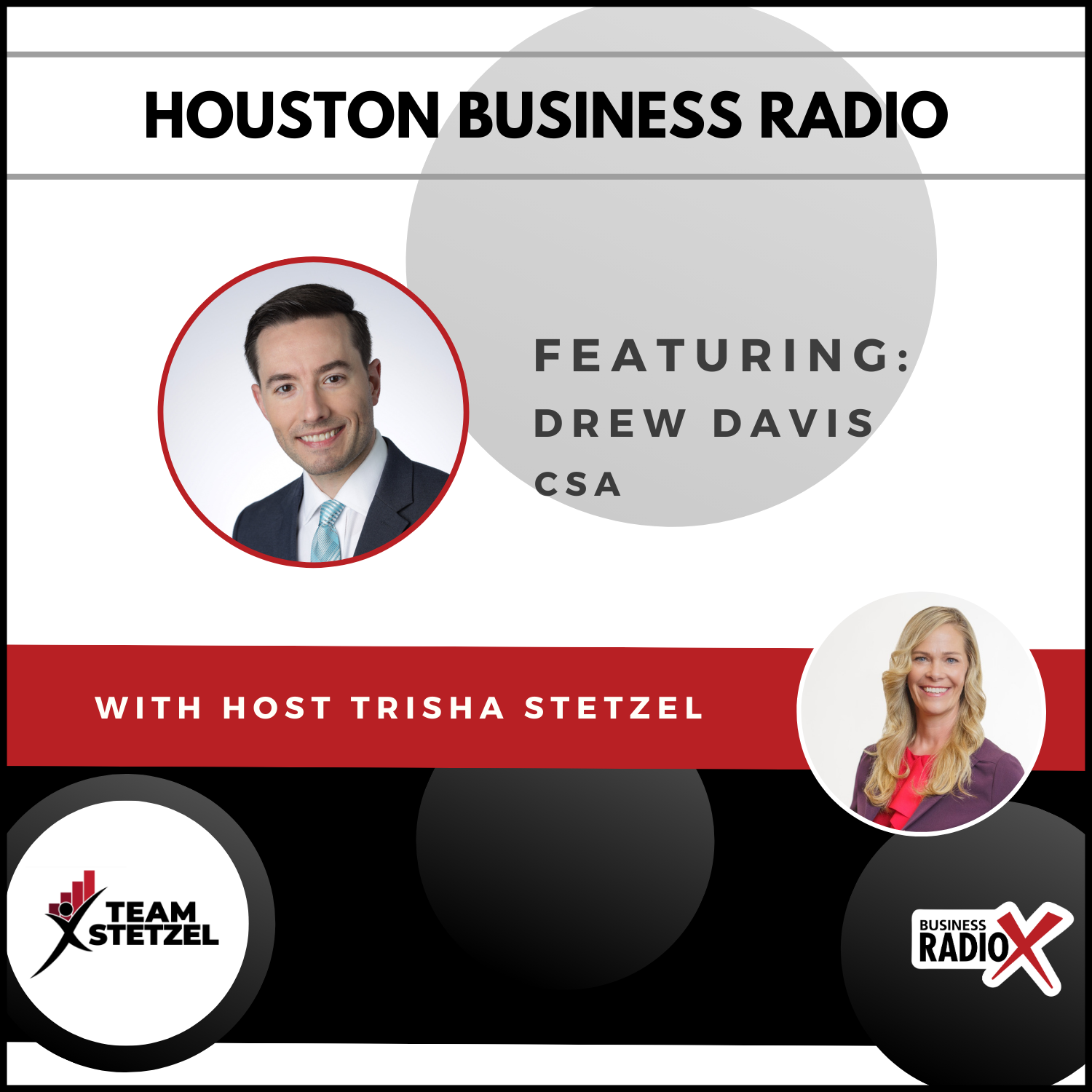

 Drew Davis is the Senior Vice President of Commercial at the Chief of Staff Association (CSA), the premier global network for Chiefs of Staff across industries. With 12 years of experience in the U.S. intelligence community, Drew brings deep expertise in organizational strategy, principal support, and enterprise alignment.
Throughout his career, he has supported directors, agency leadership, and White House principals—including the President and Vice President—through roles in the Situation Room, National Counterterrorism Center, and key positions both inside and outside of government.
Drew is widely recognized as a super-connector and enterprise innovator, helping organizations bridge mission and business outcomes with clarity and precision.
His leadership continues to shape the CSA’s mission of developing world-class Chiefs of Staff, drawing on a career grounded in service, strategy, and impact at the highest levels. 
LinkedIn: https://www.linkedin.com/in/drew-davis-68479320/
Website: https://www.csa.org/
 This transcript is machine transcribed by Sonix
TRANSCRIPT
Intro: Broadcasting live from the Business RadioX studios in Houston, Texas. It’s time for Houston Business Radio. Now, here’s your host.
Trisha Stetzel: Hello, Houston. Trisha Stetzel here bringing you another episode of Houston Business Radio. I’m so excited about today’s guest, Drew Davis, senior vice president of commercial at the Chief of Staff Association, global organization dedicated to connecting, developing and empowering chiefs of staff across every industry and sector. Before joining the CSA, drew spent more than a decade serving in the US intelligence community, including tours in the white House, Situation Room, the National Counterterrorism Center, and multiple chief of staff roles supporting senior government leaders. His experience bringing national security, enterprise leadership and executive strategy has made him a powerful connector and champion for the growing chief of staff profession. Today, we’ll talk about what a chief of staff really does, why the role is exploding across industries, and how the CSA is helping shape the next generation of executive leadership. Drew, welcome to the show.
Drew Davis: Trisha, thank you for that very warm and kind introduction. It’s such a pleasure to be with you. Thank you for your service as well. The Navy is no doubt a little less enthused without you and so many of your listeners as public servants do. It’s just an honor to be joining you and them.
Trisha Stetzel: Thank you. I appreciate that very much. And I’m getting I’m practicing saying you are worth it. I think that’s a really nice way to say thank you when people are thanking me for my service. Yeah. All right. Drew, tell us a little bit more about you, and then we’re going to dive into the CSA.
Drew Davis: I appreciate that. I think, like so many of your listeners, I’ve absolutely felt a calling to public service since a very young age. I remember reading a book in second grade outlining the branches of government and, and not being able to put words to it at that age, but absolutely feeling moved and compelled to do something bigger and contribute in a way bigger than myself. And I chased that dream of public service, uh, my entire professional career served a handful of years as a local police officer as well. Uh, nine over 11 happened. Joined the national security community after graduate school and spent 12 years in the intelligence community. And it was a bit of a funny recruitment story. I was, uh, speaking with the agency recruiter, uh, that I joined. And, you know, we said, hey, what do you think about being an analyst? And I said, well, I’m really not your 500 pound brain who can buckle down for 30 years on on one portfolio. Um, might you have something else? And he said, okay, well, how about an operator? And I said, I probably have some good skills for that. Um, but I’m not sure really fully aligned with my personal and family priorities in life. Might you have something else? And he said, you know what? We have this incredibly powerful and new career track where you would be mapped to the suite of the director and you would support our agency in leadership support, business operations strategy, enterprise functions. And I said, yes. Now you’re speaking my language. I had started a few businesses growing up and continued to have an enterprising spirit along the way, and found a great niche in a role that was very similar to, and oftentimes a professional chief of staff, deputy chief of staff, or some of the uniformed and civilian military folks will appreciate an XO, an aide de camp, a flag rider, a mill aide, right that that Corps staff work, that it takes to run a government agency and department like the business that it is ever more complicated when you have to hide the hand of the US government while you do it.
Drew Davis: But it was certainly an extraordinary pleasure and a privilege to serve our country and its people in the national security arena. And after I got halfway into that career, I realized I needed some more training on how to be an effective chief of staff. And I found the Chief of Staff association and joined myself. The association’s only about a handful of years old, and it’s had extraordinary impact in that time already, and I’m a great example of it. Nothing accelerated my career further or faster than joining the Chief of Staff association, and part of the reason I felt so fulfilled as I was leaving the federal service was the hard skills and soft skills I was able to import had an amazing and innovative impact on our agency and the mission work that we did. And I did. I got to walk away feeling as though I’d had an incredible impact on on my mission. And I owe so much of that to the Chief of Staff Association, our incredible community that I’m excited to share more about with you. Um, but it was it was a really powerful chapter in my life where I got to marry my service to country, uh, with the chief of staff. Role and leadership support, enterprise management.
Trisha Stetzel: I love that so much. There’s so much passion coming through. And when you and I spoke even before the show, you and I had this, like immediate connection when it came to the passion for the work that we do in the community. Let’s talk a little bit more about the chief. Chief of staff Association or CSA. How did it start and what does it offer to its members?
Drew Davis: Absolutely. The Chief of Staff Association is the global premier body for chiefs of staff, as you said, across all industries and sectors worldwide. We have members from the fortune five on up to the smallest of startups, if you will, and everything in between. Our members come from over 1300 different organizations in over 70 countries, and it is a vibrant community. I hope a lot of you will log in and start to follow us on LinkedIn as well. And you’ll see just under 80,000 online followers in our community. I think a lot of us have been a part of professional development and C-suite organizations along the way. I know I certainly have a nerd for leadership and culture, but I’ve never seen anything like the Chief of Staff Association. Its members are wildly supportive of each other, advancing the work that we have to do day to day, being that shoulder to lean on, that ear to bend, the laughing, the joking with people who get it. Because as we’ll talk about, not everyone knows what a chief of staff is or does, or how we do it, or how long it takes to do it, and how difficult it is to do. Uh, and so when we find our flock, our community of people who get it, which we’ve created, this extraordinary community in the CSA, there’s a real resonance, and we’re drawn to it, and we stick with each other, and we support each other through career transitions and job changes, through professional growth and even through personal challenges. Um, I thought you captured it really well.
Drew Davis: The Chief of Staff Association has three core mission fronts. We connect, we develop, and we empower chiefs of staff. We connect our chiefs of staff through 20 regional directors worldwide. This is where we activate our learning and our mission at a very local and regional level. Our members pull together for appetizers, coffees, substantive meetings, executive roundtables, and really delve into what it takes to do this job at the highest level. Certainly at the level the world demands. We have a vibrant WhatsApp community in all of the ways globally, and we also have an amazing member portal that our members have access to incredible resource banks, the ability to find each other in GPS form all over the world in case we’re traveling for work or pleasure, and then certainly our global events. So the connection side of what we do is I think, uh, no surprise then, what we see with the vibrant community and how connected it is. Um, the developing side, this is where the rubber meets the road. Uh, we have several levels of our certified chief of staff program. It is an absolutely impactful program that we developed in collaboration with our faculty, advisors and friends over at the Harvard and Oxford Business Schools. What we did was an analysis of over 2000 chiefs of staff worldwide, and we aggregated that data and looked at those baselines of excellence. Right. What is it? Cross-cutting all industries and sectors that is necessary for a chief of staff to do their job really, really well? And we were pleasantly surprised to see so many enduring commonalities, consistencies across the industries and sectors.
Drew Davis: Everybody uses the role a little differently as we’ll talk about, but there are definitely standards of excellence, and we were able to capture that in our certified Chief of Staff program. We were able to capture it in our two in residence programs with the Harvard and Oxford executive education programs. We’ve captured it this year in a new offering, the Advanced Core Competency Program. And I think probably one of my favorite newest offerings is our enterprise certification program or our membership for teams where a company with several chiefs of staff can bring everybody along and get everyone flying in formation by enrolling folks in that certified program. It’s just an incredibly force multiplying way. Uh, the empowerment side of it is, I think, where we help others appreciate what a chief of staff is and how we do our work and the impact that it can have because it’s coalition building, it’s deep relational work. We have to bring everybody along, whether that’s on the leadership team, uh, in the entire organization or beyond, uh, all of the stakeholder engagement that we do. So educating folks about what the role is, helping professionalize it. And then certainly the good advocacy work in general, uh, about hiring, training, employing advancing chiefs of staff, really, uh, firming up this profession and the impact that it has. So I threw a lot at you and all of the listeners, but, uh, hopefully that makes some sense. Uh, and brings some clarity to this role and what we’re doing to advance it.
Speaker4: It does.
Trisha Stetzel: And you broke it down in simple areas, right, in these three pillars that you really support these folks. And I love how active your membership is and that these people, these amazing leaders, are able to connect with each other and learn from each other, but also learn from the resources that you’re putting out there for them and then advocating. Right. Uh, this position. So for those who aren’t familiar exactly with Chief of staff, although I’m hearing it more and more, I hear a lot more people talking about it. And I also heard you say that it’s not just one size fits all. There are a few differences when we talk about chief of staff. So what exactly is it and why is this role really becoming so important in today’s organizations?
Drew Davis: Yeah, that is a the crux of the question. And that’s, I think, what makes our work at the CSA a little more fun? Uh, we interview our prospective members all of the time across the world. We judiciously curate our community. Right. We want to make sure that it provides enough depth and in-reach for folks joining us across the public, private, nonprofit Profit sectors, but also that we keep a really high bar and caliber, make sure that people are going to be really engaged and active and not just flies on the wall, because we want people who can help drive the discourse that is actively shaping this role. Right. And so how is it being shaped? Every industry, every sector, and even the companies within them are using this position a little differently. Um, and I know we’ll get to talk about some of those core competencies of the role as we go. Uh, but there are definitely a handful of ways uncommon that we see, uh, agencies, departments, startups, uh, across all industries using the role. We see them using the chief of staff as a chief integrator. This is absolutely, uh, the professional who connects the people in the organization from the highest to the lowest levels helps, uh, activate those priorities of the leadership team and or the external board and governance structures, and then the processes that it takes to do that work week to week, month to month, quarter to quarter across the The organization, the CEOs force multiplier.
Drew Davis: Oftentimes, a proxy is another empowering way that we see this role get used. It’s an extension of the leader. It could be the CEO, the president, the executive director or any of the principals that the chief of staff is serving. Uh, EVP, SVP level managing. What’s most critical for them, right, is the way they’re using the time on their calendar and absolute alignment with the company’s priorities and strategic goals. And if not, let us help bring some some rebalance, some recalibration, uh, to the way that we’re protecting and using that time or representationally. Right. Being in a meeting that the boss can’t attend, uh, or an event to which the boss cannot make. And so it’s a really empowered, force multiplying role increasingly across industries. Uh, the strategic operator is probably another way I would put it. This is that balance of long term vision with the day to day. It encompasses a bit of special projects, right? Someone has to put out all of the fires. Uh, the chief of staff, uh, is oftentimes what we hear colloquially use, uh, it’s a coaching staff to right everyone in the leadership team across the organization coming for that information, that insight. And when we talk about the chief of staff role, we say we move very, very quickly in this position. Of course, everyone at the C-suite level moves very, very quickly.
Drew Davis: Um, but at the end of the day, we can only move at the speed of trust. Uh, Steven Covey put it so well in his book. And as a strategic friend of the chief of staff associations, Mr. Covey helps our members all of the time understand how to build trust very quickly. Uh, because at the end of the day, you need to go knock on someone’s door and ask something of them. Uh, that’s going to be in addition to their their very full plate already. Uh, and oftentimes very challenging. Right. Because if it’s landed on the desk of the chief of staff or the boss, it’s a tough problem. Uh, or someone else would have solved it along the way. Uh, so it’s a bit of a distressing role in that respect, and you have to be really good at those skills. Um, and those core competencies. Just a couple more, I think jump out at me. Uh, the trusted advisor is one we are seeing increasingly, uh, rise as a priority for organizations. In fact, the Financial Times just this week wrote a really excellent piece. I hope folks look it up, uh, that talk about the invisible side of the chief of staff role that behind the scenes, right, that humility that we bring. But in doing so, right in closing that door and drawing those curtains and being that strategic thought partner for the boss, we keep our finger on the pulse of the organization’s processes and culture, and we can have very honest and very effective conversations, because we’ve built that trust and because then we can help, uh, the leadership team effect that strategy, uh, more effectively.
Drew Davis: Uh, so the trusted advisor role, that strategic thought partner really rising in popularity. Uh, and then I’ll close probably with that, the culture conductor, uh, to be alliterative about it. There’s so many reasons for a leader or a leadership team to put culture on the side burner when the workload and the pressures are crushing. Uh, you have to be responsive to the board, the investors, the shareholders, to your own leadership team, to the stakeholders to press the media regulators. Right. The list goes on and on. And what we find is the chief of staff has become wildly, uh, effective at helping leaders and leadership teams continue to prioritize company culture and make sure that everyone remains active and engaged. People feel like they, and indeed, they do have mechanisms to contribute their voice, uh, to to have that buy in, uh, to be a part of the idea making. I think it’s long past the days where the leadership team sat in, in a conclave and came out and ruled by fiat. And today, the chief of staff helps bring everybody along and build those coalitions for ultimate success.
Trisha Stetzel: Oh my goodness, such an important role. Chief of staff, you said I was thinking chief of everything. That’s what it made me think of, right? The person who’s really driving so many parts of the business. Drew, I know people are already interested in either connecting with you or learning more about the CSA. So where is the best place for people to connect with you or the CSA?
Drew Davis: Thank you Trisha. I personally love to support folks who are interested in this role, or their organizations that are interested in certifying their chiefs and learning more about how we do what we do, and how to be better Chiefs of staff. So I hope folks personally connect with me on LinkedIn. You can search out Drew Davis, chief of staff, and I should pop right up. I’m certainly open to direct emails to my email is Drew Davis at CSA. And of course, I hope that you will start to follow us if you’re not already in our global LinkedIn community, the Chief of Staff association. So these are easy touch points. We want to bring everyone along on this because increasingly, as you noted, we’re all interfacing with the Chief of Staff more and more every day.
Trisha Stetzel: Yeah, yeah we are. And we’re seeing it more across the public and private sectors. Uh, drew and I mentioned earlier I’m hearing the word or the title chief of staff more often. And with this explosion, uh, of this role popping up, what do you think is really driving that surge and demand for that role?
Drew Davis: At the end of the day, business decisions are often very shrewd. There needs to be a pretty quantifiable, um, metric of success. And the chief of staff has increasingly proven an ROI, whether that is on organizational culture and the ability to engage and retain talent, or whether it’s through driving efficiencies in work hours saved importing of new technologies which are more efficient and cut operational costs. Um, or even on increasing revenue generation and how that’s enhancing margins and profits. Uh, when the CEO or the president, the senior leader, recognizes the opportunity cost of sharing their workload with the chief of staff. They don’t have to be in all the meetings. They don’t have to be responsive to all the emails. Right. That’s a cost to them and a cost to the business. If they can empower this force multiplying role, even better. Or maybe for the first time, hire one and unleash the incredible impact it can have. The ROI quickly quantifies itself, and it certainly qualifies itself. So I think at the end of the day, the business case is compelling and virtually irrefutable.
Trisha Stetzel: Absolutely. Which leads me back to something you said earlier, which is core competencies. I can see just based on all of the descriptors of this particular role or even the names that we’re giving right internally to what the chief of staff is actually doing, that there are soft skills and hard skills that this particular role needs. So can we talk about the core competencies that make a great chief of staff, and how do they differ from other senior leadership roles?
Drew Davis: It’s a great point and I want to address the second part first. How do they differ? I think we would make a case that they don’t differ very much at all, which is another really powerful testament to why the chief of staff role is so important to have in the C-suite and or brought up as a protégé to one of the C-suite leaders, or even the CEO, president, executive director themselves, because the amount of expertise that you develop in this position and or come in with through certainly our certification programs is so cross-cutting at the C-suite level that it’s easy to take a chief of staff, certainly following their tenure as chief of staff, and plug and play them into other C-suite roles, or to have them help lead at the highest levels. At the Chief of Staff Association, we have a core competency framework that we think about. All of the certification programs that we have, all of the events and programing that we do, so that it all strategically maps very well in place together. Certainly the chief of staff is an individual contributor, right. And the hard and soft skills that it takes to do that, uh, are very, um, unique compared to other roles, uh, because most of the time in an organization you have explicit authority, right? Portfolio ownership. Uh, and it’s very clear what you’re charged with doing. Well, when you’re charged with doing so much, you have to influence others to do a lot.
Drew Davis: Uh, we and we call that leadership through influence or leading without authority. And that is a conversation that we are actively having day to day, week to week with all of our members and perspectives because it’s how are you doing it? What are you finding works well in your organization, in your sector, right. What is that language? Unspoken or spoken, that is effective to inspiring people to action? Um, because again, when we come knocking, we have to inspire people to action. The root underneath a lot of that is negotiation, right? You have to go with an understanding of what people’s priorities are, their best intended outcome. And as chief of staff, we absolutely want to help them reach that outcome. Right. And look like the hero to the boss and their fellow leaders. And so having a really good idea about the landscape of people’s priorities that takes emotional intelligence. Uh, that certainly takes strong written and spoken communication skills and an ability to be ambidextrous in our thinking. Uh, so that’s the individual contributor. Um, we work across the entire leadership team, right? Creating those workflows, those rhythms of business, the synchronizing, making sure the right hand knows what the left hand is doing, making sure that everyone on the team really does understand the vision and the strategy and the sort of skills that it takes to do that.
Drew Davis: Uh, as you might suspect, we’re talking strategic level problem solving, right? What are the bottlenecks that are really getting in the way on time and talent and resourcing? And how can we help our colleague managers think about solving those? That’s a level of stakeholder engagement that not everyone’s comfortable with. We have to deal with C-suite leaders, sometimes heads of state as we know, or leaders of military services, really high level, powerful folks. It takes a confidence and it takes a real deft ability to speak with folks like that in an effective way. That takes a lot of practice, and perfect practice makes perfect. And so we do that a lot at the chief of Staff Association. Keep it very practical. Um, the culture element oftentimes falls in here. We need all of the leaders understanding that they they have a cascading effect on culture too, right? And so all of us need to be singing from the same sheet of music. So individual contributor across the leadership team, but then across the entire enterprise, uh, You start to deal with skill sets and crisis management in organizational design and structure and org charting. Again, on that alignment, right. The way a chief of staff activates the strategy usually highlights gaps and deficiencies in both leadership and in process. And so this is a very delicate issue to address with your colleagues.
Drew Davis: Right. You don’t want anyone to feel judged. You don’t want to put people on their heels. And being savvy to how you have conversations like that in an empowering way, in a non-defensive way. Executive coach esque, right? Takes a lot of practice, but those conversations often drive innovation. And so we see a lot of growth happen at this stage. I’ll close with the fourth quadrant in the way we think about core competencies. And that’s principle management managing up. This is one of the most difficult jobs of a chief of staff that even most C-suite leaders don’t have to confront themselves because they turn to the chief of staff and they say, I think you should go talk to the boss about this, right? And it’s that trust that you’ve built along the way where you can close the door, draw the blinds, and sit down and say, I know what you’re trying to do here. Let me help you do it better. Right. To have a conversation like that at that level, that will remain productive and strong in the relationship, and then pay exponentially across the enterprise. That’s hard. Uh, and so we interrogate these issues week to week. We interrogate them in our certification programs, and we empower our members with actionable tools and frameworks to have these tough conversations and import these hard and soft skills.
Trisha Stetzel: Yeah, such an important role. And as as you were talking through that, I was thinking about the CSA not only, um, supports people who are already in this role, but also people who would like to be in this role, and I happen to know about a veteran program. Uh, that may be coming up. Would you tell us a little bit about that?
Drew Davis: Absolutely. And you are absolutely right. You don’t have to be a chief of staff in title to be a member of the Chief of Staff Association. You can be a chief of staff and function or an aspiring chief of staff. People have career growth aspirations, and if this is a position that excites you or falls within your own professional development trajectory, we are standing in your corner and we want to help you, and we have found it especially fulfilling to be able to support our uniform and civilian, uh, friends along the way, oftentimes coming into second careers, right, putting down the uniform and ready to translate the extraordinary leadership experience and vision that they have, uh, from their time in service into the nonprofit and private sectors. And so what we’ve done is create a very special military membership offering at the chief of Staff Association, uh, at a very special price, uh, which makes it wholly accessible, uh, as certainly an acknowledgment and an appreciation for the great service that our men and women have offered our country. And we hope that our listeners who have given service in such ways, uh, will take a look at it and will consider joining us, because what we love to do is enroll folks in this membership for teams, this coaching for teams program that we have when folks are, um, of, uh, birds of a feather. Right. They understand, uh, the previous experiences people have had, the strengths, the fortes, that they can bring into roles like this. Uh, and we support our, our uniformed military folks in this way all the time.
Trisha Stetzel: Uh, I’m so excited about this conversation, drew. And I’m tagging people when we put it out on social, because I know some folks who would be very interested in the program that you guys are running, uh, for chiefs of staff, both for those who are aspiring, uh, those who are not titled yet and those who actually carry the title of chief of staff. All right, one last question, and I’m actually coming back to you. I want to talk a little bit about drew. You’ve served in some of the most high stakes environments in government. How would you translate your experience through that into leadership lessons for business today?
Drew Davis: Yeah, it’s an incredibly powerful and important question. We just sat with two white House chiefs of staff themselves, uh, in a session this summer called from the Oval Office to the Corner Office and had an amazing conversation about this transition. Transition. And it is not at all surprising that the commonalities at the highest levels of government in supporting the president, the vice president, the National Security Advisor, National Security Council, uh, which I had the pleasure of doing, as did these white House chiefs of staff, translates so easily into corporate business or into nonprofit business. And some of the themes that we heard, No surprise. You are trafficking in the currency of dependability and reliability, right? Your boss, your leadership team, needs to be absolutely certain that you will perform consistently, consistently, dependably and reliably, and that you will follow through and deliver on your word. Oftentimes, that sort of consistency rightfully involves a lot of honest and tough conversations when things aren’t going as well or as fast as they need to. And that’s a really important characteristic, both in government on foreign policy and national security policy, because of course, nothing goes well or cleanly at that level, but also in business, right? When you’re missing those KPIs, when you’re not quite as well oiled as you know you want to be or ought to be having those conversations early, bringing in the best minds around the table.
Drew Davis: That’s what a chief of staff does very well, brings the right people to the table at the right time, to have the right conversation, to make the right decision to get those programs, those portfolios back on track. That cuts across all of the sectors. And I think at the end of the day, such an important part is character. And that stems from trust, right? The ability to develop and sustain trust with someone comes from how you show up and exhibit your character and your competence. You need to have a great deal of integrity consistently, and you need to be really good at the work you do. And we try and make our chiefs of staff experts at being chiefs of staff through the programs that we have. But it’s a great question because it doesn’t really matter what sector you’re in. We all need to show up this way to have maximum impact.
Trisha Stetzel: I love that, and for those of you who know me, know that trust is one of my favorite topics to bring to a workshop. So drew, thank you for such a fantastic conversation. Can we, uh, one more time tell people how to connect with you and where they can find more information about Chief of Staff.
Drew Davis: Absolutely. Please feel free to drop me an email at Drew Davis. Please find me on LinkedIn as well. Drew Davis, Chief of Staff. And please do follow our community. Uh, we have some amazing content and resources that we’re pushing out every day. And a huge shout out to our education, uh, and our social media and communications teams for making this as accessible as possible and beyond our community. Uh, we are really seeking to empower everyone who wants to be in this position or is in this position. Uh, Trisha. Thank you. Uh, it seems every episode is better than the last. I’m not sure how you do it or sustain it. Uh, but certainly long time listener here. And and just thank you for showing up the way that you do and sharing the expertise, the knowledge, the inspiration of those you have along for the show that has made a world of difference for those of us who tune in.
Speaker4: Thank you so much, drew. I think.
Trisha Stetzel: I’m blushing. That doesn’t happen very often. I appreciate that and this has been a fantastic conversation, you guys. Uh, that’s all we’ve got time for today, drew. Thank you so much for being a part of the show. I really appreciate it. And I know that there are a lot of people listening who are going to connect with you and also go out and do some research on the chief of Staff association.
Drew Davis: We’ll talk to you soon.
Trisha Stetzel: Thank you so much. If you guys found value in this conversation that drew and I had today, please share it with a fellow entrepreneur, veteran or Houston leader ready to grow. And be sure to follow, rate, and review the show. As you know, it helps us reach more bold business minds just like yours and your business. Your leadership and your legacy are built one intentional step at a time. So stay inspired, stay focused, and keep building the business and the life you deserve.














