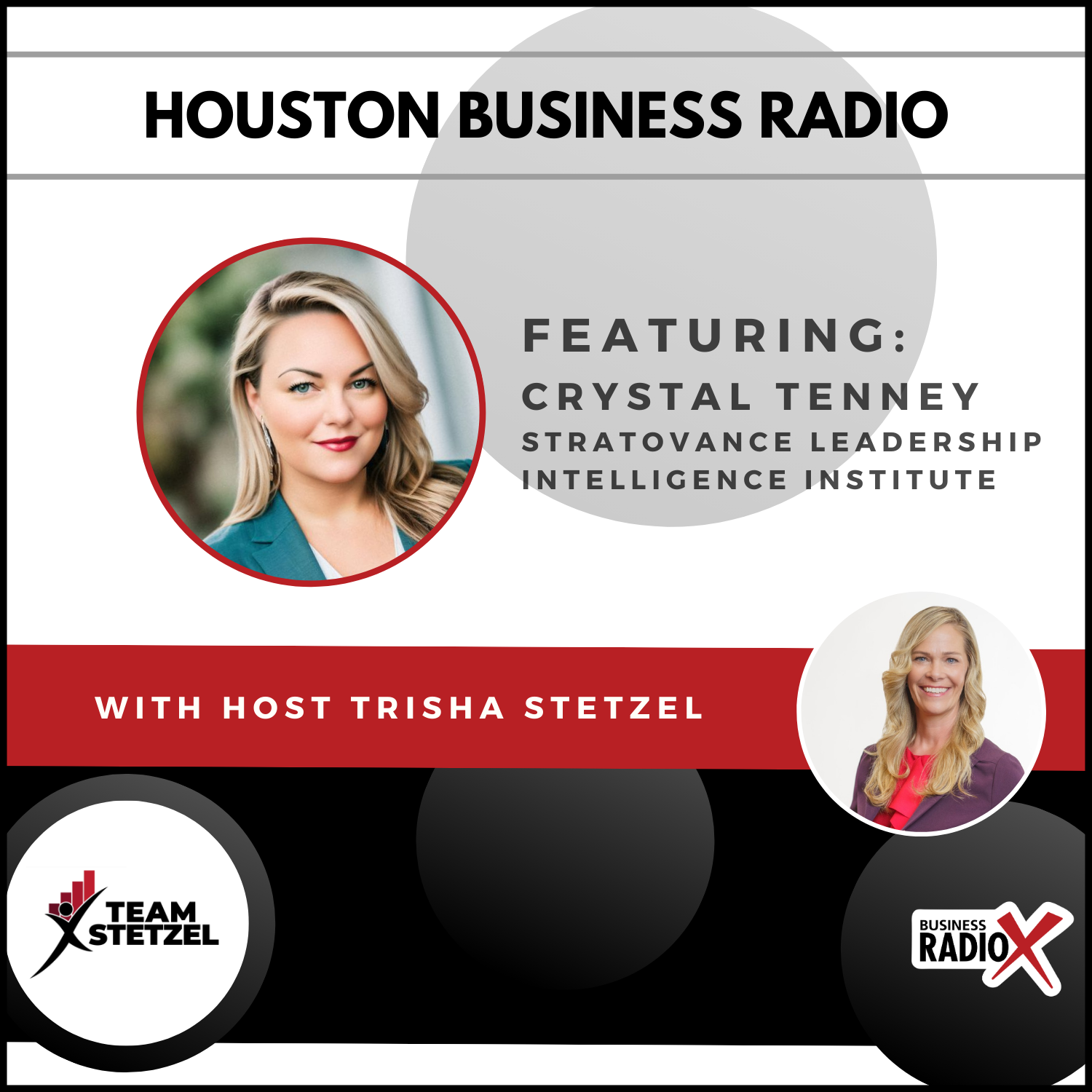

 Crystal M. Tenney, DBA (Hon.) is a Neuroscience Practitioner, Executive Coach, and Leadership Strategist transforming the way leaders think, communicate, and lead.
As Founder and CEO of STRATOVANCE Leadership Intelligence Institute, she brings over 15 years of experience at the intersection of psychology, neuroscience, and emotional intelligence — equipping organizations to develop human-centered leaders who drive both results and trust.
With a foundation in therapy and applied psychology, Crystal is known for translating complex brain science into actionable leadership tools. Her bestselling book, Are You an A$$hole Boss?, explores the hidden toxicity of micro-negativity in leadership and earned her an Honorary Doctorate in Business Administration for its pioneering contribution to leadership science.
Through her signature NeuroVance™ Leadership Certification Course, Crystal offers a neuroscience-backed, self-paced program for executives and rising leaders, blending emotional intelligence, communication training, and strategic insight. 
Her core belief — “when leaders heal themselves, they heal their culture” — is reflected in her mission to cultivate conscious, compassionate leadership in every organization she serves.
LinkedIn: http://www.linkedin.com/in/crystalmarietenney
Website: http://www.stratovancellc.com
 This transcript is machine transcribed by Sonix
TRANSCRIPT
Intro: Broadcasting live from the Business RadioX studios in Houston, Texas. It’s time for Houston Business Radio. Now, here’s your host.
Trisha Stetzel: Hello, Houston. Trisha Stetzel here bringing you another episode of Houston Business Radio is my pleasure to introduce you to my guest, Crystal Tenney, founder and CEO of STRATOVANCE Leadership Intelligence Institute, a neuroscience practitioner and executive coach helping leaders strengthen culture through emotional intelligence and brain based leadership. Crystal is best known for her coining the term micro negativity, which we’re going to talk a little bit about those subtle, often unintentional behaviors that quietly erode trust, safety, and performance inside teams. She brings a rare blend of applied psychology, neuroscience and leadership strategy to help leaders build self-awareness, improve communication, and lead with clarity. She is also the author of Are You an Asshole Boss? Micro Negativity in Leadership, and creator of the Neuro Leadership Certification, designed to help leaders rewire how they think, relate, and lead. Crystal, welcome to the show.
Crystal Tenney: Thank you for having me, Trisha. It’s great to be here.
Trisha Stetzel: I’m really excited. We have so much to talk about and I can’t wait to get started right away. Would you tell us just a little bit more about Crystal before we dive in?
Crystal Tenney: Sure. Um. Hello everyone. I am Crystal, I reside in the beautiful state of Maine. Um, I have my 14 year old son with me, a bonus daughter and my spouse. And we absolutely love it here. We We have the best of everything. We have the beach to the mountains, to beautiful hiking trails, and Maine will always be home for us.
Trisha Stetzel: Oh, I love that. I can’t get you to come to Texas, Crystal. I’m just saying, it’s so, so warm here.
Crystal Tenney: Yeah, well, you’re warm weather is very, very enticing because we just had a fluke snowstorm, which is beautiful. And we’re hoping the snow will stick around for Christmas this year.
Trisha Stetzel: Oh, I love that. All right, Crystal, let’s dive in, because I know everyone is curious, including me. What is micro negativity?
Crystal Tenney: Trisha great question and I love when I am asked this. Um, basically micro negativity is what I call the silent killer of culture. It’s not the big explosive behaviors we typically associate with toxic leadership. It’s actually the tiny, repeated moments people often overlook um, such as interrupting someone mid-sentence, taking credit for another’s work, dismissing or shutting down an idea abruptly and or prematurely. You’re looking at eye rolling, sighing loudly, um, condescending tones, which I know is pretty, um, widespread in company culture these days. Um, scapegoating is also a very, um, big one. Um, toxic positivity, which not a lot of people talk about, but it it’s it’s there, um, excessive micromanaging and just setting the subtle emotional message that makes an employee feel as though they’re not enough or they don’t belong there. And individually, these behaviors seem small, but collectively they create a deep psychological harm. From a neuroscience standpoint, micro negativity activates the brain’s threat response. So the amygdala fires up, signaling danger, and the prefrontal cortex, the part of the brain responsible for creativity, collaboration and problem solving, starts to shut down. To the nervous system, an emotionally unsafe interaction at work is processed with the same circuitry as a physical threat. I’m going to repeat that. So two of the nervous system and an UN. I’m sorry. An emotional, unsafe interaction at work is processed with the same circuitry as a physical threat. So when these toxic interactions become someone’s daily environment, they don’t just get stressed, they emotionally retreat. And that’s where you’ll see quiet quitting, which has been a buzzword, um, probably in the last couple of years. Um, disengagement, burnout, low morale and a breakdown in psychological safety. And not because employees lack motivation, but because they no longer feel safe enough to fully participate or show up as their full self.
Crystal Tenney: What I emphasize in the book is that leadership toxicity rarely starts with oblivious or obvious aggression. It begins with the unconscious habits, emotional leakage. Um, some you’ll hear me say that a couple times. Um, but that’s also with tone and micro reactions, negative body language, and just unexamined stress responses that leaders have carried for years. Micro negativity is emotional erosion, subtle, chronic, and deeply damaging over time. But here’s the part that most people don’t realize. Um, many of the leaders I’ve coached and also interviewed for my book Run Asshole Boss. They genuinely care about their people and their teams. They want to inspire their teams, not hurt them. Yet they’re completely unaware of how their micro negative behaviors and moments are breaking down trust and loyalty. And so that’s why I always say self-awareness is extremely crucial because you can’t change what you don’t see. And a simple way to become self-aware of your own blind spots is to ask yourself questions. Um, a great question is, um, let’s say. Oh, here’s one. Um, do people show up differently around me than they do when they’re relaxed and comfortable with other people? And if that answer’s yes, there’s some insight there, and it’s a powerful place to start. Um, in my book. Um. Are you an asshole, boss? I actually break down 40 micro negative behaviors with their psychological root, um, neuroscience patterns and practical strategies to identify and correct. I actually give you short term, um, immediate solutions as well as long term solutions as well, because once you become aware of your own micro negative blind spots, then everything about the way you lead begins to change and so does the way that people will experience you.
Trisha Stetzel: Oh my goodness. Okay, so number one, you’re going to tell us in a few minutes where we’re going to find your book because I need a copy of it. I feel like I’m over positive I heard you say that. And I’m sitting here going, uh oh, uh oh. Maybe that’s a challenge, right? Oh, absolutely. And please.
Crystal Tenney: So and I’ve had clients come to me and they say, I think I’m overly empathetic. You know what? What do I do? And I said, read the book and it gives you some wonderful insights.
Trisha Stetzel: Oh, I’m so excited about that. All right, so we’re leading into a place that I have lots of interest in, which, um, I know that you’re known for helping leaders develop their emotional Intelligence. So how does EQ actually change the way someone leads or the. The idea of knowing EQ and how they can improve it, and how does it prevent this micro negativity that you talked about?
Crystal Tenney: Absolutely. So emotional intelligence is truly the ultimate leadership superpower. And I will probably say that until the end of my days, because it’s actually very true. It gives leaders the ability to understand what’s happening like within themselves, but also around them in real time. So EQ isn’t just empathy, which is a little bit, um, well, it’s accurate, but it’s not 100% accurate. It’s not what it is completely, um, it’s emotional mastery. My apologies. Um, it’s also the ability to stay grounded, um, intentional and clear when pressure is high. So when leaders strengthen their emotional intelligence, They’re actually rewiring their brain. Thanks to neuroplasticity, the brain reorganizes itself around new habits. So when a leader pauses instead of reacting or chooses curiosity instead of defensiveness, they activate the prefrontal cortex. And that’s the part of the brain responsible for regulation, empathy, problem solving, and also thoughtful decision making, which in return calms the Magdala part of the brain, which is the brain’s thought system. And over time, it actually weakens those automatic reactive patterns like the snapping or interrupting I mentioned before. Shutting down silent treatments is also a very big one. Um, eye rolling, an even harsh tones. And essentially, if you remember anything, just know that emotional intelligence is the neurological antidote to micro negativity, because emotionally intelligent leaders show up differently. They validate ideas, um, acknowledge contributions, listen without judgment, communicate clearly, especially with their body language.
Crystal Tenney: And they handle conflict with tact and often, um, give feedback with compassion. Um, they adjust their tone and presence based on situations and creating that psychological safety and not a threat when you’re in their presence. And that safety is what fuels the innovation, creativity, as well as retention in a huge part of emotional intelligence is self-awareness. And this is going to be a word you’re going to hear me say probably a hundred times in, in our time together today because it is very, very true, um, understanding how you’re perceived, like how your tone affects others, what triggers your own frustrations and how your emotional state influences the entire team. So without self-awareness, micro negativity thrives in the shadows. With it, leaders can spot their blind spots early and then course correct quickly. And empathy, as I mentioned before, is another core component of emotional intelligence leadership. And it shifts the mindset from, um, like, what’s wrong with them to what might they be experiencing? So as I mentioned before, that curiosity instead of defensiveness. So that single shift, um, transforms the leader into an active listener, um, a patient communicator and an emotionally safe role model. And a great example of this would be, um, for instead of saying, you know, uh, what’s wrong with this employee? They’ve missed their numbers again.
Crystal Tenney: Um, an empathetic leader thinks. Mm. This is the second week they struggled. Let me check in and see how they’re doing and how can I support them. And often it’s it’s simple. You know, maybe their child has been sick and they’ve had a couple sleepless nights. We’ve all been there. Um, maybe they’ve been dealing with a quiet technical issue that’s slowing them down. Or maybe they’re just overwhelmed with their workload and they’re afraid to speak up. Um, but each scenario curiosity replaces judgment and supports replaces frustrations. So when leaders approach challenges from a place of empathy and helpfulness, employees feel safe to bring concerns forward before they become performance problems, and they feel valued and understood and supported rather than scrutinized or shamed. Um, one thing to note is that empathy doesn’t excuse poor performance. Um, I just want to say that right out of the gate, um, it reveals the root cause so leaders can address it effectively. Um, it’s also one of the most powerful tools for building trust, protecting morale, and preventing migraine negativity from taking hold in the first place. But here is a simple way to uncover your own blind spots. Um, becoming self-aware, obviously. But in doing so, pay attention to how people’s energy shifts when you walk into a room or when you speak.
Crystal Tenney: So if you notice people tense up or they go quiet or they start to overexplain themselves, there is valuable information to your own insight. And that’s the exact kind of insight that I walk leaders through in the book and through my coaching sessions. Um, recognizing the subtle patterns you can’t change until you see them. So ultimately, um, emotional intelligence doesn’t change what a leader knows. It actually changes who they are when they show up for their teams. So it upgrades their, um, internal operating system. Their presence calms rather than agitates. Their words empower rather than diminish, and their emotional state doesn’t spill over onto others. Their behavior builds trust instead of breaking it. So all in all, leaders who cultivate emotional intelligence actually reduce their team stress by 70%, 77 0%. Um, strength I know. Isn’t that amazing statistic? I have a few more, um, as we go through. They’re alarming, but also, it’s really great to have this information. Um, but it also strengthens cultures and eliminates micro negativity at the root, because micro negativity cannot survive in a leader who is self-aware, regulated, and emotional intelligence. And, you know, I want to end this part of the question by saying and making it known that leadership isn’t about authority, it’s about awareness. And awareness transforms influence, which is very, very powerful.
Trisha Stetzel: Yeah. Amazing. 70%. I was thinking in simple terms for me. Don’t be judgmental. Be curious. That is like this. This place that as leaders, we should all be. And I love that. This is such a powerful message, Crystal. So as we move into the next session section, I would love for you to provide your contact information. I know folks are already interested in connecting with you or at least finding out about your book. What is the best way for folks to connect with you?
Crystal Tenney: Oh, absolutely. Um, the best way to contact me would be through my website, which is WW. Com, which I will spell out, um, s r a t o r a n c e LLC. Com. Um, and the book is actually, you can order it through my website. Um, it’s also available on Amazon, Barnes and Noble and other online retailers. You know, worldwide. So if you can find it anywhere. And actually I’m very I look this morning Amazon’s having a bit of a sale on the book today. So if you were to order it um today or tomorrow, I want to say it looks like it was half off, which is amazing for anyone who wants to buy it right now. It’s a great holiday gift. I’m just going to throw that out there. Um, and it showed it would arrive by December 18th, so that’s even even great. Wow.
Trisha Stetzel: Amazing. Thank you. Crystal. All right. Are you an asshole? Boss? If you’re looking for it, there are symbols in the S’s that look like dollar signs. So if you’re looking for it, that’s the one that you’re looking for. And of course, you can look up Crystal Tenney as the author and find it there as well. Her name is spelled c r y s t a l a t e n n e. Y’all right, my friends. You are a strong woman leading in business, and you’re also mentoring other strong leaders and advocating for this emotional intelligence leadership that we just talked about. How do you see women reshaping leadership in this new era?
Crystal Tenney: Oh, I absolutely love this question, because women are reshaping leadership in ways that are not only powerful, but they’re scientifically proven. And they’re not doing it by mimicking the traditional, outdated models of dominance and force or checking, you know, um, characteristics in a check box or, you know, that mold, um, they’re doing it by bringing forward what the modern workplace actually needs emotional intelligence, connection, psychological safety, empathy, and human centered decision making. Um, From a narrow point, a neuroscience standpoint, women often have stronger um activation in regions of the brain responsible for emotional processing, empathy, and social cognition. That means, naturally, they excel at things that directly drive performance today, like reading subtle emotional cues. We’re very good at that. Diffusing tension, excellent. Communicating with nuance, balancing compassion with accountability, and making collaborative, inclusive decisions. Um, these are not soft skills. They’re actually strategic neurological skills. And organizations that leverage them see real results higher innovation, better retention, stronger engagement, and scientifically, significantly healthier cultures. But here’s the part that I find the most inspiring is that women are giving leadership permission to be whole again, which is phenomenal. Um, intellectual and intuitive and empathetic. Ambitious and emotionally grounded. So when women lead this way, teams feel seen. People feel valued. And workplaces become places where humans can thrive and not just perform.
Crystal Tenney: So in my book, are you an asshole, boss? I actually talk a lot about the blind spots and micro behaviors. And this applies to women too. And a woman can be powerful positive influence, or she can unintentionally undermine herself through defensiveness, perfectionism, and over accommodation and emotional shutdown. But one quick way to check your own blind spot is to ask, do people feel more confident after interacting with me, or less? That question alone can be pivotal. And in the book, I actually walk readers through the most common micro negative behavioral patterns that shape leadership presence without even realizing it. What women bring to leadership when supported, seen, and self-aware. It’s not just valuable, it’s catalytic. So women don’t succeed because they’re tougher. Women succeed because they are emotionally intelligent and emotional. Intelligent leadership is a new competitive advantage, and I want to just bring a couple women’s names into the picture because they they they walk the line, they were the trailblazers. And they still continue to do this every single day. And they are truly inspirational. Um, Indra Nooyi, who is the former CEO of PepsiCo. So she proves that, um, empathy, vision and human centered leadership drive massive business success. Brene Brown we all know her. We all love her.
Crystal Tenney: She’s the researcher, author, leadership educator as well. Um, and her work reinforces the message that awareness, truth telling, and emotional skills are the foundations of great leadership. We have Mary Barra, we have Rosalind Brewer, um, Whitney Wolfe Herd, founder and CEO of Bumble. Um, Sara Blakely, founder of Spanx. We not only love her, but her product is amazing. Um, but across industries, whether it’s tech or politics, corporate entrepreneurship, these women prove that emotionally intelligent leadership is not only effective, but transformative. Transformative. Um, they’re living examples of what happens when women embrace the wiring that makes them powerful leaders. And to every woman listening who might be hesitant about stepping into leadership, your natural wiring is not a weakness. It is an asset. Your ability to connect is a strength, and your empathy is influence. Your intuition is intelligence, and your presence has the power to transform a room long before you even speak. So that is phenomenal. Um, as I teach leaders, especially women, um, how to lead with grace, groundedness, and grit all at the same time. Because leadership isn’t about being the loudest voice, it’s actually about being the most emotionally aware. And when women lead with both heart and science, they don’t just change organizations or performance or culture, they change people’s lives.
Trisha Stetzel: Mhm. I feel so empowered right now. Crystal, thank you for that. That was so amazing. Um, and also exciting. Now, can we talk as we get to the end of our conversation today, I would like to talk a little bit about that transformation that you talked about. And so for even for the gentlemen who are listening or the women who are very interested in moving from being unaware as a leader to an emotionally empowered leader, what is the process actually look like that you take them through?
Crystal Tenney: Yes. Um, another great question. Um, so as you know, transformation is one of the central themes, um, in my book because it truly is the heartbeat of effective leadership. Um, leaders, as I mentioned before, they rarely set out to hurt or discourage the people they lead. Um, harm happens when leaders become unaware and unaware of their emotional patterns, um, how they how their presence, um, shifts in a room and unaware of how their behavioral is silently shaping the emotional climate of their team. And the good news, um, that is that transformation. Transformation is not only possible, it’s predictable. When leaders follow a clear process grounded by psychology, neuroscience, and emotional intelligence. And for the sake of our time here, um, that process unfolds in, we’ll call it three powerful phrases. So the first one, awareness 101 times I’ve said that, um, so far. But that’s the honest mirror moment. And this is the most challenging, but it’s also the most courageous step because it requires leaders to pause and ask themselves uncomfortable but necessary questions. Um. Such as like how do people actually feel after interacting with me and not the what did I mean? But what did I create? You know, the feeling, the emotion, etc.. So in neuroscience, this is actually called metacognition. And this is the ability to observe your own thoughts tone reactions as they are happening. Um, but leaders who lack these skills operate on autopilot, um, repeating emotional patterns without understanding their full impact.
Crystal Tenney: So awareness is liberating because it turns the invisible into visible. It reveals blind spots that have been quietly shaping culture, morale, and performances. Um, and here’s a challenge for some listeners is that if your team grows quieter, overly agreeable, agreeable, guarded, or tense when you walk into the room, you’re not inspiring trust. You’re actually activating their threat response, and that blind spot is worth exploring deeply. Um, number two for phase number two is accountability. So, um, without shame but with ownership. So accountability is where the transformation begins to take root. It’s not about blaming yourself or feeling guilty. It’s actually about taking responsibility for your impact. Um, accountability sounds like, um, even if I didn’t intend to harm, I understand that harm may have occurred and I am committed to doing better. So this requires leaders to connect critical, um, internal dots, if you will, of how their stress patterns spill into communication, how insecurity, shape, tone and decision making, how old leadership conditioning affects Effects responses and how emotionally reactive reactivity disrupts psychological safety. Um, psychologically, this is the moment where self-awareness because becomes self-honesty and accountability. Accountability. Awareness leads nowhere. So without accountability, um, growth becomes um, not inevitable. But with accountability, growth becomes inevitable, if that makes sense. Um, and number three would be rewiring the emotional operating system. So this is where change becomes visible and sustainable.
Crystal Tenney: Thanks to neuroplasticity, the brain can form new pathways, meaning leaders can retrain their emotional responses and behavioral patterns. Emotional intelligence becomes a skill and not just a personality trait. So emotionally empowered leaders will learn how to pause before reacting. Um, regulate their stress response quickly. Respond with empathy instead of defensiveness. We talked about that already. Communicate with clarity and steadiness. Create emotional safety in every interaction and model that calm they want. Reflected in their teams. So the shift is so profound that you can feel the difference in energy in the room. So unaware leaders drain energy. Empowered leaders elevated. Unaware leaders create fear. Empowered leaders create safety. Unaware leaders silence voices where empowered leaders amplify them. And so what does this actually mean? So transformation doesn’t require you to become someone else. It actually invites you to become more emotionally aligned, grounded, intentional version of yourself. So someone who regulates instead of reacts, empowers instead of intimidates, inspires instead of drains, builds trust instead of fear. Um, this emotionally empowered leadership and it’s wonderful and it is amazing. And you will watch your teams thrive. And it’s also the kind of leadership that transforms teams, families and communities. So leadership is not about perfection. It’s about progress. Every single person listening has influence. Whether you are leading a team, um, a business, a project community or just yourself, the same emotional principles apply everywhere.
Trisha Stetzel: I have enjoyed this conversation so much. Crystal, I think you’re going to have to come back so we can have another conversation around some of these things. It’s so wonderful to hear the connection that you’re making around this human interaction, whether it be at work or at home, and being more self-aware of the things that we’re doing. Thank you so much for that. Now, I know you have your book as well as your program, so tell us a little bit more or remind us where we can find your book. And I’d also love for you to tell us a little bit about your program so that we can cue that up for listeners as well, if they’re interested in joining that.
Crystal Tenney: Absolutely. And thank you so much for having me. This conversation has been really, really great. Um, so Where to Find Me is, um, my book. It’s also, I meant to mention it’s available hard copy and e-book as well, so you can buy it directly through my website at w-w-w. Com. I’ll spell that again s t o v a n c e LLC. Com. It’s available on Amazon, Barnes and Noble um, major book retailers. And then if you are ready to elevate your leadership or develop your team, you can also book services through my website, um, to explore leadership coaching, um, emotional intelligence training, corporate development programs, speaking opportunities. But if you want to dive deeper into a more transformational experience. I created Neurovance. It’s a nine module, self-paced emotional intelligence course where it helps you rewire the emotional and behavioral patterns that shape leadership. And it ends with a personal one on one coaching session with me so I can help you support your growth. Um, and answer any questions you have. And, um, once you complete the program, you will earn your new Neurovance leadership certificate, which recognizes your commitment to leading with conscious and emotional. Um, magistrate. You can also find me on LinkedIn, Crystal Anthony. And there I share, um, neuroscience based insights, leadership tools, and weekly content to help leaders not just succeed but matter.
Trisha Stetzel: It’s been fantastic. Crystal, thank you so much. I really enjoyed our conversation today. And you guys remember you can go to strata LLC to find all of the resources that Crystal was talking about. And are you an asshole, boss? You can find it. All of the the places that Crystal named off. I will also put links to both of those in the show notes. As always. Crystal, again, thank you so much for spending the time with me today.
Crystal Tenney: Thank you Trisha.
Trisha Stetzel: That’s all the time we have for today, guys. So if you found value in this conversation that Crystal and I had, please share it with a fellow entrepreneur, veteran or Houston leader ready to grow. And as always, be sure to follow, rate and review the show. It helps us reach more bold business minds just like yours. And remember, your business, your leadership and your legacy are built one intentional step at a time. So stay inspired, stay focused, and keep building the business and the life you deserve.














