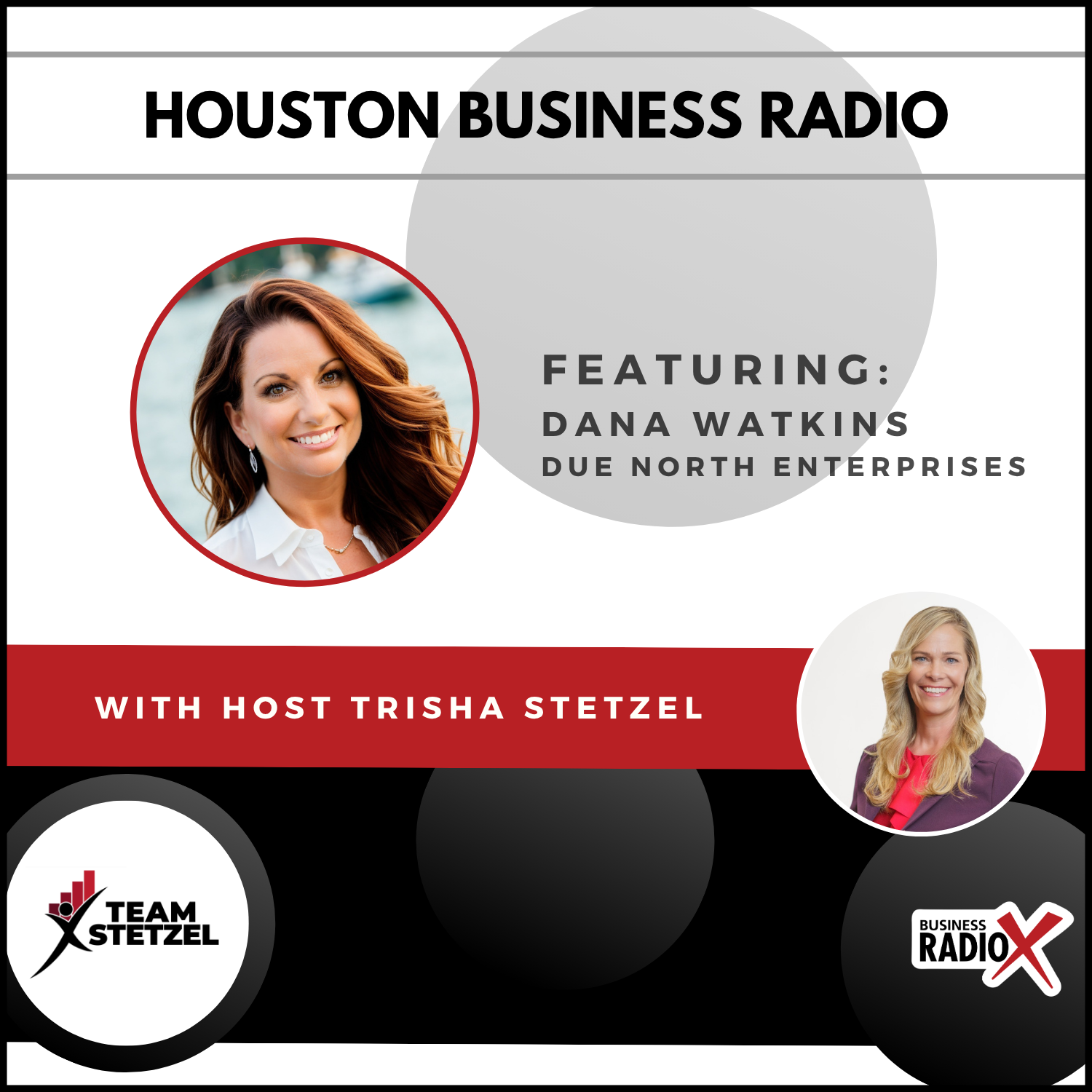

 Dana Watkins is a military brat originally from Arizona who has called Florida home for the past 36 years. She and her husband—her soulmate and best friend—share a beautifully blended family of five children (ages 17 to 33) and two precious grandchildren. In their home, there’s no “step,” just ours.
Her testimony is one of resilience and redemption. A mother at 18, a survivor of abuse and homelessness, Dana got a second chance at 26 when she put herself through college—working full time, attending school full time, and graduating Magna Cum Laude with a degree in Economics and Finance. Her career spanned VP roles in banking, financial advising, and leading global mergers and acquisitions—overseeing $1B+ in transactions.
Today, she owns a business exit and succession planning firm, co-owns a travel agency with her husband, and manages vacation rentals in Florida, New York, and the Smoky Mountains.
Dana’s journey to Christ wasn’t a straight line. After years of disavowing God and letting work stress affect her health, she reluctantly accepted her mother-in-law’s repeated invitation to attend Grace Community Church. The message that day hit deep. She kept coming back, and through powerful conversations and unmistakable signs from God, Dana gave her life to Jesus and never looked back. 
She loves Jesus, steak, potatoes, and all the desserts. Her favorite Bible verse is James 1:2–4, which reminds her that the trials she has endured have shaped her into the steadfast woman of faith she is today.
She’s honored to walk alongside other women, sharing truth, encouragement, and a little bit of sass.
LinkedIn: https://www.linkedin.com/in/dana-watkins-sarasota/
Website: http://www.duenorthenterprises.com
 This transcript is machine transcribed by Sonix
TRANSCRIPT
Intro: Broadcasting live from the Business RadioX Studios in Houston, Texas. It’s time for Houston Business Radio. Now, here’s your host.
Trisha Stetzel: Hello, Houston Trisha Stetzel here bringing you another episode of Houston Business Radio. It is my pleasure to introduce you to my guest today, Dana Watkins, CEO of Due North Enterprises. Dana is a certified exit planning advisor who helps business owners maximize the value of their companies and prepare for successful transitions on their terms. Her work focuses on helping entrepreneurs de-risk their businesses by addressing key vulnerabilities such as legal exposure, insurance gaps, cybersecurity threats, and owner dependency. Before launching Due North Enterprises, Dana led high performing teams across North America. At Harris, where she oversaw more than 20 professionals and supported over $1 billion in mergers and acquisitions strategies. Her background also includes leadership roles in banking and private equity. Nina is passionate about helping entrepreneurs build stronger, more resilient companies so they can eventually exit with confidence and security. Dana, welcome to the show.
Dana Watkins: Thank you so much for having me. Trisha.
Trisha Stetzel: This has been such a long time coming. I was looking back at how long it has been. We are finally here and I’m so excited about having this conversation with you today. Dana, would you share just a little bit more about who you are?
Dana Watkins: Certainly. Thank you. Um, I will say that I, like you come from a military background, although I didn’t have the honor of serving our country, I was a military brat probably a few times over with all the the 20 plus year career military veterans that we had in the family. Um, and you know, when you do that, you, you, you grow up with some resilience with that school of hard knocks. And, um, was unexpectedly blessed with my first daughter right out of high school. I didn’t get the chance to go to college until I was 26. Um, but when I did, um, it was, it was such an amazing experience. I worked full time, went to school full time, took me five years, but graduated with a degree in economics, a minor in finance. And, uh, still the proudest thing I ever did for myself, but graduated magna cum laude through all of that and, uh, went into banking, did a lot of really cool things in banking, um, financial advisory. And when I was in banking, I had seen companies implode because they didn’t have themselves de-risked. They frequently didn’t have their corporations set up, you know, either correctly or at least at least, you know, in the most advantageous way. Um, frequently didn’t have the right insurance backing things up, etcetera. Um, and so I just organically started. So, uh, started consuming every M&A for dummies, um, up to seminars and classes and eventually my, my CPA designation and folks get, get their companies where they need to be where and, and the D’s, as we call it in the industry, which there’s a bunch of them, but things such as death, destruction, divorce, disagreement, disability can just implode a company. Um, so it’s, it’s one of the main components of getting a company, uh, not just exit ready, but ready for anything that, that life can throw at you. And if there’s one thing that’s certain is that emergencies happen and people need to be prepared for them both individually and in their business.
Trisha Stetzel: Yeah, absolutely. Um, so you and I had this really like, um, colorful conversation around you don’t go into business to just give it away in the end. And there’s so many things that we need to think about. And I love, I love using the, the phrase begin with the end in mind, but I want to talk about de-risking first, which I know is one of the big D’s. So when you talk about helping owners de-risk their company, what does that actually mean for the business owner day to day?
Dana Watkins: So number one, ah, there’s a lot of legal aspects and I am not an attorney and I am not giving any legal advice right now. Um, I looped in attorneys. When I see that there’s something that’s wrong or. Or that I have a question about to make sure that we’re proceeding forward in the correct fashion, etc.. But the first thing you want to do is make sure that the company is incorporated properly. Um, one thing that I have seen happen is people that have single member LLC, um, and a single member LLC, unless that member is something like a trust or another corporation, then it is very likely going to go through probate court. And if it goes through probate court, that, um, whoever’s left in that company, someone passing away is going to have difficulties accessing the money. How are you going to pay your employees? Um, during, you know, the time that this is being probated, which could be anything as little as, you know, a couple of months to it could be, you know, probate can can be challenging. And if you know, if the company’s bills are not getting paid. Um, from cost of goods to payroll, then the company is going to have challenges at. Least. And, and the, the likelihood of implosion is really rather high.
Dana Watkins: So the first thing you want to do is look at that, um, for tax avoidance strategies, you also want to look at other arenas too. There is a, and again, we bring in an attorney for this, but if the company qualifies for a QBs exemption and can switch over to being a C corp, then um, you know, there’s the potential for each major shareholder with ownership over 10% to have a $15 million capital gains tax exemption on the sale of the business. So and that should be looked at because it takes three years to start even prorating that 15 million and it takes five years for it to become fully vested, so to speak, under IRS compliance. So one of the first things we always want to look at is how is your company set up? What kind of incorporation is it? Who are the shareholders, etc.. Then we’re going to want to look at okay, you need to have an operating agreement. One of the biggest D’s is the disagreement. You know that that kind of divorce with the partner or partners. And that’s a that can that can also implode companies. But when you have something fully delineated out and I mean, you get granular with that with the attorneys and it’s worth paying them for.
Dana Watkins: So that if something happens, you have an ultimate guiding document that holds people accountable so that you can get issues resolved. Um, another one in there, you know, that operating agreement, shareholder agreements going to fall into that same category. And then a big one. And this is, this is the one that ends for the first company I really saw have a challenge from a D, and from that point on I started learning what I could. Started asking if people have an exit strategy, but I. When I was in business banking, I had these clients that owned a boutique grocery store. They had three locations. It was doing about 7 million in gross revenues. One night, one of the two 5050 partners passed away in a car accident. His wife inherited his 50%. She didn’t have the acumen nor the desire to run the company. The infighting that ensued in imploded that company. A year later. They had closed down two of their locations and were between about one and 2 million in revenue. And the reason why that happened is because they did not they didn’t. First off, they didn’t have an operating agreement and they did not have a buy sell agreement. So a buy sell agreement is a combination of insurance and a legal document.
Dana Watkins: The legal documents are going to go in and fully define exactly under what terms and conditions. A buy and sell can happen, and it could even mean a normal thing, like one wants the exit and the other one to buy them out. It’s going to cover all of those, and it needs to get really, really granular on exactly how the company is going to be valued. That’s the number one contention point when that actually has to be brought into play for some reason. But then what it also does is you have underlying insurance for death scenarios on that, such that, you know, those owners essentially in its most simplistic form, they’re going to take out life insurance on each other with themselves as the beneficiary. And then, you know, had that happened with this particular client of mine, that remaining owner would have had the life insurance distribution from that policy and would have been able to use those proceeds and would have been directed by the buy sell agreement to use those proceeds to buy out the surviving wife. And then she would have been made whole, and he would have owned 100% of the company. But none of that was set up, much less set up properly. Oh.
Trisha Stetzel: Gosh. So, Dana, I know people are listening right now and they’re they’re like, wow, I really don’t have these things set up, which is why you guys, you need to reach out to somebody like Dana who really knows what they’re doing here when it comes to this exit strategy. So I want to if it’s okay with you, I want to shift to another what I think is a really big deal, especially for the people who are listening, because I know my audience pretty well. And that is owner dependency. This is huge where this dependency on the owner can cause a potential problem down the road. So tell us more about that.
Dana Watkins: It absolutely can. It’s actually one of those things that will make a company at the very least devalued. And many times unsellable. And people don’t realize just how important that is. Because even if you’re setting up a transition period, if that company is totally dependent upon the owner, whether that transition is a year or whatever, it’s, you know, when that when that owner ends up leaving, what’s going to happen to that? I will tell you on the buy side, M&A, one of the things we looked for when we got the salary census of everybody and you know, we didn’t need names, but we’d have all the positions and what they were making and then goes into the valuation. But one of the first things, the actual. The first thing we would look at is, do they have sales reps listed on here? Because many times those very owner dependent companies, the owner is doing all the sales. So therefore that’s even a more integral, um, problem with owner dependency because not only was the, is the leadership going to walk out, the sales person is going to walk out and we would know that we would have to put in sales people to start taking that over.
Dana Watkins: So the impact of those salaries that you’re not paying now is going into the valuation, because we have to calculate for it going forward. So yes, and I’ll tell you one example. We had, um, you know, we asked the owner about it while we were, you know, looking at a sale, you know, buying this company, the software company. And, and he said, no, I don’t have any salespeople. We said, well, where are the majority of your sales coming from? And he’s like, oh, all of my old high school and college buddies, that’s almost unreplicable we decided not to purchase it because of it. We didn’t think that we could adequately replace him, even with a good sales person, the way that things were set up. And so we, we ended up backing out of that and not, not putting forth a full Loi on it and said, that’s just too much of a risk for us. Yeah. Um, and on our dependency. Sorry. Go ahead.
Trisha Stetzel: I said that’s huge. Go right ahead. Um.
Dana Watkins: It really is huge. Um, and this is a sad story, but we’d had someone come to us wanting to sell because he was, um, he’d been diagnosed with cancer. Um, and we looked at purchasing and everything else, but there was 100% owner dependency. There were no other real leadership in the company, no hierarchy. And he was doing the sales. And we just said, look, we, we can’t. And so, you know, one of the biggest risks is that owners tend to put all of their eggs in one basket, and that basket is their company. And so if you don’t have the company set up right and built up correctly, um, for an advantageous sale, then it’s very challenging to segue into your act three, you know, with retirement or whatever it is that you might like to do. So it’s super important. And mitigating it is two pronged. The first prong is typically having a leadership or life coach of some sort come in and start working with the owner to help, um, work on the control freak tendencies that have made them very successful because you have to let go. You have to work to delegate and develop folks to take over the reins. And until you can go to Europe for 90 days and nobody misses you, your company is not ready to sell. The other prong of that two prongs is, um, then doing that either internally or externally or a hybrid thereof, delegating, developing, empowering employees to, um, start and then follow through on taking over the company from that original founder owner.
Trisha Stetzel: I think it’s so important to Dana to begin with the end in mind. So before we jump into that section, I really want to talk about the importance of starting early rather than later. I know that there are people on or listening today that want to connect with you. So what is the best way, Dana, for folks to connect with you if they have questions or want to learn more?
Dana Watkins: Thank you. The best way is just to go check out my website. It is w w w dot D o e n o r t h enterprises plural.com. So www.enterprises.com. And there’s a book now function on there if you’d like to have a 30 minute consult with me. Um, have having a conversation never costs any money with me. So, you know, people are always welcome to pick my brain. You can also send me an email at Dana d a n a@enterprises.com as well.
Trisha Stetzel: Fantastic. Thanks, Dana. You’ve been on one of these before. Thank you for spelling everything for us so we can remember where we need to find you. Uh, okay. Fantastic. I want to dive into, um, what I see happening a lot. Many owners are not even thinking about exit planning until they’re ready to sell. Why should that process start so much earlier?
Dana Watkins: It really needs to start so much earlier. I generally work with people in the 3 to 5 year space, but I have a client right now that doesn’t even want to exit for ten years. Um, but um, good exit planning is just good business planning. Um, getting in there, de-risking and then accelerating the value of the company and the leadership is super important, but there’s three reasons why I really think is, is key. Up to three years or more. So number one, it takes at least three years to get in and do all of the things that we’re going to need to do to de-risk the company, and then to bring up the value. And the value is based number one, on the tangible assets, which is your numbers. You know, what, what are your, your, your, your gross revenues look like your profit margins, your EBITDA, your EBITDA margin, all of those things that are going to be in your years of panels and things of that nature. I think we all know that. And in general, and this can differ. When I was on Buyside software, it was recurring revenue and net revenue that we really looked at for the multiple. But, um, or what we would apply the multiple to, if that makes sense. Most folks, it’s going to be EBITDA.
Dana Watkins: Um, but then the other side of things where that actual multiple comes from like, are you getting a four multiple on that EBITDA or a seven multiple? It’s the intangible capital. So that’s customer capital, operational capital leadership capital and infrastructure capital. And it takes three plus years to go through and what I call 90 day sprints to, you know, one bite at a time, because how do you eat a whale, one bite at a time? Go through and systematically working with that company’s leadership, bringing in SMEs as we need to, to go through and work on either shoring up or growing, um, those things. So that’s the first reason we need three years. The second reason we need three years, um, is because it takes time for certain things to bake. Um, you know, like the tax avoidance strategy with the USPS, there’s other tax avoidance strategies because it’s not just how much you get, it’s how much you walk away with, right? Um, that are going to take time and compliance to take to, to do. And then the third one is, um, 95% of the time, in my opinion, and I’ve double checked myself on this because I had someone like, are you sure? Uh, so I actually checked in several different arenas on this, but, um, you need to be on accrual accounting.
Dana Watkins: Accrual accounting and cash accounting are two different things. And the only time the 5 or 10% that you might not need to be on accrual is if literally there would be almost no difference or no difference at all between whichever way you did it. And you can think kind of mom and pop retail, main Street stuff. Um, because for the rest of it, accrual accounting is really going to help account for, um, things that, uh, the biggest one is going to be working capital and the biggest challenge as you’re working to get something closed a lot of times is disagreements over working capital. Uh, gentlemen, I know who ends up a family office for investments and things like that. They’re in a lawsuit right now. Post-close because that working capital was they, they got in there after purchasing the company and found out it needed like three times as much working capital, and that working capital essentially gets deducted off the price of the company. It’s it’s, it’s basically in its most simplest form once it’s going to take to run the, the company’s short term interests for like the next year after purchase. And when you have accrual accounting, it protects your valuation. It is going to give that buyer. And those buyers tend to be very sophisticated buyside folks, family offices, private equity.
Dana Watkins: This is what they do for a living. It’s not what a business owner does for a living. Most business owners will only go through one sale in their lifetime. There are the serial entrepreneurs, but accrual accounting really protects the valuation. It just straight up gives the buyers less cracks to find in your armor, less rabbit holes to go down because every one of those that you give, they’re going to pull that string and be like, oh, I found something else. Then I’m going to pull another string. And every one of those things, every string that they’re pulling, is a way for them to lower the offer amount on your letter of intent. So you really need and you can pay if you’re not on accrual accounting, you can pay. And with the big four accounting firms, you’re talking hundreds of thousands of dollars. Even the smaller firms are going to cost you at least 30 grand to backdate the last three years of your accounting to and convert it to accrual. Um, instead of cash, you’re better off beginning as you intend to proceed. Start it now. Get real time, fabulous accounting in place. That’s going to have far less cracks in it. It’s going to cost you a fraction of what you would pay to do it otherwise.
Dana Watkins: And it’s also going to give us the good, strong data that we need during that planning period to be able to make data driven decisions to help fix and grow the company. So there’s a lot of really solid reasons, in my opinion, why you need to start at least three years out. There’s a lot to do. And and it will be worth it because 70 to 80% of companies that try to sell are unable to sell. And when I heard that from the Exit Planning Institute, I thought, surely that’s that’s high. But then I started I work with a lot of business brokers who do smaller asset based sales and a lot of investment bankers, M&A advisors that do the larger equity based sales. Um, and so I started asking them, what’s your turnaway rate? Because they make all their money on the commission of the sale, just like a real estate agent does, right? So they’re not going to take somebody on that they don’t believe they can sell. That’s an enormous opportunity cost of their time and then of their money bringing this and marketing it to the market. Um, and guess what? I, I actually never had an answer. And I’ve asked dozens. Never has the answer been less than 70. And what I was actually hearing was 70 to 90.
Trisha Stetzel: Wow.
Dana Watkins: So do you want all those eggs that are probably in one basket to be something that allows you to move on to your act three and reward yourself for the decades of blood, sweat, and tears and probably sacrificing maybe your health through the, you know, through stress and your family on that altar of your business, then it’s a very good practice to make sure that you are in a good amount of time getting ready for a sale or succession.
Trisha Stetzel: Wow. So these numbers are blowing my mind. Dina, just thinking about, you know, 70 to 90% of these owners who want to sell their businesses don’t or have been turned away, and they just walk away from their businesses after they’ve put all the blood, sweat and tears into it. Okay. So for for those people who are listening and are thinking, gosh, I might want to retire someday, you need to reach out to Dana to have a conversation around getting started with that right away. You can’t just sit on it until you feel like it’s time to sell or you want to retire. And here’s what I’m thinking, Dana, maybe you can tell me if I’m wrong. If a if a business owner has not taken a vacation or stepped away from their business in the last X number of years. Fill in the blank. I feel like there’s an owner dependency there. One of the D’s. Um.
Dana Watkins: That would probably be the number one indicator because they don’t leave because they feel like they can’t leave. The vast majority of them will absolutely say this to you. I haven’t been on a vacation in X number of years. Um, small side, shameless plug. If it’s okay, you can call my husband who, um, owns a travel agency.
Trisha Stetzel: Yes.
Dana Watkins: To help you get that plan. Um, but I, I, I have a dear colleague that I do a lot of work with and exit planning recently. And he, he said, I, I, I’m dying to go skiing. I bought an epic pass and I’ve never used it. And I’m like, you need to go. And it’s his birthday. And through pleasant persistence, you know, I just said, hey, did you take a look at this and that? And the bottom line is he’s going. And he told me he was like, um, I haven’t been on vacation in three years. Thanks for making me take a vacation. Um, you know, so yeah, it’s a huge indicator and everything else too, but you also, uh, in some way, shape or form, whether it’s a staycation or vacation, everybody needs a mental break now and then. And not, not just the owners, but the employees as well. People work better, perform better, are happier and more satisfied when they get some time to themselves, um, with the fix that they enjoy.
Trisha Stetzel: Yeah, absolutely. All right, Dana, we covered a lot of these today. We talked about de-risking dependency. You had lots of other D words out there disagreement, divorce, death. And there were more. I didn’t capture all of them, but so many things that we need to be thinking about if we’re eventually going to get out of our business, what we put into it. And we need to start now. And I think that that’s really important. So last question for you as we close today. If someone who’s listening today wants to start preparing their company for a future exit, what’s the very first step they can take this year? Dayna.
Dana Watkins: Honestly, they can give me a phone call. I do a four hour, a four week, one hour a week free consultation to educate people on the pros and cons of the various exit strategies that are out there. And there are several key ones, and they’re like everything else in life, there are pros and cons to every single one of them. Um, and then go through and do what I’m going to call is a desktop valuation. So it’s not something certified for divorce or estate or going to the the IRS with it. But I have software that, you know, with three years of financials and some other details about the company with those intangible capitals and leadership, etc., that we can do a, what I call a desktop valuation of the business. So if somebody would like to take advantage of that, they can feel free to go to my website or send me an email and book some time to talk about that.
Trisha Stetzel: I love that. Thank you so much, Dana. This has been fantastic. I know it will provide so much value to the people who are listening, who’ve not been on vacation in the last three years. We know who you are. You guys need to reach out to Dana. So her email address is d a n a at U North enterprises.com, and the website is D u e n o r t h enterprises.com. Dana, thank you so much for being with me today. It’s been my pleasure. It’s been a long time coming, and I hope that people will reach out to you. And when they do, they’ll tell you that they heard us having this great conversation on the show.
Dana Watkins: Thank you so much for having me, Trisha. It’s been a pleasure and an honor.
Trisha Stetzel: That’s all the time we have for today. You guys, if you found value in this conversation that Dana and I had, please share it with a fellow entrepreneur, a veteran or Houston leader ready to grow. And be sure to follow, rate and review the show. Of course, it helps reach more bold business minds just like yours and your business. Your leadership and your legacy are built one intentional step at a time. So stay inspired, stay focused, and keep building the business and the life you deserve.














