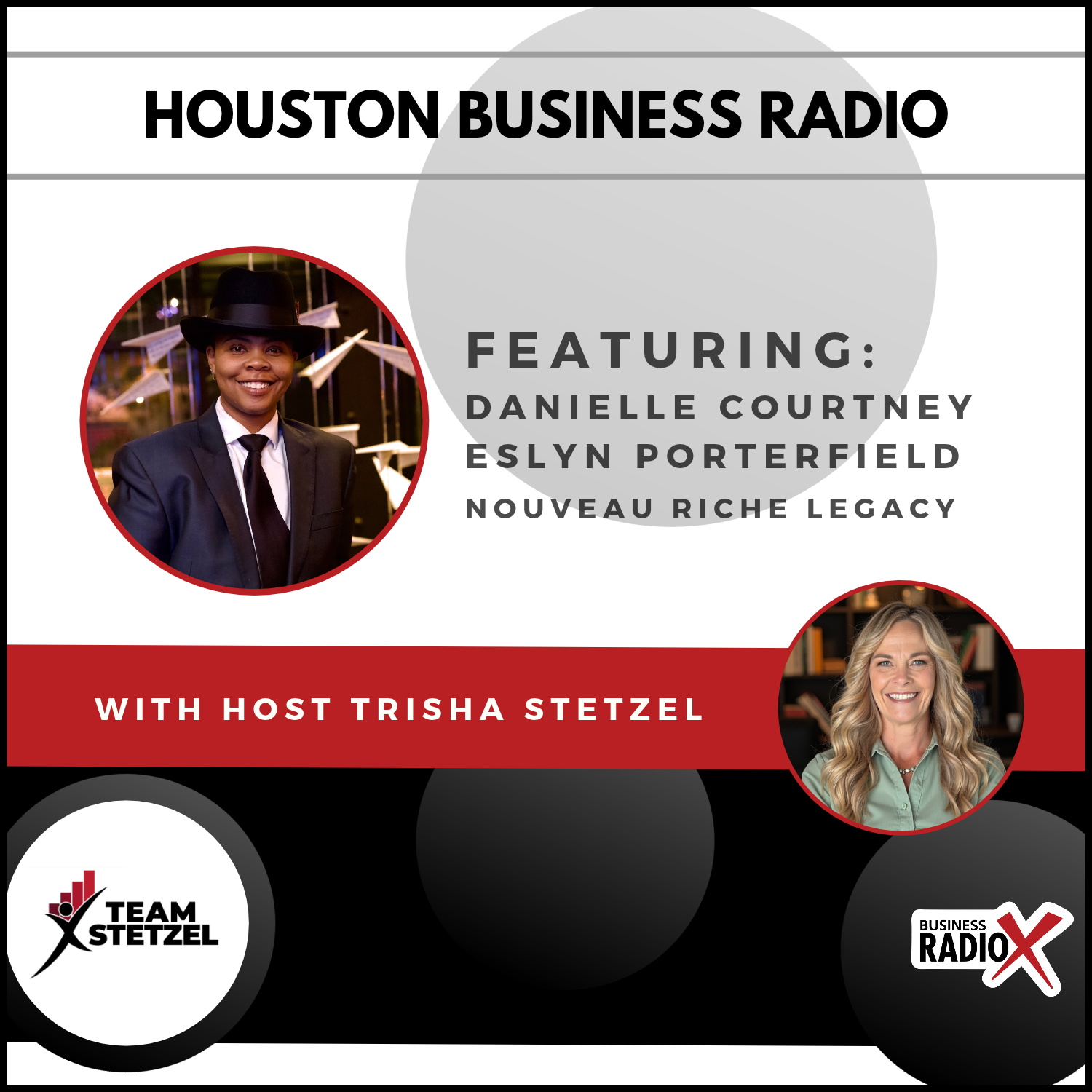

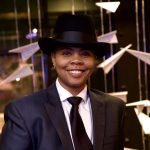
 Danielle Courtney Eslyn Porterfield is a cultural wealth architect, curator, entrepreneur, and educator building at the intersection of wealth, art, technology, and culture.
She is the founder of Nouveau Riche Legacy, a platform focused on financial intelligence, emerging technology, AI, cryptocurrency, Web3, forex, stocks, and long term wealth building. Her work is centered around helping people understand not just how to make money, but how money, ownership, and economic systems actually work.
Danielle is also the founder of Nouveau Riche Studios, where she works as a curator, art broker, and artist manager, connecting artists, collectors, and opportunities while helping preserve and position art as a cultural and financial asset.
Her background is intentionally multidisciplinary. From photography and art direction to entrepreneurship, financial markets, and creative business development, Danielle has built her perspective by working across industries rather than staying inside one lane.
At the center of everything she does is one philosophy: “Your perception is your reality.” 
Danielle believes that changing the way people understand money, ownership, creativity, and technology can change the way they participate in the economy.
Her mission is bigger than teaching people how to make money. It is about helping people develop the intelligence to recognize opportunities, understand systems, create assets, and build something that can extend beyond themselves.
Through her businesses, educational programs, workshops, and cultural work, Danielle is creating what she describes as infrastructure for building intelligence, ownership, and influence in the new economy.
 This transcript is machine transcribed by Sonix.
TRANSCRIPT
Intro: Broadcasting live from the Business RadioX Studios in Houston, Texas. It’s time for Houston Business Radio. Now, here’s your host.
Trisha Stetzel: Hello, Houston. Trisha Stetzel here bringing you another episode of Houston Business Radio. I’m thrilled to introduce you to my guest today, Danielle Courtney Eslyn Porterfield, a cultural wealth architect, curator, entrepreneur, and educator. Building at the intersection of wealth, art, technology, and culture. Danielle is the founder of Nouveau Riche Legacy, a platform focused on financial intelligence, emerging technology, AI, cryptocurrency, Web3, forex stocks, and long term wealth building. She is also the founder of Nouveau Rich Studios, where she works as a curator, art broker and artist manager, connecting artists, collectors and opportunities while helping preserve and position art as both a cultural and financial asset. Her mission goes beyond teaching people how to make money. Danielle wants people to understand how money, ownership and economic systems actually work so they can recognize opportunities, create assets, and build something that extends beyond themselves. Danielle, welcome to the show.
Danielle Courtney Eslyn Porterfield: Thank you so much for having me. I appreciate being here.
Trisha Stetzel: Was that too much like over the top?
Danielle Courtney Eslyn Porterfield: I mean, it is it’s a mouthful, definitely. But, um, I, I think it answered. I mean, it describes me perfectly.
Trisha Stetzel: It does. And you do so much, which is why I was so excited about having you on the show. So besides all of the amazing things that you’re doing. What else do we need to know about Danielle?
Danielle Courtney Eslyn Porterfield: Um, I’m just a girl that’s from Detroit, Michigan. Um, I’m a percussionist. Uh, so I play a lot of instruments. Um, last year I was in the Alpharetta Orchestra where I got to play along some amazing, talented musicians. Um, my maestro was actually in the Atlanta Orchestra where he, um, does a lot of these famous, um, uh, um, sets with, I think he was with Gucci Mane, um, this last one. And so I just kind of keep myself in the arts and anything that is resemble art and business and enter, um, uh, just the interlocked of actual just community and people. You’ll find me in the center of it. So I think that’s like outside of what you explained, I think that’s, that’s something that a lot of people don’t necessarily know.
Speaker 4: Wow, I love that.
Trisha Stetzel: And by the way, you guys, Danielle and I met in Atlanta at a no focused event. And we were able to connect for a short conversation there. And I talked her into coming to have this conversation with me today. And I can’t wait for you guys to learn more about the work that she’s doing. So let’s dive right into it. If you’re okay with that. You called, you call yourself a cultural wealth architect. That’s not a title that we hear every day. So what does that actually mean to you and how did you get there? How did you arrive at it?
Danielle Courtney Eslyn Porterfield: Yeah, it’s a really good question. So the reason why I call myself that is because, I mean, as you heard, there’s so many hats that I wear and there’s not a lot of, um, leeway in a lot of time periods for people to understand what I do in total. Um, and so I’m around anything that is in the business of financial literacy and in arts. And so it’s really about, and then consulting consultations within businesses and how they grow. It’s really about being able to put it together, right? And so the the cultural part is adding in the arts. Um, the wealth part is the finance um information. Um, so again, it’s crypto stock forex, anything that’s actually underneath the financial literacy umbrella and the architect is being able to help you plan that and get it together in a, in a plan that will be able to be, um, done based off of what it is that you do as a business. And so it’s really about how we see ourselves overall. And I think that those three words merge all of what it is that I do instead of me having to lay everything out, um, underneath of one umbrella. So I hopefully that answered the question thoroughly.
Trisha Stetzel: Yeah, absolutely. And I love it. It does bring it all together. But what I want to know is when did you realize that the different pieces of your background and your interest and your passion weren’t separate from each other, but actually belonged together.
Danielle Courtney Eslyn Porterfield: Uh, that’s also really good. So, um, I’m a commercial photographer by trade, and when I got out of. That’s what I went to college for. So when I got out of college, I know. Right.
Trisha Stetzel: We’re peeling the onion back here, Danielle.
Danielle Courtney Eslyn Porterfield: So, you know, and, and I graduated high school early. So actually, let me take a little bit, step back. Um, I graduated high school at 15 and, um, going on 16. And when I graduated, I thought that I was going to be a commercial photographer, which I ended up doing. Um, and I, I loved every piece of it. I was kind of into semi-pro football because my brother was a football player. Um, and the woman that my father was dating at the time was into interior design. So I became her photographer and I was gifted a camera and it led me into the actual photography lane. So I used to draw at that time period too. So I was like, well, is it drawing or is it photography? Photography ended up coming a bit easier. And so I decided to go to college at 1617. Gave myself a little bit of a summer break. And then once I graduated two years later. Um, I was all business. So I was like, I’m going to be the photographer that, you know. Like my teacher said, only one of you are going to make it one. Like we have this giant class of people and you’re saying only one of us is going to make it? Yeah, I was going to be that person. Right? So I started to like just operate in business more. And, um, I didn’t think that I realized, um, truly what business really meant. And so until I started working in corporate America about worked in every photography job that you can honestly imagine. And I kind of climbed my, my way to a director position, a regional director position. And that allowed me to see the business more. And so I took that and separated it and started my business with it.
Danielle Courtney Eslyn Porterfield: And I operated my business alongside of me working for other corporations. And then I kind of got into the coffee world, and the coffee world led me into like, I was Willy Wonka for a couple of years and I was a cardiologist. And, um, and then I went into restaurants and really understanding again, like retail relationships, what it looked like to have, um, an actual like profit margin. And, um, I worked for a really big company that was a franchise that I ended up making them a couple million dollars within the first years of us opening. And that was by my physical hand. So I was just like, interesting. This is really business. At the end of the day, no matter if I’m in different art forms, because being a cardiologist and being a barista or a cafe manager or a art manager, um, I managed an art gallery for a period of time as well. And so all of these things really kind of pointed me off into one direction to where I said, okay, well, am I going to be that photographer that I see myself being? It’s not necessarily saying no, but I seen so much more for myself at a certain point, um, that it was I was able to control the business and get other photographers underneath of me, but I wasn’t able to meet the goal that I had in my head. And so during Covid, a lot of people sat down and they had a lot of time period, like just time on their hands to do something. And I’m not a person to do nothing, as you can hear. Like I have to do something.
Speaker 4: I think we’re discovering.
Trisha Stetzel: That about you.
Speaker 4: You know what I mean?
Danielle Courtney Eslyn Porterfield: I, I had to do something and, and also it was a time period of, of our money getting crazy, like they removed the change from banks. And so you couldn’t necessarily get too much change. That was at the bank. Um, the QR codes became really a way of living life and how people operated. And I had what I considered to be my maestro, which is a friend of mine that I actually was my employee. He just so happened to be in, um, cryptocurrency in a time period that I just got really interested in it. And so like, I, I kind of have an obsession personality, as you can see a bit over the things that I’m highly interested in. And I spent honestly, probably 23 hours out of a day researching everything around regular finance, the stock market, how the stock market had to do with the forex market, and what does that mean in this new crypto market that they’re talking about? And I really broke down all of those systems to have a understanding that I could literally not only understand, but I could tell people. So, I mean, as you can see, I talk a lot as well.
Danielle Courtney Eslyn Porterfield: So there’s, there’s this connection point between me learning and then talking about what I learned and then being communities that were building things that was frontier related. Because now that we’re in 2026, we’re able to actually see what all of those things actually were. And I was trading Bitcoin at $9,000. Like who would have known that type of story would be what it is today and and what it automatically means. And so that I know that’s a long, roundabout answer, but everything as my life started to progress to where it was, even in a time period that was as terrible as Covid was. Um, but it was one of the biggest trajectories that actually put me on the path of me actually understanding financial literacy and what it meant for me to not only be, um, a great individual in society and being able to actually add to it, but to actually have some ownership and how important that ownership is, um, not only previously, but very much so importantly in the future that we’re going in.
Trisha Stetzel: Um, so what I heard is that ownership is the thread that runs through a lot of these things that you just talked about. I learned so much about you in the last couple of minutes, like so many things. So here’s, here’s what I want to know. You’ve done so many things and I think it’s part of who you are. You like to discover. You like to learn. You like to deliver that information back to other people so that they can learn as well. Now you are the founder of two businesses that you’re very involved in right now, which is your nouveau Riche Legacy and nouveau rich Studios. Tell me more about those two businesses and who you serve.
Danielle Courtney Eslyn Porterfield: Yeah. So nouveau riche is a French term that means new money. And that was actually given to me by my photography is nouveau riche photography. So that was the first one of all of them. And nouveau riche means old money. I mean new money. Excuse me. And it is the direct opposite of what old money is. And as an African American, most of the things that we do nowadays is new money. It’s also a negative connotation. And so I to, to individuals who use the actual term, they’re like, oh, you’re a nouveau riche. You like gaudy things. You just spend your money on things that really aren’t going to bring you actually back any value. And I wanted to take the name mixed in with how I show up in all things. And so nouveau riche is kind of like a pipeline of all the things that I’ve now done. Um, and to be able to change your mind on really what that actually means. And so it’s giving you old money appeal. So even my branding is a little bit older. Um, the top hats, the suits, the, the classic um, dandyism effect. Um, and dandyism is a time period of it has its own background story of, of how you actually show up as an individual as well.
Danielle Courtney Eslyn Porterfield: And so a lot of the things that I’ve tied into my business is tied into who I am individualistically as a person as well and to my culture. And so I want to make sure that whatever it is that we’re doing is at the highest level. Um, whether it’s just the presentation of how it looks, but also the information and the execution of what it is that you’re getting. And so nouveau riche, the legacy is literally a foundational legacy building state of where my family should take that name and it will never be sold, you know? And the Nouveau Riche Studios operates with the photography up underneath of it. But I’m able to then show my photography eyes through curation of others in their art world. And I also teach them how to make sure that they’re the Mona Lisa’s and the Basquiat’s and sorry, the Leonardo da Vinci’s and the Basquiat’s that they present. They want themselves to be, but making sure they understand how they’re showing up in the business world as well as they are in the creative world. And as our system changes, they have different avenues of being able to reach that. So again, education all through, through and through. Um, and yeah, that’s basically how nouveau riche became.
Trisha Stetzel: I love that. All right. So, you know, this Texas girl was saying it wrong. So my apologies.
Speaker 4: Nouveau that is fine because I am far from French.
Trisha Stetzel: I’m just. I’m kidding. I’m just kidding, I’m kidding. I thank you for explaining that. And as you were talking through that, and because I know you and I’ve seen you and I know the way that you show up. And by the way, if you guys are only listening, I’m going to encourage all of you to go over to the YouTube channel and see how Danielle showed up today, because this is who she is and it’s gorgeous.
Danielle Courtney Eslyn Porterfield: Thank you so.
Speaker 4: Much.
Trisha Stetzel: I want to talk about personal branding because that is something that you have been doing and you’re really good at. So why is it so important in business to have this personal brand?
Danielle Courtney Eslyn Porterfield: So your perception is your reality, right? And that’s a, that’s a saying that you will hear from my business through and through everywhere. And it’s really about how people perceive you automatically. Um, and obviously I’m a masculine African American woman. Uh, and so there’s three strikes automatically, right? And so typically I got people and I’m also a little bit younger. So I’ve been operating in business since I was in my early 20s. So I had people telling me that I was green and I’m like, what is even green mean, right? I’m wearing this, you know, 200 to $1000 suit. You know, I’m showing up. I have the vernacular that you’re looking for. What does these things mean? And so it’s really about making sure that you’re cutting through, um, people’s immediate biases automatically and allowing them to actually see what it is that you have to offer, period. And so it’s not that I have to dress in suits 24 over seven to get the respect that I deserve. I actually try to make sure that I operate in both. And so my social media, which became a really big thing for me to recreate.
Danielle Courtney Eslyn Porterfield: Um, and I was one of those, I’m like, I’m a photographer. Like I’m not getting in front of a camera. I am the person that’s behind the camera sharing these stories and making sure that they have this particular point of view. But we’re in 2026. There’s no such thing as not being able to show your customer, your viewer, your potential client, who you actually are. And it was one of the things that I had to actually remove from my own personal bias and just make sure people can actually see me the way that they see me in real life. And so yeah, I think that, um, personal branding is the total of all, um, you will see the biggest CEOs and founders that are now having to put themselves on video. Um, and they never have. And so I’m really big with understanding that if you don’t actually merge and operate inside of business, then you’ll be left behind. And I tell people this all the time. So I’ll only be remiss if I’m not doing the exact same thing that I’m preaching.
Trisha Stetzel: Yeah, absolutely. Show up, show up who you are. Show up as who you are in your business and in your personal life. That’s your personal brand. And that’s what I heard from you. And I love that. All right. I know people already want to connect with you, especially those who can see you. I can’t get over this gorgeous suit that you’re wearing. I’d love for you to share your contact information or how people can learn more if they’re interested in getting in front of you, beside you, around you, in your presence, and learning more about the work that you’re doing.
Danielle Courtney Eslyn Porterfield: Yeah, absolutely. So if you’re on Instagram, I’m at Courtney, Iceland. So Courtney spelled with a C and then Iceland is ESLYN. And then also within the nouveau riche brand. So it’s nouveau and OUVEAURICHE, and then it’s legacy or studios. Um, and those are also the dot coms as well. So nouveau riche legacy nouveau riche studios.com. You can find me at both of those.
Speaker 4: All right. And if you can’t.
Trisha Stetzel: Find her, you guys reach out to me. I promise I’ll connect you because I’m connected to her. Um. Gosh, this is so much fun. All right, I want to take just a little bit deeper dive into the financial space because I know you have a lot of we have a lot of passion for a lot of things, but this area is also very a very big passion for you because you’re running businesses and you want to help others learn that, um, financial responsibility as well. So you make a distinction between making money and understanding how money and economic systems actually work. So tell us what the difference is and why that distinction matters.
Speaker 4: Yeah.
Danielle Courtney Eslyn Porterfield: So a lot of people automatically just like, I want to make some money, I want money, or this is the way, the avenue that it is for me to actually make money, eh, they don’t know what to do with it when they get it. And B they don’t understand the importance of the trajectory of our economics right now. So you have a lot of people currently that are talking about cryptocurrency. There’s scams, there’s, you know, oh, it’s just too volatile for me to put my money there. And in reality, it’s just a lack of information. Right. And so unfortunately, our world changes before the economy is used to what’s happening, right. So Covid was a major shift in change of not just, you know, our health system, but it was a full blown change in our financial system. And it was done in front of our eyes. And so if you don’t have the ability to see, you know, and it honestly operates in all things, if you don’t have the ability to see what’s in front of you, then you’re just taking one step at a time. And don’t get me wrong, taking one step at a time is necessary, but you still don’t see where your future is going. And it changes like this. And so when it comes, and especially in African Americans, not a lot of our our money is is passed down. It’s not saved to the point where we can attain generational wealth at all.
Danielle Courtney Eslyn Porterfield: And we’re kind of carrying new, like burdens that has happened from previous Generations that kind of keep us stuck. And so I got really passionate about a. What did it mean for me to be an African American in the United States, especially in a time period of Covid? And then what did that mean in our financial system and how the U.S. was built? And what did it look like for the first stock market, which was an index fund full of slaves, and how we add to the actual pipeline of information of, of, of consumerism. Excuse me, instead of us having the ownership, that is the reason why there’s consumers, right? And so if we are at the forefront of adding to certain systems that are making people actually free, and freedom, I think is the biggest thing for all Americans, regardless of what, where you come from, how it is that you got here. Honestly, it is the forefront of what it is that we see America to be. And so to actually be free is through knowledge and understanding. And even the breaking down word of capitalism is knowledge, right? And so we have to get to a point where it’s not about the action service of, okay, this to this is making money, but it’s like, okay, what is a dollar bill? What? What is that fiat currency, right? How did it become a fiat currency? Is it backed by anything? Like, do we have enough gold to.
Speaker 4: Support.
Danielle Courtney Eslyn Porterfield: This fiat currency?
Speaker 4: You know, is this really exist? Can anyone see it? No, literally.
Danielle Courtney Eslyn Porterfield: And it’s a belief system. And once we you you realize the emergence between our fiat currencies and the same way that we were trans trans, we were trading, uh, cows versus wood or, you know, food over gold. There was no thought process of what value was. And we created what that value was. Well, I really understand that all of this wood that I’m helping you build your house with is not the same as me giving you, you know, just one bucket of water, right? That one bucket of water may sustain you for now, but it’s not like you gave me a well to constantly replenish my bucket of water. It’s just one bucket of water. And so value systems are always changing. And in business, at the bottom line of all of the above, it’s really a, it’s a really a human interaction. Um, and how we actually participate as humans together. And that is what’s scary because we’re merging on to an AI and robot, right? So if you don’t even know what it means to be human and operate with this fiat currency, that is a belief system, then how are you going to be able to transfer your actual wealth that you’ve built, that you spent your entire life accumulating, and then actually seeing what that transfer looks like, and that connection is mandatory at this point. It’s not even like, I hope that you catch on. No, it’s it’s mandatory. So yeah.
Speaker 4: Wow.
Trisha Stetzel: So what am I? In simple terms, what I’m hearing is we really need to understand why and how we’re building our legacy.
Speaker 4: Yes.
Trisha Stetzel: Uh, and I think that that is so important. You start talking about AI and we need a whole nother, a whole nother segment for us.
Speaker 4: To talk about.
Trisha Stetzel: This, right? Like everyone thinks that AI is going to solve all their problems and they’re going to step away and it’s going to be magic when we actually need the human to stay intact.
Speaker 4: To.
Trisha Stetzel: The AI so that it doesn’t turn into the the dumbest language on the planet. Right? We’ve got to feed it good language or good information and knowledge, and it’s so important. All right. I want to pull back in, um, just for a minute, the art piece of this because I think it’s really important. Uh, what do you wish more people understood about the role art can play in building and preserving wealth and culture?
Danielle Courtney Eslyn Porterfield: Yeah, that’s really good. So first of all, a lot of people don’t participate with art the way that they used to. So the galleries don’t have the same pool that they did. Um, and the value base of art is really only serving one particular area than the actual artists. And so a lot of people don’t know that art is one of the biggest asset values, that individuals who have wealth are able to actually operate in tax free and move and house all of their assets without anyone actually knowing. Right. And so you see these giant organizations that are moving things like the Leonardo da Vinci’s piece, there was one piece that was just sold for $440 million, 440. Right. And so when people hear numbers like that, they’re like, how? And you look and you’re like, ah, I don’t even know. Like, I don’t understand why that piece is, is serving. I understand Leonardo da Vinci. We get that. But why is that piece serving at $440 million? And who’s out here buying a $440 million piece of art? It is one of the only assets that you can put that type of intrinsic value in, and again, be able to keep those amounts under wraps without it actually affecting your bottom line. And so as artists, they don’t come into the art world thinking that they’re just a product.
Danielle Courtney Eslyn Porterfield: They think that they’re creators because they are. They don’t understand that the most important value that you can have on this world is your IP, your intellectual property, and that’s all that they do. And so it’s removing certain, um, certain nuances that they had, uh, previously or what they went to school for and how they thought about this is how I’m going to actually operate my art business. This is what I’m going to, I’m going to sell originals until I die. We’re in the world of printing and media. They they call it, you know, the the die hard artist because of the fact that they weren’t making any money, just selling originals, you know what I mean? And I have to tell them, you got to kind of step over into my field. I’m a photographer. I make my money off of duplication of prints, you know what I mean? And so it is a way for you to keep your value and your authenticity inside of these prints. However, you need to either either put yourself in a, an area based where you may not understand or you may not know your collector, right? These people that buy, you may not know them. And you’re like, oh, I’m going to meet every. And I’m going to love the people that my art’s going to go in your home and I’m going to create this relationship.
Danielle Courtney Eslyn Porterfield: No you won’t. Not at $100,000 piece, who’s, who’s out purchasing $100,000 pieces every day. And it may take you nine months to a year to make that piece. Well, if you only sell one a year and a art gallery takes 50% of it, you’ve made $50,000 that year. Is that enough to sustain you? Maybe it is, but also $100,000 pieces are not being sold every day. And so it’s really about making sure they understand how they’re the product, how they can actually have, again, ownership over their particular systems. And either we’re in a world of social media to where they’re putting their personal brands out, and they’re able to do a direct to consumer, like, I don’t need this middleman, you know, and it’s putting pressures on people like me who’s developed galleries and who has festivals and, um, um, put their art in front of other individuals to be able for them to see. It puts a lot of pressure on us to actually do more and be more to make sure that they come with us instead of them just going with themselves. So the world is changing, and my goal is to make sure that they understand how the world is changing with them.
Trisha Stetzel: Oh my goodness. Okay, so we’re like at the very back end of our conversation, but I want to know of the people that are listening. Who do you want to connect with? How do they know that they should reach out to you.
Danielle Courtney Eslyn Porterfield: Yeah. So anyone that’s in business, anyone who wants to understand anything that’s about financial literacy. I’m just a consultant and I’m an educator. And so it’s any artist galleries, people who are wanting to know how to invest their money in art, um, instead of other assets. And art is one of the things that lasts beyond time. Right? And so, uh, anyone who is really in the business and arts cultural world, I’m your girl.
Trisha Stetzel: I’m going to say to everyone who’s listening, you all need to meet Danielle.
Speaker 4: Like you.
Trisha Stetzel: Have to. All right. Uh, tell me what’s next for you before we close the show. What’s next for Danielle?
Danielle Courtney Eslyn Porterfield: Well, you know, people like yourself, um, has been, um, you know, pushing me to make sure that I’m. I’m not being the best kept secret. That was also a tip that was given during the know conference. And, um, I have a couple podcasts that’s coming out. So one is called wealth theory. Um, it’s going to be meeting business individuals and being able to break down the actual raw essence of business. Um, and then the other one is called curated dissent. And I’m giving the actual real story behind artist. And what does it actually take to become an artist and how expensive it actually is to. And so that one is kind of being inside of their studio in real time, and then having them sit down and be able to have an actual face to face conversation to break down these subjects. And then I have a reality TV show that’ll be coming out. Um, that one is just a little bit more fun and a little bit more relaxed. I know reality TV, I don’t understand how, but listen, I’m just getting swept away in all these platforms. I’m just making sure that I’m able to serve my audience and my customers and give more so of an authentic, um, value of myself and the people and the places and the things that I do. Um, and so if you just check me out on at course, Courtney Iceland on Instagram, mostly everything I combine in that one space. And from there, the bio you can go to all of my additional pages.
Trisha Stetzel: Oh, I love that. This has been so much fun. Thank you for spending your time with me. This has been very special and I can’t wait for everyone to hear it.
Danielle Courtney Eslyn Porterfield: Thank you so much for your time. I truly appreciate it.
Trisha Stetzel: Any time you want to come back, I’m just saying. Anytime. All right, you guys, that’s all the time we have for today. If you found value in this conversation that Danielle and I had, please share it with a fellow entrepreneur, veteran artist, or Houston leader ready to grow. Be sure to follow, rate and review the show. It helps us reach more bold business minds just like yours and your business. Your leadership and your legacy are built one intentional step at a time. So stay inspired, stay focused, and keep building the business and the life you deserve.