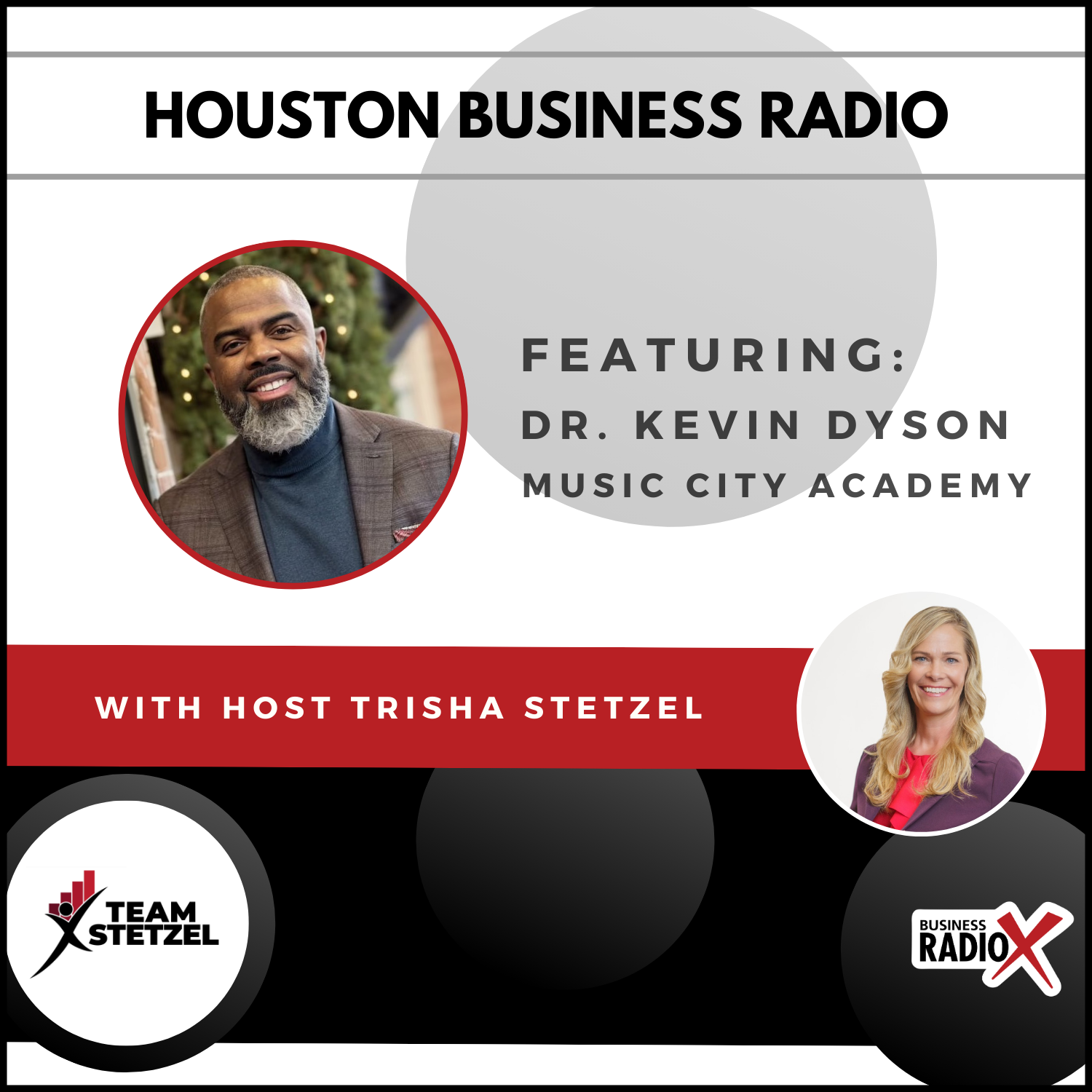


 Dr. Kevin Dyson is the Founder of the Music City Academy and a former NFL wide receiver best known for the iconic “Music City Miracle” and being “One Yard Short” in Super Bowl XXXIV.
After his football career, he transitioned into education, serving nearly 20 years in public education, including as Principal of Centennial High School and Grassland Middle School in Tennessee.
Dr. Dyson holds multiple advanced degrees, including a Doctorate in Educational Leadership, and is passionate about mentoring youth and developing future leaders. He is also the author of Qualified, So I Am Justified: Redefining Success, and continues to impact communities as a speaker, leadership consultant, and advocate for student success.
Today, he blends his experiences as an athlete, educator, and executive to inspire individuals to overcome challenges, lead with purpose, and pursue their own definitions of success.
Connect with Dr. Dyson on LinkedIn.
 This transcript is machine transcribed by Sonix
TRANSCRIPT
Intro: Broadcasting live from the Business RadioX studios in Houston, Texas. It’s time for Houston Business Radio. Now, here’s your host.
Trisha Stetzel: Hello, Houston. Trisha Stetzel here bringing you another episode of Houston Business Radio. So excited to introduce my next guest. Today’s guest is Dr. Kevin Dyson, a former first round NFL draft pick, educator, author, and now CEO of Music City Academy in Franklin, Tennessee. You may know Kevin from some of his most iconic moments in NFL history the Music City Miracle and the famous one yard shot play in Super Bowl 34. But what many don’t know is after the NFL, Kevin spent nearly two decades transforming schools as a teacher, a coach, and later as a principal at both Grassland Middle School and Centennial High School. Guided by his values instilled by his single mother, Kevin earned two master’s degrees and a Dr.ate in educational leadership, and today he leads Music City Academy with a mission to grow strong students and even stronger leaders. He is also the author of Qualified So I Am Justified, a leadership consultant and an in-demand keynote speaker known for turning his life experiences into lessons on resilience, purpose and character. Please welcome Dr. Kevin Dyson, educator, leader, and a man redefining what it means to succeed on and off the field. Dr. K.D., welcome to the show.
Dr. Kevin Dyson: Well thank you. You know, I gotta have you do all my intros, I appreciate that.
Trisha Stetzel: I love that I spend a lot of time on these to make, you know, make it feel good, because we don’t often introduce ourselves with that kind of, um, umph, if you will. Right. So you’re welcome. And I’m so glad you’re on the show today. Um, how about you start with just telling us a little bit more about you, Kevin?
Dr. Kevin Dyson: Well, I’ll start with, as you mentioned, someone in the intro, um, I’m the oldest of of a single mother. Um, and part of that, her trying to keep us in line was, uh, sports. So sports had always been an important part of my life. But she had one rule, and it was to maintain a 3.0 or be average or better. And, you know, like most kids and I’m the oldest, I challenge that. And she took sport away from me. It was basketball, which was my first love was basketball. And those are the kind of values that my mom was trying to instill. I think she wanted us to understand that yes, it’s okay to have dreams, but you can’t skip steps to attain those dreams. And I jokingly talk about, you know, this is in the 80s when this conversation was happening and this was pre-Internet, and my mom literally came home one day after the almost like day after two days after I professed that I was going to the NBA to buy her house, she came home with the statistical probability of me making it in all the major professional sports in the US. And you know those numbers like one and 2,000,001. It’s crazy, right? It’s like less than 1%. And I look back on that now and I recognize it wasn’t to, you know, destroy my dreams of making the professional NBA make the professional basketball. It was more to give me a sense of priority and something to attain without skipping the necessary steps.
Dr. Kevin Dyson: And so that’s always kind of been in me. Uh, like you said, I played in NFL. I moved to education, um, kind of really like a lot of players have retired from the NFL trying to figure out what your next identity. What’s that transition for so much of your life? Sport dictated your next move, and I just happened to fall in love with learning, which I never had before as a kid. I loved how I was able to have an impact on kids, even if it was a short term, but some I found it’s been long term from now. I’ve been in education a little over 20 years that you talked about, and so that impact is far greater than anything you can really do in life when you have those intimate conversations that you have with with young people along the way and you hope they listen. Uh, even your own kids. Right. And so that is, you know, why I have lasted as long as I have in education and moved up the ranks that way. It just became somewhat of my calling, if you will. And now I’m embarking on a new challenge where I want to expand that that that brand, if you will, that influence that inspiration. By starting my own charter school out in the greater Nashville area.
Trisha Stetzel: Yeah, I love that. So it started with mom pushing you in the right direction and telling you that you had to have good grades, and it really I see that throughout all of the all of the things that I talked about in introducing you, but even through the conversations that we’ve had. So thank you for learning those lessons. Thank you, mom, for teaching those lessons and then bringing those back to the students. So, um, what do you think is one leadership lesson from football that translates perfectly to the classroom or even the boardroom?
Dr. Kevin Dyson: Wow, that’s pretty profound. I love that one. You know, what’s interesting is a lot of principals, especially in the county I was at or former athletes, and I think that’s not by chance. I think there’s a deliberate, um, action for that. I think because of sport, the ability to collaborate, the ability to stick through the ability to meet goals. But I also think there’s a toughness that comes through being in hard times of sports, a resilience. And I think you have to have a set of resilience. You have to have a sense of resiliency. Um, in education and I mean, uh, in my time that I have been in education, I’ve been through, what, two pandemics, um, been through multiple not me physically been through a school shooting, but across the country and that climate in the world and how that is and that. And when you see those things, that trickles on down to everybody, not just the people that are affected by it. And we were affected by it here, like 15, 20 minutes from the school I was working at, at a at a school that was affected by that a year or two ago. And so all those things, when you’re having to rally people around, calm people down, be a shoulder, be a support, but also lead through those. I think there’s a level that you learn from sport, not how to not to get rattled, not to waver, to be a steady presence and lead.
Dr. Kevin Dyson: I think that’s why a lot of a lot of leaders or a lot of superintendents, like for their leaders and buildings to be at former athletes. Um, and I think that’s one of the things I’ve been most appreciative of is opportunity to express some of that leadership skills that, you know, you used as the captain of the football team, the captain of the soccer team, basketball, whatever it might have been. And, you know, there’s a level of responsibility comes to that because the guys that are not captains are watching you and it’s similar. You know, you know, when you’re leading a school or leading a corporation, the people that are you’re in care of are responsible for your subordinates, whatever. They’re watching you. And um, and I’ve, I’ve always kind of kept that in mind and taken it to heart. And if they’re watching me, I want to be able to say I’m willing to do whatever you’re doing. I’ll get my my hands just as dirty as you if I have to. So that’s what I think. I have learned the most from my time as an athlete to my time as an educator, and more specifically as a as a leader of a school, just just having a sense of resiliency and stick to itiveness and just keep pushing through.
Trisha Stetzel: Yeah, I love that. So tell me what your students have taught you about leadership?
Dr. Kevin Dyson: Patience. No, seriously. You know, um, you have your own kids and there’s a level of patience that you, you almost have with them because they’re yours, right? Um, but there’s a different level of patience when people are raised in different homes and they come collectively together and you’re trying to come to a common goal or common goals, whether it be academic achievement, test scores, attendance, whatever those goals are. And you’re trying to mold young minds and things of that nature. Uh, you have to be patient, I think. You have to understand and get a level of understanding from, uh, just how people are. Uh, not everybody sees the world as you see it. You gotta recognize that and try to see the world from other people’s lenses. And I think that’s been one of my greatest assets as a leader, is being able to be compassionate to all people. Um, and appreciate all walks of life and just being able to be a soundboard, listen and just pay attention. And when you pay attention, you be able to have a sense of patience to work through some things. You can change the narrative of whatever that is bad, good or indifferent. You can kind of change that narrative if you just listen and be patient sometimes. Uh, sometimes I can be too patient. Sometimes I can be too laid back, and I understand that about myself. Um, but I am a I try to see things from all angles and not rush to Two decisions. Not rush to making a move. Drastic move just to make it. Um, and I sometimes be perceived as, um, laid back, but, um, man, just dealing when you’re dealing with teenagers because hormones changing, girlfriend changing, social media changing, you just got to learn to be patient and work through those things.
Trisha Stetzel: Yeah. So much has changed since the 80s, hasn’t it?
Dr. Kevin Dyson: Just a little bit.
Trisha Stetzel: So much. So much. Well, and this this conversation we’re having really speaks to not just your leadership, but also your purpose and your character. And I think it, uh, really rounds out who you are as a leader. So can we talk a little bit about your book qualified? So I am justified. You redefine success. Um, how has your own definition of success changed across your life? Chapters.
Dr. Kevin Dyson: Man, that’s that’s kind of what the book was alluding to. Um, when I first retired from the NFL. I knew doors would open for me. Of course I wanted to coach, but when I settled in on secondary education and I was coaching from a high school perspective, I knew doors would open for me. But I also knew I wanted them to remain open. So I wanted to go back to school and get qualified because I didn’t know what I was doing other than I knew football. I didn’t know education. And so I was justified for the opportunities that came. And that’s kind of how the book kind of started. And within that, though, I’ve learned a lot of things about myself from an emotional standpoint. I, you know, I think I cared a lot about a lot more about what people, how they viewed me. Um, if I was disappointing people, you know, I was the first receiver taken in the 98 NFL draft ahead of one of the greatest to ever do it, Randy Moss. And so much of my identity was from myself, other people. I believe people thought this. And whether they did or didn’t, I believe to be true. Um, that I was always chasing his shadows. And then I have injuries and I could never play catch up. I could never catch his shadow because I’d have a setback after setback after setback that eventually led to me retiring early, and I had a hard time dealing with that internally.
Dr. Kevin Dyson: Externally, people didn’t know, but internally I felt like I’ve let a lot of people down. I let my teammates down, let my family down, even myself, because I didn’t amass the career that I had envisioned for myself. And I had some moments, as you mentioned, with the miracle and the one yard short and and things of that nature. But I also wanted that extensive career to, to validate me being picked 16th overall. And so through that in the book, it just kind of transformed to I had to reinvent myself. I had to humble myself and start, start fresh, find a new passion and then delve into that and get better at whatever that is. And that’s what I hope I’ve been able to do. I think I still got lots to learn about leadership, and sometimes I have the crutch of good people around me to support me, and I leverage that. And I can do better with being more assertive on my end. But, um, but I’ve I’ve learned through this process, though, man, reinvention is hard. There’s a process. And if you’re not willing, if you don’t take the time to allow it to, to develop and and transpire like it’s supposed to, a lot of guys lose that sense of purpose real, real fast.
Dr. Kevin Dyson: And that’s when a lot of things happen. And I’ve been pretty fortunate that I found a new passion. I found a new purpose. And and, um, it’s continued to grow and it’s leading me down this journey of starting my own school, um, 50 years old. And if you told my 30 year old self when I retired from NFL that when I turned 50, I’d be here starting my own school, I’d have thought she was crazy. I really thought I was just going to teach and coach and maybe be an athletic director for for 20 years and retire and and just go golf or and do random things here and there like I do. You know, I do radio, I do TV, I’ve done a lot of different things, uh, speak and all that stuff. And, uh, but now I’m here and I’ve had the opportunity to lead some schools and, and of course, with the people around me, I’ve had some success doing so. And now I’m here and I’m taking this new challenge. And I’m hoping the lessons that I’ve learned over the last 20 years longer than that, really in the last 50 years of life, um, and being able to and implement some of that into school and hopefully this school lasts for years even beyond me. So we’ll see.
Trisha Stetzel: I love that. Okay, so before we dive into I want to talk about Music City Academy. Uh, but I know people are already interested in connecting with you, Kevin. So what is the best way for folks to find you?
Dr. Kevin Dyson: Oh, well, so social media wise, Katie Dyson 87. That’s usually my tagline on everything. Um, of course I’m on LinkedIn. You can just search for my name there. And, um, as far as, like, this website’s, of course, Kevin Dyson. Com, that’s my personal website. Um, got the book and things like that and a little bit bio, a little bit more about me. And then, um, Music City Academy, and that’s the course. I love people to kind of go in there and see what we have going on. We’re still building it up a little better, but because we’re still new, um, and we haven’t even started yet, but, uh, people want to go there and find ways to support the school, be a part of the process. Reach out to me that you can go to either my website, Kevin Dyson. Com, or Music City Academy.
Trisha Stetzel: I love that. Okay, so what vision drove you to build the Academy and what makes the model of Music City Academy different?
Dr. Kevin Dyson: Wow. Uh, well, what drove me, um, was some stuff we’ve been talking about. You know, I’ve been a principal. I’ve been in education 20 years. And what I’ve seen in education is a lot of good people that want to do right by kids want to teach kids and they have passions for the content and the things that they are teaching. But a lot of times we are set by a set of rules or bylaws. Be in public settings, right that you have to do. You have to pass by. So you you almost become almost become cookie cutter in a way, because there’s certain things that you have to do every year. So the inspiration was, I wanted to do something, have an opportunity to do something a little different. And I wanted to take what I, for me, my personality would would have been the type of school that would engage me. You know, I did decent enough in school. I had like I said, my mom made sure we maintained a three or better. I, I was just just under 3.4 GPA and I and I say that because I was pretty good. Yeah. But really I didn’t I didn’t extend myself, you know, I played the, the game where if I had chemistry, I made sure I had home EQ or or art or something to balance it out, you know, to make sure I was going to get my B average. And I didn’t do any advanced classes because I just didn’t I didn’t think I was smart.
Dr. Kevin Dyson: And I just when I realized when you talk about intelligence, a lot of it is just stick to itiveness and motivation. And I learned that, of course, in my 40s. But so that was kind of what led to this journey of this school. And I’m taking a unifying power of sports and helping young student athletes find their academic passions to the lens of sports and turn that to excellence. And aside for that, I love competition. You want to build sports teams, and you want to build schools that kids want to come play ball with, but also get an academic experience that that’s a little bit different. And within the school, we’re going to emphasize the the totality of a person, the holistic view of a kid, the mind, body and soul if you will, and have resources within the school to make sure we’re matching that. Start today with some intentional time for kids to to really, uh, get ready for school, whether it be exercise, their advisory, their team, period, um, things of that nature to really just set them up for success in the day. You know, research says if you either meditate, exercise or take time like read or something to yourself before starting your day, you’re more likely to be productive. And I’ve kind of taken that sense and that model. And it’s true. If you if you probably do it yourself, you get up, you go for your run, you read your book, you have your morning coffee, you go to the gym.
Dr. Kevin Dyson: It sets you up for success for the rest of your day. And if you don’t do those things you recognize, you’re like, why am I sluggish today? What’s going on? It’s because your your routine is off. You didn’t get up and get your your blood flowing. Get your mind right. And so I’m just taking that that research and turning it into a purpose in education, um, and trying to do something a little bit different, encouraging teachers to use movement, um, to not just sit desk you encouraging them to use movement as part of their instruction. Uh, so kids are not just sitting and getting, I think, kinesthetically and and things of that nature. Uh, we all learn a little bit different. Um, I have learned this over the years of myself. I if I’d have known this when I was younger, I might have helped me out. But I’m not necessarily a sit and get guy. I could do it more now that I’m older and I recognize it. Um, but as a kid, I probably would have done a lot better had they incorporate movement. That’s football, basketball, soccer, baseball. What other sports have I done in my life? When you learn plays or things like what are you doing? You’re moving and and it’s easy for me even now, I can learn plays instantly because I know the movement of it.
Dr. Kevin Dyson: And so that’s the gist of it. It’s just you just really taking the holistic view of a kid using unified power of sports and turn it into a purpose in it. And oh, and I guess I should mention failed to mention we’re talking about our career pathways. Career technical education will make some partnerships and maybe do some dual enrollment, some internships, some job shouting, job shadowing in the world of sports with Nashville has become kind of a Mecca for some professional sports teams. Plenty of colleges and universities, let alone the the rec leagues, opportunities for kids to delve into different professions within the world of sports. As a kid, the only thing I knew was professional basketball or professional sports. But professional basketball was the dream. I didn’t know the the wide variety of opportunities in the world of sports that I delve into now do sports talk radio. I’ve done TV analysis. I understand some of the things behind the scenes from camera work, journalism, uh, sports marketing, uh, sports, uh. Uh. Uh, what’s it called? Uh, social media marketing. There’s so many opportunities for kids to be in the world of sports. If you have a passion for sports, uh, that you can leverage that into a life post-secondary. And that’s kind of why I chose to go this path. It’s just, I think, to do something different from the typical, um, educational sense and provide what I’m passionate about, which is now learning and, of course, sports.
Trisha Stetzel: Yeah. Oh my gosh, you’re like turning the world of education upside down. I love this I think it’s fantastic what you’re bringing. Um, you mentioned that you’d been on a trip and you’re building relationships before we started our conversation today. And I’d love to know what relationships are you trying to build? Are there people out there listening right now, or people that they know that you need to connect with? Who are they?
Dr. Kevin Dyson: Uh, anybody that has a heart for kids, that’s on the broad sense, right? I think if you want to narrow it down, um, just if you very hard for kids. And you want to see them succeed. Um, in in the world of and I’m gonna say sports, but just in the world in general, I think I would love to connect with you, uh, we, you know, to do with your vision, it obviously it costs money. And and there’s going to be a time and place once we get the, the, the land or the building and things like that, you want to build it out, provide, uh, an awesome experience for kids from hopefully be open August 2027 and beyond. Um, and I would love to connect with people. If you have a heart for kids, if your heart for sports and or a combination of both or, you know, and what I found just talking to families is, uh, I had a young I had a lady tell me she’s, um, probably in her 50s. And she said, man, sports saved her son’s life. And and I can say something similar, you know, being, like I said, raised in a home, just my mother and seeing her grind and doing all those things. Sport was what kept me around. My motivation was to be able to provide for her, provide a home for her, and lessen her burden. And sport has always been a catalyst, and there’s so many lessons that you get from the world of sports and competition that that can be used later in life. And so anybody that just has a heart for kids, heart for sport, and want to see something come together between the two and look, reach out to me, like you said, for my websites and and things of that nature. I’d love to talk and connect so much.
Trisha Stetzel: Reinvention. I think we’ve we’ve had so much shift and change from the beginning of the story to where you are today. Today, um, how do you and I know you’ve written about that, right? The reinvention. You talked a little bit about it earlier, but how are you personally navigating all of this reinvention for yourself? And what would you suggest to others who feel like they’re ready for that?
Dr. Kevin Dyson: Wow. So I did a keynote, um, a year ago. And I was just talking about not being afraid to chase your dreams or chase whatever’s aching at you and letting go of. And it was, you know, acronym. And it was lead with grit. And the L is letting go of those things that that stop you from progressing to your destiny. And so many of us, we are scared to make that move because we’re comfortable or we don’t know what the what ifs are, the challenges along the way. And some of us are getting older. We don’t want to embark on those new challenges, even though our passion leads us in different ways. And so I think one of the whole things is one, you humbling yourself. And I think that’s first you gotta if you want to start over, you gotta hump yourself and say, I’m gonna start over and it’s not going to be easy. Two is let go of those things that stop you from even trying to, which is like letting go of the fear, letting go of the the naysayers, the the negative talk, the the the fear you have on yourself to go ahead and pursue your your purpose. You know, one of the things taglines I have on some of the shirts that I have on my website is you have you have the power to pursue your purpose.
Dr. Kevin Dyson: And I think we forget that sometimes because we let outside influences, you know, distract us. They, they, they give us alternate routes and, and things like that. And we forget. We we control our own destiny. We control our own, our own purpose. And you just have to go out there and realize you have the power to change it and and do it. And it starts with humbling yourself and realize you got a long ways to learn. And, you know, I go back to my first time in a classroom, my first time teaching I would have never thought I’d be in at this point, would have two master’s degrees or Dr.ate, and let alone starting my own school. And I had to reinvent myself. And I’ve had former teammates and friends that wanted to get something a little more substantial or getting the coaching. And one of the things that they asked me, what did I do? You know, how did I get where I was at? And simply put, man, I humble myself and started over. I had to start somewhere. I mean, and I didn’t know necessarily what my passions were back then, you know, I made it into fail and that was my passion, was sport. I wanted to play in the professional league was basketball, but football. And when you’re done. I was 30 years old and it’s like, okay, now what? And traditionally most guys, because you’ve been playing ball, you go into coaching.
Dr. Kevin Dyson: And I like most I sort that out. But it wasn’t in the plans for me. And when I got in, I started teaching kids and coaching kids. I was like, I kind of like this now there are some things I wish I would have done as a player set myself up for when I did retire from an entrepreneurial standpoint. But even still, those are not necessarily my passions. Those are kind of hobbies that help you create passive income and all the different things that come with that. It’s not necessarily my passion, though. Um, so having something that gives you a purpose and passion that’s crucial for anybody with reinvention. We all want to have a sense of purpose. And I think that is your ultimate answer is yeah. Humbling yourself. But does it give you a sense of purpose? Is what you’re doing give you a sense of purpose? If it doesn’t, then you’re not doing what you’re called to do. And I think that’s the ultimate dream is why we’re here on earth, to have our sense of purpose. And I know a lot of times money rules the world. And we we equate our purpose with how much we make. But that’s not always the case.
Speaker4: Mhm. That’s beautiful.
Trisha Stetzel: Thank you. Passion and purpose and I, I well I have one more question for you. Absolutely. Finish up today. How important is it for all of us to surround ourselves with the right people, as students, as leaders, as grown ups? How important is that man?
Dr. Kevin Dyson: You you you’re speaking my brain lesson. I one thing I have learned on this side of my journey is I and I mentioned it earlier, I didn’t leverage those that network those relationships as a as a college kid, meeting up boosters and people that shook and made the world go round. Right? Um, from a college perspective, all the alumni, things like that. And I think one thing I’ve learned as an educator is building on relationships inside the building and outside the building are crucial. You need you need partners. You know, um, one thing about me, I’ve been humble enough to know I’m not the smartest man in the room, and I never profess to be. And I’ve been fortunate enough to surround myself with people that are intelligent in other ways. You know, I have my skill sets, right? But I always compliment my my skill deficit with those that have those skills. And I think sometimes, again, it goes back to being humbled and knowing yourself. I think a lot of times people feel like I have to have all the answers as opposed to leveraging the network, leveraging your relationships with people, and utilizing their skill sets to compliment yours or your weaknesses or your your shortcomings and and working on those to become strengths, but leveraging those that are good at those sort of things. Like, I know people that are really good in organization and communication, like leverage that there’s people that are that are really smart in, in budgeting and finance and operations leverage that, you know, and just, you know, your skill sets and what your value is and bring that to the table.
Dr. Kevin Dyson: And, you know, if I can tell my younger self and what I try to tell my own kids and the kids that come in contact with man is if you make a contact, leverage that. And I still struggle with it. I need to get better at it, but send somebody a kind email, send them a Christmas card or a note. Um, make sure you stay in contact people. You just never know where that conversation is going to lead you to. And I’ve had people before come to me say, coach, and this is when I was coach. And so, you know, I’m Dr. Dyson, but, uh, coach, I did what you said. I sent an email that man, and they. The guy remembered that when I when I came in for internship. And now he’s working for this company. And so it’s just that simple because he remembered this kid reach back out to him with a purpose. And he was like, I appreciate that because so many kids come and go and don’t even appreciate the time they had. Now he leveraged it and he has a job now. So that’s that’s the ultimate thing, man. It’s just leverage your relationships and and network and just be genuinely kind to people.
Trisha Stetzel: Beautiful. Thank you so much for your time today Kevin. This has been such a wonderful conversation. Uh, throw out your contact information one more time where people can connect with you.
Dr. Kevin Dyson: Absolutely. Um, Katie Dyson, 87. That’s my tag on social media. And you can find me at Kevin Dyson. Com simply put. And then music city. Music city miracle. Music city academy. I’m so used to call it Mister Miracle. That’s it. Music City Academy plays off of that, of course, but it’s actually Music City Academy, so you can catch. You can find me there. Got it.
Trisha Stetzel: Thank you so much, Dr.. Kevin Dyson, CEO of Music City Academy. It’s been my pleasure to host you today.
Dr. Kevin Dyson: Thank you so much. I appreciate your time.
Trisha Stetzel: All right, guys, that’s all the time we have for today. If you found value in this conversation that Kevin and I had, please share it with a fellow entrepreneur, veteran or Houston leader ready to grow. And as always, please rate, review and follow the show. It helps us reach more bold business minds just like yours and your business. Your leadership and your legacy are built one intentional step at a time. So stay inspired, stay focused, and keep building the business and the life you deserve.














