
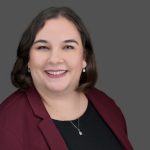
 Growing up in Houston, Madeleine Calcote-Garcia had access to some of the finest museums in the world. Visiting those venerable institutions as a child had a lasting impact that influenced her professional choices.
Today, Madeleine stands out for her ability to build and maintain community relationships. She holds a Bachelor’s degree in Art History with a focus in Museum Studies from Millsaps College in Jackson, Mississippi, and a Master’s Degree in Museum Studies from Baylor University in Waco, Texas. 
Previously, she has worked for the Salado Museum and College Park, the Martin Museum of Art at Baylor University, the Dr. Pepper Museum and Free Enterprise Institute in Waco, the Mississippi Arts Commission, and the Mississippi Museum of Art in Jackson.
She currently serves as the Executive Director of the Fort Bend History Association in Richmond, Texas.
LinkedIn: https://www.linkedin.com/in/madeleine-calcote-garcia-b38a33346/
Website: http://www.fortbendmuseum.org
 This transcript is machine transcribed by Sonix
TRANSCRIPT
Intro: Broadcasting live from the Business RadioX Studios in Houston, Texas. It’s time for Houston Business Radio. Now, here’s your host.
Trisha Stetzel: Hello, Houston. Trisha Stetzel here bringing you another episode of Houston Business Radio is my pleasure to introduce you to my guest, Madeleine Calcote-Garcia, executive director for the Fort Bend History Association and the Fort Bend Museum in Richmond, Texas. Growing up in Houston, Madeleine was shaped early by world class museums experiences that sparked a lifelong commitment to preserving and sharing history. She holds a bachelor’s degree in art history with a focus on museum studies from Millsaps College and a master’s degree in museum studies from Baylor University. Her career spans respected institutions across Texas and Mississippi, including the Mississippi Museum of Art, the doctor Pepper Museum and the Martin Museum of Art at Baylor. Today, she leads the Fort Bend History Association, strengthening community connections, preserving local stories, and ensuring that Fort Bend’s history remains accessible, relevant, and alive. Madeleine, welcome to the show.
Madeleine Calcote-Garcia: Wonderful. Well, thank you so much, Trisha, for having me. I am excited to share a little more about the Fort Bend History Association with your listeners.
Trisha Stetzel: I’m so excited to have you on the show. When we talked a few weeks back, I was like, yes, you have to come on and talk about the museum. So Madeleine, I know I talked a whole lot about your history and where you come from, but we’d love to get to know you just a little bit more. So what else can you tell us about Madeleine?
Madeleine Calcote-Garcia: Yeah. So I grew up, uh, in the Houston area. So I was lucky enough to grow up going to some of the Houston museums. And that really inspired my love of history and art. And once I realized that you could pursue a career in museums, I very, uh, you know, quickly realized that that was what I wanted to do. I didn’t know what it would look like. Uh, but I was lucky enough to be able to pursue that as my career. And, um, most of my career has been in history museums. Uh, it’s been a lot of fun so far. And I currently live in Sugarland with my husband and three rescue dogs. And for fun, we go to museums, um, and of course, hang out with the dogs. And we love going to any and all like cultural arts, theater, music stuff. Um, we definitely love the, uh, museum and art scene in the Houston area.
Trisha Stetzel: Oh my gosh. And it’s such an amazing place for those kinds of activities as well.
Madeleine Calcote-Garcia: Absolutely.
Trisha Stetzel: Thank you for being a rescue mom. That’s fun.
Madeleine Calcote-Garcia: Yes.
Trisha Stetzel: We could talk for babies.
Madeleine Calcote-Garcia: Yes, absolutely. That’s a whole other topic.
Speaker 4: The whole other topic.
Trisha Stetzel: I would tell us a little bit more why history was so interesting to you. So what is it about history that really pulled you in and made you want to do this work?
Madeleine Calcote-Garcia: Yeah, that’s a great question. Um, so a lot of people think that history is dates, um, which it is some dates, but really that’s not what interested me. Um, history is just a collection of stories. And I find that the stories centering around the people are what make history interesting. So, uh, I was lucky enough to be homeschooled, so I had a kind of nontraditional education and, uh, my mom was my teacher. And so she allowed me to, uh, pursue some sort of independent studies. So, uh, instead of having a research paper with a prescribed topic that I had to write about, I was able to pick which topic I wanted to write about. And so I had the freedom early on to, uh, get really interested in research and also research what I was interested in. And so that is what really got me into art history. Um, I, one of my favorite artists is Edgar Degas and, uh, I wrote lots of research papers about him and Impressionism. And so, uh, I was lucky that I was able to focus on my interests and that really set me up to, uh, pursue this museum career. Um, you know, I could go to the museums to look at the art, but then I also got really interested in what was going on in, uh, the, so like socially when the artists were creating, like, how did that impact their artwork? What did their lives look like? All these just different things that made them into the artist that they were. And so again, it just goes back to the people and the stories. That’s what is so interesting.
Trisha Stetzel: Oh my gosh, Madeleine, I wish that one of my history teachers would have told me that it’s about the stories. I was not a very good history student when I was growing up. I was not very interested. But as I’ve gotten older, certainly I’m way more interested. And I love that you framed it as stories and not so much about the dates. It’s amazing. Um, you’ve had the opportunity to work in museums across even multiple states and even be a part of other museums as a patron. So what makes local and even regional history so uniquely powerful?
Madeleine Calcote-Garcia: Oh, man, that’s such a good question and such a hard question. Um. So history is important because I think that everyone should know about where they personally come from, but also where they live. So, uh, you know, Houston has a, a huge immigrant population. It’s a really cool place to live because we have people from so many different places who all live in the same area. And so while, uh, you know, we have people from all over the world coming to live in this area, we want to be able to tell them about, about Fort Bend County, about the Houston area, about Texas. And I think that that is where local museums really play. An important part is about providing a community space for people to come in and learn about the area they’re living in. And there’s so many big stories that happened in Fort Bend County, specifically that I think a lot of people don’t know about, and they actually impacted us history as a whole. So there were some really important civil rights activists who started out in Fort Bend County. And they’re a big reason why. Uh, we had the civil rights movement and why African Americans gained the right to vote. Um, during the 1960s. So, um, there are lots of interesting things that you can learn and it makes you look at where you live a little bit differently and maybe makes you appreciate some of the, the things that you see around, around town.
Madeleine Calcote-Garcia: Um, and two, I think comparing local like museums to some bigger museums, the bigger museums are amazing and they do such important work, but it’s a lot of the local museums that save, uh, the smaller stories and the smaller history. So, uh, not all of us can be at the Houston Museum of Natural Science. Um, so we want to work to save the small stories and we want to provide a space for the school kids to come. So not everybody can travel into Houston. So we get a lot of local school kids that come for fourth and seventh grade to learn about Texas history. And, uh, it’s important for them to have that space to come and feel comfortable in a museum so that hopefully they’ll come back again later. Um, but a lot of times we get, uh, grown ups who came to our field trips and they’re coming back with their kids and they talk about how they churned butter when they were there in fourth grade, and now they’re churning butter with their fourth grader. So, um, having that continuity is really important. Um, and sorry, I kind of went off on a tangent. Um, I think it’s great.
Trisha Stetzel: You’re covering all of the things I wanted to ask you, so we’ll just roll with it. It’s just great. Uh, because I really wanted to dive into, you know, what is it about the Fort Bend Museum that makes it special? Why do people want to come back and bring their kids back. So continue what you were saying. It’s great.
Madeleine Calcote-Garcia: So one of the big things that we do is we have a really robust field trip program. Um, Texas, uh, has a lot of really rich history. And, uh, we, uh, the school kids focus on that in fourth and seventh grade. So most of our field trips are from those two, um, grade levels, but we get, uh, we get all different schools in so public, private homeschool groups, all that stuff. And it’s so important for kids to be able to learn in a more informal setting outside of the classroom. That’s something I’m really passionate about because of my nontraditional education of being homeschooled. Um, I think it’s so important for kids to see that and be able to get excited about learning and also realize that you can learn outside of the classroom and you can learn by doing hands on activities, even if they may not think of it that way when they’re doing it. Um, so for example, a couple of the things the kids get to do when they come visit us. They get to churn butter. Um, they get to grind up corn and they get to do old fashioned laundry. Um, that’s our, uh, one of our chores programs, but they, they get to do lots of other things too. So they get to play Victorian games.
Madeleine Calcote-Garcia: Um, so they’re running all over the yard having fun. And so they don’t even realize that they’re learning when they’re, um, playing all these Victorian games, but it makes them, uh, think a little differently about the toys we have now. Like all of the Victorian games are made out of wood. What are your toys made out of? Probably not. Would you know? And so, um, it’s really fun to get to see some of that click with the kids. And I hope that we are building some future museum goers. Um, because, uh, it is, it is something that we see that sometimes grown ups don’t feel comfortable in museums. They feel like they have to be quiet. They feel like they can’t necessarily appreciate, uh, the exhibits because they may not know about stuff. And that’s totally fine. We don’t think that people are going to come in knowing everything, but that feeling of comfort starts when they’re a kid. Um, it’s a space of learning. We’re not expecting you to be a professor and come in and be able to engage a super, super high level on a discussion of academic rigor. And so, uh, I just, I hope that’s what we’re providing for these kids is that entrance into museums and into learning.
Trisha Stetzel: I love that, okay, adults, we’re not judging. There’s no judgment here. Yeah.
Madeleine Calcote-Garcia: Not at all.
Trisha Stetzel: Visit how? Talk to me a little bit about how we’re able to get people to slow down and come to a museum. Everything is so fast and digital and we’ve got our phones, like, how do we get people to set their phones down and actually come and be a part of something so much bigger.
Madeleine Calcote-Garcia: Yeah. So that is a constant battle for us. Um, we hear a lot that people didn’t know we were there. And so one of our goals is to increase our visibility, um, through marketing. Um, whether that is digital or in print, um, I hope that this podcast reaches a new audience who maybe has not heard of us before and comes to visit the Fort Bend Museum. Um, in addition to the gallery space that we have, we have two historic homes which are absolutely beautiful. And so, uh, there’s a lot of different things that you can do on our campus. We also have a beautiful outdoor space. And so I hope that even if a person may not think of themselves as a museum person, that they will come and visit and give us a try and hopefully learn something new. Um, we also have a very cute gift shop if you just need to come and, you know, peruse and do a little retail therapy. Um, but yeah, I think museums are such important spaces. And, um, there has been some, some research in the last couple of years that actually show that museums are, uh, highly respected institution and a highly respected source of information. Um, when we’re in this age where we see so many things on social media and we don’t always know if it’s true, even if it’s coming from a news source. And so, um, it’s really important that museums continue to do their work and continue to do it, um, ethically so that we are sharing, uh, well researched information with the public. We want to be able to keep that trust that we’ve earned. And so, um, that’s something that I think about a lot as we put out any new content is, you know, did we, did we research this? Well, have we double checked it? Um, are we putting out what, we know to be a fact or what we know to be. You know, as truthful as possible.
Trisha Stetzel: Yeah, absolutely. Okay. I know people there are some listeners who are already interested and they don’t know where in the world the Fort Fort Bend Museum is. So can you give us a location and then where can listeners find more information?
Madeleine Calcote-Garcia: Yeah, absolutely. So we’re located at 410 South fifth Street in Richmond, Texas. It is right behind the Old County courthouse. And you can find all of that information at Fort Bend, Museum.org. We’ve got our address on their phone hours. You can also buy tickets online. Um, so you can find all of that information on our website and, um, and more. We have lots of other cool content on there too.
Trisha Stetzel: I love that. And by the way, if you’re listening and you’re interested, share this with someone that you think would be interested in just slowing down for a minute and going and going to see something really cool and enjoying community and family in a space that’s safe and fun. Okay, Madeline, I know in 2025 you’ve got a couple of big events coming up, so can you tell us? The one we’ve got a couple that are coming up in the spring. Uh, yeah, I said 25, 26. Um, I don’t know where I in the world I am today. So in 2026, you’ve got two big events that are coming up in the spring. Tell us about them.
Speaker 4: Yeah.
Madeleine Calcote-Garcia: All right. So, uh, on March 19th for Women’s History Month, we have a gallery gathering that is, uh, going to be about women’s history with voting. So we’re going to have a speaker from the Women’s League of Voters coming out to talk to us a little bit about that, uh, suffrage history. And we’re really excited about that in April. On April 11th, we have our annual Gala fundraiser. It is called A night in the garden and it is at the Fort Bend Museum. So we are a nonprofit, and that means we have to fundraise to be able to exist and to provide these services to the community. And this fundraiser is really important for us. It allows us to continue fulfilling our mission in the Fort Bend County area. And so if you would like to purchase a ticket or a table or maybe donate, uh, an item for our auction, uh, I would definitely appreciate it. And all my contact info is on our website. So you can go to forbidden museum.org. If you want to find more information about either one of those events.
Trisha Stetzel: Fantastic. Fort Bend, Museum.org that’s where you guys need to go if you want to help raise funds, whether it’s in person and showing up for the events or donating even time, I’m sure you would take that as well, donating time or money back to the museum. This is so much fun. Oh my. I feel like I, I need to come to the museum now. You know, not that far away.
Madeleine Calcote-Garcia: Please do.
Speaker 4: I’m not that far away.
Trisha Stetzel: Um, how do we how do we keep young people engaged in something that for them may feel like it’s old or it doesn’t pertain to them? So how do we continue to keep young people engaged?
Madeleine Calcote-Garcia: So that is a great question. And unfortunately, my answer is that it depends for each person. You have to find the hook, like what interests them. Um, it’s different for everybody. Um, for me, it was an artist who painted, uh, ballet dancers that just was. So that was what got me hooked and into it. Um, and it’s going to be different for everybody. Some people may be interested in the history of computers and how, you know, Apple got started and that is history, even if it didn’t happen that long ago. Um, you know, so there’s so much that is included in history. It’s not all old and dusty. Um, it can be stuff that happened, you know, 25 years ago, 50 years ago. Um, and it can be any subject, so it doesn’t have to be a book. It can be any technology. It can be literally anything we want it to be fashion, food, um, you know, interior design. Um, if you’ve ever been to a Frank Lloyd Wright house, you know how interesting architecture and interior design can be. Um, so it just, you have to find what you’re interested in and don’t worry if you’re not interested in something like military history. Not really my thing. Really glad that other people do it, but that’s not going to be something that has me hooked. Um, so, you know, it just, it just depends. And you don’t have to love every single piece of history.
Trisha Stetzel: I love, I love how you break things down. So simply because that really resonated with me. If you like fashion, there’s history. If you like interior design, there’s history. If you like technology, there’s history. Like there’s so many ways to get excited about history. Um, let’s talk about the association. So the Fort Bend History Association and what it offers to its. Can I call them members, people who become.
Speaker 4: Yes, absolutely.
Madeleine Calcote-Garcia: Yeah. So the Fort Bend History Association has been around for a while. We were established in 1967 to preserve the history of Fort Bend County. Um, we didn’t even when we started, we didn’t even have a building. And now we have a whole city block, um, with a museum gallery space and two historic homes. Um, there’s a few different aspects to the work we do. Um, we collect items. So we have a collection of historic items that relate to the history of Fort Bend County. So some of those are on display in the museum and in our historic homes. But then we also have quite a few of them in storage as well. So that is one way you can support us is if you have a piece of Fort Bend County history and you’re interested in sharing that with us, we would love to take a look at that and chat. Um, you can also become a member. So if you become a member, you get free admission to the museum. You also get invited to member only events and member only exhibit openings. Uh, you can also support us by attending our events by following us on social media. Um, sharing our posts, we, uh, share some fun collection spotlight posts. So if you are interested in learning more about the stuff that we have, uh, we highlight items every month on social media. And yeah, we also work with a lot of partnering a partner community. Oh, sorry. We also work with a lot of partner organizations up in the Fort Bend County area. So we’re always looking for projects, looking for ways that we can work with other groups in the community to either, uh, get history out there or to put on events. Uh, we also rent out our space as a site rental. So if you’ve ever wanted to get married in a museum or, um, in front of a historic home, we have a great place. You can do it.
Trisha Stetzel: That’s amazing. I’m thinking about all of my business owners and leaders that are out there. You guys, I am guessing that the Fort Bend Museum is looking for some sponsors for some of these things happening. So what a great opportunity for you to put your business forward in support of the Fort Bend Museum. You’ve we’ve talked a lot about, um, community and parents and kids and the parents came to the museum and churn butter, and they bring their kids and also the schools and the fourth grade and the seventh grade, having outings and coming to the museum. Talk to me more about the importance of the community that a facility like this, or specifically the Fort Bend Museum, really builds inside of its local area.
Speaker 4: Yeah.
Madeleine Calcote-Garcia: So, uh, community is so important. Um, we would not exist without the Fort Bend County community. Um, a group of community members came together to start our organization. And so as we continue to work in this area, everything that we do, we’re thinking about how is it going to benefit the Fort Bend County community? Um, as I mentioned earlier, we are a nonprofit. And so, um, you know, we need donations to continue our work, but we also need volunteers to continue our work and to help us accomplish some of these things. And so we rely on our community to support us, but we also want to support them as much as we can in return. So if you’re looking for a venue space and you are a nonprofit or community organization group, reach out to us and chat. We can, you know, figure out an arrangement so that you can have so that you can use our space at a lower cost. We want to share what we have with the community. And so we have done that before, where we’ve allowed nonprofits to use our space for a discounted rate because we’re like, you’re, you’re doing amazing work. This is a small way that we can support you. Um, we also work with some of our foundations and funders to get, um, to get donations to allow some of the schools to come on field trips for free. Um, you know, sometimes title one schools or schools that don’t have field trip funding, uh, They just can’t come because of the money. And that’s not a that’s that’s not what we want to hear. So we try to work to alleviate that as well, because we think it is so important for us kids to have a museum experience that we spend time brainstorming how to get them there, even if it just means, you know, talking to a foundation to figure that out. Um, so yeah, we’re always thinking about community and everything we do ties back to that.
Trisha Stetzel: Yeah, absolutely. All my nonprofit friends who are listening, you heard that they have a space for you. You should reach out and see what kind of, uh, arrangements you guys can make when, uh, when you need a space. We all need a space, uh, whether we’re profit or not, not for profit. Oftentimes we need a space to have or hold events. Okay. As we come to a close, You gave us a little look see into an interesting story that came from Fort Bend. But I would like to know. Madeleine, what is your favorite story that is told or depicted or presented or represented at the Fort Bend Museum?
Madeleine Calcote-Garcia: That is a tough one. Um, so I think I will describe my favorite object that we have on display in the museum. Um, and it tells a sad story, but it’s really important. Um, we have a recording, um, of some convict labor singing a work song, um, that they would have sung when they were working, um, you know, uh, at the one of the Texas prisons in this area and it’s just very touching. Um, it’s a sad part of Fort Bend County’s history that, you know, we had a convict laborers in this area. But I think it’s so important that we’re we’re talking about that. We’re trying to learn a little bit more about that part of our history so that we can make sure that it doesn’t happen again. You know, we don’t want to we don’t want to repeat history. Um, and so to me, that’s just one of the most touching pieces that we have in our gallery. So it is, it is a sad story, but, um, it’s one of the ones that I always go back to and I’m like, this is why we’re doing this work. It’s important. And, um, you know, it just, it always, it always just, uh, kind of pulls on the heartstrings a little bit.
Speaker 4: Mhm. Absolutely.
Trisha Stetzel: Thank you for sharing that. How many times have you churned butter, Madeleine?
Madeleine Calcote-Garcia: Um, you know, more times than I can count. Um, and it is hard work. Um, it it takes a while to get it to butter. Um, and we actually do that with grown ups too sometimes. So, uh, some of our local chambers do leadership classes, and they usually come to the museum and we have the grown ups churn butter too. So, um, it takes it takes a bit of work.
Trisha Stetzel: The grown ups probably complain more than the kids, right?
Madeleine Calcote-Garcia: Oh, my kids are ready to go. They’re like, let’s keep going.
Trisha Stetzel: Let’s see what happens here. The grown ups are like, this is hard work. Why do I have to keep going? Thank you so much for coming and talking about the museum. It’s, um, a very important one. History is a very important topic. I love how you reframed things so simply today around, you know, being able to, um, hear stories or even tell stories. And that’s what history is really about. And even some of the amazing things that the Fort Bend History Association is doing for the community. So thank you for all of the work that you’re doing. Tell us one more time how folks who are interested that are listening today can get involved. Donate, volunteer or even just buy tickets to come see the museum.
Madeleine Calcote-Garcia: Yes. So all of that information can be found on our website, uh, Fort Fort Bend, Museum.org. And you can also find all that information on our social media channels as well on Facebook and Instagram under the Fort Bend Museum. And that also, of course, has links to our website. So between, uh, all of that, you will find whatever information you need. And I hope, uh, that you come visit us, that you volunteer, that you donate, you attend an event. Um, and, you know, we would love to have you there. We hope to see you soon.
Trisha Stetzel: Thank you, Madeleine, and I’m thrilled to be a part of you getting it out there as part of the Fort Bend Museum and marketing and talking more about it. There are so many people, I guarantee you, that are listening today that didn’t know it existed. And now they do.
Madeleine Calcote-Garcia: Well, thank you, Trisha. I’m so glad that I could be on the show today.
Trisha Stetzel: Yeah, it was fun. Thank you for the conversation. Okay, guys, that’s all the time we have for today. If you found value in the conversation that Madeleine and I had today, please share it with a fellow entrepreneur, museum goer, or someone who hasn’t yet been to a museum and they’re curious. Of course, you can share it with veterans and even Houston leaders ready to grow. And be sure to follow, rate, and review the show. It helps us reach more bold business minds just like yours and your business. Your leadership and your legacy are built one intentional step at a time. So stay inspired, stay focused, and keep building the business and the life you deserve.














