

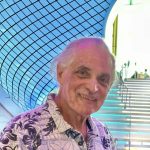
 Robert Danna brings over 50 years of diverse leadership experience across science, engineering, military service, technology, and human capital strategy.
A former U.S. Navy Lieutenant Commander, physicist, consulting engineer, and executive at Deloitte, Bob’s journey reflects a “career lattice” shaped by his unwavering curiosity and adaptability.
Now retired, he serves as a Fellow at the Global Curiosity Institute and continues to advise, invest, and mentor across industries.
In April 2024, Bob released his memoir, My Curious Life: If My Grandkids Ask About Me, Tell Them This, which Kirkus Reviews praised as “an engaging, curiosity-driven journey from the 1960s to the present.” The book—and his life—celebrates personal growth, exploration, and the power of asking questions. 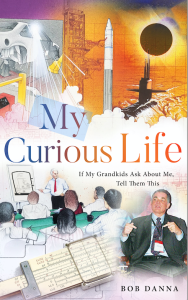
In his conversation with Trisha Stetzel, Bob shared reflections on his military service, tech leadership, and post-retirement work in mentorship and community engagement.
He discussed the impact of cross-generational knowledge sharing, the need to maintain human connection in an AI-driven world, and how curiosity has remained a constant force in his life.
With humor and wisdom, Bob offered encouragement for lifelong learning and living with purpose.
Connect with Bob on LinkedIn.
 This transcript is machine transcribed by Sonix
TRANSCRIPT
Intro: Broadcasting live from the Business RadioX studios in Houston, Texas. It’s time for Houston Business Radio. Now, here’s your host.
Trisha Stetzel: Hello, Houston. Trisha Stetzel here bringing you another episode of Houston Business Radio. Beyond the uniform series. You know what that means. I am pleased to introduce you to my guest and fellow veteran today. Bob Danna is currently retired and serves as a fellow at the Global Curiosity Institute. With more than five decades of leadership experience as a physicist and officer in the US Navy. A consulting engineer and an expert in enterprise resource planning and human capital management. His life illustrates the power of curiosity in driving a professional and personal life, modeled as a career lattice. Bob, welcome to the show.
Bob Danna: Trisha, thank you so much. Really looking forward to our conversation.
Trisha Stetzel: I am too. So Bob, tell us more about you. I know I gave the big, nice summary of all of the amazing things that you’ve done, but who’s Bob?
Bob Danna: Yeah, Bob. I’m a New Yorker by, uh, by birth. And, uh, if you ask me. Oh. Uh, what? What are you. I’m a New Yorker. I live in Las Vegas right now. Uh, that’s where I retired. Um, but born in Brooklyn, I grew up on Long Island. Um, uh, a product of, uh, the, uh, the public school system. Uh, you know, elementary school. High school. Uh, went to Hunter College in Manhattan, uh, for a bachelor’s and master’s degree in physics. Um, I again, uh, the, uh, the education was incredible. Uh, wound up getting recruited by the nuclear navy, um, in 1975, uh, to teach, uh, at the Naval Nuclear Power School. So I was a physicist. Uh, the Navy needs, uh, physicists and mathematicians and chemists and electrical engineers to to teach the officers and enlisted personnel who are operating reactors, nuclear reactors on submarines and aircraft carriers. And so did that on active duty, then stayed in the reserves, actually moved over to nuclear weapons and was part of the theater nuclear Warfare project office. And we were we were doing our work to to look at the consequences of and mitigating, uh, theater, nuclear warfare. So if there in fact, you know, so I know a lot about nuclear weapons. I had a top secret clearance, uh, critical nuclear weapons design information access. But at the same time, I left active duty and then joined a consulting firm in 1980. And I’ve been a consultant, uh, one way or another, for 50 years. Uh, so, you know, initially, uh, in science and engineering, than in it than in human performance.
Bob Danna: Because that’s probably the most interesting thing that a scientist can look at is, is what makes a human a human. And, you know, what can I do to to address human performance? And then ultimately, I was a managing director, uh, at um, uh, Deloitte consulting, um, and uh, consulting in the areas of human performance. And so it was quite a, quite a run. All things considered. Uh, and, uh, I’m still very active. So I retired formally and now about, uh, probably 6 or 7 years ago. Uh, but I am very involved in the community, both local community and my professional community. And it’s give back time. So, uh, my definition of retirement, uh, for the audience, is, uh, I no longer take any, uh, money or compensation of any kind for whatever I do. Uh, so it’s all 100% pro bono. I’m doing it because I love it. If I don’t love what I’m doing, I don’t do it. So, um. And so, uh, it also means, uh, I no longer have any milestones, deliverables. I no longer am required. Sometimes I do that required to get up at three in the morning to take a call from, uh, from Europe or in the, in the midnight for Asia, whatever. Whatever. Uh, so that’s that’s my definition. It’s that kind of me. So it’s, uh, I’m having a good life. Uh, like I said, live in Las Vegas, still travel 4 or 5 months out of the year. And so it’s, uh, I can’t complain.
Trisha Stetzel: Amazing. You have lived such a full life. And thank you for your service. And thank you for your service again. Uh, post service and what you’re doing today. So, Bob, I happen to know that you released your memoir just last year called My Curious Life. Tell me more about that and why you decided to write My Curious Life.
Bob Danna: Sure. Yeah. Thanks, Trisha. Uh, actually, the title is My Curious Life. If my grandkids ask about me. Tell them this. Uh, so, number one, I’m not assuming that my grandkids will ever ask about. So what did grandpa actually do? Uh uh, I don’t think my daughter knows. Uh, so. So, you know, it’s hard to explain what I just gave a quick capsule on. So, uh, I started to actually go around the house and, you know, look at some of the things like, you know, my, my commanders shoulder boards and, and, and, you know, uh, you know, color devices and, uh, yeah. Oh, I here’s a, here’s a guidebook from the New York World’s Fair, uh, back in 64, 65. You know, so I started gathering those and tried to show it to them. Okay. They say this is what grandpa, you know, did. And he’s like, yeah. Uh, no. So I was like, okay, I gotta write it down. So at least I’m going to leave him something. So I started with notes, then it turned into pages. Then somebody said, well, yeah, this is kind of nice, so why don’t you kind of organize it into a book. And so I did so. You know, there it is. Uh, so it’s, uh, uh, it actually is a book. And now that there’s a book sitting on my desk, usually in the closet, uh, but it’s it’s kind of cool.
Bob Danna: So I the one thing that it’s, it’s I concluded from writing the book was, what is the one theme that’s gone through my entire life? I’m a curious guy. Okay. Um, you know, curiosity kind of drove everything. It allowed me to kind of open my mind every time and say, yeah, that kind of looks interesting. Maybe I should explore that. Maybe I should do that. Uh, and you can see by the twists and turns in the career. Um, yeah. And that’s why I call it a career and not a career path. Now there is there is no path unless you unless, you know, it’s like a, um, uh, you know, kind of one of these. Uh, and so, uh, so it allowed me to, to just kind of, uh, kind of move along, kind of write the book and get it, get it now to a point where I actually it’s getting some traction out there. People are saying, this is kind of interesting and there are some some interesting conclusions. And like I said, curiosity of the world, curiosity about other people and curiosity about oneself is what I try to address about Bob Danna. But then I think, you know, somebody reading it goes, mm. I think, yeah, I can take something away from that.
Trisha Stetzel: I love that that’s so much fun and I can’t wait to read that. And I might even tell my grandkids I don’t have any yet. But, you know, you should read Bob’s book. So I when I introduced you, uh, one of the titles that you have is fellow at Global Curiosity Institute. Tell me more about that.
Bob Danna: Yeah. The Global Curiosity Institute was founded, uh, now. Oh, probably maybe, uh, 6 or 7 years ago in Antwerp, Belgium. Uh, and the whole idea was globally okay to bring people together. And there’s a small group of fellows. I was invited, uh, to, uh, to be a fellow along with my partner, Lacey Lowe. She, she also has joined as a fellow, and she, in her own right is an incredible individual. Um, uh, and, uh, so, so, uh, the whole purpose of the, the, uh, the institute is to, in fact, promote, uh, kind of open mindedness, uh, to everything that’s going on in the world. So kind of questioning, be curious, uh, be skeptical, uh, you know, question, uh, you know, what what what the dogma is and then try to get to actually a point where you kind of understand, um, you know, what’s going on. So that’s why kind of the, the curiosity about the world, other people and yourself, you know, you start to kind of put those in buckets, uh, and, you know, it isn’t people in your neighborhood. Yeah, that would be that. That’s probably what most people do right now. But I want to I’m curious about people in the world, okay. In the world itself. So, you know, whether or not you you’re able to travel, uh, you know, just be able to go in and experience that in whatever way you can.
Trisha Stetzel: Yeah. So being curious is a skill, I think sometimes, especially for younger generations. And I know you spend a lot of time mentoring in that space. So how for those people who are not just off the cuff, genuinely curious, how how do you have those conversations with younger generations who are maybe more I I’ll use the description self-absorbed, and I don’t mean that in a negative way. I just mean that they’re doing the things for themselves right now. And as young people, we did too, or I did. I shouldn’t speak for everyone, but how are you having those conversations and creating that curiosity in the younger generations?
Bob Danna: I’d say I kind of draw their attention back to them being 4 45678 years old. Okay. It was natural, right? Uh, who? What? When? Where? How do you know that? Yeah. Yeah. How many times did you hear that from your kids? I certainly heard it from from from, you know. And so and I, you know, I was I was probably the most curious child that I could imagine who had, you know, probably a total pain in the butt. Um, but I draw their attention back to that, and it’s like, see if you can re-embrace that. Um, because if you can, it really allows you not to go down one specific channel, one specific kind of line of thinking, or just kind of listen to one opinion. Uh, it really asks you to step back into your, your into your, your childhood. Okay. And remember what that was like because it was pretty cool. Right. As a kid, you know, you’re you’re you’re always kind of doing all kinds of stuff and you love it. Right? It’s so exciting. Um, and so, uh, what I try to do is talk to folks and kids and especially Gen Z, um, because they’re going to need it. That’s a that’s a muscle that they will absolutely need. That’s going to be a life skill, uh, that they’re going to absolutely need. And if in fact, uh, they do do that and build that muscle, that it’s going to be, uh, something that’s going to be valuable to them for their entire lifetime.
Trisha Stetzel: Mhm. Absolutely. And uh, practicing that. Who what. When where why, how is a great place to start? I love to put those on a sticky note and just have them around with me.
Bob Danna: Right. I do I got a sticky note right here. Exactly.
Trisha Stetzel: Yeah.
Bob Danna: Remind myself.
Trisha Stetzel: Absolutely. Um, so we’re about halfway through our conversation. I would love for you to share your contact information, Bob, in case someone is already curious. Curious how to connect with you, what is the best way?
Bob Danna: Yeah, the best way is, uh. Well, actually, there’s a couple of ways you can go to my website. Site, which is my curious life. Dot net. Okay. My curious life net. Um, and actually, uh, there’s kind of a summary of the book, a little bit more about what I’m doing because I’m doing some I’ll tell you other interesting things, and I’m very much into what’s going to go on with AI these days. Uh, artificial intelligence. Uh, so it’s on the, on the website and actually there’s the AI Bob on the website, who will explain the ten benefits of, uh, embracing curiosity. Um, so I’ve turned myself into AI, Bob. Uh, and so you’ll see that on the website as well. Uh, but there’s also a blog. There’s also a whole host of, of other podcasts that I’ve appeared as guest, etc.. So it’s a pretty rich site that you can you can kind of peruse, uh, but you can link to me on LinkedIn. So I’m still very active, uh, as a professional. So just find Bob, Dan or Robert Danna. And if you just put kind of Robert Dann at Deloitte. Uh, it is only one of me out there. Uh, and so, uh, two ends, please, Deanna. Um, and so that’s another way to do it. Uh, and then, uh, there’s actually, you know, on, on LinkedIn, you can you can actually reach out to me. Uh, with a with a message. Uh, on my website, you can reach out to me with a message. Uh, and so, uh, you know, any of those, those ways. I’m also on Substack right now. Uh, if any any of your listeners use Substack? I love Substack. Uh, so, uh, you’ll find me on Substack. Uh, as again, Robert. Danna. Uh, and, uh, you can, you can that goes, you know, obviously a bit more political, uh, but I’m also using my, uh, uh, my science, um, uh, science creds on that. Uh, so it’s some combination thereof. So it’s, uh, any of those ways would be would be great. And I love to interact with any of your listeners who are interested to, uh, to chat.
Trisha Stetzel: Beautiful. Thank you. And if you didn’t catch it, it’s Danna with two ends. D a n n in a just so that you can find Bob. And in some places it’s Robert. So Bob.
Bob Danna: And Trisha. Yeah. You had kind of. Trisha. Uh, I do have the book. You can find it on Amazon. So if you go on Amazon and put My Curious Life. Bob. Danna, boom. It’s right there. Uh, so.
Trisha Stetzel: Everybody should get a copy of Bob’s book.
Bob Danna: I do appreciate that.
Trisha Stetzel: Yes, absolutely. So, Bob, before you even brought up, I. I really wanted to take us that direction. Um, you know, just in the last few years, everything has really, um, turned internal. And so a lot of us individually are interfacing with AI and less with human beings. And so how do you bring this idea of genuine curiosity alongside of where the world is going with AI and this robot interface? How do you see these two things coming together?
Bob Danna: Yeah, I’m I’m actually quite positive on it. I’ve gone through now, you know, a couple of technical technology revolutions. I mean, I started in high school and college and in the Navy, um, uh, using a slide rule. Okay. Uh, if anybody knows that, you probably find it in the Smithsonian Institute these days. Um, uh, but, you know, that’s how we did calculations back then. So, you know, anybody says, well, I don’t know about it. And I was like, yeah, yeah, okay, fine. Whatever. Uh uh, so don’t be afraid. Just embrace and move forward. So I think the big thing is really trying to figuring out, um, as a, as, you know, an individual, your listeners, you and I. Um, so what value do we add? Human beings. Okay. Because the technology’s going to be there. So now how do you, in fact, uh, either the the easiest thing is just. So how do I actually, you know, query, uh, kind of an AI powered search engine. Okay. Well, that would be a good skill to have these days. Okay. That’s kind of basic skills, but even better. Uh, actually, I’m working with, uh, with a guy, Raja Regis, who’s putting together the Young Professionals playbook. So young professionals playbook.com. So we’re actually doing something that we’re trying to capture the kind of the insights, the experience, the wisdom of the Xers and the and the the boomers to try to pass it to, uh, the Gen Zs, um, specifically aimed at Gen Z.
Bob Danna: Okay. And in fact, it is a complete marriage of AI and, uh, and and the human intelligence. Uh, and so, uh, so on that I’ve actually worked on a module on curiosity. I’ve worked on a module on skepticism. I’ve worked on a module on embracing Stem. Um, and it’s all on the site. And actually, if you go to the one on curiosity, uh, you’d wind up finding, uh, an a, uh, uh, But who is in fact actually the host of the podcast. Okay. Who’s now interviewing I. Bob. Okay. Uh, and then there’s a song that’s generated about curiosity. Uh, on the side, there’s Q&A. There’s actually guests that come in. All of it is a marriage of AI and and and humans. Right. It couldn’t have been done without what was in my brain. But we also couldn’t have done that without actually embracing and taking advantage of the technology. So. So like I said, it’s going to be a fairly wide spectrum of things that you can do. Um, but it’s just trying to figure out, okay, well, number one, don’t resist. Embrace. Okay. And then if you embrace figuring out how you personally, uh, as a, as a human being, okay, with your insights, your experience, your wisdom, all of those kinds of things. How do you now take that okay to your advantage in actually working with AI to generate something that I and you probably could not have produced individually.
Trisha Stetzel: Mhm. Wow. Yeah. As you’re talking through that, I’m thinking about how I’m using AI for myself and for my business. And it’s amazing the knowledge that you can tap into, which also leads me down this path of finding ourselves sitting alone with our AI. So how do we continue to engage each other in this true, genuine human curiosity where we’re still talking to each other alongside of, of course, using AI and all of the technology that we have. But I see a lot of people pulling away from groups of people because they don’t need they think maybe they don’t need them, or it’s just easier to sit in their office and play with their bots, right? Instead of human interactions. So tell me more about that as I know you’re really into.
Bob Danna: That’s actually my biggest fear. Is that okay, so what I always tell everyone, uh, is it’s more important than ever at this point to resist that. Okay. Uh, you know, it takes a real effort because, you know, that’s kind of the easy way out, right? Um, and so actually being able to kind of participate in, you know, the community, however, that is okay. And you say, well, but I can’t really get, you know, get in my car and go, whatever. You don’t have to. That’s the beauty of today, right? We’re we’re on this, uh, you know, on this podcast, you can be on a zoom group. Okay. Uh, there’s all kinds of social, you know, elements of of all of these networks. Uh, and I would certainly say, you know, professionally, you try to do that. Try to join groups that are professionally aligned with what you are trying to do or what you’re doing if you’re doing it. Provide your insights and wisdom to the group. If you’re trying to get into it, listen and participate and absorb. But there’s obviously the human interaction is going to be where it’s all at. Okay. Over the next several years, um, you know, if you’re, you know, politically inclined, you don’t have to go up and get into a rally if you want to. That’s fantastic. If you don’t want to get online, participate in, you know, one or more of these kind of social networks. The beauty right now with this whole podcasting and community structure is that there’s no excuse. Even if you’re only sitting in your office, there’s no excuse not to socially be involved. Human involvement with as many different people from all over your community, all over the country, all over the world. Uh, and it gives you a totally different perspective. And there’s there’s no way that you’re going to be a functioning human being in this world if you don’t do that.
Trisha Stetzel: Mhm. Absolutely. And I’ve read studies and books. The book that comes to mind is The Blue Zone, and it talks about the importance of having that human community and people that right that you hang around with. It’s part of growing old and uh, being healthy as a human. So, Bob, uh, on a personal note, I’ve heard that you’re an event junkie. So can you tell me more about that?
Bob Danna: I am, uh, well, uh, well, I love going. And again, I do get up out of my office and go and do things. Uh, so I love life, like last night. Uh, Laci and I were at, uh, the Jimmy Kimmel’s comedy club here in, uh, in Las Vegas. So we do at night. And that’s the joke around the neighborhood. Uh, you know, where’s Lacey and Bob going tonight? Uh, yeah. Because, you know, everybody is. You know, we live, uh, probably 20, 25 minutes off of the strip, uh, you know, and so if I dropped you in my neighborhood, you never know you’re in Las Vegas. Um, but, you know, most of the folks here go. Oh, no, you have to go down to the strip and find a parking space. Blah, blah, blah, blah, blah. It’s like, oh, come on. Yeah. So we go to to to shows and comedy clubs and go to dinner and just get out, okay. And I’ve always done that. I’ve always done that. Um, and then I’ve done things that are kind of crazy to like, I, I chase, uh, total solar eclipses. Um, and so my first one was back in the early 70s. Uh, you know, Carly Simon song, uh, he took his Learjet to Nova Scotia to see a total eclipse of the sun. Uh, well, yeah, I was in. I was in college. Uh, and we did go to Prince Edward Island to see it. I was in Manhattan, uh, in college. Uh, we didn’t take the Learjet. Uh, we took a, uh, a Volkswagen microbus, uh, up to Prince Edward Island.
Trisha Stetzel: A little different than the song.
Bob Danna: We can’t all the way, including on Prince Edward Island. Not to watch the eclipse, but, uh, since then, I’ve, I’ve, I’ve gone to, uh, take an eclipse cruise where we where we saw one. Uh, in the in the the the Sea of Cortez between Mazatlan and Cabo San Lucas and Austria. Uh, and then last, last year, I was with the Planetary Society in Texas. Uh, you know, Bill Nye the science guy. Uh, yeah. And, uh, you know, he had he and 800 of his closest friends myself, uh, were were in a field in Texas. Uh, watching the eclipse. So I so, again, I know that if you if you kind of think about it, I’ve traveled, like I said, all over the world, both for business and pleasure. So I like to get out. The key is once you get out and you’re doing things, uh, it again changes your whole perspective of everything. So, uh, that’s why. You know what I’m saying? I’m an experienced junkie. Chunky. Um. You know. Yeah, I like to read. Okay. I like the interface. You know, like we are here. Uh, but there’s nothing like actually going out, meeting people, doing things. Uh, and, you know, and. Yeah, I mean, I actually kind of lived modestly, but. Well. Okay. And the, well, part is not my home, not, you know, the car I drive or whatever the well part is. You know, how, how I pay for things to, to go out and and add to my experiences.
Trisha Stetzel: Oh, I love that. Thank you so much for sharing all of these stories. As we close today, I have one last question for you. And because you’re a fellow veteran and, uh, I want to celebrate this in my Beyond the Uniform series. My question to you is, how did your military experience really contribute to who you are today? Bob?
Bob Danna: Yeah, I would say, uh, you know, like I said, I was recruited to, uh, to be an instructor at the Naval Nuclear Power School, uh, in 1975. With that, I had to go down to DC, Crystal city. Uh, go through a whole battery of interviews, including being interviewed by Admiral Rickover. Um, the the father of the nuclear navy. Uh, and so, uh, that, uh, that and I actually interfaced with him a number of times after, after that, uh, when I was actually, uh, at nuke school and the like. Uh, but, um, one of the things that is the big takeaway, okay, uh, is, you know, what does the military instill in you? Okay. Number one, I’d say integrity. Uh, and so that’s the that’s the one thing that I think is, is, you know, if, in fact, you know, you’re in the military, uh, you know, yes, you’re going to get all of the, the kind of the teamwork and getting the mission done and all of those kinds of things. Uh, but the one thing that I think takes away that if you can bring it into science and engineering and business and everything else. Okay? I don’t care. Okay, but if you kind of never compromise your integrity, I’d say that changes your life. And that’s why military people. Okay. People who have been in the military kind of experience, the military and and that’s ingrained in you.
Bob Danna: Okay. That’s why that was that’s what makes I think. And I’ve hired hundreds of, of, uh, you know, uh, ex-military, um, because I know. Okay, I know what I’m going to get. I’m going to get somebody who who will never compromise their integrity. I can teach you everything else. I can, you know, develop everything else. I can do it. But if, in fact, somebody is not going to ever compromise their integrity, um, they are incredibly valuable, uh, to any business. Uh, certainly engineering, certainly the sciences. Uh, you know, whatever it might be. Um, uh, you know, anything that that, that requires, uh, a a a discipline. Lynn. Okay. Uh, I think is, is is what I, I, I what I took away and I tell you that’s I commented on the, on the book a number of times, including the list of the, the attributes that Rickover is looking for, uh, for, uh, for anyone in his program. He’s he’s long gone at this point. Sorry. The guy was great. Um, uh, but, um, but I, I’d say, you know, his list of attributes. If you go down that list, which is in the book as well. Um, uh, it’s it’s it’s something that that if you’re living in life by that those values, those guiding principles are things that, uh, you’re taking away from the military, but apply incredibly to any, any, any business.
Trisha Stetzel: That’s beautiful. Thank you, Bob. And by the way, you guys, if you didn’t catch it earlier, go to Amazon. You can find Bob’s memoir, My Curious Life. If my grandkids ask about me, tell them this Bob or Robert. Deanna. It’s Deanna. You can find it right there on Amazon. Bob, this has been so much fun today. I feel like you have to come back so we can talk about more stories.
Bob Danna: Come back anytime, Trisha.
Trisha Stetzel: I love.
Bob Danna: That. I love chatting with you.
Trisha Stetzel: Thank you. That would be so much fun. So, Bob, once again, tell people how they can find you, and then we’ll wrap the show.
Bob Danna: Sure. It’s again my curious life net. Um, uh, or, uh, go to LinkedIn. Uh, and just, you know, put in Robert Danna, my Curious life or Robert Danna. Um, Deloitte. Uh, and you’ll find me immediately. Uh, and so just kind of reach out, connect to me. Say hi. I heard you on on Trish’s program. Uh, yeah. Okay. Look forward to chatting and you’ll get a chat. I mean, I I’m I’m very open, and I love to, uh, to to speak to, uh, to individuals. And I also help a lot of folks. Um, like I said, don’t get paid for anything anymore. Okay. It’s all, you know. The joy I get out of actually giving back?
Trisha Stetzel: Yeah. Thank you, Bob. And that’s how Bob and I found each other. We had mutual military contacts, and I reached out to Bob and he said, yes, I want to have a conversation. So thank you so much for being on with me today. This has been my pleasure to have you, and I look forward to our next conversation. Bob.
Bob Danna: Same here. Trisha. Hey, I loved it. Thank you so much.
Trisha Stetzel: Thank you. And that’s all the time we have for today. If you found value in this conversation, share it with a fellow entrepreneur, veteran or a Houston leader ready to grow. And be sure to follow, rate and review the show. It helps us reach more bold business minds just like yours. Your business, your leadership, and your legacy are built one intentional step at a time. So stay inspired, stay focused, and keep building the business and the life you deserve.














