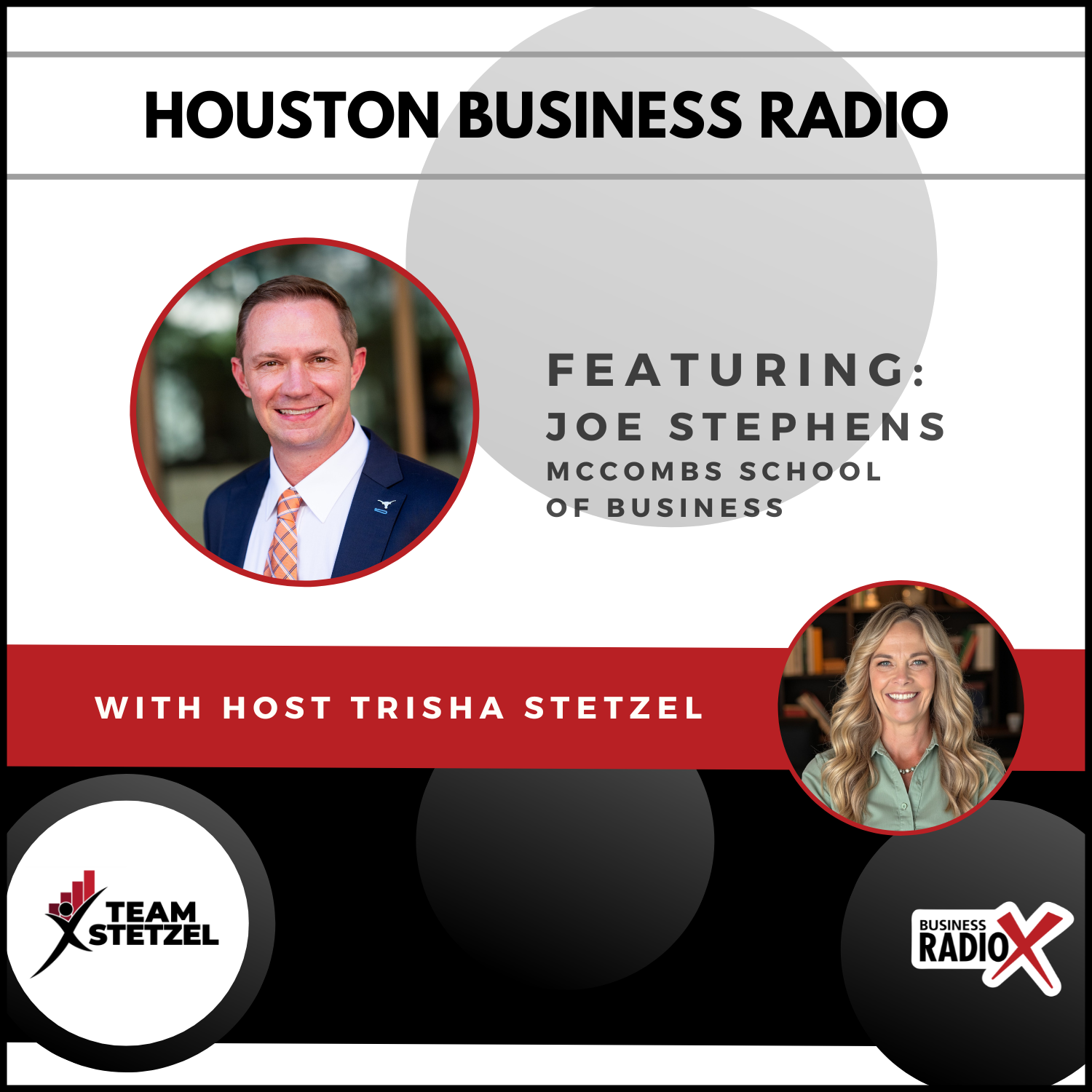


 Joe Stephens is the Senior Assistant Dean and Director of the Working Professional and Executive MBA Programs at the University of Texas at Austin’s McCombs School of Business.
In this role, he leads student affairs and program operations while driving innovation across the Executive MBA and Working Professional MBA programs in Austin, Dallas/Fort Worth, and Houston. Passionate about developing leaders, Joe is committed to creating transformative educational experiences that help professionals accelerate their careers and expand their impact.
Prior to joining Texas McCombs, Joe served as Assistant Dean of MBA Programs at the Trulaske College of Business at the University of Missouri, where he oversaw the Full-Time MBA program and helped launch the school’s first hybrid Executive MBA.
His career also includes leadership roles in admissions and student affairs, as well as brand management experience with Nestlé Purina, giving him a unique perspective on both business and higher education.
Joe holds degrees from the University of Missouri, Bowling Green State University, and Washington University in St. Louis. He serves on the Executive MBA Council Board of Trustees and is actively involved in nonprofit and professional organizations.
Outside of work, Joe enjoys spending time with his wife, daughters, and their dog, Hank, running along Austin’s Lady Bird Lake, and helping manage conservation efforts on his family’s farm in Missouri.
LinkedIn:https://www.linkedin.com/in/stephens1/
Website: https://www.mccombs.utexas.edu/graduate/mba/
 This transcript is machine transcribed by Sonix
TRANSCRIPT
Intro: Broadcasting live from the Business RadioX Studios in Houston, Texas. It’s time for Houston Business Radio. Now, here’s your host.
Trisha Stetzel: Hello, Houston. Trisha Stetzel here bringing you another episode of Houston Business Radio. I’m so excited to introduce you to my guest today, Joe Stephens, a senior leader connected to the University of Texas McCombs School of Business and its innovative MD, MBA program in Houston. We’re going to talk more about that. As healthcare continues to evolve, the need for leaders who understand both medicine and business has never been greater. Joe is helping lead conversations around how the MD MBA program is preparing future physicians and healthcare leaders to think strategically, lead organizations and navigate the growing complexity of modern health care. We’re also going to talk about UT McCombs exciting expansion into the Houston city Center and changing landscape of higher education and MBA programs, and why combing clinical combining clinical expertise with business leadership is becoming a major differentiator for students entering residency programs and healthcare careers. Joe. Long time coming. Welcome to the show.
Joe Stephens: Thanks for having me today. Trisha. I’m really happy to be on this podcast.
Trisha Stetzel: I’m excited to have you. I know it was a long time. It feels like a long time since we had our last conversation. I’m really excited to talk about this today. But before we get started, tell us a little bit more about who Joe is.
Joe Stephens: Sure. Gosh, we can go a lot of directions. Um, like, like a lot of people I know my path isn’t a straight line at all, but, uh, you know, I, it’s hard for me not to start with. I grew up on a farm in central Missouri, and, uh, then that kind of informs so much else about how I do things, I guess. But, um, I, uh, you know, I’ve been serving in this role now for about 12 years at Texas McCombs. Uh, I work with our, our working professional MBA programs, which includes the one in Houston. We have a weekend MBA’s in Houston, Dallas, and then an evening MBA here in Austin. I’m based in Austin and then an executive MBA as well that I work with. And then our full time MBA program is run by another, uh, Dean. And, um, that’s kind of the flagship program. And then these programs complete the overall portfolio and all about, uh, gosh, uh, 1200 or so MBAs enrolled at any given time at Texas McCombs. Um, and then our Houston program, which I want to talk about, you know, I’ll get into a little bit, uh, here in a few minutes. But, um, that program right now has about 100 students in it. Um, I, my background, um, started out, uh, going into higher education, um, pretty early and then did an MBA as a part time MBA student in the evenings, um, at Washu in Saint Louis. For any of your listeners that might be familiar with that one. It’s, uh, it’s a well-known, uh, institution in the medical world for sure. Um, great experience for me. And it’s just kind of ironic that that’s, you know, now the, the, the people that I serve the most are, are students that, you know, are in the same boat I was in about 20 years ago, which is hard to say in acknowledged, but it’s the truth. And, um, we, uh, we live here in Austin. I have a wife and two daughters. Uh, one’s in college already, and the other is about to graduate in two weeks from high school. So she’ll be a longhorn here at UT.
Trisha Stetzel: Wow. And I, I heard through the grapevine that you might like to do some smoking. Smoking of meat, I assume? Uh, well, we are in the great state of Texas, right?
Joe Stephens: Yeah. Well, I’m I love talking about that, but, uh, um, we. Yeah, I got into that maybe before I moved here. Actually, I was still in Missouri at the time. Uh, so probably been at it for now, almost 15 years or so. And, um, have a philosophy on brisket. And I compare it to how some, how students progress through our program actually. And there’s something on a brisket called a stall, which is when the internal temperature, that brisket just sits tight for sometimes a few hours, sometimes 5 or 6 hours. And it gets really frustrating. Um, and you start to question things. And so I, um, compare that to going through an MBA program and it’s usually hits, you know, around the midpoint. So, um, let’s say these students probably in the back half of their first year start feeling like, oh, this is not moving fast enough. And I don’t see the changes, although everyone around them does see it. Uh, and then they, they break the stall, uh, towards the end of the program and come on out on the other end of it. And, and something I’ve also realized is that they continue to progress, um, pretty quickly, um, to that finish what we call that finishing temperature, uh, when you would actually, you know, take it off, um, past graduation, it’s usually six months to a year after graduation that all the things come, come together, all the lessons that they’ve learned. And so that’s kind of how I like to, um, compare it to, to my hobby. And, um, it sticks with our students. They, they bring it up a lot.
Trisha Stetzel: I love that. So I learned something because I love brisket. I grew up in Texas myself and I learned something new today. Joe, thanks for telling me about the stall. Now I’m going to have to go look it up. And, and I appreciate how you’re able to bring what you do in your personal time and enjoy so much back to a way for the students to understand what’s happening as they’re moving through the process. So tell me, with the new the new campus in Memorial City, what does that mean for the future of the McCombs MBA experience in Houston?
Joe Stephens: It’s really exciting for us. For for years, we’ve been at the School of Nursing in in the health center at, um, in the larger medical center that a lot of folks know if they’re in Houston, uh, it’s the largest medical center in the world, I believe. And with that, you know, all these, uh, resources that you have at your fingertips there if you’re in the medical community, um, also brings with it the traffic and the challenges of getting in and out of it. And, um, and we’ve, we’ve enjoyed our time there, but we’ve kind of graduated into a space that we call our own now over in city center, uh, between Memorial City and City Center. It’s right there. And that’s for those that may not be as familiar with the area. That’s I-10 and then Beltway eight. And, um, and so you’re right, you’re pretty close to the energy corridor, but then you’re not far from downtown. So there’s just, it’s really ease of access for us. And it answered a lot of things that we were, we felt like we had some opportunities to improve. Um, so number one, just, you know, being so accessible to the business community, the business ecosystem, and in Houston, uh, the fact that you can leverage both the medical community and the business community that’s really important to us and that it’s easy to get in and out of.
Joe Stephens: Um, they have a place, you know, it sits right across the street from some great shopping, retail, um, places to hang out, nice restaurants. Our students are really excited about that. Um, our alumni live and work in places that are, that are really easy to get to from there and or get to us from where they are, as opposed to the medical center again. Love the medical center. Um, but, uh, what’s what used to take maybe 20, maybe 30 minutes to find a place to park and walk into the place. Now you just pull in, uh, get out of your car, walk over to the elevator, push a button, go up to the sixth floor. You’re you’re you’re there. It’s three minutes. So, uh, makes it much easier for us. And then, um, it’s not, uh, the, the campus that we’ve used has been more of a commuter space where students only come in for the weekends. This space will allow them to build more community, hang out together, have meetings as student groups, um, meet with, work with, uh, work on projects with our alumni who might have some ideas that they would like to use our talented MBAs for. So it’s a, it’s a major shift for us. We’re really excited. And it opens, um, it’ll, it’ll be ready to go in August. So we’re super excited.
Trisha Stetzel: That is very exciting. Congratulations. I know this has been a long time coming, and how awesome is it to move to a place where it’s not so congested? We we all know the medical center area, I promise. Um, I want to talk about the MD MBA program where we’re combining the, this need for physicians and those who are leaders in that healthcare space needing leadership and business skills. So tell me more about this program, where it came from and where it’s going.
Joe Stephens: Yeah. So I have to give a quick shout out to one of our UT system colleagues. His name is Eric Solberg, and he’s with the system. He. A few years ago, he actually reached out to us about this idea. Uh, and there might be some other possibilities in the future, but this one was one that we really wanted to look at. And so we spoke with, uh, UT, MB Seely School medical school over in Galveston, and then also Uthealth in Houston. That’s the McGovern School of Medicine. And we, uh, quickly got, got in contact with, uh, the leadership in both of those institutions. And, and pretty quickly, once we explained what we were, what idea we had, um, which is based on a model that we already have with our full time MBA program here in Austin, the residential one and the del Med, uh, medical, uh, MD program here in Austin as well. So we have, we have something that’s in place that we’ve been using for about ten years now, and we’ve seen great results with it. So we had a model we could kind of talk out, you know, uh, present and then talk about and, and figure out if it could work. Um, given the schedules that we, that we need to run with our programs. And then where could we find some synergies with these schools, um, these other schools. And so, um, What we’ll do. Basically, once an MD MBA candidate, um, kind of reveals himself to us.
Joe Stephens: Then we start talking to them about the admissions process. Um, they’re also probably talking to their leadership on the medical school side and because they’ll need to, um, not, they won’t, they’ll, they’ll come over to us in what would be their fourth year of medical school, um, which allows them to, uh, do the whole thing in one year, which is, um, accelerated compared to what we currently do for all of our regular MBAs. Those are 22, about 22 months, 21 months, something like that. And they’ll be able to do this in about 12, 13 months. Wow. Um, they’ll take the core curriculum alongside our MBAs. Then we have a couple of other courses that are compulsory for the MD MBAs, but we’re going to offer them as electives to our regular MBAs who are interested in health care. And that’s the health care business or the business of health care and then AI strategy in healthcare as well. And those are the two dedicated courses that they’ll they’ll take, and then they’ll kind of bridge any gaps that they have, you know, trying to translate between business and medicine. Um, the other cool thing is that they’ll be learning right alongside working professionals. And this is what’s kind of unique about this arrangement. There’s no other arrangement within UT system between two UT system institutions, um, where medical students are taking classes alongside working professionals. Um, and we think that gives them, uh, probably a lot of advantage in how they will take those lessons learned in the classroom and apply them, um, also kind of debrief them with their classmates who are taking those lessons daily.
Joe Stephens: Um, and going back out to, to where they work and, and, you know, trying them out and then coming back, you know, a week or two later and saying, hey, I tried this. It worked like a charm or. I tried this and actually didn’t go the way I thought it would. Y you know what happened? And that and that makes for a rich, um, rich discussion and great learning for our students. And, um, del specifically, I kind of wanted to mention this is that one of the things we’ve learned, um, didn’t necessarily predict with the Del Med partnership, but those students when they, when they’re going for the residency placements, uh, during those interviews, the feedback we get from those students or those graduates is that I’m going through this interview and they’re asking me lots of questions, obviously about medical stuff, but then all of a sudden the whole thing changes and they start asking me questions about my MBA experience and what did I learn in that environment and how would that be applicable? And it became a differentiator for them. And we’re seeing those students that did the dual, um, here, um, they’re getting the primo residency placements. And so there’s some curiosity, I believe, in the in the medical community about people that can do both of these, these things.
Joe Stephens: And they don’t have to be so desperate. Uh, disparate, you know, is what I’m saying. There is, um, you don’t have to necessarily specialize in medicine and then somebody else has to do business. You can blend the two. And over the years, I’ve had a lot of MDS go through our programs, especially our executive MBA program. And, um, they come out on the other side with a totally new kind of outlook and mindset on healthcare and how they can make a difference. Um, because the, the things you learn in a business curriculum can be so transferable to the medical field. As long as you keep the patient at the center of your focus, you want, you want the outcome to be them. We teach them business, you know, pay attention to and know your customer. Um, and in healthcare it’s the patient. So as long as you keep that at the center, um, you can kind of work around them on, on the better, the best outcomes and the best overall experiences for them. And then with the business, uh, practices that we teach, hopefully then you’re also finding some efficiencies which reduce costs, which hopefully reduce pricing and so on and so forth over, over time. Um, and hopefully fix some of the challenges that we’re, we’re experiencing, as you know, just citizens in this, uh, this, this world right now and, and what we’re dealing with in the healthcare industry.
Trisha Stetzel: Yeah, absolutely. So, Joe, I know there are folks who are listening today who are already interested in learning more, even connecting with you. What is the best way to reach out?
Joe Stephens: Yeah. Um, best way to reach out to me. You can find me on LinkedIn pretty easy. You can search my name. Um, it’s Stephens one I think is my, my code at the end of the LinkedIn piece there on, on, on the link. And then also you can always search, um, Texas McCombs. Um, you can do Houston MBA or MD, MBA, uh, search for that. It’ll pop right up and then you’ll find a link to our admissions team, and somebody from our admissions team will respond to you pretty quickly. Um, one thing I absolutely am proud of, I’m proud of a lot of things, uh, Texas McCombs, but, um, our, our team is awesome and they care a lot about what our students want and need and what they and what their outcomes are. And do they meet their goals. And so they’re very responsive. And so that’s something I can guarantee you’ll get a response out of us pretty quick if you reach out.
Trisha Stetzel: Yeah, fantastic. Thanks, Joe. So I want to dig just a little bit deeper into the business of health care and why it is so important for health care professionals, leaders, executives in that space to go through an MBA program. So who if someone’s listening today and they’re like, oh, that sounds really interesting. I had no idea there was such a thing. Who are the who’s the right fit for a program like this?
Joe Stephens: Joe for in this, in this situation, they would need to be an enrolled MD student. Okay. First. And then once that’s been established, um, then they can, they can, they can start having a conversation with us as early as they want. They can typically apply sometime in their second or third year. That makes the most sense. And then that fourth year is when if admitted, they would, they would enroll with us and then go back and finish up after they finish our MD, MBA. Um, but what’s, I think most important and this, this spans not just MDS, MD, MBAs or MBAs. It’s, it’s if you’re a curious person that wants to learn and find ways to make a difference, then that’s who we want. And, um, Um, the folks that we’re talking to early on in this, uh, all have a strong curiosity and a strong sense of responsibility, uh, to help people. And, you know, our, our tagline here at University of Texas is what starts here changes the world. And, and it’s, um, it’s lofty, but gosh, I see it all the time. So, um, it’s, it’s something that if you believe in that and that’s something that, and that’s what you want to do with your life. Uh, then give us a call and, and, or send us a note, um, and inquire, check it out on online. But when you’re ready to have a conversation, let us know. And I’m happy to, um, talk through your journey and what your, your goals are.
Joe Stephens: And, uh, we can, we can figure out if it’s a good fit. Um, and again, I’ll just say, you know, if you care about patients and you care about the systems that help patients have a better overall experience and outcome, then we can help with that. We can help with, um, making sure that you’re, you’re doing, you know, you’re doing medicine responsibly, but you’re doing, you’re doing it in a way that makes the most of your resources because business incentivizes people to do things efficiently, to do things right. So that you have people that are talking, telling others, this is a great, uh, service or this is a great product or whatever it is. Um, you want referrals to your practice, to your hospital, whatever it is. And, and I think that, um, when people have great experiences, there’s nothing more personal than healthcare, especially as, as folks, you know, if you’ve been lucky enough to not have any issues up through some age, at some point there’s going to be something. And, and almost every single person I’ve ever known and, and still know goes to the doctor, at least does on occasion. My dad’s not so good. Um, he, he’s like, I’m healthy. I’m not on anything. Why would I need to go to the doctor? I’m good. So hope Hopefully I get the same. Uh, I have, you know, I have some things in there. Hopefully it works out.
Trisha Stetzel: But you also know the value of having a check up every once in a while.
Joe Stephens: I, I’m good about I go to the dentist every six months. I go to the dermatologist. Yeah. I do all the things. And he’s like, I’m good.
Trisha Stetzel: I’m good, I’m good. Um, last we spoke, you had mentioned that, um, yeah. Hi, dad. Uh, last you spoke, you had mentioned that overall MBA applications nationally had been flat or even declining in some areas. Yet you’re seeing your program with stronger momentum. Talk about that.
Joe Stephens: We are, um, you know, across the entire portfolio here at McCombs, uh, we, we’re seeing, we see variability. Um, you’re not going to have a year. I don’t think I’ve ever, maybe one year we’ve had every single program was up in applications since I’ve been here. But you’re going to have a little bit of variability. Our executive program is doing extremely well right now. We’re getting a lot of interest in that program. Our Houston MBA program, once we made this announcement, started seeing some uptick. Uh, we want to carry that momentum, obviously, through the rest of this cycle. Um, and for those that are listening, um, we go to rolling admissions after our last deadline. So there’s still spots open for this year if they’re interested in that. Um, let me know and then or, and, or let our admissions team know we have a dedicated person there in Houston. Her name is Melanie and she’s, she’s great. So, um, then we have, uh, our full time program, um, is doing pretty well this year. What we’re seeing is like, for example, yield, um, and yield is the, the percentage of people that you admit that truly come in and enroll, um, you want that as high as possible. And we’re seeing really high yield with that program. Uh, Dallas is doing well.
Joe Stephens: Our evening program is doing well. So over the past, uh, three cycles, three years. Um, our working professional executive programs have grown. Our full time program, um, has, has kind of done one of these. It’s kind of on a V shape, uh, doing well now. And Texas as a, as a homo said as a country, as a state, uh, is, um, you’re long enough now, you know, I’m starting to talk like one. Um, it’s great. Um, we, uh, we, we have, uh, so much going on in the state. And Houston, of course, is a. It’s the national, if not global center for, for obviously oil and gas, but also medicine. I mean, there’s so much going on there. And now we just there’s a, I don’t know if you heard, but Michael Dell, um, his, you know, their foundation donated $750 million to, uh, take care of, uh, I think it’s a MD Anderson or there’s a partnership with them and some others to put together a new hospital up north in here in Austin. And um that overall, um, investment is into the, in partnership with, with, with their foundation and then all the other sources that we’re going to be working with. It’s, and I’m not qualified to talk a lot about that one, but it’s, it’s in the billions that that’ll be coming to Central Texas as well.
Joe Stephens: And then you have Dallas, you know, doing so well in San Antonio is doing so well. And you have you have these these communities all over Texas that are growing. People are moving here. It’s, uh, uh, a lot of commerce, uh, a lot of innovation, which I also credit back to, uh, kind of the pioneering spirit of Texas when I first moved here in, uh, or I guess I should say, moved back. I was here in the late 90s and then I came back in 2014. We’re right down the street from the, um, the museum, the State Historical Museum, and they have an Imax in there. And on the side of the building. At the time it was the history of Texas was showing and it had this thing, this slogan, it said walk in, swagger out. And, um, that captures a lot of what it’s like, you know, living and working in the state of Texas and, and all the things that people are willing to roll their sleeves up and, and try new things and, and work on great ideas if it makes sense. And, um, gosh, it’s just an innovative place and with a lot going on and very fortunate to be here.
Trisha Stetzel: Yeah. Well, and we’re glad you’re here and it’s so exciting to hear how successful and, um, quickly growing your MBA program is. I want to circle just back to the MD MBA space and just tell me what you think about the future as we have more people in the business of healthcare, really learning business, what does that do in the future for us?
Joe Stephens: So people are living longer, right? People are trying to improve the quality of their lives. People, especially in Texas, it seems, have the you know, they have the resources to invest in these things, whether it’s at at a systematic level, business level, or even individual level to improve health. And I’m seeing and I don’t know if it maybe it’s because it’s like higher on my radar because I’m working on these types of projects. But it certainly feels like we’re in a time where people are focusing more on health than they ever than they ever have. And, um, there’s a reason for that and quality of life and, um, finding ways to help others. And, um, I just think it’s a, it’s a really exciting time to, um, help build out and contribute to that if it’s going to be a statewide, nationwide infrastructure over time. And, um, you know, we joke about the staff, you know, you know, the starfish story where you’re walking down a beach, you know, and you’re throwing starfish back. And one guy says to the other one, why are you doing that? You can’t make a difference. And he picks up another one, throws it back in the ocean, and he goes, oh, I made a difference to that one. And so it’s one at a time. And, and, um, you have that, uh, that scale effect that happens as people share and adopt cool ideas that work. And, um, and then that multiplier effect goes out and that’s how, that’s how you change the world, right?
Trisha Stetzel: Absolutely. One starfish at a time. I love that. All right. As we get to the back end of our conversation today, just one one last question. If someone’s listening today and considering, uh, advancing their education or stepping into a bigger leadership role, whether that be in healthcare or any place else, what would you want them to know or understand about the value Us of this higher education or this space that they could really come and view and become a part of to grow.
Joe Stephens: There’s several things. I mean, obviously it’s the lessons learned and in content you can get, if all you want is content, you can actually, it’s never been more accessible than it is today. Um, for almost no cost. Um, and you, you want to make sure it’s a trusted source. I, I think we’re a trusted source, of course, but um, you have the content you have in our case, world class faculty. So anywhere you want to check out, I would, I always tell students or prospective students, go kick the tires, go, go visit a class. Um, go talk to people that have gone through this program or that program. Um, and, and see if it made a difference in their lives. And I most of the time, um, you’re going to hear X, Y, or z Transformed me, um, changed the way I think. And so if I got to talk about the NBA specifically, um, you know, business is social by nature and we do currently run only in-person programs because we feel like the relationships matter that much. And what we hear from our alumni, from our students is, um, that network, that Texas Longhorn Network is so big and so powerful.
Joe Stephens: I mean, 600, 000 people living worldwide with, you know, that where the horns and, um, um, and then within the school of business, there’s 100,000. So it’s, it’s pretty amazing. I want to be a part of that. And the best way to be a part of that is to, to be in a cohort of people that, that are rowing in the same direction, trying to achieve similar types of goals. Although, uh, what I love about an MBA, um, and I’m a fan of any education, but the NBA. There’s no other degree like it where you can take people from so many different backgrounds, put them together for 20 months, and then they go back out into the world doing so many different things and making a difference at a, at a new level than what they could do before. And, um, and then they’re picking up the phone and calling, you know, their classmates when they have questions or thoughts about something. And, um, that’s a super valuable resource for the rest of your life. And I think that that matters a lot.
Trisha Stetzel: Yeah. What a difference maker to have in person cohorts. That’s amazing. Thank you so much for your time today, Joe. This has been such a fantastic conversation and congratulations on the new facility. This growing program and all of the difference that you and your team are going to make to these incoming students.
Joe Stephens: Oh, thanks so much, Trisha. I really appreciate the time today and, and the opportunity to talk about how, uh, you know, the University of Texas and McCombs specifically is investing obviously over in the, in the Houston, uh, metroplex, but also all over Texas and, and hopefully making a difference to a lot of people.
Trisha Stetzel: Absolutely. Okay. You guys. Joe Stephens, senior assistant dean and director for working professional and executive MBA programs. And that’s all the time that we have for today. If you found value in the conversation that Joe and I had, please share this with a fellow entrepreneur, veteran, or Houston leader ready to grow and be sure to follow, rate and review the show. It helps us reach more bold business minds just like yours and your business. Your leadership and your legacy are built one intentional step at a time. So stay inspired, stay focused, and keep building the business and the life you deserve.















