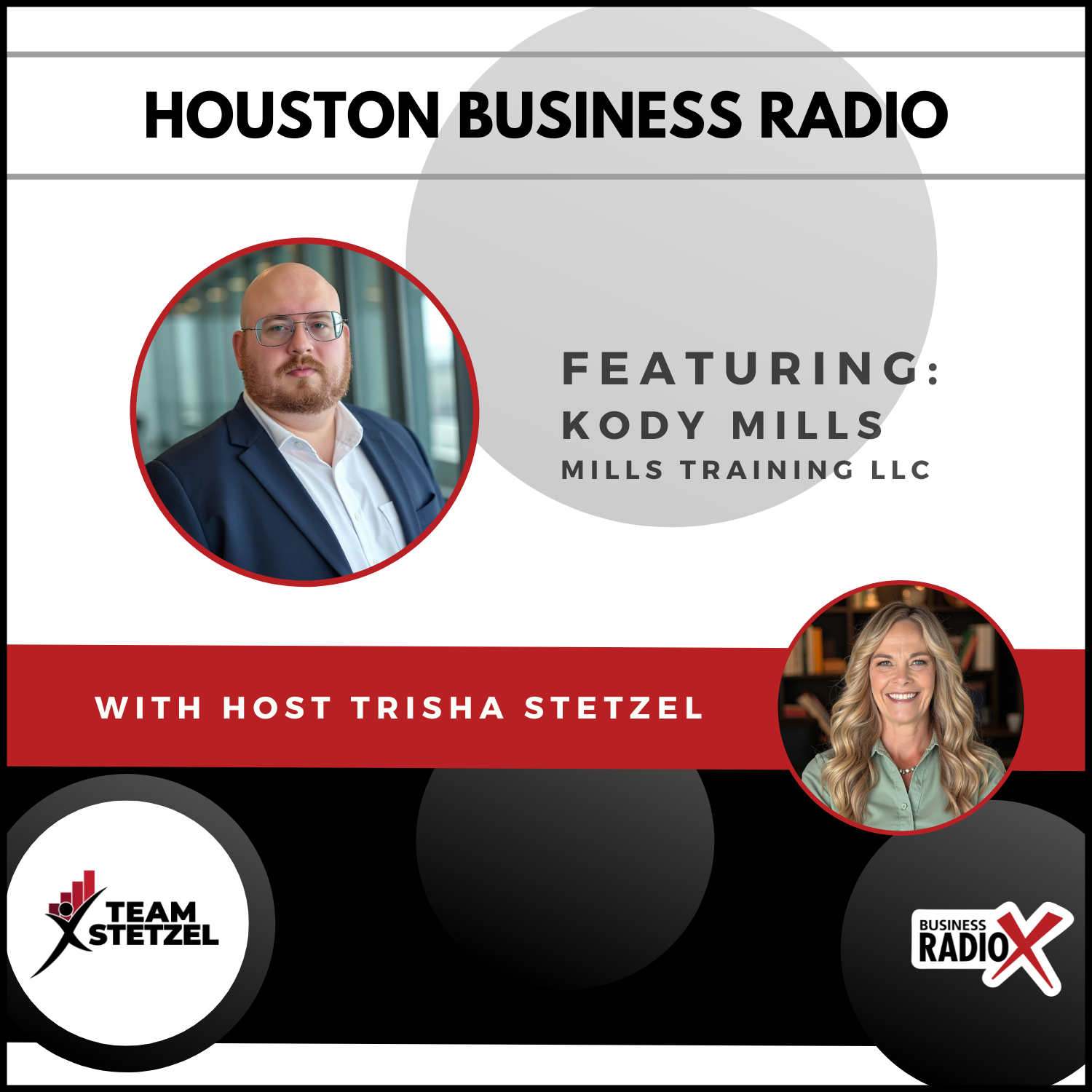

 Kody Mills is a strategic executive and former U.S. Defense Intelligence contractor with over 18 years of leadership experience spanning intelligence operations, national security, and commercial enterprise.
Starting at the very bottom of the employment ladder as a janitor in high school to a well respected intelligence contractor in 7 years supporting actions across 4 countries. After being hurt and no longer being able to fulfill his contracts, Mr. Mills transitioned into senior leadership roles across consulting, defense-adjacent industries, and regulated commercial sectors.
He is the founder and principal of Mills Training LLC, where he advises organizations on manufacturing, mergers and acquisitions, foreign military sales (FMS), and operational scaling within the defense and firearms industries.
He has led national training enterprises, negotiated high-value contracts, and built multi-state operational frameworks aligned with federal and state compliance requirements. Mr. Mills holds an MBA in Business Management and is recognized for his ability to bridge government, defense, and private-sector priorities. 
His career reflects a consistent focus on strategic clarity, institutional readiness, and execution in environments where failure carries significant operational, financial, or reputational risk.
LinkedIn: https://www.linkedin.com/in/kody-mills-53054349/
Website: https://mills-training.com/
 This transcript is machine transcribed by Sonix.
TRANSCRIPT
Intro: Broadcasting live from the Business RadioX Studios in Houston, Texas. It’s time for Houston Business Radio. Now, here’s your host.
Trisha Stetzel: Hello, Houston. Trisha Stetzel here bringing you another episode of Houston Business Radio. It is my pleasure to introduce you to my guest, Kody Mills, founder and principal of Mills Training, LLC, a strategic executive and former US defense intelligence contractor with more than 18 years of leadership experience spanning intelligence operations, national security, manufacturing, and commercial enterprise. Kody’s career is built on operational discipline, leadership development, and maximizing team performance in environments where resources are limited and execution matters. Starting at the very bottom of the employment ladder. As a janitor in high school, he rose with seven within seven years to become a respected intelligence contractor, supporting operations across four countries before transitioning into senior leadership roles across consulting, defense adjacent industries and regulated commercial sectors. Today, through Mills Training LLC, Kody advises organizations on leadership development, operational scaling, personnel utilization, manufacturing operations, and strategic planning. He is especially passionate about helping organizations put the right people in the right roles to improve performance, reduce waste, and build businesses that can scale effectively over time. Kody brings a practical, real world perspective shaped by years operating in high pressure and resource constrained environments where leadership and staffing decisions directly impact outcomes. Kody, welcome to the show.
Kody Mills: Thank you so much for having me.
Trisha Stetzel: You’re welcome. We were just talking before we started recording. How long it’s been since we first started this conversation months and months ago. So I’m so excited to have you on today. I love to start Kody with you just telling us a little bit more about who you are.
Kody Mills: Well, um, I’m just a, I’m just a guy from Rockford, Illinois that moved down to the South and, um, grew up in a group in a great family and was lucky enough to, uh, to meet some very interesting people in my youth that’s helped shaped, uh, my outcome on life. And I’ve been helping companies since I was in my mid 20s. I’ve been helping companies, you know, find, find the, the pain points of and give a fresh new outlook on on how they run businesses. So I’ve been doing it for, for a good long while, and I’m always learning new things every day.
Trisha Stetzel: We get to learn from our clients, don’t we? Which is so much fun. Yeah.
Kody Mills: Oh, yeah.
Trisha Stetzel: Yeah. I love that. So, um, we know that you came from this defense intelligence background and then started your own business. What leadership lessons transferred most directly in from that world into the world that you’re in now in your own business.
Kody Mills: Being able to socially engineer and build, build, build a rapport with somebody. Mhm. Because human intelligence is humanity is the number one thing that a lot of businesses fail is being able to connect with their employees and connect with management to to build out a full operational. How is a good way of saying it a full operational guideline because they. It’s dictation versus. Hey, Jerry, I understand you need to go to your kid’s birthday party this weekend. Okay, let’s bang this out. That way, nobody has to say it’s going to be better for everybody. I 100% understand. I’ve already spoken to HR. Let’s let’s run another shift or another half shift, and we’ll bang this out and we’ll get it done. Being able to relate to somebody on that, on that level versus, hey, Jerry, I don’t care how you get it done, just do it. How many times have we heard that, especially in retail, especially in retail during the holiday season?
Trisha Stetzel: Yeah.
Kody Mills: Well, we’re all just going to have to sacrifice. No no no no no. If you if you are going to ask your lower employees or your middle management, you say you’re an executive suite and you’re going to ask the middle management guy that’s or lady that’s doing 60 hours a week and they’re over a full department to, oh, just make a little extra sacrifice. It’ll be okay. And then you go to Bora Bora. It builds a lot of resentment there.
Trisha Stetzel: Yeah, absolutely. How do we what’s one lesson that our middle managers or even directors and executives can learn? Let’s say they are still very directive, as you described and telling their team what to do. What’s some lesson that they can learn or a tool that they can use to shift the way they’re being directed versus more human interaction or human intelligence.
Kody Mills: I’ll give you two. Okay. I’ll give you two. One is being willing to step back and look at the bigger picture instead of this is my department. This is the only department that I have to worry about. I don’t care what receiving does. That’s not my problem. Well, if you’re a retail, if you’re a CNC shop, if you’re any sort of manufacturer, you better start caring what shipping does because the last thing you want is for someone that’s above you to look out their little glass window and see seven of your employees standing around with their hands in their pockets, because shipping didn’t do it right. So that’s number one. Number two, find the natural leader. There will always be a natural leader. Every shift, every pocket of employees. There will always be a natural leader. Well, why does everyone go to Tiffany? Why does everyone go to Greg? It. And it. The thing about it is they may not be there the longest. Mhm. But if you find somebody that is willing to sit down and take 30s out of their day to break it down for an employee on the employee employee level, because they know machine seven has to be started a certain way, or it’s got that weird thing that they just know that’s a natural leader. And being able to reposition that natural leader into a better into a better position of either authority or. If it’s going to be one of those ordeals of. If it ain’t broke, don’t fix it. Don’t try to justify your job by changing things. If you actually have to change it, find the natural leader. Every crew has one. Every single crew has one. Yeah.
Trisha Stetzel: I love that. Can we take it just a step further about putting the right people in the right places? So I see a lot of organizations, and I’m sure you’ve seen many as well, where someone was promoted to section leader or floor leader, whatever that is, because they exuded the ability to be the go to person, but they’re not yet ready for leadership. So what do we do in that instance if we haven’t picked up on that?
Kody Mills: So for that instance, I strongly recommend. It goes back to the whole if it isn’t broke, don’t fix it. Don’t try to jam somebody into a leadership role. That one isn’t ready for it. Or two would doesn’t want it. They’re happy with being the crew chief versus the department chief. If they might be in the go to person, or they’re just the go to person, because everyone already knows that and they don’t need a title. I’ve, I’ve helped companies where we have a really great employee. His name is Marcus. I’m not going to say his last name because he works for the Department of War right now. But Marcus Marcus is the most paid contractor at that level that anyone can be paid. He doesn’t want the title, he doesn’t want the headache, but everybody comes to him. Everybody knows how to do it. And like you need something from you need something done or what. Go talk to Marcus. And it takes pressure off of the middle management because Marcus knows how to handle it. He does not. And he’s made it very clear in writing multiple times that he does not want the title or the headache, but he wants to pay. Well, obviously he’s earned it. So we’ve adjusted certain things and that side of the house runs and we actually have the numbers to prove it runs about 18% better than any other comparable location in the entire continental US. He’s 18% more effective. I think you know what? I’ll give him the money. Just give him the money and call it good.
Trisha Stetzel: Everyone needs a Marcus.
Speaker 4: Everyone.
Trisha Stetzel: Everyone needs a Marcus. Um. What happens in a business when someone. When we have the wrong people in the wrong roles, what happens?
Kody Mills: Um. I don’t think we have that much time. Um, so the, the condensed version, the abridged version is you can start hemorrhaging money.
Speaker 4: Okay.
Kody Mills: You kill morale.
Speaker 4: Mhm.
Kody Mills: Um, I’ve actually seen businesses be on the brink of going under just because they promoted the wrong person in a middle management position. But it was their most sought after middle management position.
Speaker 4: Mhm.
Kody Mills: And there was a little bit of nepotism involved. And they came to they came to that position with a really fancy college degree from a really high end college. And ego kills ego will kill you just as fast as complacency. You can ask any military personnel if you have a second lieutenant that has an ego the size of Texas, it it’ll it’ll get you hemmed up really quick. So, um. We’ve seen money loss. We’ve seen production go down. Um, we actually have a couple of case studies in a few of the CNC programs that we have that throughout the. 22 CNC manufacturing companies that we’ve helped having people in the wrong place that are just not the right people for that fit has actually cost them about 24% of their profit versus just changing the people around. We’ve seen we’ve seen boosts go up, you know, single digits, but 8% profit is still 8% profit.
Trisha Stetzel: It’s better than a 24% loss.
Speaker 4: Right?
Kody Mills: I mean, I’ve seen, I’ve, I’ve shown up and done consulting and training, um, at a very large and a very large manufacturer where the business owner was actually having to write checks to cover payroll because he was hemorrhaging money that fast.
Speaker 4: Mhm.
Kody Mills: And it was a simple, very simple fix because the truck. The truck drivers that he had were union. So as soon as they showed up to the parking lot, they got paid.
Speaker 4: Mhm.
Kody Mills: Well, the shipping and receiving manager for first shift. And this this phrase is the phrase that kills companies. This is the way we’ve always done it.
Speaker 4: Yeah.
Kody Mills: Well, because his manager taught him to do it this way, instead of thinking and being a leader and taking responsibility for his position. They were having trucks. They were having truckers show up for hours before shipping and receiving. Clerks did. So you’re paying for four hours. And I don’t know if you know anything about Dot, but as soon as they start logging time, there’s only a certain amount of time that they can drive. They were hemorrhaging about $1.8 million a month because freight wasn’t showing up. Things weren’t coming in. So you had all this manpower, you had over 80 people standing around with their hands in their pockets, waiting for a truck to show up. That should have been here at four, and now it won’t show up until tomorrow. So just the little fix of, hey, can you guys come in at nine? Oh, man, that’d be great, because I sat down and asked the truckers. I spent three days in that warehouse, by the way. I spent three full days. I didn’t go to my hotel. I spent three days because they ran. They ran three hour shifts. They ran three shifts every day. And I asked the truckers, I said, why do you guys get here so early? Oh, because they tell us to. Well, why don’t you guys, instead of getting up at 430 in the morning? What do you guys prefer to get here at nine, 930? Oh, man, that’d be great. We’d love to sleep in. At $75 an hour per trucker.
Speaker 4: Wow.
Kody Mills: They had 40 truckers. Just. Just that alone. Then you have to pay for the overnights.
Speaker 4: Mhm.
Kody Mills: And now you also have missed shipments. Miss receiving because they would have to go and pick up their own stuff and all that. It came out to be about $1.8 million a month. Just that little change because the person was in the wrong position. The wrong person was in the was in that position. It ruined everything.
Speaker 4: Wow.
Kody Mills: And then we turned it around. I got a phone call and he goes, Kody, you know, we really appreciate it. You know, we’re we’re back to making about $3 million a month now. Well you’re welcome. Next time, ask a question or two. Instead of just doing the way we’ve always done it.
Trisha Stetzel: Yeah. It’s that old adage, if we keep doing what we’ve always done, we’re going to keep getting the same results we’ve always had, right? Uh, sometimes it’s about those very small shifts. Um, so for folks who are already wanting to connect with you, they want to learn more. What’s the best way to get in touch with you? Kody.
Kody Mills: Yeah. You can message me. Uh, I have a basic gmail email, which is, uh, Mills training services@gmail.com. You can shoot me a message over there. You can find me on LinkedIn, Kody Mills on LinkedIn. You can’t miss me. It’s A KODYMILLS. Just type in Mills Training or Mills Training and Consulting, LLC. You’ll find me there.
Trisha Stetzel: Thank you. That’s awesome. Uh, we’ve talked a little bit about it, or we’ve started the conversation around what you do in your business. So tell us more about what you do and sales training and consulting and the types of clients that you serve. Kody.
Kody Mills: Yeah. Um, we reach out and primarily help manufacturers because that’s where the main issue is. Um, but we also help startups, startups that just got seed money, you know, they’re on their series A, they got a little cash in their pocket. They need it span, they need to do recruitment. And when your, you know, three college individuals that are starting a tech firm, you don’t know how to hire people. You’re going to hire your friends, which is always a big mistake. Um, ask anybody that worked at Facebook at the very beginning. Um, so we help. We help stand companies up. May it be a drone company. Um, may it be manufacturer that’s been around for 50 years and they want to step the company up in kind of like a blue chip stock style of we’re going to gain 2% every year for the next five years. And that’s going to really strengthen the company. We’re going to diversify our portfolio. Okay. We help with that. We help with we don’t know why we have high turnover. Well, we come in and figure that out for you. And nine times out of ten, it’s usually office politics or that person, the wrong person in that position, in a position of power, that kind of demoralizes everybody. Um, And we also help with training. If you are if you’re wanting to get a workforce stood up, or if you’re just simply wanting to add value to your employees because you value your employees and you want them to get additional cross training because you’re going to open up a new department. We help with that. We help facilitate that. So you’re not burning additional man hours of your own time trying to find something of that nature. We help with that. And I’ve also partnered with Sentinel Defense Advisors, and we’re helping a lot of, uh, a lot of companies get into the defense space, the Department of War, US Army, um, we’re, we’re helping that out a lot.
Speaker 4: Okay.
Trisha Stetzel: That’s very exciting. Um, I’d be okay if we take a deeper dive into leadership development. We’ve talked about the wrong people in the wrong places, people utilization or human intelligence and people getting promoted. And maybe they’re maybe they’re not a good fit, maybe they are a leadership development comes into play here. So how important is practical experience? Because you bring a very operational, execution focused perspective. Just based on our conversation here, how important is practical experience when developing leaders compared to just purely theoretical leadership training?
Speaker 4: Oh.
Kody Mills: That’s a good question. I love those types of questions. So the the theoretical leadership training, it’s always, well, if you do this, if you do X, Y, Z, you’ll build rapport or you’ll get productivity out. I’ve heard that. I’ve seen I’ve seen the college textbooks. I have, I have a master’s degree in business. Like I’ve seen it all. I’ve seen it all. When it comes down to the academic side of things, when you’re talking about practical. You would be amazed on how people over complicate something so rapidly. It’s not the fact that it needs to have a complicated answer, or it’s a complicated question that needs that answer. You would be surprised on how simple of an answer 90% of your problems need. And the biggest thing is, is with a good leader. Shutting your mouth and listening. Because if you if you are a leader, the best thing I’ve ever seen was with an Oda And watching them work and sitting down. And then the. It was a it was a master sergeant. That was the leadership, the ncoic of the Oda. And they were doing a brief. And he goes, okay, everybody put their thinking caps on. Let’s figure this out together. Instead of dictating, this is what you’re going to do, Rogers.
Kody Mills: You go here. It’s like, okay, the breacher is a breacher for a reason. We know how thick that wall is. What do you think? Should we go up and over, or are you okay with carrying X, Y, z amount of energetics on your body to make a man size hole? Or should we take ladders and go up and over it? Just being able to hush and listen is a key thing for leadership, and it really is, because you’d be amazed on how many employees, if you have a set of ten employees and they’ve all been there for 2 to 4 years, well, now you’ve got 20 to 40 years of experience and you’ve been here for two years. Like, you know, hushing and listening a little bit might, might solve your might solve your answer, might solve your problem, give you an answer. The biggest thing that I have always learned is if you’re not talking, open your ears up and listen, because the answer will flow to you. And just listen to the world. Listen to the world around you. You’ll never really have to answer. Ask a question. The answer to your questions will usually be answered if you just hush.
Trisha Stetzel: I love that and ask good questions. I heard you say that earlier. Uh, and directing and asking questions and really hushing and listening to what those answers are, because the answer’s probably in the room. Your team probably has those answers. It’s so that’s just a really awesome, uh, just piece of information that I think people can take away. So as we get to the back end of our time together today, I want to talk about culture because I, I feel like you’re in this operational space and helping grow leaders and helping them put the right people in the right places, doing the right things, and teaching leaders how to ask good questions and listen. What’s one thing leaders can start doing immediately to create stronger accountability and performance across their teams?
Kody Mills: Just right off the hop. Would legitimately ask about your employee. Just just do that. If you can sit down and just talk to your employee. I’m not saying be buddy buddy with them, but ask them because if their home life. Is not okay, then when they come to work, it’s not going to be okay. I’m not saying, you know, become their buddy. Don’t become their psychiatrist. Don’t do that. But go, hey, is everything all right at home? Because you seem a little off. Is your mama okay? Build that little rapport because work is work. Understandable. But you’re talking about human beings, and you have to be able to understand that. And when you know, their kids, birthday’s coming up. You can go. Hey, Greg, you want to pick up a couple extra shifts? That way you can square some things away. And now I’m not saying that you need to leverage that. I’m saying you may find motivation within that so you can help build them up and get them more trained doing cross training. It’s the best thing that you can do. Be a human. Be a human being.
Trisha Stetzel: And this is so, so much fun. How it came full circle. This is where our conversation started and where our conversation ends is around being a human to the humans that you’re working with and actually care about what they might have going on in their life. This has been such a great conversation. So tell us what’s next for Kody and Mills training and consulting.
Kody Mills: So like, I like, I kind of touched before. I’ve, uh, I’ve joined forces with Sentinel defense, uh, advisors, um, SDA, uh, two great gentleman, uh, Ricky Brown and John Morris, uh, both retired colonels from the US Army. Uh, we’re helping a lot of startups and smaller businesses, uh, make a name for themselves in the Department of War and the US Army and get recognized for the great things that they’re producing that, uh, I will say the primes are not, uh, fulfilling. And the innovation from, from smaller companies needs to be recognized. And we’re helping, helping, uh, helping those businesses navigate the, the Department of war and the, the mountain of paperwork to get things done. We’re helping them out there and, and getting them, uh, access that they really wouldn’t have or know where to look for at, uh, at this current time. So we’re helping them out and, um, I’m getting ready to close off, uh, a couple more clients. Their contracts are ending, so my books are starting to open up for them and we’re going from there.
Speaker 4: That’s awesome.
Trisha Stetzel: Congratulations. What fantastic work you’re doing, Kody. So tell us one more time how folks can reach out and connect with you and get to learn and understand more about Mills training and consulting.
Kody Mills: Yeah. Um, you can reach me on LinkedIn. Kody KODY Mills, MILLS. You can just search that up. You can’t, you can’t miss my face. And, uh, you can also reach me via email by Mills training services@gmail.com. You can you can reach me there. Or I mean, if you want to call my number, my direct line is (573) 263-9597. Be more than happy to have a conversation with you.
Trisha Stetzel: Fantastic. Thanks so much, Kody. This has been such a great conversation today. I appreciate your time.
Kody Mills: Yes, ma’am. It was great. It’s great being here. And I wish, uh, hopefully I can come back.
Trisha Stetzel: Yeah, I would love that. All right, you guys, that’s all the time we have for today. If you found value in this conversation that Kody and I had, please share it with a fellow entrepreneur, veteran or Houston leader ready to grow. And be sure to follow, rate and review the show. It helps us reach more bold business minds just like yours and your business. Your leadership and your legacy are built one intentional step at a time. So stay inspired, stay focused, and keep building the business and the life you deserve.















