


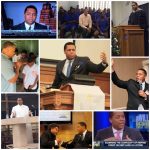
 Ryan Mack, widely known as The Financial Evangelist, is a nationally acclaimed financial educator, author, and media contributor dedicated to promoting economic empowerment.
As president of Main Street and a graduate of the University of Michigan Business School, Ryan has spent decades making financial literacy accessible to underserved communities.
From hosting Dollars and Sense on the Dare to Dream Network to partnering with organizations like Walmart and the NAACP, he blends real-world finance with biblical principles to help individuals build lasting wealth and purpose-driven lives.
Website: http://www.mainstreetempowerment.net
 This transcript is machine transcribed by Sonix
TRANSCRIPT
Intro: Broadcasting live from the Business RadioX studios in Houston, Texas. It’s time for Houston Business Radio. Now, here’s your host.
Trisha Stetzel: Known nationally as the Financial Evangelist, Ryan is president of Main Street, an organization dedicated to bringing financial literacy and empowerment to underserved communities. A graduate of the University of Michigan Business School, Ryan began his career as a stock trader before turning his focus to financial education, leading workshops for unions, veterans, churches, students, and even the formerly formerly incarcerated. He’s the author of several books, including provision for abundance, and hosts Dollars and Cents on the Dare to Dream Network. His work has been featured on CNN, CNBC, and other major outlets. And his mission is clear make wealth building tools accessible and sustainable for everyone. Ryan, welcome to the show.
Ryan Mack: Sounds like a good guy. You just introduced their live up to it. Hope I listen.
Trisha Stetzel: I pride myself on having great introductions because we don’t do them for ourselves.
Ryan Mack: I understand.
Trisha Stetzel: Yeah. Okay. Tell us a little bit more about Ryan Mac. Who are you.
Ryan Mack: Man? I’m just a simple guy from Detroit, Michigan. Grew up in Detroit. Um, a family man. I love Jesus. He’s a lord of my life. Uh, and I try to let him dictate where I want to go and. And who I want to help. Uh, I definitely want to have more, uh, I’ve always thought about. Even when I was a young child, my mother would say I would hold a quarter in my hand, and I would hold it for hours and hours and hours. She said, why, what are you holding for four hours? Just my quarters. I would hold on to money. So I’ve always been had the money focus. So when I went to versity of Michigan, I learned about financial education and and the business school got a degree in finance. When I graduated, I took a stock trading job, and then I got an offer for the largest Nasdaq trading firm, not equity markets. I took that, and then from that my aunt called and said, Ryan, what’s a stock? And that just messed me up because like, my own family doesn’t know what I’ve been doing for at that point about six years. So I’m like, so why don’t we just go ahead and and start teaching? So I started to write every week. I would write something once and once a and I would just start to teach. I would go to the different local public housing and go to the church, go sit on panels, whatever I could do to just take what I’m doing at the stock trading firm and give it.
Ryan Mack: And then I see, you know what? I’m going to financial planning and Merrill Lynch told me, I’m going to give you an offer. Great. Awesome. But then I went to sign the paperwork, and they said, Ryan, unless you work with high net worth individuals, everybody else is wasting time. I said wow. Because I was all excited to take your stuff to my church. I’m going to take it to the public housing. I’m going to take it to Ryan. I said, wow, I said no. So I, I decided to decline that offer. Then I didn’t have a job because I’d already quit tonight. So I said, wow, man. Uh, so I started Optimum Capital Management and that started my journey of, uh, but I, I’m awful at sales. I’m the worst salesman ever because I, I was talking myself out of sales all the time. No, you don’t need that insurance. No, you don’t need that. And ironically, the blessing and the curse of the recession 2007. At that point, I had been teaching every week kids, public housing, just teaching, giving away, giving away. I’ve done it so much that I got, uh, black enterprise kind of saw what I was doing, and one of my workshops had a friend of mine. She was a CNN producer. So all that, it was just it was God. It was all God that kind of pulled everything together to say, look, uh, you suck at sales, so let’s put them on television so he can make his own sale.
Ryan Mack: And so. And when the recession hit, I’d already been doing CNN. And at that point, they didn’t have enough talking heads. So CNN picked me up and Fox picked me up, and CNN, CNBC picked me up. And then at that point, I didn’t have to make sales because people were just responding to me. So then I started just taking the newsletters, turning them into books. So that just kind of just say, you know what? Let me just follow this road, let me see where it where it goes. Uh, so I love teaching and I love that light bulb when it goes off of that returning citizen. Or you say, formerly incarcerated. I’m in prisons every month where I go to the prisons and I teach because when they when these guys come out and women come out, I want them to be educated and empowered to be able to be self-sufficient. I’m the guy that has no like politically. I have no home because I’ve always felt that Democrats always wanted to do just have handouts. But then Republicans want to take everything away, and I don’t think either of them is necessarily the answer. So it’s like, I don’t have a home. So let me just do what I need to do and create self-sufficiency. And that’s what financial education is about. So, um, wherever I go, whoever wants to hear it, whether you voted for Trident or Bump or or Trump, Biden or Trump, I want to teach. So that’s my job. And that’s what God put me here for.
Trisha Stetzel: I love that, and I love that you’re such a giver and that giving created this space that you didn’t see coming, that was able to give back to you so that you could continue to spread the word. It’s so important for us to do that. Let’s talk a little bit about Main Street. So this is your business, right? Main Street. So tell me more about the mission behind Main Street.
Ryan Mack: Well, the mission is really it came about because there’s a need and there’s an old school way of teaching financial education, and it’s our way of teaching it. Um, I, I’ve, I have a lot of, uh, corporations that I’ve, I’ve felt that financial literacy is the best marketing strategy. If you can find yourself an effective base of people. Right. So using blended learning ecosystems, the old school way is I’m going to create some financial education content, make a website and pray that people use it. And if dust could accumulate on the website, most of these websites that these organizations that create have a lot of dust on them and no one gets heavy traffic. But then there’s a way to be able to create relationships using blended learning where you can actually like our largest client. Well, today is, uh, VFW, uh, 1.4 million members. And, uh, we also have a base of 450,000 members with 1199 SEIU. Oh, no, no, excuse me, AARP New York at 2.3 million members. We started really working with them. That’s our technically our largest client, but we’re able to hit these large audiences using a strategy that not only does the online curriculum but engages. We let the people lead. We survey them first, write the curriculum based upon the survey, do quarterly workshops based on that curriculum. We do economic hotline so everyone has access to, uh, asking questions.
Ryan Mack: You’re in the bed. I got a question. What happens if I cancel my credit card? You send that question over, you get a response back, and we partner with, like over 20,000 non-profits through, uh, 1199 SEIU, AARP, Springfield Pro. So if somebody asked me a question in Houston or Sergeant, wherever you’re at, I can respond to it and give them an answer. But then also look at the top five organizations in their area that can help them for free. And so, uh, we I’ve got a few folks that helped me manage that piece, that economic. It’s like the 411 for personal finance. And then we create content every week that the goal is to, as people ask questions, we’re creating uniquely tailored on demand content that responds to the populace and where they want to go. So we’re just excited that to have these conversations with these large organizations, um, Lord willing, the creek don’t rise. Walmart might be a partner. Next time we talk, we’ll see. Um, Flynn, Zito Capital Management, they’re coming on board. So a lot of these corporations are starting to realize that I can give you an audience. And we added it up in terms of almost 6 or 7 million people that all trust us. I’ve been teaching since 1998. So they trust me to teach. So let me give you them.
Ryan Mack: You put pay $1 million to put your name on a stadium. Why don’t you pay a small fraction of that and get access to a larger amount of people that actually can give you evaluated education. So that’s what Main Street does. We’re that bridge between corporate and community teaching, financial education and providing it with real resources where it’s like a win win Like Doug McMillan, I pitched him, I said, look, man, you’ll pay less on marketing, but you’ll get access to a larger audience. So you’re worried about market share. I saw your earnings report. Let’s figure out a way to be more effective and efficient at reaching large populace. That’s what Main Street is about. We’re trying to position ourselves as that bridge, and it’s been pretty good so far. It’s been a blessing. I love it. It keeps me busy as all heck. But hey, I love creating these videos, man, and answering people. And when I get like that response, I just had a call this morning. Formerly incarcerated guy. This guy say that this guy, man, I love this guy. My first conversation with a few months with him. But we talked and he was uh, he said, yeah, man, uh, talk for a while. I said, what’s your biggest concern? I gotta get to work. I said, well, why aren’t you working? Well, I can’t work. But the doctor said, I can’t get back to work yet.
Ryan Mack: Well why not? He said, well, you know, I got a 13 shots and, you know, uh, he got shot 13 times. 12 times. And the 113 shot grazed my neck. But I haven’t been able to get back to work just yet. He’s saying it and talking like he’s like a like it was a like a mosquito bite or something. So luckily I’ve dealt with that pop up and I didn’t respond. I said, okay, you know, let’s get. So I just talked to him again this morning and I always tell him, I said, man, your story inspires me. Let’s get to work. Let’s get moving. But those are the type of things when he gets. He was in a coma when his third child was born. He came out to coma and his child was he was born. And he’s happy to see his his baby. So now we’re working together. Those are the type of things I like to see, those connections, that type of because that’s Main Street, man. That’s to the stuff that all these knucklehead politicians forget about. All these folks that are out here worried about these talking points and what no, I’m talking to the real people. And that’s what I stay in that lane. I love it, man. I love that’s what drives me every day.
Trisha Stetzel: Yeah. Well. And making a difference, right? Being able to tell those stories and and relating to other people who may have been through something similar or feel the same way, or were raised the same way, or went through the same type of, uh, growing up, if you will. Right. Uh, I think all of that is so important. So you and I were having a conversation, uh, the last time we connected, specifically about the VFW and, uh, how funding for these larger organizations. It’s not just the VFW. Right. But for some of these larger organizations, the funding is at a higher level. And these local, um, uh, entities, if you will, aren’t able to use the funding in a way that benefits them most. So can we talk a little bit more about that? I know you’re pretty passionate about it.
Ryan Mack: Yeah. I think that there’s a disconnect between local leadership and the organizations and then the boots on the ground, so to speak, where and now, um, not only VFW, I’m talking to many national organizations that are starting to realize that some of their federal funding is getting pulled. And so my whole thing is like, how come we haven’t tried before to look outside the business model of of golf outings and chicken dinners? Like, that’s not a sustainable business model where if you have a large base of people, those base people need empowerment. And there are many private institutions that are willing to spend money to get access to them through their services that they offer. So, uh, like VFW, I think now, um, I think I’m back on the I shouldn’t be talking, but whatever. I’m back on good graces with USAA. Who was was who was a who is a primary partner for VFW. And they didn’t like me at first because here comes this guy just teaching and doing all this education stuff. Like, we can do the same stuff. And VFW is like, no, you can’t do it. How we not what he does. So I’m like, look, we’re not we’re not in competition. Let’s work together, I said, because the funding provide. Let’s not to your point. Let’s not just give it to the national piece.
Ryan Mack: There are many local organizations and local posts in the 5000 posts of the VFW that are struggling. We got some of them that are like over $5 million buildings and doing well and like doing awesome, but that’s a small percentage. There’s the majority are doing just okay, but then there’s a large percentage of too large, my, in my opinion, that are just struggling to keep their doors open. So, uh, I’ll go back and forth to VFW all the time. I think your mission is great, but I think your population’s getting older. You gotta get new, fresh ideas and with new mechanisms of fundraising strategies. So right now what we’re we’re working on, I just put together a proposal last night of how we can use financial literacy through the VFW to raise money for veterans and also involve in peer to peer pedagogy strategies of having the veterans be the mouthpieces for financial literacy See raising funds in their local areas. So like this is led by the local I wrote a book for them. They’re going to publish it the quartermaster’s where um, and I hope that from that book we can ignite further conversation because one of the chapters was how you can raise funds, uh, and using outside if your business model is federal funds, that’s not a long term strategy.
Ryan Mack: That should always be a short term strategy. Get yourself on the foot and create a sustainable revenue model that doesn’t depend upon federal funding, because whether or not that federal funding continues, whether or not you don’t want to make your organization dependent upon that. So and that’s just I’m big on self-sufficiency. So, uh, we’re talking about that. I think many organizations in today’s climate are going to have to really start thinking outside the box. And I say golf outings and chicken dinners, because there’s one particular organization, I’m not going to drag them, but that’s all they do. They plan the year around these big event where they have a speech, they raise money, and then immediately they get busy planning the next chicken dinner. Yep. And they’re huge. And I’m like, yo, are you serious? Like, there has to be another way to kind of get ahead of the curve, because I’ve seen the books. They’re always behind the curve financially where they’re struggling to just keep up and they’re so busy, but they’re not doing business. And so I think there has to be, especially in today’s climate, where, I mean, whether you whether or not you like Trump or not, I don’t know what your position is, quite frankly, I don’t care.
Ryan Mack: But like Trump is trying to, he’s doing things that now are taking federal funds away from many national organizations and being hurt because of it. Again, that’s not me trying to make an assessment one way or another. That’s just factually what’s happening. And my argument with these organizations that are saying, well, my argument has always been, look, whether it’s Trump or whether it’s Biden or whoever it is, you can’t depend upon that to be your funding stream forever. It can’t be long. So my my role is what we try to do is try to help them do. And I raised about what, 4 million for operation Hope. That organization is a mammoth in terms of they’ve raised over 3 billion. So I raised like a small itty bitty piece John O’Brien brilliant. And raising money, raising funds. But that organization really taught me about how to use leverage corporate strategies, what’s their bottom line goals, and matching it with your constituent needs. There’s a intersect that organizations can do effectively, that can sustain them through a strong revenue stream that makes them not reliant upon federal funds, like use the federal funds to get you on your feet, but don’t rely on it. And then we can become self-sustainable, consequently help more people and have a stronger, long lasting impact.
Trisha Stetzel: Yeah, absolutely. Okay, so I know time is passing so fast. We’re a little more than halfway through.
Ryan Mack: But you got me excited.
Trisha Stetzel: No, no, no, it’s all good. Ryan, you have so many great things to say. But I know or and I know people are ready to connect with you. So how what is the best way to connect with Ryan Mack?
Ryan Mack: We have an economic hotline that’s available for everyone. 91780942319178094231. Text that number. And when you text the number, it goes right to my phone. It goes right to my partner’s phones. And, uh, if you have any question of any resource anywhere, it’s all free. We’re not this is not you’re not going to be uploaded to some 1999 a month charge. Everything’s free. Uh, we get my number one question to ask him in my in my classes is ask people, how do you get paid? So we get paid by the contracts and the organizations that we do 1 or 2 year contracts with organizations that pay us to teach their populace over time. So that allows me to offer the economic hotline free. So when people text that number, they ask questions and or they say, hey, I have a question and what are some resources in my area to get free help? So we got a lot of nonprofits, a lot of nonprofits out here struggling to. And this is, again, before this administration, over over years, I’ve noticed it overworked, underpaid, high, underappreciated, highly spirited, want to do good work, but they don’t have the resources in order to sustain it. So we just started galvanize, and with the help of AARP, Spring Forth Pro 1199, SEIU, others, and our personal network, we’ve kind of made a database of vetted nonprofits that we can look up via city and zip code. So when people hit us up, we send a list of top five that get some work done and they get some free help, and that way that helps them with free referrals. And it helps the people because they get ongoing help. And I mean, that’s that’s that’s biblical. The Bible says, bless us, Lord and father of our God, Jesus Christ, who hath blessed us with all spiritual blessings in heavenly places in Christ. So God gave us everything we need to be successful. We just gotta figure out how to use it effectively and put it all together to create empowerment for his people, and then we’d be all right.
Trisha Stetzel: Absolutely. Okay, so we’re just going to have to, like, keep talking for another hour. I’m kidding. I’m kidding, you guys. Uh, the information that Ryan just gave us will also be in the show notes. So you guys can grab it from there. Uh, they will also be some other information around Ryan that you can read about. Can we talk just a minute about your book, the one that I mentioned in your bio earlier? Yeah, I would love to talk about.
Ryan Mack: That was a labor of love. Um, I wrote another book. Living in the village took about three months, but provisions for abundance. God told me to write that book because, uh, there’s there’s been a a branding of the Word of God that’s been very negative as of late. And, um, the provisions for abundance is all about 365 days, where every single day there’s a, a topic, there’s a scripture that’s related to that topic. And then there’s words, my words talking about it. And then there’s a financial tip that relates to that topic and how to use that scripture. The Word of God is the most tangible financial planning manual ever created. And I think that the Bible, it’d be foolish for anyone to believe that God is not going to discuss and use those principles for money for you as we manage his resources. So it’s all about at the end of a 365 days, you read. It’s designed to read that you can read every day in seven minutes or less. And then after that seven minutes, you really want to contemplate and think, how can I implement and can I do that? Tip? Have I already done it? And I’ve got a lot of couples that are reading it together. I’ve got families that are reading it together. So the goal is to get people more in alignment. The hidden agenda is to get people to read the Bible more. That’s how God got me. He knows I’m tangible and I’m I’m a I’m a timeless Christian. I’m working on it. Pray for me because, you know, I need to. You need to put that nail in my side in order to make sure he’s real. God knows, like that guy needs to see some tangible. That’s how God.
Trisha Stetzel: Works.
Ryan Mack: I’m like, okay, cool, I got you, I got you God. But I want people to use the Word of God and to just implement it in their lives. It’s not just a to something that you just pray and meditate on. You can actually use it as a manual for your life. And I want people to use provisions for abundance in order to go back, read the word. And I tell people all the time, don’t just read me. The real expert is the Bible. So I’m just trying to get you to think about how that can be used, and then go read the word and spend some time and meditate on that word of God. Man. It’s it’s it’s life changing. It’s soul saving. Um, and I just thank God for it.
Trisha Stetzel: I love it. Where can people find your book, Brian?
Ryan Mack: Well, it’s provisions from. It’s on our website. If you go to Main Street Empowerment dot net, main Street empowerment Net is there. Uh, we’ve got all the books listed, but that one, if you buy directly from me or provisions for abundance there. Um, I, I’ve, I’ve got assigned every copy that I’ve, we send out. Um, but not that’s, that took me about that was almost three years because every day was a speech. Every day was its own speech. It wasn’t like living in a village was like, I did it in three months. Boom. But that was two and a half, three years, because every day I had to stop and then start fresh with a new concept that I hadn’t talked about before. I had to pray about it. So that was very, very, very labor intensive. But I’m it was a blessing for me to be able to finish it. But thanks for that question I appreciate you.
Trisha Stetzel: Yeah, absolutely. Labor of love. And it’s going to touch so many people and has already touched so many. Thank you for sharing that. Um, I am so excited about having you on. I have like 1200 other questions, but the next place I’m going to go is you brought up the idea of these nonprofits that are struggling, some of these, uh, smaller entities of bigger ones. And, um, from a business perspective, you know, I, I know and love and communicate with a lot of nonprofit organizations. And my lesson is always we need to treat those as businesses, because if we don’t, there’s no money for this service that we want to provide to the people that we want to serve. So we have to really focus on that. And so what you’re doing is bringing these organizations alongside of these private corporations or private businesses that can infuse money into these organizations to get them where they need to go. So can you talk a little bit more about these partnerships, or how you’re bringing these people together to create space where these nonprofits or smaller organizations can partner with bigger ones?
Ryan Mack: It’s so simple. Like, to me, I don’t understand. This is the thing. Like, I hope people don’t think I’m anti-government. But I looked at I look at the government like a cleaner of your house, right? If you can’t pay your rent, do you blame the cleaner? Right? No, the cleaner is the service provider. So that’s what I look at the government like that. So there is a role for the cleaner to keep your house clean. But if the rent’s not paid, that’s on you. Okay. So, yeah, make sure the cleaner is not doing his or her job. Then fire the cleaner, get another cleaner. But then you gotta pay the rent yourself and figure out a different way to make sure the money’s coming in, to make sure that the bills are paid. So I’m not anti-government. It’s just. I just think that we’ve overplayed the role of that. So, like, if you’re a Walmart, you know, got Walmart, target, Costco, all these organizations concerned about tariffs being passed on, they’re mitigating even I looked at Walmart trading over 40 times multiple, which is doing a phenomenal job of appeasing shareholders. But at the same time mitigating the cost of tariffs going to their customers. So doing a phenomenal job trading at high valuation. But they’re always concerned about market share. Target are not doing as well.
Ryan Mack: Costco doing really pretty well. But they’re concerned about market share. They’re concerned about getting exposure eyeballs. So they got digital platforms. They’ve created. They’ve shifted to a digital strategy where now I’m like, look, if there’s a value added component where these nonprofits can also provide, these nonprofits have the very people that shop in your stores every day, the very people that spend money in your bank, the very people that you want to create customers every day, the very folks that want to get. There’s a half $1 trillion industry in check cashing, payday loans, title loans, cash advances, refund anticipation loans, pawnshops that are pimping the crap out of poor people in urban and rural America all across this country. And they’re doing it perpetuating poverty for poor people, where if you just flip it part of what nonprofits who are reaching these very people and not just provide them with food, but give them ability to learn how to fish themselves. Now you’re funding those very potential customers that are going to go back into your stores creating empowerment. So it’s a cycle that where you got, what, 60, 70 million under under underbanked folks in this country. Now you’re creating a cycle of empowerment that allows retailers, banks, these large and small to be able to funnel customers to support your businesses. And if you’re concerned about market share, there’s an untapped market that these check cashing places are checking, cashing every single week.
Ryan Mack: So let’s get let’s make the line shorter at the pawn shop and make it longer at the banks because the banks have a vested interest. Demonize banks all you want, but the banks have a vested interest in making sure that the people make more money. Why? Because the more money you make, the more you put in there to save the savings, the more money they’re going to be able to trade. And so they have a vested interest in the empowerment of their customers. So let’s get them there, get them banked, get their credit scores jumped higher. You show me a credit score of a 500 credit score or less community. I’ll show you an impoverished community with high crime and a whole lot of drugs. You show me a credit score community of seven 4750 or higher. Uh, or maybe even maybe even 700 or higher. I’ll show you affluent business owners. I’ll show you banks, bank, bank. So it’s really about credit scores. It’s about financial education. It’s about making that, adding financial education to these nonprofits. Now you can say, as opposed to even raising money for grants. Forget the grant. Go after some, uh, marketing budgets for these financial institutions.
Trisha Stetzel: Mhm.
Ryan Mack: Now I can’t again rest. But laws don’t allow you to say hey Chase. Chase funded this so go use Chase. But if you put your name Chase brand on this, this. Oh we just partnered with them. They, they reach 1.2 million inmates per year on tablets. I’m like fifth, third. We’re talking about October 24th, fifth, third. Walmart. Why aren’t you why is it your name and your brand on those tablets when they come out of prison, who are they going to go first that they’ve been seeing every single day with that content. So now raises money because they’re a nonprofit. Walmart gets their brand out there. Chase any of the plug and chug that and they’re getting their name on a needed component. You want to talk about criminal justice reform. Idaho’s doing it, but they too doggone humble. And there’s nothing wrong with being humble. But I wrote an article called humble, impactful and Broke because y’all are humble. Y’all are impactful, but you’re broke. So let’s use it to start the criminal justice. Everyone wants to talk about criminal justice reform like a talking point. Solve it. And that’s the beautiful part. This don’t require any government. I didn’t mention the government one time in that Walmart comes in funds Idaho. You can plug and chug Walmart with any other nonprofit. Doing work at scale comes in funds it. People are empowered. Customers are created, dollars are circulated affecting the community. It’s to me, it just bewilders me how we’re not thinking this way.
Trisha Stetzel: There’s so much passion for this topic, and I appreciate you even taking the time to be on the show with me today. So as we circle around to the back end of our conversation, we’ve talked a lot about organizations, and I know that people are already interested at that, uh, or in that perspective and having a conversation with you. But let’s just in our last bit, talk to the individuals. So if you can leave our listeners with one piece of advice about building wealth and financial freedom, even for those who feel like it’s out of reach, what would it be?
Ryan Mack: I’m first John 318 all day our love must not be a thing of words and fine talk, but must be a thing of action and sincerity. Then you want to say, faith without works is dead, as James 217, but we gotta. Faith is the most empowering principle of finance, and nothing happens without faith. Okay, and faith mathematical equation have belief and have acting. So if you believe that you’re going to buy a home, I’m going to buy a home. I’m going to be a homeowner one day. Okay. That’s great. It’s great to have that belief. But what action have you corresponded with that if you’re renting, do you want to do you want to use your rent and say, if your rent is $1,000 a month, up to 1200 bucks a month and like that, act like that’s your mortgage, it’s 200 bucks a month extra. Let’s go. $200 goes into your savings account. If you call the plumber over and it fixes your sink, you act like you had to pay the plumber. Your landlord pays it, but you pay it, but you put it in your savings account. If you’re if your roof leaks on your rented apartment, you act like you had to take out a loan to fix that roof. So that’s faith. That’s faith in action and using a real money to put money in your savings account. So now you’re using faith to learn how to be a homeowner, or to be a or to be a business owner. Start acting like you run a business and all the things there’s many different. Faith is the most important component, but you have to believe it. You gotta act. If you don’t have both those things, you don’t have faith.
Trisha Stetzel: Wow. Uh, my head is exploding right now. It’s so simple. And that’s what I love about all of the things that you bring to the table. You take these really complicated things and bring them down to something so simple and so actionable and so reasonable that people can go do them and believe in them. And faith is the intersection of belief and action. That’s what I heard. I love that so easy. Wow. All right, one more time. The phone number that people can reach out and ask questions.
Ryan Mack: (917) 809-4231 text it any question or resource you want. It’s there. You will not be charged a dime. Ever. We don’t take money from individuals, only corporations who want to pay our bills.
Trisha Stetzel: I love it, Ryan, again, thank you so much for your time. This has been awesome.
Ryan Mack: I appreciate your platform and your passion and your spirit to helping people. It’s an awesome. It’s a godsend. I really appreciate you.
Trisha Stetzel: Thank you Ryan. That’s all the time we have for today. Guys. If you found value in this conversation that I had with Ryan today, please share it with a fellow entrepreneur, a corporation, a veteran, uh, or a Houston business leader. Ready to grow. Be sure to follow, rate and review the show. It obviously helps us reach more bold business minds just like yours and your business. Your leadership and your legacy are built one intentional step at a time. So stay inspired, stay focused, and keep building the business and the life you deserve.














