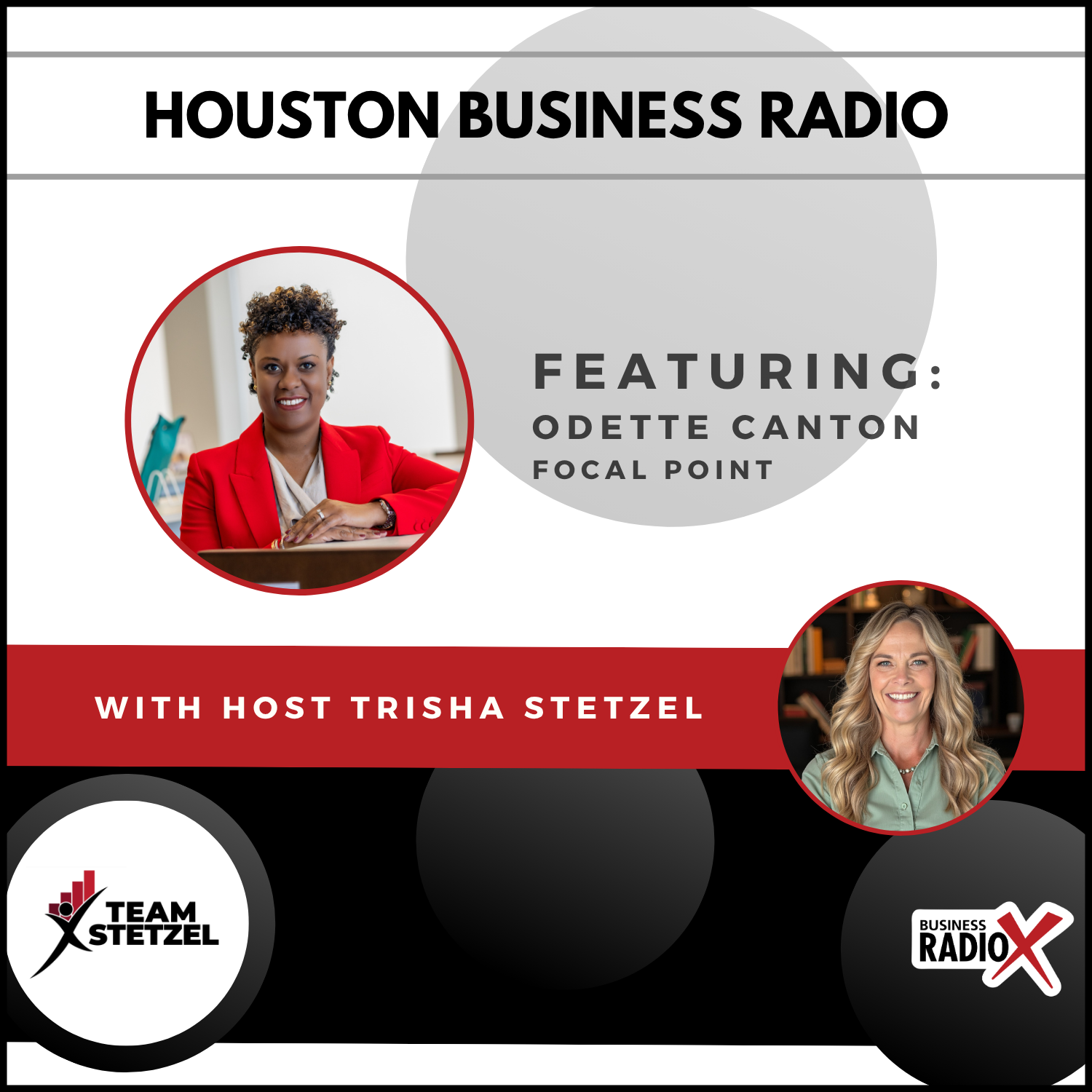

 Odette Canton is a Certified Focal Point Business and Executive Coach and PROSCI-certified change leader who partners with senior executives and high-potential leaders to drive clarity, performance, and sustained organizational impact. She is particularly sought after for her work with emerging and mid-career women ready to expand their influence and step confidently into larger leadership responsibilities.
With more than 15 years of experience in marketing, operations, and enterprise transformation, Odette most recently served as Director of Strategic Program Management of Johnson and Johnson. There, she led complex, high-visibility initiatives across oncology, product launch, and organization change, bringing disciplined execution, stakeholder alignment, and measurable growth to large scale environments. She is recognized for her ability to translate strategy into action and turn ambiguity into structured momentum.
Odette’s coaching blends executive-level business acumen with practical leadership frameworks and behavioral insight. Beyond individual coaching, she convenes curated peer environments where ambitious leaders engage in candid dialogue, sharpen executive presence, and accelerate readiness for expanded responsibility. 
Grounded in integrity, adaptability, and a deep commitment to continuous learning, Odette believes that authentic leadership is the foundation of sustainable performance. She challenges leaders to show up with clarity, act with confidence, and lead in a way that is both strategically rigorous and true to who they are.
LinkedIn:https://www.linkedin.com/in/odette-canton
Website: http://odettecanton.focalpointcoaching.com/
 This transcript is machine transcribed by Sonix.
TRANSCRIPT
Intro: Broadcasting live from the Business RadioX Studios in Houston, Texas. It’s time for Houston Business Radio. Now, here’s your host.
Trisha Stetzel: Hello, Houston. Trisha Stetzel here bringing you another episode of Houston Business Radio. It is my amazing pleasure to introduce my guest today, someone who I have watched move through her journey over the last. Maybe we’ll talk about it a few months and where she’s at today, and I can’t wait to talk with her about all of the amazing experience that she has and where she’s at today. I want you to meet Odette Canton, a certified Focal Point business and executive coach and Praci certified change leader who works with executives, entrepreneurs, and high potential leaders to create greater clarity, confidence and impact before moving into coaching. Odette spent more than 15 years in marketing, operations and enterprise transformation, most recently serving as director of strategic program management at Johnson and Johnson. Today, she brings that real world leadership experience into her coaching with a particular passion for helping emerging and mid-career women, expanding their influence and stepping into a bigger leadership role. Odette, welcome to the show.
Odette Canton: Thank you so much, Trisha. I’m so happy to be here.
Trisha Stetzel: I’m excited that I finally drug you into the room. I’m just kidding. What else do we need to know about Odette before we get started?
Odette Canton: Uh, Odette is from the Caribbean. Um, most specifically Guyana, which is in South America. So I do have a Caribbean background. Three children. And they are the light of my life. I do have a daughter that is over 25 and then two younger sons. So I think that sums up a little bit more about who I am and just how much I just love the family and togetherness.
Trisha Stetzel: Mhm. And I suspect that part of the reason why you’re in the business that that you’re in is for the work life integration, so you can spend time with.
Odette Canton: Absolutely.
Trisha Stetzel: Yeah. Will you talk a little bit about that and why that’s so important to you?
Odette Canton: Yeah, absolutely. You know, my boys are very, very active in sports football, basketball specifically. At one point they ran track. So you can tell all year long we were either on a field on a court. I have a t shirt that says meet me on the court because that’s where I’m that’s where I am all year long. So, um, the flexibility in what I’m doing right now is absolutely a plus. And, and it’s just giving me so much time that I can focus on them, especially my younger one. Right? He’s the last one. And just having that, see that last one grow up. You’re like so nostalgic for them to stay where they are. But, um, I’m enjoying the moments that I do have with them and it’s amazing.
Trisha Stetzel: That is so amazing. So we’re going to dive into what you’re doing now in a few minutes. But first I want to know more about your journey. So your career, as I mentioned in your bio, is taking you through marketing operations, major enterprise transformation, corporate leadership, and now even into executive coaching. So give us a little bit of that journey. And what ultimately brought you to the work that you’re doing today?
Odette Canton: Sure. So. Wow. So, taking me back? Wow. Over 20 years, I can’t believe. You blink your eye and the time goes by so quickly. So straight out of business. School started at in the pharma industry at Bayer Healthcare and thought I was going to be there for five years and ended up there ten, ten more years, 15 years. And I honestly say that that’s where I grew up at Bayer, because it has given me so much experience and, and taught me about not only what I’m capable of, but what others see that you’re capable of, that you have not seen. Right. So started in marketing, brand management, um, and then really moved into promotion where the way that I describe promotion is bringing strategy to life and truly understanding how you can take the strategic build that the brand teams create and then really make the consumer see it, um, learn so much, met so many different people. Just to give you a little flavor. Major league Baseball, Ellen DeGeneres show, uh, breast cancer research foundation. So it really gave me that, um, uh, fruit to really understand what marketing was truly about. And because I embrace change the way that I did back then, um, and truly started to understand who I was, I was the first person that was placed within the digital center of excellence. So that was kudos to me really understanding my capability, but really the organization in helping me to get there. Right. Um, moved to Johnson and Johnson and really dug into marketing operations and really taking those large scale initiatives and transforming the organization to see things differently.
Odette Canton: And I absolutely, absolutely loved it because everything that I’ve done up until that point built on where I was sitting at that time, and it was amazing to see not only the employees start thinking differently, but the influencing without authority that I had on the organization to do things a little bit different. So after a while, moved into the pharma sector of J&J and really learned that side of the business from marketing to product launches. And like you mentioned, my career really ended at J&J, where I was director of strategic program management, where serving the vice president of particular therapeutic area and really understanding from leadership point of view, how can you get the organization to move in a direction that you really want them to go? So, um, my career journey, just meeting people along the way, but most importantly, it was about who I became at that point. And what led me to being a coach is seeing the transformation that has happened, not only with myself and really having the ability to, um, get to know my capabilities, my dues, my don’ts, my communication style. I just really want to make sure that other women are getting that opportunity to see that earlier before they hit the C-suite, right? So how can I pay what I have gained in my career forward with those clients that I currently have to transform themselves into someone they may not even even know that they could have been. Oh my goodness. That’s where I am today and loving it. Loving it.
Trisha Stetzel: I love that. Well, and you have so much to bring to the table for those women because you have you have been there and you understand what it’s like to be in that position. I heard you say something that really stuck with me and I want to dig into it. Influence without authority. Can you talk more about that?
Odette Canton: Absolutely. So when you think about influence with authority, you think about managers with direct reports, right? They have authority over their direct reports. They get their performance review at the end of the year, the middle of the year. They get their goals and objectives. Really the direction of their managers, directors, etc. when you influence without authority. I feel that that’s a harder push because you are not. These people do not report into you. You do not give their performance review. You may give some feedback, but not to the extent where they have to follow you. So what are the different ways that you can think of a group of people to follow the direction that you’re leading them into and in transformation, marketing operations. That is what you’re doing over and over again. And to learn that skill set and connecting with people and building trust is super important when you’re influencing without authority. So, you know, in my career, I have had to do that years over and over and over again, building programs, working with external partners, internal partners to really get them on board with the strategic direction, but most importantly, the program that you’re going to now execute because of that strategy. So that was something for me was I loved it because these folks didn’t have to report in to me, but I had to make them like me. I if they didn’t like me, they had to really understand the goal that I was going into and the objective and believe in that direction in order to follow that. So it was amazing.
Trisha Stetzel: Wow. I love that. And so I’m assuming that this is the work that you do with your clients now. Can you talk more about that?
Odette Canton: Absolutely. So I right now work with mid-career female executives who are really looking to sharpen their executive presence. You know, get to a different role, an expanded role. Move up in their career and working with business owners to really understand how can I be a better leader for my employees? Maybe one, 2 or 3 that they have? Or how can I be a better leader for myself because I am so used to being the person, the doer. Now I’m the entrepreneur, so I’m in a different seat. So as you think about leading these folks to move in a different direction, it is the experiences that I’ve talked to them about what I’ve had, right? The influence of why I would be the person that you want to, you know, work with to help you to get to a different level. So the transformation that I give as an example helps them to believe, you know what? She’s gone through this. She understands it. Um, and one thing that I’ve learned in my career is you never make someone feel beneath you ever, whether or not you’re a director or VP and you’re working with a cross-functional, uh, group of people. Those people are as important because they need to help you bring your objective to fruition. And it’s super important because they’re bringing in the expertise. So the people that I currently work with, they are important enough for me to be able to pour in what I’ve learned in my career. And because of my humility, because of the type of person, the one on one connection that I build and the trust that I’ve built before they even sign on with me, allows them to move in the direction that I’m helping them to go into.
Trisha Stetzel: Oh my goodness, that’s so amazing. Is it okay if we bring up your daughter here? Because I know that she was part of the inspiration for you wanting to work in this particular space. Yes. You have your own story and your own experiences and expertise, but you’ve also seen something in your daughter as she’s moved into the adult working space. Can you talk a little bit more about how she’s inspired you to work in this area?
Odette Canton: Absolutely. You’re giving me goosebumps. Um, my daughter really is the epitome of that mid-career female executive. She’s early. She’s early in her career, but she has she’s she just didn’t start. She has started and she is gaining the tools. She’s navigating, she’s learning. So when I look at her, I look at my younger self. I look at someone who, um, didn’t really understand what this environment needed in order to move to the next level. So as I learned that along my journey, how can I take that and pour it back into her and pour it back into women who are just like her? One of the one of the clients that I have, she’s my best client. She shows up on time, she does the work, and she is the exact age of my daughter. And I see I and it just proved to me that what I’m doing is the right thing to do. And I have enough experience that I am now giving back to those women and even women who are in, you know, moving to the next level for vice president. They too are coming to me and asking for that support. Right? Because there’s nothing worse than navigating it alone. And there are times in my career when I felt that that is where I was navigating alone. So how can I now create a space or pour back into these women so they’re able to, um, have the tools, have the confidence and have the know how to get to the next chapter.
Trisha Stetzel: Oh my goodness, you have so much experience and I love this space that you’re working in. Uh, Odette, I know that there are people listening today that already want to get to know more about, you know, more about the work that you’re doing, what is the best way for them to connect with you and find out more.
Odette Canton: Absolutely. Two ways. One is you can find me on LinkedIn and Odette Canton, CANTON on LinkedIn, and you can DM me. And the other way is you can just email me. My email is, oh, canton at Focal Point coaching.com. So, um, those are the two best ways to get to me to connect with me. Um, I also have a website, but I think those are the two primary ways that you can reach out.
Trisha Stetzel: Yeah. Fantastic. And if you guys are at home watching on your computer, of course, all of Odette’s links will be in the show notes. So you can just point and click and get in touch with her. If you’re in the car, don’t do that. I’m just saying. Okay, back to business. So, Odette, um, I happen to know that you created ascend to bring Ambitious leaders together in a different kind of environment. So tell us why you created it and what have you discovered from putting these leaders in a room where they can have candid conversations with their peers?
Odette Canton: Absolutely. And you said it right. It is bringing women together, mid-career, from manager to direct, senior director, vice president, so they can have candid conversations. One thing that I learned in my career as I was moving to the next level was that organizations in your in your company definitely provide mentorships and programs for you to be able to get to the next level. And those are great by all means, definitely take advantage of those. But what I also found was that there were times that sometimes those people became your boss and as you were letting them know, challenges you were going through and things that you went through. Now they’re in that position and kind of know a little bit more about you than than they may not have wanted. So that is what ascend is all about. Ascend is outside of your company. Ascend is a small group of women coming together on a monthly basis to really have candid conversations. Hey, look, I’m going through this challenge at work with my direct report with a peer. Uh, how do I navigate it? What are some things that you learned? Um, it’s a topic that we could be talking about. It is what is the difference between sponsorship and mentorship? I had someone in ascend that didn’t even know that they needed to figure out how they can get a sponsor. So when I hear that and I see that, I know that I’m in the right place, I know that I am doing the right work in order to keep spreading that that word. So my daughter attends ascend because it is for women like her. And if I’m going to pour into others, she is the first person that I’ll make sure that that information gets to. So she’s in a different industry, but that’s what I want. I want women across industries to really learn from each other. And you never know, you may gain a friend and it’s a great way to network.
Trisha Stetzel: Mhm. Absolutely. So do you have room in your ascend groups if people are interested?
Odette Canton: Absolutely, absolutely. The next one coming up is August 27th. And it’s all about sponsorship versus mentorship.
Trisha Stetzel: Okay. I want to go there. So for those who don’t know the difference, Odette, tell us the difference between mentorship and sponsorship.
Odette Canton: Absolutely. So when you think about a mentor, you think about someone who is giving you advice. You’re talking you you’ve met them at your organization, you’ve met them at a, you know, outside of your company and you build a really good rapport with them. You’re meeting with them on a regular basis and you’re understanding how they navigated their career. And then how is that going to help you to navigate your. So they give you advice, they give you direction, and they give you the support that you may want. Hey, you may want to reach out to this person. I’ve, I know someone else and help you to build a relationship. A sponsor is someone who brings up your name in a room that you didn’t even know existed. Exactly. So a sponsor is someone who has has seen you work has experience with you and they are invested in helping you get to the next level. They know your path, they know where you want to go, and they help you to get there. And boy, those are super helpful. And I’m not saying one is better than the other. What I’m saying is it’s important for you to have both. Because as you’re navigating your career, it’s important to have sponsors and mentors and really understanding how you distinguish the two. So then when you talk and approach them, you’re approaching them with the right frame of mind and expectation.
Trisha Stetzel: Yeah, absolutely. Okay. This naturally leads me to the thing that I am most excited about and why I wanted you to be here.
Odette Canton: Yeah. Yeah.
Trisha Stetzel: Is This whole idea of a personal board of directors, and I’m not going to spoil it because you surprised me. I had never even heard of it before. And I think it is phenomenal.
Odette Canton: Yeah.
Trisha Stetzel: Tell us, what in the world is a personal board of directors? Oh, debt.
Odette Canton: Oh, wow. So this is a concept that I learned back at J and J. And when I first heard it, I was like, wow, I even did a webinar on it where the leader who taught me about what this is really explained it to people. And I think that it was a topic that so many people was, what is that? And when you think about personal board of directors, and I just talked a little bit about your mentor and sponsor, they are a part of your personal board of directors, and it is a group of people who are with you at different parts of your career journey, right? They help you navigate your successes, your, your opportunities. It helps you navigate relationships, right? So when you think about a personal board of director, it’s personal to you. And as you think about a company, all companies have board of board of advisors, board of directors, but this is yours and you can take someone out and you can put someone in depending on where you are in your journey. So think about who is the person that helps me to think differently. Who is the person that challenges me right when I need it? Who’s the person that just tells me the truth when I don’t really want to hear it? So those are the people you really want to surround yourself with as you go from one level to the next. And for me, as I think about my personal board of directors, there’s some folks in my family that are part of my board, personal board of directors. They are people that I met at bear where it’s my girls, my group of girls that as I started the organization, just people that naturally gravitated to each other or that you realize, wow, I really can have a good relationship with this person and you’re just instinctively coming together, whether or not it’s on projects and you realize you have a good rapport with that person.
Odette Canton: But then when you leave a company, do you take those board of directors with you or do you leave them behind? I think it’s both depending on the role of that board of director. Right. So when you are going to another company, there’s some people who still follow falling and still very much interested in. Where’s your career going? You never know who I may know. I have a relationship with X, Y, Z person. But then as you get to your new company, it’s important to build those board of directors there as well. Because remember, those are the people that are helping you to navigate your next level, your role, your career. And if your career takes you to another organization, it’s important to do that. So, you know, as I think about personal board of directors, it is who are the people that I surround myself with to help me navigate all the things that I need, whether or not they’re pouring back into me, whether or not I just need to go out to dinner. I need someone to say, you know what, girl? That’s not the role for you. And here’s why. Here’s what I know about them. So when I think about personal board of directors, who do you surround yourself with? You are the CEO of your career. Be that CEO and pick the right people.
Trisha Stetzel: That’s amazing and I love that you’ve been able to call it something because it’s relationships. It’s people that you want to be in your room with you. And I also love that you said if they don’t, if they don’t have a place in your room, it is okay to let them go because they may need to be in someone else’s room.
Odette Canton: That’s right, that’s right, that’s right, that’s right.
Trisha Stetzel: That is a hard one. Okay, so as we finish up here today, thank you so much, by the way. And what a beautiful career that you’ve had. Thank you so much expertise and experience in your past that now plays into the work that you do and the time and the effort that you’re pouring into the clients that you’re serving today. As we finish up, my last question for you. As you think about all of the things that we talked about today, what’s one thing that you really want the audience to leave with from our conversation today?
Odette Canton: The one thing that I want to leave with um is transformation is not a bad thing. Change is not bad. One of the things that I learned in my career is that change is constant. How do you lean into it? One book that I loved, um, within, I think I got this either undergrad or in business school was who moved my cheese by Spencer Johnson. And it talks about how you navigate change. I used it in a workshop back at Bayer when the organization was bringing together three different sectors together, and everyone was so afraid of what it would do to the culture that they cultivated in their particular sector. And it was great because how do you move from, you know, where you are today to where you want to go and what are the things that you need to do? So I’m not going to give it away, but there’s four different characters, mice, um, that represent the four different approaches to change. And I’m between, um, sniff and scurry. So when you read the book, you’ll know who I’m talking about. But transformation is great when you anticipate or you see it quickly, and then you position yourself to get the positive things out of it. So for me, it’s super important. And that is something that I’ve done throughout my career, and that’s what I’m doing right now with my clients, helping them transform into someone that is able to embrace the change that they see coming, that they want to get to, who is the new leader that they’re going to be on the other side of our sessions.
Trisha Stetzel: Wow. I just love that. So impactful. And everything is so intentional with you. And I think that there are so many people out there that are looking for someone just like you, and I hope that they find you here, or at least someone. All right. One last time. Odette, how? What is the best place or way for people to connect with you?
Odette Canton: Absolutely. So first on LinkedIn, Odette, Canton, CANTON on LinkedIn. You can find me there in DM. Send me a DM and also my email. My email is o Canton, CANTON at Focal point coaching.com. O Kanten at Focal point coaching.com.
Trisha Stetzel: This has been amazing. Thank you so much for spending your time with me today, I appreciate it. I didn’t even have to twist your arm that hard.
Odette Canton: Absolutely not.
Trisha Stetzel: Thank you so much. All right, you guys, it’s all the time we have for today. If you found value in this conversation that Odette and I had, please share it with a fellow entrepreneur, veteran or Houston leader ready to grow. And be sure to follow, rate and review the show. It helps us reach more bold business minds just like yours and your business, your leadership and your legacy are built one intentional step at a time. So stay inspired, stay focused, and keep building the business and the life you deserve.