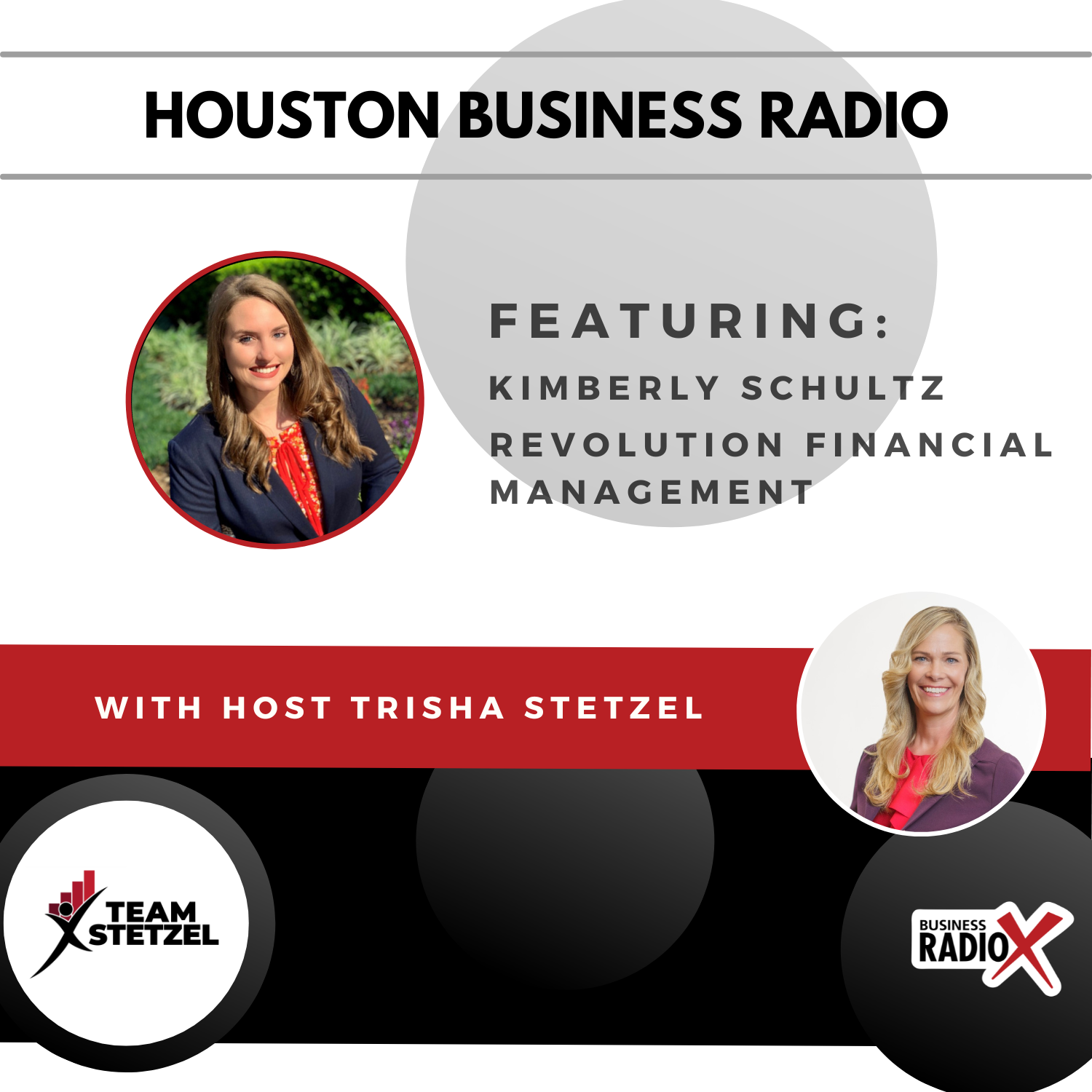

 Kimberly Schultz is a financial literacy expert specializing in budgeting, savings, debt management, life insurance, retirement planning, and building generational wealth.
With experience serving families nationwide, she empowers individuals to achieve financial freedom. Before entering the financial services industry, she spent over three years in hospitality, excelling in sales and event planning.
Passionate about mentorship and giving back, Kimberly volunteers with American Corporate Partners and Vets2Industry, supporting military members and veterans. 
In her discussion with Trisha, Kimberly emphasized the importance of financial literacy for personal and professional success. They explored strategies to boost financial confidence and discussed her dedication to volunteering, networking, and connecting communities with valuable resources.
Connect with Kimberly on LinkedIn.
 This transcript is machine transcribed by Sonix.
TRANSCRIPT
Intro: Broadcasting live from the Business RadioX studios in Houston, Texas. It’s time for Houston Business Radio. Now, here’s your host.
Trisha Stetzel: Hello, Houston. Trisha Stetzel here bringing you another episode of Houston Business Radio. It is my pleasure to bring Kimberly Schultz on the call with me today. She and I met a few months ago and automatically connected. She’s with Revolution Financial Management and so happy to have her. Kimberly, welcome to the show.
Kimberly Schultz : Thank you so much for having me. I’m really, really excited to be here.
Trisha Stetzel: Yeah. Me too. And, you know, we had such an exciting conversation before we even started recording. We should have been doing that already. So glad to have you on the show. Would you please just give the listeners a little bit of your background, kind of how you got here? And you know what doing this type of work of work really means to you.
Kimberly Schultz : So great question. Obviously no one is booking and planning events during that time period. So that is how I got started in the company. I actually started as a client because I wanted to hear the education, but what really resonated with me is what they were doing for families, how they were giving back to other communities. And I knew for me I was like, okay, I can do that. I had a purpose of giving back to other people. So that’s what really got me interested in the business and the company. I also have a passion for helping veterans and the community. So I do volunteer quite a bit with different organizations transitioning out of. They’re already a veteran, but outside of that, you know, I’m really passionate about giving back and making a difference for sure.
Trisha Stetzel: Yeah. Well, and I think honestly, that’s really how we connected, right. It’s all about the giving back. And we may have some connections in the veterans space too. But we’ll talk about that in a few minutes. I know one of the things, and particularly this term that you use a lot. I’d like to dive into the need for financial literacy. So when we say that, Kimberly, what does financial literacy mean?
Kimberly Schultz : So financial literacy can mean a different a lot of different things. It depends on the family, but it’s really having that competence and confidence in terms of, you know, if it’s saving money or if it’s getting out of debt. If it’s preparing for retirement. It’s having all the tools and the information. So that way you, the family can make better decisions and get to the place that they want to be in life. And if they’re not there, then they at least know the tools and the steps on really how to optimize and make better choices. So in the future, they’re hitting their goals long term. But it can be different for every family. You know, every family is going to be at a different spot. But it’s the things that constantly learning and the things we’re not being taught where people can get that information so that they can be successful in the future.
Trisha Stetzel: Yeah, absolutely. I mean, there’s such a need for it. I grew up in a generation where, uh, you know, we didn’t we didn’t even talk about money. And maybe it wasn’t the generation. Maybe it was just my family. Right. Uh, so that’s can be a scary topic or subject for a lot of people. So from a financial literacy or education perspective, Kimberly, what are the what what are the resources or the kinds of things that people can use or utilize in order to become more financially, financially literate?
Kimberly Schultz : Well, the first thing is definitely if you have access to the resources, find a professional that’s going to help you. Right. You can. There’s a lot of tips online for budgeting or getting out of debt or, you know, retirement or insurance, whatever that may be. But if you find someone that’s a professional, you know they’re really going to give you an outside perspective of it. You know, there’s lots of resources online that you can use. There’s a lot of programs out there, but I would say the big thing would be find a professional, because a lot of times people are they think they’re doing great and maybe they are, but because if you don’t have someone really that’s licensed to look at it, you might be missing out on something. So that’s a big one. Um, there’s a lot of books out there with different topics. You know, there’s tax free retirement. You know, there’s the financial pocket knife. There’s a lot of great books that are money, wealth and life insurance would be another one. A lot of them are really resourceful, especially in terms of concepts and things that people can implement. But you’re going to get the most out of it by actually talking to a professional in the industry.
Trisha Stetzel: So what Kimberly, what advice would you give to someone who’s looking for a professional? Is there? Is there a way to go about kind of selecting that person that you want to work with?
Kimberly Schultz : Absolutely. Everyone wants to work with somebody that they trust. So it’s got to be do your research. Right. I always tell people, make sure it’s a good fit. You know, when you’re when you’re reaching out to people, develop that relationship. Right. Because money is a taboo subject. A lot of people, like you said, don’t want to talk about it. So if you have to be able to have that trust with the person that you’re working with and, you know, you look at, you can look at the firm all day or the company all day. But at the end of the day, if you don’t, if you don’t jive really well with the professional themselves, it can really make or break the whole experience. So I would say do your research. Um, you know, a lot of times, like our industry, we operate on referrals. So we have a warm introduction. All of the people coming in to speak with us, they’ve either had another person that had that had a great experience or they’ve heard about us through somebody else. So referrals are key. You know, we always ask people, okay, you want to get your hair done, you need to get your car fixed. Where do we go to? Right. That’s going to be the the I guess the easiest way to do it. But if you are just looking and you’re figuring out resources of where to go, then I would say, you know, you can Google. I know that’s a loose term. You can Google and look at some things, but do your research and make sure you find someone that you feel comfortable with. And that’s going to really help build you because it’s not a one time thing, right? When people are learning the ins and outs of finance and really how to get to their goals, it’s an ongoing thing. So you want to be able to build that relationship with the person that you are getting the help from, for sure.
Trisha Stetzel: Yeah, it’s kind of like my clients, right? From a coaching perspective, I don’t want to engage in a relationship with a client for the next 12 to 18 months if we don’t trust each other, right? Uh. That’s huge. So, Kimberly, I want to take a little side road here because you talked about networking, and I know that you are like the connector queen. Uh, so if folks want to connect with you, they’re interested in, uh, connecting with you just to have another conversation. How will they find you?
Kimberly Schultz : They’ll be able to find me on LinkedIn. I’m very active there. Uh, my email address, too. I’m sure you have it. I don’t know if it’ll be posted, but my email address is really good to connect with me or even my cell phone. To be honest, most of my clients or families coming in, they either are introduced to me through my my phone number. So and I have a website as well. So any of those options I would say the phone call or my, my actual contact information is the quickest way to get to me. But I am very active on LinkedIn and I also am checking emails all the time. Email might be a little slower, but the phone and the uh, LinkedIn is is pretty, pretty pretty standard, I would say.
Trisha Stetzel: Yeah, absolutely. And it’s Kimberly Schultz s c h u l t z. You can find her on LinkedIn. So, Kimberly, uh, if it’s okay with you, I’d like to dive into all of the volunteer work that you do. Listen, you, uh, I don’t know when you sleep because you’re doing so much getting out into the community and working with, uh, American Corporate Partners program, and that’s the industry. Let’s talk about that. First, I want to start with, why do you volunteer in the first place?
Kimberly Schultz : For me, it’s all about the purpose. Uh, what can I do to be moving the needle to give back to the community? So it all started. You know, I’ve always. I have military family, so I have World War two vet grandparents, a Vietnam vet for my uncle. So even as a kid, we were always looking to really give back and make a difference in the military and veteran community. Um, then taking it a step further, I came across, ironically through LinkedIn, the company vets to Industry, and I was able to see what they were doing for families and really providing free resources for the community. And that’s something I definitely wanted to get on board with. I knew that, you know, whether it’s education or if it’s disability claim help or if it’s resources for education or even on the opportunity side, if they’re looking for, you know, a career. That’s what really got me intrigued into it. Um, what networking in general. You know, it takes work. It’s not an overnight thing. So it’s so important to really connect. And when you find things that you’re passionate about, it’s very easy.
Kimberly Schultz : You want you continuously want to do it. Now as far as American corporate partners, you know, I’ve been a mentor for that, for that program for over two years now. I’m going on my third year. That is very rewarding in itself because you are working with one person for a year and you get to see from start to finish the growth, and it could really be anything. So that’s why it’s so important to me why I’m so passionate about it. I mean, I could go on and on about networking for a long time, but for me, the key thing is having that sense of purpose where it’s bigger than yourself. It’s more for the community. It’s very, you know, everyone would agree it’s probably more fulfilling, right. In terms of doing that. So that’s why I do it. And, you know, I’m always looking for opportunities to really bridge the community, even if it’s not in my business or if it is, you know, relative to volunteering, anything I can do to help is really what I’m looking for.
Trisha Stetzel: I think that’s fantastic. So can we give just a little plug to vets, to industry and tell the listeners what that organization’s purpose is?
Kimberly Schultz : Yep. So vets to industry. It’s a nonprofit. They focus on providing free resources for military. You can be active duty and also a veteran. So they provide a ton of networking events. It’s usually monthly. They offer networking events where people can jump on whether they’re they’re a company and they are looking for good people or if they’re looking to connect. Or maybe they’re a school that offers scholarship opportunities they can jump on. If they’re a veteran business owner, they can also go spotlight their business, which is huge. And then the people who are looking for resources, they it it really connects them with a recruiters in general because you will go in smaller breakouts, but it also connects them with education resources. And if they need help with disability claims you know you can they there’s people to connect there. It just overall brings a sense of community. So they feel like they’re not alone. They have you know, if they need help, they are not afraid to ask. So that’s a big thing of what they do. They also recently I was I helped plan the first cruise. Last year they did a networking cruise, which was a lot of fun and they are doing that again this year. So for anybody that is interested in that, definitely reach out to me because I do have the details for that. But it’s a really great organization overall, and I’m very familiar with a lot of other organizations, but those ones speak to my heart for sure.
Trisha Stetzel: Yeah. That’s fantastic. And so if anyone listening would like to learn more about Vesta Industry, connect with Kimberly. She is like the connection queen and knows so many people. And I know you have a heart for making sure people are connected with the right people. And I very much appreciate that. I like to say my superpower is connecting as well, which is probably how we ended up here together.
Kimberly Schultz : Absolutely.
Trisha Stetzel: Yeah. Uh, tell me a little bit more about American Corporate Partners program. I know you’re doing some mentoring there. Uh, assuming that it’s in your industry and that type of mentoring is that am I on the right track?
Kimberly Schultz : Yes. So how it works with that program is if you are already out. So it’s really good for people that have an idea of what they want to do and what direction they want to go. It’s okay if you don’t, but the point of the program is to match you with a mentor that is either already doing what you want to do or is in the right industry. So they want to be able to connect you and really be efficient. So if you know the area you want to be in, you can do it’s free for them. It doesn’t cost them anything. They can apply for a mentor. What the company does is they’ll match you to a person who’s qualified to help in that area. And it’s a year long program. So it’s a year long program where you meet with your mentor at least once a month, for it could be 30 minutes an hour. I mean, for my guys, it’s usually more than once a month. But, you know, it just depends on the person’s schedule and they will match you to a to a great mentor. I can tell you from the program, you know, I have the entrepreneur background, so I usually get paired with the people that want to build businesses. So I’ve had some really great experiences with helping them get the ball rolling for different business opportunities and going over business plans and so on. So it’s been a great experience. I really, really love it. I’m looking forward to my third year, but yeah, I can highly recommend them. If anybody is looking for a mentor program, it’s a great program.
Trisha Stetzel: That’s fantastic. American Corporate Partners program. Kimberly, you’re I again, I don’t know when you sleep. You have so many things that you’re doing and giving back to the community, and I appreciate that so much. Let’s circle back to I’m just going to say money. And I mentioned earlier and I think that you, um, mentioned it back to me that a lot of people are afraid of the numbers. Right. Uh, I find in business and even in, in personal that sometimes we just bury our head in the sand because we don’t want to know what. What would you say would? How would I take the first step in getting better or more comfortable at looking at those things, either personal or business?
Kimberly Schultz : I would say the hardest part is ripping the Band-Aid off is what we call it. So the the first thing would be looking at a budget, right? Whether you sit with a professional or not, that’s something people can implement right away if they’re not following a budget. Because the reality is, is if you don’t know where your money is going, how can you really allocate and and really figure out where you need to be for your goals? I can honestly tell you that 60% of Americans are living paycheck to paycheck right now, which is a huge problem. So when you’re looking through and you’re going through budgets with people, what we find is that, you know, most people don’t have a spending problem. A lot of times it’s an income problem because we have inflation at an all time high right now. So with people getting started, the budget is the hardest part. That is something they can look at because even now it’s very there are tips where you can be mindful of what you’re spending. I always tell people, if you’re not sure where your money’s going, go look at your credit card statement or your account.
Kimberly Schultz : You can see that’ll tell you where your money’s going. If you can’t figure it out. So that’s a good initial step. And books are always great. You know, different concepts, different. You know people hear it all the time. You know there’s different things that they can really read and look into. Obviously, not every every scenario is going to be a fit for each family. And some things may work for a family and some may not. But knowing that, you know, even a third of Americans right now, they have more credit card debt than they do money saved for an emergency fund, which is alarming. So they need I want people to feel like they have a resource. They and that’s the scariest part for them is they is they think it costs too much money, or they don’t know where to turn, or they don’t know who to trust. So that’s why we take pride in what we’re doing, because we’re actually leading with the education and and really showing people the ins and outs of how money works.
Trisha Stetzel: That’s fantastic. So, um, any resources? I know you talked about a couple of books earlier and, you know, finding a budget worksheet to start with, but what other resources are out there that listeners can go and grab just to get started?
Kimberly Schultz : It depends on where they’re going to start going to look for it. But as far as there’s a lot of money saving hacks. You know, there’s the envelope method that people refer to if they’re not sure what that is. You know, now it’s become such a trend that they have little kits that they you can get the envelopes where they can save money every month. And that’s one way of doing it. Budget sheets. You know, people use Excel spreadsheets, but then there’s also a lot of free ones online that they can use and really start organizing that way if they need help, you know, on insurance, that’s another area of what we help families with. You always want to. It’s very it can get very complicated searching by yourself and figuring out the ins and outs and what you need and how much everything is and the different types out there. So you definitely want a professional for that. Yeah. Because here’s the thing. It can if you’re trying to do it on your yourself or by yourself, it can be challenging and that you may miss something because you’re not used to the terminology. And you know what your family might need as far as retirement goes.
Kimberly Schultz : You know, retirement, there’s a lot of resources. If people are into investing, then there’s a lot of great resources. You can start. There’s tons online and I can give you I could sit here all day talking about it, but there’s a lot of books and different companies out there that do that as well. But the biggest thing is knowing what they they if they don’t know something, it’s where to get the resources. But it all starts with finding someone you trust because remember, they have an outside view. They are trained and licensed to do it. So when you have the people that know what they’re looking for and really how to optimize it, that’s the biggest thing. And you can do it on your own. There’s a lot of different debt, you know, management methods out there. And you know there’s different credit opportunities how to boost your credit. But the biggest thing is finding someone you trust. And then you can start, you know, there’s different videos out there. There’s different websites. Um, but more importantly it’s finding a good person.
Trisha Stetzel: Yeah. Fantastic. Kimberly, thanks for sharing all of that information. And by the way, if you’re listening and you happen to be listening on one of our social channels, you can just tag Kimberly in the comments below, uh, to grab her attention and have a conversation with her. So, Kimberly, as we move to the back end of our conversation today, could you share, uh, maybe a story with us of something that’s happened over or, you know, either with, by or around you, uh, with someone that you would like to share.
Kimberly Schultz : Absolutely. I mean, there is a lot of stories I could share, but I will tell you this. You know, I with working with the military community, I do work a lot with them on the education and the client side as well, outside of the volunteering. So I have one client that I have worked with for not even a year now, and he needed help on the budgeting side. So we were able to help him with budgeting starting to save. He didn’t have an emergency fund at the time and he was a homeowner, which was great. Um, but more importantly, we were able to help him on the insurance side. We didn’t know if he would get approved because of the medical background. We were able to get him approved, but even his credit score, with just a few really a few months of working and showing him the tools of what we needed to do, he was able to boost his credit significantly. I it over 50 points, I will tell you that. So I can’t give too many specifics, but I will say he had we were able to set him up with also retirement, which is great.
Kimberly Schultz : He didn’t have that. And even in the military he didn’t have that. So for him it was really looking at multiple avenues, but really finding a method and a plan that would work for him. So he’s very excited. You know, a lot of my families will come back and they’re they’re happy to tell me, hey, you know, I bought a house. You know, we just had a baby. Thank you so much. You know, you’ve done so much for my family. They’ll even tell you. Hey, you’re like a part of our family now. So it’s very rewarding. Uh, there’s a lot of client stories out there, but the ones where they’re so appreciative of it and they’re so proud of themselves, that is the biggest thing, is seeing that. That you can see when you first start out with them, they’re not sure. And they’re trying to figure out the ins and outs. And by the end of it now, they’re really proud of what they’ve done. And just just from what you’ve shown them. So really, really inspiring for sure.
Trisha Stetzel: Yeah, absolutely. And you’re inspiring. You’ve helped so many people through your volunteer work and even the education that you’re providing out there to the general population. Right. And of course, alongside of your, your clients. So anybody who’s interested in having a conversation with Kimberly, please connect with her. You can catch her in the comments below, or even reach out and connect with her on LinkedIn. Uh, the website and her email are also in the show notes, so you guys can grab that as well. Kimberly, is there anything that you any parting words you’d like to leave for the listeners today?
Kimberly Schultz : That’s a good one. I would say for anybody that is just starting out, or even if maybe they’re halfway through their career, Don’t be afraid to take the step. You know, the sooner you do it, the better. It’s the hardest part is taking that initial step to really learn and get the education you need. But I promise you that when you know the tools and you learn the ins and outs, your family will thank you. Future generations will thank you. It is a hard step to take, but it’s just know that if you’re going through a season, it’s it’s temporary. It’s not forever. So once you get through that season, you know you’re going to come out on top regardless as long as you’re getting the tools that you need. So I would tell people, don’t be afraid to get started. But the other thing is too, is everyone keep dreaming. There are so many opportunities out there that don’t be afraid to go chasing your dreams. You know, as kids, we’re told, you know, you you’re you can be anything you want. You can do anything you want. But as adults, we get so caught up in the rat race of the day to day that we forget how to dream. So there’s nothing stopping you, even if you’re halfway through or even towards the end of your career, to be working towards something that’s important to you. So I will leave it at that. But hopefully everyone got something out of it. Anything that we talked about today?
Trisha Stetzel: Yeah, I love that. Be a dreamer, right. Bring back the astronaut and the veterinarian and the, uh, the dog walker. Right. All of those dreams that we had as little kids. I love it. Kimberly, thank you so much for being on the show today. It’s been my pleasure.
Kimberly Schultz : Thank you so much for having me. I really, really appreciate it. And I look forward to seeing what we can do in the future and collaborating.
Trisha Stetzel: Yeah. Me too. And that’s all the time we have for today’s show. Join us next time for another exciting episode of Houston Business Radio. Until then, stay tuned, stay inspired, and keep thriving in the Houston business community.














