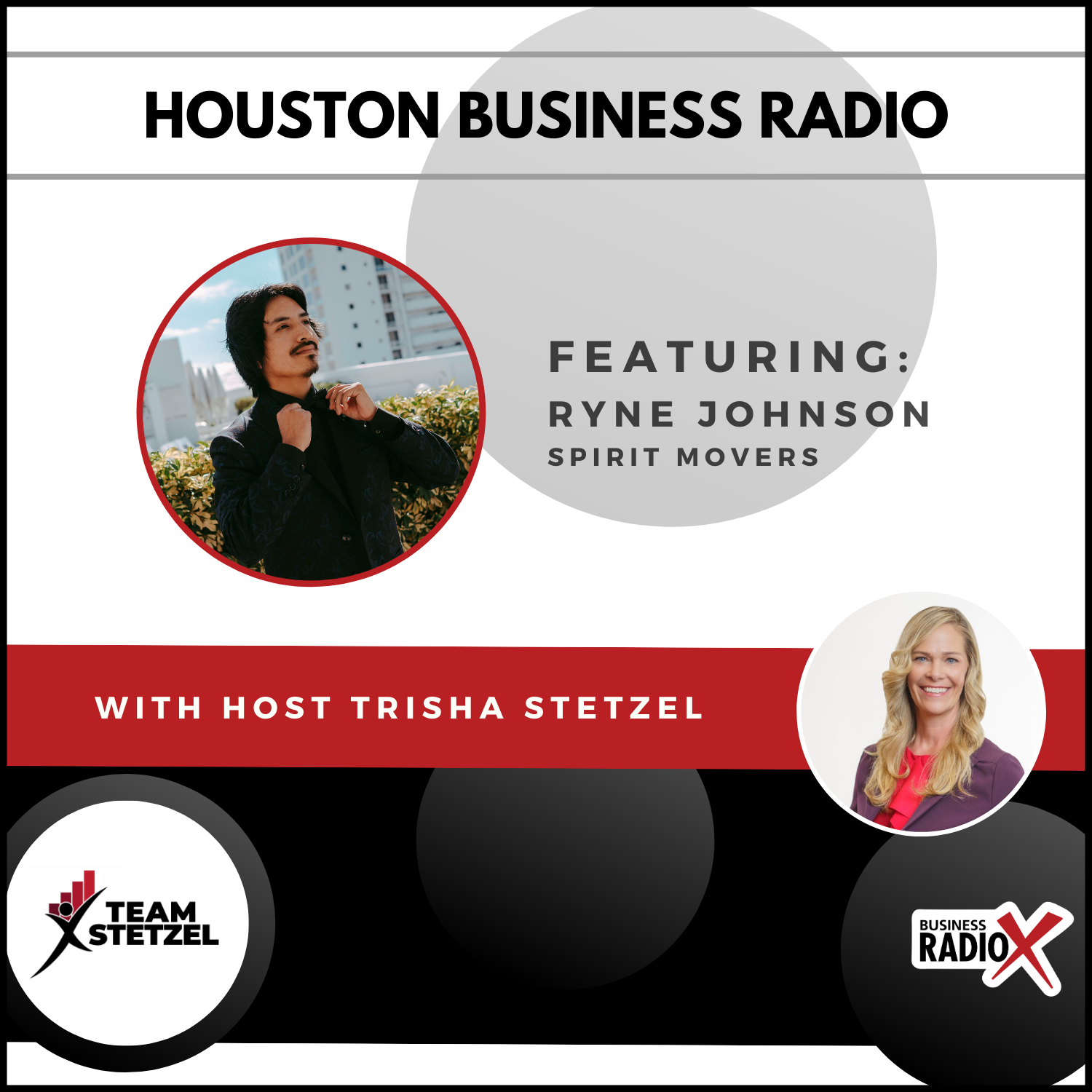


 Ryne Johnson is a dynamic business leader and Owner of Spirit Movers, where he has spent more than a decade driving growth, innovation, and operational excellence.
Beginning his career with the company as a Cybersecurity Analyst and Project Manager, Ryne quickly rose through the ranks to Vice President & General Manager before ultimately becoming Owner. His leadership blends strategic vision with technical depth, positioning Spirit Movers for long-term success in a competitive marketplace.
Ryne holds a Master of Science in Cybersecurity with a concentration in Cyber Intelligence from the University of South Florida Tampa, along with a bachelor’s degree in Psychology from the University of South Florida Sarasota/Manatee. His diverse academic background informs his ability to align technology, people, and performance.
A recognized leader in both business and community, Ryne was named C12’s Member of the Year in 2022 and 2024, earning the Buffalo Award for outstanding CEO-level leadership. He serves on the Board of Directors for the Bradenton Area Economic Development Corporation and was honored in 2024 on both the Business Observer’s 40 Under 40 and SRQ Magazine’s 35 Under 35 lists, celebrating his impact and influence as one of the region’s rising leaders.
LinkedIn: https://www.linkedin.com/in/ryne-johnson-mscs-878b8474/
Website: http://www.spiritmovers.com
 This transcript is machine transcribed by Sonix
TRANSCRIPT
Intro: Broadcasting live from the Business RadioX studios in Houston, Texas. It’s time for Houston Business Radio. Now, here’s your host.
Trisha Stetzel: Hello, Houston. Trisha Stetzel here bringing you another episode of Houston Business Radio. It is my pleasure to introduce you to my guest today, Ryne Johnson, the owner of Spirit Movers and a leader known for building culture first organizations grounded in servant leadership. Ryne has spent most has spent more than a decade inside spirit movers, starting in technical and operational roles, rising to vice president and general manager and ultimately becoming the owner of the company, giving him a rare inside out view of what it takes to lead at every level with a background in cybersecurity and psychology. Ryne believes great leadership comes down to two simple principles. He lives by learning what you don’t know and sharing what you do know. His approach has earned him C-12 Buffalo Award for CEO level leadership recognition on multiple 40 under 40 lists, and a reputation for building teams that last, not just companies that grow. Ryne, welcome to the show.
Ryne Johnson: Thank you. Trisha. It’s a pleasure to be here.
Trisha Stetzel: So excited to have you. It’s been a long time coming. Okay, before we get started, I would love for you to tell us just a little bit more about you.
Ryne Johnson: Absolutely. So, Ryne Johnson, obviously, I am the owner of Spirit Movers and it has been quite a journey to get to this point in my life, and I am extraordinarily proud of not only the challenges, but also the victories that led to this moment. Something that I would like to share with people to kind of show a bit, a bit bit more about me, about my background, is that I was actually adopted from Peru in 1990s. Cholera was just ravaging the country at that time, and my biological mom understood the complexities of that virus, especially with Peru being much more of a third world country at that at that time and space and the the lack of medicine where she was giving birth to her, the rest of her children really put a strain and a fear, if you will, in the perception of how she was going to move forward with her family. So what would have been? My older brother, unfortunately succumbed to the disease. He passed away. And so when she gave birth to me, she made the decision to go ahead and and put me up for adoption. And what that did for me, looking back now, has created just this sense of overwhelming honor to be where I am, because my life would have been dramatically different if I were to have remained in Peru. And that would be even if I was able to survive through that disease at that time, because it ultimately affected the young and the the elderly generation. So it, it it just gives a little bit more perspective of the mentality that I carry every day with me and the gratuity that I have just to be alive and to exist.
Ryne Johnson: You know, I think it’s one thing personally that when you’re grateful to exist and it’s I, I believe it’s one of the most positive things you can do. And not everyone is. And and sometimes I even struggle with it, too. But it just really shapes the paradigm that you have when you move forward, especially in a position of leadership. So to continue that story, I was adopted here into the United States by an amazing family who were located in in Sarasota, Florida, which is a couple miles, about an hour or so south of Tampa. Um, and it was just an honor to come here as well. They were an amazing family. They took incredible care of me, gave me opportunities that I could and would have never imagined possible if I were to have grown up and spent my time in Peru. And the other. The other factor that I like to to talk about is that I was actually able to go back multiple times to experience the culture and get to know more history and ancestry, but because of the fact that where my mother gave birth to me was so remote, I actually never got to meet her or the rest of my family. But we did try and it was very the first trip I went back. I’m not going to lie, it was very cathartic because there was a lot of emotions, there was a lot of unknowns, and being able to go there with a group of other individuals who had actually other families who had adopted children from Peru around that same time period allowed me to experience it and process a lot more than I would if I just went back alone, or even with just my adoptive family.
Ryne Johnson: And I like to share this one story because it just always I feel like it’s something that truly shaped me. As we were heading through the Sacred Valley, uh, the entire bus, the, uh, the tour guide stopped that bus and we got out, and we actually, the fathers and sons actually got to get behind a plow that a native father and son were, were, were utilizing in the field. And we actually spent about 30 to 45 minutes each plowing that field. Walking. Breathing. Essentially living a small moment of what our life probably would have been if we were to have remained in Peru. And so again, that just like that very moment, I will remember my entire life. And things get difficult. It just it just reminds me to stop complaining. Stop complaining. You know, you’re going to face challenges, and that’s okay. And actually, to look at it and wear it as a badge of honor that I get to show up here, I get to have this opportunity. I have been chosen to have the honor of leadership, and to have that role being placed on my life has just been amazing. So while it was a little bit lengthy of a story, I do feel like it really shapes and introduces who I am. And in a lot of what goes into the mentality that I carry when leading the organization and other areas of my life.
Trisha Stetzel: Absolutely. Thank you for sharing that and being so vulnerable and, um, giving that story. It really does give a lot of insight into, um, where your leadership comes from. I want to talk just a minute about something that you said that I think will resonate with people is you get to it’s not you have to or you need to or you want to, but you get to. Have you always had that mindset of, I get to do things. And where do you think that came from?
Ryne Johnson: Yeah. Great question. Being complete this year, 2026. One of my words is transparency, both inward to myself and outward. I would say I didn’t always used to have that. And I think one of the beautiful things that came from a lot of these experiences when I was younger, before I went back to the country and really understood to that degree of what it was like to have, you know, it’s hard to envision what what would have been, especially in a situation like this. So before I didn’t necessarily have that same mentality and that same pair. But coming back from there, it really helped shape that and really continue to keep that at the forefront of my mind. And again, it’s something you have to be intentional about. Intentional is one of my favorite words as well, because if you’re not intentional about how you approach situations, your leadership and the events in your life, you’re going to just react. You’re not going to be able to take the moment to respond to them. And I think that is so important that we as human beings, we do have that ability no matter where we are, no matter what position we hold, we have the ability to choose how to respond. But we have to do that with intentionality. So to lead back to your your original question is, is no, I didn’t, but I could not be more thankful that I had the experiences I did to allow me to see in that light.
Trisha Stetzel: Absolutely. And I think it’s the people we surround ourselves with to that help us carry that through. And by the way, my word is intentional this year. So thanks for bringing that up. That’s my one word this year. Let’s talk about leadership. So, um, you’ve been in and now own Spirit movers and you’ve held many positions. So you’ve been in nearly every stage or every seat in this business. How did that experience from the inside out shape the way you lead today?
Ryne Johnson: Great question. The experiences that I had allowed me to see a full picture, not just come in from the outside and assume a certain position without fully understanding and or walking in the shoes of the team members that I would eventually be able to lead. I think that insight really allowed me to be able to go out of my way to connect at a deeper level with those individuals and not just assume anything, because I think assuming is one of the most dangerous things we can do, especially as leaders, because it can take you down a wrong path extraordinarily fast. So being able to have those different roles, being able to take the insights and wisdom that I were able to gain from those, and then to be able to come back and pour into this organization the way I do. I think that really was it was really key to be able to be not only. Again, intentional about my leadership, but at the same time respected on the other side that this isn’t somebody who’s just coming in out of nowhere and are going to change up a bunch of systems and a bunch of, you know, policies and procedures and what do they know? It was something that allowed me to really bridge that gap, if you will.
Trisha Stetzel: How has the culture changed over time in this business.
Ryne Johnson: I relentlessly build the culture at Spirit Movers and I believe that culture is key. Culture beats everything and anything, any day of the week. If you don’t have a strong culture, you really don’t have the foundation to create a lasting organization. I feel like culture is something that needs to be taught, not caught. And if you’re not intentional about it, it will just be caught and it’s on accident and it can completely lead the organization in the wrong direction. What I call and label our culture is Buffalo culture, and I’m not sure if you’re familiar, but the idea comes from the two main herd animals. You find out in the Midwest. You have cattle and you have buffalo or bison. And the way these two animals react to storms that are approaching is extraordinarily different, and their instincts actually are very insightful to how we as human beings tend to act as well when these storms of life approach. So what happens? Cattle. They instinctively scatter every one of them for themselves, and they run as the storm approaches, thinking they’re going to get away from the storm. But as they’re running, the storm inevitably catches up to them, and it remains over their head for a much longer period of time, exposing them to starvation, injury leading to death and separation from the herd at the worst cases.
Ryne Johnson: Whereas buffalo, on the other hand, they heard up, they run head first into that storm, they get through it so much quicker, and they get to enjoy the fruit of what’s on the other side of that. And that right there is the mentality of Buffalo culture and what I instill at Spirit Movers in the sense that this is an organization, this is a team, and we will not let each other run from the storms of life and from the the business challenges that we face. We are going to herd up together and charge head first into that storm, and it solves and allows us to be this, this collaborative group of individuals that understand that we have each other’s backs, that at the end of the day, there is nothing we can’t get through and get and overcome. And I think the most important part about it is, is, is the herd mentality in the sense that not just things in business. Is this how this is? This is applied to, but personal to someone struggling and going through something and having a bad day? I tell people, just put your arm around that, that, that brother or sister and let’s walk through that challenge with them knowing that the next person on your team has your back beyond just the profession that we’re in is very, very, very relieving for so many people.
Ryne Johnson: And it also shows and speaks into what we had touched on earlier about servant leadership. And I think that that is so key to creating a healthy culture. When you can when you can train, you can teach your people that service and serving others isn’t demeaning. There is so much power in being able to selflessly serve. And, and and I say selflessly serve because there’s people who serve others hoping to get something out of it. That’s not selfless. Selflessly serving is serving somebody without the intent to get anything back and to do so just because and I because you want to help them get better. You want to see them left in a better way than when you approach them in the first place. And in doing so, it makes a world of difference. And so I couldn’t, I couldn’t I could talk about culture all day long, and I, and I could not emphasize anymore how important it is. And it’s just a part of our of who we are, and it will always be.
Trisha Stetzel: I love that, by the way, I’ve heard your Buffalo story once before and I still got goosebumps. Thank you for sharing it. I love that. It’s fantastic. Um, just quick break in. Let’s tell people who are interested in connecting with you how to find you. What’s the best way to find Ryne?
Ryne Johnson: Yeah, so best way to connect with me directly would be through my email. And that’s going to be my first name r y n@spirit.com, and that’s spirit s p I r I t and then movers plural m o v e r s. Com also, LinkedIn is a great way to connect as well, and I believe that link will be in the profile of this video. So you can connect with me there as well.
Trisha Stetzel: Yeah. Well absolutely. You guys know I will put the links to Ryne’s contact information in the show notes. So if you’re sitting in front of your computer please point and click. If you’re in the car, do not do that. Uh, when you get home you can and it’s r y n e Johnson j o h n s o n if you’re looking for him online. All right. Tell me about spirit movers.
Ryne Johnson: So spirit movers in the original days of its founding was a local relocation company, Household Goods. So we started at just a very small radius of just within our city of Sarasota. And as we grew, we were able to now take individuals throughout the state of Florida and even the country. And as the as the company continued to progress, we now also are able to do international relocations and do do so regularly. One of the team members that has joined is could remember more than I’ll ever forget in regards to the the tariff, the, the, the customs understanding documents and procedures. And he also has lived all over the all over the world. So he speaks many languages. So it’s great to see him connect with our, our, our potential customers and customers in their own language and, and be able to really just bridge that, that that relationship and strengthen that deeper level. And that has been our bread and butter in our history. And as we move forward, last year, we were working on something that I had a vision for, I would say about 3 to 4 years ago when I finished my schooling, and what it is, is to branch into and pivot into a more commercial, B2B focused division. The new division is called Strategic Commercial Commercial Solutions Rs for short, and this division targets in particular the high end design industries for both private clients and commercial spaces, as well as the medical and hospitality industries.
Ryne Johnson: The reason we chose those in particular is they are less likely to be affected by the economy. Medically, all the hospitals, doctors offices. Let me take an example for Covid. You know, they they everything shut down and they continued to to to steam full blast ahead. And the hospitality industry, believe it or not, with hotels they most of the hotels, especially the larger brand named hotels like Marriott for Marriott, for example. They actually allow and a lot a remodel budget. And when the economy turns down a bit, they act on that because they don’t the amount and the typical occupancy that they have. So when the economy is good, they’re building more hotels for the tourism. And when the economy turns down, the current hotels go into a remodel phase. And then the high end design industry targets that high end, affluent clientele. And again, they pull back to some degree. But if they still looking to have something done, they’re still going to move forward and take in a lot of cases, what they view as an opportunity in those economic moments of uncertainty and really the services and solutions rather that we provide in this industry or this excuse me, in this division, are logistics, warehousing, high end and very detailed installations and then also fulfillment services.
Ryne Johnson: So we will go out and receive brand new product for any of these industries when they’re building a new facility. And we we have a sophisticated electronic and online inventory portal where all of our clients are able to actually see in real time what products we have received into our facility, where they’re located, images of them, any data points they need. And then they can pick and choose what products need to go out and be installed and what facility and at what level. And then we have our teams go ahead and are able to locate them because of the sophistication of the software very efficiently, and then have the very well trained, much more highly trained individuals than on the moving side or the relocation side. Go out there and perform the installations. Truly a one stop, bespoke level, almost concierge type of solution provider for these industries. To take all of that off their plates and handle the complex logistics, which most of them, let’s face it, wouldn’t really want to deal with in the first place. So it’s it’s been an opportunity, especially here in Florida, that’s growing regularly, robustly. And and we’re very excited to to have the official launch of that division this year, 2026. And so we’re looking forward to a strong first year. And and just sky’s the limit from here. So we’re excited.
Trisha Stetzel: Amazing. Congratulations. That’s fantastic. And I can’t wait to see this new division flourish in 2026. You may have to come back and tell me how things are going. I it would be so much fun. Okay. I want to come around to something that I said in your intro, and I actually picked it up from our last conversation. It really sat with me and I wanted to bring it up here, and I want you to talk about it. So you’ve said that leadership is about learning what you don’t know and sharing what you do you know? How has that changed? How has that mindset changed the way you build teams and develop leaders?
Ryne Johnson: Absolutely. The thing about being curious about what you don’t know, and generous with what you do, is approach to knowledge, wisdom that most leaders tend to overlook that at least in my opinion. There’s a lot of cases where, for whatever reason it may be, people tend to hold that tight, that knowledge, that understanding, and don’t tend to or want to share it. And I think that when you’re able to look at building a team of individuals who share that same characteristic, you create a team that is going to collaborate together, that they’re going to grow together, most importantly. And then on top of that, understand what interdependence and how powerful that is Naturally, when we’re born, we’re dependent. We get to get to a certain point where we become independent and the culture tells us independent is, is where we all need to be. And while we all have to be independent, it is not the most supreme form of maturity, in my opinion, when you can recognize that sure, all of us have different talents and we can get very far with them on our own, but we can get so much farther and build so much more and achieve greatness when you bring great minds together. That is when you truly unlock something that is extraordinary, in my opinion. And so with that being said, everybody who I interview or think about bringing on to my team, I ask that question to myself when I’m finished. Is this person generous with what they know and are they curious about what they don’t know? Curiosity. It’s something you can’t. You either have or you don’t. It’s not something that you can really you can’t really train that. You can’t bring that out of somebody. They either have it or they don’t because curiosity is genuine. And I think that that, that those characteristics truly, truly set us apart in the sense of how we go about bringing on team members to the to the organization.
Speaker 4: Mhm. Mhm. Mhm.
Trisha Stetzel: I’m having so much fun and our time is going to run out quickly. Um I have one last question for you that, um, I’d love for you to leave the audience with, um, just kind of your thoughts on if a leader who’s listening today wants to get better just by 1%. Just 1%. What’s one thing they should start learning and one thing they should start sharing this week?
Ryne Johnson: Love it. I would say the one thing that someone should start learning if they want to get better 1% is how to build effective systems in their life. I think a lot of us confuse goals with something that could once achieved, change everything for somebody. And while goals are great and we need to have goals, if you don’t have the right systems in place, you’re never going to achieve those goals. And that’s one of the reasons why, when we start out New Years and everybody has wonderful goals, that they falter rather quickly. And when I say systems, I’m talking about the understanding and the appreciation of the process. If we can’t learn to love the process of growth because let’s face it, growth and comfort, they do not coexist. They can never. So it’s going to be uncomfortable. And if you can’t learn to love that, you’re never going to move forward. So I would say learn how to build a sustainable system of growth and that can be different for everybody. Also, don’t overcomplicate it, right? There’s a difference between easy and simple to get it confused all the time. Easy is without effort. Simple without complication. Achieving growth in any area of your life doesn’t have to be complicated, but it has to be consistent. The other thing that I would say to continue to answer that question is, is growth always also isn’t always adding more. Sometimes it’s it’s it’s removing something. And so as leaders and individuals who want to pursue that path, sometimes it takes a moment to to clean out the garage, if you will. Our minds are kind of like garage. All of our thoughts are our possessions, right? We own them. When was the last time you cleaned out your garage in your mind and got rid of the things that no longer serve you. To be able to replace them with things that do and or maybe just keep them keep keep a little bit less in there so that you can focus on doing the things that you have intended to do. Well.
Speaker 4: I love that.
Trisha Stetzel: I’ve had so much fun today. I really appreciate you being on. I feel like, uh, we have so much more to talk about, so I’d love to invite you to come back on this show, maybe later this year, to tell us how things are going with your new division and give us some more nuggets. Ryne, you’ve said so many amazing little nuggets today. I can’t wait to put some shorts out with the knowledge that you’re sharing with us today. I really appreciate your time as well.
Ryne Johnson: And Trisha, it has been a it’s been a pleasure talking with you and I would love to come back on. So if that offer stands. Count me in.
Trisha Stetzel: Fantastic. All right, Ryne, one more time. How can people connect with you and also find out more information about Spirit movers?
Ryne Johnson: Yes. So best personal email to connect with is my first name Renee at Spirit Movers. Com and as well the website to our company is WWE Spirit Movers. Movers plural. Go ahead and check us out. We also have a really great and funny, if I might not add, Instagram feed. Getting into social media and like that. Our team is always laughing and is is is enjoying what they do even though it’s not easy. It’s not easy work, but you should check it out as well I think.
Speaker 4: Okay.
Trisha Stetzel: Fun. So the handle there, spirit movers, we can find you.
Ryne Johnson: So yes. Spirit movers. It’s I’m going to I think it’s I’m almost positive it’s underscore srq. So spirit movers underscore srq.
Trisha Stetzel: Okay. Fantastic. And again I’ll grab that, I’ll find it and I’ll grab it and put it in the show notes. So if folks are sitting at their computer, they can point and click. Ryne, again, thank you so much for your time. I appreciate it and can’t wait to have you back.
Ryne Johnson: Sounds great. Thank you again for having me. Have a wonderful day.
Trisha Stetzel: Thank you. All right guys, that’s all the time we have for today. If you found value in this conversation that Ryne and I had today, please share it with a fellow entrepreneur, a veteran or Houston business leader ready to grow. Be sure to follow, rate, and review the show. Of course, it helps us reach more bold business minds just like yours and your business. Your leadership and your legacy are built one intentional step at a time. So stay inspired, stay focused, and keep building the business and the life you deserve.














