
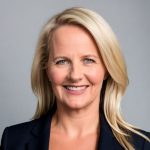
 Amy Palmer is the President & CEO of Soldiers’ Angels, a national nonprofit dedicated to supporting service members, veterans, and their families.
When she took the helm in 2013, the organization was on the brink of closure. Within two years, Amy led a powerful turnaround, transforming it into one of the most respected and efficient military nonprofits in the country.
Under her leadership, Soldiers’ Angels has served over 7.5 million individuals and earned top ratings from Charity Navigator, GreatNonprofits, and Candid. 
In her conversation with Trisha Stetzel, Amy—herself a veteran and military spouse—shared the journey of rebuilding and expanding Soldiers’ Angels. She highlighted the organization’s vital programs, including monthly food distributions, hygiene support for hospitalized veterans, and housing kits for homeless veterans.
Amy also emphasized the growing need for donations, volunteers, and new board members in Houston and Corpus Christi. Looking ahead, she revealed plans to grow their food distribution efforts by 50% in 2025 and encouraged listeners to learn more or get involved at SoldiersAngels.org.
Connect with Amy on LinkedIn.
 This transcript is machine transcribed by Sonix.
TRANSCRIPT
Intro: Broadcasting live from the Business RadioX studios in Houston, Texas. It’s time for Houston Business Radio. Now, here’s your host.
Trisha Stetzel: Trisha Stetzel here, bringing you another episode of Houston Business Radio. It is my pleasure to bring this guest on the show today. She was introduced to me through a mutual contact. Barrett. Uh, and I, he must have known we’re, like soul sisters or something. You have. You do such amazing work. So, Amy Palmer with Soldiers Angels. Welcome to the show.
Amy Palmer: Thank you. Thank you for having me today. We’re excited for the opportunity.
Trisha Stetzel: Well, I’m excited that you’re here today to talk about Soldiers Angels. Before we get to that, though, Amy, can you tell us a little bit about you?
Amy Palmer: Sure. So I grew up in a small town big house. Um, which is a lot of the reason I know people join the military. Um, you know, I have ten brothers and sisters and wanted to find a way to get through college and pay for college, so I joined the Air Force. Um, I was injured, um, during the Gulf War and had to have back surgery. So I was, um, medically discharged and, um, but remained a military spouse and spent the next 20 years, um, with a military spouse as well. Um, and so, you know, it’s great, uh, great opportunities. Um, one of the things I found as I was getting out of the military, when you’re notified of a med board, you a lot of times don’t have a lot of time to prepare. So I think when they notified me it was about a six week time frame, I was, um, going to be discharged. And, you know, being a dual income family at the time, we were able to support it. But, you know, the thought crossed my mind if if I was the primary breadwinner, what would I do right now? And so, um, you know, it made me think about all of those people in those same situations and and how do we help them. And so that’s where I ended up. I’m working in the military and veteran nonprofit space and have been in it ever since, so about 21 years now.
Trisha Stetzel: Fantastic. So, Amy, I hope you like dogs for anybody who’s watching the video. Yes, I have one that I’m babysitting because she’s got bad allergies right now. If you’re only listening, you’re missing the show. Uh, thank you for sharing that, Amy. And, uh, I think you and I are. We definitely have more in common as we continue to have conversations, because I, too, am a veteran and married to a veteran mother of a veteran daughter of a veteran. So I understand exactly where that that gut comes from, uh, and wanting to serve. So let’s dive into Soldiers angels. Tell me more about the organization.
Amy Palmer: Soldiers angels is a national nonprofit. We provide aid, comfort, and resources to our service members and veterans and their families. Um, our organization was actually started by General Patton’s Peyton’s family when one of the patents was deployed to Iraq, um, during the initial invasion of Iraq. So Patty Patton was busy sending him care packages and, um, during the early days, you know, they didn’t hear from the from family members. And so she just kept sending and sending and sending. She was one of those mothers that we all, um, screech about who called the commander because she hadn’t heard from him. And yeah, you know how that goes in the military. So I’m sure he was teased for the next six years after that. But she finally got Ahold of his unit and his commander, and he said, oh, your son is the luckiest man in Iraq. He’s been getting all these care packages, but he’s been sharing them with others. And so he she finally was able to talk to him and he said, keep sending them. You know, I’m sharing with friends. So, uh, Patty created a website where people could go on and adopt and support a deployed service member, which you can still do. Now. You can go there.
Amy Palmer: See, we have about 500 service members waiting for adoption that have just recently registered, that are deployed, um, in combat support, you know, vicinity. So areas, um, that had previously supported combat operations, um, and so they can register so you can go and search by branch of service, gender, home state and find a service member that you want to send care packages and cards and letters to during the course of their deployment. Um, over the first ten years, we had over 180,000 volunteers come through and register and adopt service members. Um, since then we’ve expanded, you know, deployments have drawn down and, uh, we added some other things people could do by mail, because a lot of our volunteers are scattered all over the US and even in foreign countries, and they’re used to doing things by mail. So we added virtual baby showers, a holiday Adopt-a-family program, a program for caregivers of post-9-11 wounded, ill and injured called Women of Valor. So those are all opportunities that are still done completely by mail where people can volunteer. And then we also created opportunities in the local VA’s Bas and bases and guard and reserve centers where people can do local support as well. Wow.
Trisha Stetzel: That you have taken an organization that was focused on one thing and really expanded the way you’re serving, uh, our active duty military. Thank you for being so amazing and continuing the service through this organization. Um, where I heard you say something about the the VA’s. And I know that your organization has concentration in particular areas in Texas. We talk a little bit more about the service that you’re giving back to, um, the VA.
Amy Palmer: Absolutely. And, you know, when we started a market, we try to grow those sites to be large enough where they can get all of the services that we offer. And so, for instance, in San Antonio, um, we offer our food distributions once a month. So drive through food distributions. We’re adding some food pantries in the area for for veterans and active duty and guard reservists as well. Um, we have transportation services where, um, we do Uber, Lyft, Greyhound, you know, if they’re, um, needing to get there and they can’t afford to. Um, we do, of course, bus first. But, you know, if they have a compromised immune system and they need Uber, Lyft, or if it’s after hours we use those services. Um, we do VA cafeteria vouchers for veterans who can’t afford to eat in the cafeteria and are there for appointments. Um, we do box lunches for, um, homeless and low income veterans for, you know, after hours that are nonperishable. Um, we do patient visits, donuts and coffee, all sorts of great things. So in in our full service facilities like San Antonio, Houston, we’re actually growing to that level. Um, we do luncheons and dinners, donuts and coffee. Um, at the VA, you know, right in the atrium. Um, we work at the Community Resource and Referral Center and, and help stock their, um, pantry area where they feed homeless veterans lunch every day. So we’re expanding Houston to grow that to those things. But there’s a lot of opportunities. But but even in areas like corpus and other areas that may not have a full fledged hospital, a lot of them do have VA clinics or even VA vet centers. And so we’re able to provide support in those locations as well. So while it may not be a hospital, there’s still opportunities for people to volunteer locally and serve veterans.
Trisha Stetzel: Yeah. That’s lovely. I know that monetary donations are always important to organizations. So, um, just assuming that that’s important to your organization. Yes. If if someone wants to give, they certainly can. I’d really like to focus on volunteers and then roll into, uh, maybe board opportunities as well. So as a volunteer, someone who wants to serve with soldiers, angels, what can they do or what is out there for them and how do they find you?
Amy Palmer: Um, yeah, that’s a great point. And and as you mentioned, with donations and that’s assumed that all charities need those. Um, the great thing about us is especially like with our food programs, we can feed someone at a very low cost because of the way we source it and using resources. And so, like, we can feed a family for a week for about $15, where if somebody gave us in kind, you know, it wouldn’t have the same impact. So of course, um, cash contributions are amazing. Um, there are so many great volunteer opportunities. Um, you know, and as companies have come back from Covid, like, the whole dynamic has shifted of what a company looks like. And, you know, a lot of people work virtually. Um, and they may be scattered across the country now, um, where they migrated, you know, their kids lived in another city, like my son lives in Dallas. And so, you know, having the opportunity to go there and work virtually, you know, I know people have kind of scattered. Um, and some are back in the office. So I’ve seen a lot of kind of mixed companies now, but we have a lot of opportunities for both. We have the local opportunities in the local areas, but then we also have a lot of the virtual ones where they do everything you know by mail. They register on our website and create a volunteer profile, and then they can do any of those sorts of things. They can write a letter, um, they can bake for deployed, like there’s so many opportunities. Um, so it’s great for businesses that want to engage their employees. But it’s hard because they’re, you know, some of them are here and some of them are scattered, like, we can do that in kind of a one stop shop fashion, which is great for our companies.
Trisha Stetzel: Yeah, fantastic. So if someone is interested in volunteering, Amy, how do they get started?
Amy Palmer: So they just go to our website at Soldiers Angels org and click the volunteer button. They’ll create a profile, but that profile is good for everything, whether that’s local things in their area, whether that’s virtual opportunities or any of our campaigns where like right now, our sock drive, if they want to do socks like all that’s through that same profile. So, um, so it’ll take them a minute to get that set up, but it’ll be worth it because they can do any of those sorts of services with soldiers angels at um at the on the volunteer tab at Soldiers Angels. Org.
Trisha Stetzel: Beautiful. So anybody who’s listening and wants to get involved with soldiers angels, it’s very simple. Go to the website Soldiers angels and go to the volunteer tab. Right. Uh, and fill out the form and you can get started that way. And there’s so many opportunities for you to volunteer with this organization. I’d like to shift to the next level, which is board opportunities. I understand that soldiers angels may have opportunities, uh, open for board needing board members. So can we talk about that?
Amy Palmer: Yes, absolutely. Um, you know, we are always recruiting new board members. Um, you know, we’d like to have a new, healthy perspective and some turnover and, you know, different folks geographically. Um, and in different, you know, spheres of influence and expertise. So, um, we have elections twice a year. We have the next round coming up in June at our annual meeting. So it’s a great time for people to be candidates for the board. And people often ask, you know, what are you looking for? We’re looking for people that could serve in any capacity. Um, you know, geographically, location is great. Um, and we don’t have anybody in in most of those areas. Of course, we have a couple folks in San Antonio, but no board members in Houston or Corpus or any of those locations, so we’d love to consider them. Um, and we have different committees. Each board member will serve on a committee. So there’s always a place for everybody of different kind of backgrounds. Um, whether they’re veterans and active duty, that’s great, but they don’t have to be. We’re about 5050 and board membership, but we have, you know, marketing committee, fundraising, finance, um, strategic planning. So I think there’s a place for everybody to fit in. But the great thing about soldiers, angels and our board service is really impact a lot of lives and, and develop programs that, you know, change the world.
Amy Palmer: You know not and I mean, there’s a lot to be said for local nonprofits as well as national nonprofits. But but the impact nationally is really great. And so, you know, as we expand and grow food programs, for instance, you know, those are decisions that the board makes that that’s the direction we’re heading based on the need. And so really you get to make do a lot that really influences people and to really make a difference. So if anybody’s interested in board membership, they can reach out to us. Um, like they can email info at Soldiers angels.org like information info at Soldiers angels.org um and uh we or go to the contact us form on the website. Those all get filtered back to me. Um, we have a committee who will vet the candidates, um, in advance and have conversations with them and then present them to the board. But, um, we have a great board, very active, love serving people, love serving veterans and and active duty service members. So, um, it’s a great opportunity and we’d love to have some additional folks if anybody’s interested. And it’s, you know, on their hearts to do something like that.
Trisha Stetzel: Yeah. Amazing. And you guys heard that those of you listening from Houston, we’re looking for some board members from Houston as well as corpus. So if you’re interested, shoot that note over to Amy and her team at info at Soldiers Angels. Dot. Okay, now that we have all of that out of the way, I’m very curious, Amy, how your service in the military, the time that you spent in the military and even as a military spouse really set you up for success running this organization.
Amy Palmer: Um, you know, I think two ways I think understanding the space is important. And, um, and while not everybody that works here, you know, has that connection, they all have a passion for doing it. Um, but knowing how the system works is really good. And being there myself, you know, going through the med board process, going through a VA disability claim and a VA disability appeal and um, and VA appointments and medical care and all that stuff is really great. Um, because it really has helped me understand the needs of of people and also help them navigate the system. Um, but it also helps helps me communicate with leaders in the military and VA, um, world about the needs of this population and how we can continue to serve them. Um, but I also think, you know, it has to run like a business. And that’s one of the changes that we made. Um, when you know, the the focus on the war efforts in the media and the public eye, you know, was on decline. You know, how do we change the organization to be more professionalized? You know, it started as people with just with a passion for serving, but without the skill to do, um, you know, all of the other components. And so, you know, it’s for us, it was really important to be able to do that. Um, but, um, you know, it’s amazing to be able to serve so many veterans and so many military families, but also run a business.
Amy Palmer: And, you know, it’s hard when you have to make shifts and make changes and professionalize staff and, um, and bring on people with a skill set, um, a different skill set, you know, but it is important to treat it like a business and have that business mentality. And even for board membership, you know, we want people that don’t always agree with me. You know, we want people. And sometimes I’m like, oh, that board member. But that’s good. That’s what you’re looking for. And you know, you need to treat it like a business. We have money. Well, how best do we use this money to serve the most people and make the biggest difference? Um, how do we, um, not conflict with others and just, you know, serve in our lane? Um, you know, we don’t want to compete when someone’s doing it great and doing a great job. How do we partner with them to do that better? And so a lot of it is really the business aspect of it. And I think in the early days, you know, there was less of that, but I think more so now, and people just really treating it like a business. And sometimes we have to make tough business decisions. Um, and, um, but, you know, I love it. Um, to be able to combine the business with the service is really great. And, you know, it makes all the hours and the time you put into it worth it.
Trisha Stetzel: Yeah, absolutely. I, I everything that you said coming straight like pulling at my heart because nonprofits often run just to serve. And if we don’t treat them like businesses, then we don’t have the, um, materials that we need to serve the purpose that we opened that nonprofit for in the first place. So I love that. And by the way, just putting a little, you know, uh, feeler out there for board members, again, that have some business acumen because it is important to bring people who have business acumen onto a board of directors or board for, um, the nonprofit space as well. All right. So, Amy, has there been a, um, particular success story recent or maybe in the past of soldiers angels.
Amy Palmer: Yeah, that’s why I love it here. Um, there’s like, this seems like one every day of something different and unique. In a way. We are changing someone’s life. Um, you know, a couple of things. Um, in one of our offices, we have a veteran intern that’s been with us a long time. Who was who? I was there when he first started. Very shy. Was, like, scared to death to go into a room where there were other people not even presenting, just being in that space as a representative of soldiers, angels. And we did the Daytona 500. We did a food distribution, a pop up with Kroger Racing Team and JFK racing. Um, and he was on a bullhorn saying, start your engines and all that. And I’m like, wow, like, this is a changed person. And he went from, you know, a veteran that was like really down and out to just a changed human being. And so it was so crazy to be at that event and see him. And I’m like, wow, I can’t believe how much you have changed and grown, you know? And it was just it was awesome to see. Um, but at that same event, you know, we it was a pop up distribution. We’ve never done one in Daytona before. Um, we did one at the Daytona Beach VA clinic, which is actually a really new clinic, a beautiful clinic. And, um, so we don’t have relationships with these veterans like we do in a lot of the other markets where they know us by name.
Amy Palmer: But we had a veteran come through that had a brain injury, and he recently had a brain bleed. And as a result of that, he was having migraines and flashbacks and nightmares. Um, and he went through the line and telling one of our volunteers that he was going to kill himself. And, um, we, you know, of course, after getting him his food, we’re like, okay, you know, what can we do here? And and she convinced him to go inside and get help. And so the VA came, you know, we had VA staff there, of course, in their parking lot. They came and they took him, and they did what they needed to do to get him the care he needed. Um, which is great, you know. Suicide prevention is not our number one focus. But everything we do hopefully is, is a factor in that. And we do ask those questions, you know, when they apply for programs and food and, you know, our transportation and those things. But, you know, to see it actually played out in someone, um, was really great because, you know, we didn’t just provide food for him. Hopefully we changed the trajectory of his life, um, in that one moment. And so, um, you know, those are the stories that make you want to continue to do what you do.
Trisha Stetzel: Yeah, absolutely. And even though you’re staying in your lane, as you mentioned earlier, and supporting these soldiers or these veterans in a particular way, you still have connections. And that’s the beauty of your organization is all of the connections that you have. So, Amy, as we get to the back half of our conversation, what does 2025 look like for soldiers angels? What’s your big goal this year?
Amy Palmer: Great question and we’re very excited about it. We’re actually. Our goal is to grow our food programs by 50% over last year, which is a big goal. Um, but we have increased um, the number of via cafeteria vouchers were distributing to VA’s. Um, the number of VA’s eligible to receive those to issue to veterans, um, box lunches are growing our food um program. So, um, in addition to the sites that do monthly food distributions, we actually just added Cincinnati, Ohio. Um, last month was the first month, um, we took over that food distribution in Cincinnati at the VA there. We’re adding DC in June, um, which is awesome. And, um, but but we’re adding pantries as well. So we’re, we’re setting up some food pantries. We’re, um, adding a food pantry in Charlotte, North Carolina. Um, we just added one in Detroit with the Detroit Pistons that was funded by the Detroit Pistons, which is awesome. And, um, and they’re actually building out the space even for us, which is really great for the pantry. So, um, our food programs are growing. Um, and even the pop up ones like we did in Daytona, we are doing, um, several NASCAR races with Kroger Racing and JFK racing this year. So, um, we’ll be doing the Fort Worth race at, um, there. We’ll be doing a pop up food distribution and another area. So so it is a lofty goal to increase it by 50%, but we’re well on our way with these various events. And food insecurity is such a huge issue. Um, not just among veterans, but also active duty and guard and reservists. Um, and so being able to provide food is really a way that we can make a big difference.
Amy Palmer: Um, and not just food, you know, like with a service member or this veteran that was suicidal. Um, we also ask them, have you recently appealed your VA claim, or when was the last time you did it? Because a lot of the older veterans don’t feel like they deserve it, and they see amputees and think they need it much worse than I do. But I always tell them, let the VA decide that you know that’s not your job to decide. You just do the paperwork and let them do it. And whether you use a service agency, whether you use a for profit accredited, like we can help them figure out what’s best for them based on their situation. Um, but we definitely are always encouraging, especially the older veterans who may have not ever done that or may have not looked at it in 30 years to do that. Because that one thing, if especially a veteran that’s living on Social Security, that could double their income. And, and a lot of cases will change the path of them needing food and other assistance. And really, that’s the ultimate goal. And so, um, but also finding them other resources that they need mental health, a service dog, a a vehicle, you know, we can connect them to those agencies and those resources in Houston. Combined arms is one of our most amazing partners. Who has that network that helps them navigate those things. And so we can get them down the path of finding out, like, what’s the root of the food insecurity needs?
Trisha Stetzel: Okay, so last question before we close today, those that are listening, how can they help you meet that goal of increasing that food distribution by 50%?
Amy Palmer: Um, of course, as I mentioned up front, cash is important because we’re able to feed them a lot more effectively and cost effectively than than what someone could do if they sent us, you know, canned foods and things. Um, gift cards are always great. We use those a lot of times for for veterans and needs. Um, our VA cafeteria vouchers are $8, which gives them a warm meal in the VA cafeteria. So, you know, if people wanted to support a number of those, even if they said, I would like to fund 100 of those for 100 veterans in our market, that would be great. Um, there’s also so many opportunities to volunteer to serve food in San Antonio. We have the drive thru distribution in Houston. We work at the Krcc, the community resource center, where they feed homeless veterans downtown. Every day they feed them lunch. Some days they don’t have it, and they’re making peanut butter and jelly for them. And we really want them. And and a lot of the VA staff actually paying for those things out of their own pockets just to be able to feed them. And so those are things we want to do is make sure that they have the tools to feed them and give them something warm. So we brought them some new appliances and things, you know, some, you know, air fryer and a and a pizza oven and those things so that they can serve those veterans better. But there’s opportunities to volunteer in those settings and, and even opportunities to volunteer where we may not have a pantry and could start one because someone stepped up to do it. So, um, there’s so many opportunities to help us increase that, um, food number, um, really greatly. We do hope to add food distributions in Houston. And so hopefully that’s coming. But you know, again having the volunteers there is really important. And even, you know, corpus and other locations, um, we could have food pantries in those vet centers and VA clinics and things as well.
Trisha Stetzel: Fantastic, Amy. It has been such a pleasure having you on today, and thank you for serving and thank you for serving after you’ve served to serve others. I think that’s just beautiful.
Amy Palmer: Thank you as well. And thank you for everybody listening and for everybody that is a veteran. Thank you for your service as well.
Trisha Stetzel: And anybody who would like to connect with Amy, her team or even soldiers angels, please go visit soldiers angels org. And again, if you’re interested in serving on the board you can send an email to info at dot. Amy, thank you again. I appreciate you being here with me.
Amy Palmer: Thank you.
Trisha Stetzel: That’s all the time we have for today’s show. Join us next time for another exciting episode of Houston Business Radio. Until then, stay tuned, stay inspired, and keep thriving in the Houston business community.














