

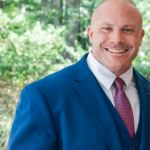
 Andrew Bolton is the CEO and Co-Founder of TechRescue LLC, a 24/7 tech support and cybersecurity company dedicated to helping seniors, families, and small businesses across the U.S. stay connected and protected. With a Harvard finance degree and a background in Wall Street and private equity, Andrew leverages his expertise to build a company that prioritizes people over profit—delivering real help from real humans in an increasingly automated world.
In his conversation with Trisha Stetzel, Andrew shared his journey into entrepreneurship and TechRescue’s mission to simplify technology while strengthening human connection. He highlighted the growing role of technology in helping seniors maintain social ties and independence, as well as the challenges younger generations face in developing essential life skills amid rapid digital transformation. 
Andrew also discussed the potential of artificial intelligence and the importance of human guidance in shaping its impact. The conversation concluded with his call for collaboration and a shared vision to adapt education and workforce readiness for the evolving technological landscape.
Follow TechRescue on LinkedIn.
 This transcript is machine transcribed by Sonix.
TRANSCRIPT
Intro: Broadcasting live from the Business RadioX studios in Houston, Texas. It’s time for Houston Business Radio. Now, here’s your host.
Trisha Stetzel: Hello, Houston. Trisha Stetzel here bringing you another episode of Houston Business Radio. Today’s guest is Andrew Bolton, CEO and co-founder of TechRescue LLC, a 24 by seven tech support and cybersecurity company helping seniors, families and small businesses across the US stay connected and protected. Andrew is a Harvard finance graduate with a background in Wall Street and private equity. He is building a company that puts people before profit, offering real help from real humans in a world overwhelmed by automation and disregard. Andrew, welcome to the show.
Andrew Bolton: Thank you. You know, you make it seem like I’m actually a very nice person. No, I have an Irish Catholic mother with a rolling pin with dents in it, so I have to behave.
Trisha Stetzel: Oh my goodness. I knew this was going to be a great conversation. I’m so excited to have you on. So, Andrew, you just gave us a little bit of insight into who you are, but tell us a little bit more about yourself, and then let’s dive into what Tech Rescue does for other human beings.
Andrew Bolton: Oh, let’s see, we can give it really quick. Uh, I went I went to school. I followed exactly what everybody said to do. I went to school, I went to work, I went to grad school. And then. Then what? Then Covid happened, and then, you know, everything else spiraled out of control. And then one day, just serendipity came. My father asked, how do you forward an email? And I said, dad, for Pete’s sake, and for everybody. I got a little show and tell my father God love him is 78 years old. He went to college at Hofstra back in the late 60s. Now, for anybody who doesn’t know what this is, this is a card system. This. You hear that? That’s paper. That’s paper, that’s cardstock. This is what a computer used to be for all of you people that don’t know what paper is, who’ve never seen paper. This thing used to be stacked in the thousands, fed through a machine, and these little itty bitty holes would then be programed into the machine. And then your calculations will be run based off of the sequence of the cards. Now, God forbid you misplace one card, Mr. Card. Miss, shuffle the card. These stacks were in the hundreds or thousands per equation, depending on what you were using it for. Now you can just ask Google or AI or anything else the same thing and it tells you in milliseconds. Yeah. That’s how fast we’ve come. Mhm.
Trisha Stetzel: Yeah. Yeah. Like lightning speed to get where we were not just 4050 years ago to where we are today. Yeah.
Andrew Bolton: So to give a perspective. If anyone has ever had their cell phone as a teenager, if you’re a teenager you grew up with a cell phone. You understand the ideal concept and what we would call relative speed of technology. Right. At a certain point, we have basically measured that technology advances every year by about five years now. So if we’re starting from the first sets of computers that were used to launch the moon, launch the rocket into space in the 1960s, every compounding year up until about the invention of the internet was on a granule linear basis. Mhm. When we went world, when we went connected we started jumping. And we’re now we’re about every five years in technology companies are outpacing themselves. That’s why we’re going through so much as we’re creating new prototypes of massive rates. Yeah. It’s no wonder seniors don’t have the ability to constantly keep up. We have AI, we have artificial. We have, uh, we have goggles. We have. We have complete systems in our homes that can surround us and make us feel virtually wherever we want to be. Mhm. You’re going to get lost in the shuffle. Yeah.
Trisha Stetzel: Absolutely. So we were talking about this before. Our seniors are actually a little more technical than we think they are. So let’s talk about that.
Andrew Bolton: So right off the bat, um, grandma and grandpa aren’t what we remember as Grandma and Grandpa. It’s not like going to grandma’s on your bike and going down and going down to the lake. And there’s the barbecue and the egg toss. No no no no no no. We’ve come to the age where that demographic, the great generation, um, those who served in the 1940s and 50s in Korea, they’ve slowly started going towards the assisted living facilities and nursing homes and stayed and, you know, end of care life facilities. So what we’ve seen is the shift of demographic that now what would be urban considered uncle and auntie are now grandma and grandpa. The average American female in the United States is statistically around 48 years old. And a grandmother. Wow. 48 years old and a grandmother plus 18. That puts you at.
Trisha Stetzel: Yeah. What year? 76.
Andrew Bolton: Exactly. Yeah. And guess what. I hate to say it with the fact that we have at home equipment access on Instagram, TikTok and Facebook to health and Jazzercise classes. And we kept keeping together. I know it’s cliche to say, but put 65 is not 65 anymore. 40? You know, 65 is 45 now. Yeah.
Trisha Stetzel: That’s crazy. And I can’t do math. So if anybody’s listening to the math that I was doing, don’t make fun of me. It’s okay.
Andrew Bolton: So what we’re seeing is the type of questions that we’re getting are video games. So we’re not really seeing, thanks to a lot of things in the news that, you know, thankfully, you know, children are not getting access, you know, out of school immediately. So a designated person has to pick them up, but usually a parent. So what we’ve seen is the uptick since even last Christmas, where it was almost 20% of the GDP was coming from senior from senior purchasing and technology is that seniors are buying video game consoles, and you can go to your local Walmart. A 65 inch plasma screen TV doesn’t cost no more than about $400 a PS5. You know, not the top end models, but, you know, a lower end model. A PS5 will cost you maybe 5600. So you get a couple of games NBA, uh, NFL, and we’re getting calls on how to connect to their to their player, to their player name. So now they’re connected online and they’re playing baseball together. So instead of I know it’s weird to say instead of actually going outside to play baseball, they’re keeping communication with their kids playing, you know, the rival games, you know, you know, Yankees, Yankees and Boston Red Sox. You know Molly, you know Marlins and White Sox. You know this is how we are connecting which led me to really dive into the numbers, is that at the end of the day? We as a species and we keep forgetting this part. We’re still a species. I know we have social media and we have opposable thumbs and we can send stuff into space, but we’re a species. We all share the same chromosomes and DNA at some molecular level. We’re all connected. We want to connect with each other. Yeah, at the end of the day, that’s all we want to do is just connect with each other.
Trisha Stetzel: So these seniors are calling you about video games. I’m dumbfounded. One that that they’re playing video games.
Andrew Bolton: I.
Trisha Stetzel: Love to I love to hear that they’re playing with their grandkids, though. This is cool. I like this connection right where these grandparents are able to connect with their grandkids.
Andrew Bolton: So Sniper Grandpa is one of the top players on YouTube. He’s been on numerous podcasts in regards to his subject matter, in terms of his service and, you know, his life experience and things like that. But he’s connecting with people around the world, and he’s one of the top shots on the internet. There’s, um, there’s Warhammer granny who, um, there’s a grandmother in the Warhammer community who’s who’s commanding a massive empire.
Trisha Stetzel: Oh, my gosh, that is so funny. So grandparents are getting younger.
Andrew Bolton: Age is just a number.
Trisha Stetzel: And technology is changing so fast. How how are you, Andrew? Keeping up Tech Rescue, LLC? How are you keeping up with assisting with technology when it moves so fast?
Andrew Bolton: Well, luckily they come to us. So we get we get straight from the front lines exactly what’s going on. Which is why our data, when we write articles on LinkedIn, We. We hand out our information. We’re not going to sell that data. Because when I was in grad school trying to find Ebsco host, you know, qualified data and articles was hard to do. And when we publish articles, we provide the data, you know, that can go along with what we see. So that allows maybe a grad student to basically come up with a new question. See, this is the part that where I get upset and I know I’m going to deviate from the subject for just for a quick second. Okay. Education is not about the facts and figures and numbers. It’s the ability that we have to be able to teach the next generation how to ask new questions. Okay. That’s it. All right. That’s education.
Speaker4: Yeah. Okay.
Andrew Bolton: We just have to ask different questions. So with that being said, the new question that we found ourselves is what’s the new senior? The new senior is up there. Mobile. They have they have fiscal spending. The average American consumer has $1,300 in subscriptions. Um, they are traveling more than any other demographic in our in our population, they’re traveling three times more than they ever have. And yes, believe it or not, even with fiscal uncertainty, this generation has been solid enough to be able to extend some of their equity lines of credit, whether it’s been home or portfolios, to help cover the cost of student loan debt. I believe I saw one part of the study said that 11% of almost all student loan debt being paid off is by grandparents.
Speaker4: Wow.
Andrew Bolton: There is this massive amount of opportunity with this demographic because they want to stay active. They want to stay connected. They are making it apparent that they want to and they want and they want to stay. They want to stay young and we want to stay connected.
Trisha Stetzel: Don’t we.
Speaker4: All? Absolutely.
Trisha Stetzel: So I’m I’m just going to throw this out there. My mom was a grandmother at 40. So I get this generational thing right where our grandparents are so much younger. And I think it’s really interesting how much tech comes into play here. And it’s because it’s all around us. It just is. You can’t you can’t walk ten feet without passing some kind of technology. Um, all right. So let’s go to the other side of things, the other end of the spectrum, and talk about youth in America and Tuck. And I know there’s a lot of discussions around faces and phones. So our grandparents are doing it and so are the youth of America. So tell me more about what you’re learning in that space.
Andrew Bolton: Unfortunately, some of the psychological studies are true. What we’re finding is that the data showing us being connected in such a way has taken away from human connectivity. So. I don’t want to be the doom. I don’t want to be that guy. But we have completely monetized human emotions, right? We have AI’s that have been utilized on sites like OnlyFans. And I’m not trying to pick the argument for OnlyFans. There’s a lot of different things out there, but we’re just going to use this as an example in the monetization world. You know, human interaction. And that’s basically what it is, is the marketplace for human interaction with, let’s just say, a theme now in these particular themes, whatever you want to call them, video games or in personal relationships, we’re still paying for it. We’re getting calls about how to send different payments and how to have these different prizes and gifts connected to certain accounts. So. Because we’re raising this post Covid group. Right. And this is where the data is getting really interesting because we’re still pulling it now, this generation from the class of 2020 to 21, when the lockdowns went into effect, the ones who graduated just about the lockdowns, they’re relatively fine. The classes of 2021 up until about 2025, We’re seeing that in terms of the spending wise, this group, in their most critical adolescent development years, have an interactive personally with each other. For example, in class, a 16 year old boy sits across from a 16 year old girl, hormones pumping throughout the entire classroom.
Andrew Bolton: That’s an experience that you get used to when you’re working in an office setting or you’re out in the real world, you’re surrounded by the same type of environment hormones. And now most people are not at that age. They’re even hotter. They’re even higher in terms of that scale. So for the first aspect, we’ve taken away that. Arena where we can practice interpersonal communication and interpersonal connections with each other in a real world setting. That’s the classroom. The second aspect, and I know it’s a funny way to talk about it, but you don’t learn the subtle hints of flirting on a camera. You don’t have that foot tapping your other foot, or that pencil rolling off to the side so you can come down and pick her up, and then you see the there’s none of that. So what we’re seeing is there’s this uptick in usage in all these other channels of communication outside of real life. Why? Because we we consequently built a funnel. We constantly, constantly built the funnel for it. We put kids in a classroom expecting that they were going to actually do schoolwork, and they were on their computers for, what, almost a year and a half, two years. Then we gave them another year and a half to come back to school if they wanted to, because then we were touch and go about it. So they spent 4 to 5 years doing what? Yeah. Okay.
Speaker4: Yeah. Uh huh. Huh?
Trisha Stetzel: Distracted by their phones?
Speaker4: Yeah.
Andrew Bolton: This is going to be a problem. Because sadly enough, in our line of work, in our business, we can’t hire. We get a lot of these applications to work in the call center. We can’t use any of them.
Speaker4: Mhm.
Andrew Bolton: The reason being is our call center is a hotline. We call it a hot. We call it a hot call. A hot call is anything frustrated tired cranky. You know all the wonderful things that you feel like because you can’t get the stupid thing to work. And I’ve tried a million times. Yes, dear. I’ve unplugged it. Re plugged it, turned it on, turn it off. It just won’t do it. We get those calls. That’s what we do all day long. It’s not. And I can’t blame them. It’s not their fault. We didn’t train them. We did not prepare them for life. Like. Excuse me. I’ve been waiting in line for 20 minutes. Um, how long does it take to pour a cup of coffee? We haven’t prepared them for that. And I get the resumes. I get the interviews. We have a problem. We have a problem. We’ve got about 37 million kids with no real skills. So one of the things that I think that this generation and we’ve been tossing around different ideas and trying to get groups together, is have the connection of these people, this generation that have lived through world two world wars, Korea and Vietnam. How do we get we have technology. We can talk to anybody on the other side of the planet. I can pick up my phone and call any one of the people that I know in Botswana right now, and they’ll pick up the phone. Couldn’t do that 20 years ago.
Speaker4: Nope.
Andrew Bolton: And and here, I’ll tie it in because I know you want to get to it. Ai. The genie is out of the bottle. Ai is out of the bottle. I’m sorry. It’s not going anywhere. We use it because when we’re taking a look at hundreds and hundreds and hundreds of calls and data, I can’t look at it fast enough, but AI can.
Speaker4: Yeah.
Andrew Bolton: Same with. Same with when we had the internet. The genie’s out of the bottle. So how do we make it work? And this is where I tied into the education. We have an entire country structured on an educational system that was rudimentary and hasn’t changed in almost 50 years. We now have the most powerful tool to have ever come into existence. Artificial intelligence. When I say the way that we need to do education now is AI can read everything that has been ever printed in human history in less than a minute. We have the answers. All of them. We have all the answers. What’s missing? The new questions. If we have all the answers that have ever been given in the history of the world, what? What do we not know? What we don’t know. We’re not. We now have common sense. This is. This is important. We are now in the dawn of the informational breakthrough age. Ai will break through quantum computing. Ai will break through diseases once we figure out how to ask the new questions. Think of it this way. Think of cancer.
Andrew Bolton: Think of every John Hopkins research paper ever done, every study ever done, every surgery ever done, every case, every looked at, every thing that has been ever done at John Hopkins read in 30s with a new question and boom! We now have the understanding of how maybe a cell turns malignant and now turns cancerous because we asked a new question, because there it is, across 500 different radial scans. We can now see it because we ask the new question. We are in the beginnings of the dawning of the new age, where we have all the answers. We’re at the end of the line. We’re at the end of the consensual mind of what do we know, right? Even Neil deGrasse Tyson said, we know what we know, right? We know what we know. We now have the most powerful tools since the nuclear bomb, the splitting of the atom, the splitting of the atom was in the 40s. This is the new one. This is how we change everything by not by doing the same thing, by asking a new question. That’s it.
Speaker4: That’s it. That’s it. We just saw the world’s problems today. Andrew. Yeah.
Andrew Bolton: And if you if you ask the right question, you might be able to.
Speaker4: Yeah. I love that I think that’s fantastic.
Andrew Bolton: So because we have everything we have created the tool to read everything that has ever been written. We have music being put on YouTube. Artists who don’t, who don’t even exist. Why? Because they have an AI who can sing. An AI who can make a beat. An AI who can make lyrics, an AI who can make drums and guitar and piano. We have it all. We are in the dawning of everything. We have AI creating painters and pictures and stories and content we have. But guess what? It still needs a human to guide it. It still needs a human to control it still needs a human to ask. That’s it. We are now with the most powerful tool that has ever been in existence since fire. Really, really and truly since fire with fire. We created communities. We gathered around the fire with fire. We were able to cook food with fire. We were able to explore because we were no longer afraid of the night. Fire was hot. Fire hurt. Fire burned. We controlled fire. Here we are. This is it. Ladies and gentlemen, this is the dawning of everything. Of everything to come. This is it. This. This next. Within this decade, 2020 to 2030. This is the cradle in which all of the next 100 years is probably going to be determined in every way, shape and form. Because with this tool, remember Oppenheimer, the movie? The moment that they solved that equation, they knew exactly what was going to happen.
Speaker4: Yeah.
Andrew Bolton: And the worst part about it is it’s inevitable because we can’t help ourselves.
Speaker4: Mhm.
Andrew Bolton: Which is why, as scary as that is to believe, which is why we exist as tech rescue. Because at the end of the day, as curious as we are to create these things, we still want to connect to one another. We still want to talk to one another. Really, at the end of the day, if we look at all the things that people call us about emails, printers, faxes, uh, Bluetooth, TV, everything, what is it really all coming down to? We play video games so that we can connect to a story so we can be part of it and be part of a community. We watch football because we feel connected to that community and that team because it represents something to us. We are a community, people. We are that and the moment. And this is why I laugh. And I cry a little bit too, when I see the news. It’s like we keep forgetting that as much as we want to admit it, when we don’t do, we’re not a solo people. We’re not solo species. We’re not sharks, sorry. We’re mammals we like. We like one another.
Speaker4: Like we do. We like it.
Andrew Bolton: Believe it or not.
Speaker4: Well.
Trisha Stetzel: And we and we thrive that way. And we crave to be around a community and have other people in our lives. And I know there are some people sitting listening to this today or even watching and saying, I don’t like human beings. Well, you know what? There’s a human craving to be around other people. And that’s just the bottom line. You can’t get past that.
Andrew Bolton: So I would say to somebody that does not like any person anywhere, any place, I would argue, who are the people that are hanging on the wall? And I would then ask, do you have everything delivered or do you still go to that one place? Because I guarantee you, it’s probably not because of the pie.
Speaker4: Nope.
Trisha Stetzel: It’s the people.
Andrew Bolton: It’s the people.
Speaker4: It’s the people.
Trisha Stetzel: Andrew. Oh my gosh, this has been such a such an invigorating conversation. I love everything that we’ve touched on today. There’s so much more that we could talk about. However, we’re at the end of our time. So can you give our audience the best way to connect with you?
Speaker4: Of course.
Trisha Stetzel: The best way to get in touch with Tech Rescue if they need help from your business.
Speaker4: Of course.
Andrew Bolton: You can call us at (855) 250-8586. 24 hours a day. Seven days a week, including the Super Bowl. Yep. I know, I’m a Jets fan. Leave me alone. We’re open. I’m hopeful. I’m hopeful. All right.
Speaker4: Leave me.
Andrew Bolton: It’s been it’s been a it’s been it’s been a long run. It’s been a long it’s been long. Or you can go visit us at. Io Oh, and I’ll leave it with. And I’ll leave with this. Technology is a beautiful, beautiful thing. We have been able to completely change the world. First, second and now going on third. Generational families who have come from wherever they have come from are able to talk to loved ones from around the world because we grew up in a time where to call grandma was like $0.90 a minute, or internationally it was like $1.20 something.
Speaker4: Mhm.
Trisha Stetzel: Yeah, absolutely. And our generation started moving away from home. Right. And now you hardly see people sticking around in their hometowns. They’re all migrating. We talk to see you’re going to have to come back on the show because there’s this whole conversation that we had before we started the show about.
Speaker4: Oh, I, uh, I.
Andrew Bolton: Gave I gave her some inside baseball that hopefully will get me on the show. I have to I have to keep it selling. See, ABC always be selling?
Trisha Stetzel: I love it, Andrew. Thank you so much for being with me today.
Speaker4: Thanks for having me.
Trisha Stetzel: Ceo and Co-Founder of Tech Rescue LLC. This has been so much fun. Can’t wait to have you back so that we can have yet another very interesting conversation.
Speaker4: Thank you.
Trisha Stetzel: That’s all the time we have for today. If you found value in this conversation, share it with a fellow entrepreneur, veteran, or Houston business leader ready to grow or your favorite senior. And be sure to follow, rate and review the show. It helps reach much more bold business minds just like yours. Your business, your leadership, and your legacy are built one intentional step at a time. So stay inspired, stay focused, and keep building the business and the life you deserve.














