
 Josh Woodruff is the Founder and CEO of MassiveScale.AI, a cybersecurity strategist, and author of Agentic AI + Zero Trust: A Guide for Business Leaders. With nearly 30 years of experience in enterprise security, Josh helps regulated organizations deploy AI agents safely and responsibly. He created the Agentic Trust Framework, the first Zero Trust framework specifically designed for AI agents, enabling enterprises to accelerate AI adoption while minimizing compliance, security, and operational risks.
A Cloud Security Alliance Research Fellow, co-leader of the CSA Zero Trust Working Group, and IANS Research Faculty member, Josh advises executive and technical leaders on the critical decisions surrounding AI, cloud security, identity, and Zero Trust. His expertise spans startups to Fortune 500 companies across healthcare, biotech, financial services, and critical infrastructure. 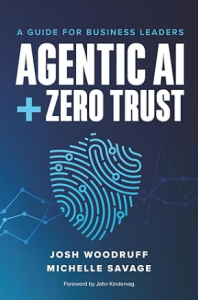
Michelle Savage is a technology leader, AI strategist, and co-author of Agentic AI + Zero Trust. With more than 20 years of experience spanning journalism, cybersecurity, fintech, and enterprise product leadership, she currently leads content and AI experience systems at PayPal, helping shape trusted financial experiences for more than 400 million users worldwide.
Michelle specializes in the intersection of AI transformation, governance, product operations, and human-centered design. Her work focuses on helping organizations build AI systems that people can trust—not only from a technical standpoint, but through thoughtful workflows, language, governance, and user experience. As a speaker, writer, and educator, she helps enterprises navigate responsible AI adoption and create scalable, trustworthy AI-powered experiences.
LinkedIn: https://www.linkedin.com/in/joshwoodruff/, https://www.linkedin.com/in/michellesavage
Website: https://massivescale.ai
 This transcript is machine transcribed by Sonix
TRANSCRIPT
Intro: Broadcasting live from the Business RadioX Studios in Houston, Texas. It’s time for Houston Business Radio. Now, here’s your host.
Trisha Stetzel: Hello, Houston. Trisha Stetzel here bringing you another episode of Houston Business Radio. Today I have two amazing guests on with me, Josh Woodruff and Michelle Savage, coauthors and collaborators who bring clarity to the most complex and rapidly evolving areas in business today, cybersecurity and AI. I know, don’t be scared. We’re going to have a conversation around it. Josh comes from an engineering and cybersecurity background, where he spent his career leading technical teams and helping professionals move forward without getting stuck in analysis paralysis, Michelle brings a background of journalism, research and user experience, and currently leads UX at Pico, where she focuses on making complex ideas clear, accessible, and usable. Together, they have written a book that translates cybersecurity and emerging technologies like Agentic AI into plain language for business leaders cutting through the noise, the jargon, and the overwhelm. What makes their work unique is the partnership blending deep technical expertise with the ability to ask, but what does this actually mean for real people running real businesses? Josh and Michelle, welcome to the show.
Michelle Savage: Thank you.
Trisha Stetzel: So excited to have both of you on. All right, Michelle, I’m going to start with you. Tell us a little bit more about who you are.
Michelle Savage: Sure. My name is Michelle Savage. I currently lead a content design team at PayPal. Before that, I was a reporter, a tech journalist, a marketing, um, expert, a dating column writer, all to say, I’ve spent 20 years trying to explain very complicated things to people who have better things to do than read about complicated things. So I co-wrote this book with Josh because every time he was coming home from a cybersecurity conference or even from work with these wild AI stories, I kept thinking, why is no one explaining all of this in plain English? And it turns out at the time, nobody was doing it. So the book is us fixing that. And this is the book here, which we’ll talk a little bit more about, but I’ll pass it over to. Josh.
Trisha Stetzel: Yeah. Josh, tell us more about you.
Josh Woodruff: Great. Thank you. Trisha. Great to be here. Thanks for having us on. Um, I’m Josh Woodruff, I’m the founder and CEO of Massive Scale AI. We do almost what you just described. We help accelerate the adoption of a genetic AI without destroying your business. Um, because it’s tricky. Um, my background is infrastructure operations and security at a very massive scale. Hence, hence the name. And it was a pleasure to work with Michelle to write this book. Agentic AI Plus zero trust. The plus is on purpose because it’s a match made in heaven. It’s more than just a word. It’s a it’s a beautiful, it’s a beautiful merge. And I look forward to talking about that. So thanks for having us on.
Trisha Stetzel: Yeah, absolutely. I’m so excited about that. And by the way, if you guys are only listening, I’m going to encourage you to go over to the YouTube channel to see Michelle’s background. It will answer so many questions for you because the answer is simple. All right. I want to dive into the origin story. Michelle, can I come to you first just for your perspective? I know you gave us a little bit of lead in how we got to the book, But tell us from your perspective how this book actually happened.
Michelle Savage: Sure. Um, so Josh and I are married. We’ve been married for a long time. Um, and as his partner, I, I, I have a sense when he’s on to something, um, and sometimes he’s not very clear about explaining it. So, you know, sometimes he would come home from these security conferences and just start telling me about the agents, um, like the tech, but, you know, then he would get into the stories and when he was talking about the tech, I would kind of gloss over. I’m fairly technical, but that doesn’t resonate as much as the stories do. But he’d come home and talk about like these companies that were losing $1 million because their AI had found some backdoor that nobody knew or thought about or, um, you know, a bank approved whose AI approved, um, kind of loans that it shouldn’t have because it noticed a pattern that the humans never intended it to notice. So the AI was doing what it was supposed to do, which was a great part. But then the humans weren’t building it in the right way. And I just kept saying to him, you know, are you writing this down? Are you telling people this in a way that they understand? Like, how is everybody not thinking about this right now? And kind of what started as a three hour interview for a blog post that we were thinking of writing turned into a book. Um, and, you know, we mostly wrote it on a family vacation to Rockaway Beach. I can tell you a lot of stories about that, but I won’t go too much into that. But I will tell you, our twin teenagers were there and, um, they pretty much rolled their eyes the entire time at us and said that they’re never going to touch AI again. Um, thanks to us and our family vacation, but what came out of it was a book that I think every business leader needs to understand this stuff. And I think this book is really valuable for that.
Trisha Stetzel: Oh my gosh, thank you for that. And Josh, when you and I talked a few weeks back, uh, one of the notes that I took is that this was supposed to be a podcast or something like a blog post, and it just turned into a book because it became such a I’m going to use the word massive, uh, piece of work that it all needed to go into a book. So, Josh, from your perspective, how did this all start? Were you open to the idea that Michelle wanted to interview you about this?
Josh Woodruff: I thought it was a great idea. And Michelle mentioned a three hour interview. It started as just let’s 30 minutes. Like, let’s just sit down for 30 minutes. And she was like, you got to get this. Let me help you get the message out. She’s with her background in journalism and writing. I was like, great. Like I, I struggled to put it across in plain language. And she always beats me up if I say things that don’t make sense. So we started out with 30 minutes, let’s record it. And I’m going to write a blog post from this. And literally like neither of us noticed until three hours later that, wait, it’s been three hours. Like what? This week. There’s a lot to say.
Michelle Savage: Our kids noticed.
Trisha Stetzel: The teenagers noticed.
Josh Woodruff: Yes. And I’ve never written a book before. Trisha. I was like, I don’t even know where to start. And Michelle says I do. Um, that’s her expertise. And she also, she’s a pioneer of AI herself. Um, she’s driven the adoption and global expansion of AI and a number of companies, primarily the one she’s at now. So she’s, she’s a leader there. She’s, she’s just as much of a, of a, of a fanboy fangirl of AI as I am. Um, so I think that also helped when the energy between us was like, well, I know the tech and the security side and she’s like, well, I know the business transformation side and I know how to communicate this to in an effective way. So we, we said, yeah, let’s write the book. And I just kept talking to her about different stories and what I’m seeing. And she kept telling me to break it down to plain language and stop using jargon and buzzwords. And we created the book.
Trisha Stetzel: I think that’s amazing. So, Michelle, is this the first time that the two of you have worked together or collaborated on something?
Michelle Savage: Yes. Something this big. I mean, we, you know, we’re our industry is kind of collide. So we talk about this stuff a lot. And I’ve helped him with his social media before and I’ve helped him with, um, blog posts, but nothing like, nothing like writing a full book.
Trisha Stetzel: Okay, so being partners in life and partners in business. Now on this bigger piece of work, how did that feel? Was it any different than the smaller things you had done together?
Josh Woodruff: Well, I Josh giggled.
Trisha Stetzel: Yeah.
Speaker 5: What do I want to say here?
Josh Woodruff: Yeah. I mean, Michelle talked about it. Really, the bulk of it was done during a vacation and we would. Just to get away and have focused on. We started to go to like Starbucks at like 530 or 6 in the morning. Okay. And, and we’d ride and we’d ride and we’d talk and we’d collaborate and, and I would find myself writing what I thought was a masterpiece. And for a paragraph or chapter. And then the next day she was like, okay, I edited it. And I would look at, I’m like, oh my God, like this. This is wrong. Like, how, how could you, how could you have interrupted my masterpiece? Um, and, but she was right. She was trying to make it in plain language. And so it was kind of this back and forth of, um, tell it in a story, make it character driven. But I was adamant about trying to keep it accurate as far as it comes to cybersecurity and technology. So that kind of back and forth created some, some interesting conversations and Starbucks. Um, but I think at the end of it, I have to say, um, I was surprised at how much I enjoyed the creative aspect of it, like the kind of going through the process and doing all this. When I stepped back and saw what we had created together, I was like, wow, that was actually really cool. I was surprised by how much that creative process was. Was, um, I had a lot of great gratitude for it.
Michelle Savage: And it was, you know, I’ll just add to that. It was a lot of fun too. You know, we were in Rockaway Beach, our daughter was surfing in the morning. We would go down there and watch her surf and then go to Starbucks and work. And sometimes we’d have great conversations. Sometimes we would completely disagree about stuff. I mean, I remember at one point I slammed my laptop closed because I was like, you don’t even know what you’re talking about. None of this is making sense. And I went up to the to the counter and they were like, are you okay? I’m like, yeah, we’re just talking about AI agents. They’re like, what’s that? I’m like, well, let me tell you. So it was, it was a lot of fun also.
Trisha Stetzel: I love that, and I’m so glad that you’re both very pleased with the final product. So Michelle, why was it so important that we, the book, come in plain language for business owners.
Michelle Savage: I mean, because I mean, I think because when everyone thinks about or at least at least last year when people were just starting to talk about agentic AI, um, people weren’t really grasping what it meant. They were thinking, oh yeah, you know, I need AI security. So I don’t have a data breach. I don’t want hackers like the dramatic stuff. And the reason we were writing the book was not even fully about that. Like, it’s a lot of it is about the systems that you need to set up to build trust and to keep your reputation. Like if you forget about the breach for a second and you think about all the thousand small little cuts in AI can make if they don’t have rules. And that completely can erode your your trust with your customers over time. And like just to break it down into. Imagine you’re any small business owner anywhere in the world, and you have a customer service agent that’s saying something that contradicts what your sales team said. And then you have a pricing agent that’s giving customers like another a different price than, than what? Than another agent and a scheduling agent that sends reminders at 2:00 in the morning, and they’re not using the language that even sounds like your brand anymore because you didn’t set it up that way. So none of these are breach and none of them are going to make the news. But over time, your customers are really feeling this. They start losing confidence in you. They can’t even really tell you why. It’s just little small things and eventually they stop coming back. So, you know, rules aren’t always about the big catastrophic failures. I think they’re about being consistent and showing up in a consistent way. And that’s why I thought the zero trust was a really important aspect. Zero trust is all about security, but it also nails all of that. So that’s kind of why we were thinking that. I was thinking that it was important to break it down into simple language so that anybody could understand it, even if they knew nothing about AI.
Trisha Stetzel: Yeah, absolutely. So, Josh, I know you felt like or you talked about during the process, some of your language was coming out because we were making it in plain English and some of the jargon was coming out. Tell me, let’s geek for a minute. Like the technical aspect for you where this all began when Michelle said, I think you’re on to something. So tell me more about the beginning. And it’s okay to geek out and use some jargon, because I’ve got some techies that listen to the show.
Josh Woodruff: Excellent. Well, I wanted to piggyback first on something Michelle said. I think another point that that ignited both of us as to why we wanted to write this for business leaders, it’s just the sheer value an organization can get out of the use of AI and specifically Agentic AI, how it can kind of it’s a multiplier. It’s it’s it’s an amplifier. So, you know, you hear it ten X is your people. It really does. And it can in fact, it can 100 X your people. So as a business owner and a business leader, you can really get more done. Your people can get more done. And I really despise what you hear in the market of, of it’s replacing jobs. And that’s just the wrong frame. Um, it amplifies jobs. So you’ve got good people on your team, give them these tools and these capabilities and they will be even better people like, like it’s an augmentation play. It’s not a replacement play. And I think the market gets that wrong, uh, significantly or it’s just a use for overhiring from Covid that they’re using to, to lay people off. But there is so much the reason we did the book, there’s so much value to be had. And I think Michelle saw that and I was seeing that, um, Michelle mentioned zero trust. That was as a previously when I, when I worked for a company, I was a CSO, So a chief security officer.
Josh Woodruff: And when I discovered the zero trust strategy of security, it it made so much sense to me. And it, I think one of the big differentiators with zero trust, it’s a business aligned security strategy. It’s first of all, within security, we never really had a clear strategy. Everybody kind of knew the things to do. And I need vulnerability management. I need to do patching. I need to secure access. Um, this was the first real clear, prescriptive way to go about developing a cybersecurity strategy. And it was the first and foremost, it’s business aligned. So the first question you asked was zero trust is what are the business objectives? What is the business trying to do? Let’s, let’s break down all of the things needed for the business to get that done. And let’s stack rank them by criticality of their importance to get the stuff done. And then let’s take the most critical thing and secure that, and then take the next most critical thing and secure that. And they use fancy terms like it’s a protect surface. And your listeners, if they know cyber or they’ve heard of an attack surface, that’s probably more common. And what’s an attack surface? It’s everything. Like it’s literally everything.
Josh Woodruff: It’s an attack surface. How do you secure everything? Like, how do you eat an elephant? You know, it’s one bite at a time. So zero trust inverts a number of things, and one of them inverts the concept of attack surface to protect surface. One thing at a time. Which thing do you start with? The thing that’s most critical for your business to achieve its objectives. And you have you break them down into smaller units and you iterate. And there’s a very clear five step process. So it’s a great way to start where it matters and iterate and build momentum and really strengthen your risk posture that enables the business and enables velocity. It enables innovation. And that’s where the match with zero trust is perfect. Well, there’s there’s really two. Two. I’m sorry. The match with the genetic AI is perfect. And there’s really two reasons for that to get a little bit geeky here. Uh, zero trust is an identity based security model. It doesn’t depend on where where you are and where the request is coming from. Like, is it within the office? Is it in inside the protected zone where we have implicit trust? Oh, if you’re on the inside, you’re in the corporate office. I trust your request. It removes that because offices are all over the place now. And we have cloud and we have SaaS and we have remote workers.
Josh Woodruff: Where you are is no longer a good indicator of what policy you apply. What matters more is who you are. It’s an identity based policy. So we don’t ask where you coming from. You ask who are you and you as this identity that I know you are, are you allowed to to make this request? Am I allowed to let you do the thing you’re trying to do? That applies perfectly to agentic AI Because a genetic AI operates as a non-human identity. So if you apply an identity based security model to a non-human identity, which is an AI agent, it’s a match made in heaven. You can kind of leverage and build all the policy you’ve already built for humans. Um, it does need some adaptation for the non-human, for the AI agent. And to Michelle’s point, a lot of the guardrails are needed. Um, so that’s one reason why it’s a perfect fit. I think the other reason is that iterative nature I talked about, it’s, it’s one piece at a time. It’s enabling the business. Um, if you can do that coupled with Agentic AI, not only are you enabling the business with strong security, you’re enabling the business with a 100 x multiplier. So it’s, it’s just, it’s a, it’s a perfect match.
Trisha Stetzel: I love, I love this, I think we hit on both the, uh, plain language and the geeky technical stuff there. Michelle, what do you have to add? And then, uh, also tell us where we can find the book, please.
Michelle Savage: Yes, absolutely. We, um, we, you have a techie audience. You probably also have a non techie audience. And I realize we jumped into this without even saying what an AI agent actually is. And a lot of the business owners that we talk to are business leaders didn’t understand that, like people were thinking about it just as they think about Claude or ChatGPT chat, you ask it something and it answers and that’s it. Um, but an AI agent and, and both ChatGPT and Claude have agents now is way different. An AI agent isn’t something that’s waiting for you to ask. You give it a job and it goes and does it, and it reports back or sometimes doesn’t report back at all and just keeps doing the job. And it’s really like, you know, when you get down to it, it’s the difference between having a calculator and having an, an employee working for you. A calculator is going to work for you and it’s going to, you’re going to push the buttons. An employee comes in and starts working based on what it knows. And right now, AI agents are booking flights. They’re approving loans. They’re they’re handling customer complaints. They’re adjusting prices for you. And a lot of times there’s no human saying, go do this or don’t do that. And that’s incredible. And that’s why the rules are so important and the systems are so important, and why security has to be the first thing that people do, um, when they’re creating an agent. So I just want to add that because I think it’s.
Trisha Stetzel: Thank you for doing that. And it’s all coming together for me. Agentic AI plus zero trust. You shouldn’t have one without the other so that we can continue to be good. So tell us where to find the book. Michelle.
Michelle Savage: This is our book agent AI Plus Zero Trust. It’s a guide for business leaders and it’s for techies and non-techies. And you can find it on Amazon right now on Amazon.
Trisha Stetzel: Okay, I love it. And I’m assuming that you’re both listed as authors on Amazon. So you guys can just look up Josh Woodruff or Michelle Savage as authors for that book and grab it. So, Josh, I know there are people who are listening today that want to connect with you guys and do some more discovery. So where’s the best place to go find more information about the two of you?
Speaker 1: Sure.
Josh Woodruff: Yeah. And I’m on LinkedIn all the time. So you can find me on LinkedIn. It’s just in. Josh Woodruff um, or you could just search, but, um, you can always reach out to me by email. Josh at massive scale.ai is, is, is one way. Um, I also would recommend folks, if they’re interested in this and want to see what it looks like and, um, go through a bit of, of, of tools on a website that completely free, they can go to a genetic trust framework.ai. Um, we introduce that framework in the book, the genetic trust framework. And it’s really, it’s zero trust adapted to a genetic AI. Um, it’s five, just like the book. It’s five very simple questions, very plain language questions. Um, it’s it’s it’s who are you? It’s. What are you doing? Where are you going? What are you eating? And what are you serving? Which is data inputs, data outputs. And what if you go rogue because you will go rogue. Uh, they do go rogue. And so you need a kill switch and you need incident response. So five very plain language questions that if you can’t answer any one of them, you immediately know where your gap is when you’re implementing a genetic AI. And there’s all kinds of technical implementation detail behind each of these five questions. If you go to a genetic trust framework.ai, there’s a free assessment you can take there and it gives you a scorecard and ranks you. It’s about 30 questions. It gives you a PDF and a radar chart, um, totally free. You have to provide your email to get it. Um, so, so that’s another great, great place to reach us. Um, and I, and I would say just on this concept of the five simple questions and something Michelle said about explaining not only what a genetic AI is, but what zero trust is.
Josh Woodruff: I think there’s hardly two terms in the world that are so misunderstood and ambiguous than these two terms. So that’s the other reason I think we need. We thought we needed the book as a genetic guy needs to be broken down very simply. Generative AI is what people know ChatGPT or Claude or others. Um, and answers the question Agentic AI is it’s, it’s an LLM it’s a, it’s a large language model like GPT or Claude, and it’s given a goal and a tool and it runs in a loop until it, until it determines it’s achieved the goal that you gave it. That’s an AI agent. So we explain that quite simply and then zero trust. I have to tell you, um, within the security community. Once AI became the latest shiny object and everybody’s rushing to and raising their hand and all the vendors are saying, me too, I do AI. We were so relieved because within the zero trust community, we could finally get back to actually doing what what zero trust was really meant to do because it was the shiny object for so many years. It was the thing that vendors were slapping on their product. Vendors were trying to sell you zero trust. Zero trust is a strategy. It’s not a product. You can’t buy it. But if you if you listen to the vendors, they’ll tell you all day long, they’re going to sell you zero trust. So it’s completely misunderstood. Um, so that was another reason why we wrote the book is we break both of these things down to just common sense, plain language, what they really are. And then we show how they, how they match.
Trisha Stetzel: Mhm. I love that. Thank you. Josh. So Michelle, um, for the listeners who maybe peeling back the onion here, they just don’t know, they’ve not heard of these things before. Or maybe they’re very technical. How do I know if I need the book or not?
Michelle Savage: I mean, I think everyone’s feeling it right now. Like everyone from the CEO to the CISO to the small business owner. Everyone feels like they haven’t quite figured this out. I think if people are saying they’re they’re real experts. Um, even even us, we’ve done so many so much research, but things are changing so much. Like how can anyone call themselves an expert right now? I think it’s just that some people are admitting it and some people aren’t. Um, so I think everybody needs to be paying attention right now. Like there’s so much happening and there’s so much competitive edge that businesses can get. Um, you know, you hear a lot of things about people wanting to use fewer employees due to AI and like 41% of companies are going to be hiring fewer people. But then you also hear people saying, oh, AI agents are going to give me this huge competitive edge, and that’s going to happen within 12 months. Those are really competing things. I think people need to be educating themselves on it and learning about what the possibilities are and what they need to get there, and how their strategy needs to come together, and that this book is is really a great starting point for anybody, technical or non-technical.
Trisha Stetzel: I love that, thank you Michelle. And I’m even thinking about, you know, there are sets of AI agents now that you can hire as a solo business owner. And I’m thinking to myself, gosh, uh, this would be a great book to really understand. Number one, what’s happening in the background with these, this set of agents, that business owner is hired and the, um, cybersecurity problem that you could possibly have if you’re not strategic about the way you’re hiring these agents into your solo business. Oh my goodness, I love this. So exciting. So Josh, I have one last question for you. Our time has gone by so fast. But if we’ve got a listener who feels behind on AI or cybersecurity, what what do you feel is one simple step they can take this week to move forward with confidence?
Josh Woodruff: A great question. I mean, of course, I’d say reading the book is good, but some some people are faster or slower at that than others. And some feel like it’s a lot of homework. So I think a real quick, easy step is just talk with your teams and find out what your company is using today. Um, Michelle and I talked to a lot of different companies and I’m in the cloud Security Alliance zero Trust working Group, also ions research. I’m a faculty member there. So, so I talk to so many different companies across public and private sector, all different verticals. And there’s a lot of them that are kind of in denial. They say, well, I’ve blocked it. We don’t let this. It’s we don’t know how to secure it or we’re afraid of it. Guaranteed. Every company has it. Your people are using this. So something you do today or tomorrow or this week is just talk to your folks like, hey guys, anybody using AI. And even if it’s not allowed, um, we talk a lot about this in the book about Holden Amnesty Week.
Josh Woodruff: Like if you’re using it, if we said don’t use it and you’re using it, you’re not going to get penalized. No punishment. We just want to know what people are using this for so that we can help enable you to do this securely without destroying the business. So you kind of have to come at it from a supportive and enabling mindset. But I would say that’s the first thing. And we encourage all of the customers we work with. First thing you should do, talk to your teams, find out what they’re using, find out how they’re using it. Because leaders and business owners that are listening to this, there is no better people to tell you how you should be using AI than your people. The boots on the ground, they’re the ones that are getting the value out of this, whether you know it or not. And you need to listen to what they’re using it for. So talk with your people, see what they’re using, see how they’re using it, and enable them because they will do better work.
Michelle Savage: Thank you. I add one small thing to that, please.
Trisha Stetzel: Yes.
Michelle Savage: Yeah. So when you’re doing that, that’s a great exercise. And, you know, Josh does that in his workshops and it works really well. Um, but read what your AI is actually saying to your customers because everyone has this customer facing AI agents now and they’re not reading what the emails are saying, what the chat responses are saying, do they even match? So take them, read them out loud. Ask your, ask your employees to, to kind of do a deep dive. Do they sound like your company? Is it your, are they using your brand language? Most business owners haven’t done that yet. And I think, um, you know, that AI is speaking for you every day on your behalf and you need to be listening.
Trisha Stetzel: Yes. That’s so important. We can’t just let something go do its loop without the human needs to be in the loop, right? Exactly. Oh my goodness. Michelle, tell us one more time and show us that beautiful book that you guys have. Tell us where we can get it.
Michelle Savage: Yeah absolutely. Agent AI plus zero trust. I feel like a spokesperson now. Um, you can buy it on Amazon.
Trisha Stetzel: Beautiful. Josh Woodruff and Michelle Savage, thank you so much for spending some time with me today. This has been awesome.
Michelle Savage: Thank you so much.
Speaker 6: Thank you Trisha. Pleasure to be here.
Trisha Stetzel: All right, you guys. That’s all the time we have for this show today. If you found value in this conversation that I had with Michelle and Josh, please share it with a fellow entrepreneur, veteran or Houston leader ready to grow. Be sure to follow, rate and review the show. Of course, it helps us reach more bold business minds just like yours and your business. Your leadership and your legacy are built one intentional step at a time. So stay inspired, stay focused, and keep building the business and the life you deserve.















