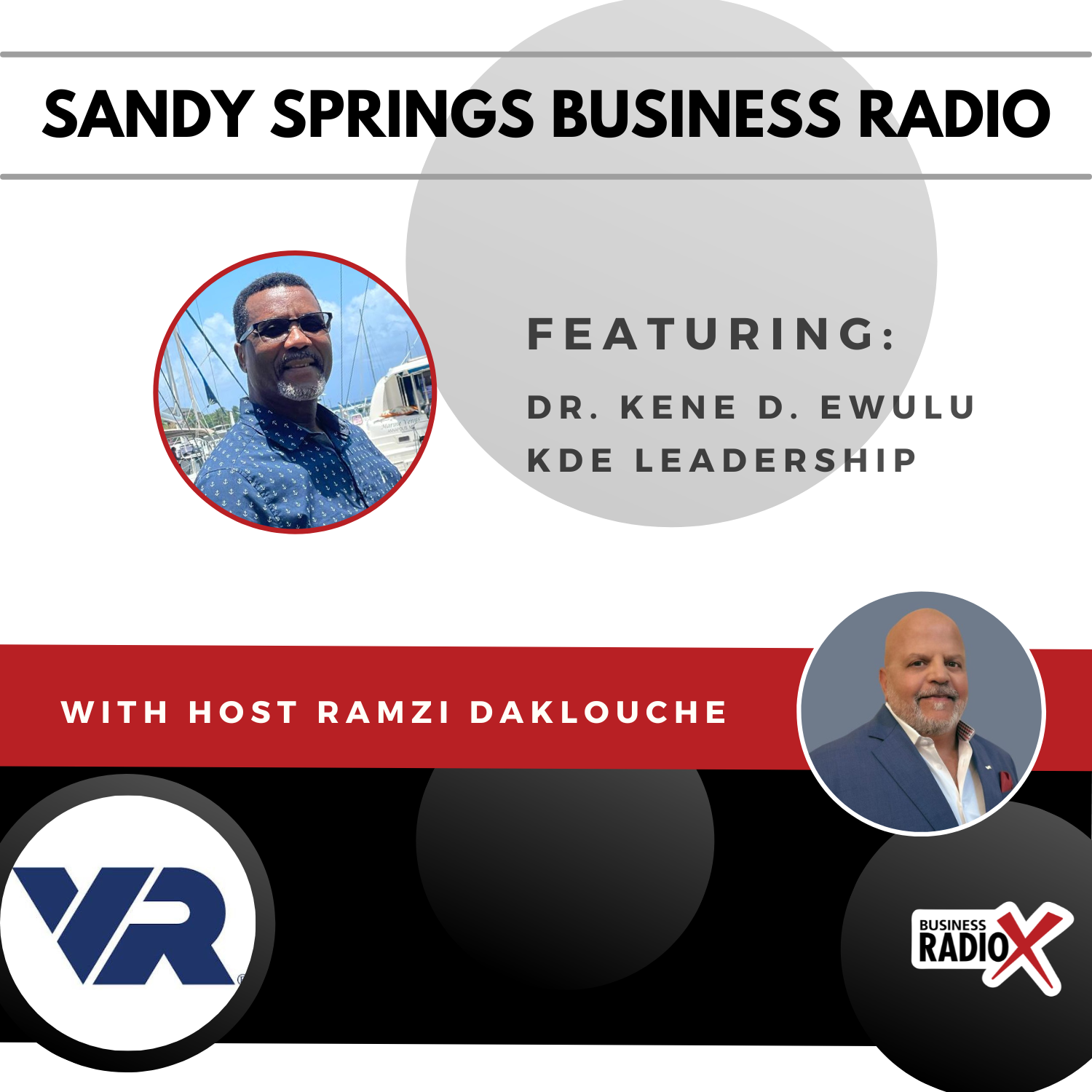

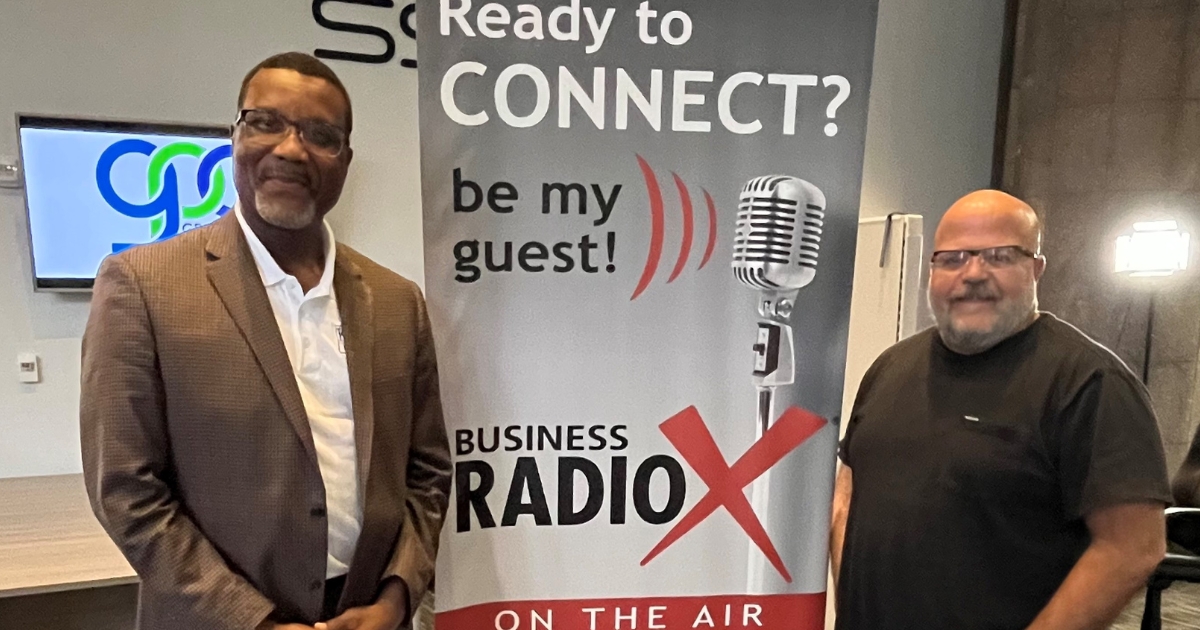
On this episode of Sandy Springs Business Radio, Ramzi Daklouche interviews Dr. Kene D. Ewulu , an expert in organizational leadership, project management, and coaching. Dr. Kene discusses his extensive background in architecture, project management, and academia, offering insights into effective leadership and the evolving post-COVID work landscape. He introduces his accelerated Project Management Professional (PMP) certification program, which condenses the traditional five-year timeline into 17 weeks. The conversation also covers the importance of cross-training, hybrid work models, and lean management principles.
 Dr. KD Ewulu is the CEO and Lead Coach at KDE Leadership.
He has been an architect in Africa, since the 80s, a sales professional in the UK in the early 90s, and a registered architect, project manager, professor of leadership and project management, trainer, author, and public speaker for the last 20 years.
He possesses an EdD in Leadership, an MBA in Management, Bachelors and Masters degrees in Architecture, a sustainable design credential LEED-AP, and a Project Management Professional certification PMP.
Dr. Ewulu consults for many companies in the leadership training space, one of which is Pryor Learning, since 2019.
Connect with Dr. Ewulu on LinkedIn and Facebook and follow KDE Leadership on Facebook.
 This transcript is machine transcribed by Sonix.
TRANSCRIPT
Intro: Broadcasting live from the Business RadioX studios in Sandy Springs, Georgia. It’s time for Sandy Springs Business Radio. Now, here’s your host.
Lee Kantor: This episode is brought to you by V.R. Business Sales, Atlanta, guiding business owners and buyers through successful transitions with trust and expertise. Visit Vrbas world.com or call (678) 470-8675 to learn more. Now here’s your host, Ramzi Daklouche.
Ramzi Daklouche: Thank you. And oh my God, this episode of Business RadioX Sandy Springs is going to be amazing. I have someone that resume is bigger than the Atlanta Journal Constitution. Dr. Kene. Dr. Dr. Kene welcome to the show.
Dr. Kene D Ewulu: Thank you. Ramzi.
Ramzi Daklouche: How are you today?
Dr. Kene D Ewulu: I’m very well, thank you.
Ramzi Daklouche: Good. Listen, I’m not gonna try to mess up what you do for a living or what you’ve done or your background. So why don’t you kind of give us just a very short version of what you’ve done, where you are right now, and what you’re up to?
Dr. Kene D Ewulu: Okay. My name is Doctor Kene. My doctorate is in organizational leadership. I’ve been an architect and project manager since 1987. I’ve led design firms in in Africa and in the United States over the last 30 years. Basically, apart from being a project manager, I rose up to become a principal of an architectural firm in Columbia, South Carolina. And that was in the mid 2000. And since then, I went back to school to learn how to run a company, not just being a great architect or a great project manager, but I needed to learn how to run a company. And so I went back and did a doctorate in leadership, and that took me straight into academia. I became a professor teaching organizational leadership and project management. I’ve done that for ten years. But I realized something that while I was a professor, I was basically teaching students who just wanted to get an MBA and get a job for me to impact the corporate world. I needed to talk to train and coach decision makers, and that’s what took me into the coaching field. I’ve been doing this for about nine years now.
Ramzi Daklouche: Awesome, man. I’ll tell you, that’s very impressive. Especially different continents, not countries, continents you’ve been in. This is really amazing. So how does how has your diverse experience in architecture, sales and academia shape you shaped your approach to leadership?
Dr. Kene D Ewulu: Well, architecture was an eye opener. Okay. You go in there, you’re artistic, you’re creative, and you think that that’s all that is required. But as a budding architect, you realize that you have to be a successful Social minded business person, and that means you got to mix well, meet people earlier on while they still had dreams in their minds, and you were able to articulate those dreams and convince them that you’re the guy to put their dreams into reality. And so there’s just so many other skills that architects don’t realize they have to have in order to, to survive, in order to thrive. And so I learned that halfway that not just being an architect, but being able to sell yourself, being able to let people know exactly what it is you do and how you can bring value to their own initiatives. That’s what it takes to be an architect. And of course, getting into academia opened up the theoretical aspect because you see, yes, we all know that experience works well. It’s good to be practical, roll up your sleeves and get in the trenches. However, if that is not backed up by theoretical knowledge, then you have a problem. You’re shallow. So a mix of that makes me more. I’m ready to jump into the trenches. I’m ready to educate, to mentor, to train. I’m ready to research and I’m ready to collaborate, whatever it takes to get a great, uh, outcome. I’m ready to do that.
Ramzi Daklouche: It is very interesting what you said. So if you just practical knowledge is always good, you have to have it. You have to have the will, the, the, you know, the the ability to kind of get the work done, but without the, the theoretical knowledge, it really is shallow. Can you tell me more about that? Because actually that point is very, very important. I see a lot of a lot of business owners, small business owners end up being technicians in their business. They’re really good, but without the knowledge, they really fail miserably in growing the business or actually maintaining the business.
Dr. Kene D Ewulu: Yeah, correct. So that segues into leadership. Uh, because if you don’t know, you can’t teach what you don’t know, okay. And some people have promoted themselves to what is called their level of incompetence. They’ve gotten so high right now that it’s obvious that they don’t know how to articulate themselves or bring value to their clients or to their customers because of the fact that they’ve been over promoted. They can’t bring value on the level they are at.
Ramzi Daklouche: Yeah.
Dr. Kene D Ewulu: Okay. So that segues into the topic of leadership because that’s a different ball game altogether.
Ramzi Daklouche: Yeah. So in leadership what have you seen? I mean you’ve been in it for a long time now. What have you seen lately in the business environment. How how how do you define leadership in today’s business environment?
Dr. Kene D Ewulu: Well, Ramzi, in simple terms, I would say that leadership is the art of getting others to do what you want them to do. Now, that’s not manipulation. That’s just understanding what you need to get done and how to approach people to get them to willingly work with you to do those things. Okay. And that means understanding each person. And, you know, we’re all different. You’ve got to understand the keys to each person and give them what they want individually to get them to willingly give you 100% of their time and energies. That is leadership.
Ramzi Daklouche: So can you give me an example? You know, in your past or maybe leader you work with? Without mentioning name, of course. And that transport organization, what do they do? You know, what was the outcome?
Dr. Kene D Ewulu: Well, I had a leader who he actually did employ me in a large architectural firm in Dallas, Texas that was maybe in the mid 2000, and he was a director of project management. And when I got to the interview, funny enough, I didn’t make it. They weren’t going to employ me as a project manager. And as I got downstairs, he called me up and he said, come on up. I saw something on your resume I want to talk about. And I came up and he said, it says here that you’ve got excellent listening skills. What are listening skills? And so. Well, knowing that I had an MBA forever, I sat down and I gave him a treatise on listening skills, and he said, I’m going to talk to management. I want you in my team. And that’s how I got that job. And then I became his Errand boy, so to say. The company didn’t want me. He insisted on having me. So I became his assistant. And so I had a run of most of the great projects in the company. And what I noticed there is each time I go to talk to really big people, owners of large shopping malls and all that, I’m talking of hundreds of millions of dollars worth of property.
Dr. Kene D Ewulu: This guy, everything. He said the client took it on face value. He was honest. He was forthright. He was vulnerable. If he didn’t know anything, he would say, let me research on that. I don’t know that. If he tells you it’s going to cost X dollars, it’s going to cost X dollars. I just watched him operate. He doesn’t operate. He was just genuine. He was just himself. And I said, I got to be like this guy. So I modeled my way, my life to him. And I did what he told me to do when he realized that I needed to find my way through project management and get a get a PMP certification and what have you. He said to me, this is the way to go. And I went that way. And we’ve been apart for maybe 15 years now. But each time I crossed a milestone, he sends me a message on LinkedIn. He says. I knew I was right. My gut instinct was right. I was right about you. They were.
Ramzi Daklouche: Wrong. That’s awesome. You know, one thing you said about that leader that resonates with me is, you know, saying, I don’t know. Let me research that. Right. A lot of leaders are afraid of saying that out of confidence, right? Confidence issues stops them from saying, I really don’t know. I don’t have the answer. I’ll find out and let you know, or I’ll find somebody that can help you with it instead. So that’s that’s actually a very genuine leadership. Very genuine leadership.
Dr. Kene D Ewulu: Yeah.
Ramzi Daklouche: Very good. So let’s talk a little bit about can you share an example of a leader who transformed an organization and then especially post Covid post Covid.
Dr. Kene D Ewulu: Okay. Um, well post Covid, I would say I don’t want to sound.
Ramzi Daklouche: Things changed a lot since.
Dr. Kene D Ewulu: Covid. I don’t want to sound arrogant by saying I’m that leader, but I want to say that post Covid, a lot of things changed. Number one, a lot of people who were let go or who went home away from work during Covid didn’t return. And so most organizations right now that I get to coach and talk to are forced to do more with less resources. That means they don’t have enough people to do the work, and their people are stretched and are forced to wear many hats to get the work done. So what I see here is how can you get a lot more done with fewer resources? The first answer to that is cross training. You got to cross train your people in different departments so that they learn enough about different aspects to be dangerous.
Ramzi Daklouche: And make a more valuable action.
Dr. Kene D Ewulu: That’s right. Cross training is very important. Number two, you got to give them flexible working arrangements. A lot of leaders are so rigid. This is how I do things and that’s it. You’ve got to give them flexible working arrangements, because when you make them happy, they’re going to work very, very hard for you off the clock. They’re going to work very, very hard for you when you’re not there wielding the big stick over them because they’re working from home. When they forget something or they are behind schedule, they can crack up their computers at 3 a.m. in the morning and get some work done without telling you. Hey boss, I did some overtime.
Ramzi Daklouche: But is there a balance between that? Like a lot of companies now trying, especially with the government now saying everybody has to go back, uh, you know, not remote back to the office. Is there a balance between remote and, uh, is there a hybrid model that works best?
Dr. Kene D Ewulu: Yes, there is a balance. And I want to take us back to the to the inception of remote work. And that started with the big guys. Okay, the Microsofts and the apples and the yahoos way back 15, 20 years ago. Well, they’ve had ten, 15 years to try that model out. And now in the last five years, they’re asking their people to go back to the office. It’s data driven. There’s a reason why. Okay. Uh, if you’re a great supervisor, you can get the best, some of the best out of your people by supervising them remotely. However, most people who work from home cannot twiddle their thumbs. Okay. They give you six hours work for eight hours pay, and there’s no way you can know what’s going on. So I like the fact that there’s got to be a hybrid. Some people have to go back to work. There are people who can’t even work. Hybrid manufacturers and plants and what have you. Can’t work from home. Okay. They’ve got to go into the plant. Okay. So there. There’s just a group of people who can work from home or can have a kind of a hybrid type of style where they can work two days from home and three days right in the office. There’s got to be a balance. Moderation in all things. You can’t swing from one end of the extreme to the other. You’ve got to somehow find a balance that works.
Ramzi Daklouche: Yeah, you know what? That will take us the next thing we’re going to talk about. But actually, to get that done in a big organization, guess what you need. Project management, which takes me to the next subject we’re going to talk about. You’re an authority in project management, and right now you have, uh, you know, in your. On your site, in your company, you really try to work very hard to make sure you develop. That project management and help people get the project management. And it’s very, very important. What is, you know, what’s your take on it? What what does it benefit professional. Right. Some of. Some people are born project managers. Right. They’re very organized. Right. But it’s not as easy as. That so in your point of view what’s PMI. How does it work. Why is it so important.
Dr. Kene D Ewulu: Well project management is first of all everything is a project. Anything that has a start date and an. Ending date and takes resources is a project. And because of that, you’ve got to manage your resources. Optimally. Very well. So the motto for my business is to optimize your potential. It’s not maximize. Optimize is a higher level of, uh, of maximization. That means you’re getting more than the best. Out of the resources you have. How do you do that? By what we call resource reallocations. These are things. Basic standard techniques in project management. Okay. Um, you talked about the PMI. The PMI is an acronym for the Project Management Institute. It is the world’s largest, uh, project management organization. It’s been around for 50 something years. And they certify all sorts of project managers. I don’t want to start using the acronyms here, but I’m going to use it quite a few of them as we go on.
Ramzi Daklouche: Absolutely. Sure.
Dr. Kene D Ewulu: You know, so basically, uh, apart from being part of the project management institute, um, they have two sets of things. There’s what is called the ATP, which is the authorized training partner. These are organizations. They have the ATP, which is a authorized training instructor. The instructors work for the partners. The instructors are individuals and they work for the organization. The organization is the one tasked with certifying people. The instructors are the ones tasked with teaching those people to be certified. However, the certification and the, uh, the permission to do that belongs to the instructor. The instructor can’t do his job without being attached to a partner, and the partner can’t train people without having instructors work for them. So it’s a symbiotic relationship. Okay. Now, in my company, which is called leadership. Um, I’m I’m both an instructor and my company is a partner. So this way, not only can I work for my company to train project managers, my company can also, uh, engage the services of other instructors in different fields in order to train project managers wishing to certify in different aspects. For instance, there’s a waterfall style of project management. There is the agile style. Then there’s a hybrid. Okay, the combination not every instructor is certified to train people in the agile. Not every instructor is certified to train people in the waterfall. But there’s a blend. And right now, they are all coming together. The Project Management Institute is insistent that all training has to be both of them together. So I am not just certified in the waterfall style, I’m also certified in the agile style. Otherwise, you’re going to get obsolete.
Ramzi Daklouche: Well, it’s like a one stop shop. So tell me about tell me more about this. What are you doing and how are you trying to get the word out about. I mean, everybody needs a project management, and I believe, you know, like you said, in essence, of everything you do in your life is project manage, right? It just depends at what point you need to be certified project manager. So how are you working with project management training right now? What’s your program look like?
Dr. Kene D Ewulu: Well, right now I have a pet program. Two years ago, I ran a an entry level certification program called the Certified Associate of Project Management. That’s an entry level for rookies, interns coming in who want to certify and get a leg in the door of project management. Okay, so I ran that successfully this year, this March, starting next month, I’m going to be working with, uh, certifying project management professionals with Pmps. Now let me break it down. The PMP is the most recognized project management certification in the world. There are over 120,000 Pmps in the world. They are so sought after. All right. Just by getting a PMP, you can get a 36% increase in your salary or you go somewhere else. Your bosses know that. Your employers know that. Okay. So most employers are in a rush to certify their internal project management practitioners. Otherwise they certify themselves. They’ll go away to greener pastures. So there’s a big market for pmps out there. Unfortunately, the PMP will take you five years to get certified, and it will cost you in those five years and upwards of $9,000 to get it done. So what I have done right now is to find resources to get it done in 120 days. Online, it’s going to be a 17 week crash course, very intense in less than 120 days and at a cost a fraction of the cost of $2,500.
Ramzi Daklouche: So hold on one second. Something that takes five years.
Dr. Kene D Ewulu: Yes.
Ramzi Daklouche: It takes 17 weeks.
Dr. Kene D Ewulu: 17 weeks to get it done.
Ramzi Daklouche: And how many hours per day is that?
Dr. Kene D Ewulu: It’s just 1.5 hours per night.
Ramzi Daklouche: Oh my God, are you.
Dr. Kene D Ewulu: Serious? A week, once a week. And it’s virtual. It’s online. So anybody from any part of the world can get enrolled in this program. Jump on it. And by June the 25th, you’re ready to take your PMP exams. It’s called a fast track. It’s not a bootcamp. There’s a difference.
Ramzi Daklouche: So can we back up a little bit because it’s very important. Very interesting. So right now, people in companies, right. They work in big companies or medium sized, whatever it is, size companies, even small size companies, right, that are working on projects, whatever project that is. Right. Everything they work on is actually a project. Anything after strategy, even strategy becomes a project to execution. Correct? You know that from literally anything. It doesn’t matter architect or business, sales or whatever it is.
Dr. Kene D Ewulu: Construction people, health.
Ramzi Daklouche: Health.
Dr. Kene D Ewulu: Health people.
Ramzi Daklouche: And so many of them right now are really working with systems and maybe lacking. Right. And they don’t know what they don’t know. So if they go through 17 years and I know it sounds like an advertiser, it’s not an advertising, I’m shocked. You go from 17, you go from five years to get your PMP, which some of them do, I’m sure to 17 weeks. And you can actually even either the company that you have appreciates you or you get appreciated somewhere else.
Dr. Kene D Ewulu: That’s right.
Ramzi Daklouche: And you can actually say PMP certified, you can.
Dr. Kene D Ewulu: Once you know you have your you have the PMP appellation behind your name. Once you say like I’m Doctor Kene on the side PMP. Once you see that PMP, they know you are the apex of project management and you’re sought after and they better give you what you’re looking for. So when you talk about 17 weeks, it sounds as if it’s um, um, it’s it’s a fairy tale, but there’s certain things that cost you five years. One of those is you got to demonstrate 7500 hours of verifiable project management experience. That means you got to get people that you’ve done projects for in the past to sign off, that you’ve done those 7500 hours. Do you know how long? 75 hours, 7500 hours of project management will take you to, to to verify.
Ramzi Daklouche: A.
Dr. Kene D Ewulu: Whole lot? That’s between 3 to 5 years. That alone? Well, I’ve been pursuing the authorized training partner designation for my company, because once you get that and you run a course, anybody who successfully goes through that course automatically gets that 70 500 hours of project management experience.
Ramzi Daklouche: I don’t even want to ask how you got that, but I really have to ask because I’m curious. Because for me, anything that takes, you know, shortest distance to success is really very important as well sometimes. So how do you get that? Okay. I’m going to ask a question. You may not be able to answer it, but like, you know, how do you get from I have to have 7500 hours or whatever it is, hours to just 17 weeks and, you know, hour and a half a day and then guess what? You’re going to be PMP.
Dr. Kene D Ewulu: Well, we’re not allowed to say you’re going to be a PMP because I won’t take the exam for you. Okay. I will prepare you. I will get you ready. And my program insists that you register for your exam maximum two weeks after the program. So this program ends on June the 25th. By July the 4th or fifth, you should have taken your exams. We insist. So by the last fifth, by the 15th or 16th week. We’re working with you on documentation, ensuring that you’re approved by the PMI to take this exam. You’re going to show us evidence that you’ve registered for the exam and your place. You’re going to take the exam. All those things are going to happen before the 17th week, before we can give you a clean bill of health and sign off on your 7500 hours, because you need those 7500 hours to be able to take the exam.
Ramzi Daklouche: Wow. So you ran it before? Correct. You ran a couple of years ago. Oh, yes. So tell me some success stories from two years ago. I mean, how many students you had? How many students actually went through it? Because it seems intense.
Dr. Kene D Ewulu: The one I had I ran two years ago was the entry level, the Capm. And I had a young man. I want to I want to highlight him a little bit. I had a young man who had been in the financial services industry for five years. Young man, you know, late 20s. And he was trying to change industries. And he said, I want to be a project manager, but I don’t know anything about projects. He’s a newbie, completely a neophyte. Height. Okay. And he enrolled in my program and he said, how can you help me? That program was strictly for three months. And I said, just, just, just follow what we’re doing. And you see, he passed that exam. He not only finished the program, he passed the exam the next week in exactly three months. And he said to me, I don’t even have a job yet. I’m in between jobs. This is incredible. He’s been on one of my broadcasts before. He said, this is incredible. How do I let people know that you’re a germ? I said, don’t worry. They’ll find me out someday.
Ramzi Daklouche: That’s fantastic. I’ll tell you what. This is very impressive. And I know a lot of people right now are losing jobs, especially the beginning of the year with company strategies changing or restructuring, which is fine. You know, it’s a new, fresh start for everybody. But I think this is this becomes very important. I don’t care what level you are if you have PMP. I’ve worked with a lot of people. Um, and we always hope somebody is organized enough to become our project manager without really PMP, Um, designation, so that really helps a lot. So yeah, I appreciate it.
Dr. Kene D Ewulu: And the thing about the PMP thing is that most very experienced project managers don’t have the time to get away and study and pass an exam that has been the bane of most very experienced project managers.
Ramzi Daklouche: Nobody has five years.
Dr. Kene D Ewulu: Yes, nobody has five years. Nobody has the time. This gives them not just a forum. It’s once a week, every Wednesday night for 1.5 hours. We go through a knowledge area, one knowledge area at night on their ten knowledge areas, and then we begin to work on past exam questions. At week 15 and 16 are strictly past exam questions, which nobody else can have access to unless you’re an authorized training instructor with the PMI. They give us those because they know we’re training people, and we need those questions to be able to train people. So there’s a lot of everything. Is closeted okay. Everything is private is protected. The information is we are bound by law not to divulge or share any of those exam questions.
Ramzi Daklouche: You talked earlier about the event. I hope it’s not shot by now. I mean, I hope you didn’t book it all completely because it just sounds silly for people not to do this.
Dr. Kene D Ewulu: Well, because it’s online. Because it’s on zoom. Okay. Zoom. You can have a webinar. Sort of. You can have 5000 participants, so it’s not fully booked. I have until.
Ramzi Daklouche: So you’re going to try to do like Kamala Harris did with her uh, zoom broadcast.
Dr. Kene D Ewulu: Well the more the merrier.
Ramzi Daklouche: 100,000 people on it.
Dr. Kene D Ewulu: Well, not 100,000, but I’m really looking for maybe 500, 600 people.
Ramzi Daklouche: I think you could do it. I think I think it’s silly if it’s not done.
Dr. Kene D Ewulu: Because it’s it’s it’s online. It’s at the same time and it’s, it’s on zoom and people are very comfortable doing that. And I purposely put those classes on Wednesday nights at 730 in the evening so people can finish work wherever they are. If you’re on the East Coast, it’s 430. You’re finishing work in the West Coast, it’s 430, and if you’re in Hungary or in England, it’s midnight or 2 a.m. you know, it’s it’s that’s when people were, well, older people who wake up early, very early in the morning.
Ramzi Daklouche: So and I know we’re going to have your information so people can reach out to you if they want to sign up for this or sign up for other programs. I want to switch a little bit because you’re a lot more than just, you know, a PMP certified instructor. You had a lot of acronyms, so I’m not going to remember any of them except for PMP. But you’ve done a lot. I mean, your, uh, your, uh, the Leadership Institute that you have really does does a lot. Yeah. Give me the two other big ones that you work on. What are what are the programs that you work on that people can kind of tap into? Because, I mean, just your experience at all is, is.
Dr. Kene D Ewulu: There’s a lot we the first one we have is called the CTP. It’s called the corporate Turnarounds program. This is for the organizations who want to scale up. Either you’re doing badly and you want to turn your fortunes around. You want to revitalize, you want to grow or you want to enhance your fortunes. Whatever the case may be, it’s called the Corporate Turnaround program. There are four different periods. We’ve got a 12 month program 24 months, 36 months and 48 month program. All right. And we work with organizations. Sit down with them. Uh, one thing I’ve discovered in doing this is let me digress a little bit is that when you’re interviewing the top bosses in an organization, they’d give you a vision of what they want, but they don’t have specifics. When you call in their heads of departments, directors to come sit with them and you interview them jointly, you don’t get much information because the heads of departments are afraid of their bosses. They don’t want to talk. So you’ve got to separate them to have proper interviews where you can get to the nitty gritty of what’s really going wrong here. Mhm. All right. And nobody’s going to accept that things are going wrong in their department. That’s where the vulnerability comes in. That’s where the leadership comes in. Being able to say we’re trying to figure out what’s wrong here so we can fix it. We’re not trying to point fingers. Okay, whatever I get from you right now is going to be confidential. I need you to be vulnerable with me.
Ramzi Daklouche: Yeah, it’s interesting, you say about the vision of the, you know, the C-suite, right? And you kind of try to understand how it trickles down to that next level and the next level. And then it’s like talking about cheeseburger and then, you know, vegetarians. Right? Yeah. Conversation changes completely. There’s a different people.
Dr. Kene D Ewulu: On the front lines.
Ramzi Daklouche: I have no idea what.
Dr. Kene D Ewulu: They are different. They know how to get things done, but they don’t know what the vision is. They don’t know what the top guy up there can see from a higher level. It’s like being in an airplane way up there you can see the countryside, beautiful landscaping, the buildings just look pristine, everything is great. And then you start coming down, you see some brown patches. You see that the buildings, the roofing is a bit leaky brown.
Ramzi Daklouche: So do they bring you in when the, you know there’s a fire, or are they smart enough to bring you in when they really don’t have fire and things are going good? Because I think I think they need to bring you bring you in with things that are going good. Not when there’s a fire.
Dr. Kene D Ewulu: Exactly. We want to come in and enhance the growth. We don’t want to come in and revitalize. But that’s why the name is corporate turnarounds. Okay. You’re turning things around. It could be something is great and you want it to be better. Yeah, it could be that something is bad and you want to improve it get get it better as well. So but I would ideally prefer that people call me in or call my team in when things are going well and everybody is happy. Then when there’s fire on the mountain and there’s a problem and they need the problem solved yesterday.
Ramzi Daklouche: Do you have any. Okay, so let me back up a little bit. And I know you work with big corporations and you don’t need to name any. And I’m sure they they love your work. But do you have any, any programs that small businesses can benefit from without really breaking the bank? Because small business, the biggest thing with small business owners usually, and I’m talking small below $1 million, right? Actually small by the by by the government is completely different, uh, than small, actually on the ground. Right? Um, they really are working in the business all the time, and not a whole lot of work on the business. Right? They need that somebody to show them to kind of pull them out so they can see what’s going on in their business. Do you have programs for that?
Dr. Kene D Ewulu: Well, the one program we have that gives people a larger benefit or more comprehensive access to all our products is what we call the annual coaching subscription. This is like having the season’s ticket to your favorite ball club. Okay. You you take us on for a year and any emerging, evolving problems that happen within that year, you’re able to bring them. You own us for that year. And so some people have been smart enough to get 3 or 4 different problems, challenges solved in that one year period. So the most the most sought after product we have is the annual coaching subscription. Now this this can deal with leadership, management, conflict resolution, communications. Doing more with less. Project management software training. Just name it is their change management. A lot of the things that team dynamics. Yeah a lot of the things that we struggle with, big organizations struggle with. You know, the bigger you get, the more unwieldy it is to really manage everybody. But when you bring in a team dynamics expert and he just comes in to show you how a team can suddenly become like a family and want to work well together and be happy with each other. And really, people take correction without thinking you’re belittling them. There are rules and regulations on how to correct people. For instance, you don’t correct people in in public. You correct in private, tactfully, respectfully.
Ramzi Daklouche: I think you should scream that from top of the mountain, because that doesn’t really happen that often. A lot of people here just on the in the moment and and then they apologize. Oh, I didn’t mean to praise.
Dr. Kene D Ewulu: Praise must not be withheld.
Ramzi Daklouche: Telt. Yeah.
Dr. Kene D Ewulu: Praise is in public now.
Ramzi Daklouche: Yeah. Really? I tell you, I enjoy it when I see small business where they’re really investing in their people. I went to a business today, and I was meeting with the owner and in his in his office, it was all the strengthsfinder for all his team. Wow. This is very interesting. Yes, he knows that. And he was able to talk about how I really do respect how they do it. Because when they come to my office, I really look at their chart first and remind me of how to kind of engage them. So it’s all about them. I thought, and he has a very successful business.
Dr. Kene D Ewulu: And.
Ramzi Daklouche: No wonder.
Dr. Kene D Ewulu: You know a lot of business. And this takes us back to leadership. A lot of business people need to take a leaf from Ronald Reagan’s quote. It says that, um, if you hire people who are smarter than you are, give them the tools they need to get the job done and get the heck out of.
Ramzi Daklouche: Get the hell out of the way. That’s right.
Dr. Kene D Ewulu: You know, hire people who are smarter than you are. Yeah. Give them the tools they need and get the heck out of the way. You do that, the skies will not be your limit.
Ramzi Daklouche: All right, so, man, I tell you, we can talk all day, but I want to ask you a few things. So you wrote how many books?
Dr. Kene D Ewulu: I’ve written about nine books, but my most recent is called Big Dreams Making It Happen for Organizations and Teams. Because it’s obvious that a lot of entrepreneurs, a lot of business owners, a lot of CEOs just don’t have the tools, a little handbook they can open up in their private moments to get guidance. And that’s that’s what led me that that’s what motivated me to write that book, that there’s no limit to how far you can dream. Okay. There’s a song, a lyric that says, aim for the aim for the moon. You might hit the stars. And people just listen to that. And don’t you forget that the stars are so much farther away than the moon.
Ramzi Daklouche: Yeah.
Dr. Kene D Ewulu: So when you’re aiming for the moon, what he’s saying is you. You will surpass the moon. If you aim for the ceiling, you can get to the stars. That’s what he’s saying. And so that’s my favorite. I tell CEOs the sky is not your limit. There’s no limit to what you can achieve if you can harness the potential of your people, their cohesion, their teamwork, their job satisfaction, the equipment you give them, the lack of micromanagement because people don’t like you sitting on their shoulders. They want you to get out of the way and allow them to determine the ways and means of getting things done.
Ramzi Daklouche: Okay, I have to admit something, and I feel like I’m not the only one or listeners. So I all my life, until now, I thought, you know, you hit the moon, you know, whatever the correct. Yeah, it’s actually the moon is further out.
Dr. Kene D Ewulu: No. So stars are further out? Yeah.
Ramzi Daklouche: And I took a classes in college, but I didn’t. I probably missed that. I was sick sick that day. But it was very interesting. Yeah. Very interesting. I actually didn’t know it. Thank you for teaching me that. Listen, we have to bring you back here to talk about your book because very interesting. It’s really, really interesting to kind of understand that. So just to kind of, uh, finish this. Tell me a little bit about a little bit more about the Mars class, because very, very important to kind of spread the word and help you spread the word out, because it’s so important for people that are looking for jobs today or in jobs today that want to enhance it, that are, you know, that I just wrote an article about, you know, the 3% increase a year, right? It’s like, what are you waiting for? What do you mean, 3%? You’re waiting for your boss to tell you you’re good enough to get 3%. What are you doing to get more than 3%, right. So it’s very important to kind of break from that, right? That one, that one more thing you could do, one more thing you could do, just one more thing you could do to enhance your skills. Right. One more thing you can do is really 17 weeks training to enhance your skill. Because a project manager, I ran companies, I was part of big groups. And I tell you, I’ve always looked for the smartest person to become, I made them, hey, you’re the project manager, and if they’re organized enough, I gave them the title without really the proper skills they need behind it, and they learned on the fly. So tell me a little bit more about this. Tell me how people let’s plug you. Tell me how people can reach out to you and what do they need to do today?
Dr. Kene D Ewulu: Okay, I will I will ask people to go to a landing page that explains everything right up to how it’s going to be done, when it’s going to be done. It even has convenient payment plans. I know it’s only $2,500, but not everybody can pay that out of pocket. So they have convenient payment plans for for payments of 500 each. We made it simple. We dumbed it down so much. And so the the the the the URL to go to to get all the information you’re looking for is um https Fast-Track, PMP, cert. Let me say that again. Fast track PMP, cert CRT, short for certification, Fast-Track, PMP, CERT dot, KDE leadership, Dot net, Forward Slash enroll. Let me say that again. It’s Https and then you have fast track PMP, cert dot, KDE leadership dot net forward slash enroll. You go there you get all the everything is on that one page right up to the contents per week. Everything you’re going to be doing per week, what subjects, what outlines you’re going to be doing per week right up to the end of it. The payment plans are there. There are four payment plans, those that can afford to pay all at once $2,500 fine, those that can pay in two installments at 1250, 1250 first and third month. That’s fine. And then those that can pay in four, five installments of 500 each. So it makes it really very easy. The buttons are there, it there. It makes it very easy and it explains everything to the very bottom. Now, if you have any more questions, check me out on LinkedIn. Just type in Doctor Kennedy a k e n e d a r e w u l u and you’ll be able to find me on LinkedIn. You’re going to see a lot of.
Ramzi Daklouche: You’re very active on LinkedIn. I was going to say all this, you know, the fast track, just go to LinkedIn, find you and they get all the information you pay is well done so they can find you there. All right. So what’s coming up from Doctor Kene. What’s what’s your next project? I know you got something cooking because you never you never really rest. So what’s next?
Dr. Kene D Ewulu: Well, right now, um, apart from us being in BNI, um, I have I’m looking forward to going to Sydney in, in November, and that’s our global convention. I’m already registered for that. Just thinking about plane tickets and what have you, but it’s still a long ways off. But coming back to my company, I’m going to run this again. For those who cannot handle this in March, because March is three weeks away. I’m going to run this again in, um, in August because it takes 120 days. I don’t want to be running any training programs in November. I want to end by October and be able to plan and strategize for the new year. So we’ve got two streams of this running this year. This is the first stream, and we’re going to repeat that again, uh, in August. Uh, that’s the first thing I have to say. I’m dedicating this year to project management because I, a lot of project managers are suffering because they don’t have the certification. They’ve hit the ceiling and there’s nowhere else to go without that certification.
Ramzi Daklouche: Yeah, yeah. They’re stuck. I’ve got somebody I’ve put through it. Not in March because they’re out on maternity leave. After that, I probably put them through it because I think it’s very important to any size company to make sure somebody is there. And all these company owners or, you know, entrepreneurs that have people working for them, get somebody PMP certified to help you a lot. Perfect. Any new books coming up, any children books, any anything that you want to share with us?
Dr. Kene D Ewulu: No. Well, for the books, um, I am going to take on what is called. I did mention it earlier what is called resource reallocations. It’s a it’s a it’s a minuscule part of project management. But if you think that ten people can get a lot done, you’d be surprised that those same people, ten people can get things 20 times more done in half the time by resource reallocation. I’ve got it down to an art. I can’t teach that in classrooms because those are just MBA people trying to get a degree, you know? I need to teach that to captains of industry to understand that they can do a lot more with the people they have. They currently have on staff just by relocating. It doesn’t cost them.
Ramzi Daklouche: Anything for everybody. Anybody that has a team of something, they need to figure that out so they can work lean. Because, you know, if when you learn lean management, it’s just a completely different world, right? Yeah. Perfect perfect, perfect. Well, listen. Anything else? Thank you very much, Doctor Kene. It’s fantastic. I can’t wait to see the results out of your, uh, your, uh, you know, PMP certification program. And what is going to happen from that? And how many students are going to come to you and say thank you? You changed my life because I think it’s a life changer.
Dr. Kene D Ewulu: Thank you so much for for that. Again, the name of the book that I have written is called Big Dreams Making It Happen for Organizations and Teams. You can just go to Amazon, type in my name or type in the title. If I want to hit in Big Dreams making it, it’s going to pull it up as well. Yeah, and there’s a e-book version, and there’s a paperback version for those busy executives who, uh, unfortunately, I don’t have the audio version yet, but, uh, it’s, uh, it’s it’s in the works.
Ramzi Daklouche: Awesome. Well, listen, thank you very much again. Have a wonderful afternoon.
Dr. Kene D Ewulu: Thank you, Mr. Ramzi. Thank you for having me. And you too. Have a wonderful afternoon. Thanks.
About Your Host
 Ramzi Daklouche is Principal at VR Business Sales. His mission is to facilitate seamless transitions for business owners looking to sell or scale. The organization’s four-decade legacy in managing transactions, from modest enterprises to extensive mergers, resonates with his expertise in mergers and acquisitions. Our collaborative approach consistently unlocks the true value of businesses, ensuring sellers’ peace of mind throughout the process.
His journey began when he left corporate world to venture into the challenging realm of entrepreneurship. After running their own business for several years and earning accolades for their dedication to service and quality, he decided to establish VR Business Sales Mergers and Acquisitions Atlanta. Their mission is to provide unmatched value through transparency, security, diversity, service, and experience.
At VR Business Sales Mergers and Acquisitions Atlanta, they empower business owners and buyers with clear, honest guidance and exceptional service throughout every step of the transaction process. While their office is based in Atlanta, they offer their services nationally and globally, embracing diversity and engaging with a broad spectrum of communities and businesses.
With decades of industry expertise, they aim to build lasting relationships based on trust and excellence, enabling their clients to achieve their business goals with confidence and peace of mind. Whether they are transitioning from owning their business or moving toward ownership, they’re here to support every step of the way, navigating the vibrant landscape of Atlanta’s business community and National & Global markets for remarkable success.
Connect with Ramzi on LinkedIn.















