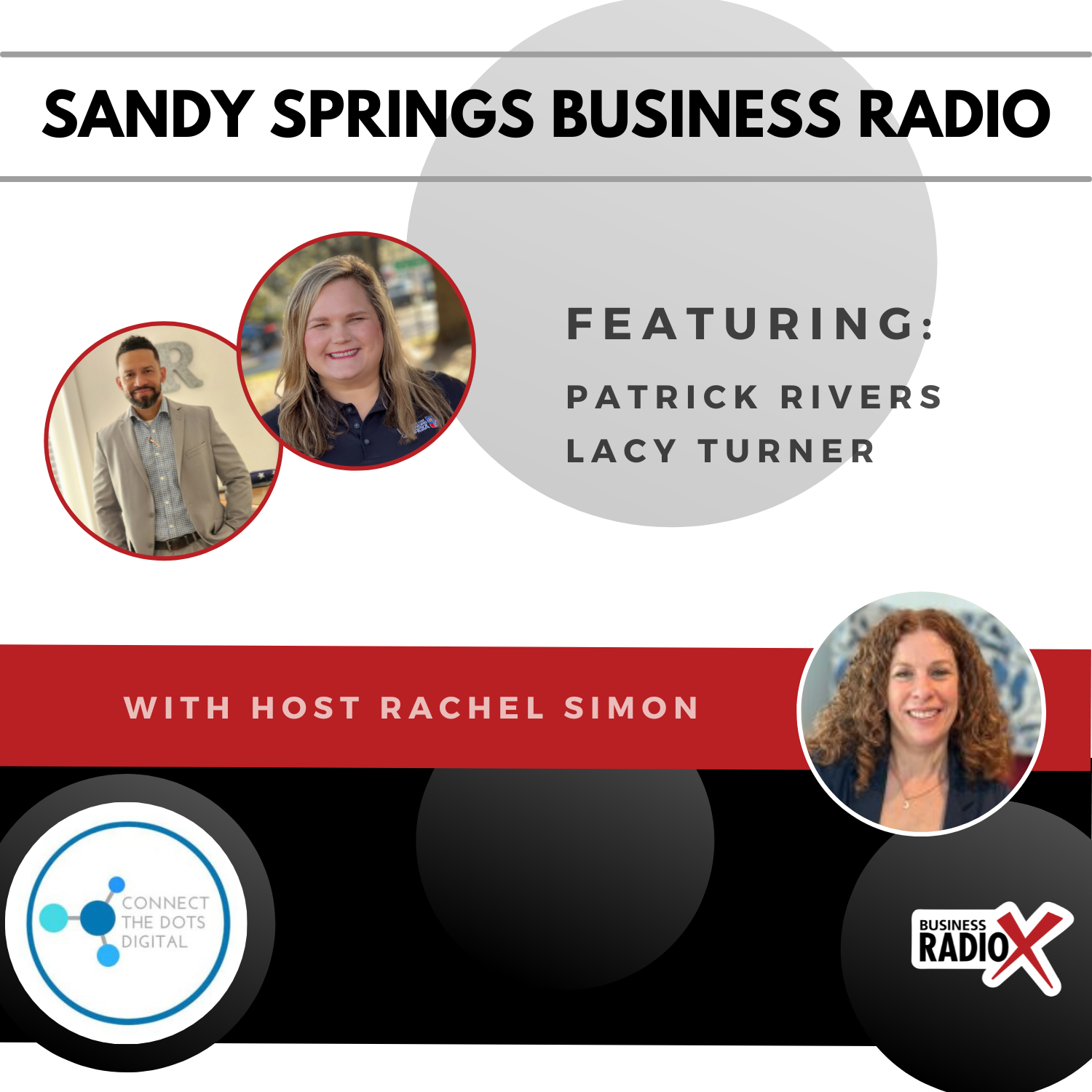

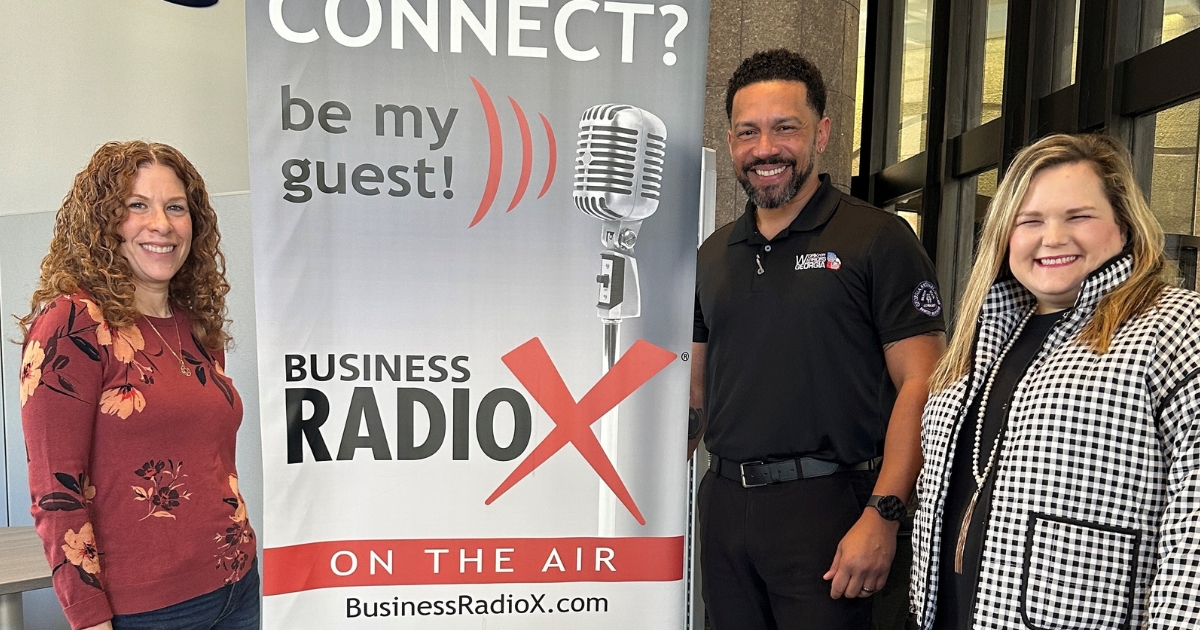
In this episode of Sandy Springs Business Radio, Lee Kantor and Rachel Simon talk with Patrick Rivers and Lacy Turner from Work for Warriors Georgia. The discussion highlights the organization’s mission to provide free employment assistance to veterans, service members, and their families. Lacy and Patrick discuss the challenges veterans face when transitioning to civilian life, such as translating military skills into civilian job qualifications. They emphasize the importance of personalized support, proactive outreach, and employer collaboration to help veterans secure meaningful employment.
 CSM (Ret) Patrick Rivers enlisted on active duty in 1997 and began his Infantry Basic Training on Station Unit Training (OSUT) that summer with 2-58 Infantry Training Battalion at Ft Benning, Ga., graduating (11B Infantry) in October 1997.
After attending Basic Combat Training CSM (Ret) Rivers was assigned to Ft. Lewis, WA, where he served as a Riflemen, Grenadier and Team Leader. His other assignments include B co 1-22 IN (Regulars by God), Ft. Hood, TX, where he served as a Team Leader deployed in support of OIF I; A co and D co 1-187 IN (Rakkasans), Ft. Campbell, KY, where he deployed as a Squad Leader for both companies in support of OIF I and IV; B co and E co 2-60th IN (Scouts Out) where he served as a Drill Sergeant at Ft. Jackson, SC; D co 1-327 IN (Bulldogs), Ft. Campbell, KY, where he served as an Anti- Armor Platoon Sergeant, deployed in support of OEF X-XI; A co 1-327 IN, Ft. Campbell, KY, where he served as a Company First Sergeant; Military Science Instructor (MS II and III’s) with The Georgia Institute of Technology and Kennesaw State University; C co 3-13 IN (40 Rounds), Ft. Jackson, SC, where he served as a Basic Combat Training Company First Sergeant; 101st NCOA (Train to Lead) where he served as a Deputy Commandant, Ft. Campbell, Ky. and the Operations Sergeant Major for the 5-7 Cavalry Regiment (Garryowen), 1ABCT, 3ID, Ft. Stewart, Ga. CSM (Ret) Rivers then assumed responsibility as the Battalion Command Sergeant Major for 2-58 Inf Regt (Patriots) on Sandhill, Fort Moore, Georgia, the only gender integrated Infantry Training Battalion in the United States Army. CSM (Ret) then retired in October 2022 and is now a Regional Employment Coordinator in the Atlanta area for the Work for Warriors-Ga program.
CSM (Ret) Rivers’ military education includes Basic Leader Course, Advanced Leader Course, Senior Leader Course, SMC Class 68 (Ultima; By Example), Drill Sergeant School, Air Assault and Pathfinder School. CSM (Ret) Rivers’ awards and decorations include the Legion of Merit, Bronze Star (1 OLC), Meritorious Service Medal (4 OLC), the Army Commendation Medal (4 OLC), the Army Achievement Medal (6 OLC), the Expert Infantry Badge, the Combat Infantry Badge, Air Assault Badge, and the Pathfinder’s Badge. CSM Rivers has a Bachelor’s of Science in Liberal Arts with Excelsior College.
Lacy Turner is the Director of Work For Warriors Georgia (W4WGA), the Georgia National Guard’s free employment assistance program.
Since 2012, Lacy has been a part of the program and was instrumental in expanding the program from a two to ten person team with an annual operating budget of $1M. Under her leadership, the WFWGA program has participated in multiple state and national workforce initiatives.
WFWGA Candidates report that the program has improved their financial situation by 79% and decreased their stress level by 90%. For more information about the program, visit www.workforwarriorsga.org.
Lacy is a graduate of The University of Tennessee as well as Leadership Georgia (Class of 2023) and White County Chamber of Commerce’s Leadership (Class of 2022). Prior to WFWGA, she has worked for various nonprofits and in the financial industry.
Follow Work for Warriors Georgia on Facebook.
 This transcript is machine transcribed by Sonix.
TRANSCRIPT
Intro: Broadcasting live from the Business RadioX studios in Sandy Springs, Georgia. It’s time for Sandy Springs Business Radio. Now, here’s your host.
Lee Kantor: Lee Kantor here with Rachel Simon, another episode of Sandy Springs Business Radio, and this is going to be a good one. Today’s episode is brought to you by Connect the Dots Digital. When you’re ready to leverage LinkedIn to meet your business goals, go to Connect the Dots Dot digital. Rachel welcome back.
Rachel Simon: Hi, Lee. Happy new year. Are we allowed to say that still or people are like.
Lee Kantor: What’s the the window? What’s the date.
Rachel Simon: That you’re not allowed to say it anymore? But anyway, it’s the first time I’m seeing you in 2020.
Lee Kantor: Happy New Year to you.
Rachel Simon: Um, I’m super excited about our show today, and I think it’s a great show to kick off 2025. 25. So we have two guests joining us from work for Warriors Georgia. So I’m happy to welcome Lacy Turner, who is the director, and Patrick Rivers, who serves as regional employment coordinator. Welcome.
Hi, Rachel.
Lacy Turner: Thank you.
Rachel Simon: So let’s kick off with tell us about your organization. Who do you serve? What’s your mission?
Lacy Turner: So I work for Warriors. Georgia is a free employment assistance program actually housed in the Georgia Guard. But we help veterans, family members, and service members on educating them and assisting them and connecting them with meaningful employment opportunities. So we want to really empower individuals and provide them with the tools and resources and support they need to really get a job that they are looking for that will work with them and provide growth opportunities with them so they can really find meaningful employment.
Rachel Simon: And is it are there specific challenges that veterans are facing when they’re moving from the military into the workforce.
Patrick Rivers: Rachel, there’s a lot of obstacles.
Rachel Simon: I’m sure that’s a big question.
Patrick Rivers: Yes, ma’am. From the transitioning. You know, you have soldiers that, you know, wore the uniform for ten, 20 years and, you know, not abreast of the, you know, the resources that we have, you know, in a civilian world, like work for warriors like me, when I was, I did 25 years in the army, and I had no clue that I worked for warriors. Georgia even existed until, you know, I connected with one of the coordinators for a veteran initiative that I was trying to establish, and I was like, man, I work for Warriors from Georgia. Actually. It’s a great program, and here I am now, you know, as an employment coordinator.
Rachel Simon: So if I could ask, when you were transitioning out of the military, what was some of the challenges that you were facing, kind of looking to find employment?
Patrick Rivers: I would say the big one is just trying to, you know, translate that resume from military terms to civilian. I think the second one is to is also not knowing the, you know, the jobs that are out there for, you know, military veterans.
Rachel Simon: Yeah, I think that transferable skills is a really important topic to talk about. So, you know, how can people who are leaving military service kind of think about transferring their skills into, you know, more of a civilian role?
Lacy Turner: Yeah. So I think one of the things that our program has really identified is really a gap from the information and the military to the civilians. So we really work hard with our service members to really figure out one, what are they looking for? What is their experience and what are they looking to do long term? So for instance, they’ve done logistics in the military for 20 years. Are they lean Six Sigma certified? You know, do they have the civilian qualifications. And we really work with them to provide them with a lot of free training opportunities to really make sure that they have their skills, and then they can apply for jobs for which they’re qualified.
Patrick Rivers: And Lacy brought up a good point. Rachel, you know, we’re we have a lot of certifications in the military, you know, Air Assault School, Pathfinder, sniper and all those, you know, courses that you need to be that that soldier in the Army. Um, but you literally find out later on as you’re transitioning or afterwards that there’s certain civilian certifications that you need, like your PMP or your Sherm, you know, but, uh, sadly, we find out too late.
Rachel Simon: Are those things that if you had known when you were still in service that you could have gotten then or not necessarily. Yes, ma’am. Okay. So it’s also educating current service members on as you’re thinking about leaving the military. Here are some things that may help you in that transition.
Lacy Turner: Right. Like for instance, a lot of human resources, um, service members want to go and find air jobs, and when they go apply for them, they don’t necessarily have the civilian certification. So we have worked with society for Human Resource Management here in Georgia to help bridge that gap and get them their certifications that they need, usually using credentialing assistance. So then they can get their SHRM certification and then apply for jobs and become employable in the civilian workforce.
Rachel Simon: Oh that’s great. That’s great. It seems like there’s real opportunity for again, people from sort of depending on even if they’re thinking about leaving military service within the next 3 to 5 years being how do they prepare for that transition right now?
Lee Kantor: Um, can you educate the listener who didn’t go through the military, like, what’s it like when that day happens where you’re like, okay, now I’m a civilian because I don’t think the civilian side understands that. That transition is pretty abrupt, right? There isn’t a oh, here. Now we’re going to offboard you and onboard you into the civilian world. It’s kind of like, see you later. Bye. Right. Like that. You’re now on your own. And and these kind of services aren’t, like, obvious to you unless you start seeking them out.
Patrick Rivers: I think the military does a good job with, you know, preparing, helping you prepare for the civilian life, as far as you know, attempting to, you know, go to job fairs and do the homework to try to try to get those, you know, uh, knowledge from when you get out, you know, to obtain employment. I think it’s really up to the individual, you know, to put in the legwork, you know, to use the, you know, the resources that the military gives. Like, uh, I retired from Fort Moore and Fort Moore, Georgia. Uh, every Army, um, unit has or installation has SFL tap. It’s a transitioning program, right. And you’re actually allowed to start, you know, um, going to those job fairs for SFL type probably a year out. There’s also a program called the CSP that you can do internships and what have you. So that will prepare you to get out. So like I said earlier, I think it’s based off of that that individuals, you know, legwork whether or not they’re, you know, right afterwards.
Lee Kantor: And that aligns with the mindset of somebody in the military, right? They are proactive. They’re um, take personal accountability and things like that. There’s but like this program, you weren’t aware of this program until you found it on your own, right? It wasn’t obvious, right? And that’s kind of the challenge, right? You want to give the military veteran that bridge to an easier path without having to, you know, do some of that legwork.
Lacy Turner: Well, and we work to with the transition assistance programs and a lot of veteran service organizations throughout the state to really educate our population in Georgia of the opportunities that we have. So a service member, for instance, is looking to retire from active duty or complete their guard service six months out. So we try to really be proactive, get in front of them, attend a lot of different briefings, then say, hey, John Smith, you’re looking for a position. You know, let’s go ahead and start the the intake process. Let’s review your resume. Let’s see what you’re interested in. For instance, you might have been managing somebody for 20 years. Or do you still want to manage somebody or do you want a position where you clock in and clock out? So we really look at the service member, figure out what they’re looking for long term, their qualifications all in an intake process. Then we begin. Like Patrick mentioned, the resume review process. And we say, okay, do you still if you’re living in Savannah, do you want to stay in Savannah? Do you want to relocate to North Georgia? Really? What are you looking for? Your salary. You know, we do a variety of different intake questions to really get a pulse on exactly what the service member wants. So when that day comes and they’re separated from the military, then we can go in and say, hey, let’s complete the resume, get you your interview training, see if there are any Skillbridge program you can go into, and really set them up for success.
Lee Kantor: Now, are they taking advantage of it? Like what percent of the people are kind of leaning into all of these programs that are available, and what percent are just like, well, that was my last day, so now I got to figure this out.
Lacy Turner: So I think it varies on the person. I don’t have an exact percent, but I would say we have an active caseload, a very robust active caseload of service members and family members and veterans throughout the state who are constantly looking for employment. And that could be looking for employment, as employment is and they got laid off yesterday, or they’re coming up on retirement in the next three months. And they want to go ahead and start the conversation right now. So it really just depends.
Patrick Rivers: And I think what makes our program so good, Rachel, is that, you know, we have seven coordinators across the state of Georgia. So as opposed to a program that’s a national program, right. That you’re not very personable with that that candidate, we have that advantage. Like right now I have 46 active candidates that I communicate with, you know, on a daily basis, you know, to make sure the resume is good, to coach them in interviews and what have you. So we have coordinators in Augusta. We have coordinators in Savannah, uh, northwest, northeast, Atlanta, southwest, and uh, you know, so we’re able to get in there in the trenches and actually help these candidates personally.
Lacy Turner: Yeah, I like that you brought that up, Patrick, because I think it’s crucial to know that if a service member is looking for a position in Savannah, we’re going to connect them with the Savannah employment coordinator versus Atlanta, because that Savannah employment coordinator knows what’s going on within their map of within their. Districts of Georgia, and they have the pulse on the technical colleges, the training programs, the employers, the different economic climate of that area and really can understand what is a good path to walk down. And really one that’s kind of like a tried and true, you know, we’ve tried this hasn’t really worked. So let’s hang out down this one.
Rachel Simon: Yeah. That’s. Oh go ahead.
Lee Kantor: Do you work with the employer to help educate them on how to best leverage this opportunity with this potentially great employee? Because I think it has to work from both sides.
Lacy Turner: Absolutely right. It does. Do you want to talk about that, Patrick.
Patrick Rivers: Oh, yes. Lacy. So like with me right now I have I want to say 60 active, you know, employer partners and a preliminary thing is to, you know, go and, you know, do a face to face. Just last week I visited an employer partner, just we met on LinkedIn and he invited me for a tour. I think it was cross link. And, you know, we talk about our program. We talk about, you know, how we can best serve that candidate, you know, from work for Warriors Georgia with the employer your partner and we pretty much, you know, try to get to know what are their requisites for us, you know, to try to get that candidate in front of them.
Lee Kantor: Right? Because you want to do a good match so that it’s a win win for both sides where the the veteran has a place that’s going to embrace them and kind of help them speak the language that they need to speak. And the employer gets a motivated person that kind of has the right mindset to help them.
Lacy Turner: Right. I’m really glad you touched on that, because there are a lot of times I think with my team, I joke with them because they get so much into the weeds of businesses, so they go, they like to do site visits and really learn what the employer is looking at. For instance, if you if your shift or your time to report is 8 a.m. and you have kids that you have to get off the bus or put on the bus or whatever the case is, drop them off at school, then you know the clock starts backwards. So to be able to make sure you’re being a good employee, you know, we need to learn what are do you have a three kind of items, you know, that are non-negotiables within 90 days or, you know, is the parking garage a very far distance from the location that you report to? What is what are the benefits? What is the progression of moving on up and maybe obtaining another position with the employer? So really we do work with the employer. We learn exactly what they’re looking for.
Lacy Turner: The candidates are looking for the non-negotiables. For instance like if they have three strikes and 90 days, you know, so we can best equip our candidates and say, hey, you know, if this company really practices starting right on time because it’s a shift at 7 a.m. to 7 p.m.. So you need to make sure you know your life is squared away from 7 a.m. to 7 p.m., so you can really be the best employee there, too. And we really do educate. We have a lot of different opportunities where we bring employers in to our units and actually can talk to our service members one on one. Or for instance, we’ve even taken a couple different employers out to the southwest border with us and talked with them and showed them done resume classes and employer briefings with some of our service members so they can get a head start and really kind of learn what it’s like to one be a soldier and then two, how the soldier can then learn about the company so they can apply for positions there as well. Yeah.
Rachel Simon: I mean, it sounds like such a truly comprehensive, uh, group of programs, both on, on both sides of, of that relationship. Right. So a question I had, you know, you had mentioned HR and like sort of transitioning from HR services in the military into the civilian world. Are there any other industries that are pretty like hot in your area where a lot of people are moving from their military service?
Lacy Turner: Yeah, I would say it. How about you?
Patrick Rivers: It for me in metro Atlanta, cyber security. And I would say also logistics.
Lacy Turner: Yeah I would say I would agree with that too, as well as general manufacturing different things like that as well.
Rachel Simon: Is there any industries that are a little bit of a surprise that could be a, you know, good fits?
Patrick Rivers: I had a candidate a couple months ago that threw me off. He was a UGA graduate and he had a biological engineering degree, and for me, I was new to the work for Warriors Georgia. And I was like, man, how do I get this guy hired? I looked into it, sent his resume to Emory, and he got hired a month later, and they saw his resume and they were like, whoa, we’ve never seen anything like this before. It was just, you know, and he was hired within two weeks.
Lacy Turner: And I think that’s really a good point, too, because Cho, for instance, people would be like, oh, it’s just healthcare, it’s just nurses or it’s just medical staff, but really, like they need security or, you know, um, marketing personnel. So really, when we’re educating our service members on different opportunities, we really have to look at the position that you’re looking for and then look at the company for what you’re interested in, because, I mean, you think of I think sometimes the mind defaults to, oh, it’s just healthcare. But healthcare can be so vast and the variety of different Um, positions that they offer. So really, we have to make sure our candidates are taking a good 360 perspective.
Rachel Simon: Well, right. And today, every company is a tech company, right? Right. Every company has a financial services department. Security services, security marketing. I mean, so there is just because it serves this group doesn’t mean there aren’t all these other opportunities internally.
Patrick Rivers: And since we’re talking to, you know, transitioning members and, you know, National Guard, you know, soldiers, I usually break it down to them in a military way, like you said, Rachel and Lacy, you know, like the Army, they have their functions, you have your HR, you have your, you know, your S2 security, you have your S3 operations, S4 logistics. So I put it in that language. It’s like, oh, okay. Well I’ll submit this application for this, this, this this company. They get it afterwards.
Rachel Simon: Do you have any of your candidates that are looking to start their own businesses?
Patrick Rivers: Yes, we do have candidates that are looking to be entrepreneurs.
Lacy Turner: And we refer them to like the SBDC, Small Business Development Center, um, small Business Administration, different groups like that to best assist them. Yeah. So.
Rachel Simon: Um, right. I mean, and we were talking prior to the show, there’s so many veteran organizations to collaborate with in Atlanta. I think that we’re pretty lucky here, and I don’t know if it’s like that. I mean, obviously you’re serving the whole state of Georgia, but specifically here in Atlanta, there’s a lot of different groups to kind of partner and take advantage of.
Lacy Turner: Right. And I think that’s one of the best things is that we’re all here to help the service member. At the end of the day, while we all have our own priorities. The end game is to help our service members find meaningful employment and a purpose that is outside the military.
Patrick Rivers: And I think, Rachel, you know, with my job, I think I like it so much because of I didn’t have that advantage of having to communicate with employers or, you know, having someone to mediate for me when I was applying for jobs. Um, with me, I have that I can talk to my employer or partners and say, hey, you know, this application was submitted two weeks ago. What’s the status? Um, I may have some employers that may take 2 or 3 weeks to answer. I may have some that may answer in two hours, but I will have an answer for that candidate to see. That way, they know where they’re at as far as employment. Hey, you didn’t make the cut, man or two. Hey, you’re currently your application or resume is in front of a hiring manager. You should get a call back today. Um, so that’s usually how it works with me, I love that.
Rachel Simon: So you shared your success story about your one candidate who was hired at Koa. Do you have any other stories that you are really proud of?
Lacy Turner: Yeah, I think we have a great story of the service member who’s in the Army Reserves, because, remember, we help. Even though we’re in the guard, we help all branches, all services and family members. So he was here, and then he moved out to the West Coast and then he relocated back during Covid. Was looking for positions applied. I’m not even kidding. You like probably 400 positions. We were working with them. We were working on interview skills. We were referring him being like, we we just kept hitting walls every time we would refer him to somebody or he would interview, and it’s like he kind of made the cut, but not specifically. And then one day we referred him for another position. I think he had like 4 or 5 interviews, and then it ended up getting like an $80,000 position with this great company that we work closely with. And it was just it was so successful and so exciting because we could hear the excitement in his voice, not just, of course, getting an $80,000 a year job, but just the sheer fact of I’ve tried. I’ve applied online, I’ve interviewed, I haven’t been successful. And now finally, I got the break and I got a great break that I’ve been looking for. So just things like that. And then the fact that they want to go in and they’re just so excited that they can now support their family and they can contribute to society and just really utilize their skills. It’s those moments like that where, in my opinion, Patrick, you might say something else, but when a service member is just like, thank you so much for helping me get a position that I enjoy. I like the company. You know, it checks all the boxes. It really brings satisfaction to our.
Rachel Simon: Our jobs. I mean, I can’t imagine why any employer wouldn’t want to be hiring veterans. Out of the military, based on just all of the traits that somebody has when they have dedicated. You know, many years to to service. So it’s one thing that I always suggest to anybody. Anyone that I’m working with on LinkedIn, if you if they served in the military, that needs to be front and center in their LinkedIn profile. Because I think it’s instant credibility.
Patrick Rivers: And, Rachel, you know, a part of my job as well. You know, I’m a big believer I was a former senior leader in Army. And, uh, my thing is, just because you wore the uniform doesn’t make you qualified. That’s just me as a former senior leader. So my job also is to vet those candidates. So I’m not sending someone unqualified in front of that employer partner, you know, because we’re talking about the company’s image and our image as well.
Rachel Simon: Yeah. Well, obviously. Yes. You want to have the right the right person and the right right in the right role. Um, you know, tell us a little bit more about like, advice you would give to employers as far as you know, why they should be looking to hire veterans, how they can and then how you can potentially help them to connect them with the right people.
Patrick Rivers: Well, Rachel, you know, again, coming from the Army, you know, I don’t know if you’ve heard the saying that we do more than anybody else by 8:00 in the morning. Right. We get up at 430 to get ready to go to physical training. You have to go to accountability formation before the formation to get accounted for. And then you have physical training. Then you go into the workday. I would say to any employer that wants to partner with work for Warriors Georgia, it’s like, you know, to hire a veteran or a Guardsman, anyone in the military, it’s a it’s a win win. You know, you’re going to get someone that’s going to give you 100%. You’re going to give someone that’s motivated, passionate, you’re going to have someone that’s really, you know, certified, you know, maybe not on paper, but just as a, you know, former soldier or Soldier or veteran that can do a lot more than the normal civilian or person.
Rachel Simon: So tell us a little bit from both sides, from both the, you know, the the individual who is looking for employment, but also for the employer, like what’s the best way to get started with your organization?
Lacy Turner: So I think the best way for a job seeker and employer, but a job seeker will start out with that is to go on our website at Workforce Warriors. Org backslash register, click the register button and then upload some information like Lacy Turner where they live in the state, and a variety like a resume, different things like that. And then once they hit submit, then it’ll be sent automatically routed to the employment coordinator that services their county, and then the service member should reach out to them within 48 hours and connect with them and start the intake process and really start the job search process. And then for employers, the same thing, they can go to our website at work for Warriors GAA and click the employer link and then register. And again their information will go straight to the Employment coordinator of where they are located. If they have a variety of different positions throughout the state. A couple of my employment coordinators will be reaching out to best serve them and go from there.
Rachel Simon: And it’s any size employer.
Lacy Turner: Yeah, any size employer, small or large. And we help all branches, all services, any rank as well as well as spouses.
Lee Kantor: Now you mentioned work for Warriors Georgia. Is there work for warriors around the country or is this just a Georgia centric organization?
Patrick Rivers: There are 16 work for warriors. And that’s why, like you said, you know, we’re respective to Georgia. We’re for warriors. Georgia. So there’s 15 others across the United States, I want to say as far north as Ohio and as far west as California.
Lacy Turner: So actually a comprehensive list is Arizona, California, Florida, Georgia, Hawaii, Indiana, Louisiana, Mississippi, Nevada, North Carolina, South Carolina, Ohio, Oregon, Tennessee, Texas, and Washington. They Washington. They might not all necessarily name their program as work for warriors, but they all work with us and all part of the same idea and coalition as us. So and you can actually go on our website and see the variety of different states.
Rachel Simon: And is that from like under a national umbrella or are there.
Lacy Turner: All we all receive funding from the office of Secretary of Defense.
Lee Kantor: Now, what do you need more of? How can we help you?
Lacy Turner: I think we want to make sure that our, your viewers actually are aware of our program and how to register on there. And if any employers are looking to fill some vacancies, reach out to us as well. Patrick, do you have any other suggestions other than that?
Patrick Rivers: Lacy, you cover that? Also, I think LinkedIn is a great tool, you know, for, you know, trying to, of course, networking. Um, you know, I’ve reposted jobs on LinkedIn from, you know, Non-employer partners. And then about probably a day later, hey, what is this program about? And we’ll talk about it then to become an actual, you know, employer partner. So partners. They become very interested in the program because I’ve actually had two candidates that were hired by someone that was not an employer partner based off of me reposting that for their job needs.
Lacy Turner: Yeah. And another thing too is we always like to work with our employers. For instance, bring them to yellow ribbon events when our soldiers are either coming back from deployment or going to deployment so they can kind of it’s like a mini job fair. Also, we, um, Patrick has done and a couple of my other employment coordinators have done some really great one on one, um, events with employers, for instance, where they might have like a mini job fair, for instance, we did it with Kia where they told us about some open positions. We sourced our candidates and helped them, helped our candidates tailor their resumes, and really did a lot of interview prep. We they brought Kia, brought the service members in for interviews and really got to know them and had a tour of the facility and then ended up actually hiring some candidates off of that job fair. So really like there’s a variety of different ways that we could work with our employers.
Patrick Rivers: We also had a phenomenal event that we did. I want to say it was last year in May at the Porsche Experience Center. Uh, we brought in like 5 or 6, uh, employer partners, and we had a couple candidates that were actually hired, uh, from that event.
Rachel Simon: Well, what about anything coming up this year? Is that wise.
Patrick Rivers: Respective to me? I have one next month, uh, with, uh, Napa. Uh, we’re doing an open house at their facility. Uh, you know, same thing that Lacy said we’re going to vet, you know, source our candidates, we’re going to vet, you know, resumes. And then that resume vetting is going to be the their ticket into that, uh, into that event. We also have the, uh, the civic leader flight in April, which, if you’re not familiar with that, Rachel Lee, uh, we’re going to invite, you know, uh, elected officials, our leaders across the metro Atlanta area or Georgia. Uh, we’re going to meet at, uh, Dobbins Air Reserve Base, uh, hangar five, uh, Clay National Guard Center. So we’re potentially going to have a, uh, employer panel. We’re going to have, uh, two big companies, you know, have that panel. We’re going to feed you, and then we’re going to give you a little safety training on how to board a Army military Blackhawk. Then we’ll throw you in that Blackhawk, and you’re going to tour around the metro Atlanta area. We did one in April. We had over 100 attendees, and we flew over Mercedes-Benz Stadium, Truist Park. We we saw the Atlanta skyline flew over Buckhead and then Marietta. So it’s a pretty cool event.
Rachel Simon: That is awesome. It is a really cool event.
Lacy Turner: And I think the best thing is we get to bring employers that might not necessarily have military experience in and show them what it’s like to a life in the day of a military service member, and then show them exactly how we’ve worked with different employers to really help our service members and our veteran population obtain employment.
Rachel Simon: That sounds like such a fun event.
Lacy Turner: Yeah.
Patrick Rivers: It is. And then we have another one that’s not really respective to us, but we’re actually helping with the initiative. So this past September, it was the military influencer conference that was held here in metro Atlanta. It was actually the first time they did it here in Atlanta. And now they’re going to come back in September again to do another one. So we were chosen or we were just, you know, to help spearhead the the job fair portion of that military infrastructure conference you’re going to have. I think Jon Stewart was the actual keynote speaker at this last one. So we’re going to have probably 40 to 40 to 50 employers come through. And, you know, job fair style. Uh, I think it’s 3 to 4 days at that event. We’re going to have a keynote speakers, a comedy night, and also a gala, you know, with awards for that event. And you have a lot of big name folks from the military and the civilian sector that actually, you know, participate.
Rachel Simon: Sounds like an exciting year ahead for for everybody.
Lee Kantor: Now, uh, Rachel, we always do a LinkedIn tip. You mentioned a little bit, if you were a veteran, to kind of the best way to leverage that, those kind of skills and maybe translate some of the leadership that you were doing as a veteran to the civilian. Uh.
Rachel Simon: Yeah, definitely. So I would definitely recommend to include military service in your experience section. Um, and particularly because I because I have had clients who have gone up the ranks when they were serving, making sure to include all of those different roles. Right. If you were continuously being promoted, um, thinking about the skills that you utilized and again, putting those in your skills section, and I really encourage in your headline listing that you were a veteran because, again, you can put your, uh, you know, where you served. If it was Army, Navy, Marines, whatever the case may be, or just say proud veteran or however you want to put it, but putting it in your headline, I think because when you go to connect with other people who served in the military, as soon as they see that, you’re instantly vetted, right?
Patrick Rivers: Yes, ma’am.
Patrick Rivers: Um, to add to Rachel’s point to is like, you know, uh, with with the resume, a lot of these resumes are being looked at by, let’s be real, you know, I. Right, right. And again, the benefit that we have here for Warriors Georgia is I’m able to actually send that resume to a actual hiring manager. Recruiter. I had a, uh, an issue one time with a candidate that, you know, she was told to apply for this job based off of that that company. Right. What they needed, she applied for it and within five minutes received a rejection letter. So I intervened. I got Ahold of that point of contact and she was like, wait, hold on. So I sent her the resume and then she was she got an interview.
Lee Kantor: Right. Because if you don’t know the keywords or the magic words that the algorithm is going to look for, then you can be put in the wrong pile. But if you know a human being, that’s an edge.
Lacy Turner: And I think that so many, um, you know, there are so many tools out there that help you with your resume. And every employer seems to want something a smidge different, whether it’s the layout or the skill section up top or the education up top, whatever it is. So really, by learning exactly what the employers are looking at and really getting kind of an advantage, I think has really helped our team be the best version of themselves.
Rachel Simon: Well, there is. You shared, you know, sort of the more the kind of phrase that more things get done before 8 a.m., you know, in the military. I think the other thing related to what you’re doing is that it isn’t always what you know. It’s who you know, right? When you’re looking for a job. And so you’re really serving such an important role as being that who you know, so that your candidates are not being rejected from a by eye scanners because their resume doesn’t match. Exactly. Like by being able to say, whoa, whoa, whoa, check this person out.
Lee Kantor: Because relationships are important and the impact you’re making is real. I mean, you’re affecting people’s lives every day, right?.
Lacy Turner: Yeah. I mean, our program, actually, on the guard side really is more of a holistic because we can help a service member get a job, but. And they can show up at 8 a.m., but if they have financial issues or transportation issues or need VA benefits, then it’s getting them. The job isn’t really going to help their overall picture. So really we focus in on our guard soldiers because we have a touch point with them and actually focusing on their well-being. So we can actually drill in and see, for instance, who needs VA benefits or education benefits, or maybe some other types of counseling that we can help. And then by utilizing that approach on the holistic side of things, we can really go in and help the service member be the best version of themselves and really get a job where they’re successful at. And the employer says, oh my gosh, thank you so much. Like, you’ve helped reduce my turnover, my, my cost to hire a new trainee and keep them on board. This service member is really working out for us. I really thank you and appreciate that.
Lee Kantor: And the website one more time for people who want to connect work for warriors.
Lacy Turner: Georg.
Lee Kantor: Good stuff. Well, thank you both for sharing your story today. You’re doing such important work and we appreciate you.
Lacy Turner: Thank you.
Patrick Rivers: Thank you, Rachel.
Lee Kantor: All right. This is Lee Kantor for Rachel Simon. We’ll see you all next time on Sandy Springs Business Radio.
About Your Host
 Rachel Simon is the CEO & Founder of Connect the Dots Digital. She helps B2B companies close more business by leveraging the power of LinkedIn.
Rachel works with professionals, both individuals and teams, to position their authentic brand on LinkedIn so they can connect organically with ideal clients, attract the best talent, and stand out as a leader in their industry.

Connect with Rachel on LinkedIn.














