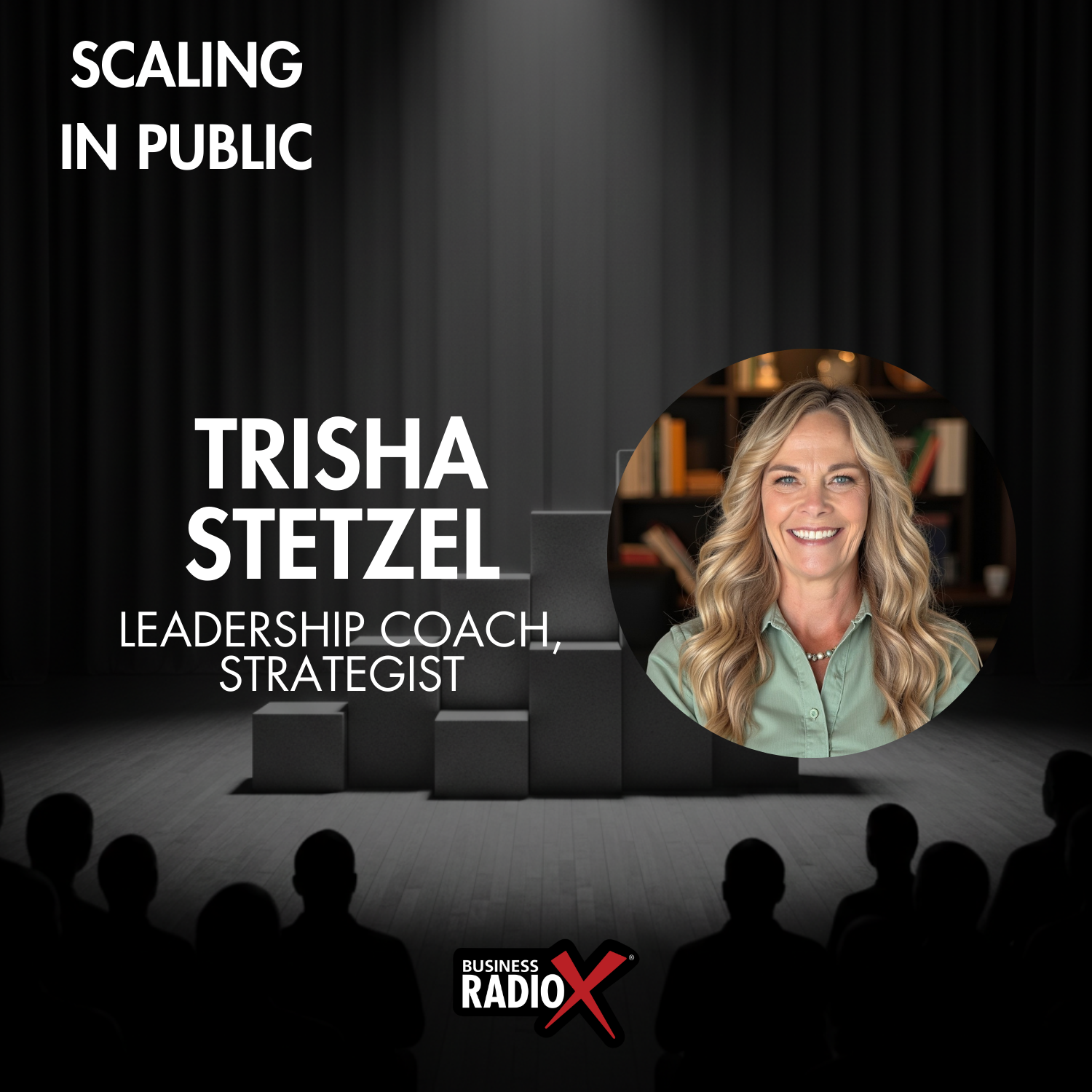

In this episode of Scaling in Public, Lee Kantor, Stone Payton and Trisha Stetzel reflect on the conclusion of a 90-day coaching experiment. They share key lessons learned, including the value of consistent communication, leveraging AI, and building authentic relationships through interviews rather than traditional networking. The team discusses operational improvements, mindset shifts, and new strategies like the “test drive” approach. The episode celebrates their progress, highlights the power of accountability and community, and sets the stage for continued growth in the next season.


Trisha Stetzel is a leadership coach, strategist, and trusted conversation partner for founders and leadership teams navigating growth, transition, and complexity.
Her work sits at the intersection of leadership clarity and execution. Trisha helps leaders slow down long enough to ask the right questions, align around what truly matters, and move forward with focus and accountability. She is known for creating space for honest dialogue, challenging assumptions, and guiding leaders from vision to practical action.
With experience across executive coaching, organizational development, and business storytelling, Trisha brings both structure and humanity to her work. She believes sustainable growth comes from clarity, discipline, and a willingness to learn in real time, not from shortcuts or surface-level solutions.
Trisha’s coaching style is direct, thoughtful, and grounded. Leaders often describe her as calm, insightful, and deeply present, someone who helps them see what’s already there and act on it with intention.
Connect with Trisha on LinkedIn and Facebook.
Episode Highlights
- Reflection on personal growth and changes experienced by the hosts during the experiment
- Importance of renewed energy, commitment, and communication in business practices
- Utilization of AI tools for analyzing coaching sessions and improving operational tactics
- Emphasis on the significance of email marketing and maintaining an email database
- Discussion on the value of nurturing relationships and consistent follow-up in business
- Insights on the coaching process and the benefits of diverse perspectives from multiple coaches
- Introduction of a “test drive” concept to enhance client engagement and relationship building
- Shift from traditional networking methods to more authentic and direct communication strategies
- Plans for future growth, including targeted marketing and community building initiatives
 This transcript is machine transcribed by Sonix.
TRANSCRIPT
Intro: Broadcasting live from our flagship studio in Atlanta, Georgia. This is scaling in public. The next 100 Business RadioX markets, featuring founders Lee Kantor and Stone Payton, along with some of America’s top coaches, helping them grow the network with real strategy, real lessons, and real accountability, all shared in public. To learn more about the proven system that turns podcast interviews into a perpetual prospecting pipeline through generosity, not gimmicks, go to Berk’s HQ and download the free Business RadioX playbook. Now here’s your host.
Stone Payton: Welcome to another exciting and informative edition of scaling in public. Stone Payton Lee Kantor here with you. Please join us now in welcoming back to the broadcast our quarterback, our mentor, our favorite coach Trisha Stetzel. How are you?
Trisha Stetzel: I’m great. I’m so excited to be back with you guys. It’s been a few weeks and we’re all the way at the end of our 90 days. I’m super excited to circle back and talk about where we started and where we’re at today, and even share some of my own story in using the system. I think that’s going to be important as well. So we’ve been at this for 90 days now. Um, we brought in some incredible coaches, tested some new ideas and made some real changes. Today, I’d really like to pause and look back at what actually happened and more importantly, decide where are you going to go in the next 90 days. Because that is really the key here, right? Is taking action from all of the work that you’ve been doing. So when you think back, um, to where you were 90 days ago, Stone, why don’t you start us off with what feels most different now?
Stone Payton: For me, it’s energy level and commitment to a specific set of actions on any given day or in the course of a week. It’s almost it’s almost like I’ve clocked back in and I’m working the system that I preach so much to the studio partners that I’m supporting. And, um, so that’s the biggest overarching shift. Tactically, I’m just in communication. And if anything, I err on the side of overcommunicating with any of these constituencies I’m trying to serve. And it has produced general benefit, but also very specific success on a number of occasions already in a very short span of time.
Trisha Stetzel: Oh, I love that. Sometimes stone, we have to be reminded of the things we teach every once in a while, don’t we? I love that. Thank you for being so vulnerable around that. Lee, what about you? What feels most different now?
Lee Kantor: I think, um, operationally, I think we are in a better place. I think that we’re keeping score a little better than we had been before. I think a lot of these tactics and ideas that we’d have, we’d kind of start them and then kind of move on to the next shiny object. And these seem, uh, the tactics we’re trying and implementing seem very targeted and were relentlessly pursuing them until we make an assessment whether to continue or not, rather than just haphazardly just trying a new thing and a new thing. So I feel good about that. I feel good about how we’ve been leveraging AI. I know we’re just learning and I feel like a beginner when I’m implementing it, but I just see so much potential there and I’m excited about how we’re also leaning into, um, email marketing. I think that that was something that I shouldn’t have ever stopped doing. And we just kind of stopped doing it and we turned it back on and we were already seeing kind of fruits of that, uh, effort. And, uh, and I think it should be built into the playbook of all of our studio partners moving forward. You have to build an email database. You have to have some means of communicating directly with the people that are important to you, and you have to relentlessly communicate with them. It can’t be something that you just hope will work or you hope they’ll remember you. You have to kind of constantly remind people who you are because they’re busy doing their own thing. They’re not thinking about you until they need to think about you. And when that moment comes, you have to be there for them. So, um, I think email marketing is an important component or some sort of kind of reminder marketing, um, when you’re communicating with the people that are important to you.
Trisha Stetzel: Yeah, absolutely. Nurturing and top of mind. And we talk about it, right? We talk about it all the time. I think as people who are in business, we want to make sure that we’re top of mind and we often don’t see the fruit of that labor. And so we stopped doing it to move on to the next thing. I’m very glad that those are big rocks that came out of some of the experiences that you had. What surprised you most about this entire experience?
Lee Kantor: For me, the thing that surprised me was, um, just going through the coaching, uh, just the act of being coached. Um, when I was younger, I had, I’ve seen therapists in my life and, and it reminded me kind of, of that back and forth, the pushing, getting me into uncomfortable spaces. I hadn’t ever had a coach before. So this was the first time I’ve kind of experienced that in that way. And, um, I really enjoyed kind of the fresh eyes that people brought to this and every coach took it seriously. They did their homework. They kind of understood where we were at. So we didn’t really have to kind of recreate the wheel pretty much. Um, at each session. So I thought that was helpful. And then they got us really to the heart of an issue that their, that their specialty kind of, um, allowed them to, and it allowed us to kind of get insight quickly. Um, the only thing from it that I would take is that it was kind of overwhelming because every week we were meeting somebody else and they’d have a different thing and they’d say, oh, this is so obvious. You should be doing more of this. And then the next one would be, oh, this is so obvious. It would be something else. So it was just to kind of contain that, uh, was a little overwhelming for me. But again, that’s where AI was helpful for me, where I was able to kind of, okay, I can take these transcripts, I can put them in, I can help them kind of connect dots that maybe I’m not seeing, or I’m kind of not prioritizing as much as I should. And then that was kind of a, for me, a way to kind of put new fresh eyes on, on the inside. So I was, um, surprised by how much I liked it and how much I was looking forward to each coaching session.
Trisha Stetzel: Okay. Awesome. Stone, what about you?
Stone Payton: So for me, 2 or 3 things. One, it was much more fun than I anticipated. I just, I had a really good time. Second, I learned a great deal more than I thought I would. I’ve always considered myself a pretty good, if not gifted, person in the arena of selling professional services. I have a pretty strong track record in that regard. And, um, I didn’t I don’t guess I felt like I was going to learn that much. That was going to help in the role that I’m primarily playing at this point in our, in our evolution. I learned a ton. I think I probably came into it a little bit jaded toward the coaching profession, and and I’m sure there are some mediocre coaches out there, but boy, we didn’t meet any. Not during this series. Uh, you know, and they, and they, they challenged my thinking. They shared ideas and it was, I learned, but it was also validating. I validated that, yes, Stone, you really are good at this. You really do have a pretty good handle on some really solid sales mechanics that you’ve been exposed to over the years. You are good at communicating with people.
Stone Payton: When you do clock in and actually do the stuff that you’re trying to coach other, other people to, to do. And it had such a tremendous impact tactically because I, I think I kind of coasted for a while in our business because certain aspects of it, you know, could be very lucrative. And, um, I think I kind of backed off of doing the day to day blocking and, and tackling and then, you know, one specific set of disciplines, I guess. I had fallen into a very overly stealthy, high positioning approach to working with people and letting them come to me and all of that. Well, I gotta tell you, I’m anything but stealthy now. I let the people I’m talking to, I let them know how and why we want to serve them. I let them how? Let them know how and why we want to collaborate with them. What I’m trying to get accomplished. And it’s just a very authentic exchange all the way through. And all of that and the, uh, the, the gap and how much I’ve closed the gap. It continues to surprise me.
Trisha Stetzel: I love that I am so excited. And you guys both lived up to your, um, the thing that you said you were going to do at the beginning of this series, you said you were going to be open to coaching and be open to ideas from others, and maybe even shifting the way that you think. And congratulations. It sounds like both of you are there. Okay, so I came back. We circled back about halfway through, and we already talked about, um, the first few sessions, you’ve talked to five coaches and actually had a duo or four coaches and you guys had a reflection, uh, episode as well. But you’ve talked to five coaches all together. I’d love to hear how the back end of this series or the learnings for you have really played out when it comes to things that have moved the needle. So what are 2 or 3 things during the back end of this? I’m going to call it an experiment. We were calling it that as a kind of a kidding in the background, but what are 2 or 3 things that clearly moved the needle for you in the back end of this series? Stone. Do you want to take that first?
Stone Payton: Uh, yeah. Well, I can tell you on the back end of it, like Lee, I have been a little bit overwhelmed. But what we did, Lee and I, you know, came right behind each session. And, and he and I had in-depth conversations about the session. We took some advantage of, of AI. We took the, the Zoom AI summary from those sessions. And even more recently, Lee’s turned around and fed that into his AI to get a really solid practical plan of action. So I feel like the he and I block time every week, like 2 or 3 times a week to have these conversations. The conversations are more tactical than they used to be, and he and I contract to do some very specific things in service to those to those objectives. So that’s a that’s impacted the back end at a very tactical level. I’ve got two very recent examples from yesterday, because again, I was really reluctant to, uh, follow up in any, you know, really strong way. Um, and, and, uh, yesterday I followed up with a couple of people who were doing the test drive that people have heard us talk about on this, uh, on this series.
Stone Payton: By phone. I haven’t followed up with somebody by phone and I don’t know how long. It’s been a really long, long time. And we have this discipline in our sales process where we establish a specific confirmed release date and so on. On one of the things that a project that we were selling confirm release date is tomorrow. But I decided this morning and it happened right behind those calls. I guess I was kind of getting my getting my groove and I sent a little, little two sentence reminder, note. And the lady came back and said, oh, I sent you a note yesterday with the client wants to move forward now, for whatever reason, that that communication got lost in my email system or whatever. Doesn’t matter. She would have gotten a very she would have gotten the traditional confirmed release note tomorrow if I hadn’t reached out and over communicated. So I’m getting like very real and real time evidence that, hey, doing this stuff is a good thing.
Trisha Stetzel: I love that you picked up the phone stone.
Stone Payton: I did. I had done that a long time. Not in pursuit of yeah, yeah.
Trisha Stetzel: Yeah, I love that. And Lee, you mentioned earlier the, uh, email sequence along with that, what are a couple of other things that, uh, clearly moved the needle that you’ve implemented?
Lee Kantor: I think, um, well, one of the biggest things is this, uh, concept of a test drive that we’ve kind of, uh, built while talking to the coaches where now we have a bridge. So, and this is one of the challenges and you went through this yourself when you were implementing the system for yourself as a person comes on, they’re coming on to a show. You, you’re meeting them, you’re doing kind of a mini discovery call with them, whether it’s in the pre-call or in the interview, right? You’re vetting them, seeing if they’re right fit, seeing if there’s opportunity there. While you’re serving them and giving them a good interview. That’s useful and that they can really repurpose and benefit from. So you want to honor that. But at the when the thing’s over and you have your follow up and you want to teach them how to best leverage the content and how to get the most out of it, you want to have some sort of a bridge into a sales conversation for yourself. You know, because we’re not doing this, we’re doing it kind of altruistically. But this is, you know, like I like to say, this is show business. There is a business element to it. And we’re doing this to grow our businesses.
Lee Kantor: Um, so there has to be a bridge. And we came up with an interesting thing, an experiment to test is these test drives where we’re during the call, uh, stones able to bubble up, um, a pain point of whether it’s, I need to meet more people or I want to position myself a little differently or I’m not getting enough top of the pipeline. Um, you know, whatever their kind of issue is when it comes to business development. We have a simple way to test it. And this test drive, which we implemented successfully with one of the coaches, is we just give them, we put it in the chat. Here’s, here’s a note to send to your, um, your LinkedIn and just say, hey, I’m sponsoring a Business RadioX show. I’m looking for guests. Do you know anybody? That would be a good guess. I mean, that’s not the exact word, but that’s kind of the, the spirit of it. And this one coach immediately sent a handful out and was getting responses almost as fast as she was sending them out. And it was like, people have to understand that’s hard to do. Like, that’s not something that normally happens because I know because we’re sending a lot of emails now and we’re sending thousands of emails to get responses.
Lee Kantor: Um, this was something that it was almost, you know, sending a handful and getting responses is an extremely high engagement rate and is unusual. So she was very blown away by that. And then we were able to do we’ve done one of the interviews for her. We, we this test drive is basically allows the coach to be a sponsor of an episode. Um, and we don’t charge her for this test drive. And then she sponsors it by inviting someone. I did the interview for her in this case, and then I interviewed her person and the episode was brought to you by her coaching company. He had a great time, sent her a note. Thank you so much. Um, and that’s, you know, that’s something that can happen in a short period of time that we tested effectively. That was built on ideas that we got through the coaching that went from, hey, this sounds cool, let’s try it to us doing it. And now it’s just part of how we do things. Um, so that to me was one of the biggest actionable benefits from doing this. So we landed on something that is now a working thing that’s part implemented as part of our kind of go to market strategy.
Trisha Stetzel: I love that. So with your permission, I want to give a little plug on my experience with your system. I think this is a really good time to bring this in, because we were talking about it a few weeks back, like, what is that system done for me? And I gave you some numbers and I did. I dropped 95 shows last year and I do it as a coach. I do a discovery call, a 15 minute phone call with all of the prospects that I would invite to the show. So I did my 15 minutes. I invited those to the show that it made sense to have them on. I spent 45 minutes with them cutting a 30 minute show for them, and of those 95 I dropped last year, I got two paying clients, which is double what I would get if I was making cold calls to 100 people. Normally it would be one coaching client and I’ve got two. And, and the interesting thing for me is it’s all of the seeds that I’ve planted. It’s I, the client that I landed in the last few weeks that I have been telling you guys about came from someone I had on the show last spring, a year ago.
Trisha Stetzel: She was on the show this spring or really in the winter. In February, she dropped an email in my inbox and said, I want you to meet these people. And I went through their interview process, and now I’m a part of their coaching pool, which is really, really exciting. Uh, the other one is an individual one on one coaching client that I landed through again, another person who was on the show. So for me, it’s not always been about prospecting directly from the show, but indirectly. And I will tell you that I gave up some of the network that I was doing that wasn’t working so that I could use the system, because it makes sense for me to build these networks, to open up networks, to build relationships. And by the way, Lee, continuing to nurture those relationships is really important, just like you talked about in your business. For me as well, staying top of mind and continuing to get those referrals from the people I’ve had on the show. So I want to thank you both for allowing me to be a part of the business that you’re in and helping share this story with everyone who’s listening.
Lee Kantor: And it’s funny, you mentioned how it’s replacing some of your, um, things that you’ve done previously. One of the coaching, um, kind of tidbits we got in the insights we got was from one of the coach who said, if by doing your thing, it allows me to replace for other things. And that’s something, um, stone and I did a, a pro tip about this recently about how when you’re explaining the value of what you do as a service, you have to include the replacement cost because the person isn’t going to connect those dots. It’s like when you’re doing our thing, you don’t have to. Also, unless you want to do three other other things, you don’t maybe have to go to as many kind of networking meetings as you did before. You don’t have to go to as many events as you did before. You don’t have to run as many ads as you did before you can. You can use this thing instead of some other things that are costing you time, money, and resources. Um, that you can do this instead and get kind of at least the same bang for your buck, if not more. And again, the thing that I can’t emphasize enough about our methodology. Every interview you do, that person is going to like you. So that’s going to be a real relationship. You can kind of interact with this person down the road whenever you want, as opposed to an ad you run that every one of those interactions is perishable. They see the ad. They look at it and then they forget about it. It’s perishable. It goes away. Whereas every single one of our relationships are forever. Mhm.
Trisha Stetzel: Yeah. This method, it it removes the friction of the weirdness of having to introduce yourself to someone and saying, hey, let’s have a conversation. You’re inviting them to something which I think is beautiful. It’s all about them. Isn’t that what sales is all about? I think everyone’s favorite radio station, Wiifm. What’s in it for me? I mean, it really is. And if you invite somebody to something, I wouldn’t turn down a great show if somebody invited me that I knew or that I had been watching. I would love to be on somebody’s show that’s doing a really good job. And then, gosh, could I turn into a client? Maybe. Uh, that’s part of having that conversation and really nurturing what’s happening there. They’re so stone from your perspective. Just hearing, you know what, what I’ve been experiencing just over the last year. And by the way, we’ve, we’ve been working together for almost two years. And it took me a while to figure out my own system. But as you hear, um, you know, my experience with your system was bubbling up for you. Stone, about what I’m experiencing and what you’ve experienced through scaling in public.
Stone Payton: So at the risk of sounding a little bit immodest about our thing, I’m not even a little bit surprised that you’re seeing some positive results. And I think Lee’s right. And I think sometimes, um, I get a little insulated or take for granted just how powerful this thing is forever, not just while you’re doing it. And so it’s, it’s so much a part of me and what I’ve been doing for these 20 years that I think I have fallen very short of effectively articulating that to potential studio partners. I was a lot better when I did more in studio work, day to day, face to face at getting that across to people who had come through a studio. I just and maybe I’m just better in that medium or maybe, you know, I don’t know. But, uh, so for me, I want, I continue to strive to get a lot better at articulating what they can expect, which is what you’re, what you’re experiencing. And I think you’re going to, I think you’re probably going to hit a tipping point where your results and your numbers are even far more impressive than that. We’ll see as as things unfold. So the what I’m translating that to is in my communicating and overcommunicating when the opportunity presents itself and when I listen, like Coach Gabrielle has helped me do, and really get a handle on where they are now. What the. Not our why? As much as their why. And. And then communicate to them how much, how often and how our thing will help them get there. Much more focus on that as opposed to what? I cringe a little bit thinking that I probably went into a lot of conversations expecting them to connect all those dots and, um, and they don’t obviously. Uh, so yeah.
Trisha Stetzel: I have a little secret to tell you guys. I believe that my coaching skills have grown and I’m a better coach for doing the show. Oh, and I appreciate that because on the show, it’s always about the other person as it is in coaching and learning to ask a question and just get out and not problem solve and not be a teller and not try to give the answers and just allow the conversation to happen. I believe that I’ve become a better coach through being a partner with you guys as well. So thank you.
Stone Payton: Oh, great. I love to hear that.
Trisha Stetzel: I know, okay. So, Lea, um, something that comes to mind is you guys created a dashboard based on a conversation that we had a few weeks back on really hardcore tracking your numbers. How is that important? Not only just getting it started and having it, but using that in the future to really track the amount of work that’s going into staying on top of the activity you’re doing.
Lee Kantor: I think it’s important to keep score. And, um, the last coach we had, uh, young Han, he is operationally minded and is just really, um, kind of lives and dies by that. He doesn’t take anything great ideas or he’s like, I’m terrible at ideas, I. The way I do this is brute force. I just power through ideas and I just test them and they are what they are. And I do more of what works and they do less of what doesn’t work. And it’s just not that complicated. You just have to have the stomach to power through. So I’m really trying to kind of live into that more. Um, when it comes to doing a tactic, putting it to a test, assessing how it’s going and then either, you know, doing more of it or getting rid of it and trying another experiment. And so, you know, we’re really kind of leaning into that. And just like this was a 90 day experiment, this scaling in public. I think it’s a, I think moving forward, we should do it again and do another 90 days, probably not immediately after maybe started in May. Um, and not in April. Um, but we should do another 90 days of it. Um, and maybe tweak it a little bit, but we should start recruiting coaches for the next 90 days. Um, and that’s one of the initiatives I think we should do. I think that we should be, um, doing experiments and we have several planned and we should process everything we’ve learned from this experiment, kind of get all of our learnings together, come up with an action plan and then execute relentlessly and without emotion. And, um, so that, I mean, that’s another one of the takeaways from going through this process is just keep going. Go for, you know, little change over time compounds, and then just keep just relentlessly moving forward towards the goal.
Trisha Stetzel: Um, and you have to get comfortable being uncomfortable sometimes.
Lee Kantor: Yeah. And you got to take the emotion out of it, you know? Yeah. The ideas aren’t, you know, every idea It’s not a great idea. And that and the results are the results. And then you take them and you move on and you don’t. Failing at an idea or an experiment that goes wrong is not something bad. It’s one less thing to worry about moving forward and just try something else. And you got to have the stomach and the resources to do that for as long as possible. And if you do that relentlessly, I believe then you are going to get to where you’re trying to go.
Trisha Stetzel: I love that, and I’ve heard Jung say more than once, um, he loves use the term failing forward, which means you’re learning from everything that you’re doing, and you just got to put one foot in front of the other. So, Stone, what about you? Why is keeping score important?
Stone Payton: Well, I gotta say, I’m the newest member of the young Han Fan club. I got tremendous value out of that, uh, session. But for example, and again, that’s another thing I always bristled with, with score cards in my mindset was more like, just get out there, serve people and it’ll happen. And part of the challenge is it did happen. You know, particularly at the at the in studio level, working directly with clients, it hasn’t been happening for us in recruiting studio partners. Uh, this scorecard thing I’m still struggling with to even remember to do it. I was supposed to do it by Saturday or Sunday. I didn’t do it. I didn’t, and I didn’t do it yesterday. I did it this morning and I went back, I said, okay, great. I had six pre calls last week. That’s great. That’s more than most people get. I’ve had a machine to do that. I’ve had access to that machine for 20 years. I’ve always been able to turn the dial up turn it down. I had zero uh, what in that scorecard right now says post calls these conversations where we’re leveraging the, uh, helping them with ideas on leveraging their interview. And it’s opening up the opportunity for me to have that test drive conversation with them.
Stone Payton: Now, those were pre calls, those pre calls we history suggests that those will turn into the interviews. History suggests the interviews will turn into the into the post calls, but I had to be realistic last week. You know, just felt like I just was jamming, but I really hadn’t moved the needle that much yet. I just, I did part one of it. And so as in terms of keeping score, didn’t have any of those test drive conversations and to just realize, okay, you know, pay attention to what the score is. You might have got a first down, but you hadn’t scored a touchdown through this yet. So that’s, uh, and then watching Lee, um, really take the information from the sessions and not just rely on our feelings and our, um, in our memory and then analyze what’s been said and, and we have been leaning on AI a lot to lay out the plan and, and, and now I’m getting more and more comfortable with trying the new thing. So keeping score is also kind of a new behavior, uh, for me. And, um, it doesn’t come naturally. Uh, yet.
Trisha Stetzel: Yeah, we’re still working on it.
Stone Payton: But I will tell you this too, at a at on the other side of the equation. I know like the, one of the things that I wrote on my notepad during our session with, uh, with Jung was I wrote the word emotional and then I scratched it out and then I wrote the word math in great big block letters. So maybe that’s why I finally filled out the scorecard this morning.
Trisha Stetzel: And you don’t have to hang that on your wall so that you keep track of the scorecard, right? Uh, yeah. Well, and you guys have adopted so, so many new things that I think are going to matter to your business moving forward and understanding that we’re planting seeds just like I did. I talked to 95 people on the show last year, and it resulted in two great clients. And one of them is not just a 1 to 1 coaching client. It’s an opportunity to coach many, which is amazing. And I wouldn’t have had that opportunity had I not stuck with it and just kept planting the seeds. And that’s been the beauty of this process with you guys. So just calling out some of the coaches that you guys met with since the last time we rolled around, we already mentioned Gabrielle Beaumier. Uh, James Castleberry was on with you guys talking about emotional intelligence. Adam Walker and Sunjay came on to talk about using video to scale the business. You guys talked about the test drive, uh, and what you have going on. And then young Han was just before this particular episode. So reflecting back on everything, um, is there something you’re intentionally not doing anymore because of what you’ve learned in the last 90 days?
Lee Kantor: Uh, like, are you asking a tactic or just anything?
Trisha Stetzel: Is it? Yeah, sure. Either or.
Lee Kantor: Um. Oh, let’s see. Something we’re not doing anymore is waiting. Oh, we’re not waiting.
Trisha Stetzel: Okay, this is good. Tell me more.
Lee Kantor: We’re not. Um. Just saying, hey, this is a good product. It’s interesting because we have validation from every coach that this is a good product and a good service. Nobody is really debating that. And, um, and so I feel good about that, that we’re not. And it’s something that’s done. And I, because of our level of confidence and self-confidence, we never were really doubting it, but it’s nice to hear from a handful of people that say, hey, you know, you really do have something here. So I appreciate that. And a lot, I think, I don’t know if it’s our age, if we’re we’re our stage of our life that we’re at right now, that we just, I think, took our foot off the gas and said, okay, this is a good thing. It’s going to, you know, build it and they will come kind of mentality. And I’ll just, you know, people will figure it out. And now we’re moving with more urgency and we’re moving, you know, with our pants on fire to get this thing moving and get this thing done. And, um, so the waiting part, I think in our minds, um, has kind of stopped and now we are taking action relentlessly. Uh, pretty much every single day now.
Trisha Stetzel: I love that stone. How about you?
Stone Payton: So I’m not waiting. Covers it really well for me as well. Um, so that’s a specific thing that, that I’m not doing, but I’m also not cringing when emails go out from mission at Business RadioX dot com under stone at Business RadioX dot com, and maybe sometimes it’s not the way I would say that I’m not cringing because, you know, quite a few people are getting that message. And I’m seeing that the people that, uh, you know that respond really do want to have a conversation. There’s going to be a whole bunch of people that don’t respond to that specific message. But I, I mean, when Lee started jumping back into that and doing that, I mean, I was cringing because again, I was always like, I’ve been spoiled. We’ve made a very comfortable living. And it’s, it’s like falling off a log for me personally and for lead to run a studio. I mean, believe me, if I would work five days a week, three days a week down here at the studio, I’d make a ton more money. And that’s part of the problem, too. We’re already financially pretty comfortable, both of us. And so but anyway, I’m not cringing and I’m not waiting.
Trisha Stetzel: I love that, not cringing and not waiting, but ready to help other people who can use the system to grow their businesses, which is so important. One of the reasons I engaged with you guys almost two years ago is because of the whole pebble on the pond effect, and it was less about selling something to someone, and more about growing the community of people that I have in my reach. And I loved that. And I think that comes across for everyone. I’ve heard all of the coaches that I’ve had follow up conversations with that have been a part of this experiment, say the same thing, that you guys are genuinely in it for all the right reasons, which is to help people grow their communities. And I think that that’s beautiful and I really appreciate it. All right. So we’re at the back end of our conversation. I want to we’ve done a lot of reflecting, a lot of action looking. We know you have a dashboard. What is the next 90 days entail for you? So specifically, what are you going to double down on in the next 90 days?
Lee Kantor: Um, specifically, tactically, uh, we’re going to take Young’s advice and we’re going to run ads, um, in the next 90 days, uh, to just see if we can get direct, um, people into our pipeline through that platform. We’re going to ask, um, our coaches that we’ve had for referrals for next season’s coaches. Um, that’s, that’s a tactic that we’re doing to kind of build the top of our pipeline and to, um, we’re going to continue doing this show one more season at least. And, um, and we’re going to kind of, that’s going to launch probably in May, but it won’t, we’re going to kind of process everything we’ve learned and come up with a plan to maybe tweak some of the things that we think we could kind of do better. Uh, so those are some things that we’re going to do. We’re going to capture some of the testimonials from, from partners like you that have gotten, uh, good results and, um, capture that in a variety of ways so that we can share those stories with potential partners moving forward. And we’re just going to kind of double down on building this community. We want to identify more people that you know want to come along for the ride and, and feel like they have something to add to the community. So we’re looking for other people out there, other coaches especially that want to be part of a community that’s doing this kind of work, that they want to be the voice of business in their community, and we can show them how being that persona can really help their business grow. It can help them personally. They’ll feel good about themselves. They’re not going to feel icky. There’s not going to be any of that awkward, icky networking feeling you sometimes get. And, um, and it’s effective. I mean, this kind of work just really is effective if you’re doing it relentlessly over time and you will position yourself as that authority, it will improve your reputation. You will become a go to connector in your community if you do this kind of work. Um, so that’s the next 90 days about that.
Trisha Stetzel: Thanks. Lee Stone, what do you have to add?
Stone Payton: So listen to Stone get tactical here instead.
Speaker 5: Of just, you know, big picture.
Stone Payton: Uh, we’re going to market directly to affinity groups and professional services franchise organizations and see if we can’t get a lever. So yes, we’re going to do that 1 to 1 marketing that we’ve built this system out for. But we’re also going to, to build a system for going to a system and have some type of more, possibly more productized at least the frame of it may look a little more productized for your coaching franchise or your, um, your cohort, you know, maybe there’s a coach who’s coaching a dozen. Well, maybe we can do a test drive thing as part of that service and give those people an opportunity to be the voice of business in their community, because we know it’s going to amplify substantially any of the things that they’re doing as a product of the coaching they’re getting. And so we’re going to we’re going to pull that lever too.
Trisha Stetzel: I love that, okay. Uh, I need to know if this was a success for you. So, do you feel like this experiment, this first 90 days? I’m hoping that you say yes and invite me back for season two in May. Um, has this been a success for you?
Stone Payton: Absolutely. Unequivocally, yes. For me.
Lee Kantor: Yeah. Me too. I mean, this was, um, I loved it. I mean, I can’t wait for next season. I can’t wait to build the cohort of coaches for next season and to, to see where we go and what we learn and what we can execute next season. It’s, it’s something that has been really an energy boost for me. And I’m very appreciative of you and all the effort you put into this. And, um, all the coaches we met that we wouldn’t have met without your help. So thank you for making this happen. This to me was a 100% success.
Trisha Stetzel: It’s been my pleasure. And it was a little messy, but that’s okay, right? It was our it was our first season. Stone, I heard you say yes. What would you like to add to? This has been a success.
Stone Payton: I you know what less is more. I learned that from one of our coaches. That’s the best way I know to describe it. It’s a success for all the reasons that we’ve been been talking about. And I like Lea, I have thoroughly enjoyed it. I cannot wait for season two, and I can’t thank you enough for quarterbacking this entire effort and the direct counsel and perspective that we’ve received from you. It has absolutely been invaluable. Tricia.
Trisha Stetzel: Thank you. You know, Stone, we should have had everything that we’ve done recorded because we could have had so many more clips. I’m just saying. I’m kidding. Uh, you guys, thank you so much for the opportunity. I love working with you. I love being a partner. I love being a part of Business RadioX. And I love the show that I’m doing and building my own community selfishly opening up networks and talking to people that I would never, ever have the opportunity to talk to. So thank you both for allowing me to be a partner as well as quarterback this experiment. I have thoroughly enjoyed it. I got to meet some new people too. We brought in some amazing coaches and I am very much looking forward to next season, my friends.
Stone Payton: It’s been our pleasure. Thank you again, Tricia.
Outro: Thanks for listening to Scaling in Public. The next Business RadioX 100 markets. Are you ready to enjoy a steady stream of discovery calls and finally stop being a best kept secret? It’s time to step out of the shadows and watch your coaching business grow. Let’s fill your calendar ten discovery calls in a month, guaranteed. Go to Brc’s HQ to download the free Business RadioX playbook.














