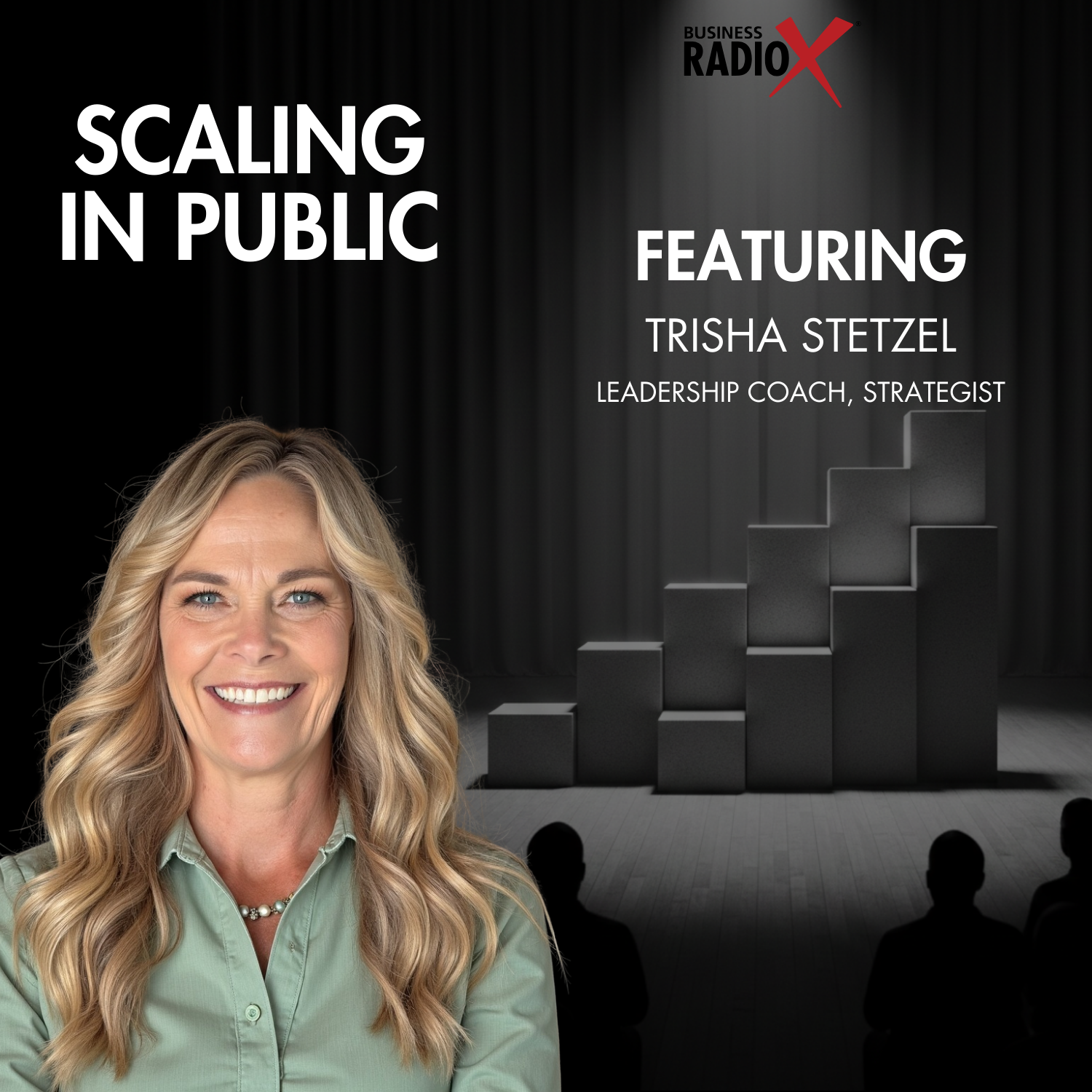

In this episode of Scaling in Public, Lee Kantor and Stone Payton, with special guest Trisha Stetzel, conduct a live coaching session focused on expanding their network of “studio partners”—coaches and consultants who use their methodology to grow their own practices. The team discusses refining their partner profile, leveraging interviews as a marketing tool, and prioritizing outreach to coaches affiliated with larger brands. They set clear targets and actionable steps for the next quarter, emphasizing strategic focus, relationship-building, and the importance of nurturing partnerships for sustainable business growth.

Trisha Stetzel is a leadership coach, strategist, and trusted conversation partner for founders and leadership teams navigating growth, transition, and complexity.
Her work sits at the intersection of leadership clarity and execution. Trisha helps leaders slow down long enough to ask the right questions, align around what truly matters, and move forward with focus and accountability. She is known for creating space for honest dialogue, challenging assumptions, and guiding leaders from vision to practical action.
With experience across executive coaching, organizational development, and business storytelling, Trisha brings both structure and humanity to her work. She believes sustainable growth comes from clarity, discipline, and a willingness to learn in real time, not from shortcuts or surface-level solutions.
Trisha’s coaching style is direct, thoughtful, and grounded. Leaders often describe her as calm, insightful, and deeply present, someone who helps them see what’s already there and act on it with intention.
Connect with Trisha on LinkedIn and Facebook.
Episode Highlights
- Business growth strategies focused on building a network of “studio partners.”
- The concept and definition of a “studio partner” in the coaching and consulting industry.
- Importance of nurturing relationships and systematic follow-up with prospects.
- Balancing immediate sales opportunities with long-term partnership development.
- Criteria for selecting ideal partners and interviewees for strategic outreach.
- Utilizing interviews as a marketing tool to build credibility and connections.
- Exploring strategic alliances with larger brands to accelerate partner acquisition.
- Setting measurable growth targets for expanding the partner network.
- Prioritizing outreach efforts based on the ideal partner profile.
- Commitment to continuous improvement and adaptability in sales strategies.
 This transcript is machine transcribed by Sonix
TRANSCRIPT
Intro: Broadcasting live from our flagship studio in Atlanta, Georgia. This is scaling in public. The next 100 Business RadioX markets, featuring founders Lee Kantor and Stone Payton, along with some of America’s top coaches, helping them grow the network with real strategy, real lessons, and real accountability all shared in public. To learn more about the proven system that turns podcast interviews into a perpetual prospecting pipeline through generosity, not gimmicks, go to Burks Intercom and download the free Business RadioX playbook. Now here’s your host.
Stone Payton: Welcome to another exciting and informative edition of Scaling in Public. Stone Payton, Lee Kantor here with you and we have our very special host once again, Trisha Stetzel. Welcome back.
Trisha Stetzel: Hey. Thanks, Stone. I’m so excited to be here with you gentlemen today. Are you guys ready? Ready for this or not?
Stone Payton: Yes.
Trisha Stetzel: Ready or not, here we come. Okay. Our first session. So, uh, last session was our discovery call. Really honing in on what are the things that you want to do today? I want to focus on the first 90 days. So we’re going to requalify the 100 shows. We’re going to talk a little bit about that. But I really want to focus on and drive some action to the first 90 days. Agreeable?
Stone Payton: Agreeable.
Trisha Stetzel: All right. Fantastic. So as always, I’m going to check in on your actions or commitments from the last time we met. Lee, you committed to be more to be more coachable and trying new approaches. How has that shown up for you? Just over since our last session.
Lee Kantor: Well, it showed up several times, obviously, in our conversations about video recording. So I feel like I’m giving you my opinion about it and am open to, um, exploring video recording. So I think that’s an example of being coachable.
Trisha Stetzel: Yeah, I love that. And Lee, thank you for being open to that. And you know, we talked about this. You are looking for some pushback and some new ideas and some fresh, um, interjections, if you will, on things that, uh, these coaches know are working out there. So thank you for that. All right, Stone, you committed to taking off your sales hat and being a little more transparent. How’s that showing up for you?
Stone Payton: It has shown up for me in my personal life. I had a tough situation this past weekend, and I had to deal with a very good friend and get past that strain, and I really do have the ability to have driven that conversation in a different direction and coated over pretty good and keep moving. I didn’t do that. I opened a kimono. I was completely transparent. Took my sales hat off. Off if you will, and I’m really glad I did. So it’s kind of like a practice round to bring back into the business arena.
Trisha Stetzel: Okay, I love that. I love that you guys are really thinking about these things in between our sessions. So let’s just dive in. Um, as we step into first quarter, we’re only a couple of weeks in, right? Uh, in our first real coaching session, what activity or numbers already describe your reality. Where are you at today as we jump into first quarter?
Stone Payton: I can start where we are today is I have more opportunities than you could swing a cat at, to have conversations with brand new people who are interesting, doing great work are probably prospective either direct clients or referral sources. Good people to know to have in our circle and their um, and some of them are in my mind are probably quality candidates to become some version of that tiered system we talked about last time, and maybe ultimately, someone who is running a market and following our methodology and using it to grow their business and using it to, um, to to grow the Business RadioX, uh, business. So I’ve got all that going on. And it occurred to me this morning, I, I wonder if if, um, the opportunity is easy maybe is not the right word, but I don’t think it’s as precious to me anyway as it should be, because a lot of people that I know in small, medium sized business, I mean, they would give their right arm to be able to to turn the dial like I can and meet virtually anybody they want to and have a substantive conversation. And I think maybe I’ve become desensitized to that. So it’s not as organized as it ought to be. It’s not systemic. And I’m not treating each one with the degree of preciousness. Then maybe it should be.
Trisha Stetzel: Yeah. All right. It sounds like some opportunity there. Yeah, right. Yeah. Okay. We can dig into that a little bit more in a few minutes. Lee, would you like to weigh in on this as well?
Lee Kantor: Yeah. I think that our activity that we do on a regular basis is we have the ability and this is our methodology of inviting people to come on shows. And we do that to help them get the word out about the work they’re doing. But it also puts them into our pipeline to possibly sell them something down the road. Um, and we just have a that is working perfectly. It’s worked for 20 years. This kind of system and approach that we have on doing this. And that’s what kind of unlocks all these opportunities with these individuals moving forward. So that’s what’s working right now. Um, I think we can always be doing a better job once we’ve connected with them and we’ve started building a relationship with them, that we can continue to nurture them and follow up with them and continue to serve them more over time until they are ready to, to potentially buy something from us.
Trisha Stetzel: Okay, great. And so I want to dive into what’s what’s happening now that’s going to connect you to that 100 partner vision. But before we get there, let’s talk about what a partner is stone. You want to tackle that first.
Stone Payton: And we touched on this last time right. Because but right now in my mind and I think in these, uh, a studio partner is an individual who in most cases already has an existing professional services business practice, at least at this point, I think business established business coaches, and if they have a little bit of a if they have a hole in their swing at all, they don’t have this consistent flow of qualified discovery calls. Um, but otherwise they’re, They’re there. They’re doing great work. They’re good practitioners. They’re doing great work when they can get it right. And so a studio partner is that person. For example, let’s pick a market we’re not in. In that regard in San Diego. And they’re using our methodology our brand equity, all that stuff to first and foremost grow their coaching practice or their consulting practice or their fractional exit practice in that market. And then as they mature, we’re showing them how to turn around and and help other professional services providers in that market with the methodology and all that. And in my mind, the, um, the moniker for that, the, the label for that is studio partner. One of the reasons we’re wrestling with that is, at least in the initial going, they don’t really have to have a physical studio to make that work and get it off the ground. I will tell you, I believe with all my heart and mind, and I’ve seen a great deal of anecdotal evidence. They’ll help more people and make more money if they will establish at some point a physical studio. But that’s what, in my mind, that’s a studio partner. I’d love to have 100 of them by the end of next year, and a thousand of them before I hang up my cleats.
Trisha Stetzel: Okay, I love it. Uh, do do you want to weigh in here? What’s happening now that connects us to that 100 partner vision?
Lee Kantor: Yeah. To get clarity around that individual, they have to, you know, kind of have a heart of service. That quality has to be there. They have to want to sincerely serve their business community. They want to increase their reputation and authority within that community. Um, and they’re tired of being that best kept secret. I mean, I can’t tell you how many coaches I’ve interviewed that that is one of their big pain points, that they feel like they are a good quality coach that delivers good quality coaching, but just not enough people know they exist and that that’s frustrating for them.
Trisha Stetzel: Mhm. Yeah Absolutely. And I know we’ve had a lot of conversations around that as well. So can we put some numbers around this because we want to have a starting point so that we can get to what does the end of first quarter look like? So where are we at today on. And I know we talked about it the last time we met, but let’s talk about it again today so we can put a number to it. Where are we at today with studio partners?
Stone Payton: Current reality is nine and that includes me and Lee. But Lee and I do each have a studio, but that’s the current reality is nine.
Trisha Stetzel: Nine okay, so Lee, let’s imagine it’s March 31st, 2026. And you say first quarter was a win and we’re on pace for 100 partners. What would that look like?
Lee Kantor: What what does being on pace look like?
Trisha Stetzel: Yes.
Lee Kantor: So um, in my mind there’s two targets when it comes to what that success looks like. One is we have to be in front of more individual coaches that raise their hand and are attracted to this. But simultaneously, I think it’s important for us to be in front of some larger brands. Um, and explain how our business development platform helps their coaches within that brand, uh, be successful. So I would like to, in addition to having a numbers aren’t my superpower here. So uh, uh, uh, momentum with individuals but also momentum and actually piloting some tests with some brands that maybe serve coaches, um, and us showing them how they can implement and bolt on our service as part of their service so that we can get, um, multiples so we don’t have to kind of chase 100 individual coaches. We can go into a brand that might serve coaches in general. And then, you know, get ten, 20, 50 of those in one swing if we can just implement our service within their service. Okay. So I would like to pilot if I was going to put a number on one thing, it would be at least one pilot of some brand, uh, during that 90 days, that to me, uh, seems realistic, uh, to put a number on how many coaches would I be high fiving? That’s a harder number. Um, as long as we were getting kind of momentum in the direction I would be high fiving. But I think it’s reasonable, because I don’t think we need a lot of partnerships with brands. And I think the partnerships with brands are the accelerant. We need to get to that number in the most efficient manner possible.
Trisha Stetzel: Yeah, I like that. Uh, so we’re really talking about strategic alliances. So people who are already serving your ideal client or who, you know, is your ideal client today. And we’re going to tackle that again, in in our next session. So, Stone, I’m going to come over to you because you said something that I’m curious about. You said you have enough people. You didn’t say you’d swing a cat at them, but you said that you have enough in the pipeline to swing a cat at. So let’s talk about numbers. What does that look like for you?
Stone Payton: Well, I’m glad you asked, because I wanted to pipe back in on this because, um, I, I was looking at our ratios at the studio level. Like, when we bring in somebody, we bring in at San Diego Lady, and we work with her if she’ll follow our methodology and do it our way for a while and then kind of, you know, get creative, she’ll experience. 1031 1421 she’ll if for for every, um, ten people that she has in the studio, three of them will want to have a conversation about having a custom show. One of them will buy and it’ll be a 14 to 21 day selling cycle. So I was taking that. I would like to think that we can do that at this level, too. And I know I can turn the valve and talk to 50. I just talked to have like a substantive conversation with 50 people in that that quarter. And if that’s all true, then I feel I feel like, um, I, I think a reasonable number, even at that level where you’re going direct one, one, you know, down that ratio scale that we could have five new studio partners by the end of the quarter. Um, and then I really think that’s true. If we even get one solid brand like a like like if coaches are, if we’ll get some better coaching, maybe on our ideal client, uh, profile. But if coaches really are the thing, how cool would it be if Focal Point said, all right, we’re going to take a swing at this with five coaches or you know what I mean. So so that could happen like that. So for me I’ve got a number in my head at the moment. And that’s five because and I know that’s not 25% of a hundred, but you but you got the traction you got. I would feel pretty darn good about that.
Trisha Stetzel: Right? And then and then you know what you’re looking for and you know how to bring them in. You know what’s attractive to them. And you already have the systems in place. Are there tweaks that you need to make depending on whether they’re an in-studio or remote studio or mobile studio? Right. Uh, and that would have to be looked at as well. Okay. I love the idea of five. I also love the idea of building at least one partner relationship. Uh, that’s really tight. So, um, Lee mentioned that one strong partnership that you could pilot is something that he would like to go after. So Stone as his partner, do you have a line on those types of relationships or is that something you need to go figure out?
Stone Payton: I definitely need to go figure it out. I’ve got a little bit of intuition, instinct. But no, I, I don’t have a direct line of saying, okay, this is this is the path. Here’s who we want to go build that strategic relationship with to get us to that five. I don’t have that well defined.
Lee Kantor: Okay. That’s where if I mean, if there’s a coach out there that has skills in building partnerships, hey, bring them on this call and let’s, uh, let’s let them coach us up, because I think it is important for us to pursue that channel. And, uh, we obviously need help, so.
Trisha Stetzel: Okay. Awesome. There we are, being vulnerable and open to open to coaching I love it. Um, okay. So can we play around with that for for just a few minutes? Gentlemen, the building, uh, healthy partner pipeline. Because Stone, what I heard you say is that your system already works to bring you the people that you want to have on a show that you can have conversations with. And you have your sales process built in, and you talked about the. 1031, 14 to 21 you already know that works. So where do you start with building this healthy partner pipeline.
Stone Payton: So the front end of it can look exactly the same as far as the, the the tactics, the the mechanism. I think we can get more targeted about that’s the people we’re going to use this media platform or these 2 or 3 media platforms to draw those people into our circle. Once we figure out who those people are and we can stay more brutally focused on that. I have a great sales opportunity that I got to write that note on. I was telling you about earlier. I’m going to be real surprised if they don’t sign off on the direct client thing, the thing we’ve been doing for 20 years. It would really be better in the long run for what we’re trying to do. If sure, we’ll do that. We’ll help you. Like it’s almost like, yeah, and we’ll do this thing too. What would really be great is if they if they teamed up with us in this partner regard, it’s it’s probably better for them. And I know it would be better for us. And so I mean, it came up a little bit yesterday and Lee kind of leaned in that direction and it would have been my, um, without that, you know, I would have just hammered on let’s get this deal, which, you know, that’s not what we want. What? Not what I want to do anymore. Just go get the next deal I want to. Yeah. I don’t know if I answered the question.
Trisha Stetzel: No. You did. No, I think this is really good. So, Stone, what’s one what’s the next step with this particular, uh, person that you would rather be a partner than just a client? Uh, what can you do in the next few weeks to adjust the next conversation?
Stone Payton: Well, first, make the decision is, is it prudent to try to pull that off with this one? Because I think he’ll buy the other thing and it’s good money and I know we can pull it off. So so that is or make the decision okay. We’re going to do what we do and hope we can do the partner thing with that guy. But on the next one we’re going to do the partner thing. Hell or high water? That’s an idea. Um, maybe. And, um, just make the decision to do it. Make a decision that that’s the target. Okay.
Trisha Stetzel: And decide what the priority is. Right. What’s important?
Stone Payton: And decide what the criteria are for making. Deciding that that’s the target. Okay. Because we can both make a very comfortable living just doing what we try to get other people to do. Of course. Yeah. Well, this is a different thing. So it is literally taking my sales hat off now, getting more strategic.
Trisha Stetzel: Stones completely open to this whole coaching process at this point. Uh, and I appreciate that. I really do, because this is sometimes it can be a little uncomfortable because you know what you know, and you’re really good at what you know. Now you’re going to figure out how to get those partners in the door. Right. If that’s what you want to focus on. So, Lee, I want to come back over to you. Do you have other ideas or thoughts? Comments on what Stone and I have been talking about, or even other things that we might want to focus on or bring priority to in the first 90 days.
Lee Kantor: Well, um, I do have thoughts. Um, and it’s it’s probably contrary to both of what you were discussing. Um, I think for this one deal, I think we should close the deal with the thing that they want to buy. And then after we start working together and, you know, prove us to them. Them to us, then we pursue this second tact of more of a systemic solution. Um, and then the challenge, and then I’ll push back a little also on the what works in a studio and the number formula that works in the studio. I think it works in a studio because there’s a human to human in person, visceral feeling that happens in a studio that isn’t happening virtually. And, um, we have not cracked the code on how to create that visceral Aha moment. Oh, I get how this works and how this can work for me. That happens when you’re in person, uh, remotely and virtually. So, uh, I don’t know if that formula, just because it works in person equally works as well. Um, virtually. So. Okay, that’s that’s part of why I’m, uh, we’re we’re exploring this avenue of of, uh, marketing experimentation. Uh, you know, this is us sharing what we’re trying to do to grow, but it’s also a marketing tactic for us to grow. So, I mean, I don’t want to mislead anybody here, but we’re trying to grow our network, so we’re, um, getting an opportunity to share why someone should join us on this mission. And, um, we get to talk to a lot of the people that either, um, are prospects for us or know potential prospects for us. So Marketing, uh, our brand and expanding our network is the objective. This is a marketing tool that we’re we’re using this exercise for.
Trisha Stetzel: Yeah, absolutely. So just to clarify and come back stone on the five that you would like to close with, are they in person like live studios or are they remote locations.
Stone Payton: So it’s really fine with me and I think plausible to do it, just like I did. Cherokee Lee and I operated out of the same studio for many, many years, and I moved out to to Woodstock, Georgia. It’s a suburb of Atlanta, and it’s in a county called Cherokee. But 6 or 8 months before we moved, uh, from the big house to to the house we have here in Woodstock, I went ahead and started cranking up Cherokee Business radio virtually. And then I came to, uh, a co-working space, actually two different co-working spaces. So mixed in a little bit of live stuff with like this remote kit that we have. So to me that’s perfectly plausible. And but to so yes physical studio. That’s the way to do this. That’s what I want is five people doing that. It’s okay with me if it takes them six months to a year to get there. And I’m not going to, you know, cry in my beer if they don’t ever get there and they stay virtual, that’s better than, you know, that’s that’s moving, moving. But I, I mean, that’s how I got Cherokee going was virtual then a little bit of, you know, like Radio Day on Fridays and then started bringing them into the actual studio once I got here.
Trisha Stetzel: Okay. So if this is for both of you, from a priority perspective, you can you can continue doing what you’re doing and pursue the people that you already have in the pipeline to see what decisions they’ve had, they will make down the road. Or do you focus on these partner relationships? So I’m just throwing it out there. Um, Um, who wants to take that one?
Lee Kantor: Well, I don’t think it’s an Or. I think it’s an and.
Trisha Stetzel: Okay.
Lee Kantor: Because a lot of the people that we’re meeting by doing the activity or we’re doing of interviewing coaches, um, some of them have relationships with these brands, and some of them are the entry point into the brand. So I don’t see it as a, um, you know, an either or, um, you know, I and I don’t I see, I think it’s a more elegant way to approach the brand if we’ve already have some relationship with one of the people within the brand, as opposed to just kind of going to the CMO of the brand who doesn’t know us and doesn’t have any relationship with us, and no frame of reference of how we do what we do or why we do what we do. If we can come on the back of here’s an interview that is probably one of the best interviews that person ever had and that, um, they see where it’s published, they see that, um, you know, it gets, supported online on LinkedIn. They see some of the things that we do with the content. It’s easier then to at least have the beginning of a conversation about why it might be useful for them to partner, as opposed to us just being some, you know, a stranger to them.
Trisha Stetzel: Okay, so just, um, telling you what I heard. So what I heard is you’re using these individual interviews as a strategy to build partnerships down the road. So the focus is still building the partnership, although you’re still doing individual work. And those may turn into studio partners, potentially. But it really is the strategy to get to the bigger brand. Did I hear that right?
Lee Kantor: Right there. That’s the top of the funnel. Okay. That that work. Uh, the interviews for us is the top of the funnel.
Trisha Stetzel: Okay. Perfect. Uh, Stone, what are your thoughts?
Stone Payton: I think he’s probably right, because he almost always is. Um, And just from a gut level, I have witnessed in a variety of domains the power of extreme focus. So if there was and again, maybe this doesn’t have to be either or, you know, might put him in one direction and me in another. I have seen the power of extreme focus and I could it wouldn’t bowl me over to learn six months from now that when one of us maybe came over here and said, no, I’m not doing any more individuals. I’m only talking to CMOs of brands, I’m going to build a relationship with them. I’m going to tell them why they ought to partner with us, and I’m going to sell them. So I. And I can’t say I disagree with anything he has said as a strategy, but I have seen the power of extreme focus, you know, over the years.
Trisha Stetzel: Sure. Absolutely. So in the first 90 days, what do you want to do?
Lee Kantor: Well, you’re the coach. What’s your recommendation?
Trisha Stetzel: I appreciate that, Lee. Um, focus. Laser focus is really where you guys need to find yourselves. If you set a goal and you both go after it, then you’re going to get it. So I would just ask together, what do you want to go do? What’s most important. And I’m not saying not to have your funnel. You need your funnel. You’re still using those individual conversations to get where you want to go. So don’t stop doing anything. How do you just focus those conversations and relationships? Back to partnerships.
Lee Kantor: One quick I’m hearing you say that partnerships should be the priority.
Trisha Stetzel: I heard you say, I heard, I heard you tell me both. Both of you agreed that partnerships are really important in this business, right? They are. I’m not telling you that you should pursue those. I want you to think about where your business is at, and where you’re going to get the biggest bang for your buck.
Stone Payton: So one idea that occurs to me if we choose to do this laser focus thing, but we agree that it’s a pretty solid strategy to build a relationship with an individual practitioner inside a system, inside an established system, like a coaching franchise or an executive or fractional executive, uh, franchise or something, is maybe exercise a discipline of all or most of those individuals that we avail, that we make our our thing available to and that we pursue that. One of the criteria is they got to be part of a system. It can’t be, you know, Jim Bob’s coaching. It has to be, you know, Jim Hernandez, certified coach and part of this system or he’s been trained. Part of the system. I mean, I’m just I’m throwing that out there. I’m not recommending. I’m just I could see that if you establish that criteria, it might help achieve that focus.
Trisha Stetzel: Yeah. Okay.
Trisha Stetzel: Lee, what do you think about that?
Lee Kantor: That sounds good.
Stone Payton: I took my sales hat off. Lee, I’m not trying to sell you on it. I’m just thinking out loud.
Lee Kantor: No, I mean, again, to me, I look at everything as an experiment. So if this is the experiment that we’re going to. I mean, we’re not changing that. We’re going to pursue individual coaches now we’re tweaking those individual coaches are going to be always under some larger system, and then those are the only ones that make it into the pipeline, so that each one of those has the potential to reach a CMO of one of those brands, because we have now a path to them. And it’s not a cold call to that brand. It’s a path through somebody that already knows, likes and trusts us. So it gives us a better chance to get in front of the system. The head of the system to at least have an exploratory conversation about whether this is something valuable or not.
Trisha Stetzel: Yeah. Good. All right. Stone put his sales hat back on. I can’t wait to hear this.
Stone Payton: Then I’m going to hush and listen. But what if the what if part of the strategy was we identify the part the strategic partner for, you know, we get better and better at that. And we’re. And then we say to ourselves, okay, we’re going to interview five practitioners within that system. And then with that foundation of five which we can get, I guarantee you I can make that happen. This thing works. Then through whatever else we build, that’s part of our process for having a substantive conversation with whoever it is the CEO, the CMO, the brand manager, or whatever. And so we’re going to go hit these 22 systems, and we’re going to and the way we’re going to get to them is first we’re going to interview five other people And then we’re going to interview or reach out to the actual target. Okay.
Trisha Stetzel: Yeah, that sounds like a that sounds like a great start. So here’s what I want you guys to think about is you don’t need to stop doing anything, but you do need to think strategically about the conversations that you’re having. You probably already have people in the pipeline. You’ve got people lined up that you’re going to have conversations with. You never know where those might lead. Listen, we’re going to go we’re going to go build the ideal client profile and marketing and all of that stuff to go talk to the people that you really want to work with. But other people are going to come in and say, hey, can you work with me? Right. So we don’t want to discount that. I just want you to refocus and think about it strategically. Is this conversation that I have scheduled or that I have today going to get me where I want to go? And if building those partnerships is important to you, then that’s the question you have to ask. Is this conversation going to lead me to where I want to go. Thoughts?
Lee Kantor: No. I think you’re right on the money. And I think it requires us to stone. We’re talking about the word precious earlier, but we have to be more precious on who gets through the pipeline into the interview funnel. And we have to decide, okay, this person seems like a good coach. They might be fantastic, but they don’t meet the criteria of being part of a larger brand. So then they have to, you know, they can come on in six months, but they can’t come in in the first quarter. The first quarter is precious because the only people we want to be interviewing in the first quarter are people that are have some attachment to a larger brand.
Stone Payton: And we could even. Yes. Agreed. And we could even have a relief valve and say, hey, let’s get them on a show. I got 258 to choose from, right? Let’s get it. Let’s, you know, if we really, you know, we’d still be, but not let’s don’t invest my time and yours on it. Maybe. Right. Yeah.
Trisha Stetzel: Okay, so what I’ve heard you say is that most important in first quarter is building relationships with partner brands. And the focus or one of the ideas is to create a way to filter out those that you want to talk to first, because strategically, they could lead you to that partner brand that you’re looking to have a conversation with. Is that right?
Stone Payton: Yes. There’s a lead to it. Um, and it’s the when for lead two for me, though at the moment anyway, is I’m going to go to the CMO or whoever we identify. I’m not going to I’m not going to rely on those people to team me up, necessarily. But I like having that foundation that as I’m having that conversation, five of that, that that lady that the CMO who’s running things, five of her practitioners that she thinks are really strong and that we have that track record. So I’m not coming to her just with a yeah.
Trisha Stetzel: Oh. Nice idea. So what I heard you say is you would go to the brand, the home office brand, and say, I want to interview five of your top people. Who are they?
Stone Payton: So that to maybe we should talk about that. So I hadn’t thought about just going there and and going that way, which maybe that’s the I was just thinking what a luxury or how strong it would be from a positioning standpoint. If I am talking to that person to say, you know, here’s what we’ve learned so far, because we’ve interviewed five of your people and they did a great, you know, and this person. So I was thinking that way. But but what I’m hearing.
Lee Kantor: Like her way better. All we have to do is interview one of their people and then go right to the CMO and say, hey, I just interviewed one of your people. She was great. Do you have three others we should interview? And then now that person, the CMO, is going to be like, yeah, that’d be great. Like that. Like that’s a total win for them.
Stone Payton: Yeah. And that’s more streamlined and direct and.
Trisha Stetzel: Okay, so being mindful of time, It’s time to wrap this show up or this coaching session. Uh, do you feel like we made progress today?
Lee Kantor: Yeah, 100%.
Stone Payton: Yeah I do.
Trisha Stetzel: Okay, fantastic. So what’s one action that you can take between this session and our next session that will get you closer to what we were talking about today?
Lee Kantor: Well, one thing is we’re going to go back through all of our previous guests and then kind of make a mark on who we’ve already interviewed that is part of a larger brand. And then from there, we can then decide how to approach the brand with that strategy of, hey, we’d love to interview, you know, a few more of your people because this person did such a great job.
Trisha Stetzel: Awesome. All right, Stone, how about you?
Stone Payton: I think that’s a marvelous idea. And I think we in order to do it going forward, I think we invest some some energy. And it might be we put some, you know, a staffer on it. Let’s go identify whatever the I don’t know what the number is. Let’s go identify 25 brands that seem like, okay, that these who were going after. And maybe that’s just good prep for the professional council. We’re going to get on really honing that down. But I think that sounds like good activity, good productive preparation to get the most out of that session.
Trisha Stetzel: Yeah, absolutely. And you know, guess what? Next session is about identifying who your ideal client profile is. Right. And what is that where. So how do we get in front of those people? Uh, so very timely. Gentlemen, this has been a fantastic session. I appreciate your openness. I appreciate your allowing me to ask you so many darn questions today and not give you all the answers, because that’s what I’m supposed to do as a coach. But I think that we pulled some really good things out in our session today. Yeah.
Stone Payton: Fantastic. Well, thank you again. This is. This is marvelous.
Trisha Stetzel: Okay. All right, you guys, today we turned your one year vision into a focused. At least get started. What are the next steps for your 90 day plan. And you’ve defined your starting point. You created that objective that we talked about today. And each of you has a clear action to complete before we meet again. So until then, I hope you guys have a great week.
Stone Payton: Thanks, Trisha.
Speaker1: Thanks for listening to Scaling in Public the next Business RadioX 100 markets. Are you ready to enjoy a steady stream of discovery calls? And finally, stop being a best kept secret? It’s time to step out of the shadows and watch your coaching business grow. Let’s fill your calendar ten discovery Calls in a month, guaranteed. Go to brks. Com to download the free Business RadioX playbook.














