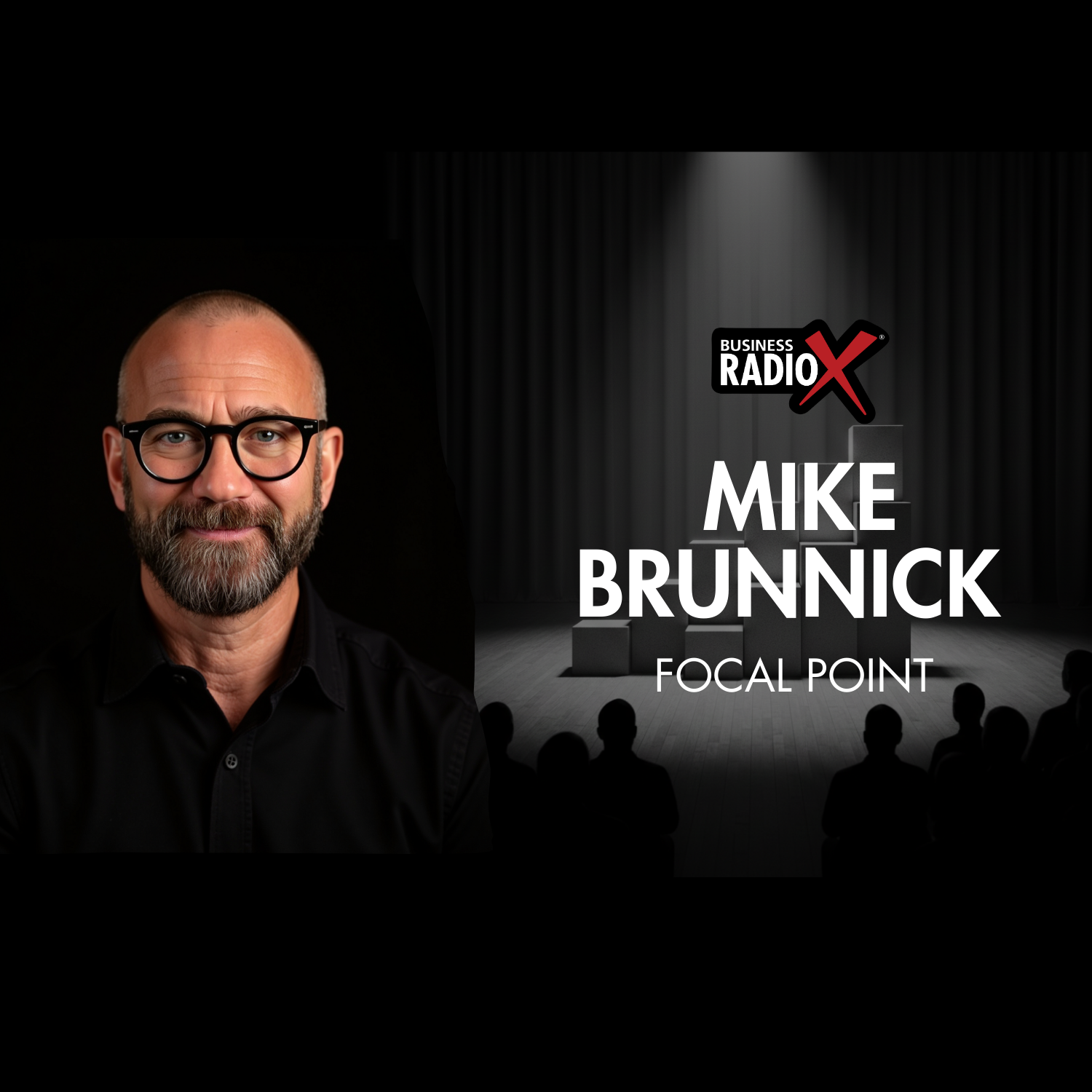

In this episode of Scaling in Public, Lee Kantor and Stone Payton are joined by coach Mike Brunnick to discuss strategies for scaling Business RadioX® by partnering with coaching organizations and certifying agencies. They emphasize refining their ideal client profile—service-oriented coaches, consultants, and executives seeking authority and meaningful connections. The conversation explores overcoming traditional networking challenges, leveraging in-studio experiences, and experimenting with hybrid and roadshow models for expansion. The episode highlights the importance of clear messaging, authentic relationship-building, and value alignment in growing a business network.
 With over 35 years of leadership experience, Mike Brunnick has led teams in the military, government, nonprofit, and private sectors. In his 25 years in the B2B technology space, Mike led global teams in the fields of training, services, products, sales, and customer success.
As such, he has a unique perspective on how the parts of a go-to-market (GTM) team work together, and how they impact the customer experience.
As a sales trainer and Focal Point certified business coach, Mike helps his clients get themselves, their businesses, and their revenue “unstuck”. He specializes in teaching leaders how to set and achieve goals.
Mike has a BS from Holy Cross and has earned a Bronze Star with Combat “V” for valor as a Platoon Leader in the Marines during Operation Desert Storm.
Connect with Mike on LinkedIn.
Episode Highlights
- Strategies for scaling Business RadioX® networks
- Building relationships with coaching organizations and certifying agencies
- Defining and refining the ideal client profile
- Importance of value alignment with clients
- Tactical steps for business growth and relationship building
- Challenges of traditional networking versus creating a platform for engagement
- The significance of emotional connection in business interactions
- Exploring hybrid approaches to replicate in-person experiences virtually
- Articulating customer problems effectively to attract ideal clients
- Continuous learning and collaboration in business growth strategies
 This transcript is machine transcribed by Sonix
TRANSCRIPT
Intro: Broadcasting live from our flagship studio in Atlanta, Georgia. This is scaling in public. The next 100 Business RadioX markets, featuring founders Lee Kantor and Stone Payton, along with some of America’s top coaches, helping them grow the network with real strategy, real lessons, and real accountability all shared in public. To learn more about the proven system that turns podcast interviews into a perpetual prospecting pipeline through generosity, not gimmicks, go to Burks Intercom and download the free Business RadioX playbook. Now here’s your host.
Stone Payton: Welcome to another exciting and informative edition of Scaling in Public. Please join me in welcoming to the broadcast this session’s coach, Mike Brunnick. Good afternoon sir.
Mike Brunnick: Hi Stone. Good afternoon to you. Hi, Lee.
Lee Kantor: Hey. Excited to be talking to you.
Mike Brunnick: I am delighted to be here today. Thank you all for inviting me to participate in this, uh, this exercise that we’re doing. This is, uh, this is going to be fun. All right, you want to just jump right in?
Stone Payton: Absolutely.
Mike Brunnick: Yeah, absolutely. I got the ball here. Um, so, uh, I know that you had a great session with my dear friend Maggie last week, and I think there was a couple of things that you committed to do. One action each, uh, that you were going to take as a result of, uh, of your time with Maggie last week. And I’ll start with you, Stone. Do you remember what it was that you, uh, committed to do after last week’s session?
Stone Payton: Well, I feel like Lee and I both walked away with this idea that we’re going to scale much more powerfully, much more efficiently. If we can work with systems organizations that have our ideal client profile there within their domain, that we can serve with this thing of ours. And so the overarching walk away, um, activity set of actions is around getting very, um, tactical around how do we build those relationships with those systems ourselves? You know, eat a little bit of our own cooking and, and, and then what can we do to persuade them and sent them to take a swing at this thing and team up with us so that we can help them help their people. And so as a as a tactical subset of that, one of the things I’ve been putting a great deal of thought into is what can we do to to lower the perceived risk or fear or whatever the right word is so that they really do want to, you know, they want to take a shot with us. So that’s that’s where my head has, has been. Uh, what about you, Lee?
Lee Kantor: Uh, the main insight I took from the conversation with Maggie was how to to to have Business RadioX be a recommended add on, um, for any new coach in a system, uh, like when they join, like, similar. I think we discussed that on how SiriusXM is included into a purchase of a new car, how they can experience the value that Business RadioX delivers during their launch. Um, you know, when they get started, uh, at a new whatever coaching group they’re with or if it’s a certifying agency, if if it’s one of those platforms, whatever it is, if we can include they get, uh, some Business RadioX at the start as they launch. She said I think the quote she said is, I wish that I knew about this when I started, and that really resonated with us. And we said, okay, how do we make that happen? And I think that to your point, that’s what we’ve been really trying to, um, kind of put into play, like how can we persuade a coaching organization to embed Business RadioX as just part of their launch?
Mike Brunnick: Yeah, that’s that’s great. And so it sounded like you, uh, you left, uh, last session with Maggie with some great things to to think about. Uh, were there any actions that you guys, uh, committed to take or that you feel like you should take? Um, obviously thinking about something is is really important, but, uh, what what comes after that? What’s the what’s do you think the the action is that, uh, manifest that into the world.
Lee Kantor: Um, an action that I took upon leaving that conversation was to put together kind of a strategic action plan in order to execute, to your point. And, um, I gave it a lot of thought and, uh, and Stone and I talked about this a lot on how. Okay, so now what do we have to do to make that happen? So we can identify different coaching organizations? And what our superpower is, is that we, um, have this tool at our disposal that allows us to meet and build relationships with coaches. So we felt that we should deploy that. And then, um, our strategy moving forward is going to be okay. Let’s identify some coaches in organizations and see if we can build a relationship with them. That’s strong enough that they can champion our offering to the coaching organization that they are aligned with. And if we can do that, that we feel gives us the best chance to get buy in from the organization because one of their people that is trusted will have experienced it and got a positive result, and then they would they would be that much more inclined to at least pilot the program. So the action that has been taken so far is to kind of go through that process and identify different organizations, and then we have a plan to start meeting some of the coaches within them, so we can find that champion so that we can move forward and get a pilot going. But we have not done that part yet, but we have the steps leading up to it. Stone.
Stone Payton: Uh, yeah. Except we have sort of kind of done that part. I’m a sales guy, Mike. So the first thing I did was, uh, get on the phone with Maggie and say, let’s talk this through some. You suggested that you wish you had had this when you began. We may have a unique opportunity here in your market to kind of help you get a jump start on exactly what we’re talking about. So the most tactical, practical thing I did before I shot off across the pond for a couple of weeks to play was set up that call. So, so so I made it real real for me.
Mike Brunnick: Yeah. That’s great. Um, and we can make some progress on that today. Um, you know, one of the, uh, one of the first things we do after identifying the ideal customer profile, uh, is sit down and do a brainstorming session on, uh, so now that we know what that person looks like, uh, where do I find them? Uh, if you’re, uh, if you’re looking for something, you’re looking for the, I don’t know, the elusive booby bird or whatever it is you got to say. Where do they go? Well, they live in banana trees. I’m going to go find a banana tree. So, um, you guys worked with Todd a couple of sessions ago to define your ideal customer profile. You started some some work last week with Maggie talking about some different ways that you could meet people that match that profile. Uh, what are some other places or what are some of the organizations that you guys were just talking about, that idea of getting into an organization. What are some of those organizations that you could go to and, uh, try to have it included, like SiriusXM?
Lee Kantor: Um, well, some of them are obviously the coaching organizations, the different coaching franchises that are out there. The others are the certifying agencies that certify coaches in a in a variety of specialties. So those were kind of the low hanging fruit for us was, um, existing coaching organizations that are are already have a pile of coaches within them and certifying agencies that, uh, work on certifying coaches in a variety of specialties.
Mike Brunnick: Right on. What else? What else? Stone. What are some other places we could get to your ideal client? Where do they? Where’s their banana tree? Where do they hang out?
Stone Payton: Well, that is something I really haven’t thought about. As much as it sounds to me like I should have, I think. I think we may have a more expanded, uh, definition of coaches in that anyone who is providing specialized expertise and knowledge in a specific domain. So to me that extends to the, uh, the, the, the outfits that certify and educate the, um, the, the, uh, the fractional exec, the fractional CFO, the fractional VP of sales, the people who certify and educate the, um, what was what was the the other group lead? The, um, well, I’m drawing a blank right now, but the anyone who is actually doing some sort of consulting coaching, maybe in the financial services arena, if they’re if they’re bringing specialized expertise and experience to a specific domain and they feel like they need to get credentialed, or they do need to get credentialed to be successful in the marketplace, we’d like to work with those credentialing organizations so that the challenge so many of those people have, as as I’m sure you can imagine, is just, um, is is access.
Stone Payton: You know, the more we refine our ideal client, I don’t think it’s that person that’s looking for the next, you know, Jim Jamie lead generator thingy or even the next, uh, coffee conversation. I think what they’re looking for is access and authority with, uh, people that are next at the next level, you know, they’re looking to punch a little bit above their weight or, or to at least get to, to fight in a class that they feel like they belong, you know, so a little more of a strategic I think we’re refining our, our picture of this person as someone who’s who has a more strategic yearning, and they don’t want to play down here at this level anymore, and they don’t know how. They can’t get the lunch. They can’t get the meeting. They can’t get the coffee. They can’t get that immediate, that initial substantive conversation with the person that they really want to work with. And so they’re going to networking meetings and all, you know, they’re doing all that jazz. Is that accurate, do you think?
Lee Kantor: Yeah, I think that, um, as we go through these different coaching sessions, it’s really helped us refine who that person is. Maybe, um, you know, a few weeks ago, we would have thought that ideal person is someone that just wants a more elegant way to network. And now I think that if we if push came to shove, if we had to choose between somebody who wants an easier time networking versus somebody who wants to, um, get get a meeting with somebody who isn’t returning their call, that person is a better fit for us, rather than just somebody who’s looking for a more transactional. Oh, this is the latest, easiest way to network or, um, you know it. I think that person is looks at what we do to Transactionally and the person who, like Stone says, wants to punch at a higher weight class. They view our solution as more strategic and that is a better fit for us.
Mike Brunnick: Yeah, that and that’s fantastic progress. Uh, and I hope you’ll take a moment and celebrate, uh, that progress, because it really is um, I’ve had the opportunity to, to lead sales organizations, uh, at about six different spots. Uh, in my, in my life, I’ve got experience in government and nonprofit and startups and big companies like Hewlett Packard. And, uh, I’ve been around a little bit, um, and I don’t think I’ve ever been at a place where they felt like they spent too much time thinking about their ideal client. Uh, it is a valuable exercise that when people get done with they say, well, that was worth it. Well, we should have done that earlier. Maybe, but but I don’t I don’t regret how much time I spent on it. So so kudos to you both for, for doing all of that sort of mental work. Um, and there’s always refinement to be done. Uh, and, and I’d love for you to be able to articulate pretty quickly what those, uh, those elements are that really make up your ideal client. You’ve got sort of a, an occupational, uh, set of criteria. Right? Somebody that’s in professional services, they’re a coach or a fractional exec or all those things. It sounded from your conversation with Maggie that you also had a set of, uh, what I’ll call value based criteria. Uh, the people that you want to do business with are the people who think like you do, people who approach the world in a certain way. Uh, did I did I hear that right?
Lee Kantor: Well, it good, sir.
Stone Payton: Well, it’s accurate for me. Maybe even more accurate is that they feel like I do. And maybe the ideal combination is they they feel like I do in terms of they want to genuinely serve. They want to support and celebrate other people doing great work. I would actually enjoy if they think a little differently, like if they feel that way, but they think about it differently and come at it through a different lens. But yeah, this, uh, this looking for people with, uh, what I would consider, what I would characterize as a consistent a value system that is consistent with ours. Absolutely. That that also is an eye opening exercise and realization for me in our time with Maggie.
Mike Brunnick: Yeah, yeah, yeah. I mean, I heard that your system, uh, really works, and you guys truly believe the passion just bleeds through when you guys talk about your system. Um, but you’re also really clear that it has to be somebody who’s not transactional, Somebody who’s not saying, hey, you know, I want to interview so that you can become a client of mine, right? I think, um, I think you said last week, Stone that, uh, it, uh, this this process lets you be nice, I think, is the way you described it. Yeah. Um, and, Lee, you talked about somebody with a with a heart of service, um, which is really, uh, just beautiful to say. Um, so when we talk about where do these people hang out, how do I find them? It’s not just a place, right? You could go to a a conference with a bunch of coaches that got certified by the same agency or an industry event, and you could meet 20 of these people. Um, but if you’ve got a clear idea in your mind, not just their occupational situation, but how do I suss out the value? How do I know that these people are truly going to be successful, uh, if they became a Business RadioX partner. So what are some of the ways you think you could suss out whether or not this is going to work for them? Not just because it’s important to you, but because they really need that heart of service to work.
Lee Kantor: Stone, you want to take this?
Stone Payton: Uh, yeah. And I am shooting in the dark a little bit, so this is incredibly valuable for me.
Mike Brunnick: So it’s a hard question.
Stone Payton: Uh, it is a hard question, but it does have my wheels turning a little bit. And I think maybe one of the things to look for. I don’t quite know how to pull it off, but if we could identify people in a community that are already walking, talking, thinking a little bit like what we’re talking like, you can see that. And maybe they’re not the most popular person or in the in the community or the or the most widely recognized, but maybe they are the ones that are clearly over and over investing in other people. Um, first and foremost, working on other people’s problems. Um, if we can find that person and like you. To your point, I guess they could be in any organization just about. If they’re. But if we can see evidence of them leaning in and supporting other people, that’s the right mindset, that’s the right value system. And then and then if you if you layer that on top of and oh, by the way, I’ve got this business and I need to be playing at a higher level.
Lee Kantor: Um, yeah, I think, I mean, we used to call it the, the social mayor of the community, the person who, you know, um, they, they know everybody, but it’s really the person who aspires to be the social mayor. Like, we help a person become the person everybody wants to know, instead of the person who’s out there trying to meet everybody. You know, there’s a difference there. Yeah, yeah. When our when our person goes into, um, a networking or any type of group, they’re not saying, hey, uh, this is what I do. What do you do? They’re saying, hey, I host this show. Do you know anybody that’s interesting I should interview. And when they go and approach those kind of relationships with that kind of statement, people are just more open to wanting to talk to them and to give them names of people and to introduce them to people, because it’s it comes with that heart of service. They’re trying to help promote someone else. They’re not even mentioning what they do.
Mike Brunnick: And I think that’s I think that’s a pretty a pretty solid answer right there. Um, you know, Maggie’s idea of getting with some of these networks or these organizations is a beautiful idea. Um, and now you’ve got to decide. All right, what do I do once I get in the door? Um, who is it I’m looking for and how do I find them. So that’s a that’s an important piece of it that you just named. I also heard something last week, and I was listening to the recording of your session with Maggie, and I wanted to read it back to you and see if you heard it and if I, if I’m perceiving that rightly. Um, but, Lee, you said that, you know, you got into this, this business that you’re in this, this, uh, thing that you do, uh, because you’re an introvert, uh, and because you didn’t want to be out trying to sell, uh, you liked the idea of people coming in in an intimate setting, having a conversation that felt really personal. Uh, and then seeing if that was a good way to to have business develop from there. Did I did I hear that right, that that you sort of got into this because it matched the way that you wanted to approach your business?
Lee Kantor: Right. So I, I did all the stuff that most people do. I joined, like, um, in Atlanta, there was a group called Power Corps that was, um, formed by somebody who was a former BNI person. So they spun off their own BNI type, you know, closed networking. And I was with them for many years, and I worked my way up. I up to a leadership position. I was a coach. I was doing all the stuff that you do when you’re a member of those groups. But as an introvert, I would create a lot of anxiety for me. And it was a lot of stress. You know, doing a seven minute presentation was stressful for me, and I was always like, there has to be another way to do this that is just more suited for the way that I like to do things. So when I created Business RadioX, that allowed me to change my positioning as I was there at the time, I was a copywriter, so I was writing advertising copy. So then I became the host of Atlanta Business Radio And then I partnered with somebody that was more of an extrovert who liked to network, and I convinced her to go to all these things.
Lee Kantor: But instead of saying that she’s Amy with Aflac, she was Amy, the co-host of Atlanta Business Radio. So she would bring in a bunch of people into the studio every week. Three people have three different businesses. Um, and then we would interview them. And at the end, a lot of these business people were like, wow, that was fantastic. How do I get a show like Amy? And then they’d ask me, and then I would sell them a show. And I liked that a lot better because now these people were coming to me. I wasn’t asking anybody for anything. I was just being the producer and co-host of the show. Amy was building her network and meeting people for her that was helping her grow her, um, Aflac business. So it was a win for her. And then some of those people ended up being hosts of shows. I mean, that’s how I met Stone. Stone was a guest because Amy invited her. Him because he had just written a book. I mean, everybody I knew came through the studio. I didn’t have to leave the studio. And I was meeting hundreds of people a year just by doing what I was doing.
Mike Brunnick: So what I love about that is that you found, if I can say it, a solution to a problem. The problem was, was that you knew that you needed to to network. You knew that you needed to meet people. But the traditional way of networking didn’t work for you, didn’t make you happy, or you weren’t successful at it because, uh, you know, you know, just weren’t in the right place. Um, and go ahead, please.
Stone Payton: I’m just going to say, clearly, I’m not an introvert at all. What I discovered, uh, which the interview that I did around the book with Lee and Amy was so different from all the other interview experiences I had. I saw something there, and what I’ve come to realize now is what I what I saw. There was a way to replicate a luxury that I had had almost my entire career leading up to that. I was in the training and consulting arena, but I stepped in at 26 years old into my uncle’s company, and I already had the access and the authority that they had spent the previous 20 years building. So I was already playing in the big leagues without having to do all that other, you know, that networking BNI type stuff. And so I when I met Lee and saw, I couldn’t figure out how he was making money at first, but once he described how he’s helping people and making money, I said, this is it. This is this is how I can, um, enjoy the, the, the same sense and authority and, um, and, um, and the positioning that I want in the marketing place by being the guy who has the show or ultimately the the studio I can serve, I can build those relationships. I can have those substantive conversations far more quickly. And so it’s interesting to me that a that almost an extreme introvert and fairly extroverted guy, uh, found a way both of us to capitalize on this platform and this methodology.
Mike Brunnick: Yeah. And that’s, that’s a that’s a great origin story. And as I said, what’s fun about it is it was the solution to a problem.
Stone Payton: Amen.
Mike Brunnick: So one of the building blocks, uh, and stone, you’ve done sales for a long time. Um, but one of the building blocks for a good sales program or good sales and marketing process is, as you’ve done already, define your ideal customer and then decide where those people hang out. And as Maggie worked with you on, can you articulate the The value of your solution. Uh, but one of the other key building blocks is can you articulate the problem that your product solves? Right. You’re selling calamine lotion, and it says right on the outside of it that it’s good for poison ivy and poison oak and poison sumac, but it’s not for sunburn, right? It it tells you what problem it solves. Uh, if you’re designing, uh, a utility truck, you have an idea that you got people that want to be able to move, you know, trash cans, but not lumber. Uh, they want to be able to move, uh, you know, eight kids home from a soccer practice, but not 15, right? So you’re deciding what problems your product solves. Uh, and so I would love to see if y’all can articulate what problems you’d be solving for someone who we talked about the ideal customer who’s in the right sort of occupation. They had the right aspirations and they had the right values. So I got that person. Now, what problems is that person having? Stone, you want to try that first?
Stone Payton: Yeah. And I’m going to go from what I saw when I was fired from that first dream job in the consulting arena. I share it with you, and rightly so, by the way. Uh, and when I went out on my old on my own, it was a little chilly out there, but I still had the benefit of some of that background and experience. Uh, and then that kind of got into the business of helping other people who were selling training and consulting. And what I found there, they by default or by necessity, they were playing what I call small ball like they were. They were getting like small training, consulting gigs, low fees, speaking engagements, all of that. And um, and they weren’t, they weren’t even they weren’t in the room. They weren’t at the table with people and organizations that could really use their services and could pay them handsomely and would happily do so over and over again. They weren’t even getting to they weren’t getting to swim at that end of the pool. Uh, and just a few of the things that I shared with them back in those days from my days in the big leagues, were was helpful enough that I could make a comfortable living. Uh, so some so more directly, those problems, I think a lot of people who have a great deal to offer in the professional services arena are not having genuinely substantive conversations and real relationships, predictably and fast enough with the vice president of blah, blah blah, or the senior director of the people who can make that decision and who feel a lot of the pain and bear a lot of the responsibility, uh, for for failure to meet objectives in that domain in their organizations.
Stone Payton: They’re never getting they’re never getting the chance. They’re not even getting an at bat. You know, they’re down here in the lower levels. And there are a few things that I was able to share with people years and years ago. But, um, that’s a problem. If that’s a problem, and I believe that it is, without a doubt, 100% incontrovertibly, I will tell you this thing will solve it. Um, so I if I’m right about the problem, this is the solution. Um, I just got to get a lot better at succinctly articulating that problem. But I’ve seen that is a rampant virus in the in the more common core ranks of trainers, consultants, speakers, fractional execs, consultants that most of them are living, you know, a $35,000 a year, just $70,000 a year income work their butt off nightmare thinking that, you know, trying to achieve some escape velocity and getting to, you know, they’re looking for their break, if you will. Yeah, I think maybe still.
Mike Brunnick: I think that’s great. So that’s sort of a problem. Set number one. Um, and in some respects it echoes a little bit of what you the problem you solved, uh, you met with Lee and his, uh, his partner, and you thought, wait a minute. This might be able to solve my problem.
Stone Payton: Yes, yes.
Mike Brunnick: But, Lee. Lee, I’ll turn to you because you started this to solve your problem. Um, can you, um, can you think of your problem in respect to now your ideal client profile?
Lee Kantor: Right. So I was I was trying, um, to meet people. I wanted people to meet me. Let’s put it that way. I didn’t want to meet people. And and that’s a I mean, that’s I don’t know. Maybe it’s obnoxious, but that’s how I felt that, um, I’m worth meeting. And, um, how do I get people to come to me instead of me going to them? And so that’s how I was looking at it. So how do I build a machine that has people entering my office sit around my table thanking me to allow them to come here and talk to me? And that’s what I built. And that and that’s Stone alluded to it earlier. People are fighting for a seat at the table. That’s I mean, in their head. They think that’s all they need. If they can unlock a seat at a table, then it’s game on. Now I’m going to take over the world. In my mind, I’m like, I want to own the table and invite people to it. And I prefer that positioning and I prefer doing it that way. You know, I don’t I want to be the place I’m going to solve the problem. For the person that is frustrated that no one’s returning their call, but they’ll show up on your show. They might not return your call they don’t want. They’re not really right now. Interested in a demo or have a coffee or have lunch. But if you invite them on a show to tell their story, what what makes them special, they’ll come to you and they’ll sit there for half an hour and you’ll talk to them. You’ll meet them, you’ll build a rapport with them. You’ll build a relationship with them. Then I believe if you do that 100 times a year, a bunch of them are going to then have maybe listen to your demo, and then they’ll have coffee with you or lunch or beer with you. So if you do it in my order, I find you. You’re going to have a better success to get to the conversation you wanted to have, but you’re doing it prematurely.
Mike Brunnick: Yeah. So that that’s exactly problem set number two. Right. So what problem might your ideal customer be having? Stone, you’ve talked about the fact that they want to play at a higher level. They want to reach that escape velocity. Uh, Lee, I think, you know, we can get to a place where you can articulate the problem that you solved for yourself is exactly the problem that this, uh, this model that you’re offering to people solves for them. You’re looking in a room of, uh, coaches or consultants and saying, oh, about 75% of these guys love going out and putting their plaid jacket on and slapping people on the back and shaking hands and being the president of their local BNI. But there’s another group of them in here that, uh, want to develop their business. They want to be successful, they want to have great conversations. They want to serve people, but they’re not comfortable trying to get people to call them back. They’re not comfortable doing all this networking. And so your solution may well be solving a problem for them that is identical to the problem that it solved for you. Uh, it would be attractive for them for all the reasons that it was attractive for you. Does that make sense?
Lee Kantor: Yeah, absolutely.
Stone Payton: It does to me. And it makes sense to me that it would be attractive for the organization that sold them the franchise or trained them or credentialed them if they if if they were somehow involved in them accessing this solution to me, that that mothership organization, everybody in the equation wins. It seems like to me, if we can pull this off.
Mike Brunnick: Well, that’s exactly right. That’s exactly right. So, um, uh, when I used to teach sales training classes, uh, and sometimes now when I teach new, new coaches, how to go through the sales process? Um, I, I try to simplify it as much as I can by saying, look, you’ve got two jobs in a sales cycle. The first one is to get the person to tell you their problem, do good discovery, ask good questions, find out what it is they want. Where are they? Where would they like to be? Uh, so you’re identifying problems, and then your next job is to describe the solution. I sell a widget, and the widget fits into this shape hole. Uh, I sell a roof rack that goes on top of a car. So I’m looking for people that don’t have enough space inside the car. Uh, so you describe your solution, and then you and that other person get to decide, is there a match between the problem you’re having and the the solution that, uh, that you’ve got. Right. So they’ve got a problem, you’ve got a solution. And if they match, Uh, it’s a pretty easy conversation. You’re not selling anything. Uh, and if it doesn’t match.
Lee Kantor: That’s that’s exactly how we see things also. And the first part that you described, part one that just happens during the interview.
Mike Brunnick: Right.
Lee Kantor: That what our system is different than what you’re saying is that this isn’t one long, continuous conversation. We’re just breaking it up into chunks. Your part one happens during the interview. Part two might happen a few days later. Later after, you know, immediately after the interview, a week later, whatever. But it’s going to happen again because they’re going to be open to hearing that instead of somebody just forcing all all three of those aspects in one conversation.
Mike Brunnick: Yeah. And I think that’s exactly right. Um, if you think about trying to find your next 90 studio partners, Uh, you know, one of the ways to get there is to get some number of folks in as guests on the platform. Uh, and in addition to that, uh, I guess the question is we talked about going out to some of these groups when you go out to those groups. Uh, are you ready to succinctly articulate the business problem? Um, and it sounds like you are. You guys have described it to me, uh, maybe a bit longer than you’d want to, uh, in, uh, in something that you’ve got a background in, uh, in copywriting. So, you know that, uh, you sit down to write a, an advertising tagline or a slogan or a, you know, is the IRS chasing you for your debt? You know, call me. You know, you got to tell people what problem you’re solving and, uh, and tell them how you can help them. Uh, so, um, does that, does that feel like, um, uh, a worthy exercise to, to really sit down and say, can I say that clearer? Can I say that shorter? Can I say that in a way that everybody I meet knows exactly what problems I solve? Does that sound like a worthy exercise? Does it sound?
Lee Kantor: Yeah, absolutely.
Mike Brunnick: I mean.
Lee Kantor: We have to get our language better and more clear. Number one, that’s so important. We really have to make sure that we’re coming up with something compelling that is going to get a person to say, you know, where have you been all my life? Um, that we have to get better at that. And also I would love because, I mean, we do. Owning a network like this gives us a lot of opportunity to we can interview whoever we want. Like tomorrow, like you mentioned. Like, if we wanted to meet firemen, we can make a firemen show tomorrow and start inviting firemen on the show.
Mike Brunnick: Yeah.
Lee Kantor: And in a short period of time, we would meet dozens of firemen. That that has never been a challenge for us. The challenge has been in our specific situation is how do we turn those people into a sales conversation? So we have to do a better job of once we meet them. Because, I mean, we’ve interviewed coaches for years and we have a database of thousands of coaches. So how do we move some of those coaches and open their mind to the possibility of how they might benefit from our offering? So how do we how do we meet a coach and then, um, incent them to either want to learn more about us specifically and or in, um, introduce us to somebody they might be coaching that might benefit from, from what we offer, you know, how do we make every coaching conversation and a business opportunity for us? We have not done a great job from from that standpoint.
Mike Brunnick: Got it. Stone.
Stone Payton: Amen. We have not we have absolutely not done done a good job with that. It’s um, it’s it’s a little bit of, um, we’re a little bit spoiled because in any given local market, I can sort of like here I have there’s a studio a mile down the road. I’m at the house right now with this fake background thing, but a mile down the road is a real studio, and I can invite people around the community, and I can cast a wide net and have the mayor and the fire chief, but also the fractional exec and the consultant and the coach and everybody. And I can just sort of cherry pick the ones I really want to have a substantive conversation with and then build out that studio to be incredibly successful. We have not, to date translated that well baked, extremely efficient thing that works. It always works. It never doesn’t work in any given local market. Lee and I haven’t translated that into the machine that works as a mothership, trying to get more people to consider doing that around the country that we have. There’s a gap there for sure.
Mike Brunnick: Right? Uh, so does it feel, uh, natural? Right. Because you want this to be part of a natural conversation. You said on a couple of occasions you don’t want this to feel transactional. Um, so I’m genuinely asking if it feels natural within your, your value set and the mood you’re trying to set to ask guests, past guests, current guests, uh, who do you know that is trying to take their business to the next level, but would rather people come to them than having to go out into the world and go to them? Do you know anybody that finds that that is in that situation, that is trying to grow their business or trying to get to the next level, but doesn’t want to spend all of their days out, you know, shaking hands and asking people for business. Uh, would rather have a platform that would come to them. Does that feel like a natural question to ask? Uh, your current and potentially past guests that you have.
Stone Payton: It does to me because, again, all of those people we’ve had some interaction with, they are the people who will take our call if if we got a divorce and I sold office furniture tomorrow, they would all take my call and have a conversation with me about selling office furniture. And even if the ones that couldn’t buy the office furniture because they’re their in-law sells office furniture, they’d still try to help me sell office furniture. So yeah, it feels perfectly organic and natural. It’s one of the luxuries of being in this, in this business I absolutely feels natural.
Mike Brunnick: Yeah. Lee. You agree?
Lee Kantor: Uh, for me, it doesn’t feel as natural. It feels the person that the challenge that I see, especially if we do this virtually in other markets when it happens in the studio. To me, why it works in a studio is it’s a visceral experience where face to face, we’re shaking hands, you know, at the end we take a picture, we’re all together. We have this shared emotional experience when it’s virtual, just the separation, uh, being on camera, it’s easy for the person to just be ready to move on to their next thing. Uh, you know, where they’re there. We don’t have their undivided attention. Right in the studio. We have their undivided attention. Um, so virtually, it’s harder for them to get the feeling that you feel in the studio. It’s hard to replicate that virtually. We haven’t figured out how to replicate that virtually. Um, and because of that, they’re coming in onto onto a zoom call with the expectation of, I’m going to be interviewed and I’m going to be gone. They’re not under the expectation of, oh, this might be an opportunity for me to learn about a business that might help me, like they’re there to do a thing that they’ve been prepared to do, because they do this multiple times a week. Um, so they’re it’s a different emotionally. They’re in a different place, and mentally they’re in a different place. So for me, it’s more clunky to move them from that to, oh, by the way, we have this thing that you might benefit from learning more about.
Mike Brunnick: Yeah. Um, but but you feel it would be more natural to have that conversation if they were, in fact, in the studio.
Lee Kantor: Right. But the thing is, that’s not helping me get somebody in another state to do this. So that’s why we have a, you know, ten people around the studio in different markets, in different suburbs of Atlanta, because they all came through a studio at some point, and they got to experience that firsthand. And that’s why they said, hey, that works in Atlanta. Maybe it’ll work out here in my suburb because they felt it. They they lived it in person. Um, it’s just more difficult to get somebody that is we meet virtually that never really kind of gets that, that feeling that you get, um, when you get the feeling in person, they connect the dots a lot faster. They’re like, wow, if I had this and I can bring people here, that’s I can see how that would be helpful. Where if we’re all virtual, it’s like, what’s that thing you say, Stone? It’s like you’re going out on a rowboat trying to sell outboard motors, you know, like, you know, trust me, this will be better. Um, but I’m not gonna. We’re not doing the thing that I’m telling you that you should do.
Mike Brunnick: Yeah. That’s, um. That’s. First of all, that’s a great analogy. Um, and I’m a I’m a big fan of analogies. Um, but, um, but, uh, second of all, I understand so is is one of the right questions to ask. And I know we’re getting a little long on time here, so maybe as a homework question is one of the right questions to ask. Um, sort of part A, is there a way to replicate that emotional, visceral experience, uh, remotely? Um, is it something that can only happen in person? So that’s sort of point A or question part A, question part B would be if the answer to part A is no, what are the ways that we could Go places and do an in-studio experience. Set up shop in a city and get folks to come in locally. Get them to feel that so that they would say, hey, you guys are only here for, you know, a couple of weeks doing a couple of radio shows in Cincinnati or north of Boston where I live. Um, and you guys are going to pack up your tent and get on the road again after that. Maybe I could, um, I could take over as the satellite here when you guys are gone. Um, so that’s sort of two questions. If there is no way I don’t know the answer. If there’s no way to replicate the emotional, visceral attachment that grows from an in-studio experience. Um, but but give that some thought. Uh, if there is no way, then part B is is there a way to then take that emotional experience on the road?
Lee Kantor: Yeah. I mean, we we’ve kind of struggled with this. So, um, we’ve done kind of road shows in, uh, where we showed up and we call it Radio Day, and we’ll, we’ll partner with, like, a chamber of commerce and they’ll invite ten, you know, business people, and we’ll sit there and just bang out a bunch of interviews. Um, so we’ve done that. We the hard part, for me at least, is that the person we’re looking to partner with is kind of a needle in a haystack, and it just that’s who we’re trying to identify. Um, so it just takes kind of it’s a numbers game, you know, you got to find the right person. And, you know, if we do, uh, one of these road shows and go to a city in another market that’s nearby and we show up and do ten interviews, we’re having to hope that one of those ten are going to be somebody that either is the right person or knows the right person, and we just haven’t had a lot of luck, um, in finding that. Um, but to your point of like, say, somebody like you, if we said, okay, Mike, um, let’s we’ll show you how to do this, you try it for a little bit that, I mean, that probably has a higher probability of success for us.
Mike Brunnick: Okay.
Lee Kantor: Um, I don’t know, Stone. What do you think?
Stone Payton: I don’t either, but I think we’re asking the right questions. Um, because doing the. I mean, if we got the math down and we knew that every time we did radio Day, we’d find somebody or every other time we did Radio Day or Radio Week or whatever.
Lee Kantor: We would travel, that would be a no brainer. We’d be.
Stone Payton: It would be a no brainer, especially at this point in our careers, because we can travel and stuff. Um, so that actually could be fun. So and it may not even be an either or, but also what you’re touching on Lee is if we can get the conversation to a certain point with someone who meets that profile and make it where you know they’re going to win no matter what. Right. If they are kind of coordinating, organizing, largely running Radio Day, you know, under the Business RadioX banner in a Boston, in a San Diego. And then we’re we’re supporting that with all of our technology and methodology and infrastructure and all brand equity and all that. Um, then, you know, maybe we don’t have to, you know, maybe we don’t have to bet on one day, you know, it might be three days. You know, like what? You may have a higher, uh, return, uh, opportunity for return. That’s an interesting.
Lee Kantor: Concept. I mean, we’re up for experimentation, so I mean this to me. I love that you’re doing this, and you’re really challenging us. And then, um, and these are important questions that we have to figure out in order to scale. I mean, these are the things that we have to be doing experiments in the areas that you’ve described. So thank you, um, for kind of pushing us in this direction. Thank you.
Mike Brunnick: Yeah, yeah, I’m happy to. I, um, I love what you guys are doing. I love the model. Um, I love the, the the the values behind it. Um, it’s, uh, it’s really exciting, and I, I, um, I’m I’m dying to help you, uh, succeed here. Um, so, um. Yeah, I was I was pushing in part because, um, the way my brain works as a, as a former, uh, sales guy and sales leader, every time I hear somebody say, got a thing that they’re trying to get more people to take advantage of, especially if it’s a a thing I believe in, like I do with you. Um, my mind’s immediately thinking, ah, how do we solve this problem? Um, or how do I help you guys solve this problem? So I’m excited to have been here today to be, uh, you know, my little part in this, uh, this bucket brigade, um, you know, sales is a big topic, and it goes all the way from, you know, messaging to to marketing to, uh, you know, a numbers game to how do I handle objections and how do I build rapport and how do I ask good questions and all of the things that come along with it? It’s a it’s a big topic. So today we just got a chance to talk about some of those, those building blocks. Um, and the new one today was articulation of the customer’s business problem. So, uh, given all of that, um, you know, Stone, is there anything from today that you’re taking away that you think, ah, here’s my, uh, here’s my action item, here’s what I’m going to commit to do or think about. Uh, as a result of today’s session.
Stone Payton: So about three pages of chicken scratch here. I underlined and circled and starred this this word succinctly under succinctly articulate. I think we’ve got something to chew on, right? Uh, in terms of articulating the problem, that’s a that’s a different lens of view for me is getting really, uh, talking a lot more about the problem at this stage than the, than the solution. And so that was very helpful to me. And then more recently in the conversation, this idea of solving this, you know, rowboat motorboat challenge that we seem to have or that we perceive that that we have. And seeing if we can’t find that, um, that that alternative to just make that a simple, easy, organic. Well, yeah. Here’s how we go about developing a new market. We find we find a person, we give them the infrastructure, we give them the tools, we coach them on what to do. We’re right there with them. And in doing so, either they or someone they they connect us with, uh, or more than one someone is a viable candidate to have a more, um, a more substantive conversation with going forward. So incredibly valuable. So yes, lots of notes.
Mike Brunnick: Great. And Lee, how about you?
Lee Kantor: Yeah, I’m with Stone on this. I think that we have to get better and tighten our messaging around the problem and the solution and the value. All of those things need to be super self-explanatory, and that the right person you know does respond with where you’ve been all my life. Um, and it’s less we they just have to kind of understand what we do because it’s not obvious. You know, when you look at what we do and, and how you experience it, it isn’t obvious how you can benefit from it. And maybe we have to make it more obvious, or at least kind of give them a quick way to understand why it could work for them. So that was a big takeaway for me. And to Stone’s point, you know, we just have to get better at giving people in different markets, the tools to do this and give them a way to taste it, you know. Uh, so they can try it on before they commit to anything. And this creates some win win way of making that happen, I think could, um, speed up our growth. But before we wrap up, I want to make sure that people know how to get Ahold of you. Can you share your website or the best way to connect with you?
Mike Brunnick: Yeah, absolutely. Um, so, uh, my website is, is awfully easy because it’s, uh, it just starts with my name. Um, so I am, uh, Mike Brunnock, but my website is Mike brunnock.com. Uh, so, uh, if they’re looking for me, they can find me again at Mike Brunnock. That’s br unique.
Stone Payton: Well, Mike, it has been an absolute delight having you join us, giving us some, some counsel, some things that we are definitely going to take to heart and put some real time and energy in. Thank you so much for joining us, man.
Mike Brunnick: Yeah, it was it was my pleasure. And, uh, I really look forward to to seeing where you guys go next because I’m, uh, I’m now emotionally invested in the journey. So this was this was my pleasure. Pleasure, guys.
Stone Payton: Thank you man.
Speaker1: Thanks for listening to Scaling in Public the next Business RadioX 100 markets. Are you ready to enjoy a steady stream of discovery calls? And finally, stop being a best kept secret? It’s time to step out of the shadows and watch your coaching business grow. Let’s fill your calendar ten discovery calls in a month, guaranteed. Go to Birr to download the free Business RadioX playbook.














