

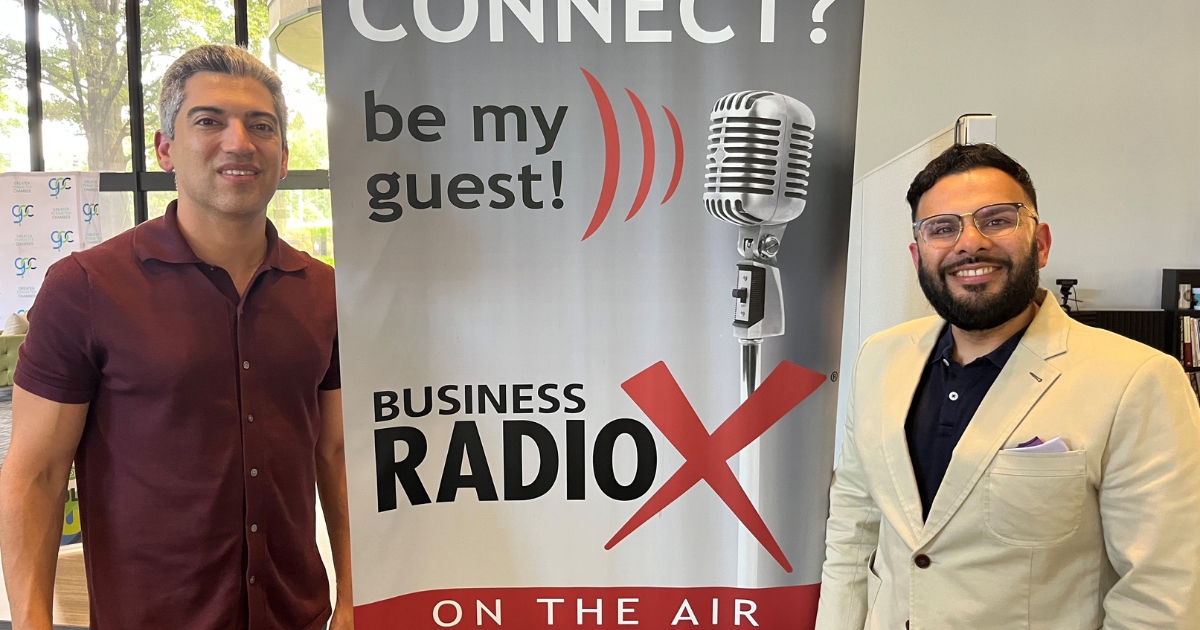
In this episode of Tech Talk, Joey Kline interviews Krish Chopra, CEO and founder of NPHub, an Atlanta-based startup focused on healthcare innovation. Krish shares his journey from corporate sales to entrepreneurship, discusses the challenges of scaling NPHub, and highlights the company’s mission to address the primary care shortage by supporting nurse practitioners through clinical placements and job matching.
 Krish Chopra is a serial entrepreneur, investor, and the founder & CEO of NPHub, the leading platform for Nurse Practitioners to secure clinical placements and land their ideal jobs.
Since 2017, NPHub has helped over 10,000 NP students complete their rotations and now powers the first AI-driven job board built exclusively for NPs—bringing transparency and efficiency to a fragmented hiring market.
A three-time Inc. 5000 CEO and Inc. 30 Under 30 honoree, Krish has bootstrapped multiple ventures and leads a global team of over 70 across 10 countries. He’s also the author of NP Jumpstart, a guide that helps Nurse Practitioners grow and market their own practices.
A first-generation Indian-American and University of Michigan alum, Krish is passionate about solving systemic bottlenecks in healthcare and creating platforms that empower overlooked communities. He’s currently based in Atlanta.
Connect with Krish on LinkedIn.
Episode Highlights
- Healthcare innovation and its importance in the U.S. healthcare system.
- The role of nurse practitioners (NPs) in addressing physician shortages.
- Challenges faced by healthcare providers, including long wait times and lack of access.
- The mission of NP Hub to improve healthcare accessibility through support for NPs.
- The entrepreneurial journey of Krish Chopra and his transition from corporate sales to founding NP Hub.
- The business model of NP Hub as a two-sided marketplace for clinical placements and job matching.
- The significance of maintaining company culture and leadership during growth.
- The fundraising process and challenges faced by early-stage companies in Atlanta.
- Differences between nurse practitioners and physician assistants in terms of training and approach to patient care.
- The potential for technology-driven solutions to enhance patient care and address workforce shortages in healthcare.
 This transcript is machine transcribed by Sonix
TRANSCRIPT
Intro: Coming to you live from Atlanta, Georgia. It’s time for another episode of Tech Talk with your host, Joey Klein.
Joey Kline: Welcome. Welcome to another Tech Talk. I think that this is actually the first one that we have done all summer. We’ve been a little bit dormant. So thanks everyone for tuning in. We’ve got a really great conversation that is going to focus on the healthcare world today. Local Atlanta early stage company and NPHub CEO and founder Krish Chopra. How are you doing, Krish?
Krish Chopra: I’m doing well, man. Thank you so much for having me here today.
Joey Kline: Yeah, absolutely. Looking forward to chat about this. So before we started rolling here, you mentioned that you were from New York. And I always like to understand how people get to where they got to. So give me the story of New York to Atlanta and whatever was in between, if anything.
Krish Chopra: So the story I always tell is. I was born and raised in New York City. Right. Born in Queens, Brooklyn. Been tons of times just exploring and loving New York. When I went to undergrad, I applied to Michigan, got in one of the better schools I got into, and so I wanted to go. And after Michigan, I had a decision to make of where do you go? You know, where am I going to sort of put down roots. And you know how a lot of people in college, they sort of think of, I’m going to go kind of start my life and become who I want to be in New York or LA or the Bay. The the issue was, I’m from New York, and so I didn’t have that luxury. Right. You go back and you have a family. You have a, you know, friends pressure and and for me to get the chance to restart. I was I was in Atlanta for a training program, um, right out of undergrad for six months. Like the city. Enough. And what I loved about it was also the cost of living. And so when I was in New York working for a couple of years, I moved back to Atlanta to start my company because my burn would last longer. Yeah, I only had a certain amount of money saved up and I needed to figure it out. And so in New York, that might have lasted 3 or 4 months, but in Atlanta it lasted six. Seven. And so that was critical, you know.
Joey Kline: So did you go straight from undergrad to entrepreneur?
Krish Chopra: No no no, no. I always I refer to myself as sort of like a, um, uh, what’s the word I’m looking for, like a converted entrepreneur. There’s some people that are born and bred and that’s kind of, you know, they never had a job. They had a, you know, newspaper selling business as a kid. That was not me. Yeah, I was in corporate sales out of undergrad for two years and from 22 to 24. Sounds about right. And moved down at that point to start my company. And the main reason why was in corporate America, I was very much a cog in a wheel. And what in the nicest way possible, what I did didn’t make a difference every day. So if I didn’t show up, it didn’t matter. And so nothing hurt. More like, you know, psychologically speaking of like, you know, I was a as a seller, I was ranked 17th out of a thousand sellers. Yeah. When I was, when I left my last six months in. Not bad and no one had asked me to stay. They didn’t backfill the role. And so if you’re a good seller and they’re not doing that, then you really have to think about what’s the whole point of this. And so starting a company was really just a matter of finding a place to fit in.
Joey Kline: Yeah, I hear that. And I think your point is a I, I, I have you heard the saying like there are two kinds of people in this world. People who think there are two kinds of people in this world. Everyone else. To some degree that is true. But when it comes to entrepreneurs, I really do think that they typically fall into two buckets. One are those that could never take orders, needed autonomy, couldn’t deal with authority. Um, from day one. Right. And they had the paper route, whatever it was, and it was just a foregone conclusion that I could never work for the the man, quote unquote. And then there are others that come to it almost because they have to either they have to because they just find the corporate world insufferable. They have to because they have an idea and they can’t shake it, whatever it is. Um, and there’s nothing wrong with either one of those, right? Most people get to the same place. You sound very much like you were in the second bucket 100%.
Krish Chopra: Because I didn’t fit into corporate America. Uh, the way I talk, the way I communicate, I’m very much. Let’s get it done. We don’t have to say it the best way possible. We don’t have to politic this. We just need to. What’s the actual answer? What’s the best thing to move forward here? And I felt like I had a ceiling in corporate America. Like I would maybe I would get a promotion, maybe. And I would camp out there because I didn’t play the game, I didn’t know how to play the game. And even now, that’s not part of my repertoire, if that makes sense.
Joey Kline: Yeah, yeah. Well. And do you ever wonder and we’re gonna, we’re gonna want to ask this question, then just double back to what NP hub does. Because anyone listening, I want them to just know right off the bat. But okay, you’re growing your company, right? And right now you are very far from being a large, stodgy corporate institution. Okay, but I imagine that you have high goals for your organization. Okay. You want to grow it? I’m sure, as big as it can get. Right. So do you ever get look. Sometimes as the organization grows, the founder’s vision and the founder’s personality gets stamped out a little bit. And so I’m curious, do you ever wonder to yourself, like, okay, if I make this thing, what? As big as I think it should be. Is it going to turn into something that I don’t want it to?
Krish Chopra: Yeah. You’re hitting the nail on the head. I think about that all the time, especially recently. So we just completed a series investment and I was ready for what that entailed. But I think once you receive it and then you really understand, hey, these are the growth objectives. This is the investors behind you. And this is a company that they can’t. You know it’s a minority round. And so I’m still in the majority owner. It’s still a matter of managing on what good looks like from their sort of playbook and their sort of concepts here. I think about it nonstop lately, and I think the only answer. It’s a work in progress. Um, the biggest answer I have is making sure you spot correct the behaviors you don’t want. Like you might have friction between the business unit and product, and that shouldn’t exist at this level. Like you kind of intuitively know it and I feel it. And so you have to nip that in the you have to nip in the bud. You have to continue to make sure that the people managing the people now, they’re the ones that get the culture you want. And so it’s the it’s it’s your executive team. It’s your senior leadership team. And it’s your management management team as well, like the managers in the org. So if they follow it, that’s the best way to make sure that the new person being hired, who I might not have a lot of FaceTime with, they have they know from osmosis and even though it gets diluted down, is never going to be perfect. Instead of it being like 10% of what you want, it’s maybe closer to 67 to 80. And you can live with that.
Joey Kline: Yeah. Look, again, there’s only so much that you can do because you’ll drive yourself nuts with everything else that you have to do. Of course.
Krish Chopra: That that’s.
Joey Kline: True. Yeah. Um, okay, let’s let’s get back to, uh, value proposition, mission product. Um, let’s put it out there. What y’all do? What problem y’all are trying to solve.
Krish Chopra: So NP hub, we’re trying to save healthcare in the US. We all know healthcare is broken. We all know that. We go to the we go. We have to wait months to go get an appointment. We don’t have price transparency. And in a lot of ways, you can’t even get in front of providers and in many cases in many parts of the country. So that we’re solving for that by enabling nurse practitioners this incredible sort of provider group that’s spun up over the since the last, like 60 or 70 years, it’s grown in droves. So the fast growing profession in the US, they lack resources, they lack support, and we’re trying to solve for that. And we’re doing that by providing them clinical placements. So that way they can graduate and become great providers. So they get great education. And then we’re helping them get their first and second and third fourth jobs. And so it’s all about alignment where you’re creating this transparency between the candidates, these graduates, these nurse practitioners and market and employers who want to connect with them. They want to hire the right people. And so how do you put them together in a way where there’s less noise in the system and you’re hiring better fits in both sides, like you’re you’re finding a better job if you’re a candidate and you’re finding a better employee if you’re an employer. And so that you have longevity. And that’s what we’re solving for.
Joey Kline: Okay. So I can also imagine you in, in a, in a pitch starting out saying we’re going to save healthcare, which is obviously an extremely lofty, ambitious statement that that gets someone’s attention. Mhm. Um, so look, I think anyone listening, even if they don’t know the ins and outs that, you know, we’re spending 17% Plus, you know, about all of our GDP on healthcare right now. Could say just from an anecdotal experience. Yes. You know, healthcare as is, generally benefits the top 10% of the income ladder. And for everyone below that, you know, leaves quite a bit to be desired. Um, and even for the top ten, right. A bit to be desired. So what why does the focus on the nurse practitioner save healthcare?
Krish Chopra: So when you think about healthcare, think about the entry point of healthcare. We’re seeing primary care physicians and there’s simply not enough of them. And so, you know, for for the multitude of reasons of why that is the case, by the I think it’s 2035 or 2037, there’s going to be a shortage of 160,000 primary care physicians. And so how is the US, the United States, filling this void while they’re filling this void with this new type of provider in market, which are nurse practitioners and physician assistants? And I don’t mean to say that there are new type of provider, but relative to what a physician and the history of what physicians are, you know. Going back hundreds of years. And so you have these new providers and. They’re really becoming the entry point and even in many cases, specialization. The entry point of healthcare. And when we are talking about how do we get appointments faster, how do we not wait three months, how do we see a provider for more than five minutes and not feel like where you are? You know, you we all know that feeling of going.
Joey Kline: Where you’re just a number.
Krish Chopra: You’re a number, you’re you’re in, you’re out. You didn’t catch your name. They didn’t ask you the second question. They said, what are you feeling today? Okay. Got it. Here’s your medicine. You’re out. That’s not health care. It’s a transaction. And I think nurse practitioners, physician assistants, they fit this model, um, in there where they’re actually caring for their patients. And that’s what we need, I think, in the US.
Joey Kline: Okay. So you’re saying because we are going to have a shortage of primary care internist. Another to synonym for those out there um that nurse practitioners pays lower barrier to actually become one. I mean, just from a number of years that it takes to actually get into it. Cost years. Um, you know, the medical school. Um. Uh, gantlet is not a cheap, uh, or easy one or for the faint of heart. So, uh, it I’m I’m putting words in your mouth. You’re gonna tell me if I’m correct or not? Basically, you have another form of practitioner provider that maybe doesn’t fill all healthcare needs, but gets us up 50, 60% of the way there. Of what an internist, um, primary care physician would do. And if we’re better able to get those folks trained, staffed and distributed, that then helps, um, stem the problem of not enough internists in the market.
Krish Chopra: Exactly. Accessibility is the number one concept we’re trying to solve for, because once you solve accessibility, Then you can move into every other topic, right? So 100% exactly what you said. I have this belief that healthcare should be run where your entry point. Right. Like if I’m sick or you’re sick and you know your child is sick and you have to go to urgent care and you know, you have the flu, you know, you have a cold, you don’t need to necessarily see someone with eight years of post-graduate experience. It’s okay to see a nurse practitioner, a physician assistant. And in certain cases it gets escalated up where the physician in my mind becomes this floor general. Sure. And they’re available. They’re available as needed. And now you’re prioritizing the time for the physician to see complex cases that might be out of scope for the nurse practitioner or PA. But I’ll tell you, from everything I’ve seen over the last seven years of building this company, the number many, especially primary care providers, especially mental health providers, the fastest growing profession. Yeah, for healthcare, for inside healthcare, right now, they’re able to accomplish 60, 70, 80%. And in most cases that’s good for us, the patients.
Joey Kline: Yeah, it almost feels like it kind of feels like this is what granted, it’s a much smaller band of the human body of healthcare, but it’s almost like going to the dentist, right? I mean, like you primarily see the dentist at the end of your appointment or if something is really, really complex and, you know, the front line assistant cannot take care of it, but much of their time is spent strategically on more complex issues than the, um, traditional work of dentistry.
Krish Chopra: I think it’s a really fair analogy. Um, a fair analogy.
Joey Kline: There. Sure, there might be some, you know, crudeness around the edges there, but that was what came to mind initially.
Krish Chopra: And I think it makes sense. Right. When we go to a physician or sorry, we’re going to a practice, the first person you see is usually the Ma who’s kind of doing some of the basics, right, taking or charting, maybe capturing your blood pressure, that absolutely still should be done. And again this is about best use of of time. Best. Most efficient use of time. And for whatever reason it is, there just aren’t enough residency slots for physicians. Yep. And so until that fixes, we, you know, us as patients, us in the in the US. We can’t wait for that that that to occur. That’s right. Right. There’s the you know, we were talking about this before the podcast started. There’s politics involved with that. There is, uh, regulations, nuances. It’s politicized. That is not the game we’re in. We’re in the game of this is the problem. We’re trying to solve the problem of accessibility.
Joey Kline: Yeah. People’s health cannot wait for the government to, you know, get out of its own way.
Krish Chopra: That is the best statement so far.
Joey Kline: Yeah.
Krish Chopra: Yeah.
Joey Kline: Do you have a healthcare background?
Krish Chopra: I do not know. Okay. I’m not smart.
Joey Kline: Enough. Yeah. Okay. So how did this come to you?
Krish Chopra: Um, so my very first successful company I started. Successful? Meaning that it didn’t fall apart in three months. Sure. Um, was a similar business where we were working with medical schools, typically schools in the Caribbean or national medical schools in the Caribbean. We were one of the first companies to go to the Philippines and source medical students there, and we brought them to the US for clinical education so they could apply to residency in the US, or they could take that education and go back to their own countries and uh, usually, um, get better, better paying jobs or, you know, more prestigious clinical placements. Yep. We did that for about three years. And in that time we started having nurse practitioners reach out to us randomly. And my entire thesis was, there’s no way us educated nurse practitioners have this problem. It must be a one off, two off. And so for a period of time, we didn’t listen to them and we didn’t listen to the market. Like any, you know, young entrepreneur always misses. And that was that was us. And so eventually one student turned to 500 to 120. And then we realized this nurse practitioner gap is bigger. There were no other competitors in the field, meaning that from a if these students are my medical company, my first company, if these students didn’t work with us, they had alternatives. There’s ten other companies like us for these nurse practitioners. If these students didn’t use us, they didn’t graduate. And so you had the ability to have a larger impact. And then you had the second is there was no one else in the field. So we got to innovate. Yeah. And so I got to build we got to build a platform, build the technology to enable scale. And we would never have been able to do that in a proven sort of like third generation older school dynamic in the medical space of what we were in.
Joey Kline: Sure. That’s the it is the unintended consequence of being in business and learning something that you didn’t set out to to figure out.
Krish Chopra: Mm, 100%.
Joey Kline: Um, okay. So is your direct client, the healthcare system, the practice? How does the product actually work?
Krish Chopra: So we have this overarching platform and we have a we have different products involved. And so on. Our first product, we work with students and we work with universities, and we have in the network of clinical placements that these students or schools will come to us, will provide that for their students. Or at the end of the day, we’re helping the students graduate, whether we’re through the university or student directly. Now that’s product number one. And so in that model, your customers, it’s a marketplace, right. So you ask Airbnb who their customer is. They’re going to say both right. Is it the host or the visitor. Well you need both to survive. So in that model the clinical sites which are the clinics, the hospitals, those are our, our our they’re part of our network. And then we have the universities and the students, and they’re part of our sort of client base on the hiring platform, similar model. We have candidates and then we have employers. And so employers are the people we are, you know, reaching out to and communicating that we have this platform that no one else in the country has. We have this data on, on, on quality control that no one else can provide. That’s what we’re doing there.
Joey Kline: Okay. But okay. So yes, I understand you are. You are a classic two sided marketplace. But how do you actually get paid?
Krish Chopra: Um, on product one that we mentioned, the marketplace, the clinical placement marketplace, it’s students or universities. Okay. And on the hiring platform, it’s employers.
Joey Kline: Okay. That’s what I figured but wanted to clarify okay. All right. So you mentioned earlier that you just raised your series A obviously a really big milestone for any organization. What what happens next? Is it about market reach? Is it about new products? All the above. What’s the plan?
Krish Chopra: It is. It’s really everything, right? You know, you’re sort of supposed to amplify every single thing you’re doing. Yeah, I can tell you that to date, we’ve spent so much time getting our process on working with students directly down, and we are excellent at that. That is what got us to scale. And so the next phase of growth for us is now saying, hey, we worked with these students and we’ve helped thousands of them. Closer to I think actually, we’ve just crossed the 11,000 milestone in terms of students. Now, the next play for us is to really move and speak more with universities, speak more with these employers. Focus on this B2B segment of this because most people, university students, would agree that we all believe it should be accountable to the university on providing clinical placements. And we’re seeing some of that legislation, some of that market, um, uh, sentiment change now around that, where schools want to provide this. It’s a differentiating concept for them. Right? Some schools don’t provide it. Some schools do provide it. The schools that do provider often see of higher tier. And then the second part of it is quality control for when we’re graduating nearly we have 400,000 nurse practitioners right now in school. At any given time there’s about 120,000. There’s 40,000 graduates every single year. These 40,000 quality control now becomes a major, major concern for many of these programs because these students want to be successful and these universities want these students to be of high quality. Mhm.
Joey Kline: Mhm. Okay. Um I you’re a sales guy. I’m a sales guy. I’m always curious in the sales process of how you actually get this out there. Are you, is this an inside sale outside sale kind of model. Is it all, um, you know, internet marketing? I mean, what’s our. Are you hiring a bunch of salespeople to go and make the enterprise sale? Or are you able to pretty easily convert, you know, marketing leads into sales without the help of a large team.
Krish Chopra: So we have a we have a sales team in place. Okay. And so we have two different types. What internally we refer to as the B2C function and the B2B function. So the B2C which is working with the students directly, we have an internal sales team in place there. And they are phenomenal at what they do which is getting to the student, solving their anxiety, solving their concerns, and asking them the appropriate questions to direct them to the best placement possible. And we have AI supporting that effort as well on the B2B function that’s scaling up currently. You’re exactly right. We’re hiring sales reps. A lot of this can be done inside, but it’s less inside outside sales. It’s more of enterprise sales. Sure. And so in many cases it’s zoom. But if you need to be on site, then we’ll get our butts on site.
Joey Kline: Yeah, it depends how big the deal is. Depends how complex the organization is.
Krish Chopra: Exactly. And it depends on what is expected of us from that particular client. Yeah.
Joey Kline: Yeah, I hear that. So, um. And I imagine that you’re so right now, are you national?
Krish Chopra: Yes. We operate, I believe, in 46 of the 50 states. Okay. Um, there’s a few. We’re just not in Hawaii.
Joey Kline: Alaska still, you know, pretty, pretty good count. Mhm. Um, and what was okay had had you ever done a large fundraising round for any of your previous organizations?
Krish Chopra: I have not. This was the first.
Joey Kline: Okay, so I’m curious to hear about what that was like along with, you know, that small job of actually running the company. You’re choosing your words carefully.
Krish Chopra: Brutal was the answer. So we started the fundraising officially in September of last year. Okay. Uh, we we there’s a lot of stages to a fundraising process, and I think a lot of folks focus a lot on getting the term sheet right, which is essentially less of the signal of, hey, we want to partner with you and more of a signal of, we don’t want to get rid of you yet. That makes sense, right? And so if it’s an early step into the investor dynamic investor relationship. And so the first part of this was getting better at how do you secure the term sheet. How are you saying the right things and getting the investors interested and communicating your value proposition effectively. That took time. And so we were under a term with a, um, a, uh, a growth equity company. Uh, at the start of this year, we were expecting to close in January. And towards the end of this, the deal saw the deal started to fall apart. Yeah. And that happens in occasion. And so end of January, the deal started to fall apart. And so we went back to market in February. I’m a big fan of you know, you hit in the face.
Krish Chopra: You don’t, you know, go wallow for a month. You go back out there and pick yourself back up and so confidently, uh, you know, luckily we were able to secure two additional term sheets by, um, by the end of March. And so we had a good turnaround time. And so in those two term sheets, we then we also hired a banker to support us in this effort. And that’s one of the biggest, biggest things I can tell any entrepreneur who is raising their series A, if you should be working with the banker because they are the only representative on your side, that really helps you filter and helps you navigate the dynamic with the investor. And so the investors, they are cutting deals on a 24 over seven basis. They are excellent at cutting a deal. Yep. Entrepreneurs are excellent at running a business. There’s a gap there. And in in a lot of entrepreneurs think they should just go do it themselves. And even many VCs and private equity will tell you, oh no, no, you guys can handle it yourself or you’re fine. But it’s because it’s asymmetric information.
Joey Kline: Of.
Krish Chopra: Course. And so that was a big difference on the on the second time around. In addition to that, we our business was in a really good place. We were continuing our growth trajectory. Everything was working well. And nothing creates more confidence in a fundraising process when you are hitting your numbers during fundraising.
Joey Kline: You are the first person to ever come on here and talk about hiring a banker.
Krish Chopra: I know this is a get in trouble.
Joey Kline: No, no, not not at all. I just I find it interesting because look like To erase middlemen. Obviously that’s not, you know, the. Look, I’m an intermediary. Intermediary? I’m a middleman. Okay. Um, many of us exist for a reason. To enable a transaction, to know both sides. Um, and what you’re saying makes a lot of sense. I have just never had anyone come on and actually talk about that part of it. A lot of people talk about. And this was maybe a little bit more, you know, kind of 5 to 10 years ago. But how hard it is to raise money in Atlanta, that’s changed. But it’s not it’s still not amazing, but it’s changed for sure. Um, but yeah, a lot of it focused on having to go to the northeast and the West Coast, um, as opposed to the actual mechanics of doing it in The Help. It was just interesting. You know.
Krish Chopra: I will tell you that we and I got a lot more success with investors from the northeast, and I think Atlanta has an emerging. Scene and emerging tech scene. So you have, you know, a couple of great conferences. Venture Atlanta, we were a presenter of Venture one a couple years ago. Really helped us along. Um, get out there more. But fundamentally in Atlanta you have more private equity than you do venture. Sure. And so you do have this problem of of people not investing at your stage of series A, and you find that more in the northeast, in the West Coast. And, um, we certainly did. And we eventually, um, um, partnered up with, uh, Edison Partners. They’re Nashville based. Yeah. But funny funny enough, the the lead investor with us, one of the partners there, the we had great rapport, but she was from Boston.
Joey Kline: Yeah. I wonder if I wonder if part of it. It’s interesting because we have an amazing talent scene. Okay.
Krish Chopra: 100%.
Joey Kline: Right. But the level of talent we have, the fundraising or at least the the breadth of fundraising opportunities available and different stages available has not caught up with. I think, where we are from a talent stage, and I’m wondering if part of this has to do with the fact that a lot of the people who have made a massive amount of money that can either, you know, that can be an LP or they can start a fund themselves. There are starting to be more of them who made it in technology in Atlanta, but a lot of them did not make their money in technology. A lot of them made their money in real estate or C-suite gigs at, you know, large fortune 500. And it’s just a very, very different type of investor. I just don’t think that that mindset is not there among those who have the funds to kickstart something like that.
Krish Chopra: So I agree with you 100%. These fundraising rounds develop in reverse, Right. Which is kind of weird. Um, you would think that you would have the you would have organizations funding a series C and D, because those are much lower risk, but it’s not actually how it works. What ends up happening is you have, you know, folks that might have worked at like calendly at the snap, at, um, snap, snap nurse, I mean. Um, and other other, other bigger companies. I made it in from the tech scene in the, in the southeast. They do well and they start angel investing. And you have a fantastic angel investing scene in Atlanta. Totally fantastic.
Joey Kline: Right. It’s like if you’re under a million or like 1 million to 3 million.
Krish Chopra: You have access because you have rise point and that rise point, rise out of the Emory. Um, out of out of Emory B-School over there you have, um, the tech village.
Joey Kline: You have to overline guys.
Krish Chopra: Overline guys, you have um, ATC you have so many opportunities there for sure. Um, uh, tech tech Square Ventures, I think as well. Um, anyhow, and so as you kind of go up and rounds. You know, you go to your series A, series B, etc., that that pool gets smaller. Yeah. And because you have a lot of, uh, I can’t tell you this is the exact reason I can tell you. My inclination on why it occurs is you have less risk appetite in Atlanta, and because you have less risk appetite. You have much you have depressed valuations. I agree. So we got term sheets and we got interest from Atlanta based investors. They were just not understanding the vision of what we want to build here. And they’re seeing us as point A to point B and we’re like well hold on. If we just do point B and see where we are, we’re going to continue to scale up. And that is where for us, at least, we we stopped. We didn’t get the traction or adaptability. I hear that. Yeah.
Joey Kline: Did you wrestle with raising versus not versus just funding from operations? Yeah.
Krish Chopra: For years we didn’t fundraise. We started officially. This company started in 2017. Okay. Um, we raised in 2025, so for seven I should know this. But what’s called seven years? Almost purely seven. Um, I think we bootstrapped this thing from the very beginning.
Joey Kline: But was it because you could or because you were on principle, dedicated to that or both?
Krish Chopra: We did it because that’s how we want it to grow. Okay. Um, I think there’s two, two issues there or two sort of sub points there. So point A is I wanted to be in control. Um, I think, you know, from even the stories of just not fitting in. Um, you know, for my younger days, it was about being able to make the decisions we wanted to make. Even if they were mistakes, even if it was prioritizing the wrong things. That was the call we want. I wanted to make. Then the second call. Inside of that was it took me a long time to realize we were on to something big. Um, I would argue between 2017 and 2020, 2021. It was still this idea of like, maybe I’m going to be a lifestyle entrepreneur. Maybe it’s it’s going to cap out a growth. It was only until 2022 where we started to realize it was actually almost an inflection point of where we we grew so much, we needed more experienced professionals. It couldn’t just be these junior folks on our team that worked really hard. We needed to know a good looks, like myself included. And so I hired a seasoned operator that essentially fixed all the issues I created over as we grew. Um, fast forward a little bit. Then I hired a experienced CTO, and all of a sudden it’s like, wait, with this team in place. Sky’s the limit. We can do anything we want. And, um, those two folks were sort of like the catalyst for for me to realize, all right, these guys are top tier and they’re putting their time here. They’re not doing that. So we can have a fun game doing that so we can do something amazing and build something memorable. And that was.
Joey Kline: It. Well, I think as as the years have gone by, I have realized that all you are and by extension, all your company is, is the sum of the quality of the people around you. Mhm. Um, and it goes for your friendships and your professional relationships. Um, to that end, I would love to get your take on culture and leadership. Um, you know, one of the things that we talked about at the beginning is your fear of your company turning into something that you don’t recognize or that you didn’t want it to. And that part of the way you avoid that is, you know, you hire the right people, you test them, they understand the mission. So, you know, you’re still at the point where I imagine that you are intimately involved with every hire that comes through your door. What do you look for? How do you make sure that a relative stranger. Let’s be honest. Is going to be the right fit for your team?
Krish Chopra: So I am not involved in every hire any longer. Okay. Um, we’ve gotten to the point now where I’m involved with many of the senior hires. So they’re coming at a management level or above. Sure. Uh, I will have some interaction. Um, I usually final round interview or something like that. The biggest thing is making sure we know why we’re hiring. Are we hiring this person? Because, you know, the current person in the role isn’t, um, isn’t doing as well anymore. Um, are we hiring because the business needs it? Have we explored an alternative to hiring? Because when you add new headcount, it is great and awful at the same time. It’s great because you’re bringing someone new in, and every new hire brings a new energy to the company. And especially in that first month, I can I can visualize the moment for some of the best people we’ve ever hired. And, you know, in the first month, if this person is going to be great because no one ever starts off good and turns great, they start off great and they stay great, or they start off bad and they say bad. That’s generally rule of thumb. Um, and if they’re in the middle, you are settling. And that is a rule of thumb. Um, are we someone that I truly believe in? And so it’s you train the methodology and then you you train the methodology to the management team on how to hire effectively. And we use something called the print survey okay. Which is a shortcut on understanding people’s motivations. And so it’s very similar to the Enneagram. It’s sort of like um, the corporate version of that. And so everyone’s assigned these two numbers. And so I’ll give you a quick example. If you’re hiring a sales rep, you want them to be very numbers oriented, right? They want to hit a target.
Krish Chopra: That is what, you know, a great sales rep looks and feels like. And so there’s a print associated with that. And that’s referred to as it’s a it’s a print three. And so a print three. You want that person if they’re in sales to exhibit that behavior, that’s their motivation. Because you know that’s how you’re going to shortcut getting to know them. Because in a long enough horizon, you don’t need a system to tell you how to get one of your team members motivated or how to push them forward. But in the short time horizon, when you don’t know them really well, having a framework really does help and it helps you move faster. And I would argue more importantly, than getting every strategy right or or being the best company. It’s about moving quickly and iterating fast. That is a Herald did. Maybe that’s the wrong word. That is an underrated point of view, and it’s an underrated statement. And I think that for us, we we we have taught our team this methodology on hiring. We’ve established what good hires sort of need to think and feel like, you know, so if you’re in a finance function, you probably want someone to be very detail oriented. You don’t want them to be like me who is not detail oriented. My finance person will tell you that I am the most unorganized person he’s probably worked with. And Rogers. If he’s listening to this, he will probably nod his head along to this right now, because I am. I’m not meant for that. Yeah, right. I’m meant for the you know, we go talk to a customer, you know. That’s right. That’s what it.
Joey Kline: Is. Yeah. From a sales perspective. Um, and you just brought up talking to customer. Right. Do you have you had problems letting go of the sales process?
Krish Chopra: I don’t know, do I? How honest would I be here? Right.
Joey Kline: Um, or have you even been able to.
Krish Chopra: Yes. Yeah, yeah. So by by trade, I’m a sales person and marketer. That’s how I see myself. And, you know, at some point I did, uh.
Joey Kline: That’s typically what most founders are starting.
Krish Chopra: Sales realized. I can’t do every single sale. They switched over to marketing. How do I do sales at scale and and then eventually now. And I don’t do either. As much as I’d like to. And need to. Um. So, have I had trouble letting go? Yes. Absolutely. 100%. Um, on the sales side. I have let go of it. 95% of it. At least that’s what I believe to be true. Uh, um, the remaining is is really. I get tied in on our messaging to our customers. Anyone would tell you there’s there’s always the right way of speaking to the customer. And it’s in my head, unfortunately. And, you know, it’s hard for me to say, hey, this is how you should do it. It’s it’s easy for me to say when I hear it. Like, that’s not how you do it, if that makes sense. Sure.
Joey Kline: Um, but this is like the Supreme Court on pornography. I know it when I see it.
Krish Chopra: Exactly. And so, uh. Oh, that’s a great line. Oh, I want to take it. I want I need it. Thank you.
Joey Kline: Steal shamelessly.
Krish Chopra: Appreciate it. Yeah. So sales I have let go. Quite a bit. Marketing in a work in progress right now. Um, we happen to have we. We’ve developed an incredible sales manager at the organization. And this guy knows what to do. And so because we have great talent, I can let go more. We have a fantastic marketer on the team, someone I’ve known half my life because we have him. I can let him go. And so it it’s less about for me what I realized over time. It’s less like I need to let go. It’s I need to bring in the person I trust who knows it better than I do. Sure.
Joey Kline: Right. Who’s who’s got the ability, wherewithal and clout to be able to tell you? I got it, bro.
Krish Chopra: Yes. And I tell the team all the time if I’m too involved, like there’s a saying, I actually stole this, I think, from, uh, Alex Hermosa. He says, um, use this use if useful. And so I’ll send a message. I send a message out to my CTO today, and I’m like, hey, this is an opportunity for us to do A, B, and C. And I told him, look, look, hey, I’m nothing was wrong here. Just use it for useful. And that is something I find myself doing a lot more of now, where I don’t want to get too overly involved, because just by virtue of me having a question about it, it creates stress in the organization.
Joey Kline: Sure. Good to see you. Yeah.
Krish Chopra: And that’s a pro that’s hard to adjust.
Joey Kline: I get that, but I think being look at it’s never fully going to go away. Right. But being cognizant of it and being present and understanding I don’t know probably half the battle.
Krish Chopra: Hopefully I hope.
Joey Kline: So.
Krish Chopra: Well, we’ll find out a couple of years with the scoreboard. Unfortunately for us, runs in, uh. Uh, it is a lagging indicator. Yeah, yeah. And so we’ll see. We’ll see how this plays out.
Joey Kline: Um, I’d love to learn more about your experience with Venture Atlanta because that is, you know, again, we look, we we criticized or at least commented, um, uh, openly and bluntly on the fundraising scene in Atlanta Venture Atlanta seems like it has just been an unmatched success in a city of ours that, um, you know, punches above its waist class and talent probably punches below its weight, class and access to funding. And so I’d be curious just. I mean, tell me about how you got involved, what you think of it, what’s what it’s meant to the company.
Krish Chopra: So it’s funny you’re saying this because we actually did. I actually recently wrote an article for them, kind of post the series A because I wanted to give them the I wanted people to see the success story of a normal series, a company. Yeah. You know, like, I’m not of the opinion we’re doing anything super special. We have a great business, we have great people on our team. We’re doing something very cool, but we are one of thousands of companies doing this every day right now. Right. These startup companies that are getting scale and so Venture Atlanta meant a lot to us because I was very I was I don’t want to say invisible. I felt the company and I were invisible to the, uh, to the investment market. Mm. Um. Eh. Because you have. We haven’t raised so people didn’t know about us. And then B, we’re in this weird niche, which is. Are we in healthcare? We in edtech? Are we in healthcare tech? Okay. Wait. Nurse practitioners. What do they do? I went to a room of investors in Atlanta. You had 20 partners of different firms and maybe maybe 15. And I went up, down in this kind of front of this room and I asked everyone like, hey, so who here knows what a nurse practitioner does? Two out of 15 or 18 people raise their hand. That is what you have here. Now, I have asked that same question to a group in, um, in Chicago. And guess what? 15 out of 15 raised their hand. And so you think that that was a frustrating experience for me. And so Venture Atlanta helped us get out to market and share the story of what we’re doing. It also because we were selected as a as a presenter, that obviously helps the most as a growth stage company. Yeah. And so being a presenter there, they they help coach you on how to pitch in this three minute format, which is a incredibly short format. But you do figure out how to distill down your ideas quickly. And so that was very helpful.
Joey Kline: Save healthcare. What else is.
Krish Chopra: There? Save healthcare. This is how we’re doing it. This is why it matters. These are why nurse practitioners are okay.
Joey Kline: I’m going to be vulnerable here and hopefully, um, answer the questions for some listening. Can you describe the difference between a nurse practitioner and a physician’s assistant specifically?
Krish Chopra: Um, I can do my best. So nurse practitioner physician assistants overlap in a lot of in a lot of ways. Um, and many times when employers are hiring, they’ll hire an NP or interchangeably. Nurses are advanced nurse practitioners or advanced practice nurses. So they’re nurses usually have worked for a couple of years. Think of the MBA type of format. Right. They’ve worked. Um, and they go back to school. They’re going back to school while they’re working full time.
Joey Kline: Okay. So nurse is different from nurse practitioner. Yeah. The practitioner is again the the MBA of the traditional.
Krish Chopra: It is the graduate. Yeah. Advanced practice version of the nurse. And so the nurse. You know, we’ve all heard the horror stories. Nurses are working in the hospital, especially during Covid. They hated working there. They went back to school in droves. They go back to school for two years, usually three years sometimes. And they become a nurse practitioner, nurse nurses on average. They are generally the providers of care, but they are not providing the instruction of care. They are receiving the instruction. They are, they are providing it. Nurse practitioners are giving the orders. I see okay, very similar to the physician model there. The difference is nurses are trained in the nursing methodology. Physician assistants are trained in the physician methodology. And that is just a different way of it is like two ways of skinning a cat, two ways of is that like saying two ways getting a cat?
Joey Kline: Yeah. I mean, that’s that’s the saying I don’t really understand where skinning a cat came from. But yes, that’s the that’s that is the idea. If you think about it.
Krish Chopra: But there’s multiple ways to get to the same end goal, right? Sure. And then there’s a nursing model and there’s a health care model. I would be remiss I would be inaccurate if I’m telling you exactly what the difference is there.
Joey Kline: But that’s that’s.
Krish Chopra: Helpful. At a high level, I believe. Nurse practitioners come from a more empathetic approach to come with a more of a they need more time with the patient. They like to educate and bring the patient along. The assistants are more than the medical model.
Joey Kline: I think what was what was the most helpful, at least for me, there was the differentiation between the nurse and the nurse practitioner. One is essentially the follower of orders. The other is the more highly educated, more specialized giver of orders.
Krish Chopra: Correct. And you have the same specialization with nurse practitioners that any other provider has, right? So you have psych mental health nurse practitioners. You have family nurse practitioners, you have acute care nurse practitioners. You have, um, you know, down the gamut, uh, women’s health nurse practitioners, pediatric nurse practitioners, Similarly styled. And so you have all of that specialization that occurs is just occurring under the nursing model of education. Do you.
Joey Kline: Okay. Obviously, you are extraordinarily entrenched in the health care world right now. Okay. And part of that, I imagine, is because you have a passion for it. Part of it is because you have happened upon this product that, um, is being well received in that world. Do you think that you will? It’s kind of a ridiculous question to ask an entrepreneur, I understand, but like, do you think you’re always going to be in healthcare? No. No. Okay.
Krish Chopra: Straight.
Joey Kline: No, no.
Krish Chopra: Okay. Nurses remind me a lot of teachers. Yeah, right. They are overworked, underpaid, underappreciated market. That is what gravitated me to nurse practitioners. Um, that that notion of underappreciated, overworked. Overlooked. That is what I gravitate towards. And I cannot tell you why that is. The joke I make is, you know, I grew up in Mets fan and you all know how the Mets suck. And so like, that’s like, you know, the underdogs.
Joey Kline: That’s a good line.
Krish Chopra: I like that, you know. But like, I can’t tell you exactly why why I gravitate towards it. But that’s what I do. And so um, any opportunity where it exists, that scenario exists where we’re overlooking a population group. I think there’s a lot of opportunity in business there to, to to do good work. Right. Because I’m not the type where I’ve never. I’ve never been obsessed about the money or the return on investment or the exit number. I’ve been obsessive. Is this work? Is this work I’m doing? Does it matter? Are we doing something that actually makes the difference?
Joey Kline: Well, look, you and I kind of talked about this. It’s like we have precious few years on this earth. We have even fewer precious few, um, productive and healthy years.
Krish Chopra: And good.
Joey Kline: Point. If you have the ability to really do something that means something to you. Then grab it.
Krish Chopra: Agreed. And I think that hopefully everything we’re doing at NP hub continues to go well. And then it gives me the opportunity to go do it again with less focus around the business model. Yeah, right. Because when I started NP hub, if we didn’t do well, I didn’t.
Joey Kline: You know, I didn’t.
Krish Chopra: Like yeah, I didn’t eat and I didn’t come from a well-to-do family. It was literally my money or no money. If that makes sense. And so, um, you know, and, and a 100% if there’s an opportunity to do this again down the line at the moment and I will carry out. I’m 35, uh, without kids right now. Yeah. Um, I want to do it one more time.
Joey Kline: I hear that.
Krish Chopra: One. Yeah.
Joey Kline: Yeah. Um, I think it’s hard to hear about these people that are like. I just want to get to this number and, like, my mid 40s and then retired. I’m like. And do what?
Krish Chopra: I made that joke. Look. I’m guilty. I’ve been making that joke lately. Mike, what are you gonna do after. If I said I’m retiring, I’m done.
Joey Kline: Um, did I just describe you?
Krish Chopra: You know, you literally just did. Yeah. And, you know, it’s funny. My my wife literally rolled her eyes. The hardest I’ve ever seen. Whenever I say the statement because she’s like, okay, after a year, what are you gonna do? Like, like I love, I love the I love the grind. I love the chaos. Yeah I do I, I might not I’m not openly admit it, but I love it.
Joey Kline: I’m not saying like you work just because that’s what you’re supposed to do. Right. But just to then, I don’t know, like go play golf and have lunch and not use your mind. I don’t know, dude.
Krish Chopra: I know, I mean, it’s the same thing. Don’t you hear? There’s some stat. I’m probably butchering this one, but there’s a stat out there where you are. You know what happens to people that end up retiring? Um, and within a few years, it’s like they deteriorate further.
Joey Kline: Yes. Yeah. I don’t know what the number is, but I know what you’re talking about.
Krish Chopra: That is going. That happens, I think, at any point of view. Like if I, if I take a break for five years. I do believe I will get worse. Yeah. Maybe it’s, you know, absurd. But that’s that’s what I think.
Joey Kline: Um. All right. So for for those listening out there who, uh, either want to be part of the mission to save health healthcare or want to learn more about your product and services, how do they find you?
Krish Chopra: Well, they go to NPB.com, NPB.com.
Joey Kline: And Krish. Your first name starts with a K. Your last name starts with a C if you want to look him up online. Chris, thank you very much for coming here and sharing your story. Really appreciate.
Krish Chopra: It. Thank you so much. It was so much fun.
Joey Kline: Sure thing.














