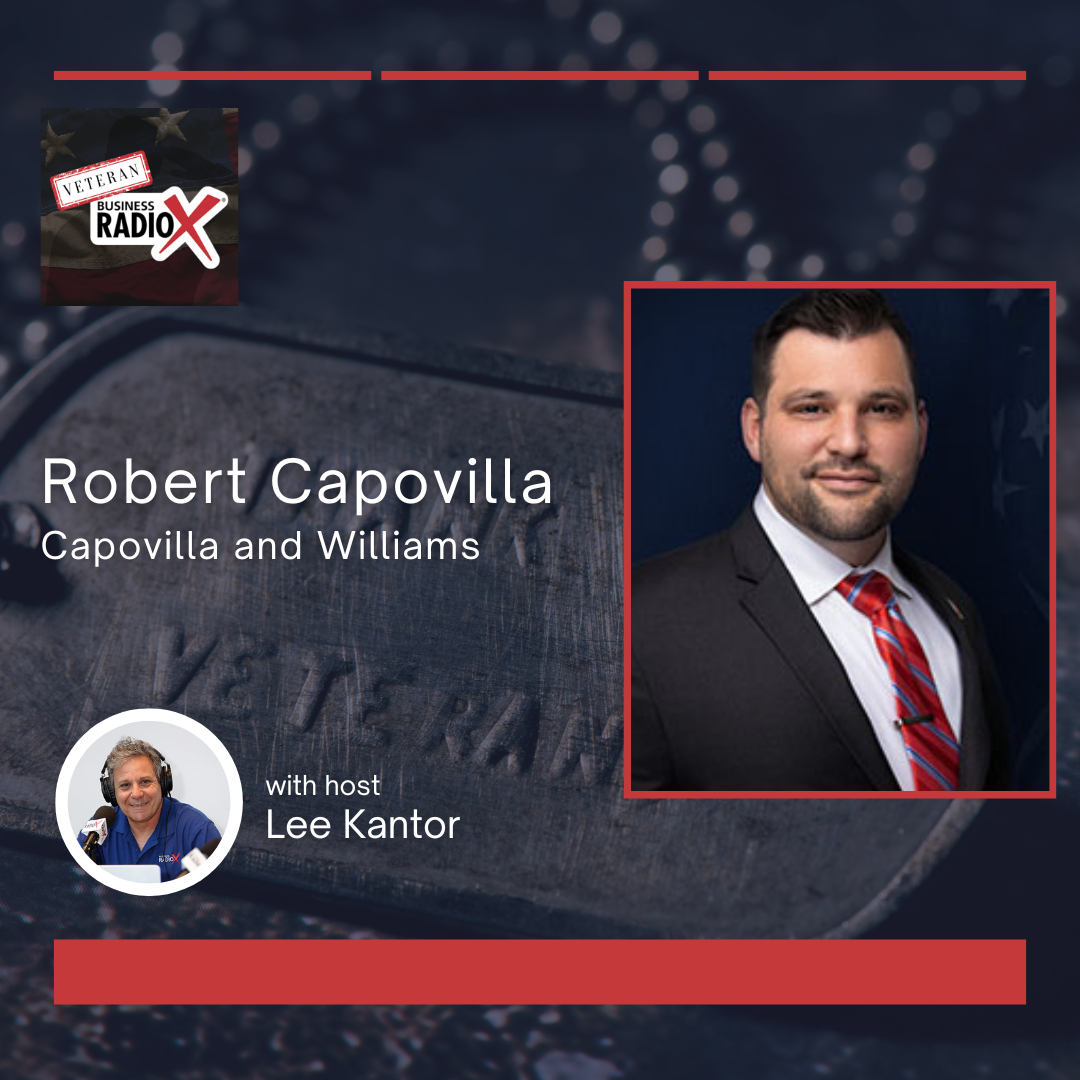

In this episode of Veterans Business Radio, Lee Kantor welcomes Robert Capovilla, co-founder of the veteran-owned law firm Capovilla and Williams. Robert discusses the firm’s mission to help veterans navigate complex VA disability claims and appeals, emphasizing the importance of proper medical documentation and timely legal support. The conversation covers challenges veterans face, opposition to Georgia’s SAVE Act, and advice for transitioning to civilian life. Robert shares personal stories, success cases, and resources for veterans seeking help, highlighting the firm’s commitment to ensuring veterans receive the benefits and care they deserve.
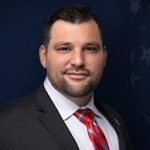 Robert Capovilla is a nationally recognized military defense attorney with an established reputation for providing exceptional legal representation to service members of all ranks and branches.
A true trial lawyer, Rob started his legal career in the U.S. Army JAG Corps where he served as both a prosecutor and defense counsel in hundreds of high-level felony cases involving sexual assault, domestic violence, murder and homicide, and drug-related offenses.
Today, Rob is routinely hired by U.S. military personnel worldwide to represent them in complex legal matters – many of which involve allegations of sexual assault – that threaten their freedom, careers, family life, and reputations.
In addition to his direct work on behalf of clients, Rob is often called upon as an expert on military law issues by leading media organizations such as CNN, The Military Times, Stars and Stripes, The Washington Times, WAVY and Politico.
Rob is also a co-host of the popular Military Justice Today Podcast where he tackles the most important topics in military law along with his law partner and friend, Mickey Williams.
Episode Highlights
- Legal services for veterans, focusing on disability claims and appeals.
- Challenges faced by veterans in navigating the VA disability claims process.
- Importance of proper medical documentation for service-related injuries.
- Cultural mindset in the military regarding seeking medical treatment.
- Broader issues of veteran care, including mental health services.
- Discussion of Georgia House Bill 108 (SAVE Act) and its potential negative impact on veterans.
- Importance of accreditation and training for representatives assisting veterans.
- Personal experiences of the guest related to the disability claims process.
- Advice for veterans transitioning to civilian life, including maintaining physical fitness and finding new purpose.
- Resources available for veterans seeking legal assistance and support.
 This transcript is machine transcribed by Sonix.
TRANSCRIPT
Intro: Broadcasting live from the Business RadioX studios in Atlanta, Georgia. It’s time for Veterans Business Radio, brought to you by ATL vets, providing the tools and support that help veteran owned businesses thrive. For more information, go to ATL vetsource. Now here’s your host.
Lee Kantor: Lee Kantor here another episode of Veterans Business Radio and this is going to be a good one. But before we get started, it’s important to recognize our sponsor ATL vets. Without them, we wouldn’t be sharing these important stories. Atl vets, inspiring veterans to build their foundation of success and empowering them to become the backbone of society after the uniform. For more information, go to Atlanta Vets. To this show we have Robert Capovilla. He is with Capovilla and Williams. Welcome.
Robert Capovilla: Hey, Lee. Thank you for having me.
Lee Kantor: Well, I’m excited to learn what you’re up to. Tell us about Capovilla and Williams. How are you serving folks?
Robert Capovilla: Yeah. So, uh, Capovilla. Williams, uh, is a law firm. Uh, our headquarters is in Woodstock, Georgia, and my law partner and I, uh, Mickey Williams started it after active duty days. Uh, had come to a close. And, um, quite frankly, we exist to help veterans and service members and federal employees all over the world with their legal problems. So a veteran owned, veteran operated business, I think, got about 35 employees now. And I think about, uh, 30 or so of them are veterans.
Lee Kantor: And so what was kind of the genesis of the idea? Were you both working in other firms and then decided to kind of team up like, well, how did this come about?
Robert Capovilla: Yeah. So Mickey and I were both JAG officers. You know, Mickey’s career was different than mine. He had started his army career after nine over 11, went to Ranger School, was an airborne Ranger, did several deployments to Iraq and Afghanistan, and then he became a JAG officer after he left the infantry. I graduated law school, applied for the JAG Corps, so I went the more traditional route. Commissioned in 2012. And so when we were both defense attorneys in the United States Army, so we would represent service members who were accused of crimes. Mickey and I were in the same region, so we had some trainings together. A friendship struck up. And then quite frankly, we had a similar heart and similar passion for our service members, and we weren’t exactly pleased with how they were being treated throughout the legal process. And we made the decision at that point to resign our commissions together and start Capdeville and Williams.
Lee Kantor: So you went right from the service to starting the firm and then focusing on kind of a similar work, except for civilian officers in the civilian world.
Robert Capovilla: Yeah, that’s exactly right. We had a couple stops along the way before we formed Capovilla Williams. We worked, um, uh, with another attorney and then another law firm, and then, um, went in on our own around 2020, right around the time of Covid. Um, and we’ve been pedal to the metal ever since then.
Lee Kantor: So what type of work are you doing right now? Like, so a veteran comes to you for any type of situation or is it something related to their service?
Robert Capovilla: Yeah. So we’ve got, uh, as it relates to veterans, uh, we handle veteran disability cases, uh, from all over the country. So, um, regarding veterans, if, if a veteran, um, has injuries during service, like a lot of us veterans have, uh, and they get out and they apply for VA disability and they get denied, um, they hire us to handle their appeals. And so, um, we’ve got a wonderful team on the disability side. Um, like I said, all of them are are either veterans or spouses of veterans. Um, and we work with our vets to try to get the rating up to 100% and make sure that they’re compensated, uh, really for those injuries that are service connected, um, that stay with them, uh, a long time after their service.
Lee Kantor: And then, uh, about what percentage of veterans need kind of help in this area? Uh, is this something that is, uh, you know, really a pressing need where there’s more and more veterans that just aren’t getting their benefits and they need to go to a third party in order to get them.
Robert Capovilla: Absolutely. Um, it’s, uh, veterans all over the world meaning, quite frankly, um, and that’s because of a couple reasons, right? First, um, while the VA, uh, does their best to be efficient, uh, when it comes to, to the disability claims, and they do their best to help the veteran. Um, the bottom line is the process can be very convoluted. It’s very paperwork heavy. Uh, it can be complicated at different points. Uh, and so a lot of times when a veteran submits his claim for disability, he doesn’t fully understand the complexity of the process. Uh, certain documents aren’t submitted that should be submitted. Um, and that leads to denial. Or the VA can just summarily look at a case and say, well, look, um, we don’t think this is service connected. Um, and they get denied. And so, uh, for the infantrymen out there, uh, for our Marines or sailors, our airmen, um, uh, those folks that have had any injuries, really, during the course of their service, um, that it’s still impacting them. They come to us after their case is denied. Um, and we work really hard to, uh, try to make sure they get the benefits they deserve. So, uh, nearly every I encourage every veteran who has ever served to apply for disability because, quite frankly, um, you might not even know something is is anything more than than, uh, saw um, when you’re a little younger and then all of a sudden the years go on and you realize you can’t stand up straight, your feet hurt, your ankles hurt. Um, and you don’t quite recognize the impact, that the service has had on me with some of the things that our service members are called to do.
Lee Kantor: Now, is this one of those situations where service members are like, you know, kind of rub some dirt on it and I’ll tough it out. I’m not I don’t want to ask for help, and they’re just missing out on a bunch of services and care that they could be getting that could really improve the quality of their life.
Robert Capovilla: Yeah. So there’s there’s a few parts to that question, right. So first, when you’re when you’re still serving the advice I give everybody is for every ache and pain that you have, go and get medical treatment for it. Um, because you don’t know what is. You don’t know how your body’s going to react and respond five years from now, ten years from now. So a lot of our guys walked around with heavy rucksacks, jumped out of airplanes, spent a long time overseas, and they’ve got a document that while they’re in that that’s going to make their lives a lot easier when they get out and they get that veteran status. Um, but to your point, you know, there is a culture, certainly in combat arms where, hey, you know, if you’re in pain, you don’t want to. You don’t tell anybody about it because you don’t want to be the guy that’s sitting out during PT when when the rest of your battle buddies are training. And we see that a lot, you know, really across across all the branches. Um, uh, heck, I was like that. Um, there were a lot of times when I had, uh, pain during my service. And you don’t want to be the guy that’s not training. And so you just, you know, grit through it. Not to mention, um, I think that, uh, the, uh, the active duty military medical facilities and the services provided have certainly come a long way. But for anybody who served, you know, that, um, a lot of times the prescription is just take some ibuprofen and ice it, and that might help the pain, but it doesn’t always treat the underlying issues. So, um, yeah, a lot of these guys and gals, man, they, um, they want to serve. They want to they want to do their part, and they don’t want to be hindered by injuries. And that can cause them problems when they get out, when that back doesn’t heal up. And if they didn’t get the treatment that they needed while they were on the active side. You know, um, that’s where we can come in and, and, uh, help build the case.
Lee Kantor: Now, do you think that, uh, some of this lack of care or lack of sufficient care contributes to the high suicide rates among veterans?
Robert Capovilla: I do, I do. Um, you know, I as I said, I think that, um, military medicine has come a long way. I think the, um, the medical care provided by the VA, in particular the mental health services, have come a long way over the years. Um, that being said, I think it’s well short of, uh, of where it should be. Um, a lot of our veterans, uh, leave service with the, uh, scars of their service, and that can be physical and mental. Um, and, uh, that’s particularly one of the reasons why you see a high suicide rate with our veterans, I think, is because, um, there’s not the care that they need both when they’re on the active duty side. Because, again, you don’t want to be the guy that’s causing you unit problems. Um, and the care that they need when they become, uh, when they get a veteran status. Uh, a lot of folks that listen to this show can relate that if you call in with a problem to the V.A., sometimes you’re waiting two, three, four, five, six, eight, ten weeks before you’re seen. And I do think that’s a contributing factor.
Lee Kantor: Now, what do you think of the the G HB 108 bill, the save act. Um, it what just share your thoughts on that because, um, I think that’s important uh, issue that maybe veterans aren’t aware of. Yeah.
Robert Capovilla: So, um, here at Capella Williams, we’re in direct opposition to that bill being passed. Um, we think it’s very, very, very important to make sure that the, um, the folks that are going to be helping our service members through the disability process are accredited, uh, that they’re trained, um, and that they’re seeking the best interests of the veteran themselves. Um. What? That bill. Uh. What? I’m afraid that Bill will do if it’s passed is, um. I’m afraid that the veterans going to be taken advantage of. I’m afraid that we’re going to see folks that are not trained in this, that are not accredited, uh, that don’t have the necessary qualifications helping our veterans. Um, and quite frankly, what we’ve seen is that veterans are spending money up front, not getting the services they need, when in reality, um, what should be happening is, uh, the attorneys like myself or the law firms, uh, like I own, should not be getting paid, uh, unless the claim is won. Um, and so what I’m afraid of is that our veterans, um, are going to be taken advantage of, uh, because, quite frankly, a lot of them are in vulnerable positions, and they can be taken advantage of. And so, uh, I think the bill is a very bad piece of legislation. I think the people in Georgia need to be, uh, tuned in to the dangers that it can cause our veterans if of his past.
Lee Kantor: Now, do you mind kind of giving folks an overview of what it’s supposed to do? I mean, this thing is called the Safeguarding American Veteran Empowerment Act, and it’s one of those names where you’re like, well, of course we’d want to safeguard American veterans like and empower them. So can you share maybe what the spirit of it is and why you feel that kind of when you dig a few layers deep, you can see that there’s some flaws to what they’re trying to do.
Robert Capovilla: Yeah. So from my perspective, to help a veteran with a claim, you’ve got to be accredited. You know, you’ve got to go through the process of being verified. You’ve got to have the right credentials. And I also believe passionately that when it comes to disability work, um, veterans should not be paying out of pocket for legal help. And what I’m afraid the effects of the bill are going to do is it’s going to really dilute some of those areas. Um, that I think are important. Um, I, I’m concerned that our veterans are going to be out of pocket, uh, paying money for services from folks who are not qualified. Um, and my concern about that is, is and we’ve seen some of this where veterans will call us and say, I’ve dropped thousands of dollars and I haven’t seen any action. Um, that’s my concern. We’ve got to have these protections for the service members and more, more specifically, the veterans in place to make sure that they’re not being taken advantage of. And what the bill, from my perspective, uh, what I think it’s going to do is I think it’s going to lead to a number of veterans having to come out of pocket for expenses that they should not have to come out of pocket for. And while it’s got a nice and fancy name that makes it sound like, hey, this isn’t the best interest of our veterans, um, I think it’s I think it’s got some real dangers to it.
Robert Capovilla: Um, the bottom line is veterans should only be represented by people who, number one, are credentialed and qualified, and number two, who are only accepting payment if the case is one. And that’s the way that it works 20% of the back pay from the disability claim. That’s all that we ever take. And that’s all that should ever be taken. Um, outside of that, uh, I get concerned that our veterans are going to be taken advantage of. And quite frankly, I’ve seen that, um, and some folks listening to this might say, well, you know, uh, Rob, you run a business. Isn’t it nice to be paid up front? Sure. This is a little bit in opposition to what would potentially be good for my business. But the fact of the matter is, I don’t like the bill. Um, I think that we need to keep this a very clean process. I think it needs to be run. I think these veterans should be helped by only accredited people. Um, and quite frankly, I think law firms like mine should only be compensated, uh, in the VA disability realm if we win.
Lee Kantor: And then the accreditation is, uh, the people that are accredited aren’t only lawyers, right? Aren’t there other, uh, groups that are accredited to help veterans in this area?
Robert Capovilla: Yeah, that’s exactly right. Um, there’s, uh, you don’t have to be a lawyer, uh, to do it. Um, you, you know, there’s folks out there that are veterans themselves that do it. Some of them are very good at doing it. Um, and so it’s not specifically it’s not doesn’t have to be lawyer specific, but we do have to make sure we have standards in place. Right. Um, and we’ve got to make sure that the people that are doing this work are, are there to help the, the veteran themselves, um, and not just there to line their pockets. Of course, you know, we’re a little different because every, every disability claim we take is handled not only by somebody accredited to do it, but is also a lawyer, uh, because, quite frankly, um, lawyers know how to build cases. We understand the value of evidence. We understand how to look at a case, how to build a case, how to develop a theme and theory of a case. Um, and look, if sometimes these disability cases have to go before hearing, you know, before administrative judges and in hearings, um, and, you know, lawyers are lawyers at least should be pretty good at handling themselves in a quasi judicial environment. But to your point, no, there’s plenty of good advocates out there that are not attorneys. Um, but this bill doesn’t really impact that too much. Um, the issue with the bill is, uh, my concerns are we got to make sure whoever’s doing this is properly vetted and that there’s there’s no money being exchanged out front.
Lee Kantor: Right, because otherwise it’s the Wild West. And you’re going to find these people that are just taking advantage of all the stuff you were saying earlier about, oh, it takes weeks to be seen and, and all this stuff, and they’re going to make these promises that just aren’t realistic to take advantage of a vulnerable group.
Robert Capovilla: That’s right. You know, give me here’s how it goes. Oh, sure. I’ll handle your your disability claim. Give me 5500 bucks up front. Well, that’s not really how we do things. And, um, I don’t think it should be done that way. Um, again, um, if you if a veteran hires us and we lose the case, right, we don’t get them. One more percentage of disability. We should not be compensated for that. It’s just that simple. Um, if we win the case, well, then. Hey, listen. Yeah, the VA says we’re entitled to 20%. Uh. That’s fair. That compensates us for our time, because a lot of these folks are our clients for, you know, eight, ten, 12, 15, 24 months and sometimes longer. But the idea that there’s not going to be the necessary protections in place for the veteran that is, you know, should be concerning to not just the veteran community in Georgia, uh, but quite frankly, to, um, everybody in Georgia.
Lee Kantor: So, uh, the bottom line for you is to, uh, is it to vote no on GA HB 108?
Robert Capovilla: Absolutely. Without question.
Lee Kantor: Um, now, what’s it like when, uh, a veteran like, they’re done with their service. They have issues. Um, how quickly should they come to you or somebody on your team? Like, is this something that the day after they’re knocking on your door and saying, hey, uh, or should they take a stab at trying to get the benefits themselves? Like what? How what’s the best way to onboard a new client for you?
Robert Capovilla: Yeah, that’s a good question. Um, and so we only take the cases where the veteran’s already been denied, right. Um, and that’s really, from my perspective, what the rules allow now, um, if, if somebody, every veteran now who, uh, gets out before they get out, they get a class, um, they get a class that talks about VA and how to do it and how to how to apply. Uh, and those classes are pretty good. That being said, um, we routinely routinely help veterans, uh, free of charge, uh, who call in who are in the application process. So they’ve not been denied yet. Right? They’re still in the process of applying. Uh, and, uh, free of charge. We sit down and we’ll go through the case, uh, with the veteran. Um, really talk to them about what they’re experiencing, what the issues are. Uh, and we’ll provide guidance, um, because, quite frankly, um, we don’t want a veteran to have to appeal, uh, a disability case. Um, if they don’t have to, um, if they can win on the first time around and get the compensation they deserve, then that’s, uh, fantastic. And, um, we’re routinely, uh, helping folks do that, and we don’t take any fees for that, um, because it’s not the right thing to do. Um, you know, part of our mission is to help veterans. And, uh, that doesn’t mean, um, that, um, you know, we we have to take compensation for every case. We’re happy to help and guide through the process. Uh, and then, of course, if they’re denied, um, we’re able to, um, we’re able to sign them up as clients.
Lee Kantor: And that’s, um, that’s so important for veterans to understand. Like, like you were saying earlier, this process might seem simple, but there are some things that you just don’t know, what you don’t know. And when your people have seen lots and lots of these things, they know where kind of the danger is. And if you screw this sentence up or you don’t check this box, it could make the difference. And to have somebody that’s an expert on this to get it right the first time, at least get a good swing at it, then you’re increasing your chances of a successful outcome. And then to have you kind of as a backstop in case it doesn’t work out, then you have a way to kind of, uh, you know, take a second swing at it. I mean, that’s very generous on your part. Yeah.
Robert Capovilla: I mean, listen, it’s part of what we do. Um, I, uh, Mickey and I got into disability work, uh, because, quite frankly, um, after my service, I was starting to, um, experience some different things, and, um, my, uh, claimant got denied. And here I was, a JAG officer, uh, trained to practice law by the United States Army. Uh, I had litigated by this point some of the biggest court martials in America. Um. And I’m getting denied. Um, I, I had made some mistakes on my own, uh, claim, and I ended up, uh, I ended up, uh, hiring, um, a young woman who who now is one of our attorneys here to help guide me through it. Um, and I thought to myself, you know, if I can’t figure this out. And I grew up in the ranks, you know, I read more regs than you could possibly imagine. Um, during my time in the Army as both a litigator and administrative law attorney. And I had a hard time figuring out, I thought to myself, my goodness, our veterans are not going to have a chance of of getting this done right. And that was really kind of the motivating factor for why we created the disability division, um, and why we work so hard to, uh, to support our veterans through that process because it is complicated.
Robert Capovilla: Uh, it can be difficult and it can be incredibly frustrating. A veteran knows they’re in pain and they know what caused the pain. And then to be told, well, you know, it’s not service connected or it’s not. It’s not significant enough for disability or whatever the case may be. Um, that could be a really frustrating process. We we recently helped a Vietnam veteran who had been going through this process for years. Uh, and he’s a combat veteran, did some very, very difficult things while in uniform. Um, and finally, after, you know, when he first, you know, when when he first approached us, you know, it was clear to me that he was at the end of his rope in terms of this process. And, um, nine months later, we got him to 100%. And, um, you know, he came into the office with tears in his eyes. Him and his wife, both. And that’s why you do it, right? Um, but that’s a very, uh, very normal, typical pathway to follow. The frustration can just be extreme.
Lee Kantor: So there’s no kind of statute of limitations when it comes to this. Like if you were denied at any point, there’s still time to kind of make it right.
Robert Capovilla: Well, without getting into the weeds of the disability process. There are certain ways to appeal. There’s things called supplemental appeals and higher level reviews and all this kind of thing. Uh, and there are deadlines for that and certain limits for that. Um, that probably kind of go beyond the the scope of this particular show, but no statute of limitations per se, that that’s more of a term that’s applicable to criminal law. Um, and, and we do a pretty good job of, of being able to make sure that we’re able to maneuver ourselves around the rules to, um, get a disability appeal filed.
Lee Kantor: But if somebody was denied, like maybe five years ago, then they move to Georgia and kind of run into your firm, like you might be able to take another look at it.
Robert Capovilla: We might be able to we might not be able to, um, that, that that’d be purely case specific because the VA does have some deadlines in there when you’ve got to submit your, your, your claims or your supplemental claims. So it’s really a case by case basis. But again, you know, um, my team’s got a lot of experience. And our job is to to find a way to file a successful appeal.
Lee Kantor: So is there a window? Like if you’ve just been denied, you know, two weeks ago or 30 days, like, is there a window where that’s kind of the optimal time to then take action?
Robert Capovilla: Yeah. Uh, anything within a year and you’re probably going to be just fine. Um, and and when they deny you, you’re going to get paperwork that’s going to lay out that timeline. Right? And it’s going to say in here, you’ve got to have your, your, your appeal submitted by this time frame. Uh, but the sooner the better, right. That and that’s what we tell everybody. The sooner you jump on this stuff, the sooner you get the help. The sooner that we can work the claim, the better off you’re going to be.
Lee Kantor: Now, do you have any advice or guidance for veterans that are transitioning from military to civilian life? Any kind of life lessons you are willing to share?
Robert Capovilla: Yeah. You know, I think, um, as I look back at, um, at my own life, I think the first couple of years leaving the United States Army, um, were two of the most difficult years of my life. Um, because you go from an environment where, you know, you stand for something, you’re part of a team, you’re surrounded by really good people each and every day. Um, your your life is sort of taken care of in certain ways. You don’t have to worry about taxes. You don’t have to worry about a lot of these things. And then all of a sudden you find yourself on the outside and you’re not surrounded by these people anymore. You’re not surrounded by your friends and your battle buddies. And that mission that is so central to us doesn’t exist anymore in a lot of ways. And I struggle with that a lot. Um, I struggle with that a lot. And I come across a lot of veterans, um, who are recently out and they are struggling as well. That can be a very, very tough adaption, period. And so, um, what I tell folks all the time is there’s, there’s three things that you need to focus on when you get out of the service. Number one is your physical fitness. Um, a lot of us service members, um, we’re in really good shape. We’re used to pt we’re used to, um, having kind of the physical aspect of our lives.
Robert Capovilla: And one of the mistakes I made was I got away from that. And it took me a while to get back into it. And I tell everybody, when you get out, maintain the same level of physical fitness. Do not let that fall off because, um, you know, it’s going to help your mindset. It’s going to help your, your it’s going to help, uh, not only your health, but it’s going to help you with that, with that process of, you know, hey, I’m out of the Army. I’m not wearing the uniform anymore. Hey, I’m out of the Navy. I’m not wearing the uniform anymore. Um, but it is still that that that fitness aspect is still a part of your identity. And don’t lose that. Um, number two, uh, if you’re a person of faith, um, you know, it’s really a time to lean into your faith. Uh, I got involved in a wonderful church that had a outstanding veterans ministry. I’m still involved in that. Um, that gave me a lot of the same feel, uh, like I was still in the service. Um, you know, every every Wednesday, I think it is. There’s meetings and you go and you spend some time with other veterans. And so if you’re a person of faith, um, getting involved in a church, getting involved in the veterans ministry was something that helped me a lot.
Robert Capovilla: Um, and then number three, you know, do your best to, to try to, to, to, to to try to find out what your mission is for your next phase of life. Uh, for me, that was a relatively easy transition. Uh, that part of it, um, because I knew I wanted to help service members. I knew I wanted to build a law firm. Um, but for a lot of folks that get out, they they’re just lost, you know, they they don’t know what their mission is. Now, um, and I tell folks, you know, um, go to different career workshops, um, try to take the skills you learn and, and, um, you know, work that into, uh, something that can get you gainful employment on the civilian side. Find out what your mission is now that you’re not wearing the uniform anymore. Because for those that wore the uniform, um, it really is not just a job. It’s. It’s an identity. Um, it’s part of who you are. And when that becomes something that’s now in the past. Um, yeah. I mean, it can be a very, uh, a very tough transition, especially for the guys that, you know, that that are combat arms that, uh, did some things that were, uh, that most of us wouldn’t do. Right. Um, it can be very difficult.
Lee Kantor: Yeah. You got to really find your. Why. You have to have that reason that’s getting you out of bed every day, or it’s very difficult. So if somebody wants to learn more, have a more substantive conversation with you or somebody on the team, what is the website? What’s the best way to connect?
Robert Capovilla: Yeah. So, um, you you type in Capovilla Williams. Um, you’ll see us there. We’re easy to find. Um, uh, I like to think we’ve got great visibility. Um, military defense attorney comm is is, uh, another way to find us. Uh, and, of course, you can reach out directly to us. Um, you know, we welcome veterans into this office, uh, just about every single day and met with a couple yesterday. So, uh, we try to make ourselves as easy as possible to find. I’m also the host of the Military Justice Podcast, which is a podcast that covers, um, not just, um, you know, veteran related issues, but also, you know, uh, legal issues that are important to our service members, our active duty service members nationwide. And we have a we’ve had some great guests on there. Um, you know, Matt Lohmeier, the assistant secretary of the Air Force, uh, was on our podcast. We’ve had some best selling authors on on faith, on our podcast. Uh, we’ve had some fitness gurus like Stu Smith on our podcast. Um, so I’d like to think it’s a good place for, uh, both active duty service members and veterans to come to, um, to, uh, have a little community and to to to learn a little bit more about what’s going on, um, with our veterans across the country.
Lee Kantor: Well, Robert, thank you so much for sharing your story. You’re doing such important work, and we appreciate you.
Robert Capovilla: Uh, my pleasure. And thanks for having me.
Lee Kantor: All right. This is Lee Kantor. We’ll see you all next time on Veterans Business Radio.














