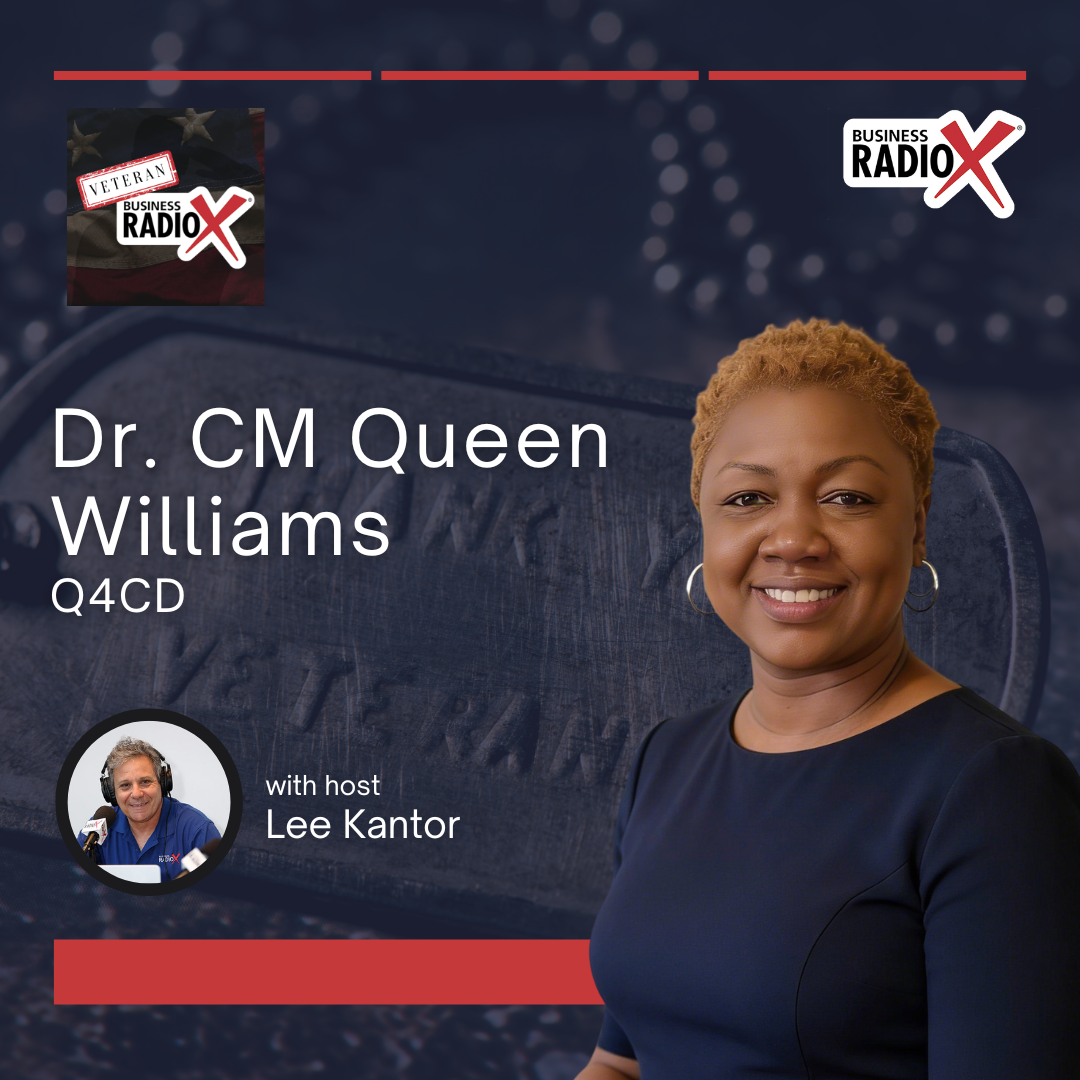

In this episode of Veterans Business Radio, Lee Kantor is joined by Dr. Camille Williams, founder of Questions 4 Cancer Doctor (Q4CD) and a radiation oncologist with military experience. Dr. Williams discusses her work helping veterans exposed to toxins during service, especially those with cancer. She explains the importance of nexus letters in linking health conditions to military service, the role of VSOs, and why specialist expertise matters.

 Dr. Camille M. Williams is a board-certified Radiation Oncologist and retired U.S. Army Lieutenant Colonel with more than two decades of service in military and civilian medicine.
Uniquely, she began her Army career as an enlisted Soldier, serving as a 54B (Nuclear, Biological, and Chemical Specialist — now CBRNE), before commissioning and advancing through the ranks to senior medical leadership. Her experience across enlisted and officer roles allows her to relate directly to Soldiers at every level of service.
Dr. Williams completed medical school at the F. Edward Hebert School of Medicine and trained in Radiation Oncology at Northwestern Memorial Hospital in Chicago, Illinois.
Throughout her military career, she served at major Military Treatment Facilities, including Brooke Army Medical Center and Walter Reed Army Medical Center, with additional service in the National Capital Region at Bethesda. She was instrumental in developing and leading radiation oncology services within the Department of Defense and caring for active-duty service members, retirees, and military families.
Following her retirement from active duty in 2019, Dr. Williams continued clinical leadership in civilian oncology, including helping establish and lead a new cancer center in Illinois during the COVID-19 pandemic.
Today, as Founder of Questions 4 Cancer Doctor (Q4CD) LLC, she provides structured oncology consultations, Independent Medical Opinions, DBQs, and Nexus letters for veterans navigating VA disability claims related to cancer and toxic exposures.
Her approach is grounded in specialty expertise, evidence-based medicine, and an understanding of military service culture — ensuring veterans receive thorough, defensible medical evaluations delivered with clarity and integrity.
Dr. Williams remains committed to service, education, and advocating for those who have worn the uniform.
Connect with Dr. Williams on LinkedIn.
Episode Highlights
- Impact of toxin exposure on veterans’ health, particularly cancer risk.
- The importance of establishing a connection (nexus) between military service and health conditions.
- The role of the PACT Act in recognizing certain military exposures and its limitations.
- The process for veterans to seek medical evaluations and nexus letters.
- The significance of specialized medical opinions in supporting veterans’ claims.
- The limitations of AI in providing medical evaluations and nexus letters.
- The importance of working with Veterans Service Organizations (VSOs) for claims assistance.
- Resources available for veterans regarding cancer and toxin exposure on the Q4CD website.
- The potential for mental health conditions to be linked to cancer diagnoses and treatments.
 This transcript is machine transcribed by Sonix.
TRANSCRIPT
Intro: Broadcasting live from the Business RadioX studios in Atlanta, Georgia. It’s time for Veterans Business Radio, brought to you by ATL vets, providing the tools and support that help veteran owned businesses thrive. For more information, go to ATL vetsource. Now here’s your host.
Lee Kantor: Lee Kantor here another episode of Veterans Business Radio and this is going to be a good one. But before we get started, it’s important to recognize our sponsor, ATL vets, inspiring veterans to build their foundation of success and empowering them to become the backbone of society after the uniform. For more information, go to ATL vets. Today on the show. This is going to be a great show. We have with us The founder of Questions 4 Cancer Doctor, Dr. Camille Williams. Welcome.
Dr. Camille Williams: Hi, Lee. Thank you so much for having me. A pleasure to be here.
Lee Kantor: Well, I’m so excited to learn what you’re up to. Tell us about Questions 4 Cancer Doctor. How did that come about?
Dr. Camille Williams: Thank you for asking that question. It’s well, I didn’t start my Army career as a physician or even as an officer. Right. So I started as an enlisted 54 Bravo, which back then was nuclear, biological and chemical specialists. And I trained at Fort McClellan as a 54 Bravo. I personally witnessed and worked in environments where chemical agents and decontamination training were routine back then. Right. So that experience gives me a very real understanding of how exposures can occur. Not hypothetical per se, but operationally so. The surrounding Anniston community at Fort McClellan, they have documented environmental contamination issues that have been publicly acknowledged over the years. But many soldiers who lived off base or interacted within the community, they have not been acknowledged for any sorts of issues they may have. So when we talk about long term health effects, we’re not speaking in theory. I’m speaking about environments where toxin exposure has been formally recognized at Fort McClellan and the surrounding area. So at the time, we were just young soldiers doing our jobs. We trusted the system. We followed orders. We didn’t question long term exposure risk. So before medicine, like I majored in biochemistry. So this is how I got into, um, I’m currently a radiation oncologist. Right. And that’s like the leading step into how I became aware of toxin exposure. So when a veteran from Fort McClellan comes to me with a cancer diagnosis, I’m not just reading a file. I understand both the UN based training exposure and the broader environmental context of the region. So this is a personal thing for me as well. It’s not just textbook when it comes to the exposure the soldiers have had. I was there, I experienced that.
Lee Kantor: So now, um, are soldiers around the country, around the world that are, uh, around these kind of toxins. Are they all kind of at risk, or was this unique to where you were?
Dr. Camille Williams: No, they are wherever they are. Once they’re exposed, they’re at risk. The issue is that the Pact act recognize certain location and they recognize certain assignment. So if you are in Vietnam and you get exposed to Agent Orange, that is recognized as a presumptive diagnosis. If you are diagnosed with, let’s say, prostate cancer, but there’s still other bases and other areas that are being found to have these exposures, but then they are not on that, um, pact act list, and they’re not given the benefit of the doubt, if you will, regarding their cancer diagnosis or any other diagnosis. It’s not just cancer that these toxins can cause. There are many other types of issues that these toxin exposures can cause. So it’s a matter of finding out what the diagnosis that the condition that the veteran has, where they were stationed, what possible toxin they were exposed to and then making the connection or the Nexus, if you will. And that’s what we do at Q4, CD.
Lee Kantor: So if so, any veteran that has any type of medical diagnosis, if they kind of connect with you, you can see if there’s, um, any type of recourse or maybe a connection of dots that maybe they weren’t aware of.
Dr. Camille Williams: Absolutely. Typically, my majority of my referrals comes from the VSO or other, um, VA credentialed personnel, but I’ve also have some of the other veterans self-refer because they’re not quite sure. So all of the veterans that I see, I don’t automatically just go straight to doing the Nexus. I do an evaluation first to see if something truly exists. So we’ll talk about where they were located, what their MOS or their job, um, was um, what does the VA says? Or is it covered by the Pact act or not? Are they within that time frame? And so not everyone needs a nexus letter. And that’s where the initial consultation comes in and where I help the veteran, hand in hand, go over the medical information to see if something exists. If something does not exist, I will let them know. I cannot make the connection with all of my background being radiation oncology biochemistry. I cannot see how this can be made. And I would refer them to say, go back to your VSO and see if there is something else or another physician or another specialty that you can consider to evaluate your current condition.
Lee Kantor: Can you explain for the listener, um, what exactly is a nexus letter and how does it like, where does it come into play in terms of their VA disability claim?
Dr. Camille Williams: Sure. So a nexus letter is a medical opinion that connects a veteran’s current diagnosis to their military service. Right. And so there are some instances where the connection cannot be made. So the nexus is simply it just simply means a link. So we are answering the question is it at least as likely as not that this condition was caused by or aggravated by the military service? So the VA requires medical evidence, not just a diagnosis, right? They need a connection. So there are people who have prostate cancer or breast cancer. And that’s not connected to any exposure. It’s not connected to their um their any of their assignment. So that’s where the evaluation and using my knowledge of military as well as medical jargon, comes into discussing what a strong nexus letter is and what the medical reasoning is behind making that connection. So again, that nexus letter is just a medical opinion that says this was caused by the soldier’s exposure at a certain time during their service, during their time when they were in the military.
Lee Kantor: Now, is there any advantage of having an oncology nexus letter rather than just a general nexus letter?
Dr. Camille Williams: Yes. So it makes a difference. What? Right. So when you have an oncology nexus letter, you are speaking to someone who has the expertise in cancer biology and the treatment. The clear statement used as far as leads is likely not gives you the probability. So if someone who is a general practitioner or someone who is not within the oncology world. They may not understand certain link or certain the radiobiology. For example, I’m a radiation oncologist, so I’ve worked with radiation when I was enlisted. I’ve worked with radiation using radiation to treat cancer. I’ve studied radiation at the Armed Forces Radiobiology Research Institute. So I know regarding what exposure, what dosage exposure and what time frame it would take and what are some of the common cancers that can be caused by radiation exposure. So if someone was diagnosed with Hodgkin’s, let’s say, when they were in their 20s and enlisted and they had radiation to the chest area, and then they have breast cancer when they’re in their 40s or 50s, was that breast cancer normal, or was it caused by the radiation treatment they had for their lymphoma when they were enlisted. That’s where a specialist in oncology can really make that link. And that causation, showing that the latency periods and the scientific literature which the VA is looking for, explains logical medical sound reasoning about how this can connect to the current veteran condition. So it makes a difference in what. So I would not do orthopedic stuff like I wouldn’t do joints. And if you have low back pain or joint if you have sleep apnea, you would need to go to like a pulmonologist. So the specialists are there for a reason. And getting a specialist nexus letter stands very strong. No guarantees are made, but we’re better able and suitable to explain radiation Biology are the toxin biology when it comes to making that nexus connection.
Lee Kantor: And I’m sure because of your unique expertise in this area, especially like a cancer diagnosis, you’re able probably in a shorter period of time to connect dots or not connect dots. It wouldn’t take you as long. Maybe things are more obvious to you than it would be for somebody who doesn’t have your unique background.
Dr. Camille Williams: Absolutely. And so also because I was enlisted, and I have seen veterans come to me with their medical records that they have kept over the years. Now we’re, you know, more fancy and everything is electronic. But when we were moving from base to base, we would literally carry our packet with our medical information in there. And even looking at mine from the 1990s, some of those scribbles and what the doctors were writing was so difficult to understand. But now, as a physician, I couldn’t understand what was being written in my records. When I was a private back at Fort McClellan, and when I went in to see the doctor. So it gives me that connection not only from the medical perspectives, but also from the military perspective, looking at those old folder, knowing what the reference means when you say PT or if someone was put on a profile. What does a permanent profile mean or temporary profile? If someone was not in the military, that would not mean anything to them. So having the enlisted as well as the officer military background helped me better to communicate with the veterans in getting through some of these jargons even more quickly and efficiently, so that they will know if there’s room for Nexus or not.
Lee Kantor: And isn’t this an area where you shouldn’t be doing this alone? You can’t just go on AI, or you just can’t Google something and try to figure this out on your own. You need to have a Sherpa, an expert like yourself, to kind of at least give you some of the where, where you don’t know what you don’t know. And somebody like you knows a lot more than just a veteran that is going through something difficult but thinks, oh, I can just power through and do this myself.
Dr. Camille Williams: Absolutely. That is indeed correct. So what? When I do have the opportunity to speak with the VSO or any of the VFW or anyone who are credentialed to work with veterans, I acknowledge we’re in, um, we’re we’re in a time when AI is just being used a lot in the trajectory is just phenomenal, right? It’s it’s being used more and more, and it’s been found more and more in the clinics as well. But AI what AI does is that It can summarize information, but it cannot examine the patient. It cannot independently review original records with medical judgment or even reviewing the jargons. Like I said previously about profiles and injuries, etc. and it cannot ethically sign a legal medical opinion. So a nexus letter requires physician accountability, and licensure cannot get that from an AI. It requires clinical reasoning, oncology expertise, and professional liability. So AI is a tool. It’s not a substitute for an independent medical opinion, especially as it pertains to toxin exposure and assignment and the likes.
Lee Kantor: So now when a veteran is kind of trying to get the care or that they need, are they if they’re fighting for this, are they going to an attorney first and then to a doctor, or are they going to a doctor first, then an attorney? Like what? What is kind of the order of operations here? If you’re trying to to kind of get the care that you’re fighting for, the care that you need.
Dr. Camille Williams: Yeah. So when it because I’m sort of, you know, think about really I’m sort of the third leg, if you will. Right. So if a veteran is trying to fight for a diagnosis, regardless of what the condition may be, there are credentialed, uh, VA assistance that is available. So it really depends on where the veteran is in the process. Initially, as they’re going through the process, the VSO or the VFW, the credentialed persons should be there to guide them through it. I don’t recommend that they just seek a Nexus letter on their own without knowing where it actually fits. So if they are denied, an attorney can help with the appeals strategy. But even attorneys often need a strong medical opinion to win a case. Right. So a solid medical review early can prevent unnecessary delays as well. So my role is medical. I do not practice law. Ideally the medical evidence and legal strategies work together. So because I’m on the outskirts, I’m not aware of all of the steps that’s been going on with the claim and the filing. I highly recommend that each veteran, as they’re going through their case, have a sit down conversation, and now they know what a Nexus letter is.
Dr. Camille Williams: To ask what a Nexus letter. Help me in this process. The law portion of it. As an attorney, they have their role as well. But I don’t think I’m qualified to say at what point an attorney is required. I will defer that portion to their VSO or their credentialed VA person that they’re working with. But I’m here. They can I will take referrals. They can find information on Q4 CD, and I’ll be more than happy to let them know what I can or cannot do based on the consultation. But as far as where each falls, um, I would recommend, you know, save yourself a few dollars, talk to the VSO. If you’re not happy with the VSO, there are multiple, right? So if you want to reach to me and have a consultation, then I’m happy to go through that with you. But know that I do not file claims I am not a lawyer. I will strictly be reviewing the medical aspects of things, and then likely refer you back to your VSO for any sort of claim, filing, or anything that needs to be done from a credentialed VA specialist.
Lee Kantor: So in your opinion, the order of things is VSO and then you.
Dr. Camille Williams: Yeah, I think you have to get your stuff together first because I don’t put the stuff together. I’ve had um, I’ve had veterans, um, come to me who have not seen Vsos or try to see a VSO, but they are very booked and don’t think that they can get in in time and just have questions to wanting to know if it’s best to do a Nexus letter before, or a Nexus letter after denial. Sometimes they just try to make sure their packet is right the first time around. So I am happy to see anyone who would like to discuss if a nexus exists based on toxin exposure. But I am just a believer because even when I was leaving the military myself, when I was retiring as a lieutenant colonel, I too went through the process. I too went and speak with a VSO, but as you can imagine, my encounters were much shorter because I have a very good knowledge of the whole medical process, etc. but I did respect the process, and I did speak to someone and I was able to get through. But I’ve seen, I would say about 40% of the folks I speak with have not yet seen a VSO, but they do need someone to help them in most cases to file their claim and go through that process. So I’m happy to discuss anything medical with any veteran at any time.
Lee Kantor: Right. But in the first. So if you’re a veteran and you have a diagnosed a cancer diagnosis.
Dr. Camille Williams: Mhm.
Lee Kantor: It’s okay for you to be the first call or is it better to be have the VSO be the first call and then go to you after you’ve kind of established that relationship with the VSO.
Dr. Camille Williams: I think the VSO should be the first call. Right. Because there’s a cost to speak with me. And seeing the VSO doesn’t cost anything. And so I think talking to the VSO, if they’re able to get through one, that should be their first step. That’s what’s recommended. And for those who are retiring or have not yet retired, still on active duty as they’re in the process of leaving, they have more access to speaking to those who represent that transition. But I always think it’s just reasonable right to. Because if I say, oh, come to me first, I think, uh, it’ll be overwhelming for us, for so many folks to come to us and they may not need us. But if you do have a cancer diagnosis, make sure you establish with the VSO. Usually doesn’t cost doesn’t cost anything. And if you feel that okay, I’ve done what Doctor Williams asked me to do, I’m going to go to Q4 and I’m going to make a consultation appointment and then do both in tandem. That is also okay.
Lee Kantor: And then, uh, you mentioned the website. On the website, there’s a lot of information that might be useful prior to going to that VSO meeting. Right? Like that. Uh, your, your website has a lot of information on it.
Dr. Camille Williams: Yeah. So on the website is the number four seed. Com so it’s Quebec for Charlie Delta. Com. And the first box at the top has to do with um getting information for Nexus letter. And there’s also information there for prostate cancer and breast cancer. Those are the three things that I cover mostly in the questions for Cancer Doctor website. But when you click on the Q4 CD and you go to the first link for Nexus letters, there is information there and also a list of some of the more common diagnoses that are covered. So if that page is accessed, it will show you the cancers and tumors that are covered, the blood and lymphatic cancers, some exposure related issues. So one of the things that came to me recently had to do with Parkinson’s disease, and I had to take a pause myself, Parkinson’s okay with toxin exposure. So I went and I did my homework to say, well, okay, is there a nexus for Parkinson’s? What else is there that some of these agents, what are some of the conditions that some of these agents can cause, like the burn pits and the asbestos. So it may not be lung cancer from the asbestos, but you may have developed other issue if it’s not in the lane of cancer, an issue I can’t do or some breathing issue, then I’d recommend, hey, you probably need to see a pulmonologist, a doctor who specializes in lung conditions to write that nexus letter for you. However, if there’s a direct link having to do with, uh, exposure, and I can make that nexus then.
Dr. Camille Williams: Yes, I’ll be able to write that Nexus letter based on your exposure. So there is a link. Also, there are mental health conditions that can be secondary to cancer as well, right? Not only the expected like neuropathy from chemotherapy or brain fog from that, but there can be some PTSD triggered or worsened by cancer diagnosis or treatment, anxiety or depression. So while I do not cover anything that’s more on the psychological portion or the mental health issue, if there’s a nexus connecting it to your diagnosis of cancer and the treatments that you’ve gone through, I can assist with that area. So because I have such a niche and because there’s so many veterans that have been coming my way, I try to make sure that I do my colleagues justice, right? So I, um, I will refer out if they need to go to someone else or refer them back to their VSO, or have a conversation with the VSO. If this is something that I think I can reasonably cover before the consultation. So it’s really big on communication. And there’s a list, you’ll see, um, you’ll see a little tab there that says the list of diagnosis covers. When you go to the Nexus page for Q4 CD and you’ll be able to see, well, can I reasonably go to Doctor Williams to discuss my case? And if I can have a chance to do a connection between my service and my current diagnosis.
Lee Kantor: Now, do they have to be physically near you to get a relationship with you, or is this something that if they’re anywhere, they can reach out and you’ll be able to help them.
Dr. Camille Williams: Oh, it doesn’t matter where they are. Everything is virtual. Thank goodness for that. So if they are able if they want to schedule an appointment with me, there will be the link to go ahead and schedule the appointments with me. Doesn’t matter where you are located. For Nexus letter, it’s not as restrictive. However, if it’s more to do with, uh, a dbq a disability um benefit questionnaire, then in some states you have to have certain license. So I have a license in Georgia, North Carolina, Illinois, Maryland and Maryland also covered, um, D.C. so for those areas I can review and do the disability benefit questionnaire with, uh, the veteran, but I cannot do the dbq for everyone. Um, so yes, Nexus letter doesn’t matter where you are, it’s just doing my research and writing you a very well thought out and VA structured, um, nexus letter and reviewing it with you. Dbq there’s some limitations there.
Lee Kantor: Well, Doctor Williams, thank you so much for sharing your story. You’re doing such important work and we appreciate you.
Dr. Camille Williams: Thank you so much for having me. Greatly appreciate your time.
Lee Kantor: And then the website one more time is the letter Q, the number four seed doctor, Queen Williams, MD, Oncology Specialist. Thank you again for sharing your story.
Dr. Camille Williams: Thanks again for having me.
Lee Kantor: All right. This is Lee Kantor. We’ll see you all next time on Veterans Business Radio.














