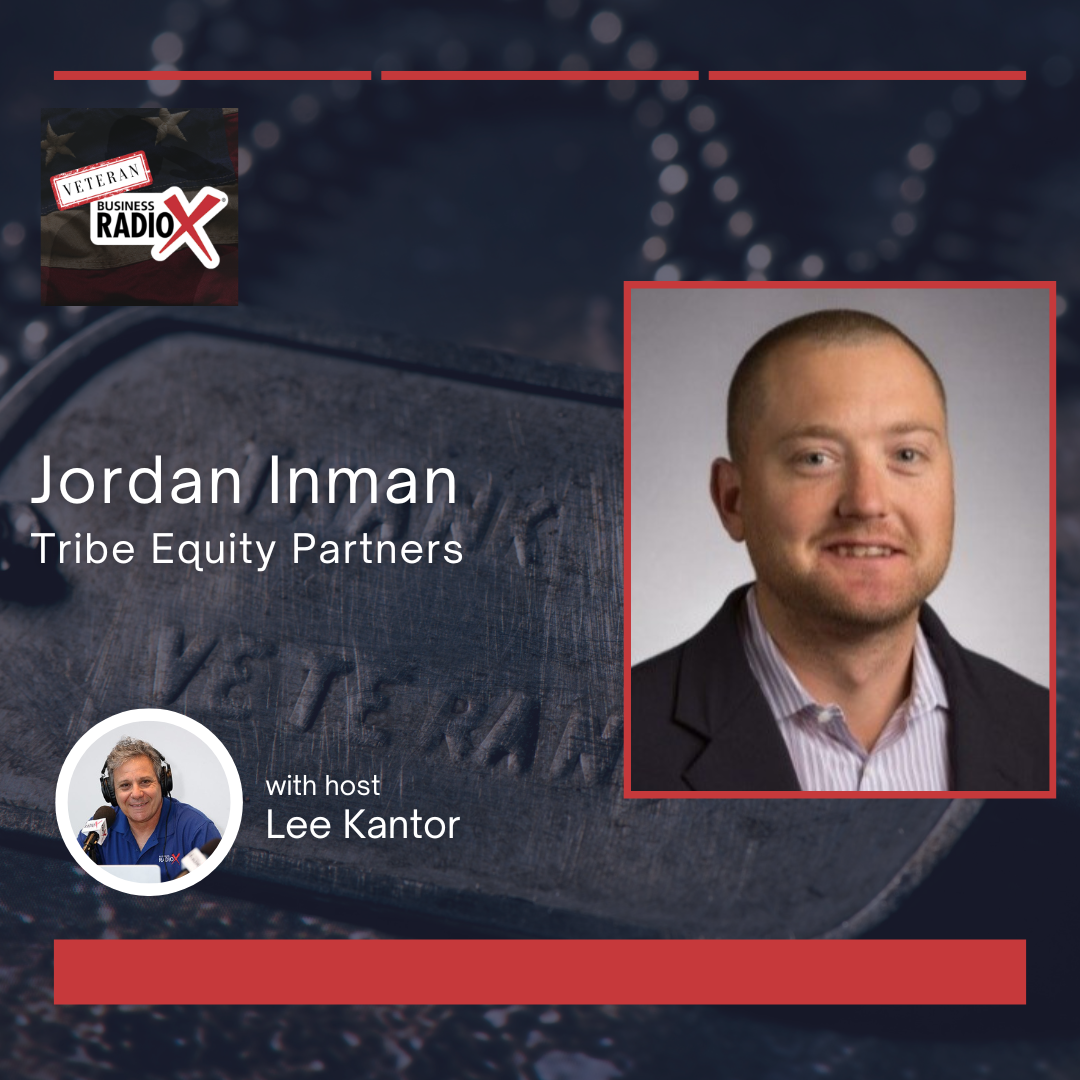

In this episode of Veteran Business Radio, Lee Kantor talks with Jordan Inman, co-founder of Tribe Equity Partners. Jordan shares how he and fellow veteran James Maxwell built Tribe by acquiring and growing small businesses, starting with janitorial and lumber companies in Oregon. The discussion covers their hands-on leadership style, the importance of clean financials and documented processes for acquisitions, and their mission to mentor aspiring business owners—especially veterans—by providing support, guidance, and financial backing to help them succeed in entrepreneurship.

 Jordan Inman is the co-founder of Tribe Equity Partners, where he supports portfolio company leadership through strategic guidance and direction.
Prior to founding Tribe, he served as an Infantry Officer in the United States Marine Corps, an experience he credits with shaping his foundational understanding of leadership and complex operations.
Jordan is an alumnus of Harvard University via the Executive Education Program and holds a Bachelor of Arts in Communications from Chapman University, where he was a student-athlete on the football team.
He and his wife enjoy spending time with family and friends while raising their three wonderful children.
Connect with Jordan on LinkedIn.
Episode Highlights
- Overview of Tribe Equity Partners
- Focus on acquiring small businesses, including specific industries like janitorial services and lumber remanufacturing.
- The process of partnering with individuals to help them acquire their own businesses.
- Importance of preparation for business owners considering selling, including maintaining clean financial records.
- Evolution of acquisition strategies and criteria for selecting businesses.
- Insights on the transition period after an acquisition and the role of previous owners.
- Emphasis on the significance of documented processes and systems for smooth business transitions.
- Discussion on the mentorship and support offered to aspiring business owners, particularly veterans.
- The challenges and rewards of small business ownership.
- The importance of leadership qualities and resilience in successful business ownership.
 This transcript is machine transcribed by Sonix.
TRANSCRIPT
Intro: Broadcasting live from the Business RadioX studios in Atlanta, Georgia. It’s time for Veterans Business Radio, brought to you by ATL vets, providing the tools and support that help veteran owned businesses thrive. For more information, go to ATL vetsource. Now here’s your host.
Lee Kantor: Lee Kantor here another episode of Veterans Business Radio and this is going to be a good one. Today’s episode is brought to you by ATL vets. Inspiring veterans to build their foundation of success and empowering them to become the backbone of society after the uniform. For more information, go to ATL vets. Today on the show, we have the co-founder of Tribe Equity Partners, Jordan Inman. Welcome.
Jordan Inman: Hey, it’s great to be on the show. Thanks, Lee.
Lee Kantor: Well, I am excited to learn what you’re up to. Tell us a little bit about Tribe Equity Partners. How are you serving folks?
Jordan Inman: Yeah. So Tribe Equity Partners was started about four years ago with myself and my partner, James Maxwell, two veterans. James is a Navy guy. He started out in the Marine Corps and then went to the teams and was a Navy Seal. I did eight years as a marine Corps officer on the infantry side of the house. And we decided four years ago that we were going to partner up and buy our first company. So we bought a janitorial services company. And that just kind of took off. That did so well that we we ended up purchasing a lumber remanufacturing company locally here as well. And now today tribe is we’re one of the largest employers in Central Oregon. And what we do now is we actively seek individuals like ourselves who are in the business of of trying to hunt down their own business to acquire, and we take a minority stake and partner with them and help guide them through the process and financially back some of these people.
Lee Kantor: So what kind of was the impetus to to do this, or did you each have kind of normal other jobs and then said, hey, let’s do this entrepreneurial thing, or were you just always involved in entrepreneurial ventures?
Jordan Inman: You know, for my partner and our journeys are slightly different. I got out of the Marine Corps in 2015, largely due to the fact I had my first child, and that was just kind of a turning point for me and picking my direction. I loved the military. I would have stayed in, but made a choice to focus on being a father more so than continuing to serve. And so I ended up falling in in the corporate world for a, uh, a home builder. And I did that for a fair amount of time. But it what I learned going through the transition from active service just to the civilian world, is. It was a lot harder of a transition than I was expecting. And, um, it just didn’t feel like I was in the right place working in kind of a corporate environment. And that’s kind of. When I reconnected with James, we both joined the Marine Corps around the same time, and James was actually going to Berkeley at the time, and he was taking classes on how to acquire a business. And we started talking about it, and we decided just to kind of take a shot and buy our first company, and that’s exactly what we did.
Lee Kantor: So what was kind of the criteria of choosing a company? What did you have an idea? Or you just kind of fell into the first one and just started kind of coming up with a philosophy after that?
Jordan Inman: You know, we had we did have our criteria, which is it’s pretty standard if you’re if you’re looking to buy a small business, you know, we had a certain EBITDA margin. We wanted we wanted a long established business. Um, business to business was was something we’re looking at looking for. Reoccurring revenue is obviously great, but to be honest, we were just so open to getting in the door that we we just knew we wanted to buy a business. We weren’t going to be picky. We knew we wanted it to be local so we could get our, our hands in, uh, eyes kind of on the business and be a part of it. And so the, the first, one of the first opportunities that came up was this janitorial company. And, and because we didn’t care about necessarily the industry too much, uh, we just jumped right in and, um, it turned out to be a pure blessing. One of the best things that’s ever happened to me personally.
Lee Kantor: Now, moving forward to the present, are you still is the criteria still the same or are you now? Are you more are you less industry agnostic now or more industry agnostic? Has anything changed?
Jordan Inman: Uh, yes. That’s a great question. Um, one of the core lessons we learned from our first acquisition was, um, if you’re gonna buy a company, you might as well go big. Um, because the the lift and the work it takes to take over a small company, uh, is is the same as a is a bigger company. So, um, you know, we have our, our EBITDA margin now, the companies that we would look at are roughly around a million. Um, that’s kind of the bottom line threshold. Um, and that’s just because, you know, in the janitorial company we bought, it was um, margins were extremely, um, high. It was a great, great business. But the reason the margins were so high was because the owner, uh, was the owner operator. And she really did so many jobs within the company. And we’ve spent four years building out management team, middle, middle layers of of leadership. Um, and it has been, um, a bit of a knife fight getting that company up off the ground and getting it to a true, uh, company that’s really strong and able to kind of survive on its own without one single point of failure.
Lee Kantor: So are there any kind of lessons, uh, that you can share with maybe business owners that want to be acquired or, um, maybe aspiring businesses that just are kind of struggling, and maybe there’s some things you’ve learned on how to quickly turn around a business.
Jordan Inman: Yeah. So I think the first question, if you’re even thinking about getting acquired, you need to start years before, um, that date actually hits. So I would start prepping now. Um, a lot of the companies that we look at, um, you know, the cleaner, the books, um, the more removed and owner is from the company. Um, just just if the company’s bolted down, um, and can prove it. Um, your company’s automatically going to be more valuable. And so if you’re thinking about selling your business, um, you really the preparation it takes, it should start years before you actually sell the company. Um.
Lee Kantor: But when you say cleaner books, you mean there’s a kind of church and state, uh, between your personal and the business?
Jordan Inman: Yeah. You know, in, in the small business world, um, you know, it can be common to, to have a lot of personal expenses on the books. It can even be common to, to not really be tracking things as well as maybe you should, um, you know, things like doing, you know, cash deals or I would say ill advised because you can’t prove it. You can’t track it. Um, you just want to have a history of clean performance, uh, for as long as possible. And, um, if it’s time for you to, you know, you want to exit and sell your business, um, getting those things, you know, all the administrative side of the house and getting your documentation squared away. Uh, it really takes a long time, and it’s a heavy lift. So my recommendation to anybody thinking about selling their business is to is to lean into that, you know, at least a year before, uh, before they actually do. So.
Lee Kantor: So a lot of, um, especially small business people think they’re, um, kind of winning when they’re hiding a lot of stuff, uh, maybe for tax reasons. But in the case of when it’s time to sell, you need all that stuff documented in order to get the highest price to exit.
Jordan Inman: Absolutely. I mean, it’s a it’s a double edged sword. So, um, you know, the, the when my partner and I go in and we look at these companies and we’re looking at the financial information, um, you know, the strength of the company can be seen on a balance sheet or a PNL or, um, you know, looking at the cash flows and if, um, a business owner is taking discretionary earnings and maybe sheltering stuff in other places to avoid taxes. It’s just going to be tricky to kind of show and prove us kind of the true performance of that company. Um, so it just needs to be thought about ahead of time.
Lee Kantor: Now, when you’re working, um, with a seller, are you are they expected to kind of be a bridge for you for a period of time, or is this something that. Hey, here, we closed and see you later. Bye.
Jordan Inman: Um, you know, I think everybody’s kind of got their own idea on how that should go. I think from from my opinion. And, um, you know, just what we’ve experienced as a team is that the fastest way to starve a dog is to have two people in charge of feeding it. And so when a previous owner is is in the seat during a transition period, the team is going to have a hard time understanding, um, who’s actually leading that company? Uh, if you go in and acquire it, you know that that is now your skin in the game. That’s your baby. So for us, the smoothest transitions have been going in acquiring a business, um, and having a, the shortest possible time with the previous owner to do turnover, uh, and then get that individual out of the seat, um, just so the team can feel more supported with a single point of contact as far as the leadership goes. Um, because it can be confusing. Um, if that gets stretched out too far.
Lee Kantor: And then along the lines in that regard, is that the better that they have kind of standard operating procedures documented in systems in place, the easier that transition will be from you to you guys, right?
Jordan Inman: Yeah, it’s a infinitely smoother the more processes and systems that are, that are in place. Uh, it just makes everything a lot easier than, you know, sometimes knowledge is just captured in the head and it has never been written down. Um, it just makes things more time consuming and a little more gray.
Lee Kantor: So if you were advising a company that’s thinking about getting ready to sell, that would be so clean the books and then start documenting all the processes and procedures.
Jordan Inman: Yeah, I’m just just making sure they’re established. And, um, you know, it’s not just captured inside somebody, somebody’s head. And just as they’re about to leave, um, there’s definitely a lot of prep that goes into, um, selling your business.
Lee Kantor: And that’s why you say to start early, because the sooner you start working on this stuff, the sooner you’ll be ready.
Jordan Inman: Yeah, absolutely. And really what? You know, what my partner and I are doing is we’re on the acquisition side, so we’re on the buy side. Um, to date, we have not sold anything ourselves. We’re just, you know, accustomed to looking at a lot of these businesses as we always search for our next acquisition and, and really, um, today we’re looking to sponsor, uh, other individuals who are doing their own search. Um, so the dynamic is changing quite a bit for us.
Lee Kantor: So what do you mean by that? Sponsor other people.
Jordan Inman: You know, the for James and I, we’ve we’ve been very fortunate, um, and we’ve had a lot of success going in, in, in buying a small business. That’s something that has been a life changing opportunity for both of us. Um, we went from the military, which was a space, um, that we were able to, you know, be a part of a small team, small group environment. And, um, there’s a lot of fulfillment being a part of a small team and just getting in there and, and, you know, sweating it out with the guys leading small groups, um, in small businesses, really kind of given that back after we transitioned out of the military. And so it’s a really it’s just been a, a fantastic fit for us. Um, financially it’s been fantastic. Lifestyle wise, being a small business owner is, um. It’s perfect. You know, my my son had a day off at school, um, a couple days ago, and he’s able to come to work with me. Um, he can look at, you know, invoices with me, and we practice his math, um, on real life scenarios. Get to see his dad, actually, um, kind of working real time.
Jordan Inman: And so all these things have been a real blessing for us. And what we realized is, is, is, um, we could keep going and keep acquiring more businesses. Um, that is one way for us to grow. Um, but a more fulfilling way is to find an individual that’s very similar to, to like what James and I were, you know, 4 or 5 years ago, who has this vision of wanting to go acquire their own company? Um, it’s a scary thing. And it’s not it’s not easy. Anybody who tells you you can just go buy a business and it’s all roses Is shouldn’t be trusted. Um. It’s a it’s a huge lift. It’s a massive endeavor. And, um, you know, if we can partner with people, um, and help coach them through that whole process and be a part of their journey that, you know, that’s, um, it’s really a win win. And I can’t think of anything that’s that’s more fulfilling than than that. Um, so that’s kind of the direction we’re, we’re currently heading right now.
Lee Kantor: So you’re looking for kind of the next Jordan in another market and to help them kind of acquire their first business.
Jordan Inman: Yeah, absolutely. And to be honest, it could even be in the same market. Um, you know, James and I believe that we don’t need to blow somebody else’s candle out to make ours shine brighter. Um, there’s more than enough to go around. And, um, you know, if we can partner with individuals who are who are hungry, eager, eager to Eager to learn. Um, and they just they just might need some help, you know, because it’s, uh, again, it’s not the easiest thing to go out, acquire a company. Um, it’s even harder post-close when you actually take a company over, um, we can we can mentor. Um, we can, we can guide them through the entire process from start to finish. Um, we can be a long term partner. We can financially help and, uh, financially back people if they need it. Um, and it’s just, you know, it’s a very fulfilling, rewarding spot for us to find ourselves in, um, and it’s really, you know, it’s a lot of it has to do with giving back at this point.
Lee Kantor: So you’re looking for, I guess if you were looking for kind of the, the ideal would be somebody that’s a veteran from the veteran community that is maybe like you were maybe frustrated with where you were or felt unfulfilled in some areas and think that if they could own and operate an existing business, you can help them kind of assess the risk, help them choose wisely so they’re not jumping into something that maybe they shouldn’t and then even financially back them. Possibly, um, if they make a choice that they can’t afford.
Jordan Inman: Yeah, absolutely. And, and, um, we actually sat down at the turn of the year and, and we kind of thought about what the ideal qualities of a, um, somebody who we think would be successful acquiring their own business and, um, one they got to be all in because, you know, once you acquire a business, there is no going back. Um, so they have to know themselves that it’s, it’s kind of their path that they want. Um, it’s not something we, we ever want to talk anybody into. Um, two, they got to understand that, um, leadership is, you know, it’s by example. Um, there’s a lot of people who think that you can acquire a business and kind of do it passively, and and things are going to go well. Um, my partner James and I, we think the opposite. We think you need to be engaged. You know, you got to lead from the front. Um, you have to be present to win. Um, you gotta understand the importance of team. And, you know, James and I could have each individually gone and bought our own businesses. Um, but business is a roller coaster. You know, there’s so many ups and downs and, uh, having a partner kind of have your back is so critical, um, in the down periods. You know, it’s the worst times. Never feel that bad when you have somebody to share it with. And then the up periods, it’s so much more fun to celebrate with somebody. And there’s been so many times where I found myself kind of in the trenches, uh, working on a project in a business.
Jordan Inman: And, uh, you know, my partner James is kind of sitting in Overwatch, and he’s able to look out for me on the bigger picture, or vice versa. We’re able to to jump in and call time out. Hey, you know, I need a bit of a break here. Um, and, you know, James and I can move in and out of these companies very fluidly. And so I think the right person needs to kind of understand that it’s business is not a it’s not a solo sport. Um, to be successful, you kind of need a team. Um, and then the last thing is, is you gotta have some resilience if you’re going to buy a business and be successful. Um, resilience can be shown in many ways. Some of the, um, you know, some people have MBAs and they have military background, and I think that’s a form. But there’s there’s a lot of forms of resilience out there. Maybe, maybe it’s somebody who, um, has lost a lot of weight and overcome that kind of a challenge. Um, but you gotta have a certain grittiness to you, um, to kind of withstand the test of time. Um, so that’s kind of what we look for. And to be honest, we we don’t just look for veterans. Um, we’re open to to really anybody. Um, James and I are both veterans, so it’s easy to relate if you are a veteran now.
Lee Kantor: Um, when you’re, when you’re, um, working on the companies you talked about kind of leading from the front are, is are you or and or James, are you become the CEO of the company or do you, um, put managers in place and you’re kind of on the board of the company, like, like what do you mean by leading from the front since you are involved in so many companies now?
Jordan Inman: Yeah. So that’s another good question. Um, I guess you could say we’re kind of like CEOs. Um, we we are not super huge on titles. Um, you know, we, uh, we I think there’s a, a lot of people get hung up on their own title. Um, so we would never call ourselves CEOs, but, you know, our day to day looks very much, um, Um, no days the same. We definitely set the vision and the strategy. Uh, we hold our annual, quarterly and kind of weekly team meetings. Um, but we have people in place who are managing and operating kind of the day to day. Um, but at any given time, James and I, you know, we might need to float in or out and cover down on different challenges that might arise. Um, you know, we could find ourselves in a boardroom, uh, pitching something to bankers. We could be talking to lawyers about something at one point. Or we could be down literally scrubbing toilets next to one of our team members. Uh, because they’re having a bad day. Um, we float in and out, um, and do kind of a variety of different roles. Um, but we are very much hands on, very much engaged, very much available for our team, uh, as much as we can.
Lee Kantor: Now, is there a story amongst the acquisitions you’ve done so far that kind of encapsulates the potential of what, um, kind of working with you could become for somebody out there.
Jordan Inman: Um. Yeah. I mean, the the opportunity is endless and small business. If somebody were to acquire a company, um, you know, if I’m answering your question, hopefully the right way. Um, you know, James and I have achieved a certain level of, uh, financial freedom, flexibility, um, and just a lifestyle, um, that we have chosen, um, and all those things, like, that’s the, I think the positive side to, uh, being successful in small business. Um, you know, the other side of that is, is, um, we’re always on we’re always, you know, we’re working around the clock. At any given point in time, there’s no shortage of issues. You know, our lumber company right now, um, we’re working through some cash flow issues in the janitorial company. We’re working through some some mid-level leadership type issues. Um, and so I think for the right person that has the right mindset and, uh, the work ethic and the drive, small business can be the most rewarding and freeing, uh, career that you could possibly choose. Um, hopefully that answers your question.
Lee Kantor: So what do you need more of? How can we help you?
Jordan Inman: Um, if if there’s anybody out there who is interested in going out and they feel that the path for them is to go be a small business owner and they have no support and they they just want somebody to talk to. Um, please don’t hesitate to reach out to to James or I, um, you can find us on, um, we’re all over LinkedIn. We have a company website, uh, Tribe Equity Partners.com. Um, you can shoot us an email info at Tribe Equity Partners.com. Um, we really spend the majority of our time working in and out of our businesses and just trying to help the next person achieve what we’ve achieved, because to us, that’s that’s the most fulfilling thing we can, we can possibly do.
Lee Kantor: Now, what about the person that’s thinking about exiting? Are you interested in conversations with that person, or is it something that you start dealing with once you got the right partner in place?
Jordan Inman: You know that’s not that’s not necessarily our lane. Um, there are plenty of professionals and experts who who solely help people, um, when they’re getting ready to sell. Um, I can always share if somebody, you know really wants to talk about it, I can always share the things that I’m seeing from a buy side. Um, but really, you know, James and I are in the business of of acquiring businesses that are just local. Um, and the reason we, we stay locally focused here in bend, Oregon, is because we like to be hands on. We actually like to physically be present. And then the rest of the time is really spent, um, helping others out nationally, uh, go acquire their own business.
Lee Kantor: Good stuff. So if somebody wants to learn more about Tribe Equity Partners, is there a website? Is there a best way to connect?
Jordan Inman: Yeah, just hit the website. Ww Partners.com, um, you know, or reach out to us to our email addresses on the website. Uh, or you can hit us up through LinkedIn.
Lee Kantor: All right. Well, Jordan, thank you so much for sharing your story today. You’re doing such important work and we appreciate you.
Jordan Inman: I really appreciate the, uh, the opportunity to be here. Um, and I love what what you’re doing as well, uh, the veteran community is a is a very special community.
Lee Kantor: All right. This is Lee Kantor. We’ll see you all next time on Veterans Business Radio.














