Business RadioX ®

  • Home
  • Business RadioX ® Communities
    • Southeast
      • Alabama
        • Birmingham
      • Florida
        • Orlando
        • Pensacola
        • South Florida
        • Tampa
        • Tallahassee
      • Georgia
        • Atlanta
        • Cherokee
        • Forsyth
        • Greater Perimeter
        • Gwinnett
        • North Fulton
        • North Georgia
        • Northeast Georgia
        • Rome
        • Savannah
      • Louisiana
        • New Orleans
      • North Carolina
        • Charlotte
        • Raleigh
      • Tennessee
        • Chattanooga
        • Nashville
      • Virginia
        • Richmond
    • South Central
      • Arkansas
        • Northwest Arkansas
    • Midwest
      • Illinois
        • Chicago
      • Michigan
        • Detroit
      • Minnesota
        • Minneapolis St. Paul
      • Missouri
        • St. Louis
      • Ohio
        • Cleveland
        • Columbus
        • Dayton
    • Southwest
      • Arizona
        • Phoenix
        • Tucson
        • Valley
      • Texas
        • Austin
        • Dallas
        • Houston
    • West
      • California
        • Bay Area
        • LA
        • Pasadena
      • Colorado
        • Denver
      • Hawaii
        • Oahu
  • FAQs
  • About Us
    • Our Mission
    • Our Audience
    • Why It Works
    • What People Are Saying
    • BRX in the News
  • Resources
    • BRX Pro Tips
    • B2B Marketing: The 4Rs
    • High Velocity Selling Habits
    • Why Most B2B Media Strategies Fail
    • 9 Reasons To Sponsor A Business RadioX ® Show
  • Partner With Us
  • Veteran Business RadioX ®

Search Results for: regions business radio

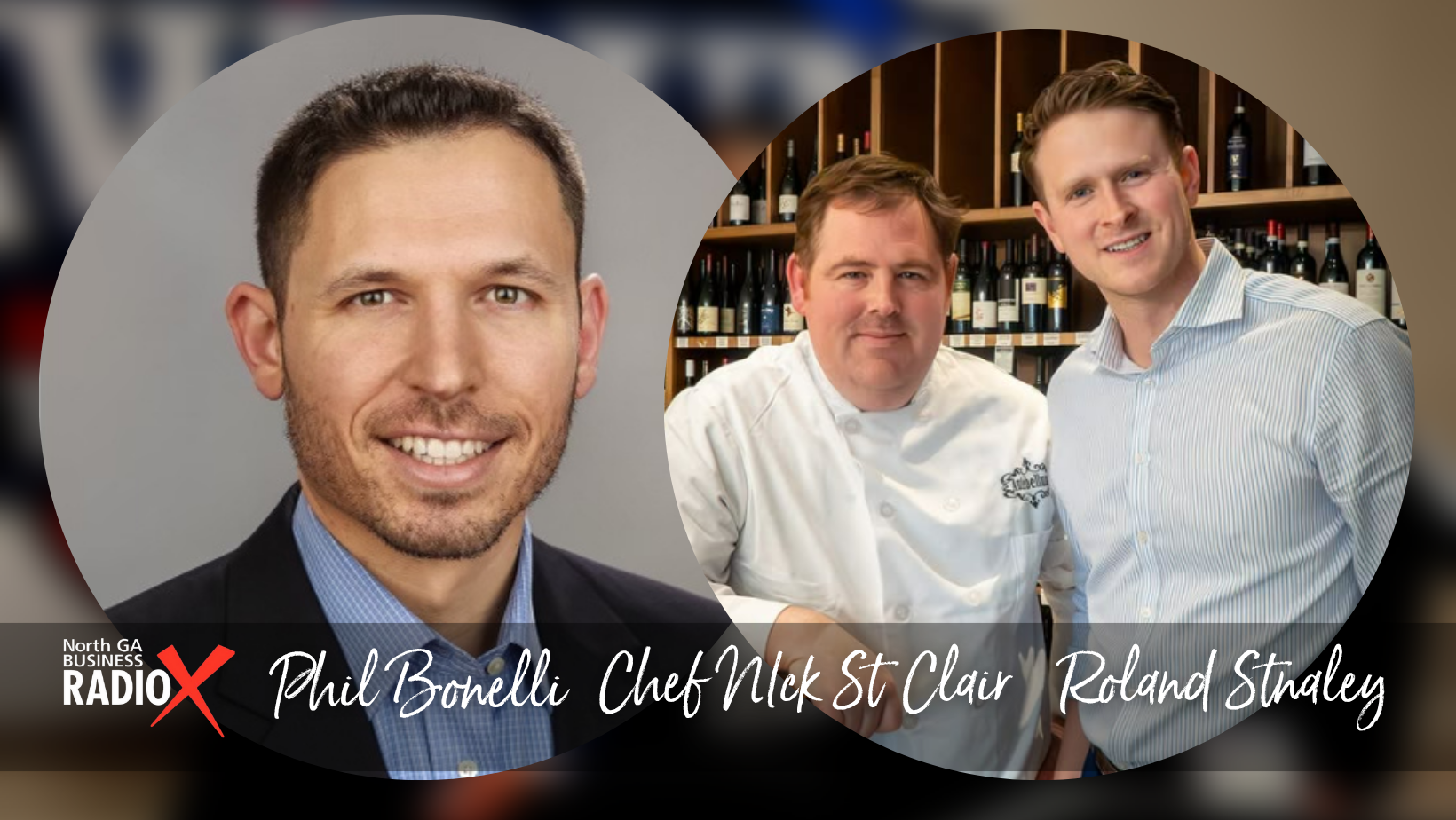
Chef Nick St. Clair and Roland Stanley | Revolutionizing North Georgia’s Dining Scene

June 16, 2025 by Rose

North Georgia Business Radio
Chef Nick St. Clair and Roland Stanley | Revolutionizing North Georgia's Dining Scene
Loading
00:00 /
RSS Feed
Share
Link
Embed

Download file


From Peppadews to Prime Cuts: Chef Nick St Clair & Roland Stanley Bring the Heat Back to North Georgia Business Radio

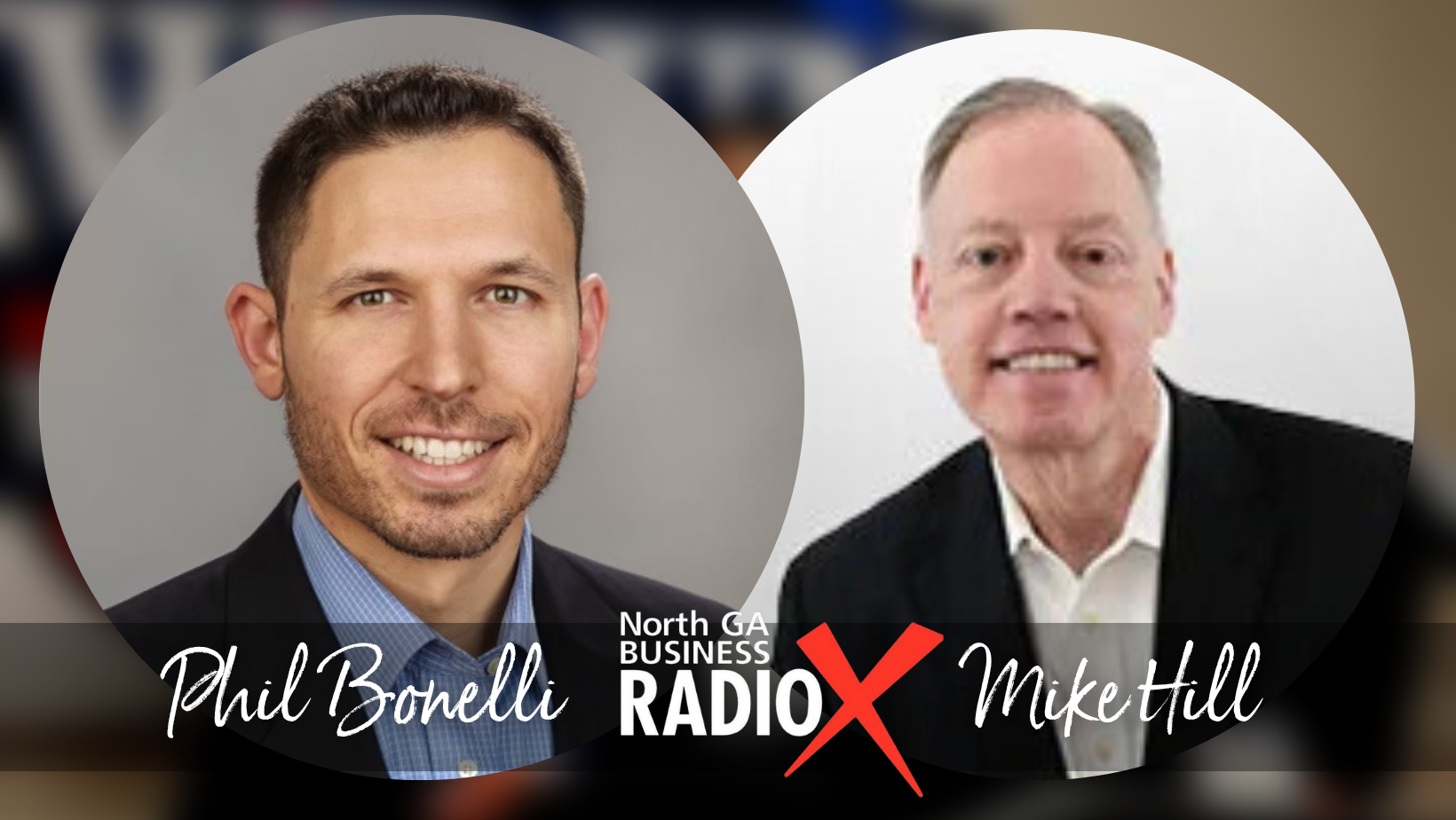
In this fiery and flavorful episode of North Georgia Business Radio, host Phil Bonelli welcomes back two of Gainesville’s most beloved culinary minds: Chef Nick St. Clair and Roland Stanley. Known for their ever-growing empire of mouthwatering eateries like Antebellum, Caroline’s on Main, Peyton’s Pie Company, and The Stag, this duo returns to dish out fresh stories, business wisdom, and a little behind-the-scenes spice.

Tune in to get a taste of how these restaurant titans turn vision into reality — from building teams that last to crafting intentional dining experiences down to the last pepper. Chef Nick shares his artistic yet systems-minded approach to food, while Roland opens up about leading with professionalism (and dressing like it). Together, they reflect on the hustle behind Caroline’s and their pride in their latest endeavor: a reinvention of Grubs Market, now stocked with prime meats, curated wines, and house-made specialties like Nick’s bacon jam and pimento cheese.

But it doesn’t stop there. The team’s next plate is Whistle Q, a soon-to-open BBQ joint that brings community talent into the spotlight. With partners Craig and Gus Jr. onboard, Whistle Q promises to serve up love, smoke, and legacy from downtown Flowery Branch.

The episode also touches on AI in restaurants, the underestimated power of dry-aged beef, and what it really means to bootstrap a dream. With laughter, leadership lessons, and juicy insights, this one’s as satisfying as a perfectly cooked steak. Don’t miss it.

Hungry for more? Listen now and explore how culinary creativity meets gritty entrepreneurship—all served hot with a side of local pride.

Connect with Chef Nick and Roland:

Website — Antebellum

Facebook – https://www.facebook.com/antebellumrestaurant

Website — Peyton’s Pie Company

Facebook – https://www.facebook.com/peytonspiecompany

Website – The Stag Chophouse

Facebook – https://www.facebook.com/chopblockgainesville

Website – Grubs Market

Facebook – https://www.facebook.com/grubsmarketga

Website – Caroline’s On Main

Facebook – https://www.facebook.com/profile.php?id=100094591491952

Connect with Phil Bonelli:

https://www.facebook.com/Hopewell-Farms-GA-105614501707618/

https://www.instagram.com/hopewellfarmsga/

https://www.hopewellfarmsga.com/

Connect with Beau Henderson:

https://RichLifeAdvisors.com

https://www.facebook.com/RichLifeAdvisors

https://www.facebook.com/NorthGARadioX


This Segment Is Brought To You By Our Amazing Sponsors

Hopewell Farms GA
Roundtable Advisors

RichLife Advisors

Regions Bank
 

Highlights of the Show:

00:32 – 01:55
Phil introduces Nick and Roland with flair, outlining their restaurants: Peyton’s Pie, Caroline’s, Antebellum, and The Stag.

02:00 – 03:12
Nick and Roland discuss team building and why they focus on creating systems to scale new restaurant ventures.

03:56 – 05:30
Roland explains the “whatever it takes” mindset and Nick’s culinary leadership, especially during the launch of Caroline’s.

06:42 – 07:46
Nick shares his (waning) love for peppadew peppers and the creative tension between guest favorites and new dishes.

12:12 – 14:04
Roland shares the real behind-the-scenes of owning a business—educating others and why they invested in Grub’s Market.

16:28 – 17:06
Learn about Grub’s wine-on-premise setup, cappuccino bar, and dry-aging program that turns shopping into an experience.

20:09 – 23:41
Phil, Roland, and Nick explore how AI is transforming business while reinforcing the irreplaceable human touch in hospitality.

30:32 – 33:27
Nick and Roland announce Whistle Q, their new Flowery Branch BBQ joint, and how they’re empowering local talent.

35:20 – 36:15
They candidly share the financial reality of small business—working years without pay, driven by passion and vision.

37:29 – 38:15
Top advice for entrepreneurs: delegate, trust your people, and lead with heart. Those who don’t belong—cut ‘em loose.

39:12 – 40:08
Phil wraps with a freestyle rap tribute to Whistle Q, Grub’s, and all the flavorful ventures this duo touches.
Tagged With: Antebellum Restaurant, Caroline's On Main, Chef Nick St Clair, Grubs Market, Hopewell Farms GA, Peyton's Pie Company, phil bonelli, Roland Stanley, Round Table Advisors, The Stag Chophouse

Mike Hill – Trenton Services Corporation

June 9, 2025 by Rose

North Georgia Business Radio
Mike Hill - Trenton Services Corporation
Loading
00:00 /
RSS Feed
Share
Link
Embed

Download file


Mastering Business Simplicity: Mike Hill of Trenton Services Corporation on Smart Business Growth Strategies

On this episode of North Georgia Business Radio, host Phil Bonelli welcomes Mike Hill, Managing Director of Trenton Services Corporation, a firm dedicated to helping business owners simplify operations, improve profitability, and reclaim their time.

With decades of experience in consulting — including roles at Ernst & Young, Prudential, and on the founding team of Verizon, Mike brings a deep well of wisdom to his current work.

Trenton Services offers a one-stop-shop model for businesses —  handling accounting, financial forecasting, IT, HR, and strategy with an approach they call “self-funded transformation” — where growth pays for the guidance.

Mike’s mantra? “Make more, work less.”

Through tools like the One Page Business Plan, Trenton helps businesses ditch shelf-bound 40-page strategy docs in favor of concise, actionable plans that teams can follow daily. This practical focus translates into better results across the board — from more effective hiring practices to clearer long-term visioning.

Listeners will appreciate Mike’s emphasis on outsourcing key functions, such as IT and accounting, to qualified professionals. He shares how many businesses fail not because of poor products or ideas, but because their back-end operations aren’t set up to support growth. And through his personal story—including a career pivot following personal tragedy — Mike illustrates how the best business leaders are also resilient human beings.

Whether you’re scaling a small business, struggling with hiring, or overwhelmed by operational chaos, this episode is a masterclass in doing more with less — strategically.

Connect with Mike and the Trenton Services Corporation:

https://www.facebook.com/TrentonServices

https://www.linkedin.com/company/teamtrenton

https://teamtrenton.com


Connect with Phil Bonelli:

https://www.facebook.com/Hopewell-Farms-GA-105614501707618/

https://www.instagram.com/hopewellfarmsga/

https://www.hopewellfarmsga.com/


Connect with Beau Henderson:

https://RichLifeAdvisors.com

https://www.facebook.com/RichLifeAdvisors

https://www.facebook.com/NorthGARadioX


This Segment Is Brought To You By Our Amazing Sponsors

Hopewell Farms GA

Roundtable Advisors

RichLife Advisors

Regions Bank


Highlights of the Show:

00:30 – 01:15
Phil introduces Mike Hill, describing him as a world-class consultant and a trusted guide for businesses.

01:39 – 03:33
Mike outlines Trenton Services’ offerings—from outsourced accounting to strategic advisory services, with a focus on making businesses “extraordinary.”

04:37 – 05:58
Mike explains how money motivates change and how he positions improvements around profitability to ease resistance to operational shifts.

07:01 – 08:41
The conversation turns to outsourcing; Mike stresses the cost-efficiency and quality of outsourcing IT, accounting, and HR functions.

10:31 – 13:03
Mike shares his journey from Ernst & Young and Prudential to founding Trenton Services, including the personal turning point that reshaped his career.

13:06 – 15:52
The Battle of Trenton inspires the firm’s name—Mike draws parallels between strategic wartime wins and business turnarounds.

21:07 – 25:43
A deep dive into effective hiring practices, including behavioral interviewing and personality assessments via tools found at teamtrenton.com.

30:21 – 35:37
Mike shares his streamlined approach to planning using the One Page Business Plan and how financial forecasting keeps businesses on track.

36:23 – 37:26
Trenton’s hands-on support includes project management, performance reviews, and leadership team alignment around clear, actionable goals.

38:51 – 39:47
Mike shares a client success story—how strategic planning and consulting helped one company double revenue and quadruple profits.


Tagged With: business growth, business leadership, business strategy, Entrepreneur Mindset, Mike Hill, One Page Business Plan, Simplify To Scale, small business tips, Trenton Services

Nick Lopez with LIME Painting

June 2, 2025 by angishields

FMR-LIME-Painting-Feature
Denver Business Radio
Nick Lopez with LIME Painting
Loading
00:00 /
RSS Feed
Share
Link
Embed

Download file

LIME-Painting-logo

Nick-LopezNick Lopez is the Founder of LIME Painting, a premium home improvement franchise that’s redefining excellence in the painting industry.

A first-generation college graduate with a BS in Business Marketing from Michigan State University, Nick launched his first painting company at just 19 years old to pay for college. What began as a summer job quickly sparked a lifelong passion for craftsmanship and entrepreneurship.

Upon returning to Colorado, Nick founded LIME Painting in Denver, developing a game-changing model that connects top-tier professional painters with clients who value quality and integrity.

Today, Nick leads a fast-growing franchise network built on purpose, partnership, and performance.

Connect with Nick on LinkedIn.

Transcript-iconThis transcript is machine transcribed by Sonix.
 

TRANSCRIPT

Intro: Coming to you live from the Business RadioX studio. It’s Franchise Marketing Radio. Ready to revolutionize your franchise with AI? Franchise now empowers franchises with advanced AI solutions, automatic processes, and enhanced marketing strategies. From personalized customer interactions to predictive analytics, we help you harness AI to drive growth and efficiency. Transform your franchise with the power of AI. Visit Franchise Now to learn more and take your business into the future. Now here’s your host.

Rob Gandley: Welcome back, everybody, to another episode of Franchise Marketing Radio where we spotlight the trailblazers transforming the franchise landscape. I’m your host, Rob Ganley, and today we’re diving into a conversation that’s all about Craftsmanship, credibility and category disruption. Our guest is someone who’s redefining what painting means in the world of franchising. He is the founder and CEO of a premium brand that serves the top 1% of homes, blending artistry, professionalism and a scalable business model to deliver results that speak for themselves. Please welcome Nick Lopez, founder of LIME Painting. Welcome to the show.

Nick Lopez: All right. Thanks for having me.

Rob Gandley: It’s great to have you. And, you know, the audience might not know, but I. I know you pretty well. We’ve known each other for a number of years. I wasn’t around when you launched things. So it’s amazing to see where things have gone and many of your assumptions and your, I’ll say, your gut feel as an early entrepreneur were, I think, proving themselves to be correct. And the way you position in the markets, we’re going to break that down. But let’s just start with the beginning. Let’s talk about the origin of all this. How did you wind up creating this brand? And tell us a little bit about how it all merged.

Nick Lopez: Ah, thank you for saying all that, Rob. And it was fun, uh, working with you. Really, as we were emerging, uh, we hadn’t quite yet awarded a territory. And, yeah, we we, uh, did quite a bit of projects and developed a friendship. Most certainly. And so I, you know, when you mentioned seeing the evolution of the brand and, uh, you know, some of the, the vision, you know, that coming into fruition and, and seeing that all play out. But my goodness. Yeah. My story starts in college. I am from Denver, but I was out of state student first generation and, uh, had maxed out a $500 credit card just to get my flight out to East Lansing. I went there and wrestled my freshman year. I was a preferred walk on, and my, uh, hope was that I would get a scholarship and that would pay my way through school. The reality was that I didn’t get a scholarship my freshman year, and I maxed out all my credit cards. So I started a painting company, uh, called Spartan College Painters. I know, real creative. Being a Spartan going to Michigan State and I, you know, I looked at the bigger the home, the bigger the college bills. It would help me pay. And that was really my logic. And it was, you know, it was 2008, middle of the Great Recession. Keep in mind this is Michigan, the auto industry. And so it was certainly an interesting Time. You know, I’m 18. I clearly very little experience or really none.

Nick Lopez: And I folks trusted me and allowed me to paint their home, thankfully. And you know, there’s nominal barriers to entry. I quickly learned and so I kept hearing customers say things like, hey, Nick, thanks for showing up. Thanks for answering your phone. Thanks for doing a good job. And on the back end, you know, they they, uh, just, uh, gave me very basic compliments. And as an 18 year old, you just love those compliments. They keep you going. And I that built, uh, on itself. And I eventually got into my business degree where I was sitting in a marketing class and my professor was talking about positioning. And I just thought about my experience. And, uh, he talked about two accesses, one being price, one being quality. If you’re high price, high quality, that’s your lane. That’s where you stay. There is a difference between a Toyota Camry and a Mercedes-Benz, right? And, uh, it’s really the positioning in the auto industry. It’s an easy one to relate it to. And, uh, painting is no different. But in my experience, you know, I looked at the compliments I was getting, the nominal experience, uh, early on, obviously, that, uh, changed over time, but, um, that, uh, was, uh, clearly a gap there. And, uh, even though I was inexperienced, I did due diligence. Painting is not rocket science. I put my best foot forward. I cared about people. I served them well. I did what I said I was going to do, and fundamentally that was already a competitive advantage.

Nick Lopez: And, you know, you know, and I’m in my business classes learning about just that competitive advantage. So I got curious about national companies that were focused on that sector. And I couldn’t find any. And so I talked to a mentor of mine and he said, Nick, you have to read this book. Uh e-myth Revisited by Michael Gerber. And that’s where I learned about franchising and specifically being in business for yourself, but not by yourself. That was a model that I just loved. I, I grew up an athlete. I loved the locker room aspect. And uh, for me, franchising put it all together. And that was back in 2010 where I really committed to franchising. Uh, moved home to Denver in 2013 and launched lion painting. So ran a Spartan College. Painters eventually worked with other folks across Michigan from different universities to run, you know, their, um, kind of sector within Michigan. But, uh, moved home and, and launched lime and really spent those first four years proving out the unit economics and, uh, really leveling up the business and, you know, proving it out, uh, and, uh, getting it ready to scale. And then I joined the IFA, and I joined the franchise hub, where I met you, and I went through an incubation phase of preparing to scale over a couple of years. Such a fun time and, uh, such an important period in our brand. And what has created high, you know, so much opportunity for folks that for me was, uh, something that I had recognized in college and wanted to solve that problem in the market and deliver value to an underserved market that likes to pay more, to get more.

Nick Lopez: They don’t like to overpay, but they care about quality. And clearly, home improvement could benefit from being leveled up. I in terms of having a luxury sector. I again Mercedes-Benz you can think Uber black. Um, and uh, yeah, we really started scaling in Q4 of 2020 and uh, reached the century mark. Uh, we’re working on uh, 200 locations currently. Uh, we’re we’re a high growth company. Uh, we want to do it in a diligent manner and to do it in a collaborative manner and to do it in a genuine manner that sets us up to collaborate with our partners and deliver a service in the market that it has shown across our states that we’re open in that the value that I seen in Michigan and in Denver, you know, it’s translated to so many territories and, uh, frankly, to, uh, so many, uh, awesome people’s lives. And that’s been the the best part is seeing the way that it, uh, not only changed my life, but, uh, has changed, uh, so many different, uh, folks lives across different parts of the country. And that that, for me, is why I got into franchising to make a difference, to do good. And, uh, so that’s what we’re doing. We’re making history by defining the luxury sector in the home services space.

Rob Gandley: You said so many good things in that in that answer. One of the things that I just had in my head was the and I know you’re a wrestler, right? So you’re like, I kind of like that locker room. And I’m thinking that’s exactly what a franchisee is like. It is like you, but you got to be a wrestler, though, because it’s a little different. You’re the only one out on the mat. And so, you know, in a way you’re the franchisee is yes. They got everybody around them to support them. But they got to show up and and execute, you know, the plan. But I thought that was a great analogy. If you were to pick a sport, I think that’s one of the best sports to pick. Um, but really cool. Um, but yeah, no, I mean, I know it’s it’s been, uh, it’s funny you said, uh, yeah, they liked me because I showed up and I answered my phone and I did a good job. Um, you took that to a true premium brand, right? Just doing what’s expected, which should be expected. And I understand in the home services business it’s not always the case with certain independent people. But but still then you took it further, right? You took it into line painting, which is a premium brand. I wanted to ask you about the branding, right. Because you had line painting when we met. Like you had that pretty well vetted. You had the logo. I always just remember feeling that’s how it felt to me like this. These guys are about premium. Tell me a little bit about how you’ve maintained that. How did you grow that? So in other words, I feel like the brand was there and you kind of just fit this big network into it, right? But how have you kept that going over these last several years and making sure that that is reflected in what you build.

Nick Lopez: Right. It’s hard to not stray away from the, the, the lime way. Right? But what’s made us great serving our sector, we’re really good at serving our clients. And it’s simple. We’re the friendly neighborhood painter that’s an expert, and we’re values driven. So Get Lined is a slogan that we live by at lime. It’s something that all of our owners, uh, frankly, anybody within our organization, uh, agrees to do business in that posture. Uh, you know, it stands for gratitude, enthusiasm, tenacity, love, integrity, mission excellence and discipline. Uh, you mentioned the wrestling. And, you know, that’s probably the grit that you’re speaking to. And, you know, being in a in a service based company, it’s not a sexy company, uh, per se. It’s not a cool company, per se. But, um, yeah, it is an old school contracting company. We’re a blue collar company, but we’re certainly bringing white collar sophistication and, um, really leveling up the customer experience. And, uh, that’s what we that’s how we look at it, you know, just serving our customers and bringing more value. It’s crazy to think that I’ve been doing this now, serving this customer base for just about two decades. Uh, and so we’re just continuing to level up and, uh, within a franchise organization that’s the incredible, um, benefit of a franchise, the collaboration that happens across, um, so many different regions and there’s so many skills and experience. And, uh, so if we can unite behind our process and double down there, uh, now we can leverage all of the ownership talent across the franchise. But it’s a commitment to serving each other in a posture that is collaborative and united on the customer versus, you know.

Nick Lopez: You know, hey, I’m right, you’re right. Uh, my idea, your idea within a franchise organization or frankly, any really, um, but specifically a franchise where there’s shared ownership and there’s, uh, franchise partners and, uh, it’s just a unique model. And so you really have to be intentional about, um, you know, having a healthy, collaborative approach, but also having the systems and the infrastructure to have the feedback and then to implement it. Um, and, but, but that’s the the power of a franchise. Um, you know, our job as a franchisor is to go wide, award as many, uh, territories to qualified partners. And our partners, their job is to be number one, to be the the best friendly neighborhood painter. That’s an expert. And, uh, for us, that’s in a sector that has been highly fragmented. You know, a lot of ma and pa inconsistent experiences for the customer. And so by us uniting behind the lime Way and doubling down on our resources, and you see the power behind a national organization, you know, versus a solo, um, company. And, uh, that’s what’s really given us the success that we have. It’s our franchise partners and, uh, their alignment with our vision and what we’re doing here at lime. And so, you know, our job is to find as many folks that are passionate about that and and being just that, uh, the best friendly neighborhood painter that’s an expert for our luxury sector.

Rob Gandley: Yeah. Very cool. So that. But everything you’re saying sounds easy. Like the way you’re explaining. Oh, yeah. That’s it. But I, I know, like, in the beginning and you’re the leader, you know, you got your team around you. Which the franchisor side. Right. The home office. And then you’ve got the network. Right. And it did build up over time. But um, you, you know and I know you and I know you, you are a person of integrity. Right. And that is going to always be more important than any material gain. Right? For, for you. You have to have both. So I know that your standard is high. So just in terms of helping the team around you adopt that and that being down then downstream to the franchisee. So they then embody that. How do you do that? Is there something you can share that you kind of learned? Because I’m sure you didn’t have all the answers in the beginning, but is there something you’ve used to kind of help others lead the way you lead? Is there something that you know works well to make that happen.

Nick Lopez: Yeah. Our our owners get stuff done, right. Their leaders, their, you know, um, and you know, they’re going to come in and execute and operate and execute on the playbook. Um, which is not easy to your point, right. It takes intentional effort to be a business owner and to be a successful business owner, of course. But up front, there has to be alignment around, hey, you’re passionate and committed to being the best friendly neighborhood painter that’s an expert, and you’re aligned behind these values because if so, you can plug into our training. You can go through our onboarding. We have an entire business growth blueprint, uh, you know, which is all, uh, complemented by certifications and, uh, you name it. But that is the line weight. That is a franchise where you have access to training and support, mastermind groups, collaboration forums, uh, you know, a board of advisors working on the vision, a leadership group, a support team that is committed to, uh, everything that goes into running a national company. But even at home office. Right. I just talked about our franchise partners. But even home office there is alignment around, uh, that commitment to supporting our franchise partners in, uh, doing just that, going through our playbook and becoming a, a business owner within our, uh, empire model, within our growth platform.

Rob Gandley: Yeah, yeah. Now that’s, um, uh, like I said, getting rallying the troops under one common thought process is, much more difficult than it sounds, but it’s so important. And like, if I talk to other people, I know they’re going to say a lot of the same things you’re saying, which is the point. It’s like, but getting that done, I can always tell when when a culture is like that and people really embody the whole point right, of the brand. And I love that. So thank you. Thank you for sharing that. And I know that’s come and it’s still something you work on. You got to keep working on it.

Nick Lopez: But always always being humbled Rob every day. My gosh. Yep.

Rob Gandley: Absolutely absolutely right. Which which makes it fun right. We’re we’re both we both love franchising and and love what it offers. And it’s a it’s a continual process of learning. Uh, but it’s about people and relationships, which ultimately I believe is really why we’re all here. I mean, beyond that, uh, it’s kind of what are we doing? But it’s those relationships. And I think franchising is is amazing because it offers so many unique relationships and very gratifying ones. So you had mentioned that earlier where, um, you know, you’re seeing now some people, you know, not only have you have a big network, but you’ve got people now running these businesses for a while. They are the number one person in their market. They’re the people think painting. They they think of a lime van or the logo. And by the way, I just think it’s such a fresh brand. I always felt that it hasn’t. He said it wasn’t very sexy. And you’re right. I mean, home services really aren’t, but man, you made it about as sexy as you can make it. I don’t think anyone made there’s not as sexy or painting brand right than lime painting. So congrats on that idea. Um, but anyway. All right, so let’s keep going. Uh, let’s break down a little bit. How has. And I know you and I both share this passion, but we both like technology, right? And I know that we like to use technology where it can make the difference. Right, with those relationships with our customers making an impact. So tell me a little bit more how you’re how you’re managing things through this technological Change that. We’re all going through that at a level that’s really beyond anything we’ve seen, and it’s been going on since the day you were in business, really. You know, it’s always been a factor. But tell me a little bit more about how you’re leading. I guess start with is basic is how do you even figure out what to focus on, like because there’s probably a ton of stuff coming at you all the time. So how do you zero in on the things that matter.

Nick Lopez: Right? Yeah. You have to figure out what matters, what your strengths are, and then do everything you can to delegate to folks that can do it better. And that takes time, of course. Um, but I yeah, that’s that’s a big part of it. Certainly. Yeah.

Rob Gandley: So in terms of, in terms of like if you are evaluating like technologies or whether or not I mean, I’m sure franchisees have ideas. And you talked about interacting with them and like you said, very smart people, like they come from places that you’re like, whoa, like that background, right? I used to be a rocket scientist. Now I decided to have a line painting or something. But, I mean, there’s always very unique people and they’re very, very accomplished in many ways. And so you can learn a lot. So like, you know, how do you deal with anybody, like when you hear, hey, there’s this cool whizzbang thing I saw or this other company I know, does this thing like, how do you assess, how do you know? Alright, that’s worth time. No, that’s not worth time. And while still keeping that encouragement of hey, let’s collaborate. Like how do you balance that?

Nick Lopez: Right. If it if it doesn’t make you excited and and it’s draining you, you shouldn’t be doing it right. That’s what you should be delegating. And so that’s a good check uh, for I think the most recent one. Eventually I got to a point with my inbox where I just realized that it, uh, there were other things that I should be focused on, and so just systematizing and delegating something like that frees up so much mental bandwidth and that, you know, being the visionary at lime. We work off of iOS and you know, we implemented it back in 2020. And so, you know, our integrator, um, myself, you know, we’re um, you know, doubling down on our, uh, strengths. And for me, that strategy and vision. So you talk about technology. I just love using AI as a filter and an enhancer for architecting our vision, our strategy. Uh, and, yeah, that’s been such a, uh. Really? Gasoline? It’s a propeller for how? What we’re doing. And so that’s been a way that I’ve implemented technology and have leveled up personally.

Rob Gandley: Yeah. So, uh. And what you said was very profound. I, I, you know, it’s something I find myself and I kind of I’m in the, I, you know, transformation big picture stuff, right? I, you know, it’s a little bit of everything, but it’s a lot to do with mindset right now, people understanding how to leverage it. And one of the things you just mentioned was the strategy and the vision and the, you know, sort of architecting and brainstorming and, and really shortcutting the process of the thinking. Right? Because guys like you and I, we’ll be thinking a lot. We’re creative. We have ideas. Right? It’s always flowing. It’s hard to shut it off. In fact, one time Elon Musk was interviewed and he’s like, I don’t think anyone wants to be me because, like, you wouldn’t want to be in my head. He said a comment like that because it was just constant storm of information. Like he just to kind of zero in. Right. But it is it’s an issue. But that’s the thing is that I in many ways I think will simplify technology. It’ll remove the noise if you so use tech to simplify tech. Right in a sense. So it kind of helps you make those decisions a little quicker, see it a little clearer, right? Why am I putting energy into that? I really should just focus on this or no, we’re good where we are and maybe we level up or whatever it is, but it gets you get to that clarity really quick. So I think that’s a really good piece of advice is like, go there, brainstorm with it, interact.

Rob Gandley: And it just helps you think clearer in a faster way. So I thought that was that was important. But I think a lot of people don’t do it yet. And I think that’s a disadvantage, especially for leaders like yourself. Um, so that’s that’s really cool to hear. So with, with all this, you know, going on. Right. There’s still just this evolution of people. Right? So like our buying patterns, the way we assess working with people, you know, in the consumer world it’s evolving. Right? I mean, you know, if you look at these big platforms like Amazon that has changed our our habits, our expectations of how we, you know, evaluate quality and all these things or what we want, how Now. How is the home services business evolving over these years? I know you’ve been in it for almost two decades, and you know, what would you say is something you can point to that is maybe measurably different? I know a lot of the same things, right? But you know, what is sort of evolving and what do you have your eye on in terms of just being ready for that? Like, you know, how does the buyer buy? Like, are they buying a little differently? Are they expecting a little differently? You know what I mean. Like how do you see things evolving, especially with things like AI and which makes the consumer even smarter now, right. They can even get to information even better. Right. So but anyway, what are your thoughts on that?

Nick Lopez: Oh, that’s an easy one. It’s it’s definitely been technology. Just seeing the way that technology has propelled the industry. It’s been awesome. And what has been innovative over many iterations for us across our tech stack. Uh, you know, the industry, uh, We’re constantly having to iterate is my point, because technology is ever changing and making things simpler and easier, more efficient. And and so for us, we’re always trying to get the edge by implementing the latest, greatest. And if it works for us, we double down on it. If it doesn’t, you know, we double down on what has and we’re on to the next. But technology is an amplifier and it certainly propelled our growth. And I’ve watched it, uh, really level the playing ground and give so much more value to customers, which is what it’s all about. Improving the customer experience and technology has played a big part of helping the blue collar space become a little bit more, uh, professionalized and that that white collar sophistication that that makes a customer experience that much more, uh, you know, they they have that much more peace of mind.

Rob Gandley: Yeah. And you know, what you were saying earlier is like, you’re very simple about it, but it was like, yeah, they they thanked me for calling, answering the phone and showing up on time. But you know what? Running a business like this is hard. It’s not always easy to balance all those things if you don’t have the systems, processes and technology to do it. So in a very fundamental level, it’s what enables that consistency. Right? Where you know that that that guy’s on time, he does good work. You know, he answers my questions. I it’s all those basic things. And then above that is the delight right. It’s the this is when people leave the great reviews and refer you to people. And so it becomes your quality becomes your part of your marketing. Right. So I wanted to talk a little bit about marketing just to, you know, we don’t have to go into I know there’s so much you could cover, but like just in a very simple way. What would you say is your core marketing model? And I know that you had when we worked together originally. I know there were some key things, some simple, straightforward approaches. And I’m just wondering like what is like sort of the simple version of the short answer of what does that franchisee need to focus on his first year when it comes to sales and marketing? How do you approach that, that line?

Nick Lopez: Yeah. You know, from a tech perspective, it’s automation, right? Automation that complements our, uh, you know, proven, uh, lead acquisition strategies.

Rob Gandley: Got it, got it. And, you know, I remember. So you talk about automation, you know, is it still like a big focus. And I know other home services brands. And I talked to different brands like this, but a lot of it has to do with the community you’re in. Right. So like you’re you’re in a community that you can either go into it. And I know a lot of times door knocking or leaving, leaving things on doorknobs or those types of interactions with the community, right. With the people, uh, kind of become the mayor, right. But then once you do get that first client in that neighborhood, well, that becomes an advertisement in a sense, right? I would assume. And so then the quality and what they’re saying about you and their experience is being shared. Now, that kind of multiplies throughout the the sphere there, that that local sphere, is that a big part of what you guys focus on is, is just ensuring that you’re you’re doing like once you get that deal, make sure you’re doing amazing job because the neighbors are right nearby. And hopefully you get three, four, five in every neighborhood or whatever it looks like. But like, tell me, is that a big focus of of the model?

Nick Lopez: Right. We we certainly want to compound uh, that is important. Doing a good job providing value customers uh, refer and recommend. And, uh, when we’re the friendly neighborhood painter that’s an expert. We do a great job at that. Uh, everything takes care of itself. And, uh, the number one indicator of growing a big business is referral and repeat business. And you’re not always in year one getting your first customers. The great thing is you’re in the market for ten plus years, and you’ll come to serve clients in the same neighborhoods, and you will be that friendly neighborhood painter.

Rob Gandley: And so with your model, I know it’s a lot to do with the esthetic beauty, because the homes you you paint are beautiful, right? Um, and so that’s a great look, much like a restaurant. You know, they have the beautiful food they can show pictures of. And I know you guys have a lot of great content around the work you do. Um, so I know that’s probably part of it. Um, so I guess, I guess the thought is, um, you know, beyond And the the actual doing the work right and doing a good job. Therefore it’s sort of a the the poster for the local area there. But but what have you found outside of that that, you know, I don’t know more more pointing towards digital. Right. Just to kind of understand like is there something that works well for a business model like this that’s related to digital? Right. Is it more social media? Is it more search related stuff? I’m sure there’s certain things you you believe you need to have foundationally, what does that look like. And and how do you guide and direct your franchisees.

Nick Lopez: Right. Um, this is exciting for us at lime. We’ve been, um, such a, um, a an in the market, uh, company. And, uh, now that we’ve grown and reached our franchise owner base, uh, that we’re currently at, and know, we’ve implemented our brand fund and so everybody pays 2% into the brand fund. And that allows us to develop, um, more proven lead acquisition strategies that, you know, just provide more leads, more appointments, uh, for our franchise partners, uh, our Franchise Advisory Council has been critical in designing that and making sure that it’s what our franchise partners want, uh, as well as just our strategy for the company and the department. I know we talked about EOS, uh, and, and so that that’s been a big, uh, level up for us, uh, in, uh, really building out, uh, more social media, uh, support on the local level, uh, as well as SEO, because those are really the two best digital, uh areas. Although they’re very expensive, they’re very competitive. When you want to continue to grow on the unit level, at least for us, you know, now, you know, we’ve implemented our brand fund and that’s going to do just that, take our brand to the next level. Uh, we we have a very experienced board of advisors that have helped us, uh, to implement it at a world class level. Our franchise partners are are really excited about it. And at the end of the day, it’s about improving the customer experience in, in, uh, communicating how we can deliver that value, uh, on a unit level. And so the fact that we are where we are without such a simple part of I’m a, I’m a marketing major. So, uh, for me, though, you know, being founder and bootstrapped and, uh, being really good at our acquisition strategies, we’ve really just focused on scaling that core part of our business. And, uh, now we’re we’re going to become monsters with marketing as well.

Rob Gandley: Yeah, yeah. No, you need the momentum. You need the the network, you know, and and what you just said simplifies a very complicated landscape. I mean, you know, like you said earlier, your inbox becomes ridiculous with all these places you supposedly can advertise better, right? Get higher quality leads or what have you. But there is a need to innovate. There’s a need to test, there’s a need to pilot, and you can’t not do it. And part of the Home office, uh, almost any brand would say is to try to, you know, prove those things out. And if they start to work at a small level, then you can roll them out at a larger level. But, you know, as a small business owner, forget it. Trying to keep up just with new Google strategies. Just just Google ads. It’s just that, right? It would be overwhelming. Too many things to talk about. So it’s great to have the brand to be able to do that. And it sounds very positive because you just need to be able to test and prove things out and then do it and do it at a large level. So that’s that’s tremendous. Um, yeah.

Nick Lopez: Do it and do it in collaboration. Rob. Do it. Do it in collaboration. That that’s key. You know, I love coming on these shows and sharing all these tips and tricks. Uh, I know the vast majority of folks won’t implement, um, but the ones that will I know it’ll improve our, our, um, our space. And the better that our space gets. Uh, that’s just good for everybody. Uh, franchising is does so many wonderful things. And so I always love sharing, uh, best practices in all my best practices have come from lessons learned, tons of mentors that that have their own lessons learned. And I love to learn from those ones and not the personal ones. But if I can share some learnings, uh, that that is, uh, certainly, uh, a high priority for me. And if I could do it in collaboration with you, that’s even better.

Rob Gandley: Yeah. No doubt. No doubt. I mean, one great tip I got from a previous guest was he thought that the marketing teams at brands should collaborate more. Like they should as a as an industry, right? We should all like how can we help each other? Because franchising in general, uh, is great for communities. It’s great for people. Right? And I just yeah, it’s like like you said, I mean, you know, the local franchisee, his job is to be, you know, the number one person, the guy, the person people think of. But there’s a huge network, almost a family of people that they interact with that, that they make a difference to. And so all of this kind of funnels in again, it’s about relationships, right? Yes. We’re providing painting another person’s providing restaurants and other persons providing children’s care and so forth. Right? All important, but they’re all local community based things that we all. So anyway, that’s why I love franchising and I appreciate it. So to kind of piggyback on what you just said, I know. So you have a book, right? And you talk about leadership a lot. Is there any, you know, just for guys like you? I mean, you’ve now done something that’s very hard to do in franchising or in any business, right? We all we know the stats of like the failure rates of things and all that. So you’ve gotten to this place where you can look back and say, yeah, I’ve learned from others, but I’ve also learned from good old Nick teaching Nick, you know, some new lessons. So, like, what would you share with other leaders like you or even, like you said, other, maybe other companies in home services that really have it on their heart to do a franchise? What would be the advice you might share as a leader?

Nick Lopez: Oh, wow. I would share, Make sure that you have done your due diligence on what it means to be a franchisor versus, you know, whatever it is that you do could be health and wellness, fitness, home services. When you start to scale and go into franchising, you hear it all the time. It’s a totally different business. Uh, and so that should be taken with the utmost diligence. And, and, you know, you definitely want to prepare to put your best foot forward. You or your group and partners, however you’re going about it for me, just solo founder led. But, um, my gosh, it’s been an obsession. Uh, I don’t think I took a Saturday off in my 20s. Uh, you met me in that time period. I started franchising. I was 29 when we started scaling. But I met you right before that and I, you know, all the way back to 2018, I was probably, uh, I don’t know how many over a decade into this franchise vision to scale and deliver value to, to our client base. And, uh, that is a, a great responsibility. And so when you go into a franchise partnership, uh, it is the most powerful growth model, uh, in the world, really. And but it has to be done in alignment, uh, through values, skill set and, and, uh, really thorough expectations.

Nick Lopez: Uh, and look, you’re not going to be perfect. Your first ten franchise, uh, partners. Right. But your partners know that. And you work in collaboration and you work in collaboration with your partners over different phases. And so that’s a great responsibility not only to our customer, but to our franchise partners, their employees, the home office, uh, we impact a lot of people in a lot of communities. And that’s why franchising is so collaborative in nature. Right? The industry within an organization. It’s rooted in collaboration. And, uh, you know, the franchise relations piece, vendor relations, uh, industry relations. It’s it’s a it’s a great space to be in. And, uh, it’s only getting started in so many ways. It’s it really, uh, is a transformative, uh, growth vehicle to do good in communities and to improve the customer experience. And with AI and automation, it’s only going to be it’s only going to accelerate, uh, the value that franchising brings to communities. Uh, marketing’s going through so many different awesome changes. I feel like us implementing our brand fund and doubling down on marketing, it’s so it’s so plug and play these days. Uh, it’s a it’s really a great time to be in franchising. To be in business.

Rob Gandley: Yeah I love it. Yeah. It is the it is like the resistance. Like the things that would slow your idea flow down and your ability to take action and see things work or not work. It’s much easier with AI, right? It has made life a bit easier, especially for, uh, the marketing side of things. Just all the content and all the different things you’re trying to get done. And yeah, it just it does break those barriers down. So it’s going to be fun. I’m going to enjoy it too. So we’re going to be we’re going to be learning from each other. I can’t yeah. Can’t wait. But so, um, you know, you talk about.

Nick Lopez: You talk about where I spend my time. Rob. That’s where I spend it nowadays. Try to protect as much of my time and focus on technology and marketing.

Rob Gandley: Yeah, I love that. That’s my passion right there. The the tech shaped marketer. I’ve always been that guy. They didn’t have that name back in, you know, 2000. But it was this weird blend of having some technical skill and loving marketing and sales. So but then I learned franchising and then put it all together and I’m enjoying my life, so it’s been great.

Nick Lopez: But yeah.

Rob Gandley: But I tell you, you you you made a comment. I said, you’re in good company because another guy made a comment like that and he’s very well known guy named Bill gates. And he said, he goes, I don’t think I took a weekend off my first ten years. So you’re right in there, man. That’s hey, there’s the there’s the key. Just don’t work. Don’t take off for ten years. There you go. Right. But it takes passion. It takes commitment and conviction. And you had that. And so, you know, it’s not really work when you’re when you’re just being who you’ve been called to be. So that’s good. Um, so looking ahead and as we wrap up, I want to make sure you have a minute just to share with the audience just a little bit more about where you see the brand going and where you’re expanding. And if there’s priorities in the country where you’re really focused on. But tell me a little bit more about some of your vision and future here over the next, say, five years. How does that look for us?

Nick Lopez: We’re so obsessed right now about unit level economics, uh, franchise owner profitability, uh, that that’s an obsession for us and, uh, being the best in market, uh, location by location. And, uh, the more we focus on those two things, you know, everything takes care of itself. So in terms of long term, you know, I don’t really. I feel like things change so rapidly, especially these days. How we just we just try to max out what we can in about 6 to 12 month periods. And, uh, we might do a little bit of two year, three year. But again, so much changes, especially being in a high growth company. Uh, it’s always evolving. Um, so yeah, for us it’s just about being, uh, the best friendly neighborhood painter market by market and driving as much profitability, um, to our customer or, excuse me, to our franchise partners. Uh, like you said earlier, easier said than done. Uh, but, uh, we have, uh, so much traction and momentum in those areas. And the more we just consistently apply focus there, the more we collaborate. Rate I. You know, we we walk into what we’re being intentional about. So yeah, as a company we’re focused on being the number one market by market and uh, improving profitability.

Rob Gandley: You know, and the great thing is you’re right a lot. I love that answer, by the way, Nick, I mean, it’s a guy that knows you’re right. You can’t plan five years out anymore. It’d be kind of not wouldn’t make sense to. Right. There’s just so much on the horizon. Um, but I love what you said because it’s. It is the things. There’s things that will never change. And things like unit level economics. Right. Profitability, which is translate happy franchisees, happy communities, happy customers. Right. That is that’s not going to change how you do that might change, but that’s not going to change, which is good. So you stay focused on that part. And uh, that that is the that is the key. So I appreciate you, man. I appreciate you being on the show today. Uh, before I do let you go, do you want to share the website or just any way that if someone’s inspired to maybe get involved with lime, uh, and maybe start their own territory, what have you, can you share a little more information with the audience?

Nick Lopez: Absolutely. And and thanks for having me on. I was really looking forward to, uh, this show, but, uh, you can check out my show. It’s called the Level Up with Nick Lopez Show. You can find it on any podcast platform. Uh, I have the pleasure of talking to thought leaders in business, franchising, high performance personal development. I talk to a lot of franchise partners, uh, a lot of franchising discussions. Thought leaders. Uh, definitely recommend checking it out. Obviously, I’m a little biased. Uh, but, yeah, you can find me there. Linkedin. I’m constantly putting stuff up there. So if you you want to follow me directly, uh, you can check out my LinkedIn page as well.

Rob Gandley: Yes, sir. And it’s lime painting, right. Is that. And then lime painting franchise com I believe is the two domains. Am I right? Yeah.

Nick Lopez: Yeah. Oh, yeah.

Rob Gandley: Beautiful. So as I said, guys, you just heard it from Nick. You should follow Nick. And yes, that would be a tremendous show to also plug into along with Franchise Marketing Radio. But I tell you, I love I love franchising, like, no matter what, who you bring to it, no one can argue with the, the the the the amazing creation of the concept. Right. Just it’s the only true business opportunity that really exists. Everything else is sort of just bait and switch, I think. But this is true, right? You know, it’s like you said earlier, I just wanted to say that, you know, a lot of times the franchisee side and the franchisor side, a lot of times is this idea that the franchisees looking at the franchisor, well, it’s also who you’re bringing in these amazing people. And so I think that’s just an important dynamic that makes franchising so like unique like that you have almost like this mastermind. That’s huge. But it’s also not just a mastermind like most masterminds are different businesses, right? We might all be CEOs but different industries, right? Which is good. It’s helpful but like to to be able to mastermind with people in the same role and in the same industry. That’s just different. That doesn’t exist in many places. So except franchising. So I love it. And I’m sure everybody you interview does too. So they must they you know I recommend plug into that that podcast. So thanks again Nick I appreciate having you on. And I just want to say thank you again to the audience. Please share the show if you find value. And bye for now.


Tagged With: LIME Painting

Jon Estes – Woodlands Camp

May 12, 2025 by Rose

North Georgia Business Radio
Jon Estes - Woodlands Camp
Loading
00:00 /
RSS Feed
Share
Link
Embed

Download file


𝗪𝗵𝗮𝘁 𝗮𝗿𝗲 𝘆𝗼𝘂𝗿 𝗸𝗶𝗱𝘀 𝗱𝗼𝗶𝗻𝗴 𝘁𝗵𝗶𝘀 𝘀𝘂𝗺𝗺𝗲𝗿? 𝗛𝗼𝘄 𝗮𝗯𝗼𝘂𝘁 𝗮𝘁𝘁𝗲𝗻𝗱𝗶𝗻𝗴 𝗮 𝗰𝗮𝗺𝗽 𝘄𝗵𝗲𝗿𝗲 𝗸𝗶𝗱𝘀 𝗰𝗮𝗻’𝘁 𝘄𝗮𝗶𝘁 𝘁𝗼 𝘁𝘂𝗿𝗻 𝗼𝗳𝗳 𝘁𝗵𝗲𝗶𝗿 𝗽𝗵𝗼𝗻𝗲𝘀?

Going Big with Purpose: Big John Estes of Woodlands Camp Shares a Mission That Transforms Lives

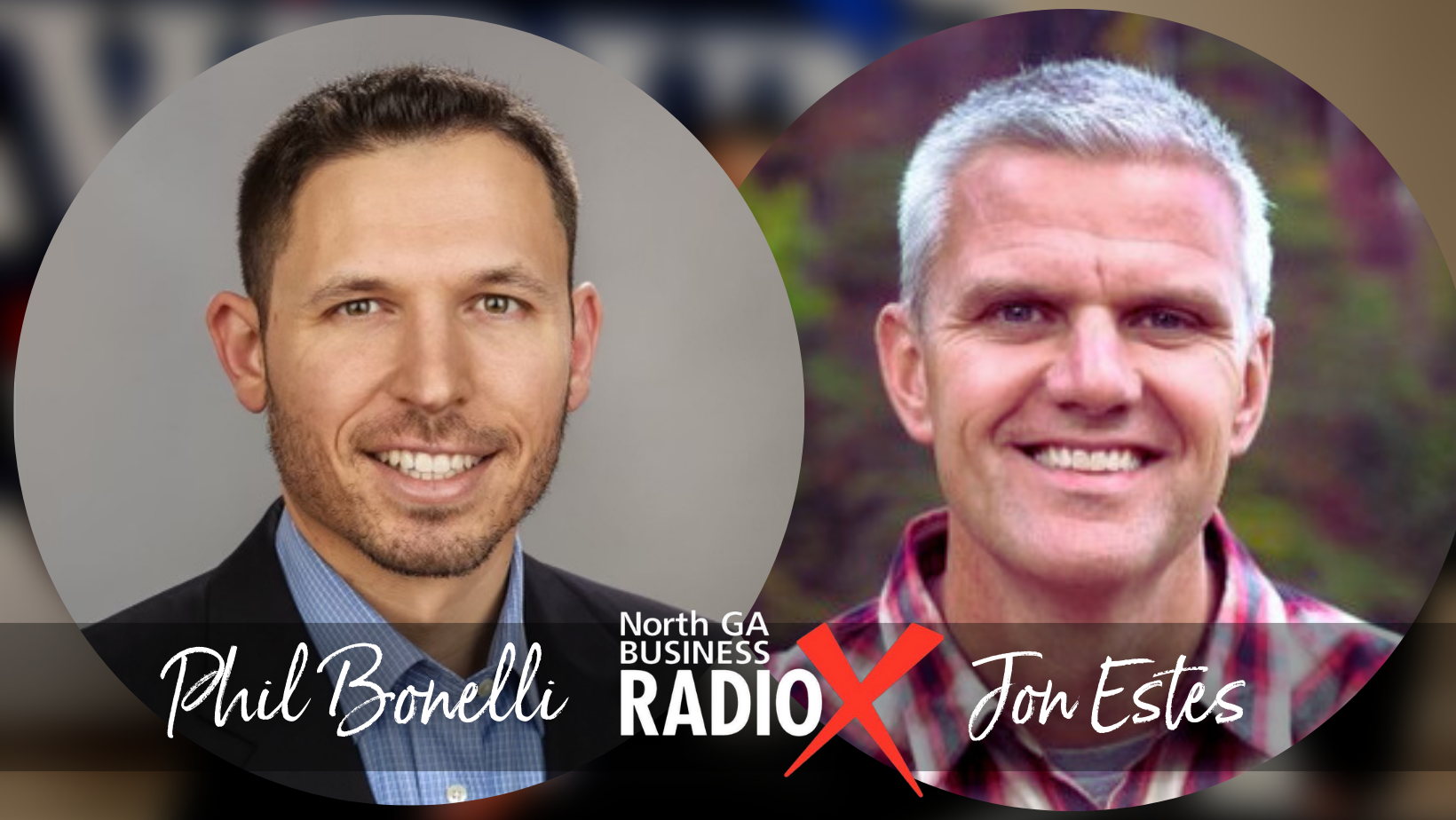
On this episode of North Georgia Business Radio, host Phil Bonelli welcomes a giant both in stature and spirit — Big Jon Estes, the founder and executive director of Woodlands Camp in Cleveland, Georgia.

Nestled in the shadow of Mount Yonah, Woodlands Camp is more than just zip lines and campfires — it’s a place where young hearts are shaped, distractions are silenced, and purpose is discovered.

Big Jon’s journey to founding one of the most impactful Christian camps in the Southeast started with a simple summer opportunity in college. What began as a counselor role at a Christian camp in Hawaii ultimately led Jon away from a corporate banking path and straight into youth ministry.

In 1997, with no funding, few connections, and little experience, he took a leap of faith and launched Woodlands Camp — starting from scratch and building as he went.

What sets Woodlands Camp apart?

Three non-negotiables: excellence, affordability, and a bold commitment to spiritual transformation.

Jon shares how campers are intentionally unplugged from technology — phones are left behind — and immersed in a week full of exhilarating outdoor adventures, deep relationships, and soul-stirring chapel sessions.

Even in today’s media-saturated culture, kids are craving the freedom and clarity that comes from disconnection.

Phil and Jon also dive into leadership, trust over clarity, and why simplicity drives excellence.

Jon opens up about pouring back into younger camp leaders and why summer camp is making a comeback in a post-COVID world.

Whether you’re a parent, pastor, business leader, or budding entrepreneur, John’s story is a masterclass in going big, trusting boldly, and staying rooted in your why.

👉 Learn more and register (or waitlist) for upcoming Woodlands Camp programs at woodlandscamp.org.

Connect with Jon and the Woodlands Team:

https://www.woodlandscamp.org/

https://www.facebook.com/Woodlands-Camp-152309210210/timeline/

https://www.instagram.com/woodlandscamp/

http://youtube.com/woodlandscamp

https://open.spotify.com/user/woodlandscamp


Connect with Phil Bonelli:

https://www.facebook.com/Hopewell-Farms-GA-105614501707618/

https://www.instagram.com/hopewellfarmsga/

https://www.hopewellfarmsga.com/


Connect with Beau Henderson:

https://RichLifeAdvisors.com

https://www.facebook.com/RichLifeAdvisors

https://www.facebook.com/NorthGARadioX


This Segment Is Brought To You By Our Amazing Sponsors

Hopewell Farms GA

Roundtable Advisors

RichLife Advisors

Regions Bank


Highlights of the Show:

00:31 – 01:48
Phil introduces Big Jon Estes and the legacy of Woodlands Camp, a beloved Christian camp in North Georgia.

01:48 – 06:54
Jon recounts his early life, shift from banking to ministry, and how a Hawaii camp job changed his life.

07:18 – 09:11
The power of trusting God over needing clarity, and how Jon embraced his calling despite fear and uncertainty.

12:57 – 17:10
The cultural shift in influences on youth morality—from family to media—and how that shaped Woodlands’ mission.

17:10 – 19:16
Why kids crave disconnection: the harmful impact of constant digital noise and the unique spiritual space camp provides.

22:31 – 27:20
Woodlands’ three pillars: excellence, affordability, and spiritual transformation—plus the surprising things kids look forward to most.

28:14 – 30:45
How simplicity enables excellence, and why the camp’s people—not the programs—have always made the biggest difference.

33:42 – 35:17
Jon’s commitment to mentoring younger camp leaders and sharing wisdom gained over 28 years of ministry.

36:46 – 38:38
The resurgence of summer camp in a post-COVID world—and why it still matters deeply today.

39:00 – 40:04
Final reflections and a call to action for listeners to trust God, take bold steps, and pursue their purpose.

Tagged With: Jon Estes, outdoor adventures, Tech-Free Summer Camp, Woodlands Camp

Marena Bleech – Crawford W. Long Museum & Jefferson Public Library

May 5, 2025 by Rose

North Georgia Business Radio
Marena Bleech - Crawford W. Long Museum & Jefferson Public Library
Loading
00:00 /
RSS Feed
Share
Link
Embed

Download file


𝗖𝗮𝗻 𝗮 𝗹𝗼𝗰𝗮𝗹 𝗱𝗼𝗰𝘁𝗼𝗿 𝘄𝗵𝗼 𝗽𝗶𝗼𝗻𝗲𝗲𝗿𝗲𝗱 𝗽𝗮𝗶𝗻𝗹𝗲𝘀𝘀 𝘀𝘂𝗿𝗴𝗲𝗿𝘆 𝗶𝗻 𝟭𝟴𝟰𝟮 𝘁𝗲𝗮𝗰𝗵 𝘂𝘀 𝗵𝗼𝘄 𝘁𝗼 𝘁𝗿𝗮𝗻𝘀𝗳𝗼𝗿𝗺 𝗯𝘂𝘀𝗶𝗻𝗲𝘀𝘀𝗲𝘀 𝗮𝗻𝗱 𝗰𝗼𝗺𝗺𝘂𝗻𝗶𝘁𝗶𝗲𝘀 𝘁𝗼𝗱𝗮𝘆?

From Ether to Empowerment: The Legacy of Crawford W. Long and the Power of Local Libraries

What if the secret to transforming your business, learning a new skill, or finding a creative solution to a tough problem was tucked away in a quiet corner of your town?

During this episode of North Georgia Business Radio, host Phil Benelli sits down with Marina Bleach, Director of the Crawford W. Long Museum and Manager of the Jefferson Public Library. Together, they uncover the legacy of a small-town Georgia doctor who changed the world — and how his spirit of curiosity still shapes communities today.

Dr. Crawford W. Long may not be a household name, but he should be. In 1842, right in Jefferson, Georgia, he performed the world’s first painless surgery using ether. His discovery didn’t just revolutionize medicine — it was born from close observation, experimentation, and a deep desire to help others. It’s a legacy of learning, humility, and persistence that still resonates.

That same spirit lives on in places like the Jefferson Public Library, where Marena and her team bring bold, creative programming to life every day. From legal resources and job tools to toddler proms, goat storytimes, and free access to ancestry.com and language-learning apps, the library is a modern-day engine for empowerment.

Marena shares how libraries aren’t just about books — they’re about connection, opportunity, and showing up for your community. With a team that’s not afraid to try something new (or a little wild), Jefferson’s library has become a gathering place where ideas grow and people thrive.

This episode is a reminder that innovation doesn’t always come from boardrooms or big cities — it often starts in small towns, with people who care. It’s also a love letter to those doing the work behind the scenes, making sure everyone has a chance to learn, dream, and build something meaningful.

Tune in, be inspired—and maybe even visit your local library. Who knows what you’ll find?

Connect with Marena and the Teams at the Crawford W. Long Museum and the Jefferson Public Library:

https://www.linkedin.com/in/marena-bleech-691941137/

https://crawfordlong.org/

https://www.facebook.com/crawfordlongmuseum/

https://www.prlib.org/jefferson

https://www.facebook.com/jeffersonpubliclibrary/

https://www.instagram.com/jeffersonlibrary/

https://www.tiktok.com/@thejpl


Connect with Phil Bonelli:

https://www.facebook.com/Hopewell-Farms-GA-105614501707618/

https://www.instagram.com/hopewellfarmsga/

https://www.hopewellfarmsga.com/


Connect with Beau Henderson:

https://RichLifeAdvisors.com

https://www.facebook.com/RichLifeAdvisors

https://www.facebook.com/NorthGARadioX


This Segment Is Brought To You By Our Amazing Sponsors

Hopewell Farms GA

Roundtable Advisors

RichLife Advisors

Regions Bank


Highlights of the Show:

  • 00:31 – 02:21
    Phil introduces Marina Bleach, highlighting her roles and setting the stage for a lively discussion about local legacy and learning.

  • 02:21 – 07:14
    Marina shares the history of Dr. Crawford W. Long and how he revolutionized medicine by introducing anesthesia through ether.

  • 08:32 – 09:16
    Details on the Crawford W. Long Museum’s hours and what visitors can expect when they visit.

  • 10:53 – 12:46
    Phil praises libraries as one of America’s most underappreciated resources; Marina discusses how the Jefferson Library serves the community.

  • 12:46 – 15:06
    Creative library programs: cursive classes, Chromebook lending, and even seed libraries.

  • 15:06 – 17:25
    Goats, pigs, and flamenco dancers—how the library keeps things fun and educational, even if there’s “goat poop on the floor.”

  • 22:34 – 23:50
    Marina’s personal reading journey and how working in a library helped cultivate her love of books.

  • 27:39 – 28:26
    Introduction to Libby and Kanopy—free digital library tools for streaming media and audiobooks.

  • 32:23 – 33:36
    Discussion on legal resources, ancestry.com access, and Mango language learning through the library.

  • 33:56 – 34:53
    How the Jefferson Public Library is funded and why local support is essential for its success.

Tagged With: Crawford W Long Museum, gainesville ga, Jefferson Public Library, Local Library, Marena Bleach, north georgia business radio

Scott Soper – Straight Street Ministry | Derby Day Fundraiser

April 28, 2025 by Rose

North Georgia Business Radio
Scott Soper - Straight Street Ministry | Derby Day Fundraiser
Loading
00:00 /
RSS Feed
Share
Link
Embed

Download file


Derby Day with a Purpose — May 10th!

What if your Saturday brunch could help rescue women from exploitation and feed hundreds of families in our community?

Join Straight Street Ministry for their 4th Annual Derby Day Fundraiser — a Kentucky Derby–themed event supporting life-changing programs like Beautiful Feet, Backpack Love, and Street Impact.

🗓️ When: May 10, 2025 | 10:00 AM
📍 Where: First Baptist Gainesville
🎟️ Why: Because hope needs heroes—and that hero could be YOU.

REGISTER for Derby Day: https://www.straightstreetministry.org/derby-day-fundraiser

✨ Hear stories of transformation.
🖊️ Bid in the silent auction.
💖 Be part of breaking chains and building futures.

Want a behind-the-scenes look at the mission you’re supporting?

Serving Hope and Healing Across Hall County

On this inspiring episode of North Georgia Business Radio X, host Phil Bonelli sits down with Scott Soper, the Executive Director of Straight Street Ministry, to explore how this impactful nonprofit is meeting critical needs in the community through practical service and the power of the Gospel.

Based in Hall County, Straight Street Ministry operates three dynamic programs: Backpack Love, Street Impact, and Beautiful Feet. Each initiative is tailored to serve a unique population in crisis.

Backpack Love partners with Hall County and Gainesville City Schools to provide weekend food bags for students facing food insecurity. These bags, packed by volunteers and distributed weekly, feed families of up to five with six meals—ensuring children return to school nourished and ready to learn.

Street Impact is a light construction ministry that builds handicap-accessible ramps and bathroom renovations for veterans, seniors, and individuals with disabilities. Using vetted church volunteer teams and a former general contractor, this program delivers critical modifications that preserve dignity and independence.

The third arm, Beautiful Feet, addresses one of society’s darkest issues: sexual exploitation. This 12-month, Christ-centered recovery program offers women a path to healing and transformation. Many participants come through the court system, often mandated into care that becomes life-changing. With a home already in place and county approval for four more, the vision is bold and growing.

Scott, who transitioned from a healthcare revenue career to this nonprofit role just six months ago, shares how a divine career pivot and the support of faithful friends led him here. He brings business savvy to stewardship, helping Straight Street maximize donor impact and program efficiency.

Straight Street Ministry thrives through donations, partnerships, and volunteers. Whether you’re moved by food insecurity, accessibility, or rescuing women from exploitation, there’s a way for everyone to get involved.

Connect with Scott and the Straight Street Team:

https://www.straightstreetministry.org/meet-our-team

https://www.facebook.com/straightstreetministry.org/

http://instagram.com/straightstreetministry

Learn more or donate: straightstreetministry.org

Connect with Phil Bonelli:

https://www.facebook.com/Hopewell-Farms-GA-105614501707618/

https://www.instagram.com/hopewellfarmsga/

https://www.hopewellfarmsga.com/


Connect with Beau Henderson:

https://RichLifeAdvisors.com

https://www.facebook.com/RichLifeAdvisors

https://www.facebook.com/NorthGARadioX


This Segment Is Brought To You By Our Amazing Sponsors

Hopewell Farms GA

Roundtable Advisors

RichLife Advisors

Regions Bank


Highlights of the Show:

00:31 – 01:41
Phil introduces Scott Soper and Straight Street Ministry, teasing their local impact and upcoming event.

02:51 – 03:50
Scott outlines Backpack Love—feeding hundreds of schoolchildren and families each weekend through school partnerships.

06:07 – 07:27
Overview of Street Impact, a ramp and bathroom renovation program helping people maintain home access and safety.

08:25 – 09:24
Introduction of Beautiful Feet, a 12-month recovery home helping women escape sexual exploitation and rebuild their lives.

12:47 – 13:24
Scott discusses the complex roots of exploitation and how some women self-refer while others are court-mandated into recovery.

20:55 – 21:32
The origin of Straight Street Ministry and how Backpack Love launched from the vision of founder Todd Robinson.

22:35 – 23:47
Details of the Derby Day Fundraising Event on May 10—open to all, featuring testimonies and a silent auction.

24:10 – 24:47
Scott shares his career transition from healthcare to ministry and the role of faith in that pivot.

26:58 – 28:00
On embracing change, leaning on faith, and giving God space to direct life’s next steps.

34:47 – 35:27
Scott reveals plans for four more Beautiful Feet homes, with immediate renovations possibly doubling current capacity.

37:48 – 38:19
The biggest surprise of nonprofit leadership — complexities, relationships, and daily learning.

Tagged With: Derby Day Fundraiser, faith-based recovery programs, food insecurity help Gainesville GA, Hall County nonprofit organizations, rescue women from exploitation, Scott Soper, Straight Street Ministry

Heidi Moore – Lake Lanier Boat Show

April 21, 2025 by Rose

North Georgia Business Radio
Heidi Moore - Lake Lanier Boat Show
Loading
00:00 /
RSS Feed
Share
Link
Embed

Download file

Want to learn how owning a boat can create lasting family memories without breaking the bank?

Making Waves and Memories: Inside the Lake Lanier Boat Show with Heidi Moore

During this segment of North Georgia Business Radio, host Phil Bonelli and Heidi Moore, President of the Marine Trade Association of Metro Atlanta and GM of Skiers Marine, spotlight one of North Georgia’s most exciting events—the Lake Lanier Boat Show!

Happening April 25-27, 2025, at Margaritaville on Lake Lanier Islands, this premier in-water boat show offers more than just a look at stunning boats—it’s a full-on experience. Forget convention centers and concrete floors—this is boating showcased where it belongs: on the water. With over 225 boats, 15 top dealers, and a vibrant Vendor Village featuring 40+ industry pros, visitors can explore everything from sleek wake boats to family-friendly pontoons and luxurious houseboats.

Heidi shares her personal journey from a high school student working retail to becoming a leader in the boating industry. Her passion? Helping families create lasting memories on the water. As she says, “You get 18 summers with your kids—how do you want them to remember them?”

Phil and Heidi dive into how boating isn’t just for the ultra-wealthy. With smart financing, affordable insurance, and plenty of storage options, owning a boat can cost less than a family vacation to Disney—but delivers fun all year long. Plus, the Boat Show is packed with exclusive deals, expert advice, and hands-on opportunities to book charters, surf lessons, and more.

The conversation also highlights Skiers Marine’s commitment to community, faith, and fostering connections—both on and off the water. From supporting foster children to organizing lake days for local nonprofits, Heidi proves that business can be a vessel for doing good.

Whether you’re a seasoned boater or just dreaming of lake days, this episode is your guide to turning those dreams into reality.

Don’t miss the chance to learn how to navigate boat ownership with confidence, connect with your family, and have a blast doing it.

Connect with Heidi and Team at the Lake Lanier Boat Show:

LakeLanierBoatShow.com


Connect with Phil Bonelli:

https://www.facebook.com/Hopewell-Farms-GA-105614501707618/

https://www.instagram.com/hopewellfarmsga/

https://www.hopewellfarmsga.com/


Connect with Beau Henderson:

https://RichLifeAdvisors.com

https://www.facebook.com/RichLifeAdvisors

https://www.facebook.com/NorthGARadioX


This Segment Is Brought To You By Our Amazing Sponsors

Hopewell Farms GA

Roundtable Advisors

RichLife Advisors

Regions Bank


Highlights of the Show:

00:50 — Boat Show Preview
Heidi Moore introduces the Lake Lanier Boat Show experience.

02:32 — Making Boating Affordable

Exclusive deals and why boating isn’t out of reach.

04:37 — Vendor Village Fun

40+ vendors, simulators, music, food, and family activities.

05:00 — 225+ Boats On Display

From fishing boats to 90-ft houseboats—something for everyone.

15:00 — The Power of Memories

Why owning a boat is about family, connection, and unplugging.

17:15 — Boating vs. Vacations

How a boat can cost less than a single trip to Disney.

24:29 — Skiers Marine’s Mission

Faith, community, and creating a boating legacy.

36:30 — Boat Ownership 101
Storage, insurance, maintenance, and making it hassle-free.

38:18 — Breaking Barriers
How local dealers make boating accessible and fun.

39:16 — Final Thoughts
Waves, buoys, and building unforgettable family moments.

Tagged With: affordable boat ownership, Heidi Moore, Lake Lanier Boat Show, Marine Trade Association of Metro Atlanta, Skiers Marine

John Erlandson with Youth Athletes United

April 18, 2025 by angishields

FMR-Youth-Athletes-United-Feature
Denver Business Radio
John Erlandson with Youth Athletes United
Loading
00:00 /
RSS Feed
Share
Link
Embed

Download file

YAU-logo

John-ErlandsonJohn Erlandson is the Co-Founder, President, and Chief Revenue Officer of Youth Athletes United, a leading youth sports franchising platform that encompasses brands such as Soccer Stars, Amazing Athletes, TGA Premier Sports, JumpBunch, and Little Rookies . Since its inception in November 2021, Youth Athletes United has expanded to over 280 locations across 36 states and two international markets, aiming to impact the lives of over one million children annually through sports and fitness education.

Before co-founding Youth Athletes United, Erlandson served as President of Amazing Athletes. He also held prominent roles at Authentic Brands Group, including Chief Revenue Officer and Executive Vice President of Sports, where he played a key role in scaling the company’s revenue from $100 million to $8 billion over seven years . His earlier career includes leadership positions at Product Central Software Inc., Sportcraft, Fitness Quest, and Horizon Fitness, focusing on product development, marketing, and sales.

Erlandson earned a Bachelor of Science degree in Kinesiology from Temple University . He is known for his passion for youth development through sports and his commitment to empowering children by teaching them the fundamentals of athletics in a fun and inclusive environment.

Connect with John on LinkedIn.

Transcript-iconThis transcript is machine transcribed by Sonix.
 

TRANSCRIPT

Intro: Coming to you live from the Business RadioX studio. It’s Franchise Marketing Radio. Ready to revolutionize your franchise with AI franchise now empowers franchises with advanced AI solutions, automatic processes, and enhanced marketing strategies. From personalized customer interactions to predictive analytics, we help you harness AI to drive growth and efficiency. Transform your franchise with the power of AI. Visit Franchise Now to learn more and take your business into the future. Now here’s your host.

Rob Gandley: Welcome back to another episode of Franchise Marketing Radio, the podcast where we spotlight the brands, brains and breakthroughs shaping the future of franchising. I’m your host, Rob Gandley, and today is no different. I want to welcome John Erlandson, and he is no stranger to building beloved brands. He is the co-founder and chief brand officer at Youth Athletes United. He’s helped lead a portfolio of purpose driven youth sports franchises that combine national scale and local impact. And we’re going to jump into that today. I can’t wait. But with a background that blends corporate, brand building and entrepreneurial spirit, John is on a mission to positively impact 1 million kids annually through fun, foundational sports experiences and other positive events. His leadership focuses on franchise empowerment, community connection, and digital first marketing strategies, all the while maintaining strong values and strong values based approach. So with all that being said, John, welcome to the show.

John Erlandson: All right. Thanks. It was a big intro. I feel like, uh, like Muhammad Ali.

Rob Gandley: You are the intro.

John Erlandson: Titles there.

Rob Gandley: And for anybody that hasn’t, it can’t see us right now. He was up there shaking his body and his hands out. He was ready. That’s supposed to be a good thing for you to do. But anyway, listen, the first thing I love to ask, and you know, it’s always a great way to frame the conversation, but, you know, how did you get here? I know your journey was interesting. I know I’ve taught you a little bit about it, but I’d love the audience to hear more about how did you wind up in this place? And I know you’ve got a little bit of a history that got you here, so could you share a little more?

John Erlandson: Yeah, absolutely. You know, a lot of times people, people start with, well, my background was this and I was doing this for years. But, you know, the genesis of this story kind of starts with hurricane Sandy. And I just I’ve been in a company called Sport Craft for probably six years, and I was in my background was in fitness and games and physiology and product development. I did a lot of sales along the way, so I was making treadmills and things like that. Loved, you know, exercise, sports, all, all things, you know, kids, families. And I’m at that company. I’m doing great. I’m executive vice president and the company goes bankrupt. Didn’t see it coming. I just bought my first house, had my first baby, and I literally am out of a job. No health insurance, I have no money. I don’t have family with money. There was no one I could call. I’d put all the money into the house, and I’m scrambling around trying to figure out what to do. And all of a sudden, hurricane Sandy comes through new Jersey and six massive trees fall on my house. And I’m like, at the low of the low of the low of my life, in my career and everything. And I had this boss tell me it was a good mentor of mine. Guy’s name was Mike Nalley. He was probably my first real business mentor.

John Erlandson: He’s like, listen, always do what’s right. And I had just screwed all these Chinese factories over, telling them that they were going to get paid. And I just didn’t know the bankruptcy was coming. I wasn’t on the board and so I just started calling and apologizing to every one of these factories and saying, hey, you know, I I’m sorry. I was just there. I didn’t lie to you. And all of the owners were like, listen, John, we trust you. Just out of curiosity, if this company is bankrupt and no one’s watching the trademarks, can you start calling retailers and selling all this inventory I have? And I was like, I don’t know, give me five minutes. So I started dialing up, uh, retailers. I’m like, all right, I sold 5000 footballs. You know, I can pay the car payment this week. You know, I got 20,000 ping pong balls. And so through that kind of entrepreneurial scramble, I ended up at a company where I met my business partner, now called Authentic Brands. And I was very lucky because that company went from 0 to $8 billion. I was the chief revenue officer, and I worked alongside serial entrepreneurs, and I always had this passion about being an entrepreneur, and I wanted to do it on my own, and I just didn’t know how to do it, which is a lot of the story of many, many franchise owners, right? They work these career jobs.

John Erlandson: They always wanted to do something entrepreneurial. They, you know, families, they haven’t saved enough money. And so my journey mirrors so many of our franchisees journeys. And so while we build up authentic brands, early stage employees had stock options, did very well there. A lot of it was fashion. And you know, I just don’t care about women’s handbags. Like it just didn’t get me out of bed in the morning. And one day, Adam and I are in Japan. He’s my business partner now. And we came up with this idea for youth athletes United on one fundamental principle. What could we do where money is a wonderful byproduct of changing somebody else’s life, right? And so we started asking that question and just going, okay, well, well, there’s kids sports. We both have exercise physiology degrees, which are pretty useless degrees in case anybody’s kids out there are thinking about it. Talk it out. Talk them out of it. Um, but, you know, that was our passion. That’s what pulled me out of bed every morning. And so we started looking at the youth sports space noncompetitive, focused on kids under eight. And we realized there was amazing content, amazing brands, amazing people, but not a lot of really sophisticated business skills. Not a lot of investment in technology.

John Erlandson: And so Adam and I were like, man, this this just feels like we could put all this together. And so we founded Youth Athletes United as a platform. And, you know, take the year and a half of Covid out of it. We hit 90% of everything we said we were going to do in that initial business plan we’ve done. And it’s all rooted in let’s get an incredible group of people together that have this ideological passion that still have to make money, but they believe that money is a wonderful byproduct of changing somebody else’s life. And so we are having an unbelievable amount of fun doing this. Like, it is just so great. I’m working 24 hours a day, seven days a week and I love it. Like I can’t stop, you know? And so yeah, I mean, that’s that’s kind of my story. It started from just this train wreck of a being in the basement, wife screaming, baby screaming. Trees were falling everywhere. You’re thinking the house is going to collapse to. You know, what has been the peak of my business career and you know and that that story plays out over ten years. It feels like an overnight success story with ten years of just grinding. But the grinding was was kind of magical because it wasn’t about money. It was just about doing something you loved.

Rob Gandley: Yeah. And I you know, we were talking recently about energy. It was a recent episode, and it was like the one attribute of an entrepreneur that needs to be there. And you have it. I can feel it, right? But but that energy comes from your conviction and belief to and kind of when you tell that story, what I feel like is we all hit those crossroads in life where you could look back and say, this happened to me, right? These things happened to me. Or you can look forward and say, how am I going to fix it? Right? What what is what is the opportunity put in front of me? And also, I love that you did the right thing and it produced the opportunity to fix the problem, right. Even if it may not have been perfect, it wasn’t what you expected. But when you called those manufacturers that put it the seed in your mind to move forward and solve a problem. Yeah. And, you know, and it’s because you wanted to do the right thing. Right? And just telling what was going on. But I just love that.

John Erlandson: That skill is stuck with me. So I call it being an ostrich. So one of my things is every time you feel you’re in a negotiation, a tough conversation, an email where you’re batting the ball back and forth, a text message, and you just want to ignore something and put your head in the sand. You need to fight that urge. It is so easy, especially like if you do a lot of deals where you’re negotiating with somebody, it’s so easy to be like, oh, that person just forgot about that point. Let’s not bring it up and I’ll slip it in the contract and we’ll deal with it later. Right. And that’s just putting your head in the sand. All that’s going to happen is it’s going to come back to haunt you later, or not wanting to have a tough conversation with an employee or a franchisee or you know you did something wrong or something isn’t working, and not just raising your hand and just taking the beating now and getting it out of the way. And so I found, like, there are some people in life that they just have every skill. The the second mentor I had, Jamie Salter at Authentic Brands, really taught me how to be like a real scrappy entrepreneur. And he went on to be a billionaire and, you know, one of the point one percenters in life.

John Erlandson: But what I realized is nobody could replicate that. You were born like that. But 90% of the mechanical things he did, you could teach to anybody. And one of those big mechanical skills I learned was like, listen, just take the beating. Now get it out of the way. Go have the fight now. You’re kidding yourself if you think it’s not coming later. And what that allows you to do is just build a lot of trust with people. Even if you’re not always having fun conversations, you’re having productive conversations. And people love that. People want to be around other people they trust. They know you’re going to get things done and you know you’re going to get to the next result even when it’s hard. And so that that tool has served me very well. I try to teach it to all our young people. And, you know, I think it started with that lesson of calling the factories because, man, I that was that was the hardest thing to do because they’re all in China, right? Like you could easily have disappeared. And I just, uh, I just couldn’t bring myself to do it. So and again, I’d say it changed the entire course of my life.

Rob Gandley: I think that shows a lot about your character, man. That’s why you are who you are, though, too. That inner, that inner, you know, voice said, you gotta let these people know. And that was a good that was a good.

John Erlandson: But you know what for for everyone listening out there and trying to, you know, take some a learning away from it, even very rock headed people that seem like they always want to do stuff like that, deep down, they really don’t. Like, you’re still you’re still fighting yourself internally every day. And the difference between person makes stuff happen and the person that doesn’t is you get through that fighting yourself first before you go out and kind of, you know, challenge the challenge, what you got to do in the world. So yeah.

Rob Gandley: Exactly. To have the inner game is key. So so I wanted to kind of just frame your brand, your platform company and you know, so that is youth Athletes United. And then you have three brands. I wanted to just the audience to be very clear about what you’re running here. And it’s three distinct brands. But there is a unified sort of strategy. And you’re the chief brand officer. It’s one of the hats, right? You’re the co-founder, but.

John Erlandson: I’m more the chief revenue officer. So that that the marketing side really sits more with my business partner. We we co-run things very, very well. Um, but he is the marketing brand visionary. I always say, listen, left to my own devices, uh, we’d be bankrupt. So, like, we’re yin and yang in that way, where I’m always the revenue. What’s next? What’s the. I never saw an idea I didn’t like. And he’s always like, think through this, like, you know. So in that push and pull, uh, we’ve actually been pretty productive.

Rob Gandley: So that’s great. Well, so like when you are a platform company and you have, uh, these different brands. And so tell us a little bit about the strategy of that. So what that means and how, how do you keep a brand ethos sort of intact when you have this platform strategy?

John Erlandson: There’s upsides and downsides to being on a platform. I say it every day. And so everything in life is a weighing scale. Nothing is good or bad. Usually most things are not good or bad. It’s just you stack up all the good things and you stack up all the bad things and one side wins. So when you’re on a platform. We felt like if you looked at the industry that we focused on noncompetitive youth sports, especially with kids under, let’s call it the age of eight, is the majority of our revenue down to like one year old the the size of the business. Because if you look at the number of kids that are available per unit of time, per unit of geography in any given marketplace, it’s just not the same unit economics as like a McDonald’s, right? Because a one year old and a 99 year old can eat a cheeseburger 24 hours a day, right? Where that’s not the case when you’re trying to take a one year old and a parent in soccer class, you got like two hours in the day when that works really, really well, right? So our thesis was for somebody to revolutionize this part of the industry, you needed to stack a lot of revenue so you could reinvest in tech and intellectual capital. Right. So we could get we could get more sophisticated marketing people, business people, branding people, entrepreneurial people, and we could dump a ton of money into tech so we could have an Amazon type experience for mom and for our franchisees.

John Erlandson: Well, the only way to do that and to solve that problem is to stack a lot of royalties, right? And if you only focus on one brand, it’s a lot harder to get that level of scale and those level of unit economics. Soccer is probably the biggest of our brands, so youth Athletes Unite is the parent company. Soccer is our fastest growing brand. It’s called Soccer Stars. Uh, started in New York City. It is the largest operated soccer. So think of like the units I own soccer company in the country. Then we have, uh, amazing athletes, which is the largest, call it preschool PE program in the country. It’s about 2000 plus locations. And then we have play TGA, which is one of the very few companies that brings tennis, golf and pickleball. We do some other athletics, but the majority of the revenue sits with golf and tennis. We bring real clubs, real hitting, max play safe ball, and we teach golf in a noncompetitive and a non-intimidating environment. I like going to a golf course is a very hard place to learn golf. It’s intimidating. Yeah, right. It sucks. And so to for us to be able to do that at the school level. So every one of those businesses shares a lot of the same ideology and a lot of the same, um, back end operations.

John Erlandson: They’re all mobile businesses. We don’t own facilities. We don’t run facilities. So very low initial capital investment. We borrow space. So wherever there is kids time and money, we go to there and we deliver the content, we deliver the sports. And they are all content first brands, meaning we don’t send a coach out to come up with their own curriculum. We are very, very particular. I joke all the time on the franchise calls. We’re the In-N-Out burger of soccer, right? Like the content is so juicy and it’s so good and it’s so well thought out, like for, you know, on this podcast, you can’t see me, right? I’m a bald guy with a beard. To a three year old, I might as well be a serial killer, right? Like, total stranger danger. So I got on the field to coach for the first time. And one of the senior, you know, um, executives in our company, Dean Simpson, pulled me aside. He’s like, listen, just do this eye level. Get down on your knee. Sunglasses off. Smile it at the at the kid. Go. Hi, buddy. What’s your name? I’m Coach Marshmallow. As soon as I do that with any three year old, they burst out. They takes a second to process because they’re expecting you to say I’m Coach John. And then they hear I’m Coach Marshmallow. They burst out laughing. And now I’ve got a friend in the class.

Rob Gandley: Oh that’s.

John Erlandson: Great. Thousands, I mean thousands of those little techniques we have built something that that is just very unique. And everybody asks, well, I could just go buy sports equipment and start coaching this, right? And it’s like, yeah, you could, but to scale it, to do it at the highest, highest level of quality, very hard because it took people 20 years to come up with all these little innovations. And so the future of our platform, we are laser focused on owning the mobile space and watching the child because kids move through sports, right. Go through this journey with youth athletes united every step of the way for any sport they want to play.

Rob Gandley: That’s so. So let me connect it with a question I was dying to ask, which I love that you have this goal of a million kids, right? Impact. And so tell me more about that goal. And how has franchising in this experience. And I don’t know when that goal came in. Like I know that was very at the beginning. Or as you started scaling and realizing the impact. But how does franchising give you that platform, I guess, to achieve that type of audacious type of goal.

John Erlandson: So if you think about it from a standpoint of we originally didn’t have a big franchise vision. We had an operating vision. And so you start to like, logically think through the problem and you go, okay, so I’m going to create a workforce that to get to a million kids, we probably would need about ten. I’m guessing 5 to 10,000 coaches. Right. It’s a massive number spread across 40 states. And so you go is that logistically possible to from New York City manage a workforce that large that is part time when, you know, 90% of those people are just almost like gig workers and they have to not just show up and drive a car. They’ve got to deliver an incredible piece of content to another human being, to a group of human beings. They have to be able to interact with the parent that is in charge of the child. And be able to interact with the location manager. Who is the preschool director or the elementary school director. Do we really think sitting in New York City, I can hire somebody that makes 25 bucks an hour, that’s going to do that at the highest level of quality. And we tried it. And the conclusion we came to is the reason why no one’s ever done it is because the math doesn’t work. You need somebody who has an ownership link in the market that that lives and bleeds their community and will go above and beyond, and they can do all three of those things.

John Erlandson: They can take a lot of young people in coaching and teach them life skills and build a community, take them out to the bar, do a kick around on the weekend, like build that that culture because that culture is what makes your product unbelievable on the field. Then they got to build relationships with all the directors, all the schools, right? Because the schools and the parks control all the space. So we got to go work with those guys, and then they’ve got to be able to walk on the sideline, talk to mom, talk to dad. How’s Billy doing? Take a customer service call. You were never going to get that level of sophistication trying to hire, you know, regional managers all across the country. We tried it, and it just. You couldn’t get people that were bought in enough. Now, there are some regions where we have been able to get enough scale in cities. So we still own four regions. So we have New York, Los Angeles, Boston and San Francisco. Those units have so much scale that the four people that are running, those are seasoned executives that are living and breathing the business and delivering on that level. But but it was built over 15 to 20 years.

John Erlandson: I didn’t build it. I bought it, right. And so to rebuild that and go through that journey in every state in the country, it just wasn’t economically feasible. And so when we bought Amazing athletes, it was already franchised, fell in love with the concept of franchising. I loved the franchisees. I love the people I like as much as I love kids in sports. What gets me out of bed every morning is helping an entrepreneur go on that same journey that I went on, maybe minus the trees falling on their house and the hurricane. But everything else, right? Like, you know, like all that. All those other parts of like, man, you know, you start that business, you come out of the gates, it can go really, really well. But no matter how well it goes, you think it’s going to be on paper. There’s always something where you’re like, oh man, you got to solve a problem. And to me, when when we’re done solving problems, I might as well be dead. Like, what’s the point? Right? It’s kind of like you go on vacation in the Bahamas. By day, you’re like, all right, what am I doing on Earth? Like, this is a great use of my time on this planet. And so I think that that that part is really what gets me excited, you know, about business. That’s my.

Rob Gandley: That’s cool. Yeah. Yeah. And so here’s a good follow up then. So like in the marketing or sales side of things, you’re dealing with one audience that are these folks that really want more purpose and meaning in their life. And they also want obviously Potentially to earn as well to be able to earn and have financial freedom. Um, so you’re talking to that audience, and then you’re also in a position where you’ve got to build a business model where these same people build trust with parents and children. So or at least. Well, I think pretty much all the models. Right. So so you got marketing on one side that says we want to recruit the right kind of people for that model. So they have to represent this trust link with these parents. But your marketing and all that wrapping around the branding. How do you do that. Like that’s the two big things you got to do. You got to show them show we want people that care about. Yeah making money. But making an impact has to be the first, the leading of that. But you probably don’t when you recruit. I got to believe you don’t talk to people that say they hate kids, right? That’s the first thing.

John Erlandson: No. And I’ll tell you what. If somebody gets on the call and the first thing they go is, you know, how much money can I make off these kids? We’re generally like, this isn’t the right business for you. We’re going to end the call, right? We do. Right? Like we’ve been very fortunate enough. You know, myself, my business partner. Like our houses are paid off, right? So, like, I don’t have to do anything for money, I don’t care. Not that I could retire either, but, like, I don’t want to do anything that’s in the life. Too short column to add people to this platform that are that are not sharing the same mission. Now, that being said, do we relentlessly focus on people making money? Absolutely. You got to make money for a business to be successful so you could do good things, right? But it’s all about that ideology of the underlying kind of philosophy. From there, as much as the brand is the brand in the market, we expect the entrepreneur and the owner to also be the brand in the market, because this marketing is still very like 1975. A lot of it is going out to a playground with a flier and a business card, knocking on the local coffee shop door.

John Erlandson: Can I put this stack of brochures here? And talking to your local preschool, we do door to door sales, which most people that come in have never sold anything and they hate it. They think sales is a dirty word. And the more we start. That’s where I spend a lot of time during franchise training is I teach a whole 3 to 5 hour course on sales. And basically it’s like throw everything out of your mind of what you think sales is. This is about just being human and making sure that that person likes you, and telling your message in a real passionate way and starting a conversation. And the minute we get people to do that and they realize, like, this is the brand is radiating off of you. That’s where we start to see that magic happen. And after they get over their nerves for the first 4 or 5 of those calls, they’re like, wow, this is amazing. This is awesome. I’m building my business. The the movie montage that was in their head when they bought that franchise is actually starting to play out, right. And that’s that’s pretty cool that that gets me out of bed every morning I love it.

Rob Gandley: Yeah. Well, that’s amazing that you framed it that way and explained it, because I feel like that is a key to success for a business owner, for a new franchisee to get to that place. Right? First of all, you do a good job in the beginning recruiting, telling, being transparent, being clear about what the opportunity holds. Uh, but they create that vision in their mind, which you want them to create, right? I mean, that’s part of sales and marketing. But then when they come in, if you can achieve where they start to feel it and see it happening unfolding in front of them, to me, if you can do that in a certain period of time, in the beginning your success rate would be extremely high because that is the spark, right? That’s the also the disconnect. I feel right in a lot of brands where I’m here six months later, I feel like I had a breakthrough at 90 days. It’s not what I thought or see, you know, and that’s where the momentum gets lost and that’s where the challenge can be for certain brands. But that was brilliant. The way you phrased, is that how you guys look at it too? Like, let’s get them to see that.

John Erlandson: More upstream with the person. So what has been shocking to me in franchising is the number of times. And as we get in, um, community groups and we get to know other franchisors, Cause how often people will kid themselves in life and we all do it. I’ve done it to myself a million times, right? Like you, you believe in your head. You really want to own a business, and you want to get out there and you want to work it, and you love the details of it. And then we watch every now and then every 6 to 8 months, we’ll watch an owner buy a business and never show up. And they don’t want to do any of the hard work. They don’t want to knock on the door. They don’t want to do anything that makes them uncomfortable. And so early on when we were selling franchises six years ago, you know, when we were on these, these, uh, interview calls for franchisees, you know, I came from a sales background, so I assumed we should be doing a lot of selling today. I do a lot of trying to talk you out of it. And the reason is, we are not. It’s not like I’m your boss. We’re in a car together.

John Erlandson: There’s a seat sitting next to us. Right? And the whole team, the. Your team is driving the car, and that seat is empty. And we want you to get in the car. But I don’t want you to complain when the car goes 100 miles an hour, because I told you we’re going 100 miles an hour. This is where we’re driving. We’re pulling hard left turns. We’re pulling hard right turns. Right. Like we’re going on this adventure together. And I want to talk you out of it. Because if my words scare you, then you ain’t right for this. I don’t. I don’t want you bitching the whole time you’re in the car seat next to me, right? And so we explain that now, the other place I watch people kid themselves. And this is just like a public service announcement. If you were thinking about buying a franchise, even it has nothing to do with mine. Don’t kid yourself that. If you have a marital problem, a health problem or another business problem, that this is going to solve it. Because when you are getting started, you are the salesperson, the accountant, the coach, the manager, the CEO, the the, you know, the equipment manager. You have to do it all. And so if you were being distracted by life’s challenges, it’s like having a baby thinking it’s going to save a bad marriage.

John Erlandson: And you will watch people on franchising kid themselves like that all the time. And so we’ve gotten very good at really trying to talk people out of it. And at the end of me talking you out of it and I say the same thing, listen, weigh all the good and the bad. Here’s all the hard parts about this business. Here’s the things that will give you so much joy about being in this business. And it’s worked really well, man. The group of people we have in the system, at the speed that we have grown, private equity firms, um, other franchisors, other consultants in the industry are just shocked. They’re just shocked at the level of success we’re having. And our FBR review’s franchise business review, it’s an anonymous survey that they put out independently or through the roof. Now, are we perfect? Absolutely not. We screw things up every day, but it’s not bad intentioned. It’s usually because we’re trying to do too much, too fast. And most people that are in a franchise system, they can deal with that as opposed to a franchise owner that’s asleep at the wheel.

Rob Gandley: Exactly. Yeah. You know, no one expects perfection, but it is some degree of that, that vision in your head playing out. Right? No one said it would be perfect, but it is playing out and and it is moving forward. And I think that’s the key. Um, and I love the way like your it is near impossible to, to solve certain problems like on a national scale if you don’t have the right level of talent. And so another example of a business model is in the senior care space, very much a similar idea where you’re you’re getting a lot of benefit in helping people, making a big impact in your community, helping families and such. And it’s very much about that. But you look at the ways that people get help in that space. Without a franchise model, it’s very hard to get the help. You don’t get the hand-holding. You don’t because there is no one you can hire to do that type of work at the level you need them to do it, just like you said about the coaches. If you try to outsource the coaching, that’s you just can’t do it. Yeah. And so franchising is the solution. Like you couldn’t do it without the franchise model and the distributed ownership model. Right. That’s what I’m saying. That’s amazing. And you guys saw that. But you saw it.

John Erlandson: It comes back to the people though, I gotta tell you, we have the most wonderful, wonderful group of franchise owners like it is. I feel incredibly lucky by the fact that, like, they’re just good people. They are people first before they are business owners. And it allows you to solve problems. And I will I will tell you the best system in the world. The best system in the world will fail. If you have bad people on the other end, or you have the wrong people on the other end. And so what we have worked relentlessly in this to to create these systems. We have this philosophy of just get the right person, take a lot of notes because they’ll tell you what they need, right? Like everybody’s like, you know, what was your vision when you came in and took over? Amazing athletes. I’m like, I have a vision. I sat down with a notepad and said, bitch to me about everything you hate about this system, wrote everything down, right? Took all my notes. I’m like, all right, I got my five year plan. Thanks, guys. Like, we just bucketed it in and we just started executing, right. And so you build a little bit of trust and you build a little bit more and they’re like, oh wow, these guys care, right? My cell phone, my business partner, our executive team, they’re all in our in our email signature.

John Erlandson: I tell people I am available till midnight on Easter time. And then after that I’m probably asleep. And if you want to talk to somebody at 6 a.m., call my business partner. He’s the morning guy. But like, we are always, always available. We’re always on. But it’s not like it’s work. We’re just we’re having a blast. Like it’s just great. And so but it’s only great because you have people that are aligned with the vision And that that is what makes it fun. That’s what makes it possible to roll new things out, screw them up, get them fixed, get a lot of mulligans from your from your franchise system because everybody sees this, this North Star that we’re all driving towards, that you know you’re never going to get to. But that’s that’s part of the fun, right? The fun is the journey up the mountain. Like you’re at the top that it’s fun for about five seconds. You’re like, well shit, what do I do next? You know, like so another mountain.

Rob Gandley: Yeah.

John Erlandson: Yeah. Right. And that that’s been the secret sauce here so far over the last six years.

Rob Gandley: I love it, man. I love I thank you for sharing. I, I just love the way you articulate that, that idea of alignment. I feel like, again, like you’re saying things that most people don’t see, like. Yeah, recruiting great people. People are great. Yeah. No doubt. And I know what you mean. Exactly. Like franchisees are some of the best people in the world in every way, right? It’s like you couldn’t hire them and they’d be too expensive from that point of view. And then just the quality of the person. Right. But the idea of alignment is, again, you said that really quick, but I feel like, my goodness, if you get alignment, you can get a lot of average people doing really well, like the whole brand, just like the rising tide lifts, lifts, all boats. I just felt Lyman has a lot to do with that, where everybody is in that similar mindset of kids first, right? You have a franchisees first. I wanted to ask you about that philosophy. I think you kind of articulated it a little bit. So before I go down there, I do want to have some time to talk about technology though.

John Erlandson: Well, so.

Rob Gandley: Before you have before. Yeah. Go ahead.

John Erlandson: One kind of thing. I actually learned this from our private equity guys. So we raised money to start this platform. And, uh, we were we were negotiating because you have to negotiate with those guys on your deals, your terms, all these things. And there’s a lot of negotiating while you’re negotiating to buy the first company to get started. So I like to call it the cycle of misery because it’s just highs and lows when you’re trying to get something closed, right. You got to just put your quarter in and ride it and enjoy the ride. But, um, it was really interesting where we got to a place where we were kind of disagreeing on something, and one of the senior guys at our PE firm, he was just like, you know, do you feel like we’re aligned on this? Because I totally disagreed with with whatever point. I don’t remember what the point was, but I do remember him vividly asking me, go, does this feel aligned to you? Like, we both win if this happens and if this happens. And the minute he said that, I was kind of like, no, you’re right. And I’ve used that as a tool in the toolbox. Again, we can’t all be born Steve Jobs, right? Like it’s just not going to happen. But there were a bunch of mechanical things that these really successful people do that you can take those, put the tool in your toolbox and use it to some degree. And so every time I’m negotiating with an employee, right, maybe on a salary, on a raise, on a bonus.

John Erlandson: We ask the question of like, is this aligned with the company and the mission? Same thing when I’m negotiating with a franchisee who’s asking for special treatment, or they’ve done something really unique and we want to figure out how to partner on it. And that tool has been one of the most powerful tools I probably have used over the last six years. It’s really, really good. And and I would highly recommend everybody to use two. There are two mechanical tools that I feel like reset me mentally whenever I’m, you know, if you’re you’re debating anything, you’re arguing anything. It’s all over the board. There’s too many variables. So the alignment tool is number one I use. And the other one I use is ask yourself where you are trying to land the plane. So you get a room of 20 people debating something. And there’s arguments that are really good, but they’re they’re kind of all around like they’re all in like a circle, but nobody ever stops and goes, hang on, guys. Somebody just answered me where we are landing this plane and we can work backwards, because I don’t think we’re all trying to land it in the same spot. Are we debating how we fly into the landing zone, or are we debating where the frigging landing zone is? Right. Like, let’s start there. And so those two tools we use all the time in this company to kind of reset those debate conversations and it’s really, really good, really productive.

Rob Gandley: I love it. I think I think those two tips are brilliant because I know how that plays out in conversation and in decision making. Right? And it is about having that confidence and knowing, you know, this is the way we should go. This is this is what I need to do. Um, and you’re right, you could spend and we’ll talk about technology now. And that’s one area where you could spend so much time going in circles. It’s like, wait a minute, we all want to do this. Why are we talking about this over here? Like the color of the plane? Like we just want to land it, right? So.

John Erlandson: Yeah, the tech side has been interesting, right? It’s, um. It’s really, really hard when you get started and you start just plowing money into tech. Sometimes you put more CapEx in than you had Ebit to come out, and you could sit at those board meetings and just go, man, we could redeploy that capital into acquisitions. We could redeploy that capital into dividends. We could we could, you know, there are so many things we could do that do with that money. And we have watched some competitive platforms come along. And their view is I’m building a conglomerate of things and that doesn’t make them right or wrong. But their view is I don’t care about a seamless tech experience. I’ll let every one of these little things kind of run in their own tech bubble, and we’ll kind of just mine the data and we’ll use that for marketing. And they they’ve blown past us in terms of size. But I truly believe and I fundamentally believe the game we’re playing is the long game. It’s kind of like looking at Amazon early on and going, you know why they could have made so much more money if they stopped building distribution centers and they stopped upgrading their tech and just that relentless, Less relentless focus on what are basically our two customers when it comes to tech, the franchisees experience. We say we want more green time and less screen time. That doesn’t just apply to our kids, right? That applies to the franchisees. And we are also looking at it from, you know, is mom getting the Amazon experience? I don’t want to look at my competitors websites and hold that as the standard.

John Erlandson: I want to look at the best technology in the market and the best consumer experience and say, how do we model that? Right? Well, I don’t have $1 trillion to go invest in something, right? So how can we at least steal five ideas from the Amazon checkout experience and put them in here? And then you get them launched, you fix them, you make some bugs, you make some mistakes, you upgrade them and then rinse, wash, repeat, rinse, wash, repeat. And you just do that over and over. And what we have seen is every time we and we release tech features every three weeks. Every single time we release more technology features, we just watched the organic growth grow and grow and grow. And so it’s been incredible. Now, would we have taken on this journey if it was just, you know, uh, you know, myself and Adam? No, we had a we have a two other partners, uh, that are in the business that kind of came in as the initial for one of them has a degree from MIT. He’s a chief technology officer. He had built software in sports prior to coming here. So he was he was really the secret sauce that allowed us to kind of do this. Um, and, and it’s been it’s been spot on. It’s really made a difference. And, and there’s some new problems that have emerged as you’ve scaled tech. And I can talk about those in a minute, but it’s, uh, it’s been good.

Rob Gandley: Well, you know, one of the thoughts I had was, you know, obviously technology is there’s a lot of buzz around it right now with AI, obviously, and many other disruptive technologies. But I’d say AI is probably the most in the front of most consumers and people nowadays. And, and you know, so I mean for you guys it is still about alignment. I love that. Right. You just come right back to that thought like is this tool, is this capability aligned for vision of impacting a million children. You know what I mean. Is it getting us there and is it getting obviously you keep improving that right. You keep raising the standards as high as you can take it. So like how do you make those decisions like and right now, are there any places that you see that really like this from what you can see now would be, yeah, that might really help what we do, that piece of technology that really might enhance what we’re doing. Is there anything like that that you can point to or talk about?

John Erlandson: What’s super interesting is when you’re building your own tech stack. And I saw I went and I always look at other systems, and I was looking at one the other day and they’re, you know, multi multi-billion dollar conglomerate. And I was shocked at how clunky the interface was. I couldn’t believe it. And then I went back and I looked at our interface, and I realized what happens to a lot of tech companies as people, just continually it’s a never ending black hole of features that people ask for. And so the problem is, what starts out as a great, simplistic idea ends up with this infinite number of variable menu options, which starts to make it very complicated to find things. And so what happens is over time, you lose that pizzazz of like having time to really redesign the user interface. So it’s sleek, it’s modern because now all of a sudden there’s all these friggin submenus. And you end up with the exact opposite of the dream of where you started, which was more screen time and less screen time. Now I have double the screen time because I’m clicking all these freaking boxes, right? And so I think before we start talking about AI tools and bots and some of the things that are going on out there, and we’ve tested some of those We probably are at a place where we’ve where millions upon millions of lines of code.

John Erlandson: We’re going to probably take a quarter or two, pause and go back and re scrub the whole interface for speed and convenience. And why isn’t this obvious? Because I think if you don’t clean out your closet once every year, you just end up with a mess and you can’t figure out kind of what to wear. Right. And that fashion analogy I stole from somebody else’s podcast, but I thought it was great. So I’m using it here. And so, um, then you go, okay, now that the foundation of the house is perfect and the closets are clean and the house is organized on the inside. Now, how do we build two new things that are rapidly emerging technology, which is a combination of AI bots, really, uh, and a genetic AI, which are a little bit different. If you think of the bots, the bots are basically just asking questions, right? We’ve all dealt with the customer service bot An agentic AI bot can do a lot more. It can perform complex tasks on the back end, but it can also think through situation A and situation B, right? If the invoice doesn’t come in perfectly, it knows there’s an address somewhere on the invoice so it can read through the invoice, find the address, type it into the system. That’s the future.

John Erlandson: That’s where it’s going. I think what we found is the couple times we’ve tried to integrate AI, you almost have to look at it like bullets in a gun, right? So we’re being charged by a thousand zombies are coming and charging our position, and we only have 800 bullets, right? So you can’t just fire at every zombie. You see, you have to be smart about the ones you attack. And the problem is, that’s what AI is right now, is the expense of just figuring out the never ending landscape of AI can actually bankrupt you in a never ending black hole of spending and spending, and then it changes, and then you spend again. But as a small business, you can’t keep up with that. So what we found is, is we deployed a bot, we call it soccer bot, and it was supposed to do customer service just for the franchisees. Was it only answered about 50% of the questions. And it just kept every day creeping up and getting more and more and more expensive. You’re like, this thing’s going to kill us. So we shut it down. I think that the for a small business under $100 million like us, um, I think a little bit of a wait and see approach. Well, you use some very, very, very sniper shot off the shelf AI tools. So, for example, uh, a video editor that can do faster video editor editing, make it look more modern, but it’s 20 bucks a month, right? Um, just things like that.

John Erlandson: Like, you know, using ChatGPT to write, not just emails is everybody’s doing that. But, like, we’re in a meeting, you and I, and there’s all these action steps. And so what do you do? You write all the action steps down. You get distracted. You come back at night, you go to type it all into your CRM, and then you have to remember what you did right. So while we’re taking the meeting notes, we copy that. We’re like, oh, we need to send a letter to the franchisees. So we copy what just came up in the transcript or we’re writing it. We drop it in chat. The letter is done in the meeting right there. Yeah. Right. Well, that’s free to do. So those types of little techniques are where we’re implementing AI every step of the way. And we’re all learning it a little bit at a time. And it’s a very low cost high return way to to to go after it. And that I would recommend anybody that’s in a small business that doesn’t have a lot of bullets to shoot in terms of capital to apply towards this, that’s the best way to get in the game. And it’s working.

Rob Gandley: Yeah, yeah. No, I mean that’s what we see. I think that, uh, the first step is looking at your people, looking at your people, your teams, and seeing what you can do to equip them better. As you said, like it could be these tools that just make them do their job way better than they were before. And that’s step one. If you do that well, I think you’re in the right place because, um, I do think that sort of thinking, if you’re not doing it, what if the other folks in your industry are. So at some point it will be more commonplace for employees to all be upskilled with various tools, right? So I love that analogy, like the video editing analogy. So that’s amazing. So we’re coming towards the end here. I know we set aside a certain amount of time and I know you’re you’re busy, John, and I appreciate the conversation so far. I feel like we could probably just sit here all day. Really. I think both of us love talking, so I know it’s our background, right? Um, so. But like, in terms of vision, I’m just. I’m just wondering, like you had mentioned earlier in the conversation about climbing, you know, kind of climbing the mountain. And a big part is the climb, right? It’s the journey. And there is that payoff, though, of the vision of seeing the top right. And that’s an amazing feeling. Um, I, I do, I do climb mountains. I live in Colorado and I do get that feeling, and I do love that feeling. And oftentimes I feel like there’s nothing else in that moment. Right? Like, that is the pinnacle. And so you want to keep recreating that feeling. So but tell me about your vision because you’re that you’re sort of you’ve climbed the mount, you’ve climbed a couple mountains, now you’ve seen some nice views. Tell me about your vision for this platform company. Where where do you see things going into the future, given the world we live into with all this change? What is your.

John Erlandson: Yeah, I think our executive team, all the leaders feel like the opportunity is infinite. And I think our franchisees do too. And this is why children are moving the old days of just your parents throwing you out in the fricking yard and being like, hey, come back when it’s dark. Like those days are gone, right? And so it’s it’s just not reality for any of us anymore. And so kids are just doing structured things nonstop and they’re kids, so they’re going to try an infinite number of things. And so there’s all these obvious things in sports tennis, golf, soccer, multi sport, cross whatever you want to do. Then that same child is trying the same thing in Stem robotics, science, fashion design. You know medical learning like money management like there’s an infinite number of contact content packages. And we like to say the brain is the biggest muscle in the body. Right. And so like why are we not having mom and dad bring their children through this trusted ecosystem every step of the way, lowering the marketing cost of acquisition for a customer for our franchisees. Right. Using that data not to shill. Right. They used to work the WWE a lot, and one of Vince McMahon’s big things was we don’t want to shill, right? We like we want to sell. We want to provide value, but we don’t want to shill. Right? So where’s the value for mom of her getting a text message that says, hey, Billy left the preschool.

John Erlandson: He’s now in elementary school X, Y, and Z. Did you know that his progress report said he was great at golf when he was five? We have a TGA class. Here’s a 20% coupon. We’d love to have Billy come try TGA and test some golf. Right. That’s the future of where we’re going. And we’re probably only about 12 months away from that being automated. Um, and everybody wins. Again, we talk. Let’s bring it back to where we started. Alignment. Is mom aligned in getting a value and is it something she wants? Yes. Is the franchisee aligned in terms of a customer moving from one franchisee to another? But they both win? Yes. Because they weren’t in a competing brand anyways. Is is the franchisor aligned in that investment and technology? Because ultimately they’re going to receive a royalty off of every one of those kids. Yes, absolutely. Is the school aligned because you took the kid off the teacher’s hands for a little bit, and the teacher is now happy and we take care of the facility. Yes. There’s no losers in this. It’s not like I sold you a lemon and you drove off the lot. And so again, when I go back to there’s like five core tools that you can use in every situation to bring your yourself back to center. You know, zero point attack this goal, make this happen and achieve your vision. And it is awesome when you get in that rhythm. And that’s what we’re doing now.

Rob Gandley: I just love that you’re sharing that because it there’s two things. One, it’s the knowing of it. It’s knowing to look for alignment knowing to think win, win, think what’s in it for the other party. Right. How does it impact them, and why is that good or is that bad? Is that aligned or not? Yeah, but you thought you thought about it through the whole network of folks, the stakeholders in the whole, you know, in that whole example. And I love it. It’s knowing that, but it’s also being willing as a business leader to run your business that way? Yeah. And because you can know a lot about all this stuff and still choose. It’s all about profit, right? And I know we live in that world to some extent. I’d like to think it’s a little different than maybe when I was younger.

John Erlandson: But even that I would tell you there’s nothing wrong with that either. Right there. I mean, friends that are in the industry that own, you know, um, I don’t know, plumbing franchises or home service franchises. And there are some, like, building out a garage. You could be really passionate about finishing a kitchen, you know, doing plumbing. You could be passionate about the industry and stuff. But it’s not like if there was no money, would you still do it? The number of people would go way down. Right. And there is absolutely nothing wrong with that. We’re in America, right? And there’s a certain type of person that should absolutely buy that franchise first. Our system we want you to like, if money wasn’t a thing, if the robots take over and we don’t have to do any work, would you still show up and do this every day? Then this is the place for you, right? That’s what has made this so special. And I actually we find that very easy. And if you do all the right things because the system is really good, the profits will come, right? They just come and do this. You do that. Profits pour out of the machine. And so it’s, uh, it’s just about how you, like, set your core methodology that really determines every single thing that you and your teams do day in and day out.

Rob Gandley: Yeah, absolutely. Now, I mean, it just comes down to, as you said earlier, the kind of model it is and being transparent upfront and and again, you’re in that model and I you made a comment about um about robots taking over. Well I mean, in my world I’m in the tech, you know, and I could tell you you’re passionate about it too, but it’s like, that is a real sort of idea, but not like, here’s what I think. I think the relationship jobs of today, like your business, like your brands, where you’re really connecting with other people, making an impact in their lives. Those are the they. They ain’t going nowhere. We’re still we have needs. We still are going to fulfill those needs for each other. Hopefully, it just means a lot of the grind of life that we had to do to just survive can be removed, and we can focus more on business models like yours. Like you said, there’s no real end to picking the phone up and adding value and helping a franchisee help a kid, right? I mean, that’s pretty much what you’re doing. And I think the future is still the future. That’s still the future, even with robots around. So that’s the cool thing.

John Erlandson: Yeah. We’ll we’ll be last in line to to. Yeah. I mean robots coach. You know, young kids soccer. But you know, if it ever gets to.

Rob Gandley: Maybe an assistant.

John Erlandson: Yeah. The whole the whole world’s in trouble. So.

Speaker4: Yeah. Yeah, yeah.

Rob Gandley: No, that’s that is key. So it’s been a pleasure, man. Thank you for spending the time. Um, yeah.

John Erlandson: Thanks for having me on. Appreciate it.

Rob Gandley: And, yeah, the the insights were tremendous. I would recommend people relisten to some of these, uh, these answers you shared. I loved it. Thank you. Because I know when I walk away feeling like I learned a ton, which is most of the time, I must say, but not I gotta tell you, I just love. Last few interviews have been unbelievable. Um, I feel like I’m just. I’m getting the benefit of of of your coaching and consulting indirectly. But it’s really good stuff. And that’s why that’s why the brand has done so well. And and I want you to tell the listeners, where can they get in touch with you guys, with your brands, with your platform, with you. You seem like a great place to start. You you know, you’re the chief revenue officer, but how do people reach out if they’re interested in making an impact?

John Erlandson: You can look at youth athletes. United.com. Uh, it’s a good place to start. It’ll tell you all about the franchise system. Um, and then also you see us on LinkedIn. Um, I highly recommend doing your research. Right. There’s a lot of podcasts out there with us. There’s a lot of, you know, industry research ChatGPT us. I did it the other day, you know, what does the world have to say about John Erlandson? Right? Adam Geisler, you know, Dean Simpson, Carman, Khalil, all you can see our executive team, they’re all out there. Annie. Um, you know, so all of the the core people that that have really founded these businesses. So what is so cool is when you look into the history of our business, you know, some of the names I named and, you know, another executive, Bob Gibson, founded, like, just founded this business. They were the first people on the soccer side that started 20 years ago in the business. And they’re like the core founders. And to have all those people still surrounding us is pretty freaking cool. It’s really cool. It says a lot that we came in and we weren’t money guys. We really understood the value of human beings in this. And like, what this is, is like human Netflix for kids, right? We got to deliver that movie every week. You pay your subscription, everybody enjoys the movie, but you’re getting healthy and active. And at the end of the day, that doesn’t happen without incredible humans around you. And so, yeah, I mean, I would say start at youth Athletes United. Look us all up on LinkedIn chat GTP us. You know, go look at other franchisee podcasts. And if you’re interested, we’d love to talk to you. If not, you know, take these tips. And we made the world a better place. Whether we’re helping kids or we’re helping people. That’s great. Right. So beautiful. You know, that’s, uh, that’s who we are.

Rob Gandley: It’s about doing good work and helping people and being an awesome business at the same time. So I think that’s amazing. It’s good stuff. I just want to thank you again for your insights. And to our listeners, thanks for tuning in. Please share this if you find it helpful. This is insightful, impactful stuff. Please share it and keep tuning in. And bye for now.


Tagged With: Youth Athletes United

Building Lifelong Connections: The Community Spirit of the National Information Officers Association

April 17, 2025 by angishields

ALR-NIOA-Feature
Association Leadership Radio
Building Lifelong Connections: The Community Spirit of the National Information Officers Association
Loading
00:00 /
RSS Feed
Share
Link
Embed

Download file

In this episode of Association Leadership Radio, Lee Kantor talks with Stewart Smith, president of the National Information Officers Association (NIOA). They discuss the crucial role of public information officers (PIOs) and NIOA’s mission to support them through networking, education, and professional development. Stewart shares NIOA’s history, its annual conference, and the importance of continuous training. He also reflects on his personal journey in public safety and the qualities that make a successful PIO. The episode highlights NIOA’s efforts to expand membership, especially in underrepresented regions, and the value of building a supportive community among PIOs.

NIOA-logo

Stewart-SmithLieutenant Stewart Smith began his career with Troup County Government in October of 1997 as a Communications Officer with Troup County 911.

In July of 1999 Stewart completed the Law Enforcement Basic Mandate Course to begin his law enforcement career.

In late 2000, Stewart returned to Troup County 911 as a Senior Communications Officer responsible for training new employees and serving as the Supervisor in their absence.

In January of 2013, Stewart was appointed as the Public Information Officer for the Troup County Sheriff’s Office under newly elected Sheriff James Woodruff, a position he has held since.

As the Public Information Officer, Stewart serves as the Sheriff’s Office official spokesperson with the media and public, manages the agencies social media accounts. Stewart also serves as the External Officer for the Troup County Emergency Agency during times of disasters and critical emergencies.

In August of 2024, Stewart was sworn in as the 30th President of the National Information Officers Association (NIOA) representing over 1,000 Public Information Officers nationwide. This August he will preside over the NIOA national conference held in Clearwater Beach, Florida before passing the gavel to the next President.

Prior to being elected Vice President (President Elect), Stewart served as the NIOA Region 4 Director and he is the first NIOA member from the State of Georgia to serve as President of the organization.

Stewart is recognized as an Advanced Public Information Officer through the Federal Emergency Management Agency and in March of 2024 he completed the Media and Public Relations Course through FBI-LEEDA.

Follow NIOA on Facebook.

What You’ll Learn in This Episode

  • What the NIOA does and how it benefits members
  • How many members NIOA has
  • How long NIOA has been around
  • Stewart’s background
  • The best thing about NIOA

Transcript-iconThis transcript is machine transcribed by Sonix.
 

TRANSCRIPT

Intro: Broadcasting live from the Business RadioX studios in Atlanta, Georgia. It’s time for Association Leadership Radio. Now here’s your host.

Lee Kantor: Lee Kantor here another episode of Association Leadership Radio. And this is going to be a good one. Today on the show, we have Stewart Smith, who is the president of the National Information Officers Association. Welcome.

Stewart Smith: Thank you. Lee, I’m glad to be here.

Lee Kantor: Well, I’m excited to learn what you’re up to. For folks who aren’t familiar, can you share a little bit about NIOA? How are you serving folks?

Stewart Smith: Yeah, absolutely. So the National Information Officers Association, we’ve got about a thousand members strong nationwide. And it serves, uh, those that serve as public information officers who work in the government sector, uh, law enforcement, public safety realm, you know, EMS, fire, emergency management, government schools, uh, medical field. Pretty much anybody that works in the government sector that does not work for a private entity whose job it is to get information out to the public and also to their employees. And so that’s kind of what we encompass. So like I said, we’re about a thousand members strong across the country. And we’ve got uh, some international members as well.

Lee Kantor: So what was the genesis of the idea? What was the need that came about where folks decided to, hey, let’s organize as an association and really serve this group.

Stewart Smith: Yeah. So this started back around 1989, when a group of public information officers who saw some other smaller state organizations and they felt the need to start a national organization, and that started around 1989. And then a group of them decided to meet in the Chicago area a couple years later, and I think around 40 or 50 members, luckily and surprisingly, showed up. And that was kind of the catalyst for Nioa. And it’s been meeting ever since. We primarily meet yearly in the summertime in August in beautiful Clearwater Beach, Florida. And then, uh, about every 3 or 4 years, we will change it up and go up around the Nashville area just for kind of a change of scenery. And we will have, uh, usually we average around 550 members. And this year we found a way to maneuver and work our magic. And so we have increased our conference enrollment up to 650 members. And we are about 200 seats shy of filling this thing up. And I have no doubt it will fill up in the coming weeks.

Lee Kantor: So what do you attribute the ability to get such a high percentage of the members to show up at an event? A lot of people would be jealous to get that level of engagement.

Stewart Smith: Yeah. So one of the strengths, I believe of the organization is the networking. And we have four full days of learning. We bring in speakers from all across the country. The agenda this year is very diverse. We’re talking about hurricane relief. We’re talking about, you know, terrorist attacks. We’re talking about mental health. You know, we’ve got a session for our new members to bring them in to, you know, encourage them to teach them about the organization. And I think it fills up so much just because we offer a variety of a agenda for people. And it’s one of a kind. There’s not a lot of conferences out there. I think we’re the only one that, you know, specifies or specializes in public information officers. There’s others out there, but, um, ours is just a large organization that focuses on that. And we are PIOs are unique individuals in the fact there’s not when you look at police agencies, fire agencies and those other specialties are named. You know, you may have an agency that has one Pio, and they may have 200 officers that are specialized in other things, like my home agency, where I work here in Lagrange, Georgia, for the Troup County Sheriff’s Office. We’ve got, you know, about 170, 180 employees. And I’m the lone public information officer. And that’s very common around the United States. You may have 1 or 2 PIOs max for an agency. And so, um, the to get all those people together is very special so they can learn from each other.

Lee Kantor: Now, throughout the year, what type of means do you have to communicate in terms of helping each other? And I’m sure, um, you know, you’ve run across issues where you’re like, well, let me call somebody else here that might know how to handle this because I’ve never seen this before.

Stewart Smith: 100%. So and that’s where our networking is one of the strengths of our organization and we have the ability we do a bi monthly newsletter. We also do bi monthly webinars where we are doing we’re bringing in a speaker like we do for our conference, but they’re going to teach and kind of like a zoom environment, if you will. And sometimes we’ll have 50 or 60 members log on to that. And they’re showing a PowerPoint they’re teaching. And like I said through the newsletter, the the organization is broke down by regions. We have different regions throughout the country. And each of those is assigned a region director, and they stay in contact with their members throughout the year. And so there is that continual engagement that goes on through the year. And the membership is so strong that, like you said, when somebody needs something, when they get into a tough time, they know their friends that they can call up, they can send a text message, they can send an email, and they’re going to respond right back to them. Because a lot of what we do in our industry is not original. Uh, somebody has dealt with that situation or had to create that speech, that graphic or something. Um, already. And so when you reach out to your friends in the business, it certainly helps you along the way.

Lee Kantor: So, um, what drew you to this line of work? What’s your backstory?

Stewart Smith: Yeah. So I started in public safety and, uh, way back when, in 1997, I was, uh, not long out of high school. I started as a communications officer or A911, uh, dispatcher that’s commonly referred to as, uh, here in Troup County and always had a dream and desire to work in public safety. And then I was able to go to the police academy in Columbus, Georgia, in 1999 and worked as a deputy for several years here in Troup County, and then had the opportunity to go back to 911. Um, I think in early 2000 in a supervisor training role, and did that for several years. And then in 2013, a good friend of mine, uh, James Woodruff ran for sheriff here in Troup County and won that election. And he was putting a staff in place. And he and I had some conversations about the way his administration wanted to look. And he, uh, brought me on board at his as his public information officer. And I’ve been in that seat ever since. And so that that’s kind of my back story of how I became a Pio. And I’ve done it ever since. He’s allowed me the grace to do that. And then a friend of mine who was a also a local Pio for a fire department introduced me to Nikoa, um, back, uh, several years ago. And then I joined at that point, and I’ve, uh, been with it ever since. It’s kind of that, um, slogan you hear sometimes I’m not just the president, I’m a member also. And so, uh, but it’s been a very good organization to be a part of.

Lee Kantor: So for folks who may not have ever considered a role like this, what are some of the kind of qualities you find in people who are good as a public information Officer.

Stewart Smith: Yeah. So number one, you need to have the support of your, uh, chief, your sheriff, your, uh, chief executive. You need to be, uh, you know, when I first started this work, long, long time ago, I was, uh, hesitant to be a public speaker. That was not my strength. And then as I got into it, I learned the job a little bit. You’ve got to have good writing skills. Not excellent writing skills, but you need to have good creative writing skills. And a lot of us in this role, we are a natural kind of introverts, if you will. But this role kind of pushes you outside of that introvert role, and you become an extrovert when you’re on the job and just just someone that that can adapt very quickly. You need to have a creative mind. You need to be able to, uh, work with your peers. How to, uh, need to know how to work with bosses, work with those around you, and just be a creative person. There’s a lot of young people that are coming into this roles, and they are hungry to learn from those like myself that are kind of veterans of the business. And so it’s up to us to kind of bring them on board and kind of really show them what has worked for us, where we’ve had hiccups, where we’ve had bumps and bruises along the way. And you know what kind of made us better as a person? Um, and made our department better.

Lee Kantor: So you mentioned a background coming from law enforcement. Is that something that’s essential, or was it like like how did that add to your ability to do what you do on a daily basis?

Stewart Smith: You know, we see a lot of those that work in our industry that, uh, do. So as a civilian, they’re not necessarily a sworn police officer or sworn firefighter. They’re coming in in a civilian role, and some of them have a media background. And I would say those that have worked in the media and they have transitioned over to PIOs on this side of the camera, if you will. They do very well in the industry and a lot of times we learn those of us that didn’t come from that media background, we learn a lot from those that have worked in the media business. And I make it a point to, uh, get to know a lot of those in the media that I work with on a regular basis, and we have a great working relationship. And that’s one thing we encourage PIOs to do, is have those great working relationships with people in the media, like yourself, who are just trying to get out there and tell a story, because if we’re working well with them and we need our story out there, they’re going to be the ones we call on when we’re not doing it ourselves, such as on social media. So just really, um, you know, a successful Pio is one that just kind of, um, is able to honestly adjust with the times as well.

Lee Kantor: Now, as part of the conference you mentioned there, networking is so important. Um, how important is kind of education or continuous education and training? Is that something else that the Nioa, um, invests in?

Stewart Smith: Yeah. So we we we don’t do like, yearly trainings outside of the webinars, but we do make an a a, uh, we make it very important decisions to look at our speakers that we’re getting for the webinars and making sure they’re coming from very diverse groups. But there’s also other groups out there like, uh, the Federal Emergency Management Agency. They offer a lot of courses throughout the year. There’s a group called FBI Leeda. They offer courses throughout the year, and I’ve been able to take a lot of those courses. You’ve got a lot of state agencies that offer pilot trainings, especially for new PIOs. It is very important for new PIOs to get in there and learn the job through professionals. And one of the agenda items that that we’re having this year is, like I mentioned, the new beginner’s class or the new members class, but we’re also offering kind of like a Pio 101 One for new members that really have not been in the job for a long time, and a lot of our veteran board members and members, we’re going to just kind of teach a class on how to be a successful Pio and kind of just feed them, you know, through a fire hose for a couple hours. It’s not going to give them everything they know, but it will at least get their feet wet and give them a chance to ask those that have been in the business a long time, some Q and A’s that they may have already before they get down there.

Lee Kantor: Now, is it possible to be a member of, uh, nioa without being an actual public information officer? Is it something like can I if I was aspiring to be a public information officer, would it benefit me to be a member just to meet people, kind of learn, get the education and then look for an opportunity?

Stewart Smith: Yeah. So right now, the, uh, for membership, to qualify for membership, you need to be actively employed Void or on a part time basis with an agency, you can actually be retired also. We’ve got a lot of retired Pos that are still members, but if this is a job that you’re interested in, you can certainly, uh, reach out to an IOA and we can certainly point you in the right direction and find someone, um, on our membership that may be in the general area where this particular person may be interested in working in, and we can certainly connect them with that person, and they can help guide them and potentially be a mentor along the way.

Lee Kantor: So what do you need more of? How can we help you? Do you need more members? Do you need, uh, more speakers? What do you need more of?

Stewart Smith: So when we look across our, uh, member roster, we, uh, we we know when we look at our member roster, we’ve got, like I said, roughly a thousand members. And some of those are, you know, um, couple of people from the same agency maybe coming to our conference. We may have, you know, out of that thousand, we may have 10 or 20 that are, you know, duplications from the same organization, if that makes sense. And so we know we have a lot of public safety agencies out there, uh, healthcare industry out there, government entities out there that have PIOs or, you know, whatever the official title is, it can be Pio, it can be, uh, chief Communications officer, whatever that title is. But they are charged with giving the message to their community. And so we know there are, uh, you know, probably hundreds of other PIOs out there that are not plugged in to our group. And so we would love to have those PIOs out there that especially the ones that are those, uh, shops of one, as we call it. And we would love to just have them come on board with us, especially, um, we have we are very heavy on like, the east side of the country with PIOs and kind of that west side of the country, like out, you know, the California way, the Nevada way, Washington state way. We don’t have a lot of members out that way. And, uh, we really don’t know why, but, um, we would love to certainly grow our membership base kind of out on the west side of the country. And, um, you know, that’s one thing we we are, um, really pushing for. We’ve got a lot of good region directors out that way who know of agencies that have PIOs, but they’re not plugged in. And so we would love to have those PIOs contact us if they need, uh, kind of getting their chief executive on board to persuade them. You know, we can certainly do that with a phone call or an email or a letter.

Lee Kantor: So if somebody wanted to learn more, what’s the website? What’s the best way to connect with you or somebody on the team?

Stewart Smith: Yeah. So they can, uh, Google the national or, you know, Yahoo, whatever your search engine is. Um, they can just look up the National Information Officers Association. I’ve learned if you type in Nioa sometime, it might get you somewhere else. There are a couple other, uh, abbreviations out there, but if you just type the whole thing out, uh, National Information Officers Association, it’s going to take you to a website, and it’s, uh, it’s a brand new website. Uh, we’re very excited about it. We went live with it on April 1st. It has some great information on there. Um, it’s got our board on there. It’s got conference information on there. You can even click on that as a non member and see kind of like what the conference has for you. And so if you look that up it’s going to give you some contact information. It’s got all the board listed on there, their names where they work. We’ve got phone numbers emails. The uh the website is uh like I said, it’s brand new. We’re very excited about it. And it’s a great resource of information for our organization.

Lee Kantor: It must be such rewarding work. Is there a story you can share about maybe something that was impactful that you’ve done or learned, uh, since being the president?

Stewart Smith: You know, I took the gavel in, uh, August the the role of president. It’s a one year term, but it’s a three year commitment. You’re you are elected as a vice president, and you serve that role for a year, and then you roll up to president. And then after that, like this coming August at the last day of the conference, I’ll pass the gavel to our new president, who’s actually the sitting vice president right now. Her name is Chelsea Crest, and she is from, um, Texas. And so I will pass the gavel to her. But the rewarding thing, uh, to me, Lee has been, uh, being on the executive board now for two years and just going through this planning process to plan this conference. It is unless someone has ever planned a national conference with, you know, an attendance, uh, projection of 650 people. You really don’t know the level of work that goes into it. And so the rewarding part has been, you know, getting the agenda finalized, getting a new website rolled out, getting the conference rolled out and all that kind of come together within just a few days, um, of rolling out the conference and the agenda and just getting the positive feedback that we’ve gotten from our members. When we went live with the conference registration, we were about halfway full within the first few days. And so that that just kind of tells you the level of excitement that’s out there and the anticipation to get back down to Clearwater in August.

Lee Kantor: Yeah. And the and the work is so important. The impact is real. I mean, your work affects communities all over the country. I mean, it’s yeah, it’s so important.

Stewart Smith: Yeah. And that’s the thing we like to teach people because those in our business, they’re charged with getting the right information, you know, to their communities at the right time so that they can make the right decisions. And that’s one thing we like to teach these people, because we’ll have members that have been coming for years and years and years, and they just keep coming back. And it’s almost like a it’s almost like a, a large family. When you get down there, it’s almost like a family reunion that you get together once a year. And I’ve got a lot of people that I’m just in communication with through text messages on a almost daily basis. You know, I’ve got friends from, you know, Georgia to Virginia, Texas, California and all points in between. And I think it’s because of this organization, I’ve been able to make those relationships and build that networking of friends. And that that’s one of the large benefits of this organization is just the friends that you’ll make. And they’re lifelong friends for me.

Lee Kantor: Well, Stewart, thank you so much for sharing your story. You’re doing such important work and we appreciate you.

Stewart Smith: Yes, sir. Ken, I appreciate you guys having us on and sharing the message of an IOA.

Lee Kantor: All right. This is Lee Kantor. We’ll see you all next time on the Association Leadership Radio.


Tagged With: National Information Officer's Association

  • « Previous Page
  • 1
  • …
  • 19
  • 20
  • 21
  • 22
  • 23
  • …
  • 81
  • Next Page »

Business RadioX ® Network


Our Most Recent Episode

CONNECT WITH US

  • Email
  • Facebook
  • LinkedIn
  • Twitter
  • YouTube

Our Mission

We help local business leaders get the word out about the important work they’re doing to serve their market, their community, and their profession.

We support and celebrate business by sharing positive business stories that traditional media ignores. Some media leans left. Some media leans right. We lean business.

Sponsor a Show

Build Relationships and Grow Your Business. Click here for more details.

Partner With Us

Discover More Here

Terms and Conditions
Privacy Policy

Connect with us

Want to keep up with the latest in pro-business news across the network? Follow us on social media for the latest stories!
  • Email
  • Facebook
  • Google+
  • LinkedIn
  • Twitter
  • YouTube

Business RadioX® Headquarters
1000 Abernathy Rd. NE
Building 400, Suite L-10
Sandy Springs, GA 30328

© 2025 Business RadioX ® · Rainmaker Platform

BRXStudioCoversLA

Wait! Don’t Miss an Episode of LA Business Radio

BRXStudioCoversDENVER

Wait! Don’t Miss an Episode of Denver Business Radio

BRXStudioCoversPENSACOLA

Wait! Don’t Miss an Episode of Pensacola Business Radio

BRXStudioCoversBIRMINGHAM

Wait! Don’t Miss an Episode of Birmingham Business Radio

BRXStudioCoversTALLAHASSEE

Wait! Don’t Miss an Episode of Tallahassee Business Radio

BRXStudioCoversRALEIGH

Wait! Don’t Miss an Episode of Raleigh Business Radio

BRXStudioCoversRICHMONDNoWhite

Wait! Don’t Miss an Episode of Richmond Business Radio

BRXStudioCoversNASHVILLENoWhite

Wait! Don’t Miss an Episode of Nashville Business Radio

BRXStudioCoversDETROIT

Wait! Don’t Miss an Episode of Detroit Business Radio

BRXStudioCoversSTLOUIS

Wait! Don’t Miss an Episode of St. Louis Business Radio

BRXStudioCoversCOLUMBUS-small

Wait! Don’t Miss an Episode of Columbus Business Radio

Coachthecoach-08-08

Wait! Don’t Miss an Episode of Coach the Coach

BRXStudioCoversBAYAREA

Wait! Don’t Miss an Episode of Bay Area Business Radio

BRXStudioCoversCHICAGO

Wait! Don’t Miss an Episode of Chicago Business Radio

Wait! Don’t Miss an Episode of Atlanta Business Radio