Business RadioX ®

  • Home
  • Business RadioX ® Communities
    • Southeast
      • Alabama
        • Birmingham
      • Florida
        • Orlando
        • Pensacola
        • South Florida
        • Tampa
        • Tallahassee
      • Georgia
        • Atlanta
        • Cherokee
        • Forsyth
        • Greater Perimeter
        • Gwinnett
        • North Fulton
        • North Georgia
        • Northeast Georgia
        • Rome
        • Savannah
      • Louisiana
        • New Orleans
      • North Carolina
        • Charlotte
        • Raleigh
      • Tennessee
        • Chattanooga
        • Nashville
      • Virginia
        • Richmond
    • South Central
      • Arkansas
        • Northwest Arkansas
    • Midwest
      • Illinois
        • Chicago
      • Michigan
        • Detroit
      • Minnesota
        • Minneapolis St. Paul
      • Missouri
        • St. Louis
      • Ohio
        • Cleveland
        • Columbus
        • Dayton
    • Southwest
      • Arizona
        • Phoenix
        • Tucson
        • Valley
      • Texas
        • Austin
        • Dallas
        • Houston
    • West
      • California
        • Bay Area
        • LA
        • Pasadena
      • Colorado
        • Denver
      • Hawaii
        • Oahu
  • FAQs
  • About Us
    • Our Mission
    • Our Audience
    • Why It Works
    • What People Are Saying
    • BRX in the News
  • Resources
    • BRX Pro Tips
    • B2B Marketing: The 4Rs
    • High Velocity Selling Habits
    • Why Most B2B Media Strategies Fail
    • 9 Reasons To Sponsor A Business RadioX ® Show
  • Partner With Us
  • Veteran Business RadioX ®

Tax Planning vs. Financial Wellbeing, with Chris Smith, CB Smith & Associates

August 1, 2023 by John Ray

Tax Planning
North Fulton Studio
Tax Planning vs. Financial Wellbeing, with Chris Smith, CB Smith & Associates
Loading
00:00 /
RSS Feed
Share
Link
Embed

Download file

Tax Planning

Tax Planning vs. Financial Wellbeing, with Chris Smith, CB Smith & Associates

Chris Smith: Tax planning isn’t the end all be all. Improving your wealth is the end all be all. And so we’re not going to implement or suggest a tax solution. That isn’t necessarily in line with improving our clients overall financial well being. And and so that’s, it’s always secondary to financial well being.

But it’s a very important piece. We’re in a segment, we’re not, we’re not a large national firm, so we don’t have a lot of clients that are publicly traded or anything like that. Our clients don’t have investors to impress. They gotta impress the bank every once in a while, but but, so our focus is going to be on tax planning.

Chris Smith: It’s a heavy part of our relationships with our clients. And that’s, that is the business we’re in, by the way, is the relationship business. We may be accountants, but that’s what it is. And and so we’re going to work with our clients to ensure that their financial wellbeing is in place and they’re doing it as a tax efficient manner as possible.

Listen to Chris’s full ProfitSense with Bill McDermott interview here. 


The “One Minute Interview” series is produced by John Ray and the North Fulton studio of Business RadioX® in Alpharetta. You can find the full archive of shows by following this link.

Renasant Bank has humble roots, starting in 1904 as a $100,000 bank in a Lee County, Mississippi, bakery. Since then, Renasant has grown to become one of the Southeast’s strongest financial institutions with over $13 billion in assets and more than 190 banking, lending, wealth management and financial services offices in Mississippi, Alabama, Tennessee, Georgia and Florida. All of Renasant’s success stems from each of their banker’s commitment to investing in their communities as a way of better understanding the people they serve. At Renasant Bank, they understand you because they work and live alongside you every day.


Tagged With: accountants, Bill McDermott, CB Smith & Associates, Chris Smith, CPa, financial wellbeing, ProfitSense, ProfitSense with Bill McDermott, tax planning, The Profitability Coach, wealth

Tuff Yen, Seraph Group

February 21, 2023 by John Ray

Tuff Yen
Business Beat
Tuff Yen, Seraph Group
Loading
00:00 /
RSS Feed
Share
Link
Embed

Download file

Tuff Yen

Frazier & Deeter’s Business Beat: Tuff Yen, Seraph Group

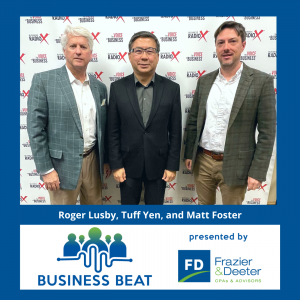
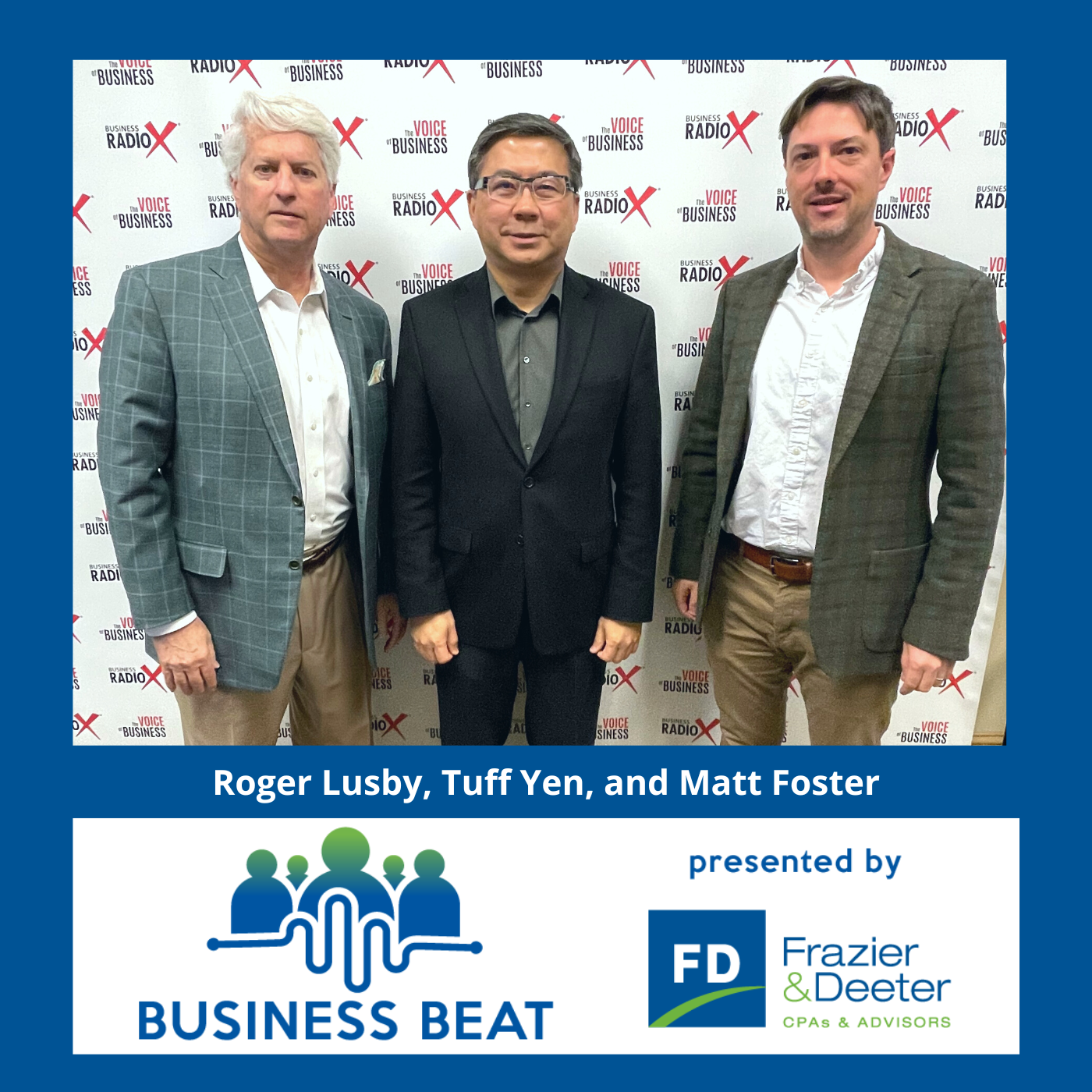
Tuff Yen, Founder and Managing Partner of Seraph Group, joined this edition of Business Beat to discuss his venture capital investment firm and their work. In a discussion with Frazier & Deeter’s Roger Lusby and Matt Foster, Tuff talked about Seraph Group and its mission, his move to Milton from the Bay Area, how Seraph is investing locally, trends he’s seeing, what Seraph is looking for in investments, how investors can get involved, and much more.

Business Beat is presented by Alpharetta CPA firm Frazier & Deeter and is produced by the North Fulton studio of Business RadioX®

Seraph Group

Unlike a traditional venture fund, Structured Angel Fund offers a 20+ portfolio of seed and pre-seed stage investment into high-risk/high return technology startups. Investors not only gain a diversified portfolio, but also have the opportunity to co-invest on a deal by deal basis above his managed portfolio. This two-prong approach provided investors with a managed fund by the General Partner and a self-directed investment portfolio by investors.

SAF is popular with C-level executives and entrepreneurs. For the busy individuals whose time is limited, the managed portfolio is not only a low-cost way of investing in startup, but a more efficient acquisition of diversification. For individuals who have strong domain knowledge and operating experience, SAF offers investors the opportunity to work with startups first-hand.

Seraph Group’s approach to angel investment addresses and solves many challenges experienced by localized angel organizations. Their national reach for deal flow, 400+ domain experts, professionally managed process and 19 years history of success established the company as the premier professional organization in the United States.

Seraph Research Foundation was founded to help the local community build a successful capital source for startups based on almost two decades of learnings from personally invested in 130+ companies. As technology continues to play a significant role in the economy, and many accelerators and incubators graduate companies, the growth of risk capital has not caught up with the demand.

Few communities or organizations have experience in organizing angel investment groups. Seraph Research Foundation will assist local communities in a public private partnership to help educate, train, organize and manage an angel investment group, a vital component of keeping promising companies local, translating into economic growth, job creation and tax revenues.

Seraph Research Foundation has established local angel investment groups in Austin Texas and Lubbock Texas.

Company website | LinkedIn | Twitter

Tuff Yen, Founder and Managing Partner, Seraph Group

Tuff Yen, Founder and Managing Partner, Seraph Group

Tuff Yen is the founder Seraph Research Foundation, a non-profit dedicated to the education and training of angel investors and working with the local community to establish angel/seed investment organization to help the public and private effort on growing the economy. He is also the founder of Seraph Milton, a north Fulton Georgia based angel investment group.

Mr. Yen is also the founder of Seraph Group, an investment firm that brings together successful individuals to create wealth through ownership of private enterprises. Seraph Group was founded in 2004 and is now the largest, and only global angel investment fund group that specializes in backing high-tech startups.

Mr. Yen started his career in the biotechnology industry with a degree in Microbiology and Immunology from the University of California Berkeley. He worked at Genentech and Amgen, two leading biotechnology companies in northern and southern California. After graduating from the Yale School of Management in New Haven Connecticut, Mr. Yen began his venture capital career at Chemical Venture Partner, the private equity and venture capital arm of Chemical Bank, then managing $8 Billion in New York City. Chemical Bank later merged with Chase Manhattan Bank and then JPMorgan Bank, and the group became JPMorgan Partners which then managed close to $20 Billion. Mr. Yen subsequently joined a Hambrecht & Quist’s affiliated $1.6billion fund in San Francisco.

With an extensive venture capital background on both coasts, Mr. Yen saw an opportunity to deliver a new investment platform for accredited investors and launched Seraph Group in 2004. He introduced Structured Angel Fund™, a venture capital fund designed specifically for angel investors and family offices to gain access to a diversified portfolio of seed stage startups and with the right to co-invest on a deal-by-deal basis. This GP-managed and LP-curated fund attracted close to 400 investors from 120+ cities in north America, Europe and Asia, many of them Fortune 500 C-level executives, entrepreneurs, technologists, innovators, investment and operating professionals.

Mr. Yen led Seraph Group and invested north of $120 million into 130+ companies. He reviewed between 300 and 400 investment proposals each year and was responsible for all aspects of an investment, from sourcing, investigating, conducting due diligence, and structuring. Mr. Yen has gained experience in investing in a wide variety of industries, including manufacturing, distribution, entertainment, publishing, information technology, Internet, enterprise software, cybersecurity, aerospace, medical and life sciences.

LinkedIn | Twitter

Frazier & Deeter

The Alpharetta office of Frazier & Deeter is home to a thriving CPA tax practice, a growing advisory practice and an Employee Benefit Plan Services group. CPAs and advisors in the Frazier & Deeter Alpharetta office serve clients across North Georgia and around the country with services such as personal tax planning, estate planning, business tax planning, business tax compliance, state and local tax planning, financial statement reviews, financial statement audits, employee benefit plan audits, internal audit outsourcing, cyber security, data privacy, SOX and other regulatory compliance, mergers, and acquisitions and more. Alpharetta CPAs serve clients ranging from business owners and executives to large corporations.

Roger Lusby, Partner in Charge of Alpharetta office, Frazier & Deeter
Roger Lusby, Partner in Charge of the Alpharetta office of Frazier & Deeter

Roger Lusby, host of Frazier & Deeter’s Business Beat, is an Alpharetta CPA and Alpharetta Office Managing Partner for Frazier & Deeter. He is also a member of the Tax Department in charge of coordinating tax and accounting services for our clientele. His responsibilities include a review of a variety of tax returns with an emphasis in the individual, estate, and corporate areas. Client assistance is also provided in the areas of financial planning, executive compensation and stock option planning, estate and succession planning, international planning (FBAR, SFOP), health care, real estate, manufacturing, technology, and service companies.

You can find Frazier & Deeter on social media:

LinkedIn | Facebook | Twitter

An episode archive of Frazier & Deeter’s Business Beat can be found here.


Tagged With: accountants, angel investment group, Angel Investors, CPA firm, estate planning, financial planning, Frazier & Deeter's Business Beat, Frazier and Deeter, Roger Lusby, Roger Lusby CPA, Seraph Foundation, Seraph Georgia, Seraph Group, Seraph Milton, Tuff Yen

The Immensely Valuable CPA

May 11, 2022 by John Ray

The Immensely Valuable CPA
North Fulton Studio
The Immensely Valuable CPA
Loading
00:00 /
RSS Feed
Share
Link
Embed

Download file

The Immensely Valuable CPA

The Immensely Valuable CPA

What are the characteristics of an immensely valuable CPA, one who clients cannot do without? The answer goes beyond degrees, designations, and even technical expertise. A story here not just for CPAs but all professional services providers.

The Price and Value Journey is presented by John Ray and produced by the North Fulton studio of Business RadioX®.

TRANSCRIPT

John Ray: [00:00:00] Hello. I’m John Ray on the Price and Value Journey. Recently, I sat with an older business owner who is a 50/50 partner with a relative. They’re getting closer to that inevitable time when they are transitioning out of the business and there are problems. The relative’s behavior is erratic, and the business has some unique characteristics, which will make a sale challenging. This owner was wondering how he could navigate all this, a situation which could turn into a quagmire, if not handled just right.

I asked him who among their professional services providers could help mediate and walk through with the two of them this business transition. It had to be someone both he and his relative trusted implicitly. We agreed that having the right person there to smooth any friction would save a lot of hurt feelings, anxiety, and maybe a bunch of legal bills if everything descended into a legal fight. The business attorney had just passed away, but the long-time CPA for the business was still active. Do both of you trust – I’ll call him – Joseph? “Do you value Joseph’s opinions?” I asked him. Do both of you listen to him? How’s his bedside manner? I asked several questions like this about Joseph, and all the answers led to a conclusion this man agreed with, that. Joseph, the CPA was the ideal person, possibly the only person to companion the two of them through the looming transition.

Now, what makes Joseph not just important, but immensely valuable to these two business partners? What is it that makes Joseph seem irreplaceable at this point? Is that his knowledge of the tax code? His ability to help them craft a business transition, which saves both a large tax bill? His accuracy in filing tax returns? The fact that he’s been through 40 or more tax seasons? No, it’s none of these things, actually. All his experience and his qualifications are important, to be sure, but that’s not what makes Joseph more than just important. What makes Joseph immensely valuable here? What makes Joseph seem priceless as an advisor?

Joseph’s value as a professional services provider lies in his experience with these two partners. The trust he has engendered with them over time, his demeanor and his ability to mediate tough situations. All of these factors are intangibles. Intangibles that are not available with anyone else, it seems. Intangibles that these two partners can’t find with a Google search. It’s yet another example of why, ultimately, your content, your experience, your certifications as a professional services provider is not, ultimately, what drives your practice. Whether it’s your knowledge of the tax code if you’re a CPA, or social media platforms if you’re a marketing or branding expert, or the law if you’re attorney, your value lies in intangibles that, sometimes, you’re not able to see if we don’t understand what the client sees. Your value lies in more, much more than just your experience, certifications and the content that you give the world. So, what are those intangibles your clients see in you, which make you priceless to them? Do you know? If not, maybe it’s time to start asking them those questions.

I’m John Ray on the Price and Value Journey. Past episodes of this series can be found on your favorite podcast app, or you can find the entire show archive at PriceValueJourney.com. You’re welcome to send me a note, John@JohnRay.co. Thank you for joining me.

About The Price and Value Journey

The title of this show describes the journey all professional services providers are on:  building a services practice by seeking to convince the world of the value we offer, helping clients achieve the outcomes they desire and trying to do all that at pricing which reflects the value we deliver.

If you feel like you’re working too hard for too little money in your solo or small firm practice, this show is for you. Even if you’re reasonably happy with your practice, you’ll hear ways to improve both your bottom line as well as the mindset you bring to your business.

The show is produced by the North Fulton studio of Business RadioX® and can be found on all the major podcast apps. The complete show archive is here.

John Ray, Host of The Price and Value Journey

John Ray The Price and Value Journey
John Ray, Host of “The Price and Value Journey”

John Ray is the host of The Price and Value Journey.

John owns Ray Business Advisors, a business advisory practice. John’s services include advising solopreneur and small professional services firms on their pricing. John is passionate about the power of pricing for business owners, as changing pricing is the fastest way to change the profitability of a business. His clients are professionals who are selling their “grey matter,” such as attorneys, CPAs, accountants and bookkeepers, consultants, marketing professionals, and other professional services practitioners.

In his other business, John is a Studio Owner, Producer, and Show Host with Business RadioX®, and works with business owners who want to do their own podcast. As a veteran B2B services provider, John’s special sauce is coaching B2B professionals to use a podcast to build relationships in a non-salesy way which translate into revenue.

John is the host of North Fulton Business Radio, Minneapolis-St. Paul Business Radio, Alpharetta Tech Talk, and Business Leaders Radio. house shows which feature a wide range of business leaders and companies. John has hosted and/or produced over 1,300 podcast episodes.

Connect with John Ray:

Website | LinkedIn | Twitter

Business RadioX®:  LinkedIn | Twitter | Facebook | Instagram

Tagged With: accountants, bookkeepers, CPa, CPA firm, cpa's, John Ray, Price and Value Journey, pricing, professional services, professional services providers, solopreneurs, value

Sophia Johnston, Xero Accounting Software

January 26, 2021 by John Ray

Xero Accounting Software
North Fulton Business Radio
Sophia Johnston, Xero Accounting Software
Loading
00:00 /
RSS Feed
Share
Link
Embed

Download file

Sophia Johnston, Xero Accounting Software (North Fulton Business Radio, Episode 324)

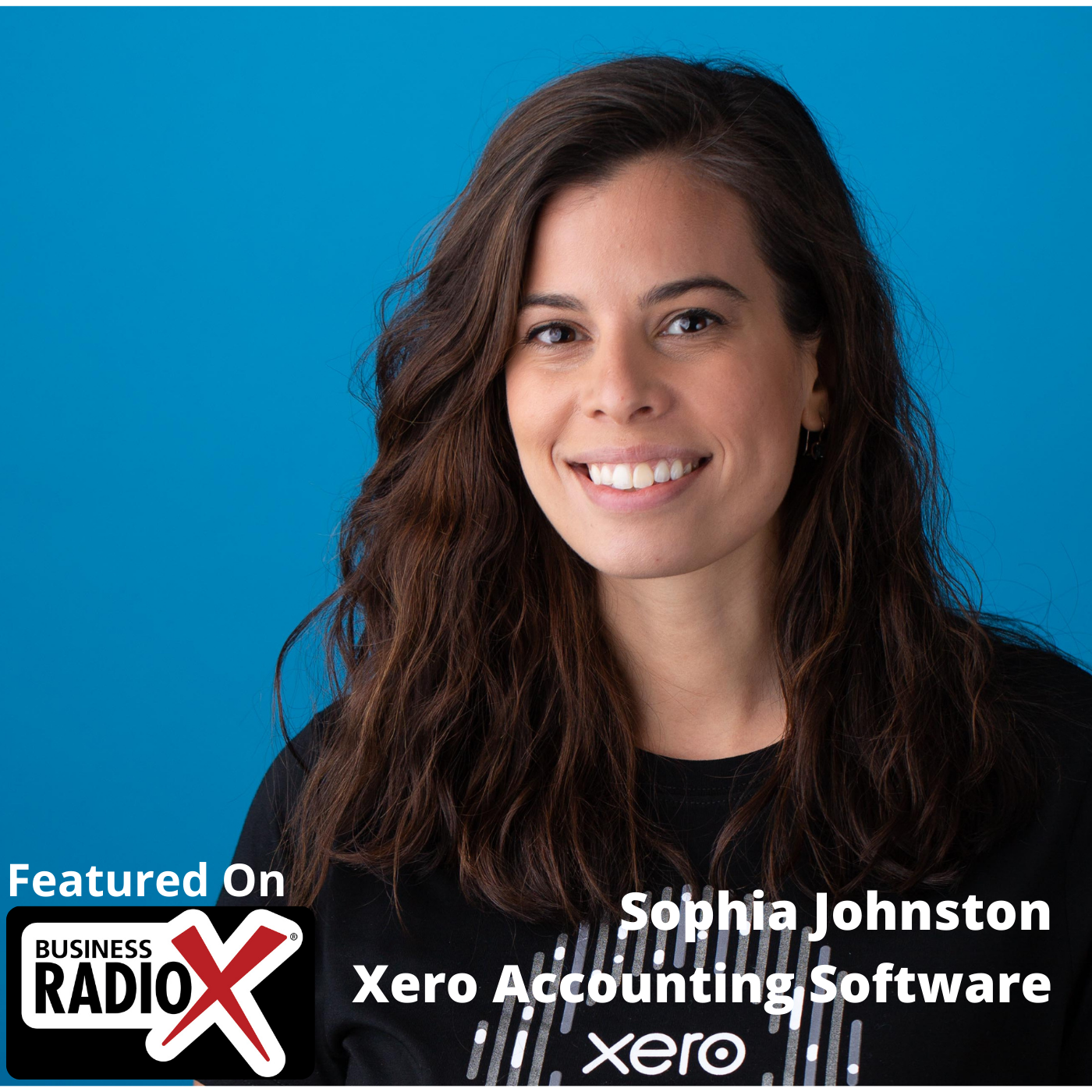
Sophia Johnston of Xero Accounting Software joined host John Ray to discuss Xero’s growth and development, how they help bookkeepers and accountants transition to advisory relationships with their clients, and much more. “North Fulton Business Radio” is produced virtually from the North Fulton studio of Business RadioX® in Alpharetta.

Xero Accounting Software

Xero was founded to change the game for small business.  Their cloud-based accounting software connects people with the right numbers anytime, anywhere, on any device. For accountants and bookkeepers, Xero helps build a trusted relationship with small business clients through online collaboration. They are proud to be helping over 2 million+ subscribers worldwide transform the way they do business.

Founded in 2006 in New Zealand, Xero is one of the fastest growing software-as-a-service companies globally. We lead the New Zealand, Australian, and United Kingdom cloud accounting markets, employing a world-class team of more than 3,000+ people. Forbes identified Xero as the World’s Most Innovative Growth Company in 2014 and 2015.

Small business makes the world go round – it’s the heart of the global economy. They want millions of small businesses to thrive through better tools, information and connections. Like all great challenges, they can’t do it alone: they work closely with customers, partners, and other friends to push innovation forward, turning Xero into the online business platform for the world.

Company website

Sophia Johnston, Senior Account Manager, Xero Accounting Software

Sophia empowers Atlanta’s accounting community with cloud technology, business strategy and workflow advisory, so they can better serve the small business community. She has empowered hundreds of firms to reach their growth and efficiency goals. Xero’s online accounting software helps small businesses save time and grow. That means you can automate everyday business tasks, get up-to-date financials and run your business – from wherever you are.

She is passionate about fostering a genuine community in Atlanta, connecting professionals who can support one another on the shared mission of helping small business thrive, worldwide.

You can reach Sophia Johnston at sophia.johnston@xero.com

Questions and Topics in this Interview:

  • Tell me about who you are and what you do at Xero.
  • Where is Xero in the market today?
  • How does Xero support its partners, accountants and bookkeepers?
  • What makes Xero different from the competition?
  • What are some key pointers you have for the small business community, specifically those starting up a new business?

North Fulton Business Radio” is hosted by John Ray and produced virtually from the North Fulton studio of Business RadioX® in Alpharetta. You can find the full archive of shows by following this link. The show is available on all the major podcast apps, including Apple Podcasts, Spotify, Google, Amazon, iHeart Radio, Stitcher, TuneIn, and others.

Renasant Bank has humble roots, starting in 1904 as a $100,000 bank in a Lee County, Mississippi, bakery. Since then, Renasant has grown to become one of the Southeast’s strongest financial institutions with over $13 billion in assets and more than 190 banking, lending, wealth management and financial services offices in Mississippi, Alabama, Tennessee, Georgia and Florida. All of Renasant’s success stems from each of their banker’s commitment to investing in their communities as a way of better understanding the people they serve. At Renasant Bank, they understand you because they work and live alongside you every day.

Tagged With: accountants, Accounting, accounting software, atlanta, bookkeepers, John Ray, Sophia Johnston, Xero, Xero Accounting Software

Decision Vision Episode 64: Should I Fire My Accountant? – An Interview with Brian Woodman, Woodman & Associates, LLC

May 7, 2020 by John Ray

should I fire my accountant
Decision Vision
Decision Vision Episode 64: Should I Fire My Accountant? - An Interview with Brian Woodman, Woodman & Associates, LLC
Loading
00:00 /
RSS Feed
Share
Link
Embed

Download file

should I fire my accountant
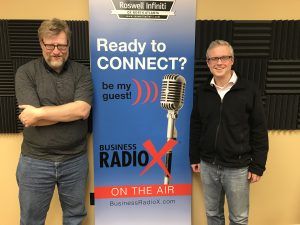
“Decision Vision” Host Mike Blake and Brian Woodman, Woodman & Associates

Decision Vision Episode 64:  Should I Fire My Accountant? – An Interview with Brian Woodman, Woodman & Associates, LLC

What are the circumstances under which I should change accountants? How can I tell whether my accountant is doing a good job for me and my business? Brian Woodman joins “Decision Vision” to discuss these questions and much more with Host Mike Blake. “Decision Vision” is presented by Brady Ware & Company.

Brian Woodman, Woodman & Associates, LLC

should I fire my accountant
Brian Woodman, Woodman & Associates

Woodman & Associates is a professional accounting services firm specializing in CFO services, financial reporting, audit support services and internal accounting assistance, all typically on a project basis for small to mid-size businesses.

Brian Woodman is a senior financial leader with 18 years of proven technical and financial management expertise with a focus on middle market technology, services and manufacturing + distribution businesses from start-up to $1 billion in revenue. He has proven expertise in leading internal and external finance and accounting based projects and teams, business and accounting process development and review, and financial reporting research and implementation expertise under U.S. GAAP. He is a CPA licensed in Georgia.

For more information, go to the Woodman & Associates website or contact Brian directly by email.

Michael Blake, Brady Ware & Company

Mike Blake, Host of the “Decision Vision” podcast series

Michael Blake is Host of the “Decision Vision” podcast series and a Director of Brady Ware & Company. Mike specializes in the valuation of intellectual property-driven firms, such as software firms, aerospace firms and professional services firms, most frequently in the capacity as a transaction advisor, helping clients obtain great outcomes from complex transaction opportunities. He is also a specialist in the appraisal of intellectual properties as stand-alone assets, such as software, trade secrets, and patents.

Mike has been a full-time business appraiser for 13 years with public accounting firms, boutique business appraisal firms, and an owner of his own firm. Prior to that, he spent 8 years in venture capital and investment banking, including transactions in the U.S., Israel, Russia, Ukraine, and Belarus.

Brady Ware & Company

Brady Ware & Company is a regional full-service accounting and advisory firm which helps businesses and entrepreneurs make visions a reality. Brady Ware services clients nationally from its offices in Alpharetta, GA; Columbus and Dayton, OH; and Richmond, IN. The firm is growth minded, committed to the regions in which they operate, and most importantly, they make significant investments in their people and service offerings to meet the changing financial needs of those they are privileged to serve. The firm is dedicated to providing results that make a difference for its clients.

Decision Vision Podcast Series

“Decision Vision” is a podcast covering topics and issues facing small business owners and connecting them with solutions from leading experts. This series is presented by Brady Ware & Company. If you are a decision maker for a small business, we’d love to hear from you. Contact us at decisionvision@bradyware.com and make sure to listen to every Thursday to the “Decision Vision” podcast. Past episodes of “Decision Vision” can be found here. “Decision Vision” is produced and broadcast by the North Fulton studio of Business RadioX®.

Visit Brady Ware & Company on social media:

LinkedIn:  https://www.linkedin.com/company/brady-ware/

Facebook: https://www.facebook.com/bradywareCPAs/

Twitter: https://twitter.com/BradyWare

Instagram: https://www.instagram.com/bradywarecompany/

Show Transcript

Intro: [00:00:02] Welcome to Decision Vision, a podcast series focusing on critical business decisions. Brought to you by Brady Ware & Company. Brady Ware is a regional, full-service service accounting and advisory that helps businesses and entrepreneurs make visions a reality.

Mike Blake: [00:00:20] And welcome to Decision Vision, a podcast giving you, the listener, clear vision to make great decisions. In each episode, we discuss the process of decision making on a different topic from the business owner’s or executive’s perspective. We aren’t necessarily telling you what to do, but we can put you in a position to make an informed decision on your own and understand when you might need help along the way.

Mike Blake: [00:00:39] My name is Mike Blake, and I’m your host for today’s program. I’m a Director at Brady Ware & Company, a full-service accounting firm based in Dayton, Ohio, with offices in Dayton; Columbus, Ohio; Richmond, Indiana; and Alpharetta, Georgia, which is where we’re recording today. Brady Ware is sponsoring this podcast. If you like this podcast, please subscribe to your favorite podcast aggregator, and please consider leaving a review of the podcast as well.

Mike Blake: [00:01:02] So, today we’re going to talk about whether you should fire your accountant. And we are recording this podcast on lucky Friday the 13th of March in 2020, which means that in the accounting world, we are in the heart of what is known as busy season, which may or may not be extended depending what the IRS decides to do in response to coronavirus. But this is the time when the relationship between the accountant and the client is at its most intense, at least, for most clients. And for good or ill, in many cases, clients talk to their accountants pretty much only this time of year. And we can have a discussion at some point later as to whether or not that’s a good thing or the prudent thing.

Mike Blake: [00:01:50] But this is the time of year when things get tense. Things pop up on the tax return that the client wasn’t necessarily expecting, when phone calls and emails are not returned as quickly as they are through the rest of the year because there’s a traffic jam. And so, the most strain is put on that accountant-client relationship. And at some point, as a client, you may start thinking about, “Well, is this relationship really working for me? Should I be looking elsewhere?” Or “Is this just kind of the nature of the business? And is what I’m experiencing something that I would likely get from somebody else if I switched, and I should just sort of leave well enough alone.” So, I hope that you’ll find it is a timely topic. And if you listen to a podcast from a few weeks ago, we did one on Should We Fire a Lawyer? So, this is an equal opportunity podcast. We’ll haves, should we fire your financial advisor? Should we fire your gardener? Should we fire your Uber driver? Should you fire the person that mows your lawn? So, we’ll go through all kinds of firing kinds of podcasts.

Mike Blake: [00:03:02] But today we’re talking about accounting. And even though I work for an accounting firm, I am not an accountant. If I talk anything about accounting, it’s instantly malpractice. So, joining us today to help us talk about accountants and relationships with our accountants is my longtime friend, Brian Woodman of Woodman & Associates. We go back a long way, at least 10 years. Woodman & Associates is a professional accounting services firm specializing in CFO services, financial reporting, audit support services, and internal accounting assistance all typically on a project basis for small and mid-sized businesses.

Mike Blake: [00:03:37] Brian is a senior financial leader with 18 years of proven technical and financial management expertise, the focus on middle market technology services, and manufacturing, and distribution businesses from startup to a billion dollars in revenue. He has proven expertise in leading internal and external finance and accounting-based projects and teams, business and accounting process development and review, and financial reporting, research and implementation expertise under US GAP. He is a CPA license in Georgia. All around good and sporting his brand-new glasses that I just can’t take my eyes off of. Brian Woodman, welcome to the program.

Brian Woodman: [00:04:13] Thank you, Mike. You reading that makes me sound like I’m bragging. So, I’ve never had that read back to me, my bios. I’m a little embarrassed, but-

Mike Blake: [00:04:23] Well, but some of this-

Brian Woodman: [00:04:24] Thanks for the interest.

Mike Blake: [00:04:24] Some of it’s true, right?

Brian Woodman: [00:04:26] Yes..

Mike Blake: [00:04:29] It’s interesting that you mentioned that. I hate having my bio read as well when I do speaking gigs and so forth. I do want to sort of put my hands over my ears like this. It’s like, yeah.

Brian Woodman: [00:04:29] I’m sorry.

Mike Blake: [00:04:44] My marketing people made me write that. I’m really a bad guy. So-

Brian Woodman: [00:04:51] No worries.

Mike Blake: [00:04:51] … let’s jump into this. And I’m having you on the program for a lot of reasons, but your expertise is that you’ve been in the CPA role. You grew up as an auditor.

Brian Woodman: [00:05:03] Yes.

Mike Blake: [00:05:04] Right?

Brian Woodman: [00:05:04] Yeah.

Mike Blake: [00:05:04] And in public accounting. And now, you’re in a position where you’re doing some accounting work, but I think you’re also coordinating who your clients hire and work with to get-

Brian Woodman: [00:05:17] Correct.

Mike Blake: [00:05:17] … sort of the kind of the bulk work done, right?

Brian Woodman: [00:05:20] Yes, yeah.

Mike Blake: [00:05:20] So, you are sort of a kingmaker. And if you decide that somebody needs to be voted off the island, you’re going to tell the client. And more often than not, they’re going to do what you tell them because why pay for your advice if they’re not going to follow it?

Brian Woodman: [00:05:34] Right, yeah. I’ve been in both sides at this point. On the service provider side, I was an auditor for many years. So, I know what makes clients happy and what makes them upset. So, it’s good for me to have that on the other side to help my client make the right decision about which service provider to pick.

Mike Blake: [00:05:54] Yes. So, I mean, how often do clients make a change? Are clients kind of always looking for a reason to fire their CPA? Or do they tend to come to that decision after a lot of thought?

Brian Woodman: [00:06:11] Well, I think entering a relationship with an accountant is a very thoughtful process. So, especially with small business, your business is tied to your personal life in many cases. So, business is personal. So, you’re sharing your intimate financial details with someone. So, in most cases, at least for small businesses, it’s a somewhat personal decision, and you want to find someone that you trusts. So, you put a lot of thought into that. So, the intent is to go into that relationship to last. So, I would say, how often do the clients look to change their accountants? I would say they’re not looking to necessarily change their accountants unless they have to. So, I’d say not often.

Mike Blake: [00:07:02] Yeah, okay. So, when you come to that decision, and you’re advising, what are the most frequent reasons that clients do decide they’re going to change accountants?

Brian Woodman: [00:07:17] Well, let’s see. There’s a few. Price, unmet expectations. Some of the reasons where it’s not really a choice is if there’s a change in control of the company or with larger companies, a change in the C-suite. So, they may kind of bring their own accountants along or advisors. I mean, so when we define accountant, that could mean several different things. There’s compliance-related work, which is tax returns and audits. And then, there’s more advisory work. So, it kind of depends on who you’re talking about.

Brian Woodman: [00:07:52] But I would say, so, I was in audit, so I know that best. So, if it’s an auditor, and you’ve got a new CFO in place, it’s possible that the CFO kind of brings in the firm that they’ve known, depending on where the company is at at any time. So, change of in control. If an acquisition takes place, so a foreign parent buys a US sub, there could be a reason to change the accounting relationship there. I think I mentioned price, although it’s not always the best reason to change. Oftentimes, clients or companies or required to go out and bid the work out just to make sure they’re still in range. And oftentimes, the change occurs just through that process. Other reasons, a company can grow and kind of outgrow the depth of their current single shingle shop, you could say, and it may require more depth and expertise in a specific area. So, they may have to go and find a firm that can meet their needs there.

Mike Blake: [00:09:02] Yeah, I just had a conversation. I do office hours in Alpharetta, Georgia, an organization called Tech Alpharetta twice a month. And last Wednesday, somebody came in and started talking about research and development, tax credits.

Brian Woodman: [00:09:19] Sure.

Mike Blake: [00:09:20] And I said, “Well, look out. I have a passing familiarity with them, but I’m not an actual CPA. I don’t even do my own tax returns. So, who’s your accountant?” He says, “Well, our accountant is just sort of a guy that we decided to go with because he was the chief business.” I said, “Well, maybe for research and development tax credits, you need more than just some guy.” And that is a case where the complexity of what the client needs outgrows kind of the single shingle that for certain there is maybe a fine accountant, but reaches a technical depth that just you cannot reasonably expect unless that person just happened to be an R&D tax expert at a bigger firm that did that.

Brian Woodman: [00:10:02] And that that is the case. So, hope it doesn’t sound like I’m knocking single shingle.

Mike Blake: [00:10:07] You’re notOr.

Brian Woodman: [00:10:08] It’s just that the single shingle can’t do everything to the depth that, say, a large national firm could probably do. But you may have a boutique shop or a single shingle that may fit your specific need and that might be the right person.

Mike Blake: [00:10:24] Yeah. And, an interesting thing I just thought of because you you mentioned your audit background, when you have an auditor, I mean, firing an order is a little bit trickier because there’s observers who are going to kind of wonder, “Well, why did you fire the auditor?”

Brian Woodman: [00:10:45] Yes.

Mike Blake: [00:10:46] Did you fire the auditor because they legitimately did something from a business perspective that was not cool? Or was the auditor telling you to do something on your financial statements that was the right thing to do, and you didn’t want him to? And you found the equivalent of the break inspector that says, “Ah, for 20 bucks, we’ll let those then brake pads slide and I’ll give you the sticker.” That’s a real concern.

Brian Woodman: [00:11:13] You could call that opinion shopping. So, I think that I go back to my audit days, that was a specific question. We fill out all sorts of checklists as accountants as we go through and QC our work. And in the planning stage in an audit, there was a specific question about how many times has your client fired their accountants in the past, and what are the reasons, and take those into consideration, [1], in accepting this client; and then, [2], if you’re comfortable accepting the client, you need to potentially build that into the audit risk, which determines how deep you really need to go in an audit.

Mike Blake: [00:11:53] You know what? That’s interesting. So, as I mentioned at our intro, we did have a podcast talking about should I fire my attorney with Jeff Berman from Berman Fink Van Horn. And one of the things he talked about as is attorneys are kind of reluctant to take on a client that rolls through other attorneys. It sends up some red flags. I had not thought about that from the accounting perspective, but I mean, that’s right. Accountants, for those of you who don’t know, accountants have this process called client acceptance. At least, most accounting firms do. And I think that’s the checklist you’re talking about is should we accept this client or retain and continue the client? And it hadn’t occurred to me, but I guess on that checklist is, does this person make a habit of having a rotating accountant merry go round, basically? And so, if you can develop that reputation of being somebody that does that, you may find it, at some point, hard to find somebody good that wants to represent you.

Brian Woodman: [00:12:56] That’s right. That’s right. The question’s going to get asked eventually.

Mike Blake: [00:12:59] Yeah, sure.

Mike Blake: [00:13:01] And I guess another reason why firms change accountants too is because they receive an investment or even just financing, in general, right?

Brian Woodman: [00:13:09] Right.

Mike Blake: [00:13:10] I know that VCs will often say, “Congratulations! Here’s the check. Here’s also the accountant you’re gonna be working with,” right?

Brian Woodman: [00:13:20] Right. I have actually seen the name of a firm written into a loan agreement.

Mike Blake: [00:13:26] I was gonna ask you about that. Does that work for banks as well?

Brian Woodman: [00:13:29] I’ve seen it.

Mike Blake: [00:13:29] Okay.

Brian Woodman: [00:13:29] I’ve seen it where in order to get the funding, now, I’m trying to think if it was … I mean, it was a debt agreement. I don’t know if it was with a bank, but it did specifically name the firm that was to do the audit of the financial statements.

Mike Blake: [00:13:48] So, it’s conditional.

Brian Woodman: [00:13:49] Yeah, yes. So, in order to get the debt, you may have to change your accounting firm.

Mike Blake: [00:13:53] Man, I gotta find that lender and make sure they’re my best friend. That sounds great.

Brian Woodman: [00:13:59] So, I’ve seen some that will say it must be a national firm or big four firm. But I’ve only once seen where it was the specific firm was named. And I thought that was interesting.

Mike Blake: [00:14:11] Yeah. I haven’t seen that either, but I’ve certainly seen it where at a minimum, sort of as part of the term sheet, they say you’re going to adopt whatever accounting firm we say you’re going to adopt to be named later. So, in your mind, as as an advisor to clients that kind of coordinates the work of other accountants, what starts you down the road thinking, “I’m not sure this is the right match. And maybe I’m going to tell the client to start looking at other alternatives”?

Brian Woodman: [00:14:47] I would say, broadly, unmet expectations.

Mike Blake: [00:14:52] Like what?

Brian Woodman: [00:14:52] On price. So, I’ve often seen situations where the bidding process, you’ve got the low bidder coming in. And then, all it is, is coming in with a low price subject to conditions that the client must meet. And if that fine print isn’t read in detail and held to, you’re going to see change orders. So, for every little thing, so that it allows the firm to come in and get the work, but then on the back end, I don’t know. Firms that kind of take that approach, I don’t think that’s a really good long-term approach to going out and generating business because it kind of leaves a bad taste in the clients.

Mike Blake: [00:15:38] You might generate business but you won’t keep it.

Brian Woodman: [00:15:38] Yeah, yeah. That’s right. Yeah. So, I think you’ll have high turnover in those situations, but as far as expectations go, last minute surprises. And I can talk about this from an audit perspective and from a tax perspective. You discuss the communication throughout the year. Why are we having the conversation just before the deadline? Why haven’t we discussed these things?  And I’ve been able, fortunately for me. So, I’m sitting on the other side of the table now where the client had asked me before, “Okay, why are we talking about this now at the end of the audit? We’re just about to issue.” So, I go, “Yeah, I get it.”

Brian Woodman: [00:16:21] So, I’m able to have these conversations now where, okay, we’ve had all year, which is not your busy season. So, there should have been time. I mean, I realize everything’s cramming in here at the last minute for everybody, but we’ve had all year to talk about some of these issues. So, let’s try to plan a little bit to be a little more proactive. So, I’d say the more that that happens and the more heartburn accumulates over a couple of years, if that happens a couple of times, you’re going to want to move on or think about moving on.

Mike Blake: [00:16:59] Yeah, it makes sense. I mean, you think about the desired outcome of an accounting relationship, you want them to manage risk and bring stability. If it seems to be at risk and having instability, that seems to run counter to the purpose of what you’re trying to do, right?

Brian Woodman: [00:17:18] Right.

Mike Blake: [00:17:18] And you can appreciate if someone is going to be hit on their personal taxes an additional $10,000 tax bill. And by the way, you’re finding about that on April 13th, that’s a little bit frustrating.

Brian Woodman: [00:17:31] Yes, yeah.

Mike Blake: [00:17:32] And can be financially challenging, right? Or if you find that you’ve been telling everybody, all your stakeholders, you’re expecting a massive profit this year, and then five days before the audit issues, you’ve got a massive write-off you got to take, that’s an issue too.

Brian Woodman: [00:17:52] To be fair, accounting is historical. So, the end result is based on what happened. So, I can’t tell you what the answer is going to be in June for where we’re going to be in December. But I can tell you, okay, here is where we’re at in June. What are your plans for the rest of the year, so we’re not going to have any surprises? Remember, we talked about this. If you were going to buy that building, if you were going to do that acquisition, if you were going to launch a product or not, to make a decision at launching a product or not, or changing out the C-suite, those are things that could affect and change the end results. So, let me know what those are now. Let’s discuss and let’s head those up at the pass versus on April 15th or March 15th or 16th, I think is the deadline, is, “Oh, that’s what happened. Okay. Well, that changes everything now. Your answer is completely different. And it’s the first I’ve heard of it.” So, again, I think being proactive with communication. In my career, keeping the number of surprises down with your client is the best. That’s preventative action to an upset client or client wanting to move on.

Mike Blake: [00:19:18] Yeah, yeah. So, let me ask this, accountants aren’t cheap. I mean, I guess some are, but most aren’t. You’re not cheap. I’m not. My firm is not cheap. The firm we used to work for really isn’t cheap. Is it unreasonable for a client to demand perfection or near perfection?

Brian Woodman: [00:19:39] Yeah, I was going to say perfection. Perfection can be subjective, especially, and you know this very well that this business can be somewhat of an art. The answer on a tax return that’s acceptable to the IRS could be different from … the same exact return prepared two or three different ways could be acceptable to the IRS. So, which one is perfect? Probably the one that as long as is acceptable has the highest refund, but I think that, and especially in your business, and I know you say you’re not an accountant, but your business involves … it certainly involves numbers.

Mike Blake: [00:20:17] I certainly am in the accounting industry. I work for accounting firms, so.

Brian Woodman: [00:20:21] Right. So, I would say that relatively perfect. We’re certainly not perfect, but I would say that generally and materially perfect is a reasonable expectation. But you also have to understand kind of where you’re at. So, if you have the wrong person in place. So, if you got highly complex transactions, and you’re asking a bookkeeper to book those transactions perfectly, and they involve estimates, and they involve a lot of inputs, I would say you shouldn’t, in the first place, expect perfection from that level of service provider. But if you have a bookkeeper at the lowest level, the transactional level, I would say where there’s not a lot of judgment, there’s not a lot of art-

Mike Blake: [00:21:18] Right, it’s just a mechanical process.

Brian Woodman: [00:21:20] Yeah, it’s mechanical, I would say that, yeah, should you could expect something close to perfection there.

Mike Blake: [00:21:26] So, is changing an accountant easy? And let me put some parameters around that because I know this is very much a big it depends answer, but let’s say there’s already been a five-year relationship. The accounting firm is helping both in the tax and maybe the financial reporting side. How hard is it to change accountants? And what is your existing accountant’s obligation to facilitate that transition?

Brian Woodman: [00:21:56] It’s becoming easier. With your accountant having the documents, having the documents that are yours, sourced documents, things that you own that they’re using to perform the work, I think technology has enabled the facilitation of transmission of documents from one place to another. I know that in the past, it was difficult, especially like if you hadn’t paid your bill to your prior accountant, or it was an adverse relationship, it was a little more difficult to get all your stuff, but you really should have any way. And that would be my suggestion is just as a best practice is anything that your service provider, your accountant prepares for you, or documents that you provide them to prepare tax return, or audit, or whatnot, keep files of those yourself. Don’t just let them keep all that stuff.

Brian Woodman: [00:22:56] They stay as organized as they can, but it may not be exactly what you need in order to transition. So, I see a lot of heartburn, heartache in gathering documents that you just don’t have on file. Your old accountant or my old accountant has that, or all the journal entries that were ever booked on my books, I don’t have them in my QuickBooks. My accountant has all of my journal entries that fix all my books for the last five years. And they just rebook those every year. Well, we’ve got to go get that from them. Well, just get those every year from your accountant.

Mike Blake: [00:23:29] So, make that part of the deliverable.

Brian Woodman: [00:23:30] Yes, yeah, yeah. So, yes. I would say that technology is enabling better transmission because those documents would be available there for you to log into your portal. And a lot of firms are doing that now.

Mike Blake: [00:23:44] So, what are some instances where a client might be thinking that they want to change their accountant, but, really,  at the end of the day, it’s really the client’s issue, not the accountant’s issue that the client is just being unreasonable and the client needs to kind of weigh the beat and take it down a notch?

Brian Woodman: [00:24:05] Yeah. There’s certain circumstances where it’s always a fee issue. So, it’s never going to be cheap enough for what you’re getting. And then, second is the information and effort that is often required on the client’s side, you’re just never gonna get it. So, it’s like garbage in, garbage out. Well, you’re not getting my tax return done. We’re not getting through the audit. Well, we’re not getting what we need as service providers in order to complete the task. So, if you give us garbage, we’re not going to give you garbage back. You just gonna get nothing. So, I would say clients get hung up on price, and then don’t deliver on their end of the bargain.

Mike Blake: [00:24:59] Okay. And then, I think you’re kind of touching upon this. Are there sources of client unhappiness that they don’t realize is just there’s certain things a client has to do to make the relationship work. And even though they may not love doing it that they just have to understand it’s part of the process. For example, in one of my assignments, I asked for a lot of data. And I don’t apologize for that. I asked for a lot of data because earlier in my career, I’ve given the surprise to the client, and it’s because I didn’t ask for the right data upfront because I was, “They’re not going to have. That doesn’t matter.” And then, it turns out that had I asked for that 45 days ago, my answer would have been radically different and right as opposed to wrong, basically. So, I don’t apologize for that. But I know and I sympathize the fact that sometimes a client is overwhelmed by the data, what looks like a very burdensome data request initially because they start to think, “Well, who’s working for who?” Does that phenomenon occur in your side of the house too on the conventional accounting world?

Brian Woodman: [00:26:12] Well, that keeps me in business.

Mike Blake: [00:26:14] Okay.

Brian Woodman: [00:26:15] So, I do audit support. And basically, that’s a function where I sit between my client and the auditor. So, I facilitate all of the requests that the auditor needs from the client. So, I’m kind of the buffer in between that takes the burden. My client and their personnel still have to pull documents, but I kind of backed down things. I make sure that the documents are really needed and kind of temper the list. So, yeah, it’s definitely an issue, and it can definitely be overwhelming. And  I mean, it’s certainly generated business for me. It’s a need out there.

Mike Blake: [00:27:03] How do you figure out if … as you said, nobody’s perfect. I’m not perfect. I know there are deliverables I would like to have back in my career and have had to take back and fix them. At what point do you decide this advisor just made a mistake that I just sort of can’t live with? How do you kind of come to that conclusion that a mistake or maybe a series of mistakes – I’m not sure if there’s a difference there – but rises to the level that you just gotta make a change? Is there any kind of rule of thumb that you have, or a trigger point, or a threshold that you cross and you say, “You know what? This goes beyond the normal bumps and turbulence of an advisory relationship”?

Brian Woodman: [00:27:57] I would say on the audit side, the ultimate would be a misstatement. So, a financial misstatement. So, something that the auditor didn’t catch that they may have known about. And then, we may talk about accountant liability. But I would say that if the financial statements are materially misstated and your auditor signs off on it, that would be large enough to really, really consider making the decision at that point to go with another auditor. I can’t speak so much on the tax side, but I would say that frequency has something to do with it. Some of some of my clients, I don’t do the taxes, but they have tax providers, and if they’re seeing IRS notices often, that means that someone is not being proactive. So, I think the frequency of IRS notices and issues there can certainly weigh on needing to make a change and needing to choose another firm.

Mike Blake: [00:29:01] So, one thing I’ve noticed that you have not talked about specifically is firing your CPA because the tax bill is too high.We talked about surprises, we talked about mistakes, but I think and I’ve seen that there can be a client tendency to blame the accountant because they’ve discovered that they’re going to have to write a bigger check to Uncle Sam than they wanted to. They don’t have the IRS to strangle in front of them. So, their tax preparer is kind of seen as an extension. So, what I’m curious about is, have you seen that? And is there a point where maybe the accountant isn’t doing enough or hasn’t made enough of an effort to “optimize” tax liability? And how does that in your world kind of play in terms of how you consider that dynamic? We only ask hard questions here on this podcast.

Brian Woodman: [00:29:01] I have seen it, and I’ve seen plenty of tax accountants fired because the tax bill at the end of the day was hefty. And that occurs for various reasons. And I think maybe we come back to communication and the expectations of the client. And also, how you communicate with your client. So, if your client is big picture, if they don’t read paragraphs and paragraphs of an email where you lay everything out for them, understand your client. Understand how they consume information, so you can get the point across. So, I may say, “Hey, if you do this or you don’t do this all year long, we’re gonna have an issue on April 15th.” But they may not read that. And maybe that’s not their fault. Maybe that’s just not the best way to communicate with your client. So, I would say just expectations, no surprises, and find out how to communicate with your client about those things will avoid the real surprises. And have your client … I know I’m speaking from the service provider side. I’m trying to go from looking at our service for providers.

Mike Blake: [00:31:22] Yeah. Well, I mean, you’ve been on both sides of the fence. So, that’s why I have you here because you can speak to that.

Brian Woodman: [00:31:28] Yeah. So, from the client side, demand a proactive approach and tell them how you want to be communicated with, especially when it comes to surprises. And from the service provider side, do the same.

Mike Blake: [00:31:43] That house is really interesting. I want to kind of pause on that because I don’t think I’ve explicitly reflected on that enough or even pushed on that. We’ve had a lot of advisors come on the program, and the theme of communication in terms of a successful relationship comes up a lot. But what hasn’t come up is how you communicate. And that leads me to think in my own personal experience, my wife is terrible with physical mail. If you send her something in the mail, she just will not read it. And so, I have to bring in the mail to make sure that our mail kits are read. And if we have jury duty, or a subpoena, or some bill or something that it actually gets taken care of because my wife just flat out won’t read it.

Mike Blake: [00:32:32] And we wound up firing a service provider over that because it didn’t communicate with my wife about something that needed her attention, but they solely relied upon physical mail, which she never reads. And they did their best to communicate, they met their obligation, but they didn’t take the temperature of their customer well enough to say, “Okay,  are we communicating in a way where they have the radio turned to the right channel to receive it?” And the point you bring up there, I think that is so critical. It’s not just about communicating, but communicating the right way.

Brian Woodman: [00:33:15] Exactly, exactly. And you and I, we’ve been through some leadership courses together. So, you’ve got emotional intelligence. I’m sure you’ve heard of that disk profiles. And there’s all sorts of different versions. They kind of have four quadrants usually and kind of put you into different boxes. Sometimes, that’s social, how you deal with things socially, and then whether you’re detailed or a high level type person in your decision making. So, if you’ve got somebody that’s very high level that makes decisions quickly, usually, higher levels of leadership, they have to act fast, they’re decisive, they don’t need as much detail to make their decisions. So, you give that information to them in bullet points as opposed to a long narrative when you know all the details.

Brian Woodman: [00:34:08] Some people require high levels of detail in order to make decisions or feel comfortable. So, those are just kind of two quadrants of people, and how you deal, you should consider. Actually, I worked for a firm for a brief stint, and I know of, at least, a couple of firms that actually have their clients do the surveys that give you the results of what [indiscernible] and where your emotional intelligence is, what you require as far as communication. And every time they get on the phone with their client, they kind of look at their profile first or even send an email to make a decision about how should I communicate with my client, what I expect from them, what needs to be done. So, I think that’s interesting. I mean, I don’t employ that currently, but I think that’s a good idea. And I try to, at least, get a read on how my client consumes information and needs to get it.

Mike Blake: [00:35:12] Well, and even the communication channel itself, right? I mean=

Brian Woodman: [00:35:15] Yeah, medium. Yeah.

Mike Blake: [00:35:17] My oldest son, who’s about to turn 18, I can’t get him to read an e-mail. But he’ll respond to a text. He’ll respond to a Slack. He’ll even respond to an Instagram. And that’s kind of interesting. You want something creative, yell at your teenager with Instagram. There so many options of angry pictures that you can sort of send and things that depict being left to dead in a ditch and things of that. So, it’s actually quite liberating. It gives you a sense of being creative as a parent basically. But I have clients around me older, not that many. Most of my clients are 35 and younger. But the older ones, for anything in depth, they still want a phone call.

Brian Woodman: [00:36:03] Yes.

Mike Blake: [00:36:04] But then, the younger ones don’t, or they want to do a video conference, which I’m embarrassed to say because I pride myself on being a tech guy, I am still getting used to doing the video conference thing because I’ve got an ugly mug, and I don’t dress in a suit every day.

Brian Woodman: [00:36:22] Don’t say that.

Mike Blake: [00:36:23] And there have been times where I realized, “I’ve got a video chat in five minutes,” and I still have my Christopher Walken. I need more cowbell t-shirt on, and I’m in trouble. I don’t even have pants on, but I got to have a shirt. But that’s sort of a reality of learning how to communicate the right way with a client because if you send the message to a non-receiving medium, you really don’t get points for having sent something that the client has no realistic chance of receiving.

Brian Woodman: [00:36:55] Right. Well, so, when I manage large audit teams, working … so,  I guess I’m an X-er. I’m very close to millenial, but I think I’m still categorized as Gen X. The most effective way for me to get an answer was to pick up the phone. That’s the most effective and efficient way. But as my clients have become younger, and I guess as I’ve gotten older, I realized that I would harp on some of my staff when I was an audit manager. I would say, “Just pick up the phone, just call them. Don’t send an elaborate e-mail. Just pick up the phone and get the answer. That’s the quickest way, so we can move on. And don’t send the e-mail, then leave for the day and just be able to clear your mind out. Let’s just get to the issue.” But now, a lot of my clients would prefer to receive a text or an e-mail. So, I guess I’ve aged out of my communication method. So, I need to keep thinking about my clients’ preferred communication method.

Mike Blake: [00:38:02] A lot of younger people don’t even have their voicemails set up, right?

Brian Woodman: [00:38:02] Yeah.

Mike Blake: [00:38:07] They won’t, let alone, return one. They’ll see a voicemail, they’ll delete it because they’ll just assume if it’s that important, you’ll just call back. So, let me ask this. Accounting, like so many services, is a competitive field. Let’s say I’m not necessarily unhappy with my accountant, but I meet somebody else, and they want to kind of work their way in and see if they can knock the incumbent accountant out. That happens.

Brian Woodman: [00:38:42] It does.

Mike Blake: [00:38:42] And as a client, how open should I be to that? And even as as a client, should I see that as kind of all a little sketchy? Is there a kind of turf there or some professional courtesy that’s being violated? Or is that just sort of big boy football, and that’s the way it works, and an incumbent always has to remain competitive and assume that somebody else is trying to knock him out for their business? . How do you think about that?

Brian Woodman: [00:39:17] So, CPA firms, accounting firms are businesses. So, there is a degree of marketing that you’ll see and there’s  business development. Otherwise,an accounting firm would have no clients if you didn’t reach out, if you didn’t create a network. The direct approach is fine. I would say don’t waste too much time. I mean, listen to what they have to say. And if there’s something that they say that makes sense that piques your interest, continue the conversation. But it’s more of an unspoken. If you feel like it’s just a sleazy sales pitch, I would say don’t waste too much time with it. But I think if it’s a thoughtful approach, and if you’re in a genuine conversation, and they seem to understand your business somewhat, and you think that there might be something that they could add to it, I’d certainly have the conversation.

Mike Blake: [00:40:21] Now, let me change gears here. And this will be, I think, the most uncomfortable question I’m going to ask you all day. And that is, as we talked about, mistakes happen. In your mind, where is the line between a mistake, stuff happens, people are not perfect, and then you have to start thinking about, was their malpractice?

Brian Woodman: [00:40:50] I think that it’s a matter of severity and materiality. As accountants, there’s certain guidelines that we have to follow. When it comes to an audit, we’re auditing under GAAS, which are auditing standards, the generally accepted accounting principles. So, we have to stay within the confines of those. And if there is a big material miss there, then that’s an issue. I would say that whether you know about it, if you knowingly … so, as an accountant, whether you knowingly look over something that’s material, that to be considered a crime. So, I think that would probably fall more heavily into malpractice. If there’s a misrepresentation that’s intentional that you know you’re deceiving or skirting, maybe it’s not your client, but you’re helping them skirt the loan covenant, meet earnings, something like that, I would say that that falls along the lines of malpractice. Is that a good answer? Is that-

Mike Blake: [00:42:08] You tell me. I think so. I mean, yeah. I mean, yeah. I think what you’re talking about is understanding kind of what professional standards are, right? And is the mistake big enough that it costs the client a lot of money, basically?

Brian Woodman: [00:42:28] That’s usually-

Mike Blake: [00:42:28] And is this something that they should have caught, right, had they been doing their job correctly?

Brian Woodman: [00:42:35] Right. And then, even if they don’t know about it, were they negligent? So, were they just not following the rules and negligent in the performance of their service to not catch something material?

Mike Blake: [00:42:49] So, when your client is thinking about maybe changing accountants, do you advise a client to maybe try to do something to salvage the relationship? Maybe, is it a conversation or different kind of engagement parameters? Or maybe you talk to the accountant instead and say, “Hey, look, we got an unhappy client. You’ve got to kind of fix these things.” But other other pre-cursor thought processes that you would recommend if you’re thinking about changing accountants before you actually pull the trigger and do it?

Brian Woodman: [00:43:28] It should not be a knee-jerk decision. So, in my experience, and you know me, I often find myself as in the position of a mediator. So, I see-.

Mike Blake: [00:43:40] Which you’re good at.

Brian Woodman: [00:43:41] Yeah, and I see both sides. And people, for some reason, kind of open up to me. So, I’m able to see different perspectives. Now, in some cases, I’ll give people the benefit of the doubt to my own detriment, but I can see where someone is making a knee-jerk decision or wants to make a knee-jerk decision based on just one thing that went wrong. So, we’re coming down to the wire, getting the tax return done. It’s rush, rush. It’s high stress. People want to make a knee-jerk decision just because of the pain in that moment. Let’s step back and look at the entire relationship. Just because it’s high stress right now, and we may miss a deadline, what else is this firm doing for you? And then, at the same time, I can talk to the firm and say, “My client is really having a heartache with these last-minute decisions, and always coming down at the wire on the audit. Is there something that we can do or something that they’re not doing that can make your job easier?” So, let’s, at least, have these conversations before we make a decision to part ways. So, I think it’s worth it to just step back before you just make a decision based on one event.

Mike Blake: [00:45:02] So, we’re running out of time, and we can’t cover sort of every possible scenario. But if one of our listeners is kind of thinking about whether or not they should be changing accountants, could they reach out to you? Would you be willing to help them out?

Brian Woodman: [00:45:17] Oh, sure, sure.

Mike Blake: [00:45:18] What’s the best way from the contact you?

Brian Woodman: [00:45:20] You can either ping me directly at brian.woodman@woodmancpa.com or info@woodmancpa.com. You can reach me those ways.

Mike Blake: [00:45:33] So, somebody actually reads info at woodmanscpa.com?

Brian Woodman: [00:45:37] Yes, yeah.

Mike Blake: [00:45:38] Okay, good.

Brian Woodman: [00:45:38] I think they all go to the same inbox.

Mike Blake: [00:45:43] Well, I’d like to thank Brian “Info” Woodman so much for joining us and sharing his expertise with us today. We’ll be exploring a new topic each week. So, please tune in, so that when you’re faced with your next executive decision, you have clear vision when making it. If you enjoy this podcast, please consider leaving a review of their favored podcast aggregator. It helps people find us, so that we can help them. Once again, this is Mike Blake. Our sponsor is Brady Ware & Company. And this has been the Decision Vision Podcast.

Tagged With: accountants, accounting firm, Brady Ware, Brady Ware & Company, Brian Woodman, CPa, CPA firm, fire an accountant, Michael Blake, Mike Blake, Woodman & Associates

Michael Young and Drew Schildwachter, ConnectPay

May 4, 2020 by John Ray

North Fulton Business Radio
Michael Young and Drew Schildwachter, ConnectPay
Loading
00:00 /
RSS Feed
Share
Link
Embed

Download file

ConnectPay
Michael Young and Drew Schildwachter of ConnectPay

“North Fulton Business Radio,” Episode 227:  Michael Young and Drew Schildwachter, ConnectPay

ConnectPay combines the best of first-name basis service with the latest payroll technology, offering reliable and quality payroll and HR services to small and medium-sized businesses. CEO Michael Young and COO Drew Schildwachter joined host John Ray to discuss the company’s growth and development. “North Fulton Business Radio” is produced virtually by the North Fulton studio of Business RadioX® in Alpharetta.

ConnectPay

ConnectPay™ combines first-name-basis service with secure payroll technology designed to connect small businesses in all 50 states to the professionals they trust to manage their health benefits, insurance, retirement savings, accounting, and bookkeeping. The ‘connected model’ of payroll stands out in the belief that clients are often best served by maintaining relationships with their own trusted advisors.

ConnectPay
Michael Young, CEO, ConnectPay

The ConnectPay mission is to help their clients focus on their core business by reducing the time and resources required to complete their payroll and payroll taxes.

Formed in 2009, ConnectPay set out to do things differently from other online payroll programs. Founders Michael Young and Paul Altavena sought to create a payroll company that combined first-name-basis, localized expertise with innovative technology solutions—that specialized in servicing and growing small businesses.

ConnectPay has steadily built a reputation through flexible, responsive, and honest support of clients, without the upselling or pushed products of most of their competitors.

ConnectPay
Drew Schildwachter, COO, ConnectPay

ConnectPay payroll acts as the centralized data hub, offering integrated support to accountants, brokers, and bookkeepers—or supplementing services through our own connected network of partners. Every client is matched to the best resources for their unique needs to drive efficiency, streamline workflows, and save them time and money.

Michael Young is the Co-Founder and CEO of ConnectPay. Drew Schildwachter serves as Chief Operating Officer. You can learn more about ConnectPay by visiting https://connectpayusa.com/.

The Atlanta representatives for ConnectPay are Tom Martin (email Tom) and Ella Carter (email Ella).

Questions and Topics in this Interview:

  • Overview of ConnectPay
  • “pay as you go” workers comp premiums while maintaining insurance broker relationship
  • impact of Covid-19 on the payroll business
  • Updating their system to handle FFCRA, CARES and the 7200
  • increased reporting requirements of PPP
  • ConnectPay HR Resource Center
  • Web store – CDC Handwash guidelines, Awareness & Prevention posters
  • Our best practice checklist can be downloaded
  • PPP Loans and the loan forgiveness
  • ConnectPay’s value proposition for clients
  • development of an interface with QuickBooks Online
  • Atlanta-area representatives Tom Martin and Ella Carter

ConnectPay

North Fulton Business Radio” is produced virtually from the North Fulton studio of Business RadioX® in Alpharetta. You can find the full archive of shows by following this link. The show is available on all the major podcast apps, including Apple Podcasts, Spotify, Google, iHeart Radio, Stitcher, TuneIn, and others.

Renasant Bank has humble roots, starting in 1904 as a $100,000 bank in a Lee County, Mississippi, bakery. Since then, Renasant has grown to become one of the Southeast’s strongest financial institutions with over $13 billion in assets and more than 190 banking, lending, wealth management and financial services offices in Mississippi, Alabama, Tennessee, Georgia and Florida. All of Renasant’s success stems from each of their banker’s commitment to investing in their communities as a way of better understanding the people they serve. At Renasant Bank, they understand you because they work and live alongside you every day.

 

Tagged With: accountants, bookkeepers, ConnectPay, COVID-19, Drew Schildwachter, Health Benefits, HR resource, impact of Covid-19, Michael Young, payroll processing, payroll processing company, payroll taxes, PPP, reporting requirements of PPP, trusted advisors

Business RadioX ® Network


Our Most Recent Episode

CONNECT WITH US

  • Email
  • Facebook
  • LinkedIn
  • Twitter
  • YouTube

Our Mission

We help local business leaders get the word out about the important work they’re doing to serve their market, their community, and their profession.

We support and celebrate business by sharing positive business stories that traditional media ignores. Some media leans left. Some media leans right. We lean business.

Sponsor a Show

Build Relationships and Grow Your Business. Click here for more details.

Partner With Us

Discover More Here

Terms and Conditions
Privacy Policy

Connect with us

Want to keep up with the latest in pro-business news across the network? Follow us on social media for the latest stories!
  • Email
  • Facebook
  • Google+
  • LinkedIn
  • Twitter
  • YouTube

Business RadioX® Headquarters
1000 Abernathy Rd. NE
Building 400, Suite L-10
Sandy Springs, GA 30328

© 2025 Business RadioX ® · Rainmaker Platform

BRXStudioCoversLA

Wait! Don’t Miss an Episode of LA Business Radio

BRXStudioCoversDENVER

Wait! Don’t Miss an Episode of Denver Business Radio

BRXStudioCoversPENSACOLA

Wait! Don’t Miss an Episode of Pensacola Business Radio

BRXStudioCoversBIRMINGHAM

Wait! Don’t Miss an Episode of Birmingham Business Radio

BRXStudioCoversTALLAHASSEE

Wait! Don’t Miss an Episode of Tallahassee Business Radio

BRXStudioCoversRALEIGH

Wait! Don’t Miss an Episode of Raleigh Business Radio

BRXStudioCoversRICHMONDNoWhite

Wait! Don’t Miss an Episode of Richmond Business Radio

BRXStudioCoversNASHVILLENoWhite

Wait! Don’t Miss an Episode of Nashville Business Radio

BRXStudioCoversDETROIT

Wait! Don’t Miss an Episode of Detroit Business Radio

BRXStudioCoversSTLOUIS

Wait! Don’t Miss an Episode of St. Louis Business Radio

BRXStudioCoversCOLUMBUS-small

Wait! Don’t Miss an Episode of Columbus Business Radio

Coachthecoach-08-08

Wait! Don’t Miss an Episode of Coach the Coach

BRXStudioCoversBAYAREA

Wait! Don’t Miss an Episode of Bay Area Business Radio

BRXStudioCoversCHICAGO

Wait! Don’t Miss an Episode of Chicago Business Radio

Wait! Don’t Miss an Episode of Atlanta Business Radio