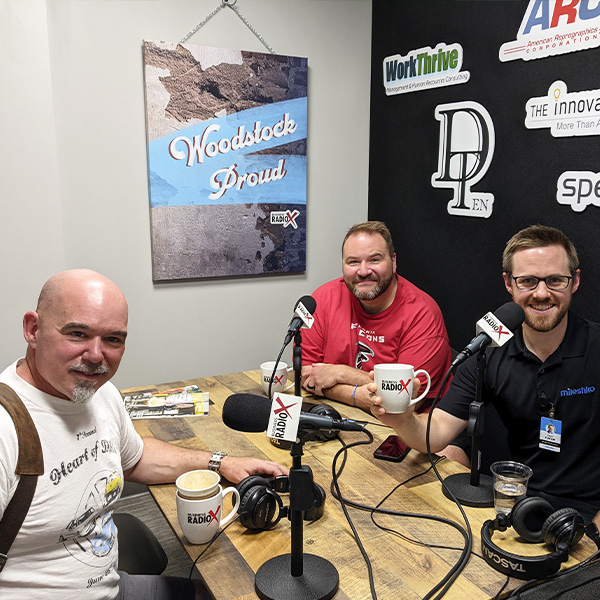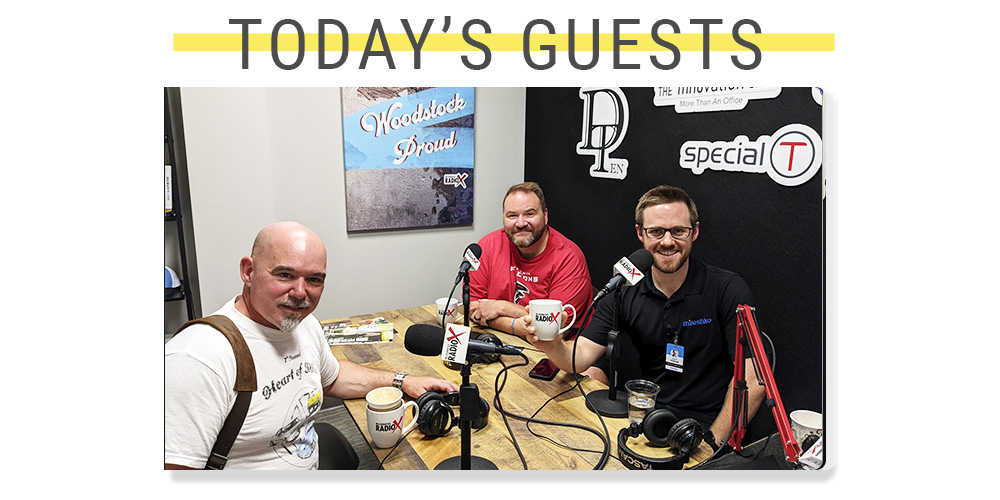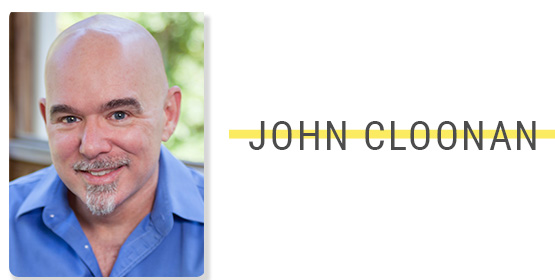

 John Cloonan is the founder of Audacity Marketing. John lives near Woodstock, Georgia with his partner Suzanne, his dog Seamus, and when she’s home from college, his daughter, Annie, who is currently riding a Ninja 500.
He’s been riding a motorcycle since the 1980s, and very quickly found that his preferences ran more to speed than anything else. He’s got decades of track days and racing under his belt, and recently some sport-touring.
After more than a decade off the racetrack, John realized something – he missed it something awful. So, for his 50th birthday, he decided his gift to himself was to go racing again. He bought a bike; he made a plan. COVID-19 delayed that plan. But the bike got built and a year of track days happened for practice, and 2022 was his first racing season… well, in a really long time.
On the business side, he holds an MBA in marketing, and has created growth strategies as a marketing executive and agency owner for everything from startups to multibillion dollar companies.
Connect with John on LinkedIn and Facebook.
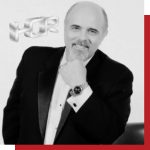 Bill Borden, a Broker with High Caliber Realty, is uniquely suited and exceptionally trained to negotiate the current tides of today’s real estate and business transactions market. He has conducted the business of real estate within all of the components of the transaction and has obtained a unique and cumulative perspective from each.
During Bill’s years in the real estate arena, his expertise spans from the very start of the negotiations as a Buyer’s Representative, Seller’s Agent or Business Broker to the management of a successful law firm for closing of the transaction, and everything in between such as Appraiser, Title Underwriter, Mortgage Underwriter, Loan Officer and was the Real Estate Wizard of the Wall Street Business Network.
Bill’s undergrad degrees are in real estate and his Doctorate of Jurisprudence has an emphasis on real estate. He holds the highest designation a Real Estate Auctioneer can hold, the CAI, a three-year course of study at Indiana University.
Bill has been in the real estate profession all of his life with the origins of his company found in his family’s real estate company established in 1939. Bill, originally from Kentucky, was the youngest licensed Broker in the Commonwealth at 19 years of age. He has sold commercial and residential real estate for over 40 years. His real estate sales and consulting practice currently has offices in Georgia, Alaska, and North Carolina, however his work encompasses all 50 states.
In the 80’s, Bill achieved Life Membership in the Realtors’ Million Dollar Club by having sold over six million dollars’ worth of real estate per month for several consecutive months. He still sits on the National Realtors’ Auction Committee Leadership Panel and is a member of the Atlanta Board of Commercial Realtors.
In 1989, Bill sold his real estate appraisal company, which at the time was the largest in Georgia; however, he still holds a Certified General Real Estate Appraisal License, the highest level of license in the appraisal profession. Bill holds Broker, Appraisal and Auctioneer licenses in several states. He is one of the few qualified to sit as a Georgia Department of Revenue Hearing Officer that rules on property tax disputes over one million dollars for Boards of Equalization across the state.
Bill has been honored and recognized by the Cobb County Chamber of Commerce as 2009 “Kennesaw’s Citizen of the Year.” Kennesaw Business Association also honored Bill as “Kennesaw’s Citizen of the Year.” He’s been honored with the Cobb County Police Department’s Chief’s Award in 2016. Bill was the 2010 President of the Vinings Business Association, 2006 and 2007 President of the West Cobb Business Association, a Director, Vice President and past President of the Iditarod Official Finishers’ Club, a Cobb County Chamber of Commerce’s Leadership Cobb Silver Anniversary Alumni and serves on the Board of the Cobb Chamber as the Northwest Area Council Chairman. He’s a Trustee for the Southern Museum of Civil War and Locomotive History (a Smithsonian Affiliate in Kennesaw, GA) and for the North Metro Technical College/Chattahoochee Technical College foundations.
Bill has been commissioned into The Honorable Order of Kentucky Colonels for life, twice, by two sitting Governors of the Commonwealth; he has been honored as an Honorary Commissioner of Agriculture by two different Commissioners; he is a past member of the F & T committee for the Cobb County School Board to oversee the SPLOST programs as well as a member and former Secretary of the citizens oversight committee for the Cobb County Board of Commissioners SPLOST program and as served on the Kennesaw Development Authority.
Bill is an aircraft pilot with a high-performance rating, a Master Certified SSI SCUBA Diver, Boy Scout Leader, proficient in two disciplines of martial arts, an expert marksman and has been a MENSA member for over 40 years.
Bill is a Rotary Paul Harris Fellow, and was named “Rotarian of the Year”, past member of both the Rotary Club of North Cobb and the Rotary Club of Vining Cumberland and is currently an member of the Susitna Rotary Club. He’s also a founding member of the Kiwanis Club of Greater Kennesaw and a Director for Georgia Kiwanis Division 15.
Bill is a professional athlete and an avid winter outdoorsman. He’s one of only 780 people in the entire world to have successfully completed the 1,151-mile Iditarod Sled Dog Race from Anchorage to Nome, Alaska. He completed his first Iditarod in 2002. Also, in his racing profile are top 20 finishes in Klondike 300, the Knik 200 and the Denali 300 races.
Connect with Bill on LinkedIn and Facebook.
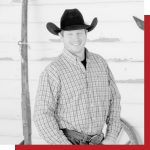 Tim Pharr was born in July of 78 in north Georgia. He lived in Chatsworth until his junior year of high school. His parents started rodeoing right after he was born. When Tim and his brother showed interest, his dad encouraged them to start training their own. Tim has ridden horses for the public since then.
Tim’s family soon outgrew their 12 acres and bought what’s now Lightning P Ranch. It was full of trees so they became loggers for a brief period. Tim left for college during some of the building stages.
Tim studied in Vernon, TX on a rodeo scholarship for two years and earned a two-year degree in farm & ranch management. At the conclusion of school, he and his brother began to rodeo professionally.
Tim has rodeoed in 40 different states and two Canadian provinces over the course of his 10 year experience. He met his current wife and they married in ‘07. Tim has retired from traveling and now works locally exclusively.
Connect with Tim on Facebook.
This transcript is machine transcribed by Sonix
TRANSCRIPT
Intro: [00:00:07] Broadcasting live from the business radio studios in Atlanta. It’s time for Charitable Georgia, brought to you by B’s Charitable Pursuits and Resources. We put the fun in fundraising. For more information, go to B’s Charitable Pursuits dot com. That’s B’s Charitable Pursuits dot com. Now here’s your host, Brian Prewitt.
Brian Pruett: [00:00:45] Good, fabulous. Friday morning. We’ve got three more fabulous folks in the studio today. And it’s too bad we weren’t on earlier because there were some wild stories going on and it’s too bad we don’t have like an eight hour show because some really cool stuff talked about. But as you know, this is Charitable Georgia. It’s positive. Things happen in the community. And I’ve got three, three guys here that’s going to share their stories on not only what they do in the community, but about chasing their dreams. And we’re going to start first off with John Cloonan from Audacity Marketing. So, John, thanks for being here this morning.
John Cloonan: [00:01:17] Thanks for having me. Brian.
Brian Pruett: [00:01:18] So you have you’ve shared before we started quite a bit of things you’ve done, but tell us a little bit about all the marketing and why you’re in the marketing world.
John Cloonan: [00:01:27] So I’m actually in the marketing world accidentally. I was hired in I was hired as a proposal writer back in like 1997, and I just continually grew into that role. And then through 25 years in corporate and a couple of agencies and then back in 2020, I decided that I was going to start another marketing agency. And this is kind of my last act, if you will. So.
Brian Pruett: [00:01:51] Well, you, you, you like helping others. So what does nasty marketing do? Can you share what you do?
John Cloonan: [00:01:57] I mean, at the at the core, we grow people’s businesses, we provide we’re a full service marketing agency providing both traditional and digital marketing across the spectrum to really all kinds of companies.
Brian Pruett: [00:02:10] Do you do like from social media as well as websites?
John Cloonan: [00:02:14] And we do social media, we do websites, we true traditional marketing. So like we’ll do direct mail, we’ll do EDM, we also do oh goodness, we’ll do social advertising, we’ll manage your social media. I mean, we truly are a full service agency. In fact, one product that we offer is is what I call a fractional marketing department, which means that your company, if you don’t have a marketing department, you just pay us a flat fee per month and we do your marketing.
Brian Pruett: [00:02:44] Awesome. So do you work with just people in Cherokee County or do you do all over metro Atlanta?
John Cloonan: [00:02:48] Oh no, we’re international. Actually. I have clients as we have clients in the UK, California, all over the country.
Brian Pruett: [00:02:55] So awesome. You said you got this accidentally. So share a little bit of your story, what you were doing before and we’ll get to why I asked you here anyway, because it’s all pretty cool. It leads up to what? What we’re talking about.
John Cloonan: [00:03:07] Oh, God. What was I doing before?
Brian Pruett: [00:03:10] What were you doing before? I guess that’s.
John Cloonan: [00:03:12] What I was going to say. You know, I think I said before, I have a resume that reads like the Tibetan Book of the Dead. Immediately before that job, I was actually doing hotel maintenance for a local Marriott for local Marriott. And but I have done you know, I’ve done theater, I’ve done automotive detailing, I’ve done inline skating. I mean, you name it, it’s probably on there. Like if I actually wrote out my resume, it’d probably be 25 pages long.
Brian Pruett: [00:03:39] Wow. So we’re talking about following your dreams. You are a professional motorcycle racer. You’ve you retired and then came back.
John Cloonan: [00:03:49] So I’m not a professional. Let’s I need to be 100% clear. This is an amateur sport at this level. I have done it at that higher level. But but now. But these days it’s club racing.
Brian Pruett: [00:04:00] So we’ll share share about share their story. Why did you decide you wanted to come back and do it? I mean, that’s obviously all three of these guys that I’m going to talk to. Stone have extreme sports, and if I did any of them, I either wind up in the hospital or dead. So just why have you decided? Especially because what you do on the motorcycles, you are the one that leans all the way down and feels like you’re about to slide out from underneath it.
John Cloonan: [00:04:20] So, yeah, well, if you’re not leaning on the bike, you’re not turning right. So I, I got into this back in the early nineties. I’ve always raced or ridden or done track days and I did it until I did it like I did it steadily through until about 2008. And then right around that time I had a really bad divorce, which left me kind of financially unable to do it because it’s not a cheap sport. And then right about the time I was recovered from that and was thinking that I was going to have the money to do that, I got cancer. So that kind of took me out for a little while. So flash forward to to 2020 and I had actually just started this company. I’m like, I want to go racing again. And it was I turned 50. And so this is like coming back to racing was my 50th birthday gift to myself.
Brian Pruett: [00:05:10] Wow, that’s cool. So you’re you’re also an overcomer, obviously, with the cancer as well and going through your personal stuff but. Take me through how you train, because there’s obviously you got to do some training and being able to handle that bike and especially on those terms, because literally when I watch those and I see how far down you are, it just feels like you’re on the ground.
John Cloonan: [00:05:29] Oh, yeah, you’re on the ground. I mean, you know, if you’re lean angles, it’s really funny because the way your balance works is you feel really weird until you hit 45 degrees. And then when you get below 45 degrees, you feel great. It’s a very, very strange sensation. But, you know, training is well, for the year prior to starting, I actually built a motorcycle and just spent a year just doing practice days, just doing what they call track days, just to get used to being back out there on the race track again. But I’m also in the gym four to 4 to 5 days a week. You know, I lift a lot. I mean, that’s almost out of habit as much as anything. I’m also trying to lose a few pounds because I’m racing a small bike, I’m racing a 300, and they say that £10 is one horsepower and I need every horsepower I can get.
Brian Pruett: [00:06:20] So share with somebody, obviously, again, you did this and even though it’s not pro, it’s the amateur. So you should try to come back and do it. And you’re still following your dreams. I saw something that says the old man following dreams.
John Cloonan: [00:06:33] Yeah. Yeah. Well, as you go on the I hope racing website, you’ll see an old man on a small bike following his dreams. And this is just. I can’t not do this anymore. It’s just one of those I the first race back. I came off the race track, we came across the finish line and I started giggling like a schoolgirl, and I couldn’t stop laughing all the way back to the paddock. I was just I hadn’t had that much fun. I didn’t remember how much fun it was, and I hadn’t had that much fun in years. And then I was just, you know, all of a sudden I’m hooked again, right? And so I wrote I raced a full season last year, had some good success. And here we are again.
Brian Pruett: [00:07:16] So what is a full season?
John Cloonan: [00:07:18] Full season is well, last year is February to November. We first race was the last weekend in February. Last race was the weekend before Thanksgiving. This year we end a little earlier. We end in October.
Brian Pruett: [00:07:29] But and as of just the.
John Cloonan: [00:07:30] Southeast, yeah I’m racing. I’m actually racing to regions, I’m racing Southeast region and then I’m actually racing this year. I’m going to actually try to win the Atlantic Coastal Championship as well, which is only one additional race.
Brian Pruett: [00:07:45] So are there opportunities for people who want to get involved? Look, there’s all kinds of levels of sports marketing, so I’m assuming people can help sponsor you and be a part of that.
John Cloonan: [00:07:53] Oh, absolutely. You know, we have you know, I’ve been soliciting sponsors. Well, I mean, I did last year. Cherokee Business Radio X is a sponsor. Thank you much very much down and you know and because of what I do for a living I offer a very different sponsorship experience. You get social media value. You get you get visibility. You know, so rather than just a sticker on the side of the motorcycle, you know, there’s social mentions, there’s t shirt ads, there’s all kinds of stuff. So it’s a different it’s a different experience and it’s not as expensive as people think.
Brian Pruett: [00:08:28] Yeah, that’s what I think. When people hear sports marketing, they’re like, Well, I can’t be on a NASCAR. I can’t afford to be on the Braves stadium. But there’s all kinds of levels that you can be a part of. We talked at you where you mentioned that you like helping people obviously with your marketing, but you you’re in the process of looking at starting a nonprofit as well. Can you share about that?
John Cloonan: [00:08:44] Yeah. So when I started Audacity, Audacity has a focus on being diverse, like our internally diverse. And then. When we as we started to have some success and the company grew, I realized that a lot. There are a lot of diversity owned businesses or people who are underserved typically who just don’t have the opportunity or the connections that I do. As an old white guy, basically. So we’re creating an incubator to serve the underserved. So ethnically diverse women, people who have been out of prison attics. And actually, if you think you are in an underserved population, we encourage you to apply because we just take it on a case by case basis.
Brian Pruett: [00:09:32] How can people find them on that and apply for that?
John Cloonan: [00:09:35] Well, as soon as it launches, because we are in the midst of finishing up the paperwork for the 501. C three and building the website, we’re anticipating like an end of year launch. But as soon as that you’ll just go to break out by audacity dot com and you will be there.
Brian Pruett: [00:09:51] All right. Well can you share a little bit of if somebody is listening to you and they’ll hear these other stories, but if somebody is listening to you and they feel like they want to pursue their dream because they either had the dream and stopped doing it, whatever, but just tell somebody or give somebody advice about it’s not obviously it’s never too late to pursue a dream, but just if they want to pursue a dream.
John Cloonan: [00:10:12] Oh, yeah. You know, I think the really and I hate to be obvious, but the short version is go do it. You know, figure out what it’s going to take to do it and go do it. And, you know, like for me, one of the big things was just this. This is not a cheap sport. You know, you have to have a motorcycle. And the motorcycle actually at some level is the cheap thing, you know, And but, you know, so I figured out, you know, I sat down, I made a plan. I’m like, okay, how can I finance this sponsorship? Great. So we built the sponsorship program. What what do I need to do to be ready so that I don’t harm myself? I need to practice. So I’m going to sign up for track days for a year to practice, and then I’m going to get back in the gym with a specific program around motorcycling. But the real thing is just figure out what you need to do to make the next step and make that step, you know, and it just take it one step at a time until you’re there, you know, and then the next thing you know, two years later, you know, I’m going after two regional championships.
Brian Pruett: [00:11:11] So if somebody wanted to come watch you races or somewhere in metro Atlanta, they can see you.
John Cloonan: [00:11:16] Yeah, sure. We’re racing it wrote Atlanta twice this year, once in June and I think once in August. If you go to we’re a dot com and look at the schedule it’ll show you all the places we race. Also, if you’re here on the west side of of the state, there’s a small track in Oxford, Alabama, Talladega which is a great place to go watch racing. It’s because you can pretty much see the whole track from the grandstands. But any place, like any anywhere on the zero schedule, because we race in Georgia three times while we race in Georgia at three two tracks at Roebling Road Raceway down near Savannah as well. But any of those places and watching. Racing as a spectator at the club level is way better than at the pro level because you have full access to the paddock, right? You walk in like if you see a racer come across the finish line, you want to know what they did, go talk to them. And almost all and all of us are pretty much like you walk into my paddock and go, Hey, that was cool. How did that happen? We’ll talk to you all day.
Brian Pruett: [00:12:16] So if somebody doesn’t know the difference and you just shared a little bit of the difference, but what’s the difference between professional and club money?
John Cloonan: [00:12:26] No, I mean, so professional racing in the United States is all sanctioned by Motoamerica. And those guys are paid athletes and they are paid to be there. They have different seasons. They have different you know, there’s not really a regional championship. They have a lot of different club racing is, you know, most of us are paying our own way. We’re not getting paid to do this. We’re doing it because we love it. And I kind of like it better from a spectator perspective. Just because you really do get that, you get to talk to the athletes you get to and there’s some really talented people there and there are some guys who race at the club level who do both right. You’ll you’ll find some of the like if you want to meet some of the pro racers come to a club race they’re there too so awesome.
Brian Pruett: [00:13:17] Well if somebody wants to get a hold of you to talk about sponsorship or if they want to talk to you about your services of audacity, what’s the best way to might get hold of you?
John Cloonan: [00:13:25] Sure. Easiest thing for sponsorship. Go to five op racing I hope. And no, I won’t tell you what it means. It’s not obscene. Just be aware of that. Go to five op racing and click Support the dream and you can and you can directly. You can either directly donate right there or you can just reach out to me through the contact form if you’re interested in marketing services. John at Audacity Dot Marketing.
Brian Pruett: [00:13:50] Awesome. Well, John, thanks for being here this morning again and sharing your story a little bit. And, and do you mind sticking around? Listen to these next two stories.
John Cloonan: [00:13:55] Oh, no, I won’t to this is going to be great.
Brian Pruett: [00:13:57] So we are moving over to Mr. Bill Borden. Bill is probably the non official governor for Georgia. Everybody knows Bill.
Bill Borden: [00:14:06] Great to be here. Thank you.
Brian Pruett: [00:14:09] So Bill owns High Caliber Realty and he’s like, John, done some things probably. Again, what has he done? But first of all, share about Hi Gabba Realty and then we’ll get into the other stuff.
Bill Borden: [00:14:21] Okay. Well, High Caliber Realty actually started in 1939, and in 1939 it was known as Bowling Green Realty Company up in Bowling Green, Kentucky. My mom purchased it in 1962, and then after my father passed away, I purchased it from her in 1980, after I was already living in Georgia and was working with Johnny Isaacson and Ed Nutting and North Side Commercial Division. And I was a young kid having a blast selling commercial real estate and joy in life. And over the years we’ve ended up getting the high caliber trademark in the brokerage industry for the entire nation. We have offices and work in seven states with the main two offices and one in Anchorage, Alaska, which will become evident why it’s there. And the other one, of course, in Atlanta, here in Kennesaw, Georgia. So we we have take a little bit different approach. It all stems from after my dad passed away and I was actually the youngest broker in the commonwealth in Kentucky. I walked back into the office and there was a bunch of old people in there for a couple of weeks after the funeral. And they they were probably a lot younger than I am right now. But they said, how do we keep it going? What do we need to do? And we started working as a team, as a as a family with the whole company. So the whole company’s watching out for all the clients. And that is developed into not just commercial, not just residential, but to actually take businesses and people and help them with their financial needs so that we’re working on portfolios of of real estate and working very closely with financial advisors and working on having portfolios performing somewhere between ten and 25% per year on for profits for their housing and commercial needs.
Brian Pruett: [00:16:19] Well, you just mentioned helping businesses as well. And I know you you have a passion for that as well, because I believe there’s 13 business associations in Cobb County. And at one point you probably in president of all of them.
Bill Borden: [00:16:29] A president or director of all of them. Yeah. As well as the Cobb Cobb Chamber. I was a regional chairman for for them for a year as well.
Brian Pruett: [00:16:37] So share a little bit about if people don’t know what a business association is or does can you share a little bit about those.
Bill Borden: [00:16:43] Sure. Business association is is a great tool for getting into the community and learning more about what other people do. I always refer to it. The old adage of net weaving, a chamber of commerce, large corporations, they’re promoting large geographical regions, Cobb County. They’re promoting large geographical regions for large companies, trying to get people to move in. And they have their place and they have their purpose. Cherokee Chamber, Cobb Chamber, Bartow Chamber. They have their purposes, but the smaller business associations are much better for medium, small to medium sized businesses that are actually looking for other businesses and and B to B and B to C consumers. What we do with those business associations, when you go to those, you shouldn’t be looking for business. When you walk into one of those business associations as a small business, you should be looking to hear what everybody else does. You need to be the go to person. You need to know, have in your pocket who the plumber is, who the electrician is, who the marketing agency is. You need to know who the who the radio show producers like Stone. You need to know who somebody calls and says, Bill, do you know of a? And over the years you’ll become the go to person. You’ll become the person that when somebody needs a criminal defense attorney or when somebody. No, you don’t need a criminal defense attorney. You need a divorce attorney. You know those type of things. And you will learn what all those other businesses do. And by in that return, you will get business because people will remember that in my case, I sell real estate.
Brian Pruett: [00:18:26] It’s also important to understand what you just talk about. You don’t going to want to sell anything off. I mean, it’s it’s the relationship building.
Bill Borden: [00:18:33] Exactly. Yeah. You know, I was at a business association last week and covering for one of our guys, and I was one of five real estate agents. I was the only broker in the room, and I watched every one of those people say, if you want to buy or sell a house. Well, the thing is, if a real estate agent buys or sells a house, they are unemployed right after that closing. In my case, we work with families time and time again. I’ve been doing it for four years. I’ve been doing it long enough now that I’m actually selling grandkids their houses, that I sold their grandparents houses for them. And you develop that relationship. You’re never unemployed. You enjoy what you’re doing. I’ve been trying to get out of the real estate business for 44 years. You know, it’s I was raised in it on a farm. You know, Mom had it. Dad. Dad was in it before he passed away. And I’ve been trying to get out of it. Of course, you know, I wake up on my 18th birthday and dad says, you’re going to get your real estate license on my 19th birthday after being out rather late the night before, he says, get up. You’re going to go take your brokers test. And, you know, hindsight, 2020, he made a very good choice. But, you know, I still maintain all my licensing. I’ve tried to get out of it. I moved over into appraisal. I’m still a certified general appraiser. I moved over into the mortgage company. We had the 20th largest mortgage company in the state back in 2003 for. It had the law office where we were doing the real estate closings, never know how know how to what the surveyors do, but never licensed for that. So basically, God, me trying to get out of it. God’s been showing me all the different aspects of it, so I know what’s going to go wrong before it goes wrong. And we can make our transactions very smooth in high caliber.
Brian Pruett: [00:20:20] So somebody might be listening and wondering what’s the difference between an appraiser and an inspector?
Bill Borden: [00:20:26] Well, an inspector is not actually licensed in the state of Georgia. They have a business license. They have liability insurance. But interestingly enough, an inspector in the state of Georgia that’s inspecting it, they are only liable for what they charged you if they miss something. So the house could fall down the next day and they could write you a check back for their three or $400. An appraiser, on the other hand, is somebody that is coming up with value. Three approaches to value income, Market and cost approach. And those appraisers are looking at the value, but they’re actually. Doing that for a bank or a mortgage company that is trying to come up with a value basically to second guess the buyer and the seller. And appraisers use. Historic data, meaning stuff that’s sold already. Historic meaning old. To extrapolate, I’m glasshouses here I’m throwing stones to extrapolate. If you look that up in Webster, it’s a scientific guess to form an opinion. And we know everybody’s got one of those just like so they form an opinion based on his old data with some wild guess and they tell the bank, Yeah, we think this is what it’s worth. While in fact the true definition of market values are ready, willing and able Seller was willing to take in already willing and able buyer is willing to buy without undue influence. To me, that’s the value. So if you’ve got a buyer or seller willing to do it, then it’s up to the appraiser to prove that value. Taking it one step further, I do a lot of charity auctions. I was an auctioneer, livestock auctioneer and real estate auctioneer for many years. Still maintain that licensing. And to me that’s the ultimate, you know, put a whole bunch of people in one room and let them bid. And that’s going to give your true market value. So that’s the difference between an appraiser and an inspector. Two different jobs, neither of which hold much water with me.
Brian Pruett: [00:22:28] Well, you beat me because I was going to bring up your auctioneer stuff, so thanks for talking about it already. You also have a story of following your dreams. Now, you’ve talked about before that you were also a motorcycle racer at one point.
Bill Borden: [00:22:40] I was.
Brian Pruett: [00:22:40] You’ve been in the rodeo business for a while, but then the the really cool thing that I found out about you and was when I was working for a little sports marketing company, that you not only raced but finished the Iditarod.
Bill Borden: [00:22:53] That is correct.
Brian Pruett: [00:22:53] So if somebody doesn’t know what that is, sure what that is.
Bill Borden: [00:22:58] Well, the Iditarod is actually based. If they’ve probably heard Balto, the dog, Balto and Balto, in statue in Central Park, the 1925 serum run to. To Nome, Alaska, to take care of all the kids. So it was all based in children at the time to take medicine to them. Back then, they used several relay dog teams. I believe it was 17 relay dog teams to run from Tanana to Nome because the ships couldn’t get to the port and the two airplanes they had in Alaska back in 1925 were not flying at that time. So back in 1968, the state of Alaska Seward’s Follies 100th anniversary, they decided that they would have a dog race to support it. It actually became what it is today in 1973. The ceremonial distance is 1000 miles. It runs from Anchorage to Nome. The since it’s over 1000 miles, they call it 1049. For the 49 state each year, the actual race distance changes a little, depending on how the rivers freeze and how the depth of the snow and stuff. The particular race I ran was 151 miles. One of the longer versions of it, there was one that was 161. Of course, back then they didn’t have jeeps and they didn’t know how long it was Back when I ran it. You weren’t allowed to use Jeeps. You weren’t allowed to use compasses. You started in Anchorage. You could use a compass. I take that back. But the compass really didn’t do any good.
Bill Borden: [00:24:33] Because when you start in Anchorage and you go to Nome, the pilots out there, you realize that the standard magnetic north deviation is 17% between Anchorage and Nome. So you really got to know where you’re at to be able to determine where you’re at on a compass. So it goes right back to it is the ultimate pit of man versus nature. And you’re using dog power, which is pound for pound, the strongest pulling animal on earth. Each dog’s capable of pulling 5 to £4500 apiece. They’re pushing that harness you hook in my day 16 to a steel cable tied to a £20 sled and you’re the brakes. Only a suggestion at that point when we when I actually ran it, it I became the 540th person in the world to finish it. There’s now about 820 of us. Of course, some of those have passed away in the course of the 30 plus, 40 plus years, 50 plus years. It’s done it. The the actual race itself to me is 90% mental. Interesting story. How I got into it was phenomenal in that it had to do with real estate. And my wife and I was traveling. My wife and I have been together over 30 years, married 30 years this year, and all these wild hares. She’s like, okay, honey. And she’s very, very supportive with it. So, you know, Brenda is my treasure there. But as far as when we were traveling, we were sitting in the law office many years ago, I think it was 97.
Bill Borden: [00:26:15] And she walked in and back then a radio show that Clark Howard had called Friday flier before Internet bookings. Hey, there’s a trip to Alaska for $197. I want to go. Sure. Let’s go. We’re driving down the road there on the city limits signs home of the Iditarod. I got to see one of these dogs. Got to see one. You know, to me, Wide world of sports and the Iditarod, that growing up watching these dogs, it was phenomenal. I went out to the headquarters. Wasn’t the dog to be found. Lady told us there’s other ladies doing a tour. So we’re doing a tour. And the lady had finished the Iditarod seven times. And lo and behold, she said, What are you doing, Atlanta? I said, Well, we’ve got a real estate sales company. We’ve got a mortgage company and several different things. Mortgage company. I’m a single entrepreneurial 38 year old female, and I’ve built this kennel on my credit cards. And none of these banks will give me a loan. Well, back then, it was easy to get her a loan. So I got her a loan again, unknowing that the seven banks in Alaska had complete control of it, and there were no mortgage lenders in Alaska at the time. So we ended up getting her a loan and making the front page of the paper and becoming the first mortgage lender to do a loan in Alaska. I went back for the next year’s race and.
Bill Borden: [00:27:36] Sit down next to these two old guys at the banquet. My wife says you need to meet these guys. So I go over and I meet them. I don’t know who they were. How are you doing? You know? He’s really neat race you guys have got here. I’d love to bring my Boy Scout troop up to see it. One of the old guys says, Well, why don’t you just run it? They can be your dog handlers. Well, I was 38 years old at the time. I had finished law school. You know, we had all the different practices, We had the appraisal, we had the real estate sales and the mortgages. And I’m like, no, I can’t do that. I don’t have time to do that. And one thing led to another, and they one of them said, Well, I finished it when I was 72, and the other one goes, Well, yeah, I ran it the last time when I was 62. I’m thinking, God, if these two old guys can do this, I can do it. So I started telling everybody I was going to do It was like God was saying, You need to go run this race. It has something to do with the kids. Go run the race. So I. Three years of my life, basically quit work, devoted everything I could do to running the race. Spending all my money and everything to get into this race.
Bill Borden: [00:28:48] Found out later during training that these two guys were actually one of them was Colonel Norman Vaughn, Admiral Byrd’s dog handler in the Antarctica expedition. Wow. And has a mountain named after him in Antarctica. So of course, he could run it when he was 72. And then the other one was Joe Redington, senior, the founder of the modern day Iditarod, who had taken a dog team to the top of Mount McKinley. Denali. I’m like, okay, so I’ve stuck my foot in it there. But the interesting thing was when I got to Nome after 14 days on the trail and finished the race. The mayor of Nome walked up to me and said, Congratulations, you’re the 540th person to finish. And I’m thinking, wait a minute. You know, I’ve been on the trail for two weeks and yeah, I’m sleep deprived. But there wasn’t that many people in the race. So what are you talking about? Leo Rasmussen was his name. He goes, You’re the 540th person ever to finish the race. Well, no wonder it was so hard. You know, I’m thinking, wow, Because during that time I had broke. I had crashed three sleds, cracked a kneecap, broke a rib, lost £38, messed up my back, both my elbows and my thumbs. But I finished it, you know, And a lot of times in marketing, in marketing, I think it takes that type of tenacity. And I have proven my tenacity to help somebody get through their real estate transactions, large real estate transactions to small real estate transactions, because you’re dealing with a lot of pitfalls and a lot of trees in the way which I hit.
Bill Borden: [00:30:26] So it’s you know, it’s it’s an interesting sport. Everybody thinks you’re riding the back of the sled. But no, you’re running up the hills, hanging on for dear life down the hills. And when you’re on the river, you’re actually pedaling or pushing or using ski poles to assist the dogs. And you’re running 12 out of 24 hours. And the other 12 hours, six and six that you’re taking off, you’re cooking, cleaning, booting and booting, taking care of your puppies. And you know, later on those puppies, they all retired with me, of course. Fisher King for those that haven’t don’t know, we were able to do a great project with the city of Kennesaw and the busiest city park in. Alaska, which or I’m sorry, in Georgia, which is Swift Central Park over in Kennesaw, there’s a mile and a half trail there named after Fisher King, my lead dog. And there are seven National Park Service style signs in there that are really character. Edwards But to me, they’re words like perseverance and character and guidance. Those are the things that middle schoolers, high schoolers really need to key on. You know, one of the signs talks about my dogs that are not purebred dogs. They’re Alaskan huskies, Brian. And these Alaskan huskies are nothing more than mixed breed mutts. We don’t care what they look like on the outside.
Bill Borden: [00:31:57] We care more about their heart and soul and how they care about their teammates and how they care about me and what they do. And to me, that’s a lot. The way kids in school should be picking their friends, not what they wear, but how they treat them and what they do. So that’s one of the things that that we bring forward. So if you haven’t had a chance, definitely go to Swift Central Park, walk the mile and a half trail, read the signs. It’s a it’s a great sign. A lot of the school teachers using for extra curricular make up work. A lot of the home schoolers are using it for lesson plans. I know you were going to ask me about the nonprofit, but I’m just going to jump into that. You know, Cool dreams are 500 1c3. We started that back in 2002, and now we’re probably close to a million school kids that we’ve talked to about all these schools. At one point in time, I think there’s I heard there were over 4000 schools nationwide using the teaching curriculum. Well, they use the teaching curriculum to teach math. Simple, whether it be elementary school, middle school, high school, how many booties that take the booty, a dog, how many booties? You take the booty. A dog with 16 dogs. How many booties does it take? The booty is 16 dog team for a 1000 mile race, changing booties ever 80 miles.
Tim Pharr: [00:33:13] Yeah.
Bill Borden: [00:33:14] Math equivalent, for instance. But then we would go in and talk to the children and talk to the schools about through proper planning, perseverance and faith in God’s anything, anything’s possible if you ever get a chance to come here. One of my hour long speeches, it’ll tell you how God played a huge, huge part in my run and my finishing. And that’s what we take to those children. And I have teachers come up all the time, say, I can’t talk about that in school. We’re so glad you did. I remember talking to a North Carolina school a few years ago, and it was it was an elementary and middle school campus. And a lot of times when I would go in and talk to the whole campus, we’d do one in the morning and one in the afternoon. Well, if we’re doing a morning class, we do orange juice and donuts with some of them just so they can ask questions, you know, the A students or whatever. And afternoon we do pizza and coke so they select group can ask questions. Well, the interesting thing in that one was they didn’t use grades to do it.
Bill Borden: [00:34:17] They actually had a drawing. And just for lack of whatever his name was, Little Johnny. Little Johnny was constantly in the principal’s office and had C’s and D’s and flunking and. The teacher and the principal told me, says ever since we drew his name, knowing he would lose the ability to sit down and have donuts and orange juice with you. He’s been on his best behavior. So I let him hold one of the dogs when we did give the speech and everything was going along great. A couple of years ago, I set down at the High Ozone Music Park, and right in front of me was that principal. She turned around and saw me and I knew I was doing something then because when she turned around and saw me, she said hi. And so pleasantries exchanged and she said, You remember that young man, Little Johnny? Yeah. He says, Well, he’s in high school now. He’s A and B student. We never had a bit more trouble out of him. You change that kid’s life. And to me, if I just did that, one person that made my day awesome.
Brian Pruett: [00:35:25] Well, you talked a lot there. Some of the questions I was going to ask, but I’m going to ask him anyway.
Bill Borden: [00:35:29] Okay. So you might get a different answer.
Brian Pruett: [00:35:32] Well, I hope so. I hope so. Take us a little bit through the training for the Iditarod.
Bill Borden: [00:35:37] Training for the Iditarod is is very interesting because you’re training the dogs. And in doing so, you’re also training yourself. You know, typical training year starts out of course, I trained for three years for it because I had to run qualifiers by the time I stepped my feet on the sled at the start of the Iditarod, I kept everything on a spreadsheet. So I knew which dog ran with who, how long they had run. But I had been on the back of a sled behind a dog team for over 10,000 miles, actually running dogs. And so you’ll start and it’s changed over the years. But typically back then, we would start in we give the dogs the summer off and now they send them to the glaciers to try to get some running in. But we would actually start in September with weight training. And you have to realize how strong these dogs are. You’d hook up 4 to 6 dogs and run starting out a mile or two apiece and working your way up to ten miles over the course of the next couple of months. Not on a sled, but actually tied to a harness to a four wheeler.
Bill Borden: [00:36:46] And a big four wheeler. And if when you got off that four wheeler, you had to not only set both the brakes, but you had to make sure the handlebar was actually tied in a straight position because they would drag it if they didn’t if you didn’t pay attention to them. The four wheeler itself, though, typically we found old four wheelers because we would train them depending on uphill, downhill and stuff if they’re going downhill or level toward the end of the training, it is in gear with the motor off. So they’re dragging it in gear with the motor off because they’re very, very powerful. At one point in time, I got my truck and £10,000 trailers stuck off the side of the road, had my team and my son’s team. My son ran. The junior did a ride that year for 14 to 17 year olds and we had about 40 dogs with us. So we just hooked up the dogs, put the gang lines together and put the dogs out in front of the truck, put it in neutral. Didn’t even have to give it any gas. Just. All right, let’s go, guys. And they pull the truck and trailer right out of the ditch. Not a problem. So the power is there. So when we’re training, we’re training and weight.
Bill Borden: [00:38:00] Well, by the time the snow is on and there’s enough snow to switch from sleds, it’s time to go to cardiovascular. So then we hook up ten, 12, 14 dogs, depending on what you can run that day. And we start running the dogs. Through the start of the qualifying races and through the start of the training races. But we start running those dogs ten, 12, 15 miles. And by the time we start running the big races, we’re up to 100, 110 mile runs a day. These hundred, 110 mile runs a day, you know, that’s going to take on an average of 10 to 12 miles an hour is going to take all day. A lot of times you run out camp, run back running that team two times a day. Thank God I had my son because he he was my kennel handler for me. So we would hook up. A lot of times the 24 dogs I was training and we would tag sled, meaning he would be behind me on another sled and we would be we’d fill the sleds with dog food and concrete blocks and weight them down. And then we would take all 24 dogs on a run. And that was like a freight train. And that’s just a suggestion we stop.
Bill Borden: [00:39:13] So it it’s all verbal commands. There’s you see the movies and stuff, there’s no whips, there’s no reins or anything like that. Everything is G and haul like the old mules in Western days, a lot like one of my trainers from Spain and one of my trainers both finished the Iditarod from California, also both horse people. I was raised with horses. Dogs are a lot like horses, believe it or not. Only they’re a little bit smarter, so they’re all voice commands with it. And we’re able to control them, get them to stop, get them to slow down all. They are mischievous. Had one dog. Every time we started to make a turn, she just look over her shoulder at me and kind of I could just hear telling the rest of the dogs, Here’s a turn. Let’s see if we can throw him off and take off. Speed up, whip them off at the end, because that sleds moving around that turn and there’s no steering wheels on that thing. So it’s not skiing, but the training, once you get to that, when you get to the actual start of the big race, you’ve already run three or four, three, 400 mile races and then you’ve already done all your training runs as well.
Brian Pruett: [00:40:23] Is there anybody else? I think when you and I first met, you were the only guy from Georgia to not only compete but finish. Is there anybody else from Georgia to do that?
Bill Borden: [00:40:30] There is. There is another young man. His dad lives in Alaska, so he was working as a handler. Interestingly enough, Shawn of Shawn has attempted the race twice. He finished once. Sadly, the the race was the COVID route. So he didn’t get to go to Nome, which I keep telling him, Shawn, you need to go do it again and go to Nome. But he got he had to go out, turn around and come back. So it was the 800 mile loop for the COVID, and I’m encouraging Shawn to do it again. I have a lot of fun out of Shawn because I love his mom to death. She ran up and we were there to watch him finish the race and everything, but his mom lives over and Tucker, great people and Shawn lot younger than I was when I finished the race. And he I love to tell Shawn that I said, Shawn, you know, there’s a reason they put my name on the city limit signs and said, First finisher from Georgia is your second. But that’s okay, Shawn, Keep trying.
Brian Pruett: [00:41:36] You talked about your nonprofit is called Cool Dreams, correct?
Bill Borden: [00:41:39] Correct. Cool dreams.
Brian Pruett: [00:41:40] Is there a way for people to help support that and how so how?
Bill Borden: [00:41:43] There is interestingly enough and I have a lot have some fun out of Ike Ryker at most ministries with it. You know, the you have to look at nonprofits and you have to say with these nonprofits, you know how much money actually goes to help the people. And, you know, you can look at GuideStar and a lot of the nonprofit registrations, and you’ll see that a really good number going to them is 75, 80%, where you get some of the ones, the larger ones like United Way, they’re way down there because of all the administration expense. Cool Dreams actually has always been 100% all the administration, all the all the things it cost to run cool dreams is actually I pay that. I’ve been blessed. I have a good real estate company. High caliber takes care of me. Everything’s good. So it’s 100% of every donated penny goes back to cool dreams to help us get into the schools, to help us get to the schools, to help us give the speeches, to help us with the teaching curriculum, to help us tell these children that through proper planning, perseverance and faith, anything is possible. And if you want to see an example of that, definitely go up to Swift Cantrell Park, right behind Kennesaw Elementary there in the 40 acre park and walk the trail and read the signs.
Brian Pruett: [00:43:10] What the dogs that you’ve raced with. And race you. What do you do with them when they’re retired?
Bill Borden: [00:43:17] Well, interestingly enough, I’m going to I’m going to go back many, many years. I’m going to go back to 1925 when Balta and Togo finished the race. And there they were, livestock back then. And Leonard Seppala ended up selling. The dogs to a production company in. Santa monica. A lot of those dogs ended up on the Santa monica Pier and it was very hot. And some of them died. Until the children of Cincinnati got together and did a pennies for Balto fundraiser back in the late twenties. And Balto and his teammates lived out their life in the Cincinnati Zoo. A lot of us take a lot of the mushers take the the fact that. Our dogs are not just livestock. There are babies. There are puppies. Now, these dogs are taken care of and they old dogs train new dogs. They train them how to run, who to run next to. They train leaders. My dogs, actually, as they retired, all came home with me. Fisher King. When he finished the race with me, he had already run the race six times. Once with Colonel Vaughn. When Colonel did his last run, Fisher King was 11 years old when he ran the race, and he was once known as a smart leader.
Bill Borden: [00:44:41] He could follow my commands. He knew the way he could follow sense. He could follow markers. He was very smart dog. He was 11 years old. He was my ace in the hole. I would have carried him if I had to to finish the race. But at 11 years old, he finished an 1151 mile race in lead, all but about ten miles when he was misbehaving and he had to run in the pack. But he learned. So we had a little bit of a talk there. But FISHER And look out and Tonto and all of them came to live with me in Kennesaw. At one point in time, I was over my limit in Kennesaw, so a couple of the dogs were made official citizens of Kennesaw, so they didn’t qualify as animals thanks to the the city commission or city council at the time. And these dogs would go with me to the speeches. And I always found it interesting when especially when I took Fisher, because if I was giving a speech maybe at a senior home and I was talking to them about it, and I would very simply say, okay, let’s see a show of hands, because we all know seven years in a dog’s life, that type of thing.
Bill Borden: [00:45:46] Let me see a show of hands. Everybody in here, that’s 77 years of age or younger. And I’d get a few of them hold up. And I said, Well, let’s meet Fisher King At 77 years in human ages, he ran 151 miles. Or you guys ready to do that? And that always got a big laugh with it because Fisher was a sweetheart. But they are my babies, and that is why I will probably never own another dog, because those 16 dogs that I started that race with all retired with me, they all they, they kept running with my friends and folks in Alaska that that I knew and some did recreational but when they retired they came with me and they slowly passed away. Over the years, Tonto was the last to go. They are very well taken care of. They were not couch potatoes. A lot of dogs only lived to be ten, 11, 12 years old. These dogs live all my dogs except for Look Lookout who had cancer. All of my dogs lived to be 17, 18, 19 years old. Large dogs and even look out. Lived to be 11. So it’s they’re my babies.
Brian Pruett: [00:46:53] So if anybody’s listening to you. Well, first of all, may I ask this question of the of the three that you shared from the motorcycle to the rodeo and the Iditarod, which one was your favorite.
Bill Borden: [00:47:03] Have to be? The Iditarod. Have to be the Iditarod. You know, the the Iditarod kind of combined them all. Team roping, working with the horses. Yeah, that took skill. Motorcycling definitely takes skill. But as my guest here with me will tell you, you break bones with that. Of course, you break bones in the Iditarod, too. But to actually take a dog team, God’s power kind of like sailing instead of a speedboat, to take God’s power. And all you can hear is that little bit there of there running. And to go out to go where most people have never gone before, to see the backside of Denali, to be out under the northern lights and to pit man and animal against nature and and traverse the wilds of Alaska at 60 below to me was the ultimate life experience. And people always say, what was the hardest? I’m like, you know, it’s 90% mental for 500 miles in a race. You’re going, Oh my God, what am I doing? I’m dying. I’m killing myself. And literally by the end of the race, because most people don’t even finish on their first attempt like I did, I finished on my first attempt. But when I got when I saw the last 40 miles of the race is actually on a snow covered probably 12 to 14 feet deep road. I got outside of safety the last checkpoint and I’m on my way in to Nome. And I see a road sign sticking up out of the snow that says Nome 20 miles. I stopped the team. I didn’t want it to be over. I know it was a race, but I stopped the team. I bet the ten we we sat there and I talked to my dogs and I laid down with them and I snuggled them and, you know, and I just I’m like this. This was awesome, guys, let’s go finish it.
Brian Pruett: [00:48:58] So that’s cool. Pun intended. If somebody is listening to you, what advice would you give them about following their dreams?
Bill Borden: [00:49:07] Definitely. You know, you have one life and it’s a blank page and God’s given you a lot of color and crowns color it the way you want to color it. So many people, especially in my professional career, I see they work for 20, 30, 40 years and they retire. And it’s where the 30 year mortgage came from. The Detroit, Michigan. All the kids saved money to live for 2829, got a mortgage, paid it off, retired three years later at 62, 63, sit on the front porch, watch the whistle blower and look at their gold watch. We’re not like that anymore, and we shouldn’t be like that. You know, there’s a reason that our ancestors followed their dreams and explored the country and did what they were supposed to do. You know, I’m up to 106 countries now that I’ve been to. I go and I learn about other cultures. I see other things. And if you’re doing nothing but going to work and saving for retirement, some news for you. Retirement may not come. You may kick the bucket before you get there. You better live life now. Spend all that money. You know, interestingly enough, one of the things I said earlier on with helping people build their portfolios and real estate, I got a call from my wife who was just blessed and she was so taken care of everything while I was training for the race. And race is the first Saturday in March. Every year, about February. I get this call, honey. Guys aren’t doing anything at the office, and we’re out of money. Well, I’ve got a race to run. Cash out my retirement. I’m 42 years old. Cash it out. Are you sure? Yep. Cash it out.
Bill Borden: [00:50:42] Finished the race, went back. We were out of liquid cash. But I had bought houses, rental houses, businesses and offices. We get back, they had done one and that was at the mortgage company. They had done one loan since from January to April. We get back in town. Fired them all. He hired a lady that I’d worked with years earlier in the appraisal First Atlantic private banking. Found another guy. That’s great guy, Clint. Now, you know, he’s. He’s a preacher now, but he also does mortgages still. Julie Clinton, I. Took that mortgage company from April that had done one loan to December. And we were the 20th largest in the state, according to the Atlanta Business Chronicle. So, see, I did what God wanted me to do and he took care of my business and we did what we were supposed to do. And I very simply, when I got back, told Julie, I said, refinance those two rental houses. Pulled a bunch of cash out tax free because it was a loan. Put it back in the bank. We’re cash flush again. You know, interestingly enough, I never missed refinancing because the tenants in the house paid them down again and the houses kept appreciating. So work to live. Don’t live to work. And so many people do that. Follow your dreams. Have a dream if you want to paint. If you want to be an artist, if you want to travel, if whatever you want to do, go do it. People say, When did you retire, Bill? I retired when I was 28 because I realized it and I started doing what I wanted to do when I wanted to do it. It’s that simple.
Brian Pruett: [00:52:25] So if somebody wants to get a hold of you either for cool dreams, you also go do speaking for speaking for your auctioneer, for high Caliber Realty. Any of that, What’s the best way to get hold of you?
Bill Borden: [00:52:34] Best way to get a hold of me is an email to Bill BILEL at high caliber Realty dot com high caliber Realtor.com. There’s all the information’s on there about cool dreams. There’s links to all the websites and everything. So high caliber Realtor.com will get you.
Brian Pruett: [00:52:49] Awesome. But well, thanks for sharing a little bit of your story. You mind sticking around to here in this next one?
Bill Borden: [00:52:53] Love to Looking forward to it. And Brian thanks for having me.
Brian Pruett: [00:52:56] So what we didn’t talk about were these first two gentlemen on their endeavors face some critters. John, you talked about facing an alligator on a race bill. You’ve talked encountering some moose on your races. This next gentleman encounters critters all the time. So, Mr. Tim Pharr, thanks for being here this morning. Tim is a professional rodeo rider. So again, thanks for being here this morning.
Tim Pharr: [00:53:21] Thanks for having me.
Brian Pruett: [00:53:23] You and I met a few years ago. I’m always again into the sports world and love athletes who give back to the community. You’ve come to some fundraising events that I’ve done and you just have a special heart for that as well. But first of all, share their story and how you got involved in the rodeo.
Tim Pharr: [00:53:39] Mom, mom and Dad. I’ll always love this. My mom lived on a dirt floor. She and her dad met in high school. They married immediately after and tried to make it. And they always had a love for horses. And my dad bought his first one for $200 with a roll of quarters. And they put it in a stall. And the horse kicked the door off of the stall because they didn’t realize that they had to water it. Wow. And the neighbor caught him drinking out of their pool. So they wrote him back. And that’s how we started. So. And who can’t be romantic about a cowboy life? So we started with horses. And we started with a few mares. I literally grew up on one. So beyond that, we we started we had a stud. We started standing the stud and breeding a few mares. And I started riding horses for the public. So that’s kind of the beginning.
Brian Pruett: [00:54:44] So my favorite genre of movies is Westerns. I always thought I would like to be a cowboy, but just knowing you, there’s probably things that I would not be able to do. But so you’re your, I guess, rodeo. What’s the word I’m looking for? Aspect of it is you are a roper. Is that.
Tim Pharr: [00:55:01] Right? Yeah, that’s right.
Brian Pruett: [00:55:03] Have you done the bulls?
Tim Pharr: [00:55:04] I have, yeah.
Brian Pruett: [00:55:06] Which do you prefer?
Tim Pharr: [00:55:10] Are we talking longevity or adrenaline? Adrenaline is definitely the bulls. Longevity is definitely roping.
Brian Pruett: [00:55:18] Take. Walk us through the. The way. Cause I’m sure you have to train special ways to for any aspect of the rodeo, but take us through your training.
Tim Pharr: [00:55:26] As these other guys. You live in the gym. You can you can work out and you can stay in the gym and you can be fit. But there’s roping, riding, fitness as well, and there’s no replacement for doing the event. So the gym always helps, but stretching and being able to flex and ride is a whole different, whole different venue.
Brian Pruett: [00:55:45] You’ve done this well internationally, nationally.
Tim Pharr: [00:55:49] And I haven’t left a country doing it. Okay. Yeah.
Brian Pruett: [00:55:55] So which was if you’re on a circuit, I guess is what they call it. What’s what circuit do you.
Tim Pharr: [00:56:02] The prca. That’s what I did whenever I started. 42 different states and three Canadian provinces. So started there. And all across America and Canada. Of course, now we’ve localized.
Brian Pruett: [00:56:18] So you said you’re semi-retired. So what now? You’re you’re you’re training the next generation.
Tim Pharr: [00:56:28] I’ll loosely said that’s that’s scary, because you have to be right.
Brian Pruett: [00:56:37] Um. What? Uh. So. So you, you and I have talked about. One thing you’d like to do is just sharing. You shared a little bit of your story, but you have a testimony that you you like to talk about. So you mind sharing that?
Tim Pharr: [00:56:47] No, not at all. Which we rodeo and my family and I, we had we had a really cool dynamic because my mom and dad, they made carpet. Everybody wanted to be cowboys. So we started a cowboy life. And again, who can’t be romantic about cowboy life and rodeo. So we started rodeo and and my brother the first year we started rodeo. And he made he made the national finals, which is which is the Super Bowl rodeo. That’s what everybody that’s what everybody strives to be for. And we were gaining, gaining and we were get we’re learning about the sport and I learned about rodeo. And in 2003, we were set up. We were set up as perfectly as we could be set and we had to ride horses, which is as you talk about your dogs, the horses are your family. And when you find the certain dynamic with a certain one, you can’t do wrong with them. And and they provide, they give you their life and it’s the same. So you take care of them like their family. So I had I had that dynamic. My brother had that dynamic. We had our certain horses and we were in between rodeos and we hit a mule deer while we were traveling and it rolled the rig and the horses flew out of the trailer.
Tim Pharr: [00:58:01] They were still alive, but they were running down the road. And as we come to find out, the lady that hit them was coming back from cancer treatment. So she hit all of our horses and killed all the horses and killed her. So it was a it was a tragic tale. So the rest of those three is trying to pull the pieces back together because everything that we had worked for, crumbled truck and trailer Gone Horse is gone. I had a pair of shorts when I walked away, walked away with the trailer trailers, the trailer that we have, they’re campers and you hold horses in them. So we lived in our trailer where we’re going to hundred 50 days of the year. So we lived in that trailer. So I had nothing I mean, nothing. I had a pair of shorts. So we pull together whatever we have left. We come home, we lick our wounds and we try again, which was turning back. You never know what’s a mistake. Do you try to get ahead of it and turn back and look? So at the end of that, we should have stayed home, but we didn’t. We pursued and as it turns out, it was good for me because I did terrible the rest of the year.
Tim Pharr: [00:59:10] So there’s the preacher that goes around and he feeds everybody. And it’s a neat deal. And he had on his own his wall. He had Jesus riding the horse with all the all the people. And he’s coming together. And being from the Bible Belt, you always know it. It’s a part of life that until you experience it, you don’t really know it. So I’m looking at this picture and I’m asking the preacher, and, you know, at this point, I’m rock bottom. I have nothing. So I start reading. And I did it completely backwards because I started reading in Revelations, which just made everybody dread. And that’s the hardest book to read. So I read Revelations and it literally turned my life around. So after reading Revelations and talking to the preacher, then I begin my quest and I say, okay, I’m going to read. I’m going to read the Bible. I don’t care how long it takes me, but I’m going to read it. And it may just be a chapter a day, but I finish it. And the following years behind that, the next year was was the most success I had experienced ever. So of course, who can’t who can’t follow that? How do you put that down?
Brian Pruett: [01:00:24] What? And you said it changed your life. So what you you like to share that story? You wanted to. You and I have talked about possibly going and speaking like FCA and some of those groups, but what are you doing now as far as you said, you’re semi-retired, but I know you’ve got a your place is just north of Calhoun. That’s right. You have a little arena there yourself. So you do, I guess do you do any shows there as well or.
Tim Pharr: [01:00:47] We do.
Brian Pruett: [01:00:47] What kind of things are you doing now that you’re semi-retired?
Tim Pharr: [01:00:53] I’ve been a failure my whole life, but I haven’t known it for the public. And that’s what I’m trying to do now to replace the the money that I was making early on. But people still coming out and I still go do schools and try to teach people to open. And, you know, it’s a class it’s a weekend class where people bring their horses and I teach them to rope you.
Brian Pruett: [01:01:17] I mentioned you guys come to do some some fundraising events that I’ve done. You know, this is an interesting pairing. I would never consider a rodeo guy being a good golfer. Tim is an amazing golfer, and I haven’t figured out how that worked out, being a rodeo guy and being a golfer. But know I appreciate everything you’ve come to do for us. Thank you. What if if so, somebody who may not know what a farrier is. What is that?
Tim Pharr: [01:01:42] That’s a blacksmith. You put metal on the horse’s feet.
Brian Pruett: [01:01:45] So you’re just showing them all the time.
Tim Pharr: [01:01:48] That’s right. That’s right. You put shoes on them every six weeks. Horses grow a certain amount of feet in the wild and they break them off. They’re meant to travel 17 miles a day. And of course, when we start them up, put them in lots, their feet grow faster, so you try to take care of them.
Brian Pruett: [01:02:05] So I’m curious the history of the shoe, because obviously when God made horses, the shoes weren’t around.
Tim Pharr: [01:02:09] No, not at all. So when they started using them in wars, their feet would break off and they would get sore. So they figured we’re going to put some metal on their feet and they can hit the ground way harder with metal.
Brian Pruett: [01:02:20] When you are talking about doing the ferrying and you’re wanting to do that for, you know, as as a career now, I guess will you travel? Are you sticking to your area where you’re at it?
Tim Pharr: [01:02:29] Yeah, You’ll have to travel some. I’m still trying to trying to gain some clients, so I’m traveling a little further than I need to. But ideally, you know, you’re ten or 15 minutes from the house, but that’s not the case for me.
Brian Pruett: [01:02:45] Where you’re at, there’s a lot there’s all kinds of farms up there, so it’s just getting your name out there. We need to help you do that. So if somebody listen to you and you want to follow their dreams, what would you tell them?
Tim Pharr: [01:02:56] Oh, the same as these other guys. Take a step at a time. Fail miserably. Fail a lot. Take chances.
Brian Pruett: [01:03:06] So I like to ask this question. I didn’t ask you individually. I’ve got two other questions before we wrap this up that I wanted to ask each of you. So the first one and John, I’ll let you start is why is it important to be involved in the community? Because you’re involved in the community as well.
John Cloonan: [01:03:24] Because everything that you do within the community comes back to you. You know, I mean, you know my relationship with Stone, right? I mean, that’s like I’ve known Stone for a lot of years, But, you know, I ran into him at a business at one of the business associations, and he’s become both a sponsor for for the race team. But then also, like, you know, we’ve traded business back and forth. You know, it’s always important to be involved in the place you live because it just comes back to you. And the more you give out, the more it comes back.
Brian Pruett: [01:03:58] Bill.
Bill Borden: [01:04:00] Well, I’m going to agree with John. You know, it’s it’s all about the community. You. A lot of people sit around and complain about the community, their state, their government, their country. But it’s all up to them. If if you don’t get out there and you work at it and you help the community be better, it all starts in the community. And if you can help it be better, if you can help other people get more business, you know, I’m thrilled to death to hear about your fairing business. I mean, that’s a lost art. And so many people look for good farriers. It’s it’s amazing. I mean, I’m definitely going to spread the word. They’re just helping here and what you’re doing here, Brian. But the three of us together, you know, that’s important because I’ll have business for John, I’ll have business for Stone. Brian and I, you know, we’ve known each other probably 20 years now, and, you know, he’s a great guy bringing people together. And he does that net weaving that I was talking about. You do that. So I’m glad to hear. And you know, before you ask your last question, I just, you know, rodeo and on the horseback and golf is soon as you take up polo, I want to know about it because I’m putting money on.
Brian Pruett: [01:05:14] Yeah, I did forget to mention, too, that bill Bill does a lot to. So I brought Bill to a Toys for Tots event and had people he was signing autographs and everything. And people learned about the Iditarod and everybody’s they flocked to him because they are so cool. So, Tim, why is it important for you to be part of the community?
Tim Pharr: [01:05:29] I’m going to regurgitate whatever you give. Whatever you put out comes back so the universe reflects what you give.
Brian Pruett: [01:05:38] All right. So last question I’ll ask before I do that. If somebody wants to get a hold of you, first of all, about your farrier business, and then if there are, people can still see you do any rodeo and if they can, how can they do all that? How can they get a hold of you for your business and can they see you ride?
Tim Pharr: [01:05:53] The best way is through my Facebook. It’s just me. So my brother moved all my mom passed. My dad is semi-retired, so it’s just me.
Brian Pruett: [01:06:03] Spell your name because it’s not very.
Tim Pharr: [01:06:05] Yeah, I know. Or they always mess it up.
Brian Pruett: [01:06:09] All right. So last question I have for you. You guys have all shared some nuggets about following your dreams, but I always ask this. The end of the show, share something that’s a nugget, a quote, a word to live the rest of 2023 and beyond with. So, John, go ahead and start.
John Cloonan: [01:06:27] No.
Brian Pruett: [01:06:29] Well, that’s easy.
Speaker1: [01:06:32] You know?
John Cloonan: [01:06:33] It’s, you know, it’s. It’s go out there and do it. You know, something that Bill said is you only live once and you can you know, you can live to work or you can work to live. And there’s no there’s no upside in living to work. You know, you get up, you do your commute, you do your 8 to 5, you come home, you eat dinner, you go to bed, and then eventually you die. And that’s a drag. You know, like a lot of the reason why the people in this room, like we had some great conversations kind of prior to the show. And a lot of the reason that happened is because we’ve all had some lived experience. If you haven’t created a lived experience for yourself, go do it and do whatever it takes to make it happen. You know, sometimes doing the things that like like we were all like none of what we do is easy and it takes some effort. So put that effort out. It’s worth doing.
Bill Borden: [01:07:30] Exactly. Bill. Well, you know, of course, I’ve already told you, life’s a blank page. You know, use the coloring book, color it, fill it up. What he was talking about, you know, don’t live to work. Work to live. But the biggest thing I think I can say is very simply, sum it up is look at any tombstone. There’s the date of birth and date of death. The date of death lives. The dash. The dash is all you got. And have fun with it.
Brian Pruett: [01:07:57] Tim.
Tim Pharr: [01:07:59] Mhm. There’s, there’s many as we have all experienced as the catalysts that changed our lives. The quotes that go through us, it changes with every phase. But the best thing I’ve ever done and what I would try to leave somebody with is write things down where you can see them every day. If you have a goal, put it on a board, put it at the door where you see it every day.
Brian Pruett: [01:08:24] Awesome. Well, guys, again, I appreciate you being here, sharing your story. Stone.
Bill Borden: [01:08:28] What do you think, Brian? Now, before you finish up now, so give us your quote.
Brian Pruett: [01:08:32] I do. When I when I show, you’ll hear it. Something you’ll you’ll hear in a second.
Speaker1: [01:08:36] Is that your right? Well, I’m wearing a t shirt that I got from a guest when we did the onsite broadcast at one of your events. And it says, Don’t let fear stop you do it scared. So that’s mine for today.
Brian Pruett: [01:08:48] So I just want to know, you know, here in these three stories, what’s one of these you want to take up?
Speaker1: [01:08:52] I would like to go see all of them. And I don’t mind joining the best ball tournament, but beyond that, I don’t know that I want to actually participate. But I’d love to pet a dog. I love being out of John’s race and I would. And my wife is just horse crazy, so we’d love to come out sometime.
Brian Pruett: [01:09:10] Awesome. So everybody there listening, let’s remember, let’s be positive. Let’s be charitable.