Business RadioX ®

  • Home
  • Business RadioX ® Communities
    • Southeast
      • Alabama
        • Birmingham
      • Florida
        • Orlando
        • Pensacola
        • South Florida
        • Tampa
        • Tallahassee
      • Georgia
        • Atlanta
        • Cherokee
        • Forsyth
        • Greater Perimeter
        • Gwinnett
        • North Fulton
        • North Georgia
        • Northeast Georgia
        • Rome
        • Savannah
      • Louisiana
        • New Orleans
      • North Carolina
        • Charlotte
        • Raleigh
      • Tennessee
        • Chattanooga
        • Nashville
      • Virginia
        • Richmond
    • South Central
      • Arkansas
        • Northwest Arkansas
    • Midwest
      • Illinois
        • Chicago
      • Michigan
        • Detroit
      • Minnesota
        • Minneapolis St. Paul
      • Missouri
        • St. Louis
      • Ohio
        • Cleveland
        • Columbus
        • Dayton
    • Southwest
      • Arizona
        • Phoenix
        • Tucson
        • Valley
      • Texas
        • Austin
        • Dallas
        • Houston
    • West
      • California
        • Bay Area
        • LA
        • Pasadena
      • Colorado
        • Denver
      • Hawaii
        • Oahu
  • FAQs
  • About Us
    • Our Mission
    • Our Audience
    • Why It Works
    • What People Are Saying
    • BRX in the News
  • Resources
    • BRX Pro Tips
    • B2B Marketing: The 4Rs
    • High Velocity Selling Habits
    • Why Most B2B Media Strategies Fail
    • 9 Reasons To Sponsor A Business RadioX ® Show
  • Partner With Us
  • Veteran Business RadioX ®

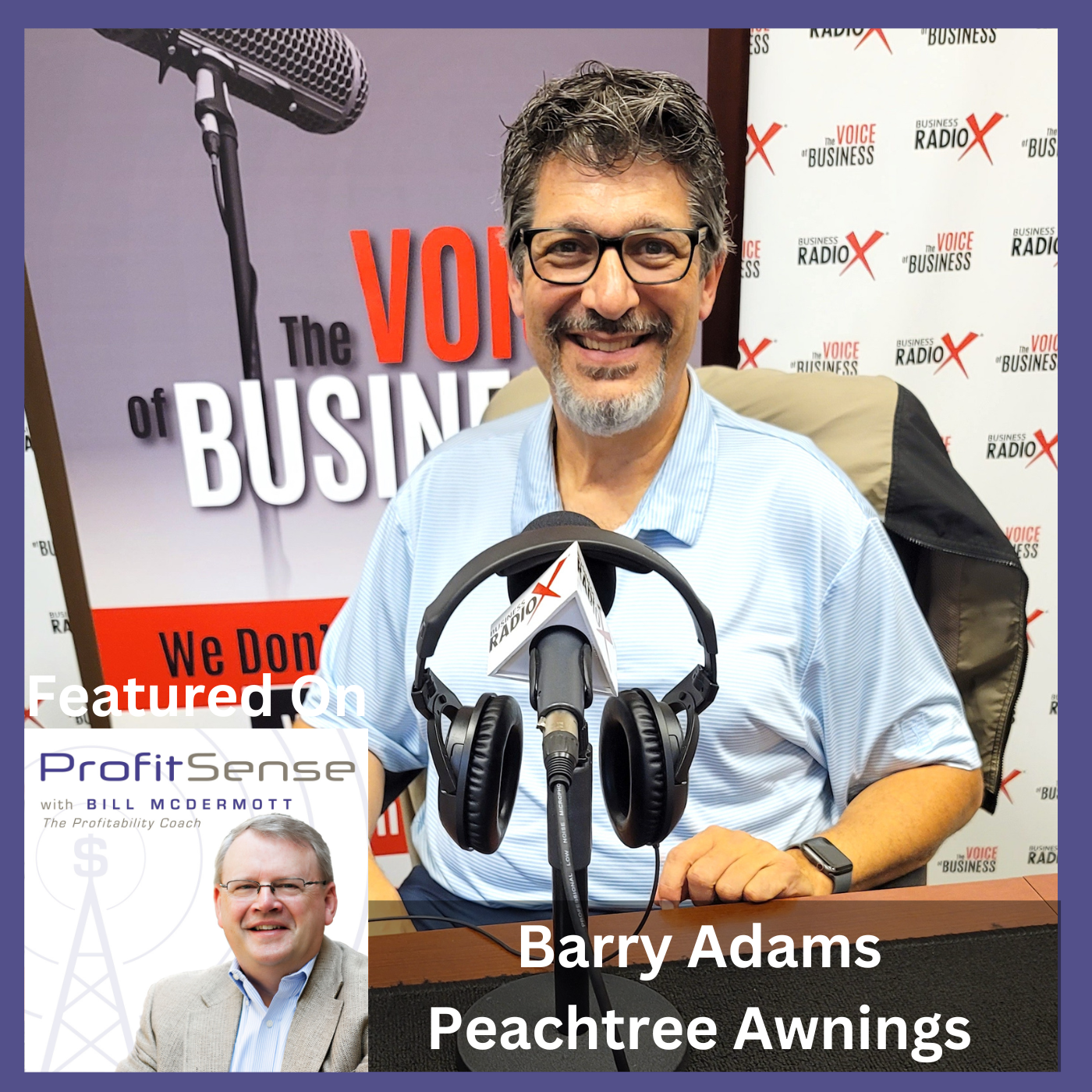
Finding Trade Technicians, with Barry Adams, Peachtree Awnings

September 19, 2023 by John Ray

Partnering with Local Technical Schools
North Fulton Studio
Finding Trade Technicians, with Barry Adams, Peachtree Awnings
Loading
00:00 /
RSS Feed
Share
Link
Embed

Download file

 Technicians

Finding Trade Technicians, with Barry Adams, Peachtree Awnings

Barry Adams: And we don’t have a thousand employees, but we always need one, two good trade technicians. And so whether it’s welding or project management, construction management or installation technicians we can find those, but you really and I told my HR manager, When you build these relationships with an institution like Gwinnett Tech, you can’t be one and done.

You gotta show up all the time, if they have a job fair. You can’t just be a fair weather friend. You have to be there all the time because they’re in the business of placing their students. They’re in the business of finding jobs for their students. And we help assist that and create that pipeline for people coming out of their technical school into Peachtree Awnings.

And it’s really, it’s took a little time, took a little time, but like any relationship you’ll get out of it, what you put into it. And I feel like what we get out, we’ll get from the tech is a times 10 kind of relationship. So it’s been really awesome.

Listen to Barry’s full ProfitSense with Bill McDermott interview here. 


The “One Minute Interview” series is produced by John Ray and the North Fulton studio of Business RadioX® in Alpharetta. You can find the full archive of shows by following this link.

Renasant Bank has humble roots, starting in 1904 as a $100,000 bank in a Lee County, Mississippi, bakery. Since then, Renasant has grown to become one of the Southeast’s strongest financial institutions with over $13 billion in assets and more than 190 banking, lending, wealth management and financial services offices in Mississippi, Alabama, Tennessee, Georgia and Florida. All of Renasant’s success stems from each of their banker’s commitment to investing in their communities as a way of better understanding the people they serve. At Renasant Bank, they understand you because they work and live alongside you every day.
Tagged With: Barry Adams, One Minute Interview, Peachtree Awnings, ProfitSense with Bill McDermott, technical college, The Profitability Coach, trade schools, Trade technicians

Barry Adams, Peachtree Awnings, and Marika Ponton, Office Angels

August 18, 2023 by John Ray

Peachtree Awnings
North Fulton Studio
Barry Adams, Peachtree Awnings, and Marika Ponton, Office Angels
Loading
00:00 /
RSS Feed
Share
Link
Embed

Download file

Peachtree Awnings

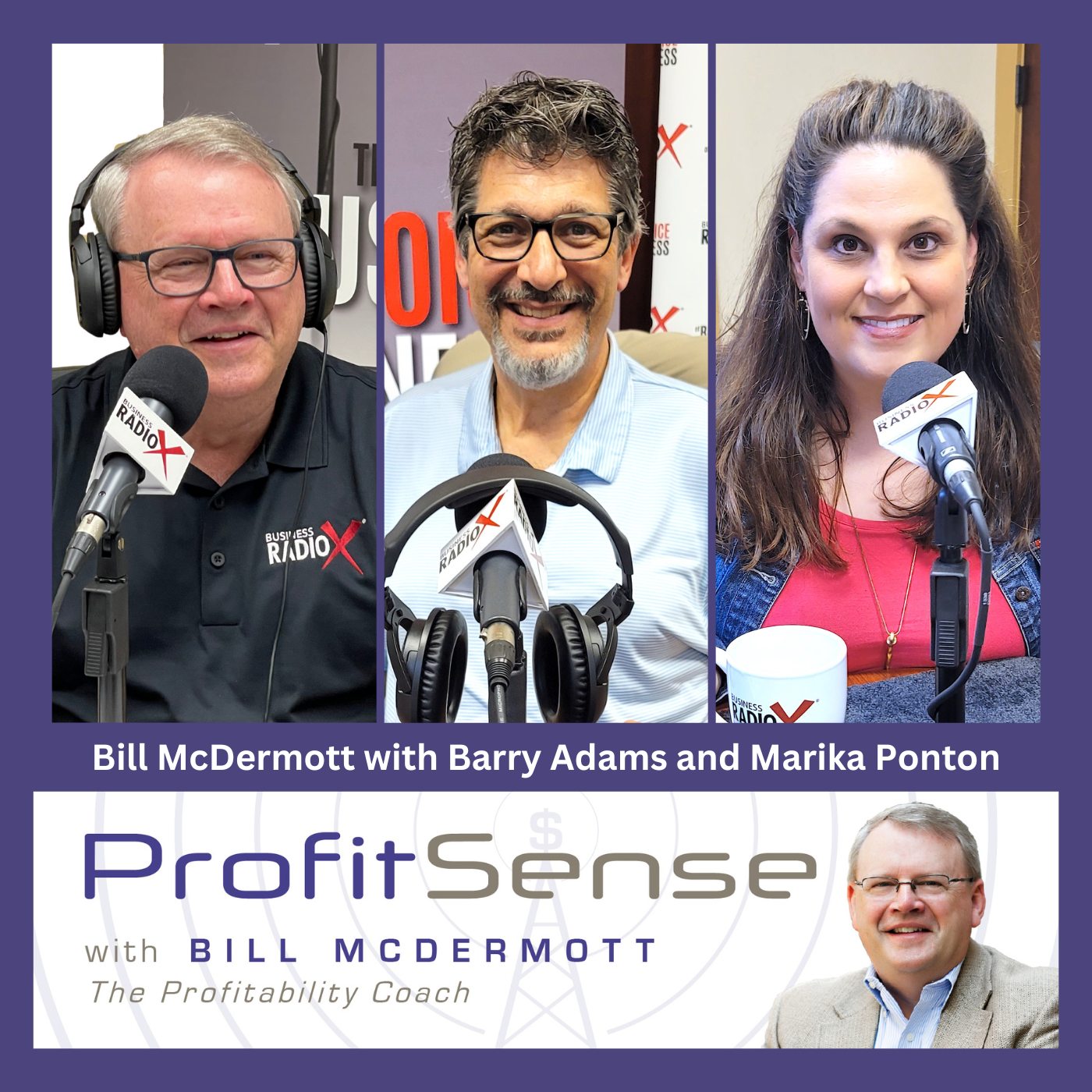
Barry Adams, Peachtree Awnings, and Marika Ponton, Office Angels (ProfitSense with Bill McDermott, Episode 48)

Host Bill McDermott welcomed two accomplished entrepreneurs to this edition of ProfitSense with Bill McDermott: Barry Adams, Peachtree Awnings, and Marika Ponton, Office Angels. Barry shared how his inspiration for starting his business was to “make people smile” and how that mission guides both their work and care for their associates. He also talked about associate engagement, the need for more trades people, the business book he recommends, succession planning, and more.

Marika discussed the mission and work of Office Angels as well as her career journey. She also shared lessons she’s learned, the advice she has for business owners, her book recommendation, and more.

Bill wrapped up the episode with the one sales rule everyone should follow.

ProfitSense with Bill McDermott is produced and broadcast by the North Fulton Studio of Business RadioX® in Alpharetta.

Peachtree Awnings

Peachtree Awnings located in Lawrenceville, Georgia is a premier manufacturer of custom commercial and residential canopies of all kinds.

Their clients includes some of the largest companies in Atlanta, general contractors and property managers.

Website | Facebook

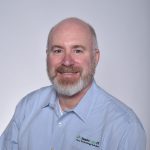
Barry Adams, Owner and President, Peachtree Awnings

Barry Adams, Owner and President, Peachtree Awnings

Barry Adams is the founder and owner of Peachtree Awnings and Peachtree Powder Coating located in Lawrenceville, GA and Tennessee Awnings located in Smyrna, TN. Barry opened Peachtree Awnings in 2005 which serves the metropolitan Atlanta area and other parts of the southeast. He purchased an existing awning company in Tennessee in 2012 which serves Nashville and most of middle Tennessee.

In 2022, Barry opened Peachtree Powder Coating to further expand his business offering into the area of industrial coatings in Atlanta. Prior to getting into the awning and powder coating business, Barry had 18 years of experience in the electrical distribution industry in sales and sales management.

Barry got his undergraduate degree from Tulane University in 1985 and his MBA from Kennesaw State University in 2004. Barry is a past chair of the Southwest Gwinnett Chamber of Commerce and the Professional Awning Manufacturer’s Association. Barry enjoys concerts and live music and resides in Norcross, GA.

LinkedIn

Office Angels

OFFICE ANGELS®  matches a business owner’s support needs with Angels who have the talent and experience necessary to handle work that is essential to creating and maintaining a successful small business. Virtual Administrative Support, Books and Billing, Social Media & Marketing, Human Resources Consulting and more – all on an as-needed basis.

They help you build your own Agile Office with exactly the help you need on your terms and your budget. They are the most efficient virtual services solution a small business could ask for!

Website | LinkedIn

Marika Ponton, Owner, Office Angels

Marika Ponton, Owner, Office Angels

Combine an in-depth accounting background of a CPA, an outgoing personality of a business development professional and an unwavering drive to help small business owners and entrepreneurs grow and command their businesses to achieve their goals and you have Marika Ponton.

Her unique background as an auditor, a successful flooring business owner, and now with Office Angels allows her to serve clients using deep personal experience to relate to business owners regarding their financials, their internal operations, and their goals for new business and growth.

LinkedIn

About ProfitSense and Your Host, Bill McDermott

Bill McDermott
Bill McDermott

ProfitSense with Bill McDermott dives into the stories behind some of Atlanta’s successful businesses and business owners and the professionals that advise them. This show helps local business leaders get the word out about the important work they’re doing to serve their market, their community, and their profession. The show is presented by McDermott Financial Solutions. McDermott Financial helps business owners improve cash flow and profitability, find financing, break through barriers to expansion, and financially prepare to exit their business. The show archive can be found at profitsenseradio.com.

Bill McDermott is the Founder and CEO of McDermott Financial Solutions. When business owners want to increase their profitability, they don’t have the expertise to know where to start or what to do. Bill leverages his knowledge and relationships from 32 years as a banker to identify the hurdles getting in the way and create a plan to deliver profitability they never thought possible.

Bill currently serves as Treasurer for the Atlanta Executive Forum and has held previous positions as a board member for the Kennesaw State University Entrepreneurship Center and Gwinnett Habitat for Humanity and Treasurer for CEO NetWeavers. Bill is a graduate of Wake Forest University and he and his wife, Martha have called Atlanta home for over 40 years. Outside of work, Bill enjoys golf, traveling, and gardening.

Connect with Bill on LinkedIn and Twitter and follow McDermott Financial Solutions on LinkedIn.

TRANSCRIPT

Intro: [00:00:08] Broadcasting from the Business RadioX studio in Alpharetta, it’s time for Profit Sense with Bill McDermott.

Bill McDermott: [00:00:21] Good afternoon. Welcome to Profit Sense. This podcast dives into the stories behind some of Atlanta’s successful businesses and business owners and the professionals that advise them. We help local business leaders get the word out about the important work they’re doing to serve their market, their community, and their profession, as well as discuss current issues that business owners are facing today across a wide variety of industries.

Bill McDermott: [00:00:46] I’m your host, Bill McDermott, and this show is presented by The Profitability Coach. When business owners want to increase their profitability, they often don’t have the expertise to know where to start or what to do. I leverage my knowledge and relationships from 32 years in banking to identify the hurdles getting in the way and create a plan to deliver profitability they never thought possible.

Bill McDermott: [00:01:11] We have two great guests on the show today. We have Barry Adams with Peachtree Awnings. Barry, welcome. Glad to have you.

Barry Adams: [00:01:21] Thanks, Bill. It’s nice to be here today.

Bill McDermott: [00:01:23] And we have Marika Ponton with Office Angels. Marika, welcome to Profit Sense.

Marika Ponton: [00:01:28] Thank you so much for having me. Pleasure to be here.

Bill McDermott: [00:01:31] Barry, I’m going to start with you. You know, I looked at your website. I see in the comments, exceptional customer service, great customer service. And so, I also loved, on your website, your inspiration for starting the business was to make people smile. So exceptional customer service, making people smile, talk about that.

Barry Adams: [00:01:58] Well, you know, Bill, it’s – from the very start, if you have happy customers, then you’re going to be able to replicate that as a business model and bring customers back time after time after time. So, making people smile is something that is kind of at the forefront of everything that we do every day. And our product lends itself to being on the outside of your home, outside of a building. And so when you look up and you see something that beautifies your home or office space, if it brings a smile to your face, then we’ve done our job. We’ve done something that helps you represent your business to the outside community or make your home a better place to live.

Bill McDermott: [00:02:48] That’s such an excellent point. And, you know, it’s Atlanta. It’s hot, it’s humid. You know, everybody needs a canopy or an awning to get some shade here in Atlanta, Georgia.

Barry Adams: [00:02:59] We sell shades, so we cover you up. So that’s it. Yeah.

Bill McDermott: [00:03:03] I love it. And, you know, exceptional customer service really is a function of great people. And so, that kind of leads us into talking about employee and associate retention. How do you continue to develop that exceptional customer service? And, you know, I guess part of that would be in how you retain associates and employees.

Barry Adams: [00:03:32] Well, I think you have to kind of take the mold and break it, first of all, because what people are looking for today is a lot different from what people are looking from a decade ago. And so, little things for us. Every team member has got a picture, their picture on our wall in our office, and that starts with welcoming them as a team member and making them feel engaged, and associate – we call people in our company associates rather than employees. But associate engagement is a very tricky and nebulous thing. But if you can find the hot buttons that keep people at a high level, at their energy, at a high level, then you can start to really tap into their lifeblood. And so whether it’s, you know, going to a Gwinnett Stripers game or, you know, putting their picture on the wall or a company picnic or, you know, things of that nature, keeping people really in the fold is what we really try to do every day. Not easy. Not easy.

Bill McDermott: [00:04:48] Yeah.

Barry Adams: [00:04:49] We’re all busy. So you have to really spend that extra 2%, 3% to keep people at a very high level.

Bill McDermott: [00:04:58] Yeah. And not only employee engagement but also, from what I understand, employee fulfillment is a really big part of retention as well. So it sounds to me like part of your strategy is also to figure out what that person’s, for lack of a better term, what their currency is, maybe things that they really believe in, whether it’s the cancer society or rescuing animals, and people like to feel like they’re a part of purposes or causes that also drive them. Wouldn’t you agree?

Barry Adams: [00:05:34] Absolutely. And our workplace today is a multiracial, multinational workplace. And so, you might hear several different languages spoken on our shop floor. And that’s tricky, to say the least. And so even things like our associate evaluations are in two languages, in Spanish and in English, so that people are certain that they understand an evaluation when it’s given to them by their manager or supervisor. And so, we present that type of collateral literature and those processes. Now, we’ve provided them, tried to provide them, bilingually. So that’s very, very important.

Bill McDermott: [00:06:25] And certainly coming from Gwinnett County myself, I know Gwinnett and other areas of Atlanta certainly have multicultural multilanguages. I know. My wife was a preschool director at our church preschool and they actually spoke, I think she told me at one time, 23 different languages if you can believe it. So, yeah, being able to provide that information in the native tongue of the person is absolutely critical.

Barry Adams: [00:06:55] Yeah.

Bill McDermott: [00:06:55] So exceptional service, how you attract and retain employees that really then takes me back to how you as a business owner recruit and select your people. So, I don’t want you to give away any secret sauce.

Barry Adams: [00:07:13] No, no, no, no. It’s all good.

Bill McDermott: [00:07:15] But what’s your secret?

Barry Adams: [00:07:16] Well, I think if you go back a decade or so, the trades – and I use the trades to represent our business as well. The trades were not in Vogue. It was not a sexy thing to be a welder, you know, or an installation technician. But now suddenly in 2023 it’s becoming more Vogue to be in a trade because the trades are paying, you know, paying quite well and the compensation is good. If you’re a welder these days, you’re going to be in good shape.

Barry Adams: [00:07:52] So, one of the things we tried to do was to forge strategic relationships with the trade schools. We’re only ten minutes from Gwinnett Tech. You know, our shop is only ten minutes from Gwinnett Tech. And I also own Tennessee Awnings in Nashville, Tennessee. And they have a vocational or trade school called TCAT, which is Tennessee College of Applied Technology. And so, we’ve tried to forge strategic relationships with those institutions so that we create a pipeline of people coming right out of the trade school and we get them literally hot off the press, right, right off the line. And so if you’ve got welding skills and you’re in the process of finishing, we really want to reach into that trade school and get you before you’ve graduated.

Barry Adams: [00:08:47] And so, in that way, and we don’t have a thousand employees, but we always need one, two good trade technicians. And so, whether it’s welding or project management, construction management, or installation technicians, we can find those. But you really – and I told my H.R. manager, you – when you build these relationships with an institution like Gwinnett Tech, you can’t be one and done. You got to show up all the time. You know, if they have a job fair, you can’t just be a fair-weather friend. You have to be there all the time because they’re in the business of placing their students. They’re in the business of finding jobs for their students.

Barry Adams: [00:09:36] And so, we help assist that and create that pipeline for people coming out of their technical school into Peachtree Awnings. And it’s really, really – it took a little time. You know, it took a little time. But like any relationship, you know, you’ll get out of it what you put into it. And I feel like, you know, what we get out, we get from Gwinnett Tech is, you know, a times ten kind of relationship. So it’s been really, really awesome.

Bill McDermott: [00:10:04] Yeah, I absolutely love your thinking there. And of course, I went through, I think, a phase not only as a college person myself, but also our children. We tended to think that a college degree was an end all be all. You know, you had to go to college. And I do think your point, the trades have suffered because of it. And so those that, you know, college is expensive. It’s not for everybody. And there is good money to be made, whether you’re a welder or a plumber or, you know, any of the trades that you know that are offered in the Metro Atlanta area.

Barry Adams: [00:10:50] It’s coming back. So the pendulum, you know, tends to take, you know, ten-year swings. And so, it was out and it’s coming back in. And it feels good. It feels right because we need people to do those jobs and do them particularly well, because –

Bill McDermott: [00:11:07] Absolutely.

Barry Adams: [00:11:07] If you’ve ever – if your AC has ever been down, you know, in Atlanta, Georgia, and you need a good HVAC company, you know, finding somebody, you know, online is a good thing as long as you can get somebody out to your house.

Bill McDermott: [00:11:22] Yeah, yeah, that is a challenge, especially in the summer in Atlanta.

Barry Adams: [00:11:27] Yeah.

Bill McDermott: [00:11:28] I know you and I have talked about books that have really impacted us and that takes us, I think, to a book that I believe you and I chatted about called Extreme Ownership.

Barry Adams: [00:11:39] Yeah.

Bill McDermott: [00:11:40] And so for our listening audience, tell us a little bit about the book as you read it and how it has impacted you and your business.

Barry Adams: [00:11:54] Well, Jocko Willink and Leif Babin have a great story to tell because they were obviously on the very frontline in Ramadi and in some really, really dangerous places. And hats off to anybody who’s served our country and has helped to protect the freedoms that we enjoy here.

Bill McDermott: [00:12:17] Yeah, absolutely.

Barry Adams: [00:12:17] But beyond that, they talk about a level of accountability that, you know, no excuses, but it’s beyond no excuses. It starts with if the team has failed its mission, it starts with leadership, you know, and it starts with leadership. And I don’t look for people to blame. The first thing I ask is what did I not provide, what did I not provide our folks that they really, really needed to be successful in their mission or their project? You know, was it tools? Was it training? Did they not understand what the mission was?

Barry Adams: [00:13:01] And so, Extreme Ownership always reflects back on good leadership. And if the leader is strong, then the team is strong. And if the leader is strong, probably the communication is good, you know, and the understanding is good because the communication is good. And so, it tends to permeate from the top down. And the level of accountability that’s required in Extreme Ownership is really something that a lot of people are really kind of uncomfortable with, really honestly.

Barry Adams: [00:13:37] And, you know, we all like to play the blame game, you know, who’s at fault when something goes wrong, you know. Who can – who can we – you know, it’s it’s not about that. If the team failed, then the team failed. And it seems kind of trite, but there is no I in team. And so collectively, we take the credit. Collectively, we take the blame. And I think for me as a business owner, it begins and ends there because the buck stops with me.

Barry Adams: [00:14:10] And I was having a conversation with a general contractor on the way over and he’s trying to get a project done and he’s up in Tennessee, but the buck begins and ends with me. And so, I have to make sure that my team is acutely aware of what it takes to accomplish the mission at hand. And if it doesn’t, then I have to go back to the drawing board and say, what did I not do to cause them to understand or cause them to be able to complete their mission in a timely manner or fully?

Bill McDermott: [00:14:41] Yeah. I’m finding as I’ve coached business owners, accountability is a really big thing. And, you know, it’s one thing to see the problem, but accountability really starts when you own the problem to what you were talking about, Extreme Ownership. Obviously, once you own it, you solve it, then you do the solution.

Bill McDermott: [00:15:01] But it is a challenge sometimes for people to own a problem. And a lot of times leadership doesn’t either have accountability in a particular seat or maybe they have two people in the same seat and each person thinks the other one is accountable for it. And so, accountability is critical to get the results you’re looking for.

Barry Adams: [00:15:24] It’s a little counterintuitive to understand or realize that the more power you give up, the more you get – the more power you have, really. And a lot of people don’t really understand that dynamic because they’re always looking to – but if I’m casting blame, then I don’t really have control over my own processes or my own people, do I? You know, if I’m casting somebody, throwing somebody under the bus, then that means that I don’t have control over my people or my processes. And so, I look – I’m perceived as powerless. Whether that’s true or not, I’m perceived as powerless. And so really raising your hand and saying, “Mr., Ms. Customer, that’s on me. That’s on me. I take, I take full responsibility for that.”

Barry Adams: [00:16:18] And the good news is that when the team does accomplish their mission or the project, you can celebrate those times and you should take time to celebrate those times.

Bill McDermott: [00:16:29] Absolutely.

Barry Adams: [00:16:29] And a lot of times we miss that as an opportunity because we’re off to the next thing. We’re all very busy people and we stop to take a moment again. We talk about engagement. You know, stop to take a moment to celebrate those wins with your team, just in a meaningful way. And that’s easy to say, hard to do. But if you can do that with your folks, they really will really appreciate it. It could be just Chick-fil-A biscuits, you know, in the morning, or it could be, you know, it could be a cake or pizzas for lunch, you know, what have you. So, yeah, yeah, that’s really important as well.

Bill McDermott: [00:17:18] Two of my favorite things, Barry, Chick-fil-A and pizza.

Barry Adams: [00:17:22] Yeah.

Bill McDermott: [00:17:23] We’re talking today with Barry Adams, who’s the founder and owner of Peachtree Awnings and Peachtree Powder Coating, located in Lawrenceville. Peachtree Awnings is a premier manufacturer of custom, commercial, and residential canopies of all kinds. Their clients include some of the largest companies in Atlanta, general contractors, and property managers.

Barry Adams: [00:17:45] Barry, to kind of closeout, the baby boomer generation is thinking about succession planning. Succession planning is something that business owners think about but seem to have a hard time implementing. So when you think about succession planning for the business owner, what comes to mind? And you certainly are very experienced as a business owner yourself. What do you think maybe are the pain points that business owners need to be alert to?

Barry Adams: [00:18:23] Well, first of all, I would say, get started as early as you can – give yourself the longest runway that you can to be successful in that business transition. It’s not too early. You might think it’s, you know, I’m – you know, I’m 59. This is way too early to get started in that process. It’s not. You know, give yourself the longest runway possible because the people that you’re going to need to pull into that process to advise you need to know what’s on your mind and what your intentions are.

Barry Adams: [00:18:56] And so, not everybody has a son, a daughter, a family member to pass that business along to. It would be nice to think so. I don’t have a son or daughter involved in my business. And so, no idea is a bad idea. You can look at, you know, an ESOP, an employee stock ownership program. You should sell it to one of your key employees or a key person in your company. You could sell it to an unrelated, disinterested third party.

Barry Adams: [00:19:32] But you really have to be very open-minded. I think about where that next business owner, where that person is going to come from, identifying a number of strategies and then selecting the proper strategy for you and giving yourself a long time to develop those strategies and not settling on one thing. We’re not having to do it in a crisis mode or in a short period of time where time becomes your enemy. Because right now, for me, time is my friend. I’m healthy. I feel like a fairly young 61. But some mornings I might disagree with that.

Bill McDermott: [00:20:18] Yeah, I would have guessed younger but go ahead.

Barry Adams: [00:20:20] But at any rate, it’s something that I’m starting to think about more and more. The horizon is getting closer. And so, I’m trying to wrestle with those same questions that many business owners do every single day.

Bill McDermott: [00:20:38] Yeah. You had mentioned a moment ago just bringing in a team. Who do you think is important to be part of that team that helps you with that, with that long runway and helps you with that process?

Barry Adams: [00:20:52] Well, I would start with your lending institution, whoever your bank, your lending institution is, your accountant, someone who can help you with a business valuation is a part of that team. Might be an attorney – might be a key attorney that you’ve consulted with. So those are four people right off the top of my, you know, top of my head that really need to be integrally involved in those discussions. And everybody should be kept at the same pace I would say. Nobody needs to be kept in the dark. Everybody needs to kind of know what page you are on as a business owner. And that kind of helps that team move together to advise you appropriately.

Bill McDermott: [00:21:39] Sure. Sure. So it sounds like long runway put together your team, possibly a banker, CPA, business valuation advisor, and maybe also an attorney.

Barry Adams: [00:21:51] Attorney, yeah.

Bill McDermott: [00:21:51] That makes a lot of sense. So, Barry, for those of us that maybe need some shade in our lives, if someone –

Barry Adams: [00:21:59] We hope everybody.

Bill McDermott: [00:22:01] It’s everybody, especially in Atlanta, Georgia, and probably Nashville, Tennessee. What is the best way for a contractor or a potential client to get in touch with you and Peachtree Awnings?

Barry Adams: [00:22:13] Well, you went to the website. We appreciate all the web traffic that we can get. You can drop us a line at info@peachtreeawnings.com, you know, is a great, great way. You go to the website and go to the contact us button and fill out a web page. Those are great ways. Or you can just simply call into the office. We’d love to hear from you. And that’s a great way. You know, our office is staffed fully from 7 a.m. to 5 p.m. Monday through Friday.

Bill McDermott: [00:22:45] Wow. Great. And that phone number I think I have is (770) 409-8372.

Barry Adams: [00:22:52] You got it, Bill.

Bill McDermott: [00:22:53] All right. Barry, it’s been a delight having you on Profit Sense. Thanks so much for not only sharing your experiences, but your expertise. And I love making clients smile. I’m going to try to aspire to that in my business, too.

Barry Adams: [00:23:08] Thanks, Bill. It’s been a pleasure. Thanks so much for having me.

Bill McDermott: [00:23:11] And now we’re going to talk to Marika Ponton. Marika is the owner of Office Angels. Marika, it is so exciting to have you on. I’m going to just start out very generally, why should a business owner call Office Angels?

Marika Ponton: [00:23:30] It’s a great question. And first of all, I just have to say thank you for having me on. But also really, I want you to know how much I appreciate all the guests that I’ve listened to on the podcast and even just sitting here listening to Barry. It’s lovely. And it’s why Office Angels have been around for 23 years helping small business owners, is because of stories like that and just thoughtful people running businesses. And we are there to help them.

Marika Ponton: [00:24:00] So, why should they call Office Angels? This sounds terrible, but it is totally true when they’re in pain, and that pain can be so many things as small business owners know. Who’s going to do this? I don’t know how to do this. I don’t even know what help I need.

Marika Ponton: [00:24:20] Pick up the phone. And number one, we’re just fun to chat with. So that would be one reason. But also let us know what your pain point is. The business has been helping small business owners for 23 years with so many different things. We probably have a solution and we can talk you through getting there.

Bill McDermott: [00:24:43] Great point. I also want to get your perspective on maybe there are some things that surprised you the most about small business ownership. Can you name a couple?

Marika Ponton: [00:24:58] Where do I start? And I’m going to start with a little bit of background about myself so it makes more sense.

Bill McDermott: [00:25:05] Okay.

Marika Ponton: [00:25:05] I spent many years as an auditor in public accounting, and if anyone knows what that means, that’s painful.

Bill McDermott: [00:25:14] It’s also lonely.

Marika Ponton: [00:25:15] Exactly.

Bill McDermott: [00:25:15] It’s you and the numbers.

Marika Ponton: [00:25:17] You and the numbers. You and the numbers and probably difficult clients. Not enough staff. You know, deadlines, intense deadlines. And so my point is, it was hard and it was challenging. And it really gave me grit. And here’s what I’m going to say about small business ownership. Hardest thing I’ve ever done. Literally hardest thing I’ve ever done. I was blown away at just my frustrations and what I wasn’t able to accomplish that I probably thought I could have easily. And so, that’s the surprise, is how hard it was and how much help you really do need. And it’s also lonely as well. You know, where do you go? Who do you talk to? Like I said, call Office Angels. We’re there.

Bill McDermott: [00:26:06] Right.

Marika Ponton: [00:26:08] But truly challenging. And before Office Angels, I owned a flooring company. So that’s why so many things Barry was saying I identified with, you know, the labor shortages, getting people to, you know, show up and to work. All of those things were on me. And I guess that’s really the crux of it, is that the owner is where the buck stops and you need that team around you. But who is that team and how do you get them and how do you find them and how do you trust them?

Bill McDermott: [00:26:42] Yeah, yeah. You know, part of my story was I really thought starting the business, I had to be all things to all people.

Marika Ponton: [00:26:49] Absolutely.

Bill McDermott: [00:26:50] And so, I became the choke point of my own business. And I was unintentionally paying my own hourly rate to do tasks that I wasn’t good at and could be done well by a very competent person that I could pay less than my hourly rate and free up time. And so, part of that was my realization as kind of a solopreneur. You know, you play to your strengths and you staff your weaknesses. And so, I hired someone to handle my calendar, my marketing, two things that I can remember that I really wasn’t good at. And it was a game changer and I was happier. And the person that was doing that work was great at it. And so it was a win-win.

Marika Ponton: [00:27:51] It’s an absolute win-win. And the business can grow.

Bill McDermott: [00:27:54] Yeah.

Marika Ponton: [00:27:55] Because you’re not that choke point. And that is my entire mission with Office Angels, is to grow and help more business owners. But if I’m doing all of those tasks that are non-critical for me to do, no way.

Bill McDermott: [00:28:10] Yeah.

Marika Ponton: [00:28:11] You can’t grow.

Bill McDermott: [00:28:12] You can’t.

Marika Ponton: [00:28:12] So that really was just mind-boggling for me when I first started in small business ownership. You can’t do everything, you know. You really can’t.

Bill McDermott: [00:28:25] We’re talking today with Marika Ponton, who is the owner of Office Angels. Combining an in-depth accounting background of a CPA, an outgoing personality of a business development professional, and an unwavering drive to help small business owners and entrepreneurs grow and command their businesses to achieve their goals, and you have Marika Ponton.

Bill McDermott: [00:28:46] And so, I want to ask you a little bit about some of the most influential people in your life and how they impacted you.

Marika Ponton: [00:28:55] It’s such a good question. Thank you for asking. And there’s a few, and I’ll start with all the way back, something so special that I can remember that still affects me to this day. I was probably eight years old. I was on my grandfather’s farm and he said, “Hey, go ahead and jump up on that forklift and, you know, go move that box over there.” “Okay.” And he showed me some things. It wasn’t just like complete child unsafety. But when I did that, I totally rammed the forks into the side of the box.

Bill McDermott: [00:29:33] Uh oh.

Marika Ponton: [00:29:33] Right. And so all these walnuts start pouring out and I’m looking around like, “Oh, I’m in trouble. I’m in big trouble.” Because if it was my parents around, I would have been. But what did my grandfather say to me? He said, “That’s okay. That’s how you learn.” And to this day, I still think about that because it really shaped my entire life of, like, it’s okay if I make a mistake. I don’t have to be hung up on that forever and beat myself up. I learn from it and I don’t do it again, but I roll on, you know, just like I did with that forklift. So that one really stuck with me.

Marika Ponton: [00:30:14] And the next one, a few years later, my dad, we were driving in Utah in the deserts of Utah, and I was about ten. And he said, “Hey, let me teach you how to drive.” And I jumped behind the wheel and he taught me. Again, there’s a lot of child unsafety sounding, but this was back in back in the day. It was fine. Right?

Marika Ponton: [00:30:38] But what that really taught me was it was just, he pushed me and he made me do things that I really didn’t think I could do and I did. And also with my dad. This is a good story. My name is spelled M-A-R-I-K-A, but that’s not how it originally was. It was originally with a C and everyone would call me Marcia. Yes.

Bill McDermott: [00:31:04] Okay.

Marika Ponton: [00:31:04] Which is fine. That’s a fine name. But it was Marika. And both my parents, I will give them both credit for this, they said you need to explain to people how to pronounce your name. And so any of you who know me now, I don’t shy away from ever speaking up and sticking up for myself and having confidence about who I am and what I do, and that came from my parents. And my dad even went to the extent of going down and having my name changed on my birth certificate to a K. And so my point here is, stick up for yourself. It’s okay to speak up and correct someone if it’s not what you want to be known as or in whatever it is in life. It’s okay to speak up. Yeah.

Bill McDermott: [00:31:52] Yeah. The thought that comes to mind, if you don’t stand up for something, you’ll fall for anything.

Marika Ponton: [00:31:57] Absolutely. Is it a country song or?

Bill McDermott: [00:31:59] It could be.

Marika Ponton: [00:32:00] I think it might be.

Bill McDermott: [00:32:01] I don’t know the singer, but maybe.

Marika Ponton: [00:32:02] Me neither. But it’s absolutely true.

Bill McDermott: [00:32:04] Yeah.

Marika Ponton: [00:32:05] It’s absolutely true.

Bill McDermott: [00:32:06] So, a lot of businesses are getting agile. In your experience, what are two specific things that small businesses can do to get agile?

Marika Ponton: [00:32:19] I’m going to speak right to what you do for a living. It is, get your books in order, timely and accurate, and know where your profitability points are and how you can improve. I can’t speak to it enough. Having proper books is just the first thing I ask of anyone that I’m talking to in a business relationship. When they’re asking for help, what can I do to turn this around? Where am I missing? Well, where’s your financials? What financials? You know, or “Oh, well, they’re not cut up from 22.” Start there and then come talk to me.

Marika Ponton: [00:32:56] And a lot of that comes from my – I mean, I’m a CPA. Like, the background is, we got to have the numbers, you know, and an auditor. But in small business, if you don’t have books, I don’t know. I don’t know how you do much of anything with security because you’re making decisions totally blind of not knowing if you can even afford something, if you should be doing this, if this is the right decision. So, that’s number one in my book. And I know it’s your book as well.

Bill McDermott: [00:33:24] Yeah. You’re preaching to the choir here. Yeah.

Marika Ponton: [00:33:26] Exactly. But I had to say because I literally live it. I live it. It is so crucial. When I was a flooring business owner, so many of the other franchisees would come to me because I was profitable and I was having all these sales and they’re like, “Well, what do you do? You know, what – tell me how to be like you.” Well, I mean, no one can be Marika, but what I can tell you is how do your financials look. Dig into your financials. I’m happy to look at them. And I did. And I would just glaringly see things, “Hey, why are you spending on this when, you know, your sales are down 50% from last month?” “Oh, good point.” So that’s number one. Number one.

Marika Ponton: [00:34:05] And number two, I would say is just same things we’ve been talking about right here is take stock of non-critical tasks that you’re doing. Take stock. Write it down. What are things that you are doing that you shouldn’t be doing and aren’t the best use of your time, and outsource those. And that’s Office Angels is there to help you with that.

Bill McDermott: [00:34:30] So, I had a client who was actually coaching me when I was coaching them.

Marika Ponton: [00:34:37] Okay.

Bill McDermott: [00:34:38] She said, “Bill, you need to build a – this is ridiculous list.” Meaning this is ridiculous that you’re doing this task. And so, the same thing that you’re talking about, make a list. I shouldn’t be doing this. Find an Office Angel to do this for me who’s much better at it. So, gosh, I’m a walking commercial for Office Angels.

Marika Ponton: [00:35:03] You literally are. I mean, that’s why I said, why am I here? Why am I here? I mean –

Bill McDermott: [00:35:06] You’re here because you’re important.

Marika Ponton: [00:35:08] I’m fun. I mean, that’s really kind of it. That’s what I hang on to. That’s what I hang on to. Yeah.

Bill McDermott: [00:35:14] So, what’s been your least favorite job to date and what did you learn from it?

Marika Ponton: [00:35:21] You know, I spoke about public accounting. No, I’m kidding. We won’t go there. I’ve got a funny one. I’ve got a funny one. Even though it wasn’t funny at the time. It was one of my first jobs way back. And I won’t even name the company. I won’t. I won’t do that. But it was – they made smoothies. And so, I show up for my – I’m super excited. It’s like my first job. I show up and they give me a hat that has the brand on it, right? I’m ready to rock the brand and I go to put the hat on and it is literally stained with sweat in the hat.

Bill McDermott: [00:35:57] Oh, my gosh.

Marika Ponton: [00:35:58] And it’s just like, “Oh, okay.” I mean, I’m, like, not valued to even get a brand new hat, right? And of course, I was already at that point where I’m speaking up for myself and I said, “Hey, can I get a new hat? This is kind of gross.” And they were like, “No, this is all we have.” So, I did wear it. But because I had spoken up, they went ahead and put me in the freezer, lifting strawberries and berries and all of this stuff for the entire day.

Marika Ponton: [00:36:28] And look, I say it’s funny because it was. Really, it was. But what it taught me and what I remembered and it’s some of what Barry was speaking to, how you treat employees and onboard people and show them how you care about them anytime but really as a first impression, it stuck with me. You gave me a used hat.

Bill McDermott: [00:36:55] Yeah.

Marika Ponton: [00:36:56] You know, in a food space. Like, this is unacceptable.

Bill McDermott: [00:37:01] Right.

Marika Ponton: [00:37:02] Unacceptable. But it stuck with me. It’s a good story because it’s like, I’ll never do that. I may not be perfect on how we onboard and how we engage, but I care and I’m thoughtful and I will try. So, that was the least favorite job.

Bill McDermott: [00:37:17] Yeah. Understandable.

Marika Ponton: [00:37:18] Yeah.

Bill McDermott: [00:37:19] So, I know you and I both love to read.

Marika Ponton: [00:37:22] Yeah.

Bill McDermott: [00:37:22] We’re lifelong learners. So, what is one book you would recommend to the audience? And then, the second part of that is, why would you recommend it?

Marika Ponton: [00:37:29] Yeah, and it’s such a great – we’re having – this is such a good conversation here today because it all aligns the book that I really would encourage people to pick up, and even if they are challenged with some of the – it’s a slow read because it’s heavy. But what it’s called is The Courage To Be Disliked. And it’s exactly along the lines of some of the stuff you guys were talking about with Jocko and the Extreme Ownership. It’s all about accepting responsibility for your circumstances and not being a victim. And you can change it if you dig in. It’s no one else’s responsibility to fix your life or fix your business. Take a look at yourself and really know who you are and know what your skills are. And if you’re not good at something, that’s okay. It’s more power, really, to you if you can say, I can’t do this, I’m terrible because move that to somebody else who’s better at it and then we grow the business or we grow our lives or we, you know, we become happier in our lives.

Marika Ponton: [00:38:38] So, The Courage To Be Disliked, like I said, was tough even for me to get through because it’s so thought-provoking. I had to put it down and say, you know, let me – I got to let that sink in for just a minute. But why do I recommend it? All those things. But so much that I hear when people are looking for help, it’s just as discussed earlier. They’re oftentimes looking to blame someone else before they go, “Hey, maybe I messed that up,” you know. And that’s where really knowing yourself and being okay with doing things even though not everybody likes them, that courage to be disliked, it’s powerful.

Bill McDermott: [00:39:24] Yeah.

Marika Ponton: [00:39:25] It’s really powerful. And it really, it can drive you to a deeper level of happiness with yourself and your business.

Bill McDermott: [00:39:32] Yeah. Sounds like a great book.

Marika Ponton: [00:39:35] It’s a great book. But don’t give up on it, is my point. Don’t give up because I’ve recommended it to multiple people and they’re like, “Whoa.” And I’m like, “I know.” Put it down. Come back after you’ve thought about it, but don’t give up on it.

Bill McDermott: [00:39:48] Yeah, yeah. So for our listening audience out there, somebody needs an Office Angel. What’s the best way for them to get in touch with you and/or the firm?

Marika Ponton: [00:39:58] Call us up. We love to chat. We absolutely love to chat. We want to hear your story. The phone number is (678) 528-0500. Or go to our website. Really, that’s the same kind of thing. Contact form. Learn a little bit about us. It is officeangels.us.

Bill McDermott: [00:40:23] Great. Marika, it’s been great having you on the show. Thanks so much for coming.

Marika Ponton: [00:40:26] Thank you for having me, Bill.

Bill McDermott: [00:40:29] You know, I want to take a moment and talk about the sales rule everyone should follow. When someone mentions they’re a salesperson, mental images often come to mind of the used car salesperson that asks, “What do I need to do to get you in the car today?” People hate to be sold, but when people are ready to buy, they appreciate the help. There’s a subtle mind shift. Excuse me. There’s a subtle mindset shift sell versus help. The used car salesperson makes it about themselves, but the smart salesperson makes it about their client.

Bill McDermott: [00:41:06] One of the best pieces of sales advice I’ve gotten is the level of activity you’re willing to adopt will be a limiting factor in your business. If I adopt a low-activity process, I’ll have low production. But if I’m willing to adopt a high-level activity, I will have high production. Having spent over four decades in sales, I’ve learned that 10-3-1 rule. For every ten client meetings I have, I’ll give three proposals, and for every three proposals, I’ll get one sale.

Bill McDermott: [00:41:37] So, early on in my career, I looked at my calendar and saw five potential timeslots for meetings, 8 a.m. breakfast, 10 a.m., noon for lunch, 2 p.m., and 4 p.m. So if I challenge myself to fill three of those five slots every day, that’s 60 potential client meetings per month, 18 proposals, and six sales. If my sales goal was $200,000, then each sale needed to be at least 34,000, which is the 200,000 divided by six. If I’m able to make four appointments per day, that’s 80 calls, 24 proposals, and eight sales with the same average sale. I make 272,000. If I adopt only two calls per day, that’s 40 calls a month, 12 proposals, and four sales. That’s 136,000. I missed my sales goal by 32%.

Bill McDermott: [00:42:29] The combination of a mindset of helping people buy combined with a high-activity 10-3-1 process puts you well on your way to being a top salesperson in your organization.

Bill McDermott: [00:42:43] If you want to keep up with the latest in pro-business news, follow us on LinkedIn and Instagram at The Profitability Coach. If you want to listen to past or future Profit Sense episodes, you can find us on profitsenseradio.com.

Bill McDermott: [00:42:57] This is Profit Sense with Bill McDermott signing off. Make it a great day.


Tagged With: Barry Adams, Bill McDermott, commercial awnings, Marika Ponton, Office Angels, Peachtree Awnings, ProfitSense with Bill McDermott, small business, The Profitability Coach, virtual admin, virtual services

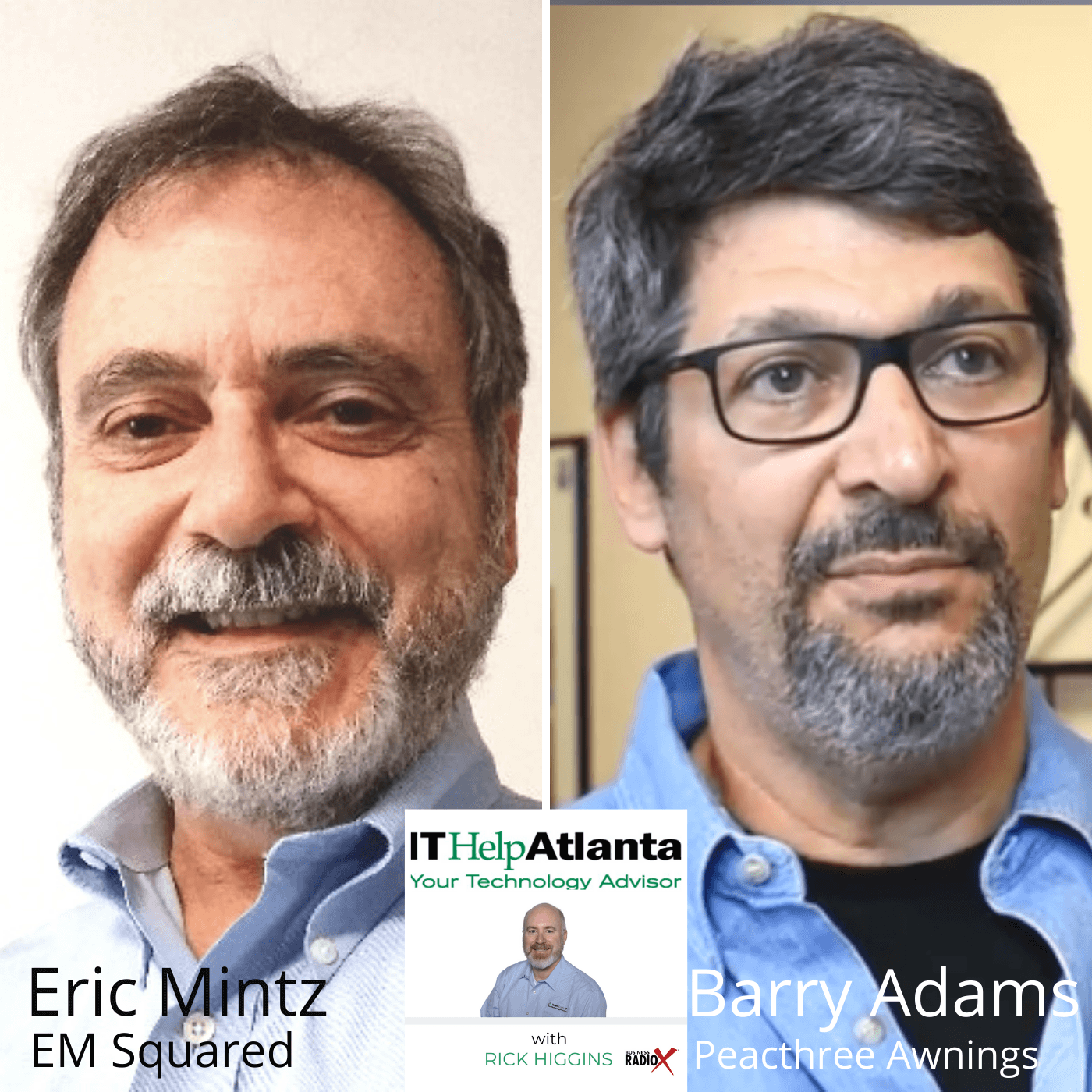
IT Help Atlanta with Rick Higgins: Barry Adams, Peachtree Awnings, and Eric Mintz, EM Squared

August 27, 2020 by John Ray

Peachtree Awnings
IT Help Atlanta
IT Help Atlanta with Rick Higgins: Barry Adams, Peachtree Awnings, and Eric Mintz, EM Squared
Loading
00:00 /
RSS Feed
Share
Link
Embed

Download file

IT Help Atlanta with Rick Higgins Episode 7: Barry Adams, Peachtree Awnings, and Eric Mintz, EM Squared

Peachtree Awnings’ Owner Barry Adams and Eric Mintz of EM Squared both started their companies from scratch. Host Rick Higgins speaks with each of them about the ups and downs of their entrepreneurial journeys and how they achieved their current success. “IT Help Atlanta” is brought to you by TeamLogic IT, your technology advisor.

Barry Adams, Owner, Peachtree Awnings

Barry Adams, Peachtree Awnings

Peachtree Awnings is one of the premier manufacturers of custom residential & commercial awnings and canopies in the southeast. they specialize in fabric awnings and metal canopies of all kinds. They have a branch in the Nashville area as well….Tennessee Awnings. Barry Adams is the founder and owner of Peachtree Awnings located in Norcross, GA and Tennessee Awnings located in Smyrna, Tennessee. Barry opened Peachtree Awnings in 2005 which serves the metropolitan Atlanta area and other parts of the southeast. Barry purchased an existing awning company in the Tennessee location in 2012 which serves Nashville and most of middle Tennessee. Prior to getting in the awning business, Barry had 18 years of experience in the electrical distribution industry in sales and sales management. Barry got his undergraduate degree from Tulane University in 1985 and his MBA from Kennesaw State University in 2004. Barry is the most recent past chair of the Southwest Gwinnett Chamber of Commerce and the current chair of the Professional Awning Manufacturer’s Association (PAMA). Barry enjoys concerts and live music and resides in Norcross, GA.

Company Website

Barry on LinkedIn

Eric Mintz, CEO, EM Squared

Eric Mintz, EM Squared

EM Squared provides leading edge custom software and IoT solutions with a focus on solving problems.

They streamline, automate, and evolve business. They redesign business processes and tune existing systems to work better. They automate, build applications, and integrate sensor technology. They streamline workflows and eliminate frustration to better enable your employees. EM Squared adds or improves eCommerce to better satisfy their client’s customers.

Company Website

Eric on LinkedIn

About the Show

“IT Help Atlanta” profiles small to mid-market businesses and highlights how those companies use technology to succeed. An archive of previous shows can be found here.

About Your Host

Rick-Higgins-2019Rick Higgins is Owner and President of TeamLogic IT of Dunwoody, GA. Rick’s firm is part of a national network of locally-owned service businesses, providing comprehensive IT services to the small-medium sized business market.

They offer managed service for networking, cyber security, data and email, as well as hardware and software support in addition to a variety of consultation and preventative maintenance services. Rick’s personal and corporate philosophy is simple: Stand up, be bold, and tell the truth.

Connect with Rick on LinkedIn and Twitter, and follow TeamLogic on Facebook.

Show Transcript

Announcer: Broadcasting from the Business RadioX studios in Atlanta, it’s time for “IT Help Atlanta,” brought to you by TeamLogic IT, your technology advisor. Now here’s your host, Rick Higgins.

Rick: Hey, good morning, everybody, and welcome to “IT Help Atlanta.” The podcast and radio show that profiles small businesses and highlights how those companies use technology to succeed. “IT Help Atlanta” is brought to you by TeamLogic IT, your managed services advisor, specializing in cybersecurity and cloud solutions. TeamLogic IT leverages cutting edge technology to solve all types of business problems. We make technology work for business. Go to ithelpatlanta.com for audio archives of this radio show and to learn more about our sponsor, TeamLogic IT. I’m your host today, I’m Rick Higgins, and today’s special guests are Barry Adams of Peachtree Awnings and Eric Mintz of EM Squared. Good morning, gentlemen.

Barry: Hey, good morning, Rick.

Eric: Good morning.

Rick: So, we’re going to start. We’re gonna do kind of a one-at-a-time scenario on the interview process and we wanna start with Barry. Barry, you’re the founder of Peachtree Awnings. Tell us in your own words who you are and what do you do?

Barry: Well, Rick, we are a manufacturer of custom commercial and residential awnings and canopies in the Atlanta metro area. We actually, we serve the entire Southeast. Our projects go from Central Florida down in Tampa, Orlando, up to Greenville, Birmingham. And then actually, I’m physically sitting at our location in Nashville, Tennessee right now. So, I’ve got a location in Nashville, and I got a location in Atlanta. We started the business in 2005, so we’ve been 15 years in business and yeah, we sell shade and it’s a lot of fun in this COVID era to help people enjoy their time and their staycations in their home. So yeah, we really enjoy that.

Rick: Thank you. Fifteen years, good for you, Barry. That’s really an amazing accomplishment. When you think back to prior to founding the company, you think back to all the reasons that you’ve thought about and what went into being an entrepreneur. What have you learned since then that’s been a really pleasant surprise, or something that’s been fulfilling to you that you just didn’t expect when you were first thinking about starting the business?

Barry: Well, it’s been a labor of love, Rick. I think for all small business people, it is a labor of love, and one of the things I’ve really come to appreciate about my business is that my business is my ministry. You know, I know there’s a lot of faith-based businesses out there but one of the pleasant surprises for me is we happen to be in the awning and canopy business, but I really enjoy helping people to become better people, you know, helping people to fulfill their potential in life, financially and professionally, and become better people. And I found that out after a number of years that I just really enjoy helping people move along a pathway of their choosing. And, it’s challenging. Some people come willingly and some people don’t participate fully, but my business is my ministry and I really enjoy what comes back to me. Whatever I put into it, it seems to come back to me times four, times five. It’s very rewarding in that respect.

Rick: Well, and learning how to get work done through others and managing those people, it really truly is the most difficult thing that a small business person can deal with, right?

Barry: Yeah.

Rick: Because you are the HR department. You know, you are the accounting department, you are the everything department, and sometimes you are the internal counselor to your people as well, right?

Barry: No question, and you have to be a bit of a renaissance man or renaissance person certainly in this day and age. You got to wear, I wear my marketing hat some days and I wear my HR hat some days, and sometimes it’s moment by moment. And I wear my financial, my CFO hat some days, and it changes literally moment by moment. The good news is that as you grow in size, then, of course, then the resources that you can hire or put in place to address some of those, you know, increases, it doesn’t necessarily relieve you of the responsibility of overseeing that part of your operation. But certainly, the old adage “Hiring people that are smarter than you” comes into play, and I was… I don’t know if it was Steve Jobs or somebody else who said that but, you know, hiring people that are smarter than you. And I’ve been blessed to bring people into my organization that were really, in their specific jobs, were really better than me, better than I could do it. And it’s gotten to a size, you know, I used to be able to wrap my arms around just about every problem or every situation that I encountered. But as we’ve gotten larger, I’ve had to make sure I have people in place that can do that.

And it’s gotten larger than me. And so it’s both exciting and terrifying at the same time to say that I’m not the person that can handle… I have more questions than answers every day. And it’s relieving in a sense that as a business owner, I don’t have to have the answers. I really have to, and my role and now is to pose the questions that cause us to get better. And it’s still challenging, by the way, to come up with the questions, but we come up with the questions and it’s a collaborative effort. And those things that we get accomplished, we get accomplished together and I like to say all of us know more than any of us. And so, in every regard, it is a collaborative team effort at Peachtree Awnings, so.

Rick: So, I recently read a four-page spread article on you and your company in a magazine in which you are on the cover. It’s a trade organization and the magazine’s called “Specialty Fabrics Review Magazine.” So, congratulations on that profile and that spread. There was a couple of really interesting nuggets that I pulled out of there that I’d like to ask you to talk about and unpack. And one of them just, I really highlighted it and I’m gonna read it here where you said in your business, it’s almost like being an architect. Could you discuss that and explain what you meant by that?

Barry: Yeah, sure. Well, again, one of the pleasant surprises about being in the awning and canopy business, it’s a custom business and every project that we tackle, even…two awnings or two canopies that look alike, I promise you, they’re not fabricated the same. And so it’s very, very custom work. So I like to say that, in my business, that we spend equal times… A third of the time, I’m a manufacturer, a third of the time, I am a contractor, and a third of the time, I’m an artist. So, equal parts manufacturing because it’s a shop-based business and we manufacture what we install. So, a third of the time, I’m a manufacturer, third of the time is spent out in the field, installing the stuff that we manufacture and that certainly has its challenges as well if you’ve ever been involved with a company or an operation that does field work. That is probably the most unpredictable job environment that you could possibly work in. You get anything and everything thrown at you every day.

Rick: No doubt.

Barry: So that is…yeah, that is really, really challenging. And especially in a thriving metropolitan area like Atlanta and Nashville, the variety of projects that we get involved with is pretty vast. And then a third of the time, I’m an artist. I’m creating a vision for somebody else. Quite frequently, we show up and there’s not a set of plans. You know, I’m meeting with a business owner, and they just have some kind of vision in their mind about what they want this piece or their storefront, or a courtyard, or what they want a certain area to look like, or how they want it shaded, or how they want it protected from rain or the elements. And so we have to create that vision almost from scratch. So it’s like baking, yeah, like baking from scratch. And you have to really be very adept at all three parts of the business in that regard to be successful, I think.

And so we’ve tried to do that at Peachtree Awnings. Never focusing on one of those disciplines to the exclusion of any other is really, really important and trying to develop yourself and develop your team in that way and deliver a very high level of customer service. Obviously, that’s what it’s all about. So, if there’s ingredients to the secret-secret sauce in the awning and canopy business, perhaps, that’s kinda it. That’s been my recipe, anyway.

Rick: Yeah. And that’s good advice for anybody in any vertical or any type of business. So, the other nugget, to use that word again, that I pulled out of here is you made a really interesting general comment about being an owner. And you said, “You have to work on your business rather than in your business.” Could you unpack that a little bit for us?

Barry: Sure, Rick. I think it’s a little counterintuitive for most of us. The more control you try to take, the more you wrap your arms around your business, actually, the less control you have. It’s, for all of us, I think our businesses are a baby, you know, and I try to treat my business literally like a living, breathing entity. And if you treat your living, breathing entity, your business with love and care and concern and nurture it, then it will return to you what you’ve put into it. But the more I try to control that by wrapping my arms around the things that I always used to do, right, I mean, when I started my business in 2005, there was three of us, I called it “the tripod” because it was me, a welder, and a seamstress. That was it, that was three of us. And now there’s 25 in the organization. Still small by anybody’s measure, but the more you wrap your arms around the functions and the things that you do in your business, the less control that you have, and the more that you give up, the more you’ll be able to grow your business. You know, there’s a continuum that we all operate on. And most of us start, it’s operator, owner-operator, owner, right? There’s a continuum there and we start as operator, we all most of us start as operator, many people never get out of that phase of operator. Not to pick on any one discipline or tradesperson, but there’s plenty of plumbers, electricians, painters that only stay in the operator phase.

And then we try to move a distance to owner-operator and I’m still kind of in that…still in that phase, but maybe starting to move a little bit more toward owner. And as we move in that continuum toward owner, then we can really work on our business rather than working in our business. And that is a very, very difficult transition to make. It’s not easy. And you’ve got to give up as much as you take on or you’ll never have that ability to grow. And so, I find that to be challenging for any small business owner.

Rick: It’s the only way to scale. I mean, an individual can only do so much as an operator, you cannot scale unless you can let go. And learning to let go is really, really tough. I just…maybe offline over a lunch or something, I wanna unpack that a little bit more with you to talk to you about exactly how you’re going through that transition.

Barry: Well, and it’s been pleasant to watch you, Rick, because you started, I mean, we started just, you know, maybe a few, I’d say a few years apart. I’ve watched you at TeamLogic IT do the same thing. It was you driving the bus and now you’ve got some really capable people working with you, and so it’s been a joy for us both as our businesses run in their life evolution somewhat in parallel and that’s been a pleasure. That’s been a pleasure to watch.

Rick: So, full disclosure to the listening audience, Barry and Peachtree Awnings are, what, a five-year client now of ours at TeamLogic IT?

Barry: Yeah, at least something like that. Yep.

Rick: Coming up on that.

Barry: Yeah, that’s right.

Rick: And likewise, we’ve really enjoyed working with you guys. Here’s one of my favorite questions, Barry. What is an aspect of your business that people don’t think about, but that you wish people would ask you about?

Barry: Well, these are trying times, and I’ve tried to be a leader in our business and in our community. I hope everybody who listens comes away with a sense that we, you know, we have a responsibility to the communities that we serve. It’s real easy to come in your office every day with your head on, kind of put your head down and start working, keep your head on the desk and stay on point. But we got a real opportunity to be business leaders once we embark on small business ownership, and so, I become the face of my business in the community. And we try to get involved in some philanthropic activities whether that’s the, used to be called the Norcross Cooperative Ministry, now it’s, I think, called the Neighborhood Co-Op, or, and different aspects that we can give back to the community because it’s given so much to us and provides our livelihood. And so, I hope…it’s difficult right now. I think a lot of nonprofits have suffered through the pandemic just because people are not wanting to be in close proximity to each other, but it’s really, really important for us to be strong community leaders and stand up and be recognized and have our people be honest as well.

Rick: You’ve done that, Barry, and I know you won’t mention it yourself so I’m gonna mention it for you. Folks, Barry Adams is the president of one of our local chambers of commerce here in North Metro Atlanta. He’s also the chairman of the board of the main trade organization that he works with, the nonprofit. So, congratulations, Barry, because it’s not just, for you, it’s not just talk, you really are pulling it off with your effort and those of us in small business understand what kind of effort that really takes. So, thank you for that service.

Barry: Thanks, Rick. I appreciate the recognition. Thank you so much.

Rick: Well, I wanna wrap up with you, Barry, but before I do, well, you tell the audience how to get in touch with you and find your business online or otherwise.

Barry: Yeah, absolutely. Thanks, Rick. Yeah, I mean, we can be found, www.peachtreeawnings.com, or, likewise, www.tennesseeawnings.com in the Metropolitan Nashville area and we’re moving to a new location in Lawrenceville in mid-September. So, yeah, we’ll be in a new facility about a mile from Sugarloaf Mills just off of Duluth Highway 120. Yeah, we’ll be in the new facility in mid-September. So, it’s an exciting time for us.

Rick: That second domain was tennesseeawnings.com because I think it broke up a little bit on the audio, so I wanna repeat that for the audience.

Barry: Yeah, tennesseeawnings.com.

Rick: Gotcha. Gotcha. Barry, thank you so much.

Barry: Thanks, Rick. Really enjoyed it. Thank you so much for having me.

Tagged With: awnings, Barry Adams, canopies, eCommerce, EM Squared, Eric Mintz, fabric awnings, IoT, IT Help Atlanta, metal canopies, Peachtree Awnings, Rick Higgins, sensor technology, TeamLogic IT, Tennessee Awnings

Business RadioX ® Network


Our Most Recent Episode

CONNECT WITH US

  • Email
  • Facebook
  • LinkedIn
  • Twitter
  • YouTube

Our Mission

We help local business leaders get the word out about the important work they’re doing to serve their market, their community, and their profession.

We support and celebrate business by sharing positive business stories that traditional media ignores. Some media leans left. Some media leans right. We lean business.

Sponsor a Show

Build Relationships and Grow Your Business. Click here for more details.

Partner With Us

Discover More Here

Terms and Conditions
Privacy Policy

Connect with us

Want to keep up with the latest in pro-business news across the network? Follow us on social media for the latest stories!
  • Email
  • Facebook
  • Google+
  • LinkedIn
  • Twitter
  • YouTube

Business RadioX® Headquarters
1000 Abernathy Rd. NE
Building 400, Suite L-10
Sandy Springs, GA 30328

© 2025 Business RadioX ® · Rainmaker Platform

BRXStudioCoversLA

Wait! Don’t Miss an Episode of LA Business Radio

BRXStudioCoversDENVER

Wait! Don’t Miss an Episode of Denver Business Radio

BRXStudioCoversPENSACOLA

Wait! Don’t Miss an Episode of Pensacola Business Radio

BRXStudioCoversBIRMINGHAM

Wait! Don’t Miss an Episode of Birmingham Business Radio

BRXStudioCoversTALLAHASSEE

Wait! Don’t Miss an Episode of Tallahassee Business Radio

BRXStudioCoversRALEIGH

Wait! Don’t Miss an Episode of Raleigh Business Radio

BRXStudioCoversRICHMONDNoWhite

Wait! Don’t Miss an Episode of Richmond Business Radio

BRXStudioCoversNASHVILLENoWhite

Wait! Don’t Miss an Episode of Nashville Business Radio

BRXStudioCoversDETROIT

Wait! Don’t Miss an Episode of Detroit Business Radio

BRXStudioCoversSTLOUIS

Wait! Don’t Miss an Episode of St. Louis Business Radio

BRXStudioCoversCOLUMBUS-small

Wait! Don’t Miss an Episode of Columbus Business Radio

Coachthecoach-08-08

Wait! Don’t Miss an Episode of Coach the Coach

BRXStudioCoversBAYAREA

Wait! Don’t Miss an Episode of Bay Area Business Radio

BRXStudioCoversCHICAGO

Wait! Don’t Miss an Episode of Chicago Business Radio

Wait! Don’t Miss an Episode of Atlanta Business Radio