

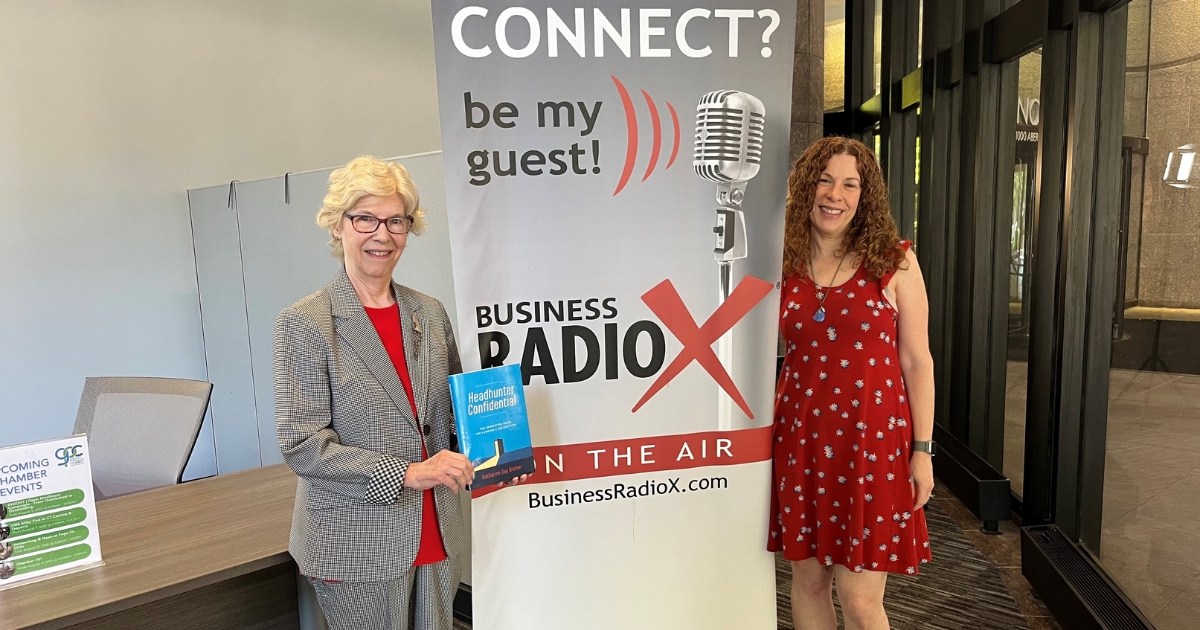
In this episode of Greater Perimeter Business Radio, Lee Kantor and Rachel Simon interview Katharine Bremer, Managing Director of Boardwalk Consulting and author of Headhunter Confidential. Katherine shares expert advice on job searching, career transitions, and navigating the recruiting process. She emphasizes the importance of self-reflection, strategic networking, and a positive mindset. The discussion covers overcoming emotional challenges, addressing employment gaps, and tailoring job applications. Katherine also highlights Boardwalk’s work placing leaders in mission-driven nonprofits.
 Kathy (Katharine Day) Bremer combines deep expertise in talent acquisition with a genuine passion for helping people find work they are meant to do. In Headhunter Confidential, she draws on nearly two decades as a headhunter and five successful career transitions to reveal the secrets of landing work that brings joy and meaning.
As managing director of BoardWalk Consulting, Kathy has placed hundreds of executives at iconic organizations like the CDC Foundation, The Carter Center, and Piedmark Park Conservancy. Her experience spans multiple industries and sectors, giving her unique insight into what makes a successful career transition.
Kathy’s career journey began when she flew to Tokyo on a one-way ticket, becoming editor of Canon’s global publications and writing for Newsweek and Japan’s NHK radio network. Returning to New York, she rose to senior executive positions at three NY advertising agencies, leading a team that helped Folgers rise to #1 coffee in America.
She then served as SVP fundraising and marketing at CARE, increasing private resources by 40%. Before joining BoardWalk in 2007, she led the Porter Novelli agency in Atlanta, which grew ten-fold and was ranked as a best place to work.
Kathy has served on or chaired over a dozen boards of directors, including Global Impact, International Women’s Forum of Georgia, and Leadership Atlanta. She holds a B.A. in Sociology from Harvard University, where she wrote for The Harvard Crimson and played varsity squash and tennis.
Kathy grew up in Queens, NY, and now lives in Atlanta with her husband Alan. They have two grown sons, Nick and Scott, and share a passion for community service and pickleball.
Connect with Kathy on LinkedIn.
For information on Kathy’s book, Headhunter Confidential:
https://ripples.media/books/headhunter-confidential/
Episode Highlights
- Job searching strategies and techniques
- Importance of mindset and self-reflection before job searching
- Embracing career transitions and exploring diverse industries
- Strategic networking versus mass applications
- Effective use of LinkedIn and personal branding
- Challenges posed by applicant tracking systems (ATS)
- Tailoring resumes to specific job descriptions
- Emotional challenges faced by job seekers
- Building authentic relationships in the job search process
- Insights on the role of leadership in mission-driven organizations
 This transcript is machine transcribed by Sonix
TRANSCRIPT
Intro: Broadcasting live from the Greater Perimeter. It’s time for Greater Perimeter Business Radio. Now here’s your host.
Lee Kantor: This episode of Greater Perimeter Business Radio is brought to you by Connect the Dots Digital. When you’re ready to leverage LinkedIn to meet your business goals. Go to connect the Dot Dot Digital Lee Kantor here with Rachel Simon and another episode of Greater Perimeter Business Radio. And this is going to be a good one. Who do you got today, Rachel?
Rachel Simon: We are continuing our conversation a little bit from last month. We had a great guest talking about, you know, recruiting and the job market. And I’m really excited that we have another expert in this area that we’re going to look at it from a little bit of a different perspective. So today we are welcoming Katherine Bremer, who is the managing director of Boardwalk Consulting and the author of the brand new Hot off the presses book, Headhunter Confidential The Unwritten Rules for Landing a Job You Love. Welcome. Thanks for being.
Katherine Bremer: Here. I am so excited to be here.
Rachel Simon: Yeah. So why don’t you tell us a little bit about you and Boardwalk Consulting, and then we’re going to dig into the book a little bit deeper in our conversation.
Katherine Bremer: Great. Well, I mean, first of all, boardwalk is based in Atlanta, but we work nationally. And, um, you know, our our, let’s say, Atlanta based clients include, you know, CDC Foundation, uh, Greater Atlanta Community Foundation, uh, Piedmont Park Conservancy. We do foundations and nonprofits. Uh, and we’ve been in business since 2002, founded by a partner from a global search firm. And we again, we serve mission based organizations. And our mission is really finding leaders that matter for missions that matter. I am 18 years at boardwalk, and prior to boardwalk, I had four other careers, so I’m in my fifth career. I’ve been on both sides of the hiring desk, and I realized that if I shared what I know about the unknown rules of, you know, finding a job that I might be able to help some folks. And there’s a lot of people looking at new jobs and looking at new careers right now. So my goal is to help them, you know, whether they’re just starting out or they’re, you know, struggling through a layoff that they didn’t deserve, but just getting back in or they want a new adventure. So that’s my goal.
Rachel Simon: I love that what you said that you’re on your fifth career because I think sometimes people, you know, think that they can they have to stay, you know, in certain, uh, verticals. And, and that’s not the case at all.
Katherine Bremer: Right, right. I mean, and I think a hybrid background really gives you a lot of different experiences that inform each career as you go forward. And my big belief is that every time you make a job Change. You want to get more of what you love, that animates you and gives you joy and less of the things that you don’t love. Uh, and so self-awareness and an internal journey is very much the, the first thing you do in a job search.
Rachel Simon: Right? So we should be up leveling, right?
Katherine Bremer: Yes. And you should be thinking about, you know, what gives you joy and what animates you and what contributions can you make based on your strengths?
Rachel Simon: Yes. Nothing’s worse than feeling like, uh, the the life is being sucked out of you when you go to work every day.
Katherine Bremer: Yeah. And so many people, Rachel, suffer through that. You know, like 70% of folks are not in love with what they do. And you spend eight hours a day doing it. So you might as well enjoy it.
Rachel Simon: Exactly. Um, tell us about your book, really, and the inspiration as to why you wrote it. And it really. And then who who should be reading this book?
Katherine Bremer: Well, I mean, the inspiration was that I work with, you know, hundreds of people, uh, and help them guide them. Right. And I’ve, and I’ve seen what works and what doesn’t work. So I really want people to be able to find their way to something great. And so I was inspired, given all the stories that I had to tell about real, you know, real life stories about what works and doesn’t work. I was inspired to put it into a book. And, you know, so the six unknown rules, uh, you know, unwritten rules that really can guide folks and keep them from doing things like redundant applications online, you know, dealing with, you know, and being defeated by applicant tracking systems, you know, and finding their way to something great.
Rachel Simon: Yeah. Um, well, I don’t want to give away, you know, all of your secrets because people should read the book. But maybe we can talk about a couple of what these, uh, unwritten rules are. What do you think would be, uh, one of the, you know, top tips for our audience?
Katherine Bremer: Right. So. And, you know, you asked me who it’s for. I think it’s for anybody starting out, uh, you know, recovering from a layoff or wanting a new adventure. And I really encourage people to want new adventures. Don’t leave until you have your next adventure. But keep. Keep your vertical curve. Really. You know, vertical. You want to keep learning every single day. Um, so I think three things to think about. Number one, you know, don’t jump into a search without doing an internal journey first. And I have some really simple, enjoyable exercises that help, you know, who am I? What am I, animators? What are my strengths and what what I what do I bring to market? The second thing is, you know, don’t apply, you know, to a lot, you know, a lot of stuff online because it’s all about people. And people are everybody’s sustainable advantage. And you’ve worked with people, you’ve known people you, you know, have folks all around your life. Maybe you volunteered with them and and they will want to help you. People do want to help. Uh, and so that’s strategic networking, you know, not spray and pray not not going and you know, to tactical stuff but really building relationships. And then the third thing that you know is, is important is that it’s not all about you. When you get into a job search, it’s about them, at least initially. So, um, you know, I had one person that I was helping, and he said to me, it’s been two years and I can’t seem to get a job. And I said, well, what are you doing? And he said, well, I’m telling them all about my background and they don’t understand how it all works. And I said, well, stop doing that. Just tell them what you know that attends to their mission and give them examples about what they need, not what. It’s not what you. It’s what they need because they’re looking for the match.
Rachel Simon: There’s so much that you said that resonates with me, uh, with my approach. You know how prior to the role that I’m in currently having run my own business, focused on helping professionals on LinkedIn very much about, you know, this is not about you. It’s about your target audience, whether that is potential client or customer or a potential employer. Right. Exactly. And and that value. You just cannot. Underestimate the value of your network and relationships.
Katherine Bremer: Exactly.
Rachel Simon: For everything. I mean, your your network is everything.
Katherine Bremer: It really is. And I’m always amazed at how few people pay attention to their brand. And their brand is on LinkedIn. So I’m sorry. That’s your brand identity. It’s your website. And if you don’t update that, um, you know, you’re really casting, you know, your fate to the wind because everybody’s going to go there and that’s where they look to understand you. Um, and to build that network, but also create that. Create your brand on LinkedIn.
Rachel Simon: Absolutely.
Lee Kantor: Now, what is kind of the work that a person should be doing every day in order to get their next gig or whatever their next opportunity is? Is there some kind of just basic work every day that a job applicant or a person that’s looking for a new career should be doing in order to have that opportunity kind of present itself to them, instead of rather than just waiting, you know, for the lottery ticket and say, hey, where have you been all my life?
Katherine Bremer: I love that question. Um, I think growing every day, learning every day. If you find that you’re not learning. Um, so, for instance, I worked in advertising for 11 years in New York, and I was on some of the big brands and all that. And I came to a moment in time where I was waking up every day, and I didn’t really want to go to work, and I felt like I wasn’t learning and there was not something new. No vertical learning curve. And so that’s when I made the decision that it was time to find the next thing. And how did I find that? Well, first I did that inside analysis. Right. Who am I? What can I do now? And then I also talk to many people. Right. I talked to advisors. And, you know, Lee, if you want to get a move out of where you are and you want people to help, you ask for advice. You know, if you say to somebody, do you have a job that I could do? Or do you know of a job? The answer could very well be no. Okay. But if you say to somebody, would you be willing to give me advice and tell me what you do? Uh, that answer is generally yes. And in that way, you build your relationships and those are your sustainable advantage. So every day, grow and build relationships.
Rachel Simon: Yeah. That’s a I mean, it’s a great point. And thinking about how this applies to so many job seekers depending on where they are in their career. Right. So whether somebody, you know, coming out of college and just building those initial relationships, and as a parent of one and almost now two college students, you know, helping to set my kids up with people in the industries that they’re majoring in so that they can just start to have those informational conversations because who knows where that’s going to lead to internships or jobs down the road? Or, to your point, wanting to make those pivots and thinking, well, who do I know? And who’s in my network? Who might be someone who will talk to me? Right. And most people will always say, yes.
Katherine Bremer: I think about it this way. You know, once you know generally where your what your direction is, right? Don’t just start and spray and pray. You know, start with some maybe 2 or 3. I think of them as buckets of opportunity. Right. Where might you go. And then who’s going to help you get there. You would be amazed at how many people starting out say, I’m not calling these people. My parents told me to call or I don’t want. My aunt told me to call so-and-so, and I’m too, you know, I’m too shy to do it. Or, you know, I’m an introvert. I can’t do that stuff. I’m going to start applying online and it is not going to work. Um, and so I tell the story of Gordon, who, you know, got out of school in the middle of a recession and, um, got some folks that he was going. You know, you got to call so-and-so such and such. He was a music major, so that wasn’t easy. And, um, after six months of futile applications online, finally made those phone calls. Ended up working at Lincoln Center.
Rachel Simon: Oh. Pretty nice.
Katherine Bremer: So that’s I mean, that’s how it works. And people, you know, people are interested in helping you, especially if you genuinely go ask their advice. Uh, you. And it’s not just, um, you know, uh, superficial. Uh, I’d love to know what you do. I’d love to hear about it. And you’re genuine. They’re going to want to help you. Yeah.
Lee Kantor: Is that strategy the same whether you’re you’re just like, right out of college or you’re 50 years old and just got laid off, is that the same as the fundamentals? The same.
Katherine Bremer: It’s fundamentally the same process. And it starts with, you know, I’ll give you my unwritten, my overall unwritten rules. Start with mindset, making sure you’ve got the right mindset. We can talk a little more about that. Second thing is that internal journey, and there are some very easy exercises to do to discern your direction. The third is who are the people who are going to get you there? The fourth unwritten area rules is how do you figure out the bullseye of the job you want so that you can put your background in light of their bullseye? And then the fifth is really standing out. And the final one is loving the journey. If you love the journey, you love the people and you cultivate that journey and do well in it, you will, uh, you’ll get there. You’ll get to the right place.
Lee Kantor: So now the network we’ve talked about is super important, uh, understanding who the right people are to contact. Do you start with individuals or do you start with kind of the company, like a lot of people in their head? Oh, I dream of working for ABC company or XYZ company. And they think that it’s, you know, it’s almost a fantasy of what it’s like there, but they don’t really know what it’s like. Is it? Is it good to target the company? Or then if you pick that company, then you kind of drill down to who do I know or who knows somebody that I know that I can at least, even if it’s not even in the department that I’m interested in, I can at least kind of get a glimpse of what the culture is like or what it’s like to be in that company.
Katherine Bremer: Yeah. I mean, and it’s such a good point that you want to go in warm. You don’t want to just apply cold to something, so you want to find people in and around. So let’s say you have, you know, a a few companies that you’re interested in now you’re on LinkedIn, you’re doing your research. Otherwise in every way you’re going on websites and you’re figuring out who do I know who can either, you know, tell me about the organization or they’re already in there and you’re, you know, you’re looking at a way of going in warm. Obviously, once you’re in, you have to win the job yourself. It’s not like somebody’s going to get you a job. You will get your job, but you want to go in warm because remember this. You know, the metaphorical stack of resumes. And now there’s AI systems that will put your resume into countless, uh, openings. It’s it’s crazy. And you don’t hear anything, and you feel like you’ve gone into a hole, and it’s terrible for your self-esteem and it’s terrible for your results. So, you know, just affirmation. Yes. Find people, find out about the organization. And some cultures are, frankly, toxic. You don’t want to work just anywhere. You want to work somewhere that will value your abilities, and that will fit with what you can really contribute.
Rachel Simon: Tell us a little bit about sort of the way the systems are working today. Uh, because I want to kind of flesh out a little bit what you talked about relating to, like the applicant tracking systems and sort of helping the listener understand why, you know, applying cold through LinkedIn or through the company website is is going to be a much longer journey.
Katherine Bremer: Right? Or a fruit or a futile even. Um, so almost, you know, any, any organization of any size is going to be using applicant tracking systems, which are looking for keywords. Uh, so I really commend you to the, to the idea. And this gets into the bull’s eye. Figure out what the keywords are. You know, if they say we need someone to manage, you know, X don’t say I’ve managed Y. Say I’ve managed X, right. You know, I mean, be truthful, always truthful. But who am I in light of this opportunity. And again the you know so so if you have to deal with those systems, you’re going to be dealing with them on their terms because they will just throw you out cold. If you don’t use their keywords and you don’t seem like you’re in the zone. Um, and, you know, to that point, also digging down and giving them, you know, tangible results that make these systems say, oh, they’ve done they’ve managed X and they have results. Right. So they grew it by X or they did this. Don’t just talk about process. Talk about accomplishments. But in light of what they’re looking for.
Rachel Simon: So it’s but it’s tricky. I it sounds like to know exactly what those keywords might be. The way to structure it I mean because.
Katherine Bremer: You’re in the job description.
Rachel Simon: Right? I guess though correct me if I’m wrong, that like, your, um, your resume can be kind of put into the, you know, the, the discard pile for any number of reasons, right?
Katherine Bremer: That’s what the ATS is for. It’s to eliminate and, you know, to to get it down to a manageable number. And again, with the new I, you know, methodologies where you can apply, you know, to 22 people in a minute. Um, you know the, the number of applications is only growing. Right. So, uh, and I think, you know, people are being there, there are robots interviewing people now. So look at the darn job description. And I mean, you don’t know everything from the job description, which is why you’ve got to warm it up. You’ve got to learn from others. Right. That know about it. But the job description will be a screening basis on their part.
Rachel Simon: Right. But some of these job descriptions are.
Katherine Bremer: Generic.
Rachel Simon: Very generic. Or you know, again, going back to like people who are coming or newer in the job market, entry level jobs that are looking for 3 to 5 years of experience, like, right.
Katherine Bremer: It’s kind of headhunter confidential, right? Demystifies that and it tells you, yes, you know, like a finance job. Right. There are certain things you got to do, but what it what it teaches you or what what the lessons that I’ve learned is how to discern what the bullseye really is. Um, and, and to understand that and then you’re going to be tailoring your resume. You’re not going to be throwing around a generic resume. Good point. You’ve got to stand out.
Rachel Simon: Yeah. Good point.
Lee Kantor: So if you’re looking for an opportunity. What percentage of your time should be spent on these kind of mass, uh, you know, applications versus targeted? I know somebody who knows somebody who knows somebody introductions and worm, those kind of kind of, uh, conversations with a human. Uh, like, how would you spend your time?
Katherine Bremer: Right. I mean, you want to do research, you want to understand stuff. So you’re going to be going on websites, you’re going to be looking at, you know, profiles, right? But I would say if you can spend as close to zero of your time doing online, applying to jobs, um, I always think doing the homework is going to matter. And when you’re in an interview, you, you know, you really want to have done your homework. And that’s why instead of spray and pray, you want to be quite intentional. What are the places that I could make a difference that will attend to my personal desire and mission and animators? And that can be corporate, it can be government, it can be nonprofit. It doesn’t have to be any one thing. But who am I that who am I? Journey is the one that many people think. I’m just going to skip that and start applying. And it will work so much better. If you have your opportunity areas and you really know who you are, and you know the value that you bring, and you can show that in light of the aspirations of whoever you’re interviewing with.
Rachel Simon: So let’s go back to something you said a few minutes ago about mindset, because I know from people in my life who have been looking for jobs or things I’m seeing in, you know, online groups that I’m in. I mean, some people are looking for six, nine, 12 plus months. That can be very demoralizing.
Katherine Bremer: So it really can. And if you’re if you are in a layoff, you know, due to no fault of your own, it can be it can make you angry. It can make you sad. It can make you depressed. Um, so I think that what you want to do is try to work your way through that with your close friends and associates. Right. So you have to get to the other side of those feelings. Uh, in order to effectively look for work. Right. Um.
Rachel Simon: Going into a, uh, interview, feeling, uh, angry is probably not.
Lee Kantor: Probably not the right mindset.
Rachel Simon: No, definitely.
Lee Kantor: You have to go through the stages of grief before you begin, uh, the job search.
Rachel Simon: Absolutely.
Katherine Bremer: Yeah. Let me tell you, I had a call one time from a person who had been laid off unfairly. And she was really. And not only was she angry, but she was very upset, and she cried. And we had a really good conversation. And of course, I empathized with her because it was unfair. She was out of work, she was really worried, and she was a single mom. And after we hung up the phone, I stood about it for a couple of days and I thought, she’s really going to be disadvantaged as a job seeker, unless she can kind of work that out of her system. And I called her back and I said, I’m very worried about you, and I want you to really talk to folks that are close to you, maybe talk to a counselor, but you have to sort of cure, you know, clean your gut out, and then you can start talking, thinking about where you’re going to. Right. A lot of times if we’re leaving a place, we’re thinking about that place. Now, when you’re a job seeker, you’ve got to be thinking about where are you going and where do you want to go?
Rachel Simon: Right. I can you know, people are very good at picking up on subtle cues. And I can imagine in an interview if a question comes up about someone’s former employer where they maybe did not have the best partying experience, those negative feelings can come out, whether it’s intentional or not, right?
Katherine Bremer: And, you know, I really don’t want you to burn bridges. I want you to, you know, always keep the relationship. But let’s just say it’s been a bad partying. Let’s just say that you are mad and let’s just say that there, you know, you have like issues. Nobody’s perfect. Right? There’s no perfect candidate. So when you’re in an interview and you know you have an issue, let’s say you’ve been out of work for three years. Uh, maybe you had a sick parent, maybe you had a baby or whatever. And it’s been three years since you were in a job. Um, I recommend inoculating yourself from that question. So when they usually an interview will start by, you know, tell me about yourself. And what I want folks to do is to essentially create the conditions under which you’ve explained that away it’s gone. And now you’re not going to be asked about it. Right? So I’m done with my three years. I helped my mom, I did this, I did that. I’m really raring to go now. And, you know, that way they don’t ask you later. Tell me about the gap.
Rachel Simon: That’s a great point because lots of people do have those gaps on their resume, right? Whether they were to your point, you know, being a parent, caring for a loved one, just having a challenging time, finding their next role depending on what industry they were in. Right. Some some industries are just having a tough time right now. Um, and so crafting that story in advance kind of puts you on the offense.
Katherine Bremer: Right. And it and it inoculated you. Um, so you’re, you know, you’re communicating in a way that now we’re talking about this job this time and how I might be able to help.
Rachel Simon: Yeah.
Lee Kantor: Good point. So let’s talk a little bit about boardwalk. Um, who is the ideal client for boardwalk?
Katherine Bremer: We do mostly CEO searches, but reports to CEO. So we work largely with boards of directors or CEOs that are hiring. Uh, but we work exclusively with non-profits and foundations. So the ideal client is a mission driven organization that is looking for a great leader. Um, we are very we go very deep. We are a boutique. So there’s 12 of us. And, um, we’re going to be hands on. We’ll look to understand where you are and what you aspire to do and where you’re going. And you know that often you’re hiring in the gap between where you are now and what your aspirations are. So we do a lot of stakeholder research with your, you know, your staff, your board, your clients and your donors, uh, to be sure that we understand, you know, where are you, where would you like to be? And the leader who’s really going to take you forward is one who has done many things, will meet you where you are, and, uh, can take you where you need to go.
Lee Kantor: Now are the people that are at that level on the nonprofits and those, uh, purpose driven organizations that you serve. Are they coming from other nonprofits, or are they coming from maybe a traditional industry or or just for profit, and then they’re transitioning maybe to that second chapter or third or fourth or fifth chapter in their career?
Katherine Bremer: That’s a wonderful question. And, um, this whole, you know, issue around purpose and purpose driven, which I deal with in Headhunter Confidential quite extensively, is important. And you can be anywhere now, and you can have a dream of making a difference, perhaps in human services or in other, in other ways, in justice seeking organizations or, um, you know, organizations that are educational. And so you may come from corporate or government or nonprofit sector and, um, you know, that’s there’s no limitation as to who we, you know, want to want to talk with. If you can be the right person.
Rachel Simon: Yeah. And in the conversation that we had prior to this call or this, this, uh, interview, you know, you did mention some of the local organizations that you’ve worked with, but you do work nationally.
Katherine Bremer: Most of our work is national. Um, so, you know, our home is Atlanta. We love Atlanta searches, and we do a lot of them. But nationally, um, you know, our clients include League of Women Voters and, um, you know, leadership conference. Uh, you know, we’ve worked with ADL, we’ve worked with, um, you know, Save the Children heifer. You know, we we Sierra Club, many, many organizations nationally, as well as, um, Atlanta area leaders. And, uh, it’s a privilege to do this work, honestly.
Rachel Simon: Yes. Well, based on who I know you’ve placed in Atlanta, you’ve done a great job putting the right people in the right seats.
Katherine Bremer: Thank you so much. It’s our it’s our mission.
Lee Kantor: So if somebody wants to learn more and connect with you about boardwalk or get Ahold of your book, what is the best way to connect?
Katherine Bremer: Well, I’m on, you know, I’m all over LinkedIn right now. I just had a book launch on Tuesday, and, um, but I also, um, you know, I’m at I’m at, uh, Kathy at Boardwalk consulting.com. Um, and, uh, you know, I’m, I’m very accessible. I talk to lots of people all the time. So I welcome, uh, anyone who would want to order the book. Obviously, it’s on every, you know, bookseller, uh, list. You know, Amazon, you know, you just go to head under confidential. And we’re number one in interviewing. And I think number two in job hunting right now in the new releases. So I would really be excited if you liked the book and wrote a review.
Lee Kantor: All right. Well, thank you so much for sharing your story today. You’re doing important work and we appreciate you.
Katherine Bremer: Thank you. It’s a blessing to do the work. Thank you so much.
Lee Kantor: All right. This is Lee Kantor for Rachel Simon. We will see you all next time on Greater Perimeter Business Radio.
About Your Host
 Rachel Simon is the CEO & Founder of Connect the Dots Digital. She helps B2B companies close more business by leveraging the power of LinkedIn.
Rachel works with professionals, both individuals and teams, to position their authentic brand on LinkedIn so they can connect organically with ideal clients, attract the best talent, and stand out as a leader in their industry.

Connect with Rachel on LinkedIn.














