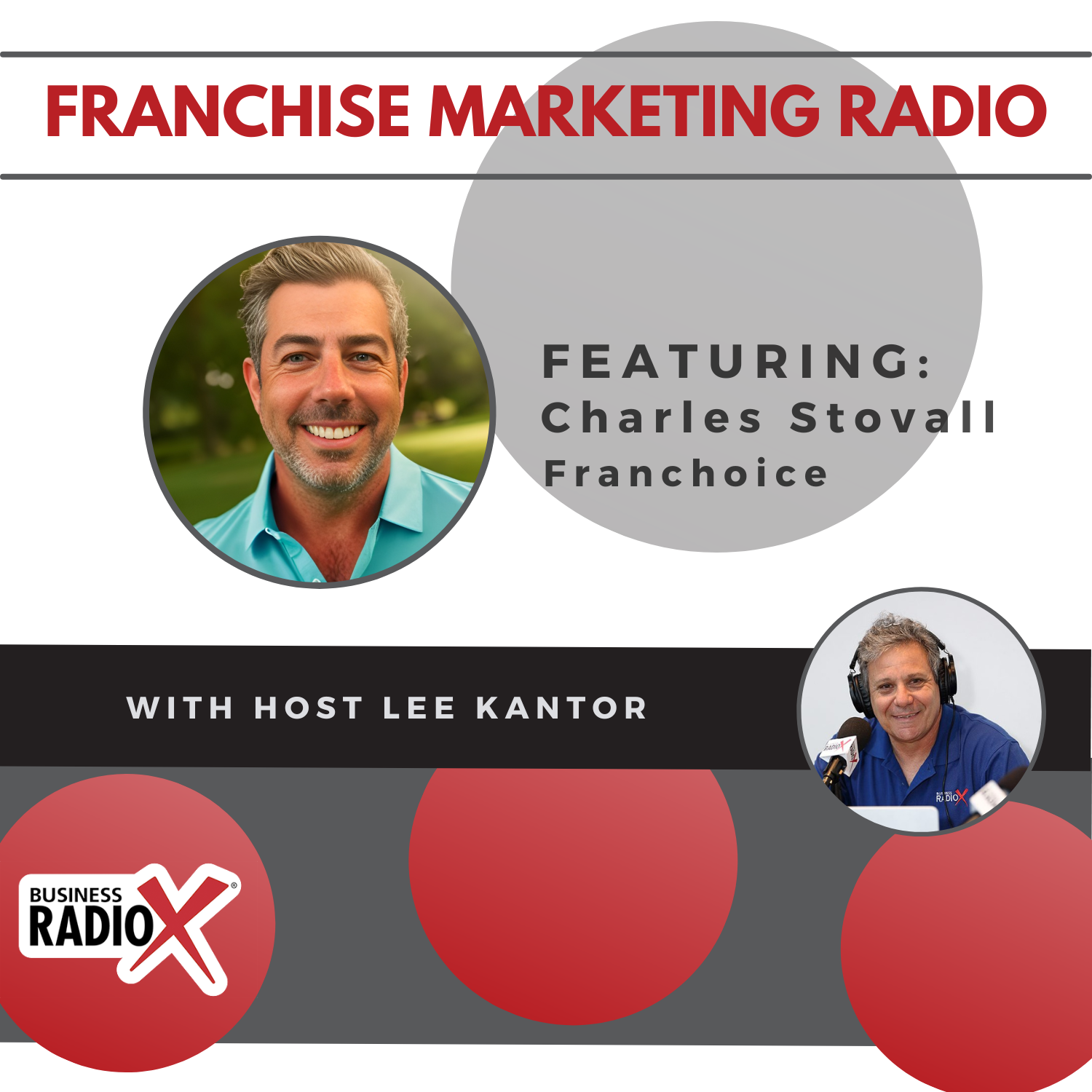

In this episode of Franchise Marketing Radio, host Lee Kantor interviews Charles Stovall, FranChoice owner and consultant. Charles shares his journey from corporate sales to multi-unit franchise ownership and consulting, offering insights into the realities of franchising. He discusses common misconceptions, the importance of understanding franchise disclosure documents, and why business acumen outweighs passion for a product. Charles also highlights the challenges of franchise ownership, the need for commitment, and how his consulting firm helps individuals find the right franchise fit. The episode provides practical advice for aspiring franchisees seeking to achieve their entrepreneurial goals.

 Charles Stovall, is a Franchise Consultant & Business Strategist based in Charleston, SC, he brings over a decade of entrepreneurial experience to the table. From scaling a single location to 20 successful units across multiple states, he understands the grit required to succeed.
As a consultant with FranChoice, he uses his real-world experience to guide individuals through the due diligence process, helping them avoid common pitfalls and find the perfect business match for their lifestyle and financial goals.
He doesn’t just talk about franchising; he has lived it. After owning and operating four different franchise concepts, he realized that the biggest hurdle for most aspiring entrepreneurs isn’t a lack of drive—it’s a lack of clarity. Today, he serves as a Franchise Advisor, helping candidates cut through the noise to find a business model that truly aligns with their lifestyle and financial goals.
His approach is built on the Blackbook of Franchising methodology: identifying the red flags most people miss and focusing on proven systems that create long-term wealth. Whether discussing the tactical side of a $1M+ build-out or the mindset shift required to move from employee to owner, he brings a no-nonsense perspective to the conversation.
When he’s not helping people find their perfect business fit, he can be found on the golf course, planning the next family adventure to Europe, or navigating the beautiful chaos of life in Mount Pleasant with his wife, their two sons, and their Golden Retriever, Brody.
Connect with Charles on LinkedIn.
What You’ll Learn In This Episode
- The realities and challenges of franchise ownership, including misconceptions about success.
- Importance of understanding franchise disclosure documents (FDDs) and their limitations.
- The necessity of evaluating business acumen over personal passion when choosing a franchise.
- The commitment required for successful franchise ownership, including time and resource management.
- The emotional aspects of transitioning from corporate jobs to franchise ownership.
- Trends in franchising, particularly the involvement of younger individuals and family support.
- The significance of thorough candidate evaluation and character assessment in franchise selection.
- Strategies for prospective franchisees to align their goals, budget, and lifestyle with franchise opportunities.
 This transcript is machine transcribed by Sonix.
TRANSCRIPT
Intro: Coming to you live from the Business RadioX studio. It’s Franchise Marketing Radio.
Lee Kantor: Lee Kantor here. Another episode of Franchise Marketing Radio. And this is going to be a good one. Today on the show we have the owner and a consultant with FranChoice, Charles Stovall. Welcome.
Charles Stovall: Hey. Thanks, Lee. I appreciate you having me today.
Lee Kantor: Well, I’m excited to learn what you’re up to. Tell us about FranChoice.
Charles Stovall: Yeah. So FranChoice. Our tagline is we help people realize their dreams. But essentially what I do is I, you know, work with people to help them find a good franchise fit. You know, ultimately, uh, people who are looking to escape corporate America or diversify their income, uh, they typically look to our services to help them find something that would be a good match for them.
Lee Kantor: So what’s your backstory? Have you always been involved in franchising?
Charles Stovall: So for the past 15 years I’ve been in franchising. You know, my my story before that was kind of a typical guy who was in corporate America in a sales role, who had been passed up for promotions, much like a lot of people experience in corporate America and ultimately decided that, you know, taking control of my own destiny was was an order. And so. So about 15 years ago, I opened up a boost mobile store up in Harrisonburg, Virginia.
Lee Kantor: Was that a franchise or was that just a I’m going to open up a kind of a cell phone store here in town?
Charles Stovall: Yeah. So, uh, so Boost Mobile acts as like, kind of like a franchise, but they, they do more of, like, an agent operator model. It’s basically the same thing. You operate underneath their umbrella and have to sell their products.
Lee Kantor: And so there were rules to work with them, like you never considered. Hey, I’m a smart guy. I’m good at sales. Let me go out and sell people something.
Charles Stovall: Yeah. That’s right. Yeah, yeah. Well, you know, ultimately I just saw, you know, I was in cell phone sales at the time, and so, so I was, I was helping people open up these stores. And then ultimately I was like, I think, I think I can probably do this. And and we did, you know, and that’s, uh, and that’s kind of it took off from there. And we grew to 20 locations, 20 Boost Mobile stores across five states over those next four years.
Lee Kantor: So then so you’re you’re now kind of franchise adjacent, I guess you would call that at this point.
Charles Stovall: Yeah. That’s correct. Yeah. And then, you know, we sold that to a private equity group in that in the cell phone space. And then we transitioned into full, full blown franchise ownership with Massage Envy. And so we had, uh, seven massage envy’s in the state of Virginia as well.
Lee Kantor: So now you’ve kind of got the bug, you got some capital now, and you’re like, okay, let me dip my toe in, you know, pretty far if you’re I guess that was was that a master franchise or was that a region like how how was that structured?
Charles Stovall: Yeah. So, you know, ultimately they were just like individual licenses that, that we acquired, um, you know, over time. And um, and whether that was building a new or acquiring existing, uh, we, we, we did that, you know, over the course of about five years. Um, and then, uh, and then Covid came along and then we sold in 2021 after Covid, uh, kind of had, you know, dwindled down a little bit. And we sold to, to a private equity group.
Lee Kantor: So now so now you got a system, right? I’m gonna launch build and then exit.
Charles Stovall: That’s right. Yeah. So, um, so we attempted to do this with a company called yoga six. Really? In the middle of us owning, um, massage envy, me and a couple of other Massage Envy franchisees got together. We bought the rights to develop yoga six in the state of North Carolina and the Raleigh area. And, um, and then ultimately we, uh, Covid came along and really paused those development plans. Um, and so, um, so we ended up we ended up selling those licenses back to the franchisor. Um, and then, uh, and then after I exited Massage Envy, I became a consultant and, um, and have recently became a franchisee of a concept called, uh, Image Studios. And, uh, it’s a salon suite concept. And so we have the rights to build three of those here in the state of South Carolina.
Lee Kantor: And then you’re also a franchisee, uh, franchise. Is franchise a franchise?
Charles Stovall: No, they are, um, essentially just individual consultants. Uh, you know, we’re a smaller, more boutique group in, in the consultant space. Um, there’s a lot of, uh, there’s a lot of firms out there that have hundreds and hundreds of people who kind of treat this as a part time job. Uh, we have about, you know, I think we have like 100 consultants, probably 70 or 80 or full time active. Um, we typically have, uh, extensive franchising experience. Um, and that way whenever we consult with our candidates, then we can give them appropriate advice on, you know, basically on what they’re looking for.
Lee Kantor: And then it’s kind of, um, agnostic to the franchisers that you’re representing where like, like some of the franchisor franchise type companies, they have a portfolio of franchises that they’re supposed to encourage people to buy, right?
Charles Stovall: Yeah. So we have like 300 franchisors that we work with. It’s kind of like a rotating list sometimes, you know, of like, you know, maybe 2 or 3 in 2 or 3 out, um, just depending on what their development looks like. So, you know, if you’re looking at something like an orange theory or a subway or, you know, massage envy, even, you know, like they don’t really have any more development opportunities, so they don’t really need us, you know. And so, um, so we’re typically working with, you know, brands that are either emerging, um, you know, they may have the 50 to 100 open, uh, something like that is typically our wheelhouse where people are going to be able to identify an opportunity that’s on the upswing that still, like, has some good validation, meaning that they have franchisees who’ve been operating for, you know, a few years that they can at least, um, you know, get some understanding of the business and how how the first couple years have been.
Lee Kantor: And so, um, when you’re going, is it the same model as a lot of the franchise brokers that you have people in local markets that you’re kind of networking, joining chambers, you know, going about your business that way to attract people that are like, hey, I you know, I just got laid off, so I need something to do now.
Charles Stovall: Yeah. So, um, you know, so franchises nationwide, some of the other networks are more regional now. We do operate nationwide. But, you know, a lot of, you know, a naturally a referral would come through, you know, your local market or people who know you locally. Um, so, you know, a lot of your business will come from your backyard, but, you know, franchises, um, you know, we’ve, uh, we operate nationwide.
Lee Kantor: And so, like, you were in a local market, obviously, where you live, but you can help somebody anywhere, I guess, in the world, if they’re interested.
Charles Stovall: Yeah. Essentially anybody in the United States, we we we could help them.
Lee Kantor: And then when they’re coming to you, are they typically is the franchise e of today the same as it was when you became a kind of involved in franchising? Is it the person like you said, you know, I’m frustrated with my job or I got laid off or, you know, something was a trigger of me working, and now I’m trying to explore something a little more entrepreneurial.
Charles Stovall: Yeah. You know, you see all walks of life, you know, and, um, you know, and I think that people who are, you know, the question you’re gonna that people a lot of times ask, you know, are, you know, was it going to take to be successful or would I be a good franchisee. And and so sometimes that motivation that’s coming from not being, you know, promoted or being laid off is a really good motivation for you to go be a successful business owner. But we try to peel those layers back whenever we are working with somebody to ultimately make sure that they’re also not making, you know, a bad decision, an emotional decision, and really make sure that their heart’s in the right place. And the expectations of what business ownership and franchise ownerships is going to be like for them. And, you know, sometimes I think people feel like, hey, if I just buy this business, it’s gonna eventually just start paying me my salary here in the next few months. And that’s just not going to be the case. You know, you kind of have to rewire your brain. You know, this isn’t a W-2 job anymore. You’re not going to get a bi weekly paycheck. Um, you know, so what does that look like for you? And we try to walk people through that before they make this decision.
Lee Kantor: I think that’s really important for people to understand that buying a franchise is not like buying an ATM machine, where just people show up and give you money, right? Like, this is you have to kind of grow your business despite with a lot of people think I think a lot of people think, oh, I’m buying this brand. They’ve already done the heavy lifting. I just have to show up and be a good, you know, steward of the brand, and then I’ll just be successful. And then they got to earn each client one at a time, right?
Charles Stovall: Yeah. Right. Exactly. Yeah. You know, like and that’s kind of why you have franchisees, you know, like if it was that easy, then, you know, the corporation would just go do it themselves. And so we need people who are involved in the community, who are involved with their employees, you know, who can give back and who can like, you know, have real empathy on the ground, you know, and not just be this corporate umbrella that’s, uh, that’s overlooking this, this whole thing nationwide. So, um, yeah, you know, it’s like I often joke with people like, you know, I’m, I’m in my car, I’ll go up I-95 and, you know, for the weekend to go, you know, whether it’s to go visit some family or go on vacation. And I’ll pull over to the chick fil A, and the owner of the chick fil A is the guy holding the door, you know, and you know, he’s not he’s not visiting family that weekend. And, you know, he’s he’s putting in the work and that’s what it takes. You know, you gotta be involved. You gotta plug yourself in and you gotta understand your business and you gotta wear the brand.
Lee Kantor: Yeah, I the reason I keep kind of harping on this is I talk to a lot of franchisors. I talked to a lot of franchisees, and sometimes there’s this, I believe, a misconception that if you buy a franchise, that’s almost a guarantee when you’re going to be successful. And I just don’t think that’s true. I think there’s ways that franchisors, um, can not tell you everything. Like you, part of what I think makes a layperson feel secure is there’s an FD that they have to document a lot of stuff and, you know, kind of the ins and outs of that FD much better than I do. But can you share some, um, kind of maybe misconceptions about FD? It’s not a franchise, isn’t a guaranteed win.
Charles Stovall: Sure. Yeah. Absolutely. Yeah. Yeah. So you know, the FD is like kind of part of this whole scaffolding that you need to put together to, you know, interpret whether this business is going to be a good fit for you. So it’s only it’s a small piece of, of a, of a much bigger puzzle. And so, you know, you can kind of frame an FD in your favor. You know, if you’re a franchisor and you know that that doesn’t necessarily mean that they all do. And but what you really you know, what you’ll typically see is that, you know, they may not disclose, you know, any type of numbers or they may disclose just their corporate locations, numbers which have been open for 15 years, you know, and all of a sudden they, you know, it took them, you know, 12 to get to those numbers. You know, and now they’re reflection of those numbers to people who are just getting into the business. Think that that’s something that they can get to, you know. Um, so, you know, it’s it just should help you frame questions as you go through the, the discovery process and, you know, really start to peel back the layers.
Charles Stovall: Um, what I typically will tell the candidates I work with is when they’re looking at PhDs. You know, compare similar PhD to a similar brand. So just, you know, if you’re looking at a painting concept, then go go look at another painting concept. If the painting concept that you’re looking at says, hey, there’s 25% margins here. And and then there’s another one that shows ten, you know, well, you know, paint still the same cost labor still the same cost. So you know there there’s there’s something going on there. And um, so ultimately, you know, there’s a lot of ways that you can kind of interpret an PhD. Again, it’s not the truth. It’s not the it’s not the word often is, you know, is the prior year’s numbers. So there’s some instances where it could be a year and a half old data, you know. So um, so again, it’s just kind of part of the bigger piece of the puzzle.
Lee Kantor: Now, how would you, um, how would you help a person that’s considering a franchise understand that? Okay. I’m especially an emerging franchise. Okay, this this place has ten units. It’s. I look on their feed and there’s ten. It says there’s ten. And then I can see ten people’s names. But aren’t there ways a franchisor can either buy back or kind of massage those numbers? Um, that might be hiding something that, um, they’re still following the letter of the law, but there’s ways to kind of, um, let a person maybe draw a conclusion that isn’t totally accurate.
Charles Stovall: Yeah. You know, there’s like, there’s definitely, you know, franchisors don’t want locations to close. You know, and and, you know, and the thing is, is that, like, you know, if something does close, that doesn’t mean that it’s a bad concept. You know, and and, you know, there’s a lot of bad operators out there too. And I think that people will typically, you know, want to blame somebody but themselves. And so that’s kind of like always my first inclination is like, well, you know, I’ve seen people be really successful in bad brands, you know, and I’ve seen really good brands with bad operators be really successful. And I’ve seen it all, you know. So it’s so like there’s ways that the franchisor will say, hey, I know that you’re struggling. Or maybe they had a life event, or maybe they just were incapable of running the business. You know, maybe the business wasn’t working. Um, but, uh, there’s definitely they definitely will take over, you know, leases. They will definitely, um, you know, go in and try to salvage the business so that, you know, I mean, part of it is so that they don’t have to take a hit on the head and show a closed location. But another part is they just want to make sure that, you know, they salvage the brand and the identity and really, you know, um, not put a bad taste in the mouth of that local market. And so, um, so there’s definitely ways that that, you know, that they can construe some information in the PhD. And again, a lot of it is timing on when they file an PhD and when people close and what actually counts as a closure. Um, so, um, so, you know, there’s there’s definitely some strange things in there. And again, it’s just like a, it’s a smaller piece of a bigger puzzle of whether you as a candidate can operate that business.
Lee Kantor: And that’s where the franchisor and consultants like you, you have to kind of tell the whole story the good, the bad, the ugly, because you don’t want to have a mismatch in terms of expectations and skill and what they think is going to happen. Um, in terms of once they buy this thing. Because when you buy this thing, it’s one of these, you know, you break it, you own it kind of situations like it’s, it’s not that easy to get out of it.
Charles Stovall: Right. Yeah. Exactly. You know, it’s it’s easier to get out of than, you know, if you were to go and open your own type of business, you know, because if you have a failing business that you opened on your own, you know, and hey, my, you know, my own Pilates studio didn’t work. Well, you don’t have a whole group of other franchisees that think that they can do it better than you and come in and take over the take over your lease, or come in and buy you. So there there’s not necessarily a safety net with franchising, but there’s definitely some people sitting on the sidelines waiting for you to fail that think that they can do it better. And so, um, so, you know, so I think there’s, uh, you know, there’s a little bit of in people’s mind like, okay, I see all these other people doing it, I can do it. And if I don’t do it, well, then the franchisee will take it well or the franchisor will come in and save me. That’s not always the case. Um, but but there’s definitely some operators sitting on the sidelines ready to pick you up for pennies on the dollar.
Lee Kantor: Now, when someone is at that point where they’re like, okay, I gotta make a move here, I need the money. I, you know, I’m in I’m in this transitional place, I think I can do this. I talked to, uh, Charles and his team. I think I’m going to pull the trigger. It. What are some things that maybe I don’t that I think I know, but I really don’t know. Like, for example, like, hey, you know what? I’m a great person on the grill. I’m going to open a barbecue franchise. That’s my dream. It’s my passion. I’m really all my neighbors say I make the best brisket in town, so I’m going to look for a barbecue. Uh, franchise. Is that a good move to follow the thing that, you know, is my maybe a hobby or a passion of mine?
Charles Stovall: No, actually, quite the opposite, I think, if you were to ask me. So I typically will tell my candidates that, you know, franchising isn’t a passion play, you know, like, you have to be passionate about building a business. You have to be passionate about leading people. But if you’re passionate about a product or a service that you do well or something that you love, then go do that. You know, like go do that on your own. You don’t need a franchise, you know, you can go do this yourself. Franchising should be an opportunity for people to plug themselves into a proven system where they can just execute the game plan, lead people and, you know, go build a real business. And that way they can go spend more time in their passions. And like, that’s what franchising is really about. Like, I didn’t wake up one day wanting to go sell cell phones and or go have a massage place. Like, that’s not what gets me up in the morning, you know? But what does get me up is the ability to spend more time in the things that I love, and franchising offered me that. And so that’s the message that I try to get across to my candidates. You know, when I show them ugly businesses that have low startup but good margins, you know, like I’m showing them that because I think what they ultimately want is more time Him doing the things that they love to do, like, you know, barbecuing or spending time with their kids or family.
Lee Kantor: So they got to kind of separate their identity from the whatever the business is.
Charles Stovall: Yeah, I mean, that would be my suggestion. You know, again, it’s like, you know, if you’re going to grow to hate it, you know, like there’s going to be good days and bad days and, you know, and that’s often the mistake that people will make is that they will buy a business that they like the product, you know, like, hey, I’m, I go to this fitness concept. I really like this fitness concept. You know, like it’s gotten me in shape. It’s gotten my friends in shape. I’m going to go now open up a fitness concept, you know, and then it’s like, okay, now you have coaches calling out at 530 in the morning and.
Lee Kantor: Now it’s a you problem.
Charles Stovall: Right now it’s a you problem right. You know and now you’re working weekends. You know, you’re hosting you know bridge runs and marathons and you’re doing all this stuff and and that’s okay. Is that what you really want to do? You know, and, um, and I think, you know, some people are like, no, what I actually want to do is like, I just want to go work out and come home and then maybe run my business at that point.
Lee Kantor: So, yeah, I think it’s important for folks to understand if they’re going to buy a business. They got to like all of it. Like they can’t like just the good parts, because there’s a bunch of other parts too, that you’re not seeing, that maybe not obvious and you really got to get comfortable with if you want to be successful. Like if it takes, like you were saying, to run a fitness studio requires, you know, you know, six times a year we have to do some sort of a fun run at four in the morning. And I got to get there on a lot of holidays and a lot of times that I used to spend with my family, or I have to put somebody in place, I either have to have the resources to afford to put someone in place to do it for me, or I have to do it like there’s all that has to be done. If you want to run a successful operation.
Charles Stovall: That. That’s correct. Right, exactly. And again, I just, you know, and so when people are leaving their corporate America, they were just let go, you know, like there’s that that emotion is high. And so they just say, okay, I’m going to do this. And then, um, you know, but then they didn’t really make an educated decision. And, you know, and that’s why that’s why franchise exists.
Lee Kantor: Right. Well, it sounds like you’re trying to tell people the truth and not what they want to hear, because they might have hated that job, but they didn’t bring the job home with them. You know, when they clocked out, then they were done. They didn’t think about it. But when you have a business, you can’t clock out.
Charles Stovall: That’s right. Exactly. Yeah. You know, it’s it’s the entrepreneur entrepreneurship. You know, that’s what it is. It’s uh, it’s 24 over seven.
Lee Kantor: Right. And that’s a mental shift for a lot of people. If they thought they were the job, that they were a rock star and they never thought about it when they were home or on vacation, that may not be the right fit to run a business.
Charles Stovall: Yeah. No doubt. Yeah. I helped this lady down in Texas once, and she was a, um. She was a doctor, and she had, you know, uh, she was really wanting to get into doing Botox and hormone treatments, stuff like that. And she bought a franchise, and, um, it was like a year and a half had passed, and she, uh, and and she had emailed me and, uh, and it turns out she, she got everything she wanted. Now, the franchise that were doing great, the revenue was really high, you know, everything was going great. And she emailed me and she said, I want my old life back, you know, and, uh, and sometimes that is, you know, she bought what she thought she wanted, you know, and, uh, but, you know, but it became something that she didn’t, you know, and like, and it’s just because, you know, you you like, you fall in love with, like, escaping this, uh, this corporate reality when sometimes it’s just not a good fit for everybody.
Lee Kantor: Right. And and it’s not. It’s kind of you got to be all in like. I mean, I’m sure there’s opportunities you can share where. Hey, this is a I don’t want to say passive, but you can. If you’re willing to spend money, you can delegate a lot of the activities. Um, but you better have a lot of money. Like it’s not. You can’t have it both ways. You know, you’re either going to spend time or money.
Charles Stovall: Yeah. Absolutely. Yeah. And I typically would share with my candidates that, you know, passive ownership is never given. It’s always earned and it’s always earned over time. And like, you know, so you know, you’re gonna have to put that time in to generate enough money in order to be able to put the right people in place in order to run your business. But that doesn’t mean that you’re completely out of it, you know? But it’s going to allow you to get you some more time. And so, you know, whenever, you know, people are really familiar with, like the brick and mortar franchises, you know, and the things that we see on the side of the road, right? Those are, you know, like those obviously, cause they have more capital. But, you know, but people can put you, you, you got to really think bigger whenever you’re thinking about those types of businesses. If you just have one, you’re always going to be in that business. You’re always going to be involved with that business if you just have one. But if you have the money and you have the capital to and the time to be able to go out and build 3 to 6 of these, you know, then then you can earn your way to semi absentee ownership. Um, but it’s going to take some time.
Lee Kantor: So now is there a story you can share that maybe illustrates what it’s like working with you or somebody on your team, like maybe don’t name the name of the person, but maybe share what they came to you with, or what their expectations were and how you were able to set them up.
Charles Stovall: Yeah. You know, I mean, I work with so many people, um, you know, like every week and there’s so many personalities and I, you know, and most people come from this same place of, I want to be an entrepreneur. I don’t know where to start. And, um, and like, even so, I, my most recent, uh, placement was a a family here in Charleston, South Carolina. I’m based in Charleston and and they had a troubled past, you know. And, um, from like 15 years ago. And, you know, but they’ve now they’ve gotten everything in order. They they have, you know, beautiful kids. They have a really good family, but they have this past. And so when somebody works with somebody with franchise, like, I can speak on your character and I can speak on your behalf of getting approved by a franchisor with the good ones, you know, like if, if, um, if there’s franchises out there, they’ll approve anybody that can fog a mirror. But, you know, like the type of brands that I like to work with are going to be the good ones that, you know, want you to be able to pass the character test.
Charles Stovall: And so, um, so whenever, you know, somebody has this pass and I can speak on their behalf and I can go to bat for a candidate, you know, because it’s an opportunity that, that they really want. Um, you know, I was able to do that last week. Um, but I think a lot of, you know, when people are able to come to us who are just now exiting corporate, you know, whether that was because they were laid off, like, I really just try to sit down with them and put a framework of what the next six months to a year is going to look like for them from their personal expenses. You know, like from what? How are they going to save money? How are they going to build this business simultaneously? And we try to work from the end result backwards. And that way we can kind of find a business that’s going to work within their budget, within their lifestyle and their time, the type of person that they are, the type of people that they can manage.
Lee Kantor: Now, are you seeing is there any type of a trend of younger kind of people getting involved in franchising? Instead of going the traditional, I’m going to go to, you know, go to college, you’re going to get a, you know, some corporate job. And then, you know, I’ll find, you know, my own thing down the road. Are you seeing either the parents funding or partnering with the younger people to maybe skew a little younger now in types of some types of franchisees.
Charles Stovall: Yeah, we definitely see a good bit of that. There’s no doubt where like, I’ll have a call with like a, you know, a gentleman who maybe 62, you know, and he’s like, yeah, my son’s 25. He hasn’t really found his way yet, you know. And I think I’m just going to buy him a business, you know. So there’s definitely been some of that. Um, but again, it’s kind of it is always all across the board, but I think you’ll, you know, you’ll see a lot of that for people who, you know, they just they’ve had a, they’ve had bad luck with, you know, entering into the corporate America world. And their dad’s like trying to help them or their family’s trying to help them. So that’s definitely out there.
Lee Kantor: Now you’re I’m sure you’re still having those hard conversations with the kid, right. Like because there’s no that’s not a cheat code. I mean, you might have a bank that’s quote unquote funding you, but it’s still the work has to be done every day.
Charles Stovall: Yeah, absolutely. I mean, you know, again. And what will often happen is that the the father, the family wants to pick the business for the kid, you know, even better. I’m like, how about how about we get the kid on the phone?
Lee Kantor: Yeah, I think at some point the kid’s got to get involved in this thing.
Charles Stovall: Yeah, right. You know, and so, yeah, you know. Absolutely. You know, it. The one thing that they’re blessed with is time. You know, like, it gets increasingly hard to invest in a business, whether it’s franchising or not. As you get kids and as you’re um, as your cost of living continues to increase over time, you know, like, I wish I had the expenses I did when I was 24, 25 and, you know, could live off ramen noodles. But, um, you know, now, you know, it would be increasingly difficult for me to enter into a franchise, you know, and also have the cost of, of living that, that we have. And so that’s, you know, it’s a it’s a tight balance, you know, and, you know, between people who really need income versus people who can kind of delay that income for a year or two.
Lee Kantor: So if somebody wants to learn more, have a more substantive conversation with you or somebody on the team, what is the best way to connect?
Charles Stovall: Yeah. So the best way to connect with me is through my website, which is Charles Stovall. That’s s t o v as in Victor aol.com. Charles stovall.com. My tagline is I’m your franchise friend. So if you just need some honesty and somebody that would want to talk to you about, you know, some franchises happy to do that. You can look me up there.
Lee Kantor: All right. Well, Charles, thank you so much for sharing your story. You’re doing such important work, and we appreciate you.
Charles Stovall: Yes. Thank you. Lee.
Lee Kantor: All right, this Lee Kantor. We’ll see you all next time on Franchise Marketing Radio.














