
Sponsored by Business RadioX ® Main Street Warriors

 A native of New Orleans, Amanda Sutter has proudly called Cobb/Cherokee home since 1993. With a B.B.A. in Economics from Kennesaw State University, Amanda has a diverse background in economic development in both the public and private sectors.
Throughout her career, Amanda has worked for several cities (Acworth, Alpharetta and Marietta), in various capacities such as a land development inspector, planning & zoning/business license admin, development authority director, historic preservation, and tourism. She also gained experience facilitating projects and asset management for real estate development companies, Walton Development & Management, SE USA, and Landeavor, LLC.
Prior to joining the COED team, Amanda enjoyed managing marketing initiatives and a welcome center as the Executive Director of the Marietta Visitors Bureau.
Amanda is a graduate of the Georgia Academy of Economic Development, Basic Economic Development and Business Retention/Expansion courses at Georgia Tech, KSU’s Leadership Excellence Certificate and is certified by the Southeast Tourism Society as a Travel Marketing Professional.
Amanda’s heart belongs to all things blessed by mother nature. She loves animals and is an outdoor enthusiast who finds peace in gardening, hiking, climbing trees, floating or playing in water.
Connect with Amanda on LinkedIn.
 Chris Thom is a Realtor who’s motto is “Promise only what I can deliver; Then deliver more than I promise”! It is his goal to provide impeccable service and knowledge in the needs that you require.
Chris specializes in all residential Real Estate transactions representing Buyers, Sellers, Landlords, Investors, Tenants and Pre-Foreclosures.
As a United States Air Force Veteran, he lives by the core values of “Integrity First, Service Before Self, and Excellence In All I Do”!
Connect with Chris on LinkedIn and Instagram.
This transcript is machine transcribed by Sonix
TRANSCRIPT
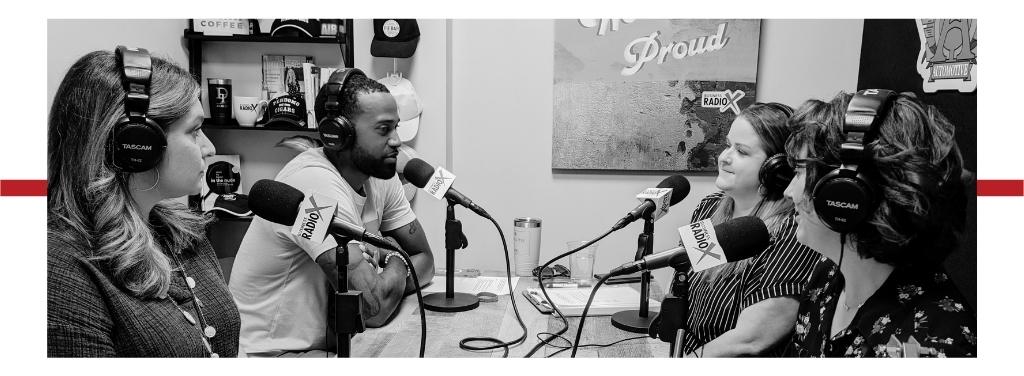
Intro: [00:00:07] Broadcasting live from the Business RadioX studios in Woodstock, Georgia. It’s time for Cherokee Business Radio. Now, here’s your host.
Stone Payton: [00:00:24] Welcome to this very special edition of Cherokee Business Radio. It’s time for Kid Biz Radio. And today’s episode is brought to you by the Business Radio Main Street Warriors program. For more information, go to Main Street Warriors dot org. You guys are in for a fantastic episode this morning hosted by Renee Deardorff and Amy Guest. And we had the pleasure not too very long ago of being out broadcasting live at the Kid Biz Expo. We had so much fun. I didn’t do any work. I just walked around and bought stuff, visited with the kids in their booths. And my compadre, Sharon Cline, interviewed so many of these young people. It was it was a blast. What’s your recap on this, Renee? How do you feel like it went?
Renee Dierdorff : [00:01:13] It was incredible. I got to listen later to all of the kids and their interviews. And I was impressed. I was excited all day watching all of the kids give their interviews and watching from afar. And I was just I was like, I can’t wait to go back later and listen to all of these. And I got to listen later. I was working and just had it playing and just I was in awe of it all and just so glad that we had the opportunity to have that happen.
Stone Payton: [00:01:44] Amy, how about you?
Amy Guest: [00:01:46] It was amazing. It was so cute hearing all their different little journeys and their stories and answering questions like pros, like it was it was impressive. It was it was very cute. And I know they had a great time, so I’m so glad we had that opportunity.
Stone Payton: [00:01:59] One of the things that I particularly enjoyed and the credit goes to Sharon for doing this, I think. But she asked all of them, I think most of them, for a piece of advice for counsel, for other people, young and old, going into business. And you talk about wisdom beyond their years. They talked about persistence and don’t let other people tell you that you can’t do it. One kid said, Don’t spend all the money you make in one day because he had made a really good money at one of these things. And did he turn around and bought his mom like, you know, this expensive item? And I thought, man, this guy could be on a panel like a Wall Street Journal conference or something. It was it was fantastic. Yeah. So in just a moment, we’re going to have a chance to visit with a couple of esteemed guests that many of us know here in the local business community. But before we go there, Renee, Amy, either both let’s remind the audience what kid business is all about mission, purpose and what we’re out there trying to do for folks.
Amy Guest: [00:03:00] Okay. Well, we are a local nonprofit organization with the goal of empowering the entrepreneurial student spirit in kids, really helping them go beyond that. Just the lemonade stand mindset, rather, into the businesses of whatever they’re passionate about and just helping them like encourage that journey through. We have workshops, vendor markets, networking opportunities and some mentorships. Also just trying to implement programs and resources that help them really grow their confidence along the way and learn those life skills through this. The journey of entrepreneurship.
Stone Payton: [00:03:36] That was incredibly articulate. I get the idea that you’ve answered that question before.
Amy Guest: [00:03:41] A couple times.
Stone Payton: [00:03:43] All right, Renee, let’s don’t keep them waiting. Let’s tee up our guests. Who did you bring with you this morning?
Renee Dierdorff : [00:03:48] So this morning? Well, so another aspect of the Kid Biz Expo now is Kid Biz Radio. So this is our first podcast and the Giving Voice giving us a voice now. So us and the community, a voice. And the purpose of this show is to create a conversation about the power of entrepreneurship and the positive impact that that journey can have on kids. And we want to bring in the community to have that conversation with us. And so that being said, we have two very amazing people here with us today. We have Chris Tom. He is that realtor’s dope. And we have Amanda Suter here today with the Cherokee Office of Economic Development. And first, Chris, thank you for being here. I really appreciate it. Tell us about what you do and how you got. Well, you’re a realtor. Tell us about how you got into real estate.
Chris Thom: [00:04:47] I mean, before I get into myself, I just want to give you guys, you know, congratulations on just exactly what you do, just even providing this to the kids in the community. I think this is this is really huge. I wish this was available for me when I was a kid. So thank just congratulations first. But you know me, as you said, Chris Tom Arcade, it’s realtors dope. And obviously what I do, I’m a realtor. I’m a realtor here and locally. And Cherokee County really specializing in turning renters into homeowners and making sure that I educate people on the importance of homeownership. I mean, and I can get into and as we were. Get in here shortly. How being an entrepreneur or, you know, me trying to attack that space that I feel like is not, you know, tend to too much helps provide that foundation for people to build that generational wealth, which is another reason why people want to be entrepreneurs, start their own business and obviously, you know, generate that wealth for themselves.
Amy Guest: [00:05:43] Absolutely.
Renee Dierdorff : [00:05:45] So how did you get into real estate?
Chris Thom: [00:05:48] Oh, I get into real estate. So it wasn’t overnight. I started about four years ago. I was working Operation Space with UPS and it was great money. Let’s say that first it was great money. Originally from New York moved down here with that job, but probably within eight months I felt like I wanted more right. And I started thinking long term. I started thinking, I’m not going to work till I’m 65 to live off a401k. I just thought that make no sense to me. I’m young. I’m not working for another 30 something years for Somebody
Chris Thom: [00:06:20] Else, for somebody else to make, you know, a set amount of money, have a cap on what I’m able to to make and obviously to get into real estate. You think you’re going to make $1,000,000 the first day, right. And you sadly awakened. But I got into it and then I realized the impact that I can have on helping our community, to helping people that are less knowledgeable about real estate. And that’s pretty much, you know, what drove me to, you know, build a brand and focus on what I focus on in helping clients obtain that financial freedom through real estate.
Stone Payton: [00:06:59] So when you were going through that process, what did you envision as being the most challenging thing to get going?
Chris Thom: [00:07:05] I think getting people to, I guess, respect or understand my mindset. And because when you walk into something brand new, you’re not a you’re not seen as a professional in that space yet, I would say. So you have that type of. That something overcome there. But I think the more you stay consistent, the more I stayed consistent with it and realize, you know, the message that I’m trying to portray and get out there and how I’m just trying to help people. And I think that was very easy to overcome, wanting to stay consistent and knowing my purpose and what I wanted to do.
Stone Payton: [00:07:45] So do you think that some of that was self manufactured or do you think you had real data and people really did feel that way in the beginning?
Chris Thom: [00:07:54] Real data. My real data is just kind of seeing, you know, people that I’m around and, you know, social media is a very powerful tool. You know, just kind of seeing the fact that many people are not were owning. Right. Especially people that look like me, you know, we’re owning a lot as well. So I just wanted to kind of just kind of change that a little bit, but also just educate, you know, just everyone on how we can do that. So it’s a little bit about me. So self, self motivation, but also what I’ve seen and how I felt like an impact.
Renee Dierdorff : [00:08:26] What do you.Think? I guess one of your hardships or your biggest takeaway on that entrepreneurial journey that you could possibly teach to a child that’s trying that journey? You know, like experiencing those hardships at a younger age, possibly, and learning through those life skills would be beneficial to them. How could you correlate that from what your journey was?
Chris Thom: [00:08:52] So hardships, again, it kind of goes back to staying consistent, right? And I think that that’s key in anything that we do. We want to if we have a vision, we have an idea. I think we have to just kind of promote that, you know, especially to the kids. And we have to, you know, let them know like it’s okay. You have you have an idea. It’s okay to move on it, right? And find someone, find that trusted person that you can kind of share that information with. Right. And even if you kind of want them to have that share, that same idea with you share to understand it. But even if they don’t, you still want to be able to know that, that you have something special that you can move forward with. And don’t let someone tell you like, Oh, this may not work. Right, right. This people are just going to have something to say where it’s like, you know, we can do this, we can tweak this, but don’t let nobody say, hey, it’s not work, especially if you feel passionate about something. So just to touch on that, when I got into, I resigned from my job before I got into real estate. So there was no security there. There was no income. I did have enough, you know, safe to, you know, support my life. But I didn’t realize how expensive my lifestyle was.
Amy Guest: [00:09:57] First of all, rude awakening.
Chris Thom: [00:10:00] But I had people say, oh, no, you shouldn’t do that. You should try to get into real estate while you work and blah, blah, blah, blah, blah. But I believed in what I wanted to do and I just didn’t let that take me away. Now, were they right? Could they have been seen as right? It we all have different perspectives. Absolutely right. Maybe I would have never had to not make money for another eight months. But at the same time, they taught me something. It taught me to continue grinding, to continue staying consistent in what I’m doing. And and if I believed in what I was doing, that nothing was going to stop me. And by doing that, that helped me get to where I am today.
Amy Guest: [00:10:37] Absolutely. Finding that passion and that drive and focusing on it. And I think that comes back to what we’re hoping to encourage these kids to do, is finding that at a young age, it’s something that they can pursue in a path that they can follow.
Chris Thom: [00:10:50] Absolutely.
Amy Guest: [00:10:51] Because I know for some of us, finding that at a older age wasn’t as easy, learning those obstacles later in life versus accomplishing them when you’re a little more resilient.
Chris Thom: [00:11:01] But the good thing about, you know, kids, this makes me sound old. I swear I’m not old.
Amy Guest: [00:11:06] But that’s okay.
Renee Dierdorff : [00:11:08] None of us are old in this room at all.
Chris Thom: [00:11:09] It’s the information that’s available, right? The technology that’s available right now, it makes it that much easier. It makes it there’s some aspects of it that that are tough. But I feel like it just makes it that much easier to to press to press on and move forward and bring your ideas to life and connect with people that you may or may not even know. Right. Because at one point we didn’t know each other in this room. Right. So I think that’s very huge and something that you just want to, you know, tell the kids and have them press forward on.
Amy Guest: [00:11:38] Absolutely.
Renee Dierdorff : [00:11:40] Yeah. I think one of the things I was going to pick your brain on was in a kind of building on. What we were just saying was, what are your thoughts on the different career path options that are available now for kids versus we were in high school.
Chris Thom: [00:11:57] I mean, it’s there’s so many there’s so many career paths for for kids that do not include, you know, the conventional schooling. If I said that. Right. Right. Going to college, high school, finishing high school and all that good stuff. There’s so many opportunities and I like it. It’s a gift that occurs with everything. It’s a gift and a curse. But I think it allows this. The kids of today to to build these businesses, to become entrepreneurs, you know, to to have an idea and really grow their idea without and grow it themselves. When I say to themselves utilizing social media, usually, usually like, yeah, I can even talk. Yeah, I can’t.
Amy Guest: [00:12:36] Take that word, utilize it.
Chris Thom: [00:12:39] There we go. You got to crop that out utilizing what we have available to help them grow their their business. I mean, you just any idea I mean, I know you guys have seen, you know, a bunch of kid entrepreneurs and ideas that they come with. I don’t think the traditional way of education helped that. I felt like it came from within and I feel like it came from where they want to be. And then I’m not probably not seeing it going the traditional way. And like, you know what? I want to build something. I want to be the boss. I want to, you know, grow this into X amount of million dollar company or whatever their vision is. They didn’t get that, I feel like, from school. Correct. So that’s why I see that. That’s why I said that there’s a value in the information that’s available to kids nowadays.
Amy Guest: [00:13:26] Absolutely.
Renee Dierdorff : [00:13:27] I feel like sometimes, you know, like you were saying, there’s a blessing and a curse with all the information that’s out there. And I feel like with what we’re trying to do. There’s it’s it helps narrow in and give some structure to all of that information because with so many options, it can kind of become overwhelming. And what we’re trying to do is kind of rein that back in and give some structure to that to kind of help guide them to. Build a path to where they can have a way to get that.
Chris Thom: [00:14:04] Like it. Giving them another opportunity.
Renee Dierdorff : [00:14:07] Another path.
Chris Thom: [00:14:07] Another path.
Renee Dierdorff : [00:14:08] Another path that’s a little more structured and clear and gives them a sense of purpose behind.
Chris Thom: [00:14:15] What I also think you guys are doing, and you may, may or may not know this, is that you may kids may not know that this is even an opportunity for them. They may not know they want to start a business. They may not think it’s something of interest. But then when you see certain kids that you know or like, Oh my, that kid is ten years old and they’re doing that, like, why can I do that? Right. You’re showing them that. That’s outside of social media. This is the curse, right? Right outside of someone that has built something one one in a million. Right. But then you kind of see local kids that look like you, that’s in the community, like, wait, they’re doing that here. I can do that, too.
Amy Guest: [00:14:54] We get a lot of that at the Expos. A lot of parents are like, Yeah, we brought our kids here today just so that they could see and see if maybe we can inspire them to come up with their own business. And are they going to rule the world with beaded bracelets? No, but it’s the concept of putting forth a passion and the effort and the journey. And we had a lot of compliments on that from community members of parents that were like, My kids need to see other kids doing this because we want we want them to try this path, you know? And so we’re hoping that that influence, not like peer influence, essentially shows that that it is possible. Is this your lifelong journey right here? No, but it’s a step in that direction. You learn that resilience that, you know, if this one fails at seven, that’s fine, because then, you know, your next one could be better. You know, like my child’s already had to rebrand one of her businesses because one failed. You know, she’s only ten. You know, you’re learning those skills at that younger age rather than when we’re slightly older, learning those skill sets.
Chris Thom: [00:15:59] This is all background information. Imagine when your daughter gets 18. I was like, oh, you know, I started three businesses that that that hits a lot different.
Amy Guest: [00:16:07] Yes.
Chris Thom: [00:16:08] You’re you’re you’re going to like a boss. I’m just saying.
Amy Guest: [00:16:12] Different. They it’s amazing what they’ve already learned and seen. Their confidence just bloom and their ability to communicate with adults, which is almost unheard of these days, unfortunately. But I mean, even the basic skills of counting money, you know, just like all the things that they’re implementing, yes, it will help them in whatever path that they choose. But that’s the concept behind is like those life skills that you learn on this journey just dropped.
Chris Thom: [00:16:41] I wish we could drop this mic because that’s a drop mic moment because it’s more in my opinion, it’s more valuable than dissecting a frog.
Amy Guest: [00:16:47] Absolutely. Yeah. Yeah. You know, how many times have you, like, applied that in a day? Just learn how.
Chris Thom: [00:16:55] To count money, knowing my business accounts and, you know, just communicating with people, right? Mm hmm. You bring this up and not to go any into on a tangent, it’s learning how to communicate with people, right? You’re saying how to communicate with adults.
Renee Dierdorff : [00:17:09] Ordering food at a.
Chris Thom: [00:17:10] Restaurant like that. That’s huge. Yeah. Some people say social media takes takes that away or the new technology takes that away. Well, now, you know, by having something in place like this, this allows you to kind of combat that.
Amy Guest: [00:17:21] That actual physical interaction rather than technological and technology interaction. Yeah, we.
Chris Thom: [00:17:26] Could go on.
Amy Guest: [00:17:28] All day.
Renee Dierdorff : [00:17:28] Talking about I mean, but that’s the thing. I mean, that’s what this is, this show is for.
Renee Dierdorff : [00:17:33] That to talk about.
Renee Dierdorff : [00:17:34] This because it’s, you know, we going back a few steps when you were talking about bringing your kids to the Expos, having, you know. My nine year old, you know, you see these kids, they need to know that there’s things beyond YouTube. My nine year old will watch YouTube and like building the brand, you know, you want to build a business. They need to know they can build a business beyond building a YouTube channel. You know, they can do things beyond that. They can build you know, they’re not going to necessarily build a business and rule the world building the bracelets, like Amy was saying. But they can build something, you know, go beyond their screens or their phones. They can they have ideas, they have passions, they have ideas, they have purpose beyond all of that. And that’s what coming out and seeing all these things and seeing all these kids do these things, that’s what this is all about. And, you know, I just wanted that’s what I wanted to bring to it. It was just say that it’s you know, it’s the YouTube stuff. Like, I just see my kid watching this stuff and it drives me crazy. It’s not like there’s just a one in a million shot of being able to do it and all that stuff is so highly produced and you know, good for those people that do those things, but it’s not.
Chris Thom: [00:18:43] I think we need to get her a YouTube channel. Yeah.
Renee Dierdorff : [00:18:46] I don’t know.
Renee Dierdorff : [00:18:46] It just drives me crazy. Like, I just.
Stone Payton: [00:18:49] And there goes my YouTube sponsorship right.
Renee Dierdorff : [00:18:51] Down the drain. No.
Renee Dierdorff : [00:18:53] I mean, we have a YouTube channel, by the way. It’s all supportive. It’s just there’s just more to.
Amy Guest: [00:18:59] It, just showing that there’s real life concepts out there, not that social media influence that’s being highly pushed at the moment. So going outside of that, absolutely.
Renee Dierdorff : [00:19:11] Yeah, I’m passionate.
Chris Thom: [00:19:12] And I want to also just just chime in where we’re not, you know, saying that, you know, anything else outside of entrepreneurship is bad, correct? Sure. But I think what what I, I think that you guys also want to show is you can be an entrepreneur and you can still be a career professional.
Amy Guest: [00:19:28] Absolutely.
Chris Thom: [00:19:29] Right. And because think about if you’re like a doctor, you aspire to be a doctor. That’s a great profession, right? That’s your career. But maybe you have something that you can another business you can build that’s going to help you as a doctor. Like there’s nothing that’s going to stop that. And that kind of helps people. Like, you know what, I want to be a doctor, but also want to provide this tool to make surgeries easier, right? That’s that’s an entrepreneurial spirit.
Amy Guest: [00:19:52] While still owning your own practice is essentially the same concept. I mean, it’s implementing that path with your career, and there is no wrong path. We’re not trying to say what’s right or wrong, just showing that there’s more options than that. We were provided. We were somewhat forced down like two roads of life and you know, and that was really it. And now it’s like, wait a minute, my thoughts and passions and dreams could do something else.
Chris Thom: [00:20:21] Exactly. But guess what? By you being forced down those two paths allowed you to kind of you guys to kind of combine and put this thing together, right? So, like, there’s so much out there that you want to provide.
Amy Guest: [00:20:31] Absolutely. So still not that that we learned. We learned a lot, obviously, and we’re implementing those things. But it also opens your eyes to what you want for your kids and what more options you want for your kids.
Renee Dierdorff : [00:20:42] And technology has also opened the door to this other path for sure, I think has made it more accessible to people. And the traditional educational system only has so much time. To teach all the things. And I think that that’s also.
Renee Dierdorff : [00:20:56] Those.
Renee Dierdorff : [00:20:57] Things take a lot of time. Those frogs do. And there’s a lot of, you know, the red tape and all the things that they’re required to do, etc., etc.. So, I mean, it’s like we’ve said, there’s no knock to any of the things. It’s just we’ve come along, we’ve seen a need and we’re trying to fill that need. And as simple as that and.
Chris Thom: [00:21:16] This is going to be big. Yeah, this is going to be big. And I love what you guys do. Again, just giving you guys here your flowers. Just let you know that this is a this is a real big deal.
Intro: [00:21:25] I appreciate that.
Chris Thom: [00:21:26] Kids of all ages. Not all ages, but you get the most.
Intro: [00:21:30] Yeah, it’s the.
Chris Thom: [00:21:31] Most ages. There you go. Disclaimer, you know, can can do something special.
Stone Payton: [00:21:35] So I can see it in your eyes here, in your voice. I know our listeners can as well. You really enjoy your work. What are you now that you’re there to some degree, what are you finding the most rewarding, man? What are you enjoying the most?
Chris Thom: [00:21:51] Oh, man, which. Which one? I find. I find it all rewarding. I mean, and it’s something that people don’t know. So as a realtor, you’re damn near like a counselor. At the same.
Intro: [00:22:06] Time, I can see that when we went to buy a house. Oh, yes.
Chris Thom: [00:22:11] Yeah, you do it all. But I think the real gratification just kind of comes from knowing that you’ve helped someone elevate their life. Like, if you know people that know me and they’ll say, like, you know, Oh, he helped me level up my life and they’ll use that type of term and buy level up. Meaning you didn’t own a home when we met. Right. And so I have a client. Didn’t own a home when we met. God her to to purchase one. Right. And obviously, you know, the last couple of years is totally different. We understand it. But guess what? We capitalize on it. So in 2019, you didn’t own one. Now you you own a total of three. Wow. And you’ve added almost $1,000,000 net worth and million dollars in assets to you. Like I was a part of that and I think that’s huge. And to know that I helped someone do that, I think that’s the biggest gratification. Yeah, I got paid in the meantime, which is great. But I mean, that set them up for life and that set them up to do something that they can leverage and create more wealth for their family.
Intro: [00:23:11] That’s fantastic.
Chris Thom: [00:23:12] So that’s that’s the real passion for me. So that’s why, you know, just going back to renters they’re homeowners like that’s why that’s a thing. Do I do more than that? Of course I do. But that’s like a real passion because it all starts from that. You can just leverage so much you just don’t even know. So that’s why. So it’s funny you say that. So that’s just the real the real biggest thing. And there’s others. But I think that’s that’s the. That’s the biggest that’s the biggest for.
Renee Dierdorff : [00:23:40] Me, because you’re not doing it just for the money. Because you have to. You’re doing you have a passion for it. And at the end of the day, it’s bringing you gratification and the joy that it brings you and helping people and all of that. I mean, that’s absolute.
Chris Thom: [00:23:54] Now, we don’t want to tell kids to go out there and build businesses to not make money.
Intro: [00:23:58] There’s more. There’s more to it than that.
Chris Thom: [00:24:01] But what we want also what I think, you know, what I like to show people is just that the money is going to come if you have the right intentions and you focus on, you know, just kind of helping people serving, people serving. I think the money’s going to speak for itself. You’re not going to worry about the money. Not going to realize the money. Well, I say you’re not going to realize you’re going to realize it, but it’s going to be a point of focus, I should say. Right. It’s going to you’re going to get paid, but you’re going to like you know what, I’ve helped ten people this month. I’ve helped tell ten people.
Intro: [00:24:29] And you stay true to yourself that way. Absolutely. That builds upon itself and that that shows in what you’re doing. And then that helps create that. Your clients will see that. And that makes them want to come back to you or refer you, because it comes out in your personality and it’s showing what your honesty through that. And then like you said from that, yeah, the money will come, you know, and that’s the side note from that. But it’s finding a way to stay true to yourself and to build your business. And that can be said on any platform. And that’s another lesson to teach these kids, like finding that passion and staying true to yourself. Will lead you further than.
Chris Thom: [00:25:09] You have to. You have to stay true to yourself. Anything?
Renee Dierdorff : [00:25:12] Leave a couple of jobs along my journey where I wouldn’t, you know, I was going to have to look myself in the mirror right at the end of the day and those kinds of things. And I was like, I’ve had to leave a few.
Chris Thom: [00:25:24] But it’s okay.
Renee Dierdorff : [00:25:25] And that’s okay. I was fine with it.
Chris Thom: [00:25:27] That’s okay. And I got you, you know, here today, where you’re at today, you know, pouring into, you know, the future. Yep. That’s what I would call it. Pouring into the future.
Intro: [00:25:34] These life lessons. Absolutely.
Chris Thom: [00:25:36] But it’s it’s it’s it’s great. You guys just continue to do continue to do what you’re doing. Thank you. I’m going to say it at least five more times.
Intro: [00:25:45] Okay. We’ll count it. That was one. No.
Chris Thom: [00:25:48] Technically, that’s like three.
Intro: [00:25:50] That’s true. I have two more to go. There you go. There you go.
Renee Dierdorff : [00:25:53] So I guess we can introduce Miss Amanda Suter now with the Cherokee Office of Economic Development. Hi, Amanda.
Amanda Sutter: [00:26:04] Hello. Happy to be.
Amanda Sutter: [00:26:06] Here. Good morning. Thank you.
Renee Dierdorff : [00:26:07] For.
Amy Guest: [00:26:07] Amanda, how are you?
Renee Dierdorff : [00:26:11] You are so amazing. You serve on our board of directors and we appreciate you doing that. You have been instrumental in the growth of our organization and we appreciate you so much. And we wanted to bring you in here today because we just wanted to ask you what you think about the organization and how you envision it helping the county in the future.
Amanda Sutter: [00:26:47] Wow. That’s a lot there. A lot.
Amy Guest: [00:26:51] No pressure. No pressure.
Renee Dierdorff : [00:26:52] Yeah. And it’s role in kind of helping the county and and how you thought, you know, when you first saw us and maybe your initial thoughts on that and how you thought maybe we’d be good team.
Amanda Sutter: [00:27:05] Yeah, absolutely. So talking about my first experience and first thought of it, I have to say it’s been just about a year now.
Amanda Sutter: [00:27:12] At first, less than a year ago.
Amanda Sutter: [00:27:14] A year ago, at an event similar to the kids expos suppose at the Chambers Moosa palooza or we had adult business owners presenting. And when you guys first approached me about it, I was like, Oh, okay, they’re doing little classes for kids. They’re selling lemonade and friendship bracelets.
Intro: [00:27:31] Okay.
Amanda Sutter: [00:27:33] You know, just kind of shrugged you off a little bit and said, Good job, lady, helping our kids. But then I guess about six months later after that, we met again. And that’s when you’re preparing for your second kid, Biz Expo in Canton right there at the middle of the wall. And I said, hey, I want to check this out, so I’m going to volunteer. So I came out that Sunday and helped and oh my gosh, I had goose bumps all day long. It was amazing to see the kids just how well these kids were versed from their marketing skills. As soon as you walk past the booth, they were like, hi and ready.
Amy Guest: [00:28:06] To sell you something. They’re drawing people in really were.
Amanda Sutter: [00:28:09] It was amazing. So you guys sold me at that event? Absolutely. And I said, this is something that’s going to be wonderful, like you said, Chris, that you’re just pouring into the future. So I knew this was something that needed to grow and flourish. And so I’m happy to be on the board with everybody. You’ve got a great team behind you. So from a county perspective with education, we talked you guys talked a little bit about the schools and how instead of dissecting frogs, we really should be learning entrepreneurship skills. And I think that that’s amazing because when I was in Kid, that was a kid that wasn’t around, you know, you were taught you go to college and then you get a degree and you work for corporate America. And while it is a good opportunity, there are other opportunities available. And one of our programs for the Cherokee Office of Economic Development to help meet the needs of employers and your demand. Today for our trade skills, we have our Bobby Brown program, which is a great program that we bring not only to Cherokee County students, but throughout the state of Georgia. Our mobile workshop has 15 different trades that are represented on there, where kids can learn hands on, experience fun games about the different skilled trades. So I think that’s important because when you develop these skilled trades, you can be an entrepreneur.
Amy Guest: [00:29:22] Absolutely. What age group does that target?
Amanda Sutter: [00:29:26] Those are 13 and older, I believe. Yeah. So we’re mostly hitting the high school. It’s great teaching them. Yeah. From a from that standpoint of opportunities that they have.
Renee Dierdorff : [00:29:35] And I’m glad you brought that up because we are going to as an organization have a, I guess an arm of, I guess, kid biz trades where we’re going to try to be a feeder program into B Pro, be proud. And we have somebody within our organization that’s going to kind of champion that.
Amy Guest: [00:29:54] It’s in the works.
Renee Dierdorff : [00:29:55] Is in the works.
Intro: [00:29:56] We’re trying that right now.
Renee Dierdorff : [00:29:58] But I mean, it’s something that we’re going to try to do to try to work with that organization and see if we can try to make that happen. Because we agree that it’s really important to have that be. Something that we focus on.
Amy Guest: [00:30:15] Trades are incredibly important. That program sounds super influential and important to the kids in the school today. Yeah, well, I’ll be.
Amanda Sutter: [00:30:25] Happy to connect to you and let you so you can learn about the Vpro proud program that our office hosts. Connected with those. But it’s not also just about the skilled trades. You know, our office really promotes the film industry. Molly Mercer, she is our film product project manager. And they have a one time of year film summit where the kids get to come out and spend a day and learn about all the opportunities and the film careers. So that’s fun, but it’s really trying to meet the demand of the local employers here in Cherokee County, the metro Atlanta area, and making sure that kids are educated and ready and prepared for those demands. I mean, we know that skills are forever changing and you need to meet the demand of the needs today. I mean, we’re in a you know, from marketing, it’s no longer about newspaper ads and TV commercials. You have the social media tick tock. There’s so many different avenues now. So you definitely have to always have that skill that’s adaptable.
Intro: [00:31:17] Yeah, learning those life skills at a younger age and moving and applying it to what the employers demands may be. Absolutely.
Stone Payton: [00:31:26] So I’m curious so tell us a little bit about a day in the life of an economic development professional. What does your day, your week look like? It must be incredibly diverse.
Amanda Sutter: [00:31:37] Well, it’s never the same. You never know. You might get an invite to be on a business.
Intro: [00:31:43] Radio talk the next day.
Amanda Sutter: [00:31:46] It’s very diverse. Yeah. My career profession with economic development has ranged from working with Main Street, small business owners in downtown, historic preservation, working with tourism partners from hoteliers. But right now, with the Cherokee Office of Economic Development, I am working with small business owners, whether they’re at the concept stage, looking to get a business started to those that are growing. I thank you, Stone. Today I see you have your 1 million cups t.
Renee Dierdorff : [00:32:14] Shirt on.
Amanda Sutter: [00:32:16] Brand and 1 million cups. That’s a program that I manage. It’s a really fun opportunity for new business owners that are either at that concept phase or are about under 7 to 5 years, and maybe they’re looking for some help and guidance from their peers. So it’s an opportunity for them to come out, tell their story. Why did they leave their previous business to start this new venture? What are they looking to succeed with this business? And then they can ask the community questions, whether it’s from HR backgrounds. Maybe you’re looking for assistance for marketing feedback. Maybe it’s a supply chain issue that you’re having, getting your business up and going. And so there’s a group of people out there looking to help you and you get really good, strong organic feedback from that event. The other program that I’m working on is the North Atlanta Venture Mentoring Program. It’s a mouthful. We call it NAB to keep it short. It’s a program that started about three years ago. Our office chose it because it is a program that’s principled by MIT up in Boston. And so it’s the only one like this in the state of Georgia where it’s a team based mentoring. You come in and you apply and you say, Hey, I’m looking to grow my business and I’m needing some help in different areas. And after the application process, we’ll team you up with about three or four different mentors. We have seasoned professionals of all different backgrounds and very diverse group that we’re working with.
Chris Thom: [00:33:42] I wish we had a button to like drop a bomb right there.
Intro: [00:33:45] Like the sound of.
Stone Payton: [00:33:50] I’ll have the kids at the shop drop that in.
Intro: [00:33:52] For you, man.
Chris Thom: [00:33:54] I just think that’s amazing.
Intro: [00:33:55] It is amazing having all those resources available to small business owners that’s crucial for their development and their growth.
Amanda Sutter: [00:34:02] Yeah, it’s been a lot of fun to learn about all the different business owners. You know, we’ve had 17 come through the program for the mentoring and they range from an arborist to a cuckoo clock company. Our local.
Intro: [00:34:13] Favorite.
Amanda Sutter: [00:34:14] Coffee and bizarre coffee. Wow. Yeah. So it’s really.
Intro: [00:34:17] Neat. That is really neat. I love it. So you’re doing on a more professional adult version of what our program has kind of based on, which is amazing and keeping it within the county and helping all of these businesses. Yeah, love it. Yeah.
Stone Payton: [00:34:32] I love the idea of the mentoring and I wanted to ask Chris, did you have some mentors as you got into the real estate world? Did someone give you some guidance and have you had an opportunity now that you are where you are, to turn around and maybe mentor others? Any experience on either of those fronts?
Chris Thom: [00:34:53] You know, when it comes to a mentor, I didn’t have a specific one. I think what makes me different, I think I pull different things from different people. And I’ve done this even in my my work life. I call it where you may have something. You may have a way of doing something. You may have a way of doing something. You may have a way of doing something. And I just try to make it my own. I find ways to make what other people have done and try to make it my own. I don’t want to say make it better, but make it better. Yeah, but. But really make while doing it while making it better. You know, being true to myself and and being me.
Intro: [00:35:36] Applying it to what works for you.
Chris Thom: [00:35:38] Exactly. Now, as far as me mentoring and I didn’t know this and I’m going to go off on a little tangent here. I remember being in a restaurant in Abu Dhabi. It makes me sound cool.
Stone Payton: [00:35:50] I know that’s a little east of here.
Intro: [00:35:53] It’s just east.
Chris Thom: [00:35:55] I don’t even know. But I was there and I asked someone I was with. I was like, you know, what’s my calling? Right. And and someone said, You’re calling is that people want to hear what you have to say, like people listen to you when you talk. I didn’t realize that. I was just like, what? And my wife said the same thing. It’s just like when people people come to you for advice on something you probably know nothing about, but they want to hear what you have to say about that topic. Right. And and I say all that to say that even before, you know, I am where I am today and I still have a whole much more to learn because we all can learn. I still find myself just kind of mentoring, whether it’s new agents, whether it’s, you know, just people that I come across. Just giving them some tips to kind of help them grow, help them, you know, serve their clients and essentially make more money. So I do find and I bring it back to just because people just want to hear what I have to say, I guess, and take in what I have to say, because I don’t give you the the script or I don’t give you the generic answer, like I’m going to give it to you real and I’m going to tell you what you can do and how it can help you. And I’m going to and then you can and I’m going to also tell you, like, listen, what I tell you, don’t do it verbatim, right? Make it your own thing about a way to think about what I told you and see how you can make it your own.
Intro: [00:37:17] I think that’s key for a business owner, is you have to apply it to yourself in the way that it works for you in your business. Absolutely.
Chris Thom: [00:37:24] But good question.
Stone Payton: [00:37:27] There’s just so much I don’t know. I never run out of questions. So who’s doing the mentoring in your program, your nav provider? You don’t have to name names if you don’t want to, but like what kind of people are filling that role for you guys?
Amanda Sutter: [00:37:41] Amanda Yeah. So right now we have 26 mentors that were working. Wow. Yeah. So like I said, they have all different backgrounds. Mayor Michael Caldwell is one of our mentors. You know, he has black airplane here in Woodstock, so he has a strong leadership and background as Aaron’s, if that’s a familiar name for everybody here in Cherokee. He is a mentor. So it’s just all different backgrounds. We’ve that we have involved a lot of local people that are well engaged into the community. So people who have background with finance and accounting. Tom Devaney here at the Innovation Spot is one of our mentors.
Stone Payton: [00:38:22] Yeah, some real thoroughbreds. So how does one tap into this? Is this like a business person? How do they tap into this and participate in the program?
Amanda Sutter: [00:38:31] Right. They can reach out to me at the Cherokee Office of Economic Development, or they could check out our website or North Atlanta venture website.
Stone Payton: [00:38:41] I just I don’t know. I didn’t I mean, I did know about it because I know Jim Bolger.
Intro: [00:38:45] Yes. Yes. Right.
Stone Payton: [00:38:47] But I think more people, eh, ought to know about it and more people ought to take advantage of it. Just.
Amanda Sutter: [00:38:53] Absolutely. They can also follow us on our Fresh Start Cherokee social media pages that we have. And we post a lot of information updates about our program and maybe even some successes, wins of the mentors or mentees that are participating in the program.
Renee Dierdorff : [00:39:07] That’s awesome.
Chris Thom: [00:39:08] I think that’d be that’d be kind of that’d be kind of big for, you know, some of the people that come through kid besides as expose well to kind of get some of that.
Intro: [00:39:17] Interest.
Chris Thom: [00:39:18] As they grow.
Intro: [00:39:18] Mm hmm. Absolutely. Yeah. We do want to implement a mentorship program. So with a similar concept of finding the business leaders in the in the community that are willing to share their guidance and their journeys and their knowledge with these kids on a more on like a group setting and like aa1 on one basis. But yeah, that is a program that we’re hoping to implement next year.
Renee Dierdorff : [00:39:43] Yeah, I’ll probably get some logistics of how that is run, probably get some some feedback from you on how you do that. It’s probably an.
Intro: [00:39:50] Order.
Amanda Sutter: [00:39:50] I’m really excited to see the kids. Peer to peer mentoring. I mean, kids tell the truth. Right. Right.
Intro: [00:39:56] Each other. Absolutely. So another aspect we would like to do in, in essence, a peer networking group so that they the kids can sit down and have a roundtable of like, hey, what worked for you? What didn’t work for you? Essentially, like your kid and business club, like where you get to shout out each other and talk about the goods and the bads and have that open discussion where they really can be honest with each other and relate. And they’ll probably listen to each other more than they’re going to listen to us or parents or whatever. So unfortunately, but also good for them because they need to hear it from like minded individuals. So that’s that’s also a program.
Renee Dierdorff : [00:40:35] If it’s interviews from the expo or any indication, there’s going to be some wise.
Intro: [00:40:39] Wise beyond their years. It is amazing. Some of these kids.
Renee Dierdorff : [00:40:43] Some good information.
Intro: [00:40:44] You never know what’s gonna come out.
Stone Payton: [00:40:46] Well, I think it’ll be fun. And I think we have some designs on this. We’ll have to figure out the logistics, but I think it would be fun to have not only kids come in as guests, but maybe facilitating some of these interviews.
Intro: [00:40:57] Yeah, that’s a goal of what an.
Stone Payton: [00:40:58] Interesting format for mentoring, right? If they were to interview a Jim Bolger or Chris Thomas, right?
Intro: [00:41:05] Yeah. Really put you on the spot.
Stone Payton: [00:41:09] Really ducks in a row for that one, Chris.
Intro: [00:41:11] I don’t know. Yeah. We have a couple of 13 year olds that’ll really put you in your place.
Chris Thom: [00:41:16] This would be. Would be great. But you see, just me sitting on the outside looking in, I’ve already heard about three different type of I don’t want to call it programs, but three different goals that you guys have. I mean, that’s what’s going to make this, you know, even greater than than it is. And and I don’t don’t think people may not understand and some people do, but they still don’t understand. Right. That how big and how important this is, you know, and it’s something that you can always add to. You may see something. You may have someone come on here with an idea. You may have said something and it’s just like, oh, we can add that. We can add our own spin to it.
Intro: [00:41:50] Yeah. Like it is ever growing and changing every day we have when we have our meetings, we’re just like, Oh my gosh, what about this? They’re like, You could just we have to rein it in sometimes because there are so many avenues that we would that we would like to explore, that we’re like, okay, well, maybe just for this year, we’ll focus on a couple of these, you know, until we can just like develop these future.
Renee Dierdorff : [00:42:12] It feels like lightning in a bottle sometimes.
Intro: [00:42:14] Because we get very excited and there’s so many routes that we could take and there’s so many relationships that we’ve built that could help develop these things. And everybody’s got amazing ideas and wanting to help and finding ways to implement those.
Chris Thom: [00:42:28] Write it down.
Intro: [00:42:29] Yes. Yeah, we have a book.
Chris Thom: [00:42:31] You already have something to work with, which is great, but write it down. Yeah. And then you may get like, you know what, this is good. And then you may see like, oh, this is a perfect time to do this that we wrote down three years ago.
Intro: [00:42:40] Right. Right.
Chris Thom: [00:42:41] And it’s just going to be you know, it’s just going to grow.
Intro: [00:42:43] Ever growing. Yes. That’s the goal. Another goal. That’s the thought.
Chris Thom: [00:42:47] Yeah, man, look at that.
Intro: [00:42:48] Look we have.
Renee Dierdorff : [00:42:49] Other than there’s the two of us. We have seven other people on our board and we are extremely grateful to have them.
Intro: [00:42:55] And they help us with help us the our directions.
Amanda Sutter: [00:42:58] They keep us different.
Intro: [00:42:59] Strong sets. Strong sets, absolutely strong team.
Renee Dierdorff : [00:43:03] Yeah.
Intro: [00:43:03] So everybody offers something which is very nice because obviously we, we don’t know everything and we can’t do everything. So moving forward, we do need different sets of skills around us.
Renee Dierdorff : [00:43:13] And then even outside of that, there’s just so many people that are supportive.
Chris Thom: [00:43:18] I’m going to take this clip, she said. And by she, a woman said that she does not know everything. Oh, no, I am going to butt out and I’m going to replay.
Intro: [00:43:27] It every day. Really should have thought that went through. Thank you. I don’t think that applies to all women in general. I meant on this specific topic.
Amanda Sutter: [00:43:39] We don’t always make.
Intro: [00:43:41] Yeah. Also true. I don’t think.
Renee Dierdorff : [00:43:45] We want to change our minds. Prerogative or something.
Chris Thom: [00:43:49] Look at that. Look. See? I think I started something.
Intro: [00:43:52] No. Rein it in. See? There we go.
Renee Dierdorff : [00:43:56] No, I mean, we just we’re. We’re just very grateful. And, I mean, well, like Amanda was saying, it’s been on the 21st will be a year since our first.
Intro: [00:44:05] Expo when we started it all.
Renee Dierdorff : [00:44:08] So a lot has happened in a year and I don’t know, I guess gratitude has been the name of the game.
Intro: [00:44:15] Eye opening. Yeah. And just seeing the amount of support in from everybody that we’re getting and just yeah, it’s absolutely eye opening awakening. The gratitude is endless.
Amanda Sutter: [00:44:28] How has the participation changed over the last year with your different events?
Intro: [00:44:32] We’ve we’ve definitely grown, I think our first expo, when it was literally just an idea on a whim that we came up with, we had about 20, 27, 28 kids, which is amazing in itself. And then as we’ve gotten our 501 three star status and moved forward into different venues like the mill and the Woodstock art screen, we’ve gotten up to over 50 kids at an event, which is amazing.
Renee Dierdorff : [00:44:57] So total. Of all the ones we’ve completed so far, it’s been over 150 kids.
Intro: [00:45:01] Yeah, because we’ve hosted four total expos and we’ve had just at those over 150 kids. And then in between those we do our workshops and those range we can have as five kids, we can have ten kids, but the consistency is there, so it’s definitely growing.
Chris Thom: [00:45:17] What do you think has helped your growth? What do you think has helped it grow to kind of where you helped over 150 kids awareness?
Renee Dierdorff : [00:45:23] Now the locations.
Intro: [00:45:26] Just getting out there. We’ve been, you know, trying to talk to anybody and everybody that’ll hear us and spread that awareness. Just pushing it through, you know, marketing, Facebook, marketing groups and things of that nature. But really just getting out in the community and explaining what it is. And so people actually grasp what it entails.
Chris Thom: [00:45:47] And ask that question because I think you guys can kind of answer the next question or not even answer the question, but you see where you see the place that it has in the community. You don’t even have to ask me that. You kind of see it for yourself, the place that it has in the community, just through your own lens.
Intro: [00:46:02] Mm hmm. But it’s also nice to hear that other people think that it’s not just our vision, but that validation that, yeah, other people know that it is something that could be valued that is valuable.
Chris Thom: [00:46:14] I think it is. I mean, and I don’t even think you need to validate the validation, if that makes sense. I think the activity speaks for itself. Right. So even if you don’t hear the validation from from myself or anybody, right. You kind of see the activity. You see the growth. Now, if it was 27 kids and then it went to 26 and then 20.
Intro: [00:46:33] Right.
Chris Thom: [00:46:33] Through 29, it’s like, wait a minute, what’s going on here? But the constant growth and the the reception you’re getting within the community and and probably the different kids.
Intro: [00:46:44] That are we are.
Chris Thom: [00:46:45] Kids that are staying consistent. That’s your answer right there, right?
Renee Dierdorff : [00:46:48] Absolutely. We do have the veterans keep coming back, but we do have a handful.
Intro: [00:46:53] Of new kids every year or every expo. It’s been great.
Chris Thom: [00:46:57] Kids like to be called veterans. That can be veterans. We do it with the chest held high.
Intro: [00:47:04] Yeah, we have a group of the OGs that don’t.
Renee Dierdorff : [00:47:08] They love.
Intro: [00:47:08] It. Yeah.
Renee Dierdorff : [00:47:09] They sure do.
Chris Thom: [00:47:11] They would love to have a roundtable. Oh, man. Just imagine how that would go. If you do do a roundtable, it has to be recorded.
Intro: [00:47:16] Oh, 100%.
Chris Thom: [00:47:18] I mean, visually.
Intro: [00:47:19] Yeah.
Stone Payton: [00:47:20] Some pretty good cause. Yeah, I.
Chris Thom: [00:47:21] Want to see how this goes. I just can go.
Intro: [00:47:23] It’ll be interesting.
Stone Payton: [00:47:24] Any different ways we get Ron Green in here or the boys over at Mesmerize or somebody? Yeah. Capture some video.
Chris Thom: [00:47:31] That’d be hilarious. Goal number six.
Intro: [00:47:33] Yeah. Just keep adding them up. See these conversations created?
Stone Payton: [00:47:37] You’re coming out of this with a lot of homework.
Intro: [00:47:38] I know my notebook is full.
Stone Payton: [00:47:42] All right, before we wrap, I’d like to leave our listeners with some pro tips, both how they can tap into the economic development opportunities and resources around here, and maybe some pro tips for buyers and sellers alike in your world. Chris, we’ll start with a with Amanda, but let’s leave them with some pro tips, some some ideas about things that they can begin to think about or do. Amanda And let’s make sure that they have some points of contact, whatever’s appropriate, website, email, that kind of thing. So yeah, let’s help them out. So they kind of know where to go next, right?
Amanda Sutter: [00:48:16] Absolutely. So the biggest thing is that everybody needs to know you can have your business here in Cherokee County. You don’t need to drive anywhere, you know, around the office, they have the commute. Well, forget about it.
Intro: [00:48:27] You go. Yeah, go.
Amanda Sutter: [00:48:29] So definitely we’re here to help you. Whether you’re looking to start your business or grow a business or if you’re looking for office space, commercial space, industrial space, we’re here to help you so you can check us out at Cherokee. Office of Economic Development. On Social Media follow either our Cherokee Office of Economic Development handle. We also have Fresh Start Cherokee, which is kind of the umbrella for our entrepreneurship programs. My email is just a sutor at Cherokee Georg or just reach out and find me. I’m also on Facebook.
Stone Payton: [00:48:58] Fantastic. What a delight to have you in the studio. I hope you’ll come back again.
Amanda Sutter: [00:49:03] Hey, my little shy. Well, you.
Stone Payton: [00:49:05] Said that, but I mean, you.
Intro: [00:49:06] Know.
Stone Payton: [00:49:07] I got a marvelous job. So I know we didn’t prep you with this, Chris, but. But you are a veteran, so there you go. Maybe just a couple of things by our sellers, like maybe for primary residential, maybe for getting out of renting and going to a new home or maybe for investment real estate. Let’s just give them a few tidbits. The number one pro tip is reach out to Chris and have a conversation. But yeah, let’s leave a couple of things.
Chris Thom: [00:49:31] I mean, you said it right there. First, reach out to me.
Stone Payton: [00:49:33] That’s a that’s your pro tip right there.
Chris Thom: [00:49:35] But but seriously, I know we we’re in a if you watch the news or if you’re on social media, you see, you know, what’s going on with the economy and you may be kind of timid on whether you should, you know, right now is the right time to buy. Right time right now is the right time to sell. And and I my answer to that is never a bad time, right? It’s just all about finding someone that you can work with and implement certain strategies. I have someone that could be strategic with you because we all have different goals. Right? I told you, one goal is to help renters turn turn renters into homeowners. That’s one goal. But you may be as a seller to have like, hey, I have this house, how can I and I want to buy more. I love my house, but I want to also add more, more. I want to grow my wealth. Well, then that’s another strategy that we have to take, right? We have to take a different approach. So in a nutshell, I would just say, like you said, pro tip, call me and we can strategize no matter what it is that that you want to do. But we would find the perfect solution for what it’s trying to do, whether it’s buying right now, whether it’s selling your property, whether it’s investing in real estate. I think you just need to align yourself with somebody that can that can share those strategies and help you reach those goals.
Stone Payton: [00:50:51] So a very tactical aspect of that to my way of thinking and for what my opinion is worth. You touched on it earlier. You are incredibly articulate and people do want to hear what you have to say. And I think a big reason for that is you also are an incredibly good listener. And I think that’s a quality I would want in in a realtor.
Chris Thom: [00:51:14] Oh, that thought. We need to crop that out again so I can take that home, take that phone. If somebody said I was a great listener.
Intro: [00:51:22] Thank you. Apparently it’s situational. Oh, oh, ouch. I’m just kidding.
Stone Payton: [00:51:29] All right. So if our listeners want to reach out and have a conversation with you or somebody on your team, what’s the best way for them to do that?
Chris Thom: [00:51:34] Best way to reach out to me. This is dope. That’s on every platform Facebook, LinkedIn, Instagram, and you can find everything about me except my blood type.
Stone Payton: [00:51:45] Fantastic. Well, thanks for coming in. And thanks for for for your inspiration, your input this morning. And thanks what you’re doing in the community. Man, we’re. We’re blessed to have you in our circle.
Chris Thom: [00:51:56] Thank you. I appreciate the opportunity just to come in and kick it and also to be the first person.
Intro: [00:52:01] That’s right.
Chris Thom: [00:52:02] Where the first.
Intro: [00:52:03] Now you guys are the OG radio.
Chris Thom: [00:52:06] As this goes forward.
Intro: [00:52:07] You are.
Chris Thom: [00:52:08] When this blows up. We could say.
Intro: [00:52:09] We were there first. You were. You were there.
Renee Dierdorff : [00:52:11] We appreciate.
Intro: [00:52:12] You. Absolutely. Thank you so much for coming today.
Chris Thom: [00:52:15] Thank you. Thank you for inviting me.
Stone Payton: [00:52:17] Thank you. Yes. All right, Renee, Amy, events, programs, contact. Let’s make sure that we wrap with that.
Renee Dierdorff : [00:52:23] Yes. So tomorrow we are going to be at the chamber’s schmooze a palooza at the Woodstock City Church from 4 to 7 p.m.. So come see us there. We have our our next kid. Biz Expo will be on Saturday, October 1st, from 10 to 2 at Crabapple Market in Milton, Georgia. And you can find us at on all the platforms at Kid Biz Expo and I miss anything.
Intro: [00:52:54] No, those are the next upcoming events. We’re still working on our next workshop, but absolutely those are our next expo, is the biggest one, is our last one of the year. So come out and support these kiddos. We’re hoping to push past 50 kids this time. Yeah, we have the space. We can do more than that.
Renee Dierdorff : [00:53:10] Registration is open for that so you can find us on on the platforms and get the link to.
Intro: [00:53:15] That as well. And also I will plug as a501c3 nonprofit organization. We are gladly welcoming sponsorships for this next expo and for continuing all of our programs.
Stone Payton: [00:53:25] Fantastic. All right, so someone’s interested in sponsoring bringing a kid or just getting involved in any way. What’s the best way for them to reach out and get that information or visit with one of.
Intro: [00:53:37] You kid expo dot com or also. Also handles at Kid Expo.
Renee Dierdorff : [00:53:41] Kid Basics.
Intro: [00:53:42] But Kid Biz Expo, I apologize. Yes.
Stone Payton: [00:53:45] That’s why you both came, right? Yes.
Intro: [00:53:46] We complete each other.
Renee Dierdorff : [00:53:48] It is so needed. We need each.
Stone Payton: [00:53:50] Other. Well, thank you both for the work that you’re doing. It’s important work. We really appreciate you and we’re so excited for you and so interested in watching this whole effort unfold. Everybody in the room feels this way. Everybody that I’ve met hanging out at the at the event feels that way and keep up the good work. We’re going to do what we can here. And I think our listeners can look forward to hearing some interesting stories and getting some, some exciting perspectives as we do Kid Biz Radio. But hang in there and keep up the good work and let us.
Intro: [00:54:27] Thank you so much. We appreciate it. Thank you.
Stone Payton: [00:54:29] All right. This is Stone Payton for our guest today, Amanda Suter. Chris Tom, our host Renee Deardorff and Amy Guest and everyone here at the Business RadioX family saying we’ll see you next time on Kid Biz Radio.