Business RadioX ®

  • Home
  • Business RadioX ® Communities
    • Southeast
      • Alabama
        • Birmingham
      • Florida
        • Orlando
        • Pensacola
        • South Florida
        • Tampa
        • Tallahassee
      • Georgia
        • Atlanta
        • Cherokee
        • Forsyth
        • Greater Perimeter
        • Gwinnett
        • North Fulton
        • North Georgia
        • Northeast Georgia
        • Rome
        • Savannah
      • Louisiana
        • New Orleans
      • North Carolina
        • Charlotte
        • Raleigh
      • Tennessee
        • Chattanooga
        • Nashville
      • Virginia
        • Richmond
    • South Central
      • Arkansas
        • Northwest Arkansas
    • Midwest
      • Illinois
        • Chicago
      • Michigan
        • Detroit
      • Minnesota
        • Minneapolis St. Paul
      • Missouri
        • St. Louis
      • Ohio
        • Cleveland
        • Columbus
        • Dayton
    • Southwest
      • Arizona
        • Phoenix
        • Tucson
        • Valley
      • Texas
        • Austin
        • Dallas
        • Houston
    • West
      • California
        • Bay Area
        • LA
        • Pasadena
      • Colorado
        • Denver
      • Hawaii
        • Oahu
  • FAQs
  • About Us
    • Our Mission
    • Our Audience
    • Why It Works
    • What People Are Saying
    • BRX in the News
  • Resources
    • BRX Pro Tips
    • B2B Marketing: The 4Rs
    • High Velocity Selling Habits
    • Why Most B2B Media Strategies Fail
    • 9 Reasons To Sponsor A Business RadioX ® Show
  • Partner With Us
  • Veteran Business RadioX ®

Decision Vision Episode 12: Splitting Up a Business Partnership – An Interview with Bill Piercy, Berman Fink Van Horn

April 25, 2019 by John Ray

Decision Vision
Decision Vision
Decision Vision Episode 12: Splitting Up a Business Partnership - An Interview with Bill Piercy, Berman Fink Van Horn
Loading
00:00 /
RSS Feed
Share
Link
Embed

Download file

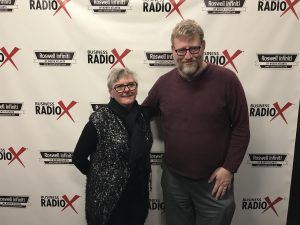
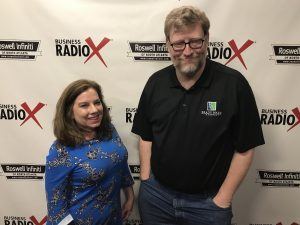
Michael Blake, Host of “Decision Vision” and Bill Piercy, Berman Fink Van Horn

Splitting Up a Business Partnership

It’s inevitable that business partnerships will dissolve, argues Bill Piercy of Berman Fink Van Horn, so partners need to prepare for the inevitable. In this episode of “Decision Vision” host Michael Blake talks with Piercy on how to prepare ahead of time, signs it is time to dissolve a partnership, and mistakes to avoid.

Bill Piercy, Berman Fink Van Horn

Bill Piercy is a Shareholder with Berman Fink Van Horn. Bill works with business owners to bring successful resolution to disputes concerning the management and control of the business. Frequently this means representing partners or shareholder groups who find themselves embroiled in controversy with their co-owners. After more than two decades of practice in the “corporate divorce” arena, he understands the challenges and the opportunities that arise from internal dissension within the management, operations and ownership of a closely held business.

Bill was named a “SuperLawyer” in the Atlanta legal community by Atlanta Magazine in 2012 – 2019, and as a “Rising Star” by that same periodical in 2006, 2009, 2010 and 2011. He is a member of the 2012 Class of Leadership DeKalb, as well as an Eagle Scout.

Recently, Bill put pen to paper to share his more than two decades of practice in the “corporate divorce” arena with entrepreneurs in his new book Life’s Too Short for a Bad Business Partner.

Michael Blake, Brady Ware & Company

Mike Blake, Host of “Decision Vision”

Michael Blake is Host of the “Decision Vision” podcast series and a Director of Brady Ware & Company. Mike specializes in the valuation of intellectual property-driven firms, such as software firms, aerospace firms and professional services firms, most frequently in the capacity as a transaction advisor, helping clients obtain great outcomes from complex transaction opportunities. Mike is also a specialist in the appraisal of intellectual properties as stand-alone assets, such as software, trade secrets, and patents.

He has been a full-time business appraiser for 13 years with public accounting firms, boutique business appraisal firms, and an owner of his own firm. Prior to that, he spent 8 years in venture capital and investment banking, including transactions in the U.S., Israel, Russia, Ukraine, and Belarus.

Brady Ware & Company

Brady Ware & Company is a regional full-service accounting and advisory firm which helps businesses and entrepreneurs make visions a reality. Brady Ware services clients nationally from its offices in Alpharetta, GA; Columbus and Dayton, OH; and Richmond, IN. The firm is growth minded, committed to the regions in which they operate, and most importantly, they make significant investments in their people and service offerings to meet the changing financial needs of those they are privileged to serve. The firm is dedicated to providing results that make a difference for its clients.

Decision Vision Podcast Series
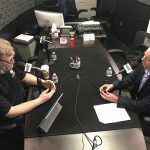
“Decision Vision” is a podcast covering topics and issues facing small business owners and connecting them with solutions from leading experts. This series is presented by Brady Ware & Company. If you are a decision maker for a small business, we’d love to hear from you. Contact us at decisionvision@bradyware.com and make sure to listen to every Thursday to the “Decision Vision” podcast. Past episodes of “Decision Vision” can be found here. “Decision Vision” is produced and broadcast by Business RadioX®.

Visit Brady Ware & Company on social media:

LinkedIn: https://www.linkedin.com/company/brady-ware/

Facebook: https://www.facebook.com/bradywareCPAs/

Twitter: https://twitter.com/BradyWare

Instagram: https://www.instagram.com/bradywarecompany/

Show Transcript:

Intro: [00:00:01] Welcome to Decision Vision, a podcast series focusing on critical business decisions, brought to you by Brady Ware & Company. Brady Ware is a regional, full-service accounting and advisory firm that helps businesses and entrepreneurs make vision a reality.

Michael Blake: [00:00:20] And welcome back to another episode of Decision Vision, a podcast giving you, the listener, clear vision to make great decisions. In each episode, we discuss the process of decision making on a different topic. Rather than making recommendations because everyone’s circumstances are different, we talk to subject matter experts about how they would recommend thinking about that decision.

Michael Blake: [00:00:38] Hi, I’m Mike Blake. And I’m your host for today’s program. I’m a Director at Brady Ware & Company, a full-service accounting firm based in Dayton, Ohio, with offices in Dayton; Columbus, Ohio; Richmond, Indiana; and Alpharetta, Georgia, which is where we are recording today. Brady Ware is sponsoring this podcast. If you like this podcast, please subscribe on your favorite podcast aggregator, and please also consider leaving a review of the podcast as well.

Michael Blake: [00:01:04] Today, we’re going to talk about splitting up a business partnership, or some people call it a business divorce. And for purely selfish reasons, this is a topic that’s near and dear to my heart because this, actually, happens to be a big part of my practice. Often though, not every time, that there’s a business split, somebody wants to know what the number is that one person should be bought out at. And, so, that’s a part of my practice from, sort of, a purveyor of misery.

Michael Blake: [00:01:35] But the thing about business divorces is that they can be equally as dramatic, equally as painful, equally as tense. And, yes, on some levels, equally as entertaining as watching a conventional marital divorce. But we don’t have to just take my word for it. We’re bringing in a subject matter expert. And joining us today, to help us work through this decision process is my good friend Bill Piercy of Berman Fink Van Horn here in Atlanta.

Michael Blake: [00:02:02] Bill works with business owners to bring successful resolution to disputes concerning the management and control of businesses. Frequently, this means representing partners or shareholder groups who find themselves embroiled in controversy with their co-owners. After more than two decades of practice in the corporate divorce arena, Bill understands the challenges and the opportunities that arise from internal dissension within management, operations, and ownership of a closely-held business.

Michael Blake: [00:02:28] Through hard work, candid advice and effective advocacy, Bill helps clients achieve successful outcomes. Bill was named a Super Lawyer in the Atlanta Legal Community by Atlanta Magazine in 2012 and as a Rising Star by that same periodical in 2006, 2009, 2010 and 2011. Bill is a member of the 2012 Class of Leadership DeKalb. Bill previously served on the Executive Committee of the Gators for Business Arm of the Atlanta Gator Club and as a member of the Board of Directors of the Sole Practitioner Small Firm Section of Atlanta Bar Association.

Michael Blake: [00:03:04] In addition, to practicing in the corporate divorce arena, Bill has written a book on the subject, Life’s Too Short for a Bad Business Partner. Bill’s book is available for purchase at amazon.com. I would also say a bookseller near you, but those are pretty much gone now, especially, I think, Barnes & Noble is history, about to be history. And Bill has an undergraduate degree from the University of Florida and earned his law degree from Emory University in Atlanta. And I understand his parents did not bribe either institution in order to get in there. So, we’re getting the real deal. Bill Piercy, thanks so much for coming on the program.

Bill Piercy: [00:03:38] Thank you very much. I appreciate the opportunity to be here.

Bill Piercy: [00:03:41] So, you’ve got kids, I’ve known you a long time. You’re a busy successful attorney doing important things. Why do you find the time to write this book on business divorce?

Bill Piercy: [00:03:55] I found myself saying the same things to clients over and over again. And it occurred to me one day, “Why don’t I write this stuff down? It might be easier or better for people to digest it that way.” When someone has dissension in their business particularly with the other owners that can be a very lonely time and a lonely place to be.

Bill Piercy: [00:04:23] You can’t really go talk to the CPA to ask for a referral to a lawyer because, well, he answers to your business partner too. You certainly don’t want to go to clients and had them know that there’s some sort of problem with the business. You don’t tell vendors, you don’t tell lenders. And so, sort of like when your leg hurts and you go on to Google or Web MD to figure out what’s going on, people would find my blog and find me through that. And it occurred to me that if I created maybe a little more comprehensive guide, I might be able to help even more people.

Michael Blake: [00:05:02] Okay. I’d never thought of that but you’re right. I mean, all the venues that you would normally associate with getting help are close to you because the last thing you want broadcasted to anybody is I’ve got a potential business dispute internally. That freaks out employees. It freaks out advisors. It freaks out clients, vendors. Pretty much everybody within earshot gets freaked out by that.

Bill Piercy: [00:05:28] It’s absolutely right.

Michael Blake: [00:05:28] So, essentially. I haven’t thought of it that way, but that makes sense. So, they say that debt and taxes are the two things in the world that are inevitable. Is the same true of business partnerships? Are business partnerships kind of hired to be fired?

Bill Piercy: [00:05:43] I mean, they should be. Marriage is supposed to last forever or until death do us part, but that’s not the way business partnerships are supposed to be. You come together. You work together. It’s the common goal of making some money. And hopefully everybody leaves with their pockets loaded and as friends. Sometimes, they don’t end that way. And my practice is typically revolves around those situations where folks are less than happy as they are parting ways.

Michael Blake: [00:06:16] I did not expect that answer. I learned something. And you’re right, the notion of death do us part. And what the heck, my wife will never listen to this. But we know that that convention came into play when the life expectancy was about 42. And by then, you’re expected to die of black death, or a rotten chicken bone, or having somebody impale you with a hoe, basically, right?

Michael Blake: [00:06:45] And, now, things have changed. That till death do you part is a much larger commitment. I think when we think of partnership as intimate as a business partnership, I have to admit, I think of it as a lifelong engagement. But maybe you’re right, it’s healthy that you should kind of plan for the split. And maybe if it works out, that you both, as two business partners, you die lovingly and in each other’s arms on a pile full of money, right?

Bill Piercy: [00:07:15] That’s right.

Michael Blake: [00:07:15] Maybe that’s the optimal outcome, but that’s sort of a rarity. So, planning for that in advance, I guess, makes you more prepared, right?

Bill Piercy: [00:07:25] Absolutely.

Michael Blake: [00:07:26] Okay. So, where do the cracks start? I mean, you and I could trade war stories probably all afternoon. We don’t have unlimited time unfortunately. But I’d like to hear from you and maybe I’ll jump in, but where the cracks start to show? What are the things that tend to be the kernels that, ultimately, result in a dispute that is most likely to lead to some kind of split?

Bill Piercy: [00:07:52] Sure. Lack of communication is huge. Lack of transparency is distinguished, in my mind, from lack of communication because it’s one thing for everybody be talking. It’s another thing to actually reveal the financial statements or the underlying transactions that one partner may be responsible for as opposed to the other. The lack of a shared vision among the partners, one wants fast growth, the other doesn’t.

Bill Piercy: [00:08:28] And tied to that, maybe a divergent comfort level with risk score, with debt. Some people, rob Peter, pay Paul, let’s run to the races. And other people want all kinds of money in the bank before they do anything. And that can cause a lot of tension among owners of a business. Disparity and contribution, right. It’s owned 50/50, but one guy is doing 80% of the work. You can see why he might get frustrated.

Bill Piercy: [00:08:56] And a lack of clearly defined roles. Sometimes, early on, we’re all going to jump in. We’re all going to do everything that needs to be done to make this a success, and they’re excited. And 10 years down the line, it would make sense for one person with a particular set of skills to do certain aspects of the business, and someone else to do other tasks. And sometimes, those either formally or informally happen. Sometimes, they don’t. Sometimes, it’s, “Well you were in the office, so you did it, or I thought you were going to do it,” and that can lead to problems.

Michael Blake: [00:09:36] That communication transparency part it, really resonates with me. With the partnership splits in which I’ve been involved in appraising the core business, it has always struck me that if a few honest conversations for 30 minutes had happened two years prior to when they’ve hired me, we may very well not be here, right? And the transparency, to me, is connected with surprise, right?

Bill Piercy: [00:10:11] That’s right.

Michael Blake: [00:10:11] When a surprise happens in the business. In my case, one of the things I really insist on is if a company hires me in a buy/sell that I want to interview both partners even if one of them is retaining me, and try to get them all involved in that, and engaged in that conversation because you’re more likely to get buy-in if there’s not a surprise, if you see the freight train coming, right. And the lack of transparency leads to surprise. Surprise leads to anger. And then, that leads to imagination.

Bill Piercy: [00:10:43] That’s exactly right.

Michael Blake: [00:10:44] And that’s where you kind of get the runaway train, right?

Bill Piercy: [00:10:46] Well put.

Michael Blake: [00:10:50] So, are there are the reasons that are, kind of, avoidable? I mean, we just talked a little about communication. But when you kind of look at that portfolio of partnership disputes, what are the ones you see most often that maybe resonate with what I describe which is, “Jeez, why are we here?” Like the old cartoon of what would you’ve done right to the police is never what would have happened, that sort of thing. Are there things in your mind or patterns that you see that have you, kind of, asking yourself why we’re at this point or are we sure this is not reparable?

Bill Piercy: [00:11:29] It’s whatever the problem is, it’s festering for a while. And so, it’s not necessarily — I mean, communication is a huge one, but whatever the issue is, the people, the partners involved aren’t addressing it head on. They aren’t confronting it with each other. And from my perspective, if there is tension in that way, I would encourage folks to consider ending the business relationship, in its current form. I’m not saying that every fight should lead to divorce, but if there is a persistent problem, the underlying structure isn’t working, right.

Bill Piercy: [00:12:22] And so, it may just need to be fixed, but I find it’s often more productive to go into that fix with, “You know what, the old way is done. We are starting from scratch, and we’re going to talk about how often we’re going to communicate, and we’re going to talk about who is responsible for what, and we’re going to talk about who stays in whose lane, and we’re going to decide what level of commitment and what level of compensation we’re going to have.” And I think those are the business relationships that can be salvaged, if that’s the right word.

Michael Blake: [00:12:57] Yes. So, I’m going to go off script a little bit. I think that’s really smart, if nothing else, because I never thought of it that way. The notion that there is this binary choice that you either keep the partnership as is, baby and bathwater, or you dump baby and bathwater out, it’ s a false choice, isn’t it, right? There’s an option to say, to consider, maybe this relationship, the way it’s structured, isn’t working. But what if we just sort of took a blank sheet of paper, literally a blank sheet of paper, that clean slate, what would we do differently to make us both happy? And maybe there’s a way to salvage that.

Bill Piercy: [00:13:33] That’s my idea.

Michael Blake: [00:13:35] And I’m curious, what’s your betting average with that? Have you suggested that? Have you gotten traction with that?

Bill Piercy: [00:13:44] I have, not a lot.

Michael Blake: [00:13:46] Yeah.

Bill Piercy: [00:13:46] By the time folks get to me, and they’re paying a lawyer by the hour to fight, they’re generally pretty mad. I think that there are probably a lot of transactional lawyers that do this sort of thing all the time. I’m a litigator. When they get to me, we’re typically filing lawsuits, or threatening lawsuits, or being threatened with a lawsuit.

Bill Piercy: [00:14:12] And so, it’s pretty rare, but I do have one shining moment example where I helped. And my opposing counsel was of a similar mindset. And we got these folks to agree to have breakfast at Shoney’s every Friday morning with a checklist. And they would talk through that checklist because despite all their hating each other, they were printing money, and it just made sense to keep printing money. And as far as I know, they’re still printing money today.

Michael Blake: [00:14:43] No kidding. Well, good for you. Well, if the law thing doesn’t work out, maybe you can be a counselor.

Bill Piercy: [00:14:48] Maybe.

Michael Blake: [00:14:48] Maybe as a second career. So, you’ve written this book, and you’ve done it because it’s an opportunity to, kind of, avoid the repetition. And it’s a quick read. Certainly, you’re not going to be mistaken for a Russian novel. But even that having been said, if you wanted a reader to take one thing away from that book, what do you think that would be? ***

Bill Piercy: [00:15:15] To focus on the future, where you’re headed, where you want to be, and not on the past, and what your partner did or didn’t do, and how angry you are about it, if you’re at the point where you’re reading a book called Life’s Too Short for a Bad Business Partner, or talking to a business litigator, or to a business valuation person because your business is in some sort of crisis, then, you’ve already, kind of, lost. And, now, it’s time to stop the bleeding, and to focus on going somewhere else, and making some money. It is easy to let that anger or fear consume you, and it’s just not productive.

Michael Blake: [00:16:07] And I will attest that. I’ve never had to go as far as a litigation, but I’ve been involved in business partnerships where I’ve been upset. And I think that advice is so good that, on the one hand, you do feel like you’ve been wounded somehow. And you’ve been wounded in what, really, is a very intimate relationship. You’ve placed your financial well-being and that of your family in somebody else’s hands to a certain extent.

Bill Piercy: [00:16:39] That’s right.

Michael Blake: [00:16:39] And that means that the second that is even a whiff of being threatened in some way, it’s very hard not to react. Like your bass is super tight in piano string, right?

Bill Piercy: [00:16:51] I’m not suggesting it’s easy.

Michael Blake: [00:16:52] Yeah. And there’s a lot of deep breaths and whatnot that sort of have to take place. And I think that focusing kind of — because you can remedy the passing. A lot of what you do is to recover things from the past, the past injuries. But the end of the, day everything’s out in front of us, I guess, right?

Bill Piercy: [00:17:12] That’s right.

Michael Blake: [00:17:15] Okay. So, you talked about, by the time you get to reading a book, by the time you get to talking to somebody like you, and paying your fees, and so forth, what is that trigger? How do I know that I’m so mad that I got to contact Bill Piercy, and have him help me figure this out, and have some combination of making me whole/extracting horrible revenge versus, yeah, I’m ticked off, but do I really like to get a lawyer involved? You know what I mean? What’s that Rubicon? What’s that inflection point?

Bill Piercy: [00:18:01] Sure. It’s nice when folks have the option of just being mad or annoyed. Sometimes, they do. Sometimes, they don’t. Frankly, in either circumstance, I would encourage folks to get a handle pretty quickly on what rights and obligations they have to and from the business, to and from the other owners, to and from lenders and landlords. And that may mean getting a hold of your shareholder’s agreement, seeing where you can’t remember if you guaranteed the lease on the building or not. Those kinds of things.

Bill Piercy: [00:18:44] Some people are pretty organized. And sometimes, those documents are pretty easy to read. Sometimes, it takes a lot of work. Sometimes, there is no document. Sometimes, it’s on the back of a napkin, or it’s just a handshake, right. And a good lawyer can help folks understand that the law will impose some order on your situation, but it’s not intuitive always what those rules are. So, I would encourage folks to do it.

Bill Piercy: [00:19:15] And as for the trigger, as to when you start investigating those things, I mean, when you don’t trust your partner anymore, when you just can’t see yourself being in business with them anymore. or on a shorter time frame when your little key doesn’t work in the office lock one day-

Michael Blake: [00:19:37] Okay, that’s a trigger.

Bill Piercy: [00:19:38] … or you get served with a summons. I mean those sorts of things.

Michael Blake: [00:19:43] Okay, yeah. Or, as I’ve had with a client, just all of a sudden, one day, gets walked out of the building.

Bill Piercy: [00:19:51] That’s right.

Michael Blake: [00:19:51] Right. Obviously, there’s going to be a call to maybe multiple counsel at that point. So, I was going to ask one question, but I want to interject or intercede one question. Obviously, one sign that a business breakup is coming is that summons, that walking out, right. But are there more subtle signs that it’s sort of happening, but it may not be that apparent, and you’re like the frog in the water? You don’t realize it’s a business break until you’re the boiled frog in the water. You know what I mean?

Bill Piercy: [00:20:25] There are. There absolutely are. Trust that spidey sense or trust your gut. If it seems like maybe, “Boy, my partner seems to be having a lot of meetings with a closed door, or out of the office, or he’s kicked the can down the road on our weekly catchup meeting four weeks in a row. And I keep asking about the financial statements, and I keep being told I’ll see them tomorrow.” We all have other things to do. And not everybody turns everything in on time. But when those things start to lag, and you start to get suspicious, listen to your gut. Trust but verify.

Michael Blake: [00:21:12] Yeah. So, when that spidey sense, then, kicks in, what should you do? First thing, top of the to-do List.

Bill Piercy: [00:21:24] Gather whatever information you can that will help you and your team understand what rights and obligations you have and your partner has because that will be hugely determinative about your next steps and, frankly, the obstacles and opportunities that you have.

Michael Blake: [00:21:47] Now, do you have to treat a little bit differently when — I mean, you’re a company insider. On the one hand, I could certainly see advising somebody to be aggressive because if you think you might get locked out of the business, that means you may be locked out of your access to that information, and the only way we’re going to get it is through discovery. But on the other hand, do I have to be careful if I’m in that scenario because I may be acquiring and taking information that isn’t rightfully mine to have custody? Or I’m an owner of the business, therefore, I have the right to custody. Is there a balance there or a maze there that has to be navigated?

Bill Piercy: [00:22:28] It’s absolutely a complicated maze. And you’ve touched on a really good point. It’s as an owner of the business, you generally have the right to look behind the curtain and see whatever is there. But property that belongs to the business doesn’t belong to you just because you own a piece of the business. It’s not so much taking that information to yourself. I wouldn’t counsel anybody to email the customer a pricing list to their Gmail account, but I would encourage them to access it regularly and to ensure that they have that access.

Bill Piercy: [00:22:28] Sometimes, the division of labor leads partners to where one’s never met the landlord, or the IT guy, or the banker. And, all of a sudden, those things get shut off. It’s much harder to turn it back on when the relationship manager at the bank has never heard of you, and the IT guy doesn’t really know who you are. But if you have — not saying you take over that responsibility, but every once in a while, you stick your head in, and you make sure those folks know you. It’s much easier to restore your access should your partner do something nefarious.

Michael Blake: [00:23:49] So, one of the lessons here is in a partnership, protect yourself. Make sure that there are no key relationships and information sources that are proprietary to your other business partner. Maybe you’ll never have to call upon that, but if you do, you’ll be glad that you made that effort to have that line of communication, that recognition regularly.

Bill Piercy: [00:24:10] Absolutely.

Michael Blake: [00:24:10] So, sort of a hypothetical. Let’s say that that maybe there’s a bunch of information on a laptop, right. It’s a company laptop. It’s one that has not necessarily been assigned to me, but that laptop has information that, I think, is material to my potential case going forward. Is that’s something I may be forced to kind of leave behind, or can I take it, or is it a it-depends kind of deal.

Bill Piercy: [00:23:12] I mean, it’s a it-depends kind of deal. Is it used in the day-to-day business by you? Physically taking it, are you depriving the business of the opportunity to use that information? I’m not so worried about where the laptop sits. It’s, “Can the other partner access the data on it just because it’s sitting in your living room?” Maybe. Maybe it’s linked to cloud, or they can call you up and say, “Hey, I want to come look at it.” And if you allow that, I’m much less concerned about that conduct than one partner excluding the other from some critical piece of the business.

Michael Blake: [00:25:19] Right. So, don’t take the laptop, and then put in a safe deposit box, or bury it, or something like that.

Bill Piercy: [00:25:25] That’s probably right.

Michael Blake: [00:25:26] Okay. So, one of the most common mistakes you see business owners, soon-to-be-splitting partners make during that process that if they hadn’t made those mistakes, they might have had a better outcome.

Bill Piercy: [00:25:40] I think that we’ve touched on really the two big ones already here today. And that’s taking company property and assuming that because you own a piece of that company, you can take this equipment or this data, and either use it for competitive purposes or exclude the other folks in the business from using it. That’s number one. And number two, just not having keys to the castle. Not knowing how to turn your access to the network back on, or get back in the front door, or whatever it may be.

Michael Blake: [00:26:18] I’m going to go off script again because I think this is an important question. What about the scenario, I’ve got two clients in the scenario now, the majority shareholder, basically, fires a minority shareholder, cuts off their income, cuts off access to bank accounts. How is that properly handled? Can the majority shareholder typically just do that? Is it that simple, or, for the minority shareholders, is there are remedy, or does a majority shareholder have to go through a process to do that legally?

Bill Piercy: [00:26:53] So, the firing, pretty much if the majority owner can say, “You know what, we’re going to hire out whatever work you’ve been doing,” or “I’m going to start doing it.” And it’s a complicated question but, generally, can show that minority owner to the door.

Michael Blake: [00:27:15] Okay.

Bill Piercy: [00:27:16] But access to information, if you own a piece of the company, you have a statutory rite, generally, to review the books and records of the business. And it’s a different right, whether it’s a corporation or an LLC, but, generally, you’ve got that right. And you’re supposed to just be able to write a letter, and then be provided reasonable access and an opportunity at your cost to copy whatever information you want to copy. And if that information is not provided, there is generally an expedited legal remedy for ensuring your access to that information. Basically, it means filing a lawsuit, but that lawsuit is supposed to and typically does move faster than your average case.

Michael Blake: [00:28:13] Okay. So, not all business divorces go to court, right, thankfully. But some of them do. I think you’ve touched upon this, but I want to make sure the point is clear. What, in your mind, distinguishes the amicable or, at least, non-hostile partnership dissolution from the all-out, knockdown, drag-out, street-fight of litigation?

Bill Piercy: [00:28:42] Sure. Fundamentally, people change their interest in the business, change their interest in being involved in the business, and what they want to do can change over time. Those are legitimate bases for folks just deciding to part ways and go do something else. Where it turns hostile and expensive, typically, I mean without getting too philosophical about it, it’s pride, greed, lust, anger, gluttony, envy, and sloth. The seven deadly sins or some combination of them that cause people not only to decide they don’t want to be in business together but decide that I want all the business or whatever their dispute may be. Those typical, those raw emotions are often what’s behind it.

Michael Blake: [00:29:44] That’s interesting. That’s a heck of a checklist. I’ve been around a long time now. So, have you found — I mean, people talk a lot about buy/sell agreements. And for the listeners, a buy/sell agreement is just the rules by which the two or more partners agree that a share will be bought out either by the company of one or more shareholders or between each other when somebody is going to get out of the partnership. Have you found them to be helpful? I mean, are they as useful as advertised?

Bill Piercy: [00:30:16] So, in some, typically, when they’re is useful as advertised, I never see it because it doesn’t result in litigation. And so, the transactional lawyers that are deal makers do them and do them well all the time. And I think they provide a valuable set of rules for — agree when you’re agreeable, right. And so, everyone has come to it. We’ve already established how we’re going to decide, how much, and when somebody pays somebody else for their share in the business. And we’re going to already decide ahead of time on these triggering mechanisms. And so, it provides, I think, an efficient and useful tool for helping people through what can sometimes be a pretty difficult situation.

Michael Blake: [00:31:09] Okay.

Bill Piercy: [00:31:10] That said, when I see them, either there is a legitimate dispute about language, and who’s got the right to do what, or somebody is gaming the system. It may be that one partner or faction has significantly more resources than the other. And so, a common buy/sell arrangement is one in which one partner makes an offer to buy the other out at a fixed price per share. And the recipient of that offer, then, has the option. I can either take that offer, or turn it around, and buy out the offer, or at the same price. So, that ought to result in a fair offer because you don’t know if you’re going to be a buyer or a seller.

Bill Piercy: [00:32:02] And it, probably, most of the time, does. I never see it because I’m a business litigator. I see it when maybe one side has more money than the other and thinks, “You know what, even if I make a low-ball offer, he still can’t come up with the cash to buy me out,” or the insider trading, kind of, “I know something about the business that’s about to happen that he doesn’t know. So, I’m either going to offer more than fair market value or try to get myself bought out before things go down the tubes by manipulating my offer. So, those are, unfortunately, the kinds of things that I see on a fairly regularly basis with buy/sell. But I’m certainly not against them. I think in a lot of situations, they can be very useful.

Michael Blake: [00:32:56] I see similar manipulation. In particular if the buy/sell price is either a set number or a set formula because that’s set number or set formula could be right whenever the buy/sell was initiated. But now, five years down, the road the company has changed, the market has changed, the economy has changed. That price is going to benefit someone, right?

Bill Piercy: [00:33:21] Right.

Michael Blake: [00:33:23] And then, there’s at least a financial incentive to manipulate or force a transaction because you know you’re either going to be bought dear or you have an opportunity to sell cheap, right?

Bill Piercy: [00:33:33] That’s absolutely right.

Michael Blake: [00:33:34] And I’m guessing that’s also a scenario that might come your way even though there is a buy/sell. I think in those cases the buy/sells actually can do more harm than good because they motivate the kind of behavior they’re trying to avoid.

Bill Piercy: [00:33:48] That’s right.

Michael Blake: [00:33:51] So, I’m going to switch gears here, more of a governance question. So, I would imagine if I’m a general counsel for a company – internal, external, it doesn’t matter – I have to imagine the worst nightmare I could think of is I’m in the middle now of a business partnership because I’m going to be asked to take sides. All right. It’s just inevitable.

Michael Blake: [00:34:21] But on the other hand, I mean, on one level, it’s “Golly, does the company have to have an attorney, and both sides have to have their own counsel and combine? You’re running the clock at $2000 an hour or something like that.” Have you seen that? Is that a legitimate concern? How does that get resolved? If you’re a corporate counsel or if you’re involved in that, what can you reasonably expect your corporate counsel to do and not do…

Bill Piercy: [00:34:48] Sure.

Michael Blake: [00:34:49] … or that they cannot do for you.

Bill Piercy: [00:34:51] That’s right. The corporate counsel can certainly help partners to access the information that they need to determine their respective rights and obligations like we’ve talked about. What the company’s lawyer can’t do, what would be a conflict of interest is for the company’s attorney to offer advice or suggestions to one partner, or the other, or God forbid. both on what their respective rights are, or what positions or strategies they might employ. The company’s lawyers got to look out for the company and really needs to be careful not to be answering to more than one chief at any one time.

Michael Blake: [00:35:47] The last thing you said, “God forbid, both.” So, I want to expand on that a little bit because I can see a scenario where maybe a counsel feels like they’re doing the right thing, right. They feel like, somehow, they’re giving equal advice to both parties. There’s no conflict of interest. Can you expand that upon it? That sounds like a land mine.

Bill Piercy: [00:36:08] I mean, yeah, it sounds to me like a call to your malpractice carrier at some point because, eventually, likely, one partner is not going to be happy with the advice they got, or even if they are happy with it, they may see an opportunity, and because desperate times call for desperate measures. And really, it doesn’t help anybody to do that. Partners would do well to go get their own private independent counsel even if it’s just a, “Hey, run through this with me for an hour and help me understand where I stand,” as opposed to relying on someone who has multiple folks to answer to and may or may not have your best interest at heart.

Michael Blake: [00:36:59] Now, I think, if I’m not mistaken, there’s a nuclear option out there where if there’s enough of an impasse, at least, in our State in Georgia, I don’t know if this is true in all 50 states. Logically, I don’t, but a judge could actually dissolve a company if there is a sufficient impasse. Is that correct? And what are the circumstances under which that might actually occur?

Bill Piercy: [00:37:23] There absolutely is. It’s called judicial dissolution. And there are two general scenarios when that can happen. One is — and I think it’s the more common of the two deadlock. And that would be very common if you’ve got two partners, and each one of them owns 50% of the company, and one of them wants to franchise and go national, and the other wants a sole location and to become the master of one particular area of town in which whatever they do, they do. One wants white, the other wants black. They can’t agree. They have equal voting power. The company can’t do anything. In that circumstance, a judge can order that the company be dissolved. And we’ll talk about that. I’ll talk about that just a little more after I talk about the other factor.

Bill Piercy: [00:38:19] The other is waste. If the one partner – often, the majority owner – is taking advantage of the company paying unequal distributions, just taking money, and not even calling it a distribution out of the company or steering work to other businesses, all of those things can happen. And in those circumstances, a judge can order, “You know what, this is never going to work. The majority isn’t taking care of the minority here, not fulfilling his fiduciary duties. I’m just going to order this company dissolved.”

Bill Piercy: [00:38:57] And basically, a receiver is typically appointed. some third party. It might be a business broker. It might be a real estate agent. It, kind of, depends on what the company’s assets are. The assets are marshaled, gathered all in one place, and then sold. Sometimes, on the courthouse steps on foreclosure day. Other times, in a more orderly fashion. And then, that money is used to pay the company’s debts. And if there’s any money left over, it’s divided up pro-rata among the owners of the company.

Michael Blake: [00:39:31] And just like that.

Bill Piercy: [00:39:32] It is not a simple process, it’s not an inexpensive process, and you’re never going to get top dollar for a business that’s being sold on the first Tuesday of the month.

Michael Blake: [00:39:44] Yeah, yeah. In effect, it’s a slightly dignified fire sale.

Bill Piercy: [00:39:50] That’s exactly it. I’m not even sure it’s dignified.

Michael Blake: [00:39:53] Okay, fair enough. I certainly don’t want to put words in your mouth. Well, we’re running out of time. I wish we could talk more about this. There’s a lot of war stories I know that we could swap. But if somebody wants to learn more, or they’re thinking about they may be in this situation, think may be in the situation, and want to learn more, how can they contact you to to benefit from your expertise?

Bill Piercy: [00:40:16] I am fairly easy to find on the internet. Again, my name is Bill Piercy. I practice law with the Berman Fink Van Horn. The firm web site is bfvlaw.com. And my email address is bpiercy@bfvlaw.com.

Michael Blake: [00:40:37] All right. Well, thank you. That’s going to wrap it up for today’s program. I’d like to thank Bill Piercy so much for joining us and sharing his expertise with us today. We’ll be exploring a new topic each week. So, please tune in, so that when you’re faced with your next business decision, you have clear vision when making it. If you enjoy this podcast, please consider leaving a review with your favorite podcast aggregator. It helps people find us, so that we can help them. Once again, this is Mike Blake. Our sponsor’s Brady Ware & Company. And this has been the Decision Vision Podcast.

Tagged With: corporate counsel, corporate divorce, Dayton accounting, Dayton business advisory, Dayton CPA, Dayton CPA firm, debt, Decision Vision, Decision Vision podcast, Decision Vision podcast series, dissolving a business partnership, dissolving a partnership, lack of shared vision, lack of transparency, mediation, Michael Blake, Mike Blake, partnership disputes, risk, shareholders agreement, splitting a business partnership, William J. Piercy

Decision Vision Episode 9: Should I Sue? – An Interview with Jessica Wood, Bodker, Ramsey, Andrews, Winograd & Wildstein, P.C.

April 4, 2019 by John Ray

Decision Vision
Decision Vision
Decision Vision Episode 9: Should I Sue? – An Interview with Jessica Wood, Bodker, Ramsey, Andrews, Winograd & Wildstein, P.C.
Loading
00:00 /
RSS Feed
Share
Link
Embed

Download file

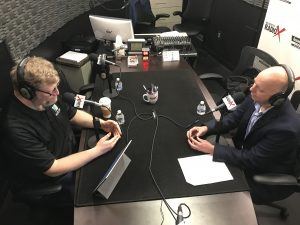
Jessica Wood and Mike Blake

Should I Sue?

How do you assess the pros and cons of bringing a suit or defending against one? How do you know “when to hold ’em and when to fold ’em?” What’s the best way to work with your attorney in a lawsuit? In this episode of “Decision Vision,” litigator Jessica Wood speaks with host Michael Blake, Director of Brady Ware & Company, on these questions and much more.

Jessica Wood, Bodker, Ramsey, Andrews, Winograd & Wildstein, P.C.

Jessica Wood

Jessica Wood is a Principal with Bodker, Ramsey, Andrews, Winograd & Wildstein, P.C. one of the top 100 Super Lawyers™ in Georgia.  She has won all of her trials in her twenty-four year practice.   Jessica is also known for achieving outstanding results for her clients without going to trial.  She helps individuals (including doctors, lawyers, CPAs, and entrepreneurs) and companies begin, maintain, and end business relationships.  Her advice relates to contracts, employment issues, officer and director duties, and trade secrets.

In addition to practicing law, Jessica teaches law students and attorneys.  She lectures on contract drafting, expert depositions, mindfulness in the practice of law, networking, pro bono work, trial techniques, and wellness. In her free time, Jessica enjoys volunteering, 80s new wave/pop/punk, and compulsive punning.

More on Jessica’s professional affiliations, awards, publications, and representative cases can be found here.

Michael Blake, Brady Ware & Company

Mike Blake, Host of “Decision Vision”

Michael Blake is Host of the Decision Vision podcast series and a Director of Brady Ware & Company. Mike specializes in the valuation of intellectual property-driven firms, such as software firms, aerospace firms and professional services firms, most frequently in the capacity as a transaction advisor, helping clients obtain great outcomes from complex transaction opportunities. Mike is also a specialist in the appraisal of intellectual properties as stand-alone assets, such as software, trade secrets, and patents.


He has been a full-time business appraiser for 13 years with public accounting firms, boutique business appraisal firms, and an owner of his own firm. Prior to that, he spent 8 years in venture capital and investment banking, including transactions in the U.S., Israel, Russia, Ukraine, and Belarus.

Brady Ware & Company

Brady Ware & Company is a regional full-service accounting and advisory firm which helps businesses and entrepreneurs make visions a reality. Brady Ware services clients nationally from its offices in Alpharetta, GA; Columbus and Dayton, OH; and Richmond, IN. The firm is growth minded, committed to the regions in which they operate, and most importantly, they make significant investments in their people and service offerings to meet the changing financial needs of those they are privileged to serve. The firm is dedicated to providing results that make a difference for its clients.

Decision Vision Podcast Series

Decision Vision is a podcast covering topics and issues facing small business owners and connecting them with solutions from leading experts. This series is presented by Brady Ware & Company. If you are a decision maker for a small business, we’d love to hear from you. Contact us at decisionvision@bradyware.com and make sure to listen to every Thursday to the Decision Vision podcast. Past episodes of Decision Vision can be found here. Decision Vision is produced and broadcast by Business RadioX®.


Visit Brady Ware & Company on social media:

LinkedIn: https://www.linkedin.com/company/brady-ware/

Facebook: https://www.facebook.com/bradywareCPAs/

Twitter: https://twitter.com/BradyWare

Instagram: https://www.instagram.com/bradywarecompany/

Show Transcript:

Intro: [00:00:01] Welcome to Decision Vision, a podcast series focusing on critical business decisions, brought to you by Brady Ware & Company. Brady Ware is a regional, full-service accounting and advisory firm that helps businesses and entrepreneurs make vision a reality.

Michael Blake: [00:00:21] And welcome to Decision Vision, a podcast giving you, the listener, clear vision to make great decisions. In each episode, we’re discussing the process of decision making on a different topic. Rather than making recommendations because everyone’s circumstances are different, we are talking to subject matter experts about how they would recommend thinking about that decision.

Michael Blake: [00:00:39] Hi. My name is Mike Blake. And I am your host for today’s program. I’m a Director at Brady Ware & Company, a full-service accounting firm based in Dayton, Ohio, with offices in Dayton; Columbus, Ohio; Richmond, Indiana; and Alpharetta, Georgia, which is where we are recording today. Brady Ware is sponsoring this podcast. If you like this podcast, please subscribe on your favorite podcast aggregator and please, also, consider leaving a review of this podcast as well.

Michael Blake: [00:01:06] So, today, we’re going to have the car wreck equivalent of a business conversation, which is about, “Should I sue?” And if you’ve never thought about suing somebody, it means that you have not been in business long enough to have thought about it. It, ultimately, is going to come up. And it’s a lot more complicated than just, sort of, dialing up the phone number of an attorney whose picture you saw on a bus driving by to figure out if that’s a good idea. It’s a very complex decision. There’s a heavy emotional investment, as well as a financial investment in doing it.

Michael Blake: [00:01:48] And, of course, this is not something we can just tell you over the virtual radio, “Hey, you got to go sue somebody.” That doesn’t make any sense. But we can give you some advice from somebody that knows what they’re talking about in terms of thinking through that decision. And, probably, maybe there’s no place for a framework is more helpful because chances are if you want to sue somebody, think you might want to sue somebody, you’re pretty upset. And not many of us make our best decisions when we’re upset

Michael Blake: [00:02:19] And so, having that touchstone, I hope for all of you guys listening, that’s going to be helpful. And to help us through this is a dear friend of mine, Jessica Wood, who is a litigation attorney with Bodker, Ramsey, Andrews, Winograd & Wildstein. Stein or Stein?

Jessica Wood: [00:02:36] Stein.

Michael Blake: [00:02:39] And I’ll say this. I know Jessica. I know a lot of her colleagues as well. And it’s, sort of, hard, I felt like I was picking which one of my children I was going to have on the podcast, I was going to favor.

Jessica Wood: [00:02:50] Are you saying that because I’m so short?

Michael Blake: [00:02:53] Not at all, not at all. I’m definitely not going there. But one of things that impresses me about the firm too is all of your colleagues mentioned all five named partners all the time. Everybody else. There may be 18 partners, only the first two get mentioned. We have this firm in town called Morris, Manning & Martin. Nobody ever here is the Martin. I wonder if there’s a real Martin or not. It’s just everybody says Morris Manning, for example. But you guys all mentioned the five. I think it has something to do with the law firm culture, but I digress.

Michael Blake: [00:03:24] Jessica is one of the top 100 Super Lawyers in Georgia. She’s won all of her trials in her 24-year practice. So, she’s basically the Golden State Warriors of litigation or the Miami Dolphins of the early 1970s that were undefeated. She’s also known for achieving outstanding results for her clients without going to trial. So, this is not something that’s necessarily trying to railroad you into a trial, which is why I wanted to have her on. She helps individuals, including doctors, lawyers, CPAs, and entrepreneurs, and companies begin, maintain, and end business relationships. Her advice relates to contracts, employment issues, office and director duties, and trade secrets.

Michael Blake: [00:04:04] In addition to practicing law, Jessica teaches law students and attorneys. She lectures on contract drafting, expert desk positions, mindfulness in the practice of law, networking, pro bono work, trial techniques and wellness. Jessica also runs a quarterly water cooler event in midtown Atlanta that’s designed to help attorneys build a professional network within the legal profession, focusing on younger attorneys, but also helping older and younger attorneys build mentor-mentee relationships. She enjoys volunteering ’80s new wave punk rock, which explains the orange hair that she walked in with here today and compulsive planning.

Michael Blake: [00:04:43] And on a personal note, I’ve known Jessica for, I think, about 15 years or so. And she’s also been my personal attorney, although I’ve not had used her in the context of a lawsuit. I’ve used her for contract work to make sure that I didn’t get sued. So, I have a healthy respect. And I’m not just an admirer, I’m also a client, as they say. Jessica, welcome to the program.

Jessica Wood: [00:05:07] Thank you for having me. Just one friendly addition to my bio. You, Michael Blake, helped me invent Water Cooler Office Hours. So, thank you.

Michael Blake: [00:05:17] Again, I think you give me too much credit for that, but I’m just going to stop resisting everything and accept it. You’re welcome. I’m awesome. So, we’ll will just move-

Jessica Wood: [00:05:25] I agree.

Michael Blake: [00:05:26] We’ll just agree I’m awesome and move on.

Jessica Wood: [00:05:28] All right.

Michael Blake: [00:05:29] So, you’re undefeated in law. What’s your secret to being undefeated?

Jessica Wood: [00:05:38] Luck and preparation.

Michael Blake: [00:05:39] Yeah, okay.

Jessica Wood: [00:05:39] And it’s really picking the cases to go to trial. You can control the outcome by knowing where the dangers lie.

Michael Blake: [00:05:51] Yeah.

Jessica Wood: [00:05:51] And I coach my clients relentlessly about, “Here are the pros. Here are the cons. Here’s a risk benefits analysis,” so that they — and I love the way you described this podcast. We are on the same team. I’m trying to coach them, so they can make an intelligent decision. And it really depends on what the goal is, what the mission is.

Jessica Wood: [00:06:13] Sometimes, the mission in my life as a litigator, sometimes, the mission is to save a marriage. There’s an inconvenient fact that you do not want your wife to know about. And so, that person is going to be incentivized to not sue or to get out of the lawsuit by settling on reasonable terms. Sometimes, the mission is to teach the other person a lesson, so that they do not commit this business sin that they’ve committed again. Sometimes, the mission is to punish and deter. Sometimes, the mission is to save the company. So, every decision we make, every bit of analysis that we do is around what is that end result that we want to see.

Jessica Wood: [00:07:00] So, a lot of this, I guess — and we’ll get into this as we really jump into the questions here, but is it fair to say a lot of litigation is knowing when to hold and knowing when to fold?

Jessica Wood: [00:07:10] Yes.

Michael Blake: [00:07:11] Right. Because, sometimes, I’ve heard-

Jessica Wood: [00:07:12] To quote of Kenny Rogers, yes.

Michael Blake: [00:07:12] There you go. You can’t go wrong with that, right? So, I miss that punk rock. But there is such a thing as overplaying your hand.

Jessica Wood: [00:07:22] Absolutely.

Michael Blake: [00:07:22] That’s right. It can be irresponsible and can really blow back in your face, right?

Jessica Wood: [00:07:26] Yeah.

Michael Blake: [00:07:26] So, you want to understand, sort of, the certainty of your outcome. So, with that, let’s talk at the very beginning. And the first question I have, I think, really gets to probably the first question, the first call you receive from a potential client. They’re mad, they’re upset, they’re frightened. Maybe some cocktail of all three and plus two other things I can’t think of right now.

Jessica Wood: [00:07:56] Chagrined.

Michael Blake: [00:07:57] At what point — Chagrined, nonplussed.

Jessica Wood: [00:08:00] Yes.

Michael Blake: [00:08:01] At what point does that emotion get converted into a serious discussion about taking this from a garden variety, “I’m mad” kind of, dispute into potentially a court of law?

Jessica Wood: [00:08:16] One approach that I’ve used with some success with clients is telling them, “I want you to sleep well at night. I want this business issue to stop haunting you at a certain point, so that you can go forward and be successful.” People don’t come to see me on a good day. They don’t come in to tell me how well their business is going.

Michael Blake: [00:08:36] That would be weird.

Jessica Wood: [00:08:37] It would be really. I would love it, actually. It would be delightful. So, they’re coming to me on their worst day. A nightmare has occurred. Something awful has happened. Someone may be about to see them, or, as you said, they’re furious. They performed a bunch of work. Someone got what they wanted out of them. And, now, they refuse to pay. And it can be very consequential for small to mid-sized businesses. So, they are, I think, you mentioned the cocktail of emotion. And I think you’re dead on.

Jessica Wood: [00:09:09] And so, I always want people to have to take a deep breath. I always urge them, “Let’s talk. And let’s go away from this, spend the weekend. Go to your child’s dance recital. And then, come back and tell me how you want to do this.” Of course, you always have to look at timing. There is a statute of limitations that may apply. The quickest one is defamation, that’s one year, on up to breach of a written contract, which is six years. So, there’s a lot of time for that anger to cool.

Jessica Wood: [00:09:43] And we also have to look at the life cycle of a lawsuit, which it’s going to be 18 months to two years. I have a case right now in Knoxville that’s been pending for five years, but I’m the defendant, s I’m okay with that.

Michael Blake: [00:09:56] Right.

Jessica Wood: [00:09:58] We can take as long as we need.

Michael Blake: [00:09:59] And so, I think, it’s not by accident that that the honorific of attorneys is often counselor because one thing that you and I have in common, your profession and my profession has in common, is that we are counselors. And I don’t think that’s not what they teach me in business school. I don’t know if they teach that in law school either necessarily.

Jessica Wood: [00:10:24] They don’t, unfortunately.

Michael Blake: [00:10:25] But you do have to have a certain way of managing anxiety and managing emotions to kind of get to the root of the problem and make the problem manageable, right? Is that fair to say?

Jessica Wood: [00:10:36] Yes, yes. We break it up into smaller components. Often, these things are inextricably bound, but there’s a lot of untangling that goes on. And a lot of the times — this bears noting. A lot of the times I have to be cognizant of the fact that a portion of my client’s anger is with themselves. And so, I have to be somewhat deaf and delicate around that. We can’t change the past. So, frequently, I will say to a client, “We can’t change what happened then, but what can we do today? What can we do tomorrow?”

Jessica Wood: [00:11:16] Another question that I ask along the road is, “Do you care about this?” I’m involved in a negotiation right now where it came down to a stapler. It’s not about the stapler.

Michael Blake: [00:11:29] Just not.

Jessica Wood: [00:11:31] The stapler, I don’t think. It’s a proxy for something else. But I will, sometimes, give my clients a little bit of tough love and say, “Okay, you’re paying me X number of dollars an hour. Do you want me to negotiate this stapler deal for you?”

Michael Blake: [00:11:49] Right, in an hour.

Jessica Wood: [00:11:49] And then, they’ll be like, “Wait a minute.”

Michael Blake: [00:11:51] An hour, you could have gone to Office Depot and bought a hundred staplers.

Jessica Wood: [00:11:56] Exactly. Here, take my stapler.

Michael Blake: [00:11:58] So, at what — So, let’s fast forward that a little bit. Let’s say somebody gets through your game. I think it’s worth mentioning that I know that you don’t take every case that comes to the door. I know your colleagues don’t take every case that comes to the door. And I think that’s a sign of a good advisor. But let’s say they meet your standard, that this is (A), a case that is winnable on facts and law; and (B), is worth having the fight about basically.

Jessica Wood: [00:12:29] Right.

Michael Blake: [00:12:31] What does that process look like? And we push that red button. What are the mechanics that process look like?

Jessica Wood: [00:12:39] Well, so, there is something that leads up to the process. I will frequently say to the client, “I want every piece of paper that relates to this. I want every text, I want you to tell me every scary thing. I want you to tell me every embarrassing thing.” And it goes back to what you said about our roles as counselors. We, as humans, want to impress each other. And so, frequently, what can tank a case is what a client does not tell me. And so, I try to be very kind and gentle and say, “There’s no perfect case. If you think there’s something stunning and bad out there, I really, really, really need to see it.”.

Jessica Wood: [00:13:15] Because I can always help a client. I can always do my special brand of legal ninja. And I can handle it live on the record as a surprise, but I can do a lot better if I know about it. So, I’m simply just going to gather up everything. Frequently, I’ll ask my clients to do a narrative for me, and everything in chronological order. That can be enormously helpful because they’re going to bottom line everything even though I’m going to look at the documents behind the narrative.

Jessica Wood: [00:13:46] But it also helps them unburden a little bit. It, also, helps them refresh their recollection. Frequently, clients will say, “As I was typing this 27-page, eight-point font, single-space document for you, I remembered that one time where the bad guy did this thing.” And I, also, always tell them, “We’ve all seen so many police procedurals and TV shows about law firms. They will want to censor themselves and say something like, ‘Well, I can’t tell you about that. It’s hearsay or what have you.'” I’m like, “Don’t you worry. We’ll fix that in the mix. Tell me everything. Don’t worry about whether it’s relevant. You and I will sort that out together.”

Michael Blake: [00:14:32] So, that’s interesting. I was not expecting that answer, which means I’m learning something. Part of that decision process, if you’re going to sue is, are you willing to be vulnerable yourself? And I imagine not just to your counselor but to your representation. But you’re, also, asking that questions because you’re assuming opposing counsel, who is competent, will make the best move available to them, and it’s going to come up and, potentially, on the public record.

Jessica Wood: [00:15:02] That’s correct.

Michael Blake: [00:15:04] So, you had to think long and hard that if push comes to shove, am I willing to have that out there? Winning this case, is the price of having that out there a price I’m willing to pay to win this case?

Jessica Wood: [00:15:21] Yes.

Michael Blake: [00:15:21] And, sometimes, maybe it isn’t.

Jessica Wood: [00:15:23] That’s right.

Michael Blake: [00:15:24] I imagine, right.

Jessica Wood: [00:15:25] That’s right.

Michael Blake: [00:15:26] I mean, have you ever had a client, you say, “You need to know X, Y, and Z,” and they say, “You know what. If I got to disclose that, it’s not worth it”?

Jessica Wood: [00:15:34] Absolutely.

Michael Blake: [00:15:34] Okay.

Jessica Wood: [00:15:35] And the issue that comes up the most frequently would be what I would delicately call a relationship overlap issue where you’re engaged in one marital relationship, but there’s another relationship that occurred simultaneously or a couple of them.

Michael Blake: [00:15:51] An uncomfortable Venn diagram.

Jessica Wood: [00:15:53] Yes, a very uncomfortable Venn diagram.

Michael Blake: [00:15:56] Okay. So, you’re right. A nice segue. So, thank you for that. One of the first things you do is you ask in effect for a data dump.

Jessica Wood: [00:16:05] Yes. yes.

Michael Blake: [00:16:06] Everything on analog paper, digital paper, and otherwise.

Michael Blake: [00:16:09] And texts. How does that-

Jessica Wood: [00:16:10] And Facebook post and social media.

Michael Blake: [00:16:13] All that too, right?

Jessica Wood: [00:16:14] Yeah

Michael Blake: [00:16:14] If it’s out there, it’s out there.

Jessica Wood: [00:16:15] Absolutely.

Michael Blake: [00:16:17] Certainly cheaper, if the client provides it to you, than you have to go scrape it somehow

Jessica Wood: [00:16:21] Yes.

Michael Blake: [00:16:21] So, how does all of that work? I mean, you mentioned police procedurals. Everything I know about the law, I learned from basically NCIS and TJ Hooker because I’m in the tank for William Shatner, and I just admit it. I have a problem, I admit it. But in the real world, how does evidence work? I mean, is everything on the table? What kind of stuff does get excluded. I mean, go through the mechanics of how evidence works in a trial scenario.

Jessica Wood: [00:16:56] Sure. It’s a multi-step process. So, in a lawsuit, there’s going to be a complaint. And then, 20 to 30 days after service, depending on if you’re in state of federal court, there’s going to be a responsive pleading, which could be an answer and could be a counterclaim. So, that’s always something you have to keep in mind. And then, there’s a discovery period. And, again, state versus federal, it’s going to be about four to six months. Frequently, it’s going to get extended because it’s unwieldy, and it takes a long time.

Jessica Wood: [00:17:24] So, everyone is going to exchange documents. They’re going to pose written questions. Then, you’re going to be deposed. So, that’s all of these pieces of paper, they all become evidence, could conceivably become evidence. So, at the discovery stage, you’re not really looking at whether something’s admissible. So, it’s a little more free range. At the trial stage, however, there are going to be many motions filed. They’re called motions in limine. You’re going to file motions to knock out certain evidence because it is irrelevant. That’s a big one. It’s actively harmful and can bias the jury in a way that’s inappropriate.

Jessica Wood: [00:18:09] And so, what comes in and what comes out is going to be up to the judge. I will tell you a very interesting evidentiary issue that’s arisen recently is what do emojis mean? So, we’re seeing more and more. When we think of a contract, we think of something with very formal language, and whereas, and things of that nature drafted by an attorney. Well, most of my messy cases don’t involve that. It’s the old spinal tap. They drew it on a napkin and crayon.

Michael Blake: [00:18:41] Right.

Jessica Wood: [00:18:41] And that leads to problems. Well, now, you might have a contract that’s a series of letters, or emails, or texts. And people are less and less formal in how they communicate. So, what does that winky emoji mean? Does it mean that that’s really the deal or that you were kidding? So, we’re starting to see this show up as an evidentiary issue.

Michael Blake: [00:19:01] That is fascinating.

Jessica Wood: [00:19:02] A very pivotal one, Isn’t it?

Michael Blake: [00:19:04] That is fascinating. So, a thumbs up emoji could be, I guess, construed-

Jessica Wood: [00:19:07] It’s a deal.

Michael Blake: [00:19:08] … as acceptance of a deal, right?

Jessica Wood: [00:19:09] Absolutely.

Michael Blake: [00:19:11] That’s really interesting. So.

Jessica Wood: [00:19:12] So, watch your emojis, people.

Michael Blake: [00:19:14] Yeah. Well, boy. Nothing but smiley faces now or maybe just the straight face actually, just noncommittal. Now, what is a deposition? Not everybody necessarily knows what a deposition is.

Jessica Wood: [00:19:28] All right.

Michael Blake: [00:19:28] And they’re not necessarily the funnest things to go through. So, what is a deposition?

Jessica Wood: [00:19:33] Well, they’re fun for me.

Michael Blake: [00:19:35] It’s more fun if you’re in the driver’s seat, right?

Jessica Wood: [00:19:37] Absolutely. So, in a deposition, it’s a Q&A. You’re going to ask. An attorney’s going to ask questions. And then, the deponent is going to answer those questions. And the deponent is going to be seated right next to their attorney. And the attorney may object as to form. But like I said, it’s going to be pretty free range. Mostly anything goes. So, truly, you’re trying to figure everything out and get to the essential facts of the case. And they may ask something that is impertinent or improper, but you’re rarely going to see an objection that’s going to stick. Typically, the client is going to have to answer.

Jessica Wood: [00:20:20] So, this is where you start getting nervous in a lawsuit, if there’s something that’s got to be — something unsavory that has to be unpacked.

Michael Blake: [00:20:27] Okay.

Jessica Wood: [00:20:29] And it might be audiotape. There’s going to be a court stenographer there. It may be audiotaped. And then, it’s ultimately going to be transcribed. And it might be videotaped and shown to the jury. So, if it’s videotaped, and my client is going to be videotaped, I’m obviously going to prepare them for that and videotape them beforehand. We all have weird facial tics.

Michael Blake: [00:20:51] We do.

Jessica Wood: [00:20:53] And some of us may have an aspect to our personality where the outside doesn’t match the inside, and where your credibility could be called into question even though you’re telling the truth. But you’re so nervous, it appears that you are not being truthful. And the opposite is also true. I’ve seen some very smooth operators in my day.

Michael Blake: [00:21:15] We all do.

Jessica Wood: [00:21:16] They are absolutely not telling the truth, but if you’re looking at their micro expressions, and you’re listening to them, and you’re watching their body language, they appear to be truthful.

Michael Blake: [00:21:27] So, at what point then or what are the most common reasons where you look at this whole process, you look at what the client is telling you, saying, “You know what, don’t sue. This is not going to help anybody. I don’t want to take your money.” What kinds of things typically leads you to that advice?

Jessica Wood: [00:21:47] What’s going to lead me to that advice is a client who has never been in a lawsuit before, and a client who does not seem to understand my warnings, doesn’t understand — when a client says it’s about the principle, that is never about the principle. It’s about something else. When a client wants a victory that to me seems unseemly, or inappropriate, or something I’m not going to sign up for, I’m going to show them the door. If someone walks in and says, “It’s not enough for me to win. The other guy’s got to lose, and he’s got to be humiliated-

Michael Blake: [00:22:26] He’s got to be scorch to earth.

Jessica Wood: [00:22:27] … in front of the world.” I’m not going to do that.

Michael Blake: [00:22:31] Why?

Jessica Wood: [00:22:32] I find it wildly inappropriate. It will take a portion of my soul that I’m not willing to give. And that’s just not how I’m going to do business. And not for nothing. It’s destined to blow up in everyone’s face. It’s just not an appropriate mission statement in my view.

Michael Blake: [00:22:51] Now, I want to pause on that and kind of go off a script. So, I think that’s a really important discussion point because one thing that I have observed in the litigation process, the few times that I’ve been involved, is clients will sometimes be frustrated because they don’t think that their counsel is mad enough basically, right. And then, like, “You know I’m right. Why aren’t you pissed off about this whole thing? Why don’t you leaping across and ripping out their throat and so forth?” Why is it not a good idea to have your counsel get swept up in that?

Jessica Wood: [00:23:31] I have a saying, “A mad attorney is a bad attorney.” The calmest person in the room is the person in the catbird seat. So, actually, I would think the opposite. I would want my attorney to be very calm, cool, collected, and poised because they know something that everyone else in the room is about to find out; that they’re really, really good; that they’ve got good facts; that they have marshaled for their client; and that they’ve got solid case law. So, I don’t believe that yelly attorneys are good. And when I find one on the opposite side, I actually know instantly that they do not have what it takes.

Michael Blake: [00:24:12] Well, that makes sense. To me, I always advise my clients, no matter how mad you are on the outside and the inside, always be the adult in the room-

Jessica Wood: [00:24:24] Absolutely.

Michael Blake: [00:24:24] … on the outside because, at some point, somebody outside maybe determining your fate. And in my experience, it does not impress a trier of fact to have somebody that’s just a blow hard or your stack bully kind of personality.

Jessica Wood: [00:24:41] Not only that, it may infuriate the judge, it may infuriate the jurors, it might infuriate the bailiff, or the court stenographer in the courtroom. You can make a lot of enemies really, really fast by engaging that kind of vituperative behavior. Honestly, I’ve never seen it serve anyone. And when I do see it, I just sit back because I know I’m winning-

Michael Blake: [00:25:08] Yeah.

Jessica Wood: [00:25:08] … when that happens.

Michael Blake: [00:25:08] That’s right. Nobody gets upset because they’re winning so much, right?

Jessica Wood: [00:25:13] Exactly, exactly. It’s fear based, right? Someone feels insecure, or that is — or they’ve been bullied, and this is how they walk around in the world, which must be very exhausting. And I’m sorry for them. but I’ve never seen it gain an advantage for a client. Now, passion, yes. I am passionate in the courtroom. I take umbrage at things, but I just do it in a quieter way.

Jessica Wood: [00:25:39] And I should also say, attorneys come in all shapes and sizes. We all have our own level of emotional intelligence, and our own skill sets, and our own personalities. And I think we should bring our personalities to the table, whatever that looks like. A lot of people when they see me, I’m diminutive, I’m kind, I offer people snacks and coffee. And, sometimes, they think I’m a human marshmallow. and they find out very quickly that that’s incorrect.

Michael Blake: [00:26:14] You’re just luring them into the trap.

Jessica Wood: [00:26:15] I am, absolutely. Come hit her.

Michael Blake: [00:26:19] So, a question almost any client is going to come to the table with, and one of the sources of their anxiety frankly, and I know you encountered this is, can they afford justice? It’s one thing to have a problem you’d like to have solve. It’s another thing to be able to have the financial wherewithal to solve it. And going into a judicial process ain’t cheap, right? A friend of mine years ago told me it’s expensive to be mad. That’s just kind of all there is to it.

Jessica Wood: [00:26:50] Absolutely, it’s the most expensive anger you can feel. You’re better off axe-throwing.

Michael Blake: [00:26:56] Right.

Jessica Wood: [00:26:57] I think that’s like $30 per hour.

Michael Blake: [00:26:59] Not at people.

Jessica Wood: [00:26:59] Not at people.

Michael Blake: [00:27:00] Wooden targets or, at least, something, right?

Jessica Wood: [00:27:02] At a target.

Michael Blake: [00:27:05] Do you play a role in helping a client understand that? And maybe there are times when a client does need to financially extend themselves because of the benefit on the other end of the rainbow. And in that conversation, does that add extra pressure on you knowing that the client is extending themselves because they’re literally putting their faith and some of their financial stability in your hands to produce that outcome a year or two down the road? Am I making sense?

Jessica Wood: [00:27:34] You are making total sense.

Michael Blake: [00:27:35] So, how do you navigate that?

Jessica Wood: [00:27:37] So, we would have a budget. Frequently, we blow past it. It’s just like construction, right. It’s going to take twice the amount of money as predicted and three times the length of time, right? It’s always going to blow past that. Going back to a question you asked earlier about when would I show a client the door. If a client told me that they were going into their children’s college fund, I’m not going to do that. I’m just not. They’re going to be enraged. They aren’t going to get what they want. And I don’t think that’s a good use of their money.

Michael Blake: [00:28:11] And that’s not so much you don’t have faith in winning the case. You just don’t think that’s a good idea for the client.

Jessica Wood: [00:28:17] Yes. I think it’s a wretched idea because you could lose. You could lose. You could wind up paying your attorney’s fees and the other side’s attorney’s fees. So, what I would do at the beginning of a case would be to sit down and, sort of, project out how much will this cost. Are there less expensive alternatives?

Jessica Wood: [00:28:35] Frequently, even before suit is filed, I’ll want to go into a mediation or perhaps sit down and talk with the other side. It won’t hurt. It might help. But yeah, we’re going to have a very careful conversation about money because it’s going to be — the other thing is there’s no economy of scale. I will do almost these identical actions for a suit over $5000 as a $5 million case. You still have to have the depositions, you still have to file a complaint. So, you still have to do all this work. So, we really have to look at the scale.

Michael Blake: [00:29:10] That’s somewhat of my line of work. It costs as much or, sometimes, even more for me to appraise a pre-revenue startup than it would to appraise a $100 million publicly-traded company.

Jessica Wood: [00:29:26] Exactly.

Michael Blake: [00:29:26] And it’s not the scale. It’s just that the diligence and do-care required doesn’t vary depending on the size of the matter. It’s just you either do it right or you don’t do it right. End of discussion, right.

Jessica Wood: [00:29:39] Absolutely. Now, there might be a $5000 case I would take if my client walked in the door, if my client was a corporation, and had a lot of money, and the client said, “We need the word out on the street that we don’t put up with this kind of behavior. You will get sued, and it will be painful for you.” Something like that. That’s a noble cause, and that’s a good use of money. Frequently, I actually send my client to their tax advisor, whether it’s an individual or a corporation, our attorneys fee is going to be deductible. And what are the tax ramifications of what you may have to pay for a claim or a counterclaim?

Michael Blake: [00:30:18] Okay. Now, what about contingency fees? We all hear about attorneys that will take a case on a contingency fee. One, I mean, does that happen, or is that urban legends like roving bands of surgeons that steal kidneys when you’re drunk and dump you in a bathtub, or does it only happen in certain areas of law like personal injury? Talk a little bit about that. Is that a realistic expectation in a commercial civil litigation context?

Jessica Wood: [00:30:47] It is. It is a rare attorney who will do them. And I’ll tell you when they might be inclined to do them. So, if you have a vanilla breach of contract, you can get compensation for the breach, and you can get attorney’s fees and expenses. But to get the numbers really pumped up, to get punitive damages, you cannot get punitives on a breach of contract. You can on a tort. So, a tort might be tortuous interference with a business prospect, or it might be defamation, or it might be trespass, something of that ilk. Assault, battery-

Michael Blake: [00:31:22] Fraud.

Jessica Wood: [00:31:23] … fraud. All of these can be torts. So, you could have fraud in a director officer case for example. So, you might be able to find an attorney who would take something involving fraud on a contingency because the punitives are going to be in an amount to punish and deter. They aren’t going to be somewhat tied to the worldly circumstances of the defendant. So, you might be able to find someone to do that.

Jessica Wood: [00:31:47] The incentives are going to be a little bit different in terms of how that attorney is going to behave. They may be in a bigger hurry. They may really want to settle for some certain. They may be super aggressive because they want to get it in, or they want to get to trial by the end of the year, if that’s possible. But I’ve also seen cases where the other side, I suspected they were on a contingency fee basis, and they were not pushing hard at all, perhaps, because they had too much going on.

Jessica Wood: [00:32:17] So, it’s difficult to predict what kind of business incentives they’re going to be when you have a contingency fee attorney. But they are very, very rare, I can tell you that. Contingency fees are more common in personal injury.

Michael Blake: [00:32:31] Now, we’re talking about-

Jessica Wood: [00:32:34] And plaintiffs. Sorry to interrupt. Plaintiff’s employment, those are frequently done on a contingency.

Michael Blake: [00:32:41] Right, okay, yeah.

Jessica Wood: [00:32:42] Which makes sense, you’ve just lost your job. You don’t have any money for attorney’s fees.

Michael Blake: [00:32:45] Right, right. Okay. So, switching gears just a little bit. I think, there’s a conception or concept that if we are suing somebody, then this automatically is going to end up in court at some point. Is that true? How many of these cases actually make it in front of a judge and a jury?

Jessica Wood: [00:33:11] Very few. So, first of all, I would want to look at the contract to see, is there an arbitration provision? So, arbitration is basically, you’re going to pay the judge in your case. You’re not going to have a jury. It’s going to be swifter and more expensive because instead of your tax dollars paying the judge, you’re paying the arbitrator or arbitrators per hour.

Michael Blake: [00:33:32] That can be more than one.

Jessica Wood: [00:33:33] Yes. I once had an arbitration where he had — the deal was if the two sides couldn’t agree on an arbitrator, and, of course, they could not, each one would choose an arbitrator. And those two would choose a third arbitrator. And all three arbitrators would hear the case. And that is what we did.

Michael Blake: [00:33:50] Wow.

Jessica Wood: [00:33:50] Yeah.

Michael Blake: [00:33:51] That’s a fast running meter.

Jessica Wood: [00:33:53] Oh my gosh, yes. And we won. Thank goodness. But it was very, very expensive. But I’ll tell you this, the arbitrators, when you’re paying an arbitrator, they’re going to read every word, you’re going to brief the issues before you walk into court. It’s a little bit wild west-ish in terms of evidence because they know what they should pay attention to and what they shouldn’t.

Jessica Wood: [00:34:15] So, the first, the threshold question is going to be, do you have an arbitration provision? Then, the next question is going to be, is it enforceable? Otherwise, it is a long road to justice. As I said, it can be 18 months, 24 months, five years. So, you are going to wind up in court along the way perhaps for hearings or a status conference. But to get to trial, it takes a long time. Frequently, the judges will order you to mediation because you have to look at what — The judge is trying to be efficient with these public funds. They’re trying to get cases off their calendar. And so, there’s big incentive to settle.

Michael Blake: [00:34:57] Yeah. I want to ask you about that, in fact. So, I am familiar with the fact that judges want to — they do want to get it off their calendar, and mediation is often a step. Have you found mediation frequently to be effective?

Jessica Wood: [00:35:11] Yes.

Michael Blake: [00:35:11] Really?

Jessica Wood: [00:35:13] I have a 100% — there’s an asterisk here. for sports fans.

Michael Blake: [00:35:21] You did steroids?

Jessica Wood: [00:35:21] Yes, I did steroids. No, I used my whole anger to get through it. I have a 100% success rate in mediations. The asterisk is it doesn’t always settle that day. But it’s like, you know how you’re trying to open up a peanut butter jar, and you’re not successful, and you have to hand it to somebody else? It’s like that. You’re going to loosen things up a little bit. You’re also — not for nothing, you’re going to get free discovery. You’re going to learn something that you don’t know by the end of the day.

Jessica Wood: [00:35:52] And, frequently, going back to your question about anger-fueling litigation, there are other ways to feel like you’ve been heard, and you’ve had your day in court than actually going to trial. Mediation, I think, is a great way to do it. Frequently, you’re going to be in front of someone who’s a current judge, who you’ve hired, or a retired judge, or a litigator with years or decades of experience. And they’re going to sit down and listen to you. I’ve had things wind up at 2:00 in the morning. You’re going to spend a very long day, but your client can bring up things that you don’t feel are — perhaps, aren’t relevant in the case but are important to the client.

Michael Blake: [00:36:36] And so, there’s a-

Jessica Wood: [00:36:37] Going back to the stapler-

Michael Blake: [00:36:37] … cathartic element.

Jessica Wood: [00:36:38] Going back to the stapler. The gosh darn stapler. I’m so furious about the stapler.

Michael Blake: [00:36:43] I’m never going to look at a stapler the same way now. I’m going to have issues with stapling. In fact, I may have stapled my last thing. It’s all going to be paper clips and thumbtacks from now on.

Jessica Wood: [00:36:53] There’s always a stapler in every case. I have a case right now where there’s a stapler. I mediated a case to a successful conclusion a couple of months ago. And it was all about the social media of a non-human animal. That was the most important issue. So, you never know, but there’s some version of a stapler in every case.

Michael Blake: [00:37:17] Okay.

Jessica Wood: [00:37:17] But it’s rosebud, right?

Michael Blake: [00:37:19] Yeah. That’s right.

Jessica Wood: [00:37:19] It has meaning. It has meaning to the client, and I’m not going to look askance at that.

Michael Blake: [00:37:25] Sure.

Jessica Wood: [00:37:25] I must respect it.

Michael Blake: [00:37:27] Well, it’s part of the fact pattern at the end of the day, right?

Jessica Wood: [00:37:30] Absolutely, yes.

Michael Blake: [00:37:33] So, it wouldn’t be the way I ran a railroad, but it’s not my railroad.

Jessica Wood: [00:37:35] Exactly.

Michael Blake: [00:37:36] So, I got time for a couple. I could have a two-hour conversation with you on this, but I can’t afford your rate. So, I’ve only got time and budget for another couple of questions. But one question I do want to ask is, at a high level, what is the best way a client can maximize your value to them? How does a client make sure you’re in the position to be most successful for them?

Jessica Wood: [00:38:03] That’s a great question. Give me everything at the front end or as much as you can, partner with me, collaborate with me on coming up with your narrative, be available. That’s another thing that we haven’t talked about. Once you file a lawsuit, you can be held into court at any moment. And the court does not care if you’re on spring break with your children. So, that’s another thing. You’re giving up time, but you might be giving up something intensely personal as well.

Jessica Wood: [00:38:36] I want my clients to be responsive, to get back to me quickly. In general, I want to get some forward momentum on a case. There are rare times where I will ask my client, do you want me to refrain from acting? Do we want to just hang out and see what the other side’s going to do? So, there are appropriate times for silence and not doing anything. But, in general, I just need the client to be available to me. I have clients who I will pose a pivotal question, or the other side will ask them for when can we have deposition dates, and they will become [monstrous]. That’s a client I’m going to fire.

Michael Blake: [00:39:12] Okay. There are lots of people out there who do what you do. Same with me. There’s people out there who do what I do. And as you said, all attorneys are different. They bring their different strengths and weaknesses to the table. Somebody decides they want to have that conversation, and they need to kind of pick the right representation for them, what are the two or three things you think are the most important or the, kind of, due diligence points that that potential client should be doing on their own end?

Jessica Wood: [00:39:48] So, most of my clients are sophisticated business people. Either individual C-suite level, doctors, lawyers, or on the corporate side, very good at what they do. I would say that they should ask around. That’s the best way to find — a lot of people find me through two completely different people. That always makes me feel really good when that happens. But they should ask around, and they need to hear horror stories, and they need to hear success stories. I think that’s the due diligence.

Jessica Wood: [00:40:19] You can’t really look up a win/loss record. You would actually have to talk to the attorney about that. I mean, I’m sure you could go to the Northern District of Georgia or Fulton County and look up what cases they’ve dealt with but ask the attorney. And a win/loss rate isn’t everything because, sometimes — or as I’d like to put it, coming in second place because that’s what happens at trials sometimes.

Michael Blake: [00:40:41] And there’s that human element, right?

Jessica Wood: [00:40:44] Yes.

Michael Blake: [00:40:44] You don’t know what kind of judge and jury you’re going to get, and the client may sandbag you by withholding material information.

Jessica Wood: [00:40:52] Right.

Michael Blake: [00:40:52] And you can play a great game basically and still lose. That’s just the way it works.

Jessica Wood: [00:40:58] Absolutely. So, to quote Depeche Mode, “Everything counts in large amounts.” So, it’s a little bit your likability on the stand. It’s a little bit how good is your attorney. It’s a little bit what are the facts of the case, how did the court rule on whether certain evidence should come in or be left out. So, there are many, many ingredients that go into a success or going into second place.

Jessica Wood: [00:41:24] Just because you go into second place doesn’t mean that you’re an abject failure. And just because you win doesn’t mean you really won. There are appeals that can be had. I had one case where — and I told my client this. I said he’s going to file for bankruptcy if we win. He said, no, he would never do that. His pride won’t allow him. Guess what happened, spoiler alert. So, my client got a sheet of paper that said, “You won, and you’re awesome. Here’s $1.1 million.” But then, my client had to chase this guy for another two years to get a fraction of that. So, you can win without winning.

Michael Blake: [00:42:01] Yeah.

Jessica Wood: [00:42:01] You can lose without losing. You can also win too hard. There are times where you have an early victory, perhaps, at an evidentiary hearing, or you humiliate the other side intentionally in a deposition. And then, that person’s ego becomes so fragile and so involved that they then make the decision to crush your client. So, you have to be deaf at all times, and you have to think everything through. Every single step comes with a consequence. And so, I’m always careful to avoid blow back.

Michael Blake: [00:42:42] So, I can’t do any better ending an interview than with a Depeche Mode quote. So, I’m not going to try. I don’t have it in me. If somebody wants to learn more about this topic, if they want to learn more about Depeche Mode, or they just have a great pun they want to share with you, how do they get in contact with you?

Jessica Wood: [00:43:07] Well, they can call me. I actually pick up my phone.

Michael Blake: [00:43:09] You do?

Jessica Wood: [00:43:09] I absolutely do. I know, unless I’m on a deadline, in which case I’m going to ignore the call and get back to you. But typically, I’m going to pick up the phone. So, they can call me on my direct line, which is 404-564-7409, or they can email me at jwood@brawwlaw.com. They can look at my website, and read more about my bio, and read more about the kinds of litigation that I’ve done.

Michael Blake: [00:43:40] All right. Well, that’s going to wrap it up for today’s program. I’d like to thank Jessica Wood so much for joining us and sharing her expertise with us. We’ll be exploring a new topic each week, so please tune in, so that when you’re faced with your next business decision, you have clear vision when making it. If you enjoy this podcast, please consider leaving a review with your favorite podcast aggregator. It helps people find us, so that we can help them. Once again, this is Mike Blake. Our sponsor’s Brady Ware & Company. And this has been the Decision Vision Podcast.

Tagged With: contingency fees, data dump, Dayton accounting, Dayton business advisory, Dayton CPA, Dayton CPA firm, Decision Vision, Decision Vision podcast, Decision Vision podcast series, deposition, discovery, due diligence, emojis, fraud, lawsuit, legal evidence, mediation, Michael Blake, Mike Blake, pleading, settlement, Super Lawyer, Super Lawyers in Georgia, tort, trade secrets

Decision Vision Episode 8: Should I Hire a Recruiter? – An Interview with Joanna Cheng, Creative Financial Staffing (CFS)

March 28, 2019 by John Ray

Decision Vision
Decision Vision
Decision Vision Episode 8: Should I Hire a Recruiter? – An Interview with Joanna Cheng, Creative Financial Staffing (CFS)
Loading
00:00 /
RSS Feed
Share
Link
Embed

Download file

Joanna Cheng, Creative Financial Staffing (CFS), and Mike Blake, Host of “Decision Vision”

Should I Hire a Recruiter?

Should I hire a recruiter? What’s the best way to work with a recruiter? Michael Blake, Director of Brady Ware & Company and Host of the Decision Vision podcast, interviews Joanna Cheng on these questions and much more in this edition of Decision Vision.

Joanna Cheng, Managing Director and Branch Manager, Creative Financial Staffing (CFS)

Joanna Cheng, Creative Financial Staffing (CFS)

Joanna Cheng is a Managing Director and Branch Manager with Creative Financial Staffing (CFS). CFS is a leading, employee-owned accounting and financial staffing firm—the largest one founded by CPA firms. With more than two decades of experience helping companies locate, attract and hire exceptional accounting & finance professionals, CFS has unique resources to better understand hiring needs, attract higher-caliber candidates and assess candidate potential. Established in 1994, CFS today operates 30+ offices across 21 states and the Caribbean. Serving most major U.S. markets and beyond, CFS connects companies with candidates, from entry-level to executive level, temporary to direct hire and project support to interim management.

CFS has twice been named to Forbes’ list of “Best Professional Recruiting Firms” and twice cited by LinkedIn as one of the “Most Socially Engaged Staffing Agencies.”

Michael Blake, Brady Ware & Company

Mike Blake, Host of “Decision Vision”

Michael Blake is Host of the Decision Vision podcast series and a Director of Brady Ware & Company. Mike specializes in the valuation of intellectual property-driven firms, such as software firms, aerospace firms and professional services firms, most frequently in the capacity as a transaction advisor, helping clients obtain great outcomes from complex transaction opportunities. Mike is also a specialist in the appraisal of intellectual properties as stand-alone assets, such as software, trade secrets, and patents.

He has been a full-time business appraiser for 13 years with public accounting firms, boutique business appraisal firms, and an owner of his own firm. Prior to that, he spent 8 years in venture capital and investment banking, including transactions in the U.S., Israel, Russia, Ukraine, and Belarus.

Brady Ware & Company

Brady Ware & Company is a regional full-service accounting and advisory firm which helps businesses and entrepreneurs make visions a reality. Brady Ware services clients nationally from its offices in Alpharetta, GA; Columbus and Dayton, OH; and Richmond, IN. The firm is growth minded, committed to the regions in which they operate, and most importantly, they make significant investments in their people and service offerings to meet the changing financial needs of those they are privileged to serve. The firm is dedicated to providing results that make a difference for its clients.

Decision Vision Podcast Series

Decision Vision is a podcast covering topics and issues facing small business owners and connecting them with solutions from leading experts. This series is presented by Brady Ware & Company. If you are a decision maker for a small business, we’d love to hear from you. Contact us at decisionvision@bradyware.com and make sure to listen to every Thursday to the Decision Vision podcast. Past episodes of Decision Vision can be found here. Decision Vision is produced and broadcast by Business RadioX®.


Visit Brady Ware & Company on social media:

LinkedIn: https://www.linkedin.com/company/brady-ware/

Facebook: https://www.facebook.com/bradywareCPAs/

Twitter: https://twitter.com/BradyWare

Instagram: https://www.instagram.com/bradywarecompany/

Show Transcript:

Intro: [00:00:02] Welcome to Decision Vision, a podcast series focusing on critical business decisions brought to you by Brady Ware & Company. Brady Ware is a regional, full-service accounting and advisory firm that helps businesses and entrepreneurs make vision a reality.

Michael Blake: [00:00:21] And welcome to Decision Vision, a podcast giving you, the listener, clear vision to make great decisions. In each episode, we’ll discuss the process of decision making on a different topic. Rather than making recommendations because everyone’s circumstances are different, we talk to subject matter experts about how they would recommend thinking about that decision.

Michael Blake: [00:00:39] My name is Mike Blake, and I’m your host for today’s program. I’m a Director at Brady Ware & Company, a full-service accounting firm based in Dayton, Ohio, with offices in Dayton; Columbus, Ohio; Richmond, Indiana; and Alpharetta, Georgia, which is where we are recording today. Brady Ware is sponsoring this podcast. If you like this podcast, please subscribe on your favorite podcast aggregator, and please consider leaving a review of the podcast as well.

Michael Blake: [00:01:05] So, today, our discussion is going to be about whether to work with a recruiter when hiring new employees. And talent acquisition is a funny topic because we deal with human beings. And human beings are, for the most part, the most unpredictable things on the planet. And you don’t know necessarily what you’re going to get when you’re hiring. You don’t even know what you’re going to get when you get through the interview process. I mean, you pick a resume, you don’t even know what’s going to show up and walk through that door.

Michael Blake: [00:01:38] And in an environment now, we have some 4% unemployment and talent is not exactly growing on trees. And if you live in the Atlanta area, you can see that just by the traffic that’s in the area. You know that everybody is back to work because it, now, takes about an hour to get from [Chamblee] to Alpharetta. Talent is hard to find. But the question is you can, of course, go to the route where you can try to find talent “for free,” and we’ll find out just how free free actually is, or you can pay for help.

Michael Blake: [00:02:10] And here to help us with that conversation is my good friend, my pal, Joanna Cheng, who is Managing Partner and Branch Manager of Creative Financial Staffing in Atlanta. Prior to joining CFS, she worked for an Atlanta CPA firm in the audit practice for seven years. So, she’s a recovering CPA just like I’m a recovering investment banker and venture capitalist. She holds a bachelor’s degree from Kennesaw State University and is an avid adventure racer. I hope I’m saying that right.

Michael Blake: [00:02:40] CFS is the leading employee-owned accounting and financial staffing firm, the largest one founded by CPA firms. With more than two decades of experience helping companies locate, attract, and hire exceptional accounting and finance professionals, CFS has unique resources to better understand hiring needs, attract higher caliber candidates, and assess candidate potential.

Michael Blake: [00:02:59] Established in 1994, CFS today operates over 30 offices across 21 states and the Caribbean. Serving most major US markets and beyond, CFS connects companies with candidates from entry level to executive level, temporary to direct hire, and project support to intern management. CFS has twice been named to Forbes List of Best Professional Recruiting Firms and twice cited by LinkedIn as one of the most socially-engaged staffing agencies. And with that, my pal, Joanna Cheng. Joanna, thanks for coming in.

Joanna Cheng: [00:03:31] Thanks, Mike, for having me.

Michael Blake: [00:03:35] So, I got to ask this first. You have an office in the Caribbean. I mean, that’s just a front for like resort staff, or does one of your owners live in the Caribbean, and that’s how they sort of minimize their taxes?

Joanna Cheng: [00:03:47] We have an office in Puerto Rico, and it’s actually a pretty robust practice.

Michael Blake: [00:03:51] Okay.

Joanna Cheng: [00:03:51] Even in the light of recent events.

Michael Blake: [00:03:54] In light of the fact that island destroyed a year ago.

Joanna Cheng: [00:03:56] Yeah, there were interests, yeah.

Michael Blake: [00:03:58] So, that is a robust practice. That’s interesting.

Joanna Cheng: [00:04:02] Well, I mean, I think, as of late, they’ve had some struggles. But, again, from a temporary staffing perspective, there certainly continues to be a need for people to kind of fill the gaps.

Michael Blake: [00:04:12] Yeah, okay. That’s interesting. I would not have guessed that. So, I mean, I’ve given out, sort of, your name, rank, and serial number. You’re at CFS. You’ve been there. I think you’ve been there as long as I’ve known you. I’m not sure that I knew you when you’re an accountant, maybe for six months.

Joanna Cheng: [00:04:29] I don’t know. I left public accounting at the end of 2011. Joined CFS beginning of 2013. So-

Michael Blake: [00:04:38] Okay. So, there’s a couple of year overlap actually but-

Joanna Cheng: [00:04:40] Yeah, six years now at CFS officially.

Michael Blake: [00:04:42] But they locked me down the sixth floor of the building, so they didn’t let me out much.

Joanna Cheng: [00:04:46] Exactly. We are probably like ships in the night.

Michael Blake: [00:04:49] Yes. It’s ships in the night that were locked and never allowed to see one another.

Joanna Cheng: [00:04:53] Just like when I was an audit. It’s funny because I was gone for a year from the firm, and when I came back people, I’d run into people, and they’d say, “Oh, I haven’t seen you for a while. Have you been in out in the field?” And I’m like, “Yeah. I’ve actually not worked here for a year, but I’m back.”

Michael Blake: [00:05:07] And thanks for noticing.

Joanna Cheng: [00:05:10] It’s like I just took a hiatus.

Michael Blake: [00:05:11] A walkabout.

Joanna Cheng: [00:05:13] Right. I was just very long on it.

Michael Blake: [00:05:15] A self-audit, maybe you can call it that. So, what do you do at CFS? I mean, it sounds like you’re basically the Grand Poobah, the head honcho, the big cheese. Is that fair, at least, for the Atlanta office?

Joanna Cheng: [00:05:28] Right, queen of middle management here in Atlanta.

Michael Blake: [00:05:30] Queen of middle management.

Joanna Cheng: [00:05:31] Yeah.

Michael Blake: [00:05:31] Okay. Your highness.

Joanna Cheng: [00:05:31] I run the Atlanta office for CFS. We’re a national firm. And so, I manage a team of recruiters. And we are able to help on a temporary or direct hire basis, kind of, at any level, as long as it relates to accounting and finance within the middle market.

Michael Blake: [00:05:49] And how many people do you have on your staff right no?

Joanna Cheng: [00:05:51] We have four. We’re a team of five.

Michael Blake: [00:05:53] Okay, team of five. So, as I said, you’re a recovering CPA as I’m a recovering investment banker, et cetera, et cetera, recovering adult. What made you make that jump? When did you wake up one day and said, “Yeah, I just can’t count stuff anymore. I’ve got to go be me.”

Joanna Cheng: [00:06:11] It was really by happenstance. I think, like many people who come out of public accounting or start to look around, I didn’t really know what I wanted to do. I didn’t know what the next move was. So, I reached out to some recruiters, had some less-than-great experiences. I met one in particular that had a similar background to mine, had gone up the ranks in public accounting, gone into recruiting, was successful, opened up an office, and needed her first-time employee.

Joanna Cheng: [00:06:50] So, it was just something I decided try for a year. I mean, I think, from the things I enjoyed the most about being in professional services was the networking aspect, the relationship aspect, the adding value, and, of course, being a profit center versus a call center. So, I thought-

Michael Blake: [00:07:08] Boy, that’s huge.

Joanna Cheng: [00:07:08] Yeah. I thought recruiting could kind of be a good segue into that. And worst thing that could happen is go back and do accounting. So, some years later-

Michael Blake: [00:07:18] Which isn’t so bad.

Joanna Cheng: [00:07:19] Right. Seven years later, it seems to be working out.

Michael Blake: [00:07:23] I guess, it’s worked. Yeah. I mean, you’re still gainfully employed, productive member of society, and we haven’t had to bust you out of jail.

Joanna Cheng: [00:07:29] Yeah, not yet, yeah.

Michael Blake: [00:07:29] So, not yet. So, so far, so good. So, you mentioned you had some experience with recruiters that weren’t so awesome. I think you mentioned that.

Joanna Cheng: [00:07:40] Yeah.

Michael Blake: [00:07:40] What’s an example of that when you’ve had a bad experience yourself?

Joanna Cheng: [00:07:44] Well, it’s interesting. So, for instance, one of the — part of our process that CFS is we prefer to meet with our candidates in person, just like we like to go on site to our clients, just so we can get a really good 360 feel for the person, and the opportunity, and find that good fit. So, even before I went into recruiting, I mean, I wanted to meet people. I don’t like just virtually knowing people. I feel like I’m best face-to-face. It was just really interesting to me.

Joanna Cheng: [00:08:18] I talked to this recruiter that was referred to me, and it was a great conversation. But, by the end of it, I asked, “Oh, yes. We should meet for coffee. You should probably meet me, make sure I’ve two eyes, and off of my limbs, and yeah.” I mean, he said no, and it was just — I didn’t really know what to think about it because I felt like I couldn’t really adequately work with someone that I had never met in person, especially for such a big decision, which was a possibly career change and change of industry. Experiences like that made me think like, “There’s just got to be a better way.”

Michael Blake: [00:08:56] Yeah. I mean, it’s not like it’s a multi-level marketing scheme. It’s a serious professional position. And in what you do, every time you recommend a hire to a client, I mean, your reputation is big time on the line with that, isn’t it?

Joanna Cheng: [00:09:14] Yeah.

Michael Blake: [00:09:14] So, how you could go into that, how you could get behind somebody, and put that cloud without meeting the candidate, I’m no recruiter, but I don’t see how I could do that either.

Joanna Cheng: [00:09:24] Yeah, exactly. We’ve done hiring together in our past lives. And, yeah, I think it’s just — We don’t sell paper. And I always say that. And I don’t know if that really resonates. I think that’s a common stereotype among recruiters, and we just throw a bunch of things out there, and we just hope and pray that one of them makes us money. But I mean, there are people behind these pieces of paper. And I’ve seen the best of candidates with the worst resumes. I’ve seen pretty terrible people with really outstanding resumes. That’s part of the sniff test. That’s why we charge for our services. That’s why we have value, and yeah.

Joanna Cheng: [00:10:05] So, along with that, I also worked with a number of recruiters that provided jobs that were clearly not a match for my background. And so, again, I just kept thinking like, “This doesn’t even make sense.” This is not a, “Hey, I need a job. Here’s a job. You want this job?” I mean, it just didn’t make any sense to me. I kept thinking, “Are you even listening to me?” And, of course, I never met these people. So, I mean, I’m like, “Well, you honestly don’t know me from the next person.” So, yeah. So, I think, probably naively, going into recruiting, I thought I can make that just a better experience for people.

Michael Blake: [00:10:47] So, in your opinion, why do you think your clients hire you?

Joanna Cheng: [00:10:54] Really, I wish I knew the answer to that. If there was a concrete answer, I would package it and sell it. Prospecting would be so easy.

Michael Blake: [00:11:02] Well, how about this? How about instead of you, because I know you have a humble streak that we will try to break down and destroy over the course of this podcast. But until we get there, why do people hire you as a profession? Why do they hire somebody like you?

Joanna Cheng: [00:11:20] Well, initially, I think it’s typically out of need. But outside of that, I will say that, just like anything else, whether it’s audit, valuation, services, recruiting, people do business with people they like. I mean, that’s something that’s very important to me is to develop sincere relationships with people and to understand people’s businesses.

Joanna Cheng: [00:11:41] Hopefully, I think, my background is helpful in some sense and really understanding accounting and finance, and what that means to your company for specific positions, but yeah. I mean, it’s either that or my sparkling personality. I mean, I think.

Michael Blake: [00:11:58] I’m sure it’s a healthy combination of the two. But a thought occurred. I’m going to go off the script a little bit but not too far. It’s that, in one respect, what you and I do is very much alike is that I put together merger and acquisition transactions, and you put together talent acquisition transactions.

Michael Blake: [00:12:19] And in what I do, the reason my clients hired me, I think, is because they either have never been through a transaction, or they do it very rarely, right. And the chances are good the other person on the side of that table has done many transactions, okay. And so, they’re hiring me to kind of leverage the expertise of, say, the 200 transactions I’ve done into the one that they’ve done, right.

Michael Blake: [00:12:45] In your world, correct me if I’m wrong, but I think that, hopefully, they’re not hiring all that often for the same position. If they are, that’s a different issue if it’s a merry go round, right. But in an ideal world, you’re maybe hiring once a year, once every couple of years, or maybe once every few months if you’re growing like gangbusters, but that’s still different from somebody whose job it is to hire people 24/7 or place people to be hired 24/7, right?

Joanna Cheng: [00:13:16] Yes.

Michael Blake: [00:13:16] There’s a big advantage to having that expertise and experience in that discussion, isn’t there?

Joanna Cheng: [00:13:24] Well, absolutely. I mean, it’s what we do day in and day out. And I think that’s what the advantage is. I mean, we’re talking to people, we’re talking to companies where we have like the pulse on talent. We can see what’s available, what’s not. And, again, I think, CFS, one thing that we really emphasize is being consultative. I mean, this is, hopefully, not just a transaction. I mean, this is so important to your business. I mean, finding the right controller. And when I say right controller, I mean not someone who understands accounting can do the job. It’s someone who can help your business go from A to Z or wherever it is that you want to go that you like and that likes you.

Joanna Cheng: [00:14:02] I mean, that’s the magic, right. That’s what you can’t see from the paper. That’s what you can’t see from an online application. And I think that’s a fallacy that creates the need quite honestly. People have these experiences. We did it ourselves. We found this person. They were perfect on paper. They’re perfect in the interview. They showed up, and they were crazy.

Michael Blake: [00:14:23] Right.

Joanna Cheng: [00:14:24] Yeah? And you go, “Well, we hear that story all the time.”

Michael Blake: [00:14:26] Because they don’t say on the resume interests and crazy.

Joanna Cheng: [00:14:30] Right.

Michael Blake: [00:14:30] Right? It doesn’t show up, right? And-.

Joanna Cheng: [00:14:32] Their representative was like, “Let’s keep that.”

Michael Blake: [00:14:36] It’s on the down low.

Joanna Cheng: [00:14:36] Yeah, yeah.

Michael Blake: [00:14:36] Yeah. And, often, the people who have the most polished resumes have them polished because they’re polishing them frequently.

Joanna Cheng: [00:14:45] Right, or they’re paying for the polish.

Michael Blake: [00:14:46] They’re paying for the polish, one of the two, right? And you probably developed a spider sense. You must developed a sixth sense of some kind.

Joanna Cheng: [00:14:55] There is a little bit of that. I mean, you do get a feel for people, but that feel is — That’s, I think, the fun part. I think the best part of my job is really knowing my client, understanding their business, and then meeting somebody. I think this happened with you. Meeting someone and going, “Hey, I just met this person, and I just think you should really talk to them. I think they may be a good fit for your group.”

Michael Blake: [00:15:20] That’s true. I’d almost forgotten, I was actually a client of yours.

Joanna Cheng: [00:15:23] Yes. And we know when that works, and those types of situations more than often does, I mean, it’s a good feeling because you just feel like all the stars aligned and maybe you’re good at your job.

Michael Blake: [00:15:40] And that hire worked out. I mean, he stayed longer than I did by a lot. So, I really can’t disagree with that. So, can you point to like a favorite success story of yours where you really helped the company or even maybe helped the candidate out?

Joanna Cheng: [00:15:58] I can think of a lot of stories, but I think one thing, in fact, I had lunch today with a candidate that was a relocation candidate. It’s a really tough and usual position. It was like on the request of one of my favorite clients. And the process was painful, and it was hard because I don’t think either — we didn’t really — we didn’t know what we were looking for until we found it. But I’ve been talking to that candidate today, and how happy they are, and what they’ve been able to achieve in the time they’ve been at the company. I don’t know. It just made — that’s what makes me wake up and do what I do. And, in fact, that client is one of my adventure race buddies.

Michael Blake: [00:16:45] Really?

Joanna Cheng: [00:16:47] So, I’ve recruited for them since their inception as a startup to, now, a very successful business. And that’s something I’m very proud of.

Michael Blake: [00:16:56] So, in addition to running away from alligators and copperhead snakes and jumping over quicksand, you’re doing that.

Joanna Cheng: [00:17:02] Yeah. So, now, we throw ourselves in the briar patches and the like, yes. So, that’s real trust.

Michael Blake: [00:17:08] Yeah.

Joanna Cheng: [00:17:09] That’s when you trust, yeah.

Michael Blake: [00:17:09] Yeah, it is.

Joanna Cheng: [00:17:09] Like your service provider.

Michael Blake: [00:17:13] It is. I don’t know if anybody would trust me to lead them through an alligator or copperhead. In fact, it’s-

Joanna Cheng: [00:17:17] Oh, I didn’t say I led. I’m just, you know, but I’m there.

Michael Blake: [00:17:22] You don’t necessarily shove their head into the water-

Joanna Cheng: [00:17:25] Right.

Michael Blake: [00:17:25] … if something bad happens

Joanna Cheng: [00:17:26] Right. I would put a stick between my client and the alligator.

Michael Blake: [00:17:28] Okay.

Joanna Cheng: [00:17:30] Yeah, yeah.

Michael Blake: [00:17:31] Okay. So, let me ask you. I want to ask you this in a very smart aleck kind of way.

Joanna Cheng: [00:17:37] Okay.

Michael Blake: [00:17:37] Why haven’t you been replaced by websites? They’ve been all over. They’ve come and gone, Monster, Hot Jobs, CareerBuilder, Yahoo Jobs.

Joanna Cheng: [00:17:46] And, again, they all have their place, and they certainly have their success. And we leveraged that technology. We partner, in fact, with some of these companies.

Michael Blake: [00:17:56] Is that right?

Joanna Cheng: [00:17:56] And they’re our vendors. But, again, it just goes back to the relationship. I mean, valuation. I mean, can’t we just make a calculator, and plug in some assumptions, and-

Michael Blake: [00:18:09] There are people that are saying that.

Joanna Cheng: [00:18:10] Yeah. Come up with a number or a multiple and go, “This is the-” It’s not the point. I don’t think that’s how the world works. I mean, we’re not — people aren’t widgets. Talent, it can’t be manufactured. It’s so interesting because, I think, especially within accounting and finance, I mean, people just think, “Oh, I just need a CPA,” or “I just need an AP clerk.” And I don’t know. It’s just like anything else.

Joanna Cheng: [00:18:36] Let’s say, think about you in any job that you’ve ever had, okay. And I don’t know. Maybe people have just been very lucky, and loved everywhere that they worked, and loved the people, and those people love them. But I’ve been in several situations where I could do the job, I did it well, I just didn’t like it, or they like me, and that’s what doesn’t work, right.

Joanna Cheng: [00:18:59] I mean, middle market, in particular, is really attractive to me, (1), because that’s all I know professionally; but (2), it’s like these businesses are often someone’s baby. I mean, they’re trying to achieve a very specific goal. They’re not looking for workers. They’re looking for partners. They’re looking for people who want to be part of this team. They want people to help drive their passion to do whatever it is they want to do with this business. And that just can never be measured by a machine. And I may be eating my own words when Skynet takes over the world. But as for now, I think, my job is safe.

Michael Blake: [00:19:40] Well, I think there’s truth to that. It’s interesting you bring up the valuation part because much of my industry is being replaced by websites. And I don’t think my children would have any interest in doing what I do. But if they did, I don’t think there’s a job there necessarily for them. And we have to move towards an advisory position. And I tell people, if you want a valuation, here’s a website that you can just go get a valuation done. If that’s good enough for you, then do that, right.

Joanna Cheng: [00:20:10] I like that, make valuation.

Michael Blake: [00:20:11] If, on the other hand, you want to learn something about the business that you didn’t already know, that technology is not is not out there yet. And I think I sense that’s a very similar kind of conversation, at least, implicit conversation.

Joanna Cheng: [00:20:27] Yeah, advisory, consultative, it’s all the same thing, right. I think people aren’t looking for an answer. I mean, the answer in valuation isn’t the number. It’s, “Can I achieve my goal? What are your thoughts on that? Do you have any advice for me? What do you think?” And those are the types of questions, and that’s the type of insight, I think, I can provide to my clients. What should the salary reasonably be? Is this reasonable? Historically, this is a person’s background. Does this make sense? Is this a fit?

Joanna Cheng: [00:21:09] And we can talk through all of those things. I mean, again, it’s not a perfect science. I mean, I think that’s one thing that’s always really resonated with me just professionally is an accounting in all things. And I think, I remember you saying this many years ago, but, sometimes, we are looking into a crystal ball, and it’s just not a binary world, and there is no right or wrong. I mean, the perfect — everything could go perfect in the hiring process, and it could be the perfect candidate, but something can happen, and you have to — all recruiting is or financial reporting is just trying to control, and assess, and analyze enough of the variables to, hopefully, ensure success or some type of predictable outcome, but there’s no guarantees.

Michael Blake: [00:22:00] So, let’s talk. The large companies that have their own in-house HR departments, do they also use recruiters, or are they typically bring the whole function in-house?

Joanna Cheng: [00:22:13] Oh no, they absolutely use recruiters.

Michael Blake: [00:22:14] They do, okay.

Joanna Cheng: [00:22:14] Yeah. So, we tend to shy away from large HR departments for that reason. It’s just a lot more cooks in the kitchen than needed. We prefer to work directly with hiring manager and get a better sense of what that position is. Not saying that HR isn’t our ally, and we certainly want to work through their process, but something like a Fortune 100 company is just a completely different beast. And I think if, again, create a financial staffing just specifically, we don’t typically serve that large of a company. We probably aren’t the best resource. We’re not as willing to go and work with a VMS system where, again, in many ways, it’s selling paper. You could be drawing-

Michael Blake: [00:23:03] What is a VMS system?

Joanna Cheng: [00:23:04] Vendor management systems-

Michael Blake: [00:23:06] Okay, yeah.

Joanna Cheng: [00:23:08] … where you have to upload resumes and something, probably a robot, is looking for keywords. Again, anyone can do that. I mean, it just makes no sense to me. I could put CPA controller manufacturing expert on a piece of paper and have that picked up, but is that the right candidate for your job? I mean, maybe, maybe not. But I’ll tell you, like the effort and cost to go through all of that doesn’t really make sense for our model.

Michael Blake: [00:23:38] Now, hiring somebody today is a big commitment. And it’s not just a big commitment economically, but, to some extent, it’s a big commitment legally. And you can’t just hire completely whatever your whim takes you, right. There are certain processes, there’s certain standards of fairness that we have to observe both from a moral standpoint, a legal standpoint. Is that something that you also can help a company navigate to make sure it doesn’t accidentally step in something during the hiring process?

Joanna Cheng: [00:24:10] Absolutely.

Michael Blake: [00:24:11] And you save somebody’s bacon doing that?

Joanna Cheng: [00:24:13] Well, I mean, and I won’t use any specific examples here, but I think especially smaller businesses or owner-operated businesses. People just don’t know what they don’t know. I mean, it’s purely out of ignorance, not out of spite, but yes. I mean, there will be certain things discussed that we’re like, “Yeah, we can’t have that. That can’t be a variable.”.

Michael Blake: [00:24:35] Right. You can’t ask that question.

Joanna Cheng: [00:24:37] Right, or don’t ask that question.

Michael Blake: [00:24:39] Right.

Joanna Cheng: [00:24:42] So, yes. And from a hiring liability perspective, I mean, I think, we do our diligence as well as kind of anyone else, right. You got do your reference checks, background checks. And technology has certainly been very helpful in that that it’s more difficult now, I think, to kind of hide some of your educational or criminal skeletons than maybe you could have in the past.

Michael Blake: [00:25:05] Now, 10 years ago, we saw, remember, the job market was – to use a technical term – in the toilet. But I think firms were even using recruiters then, even in times where there’s ostensibly a much more rich labor pool from which to select talent. Why do you think that is?

Joanna Cheng: [00:25:27] Well, again, your needs are your needs. Very often, that looks and smells a certain way. So, the question to yourself is return and your effort. Your company, your people, your internal efforts, that’s going to cost you money to source and go through kind of just all the bodies, or you could outsource that function to someone that does it every day.

Joanna Cheng: [00:25:55] I mean, again, good economy, bad economy, businesses have to operate. Everyone’s always looking for talent in some respect, whether that’s from a project basis or a direct hire. And I think that each economy has different demands, and that’s why recruiting has kind of been able to navigate these different cycles.

Michael Blake: [00:26:20] So, we hear a lot or I hear a lot, and I’m sure others do, about different models where one fee model is contingency-based, the other is retained search basically. Can you explain kind of the difference between the two? And from a customer’s perspective, what do you think the pros and cons are of each?

Joanna Cheng: [00:26:39] CFS is a contingency model. So, I always like to say I work for free. I get paid upon my success, and I really enjoy that aspect of what I do. Retained search is different the sense that you pay a fee regardless of outcome, in some respects. And those are typically very specialized positions, more difficult to find positions. I mean, national and international searches.

Joanna Cheng: [00:27:08] So, pros and cons. Contingency, I mean, the pro is, again, you can get a lot of recruiters working for you for free. They’re out there kind of kicking bushes, and doing all the legwork, and hopefully bringing in the best of the best, and you can make a hire, and best recruiter wins. The con is those recruiters are working on many different other contingent searches, and you may not be their sole focus, or there could be other drivers of why you’re not seeing what you think you should be seeing from the caliber of candidate, or quantity of candidates, or whatever it is.

Joanna Cheng: [00:27:44] From a retained search perspective, I mean, that typically should be a dedicated effort. I mean, they want not only to take you money, but they do want to earn it. I’m a little bias because I’ve never worked in the retained search model. I think that the only thing I can think of is everyone has to make money, and just makes me wonder sometimes the bandwidth of recruiters even within the retained model like how much time are they truly dedicating to your search. I mean, that’s something to think about. But, again, you got to use who you know and use who you trust, right?

Michael Blake: [00:28:23] Yeah. That’s why you got us. What is a stereotype about your industry or people in your industry that we should dispel? What do most people think about what you do that’s just wrong?

Joanna Cheng: [00:28:35] I’m a big advocate of the saying that stereotypes come from somewhere.

Michael Blake: [00:28:39] Okay.

Joanna Cheng: [00:28:40] Okay. And I think one of the reasons I became a recruiter is because I had terrible experience with recruiters. And I continue to kind of hear those stories often. So, recruiting is a sales job. And I think that’s-

Michael Blake: [00:28:59] Twice over.

Joanna Cheng: [00:29:00] … the reality. That’s the reality of this job. And what I’d like to dispel is that we’re like used car salesmen, and we’re just throwing bodies at companies, and just walking away with a check.

Michael Blake: [00:29:15] Wish, it was that easy, right?

Joanna Cheng: [00:29:16] Oh yeah. I mean, that would be great because that’s the issue is that does happen. And there is a reason why recruiters can have a bad reputation. But what I would encourage people to think about is there are good recruiters, just like there are good accountants, like good doctors, good lawyers, good valuation experts. People who, hopefully, kind of care a little bit more, who take pride in what they do, and really stand behind their business.

Joanna Cheng: [00:29:47] And, also, too, I think, have the luxury to say that as a privately-held company, like we certainly are making things a little bit differently than maybe some of our larger publicly-traded competitors, and they’re driven by a different — they need a different outcome.

Michael Blake: [00:30:02] Well, they’re going to be driven — they have to be driven by a quarterly number, right?

Joanna Cheng: [00:30:07] Right.

Michael Blake: [00:30:07] They have to have 90 days of view ahead of them. And then, after that, they’ll worry about the next 90 days.

Joanna Cheng: [00:30:13] There’s just a reality of that.

Michael Blake: [00:30:15] Yeah, that’s right because that’s what shareholders are telling them they wanted them to do.

Joanna Cheng: [00:30:18] Right.

Michael Blake: [00:30:20] How does a company best work with you? Like you, I’m in the service business, but there are certain conditions in my business where the client does certain things, they make my job a lot easier, and the likelihood of a positive outcome that much greater, right?

Joanna Cheng: [00:30:36] Right.

Michael Blake: [00:30:37] For a company to maximize your effectiveness, what should they be prepared to do on your end as part of that partnership to give the best chance of securing that great outcome?

Joanna Cheng: [00:30:48] Just being available. I think that’s number one.

Michael Blake: [00:30:54] What does that mean exactly?

Joanna Cheng: [00:30:56] I think we’re in this hyper-busy world, especially when you’re a man short, or you need an extra pair of hands. You’re busier than ever. And that drives the backbone of my business. That being said, if you were truly looking for the right fit, you’ll spend the upfront time to invest in speaking with me, so I can learn about your business. You’ll make time for me to come visit, and talk to me in person, and show me around. And when we make our recommendations, really take the time to listen, and discuss, and ask questions.

Joanna Cheng: [00:31:33] I think that’s the best way to work with a recruiter. Like we’re, again, not selling paper. I mean, there are people here. There’s a reason why I’m making a recommendation. If you don’t have the time to talk to me about it, it’s very hard for me to help you. So, I’m often thinking like, “Help me help you.” I know you’re busy, but we’ve got to talk about this, and we’ve got to make time because I think this is a choice.

Michael Blake: [00:31:59] Yeah. I think I would imagine in your world, there are clients that look at you and say, “Oh, thank God, I can just hand this entire thing off to Joanna. She’ll go away for whatever period of time, and she’ll just come back with-”

Joanna Cheng: [00:32:13] A magical unicorn.

Michael Blake: [00:32:14] Magical unicorn.

Joanna Cheng: [00:32:15] Yeah.

Michael Blake: [00:32:15] Right?

Joanna Cheng: [00:32:16] Mhmm (affirmative).

Michael Blake: [00:32:18] But maybe you’ll come back with a magical unicorn, but if they don’t just sort of throw the thing over the wall, that’s more likely to happen, right?

Joanna Cheng: [00:32:25] Right. Yeah, exactly. And that’s exactly right. I think what happens a lot in recruiting, especially when you’re working, again, with many firms who will just take a general job description and kind of run with it, is, again, these are people, they’re unique. And I do, actually, use that term in my office is we hunt for unicorns. And so, something that like a purple unicorn with a gold horn is very different than the green speckled one. So, when you show up with the pink one with orange sprinkles, and you go, “That’s not what I wanted at all-”

Michael Blake: [00:33:00] It sounds like a very mythical place to work, by the way.

Joanna Cheng: [00:33:01] It’s a magical land.

Michael Blake: [00:33:03] It sounds like it.

Joanna Cheng: [00:33:05] I mean, again, it just comes down to information. And that’s what I typically advise my clients, especially when I first worked with them. I say, “Hey, we present candidates in very small rounds. We like to discuss their backgrounds with you and discuss why we think they would be a fit, and why you should consider them for hire.” And if we’re completely off target, then someone is missing information, or maybe we don’t know what we’re looking for yet. And I see that a lot as well. Sometimes, people think they need these 10 bullet points, and you go, “Well, yes, but this unicorn has six of those, and you don’t even need the other four.” But until you have that conversation and kind of work through that process, you kind of don’t know what you don’t know.

Michael Blake: [00:33:53] And then, maybe, it turns out you don’t need a unicorn, just a really nice horse will do.

Joanna Cheng: [00:33:57] Exactly, yeah, with a party hat on.

Michael Blake: [00:33:59] With the party hat on.

Joanna Cheng: [00:33:59] Yeah.

Michael Blake: [00:33:59] So, last question, and then then we got to wrap up. But I think a lot of people miss the fact that recruiting is an active job. When we call your recruiter, that’s an action-related. To recruit is as active as opposed to just sort of posting a job and waiting for resumes to fill in. And a question I’ve always had and just been kind of curious about is when you recruit somebody who wasn’t necessarily looking for a job at that time, how do you kind of gauge or kind of verify that that person’s really invested in the process, and that if they do kind of make it through your vetting process, you’re going to present them to the client that they’re going, there’s a fully invested candidate, and not just sort of as a hired gun that might be recruited away from them two years later? You know what I mean?

Joanna Cheng: [00:34:55] Well, yeah. And you see that in like the tightest labor market we’ve seen in many years.

Michael Blake: [00:35:00] Right.

Joanna Cheng: [00:35:00] And I mean, I think that in some respects, it’s the new normal, just poaching or the temptation to jump in for what it is when times are good. I think people are always open to opportunity. Again, we can’t see into the future. I don’t know if someone’s going to leave in two years or 20. All we can assess now is your factors causing them to be open to opportunities, like why are they looking? Why would they want your job? Why would they want work here? Why would they stay? I think into overriding all of that is something that is mentioned, but it’s probably not discussed as much as it should, which is retention. Whose job is it to retain these employees? Is it the recruiters’ job?

Michael Blake: [00:35:52] It doesn’t sound like because your job description is not retainer.

Joanna Cheng: [00:35:57] Right. So, that’s something I always think about. And I will say this, I mean, generally speaking, for instance, there are definitely companies that are known for extremely high turnover. And those are companies we tend to shy away from, or we will provide staffing on a project basis. But it’s hard for us to put — I always say it’s hard for us to put A people in kind of a C Company. It’s hard for us to put C people in an A company. It’s the same thing. It doesn’t work.

Joanna Cheng: [00:36:29] So, yeah. I mean, my advice in terms of choosing a recruiter also says, “Hey, yeah, there’s a cost to that. There is a benefit there. There could be some risk associated with it, but what are we doing as a company to retain that talent?” because you can get in the door, but keeping them, that goes beyond my job.

Michael Blake: [00:36:52] Sure.

Joanna Cheng: [00:36:52] And I think that’s pervasive in recruiting. I mean, people switch firms all the time. One thing that attracted me to CFS and kind of holds true in my experiences, our tenure of employees is unusually long for our industry. I do think that says something in a positive way.

Michael Blake: [00:37:14] Well, this went great. We got a lot of great information, great insights, but we can’t cover everything that we’d like to cover in a half-an-hour podcast. So, if somebody wants to ask you some questions, reach out to you, follow up, can they do that?

Joanna Cheng: [00:37:27] Yeah, absolutely.

Michael Blake: [00:37:28] So, how would they reach you?

Joanna Cheng: [00:37:30] I’m on LinkedIn. So, Joanna Cheng with, apparently, not enough of my background. I’ll let you-

Michael Blake: [00:37:41] Yes. Well, it was background-light. We’ll just say you use social media judiciously.

Joanna Cheng: [00:37:47] Right.

Michael Blake: [00:37:47] And Cheng is spelled C-H-E-N-G.

Joanna Cheng: [00:37:48] Yes.

Michael Blake: [00:37:48] Correct?

Joanna Cheng: [00:37:51] And our website is cfstaffing.com. It will have our company number. You’re welcome to give a shout, shoot us an e-mail. Happy see how we can be a resource for you.

Michael Blake: [00:38:03] Okay, very good. Well, that’s going to wrap it up for today’s program. I’d like to thank Joanna Cheng so much for joining us and sharing her expertise with us. We’ll be exploring a new topic each week, so please tune in, so that when you’re faced with your next business decision, you have clear vision when making it. If you enjoy this podcast, please consider leaving a review with your favorite podcast aggregator. It helps people find us, so that we can help them. Once again, this is Mike Blake. Our sponsor is Brady Ware & Company. And this has been the Decision Vision Podcast.

Tagged With: contingency fee, contingency fees, Dayton accounting, Dayton business advisory, Dayton CPA, Dayton CPA firm, Decision Vision, Decision Vision podcast, Decision Vision podcast series, employee recruiting, employee retention, Employee retention strategies, Executive Recruiter, executive recruiting, executive recruitment, financial staffing, hiring a recruiter, hiring candidates, hiring employees, hiring needs, LinkedIn, Michael Blake, Mike Blake, online hiring sites, polished resume, recruiter, Recruiting, resumes, retained search, retaining talent, staffing, talent acquisition, talent recruitment, talent retention, vendor management system, VMS

Decision Vision Episode 7: How to Hire a Forensic Accountant – An Interview with Randy Domigan, Brady Ware & Company

March 21, 2019 by John Ray

Decision Vision
Decision Vision
Decision Vision Episode 7: How to Hire a Forensic Accountant - An Interview with Randy Domigan, Brady Ware & Company
Loading
00:00 /
RSS Feed
Share
Link
Embed

Download file

How to Hire a Forensic Accountant

Michael Blake, Director of Brady Ware & Company and Host of the Decision Vision podcast, interviews Randy Domigan, Director of Brady Ware & Company, on different types of fraud, why a normal financial audit doesn’t usually detect fraud, and signs your business might be a victim of fraud.

Randy Domigan, Brady Ware & Company

Randy Domigan

Randy is a Certified Fraud Examiner and can identify the warning signs and red flags that indicate evidence of fraud and fraud risk. He uses his expertise to help dealerships improve fraud prevention, detection, and deterrence. He has been trained to uncover and illuminate fraud when it occurs, and even more importantly to deter fraud before it starts. In addition to his fraud expertise, Randy has over 20 years of experience in tax and financial planning and internal control consulting.


Michael Blake, Brady Ware & Company

Mike Blake, Host of “Decision Vision”

Michael Blake is Host of the Decision Vision podcast series and a Director of Brady Ware & Company. Mike specializes in the valuation of intellectual property-driven firms, such as software firms, aerospace firms and professional services firms, most frequently in the capacity as a transaction advisor, helping clients obtain great outcomes from complex transaction opportunities. Mike is also a specialist in the appraisal of intellectual properties as stand-alone assets, such as software, trade secrets, and patents.

He has been a full-time business appraiser for 13 years with public accounting firms, boutique business appraisal firms, and an owner of his own firm. Prior to that, he spent 8 years in venture capital and investment banking, including transactions in the U.S., Israel, Russia, Ukraine, and Belarus.

Brady Ware & Company

Brady Ware & Company is a regional full-service accounting and advisory firm which helps businesses and entrepreneurs make visions a reality. Brady Ware services clients nationally from its offices in Alpharetta, GA; Columbus and Dayton, OH; and Richmond, IN. The firm is growth minded, committed to the regions in which they operate, and most importantly, they make significant investments in their people and service offerings to meet the changing financial needs of those they are privileged to serve. The firm is dedicated to providing results that make a difference for its clients.

Decision Vision Podcast Series

Decision Vision is a podcast covering topics and issues facing small business owners and connecting them with solutions from leading experts. This series is presented by Brady Ware & Company. If you are a decision maker for a small business, we’d love to hear from you. Contact us at decisionvision@bradyware.com and make sure to listen to every Thursday to the Decision Vision podcast. Past episodes of Decision Vision can be found here. Decision Vision is produced and broadcast by Business RadioX®.


Visit Brady Ware & Company on social media:

LinkedIn: https://www.linkedin.com/company/brady-ware/

Facebook: https://www.facebook.com/bradywareCPAs/

Twitter: https://twitter.com/BradyWare

Instagram: https://www.instagram.com/bradywarecompany/

Show Transcript:

Intro: [00:00:01] Welcome to Decision Vision Podcast, a series focusing on critical business decisions, brought to you by Brady Ware & Company. Brady Ware is a regional, full-service accounting and advisory firm that helps businesses and entrepreneurs make vision a reality.

Michael Blake: [00:00:21] And welcome to Decision Vision, a podcast giving you, the listener, clear vision to make great business decisions. In each episode, we’re discussing the process of decision making on a different topic. Rather than making recommendations because everyone’s circumstances are different, we talk to subject matter experts about how they would recommend thinking about that decision.

Michael Blake: [00:00:40] My name is Mike Blake. And I’m your host for today’s program. I’m a Director at Brady Ware & Company, a full-service accounting firm based in Dayton, Ohio, with offices in Dayton; Columbus, Ohio; Richmond, Indiana; and Alpharetta, Georgia, which is where we are recording today. Brady Ware is sponsoring this podcast. If you like this podcast, please subscribe on your favorite podcast aggregator, and please consider leaving a review of the podcast as well.

Michael Blake: [00:01:05] Today, we’re going to talk about hiring a forensic accountant. And forensic accounting is always fun to talk to because in the accounting world, they always have the greatest stories, the greatest war stories. I mean, who doesn’t love a story about white collar crime? Unless you’re in it, I guess, then, it’s not so great. But if you’re sort of a third person, it makes the best cocktail story. So, pro-tip to the listeners out there, if you’re ever, sort of, at a mixer at a CPA firm, and you don’t know who to talk to, ask who the forensic accountants are because they have the best stories by none.

Michael Blake: [00:01:43] Yeah, forensic accounting is a very specialized area of the accounting profession, and it’s one of the most difficult decisions in terms of deciding whether or not you’re going to hire a forensic accountant because by definition, when you’re considering hiring a forensic accountant, you think that, potentially, there’s been, at least, a major mishap, and in many cases, you suspect that a crime has been committed often by somebody that you trust.

Michael Blake: [00:02:18] And so, I can tell you from talking to my clients who I’ve referred to forensic accountants over the years, it’s a major hurdle to, then, make that call to say, “Yeah, I need to get this checked out. I need to have somebody really come in, and look under all the rocks, and, hopefully, find nothing. That would be a great outcome. But then, if something is going to be found that we know exactly what it is and we can make it from there.”

Michael Blake: [00:02:42] And so, to talk about that with us is Brady Ware’s resident expert. Joining us today by phone from the Gem City Dayton, Ohio is Randy Domigan, one of my business partners at Brady Ware in Dayton. Randy works in a variety of accounting, auditing, and consulting engagements, as well as corporate and individual tax areas. He provides services to closely-held businesses in a variety of industries, including manufacturing, dealerships, retail, distribution, professional services, transportation, and real estate. He leads our firm’s fraud services practice and assists with recruiting and training of new team members, and serves as the head of the firm’s Insurance Services Group Technology Committee.

Michael Blake: [00:03:26] Randy is a member of the Ohio Society of Certified Public Accountants, the American Institute of Certified Public Accountants, and the Association of Certified Fraud Examiners. He also serves as a chair for the Better Business Bureau’s Eclipse Integrity Awards Committee and is active for the Dayton Chamber of Commerce and the Miami Valley Venture Association. Randy is a 1994 graduate of Wright State University. After working three years in another regional accounting firm in Dayton, Randy joined Brady Ware in July of 1997. Randy, thanks so much for taking your time out of tax season to join us for a little bit today.

Randy Domigan: [00:04:03] Yeah. Thank you, Mike.

Michael Blake: [00:04:05] So, I’ve kind of gone through your intro but I don’t think the intro necessarily does it justice. So, talk a little bit about your role at Brady Ware, and how much forensic accounting, and maybe chasing down white-collar criminals is a part of what you do.

Randy Domigan: [00:04:24] Yeah, absolutely. So, as Mike said, I am a director with the firm. And I do work out of our Dayton office. I do head up our fraud and forensic practice. And as part of that, I do spend a good portion of my time typically outside of our tax season, which is kind of our January through April timeframe. But outside of that timeframe, I spend a lot of time working with companies to primarily strengthen their internal controls.

Randy Domigan: [00:04:53] I do get involved in cases where fraud has occurred, and I do have to go in and do investigations. What I try to do because I see the ill impacts of that on businesses and how much it can destroy a company is I really try to get out, and get in front of these things, and work with companies to help strengthen controls, reduce risk, and really find ways to to prevent fraud from happening in the first place because that’s really where you want to be. You don’t want to be on the receiving end of needing a forensic accountant, which, of course, they can do, but you want to try to be on the front end of the this and try to put preventive measures in place to keep it from happening to begin with because, unfortunately, once it happens, usually, there’s never a real good result.

Michael Blake: [00:05:40] Yeah. Once that bell gets rung, it’s very hard to unring it.

Randy Domigan: [00:05:43] Absolutely.

Michael Blake: [00:05:44] And, I got to be candid. I did not know that about the forensic accounting role. I’ve worked in other firms as well, and all they ever talk about was finding stolen money or dealing with lost profits, and damages, and so forth. But it had not occurred to me, but it makes sense now is that the other side of that is putting in internal controls and preventative measures, so that the other side of that identity that you have is, we hope, never called upon.

Randy Domigan: [00:06:14] Absolutely. And part of that is bringing awareness to what the issue is because you don’t know you need a forensic accountant until it happens to you typically. And so, trying to educate people on the front end, and show what some of the risk factors are, and bringing awareness about it is part of the battle in trying to fight fraud, so companies can implement risk management policies ahead of something happening. And I’ve even had cases where I have gone out to do some of this consulting and looking at kind of where their business risks are in, and where their controls are, and how they’re set up where I’ve actually found fraud that has already occurred, and the company was completely oblivious to it.

Michael Blake: [00:06:59] I can imagine that led to some uncomfortable conversations.

Randy Domigan: [00:07:03] Yes. it did. Absolutely.

Michael Blake: [00:07:05] So, can anybody with a CPA do forensic accounting or what is their specialized training to become a specialist as you are in that particular field?

Randy Domigan: [00:07:18] Yeah. No, that’s a great question, Mike. So, in addition to being a CPA, I’m also a CFE, which stands for Certified Fraud Examiner. So, when I originally got interested in fighting fraud and getting into that aspect of my career, I had actually been involved on an engagement where some employee embezzlement had happened, and I went in and was basically just trying to figure out what happened. It’s like where the money was stolen from and the different ways that the individual was able to steal the money. And it really just fascinated me.

Randy Domigan: [00:07:52] And so, I started looking at other ways to help sharpen my skills in that area because just with my auditing background, it really wasn’t sufficient to really cover all the aspects that go into being a forensic accountant and a certified fraud examiner. You need to understand some of the laws surrounding how fraud is prosecuted. You need to understand what some of the things that lead people to commit fraud, what some of those risk indicators are. And so, I went ahead and went to an organization called the Association of Certified Fraud Examiners, became an associate member, and started looking at a lot of the classes and things that they offered in order to become a certified fraud examiner. And as a result of that, there’s an examination I had to take and several classes. And I came out at the end of that and really started to make that part of my practice area.

Michael Blake: [00:08:56] And how long ago was that?

Randy Domigan: [00:08:59] I did that back about 10 years ago.

Michael Blake: [00:09:02] Okay. So, you’ve had a decade of experience in dealing with these kinds of issues. So-

Randy Domigan: [00:09:08] Yes.

Michael Blake: [00:09:11] Does all fraud look alike? Is there basically one flavor of fraud, and fraud is just fraud, or does it come in different forms and shapes?

Randy Domigan: [00:09:20] Really does come in different forms and different shapes. I mean, the term fraud can mean a number of different things. You can have fraud in the medical industry where you have people submitting false claims to insurance companies. And I mean, it just covers so many different things, tax fraud and refund fraud. It’s huge.

Randy Domigan: [00:09:47] The area that I tend to focus on a little bit more tends to deal with occupational fraud, which is one of the most common occurrences of fraud. Occupational fraud, basically, deals with employees, directors, just individuals within a company that commit fraud. And it can be fraud from any direction. Typically, it relates to like something around a cash disbursement or something like that. It could be related to payroll. There’s just a number of different things where fraud can be committed against an organization, but it’s typically asset misappropriation, and that can take a number of different forms.

Randy Domigan: [00:10:36] So, what are a couple of different forms? What are, kind of, the flavors of asset misappropriation? And, I guess, to the simple mind like mine, asset appropriation means stealing stuff, right?

Randy Domigan: [00:10:51] Correct. So, one thing would be cash disbursements fraud. So, if somebody were to write a check to themselves or to a fictitious organization that they controlled that was an unauthorized disbursement, that would be an example of a cash disbursement fraud. Another way, another example that would be if somebody paid themselves through payroll, either an extra paycheck, they modified their pay rate, where they could be paid more money than what they were entitled to or what had been authorized and approved, again, that’s an asset misappropriation because they’re taking funds that have not been authorized to be taken.

Randy Domigan: [00:11:39] Another way could be inventory theft. They just, actually, just go in and take something right off the shelf at a store or within the organization. There could be equipment. Anything like that would relate to an asset misappropriation. And that’s, again, probably, the most common type of fraud that I tend to get involved with.

Michael Blake: [00:12:00] I was talking to somebody who does inventory tracking for hospitals not long ago, and they’ve got a company that facilitates that. And, apparently, one of the biggest — I don’t know if you’re doing medical work or not, but if one of the things that I learned is that for a given hospital, hundreds of thousands of dollars of stuff just walks out of the hospital. It’s not like bottles of aspirin either or stethoscopes. It’s like significant equipment that just sort of goes missing. Have you experienced that or heard of cases like that?

Randy Domigan: [00:12:35] Yeah. It does tend to happen in large medical facilities. I don’t typically get involved with those as much. Most of them have been focused around companies where they’ve had an employee just internally, well, a lot of times, involved with the accounting area where they’ve got access to those funds in some way, shape, or form. It could be that they are one of the authorized check signers. It could be that they are or they have access to online banking, and they wire money out of the account. And so, a lot of it is stuff that they can turn quickly into something that they can use. I don’t see as much inventory theft, but it does happen because there is a market for those things. And most of those things can be easily sold and turned into cash.

Michael Blake: [00:13:29] So, if these people that that that commit fraud, I think, the psychology here is interesting. I’ve had some experience with it just observing forensic accountants, kind of, across the hall and in valuation of other places. What’s the profile of the person who commits fraud? Are they somebody that’s they’ve already been out of jail three and four times, already kind of a known risk, or is it more somebody that that maybe the first crime they’d ever committed, at least, on record?

Randy Domigan: [00:14:00] Well, it can be both. That’s why if companies are hiring individuals into a position of trust, it’s really important to go through a very formalized and very detailed background check to make sure that somebody that you’ve got coming in hasn’t already served jail time, hasn’t been arrested, or anything else for one of these other crimes. So, to answer your question, on the other end, yes, it can happen to just about anybody unfortunately.

Randy Domigan: [00:14:35] Different circumstances come up in people’s lives that can give them the motivation that they would need to commit fraud. There’s what’s called a fraud triangle that has the different aspects of fraud that lead somebody into committing fraud. And the first thing is motivation. And there’s a number of things that can lead to motivating somebody to commit fraud.

Randy Domigan: [00:15:01] It could be that they’re living beyond their means, and they need additional money to help support what they’re spending. Might have had a medical incident, or a loved one that was hurt in a car accident, or they developed some disease where the medical bills just keep coming, and they have to find a way to cover those bills.

Randy Domigan: [00:15:20] It could be just bad credit. They might have had a bankruptcy. They might have been divorced that just really threw their finances into turmoil. There’s also things like alcohol and drug abuse or gambling. Just things like that where people have this additional need for funds that they’re not able to get just from what they’re earning in their paychecks every week. So, those types of things can motivate people to commit fraud initially.

Randy Domigan: [00:15:50] The second step is you know for them to justify it. People will justify it in their head by feeling that they are worth more than maybe what they’re getting paid. They see maybe somebody else in the company that’s making more money, and there’s maybe some jealousy there. They say, “Hey, wait a second. This person is making this much. I contribute more than what they do. I should be making more money.” So, that’s how they kind of justify it in their head.

Randy Domigan: [00:16:17] And the other thing is the opportunity. The opportunity presents itself. It could be that there’s a weakness in the control system that allows them to do it without it being detected. And that’s usually a big thing. And most people know their jobs very, very well, so they know what what’s looked at, and they know if they try something whether or not they would get caught or not. And so, it might start out as, “Hey, I just took a little bit here or there, and nobody said anything. Nothing ever comes up about it.” And so, it starts going further, and it gets bigger, and bigger, and bigger, and it can just snowball into something very, very large.

Michael Blake: [00:16:56] So, all right. So, now, I’m listening to this podcast. As a listener now, I’m afraid someone is stealing money, somebody is taking money out of the till, writing fake invoices, walking our laptops, whatever it is. As a business owner, how can I keep my eye out for warning signs that fraud might be going on? Are there any kind of telltale symptoms that you can share?

Randy Domigan: [00:17:24] Yeah, absolutely. So, one of the things business owners definitely need to be in tune with is what their employees have access to and looking for changes in their employees’ behavior, lifestyle, things like that. So, if I’m a business owner, and I know that I am paying my accounts payable person just, say, $50,000 a year, and they drive up in a $100,000 Mercedes car, that might be a red light that goes on to say, “You know what, something doesn’t look right there.”.

Randy Domigan: [00:18:05] And there could be a very good reason for that. However, it’s those kinds of things that you just need to be aware of and aware of changes to your employees. If you see a behavior change or you see physical symptoms of something that don’t look right, that should be something that you would look at and maybe say, “You know what, I should probably look a little bit more into that.”

Randy Domigan: [00:18:29] Another sign would be if you are having unexpected cash flow issues that just don’t make sense. I mean, your sales are up from what they were last year, and you would think your profitability is up, but you can’t meet payroll for some reason. You’re like, “Wait a second. Why don’t we have enough money in the bank to make payroll?” or “Why can’t we pay our vendors on time?” And it just doesn’t make sense to you, or you see just unexpected financial trends in your financial statements that don’t make a lot of sense. That’s when you know there could be a sign there that something’s going on, and you need to look into it and investigate it.

Randy Domigan: [00:19:08] When you when you described that, it sounds to me like financial fraud looks an awful a lot like data breaches in that the data breach is rarely, if ever, a one-time occurrence, and the one you hear about or by the time you hear about it, it’s really not one incident, but it’s likely something that has gone on, sort of, in a low-key, hard-to-detect way over an extended period of time. Does fraud often act like that as well? You wind up being the boiling frog, and you don’t realize it until you’re not a live frog anymore>

Randy Domigan: [00:19:49] Absolutely. And the sad part is, a lot of times, when fraud occurs, it’s people who the owners trust in it and, a lot of times, have been with the company for a long time. And, again, it starts out small. It’s, “Hey, I did a little bit here and a little bit there, and nobody noticed. Nobody said anything. And I figured out, hey, I can exploit this a little bit more. And I find different ways to do it.” And it starts getting bigger, and bigger, and bigger by the time you get to it.

Randy Domigan: [00:20:21] And, sometimes, it goes, “I had one case that had gone on for 20 years and I had no clue what was going on. And on an annual basis, if you look at it, it’s like, okay, well, it wasn’t enough to really damage the company in any way.” But in the aggregate, if you look at, say, at 100,000 over 20 years, that’s a lot of money that the company has lost to fraud. And it was all because it was this person that was in a trusted position of authority within the organization that exploited our weakness that was there.

Michael Blake: [00:20:54] Yeah. Yes, you’re right. And then, you think on top of that, if that $100,000 had been reinvested in the company or reinvested elsewhere, there’s a multiplier effect too of lost returns.

Randy Domigan: [00:21:08] Absolutely.

Michael Blake: [00:21:09] So, in your experience, is fraud more likely to come from the top part of the organization, say, at the CFO controller level, or in middle management, or kind of down in the shop floor cash register level, rank and files, more places where it’s more likely to occur, or does it kind of occur all over the place?

Randy Domigan: [00:21:31] It can really happen anywhere. The larger frauds tend to happen at the higher levels of the organization. So, if you have like, say, a chief financial officer that has access in the ability to cover up a fraud for an extended period of time, those can get very, very large, unfortunately. If you have somebody on the shop floor that’s stealing from you, and they’re stealing scrap metal, or parts, or something, and they’re selling them in the black market, yeah. I mean, you’re probably not going to notice any major financial impacts from that, but it’s still going to be impactful because you’re missing inventory, you’re not getting the money back from that scrap, and things like that. So, yeah, but it can happen all over.

Michael Blake: [00:22:18] Now, a lot of companies, of course, are subject to formal financial statement audits according to GAP. Is it reasonable to expect that over the course of the audit that fraud will just be detected over the due course of a well-performed financial audit?

Randy Domigan: [00:22:39] Yeah. Unfortunately, it’s not likely that a normal financial statement audit is going to detect most types of fraud. Audits are just not designed to detect fraud. I mean, there are aspects of the audit that will get an understanding of how the controls and things are set up. And if they see a glaring weakness in the control system, they should be designing their audit procedures around that to detect something.

Randy Domigan: [00:23:06] However, some of these things are so well hidden, and they’re not large enough to really be caught in the financial audit. Most of them aren’t. I mean, you have a very small percentage of them that would potentially get caught by a financial statement audit, but a forensic accounting engagement or audit really will dive deep into the specific areas where there is risk after an analysis is done. And so, yeah, just unfortunately doesn’t. And a lot of people think that because, “Hey, I have an audit done. I should be really good, and I don’t have to worry about fraud occurring.” That’s just not the case.

Michael Blake: [00:23:45] Yeah, I think that’s right. And my recollection is if you carefully read a standard financial audit engagement letter, there’s typically language that says, “We’re not necessarily going to detect fraud. That’s a separate exercise. If we stumble upon it, great. But don’t rely upon this exclusively to find that kind of issue.”

Randy Domigan: [00:24:06] That is correct.

Michael Blake: [00:24:09] So, okay. So, let’s say now that I’m a business owner, I commission a fraud engagement, and I find something. What typically happens then? Do you call the cops, and they just sort of cuff the person, they walk him out of the store, or what happens then?

Randy Domigan: [00:24:31] Yeah. I mean, I think, it’s going to vary depending on what type of fraud it is. I mean, obviously, if it’s something very egregious, and somebody is continuing to do it, and if you don’t get them removed immediately, further damage is going to occur to the company, then, yeah, you’re going to want to take some immediate steps to get that person out of their ability to do that.

Randy Domigan: [00:24:54] However, most cases, if you hired somebody to come in and kind of do a fraud checkup – that’s kind of what I’ll call it – and they happen to discover a fraud, first thing you should really do is get an attorney involved that has got experience in dealing with this kind of matters. And you need to look specifically for an attorney that has experience dealing with fraud situations because there are various federal and state laws that cover fraud.

Randy Domigan: [00:25:25] Now, again, if it’s somebody that you found stealing money out of the till, obviously, you get them out of there immediately because you don’t want to continue to incur losses as a result of them taking that, or stealing inventory out of the back room, or something like that. But this is really more for having somebody that’s in a position of trust that might be stealing through the payroll system, or the cash disbursements, and things like that that I described a little bit ago.

Randy Domigan: [00:25:55] You really want to have somebody get involved that knows the different areas that they can be attacked to try to recover the funds because, obviously, the end result is you want to try to recover as much as you possibly can. Unfortunately, with most fraud, the people spent the money already. And so, you have to have other ways to try to collect, and attorneys know how to go about doing that. And so, you definitely want to get them involved on the front end.

Michael Blake: [00:26:21] Yeah, I’ve noticed that. That’s very unfortunate about the people that commit fraud, they’re not very good savers and investors.

Randy Domigan: [00:26:29] No, they aren’t, unfortunately.

Michael Blake: [00:26:30] They never invested into a wise portfolio, diversify stock and bonds, and have real estate, and stuff. They’ve bought a Tesla, or they paid for a cruise to Easter Island, or they bought like a solid gold trailer, or something like that. It’s rarely something you can just say, “Well, I’ll just write you a check, and pay you back, and off you go.”

Randy Domigan: [00:26:53] Yeah, first class plane tickets for a trip to Europe. I mean, those are the kind of things that typically the money is spent on.

Michael Blake: [00:27:00] Yeah, you kind of mentioned the psychology. So, I would imagine that attorney that you call, or maybe it’s more than one attorney because I got to imagine there’s employment issue too, if you accuse somebody of fraud, and then you’re going to fire somebody for cause, you better be right, or you’re in a world that will hurt yourself, right?

Randy Domigan: [00:27:21] Yeah, absolutely. That’s why you really want to try to get those attorneys involved quickly to mitigate risk to the company in any potential additional losses.

Michael Blake: [00:27:30] Now. what if I suspect fraud, I bring you in, and you come back, and you say, “You know what, all this stuff is explainable. I mean, yeah, you ought to improve some processes and some transparency, but doesn’t look like anybody stole anything.” Is there a risk of fallout within the organization after you’ve done that, if you kind of hit the nuclear button, and then you’ve got other organizational problems to solve, or can you do that in a way that’s discreetly, so you can kind of get in and out, and very few people know you’re even ever doing that or suspecting anybody of fraud?

Randy Domigan: [00:28:11] Yeah. No, Mike, that’s a great question, and it’s something that we run into a lot, especially when the owner wants to just kind of have a checkup done. Come in, and kick the tires, and see how the controls are set up. And if you find something, let’s talk about it. That’s how a lot of the engagements go.

Randy Domigan: [00:28:28] So, if you’ve got somebody that’s good at working with employees, and the narrative comes out as to why somebody is there, and somebody is asking questions, and looking at some different things, you can definitely get around some of those concerns of having the organization just have major shakeup because somebody’s been here investigating a fraud or something like that. So, there are definite ways that you can go about that to mitigate that with employees and personnel within your organization. You just have to make sure that you have the right person that kind of talk through what your narrative is around it.

Randy Domigan: [00:29:11] So, a lot of times, it can be, “Hey, we’re looking to redo our insurance policy, and they want us to look at some of our controls, and policies, and things like that.” It could be that, “Hey, this is done in conjunction with our year-end audit, and they’re doing some other steps to look at some different things.” I mean, there’s a number of ways you can go about it to help mitigate any of that fallout.

Michael Blake: [00:29:36] Now, are there certain kinds of businesses that are more vulnerable or less vulnerable to fraud than others?

Randy Domigan: [00:29:48] Mike, just about every business could be susceptible to fraud. Now, if you do everything in your company, and you write all your checks, you take care of all the accounting, you ship all your merchandise out, you have nobody else involved in it, and you’re kind of a one-man shop, you probably don’t have to worry about too much fraud occurring within your organization. But as soon as you bring on somebody else, even if you’re a pretty small company, you have susceptibility.

Randy Domigan: [00:30:15] And, unfortunately, for smaller companies, they tend to have larger frauds occur because they do have maybe one person doing a lot of the different jobs that, typically, in larger organizations, they can move around to different people to help increase the controls around a lot of those key areas to try to mitigate fraud risk. But even with a small company, there are some very, very practical things that business owners can do to help mitigate the risk. And there’s a couple more things that might have to be added to their plate or even other employees’ plates, but it’s very easy to do without adding additional cost or headcount into even small organizations to help really mitigate fraud risk.

Michael Blake: [00:31:05] Well, that’s a great entrée then because I’m sure our listeners would like to understand, is there a short, kind of, punch list of things that owners can do fairly easily to reduce their exposure to fraud?

Randy Domigan: [00:31:23] Yeah, I would say that there’s definitely some things that they can do. I mean, where you see fraud that has gone rampant, it’s typically because there is very little oversight by the owner on any of the financial records. And it does happen a lot in small businesses. You have a business owner that is out trying to do sales, is out trying to make sure that if it’s a manufacturing that all the products are getting where it needs to go, the methods of distribution that they’re managing, shipping, and all those other different things. And the last thing that they want to have to worry about is, “Okay, who’s paying the bill? Then, did we get all the money collected from our customers?” and things like that.

Randy Domigan: [00:32:04] But when there’s no oversight there at all, that’s where the risk exponentially increases. And so, yes, there are definite things that business owners can do that would help mitigate that risk. And, again, it’s not a lot of additional time that they would have to spend in it, but some very simple things that you could go through. And, really, it just depends on each business. So, it can’t just be some blanket saying that, “Okay. Well, yeah, if everybody does this, that’s going to reduce your risk for fraud.” Yeah, there probably are a couple general things that you could do, but each company is just going to be real different because they’re going to have different levels of employees, different levels of knowledge, different facets within their business where they’ve got risk for fraud to occur. So, really needs to kind of be specific to each company when you look at it.

Michael Blake: [00:33:02] Right. Because the nature of the fraud that can occur is going to be different from a burger restaurant to, say, an auto dealership.

Randy Domigan: [00:33:09] Absolutely.

Michael Blake: [00:33:12] Okay. So, we’ve covered a lot of ground today. We probably could cover a lot more, but time is finite. So, if somebody wants to contact you for more information, can they do so? And if so, how can they find you?

Randy Domigan: [00:33:27] Absolutely. The best way to contact me is probably through e-mail. My email addresses is rdomigan@bradyware.com. And it’s R-D-O-M-I-G-A-N @ Bradyware.com. You can also contact me at my Dayton office. The number is 1-800-893-4283, or you can visit our website at www.bradyware.com, and you can go through the services link, you can find fraud there, and there’ll be a link directly to me on that website as well.

Michael Blake: [00:34:09] All right, very good. Well, that’s going to wrap it up for today’s program. I’d like to thank Randy Domigan of Brady Ware so much for joining us and sharing his expertise. We’ll be exploring a new topic each week, so please to tune in, so that when you’re faced with your next business decision, you have clear vision when making it. If you enjoyed this podcast, please consider leaving a review at your favorite podcast aggregator. It helps people find us, so that we can help them. Once again, this is Mike Blake. Our sponsor is Brady Ware & Company. And this has been the Decision Vision Podcast.

Tagged With: Dayton accounting, Dayton business advisory, Dayton CPA, Dayton CPA firm, Decision Vision, Decision Vision podcast, Decision Vision podcast series, financial statement audit, forensic accountant, fraud, healthcare fraud, Michael Blake, Mike Blake, payroll fraud, Randy Domigan, stolen money, Stolen Property

Decision Vision Episode 3: Should Our Firm Have an App? – An Interview with Scott Burkett, Incursus

February 21, 2019 by John Ray

Decision Vision
Decision Vision
Decision Vision Episode 3: Should Our Firm Have an App? - An Interview with Scott Burkett, Incursus
Loading
00:00 /
RSS Feed
Share
Link
Embed

Download file

Scott Burkett and Michael Blake

Should Our Firm Have an App?

Michael Blake, Director of Brady Ware & Company and Host of the Decision Vision podcast, interviews Scott Burkett on the decision process for building an app, understanding the business problems an app will solve, working with an app developer, and more.

Scott Burkett, Incursus

Scott Burkett is the Founder & CEO of Incursus.

Demonstrating a passion and commitment to quality and process improvement, Scott holds a certification in Six Sigma, and is a former director on the Board of the Carnegie-Mellon sponsored Software Process Improvement Network (SPIN). He played an instrumental role in a key client (AT&T Universal Card Services) winning the Malcolm Baldrige National Quality Award, as well as a 2,000+ person consulting firm achieving Ford Motor Company’s Q1 Quality Certification. An original contributor to the Linux kernel, Scott co-authored The Linux Programmer’s Guide, The New Linux Book, and Linux Programming Whitepapers. He was also a key contributor to the now legendary comp.lang.c USENET group.

Scott has been featured, quoted, or published in Money Magazine, The Wall Street Journal, Computerworld, TechJournal South, Datamation, WebSmith Magazine, The Linux Journal, and TechLINKS. He has been featured as a lecturer/speaker at events sponsored by such organizations as Georgia Institute of Technology (Georgia Tech), The University of Georgia, ATDC, Draper-Fisher Jurveston, NASAGA, APRA, ACPI, The Kettering Executive Network, ExecuNet, 400 Technology Connection, and i-Compass.

Incursus, Inc. is a boutique creative-design and open-source software solutions studio headquartered in Atlanta, Georgia. In short, “We Create Thingz®,” as they like to say! The Incursus team focuses on four key areas: creative design, custom application development, managed cloud services, and technical due diligence. Additionally, they have a program for startup companies aimed to help them affordably satisfy their technology needs.

They do not aspire to be the biggest provider of these services in the world. They simply aim to be the best. Period.

The Latin word Incursus — which can be translated into “raid”, “attack”, or “invasion” — represents their attitude towards their work — with swift forward movement into projects to get them done efficiently with skill and finesse.

Michael Blake, Brady Ware & Company

Michael Blake is Host of the Decision Vision podcast series and a Director of Brady Ware & Company. Mike specializes in the valuation of intellectual property-driven firms, such as software firms, aerospace firms and professional services firms, most frequently in the capacity as a transaction advisor, helping clients obtain great outcomes from complex transaction opportunities. Mike is also a specialist in the appraisal of intellectual properties as stand-alone assets, such as software, trade secrets, and patents.

He has been a full-time business appraiser for 13 years with public accounting firms, boutique business appraisal firms, and an owner of his own firm. Prior to that, he spent 8 years in venture capital and investment banking, including transactions in the U.S., Israel, Russia, Ukraine, and Belarus.

Brady Ware & Company

Brady Ware & Company is a regional full-service accounting and advisory firm which helps businesses and entrepreneurs make visions a reality. Brady Ware services clients nationally from its offices in Alpharetta, GA; Columbus and Dayton, OH; and Richmond, IN. The firm is growth minded, committed to the regions in which they operate, and most importantly, they make significant investments in their people and service offerings to meet the changing financial needs of those they are privileged to serve. The firm is dedicated to providing results that make a difference for its clients.

Decision Vision Podcast Series

Decision Vision is a podcast covering topics and issues facing small business owners and connecting them with solutions from leading experts. This series is presented by Brady Ware & Company. If you are a decision maker for a small business, we’d love to hear from you. Contact us at decisionvision@bradyware.com and make sure to listen to every Thursday to the Decision Vision podcast. Past episodes of Decision Vision can be found here. Decision Vision is produced and broadcast by Business RadioX®.

Visit Brady Ware & Company on social media:

LinkedIn: https://www.linkedin.com/company/brady-ware/

Facebook: https://www.facebook.com/bradywareCPAs/

Twitter: https://twitter.com/BradyWare

Instagram: https://www.instagram.com/bradywarecompany/

Show Transcript:

Intro: [00:00:02] Welcome to Decision Vision, a podcast series focusing on critical business decisions brought to you by Brady Ware & Company. Brady Ware is a regional full-service accounting and advisory firm that helps businesses and entrepreneurs make visions a reality.

Michael Blake: [00:00:22] And welcome to Decision Vision, a podcast giving you, the listener, clear vision to make great decisions. In each episode, we’re discussing the process of making decisions on a different topic, rather than making recommendations because everyone’s circumstances are different. We will talk it to subject matter experts about how they would recommend thinking about that decision.

Michael Blake: [00:00:40] My name is Mike Blake, and I’m your host for today’s program. I’m a director at Brady Ware & Company, a full-service accounting firm based in Dayton, Ohio, with offices in Dayton; Columbus, Ohio; Richmond, Indiana; and Alpharetta, Georgia, which is where we are recording today. Brady Ware is sponsoring this podcast. If you like this podcast, please subscribe on iTunes, and please consider leaving a review of the podcast as well.

Michael Blake: [00:01:02] So, today we’re going to talk about building an app, and not just the process of building an app. We, probably, won’t talk a lot about the process at all, but rather a decision of getting an app. So, lots of companies, now, are thinking that they’re kind of left out. They’re not in the cool kids club anymore if they don’t have an app. And so, everybody kind of wants one. But is that really the right — Is that the right decision? Is that the right place to put management time? Is that the right place to make investment? And is it really all it’s cracked up to be?

Michael Blake: [00:01:34] So, how do we go about making that decision? And to help us with that decision, I’ve invited my good friend, Scott Burkett. Scott is a 30-year veteran of the technology industry. He’s the Founder and Chief Executive Officer of Incursus Inc., a boutique creative design and open source software solutions studio headquartered in Atlanta. Incursus focuses on four key areas: creative design, custom application development, managed cloud services, and technical due diligence. Team Incursus, also, recently launched ticketburner.com, a web-based platform that focuses on customer service delivery by helping companies automate their business processes.

Michael Blake: [00:02:14] Prior to founding Incursus and TicketBurner, Scott served as a Chief Technology Officer for several companies, including MFG.com and Apto Solutions. Scott was also the founder of wwetcanvas.com, a large online community for visual artists, which is now owned by F+W Publishing, one of the largest privately-owned media groups in the country. Additionally, Scott has been very involved in the Atlanta area startup community for the past 15 years and was a Co-Founder of startuplounge.com, one of the early advocates for fast-growth entrepreneurship in the southeast. So, it’s my great pleasure to welcome to the program and recently released from prison-

Scott Burkett: [00:02:52] That’s right.

Michael Blake: [00:02:52] … Scott Burkett.

Scott Burkett: [00:02:53] Thank you. Thanks for — Thanks for being here, Mike.

Michael Blake: [00:02:56] Well, I’m [crosstalk].

Scott Burkett: [00:02:56] But the StartupLounge is here when we had our podcast.

Michael Blake: [00:02:59] This is sort of a role reversal. We did that podcast, you sort of drove this, and I was the foil. So-

Scott Burkett: [00:03:04] Well, that’s okay.

Michael Blake: [00:03:06] How does it feel to be Dean Martin now?

Scott Burkett: [00:03:08] Weird. I’m like Dean Martin without the drink.

Michael Blake: [00:03:11] Well, if you say so.

Scott Burkett: [00:03:13] Yeah, exactly.

Michael Blake: [00:03:15] So, let’s talk about, even the word “app” is kind of a new term in the English language, right?

Scott Burkett: [00:03:20] Right, yeah.

Michael Blake: [00:03:20] So, let’s make sure we have the right vocabulary when we start. What is an app? And when you think of an app or one of your clients thinks of an app, what are we talking about here?

Scott Burkett: [00:03:28] Well, generally speaking, when you hear someone use the word “app,” they tend to be referring to mobile devices, right. Your smartphone, download this app, download that app, or whatever, or maybe even your tablet or something like that. But I’m a software engineer by trade, so it kind of irks me when I hear app only being used that way. A lot of folks will refer to an app that way, but an app can be anything. It can be a web-based software product. It can be a desktop app, an application for your desktop. So, it’s a pretty broad term, but, yeah, it tends to get more love on the mobile side these days.

Michael Blake: [00:04:03] And so, is that where that’s now headed? Is every app a mobile app, or-

Scott Burkett: [00:04:07] No, not at all.

Michael Blake: [00:04:08] … do you see that there’s not an end for apps on a more conventional sense?

Scott Burkett: [00:04:11] I think, it’s hard to argue that the growth of mobile hasn’t played a role in this, right. I mean, there’s more mobile devices, phones, laptops, whatever, tablets than there are desktops. Just people aren’t buying desktop. They’d rather buy a smartphone and a tablet than buy a desktop. Unlike I’m a hardcore gamer, as you are as well.

Michael Blake: [00:04:31] You’re more of a game historian, I think, at this point. It’s true.

Scott Burkett: [00:04:34] But I still play them.

Michael Blake: [00:04:35] Long live Atari, baby.

Scott Burkett: [00:04:36] Exactly, but I’ll still have a high-end gaming rig at home and use desktop stuff, but most of the work that we do is on laptops or mobile devices these days. So, that’s a big shift.

Michael Blake: [00:04:48] So, when somebody comes to you and says, “We think we want to have an app for our company,” did you kind of walk them through the process? Is that the right path for them to go? Or how do you find the clients who are thinking about that? What does that decision tree look like?

Scott Burkett: [00:05:04] Well, it’s complicated because every situation is different, right. The first thing that we try to do at Incursus is dig into what the business problem is they’re trying to solve with it, right. We were talking at lunch here earlier about the cool factor behind apps. And that’s certainly out there, but the reality is 99.9% of our clients are going to come to us and say, “We need to build something to solve this particular set of problems.” And it could be to extend a web application to the mobile device, or it could be just greenfield app itself on a mobile device.

Scott Burkett: [00:05:37] So, you want to understand those business problems, right. And once those things line up, then you can kind of dive into what’s the next step. How do we prioritize these? How do we dig into them? And to make sure that their understanding of what a return on that investment is going to be is the same as your understanding of it because, at the end of the day, it has to drive some sort of value and trying to put that-

Michael Blake: [00:05:57] You’d like to [crosstalk]-

Scott Burkett: [00:05:58] Yeah, back to the-

Michael Blake: [00:05:59] Although it is cool just to have my logo on my phone.

Scott Burkett: [00:06:02] You have the light saber app, don’t you?

Michael Blake: [00:06:03] I do.

Scott Burkett: [00:06:04] I do, yeah. Hey, it’s at sword fight mode. We could actually-

Michael Blake: [00:06:06] We could, but it doesn’t work as well as audio.

Scott Burkett: [00:06:08] Yeah. I was going to make a bad crossing swords joke, but I’m not-

Michael Blake: [00:06:11] That’s all right.

Scott Burkett: [00:06:11] Did I just make a bad crossing swords joke?

Michael Blake: [00:06:12] It’s not that kind of podcast.

Scott Burkett: [00:06:14] That’s right. Family-friendly.

Michael Blake: [00:06:17] So, every sort of situation is different, which is kind of what we expect. So, is it fair to say that there are kind of two categories of apps? One is kind of outward-facing. You’re trying to have an app that is client-focused, client-facing, maybe let clients interface with your company a different way. And then, kind of, an internal app, something that makes the way your company works or operates more effective and more efficient. Is that a fair distinction?

Scott Burkett: [00:06:44] That is fair. The thing with the App Store is it’s a public utility effectively at this point, right. You go into it, and you find what you want. You pay for it or you get it for free. You download it. Most companies are probably not going to want you to download their internal applications from the app store, but we do see both. We do see both.

Scott Burkett: [00:07:01] I think, the biggest trend over probably the past, I’d say, the best decade, really, as the shift to mobile happened was you had successful web applications like Facebook, for instance, or LinkedIn, those kinds of sites, social media type sites in general that didn’t, initially, have a mobile app. And the mobile adoption is a lot greater now than it was when those companies were founded.

Scott Burkett: [00:07:22] So, the mobile strategy kind of came in later for them, but that became a way to interface with a larger platform on the desktop effectively. It’s the same product, right, but you’re limited to a certain set of features and certain experience on a mobile device that’s a little smaller in footprint than what you’d get on a desktop, for instance, right. But, yeah, that shift is definitely there.

Michael Blake: [00:07:44] Are we at a point now where you can realistically have an app that doesn’t have a mobile companion?

Scott Burkett: [00:07:50] Well, in that context do, we talked about web applications, right. On the B2B side, if you’re successful, you need to have a mobile app. It’s just your users are going to demand it. In fact, if you don’t eventually have a mobile app in your B2B type web application, your customers are going to go find another solution somewhere else because mobile’s that important in the enterprise now, right.

Scott Burkett: [00:08:13] My UPS guy who comes to the house and drops off packages, first thing he does is he pulls out his mobile device, and he’s got access to all this back in functionality at UPS that he’s like flipping around and doing all this stuff. I try to sign my name, it looks like my kindergartener signs it when I do my finger, but all that functionality is all on a mobile device. That’s a great example of an enterprise application on a mobile device right there. Not something you can download from the app store, but they have it. So, yeah.

Michael Blake: [00:08:39] So, apps, I mean, back in the old days, we used to call them software applications or programs. So, the words changed, but what we’re creating is largely the same. Does an app have to be something grandiose, like PowerPoint or Microsoft Word? Is this something that can be fairly slim? Walk us through that. Does an app have to be big, and hairy, and complex to be valuable? Are there ways to do something relatively quick and painless?

Scott Burkett: [00:09:10] I can tell you that 99% of the stuff that’s on my smartphone, my iPhone here, was put there by my kids. And the vast majority of things that are on there are simple silly things that add zero value to my life. So, the short answer is it doesn’t really matter, right. There’s an app for anything these days, you want to track your weight loss or whatever. And you’re still doing all the work, by the way. It’s not like you stand on the iPhone-

Michael Blake: [00:09:34] I don’t need an app for that by the way, but the math there is not that complicated or fast.

Scott Burkett: [00:09:37] You don’t stand on your iPhone. I want to write a trick app that it’s a scale for your iPhone, and you just stand on your iPhone, and I wonder how many people would do that. But there are apps for everything, small, large whatever. I don’t think people have to have a vision of something being grandiose or lightweight. I think they have to have a vision that their app — And I’m speaking more in a business context here — solves some kind of problem or fulfill some sort of need in a marketplace, right.

Scott Burkett: [00:10:06] So, it could be a game. It could be just pure entertainment or just a boredom breaker kind of a thing. And those things tend to be kind of lightweight. But when we start talking about business-to-business enterprise type integration, those things tend to lean towards the hairy side just by their very nature, right.

Michael Blake: [00:10:22] Got it.

Scott Burkett: [00:10:22] So, yeah.

Michael Blake: [00:10:23] All right. So, somebody comes to you and says, “Scott, we think we want an app. We’d like to have you build it.” Open the hood a little bit, what does that process kind of look like?

Scott Burkett: [00:10:33] Well, the first thing I do is I get out my incense burner. No, I’m kidding.

Michael Blake: [00:10:38] No, that’s what we do in valuation.

Scott Burkett: [00:10:39] no. The interesting thing about technology is that while technology has changed a lot over the past 20 years – let’s just say 20 years. It’s really longer than that. About 30 years, I guess, at this point. God, we’re getting old – the process by which you build it has nominally changed, right? Certainly, we have faster tools we have better tools, and libraries, and integrated environments that we can build all these great things in.

Scott Burkett: [00:11:04] And that’s condensed the timeframe for delivery of building something like that, but the process is still largely the same. You got to understand the requirements. Are there requirements? What are you trying to build? If you just have an idea you’ve got a lot more work to do. You could come to me with an idea, that’s great. I’m happy to help you walk through kind of flashing that out.

Scott Burkett: [00:11:21] But, at some point, you’ve got to put pen to paper, or well, we used to do that, but put your fingers on the keyboard, as it were, and type up your requirements. Well, what are the problems it’s going to solve? How is it going to solve? What are the benefits to the user? What are they going to reap by using this particular application? And it doesn’t matter if it’s on the web, or if it’s on a desktop, or if it’s a mobile app, the same principles still apply.

Michael Blake: [00:11:41] Now, having known you as long as I have, I know you’re a very creative guy. You’ve done-

Scott Burkett: [00:11:45] A few things, I guess.

Michael Blake: [00:11:47] You’ve done literally done art websites.

Scott Burkett: [00:11:50] That’s true, that’s true.

Michael Blake: [00:11:51] So, when you have that conversation or when somebody — I want to depersonalized a little bit. Is it reasonable to expect that if I’m looking for someone to help me develop my app, is the app developer going to, then, maybe interact with me and help flesh out what the business case might actually be, suggest additional functionalities, or is it more like an order-taking process where, “I need an app that does A, B, C, and D,” “Here it is, go”?

Scott Burkett: [00:12:17] Well, to the latter, there’s a million people that can do that, right? You can go to upwork.com, find a freelancer offshore somewhere, send them a bulleted list of stuff that you want to build, and they’ll build exactly that.

Michael Blake: [00:12:31] Okay.

Scott Burkett: [00:12:31] Okay. And it will be cheaper. By and large, it will be cheaper to do that. The problem is if your development team isn’t completely aligned with your business drivers, and in those sessions, and on the white board, and trying to understand how your business is evolving, and not just in a bulleted list, these are the things that are important to us, but understanding your customers and what they want. You’re going to paint yourself into a corner as a founder. You’re making an investment. Ostensibly, it’s a chunk of your savings, or you’ve raised some money maybe in a seed round or something like that, and you’re trying to build something. The last thing you want to do is know that you just wasted $100,000, or $50,000, or whatever it is by giving somebody a bulleted list because you think you’ve got all the answers, and you think that’s all they need. There’s always more to it than that.

Scott Burkett: [00:13:18] If I took a pile of building supplies and dropped them off on a lot that you owned, and said, “We’re going to build a house.” And you came to me and you said, “Okay. Here’s what I want. I want three bedrooms, and I want two baths, and I want a sunken den. That’s all it. That’s my main thing. I just got to have these things.” We’ll build it. We’ll build the house. It will have three bedrooms, two baths, and a sunken den. And then, you’re going to realize that you wanted brick, and you wanted one bedroom upstairs, and not all three. You didn’t want a ranch house, right? So, the house is still built. I did my job, right?

Michael Blake: [00:13:46] Yeah, yeah.

Scott Burkett: [00:13:48] And so, you run into situations like that. And more importantly, you run into situations where you realize you can’t add an extra room to your house because of the way the house was initially built, right? It wasn’t built to be extensible. We took up all of the real estate on that lot by building this house, right?

Michael Blake: [00:14:02] If we add here, that’s a support thing.

Scott Burkett: [00:14:04] That’s right, that’s right. That’s a load-bearing wall. We can’t take that down. So, you think about that from a development standpoint, developers, there’s something called technical debt, which may come up later in the show here. But technical debt is one of those things where it’s the — You’re familiar with monetary debt, right?

Michael Blake: [00:14:20] Of course.

Scott Burkett: [00:14:21] So, it’s financial debt, right? It’s very akin to that. When you’re building an application, and a developer takes the easy route, if you give me a bulleted list, I’m taking the easy route and implementing all this because I don’t know what you’re going to want to do a year from now or two years from now because I’m not in line with your business. So, I’m going to build those things, and I’m going to take the easiest fastest way for me to accomplish those tasks, and I’m going to do it. Okay.

Michael Blake: [00:14:43] Just satisfy the statement of work.

Scott Burkett: [00:14:44] That’s right, just satisfy the statement of work. So, fast forward a year from now, your business is pivoting, or you’re changing, you’re getting into a new market, you got a new partner that you want to integrate with or something like that. And all of a sudden, you realize you can’t do that because you have technical debt. You have to now re-factor, and take all the easy stuff out, and do it the right way where you can open those doors into integration with other companies and things like that in your code.

Scott Burkett: [00:15:07] So, when you think about giving someone a bulleted list, if anybody’s listening to this that is in that mode, don’t do that. Don’t give someone a bulleted list and a check and say, “Let me know when you’re done.” That’s absolutely the worst possible thing you could do.

Michael Blake: [00:15:23] So, one of the decision points, then, is do I, as a person who wants the app, do I have enough time myself to engage in this process, so that I get what I want? When you put an addition in your house, a great way to make sure you’re unhappy is just send the contractor off.

Scott Burkett: [00:15:39] That’s right. That’s right.

Michael Blake: [00:15:40] Not oversee the work, not get progress updates.

Scott Burkett: [00:15:41] That’s right.

Michael Blake: [00:15:41] It’s sounds like it’s the same thing there. You can’t just throw it over a wall.

Scott Burkett: [00:15:42] There’s basically there — I guess, three ways of looking at building an app, or three reasons, or drivers behind it. One is you’re writing something for yourself, which happens a lot with techies. Us, geeks, like to write tools that we use, and we think are cool. And that’s fine. You’re the only user of it, and you’re happy. That’s a success, right? Or you’re trying to monetize it, and actually grow business out of it, and turn it into something that’s a little bit more longer lasting than just you using a tool. And then the third one is the hobby market. You’re making something for other developers to use or other tool builders to use as a part of their applications.

Scott Burkett: [00:16:21] When you look at the second one, that example that you just gave about, “Am I going to have time to engage in this?” Well, if you’re writing it for yourself, and you don’t have time to engage in it, then I don’t even know what’s going on there. The third one is a hobby. It kind of falls back to the first one, which if you’re not willing-

Michael Blake: [00:16:35] You either do it or you don’t.

Scott Burkett: [00:16:36] Either do it or you don’t. If you’re trying to monetize it and build a business around it, you either find the time or you don’t. And if you don’t find the time, you’re just wasting your money.

Michael Blake: [00:16:43] Okay.

Scott Burkett: [00:16:44] Right? You have to engage. I think you absolutely have to engage with your developer. IT people and techies are not the same as they were even 20 years ago. They have business degrees now. They understand sales and marketing. They understand how companies work, at least, on the surface, right? They can understand those business drivers and apply them to how are we going to integrate with those partners in our app down the road. Things like that are going to open up for them. So, I think you absolutely have to find the time to engage with your development team no matter what you’re building.

Michael Blake: [00:17:12] Okay. So, I mean, apps sound great. It’s the way of the future. It’s all cool. Why doesn’t everybody have one?

Scott Burkett: [00:17:20] A lot of people don’t have a mobile strategy upfront. And we’re seeing this is a little bit different now because, I think, mobile strategy is one of the first things an investor is going to ask you, especially if you’re in the business-to-business side or building a web application that’s going to have a lot of users. What’s your integration strategy? What’s your mobile strategy? That’s one of the things they’re going to want to know. And if you don’t have one it’s going to be a strike against you. You’re not thinking big enough. You’re not thinking outright.

Michael Blake: [00:17:44] Right, because that’s where most of the devices are.

Scott Burkett: [00:17:47] Exactly. And that’s how we consume content, by and large, these days. I mean, I get my news from my smartphone. I don’t watch the news at night. Who does that anymore?

Michael Blake: [00:17:53] I can’t remember the last time I watched the news.

Scott Burkett: [00:17:55] Exactly.

Michael Blake: [00:17:55] Do you even do that anymore?

Scott Burkett: [00:17:56] Is Walter Cronkite still alive. No. Yeah, right. That’s the last news that I saw, right?

Michael Blake: [00:18:01] Right.

Scott Burkett: [00:18:02] Paul Harvey and Walter Cronkite, right? So, yeah. Someone’s listening to this going, “They’re Googling Walter Cronkite right now.”

Michael Blake: [00:18:08] Exactly.

Scott Burkett: [00:18:09] “Who is Walter Cronkite?”

Michael Blake: [00:18:09] Exactly. Going to the biography channel.

Scott Burkett: [00:18:09] How do you spell his name? Yeah. So, no, and people consume content on their mobile devices. So, mobile strategy is important. I think maybe a decade ago, 15 years ago, mobile was — I don’t want to say it was optional, but it was sort of like gravy. In fact, a lot of investors back then probably we’ll look at you and say you’re thinking too big. What’s this mobile thing? I mean, the world has changed. Obviously, it’s evolved. So, if they don’t have an app, then there’s either one of couple of obvious reasons for it. One is they don’t want to fund it. That can happen, right?

Michael Blake: [00:18:40] Yeah.

Scott Burkett: [00:18:41] They don’t see the value, in which case you want to short their stock, I think, at this point, right?

Michael Blake: [00:18:45] Got it.

Scott Burkett: [00:18:45] Certainly, if it’s an enterprise type company. And on the social side, I think any sort of social media app these days, application on the web is going to have a mobile component. If not designed kind of in counterpart with the web platform, it’s going to be built like shortly thereafter once they get all their integration points and everything is sort of in place where the mobile devic can communicate to the web app.

Scott Burkett: [00:19:06] So, I mean, when LinkedIn and Facebook first launched, they didn’t have mobile apps. This came along later. So, I don’t know how Facebook is now, but it’s probably 15 years old or something like that maybe.

Michael Blake: [00:19:18] It’s something like that, yeah.

Scott Burkett: [00:19:19] Something like that.

Michael Blake: [00:19:20] I mean they went public in — Went public in — Actually fairly recently. It went public in like ’13 or something. So, looking around 2006.

Scott Burkett: [00:19:28] Right. So, yeah. Yeah. So, there you go.

Michael Blake: [00:19:32] So, is there kind of a tale to this? It’s one thing to sort of build an app, but I have a feeling an app is not something you just buy once and put away, right?

Scott Burkett: [00:19:42] That’s right.

Michael Blake: [00:19:43] You put it online, and you’ve got to maintain it. Apps tend to get updated if they’re going to be around for long. So, is that the case that when budgeting and figuring out if an app is right for you? Do you have to think about six months from now, a year from now, kind of, what long-term commitment you’re going to make to it?

Scott Burkett: [00:20:00] Any business has to think about that. It doesn’t matter what your business is, you have to think about, “Okay, I know I’m going to raise this much money, maybe nothing. And I know that whatever I have is going to get me to a certain point at which, hopefully, I’ll have a product.” And there’s a revenue ramp. And at some point, your revenue is going to go up and then you can afford to pay the bills.

Scott Burkett: [00:20:21] What a lot of young entrepreneurs tend to do – and I see this unfortunately more often than I want to admit – they just assumed that once they get that revenue ramp going that it’s just cruise control from there. And they just basically are printing money. And that never works. It never works. When’s the last time-

Michael Blake: [00:20:40] It’s not that easy to become a billionaire?

Scott Burkett: [00:20:42] No, it’s not.

Michael Blake: [00:20:42] Oh, shocks.

Scott Burkett: [00:20:43] It’s absolutely not, but think about your — My iPhone, I turn it on. Every day, there’s updates to my apps, right. The ones that don’t get updated are going to become deprecated over time. Users are going to abandon them, and this could be mobile, but it could also be on the web as well. It could be on the desktop as well. I mean Word Perfect went under. Remember Word Perfect?

Michael Blake: [00:21:02] Sure.

Scott Burkett: [00:21:02] Yeah, it was great. It was great. Well, Microsoft Office came along with its auto updates, and then everybody said, “Hey, this is great. They’re adding new features to this incrementally. It’s getting better. It’s improving.” Word Perfect went the way of the dinosaur and had a horrible interface. They never did anything to fix it. It’s an antiquated analogy, but, still, it’s one of the examples.

Michael Blake: [00:21:20] No, it’s true. Once the old lawyers died out, that-

Scott Burkett: [00:21:21] That’s right.

Michael Blake: [00:21:22] Because the lawyers were the last stronghold-

Scott Burkett: [00:21:24] And they loved it, that’s right.

Michael Blake: [00:21:25] … for Word Perfect. And once they died out and retired, the new generation grew up with Microsoft Office or, now, Google Docs.

Scott Burkett: [00:21:31] That’s right.

Michael Blake: [00:21:32] That’s what they’re using, right?

Scott Burkett: [00:21:32] Users are going to demand a couple of things. They’re going to demand that the bugs get fixed. And there’s always bugs in software. It’s written by humans. Right? So, we’re going to have those problems. Bugs get addressed in a timely fashion. The product evolves. As new opportunities and new technologies arrive in the marketplace, your product, if it’s applicable, has to be in a position to take advantage of those things and incorporate those into your application as well.

Scott Burkett: [00:22:00] I’m just thinking out loud here, but I just bought a device called the AirServer, which is a little embedded device that allows me to stream Chromecast, and AirPlay, and Miracast from a PC, a Mac, a Smartphone. Any sort of device, I can screen cast directly to my TV. Well, before I learned about this product, you had to have the right laptop. You had to have the right TV.

Michael Blake: [00:22:24] Apple with AirPlay.

Scott Burkett: [00:22:25] That’s right, that’s right.

Michael Blake: [00:22:25] Apple TV.

Scott Burkett: [00:22:26] Exactly, right. So, something better came along. And it’s one of those things that something better is always coming along in this day and age. I mean, my Twitter feed is full of it. Every day, it’s just 20 new things that are launching that didn’t exist yesterday. And some of those things are going to fall out by the wayside. It’s just law of averages, right? But the ones that make it, the ones that have long-lasting ability in the marketplace are the ones you have to take advantage of. And how do I integrate with it?

Scott Burkett: [00:22:51] It may not be applicable to everyone, but when certain things come along — Like single sign-on is another great example of that, right. Interfacing with single sign-on, does your app want to take advantage of that? You see apps now that lets you login with Google or Facebook, right? Easy. You just click the button and you’re done, right?

Michael Blake: [00:23:06] Thank God.

Scott Burkett: [00:23:07] It’s great.

Michael Blake: [00:23:07] Just typing all those things with my fingers on the phone, it’s a nightmare.

Scott Burkett: [00:23:11] And it takes you eight times to get your password right. Then, you locked yourself out.

Michael Blake: [00:23:14] Exactly.

Scott Burkett: [00:23:14] But it’s one of those things that — Just think about this, if your product was in the marketplace, and you didn’t have that capability, it’s a seemingly inane feature. Okay. It shouldn’t be a make or break decision, but I can guarantee you, people will say, “Why do I have to keep logging into this when I can just — Why can’t I just click on the Facebook button and authenticate me that way?”

Michael Blake: [00:23:32] Especially if it’s just a subscription to Reuters. I don’t care if somebody pirates that account.

Scott Burkett: [00:23:37] That’s right. That’s right. You don’t really care.

Michael Blake: [00:23:38] I’m not paying anything. I can’t post anything. It’s not a high-leverage discussion.

Scott Burkett: [00:23:43] Absolutely right. So, I think you have to — Getting back to the question, I think, as a founder, you’ve got a budget for the incremental advancement and evolution of your app, okay. Be it on the desktop, the web, mobile device, it doesn’t matter, you have to constantly be thinking, how is this going to get better? Because that’s what makes your business better at the end of the day anyway. How are you going to evolve as a business? Well, that involves dragging your product along, hopefully, right?

Michael Blake: [00:24:05] Yeah.

Scott Burkett: [00:24:06] So, there you go.

Michael Blake: [00:24:07] All right. So now, It’s the time in the program to go negative.

Scott Burkett: [00:24:11] Uh-oh.

Michael Blake: [00:24:11] And what I mean by going negative is I like to talk about times when people and customers or, not even customers, companies have built apps that have just failed.

Scott Burkett: [00:24:21] Okay, sure.

Michael Blake: [00:24:22] Why do apps fail? And what can we learn from that where maybe it’s just not a good decision on the part of that company to commission the app in the first place?

Scott Burkett: [00:24:33] Well, we’re speaking here, obviously, in the business context. If you’re writing it for yourself, and it fails that you don’t even use your own tool, then that’s your problem. That’s not a world problem. But there’s a couple of things that it comes down to. If a company’s generating or building an app, we’ll just use a mobile app in this particular case, and maybe it mirrors their web application, right? They’re not seeing the adoption rate, for instance, going up.

Scott Burkett: [00:24:58] Now, if you’re web app is successful, and your mobile app is not, that’s a different problem, okay. That tells you that the core product that you have is valuable, and people are using it on the web, but they’re not using your mobile app. Maybe the interface stinks, maybe the usability stinks, it’s not worth it, there could be bugs, things like that that need to be addressed.

Scott Burkett: [00:25:18] But it all comes down, at the end of the day, to outreach and marketing, getting your app on the mobile side, the same exposure that your web application is getting in that particular instance. And when we say a business context, that’s generally what we’re talking about. It’s Facebook with a website or a web application, and they’ve got a mobile component to it as well, that type of pattern. So, they’ve got to look hard in the mirror and ask themselves why it’s not working, why it’s not getting the adoption.

Michael Blake: [00:25:44] And that’s true on the internal side too, right?

Scott Burkett: [00:25:46] That’s right.

Michael Blake: [00:25:46] If you want your app for internal use, you got to make sure people know about it.

Scott Burkett: [00:25:49] That’s right.

Michael Blake: [00:25:50] There’s got to be an incentive for them to use it.

Scott Burkett: [00:25:51] A policy. Crate a a policy, right?

Michael Blake: [00:25:53] It could be a policy, It could be you remove whatever process there was before, so they’re forced to use it,

Scott Burkett: [00:25:59] Right.

Michael Blake: [00:25:59] But-

Scott Burkett: [00:26:00] The worst thing you could hear as a developer, as s a software engineer, is that people aren’t using your app. They’d rather use email. That’s like the worst thing.

Michael Blake: [00:26:08] Really?

Scott Burkett: [00:26:09] Yeah. It’s too clunky, it does this, it’s too slow, whatever. It’s just easier to send the guy an email. Okay. So, that’s what they do, right?

Michael Blake: [00:26:16] Right.

Scott Burkett: [00:26:16] And email is like — Everybody wants to kill — Everybody has been trying to kill email for 20 years.

Michael Blake: [00:26:22] They have. It’s died more often than Rasputin.

Scott Burkett: [00:26:24] Exactly. I know, right? He’s on his 12th life at this point, right? But the reality is when that’s your fallback, your fallback is, “It’s just easier to send an email,” yeah, you got some issues with your app that you need to sort out.

Michael Blake: [00:26:37] And that brings up — I’m not going to attribute the name. I don’t necessarily have permission, but I was at a conference-

Scott Burkett: [00:26:41] Oh, come on.

Michael Blake: [00:26:43] I was at a conference a couple months ago, and there’s a venture capitalist there. One thing that he said that I’ll never forget, it was a great advice, is that, “Already good will always beat might be better, or good enough will always beat might be better.”

Scott Burkett: [00:27:02] Is there a question in there, or do you want to-

Michael Blake: [00:27:03] No, I’m asking for a reaction. If it’s something you’ve got, like email is already good enough, something that has, now, a learning curve that has some risk to it, if it’s not clearly better, it’s just going to get dumped off on the side of the road. They’ll go back, like you said, the email.

Scott Burkett: [00:27:20] Well, I think any founder would agree that their business plan paints a perfect picture of how things could be better or should be better. No business owner is going to say, “Well, my business plan does a poor job of telling you how great this product is going to be.” They’d probably go too far in that regard, if anything.

Scott Burkett: [00:27:36] I think that’s applicable sometimes. I mean, if it ain’t broke, don’t fix it Kind of mantra, but there’s certainly been plenty of applications that have come along that have made getting tasks done, or achieving certain goals, accomplishing something, adding value in ways that were it was easier than before. Case in point, look at LinkedIn, right. Before LinkedIn, I either knew you or I didn’t. I either could call you on the phone or send you an e-mail because I had that information. And email contacts were closely guarded, like that was your rolodex, right?

Michael Blake: [00:28:12] Yeah.

Scott Burkett: [00:28:12] Like the little black book that we used to have in the ’80s with all the phone numbers written down on. It was the same thing, you guarded your contacts. The business development people made a killing because they would go from one company to the next, and they bring basically their book of business with them because they had all their contacts, right?

Michael Blake: [00:28:26] Yeah.

Scott Burkett: [00:28:27] Well, that’s gone now. By and large, it’s gone. Still relationship-driven and a lot of industries are, but if you think about LinkedIn, if I wanted to connect with someone to ask them a question, or invite them to come on to a panel, or speak at an event, or whatever my reason is for reaching out, I can probably get to them within a day. I can probably get my message in front of them pretty, pretty quickly, right?

Michael Blake: [00:28:49] Sure.

Scott Burkett: [00:28:50] So, before LinkedIn came along, that didn’t exist. That capability didn’t exist. Now, imagine yourself as an investor, and it’s hard now because LinkedIn is just part of the fabric now. Everyone uses it but think about maybe 15-20 years ago as an investor, and some guy, Reid Hoffman, comes to you in California and says, “I’ve got this great idea. We’re going to connect the world on the internet.” “What? Okay. It’s a big idea. I get it, but-”

Michael Blake: [00:29:16] No, you burn them for witchcraft.

Scott Burkett: [00:29:18] Exactly. It’s heresy. “What do you mean? These are my contacts. I’m not going to share them with other people,” and that kind of thing. Well, the world’s changed. So, I think there’s some applicability to what that investor told you, either way though.

Michael Blake: [00:29:29] Yeah. So, a lot of apps are now made offshore. I don’t know if your company uses offshore.

Scott Burkett: [00:29:35] No.

Michael Blake: [00:29:36] Not so relevant to the discussion. But if I go to a shop, and they say that they tend to use a lot of offshore labor, wherever it is, it could be India, it could be Ukraine, it could be Philippines, should I be concerned? Should that in my mind be a disqualifying feature in terms of selecting who my developer should be?

Scott Burkett: [00:30:00] I think, it’s going to come down to one key factor here and that’s money.

Michael Blake: [00:30:04] Okay.

Scott Burkett: [00:30:05] Okay. You can certainly find a country that will build your app, probably off of a bulleted list, like we cautioned about earlier, and you save some good money if you find the right company in the right country. But I will tell you a story not so awful long ago, there was a Japanese software company that had offshored, outsourced some of its development on its key product to China. Okay. Well, China, hopefully, the Chinese politico is not listening to this right now, and they’re going to hunt me down or something, but China doesn’t really have a great track record in not stealing things. I mean, China has-

Michael Blake: [00:30:42] Always since Marco Paul.

Scott Burkett: [00:30:43] That’s right, yes. China has a wee bit of a reputation for reverse engineering things and just outright lifting things.

Michael Blake: [00:30:51] Adopting them as their own.

Scott Burkett: [00:30:52] Adopting them as their own. Look at our new stealth fighter, right. Yeah, right, whatever. So, this Japanese company was so paranoid about China, these developers in China working on their product, they actually had five different Chinese offshore companies, and they gave each one of them a piece of it. They wouldn’t give the entire thing to one company. So, what does that tell you?

Michael Blake: [00:31:12] I think Apple does that, if I’m not mistaken.

Scott Burkett: [00:31:14] They could, they could.

Michael Blake: [00:31:14] They don’t let everybody have the whole formula.

Scott Burkett: [00:31:15] The keys to the kingdom, right?

Michael Blake: [00:31:17] Yeah.

Michael Blake: [00:31:17] And I’m not here to say that all offshore is bad. It’s not. I’ve had some successes with offshore development in the past, and I’ve had some that were not as successful. Ultimately, it came down to the ones that were successful were the ones that were fully engaged with the team, the larger team, the business team throughout the development process. They took the time to understand the drivers behind it, and where we’re we going, and best practices. And there was a liaison on the business team that ensured that the development team were using best practices and things of that nature, so not to paint you into a corner.

Scott Burkett: [00:31:52] So, I think, it goes without saying that you should probably go into it with eyes wide open, if you do it. But to be fair, I would approach it here in the United States as well the same way. I’d do it the same way. I wouldn’t necessarily give it to five different companies to work on like the Japanese company I mentioned did. But I would certainly — Over here, we’re protected by NDAs and other things, IP agreements, and things like that, and, of course, the US Code of Law, which helps a lot.

Michael Blake: [00:32:19] There is that, yeah.

Scott Burkett: [00:32:20] The minute you put it offshore — And I’m not an attorney by any stretch of the imagination. Though, I have given a free legal advice before.

Michael Blake: [00:32:27] Don’t let that stop you.

Scott Burkett: [00:32:28] That’s right. But I think you should probably consult maybe some fellow entrepreneurs that have had successes building things offshore, and maybe kind of learn from them, specifically, who they’re dealing with, and are they reputable. That referrals always going to go a long way.

Michael Blake: [00:32:44] So, a recurring theme we’re hearing here is that the business side of the business has to be very closely involved with the technology side. This is not just something you hand over a bunch of nerds-

Scott Burkett: [00:32:55] That’s right.

Michael Blake: [00:32:55] … and say, “Have us build something.” I mean, you’ll get something.

Scott Burkett: [00:32:57] You’ll get something.

Michael Blake: [00:32:58] It just won’t be what you want most likely.

Scott Burkett: [00:33:00] Or the technical would be off the chart.

Michael Blake: [00:33:02] All right. Well, we’re running out of time, unfortunately. We could talk about this and other things-

Scott Burkett: [00:33:06] That true.

Michael Blake: [00:33:06] … for a long time. So, any concluding comments, anything that I should have asked but didn’t, or something else that our listeners need to know about the app decision process whether to build that app?

Scott Burkett: [00:33:19] I haven’t even got to my belly dancing bit.

Michael Blake: [00:33:22] Probably for the video version of the podcast.

Scott Burkett: [00:33:24] Okay. I think when you decide you want to build something, I think you have to make a commitment to the project. It doesn’t matter if you’re a solo founder, a single founder, or you’re a small team, or you’re a company that’s looking to build an application. Again, it doesn’t matter if it’s a desktop, web, or mobile.

Scott Burkett: [00:33:41] I think you’ve got to apply those fundamental business practices to it, take those practices, and basically force feed the development team with those business drivers because if you don’t, like you said, you’re going to get something back, but it may or may not — it may do everything on the list functionally, but it may or may not solve the problem at hand. And, I think, aligning those things is a very key factor that people should go into it with knowing that, so.

Michael Blake: [00:34:07] Okay. Well, this has been great. I’m sure somebody listening to this this podcast will want to learn more. How do people find you?

Scott Burkett: [00:34:15] Unfortunately, I’m fairly easy to find on the web. So, you can just Google my name, Scott Burkett, I suppose, or just go to scottburkett.com, and all my links are there somewhere. I think so.

Michael Blake: [00:34:27] Yeah. you are not hard to find.

Scott Burkett: [00:34:28] I’m, unfortunately, not hard to find.

Michael Blake: [00:34:30] All right. Well, that’s going to wrap it up for today’s program. I’d like to thank Scott again so much for coming and sharing his expertise.

Scott Burkett: [00:34:36] Thanks for having me.

Michael Blake: [00:34:36] This has been great. I’ve learned a lot. And we’ll be exploring a new topic each week. So, please tune in so that when you are faced with your next business decision, you have a clear vision when you’re making it. Once again, this is Mike Blake. Our sponsor is Brady Ware & Company. And this has been the Decision Vision Podcast.

Tagged With: custom app, custom app development, custom application development, Dayton accounting, Dayton CPA, Dayton CPA firm, Decision Vision, Decision Vision podcast, Decision Vision podcast series, LinkedIn, Michael Blake, Mike Blake, mobile app, offshore app development, offshore development, open source software, Startup, startup company

Decision Vision Episode 1: Should I Get a Patent? – An Interview with Jackie Hutter, The Hutter Group

February 7, 2019 by John Ray

Decision Vision
Decision Vision
Decision Vision Episode 1: Should I Get a Patent? - An Interview with Jackie Hutter, The Hutter Group
Loading
00:00 /
RSS Feed
Share
Link
Embed

Download file

Jackie Hutter and Michael Blake


Should I Get a Patent?

Michael Blake, Director of Brady Ware & Company and Host of the Decision Vision podcast, interviews Jackie Hutter on when it may be best to forego the patent process, the steps in a patent process and the cost, how an entrepreneur should select and manage their patent attorney, and other key topics related to patents.

Jackie Hutter, The Hutter Group

The Hutter Group enables start ups and small companies to generate and deploy intellectual property that can enhance revenue and exit goals. While working with innovators to obtain meaningful patent protection that “makes it cheaper to go through you than around you,” we work with our clients to identify IP Strategies that are meaningful to their businesses, with the objective of creating IP that is aligned with real value.

Jackie Hutter has been recognized for each of the last 8 years for her innovative insights in creating value from IP Strategy with the peer-awarded Top Global IP Strategist by Intellectual Asset Magazine. Ms. Hutter’s IP Strategy clients have been varied, and include a Fortune 500 consumer hardware company, a large alternative energy company, several funded medical device ventures and dozens of startup companies with diverse technology offerings. From 2011-2015, Ms. Hutter also served as a the CEO of a startup battery-related company, which has provided her with a unique vantage point among her experienced colleagues about what it means to work with counsel to generate the critical IP necessary to prevent competitors from “knocking off” the innovator’s technology. Her experience extends beyond the IP realm: she frequently handles contracts and related matters for her clients, especially those relevant to clients’ IP rights.

Michael Blake, Brady Ware & Company

Michael Blake is Host of the Decision Vision podcast series and a Director of Brady Ware & Company. Mike specializes in the valuation of intellectual property-driven firms, such as software firms, aerospace firms and professional services firms, most frequently in the capacity as a transaction advisor, helping clients obtain great outcomes from complex transaction opportunities. Mike is also a specialist in the appraisal of intellectual properties as stand-alone assets, such as software, trade secrets, and patents.

He has been a full-time business appraiser for 13 years with public accounting firms, boutique business appraisal firms, and an owner of his own firm. Prior to that, he spent 8 years in venture capital and investment banking, including transactions in the U.S., Israel, Russia, Ukraine, and Belarus.

Brady Ware & Company

Brady Ware & Company is a regional full-service accounting and advisory firm which helps businesses and entrepreneurs make visions a reality. Brady Ware services clients nationally from its offices in Alpharetta, GA; Columbus and Dayton, OH; and Richmond, IN. The firm is growth minded, committed to the regions in which they operate, and most importantly, they make significant investments in their people and service offerings to meet the changing financial needs of those they are privileged to serve. The firm is dedicated to providing results that make a difference for its clients.

Decision Vision Podcast Series

Decision Vision is a podcast covering topics and issues facing small business owners and connecting them with solutions from leading experts. This series is presented by Brady Ware & Company. If you are a decision maker for a small business, we’d love to hear from you. Contact us at decisionvision@bradyware.com and make sure to listen to every Thursday to the Decision Vision podcast. Past episodes of Decision Vision can be found here. Decision Vision is produced and broadcast by Business RadioX®.

Visit Brady Ware & Company on social media:

LinkedIn: https://www.linkedin.com/company/brady-ware/

Facebook: https://www.facebook.com/bradywareCPAs/

Twitter: https://twitter.com/BradyWare

Instagram: https://www.instagram.com/bradywarecompany/

Show Transcript:

Intro: [00:00:02] Welcome to Decision Vision, a podcast series focusing on critical business decisions brought to you by Brady Ware & Company. Brady Ware is a regional, full-service accounting and advisory firm that helps businesses and entrepreneurs make visions a reality.

Michael Blake: [00:00:23] Welcome to Decision Vision, a podcast giving you, the listener, clear vision to make great decisions. In each episode, we’ll be covering a key topic to discuss the process of decision making rather than making recommendations because everyone’s circumstances are different. We’ll talk to subject matter experts about how they would recommend thinking about that decision. And then, you can make that decision on your own.

Michael Blake: [00:00:44] My name is Mike Blake, and I’m your host for today’s program. I’m a Director at Brady Ware & Company, a full-service accounting firm based in Dayton, Ohio, with offices in Dayton, Columbus, Ohio, Richmond, Indiana, and Alpharetta, Georgia, which is where we are recording today. Brady Ware is also sponsoring this podcast. If you like this podcast, please subscribe on iTunes, and please consider leaving a review of the podcast as well.

Michael Blake: [00:01:07] So, today we’re going to be talking about — We’re going to be talking about patents. And patents are increasingly important. There’s a lot of data out there that suggests that, in the last 30 years or so, most of the value that’s being created in our economy consists of intellectual property. Now, the accounting world is actually only very slowly catching up to this. A lot of intellectual property does not show up on a balance sheet. In fact, some of the benefits of having intellectual property is that nobody knows it’s there at all. And that’s one of the things, I think, we’ll be talking about today.

Michael Blake: [00:01:41] But one of the things that I’ve learned over the years I’ve been, myself, working with advisors, and entrepreneurs, and business people is that some patents are great, some patents aren’t great. Sometimes, they are all cracked up to be. Sometimes, there are better ways to accomplish protecting your intellectual property. But I’m not an attorney. I don’t know anymore about patents than I just said over the last 35 seconds or so. So, in order to not commit malpractice and be sued because I do not have the bar, we’re going to bring on a subject matter expert to talk to us today.

Michael Blake: [00:02:12] Joining me today is my dear friend and colleague, Jackie Hutter. Jackie has been helping innovators capture the value of their ventures at The Hutter Group since 2008. During this time, and probably not coincidentally, Jackie has been named by her peers as a Top Global Intellectual Property Strategist. For several years, Jackie took a break from the law as CEO of a startup technology company where she experienced entrepreneurship from the inside, which gives her a unique perspective among patent experts.

Michael Blake: [00:02:42] Prior to striking out on her own, she was a Senior Intellectual Property Lawyer at Georgia Pacific and a shareholder at an Atlanta intellectual property law firm. She started her non-legal career as a research scientist in an innovation group of a hair and skin product company. I didn’t know that. Jackie lives in the Decatur area in a groovy, mid-century house with her husband, teen daughters, and far too many pets. Again, joining us today is Jackie Hunter.

Jackie Hutter: [00:03:08] Thank you, Mike.

Michael Blake: [00:03:09] Thanks for coming today. And how many pets do you actually have now?

Jackie Hutter: [00:03:12] Oh, gosh. We have three very large dogs, including one that’s just emerging from puppyhood that requires me to walk him about six miles every day.

Michael Blake: [00:03:22] That’s why he looks so fit.

Jackie Hutter: [00:03:24] Well, thank you for that. We work hard. And then, three cats.

Michael Blake: [00:03:28] So, how far — I mean, what is the line between having too many pets and being the cat lady from The Simpsons?

Jackie Hutter: [00:03:34] Having a husband.

Michael Blake: [00:03:39] All right. Well, you heard it here, folks. You heard it here, folks. If you have too many pets, and you want to not be clinically insane, be married. That is apparently the line.

Michael Blake: [00:03:47] So, Jackie, thanks for coming on today. I’m really looking forward to this conversation. And you and I have had patent discussions forever, as long as we’ve known each other. I do a lot of work with entrepreneurs, many of whom think they want to have patents, and you sort of help talk them off the ledge, or maybe they should have patents, and you’re like, “God, why don’t they have a patent? They need to talk to me,” like, “Stop.” But let’s kind of build a foundation here. I’m not sure everybody understands what exactly a patent is. So, talk about what is a patent and how do patents work?

Jackie Hutter: [00:04:17] Well, patents are confusing because, quite frankly, lawyers make it too complicated. It’s really a simple framework in that a patent sets out the property lines of what you want to own. And when you file a patent application, you are setting out, laying a marker, if you will, into the world that, “I have come up with this, I have invented this, and I want to own it.” And so, that’s a very important part of the process that people don’t spend enough time on. But, generally, folks will think, “I need a patent,” and not really understand why they need it and why it creates value for them.

Jackie Hutter: [00:04:59] And because there are so many people who write about patents and who actually obtain patents for a living, there’s a lot of junk that’s out there that prevents people from really understanding. But, at the end of the day, a patent is something that protects something you’ve brought — that should protect something you’ve brought to a customer, and that customer will pay for it. And in order to retain that customer — In other words, to get them to be able to continue buying from you as long as you want them to, you need to consider whether or not it makes sense to draft a — obtain a patent that actually covers that stuff. And if it doesn’t, then patents are irrelevant to you.

Michael Blake: [00:05:47] So, just having a patent for the sake of a patent doesn’t sound like a great idea.

Jackie Hutter: [00:05:51] Well, if you like to have really pretty things on your wall. For a lot of people, the objective is, “Hey, I got a patent.” And, sometimes, they don’t even think about what the value is, or they assume there’s value, and they never really care or have to figure out what that value is. Certainly, for patent attorneys, the goal is to get patents because if they didn’t, they wouldn’t be in business. But the ultimate goal if you’re doing this the right way is because you have a validated customer, somebody wants to buy what you’re selling to them. And in order to continue to hold that customer and realize that value, you should have a patent. You don’t have to have a patent, but you should have a patent.

Michael Blake: [00:06:38] Okay. So, let’s say you sold me. I want to get a patent. And, for the moment, let’s leave a side value. Maybe, I do just want something pretty on my wall, and it’s cheaper than a Warhol.

Jackie Hutter: [00:06:51] Maybe not.

Michael Blake: [00:06:52] Maybe not. We’ll talk about that later, right. But I decided I want it, how do you go about that? Can I just go down to Washington and say, “Hey, give me a patent.” How does that work?

Jackie Hutter: [00:07:01] Well, it’s a very arcane process, even for patent experts like me. I’ve been doing this for far more years than I like to admit. And the details are just way too complex. Now, if anybody is a DIYer, there are plenty of books out there that purport to tell you how to do it, and I have seen some patents that have been generated that way. Usually, they’re not worth anything, not even the paper that they’re written off, but that’s just the nature of the business. Although there are some exceptions, but they’re very, very, very extremely rare. So, then, what you have to do is you have to hire a patent expert. It’s kind of like, “the fox guarding the hen house,” as a mentor of mine used to say. When you ask a patent attorney if you need a patent, the answer is probably going to be yes.

Michael Blake: [00:07:52] Of course, you need a patent.

Jackie Hutter: [00:07:56] And that made-

Michael Blake: [00:07:56] I got to get paid.

Jackie Hutter: [00:07:57] Yes, well-

Michael Blake: [00:07:59] I don’t know if you need a patent, but I need a patent.

Jackie Hutter: [00:08:01] Well, you said it, I didn’t, or maybe I did. But what typically happens in that process – and I know this is the way the training is – we say to our clients, “What did you invent?” And this is what my retainer is going to be. And most of the time, the vast majority of time, that gets things off in the wrong direction because when you’ve talked about what you’ve invented, you’re talking about what has happened in the past.

Jackie Hutter: [00:08:32] But if patents are to have value for you in your business strategy, as part of your business strategy, you need to be looking at the future and understanding why this patent is going to have meaning for you at some point in the future. And that’s with respect for my clients, with respect to potential sales and potential customers in the future.

Jackie Hutter: [00:08:53] So, by starting with, “What did you invent?” and starting writing about the past is where most patent applications and, actually, granted patents go awry, but it’s just the nature of the business. I take a different approach, a very different approach actually. When clients come to me, I use a gate. I will not take any client who has not been able to demonstrate or will not be able to demonstrate to me that they know who their customer is, why the customer cares, and why the customer will write a check in the future.

Jackie Hutter: [00:09:31] And when they do that, and only if they can do that, we talk about why it matters for them in the future to have this protection. And very often, it won’t be relevant. So, I say, “No, you don’t need a patent. Let’s go ahead and work on another type of intellectual property that might give you even more value than a patent.”

Michael Blake: [00:09:52] I think that’s great. I’m going to go off the script here because, I think, it’s a sign of a great professional that makes a client work a little bit to hire you. And I like to think I do the same thing in my practice where you don’t want to do an unnecessary operation, right. You got to live with yourself. And, at the end of the day, the client’s going to wise up and realize you took out their appendix when it’s perfectly healthy, right. And they’re going to be mad. It’s going to harm your reputation. And Atlanta is a big small town, right. So, I think that’s really important that you go through that process, and you challenge the client to think, “Do you really need a patent?” as opposed to, “Are you looking for something really pretty to put on the wall?”

Jackie Hutter: [00:10:36] Well, for professionals like us who had gone to school for a long time and been doing it for even longer, it’s really easy to make it complicated. And it’s hard to make something simple when it really is hard. And therefore, it has become, or not even become, I think it’s always been this way in the patent world that folks just want to hand stuff over to somebody else because it’s uncomfortable and difficult to learn something new, especially when you’re professional does not take the time or have the skill to be able to explain it to you in a way that’s meaningful to you.

Jackie Hutter: [00:11:13] And, actually, that’s sometimes the hardest part of my practice is to figure out the right way to talk to this person, this client, this potential client because you have to meet the client where they are and to be able to communicate to them in a way that’s meaningful for them. So, that has — I have actually fired clients and, I think, I’ve had my clients have fired me because I require them to do the work. At the end of the day, a patent is a business document. It’s not a legal document. It’s not a technical document. It’s something that sets out your business plans, and you have to be able to execute on those business plans. That’s why I write patent applications with my clients the way I do.

Michael Blake: [00:11:54] If you haven’t been fired, and you have never fired a client, you’re not really doing your job as an advisor because that means you’re just rolling over every time, and that’s not a good advisor, right? So-

Jackie Hutter: [00:12:06] Yeah, but it pays well, right?

Michael Blake: [00:12:08] In the short term, it does. So, they talk to you. Let’s say they’ve now convince you that a patent is the right thing, and you agree, they’re going to take you on. What happens then?

Jackie Hutter: [00:12:19] Well, what I’ll do is first figure out what the lay of the land is. Usually, we all. And that’s very different than what other folks do. People, just generally, clients will say to me, “I’ve done a patent search.” Well, usually, a patent — Well, not usually. The vast majority of times, clients really have no idea what a patent search entails. It is really a specialized process. So, that, you do need to have somebody who’s trained. You don’t necessarily need a lawyer. But the traditional way of doing searches is quite binary. Actually, that’s right. You can’t have quite binary. It is binary. And it’s either, are you patentable or you’re not patentable?

Jackie Hutter: [00:12:57] So, when you say, “Is something patentable?” you have defined what you’re going to patent. That is, again, looking backward, not looking forward. So, the approach I take with clients is I say, “I don’t know what we should patent. Help me understand your business better. I will go out and look to see what others have done and what the patent world looks like.” I don’t want to say landscape. I don’t want to use existing words because it really is a graze. It’s just trying to collect information and develop a frame of reference for moving forward.

Jackie Hutter: [00:13:36] And what’s interesting in there, especially since I work with early stage, smaller companies that are seeking to create patents that are meaningful to others, to get others to potentially write a check for the rights to practice or own that technology is you really have to patent for other people, and use the language, use the framework, use the context that the folks that you want to get their attention are going to be interested in.

Jackie Hutter: [00:14:07] If you look very different from them, they’re not going to want to buy you, right. They’re not going be interested. That’s just basic human nature, whether it’s patents or not. But, also, from the standpoint of companies that don’t file hundreds or thousands of patents a year, which seem to get all the noise is about all these large companies that are filing an enormous number of patents a year, those are not most of the people getting patents. Most people getting patents are much smaller companies, and they’re getting them Wednesdays ad Tuesdays.

Jackie Hutter: [00:14:41] Those folks don’t know their patent attorneys, as well as the people themselves, they’re not experts in getting patents. So, by going out looking at the existing patent literature and figuring out what other characterizations, what other language, what other definitions the experts have used, you can shortcut. You could not only make your patent look more similar to the people whose attention you want to get, you can also shortcut the drafting process and get a less expensive and higher quality work product because of that.

Michael Blake: [00:15:12] I’m sorry, go ahead.

Jackie Hutter: [00:15:13] No.

Michael Blake: [00:15:13] So, that front-end work, then, really makes a big difference?

Jackie Hutter: [00:15:19] Absolutely. And that’s one of the biggest problems with patents in the way that I learned how to do them, as well as the way that most folks do them today is that it’s a “File it and see what happens.” Well, that’s like going to battle without having any planning associated with it, right We know what happens from that. You’re fighting battles, and you don’t have a strategy to win, or even if you can win.

Jackie Hutter: [00:15:49] So, by setting up the groundwork in advance, it’s more work, and it can be challenging for the client to be pushed in this direction, especially for technical people. Business people get this. Marketing people get this. When I sit down with a technical person, they typically want to talk to another technical expert, and they get into a siloed conversation that ends up looking like a technical diagram, right, a technical document.

Jackie Hutter: [00:16:17] And to say to them, “I don’t care what your technology is. I want to know why it matters, and why it was so hard, and why nobody has done this before because you’ve been working on this for X number of months, X number of years, and it took you this long. We need to make sure that story is told to the patent office, so that the patent office is not going to say, ‘Looks like everything else that comes in.'” I don’t want to fight that battle on the back end. I want to make sure I’ve strategized, so I don’t have to fight a battle I know that’s going to happen.

Michael Blake: [00:16:46] I bet a big challenge of that too as an inventor has internalized that story so much that they find it hard to expressly articulate.

Jackie Hutter: [00:16:53] Absolutely. Everything is obvious in hindsight, even to the inventors sometimes. And I love to get to innovators before they have actually, hopefully, started their innovation journey or in the middle of the innovation journey because what I say to them is, “As a former research chemist, so often, nothing comes together until everything comes together.” And you’re struggling, you have that pain, you don’t know how you’re ever going to get through this block that you have. And then, you’re through that block, and everything’s going swimmingly. It’s the absence of pain. You have this feeling that, yeah, it was hard, but you can’t very often re-articulate it.

Jackie Hutter: [00:17:36] So, if I can get to folks before that that they get through that process, and everything is going swimmingly, I can get them to think about, “Hey, this is really hard. This is something I need to write down for Jackie, because Jackie said this is important to the story.” And for a lot of my clients, and this is where a lot of the noise comes about patents, you say, “You cannot patent this,” or “It’s really hard to patent that because of what the Supreme Court has done.” And I can’t change what that is. And there are many people who spend an inordinate amount of time trying to pull out threads from something that is frankly unintelligible because the rules are — There really are no rules these days that can’t be articulated to a client in a way that can help them plan and strategize. In other words, it’s left up to the lawyers and, hopefully, it’ll all work out.

Jackie Hutter: [00:18:29] Well, there is one rule that has been made by the courts that is clear and unambiguous in the realm of software technology, all this stuff where all the noise is out of Silicon Valley and here, actually, in various areas. Attorneys will say, “Well, let’s just try and see what happens.” Well, that’s the wrong approach because the courts have been extremely clear that, yes, you may not really be patentable, unless you can show more. Well, you know how to show more. You show more by telling a story, and why it was so hard, and why it’s meaningful.

Jackie Hutter: [00:19:08] So, especially for my clients that are in the software-related areas, I have several of those, we work really hard to be able to articulate that story in our patent application, which is very different from what they’ve done before, unquestionably, and it’s very different from other folks. They haven’t gotten it — The patent attorneys who do this every day haven’t gotten the message that you have to tell a story.

Michael Blake: [00:19:32] What you’re describing, try and see what happens, it’s like when I ask my teenage son to ask his mother a question. Then, he yells up the flight of stairs. It’s like, “Well, I could have yelled. I’m not that old yet.” And you don’t necessarily need to be a lawyer to sort of try something and see what happens.

Jackie Hutter: [00:19:51] But, also, there’s no accountability. There’s so many ways to blame other things, other externalities than your skills and abilities as a patent attorney on why something doesn’t work out. Even attorneys I really respect, they just seem to just shrug their shoulders sometimes and say, “Hey. Who knew? You never know what’s going to happen when it gets in the patent office.” Well, I know that’s not the case because while I can’t guarantee a patent is going to grant for any of my clients, by doing it this way, we consistently get broad patents out of the patent office in a very accelerated framework. But, again, we do the work, the hard work, on the front end, which effectively lays the groundwork for getting something through the office in the way we want it to get.

Michael Blake: [00:20:37] So, let’s drill down then. Let’s say we’ve sorted it. So, actually, there’s a bullet point that, I think, needs to be made here is that getting somebody like you involved early in the innovation process really helps. It sounds like it’s harder if I just say, “Hey, I just gave birth to an innovation. Let’s go patent it.” If you think that a patent is on the table, prepare for that along the process. Is that right?

Jackie Hutter: [00:21:01] I would not say if a patent is on the table. I would say that if you’re a company that’s bringing innovative technology to a customer to solve a long unmet need that you’re investing time, effort, and resources in that, then you need to bring somebody like me in at an early stage to, at least, lay the framework for what you need to know, what you need to be looking for. Waiting to the end is typically too late. It’s not always too late, but if you’ve already made all of your decisions, it’s kind of hard to go back if you’ve made the wrong decision.

Jackie Hutter: [00:21:41] And so, having that knowledge from the front end can be invaluable. And to that point, I’ve got clients that I’ve been working with on an ongoing basis, and they know to call me. One of the reasons why they’ll call me, and I’m not with them every day, but they know how important this is to their business strategy is, we’re going to go out and talk to a customer. And this customer does X. And we want to have, at least, a short meaningful patent application on file before we go talk to these folks because they know that, because I’ve trained them, they won’t to have a patent application on file today, so that if it works, they’ll be arguing in six months about how much their already-filed IP is going to be licensed for as opposed to arguing about who owns what was successful.

Michael Blake: [00:22:29] So, we’ve gone through that process. Now, are we close then to filing an application, telling the government that we’d like a patent. How does that-

Jackie Hutter: [00:22:38] So, you file the application, and you might want to talk about costs. We can come back to that, but we got the patent application on file. The typical process is to file the slow boat through Alexander — Is it? Arlington to get the patent. And it could be anywhere from two, to four, to five years based upon the technology. And, for my clients, that’s not an appropriate timeline for most cases. Some cases, we do file during that because it’s for non-leading-edge stuff but what I had incredible success for.

Jackie Hutter: [00:23:15] And unfortunately, it doesn’t seem to be in the toolbox of a lot of attorneys out there. I don’t know why. But there is an accelerated process. You pay a little bit extra on the front end to file a patent application. It goes in a special lane, if you will, in the patent office. And we have consistently begin the examinations within about six months. And if we do the front-end work correctly, we get allowances in less than a year. That is incredibly meaningful for early-stage companies, small companies that are looking to accelerate the value.

Jackie Hutter: [00:23:48] For larger companies where patents really aren’t meaningful because they’re not going out of business if they screw up their patents or don’t get a patent, then the longer path is fine. But specifically, for my clients, we do that. The examination process is back and forth. It’s like the patent examiner says, “You’re not patentable.” We say, “Yes, I am patentable.” And what often happens is that the attorney is incentivized to get an allowance. And so, they’ll amend the claims. And if they’re not absolutely talking very closely to the business team of the client, what happens far too often is that the client is left with a patent that doesn’t cover their product or anybody else’s product for that matter because you’ve got a patent, but you don’t have valuable patent, and the attorney has done exactly what you hired him to do.

Michael Blake: [00:24:39] Yeah, which is to get a patent. Okay.

Jackie Hutter: [00:24:42] Get a patent. Yeah.

Michael Blake: [00:24:42] So, good. So, I think that covers the process. And you touched upon this. It’s important. It’s a business decision. Can you talk about a range of what we’re talking about in terms of fees to obtain a patent?

Jackie Hutter: [00:24:56] Sure. I basically manage outside counsel a day. And that’s a big change than what I used to do because there’s really no transparency to legal fees if you’re not talking to a bunch of people. It’s to consult. Yeah, I’m a consultant. I see a lot of stuff, and I’m able to make assessments in that regard. Most of them cost far more than they need to cost. Typically, these days, I’m seeing — I’m not involved because I can keep these costs down and do it in a different way. Typically, what you’re looking at from outside counsel at a smaller firm, specialized firm, you’re looking anywhere from $8000 to $15,000 on the filing. For large firms that have different business models, you’re looking at double that. There are good attorneys, excellent attorneys at small firms, and there are lousy attorneys at big firms.

Michael Blake: [00:25:49] Same way the CPA works.

Jackie Hutter: [00:25:50] Yeah. And so, cost shouldn’t really be a driver. You should be hiring the attorney, not the law firm, but it’s the same way in your business, right. So, a lot of people immediately gravitate to a named brand firm.

Michael Blake: [00:26:03] Nobody gets fired for hiring Dentons, right?

Jackie Hutter: [00:26:06] Exactly, exactly.

Michael Blake: [00:26:08] Unless it bankrupts them. That’s a separate discussion. So, a patent is obvious. It’s a complicated process, not to be taken lightly. When do you find yourself talking people out of a patent? What are the kinds of things they say to you that sort of trigger, “You know, I don’t think a patent is right for you.” What does that look like?

Jackie Hutter: [00:26:28] So, in-and-out products. I think one of your guests today may be talking about in-and-out products. Nice business models, but they have a finite-

Michael Blake: [00:26:35] What’s an in-and-out product? I’m not familiar with that term.

Jackie Hutter: [00:26:36] Something that’s got maybe a six-month timeline, one-year timeline. I like to use the example of the endcaps in Target. Products-

Michael Blake: [00:26:45] The Snuggies.

Jackie Hutter: [00:26:46] Actually, Snuggies is a great story. Actually, I use that example. I probably could have got a patent on a Snuggie, believe it or not. It seems so obvious, but there’s a story there, right. So, you probably could have gotten something if it had been skillfully done. But there’s only a limited number of people that are going to buy a Snuggie.

Michael Blake: [00:27:06] I mean, it came and went, right?

Jackie Hutter: [00:27:08] Yeah. And also-

Michael Blake: [00:27:09] So, you don’t need 20 years of protection for a Snuggie.

Jackie Hutter: [00:27:11] But, also – and this is another aspect of that – really is Walmart going to slot to two shelf spaces for completely Snuggie? It ain’t going to happen, right. So, in that environment, patents really aren’t meaningful.

Jackie Hutter: [00:27:27] The other situation, and I use this example for folks that have products, Kim Cracks, whatever you want to call them, I ask people to walk through Tuesday Morning, which I effectively think about as the Island of Misfit Toys. You walk through Tuesday morning, and what I see is people’s 401(k)’s that had been totally evacuated because somebody convinced them that they could make a zillion dollars on their new way of doing X, Y, or Z. And the people who got that product to market, the people who patented that product, got paid. And this poor person had to sell. The only way they could make any revenue, which was far less than they invested, unquestionably, is to get it to be sold into a place like Tuesday Morning.

Michael Blake: [00:28:16] It’s like the gold rush, right?

Jackie Hutter: [00:28:17] Yeah.

Michael Blake: [00:28:18] You made money selling the axes, and the shovels, and the sifting pans but not actually digging for gold.

Jackie Hutter: [00:28:22] Great example, great example. So, I want people to realize that that’s not a real outcome, a probable outcome, for when you have just a better idea. You think, it’s a better idea.

Michael Blake: [00:28:34] Now, what about the argument that because when you obtain a patent, you’re also sort of opening the kimono, right. Is there an argument to be made that, instead, trying to protect something as a trade secret just by virtue of keeping something secret?

Jackie Hutter: [00:28:48] Yes and no. It depends on how you do it.

Michael Blake: [00:28:53] Okay.

Jackie Hutter: [00:28:53] The kimono only needs to be opened. That is a real legal term, opening the kimono, but it actually falls apart when I talk about this.

Michael Blake: [00:29:01] That’s a term of art?

Jackie Hutter: [00:29:02] Open the kimono, yeah, absolutely.

Michael Blake: [00:29:05] I have no idea.

Jackie Hutter: [00:29:05] Yes, absolutely. Yeah, it goes back to the old days when it was all men. But in any event, you only have to open the kimono if your claims are related to the goods, if you will. So, if you strategically define your claims in a way that doesn’t require the secret sauce to be disclosed, then there’s less probability that that’s the problem.

Jackie Hutter: [00:29:36] So, when I talk about my software clients, my software-related clients, we’re not claiming the algorithm. Why would you do that? Because there are probably 62 other ways to do the same thing with a different algorithm, but that’s not what we’re talking about here. If you claim the algorithm or the process, you have to disclose how you do the process.

Jackie Hutter: [00:29:54] But if you’re claiming something different – For example, what the customers buy, a product – the technology enables that claimed product. The technology does not lead that product. So, you have different — The legal requirements don’t change. But because you’re setting up the question to be different, very often, what I find is that the issue of trade secret disclosure is much different when you strategically define the claims in a way that’s actually more meaningful in the long run.

Michael Blake: [00:30:29] So, as we wrap up here, I would like to invite you to maybe share a little bit of a case study. Is there a patent success story you can think of that you could share?

Jackie Hutter: [00:30:40] I have, well, a couple of recent ones, but one that I had — And they’re a little bit different. So, I’ll briefly talk about both of them. First one is a medical-related client, detection client of mine that I’ve been working with for a few years now. They came to me very early. And they have been doing some really tough research on a condition, a medical condition that if you catch it before at the right time, it doesn’t become chronic. But if you don’t catch it, then the patient suffers for the rest of their lives.

Jackie Hutter: [00:31:15] And the problem there was you have to be able to detect it, and so that you can diagnose it, but the detection was very difficult because it has to be done fairly continuously. So, you can’t have a person come into the medical imaging office once a week. It’s just not feasible in most cases. So, they’ve developed a way to diagnose it on a regular basis. Ostensibly, there’s prior already out there, but why would they be working on it if the problem has been solved? That’s a big deal for innovators. Just think about you’ve got all these people working really hard on something, that means the problem is not solved. And that was the case here.

Jackie Hutter: [00:31:53] And they’ve got some really keen insights, amazingly smart people. They’re great technologists, great entrepreneurs. And it’s been a collaborative process. It’s always a collaborative process. And we were able to get them two patents within just shy of a year and a half. And after a year of really having cracked the code on this particular innovation, they obtained very substantial licensing revenue, a license agreement from a company that makes a medical device that has kind of been a moribund market.

Jackie Hutter: [00:32:29] And my client’s technology allows more sales to be had of an existing medical device that was pretty much a flat market. And they’re thrilled. And, also, importantly this revenue is not investor revenue. They didn’t have to give up any of the company to get this revenue. But they were very strategic. It was all about customer discovery, what the customer needed, why the problem existed, and the continuous collaboration with me to make sure our patents covered that.

Jackie Hutter: [00:32:55] The second example, and this is a quick example, but it’s a fun example because it tells me that I’m doing things right, I’ve been working with a startup technology company, actually, since the day they were they were founded: the CTO, a PhD, and a CEO. And we’ve been strategically working to generate IP protection. It turns out patents are very important in this space. We can tell that because there’s lots of patents in this space. It’s got a pretty obvious signal. And they have been getting the attention of the established companies in this market because of the patents because patents are technology-virtue signaling, right. I’ve got patents. I’m doing something different. So, that differentiates them from the other startups out there. But, also, that client is now going through Series A. And I found out that there was a bidding war between two VCs over the term sheet. And I found out the reason that-

Michael Blake: [00:33:52] Is it an Atlanta company?

Jackie Hutter: [00:33:53] It’s an Atlanta company, yes.

Michael Blake: [00:33:55] Two VCs bidding over an Atlanta company?

Jackie Hutter: [00:33:55] Yes, exactly, exactly. They were Atlanta VCs.

Michael Blake: [00:33:58] That’s urban legend.

Jackie Hutter: [00:33:59] Yes. It’s this truth. But how I found out about it was because the losing VC asked for my name, and they’re hiring me for one of their portfolio companies-

Michael Blake: [00:34:09] That’s good.

Jackie Hutter: [00:34:10] … which is great. But in this case, IP didn’t drive all the value. The technology and the validated business model for my client absolutely did that. But augmenting that with IP that actually covers what the customer cares about was a definite, definite plus to that valuation.

Michael Blake: [00:34:32] So, Jackie, I’d like to get a concluding thought out of you, kind of a 30-second sound bite. Most important to think about when deciding whether or not to get a patent, what do you think that is?

Jackie Hutter: [00:34:46] So. patents really matter. When they matter, they matter a lot. And being able to understand when and when that isn’t. And if it is, how to go about getting what you need in order to grow that company value, either in revenue or an exit, is the crucial first step to any patenting process.

Michael Blake: [00:35:13] Well, this is great. So, how do our listeners find you? I’m sure they’ve listened to us for the last, whatever, half an hour or so. They’ve fallen in love with you, as they should. How do they find you if they want to ask from ask you for more information?

Jackie Hutter: [00:35:24] Well, they can see me driving around Atlanta in my red Mustang convertible with the license plate that says, “I’m a lawyer,” or they can find me online at The Hutter Group. That’s H-U-T-T-E-R group.com. And more preferably look for my writings out there. I’ve been blogging for over 10 years – actually, 11 years now – about these topics. I’m passionate about them. And more importantly, I’m passionate about people learning about the patent process and why it matters before they come and talk to any patent expert, me or anybody else for that matter.

Michael Blake: [00:35:59] All right, terrific. Well, that’s all the time we have for today’s episode. So, we’re going to wrap up today’s program. I’d like to thank Jackie, again, for coming on, Jackie Hutter, for joining us and sharing her expertise with us. I think we’ve learned a lot, and there’s a lot to sort of unpack. So, the nice thing about podcasts, you can pause, rewind, play again. We’ll have a transcript posted as well. I have show notes posted.

Michael Blake: [00:36:21] Next week, we’ll be exploring a new topic. So, please tune in so that when you’re faced to making your next business decision, you have clear vision when making it. Once again, this is Mike Blake. Our sponsor is Brady Ware & Company, and this has been the Decision Vision Podcast.

Tagged With: customer discovery, Dayton accounting, Dayton business advisory, Dayton CPA, Dayton CPA firm, Decision Vision, Decision Vision podcast, Decision Vision podcast series, global patents, Intellectual Property Law, intellectual property protection, Invention, Inventions, IP law, ip protection, Jackie Hutter, Michael Blake, Mike Blake, patent application, patent attorney, patent law, patent search, patent value, patented invention, patented technology, Patents, Technology, The Hutter Group, US Patent Office

Introduction to the Decision Vision Podcast Series, Hosted by Michael Blake and Presented by Brady Ware & Company

February 7, 2019 by John Ray

Decision Vision
Decision Vision
Introduction to the Decision Vision Podcast Series, Hosted by Michael Blake and Presented by Brady Ware & Company
Loading
00:00 /
RSS Feed
Share
Link
Embed

Download file

Michael Blake, Host, Decision Vision

Decision Vision Podcast Series

Decision Vision is a podcast covering topics and issues facing small business owners and connecting them with solutions from leading experts. This series is presented by Brady Ware & Company. If you are a decision maker for a small business, we’d love to hear from you. Contact us at decisionvision@bradyware.com and make sure to listen to every Thursday to the Decision Vision podcast. The Decision Vision library of episodes can be found here. Decision Vision is produced and broadcast by Business RadioX®.

Michael Blake, Brady Ware & Company

Michael Blake is Host of the Decision Vision podcast series and a Director of Brady Ware & Company. Mike specializes in the valuation of intellectual property-driven firms, such as software firms, aerospace firms and professional services firms, most frequently in the capacity as a transaction advisor, helping clients obtain great outcomes from complex transaction opportunities. Mike is also a specialist in the appraisal of intellectual properties as stand-alone assets, such as software, trade secrets, and patents.

He has been a full-time business appraiser for 13 years with public accounting firms, boutique business appraisal firms, and an owner of his own firm. Prior to that, he spent 8 years in venture capital and investment banking, including transactions in the U.S., Israel, Russia, Ukraine, and Belarus.

Brady Ware & Company

Brady Ware & Company is a regional full-service accounting and advisory firm which helps businesses and entrepreneurs make visions a reality. Brady Ware services clients nationally from its offices in Alpharetta, GA; Columbus and Dayton, OH; and Richmond, IN. The firm is growth minded, committed to the regions in which they operate, and most importantly, they make significant investments in their people and service offerings to meet the changing financial needs of those they are privileged to serve. The firm is dedicated to providing results that make a difference for its clients.

Visit Brady Ware & Company on social media:

LinkedIn: https://www.linkedin.com/company/brady-ware/

Facebook: https://www.facebook.com/bradywareCPAs/

Twitter: https://twitter.com/BradyWare

Instagram: https://www.instagram.com/bradywarecompany/

Show Transcript:

Intro: [00:00:02] Welcome to Decision Vision, a podcast series focusing on critical business decisions, brought to you by Brady Ware & Company. Brady Ware is a regional, full-service, accounting and advisory firm that helps businesses and entrepreneurs make visions a reality.

Michael Blake: [00:00:23] Hi. So, if you’re listening to this program, you’re wondering about this Decision Vision Podcast. My name is Mike Blake, and I’m the first and current host of this podcast that is sponsored by Brady Ware & Company. We are a full-service CPA firm that’s headquartered in Dayton, Ohio. And we also have offices in Columbus, Ohio, Richmond, Indiana, and Alpharetta, Georgia, which is where I call home.

Michael Blake: [00:00:48] And I want to share with you a little bit about the genesis of this podcast. We have a great team behind this podcast. I’m the one behind the mic, but we have people that do a lot of work to to put this together to help organize it. And I’m just, for now, just sort of the front talent. But when you set out to do a podcast, you either kind of have this one of two perspectives. One, you just want to get on the air and talk about stuff. And that’s fine. There’s no reason not to do that if that’s your thing, but that’s not necessarily a great use of business time and resources. So, the second reason to do a podcast is you’re trying to bring something to the table, into the market that you think is a little bit different, that you’re contributing a new voice to what is already becoming a crowd marketplace of voices on the internet for content.

Michael Blake: [00:01:40] And why should you listen to this podcast as opposed to some other podcast? Well, I think you listen to this podcast if you’re interested about the thinking of business. There are plenty of podcasts out there that will give advice, and they will tell you that you should do X, or you should do Y. And maybe that advice applies to you, maybe it doesn’t. Probably most of the people who are giving you the advice have the expertise in order to do so, but you don’t really know. This podcast, I think, is different. And that we’re not telling you what you should do, but we’re trying to equip you with the tools you can think about how to do that yourself because, ultimately, that’s what adds the most value.

Michael Blake: [00:02:25] So, if you’re the kind of person that thinks that you’re a thoughtful person about business, that original thought, and that being a thinker about your business is a source of a competitive advantage, then we think you’re really going to like this podcast. And it’s only going to get better over time as we find our footing, and find out the formula that works, and we get more guests, and generate content, but you’re going to learn something.

Michael Blake: [00:02:51] And we hope you’re going to learn something in a way that is not just informative but, also, at least, a little bit entertained. We’re not positioning this as a morning drive-through show or morning drive-time show. But still, if you want people to eat the broccoli, it’s helpful to put some sauce on it.

Michael Blake: [00:03:09] So, why am I the host of this podcast? Well, in one respect, I’m the host of this podcast the same way that I’ve been a little league baseball coach: my qualifications, and I’m willing to do it. I have podcasted in the past. I hosted a podcast called the Startup Lounge Podcast, and we got to about 25,000 listeners.

Michael Blake: [00:03:28] And the thing I really enjoyed about that was the impact that we made in doing that. I’ve had a lot of people, even years after we stopped doing the podcast, stopped me and thanked me for the content we put out there, and that the guests that we put out, and the expertise that we had. They really appreciated it. So, this is a great opportunity for me to, again, get back on the a chair, and give back to the community, and provide some of the great advice, not that I have in my head, but people that that we know in the community have in their heads, and bring the general smarts that Brady Ware brings to the table. And with any luck, whatever we do, whatever we talk about will empower you to make that decision for yourselves.

Michael Blake: [00:04:15] But if you feel like you need a little bit of extra help, that you need some analysis, we’d love it if you contacted us. Yes, we’re an accounting firm, but we’re business people, and we help business people to be successful every day. We help them get out of tough spots. We help them add a zero to their net worth or, sometimes, two zeros to their net worth, and help them and their families be be successful. And the fact that the firm is willing to support this exercise tells you that we’re very interested in helping the success of the community. And this is just simply one more outlet to do that.

Michael Blake: [00:04:54] In terms of my own background, although I worked for a CPA firm and I’m a CPA, I know very little about accounting, only what I needed in order to pass my exams in business school. I’m a business appraiser. And I come to that world having been in venture capital and investment banking for the first half of my career. And so, I’ve been out there doing deals, helping people make millions of dollars, and trying to help them not lose millions of dollars. So, kind of high stakes transactions.

Michael Blake: [00:05:25] So, on the shows I host, I’m naturally going to look through things, look at things through a financial lens and a strategic lens because a lot of our practice and the evaluation practices is seen at strategic lens, but we may very well have other hosts over time that are going to host this program, and they’re going to look at things from a different perspective. And that’s a good thing because there’s rarely one single right answer, there’s rarely one single way to approach thinking about a business problem. And the more perspectives that we can make available to you, the listener, we think the more that you’re going to benefit.

Michael Blake: [00:06:02] So, we hope you’ll listen to as many of these episodes as possible. We hope you’ll like them. If there’s things that we can do better, please contact us. We’re not hard to find. And thanks for putting us on your iPhone, thanks for putting us on your Android device, and thanks for listening to us through whatever your preferred podcasting platform is. Thank you.

Tagged With: Dayton accounting, Dayton business advisory, Dayton CPA, Decision Vision, Decision Vision podcast, Decision Vision podcast series, full-service accounting, Michael Blake, Mike Blake

  • « Previous Page
  • 1
  • 2
  • 3

Business RadioX ® Network


Our Most Recent Episode

CONNECT WITH US

  • Email
  • Facebook
  • LinkedIn
  • Twitter
  • YouTube

Our Mission

We help local business leaders get the word out about the important work they’re doing to serve their market, their community, and their profession.

We support and celebrate business by sharing positive business stories that traditional media ignores. Some media leans left. Some media leans right. We lean business.

Sponsor a Show

Build Relationships and Grow Your Business. Click here for more details.

Partner With Us

Discover More Here

Terms and Conditions
Privacy Policy

Connect with us

Want to keep up with the latest in pro-business news across the network? Follow us on social media for the latest stories!
  • Email
  • Facebook
  • Google+
  • LinkedIn
  • Twitter
  • YouTube

Business RadioX® Headquarters
1000 Abernathy Rd. NE
Building 400, Suite L-10
Sandy Springs, GA 30328

© 2025 Business RadioX ® · Rainmaker Platform

BRXStudioCoversLA

Wait! Don’t Miss an Episode of LA Business Radio

BRXStudioCoversDENVER

Wait! Don’t Miss an Episode of Denver Business Radio

BRXStudioCoversPENSACOLA

Wait! Don’t Miss an Episode of Pensacola Business Radio

BRXStudioCoversBIRMINGHAM

Wait! Don’t Miss an Episode of Birmingham Business Radio

BRXStudioCoversTALLAHASSEE

Wait! Don’t Miss an Episode of Tallahassee Business Radio

BRXStudioCoversRALEIGH

Wait! Don’t Miss an Episode of Raleigh Business Radio

BRXStudioCoversRICHMONDNoWhite

Wait! Don’t Miss an Episode of Richmond Business Radio

BRXStudioCoversNASHVILLENoWhite

Wait! Don’t Miss an Episode of Nashville Business Radio

BRXStudioCoversDETROIT

Wait! Don’t Miss an Episode of Detroit Business Radio

BRXStudioCoversSTLOUIS

Wait! Don’t Miss an Episode of St. Louis Business Radio

BRXStudioCoversCOLUMBUS-small

Wait! Don’t Miss an Episode of Columbus Business Radio

Coachthecoach-08-08

Wait! Don’t Miss an Episode of Coach the Coach

BRXStudioCoversBAYAREA

Wait! Don’t Miss an Episode of Bay Area Business Radio

BRXStudioCoversCHICAGO

Wait! Don’t Miss an Episode of Chicago Business Radio

Wait! Don’t Miss an Episode of Atlanta Business Radio