Business RadioX ®

  • Home
  • Business RadioX ® Communities
    • Southeast
      • Alabama
        • Birmingham
      • Florida
        • Orlando
        • Pensacola
        • South Florida
        • Tampa
        • Tallahassee
      • Georgia
        • Atlanta
        • Cherokee
        • Forsyth
        • Greater Perimeter
        • Gwinnett
        • North Fulton
        • North Georgia
        • Northeast Georgia
        • Rome
        • Savannah
      • Louisiana
        • New Orleans
      • North Carolina
        • Charlotte
        • Raleigh
      • Tennessee
        • Chattanooga
        • Nashville
      • Virginia
        • Richmond
    • South Central
      • Arkansas
        • Northwest Arkansas
    • Midwest
      • Illinois
        • Chicago
      • Michigan
        • Detroit
      • Minnesota
        • Minneapolis St. Paul
      • Missouri
        • St. Louis
      • Ohio
        • Cleveland
        • Columbus
        • Dayton
    • Southwest
      • Arizona
        • Phoenix
        • Tucson
        • Valley
      • Texas
        • Austin
        • Dallas
        • Houston
    • West
      • California
        • Bay Area
        • LA
        • Pasadena
      • Colorado
        • Denver
      • Hawaii
        • Oahu
  • FAQs
  • About Us
    • Our Mission
    • Our Audience
    • Why It Works
    • What People Are Saying
    • BRX in the News
  • Resources
    • BRX Pro Tips
    • B2B Marketing: The 4Rs
    • High Velocity Selling Habits
    • Why Most B2B Media Strategies Fail
    • 9 Reasons To Sponsor A Business RadioX ® Show
  • Partner With Us
  • Veteran Business RadioX ®

Top 10 Human Resource Mistakes in Dental Practices

October 29, 2021 by John Ray

Top10DentalHumanResourceMistakesDLREpisode23Album
Dental Law Radio
Top 10 Human Resource Mistakes in Dental Practices
Loading
00:00 /
RSS Feed
Share
Link
Embed

Download file

Top10DentalHumanResourceMistakesDLREpisode23Album

Top 10 Human Resource Mistakes in Dental Practices (Dental Law Radio, Episode 23)

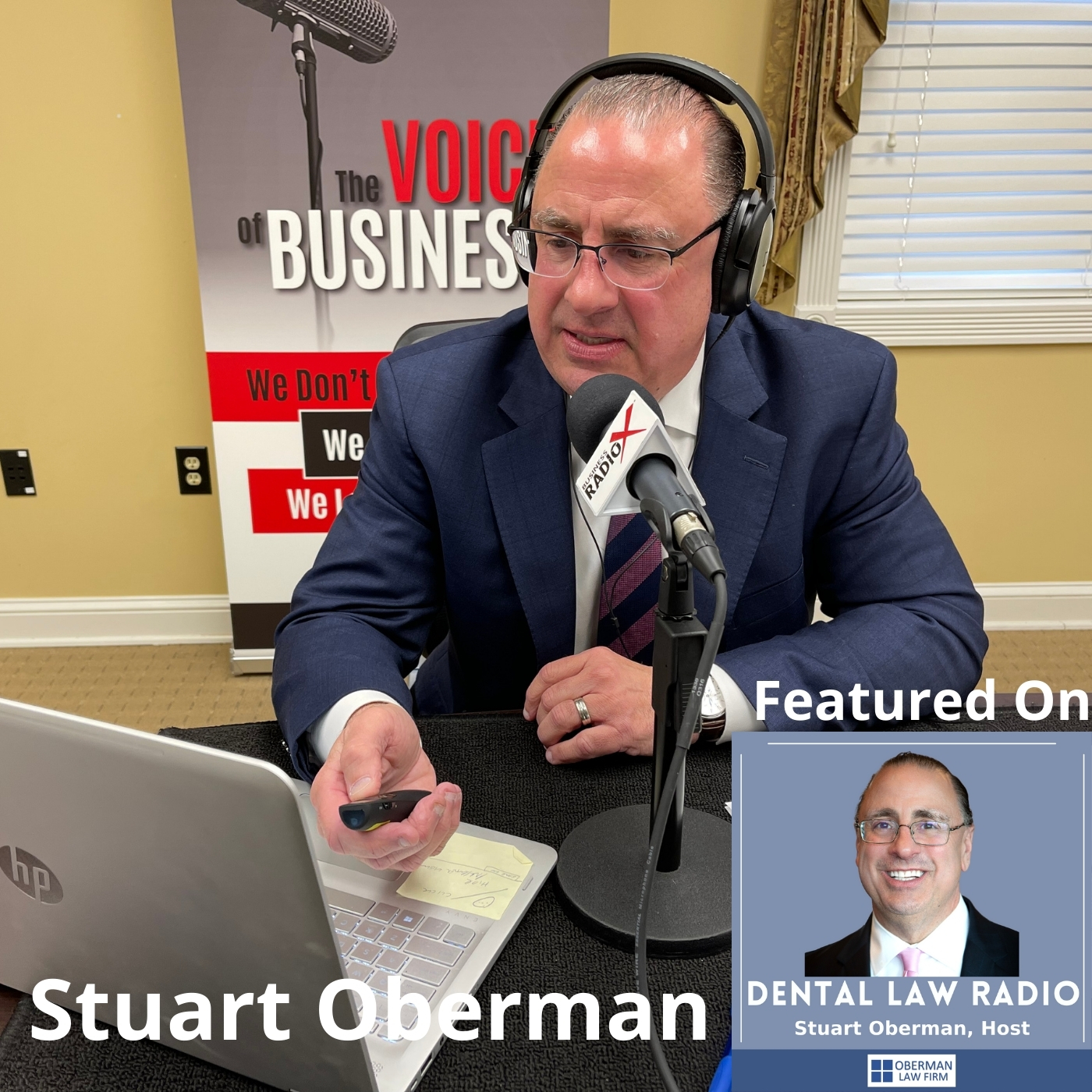
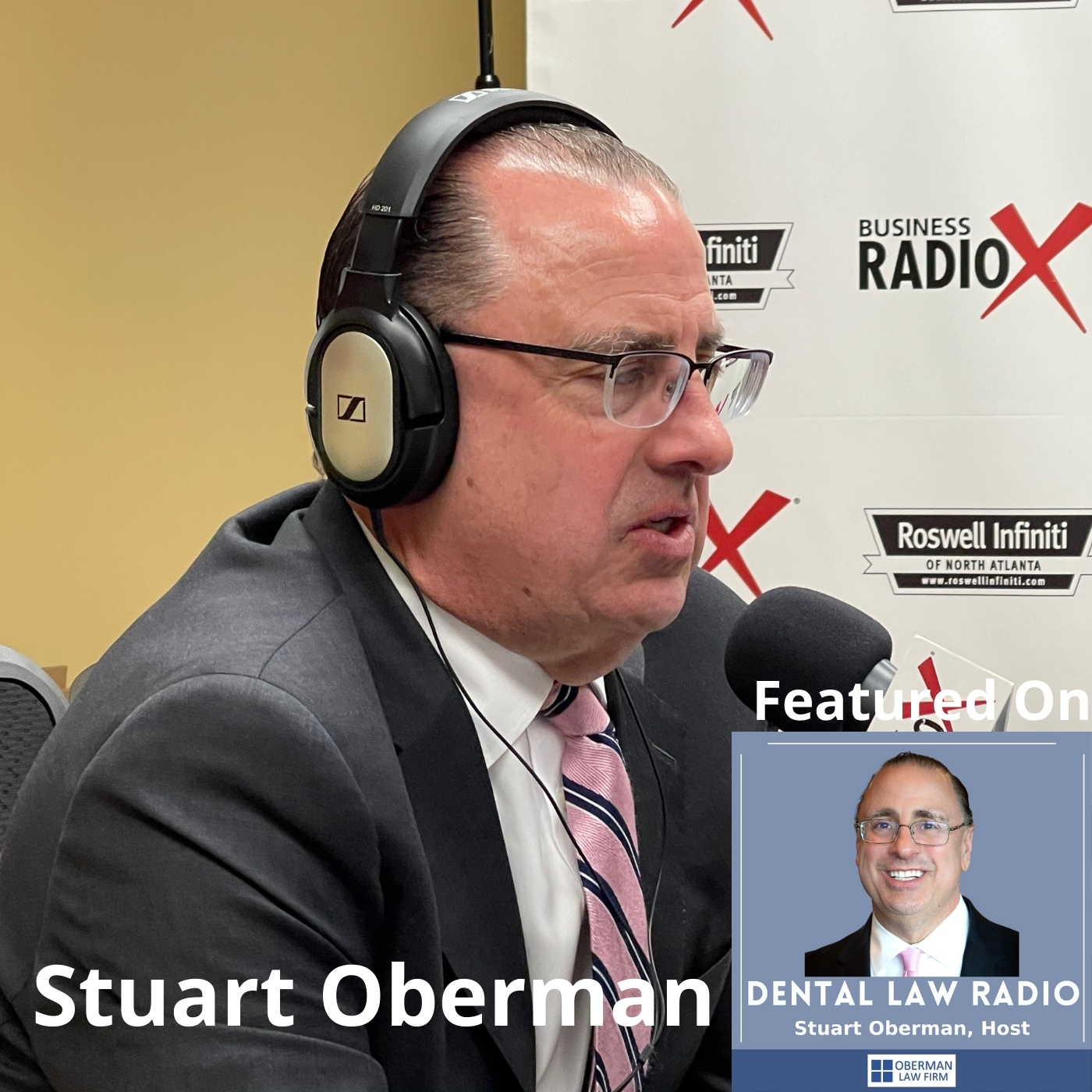
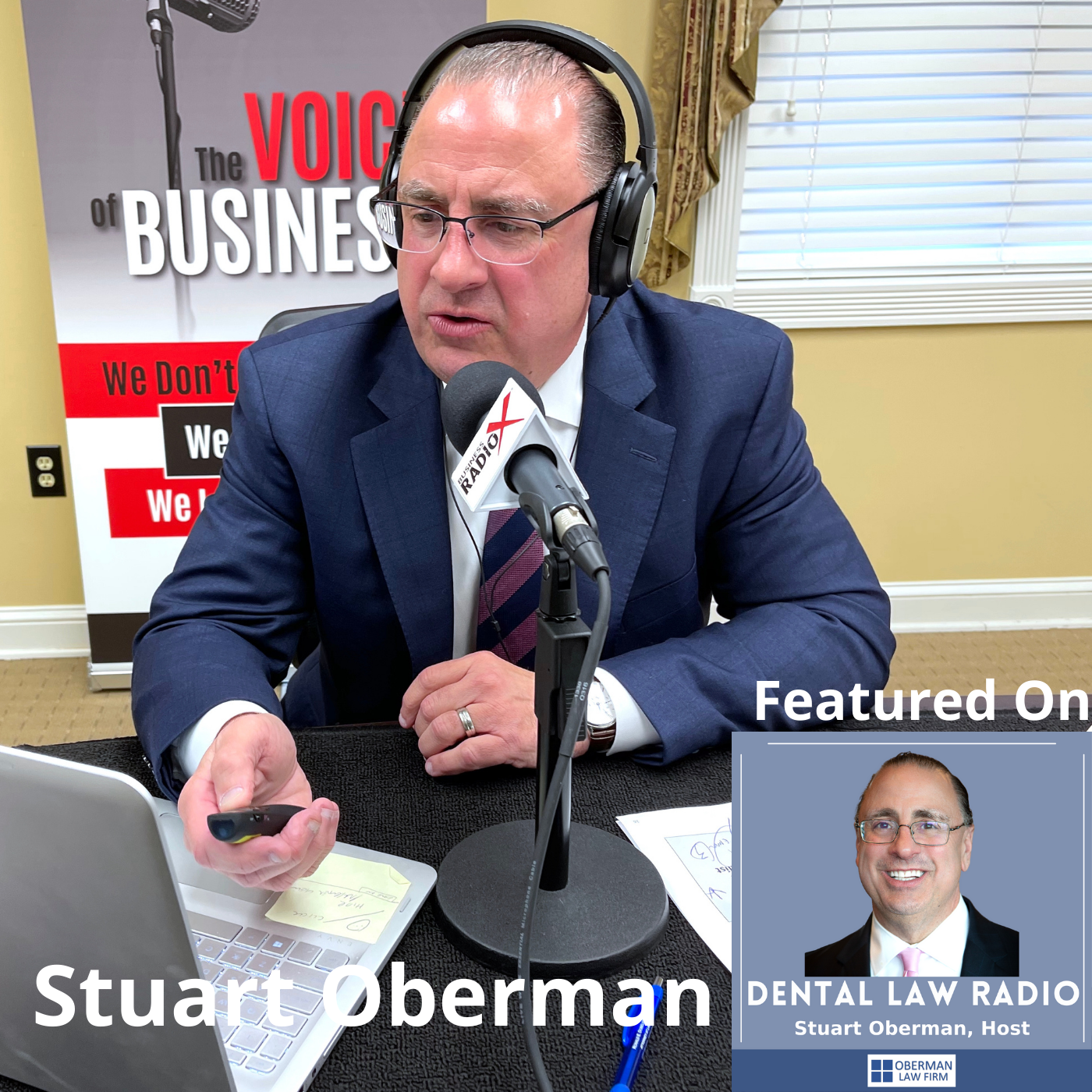
As a rule, Stuart Oberman observes, HR in the dental practices he works with is “non-existent,” and remediating those lapses and blunders can be quite costly. So what are the top ten mistakes he sees in his work, and how do those problems get fixed? Use this episode of Dental Law Radio to gauge some areas of improvement your practice may require. Dental Law Radio is underwritten and presented by Oberman Law Firm and produced by the North Fulton studio of Business RadioX®.


TRANSCRIPT

Intro: [00:00:01] Broadcasting from the Business RadioX Studios in Atlanta, it’s time for Dental Law Radio. Dental Law Radio is brought to you by Oberman Law Firm, a leading dental-centric law firm serving dental clients on a local, regional, and national basis. Now, here’s your host, Stuart Oberman.

Stuart Oberman: [00:00:25] Hello everyone and welcome to Dental Law Radio. Today’s topic, H.R. I’m going to start off by saying that, as a general rule, H.R. in our dental practices is nonexistent. We run into a lot of issues regarding H.R. in our dental practices. So, what’s the topic for today? Avoid the Top Ten Dental Human Resource Mistakes.

Stuart Oberman: [00:00:57] So, I talked about before that COVID-19 exposed a lot of issues regarding H.R. Mainly, it was nonexistent. So, going forward with that, we’re seeing a little bit of improvement, but not a lot, not enough that I feel comfortable, especially with statistics regarding the Department of Labor and the increased scrutiny of the Fair Labor Standards Act.

Stuart Oberman: [00:01:25] So, a recent survey came out from the Department of Labor that 70 percent of employers are violating the Fair Labor Standards Act. If you don’t know what that is, then you need to, honestly, listen closely. You need to join our email lists, because the Fair Labor Standards Act is under federal scrutiny right now to tighten that up from the employment side.

Stuart Oberman: [00:01:55] So, let’s take a look at what are the most common mistakes. I want to keep this simple, because, again, this can very easily go down a rabbit hole. Progress is short steps, especially on the H.R. Side. You don’t have to recreate and reinvent the wheel. Just take small steps. One of the biggest questions is, number one, failure to follow employment policies and procedures.

Stuart Oberman: [00:02:22] So, I’m talking to a doctor yesterday and he’s talking about a hygienist who is off of work. She was in an accident in a totally different state that I’m in, Georgia. And this is a doctor up north. And he was outlining how and what she was not doing, what he wanted done. Point blank question, “Doctor, does she sign a nondisclosure?” “Nope.” “Doctor, do you have an employee manual?” “Nope.” “Are there any internal documents that govern employee conduct?” “Nope.”

Stuart Oberman: [00:02:59] So, the first thing I thought to myself and I didn’t say this out loud was, you’re dead in the water. You’re just dead. I mean, it’s damage control as to what it’s going to look like. So, what do we do? You have to follow policies and procedures. You have to – I can’t even stress this enough. I feel like getting up on the table and screaming. You have to have a policy manual.

Stuart Oberman: [00:03:25] Now, I looked at one this morning, it’s 30 pages. It’s better than nothing. But we’re going to have to beef that up a little bit. They’re a little bit out of compliance with some issues, so it’s probably going to be 70 or 80 pages. By the time we get through the job descriptions and everything else, we’ll be about 100. That’s the first step, is, you’ve got an employee manual.

Stuart Oberman: [00:03:43] That doctor yesterday, dead in the water. Forget about it. It was a short conversation. He wasn’t happy with the answer that I gave him, which was to protect him going forward.

Stuart Oberman: [00:03:57] Number two, failure to keep good records. When you have a Department of Labor audit, State or Federal, if it is not in writing, if it is not in a file, it never happened and you never enforced it. One thing I would strongly recommend we do is that for each employee, you have two separate files. The professional file, which is the credentialing file and regular employment file. And I said this before on previous podcasts, never ever, ever in your life let your employees control their own personnel file. Never. Keep good records.

Stuart Oberman: [00:04:40] If you keep good employee records, then you are more likely to succeed in the Department of Labor audit, OSHA audit, and other State and Federal audits, because you’ve got the documentation. You know, as we say in the board complaints, if it wasn’t in writing, it never happened. So, writing is critical.

Stuart Oberman: [00:05:07] So, one thing our doctors do not do, number three, failure to conduct performance reviews. In today’s world where turnover is greater than ever – and I was reading a publication, it’s called Boomerang. The employees that left on the mass exodus are going to now want to start coming back – the question is, do you hire those employees back? That’s an individual question that you’ve got to answer for yourself. So, are you evaluating your employees? Do you have a valuation process on a monthly, quarterly, or yearly basis?

Stuart Oberman: [00:05:47] Because if you’re going to fire an employee and you have no performance reviews, you’re already behind the eight ball. You’ve got to provide constructive criticism. You have to jointly discuss problems and concerns. And then, you’ve got to document it. If you’re going to fire an employee, the next thing is you’re going to get slapped in the back of the head with the Americans with Disabilities Act allegation or EEOC, Equal Opportunity Employment Commission, lawsuit or complaint. And you have no documentation, you might as well open up your checkbook.

Stuart Oberman: [00:06:20] Number four is a growing concern among our dental practices, failure to follow harassment and discrimination policies. This is the fastest growing segment of problems in our dental practice across the board, small, large, large scale, doesn’t matter. Harassment and discrimination policies, in plain English, you better have a policy for that. It better be in your employee manual. And you better know how to deal with the complaint on either one of those fronts, harassment or discrimination policies.

Stuart Oberman: [00:06:57] So, in today’s world, you also probably should obtain discrimination harassment policy and contact your local insurance broker for those particular coverages. But you got to have a plan. It’s got to be written. And you’ve got to have a procedure in place to enforce it if you have complaints.

Stuart Oberman: [00:07:16] Number five is a growing area of concern as far as the Federal Fair Labor Standards Act goes. Number five, failure to pay overtime to nonexempt employees. So, the law is constantly changing, states are constantly changing. You have to keep up to date as to what exempt and nonexempt is in your state. If you do not have this documented, I will guarantee you, you will be slapped hard by the State or Federal Department of Labor. States are actually worse than the IRS, especially if your employees complain on their whistleblower statute, State or Federal.

Stuart Oberman: [00:07:59] So, again, you have to understand what the Fair Labor Standards Act is, how that applies. In January, what President Biden said as far as enforcement goes and regulatory concerns.

Stuart Oberman: [00:08:15] A gray area now in the news, creating a perception of retaliation. So, I’m not saying nothing is confidential. It’s all in the news. Whistleblower came forward on Facebook, that’s common knowledge. So, in your practice, you have to have specific policies in place that if an employee complains, they will not be retaliated against, especially if you are allegedly violating Federal Law, OSHA, HIPAA, Department of Labor, whatever it may be.

Stuart Oberman: [00:08:52] There are very specific whistleblower statutes out there that if you penalize an employee for complaining to the State or Federal agency, you can be amazingly sanctioned – and I know that’s not even a good sentence. But you will get slapped. And then, you got to come on the Federal Whistleblower Statute, which is never ever, ever a good thing.

Stuart Oberman: [00:09:18] So, as employees are quitting, as employees are being fired, laid off, one thing you have to consider, number seven, your failure to consider the impact of a layoff. The days are gone where you simply fire an employee and not worry about anything. In today’s world, you have to prepare for a layoff or a fire. One thing you have to do – and I say this all the time when I speak and I tell our clients this on our calls – you have to have a nondisclosure agreement. You have to have a cell phone, social media, and internet policy.

Stuart Oberman: [00:09:59] One thing your employees will do if you fire them, they will go straight to the internet and then you have absolutely no recourse to prevent that, unless you have these nondisclosure confidentiality agreements. Your employees are going to go to three places, OSHA, HIPAA, Department of Labor for complaints. How do you deal with that? How do you deal with an employee being fired in wanting money for severance? Are you prepared to sign a release?

Stuart Oberman: [00:10:31] A complaint that is filed by an employee never ends, it seems like, once a government gets involved. If you can resolve a case with your employee prior to any litigation complaints being filed – and that includes OSHA, HIPAA, and Department of Labor, where your employees are going to go if they have problems – get the case resolved, get a severance agreement in place, and get that employee to sign a release. If that employee goes under bad terms, there’s a pretty good chance you’re going to have an ongoing problem.

Stuart Oberman: [00:11:12] One of the biggest areas that we try to take a look at, under number eight, is the failure to manage or resolve conflicts before litigation. Get the problem resolved prior to the employee leaving or litigation. Because once you step into that arena, it is a long and expensive time consuming process that you will live with for a long, long time.

Stuart Oberman: [00:11:44] In today’s employment world, you have to consider, number nine, the Americans with Disabilities Act and the Family Medical Leave Act and, also, Employee Pregnancy Act. So, the Americans with Disabilities Act applies to a specific number of employees. Every decision that you make, hiring and firing, has to be with that in mind. And under the Family Medical Leave Act, FMLA, that is 50 employees or over.

Stuart Oberman: [00:12:22] Now, what happens is, our doctors say, “Well, you know, in three or four practices and I got them all sectioned out. And I got ten employees here. I got 20 here. I got ten here. So, all my practices, I don’t have 50, but combined I have 80.”

Stuart Oberman: [00:12:36] So then, you get a question as to whether or not they are closely connected, a nexus, and whether or not you’re going to come under that particular scenario. If you’re going to scale, you have to be concerned about that because that reflects a lot of what you’re going to do internally. So, every decision has to be made, hiring and firing, regarding those particular things in mind. If you do not know what they are, if you are not familiar with those, then I suggest you contact your legal counsel. And if they don’t know, please feel free to give us call. We deal with this every day. So, cybersecurity is first and foremost on everyone’s mind in today’s world.

Stuart Oberman: [00:13:19] So, number ten, problematic. Careless use of email and the internet. Most breaches, cybersecurity experts will tell you, comes internally from poor usage of your emails, stuff is open, viruses are spread. Every, every, every practice should have a written policy on computer usage.

Stuart Oberman: [00:13:49] And let me tell you folks, the spammers are good. The phishing – and I don’t mean at Lake Lanier – is good. It gets to the point where it is, at times, impossible to tell whether or not it’s spam. And we have actually had cases that we were working on where opposing counsel, we find out has actually been sending wire transfers to fraudulent email participants on the other end, because they were hacked and they didn’t even know it. We’re talking about billions of dollars being shifted on these particular transactions.

Stuart Oberman: [00:14:34] So, you’ve got to take a look at what the policy is. It’s got to be in writing. You’ve got to have internet guidelines. You have to monitor access to your employees. And I would urge you, urge you, to reach out to your IT company, if you have one. If not, let me know. We can, certainly, try to get you in the right direction on a lot of areas. But they should be running tests to determine your vulnerability internally and whether or not your employees will open up these emails randomly, because that’s the key.

Stuart Oberman: [00:15:09] Folks, that is a long segment, I believe, on Dental Human Resource Mistakes. It’s the little things you can do to avoid the big problems. Again, I can talk probably an hour on each topic. But just take away one thing, go through this list. Make sure you are in compliance. Make sure you have outlines. Make sure you’re taking the right steps to move forward in security and prevent problems with the employees.

Stuart Oberman: [00:15:42] Folks, thank you very much for joining us. My name is Stuart Oberman. Feel free to give us a call if you have any questions or concerns, 770-886-2400, Oberman Law Firm. Or please feel free to give me an email at stuart, S-T-U-A-R-T, @obermanlaw.com. Thank you, and we will see you on radio soon.


About Dental Law Radio

Hosted by Stuart Oberman, a nationally recognized authority in dental law, Dental Law Radio covers legal, business, and other operating issues and topics of vital concern to dentists and dental practice owners. The show is produced by the North Fulton studio of Business RadioX® and can be found on all the major podcast apps. The complete show archive is here.

Stuart Oberman, Oberman Law Firm

Oberman Law Firm
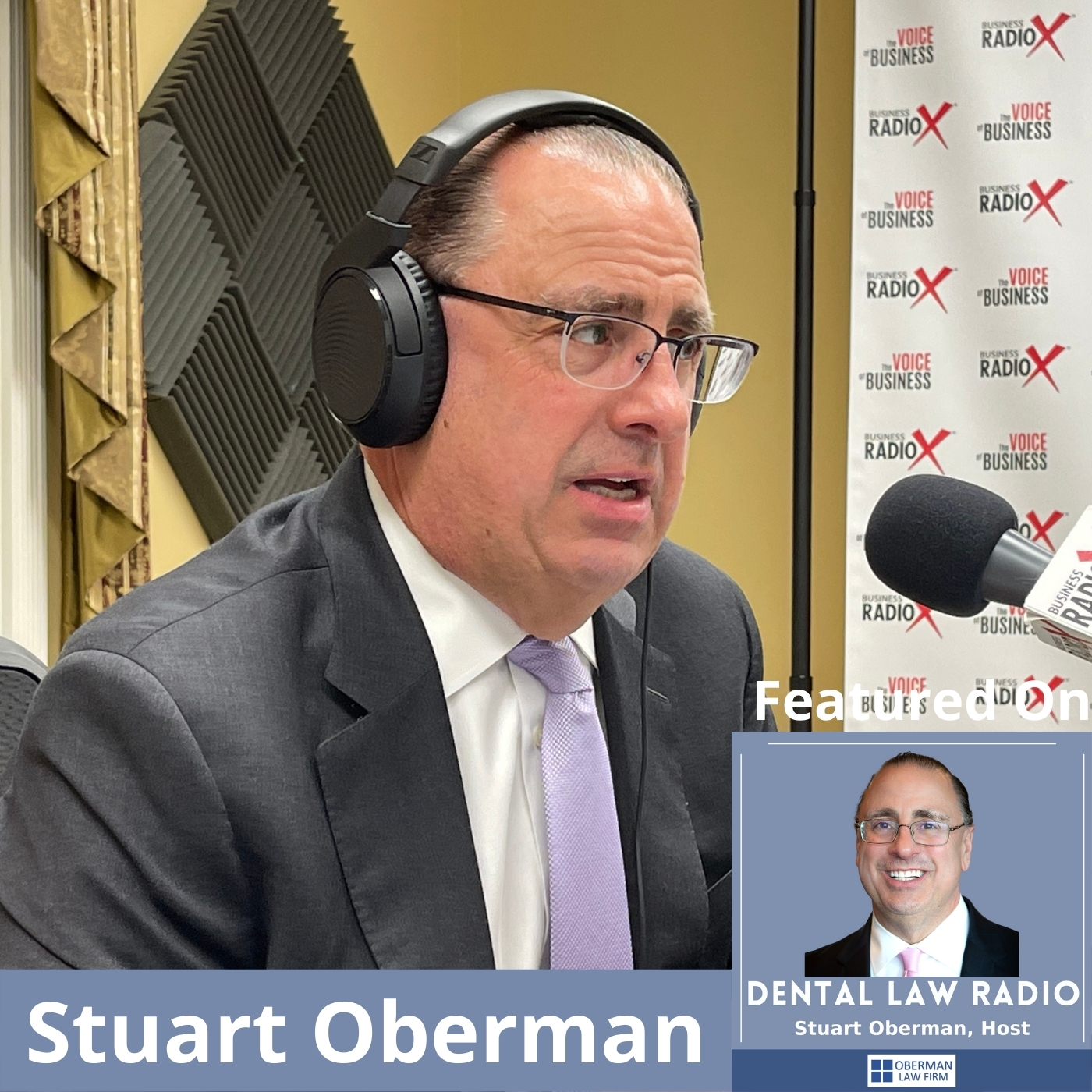
Stuart Oberman, host of “Dental Law Radio”

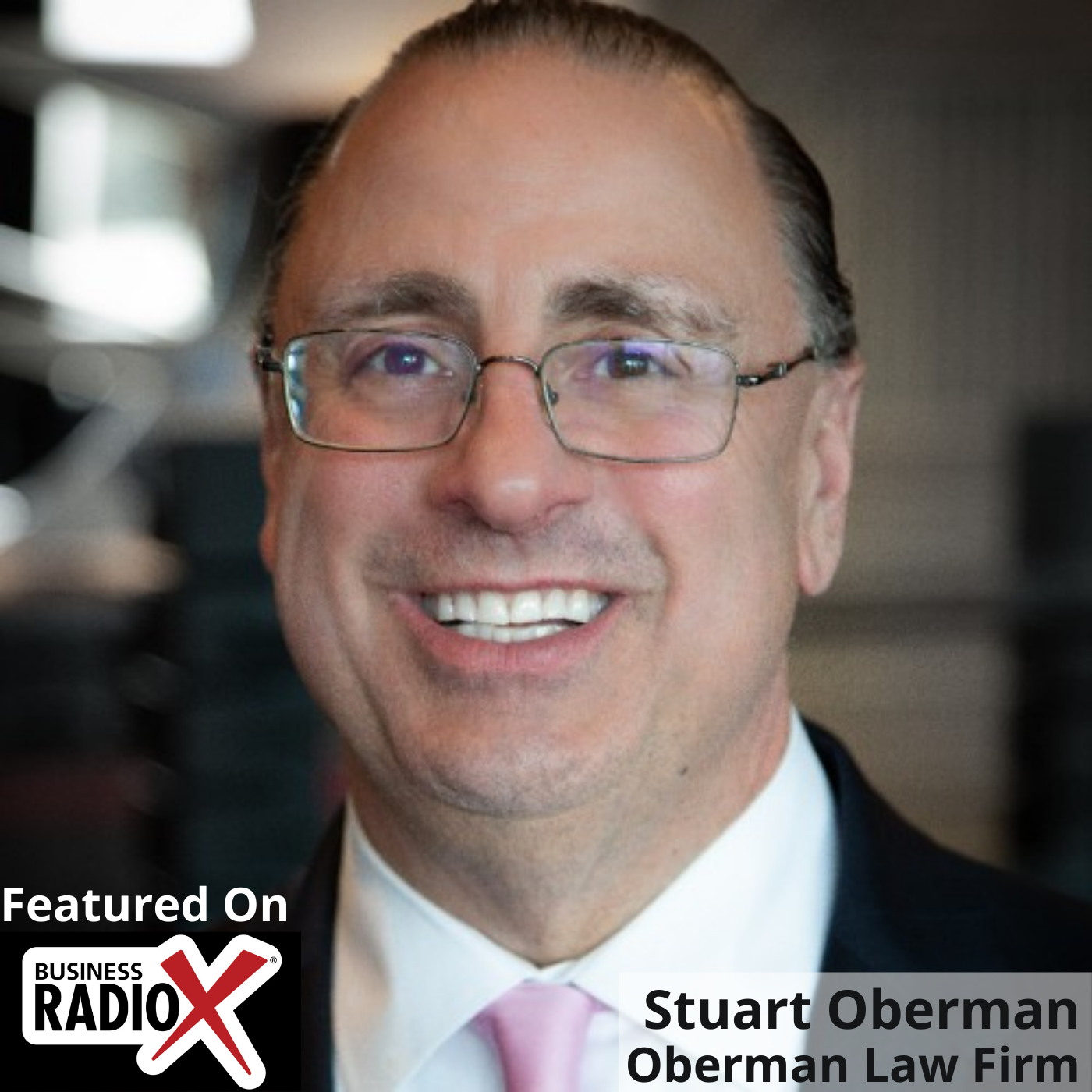
Stuart Oberman is the founder and President of Oberman Law Firm. Mr. Oberman graduated from Urbana University and received his law degree from John Marshall Law School. Mr. Oberman has been practicing law for over 25 years, and before going into private practice, Mr. Oberman was in-house counsel for a Fortune 500 Company. Mr. Oberman is widely regarded as the go-to attorney in the area of Dental Law, which includes DSO formation, corporate business structures, mergers and acquisitions, regulatory compliance, advertising regulations, HIPAA, Compliance, and employment law regulations that affect dental practices.

In addition, Mr. Oberman’s expertise in the health care industry includes advising clients in the complex regulatory landscape as it relates to telehealth and telemedicine, including compliance of corporate structures, third-party reimbursement, contract negotiations, technology, health care fraud and abuse law (Anti-Kickback Statute and the State Law), professional liability risk management, federal and state regulations.

As the long-term care industry evolves, Mr. Oberman has the knowledge and experience to guide clients in the long-term care sector with respect to corporate and regulatory matters, assisted living facilities, continuing care retirement communities (CCRCs). In addition, Mr. Oberman’s practice also focuses on health care facility acquisitions and other changes of ownership, as well as related licensure and Medicare/Medicaid certification matters, CCRC registrations, long-term care/skilled nursing facility management, operating agreements, assisted living licensure matters, and health care joint ventures.

In addition to his expertise in the health care industry, Mr. Oberman has a nationwide practice that focuses on all facets of contractual disputes, including corporate governance, fiduciary duty, trade secrets, unfair competition, covenants not to compete, trademark and copyright infringement, fraud, and deceptive trade practices, and other business-related matters. Mr. Oberman also represents clients throughout the United States in a wide range of practice areas, including mergers & acquisitions, partnership agreements, commercial real estate, entity formation, employment law, commercial leasing, intellectual property, and HIPAA/OSHA compliance.

Mr. Oberman is a national lecturer and has published articles in the U.S. and Canada.

LinkedIn

Oberman Law Firm

Oberman Law Firm has a long history of civic service, noted national, regional, and local clients, and stands among the Southeast’s eminent and fast-growing full-service law firms. Oberman Law Firm’s areas of practice include Business Planning, Commercial & Technology Transactions, Corporate, Employment & Labor, Estate Planning, Health Care, Intellectual Property, Litigation, Privacy & Data Security, and Real Estate.

By meeting their client’s goals and becoming a trusted partner and advocate for our clients, their attorneys are recognized as legal go-getters who provide value-added service. Their attorneys understand that in a rapidly changing legal market, clients have new expectations, constantly evolving choices, and operate in an environment of heightened reputational and commercial risk.

Oberman Law Firm’s strength is its ability to solve complex legal problems by collaborating across borders and practice areas.

Connect with Oberman Law Firm:

Company website | LinkedIn | Twitter
Tagged With: Dental Law Radio, employees, HR, HR mistakes, Human Resources, Oberman Law Firm, performance reviews, Stuart Oberman

Dental Associate Contracts

October 22, 2021 by John Ray

DentalAssociateContractsDLREpisode22Album
Dental Law Radio
Dental Associate Contracts
Loading
00:00 /
RSS Feed
Share
Link
Embed

Download file

DentalAssociateContractsDLREpisode22Album

Dental Associate Contracts (Dental Law Radio, Episode 22)

What are some of the key provisions in effective dental associate contracts? What form of non-compete is permissible and defendable? If you’re fresh out of dental school or even a seasoned dentist working for a practice, what are some vital stipulations you should have in any contract to protect yourself in case you leave that practice? Stuart Oberman answers these questions and much more in this episode. Dental Law Radio is underwritten and presented by Oberman Law Firm and produced by the North Fulton studio of Business RadioX®.


TRANSCRIPT

Intro: [00:00:02] Broadcasting from the Business RadioX Studios in Atlanta, it’s time for Dental Law Radio. Dental Law Radio is brought to you by Oberman Law Firm, a leading dental-centric law firm serving dental clients on a local, regional, and national basis. Now, here’s your host, Stuart Oberman.

Stuart Oberman: [00:00:25] Hello everyone and welcome to Dental Law Radio. We’re going to talk about something so near and dear to our hearts if you own a dental practice or if you are a general dentist working for a practice, dental associate contracts. I think what we’re going to discuss today can really apply whether you are a student in dental school – which I personally have the great honor of speaking at, and it’s amazing what the process is in dental school to get to that finish line – and whether you’re a small practice, large practice, whether you’re scaling, whether you have ten practices, 20 practices, one practice. Conceptually, it’s going to be all the same.

Stuart Oberman: [00:01:12] There’s a couple of points that, really, we could spend a whole day on this, but we only have a little bit of time. So, I’m going to touch on some highlights, especially some new regulatory matters regarding independent contractor status. So, the first thing we want to take a look at, you know, when you’re coming into a practice, what is your status, you’re hiring or you’re going into a practice as an employee or even a contractor, or you an associate dentist. One thing you got to consider is the Internal Revenue Service. Are you an independent contractor or are you an employee?

Stuart Oberman: [00:01:44] Now, I believe on some previous podcast, we talked about some regulatory matters regarding independent contractors and how everyone, State and Federal, is cracking down on that. So, again, it’s a key because, if you’re coming in as an employee, your contract will be totally different than if you’re an associate – I mean – excuse me – if you are independent contractor. We’re getting into tax issues. We’re getting into 1099 issues. So, I think we need to take a strong look at data as to what the relationship is. We see contracts that are actually geared towards independent contractor, but yet the wording is all of the contracts as employee, which is a disaster if you are a practice owner.

Stuart Oberman: [00:02:25] So, now, I think, number two – we want to look at a couple of things. Again, I could talk probably an hour on each topic here, but we want to drill this down to very specifics. So, you’ve got to look at your schedule locations. What are the number of days are you going to work? What dental office are you going to work at? If you work for a large group or if you own some practices, where are your associates going to work at? And then, what’s the work schedule? Is it weekdays, weekends, emergency calls? Who’s going to handle, you know, after hours? Who’s going to work on Fridays? Where are those Saturday and Sunday appointments coming in?

Stuart Oberman: [00:03:01] I think all these things are critical because if it’s not explained fully what the expectation is, as far as date, time, and locations, then you run into some issues regarding non-competes.

Stuart Oberman: [00:03:16] Now, we’re going to get into the benefit issues a little bit as to malpractice insurance. One, are you covered under your employer’s coverage? Two, if you are an independent contractor, do you have your own coverage? And then, if you have your own coverage, is it going to cover the practice that you are working in? So, I would never touch a patient with less than a million dollars in coverage. Never.

Stuart Oberman: [00:03:43] What are your deductibles? One thing that comes into play is that, on the risk management side, we will have to put out patient fires. And the first thing I’ll ask our doctors is, what is your deductible? So, if you turn in a malpractice claim – which is a whole another topic – and your deductible is 5,000 but you can resolve a case for 3,000, get it resolved. Do not turn in a malpractice claim. And if you do get it resolved – for goodness sakes – get a release signed before you issue a check.

Stuart Oberman: [00:04:22] So, now, we will look at item number four, duties of an owner and associate, what are their responsibilities? It should be specifically lined out what your responsibility is, what the owner’s responsibility is, staff, billing, collections. Let me say this as far as billing goes, I don’t care whether you work for yourself, own a practice, or you work for a group, or you work for a doctor that owns one practice, you are responsible for your own billing. If billing is fraudulent, if billing is incorrect, if billing is grossly overstated, you have bought that problem. You cannot delegate that problem to a staff member that you work with.

Stuart Oberman: [00:05:08] Next, number five, I would say, would be compensation, which is all over the map. If you’re going to work for a group, you’re going to be around 30, 31 percent. If you’re going to work for an owner, depending on what it is, relationship, you’re going to be around 35 to 40 percent collections. There’s a growing trend to do away with production. We haven’t seen that number in a while.

Stuart Oberman: [00:05:33] Are you working at a flat fee? Do you have a basis? Do you have an upside? Are you looking at 35 percent or the greater of that base pay? So, on a reconciliation, we run into a lot of problems on the associates side, where the doctors who own the practice or group are not reconciling on a monthly basis. If your last days at the end of the month, that should be reconciled, probably within five days, I would say. Sometimes, it’s going 30, 60 days on a reconciliation and that is never good because you don’t know where your numbers are at. So, again, compensation is a huge issue. That’s a whole another day topic.

Stuart Oberman: [00:06:18] But going up to number six, these are items that we see a lot that are excluded. And these are essentially what are the business related expenses. Who’s paying for your license fees? Who’s paying for your associate memberships? Automobile expenses? Are you a 1099? Are you an employee? What’s the entertainment? You’re going to be expected to bring in business.

Stuart Oberman: [00:06:46] Even on the dental side, marketing never stops. I would say that entertainment can be, you know, events. It could be fundraisers, promotional expenses, continuing education. I will tell you that a simple seminar for a general practitioner is a lot different than it is for an oral surgeon who’s doing implants. I think you need to have a defined number as to who is going to pay for the expenses and for how much. Malpractice insurance, are you going to pay that? Health insurance, who is going to be responsible for that? Disability and life insurance?

Stuart Oberman: [00:07:30] These are all basic things that should be absolutely listed in your expense portion of your contract. Again, the more you put in your contract, the less speculation, and the less you will have to call me down the road.

Stuart Oberman: [00:07:48] Charts, a question we get was, “Well, you know, I was with Dr. Smith for ten years and I have an established patient base. I look forward to taking those with me when I leave.” You’re absolutely wrong. Your patients do not go with you when you leave. Your patients will stay with the practice. That is a practice ownership.

Stuart Oberman: [00:08:07] Now, the question is, what do you advertise when you leave? How much do you advertise when you leave? Are you able to advertise when you leave? And if so, does that affect your non-compete? Those are all valid questions. It depends on your agreement.

Stuart Oberman: [00:08:20] We’re going to jump into another section, but one area you want to make sure you have access to is, if a malpractice claim is filed or a board complaint is filed when you leave that practice, you must have stipulated in your contract that you have access to those records to defend the lawsuit and to defend the board complaint. Rule of thumb is you take no charts with you, take no information with you. You take nothing with you except your instruments.

Stuart Oberman: [00:08:53] Number eight, noncompete. I get this question all the time, is my noncompete enforceable as a general rule? Yes. General rule, yes. Now, there are some states where that is not true. You’ve got to look at your specifics on each state. So, the question is, well, what’s fair and reasonable? It’s got to be geographically non- restrictive. It’s got to be fair, reasonable. I will tell you there’s some locations where a 60 mile noncompete is extremely reasonable, where a five mile noncompete is not.

Stuart Oberman: [00:09:31] I know on our contracts that we draft as a firm, we try to push the limit, honestly. I want a noncompete this 10 or 15 miles from my doctor, my owners. Now, when I’m on the other side of the fence and I get an associate, I want a three to five mile radius. So then, you get a question of is it air miles or is it as the crow flies, as we say? Or is it by Google Maps? That is a huge difference because sometimes a practice that you’re looking to buy or you’re looking to move to is within two blocks of your restriction. So, you’ve got to specify, is it air miles as the crow flies or is it a Google Drive Maps. Critical.

Stuart Oberman: [00:10:17] So, again, you want to look at the specific time period. What’s your time period on the noncompete? What’s your geographic area? Is it fair and reasonable? Again, depending on your location, two years, ten miles, maybe unreasonable. Depending on the practice that you’re at, three years, 30 miles, 50 miles, 60 miles may very well be reasonable. We have some clients that, for a variety of reasons, their patient base is 60 miles. So, if they have associates come in, we’re going to draft a 60 mile noncompete radius. Critical, critical, critical.

Stuart Oberman: [00:10:52] Again, going forward, number nine, confidentiality and trade secrets. All information in a practice is deemed confidential. For those practice owners, I would urge you to have every employee that you employ, including all independent contractors, including staff members, including associates, including hygienists, everyone signs a nondisclosure agreement. Everyone signs a nondisclosure agreement.

Stuart Oberman: [00:11:27] Trade secrets, I will tell you the first thing that will leave will be your patient base data. That is all ownership interest in the practice. That information belongs to the practice owner. Work for hire. That’s a whole different world as far as trade secrets go.

Stuart Oberman: [00:11:50] So, let’s take a look at retreatment, number ten. There are some dentists that are better than others. There are some that are a disaster. If you hire a disaster, what are you going to do when that doctor leaves and you have retreatment, redo, after retreatment, after redo for years to follow? Who is responsible for that? For the most part, you’re going to take care of that patient and you’re going to absorb that cost. But that can be thousands and thousands and thousands of dollars later. This is one of the reasons in our Asset Purchase Agreements on the buyer side, we put down the owners responsible for what they do prior to the sale.

Stuart Oberman: [00:12:43] So, let’s take a look at number 11 – and we get this question a lot – associates right to buy in. It’s amazing to me that when we talk to our dental students that are getting their first job, they have not even discussed this matter with the owner. They’ve not even met the team members, the staff members, they have absolutely no idea what the culture is in that practice and they already want to be an owner. They already want to be a buy in partner within a year.

Stuart Oberman: [00:13:19] My strong recommendation is that there is absolutely no discussion whatsoever upfront regarding a buy in. Unless that is a relationship that you’ve known that doctor for years, you have filled in every now and then. But there is nothing worse that will kill a good rollover relationship before you even step one foot into the practice or before you have one hand in someone’s mouth is ownership. If it is a good fit, it will take its course naturally. A lot of our associates are misled, “Well, you know, we’ll have you buy in for a couple of years.” That never happens, unfortunately.

Stuart Oberman: [00:14:06] So, I think you’ve got to gauge the relationship. Now, there’s nothing wrong in there of putting in a contract that you have the first right refusal should the doctor sell the practice. But I think is it a gross mistake to get in there and say, “I want in my contract valuations, buy in options. I want to know what your EBITDA is. I want to know what your numbers are. And I want to buy it within a year and here is the price.” I would throw that out the window and not worry about that.

Stuart Oberman: [00:14:35] So, you know, again, this is a very, very short segment on associate contracts. There are times, you know, we could speak on this for hours at a time. But I think if you look at what we’ve discussed in, you know, these 11 topics, I feel certain that you will take a look at your contract.

Stuart Oberman: [00:14:53] And let me say this about a contract, so do not get contracts off the internet. Do not use what your buddy did. Do not use what your brother-in-law did with his associates. It is ever evolving. Employment laws change. Circumstances change. An interesting part on our side, as a firm, we had dental clients probably in about 30 states or so. And we happen to see different trends, different things coming east, coming west, going north, going south. So, things change, wording changes, relationships change, laws change.

Stuart Oberman: [00:15:32] So, we see contracts that are used over and over and over for five to ten years. And those are absolutely a recipe for disaster, as I often say. So, do not go on the internet, do not download one, do not cut and paste one, because it is so different for each practice.

Stuart Oberman: [00:15:53] That is going to conclude our segment on dental associate contracts. And if you have any questions, any concerns, please feel free to give us a call, 770-886-2400, Oberman Law Firm. And if you want to email me, please feel free to email me, stuart, S-T-U-A-R-T, @obermanlaw.com. Thank you for joining our segment. And we’ll have much more to follow in future podcasts. Have a great day.


About Dental Law Radio

Hosted by Stuart Oberman, a nationally recognized authority in dental law, Dental Law Radio covers legal, business, and other operating issues and topics of vital concern to dentists and dental practice owners. The show is produced by the North Fulton studio of Business RadioX® and can be found on all the major podcast apps. The complete show archive is here.

Stuart Oberman, Oberman Law Firm

Oberman Law Firm
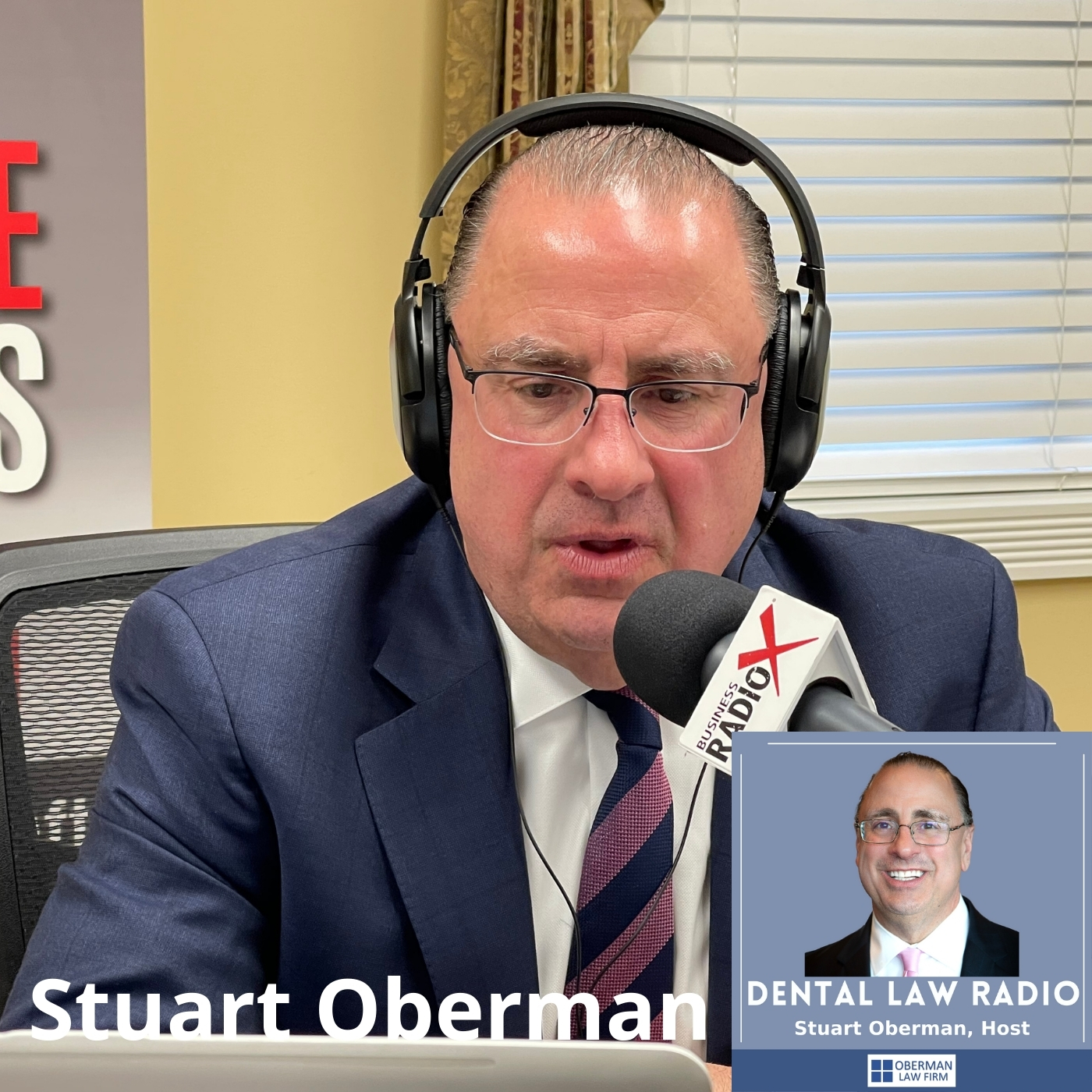
Stuart Oberman, host of “Dental Law Radio”

Stuart Oberman is the founder and President of Oberman Law Firm. Mr. Oberman graduated from Urbana University and received his law degree from John Marshall Law School. Mr. Oberman has been practicing law for over 25 years, and before going into private practice, Mr. Oberman was in-house counsel for a Fortune 500 Company. Mr. Oberman is widely regarded as the go-to attorney in the area of Dental Law, which includes DSO formation, corporate business structures, mergers and acquisitions, regulatory compliance, advertising regulations, HIPAA, Compliance, and employment law regulations that affect dental practices.

In addition, Mr. Oberman’s expertise in the health care industry includes advising clients in the complex regulatory landscape as it relates to telehealth and telemedicine, including compliance of corporate structures, third-party reimbursement, contract negotiations, technology, health care fraud and abuse law (Anti-Kickback Statute and the State Law), professional liability risk management, federal and state regulations.

As the long-term care industry evolves, Mr. Oberman has the knowledge and experience to guide clients in the long-term care sector with respect to corporate and regulatory matters, assisted living facilities, continuing care retirement communities (CCRCs). In addition, Mr. Oberman’s practice also focuses on health care facility acquisitions and other changes of ownership, as well as related licensure and Medicare/Medicaid certification matters, CCRC registrations, long-term care/skilled nursing facility management, operating agreements, assisted living licensure matters, and health care joint ventures.

In addition to his expertise in the health care industry, Mr. Oberman has a nationwide practice that focuses on all facets of contractual disputes, including corporate governance, fiduciary duty, trade secrets, unfair competition, covenants not to compete, trademark and copyright infringement, fraud, and deceptive trade practices, and other business-related matters. Mr. Oberman also represents clients throughout the United States in a wide range of practice areas, including mergers & acquisitions, partnership agreements, commercial real estate, entity formation, employment law, commercial leasing, intellectual property, and HIPAA/OSHA compliance.

Mr. Oberman is a national lecturer and has published articles in the U.S. and Canada.

LinkedIn

Oberman Law Firm

Oberman Law Firm has a long history of civic service, noted national, regional, and local clients, and stands among the Southeast’s eminent and fast-growing full-service law firms. Oberman Law Firm’s areas of practice include Business Planning, Commercial & Technology Transactions, Corporate, Employment & Labor, Estate Planning, Health Care, Intellectual Property, Litigation, Privacy & Data Security, and Real Estate.

By meeting their client’s goals and becoming a trusted partner and advocate for our clients, their attorneys are recognized as legal go-getters who provide value-added service. Their attorneys understand that in a rapidly changing legal market, clients have new expectations, constantly evolving choices, and operate in an environment of heightened reputational and commercial risk.

Oberman Law Firm’s strength is its ability to solve complex legal problems by collaborating across borders and practice areas.

Connect with Oberman Law Firm:

Company website | LinkedIn | Twitter
Tagged With: Dental Associate Contracts, Dental Law Radio, non-compete agreement, Oberman Law Firm, Stuart Oberman

The DSO Deal – What You Better Know

August 6, 2021 by John Ray

DSO-Deal
Dental Law Radio
The DSO Deal - What You Better Know
Loading
00:00 /
RSS Feed
Share
Link
Embed

Download file

DSO-Deal

The DSO Deal – What You Better Know (Dental Law Radio, Episode 15)

Within the next few years, it’s likely that 60% to 70% of all dental practices will be owned by a DSO. That’s what some industry observers are predicting, and if that’s the case, says host Stuart Oberman, you’d better understand the elements of what’s involved in an acquisition. From the letter of intent to the closing, Stuart covers the key highlights in this episode. Dental Law Radio is underwritten and presented by Oberman Law Firm and produced by the North Fulton studio of Business RadioX®.

TRANSCRIPT

Intro: [00:00:02] Broadcasting from the Business RadioX Studios in Atlanta, it’s time for Dental Law Radio. Dental Law Radio is brought to you by Oberman Law Firm, a leading dental-centric law firm serving dental clients on a local, regional, and national basis. Now, here’s your host, Stuart Oberman.

Stuart Oberman: [00:00:26] Hello everyone, and welcome to Dental Law Radio. The topic of the day, DSO. The DSO deal, what you better know. I can’t tell you how many times a day, a week, a month we get calls from buyers or sellers. “I want to form A DSO. I want to scale a DSO. I want to sell the DSO. I got private equity, I want to be a DSO. I want to buy ten practices. I want to sell my practice.”

Stuart Oberman: [00:00:57] And I will tell the doctors, one, you got to take a step back – I don’t care if you’re buying, selling, merging, acquire – you have to understand the nature of the deal. It is not like it is ten years ago. Honestly, it’s not like it was five years ago or even, frankly, two years ago. We’re seeing a whole different metrics in there in the world. There’s a whole cottage industry now that does nothing but DSO deals, whether it’s law firms, consultants, buying, selling. Everyone is into the DSO deal. I think they estimated that, probably, within the next couple of years 60 to 70 percent will be group-owned practice. Now, we’ve got to understand what that means.

Stuart Oberman: [00:01:46] What does a group-owned practice mean? So, you got different levels. You got your docs, “I own maybe one to five.” Then, you got your mid-levels, you know, maybe it’s 10 to 20. Then, you got the big boys, maybe 20 to 40. Then, you got the really big boys, really big boys. There’s a big difference on economy of scale. But a lot of our guys are middle market good doctors. They want to grow. They’re a little tired. They want to get out of the chair a little bit. They want to make some revenue. Their backs getting sore. They see what the market is. It is an absolute brutal market from a legal standpoint. It is a brutal market from an accounting standpoint.

Stuart Oberman: [00:02:34] And I’ll tell you, most CPAs have no idea what this constitutes. I hate to say that, but most do not. Some are very good, some are under the cloak. We work with clients all over the country. We’re very, very fortunate we have a lot of exposure in this area and we deal with a lot, a lot of resources.

Stuart Oberman: [00:02:51] So, what I want to do is, I want to take apart a DSO deal. This is a seven day topic. We’re trying to drill it down pretty good. First and foremost, you got to understand what a letter of intent is. That’s the key. That’s the start. So, what do you do on a letter of intent? Everything looks good, you agree. And then, all of a sudden, the one page letter of intents are dead. Now, we’re talking 10 or 15 page letter of intents. I want to walk through what these are. I don’t care if you’re a buyer or a seller, you have to know what you need to know before you walk in the door. I’m trying to be generic on these as far as the terms go. And I would urge you that this is a whole different market. DSO is a whole different world, that’s if you’re going to scale.

Stuart Oberman: [00:03:46] So, first and foremost, you got to understand the terms of the purchase. Nonbinding agreements, what is it? It’s a mutual understanding, reflection of the parties, and it should never be a binding LOI. Now, you’re going to have some confidence in there that they’re going to be, you know, enforceable but should be nonbinding. If you sign a nonbinding agreement, you’re getting really, really bad advice.

Stuart Oberman: [00:04:11] So then, you have to look at what the overall transaction is. You’re thinking, “What in the world does that mean?” Every detailed LOI on DSO side has a term sheet. Everyone that we ever run across. I’ll say it’s Exhibit A, call it what you want. So, what is it? What does it include? “Well, Stuart, you know, I dealt with a broker one time and the LOI was three pages.” You might just shred that in this world.

Stuart Oberman: [00:04:43] So, what is the terms? Here it is. This is what you need to look for. You need a seller, you need a buyer, the purchase price. What’s your price reduction? There’s always price reductions. What’s your holdbacks? What’s your equity rollover treatments, your in-seller indemnification clauses. Yes, you have obligations.

Stuart Oberman: [00:05:07] So then, all of a sudden, you get into what we call bonus performances. Well, what in the world is that? So, that’s broken down in various categories. You never knew that before. You have performance bonuses. You got primary bonuses. You got 12-month collections. You got 24-month collections after closing. Yes, you’ll be held accountable for those performance bonuses. Trust me, you are not walking in there with no obligations. That’s a performance bonus. All that’s listed separately.

Stuart Oberman: [00:05:38] So, what about a primary performance bonus, your PPB parameters? “Oh, never heard of that.” So, what happens if that’s not met? What happens if you’re PPB is not met? What if it’s not earned in a specific year? How are you equating that? How is that calculated? Do you even know what that is? So then, in addition to that, you got additional performance bonus opportunities. So, what does that mean? So, you calculate what happens if your bonus exceed calculations for the 12 or 24 months. “Well, I didn’t know I had that opportunity.” These are the things that if you are not careful with, you’ll be leaving tons and tons and tons of money on and off the table. These are all performance bonuses.

Stuart Oberman: [00:06:38] If you think you’re going to walk into a DSO, whether you’re buying or selling, and not have performance bonuses, you are sadly mistaken. The days are gone where you’re going to sell your practice to a DSO. Or you’re going to buy one and the seller is going to be out on the road in 90 days, it doesn’t happen.

Stuart Oberman: [00:06:59] So then, you got to look at what are your additional performance bonuses. I know we’re getting a little deep here, but I want to run through this. Your APB parameters. You got targeted achieved, targeted not achieved. So what if you hate it, you got to prorate it. Does your CPA have any idea what these numbers are? So, now, we say, “Well, we’re just looking at the price.” So, now, you got the assets purchase agreement. A lot of times the government allocations are not included. What if you have a high subsidy of insurance or governmental payments? You got to look at those numbers. If you’re a CPA, you got to know these numbers. What are your earnout hurdle reductions? “I didn’t know I had those.” You’re always going to have earnout reductions.

Stuart Oberman: [00:07:48] So then, they say, “Well, you know what? We’re going to take a percentage of your sale price. And, now, I want you to hold back equity in our company.” That is a risk always. Are you getting more money upfront? What’s the next three to five years look like? What’s the recap look like? So then, you’ve got to take a hard, hard look, are you Class A preferred shares, Class C shares? You have to understand what those ramifications are as far as your obligations and your rights.

Stuart Oberman: [00:08:29] I will tell you that probably under these particular classes, you will not have many rights and you’ll be at the beck and call of the DSO. You got to understand that. You got to get these agreements up front before you even sign the final dotted line. Because once you sign the documents, it’s too late. You can’t get into these documents. You got to drill deep pretty hard before those.

Stuart Oberman: [00:08:54] So then, you work through the other areas, employment issues, you and your staff. How long is the employment? Employment of your staff, you want to protect your staff. It’s not going to happen. Post-closing role, what are you going to do? Are you going to be clinical director, going to be chief dental officer? How much time are you taking off? “Well, I’m going to work 246 days a year.” No, you’re not. You’ll never hit your numbers. “Well, that’s not what I wanted.” Well, you’re in the wrong game. Because you’ll have some strict numbers you got to hit. And it’s not going to be at your control because you’re going to have expenses that are going to come off your bottom line. What’s additional compensation? “Well, I don’t know what that is.” Then, you better know.

Stuart Oberman: [00:09:45] So, that’s a very, very generic overall concern regarding performance bonuses. Again, that’s pretty deep stuff. We’re talking documents and documents, documents. But I want to give you a brief overview as to what you need to look at, and what you should be prepared for, and what you need to know before you even get into the game, and your CPA needs to know.

Stuart Oberman: [00:10:09] So then, “Well, you know, we’re going to sign a noncompete.” You bet you are. You’re not going to work for another DSO for a couple of years. “Noncompete is probably two years, 25 miles. That’s a long way.” “Yes, it is, Doc. Yes, it is.” You’re going to be tied. You’re getting millions. You’re going to be tied. So, if you’re buying a practice, you better tie that doctor down. If you’re selling, you better know what you ramifications are as far as radius goes.

Stuart Oberman: [00:10:37] What’s excluded assets? There’s always excluded assets. Liabilities, are you in debt? Do you know all your debt? What’s your intellectual property? Do you own your logo? Do you own your trademarks? What are your holdbacks? Cash upfront, cash being held back? Are you repurchasing Class A shares, C shares? Are you getting equity rollover as collateral? What’s the tax consequences of that? Is it a taxable event or is it tax deferred? What’s your tax allocation in the purchase price?

Stuart Oberman: [00:11:13] There’s a big difference in a DSO and a normal sale as far as your tax allocations go as far as personal goodwill. Some are liberal, some are not. Those are things you got to drill down with the CPA. This is not a 30 day process, guys.

Stuart Oberman: [00:11:27] Let me tell you, if you’re buying, you better do your due diligence. You better have a due diligence checklist, folks. If you’re selling, you better be prepared to be worn out. You’re talking about [inaudible] earnings. You’re talking about a lot, a lot of information that’s going to be passed hands down through a lot of information. So, due diligence is going to be extensive. You get a $40 million deal, they’re going to wear you out. But you got to be prepared for it. It’s a journey.

Stuart Oberman: [00:11:59] So, one of our recommendations is, before you even start this process, get your documents upfront, get your numbers, get them loaded up, and ready to roll. Because once that process starts, it rolls quickly. And it goes quick.

Stuart Oberman: [00:12:14] So then, you got a question, “Well, they’re going to tie me down. They don’t want to deal with anybody else for 60, 120, 180 days.” You’re right. What if the deal falls apart? You’re off the market for four, six, eight months. You got no way out. You’re stuck. So, you need to understand that the offers that you get will tie you up. So, you better pick a good one. I know what’s going on upfront because otherwise you’re going to be off the market for a while and time is money in these deals.

Stuart Oberman: [00:12:52] So, how do you terminate an LOI, Letter of Intent? A couple ways, which [inaudible] the asset purchase agreement itself. When the buyer sends you a letter saying, “You know what? I’m good. I don’t want to do this anymore. The numbers didn’t add up. Sorry. We no longer wish to proceed.” You’re done but you’re still an exclusive period. Or the expiration of an exclusive period. “We’re done. We’re closing.”

Stuart Oberman: [00:13:23] So, there’s a lot of information, guys. A lot information, and it’s really way beyond this particular scope, if you will, as far as the DSO deal. This is a whole seminar, a whole topic. But we’re getting a lot of questions on this, a lot of questions every day. How I form it? How I buy it? How I sell it? What do I do? How to consolidate a merging? What do we need?

Stuart Oberman: [00:13:54] First and foremost, if you’re a buyer, you’ve got to have the right people around you. It doesn’t matter if you’re a doctor or DSO. Of course, you already know that if you’re a DSO. But if you’re a doctor, you got to be prepared to scale. You’ve got to have your systems in place before you do anything else. There’s no way that you can purchase three practices without your internal partitions being set. There are a lot of headaches.

Stuart Oberman: [00:14:18] If you’re selling, you got to be prepared for the rigors of selling to a DSO. You got to be prepared to have performance bonuses. You’ve got to be prepared to, possibly in some case, work a little harder. If you think you’re going to sell and work three days a week like you were doing before, it’s probably not going to happen. Expect to hit all your numbers, and you will be expected to hit your numbers. Again, you got performance bonuses, you got primary performance bonuses, you got additional performance bonuses, you got top additional bonuses.

Stuart Oberman: [00:14:52] So, you got to look at all those parameters and make sure you know exactly what you’re buying, what you’re selling, what’s the company like, what’s the cap rate. What are you looking at, Class A preferred shares, Class C shares, or vice versa? What are you looking at on that side? What’s the compensation on the chief financial officer side? Post-closing, what was expected there? The non-competes, your holdback numbers. So, those are all the things. And, again, you’ve got to have people, especially on the financial side, who understand this. And on the legal side, it gets very complex – very, very complex on our side. So, there’s a lot of pieces here.

Stuart Oberman: [00:15:44] So, that’s the sort of the DSO. You know, it’s hot all over the country. A lot of money to be made in these areas. But there’s a lot of risk. And it’s not for everyone. Some doctors want to scale, some don’t want to scale. So, basic parameters. Hopefully, you’ve picked on a couple of topics that you need to take a look at or be aware of, if you are not or your CPA needs to be aware of.

Stuart Oberman: [00:16:12] So, yeah, give us a call. We do it every day. We love what we do. We have access to a lot of information on a national basis because of the DSO market. And if you have any questions, give us a call, 770-886-2400. My name is Stuart Oberman. Feel free to reach out to us or e-mail at stuart, S-T-U-A-R-T, @obermanlaw.com. And thank you for joining us. And we will see you on the next DSO deal.

About Dental Law Radio

Hosted by Stuart Oberman, a nationally recognized authority in dental law, Dental Law Radio covers legal, business, and other operating issues and topics of vital concern to dentists and dental practice owners. The show is produced by the North Fulton studio of Business RadioX® and can be found on all the major podcast apps. The complete show archive is here.

Stuart Oberman, Oberman Law Firm

Oberman Law Firm
Stuart Oberman, host of “Dental Law Radio”

Stuart Oberman is the founder and President of Oberman Law Firm. Mr. Oberman graduated from Urbana University and received his law degree from John Marshall Law School. Mr. Oberman has been practicing law for over 25 years, and before going into private practice, Mr. Oberman was in-house counsel for a Fortune 500 Company. Mr. Oberman is widely regarded as the go-to attorney in the area of Dental Law, which includes DSO formation, corporate business structures, mergers and acquisitions, regulatory compliance, advertising regulations, HIPAA, Compliance, and employment law regulations that affect dental practices.

In addition, Mr. Oberman’s expertise in the health care industry includes advising clients in the complex regulatory landscape as it relates to telehealth and telemedicine, including compliance of corporate structures, third-party reimbursement, contract negotiations, technology, health care fraud and abuse law (Anti-Kickback Statute and the State Law), professional liability risk management, federal and state regulations.

As the long-term care industry evolves, Mr. Oberman has the knowledge and experience to guide clients in the long-term care sector with respect to corporate and regulatory matters, assisted living facilities, continuing care retirement communities (CCRCs). In addition, Mr. Oberman’s practice also focuses on health care facility acquisitions and other changes of ownership, as well as related licensure and Medicare/Medicaid certification matters, CCRC registrations, long-term care/skilled nursing facility management, operating agreements, assisted living licensure matters, and health care joint ventures.

In addition to his expertise in the health care industry, Mr. Oberman has a nationwide practice that focuses on all facets of contractual disputes, including corporate governance, fiduciary duty, trade secrets, unfair competition, covenants not to compete, trademark and copyright infringement, fraud, and deceptive trade practices, and other business-related matters. Mr. Oberman also represents clients throughout the United States in a wide range of practice areas, including mergers & acquisitions, partnership agreements, commercial real estate, entity formation, employment law, commercial leasing, intellectual property, and HIPAA/OSHA compliance.

Mr. Oberman is a national lecturer and has published articles in the U.S. and Canada.

LinkedIn

Oberman Law Firm

Oberman Law Firm has a long history of civic service, noted national, regional, and local clients, and stands among the Southeast’s eminent and fast-growing full-service law firms. Oberman Law Firm’s areas of practice include Business Planning, Commercial & Technology Transactions, Corporate, Employment & Labor, Estate Planning, Health Care, Intellectual Property, Litigation, Privacy & Data Security, and Real Estate.

By meeting their client’s goals and becoming a trusted partner and advocate for our clients, their attorneys are recognized as legal go-getters who provide value-added service. Their attorneys understand that in a rapidly changing legal market, clients have new expectations, constantly evolving choices, and operate in an environment of heightened reputational and commercial risk.

Oberman Law Firm’s strength is its ability to solve complex legal problems by collaborating across borders and practice areas.

Connect with Oberman Law Firm:

Company website | LinkedIn | Twitter
Tagged With: dental law, Dental Law Radio, dental practice acquisitions, Oberman Law Firm, Stuart Oberman, The DSO Deal

Are You Violating Federal Law in the Interview Process?

July 23, 2021 by John Ray

ViolatingFederalLawDLREpisode12DSOsAlbum
Dental Law Radio
Are You Violating Federal Law in the Interview Process?
Loading
00:00 /
RSS Feed
Share
Link
Embed

Download file

ViolatingFederalLawDLREpisode12DSOsAlbum

Are You Violating Federal Law in the Interview Process? (Dental Law Radio, Episode 13)

Before you start interviewing for that open position in your practice, you’d be wise to listen to this episode of Dental Law Radio. Host Stuart Oberman offered a reminder that ADA requirements apply in the interview process, not just after an employee is hired. Stuart also covered a growing trend: interviewees secretly recording their interviews with potential employers. Dental Law Radio is underwritten and presented by Oberman Law Firm and produced by the North Fulton studio of Business RadioX®.

TRANSCRIPT

Intro: [00:00:01] Broadcasting from the Business RadioX Studios in Atlanta, it’s time for Dental Law Radio. Dental Law Radio is brought to you by Oberman Law Firm, a leading dental-centric law firm serving dental clients on a local, regional, and national basis. Now, here’s your host, Stuart Oberman.

Stuart Oberman: [00:00:26] Hello everyone, and welcome to the Dental Law podcast. You know, as we go into this second half of the year, if you will, we’re seeing a lot of H.R. Movement in the Federal Law area. And we’re becoming more and more astute as to interviewing process, Americans with Disabilities Act. And we’re getting a lot of questions regarding the interview process. What do we do? How do we do it? What’s the questions? What’s not the questions? What’s the proper answer? Are we doing Zoom calls? What’s the protocols for the interviews now in today’s world?

Stuart Oberman: [00:01:04] So, I want to hit a couple of things that, really, our doctors are do not know about, I would say as a whole. And I think it’s important because it is one less step that doctors have to worry about. So, we’re going to talk a little bit about are you violating Federal Law during the interview process, which is an absolute loaded question.

Stuart Oberman: [00:01:24] So, what we’re discovering now is, actually, interviewees on Zoom calls are actually recording your phone calls or recording your sessions. We’re discovering that potential candidates are also recording your conversations during an interview process. So, what you thought was a confidential communication between a prospective employee and employer is now going viral. So, I think you got to be very, very, very careful how the interview process takes place, the procedures in place, make sure the questions are in place, make sure that you have the protocols in place to have a legitimate interview process, which is not in violation of State and Federal Law.

Stuart Oberman: [00:02:20] But I want to talk about a lawsuit that came about that, I think, has been on the horizon for a while and it’s been a topic of a lot of things that we see in our dental offices also. So, on April 29, 2001, the EEOC filed suit against Wal-Mart. Again, I want to drill this down to how this affects our doctors, an interview process. So, our doctors have to be aware of the American with Disabilities Act whenever they are interviewing anyone or actually working with employees on a day-to-day basis.

Stuart Oberman: [00:02:53] So, what does this lawsuit allege? It alleges something our doctors probably do not do on a daily basis. The allegation, that Wal-Mart violated the Federal Law by not providing a sign language interpreter for the applicant. So, the question is, doctors, staff members, team members, what are you going to do if you discover that an applicant who’s qualified, that’s a good candidate, comes with an ADA requirements – Americans with Disabilities Act requirements – for a legitimate interview, and you have to accommodate that. Do you have a procedure in place to accommodate that worker?

Stuart Oberman: [00:03:47] An interview process, you have to hire them, but do you have a process in place to accommodate them? So, the allegation is, they basically failed to hire this particular person because he was deaf. So, the EEOC, of course, says the ADA requires that employers provide a disabled and able-bodied applicants the same opportunity to compete for the job, which is fair. The question is, when you do your interview process, are you doing that? How are you doing that? What’s the process? Do you even know, when that person comes in, if there’s a disability? And if so, what do you do when you discovered that interview process? Or, do you do what probably a lot of our employers or doctors do, have a ten-minute interview and they’re done? You made the decision even before the person sits down.

Stuart Oberman: [00:04:47] So, the bottom line is, is that, when the H.R. process or an interview process, you have to make sure, one, your questions are legitimate. Two, your reasoning is legitimate. Three, that you’re absolutely complying with all the ADA requirements that are required to provide the applicant the same opportunity as a – I’ll use the term – normal bodied person that is not subject to the American with Disabilities Act.

Stuart Oberman: [00:05:21] So, the bottom line is, is that, as these rates increase, as our exposure increases because potential candidates are now recording conversations, candidates are now putting things viral, interview process-wise, the EEOC is going to hold you accountable. That’s the last thing you need. And you’re trying to hire a candidate and, all of a sudden, you’ve got the EEOC filing a complaint against you because you failed to comply with the ADA.

Stuart Oberman: [00:05:52] So, when you start this process again, H.R., H.R. in dental offices is your biggest nightmare. You got a procedure in place; you’ve got a person appointed in your office to understand this. This is not your sixth person position. You can’t have one person doing H.R. You can’t have one person doing payroll. You can’t have the same person doing hygiene, checking out. It’s not going to work. That’s a recipe for disaster.

Stuart Oberman: [00:06:21] So, again, take a look at your policies, tailor your procedures, what is your H.R. in place? Especially in today’s economy where it is so hard to find workers, workers are as transient as ever in today’s world. Some of our doctors are showing 30, 40, 60, 70 percent turnovers. That is a lot. And you have to have a policy in place, procedures in place, for interviews. It is critical. A bad interview, a bad procedure, a bad H.R. matter will set you back months and years.

Stuart Oberman: [00:06:58] So, quick update, H.R.. Do it, get it in place, keep up to date what’s going on. For those who really want to get involved in H.R. process, I would urge you to reach out to us. We do have a newsletter for our clients. We really try to have a lot of bullet points on H.R. process because it is so ongoing. They’re not comprehensive. It’s not a six day read. A lot of us just touch points what you need to know. Please feel free to give us a call. Please reach out to us. That’s what we do every day so we have a lot of knowledge with any industry.

Stuart Oberman: [00:07:37] Any questions, please feel free to give us a call at 770-886-2400. Feel free to reach out to me directly, stuartoberman – Stuart, S-T-U-AR-T – @obermanlaw.com. Thank you everyone. Hopefully, this has been of some value. If you just took away one particular piece of advice, then it’s a success as far as I’m concerned. Have a great day. And we’ll see you back in our next podcast.


About Dental Law Radio

Hosted by Stuart Oberman, a nationally recognized authority in dental law, Dental Law Radio covers legal, business, and other operating issues and topics of vital concern to dentists and dental practice owners. The show is produced by the North Fulton studio of Business RadioX® and can be found on all the major podcast apps. The complete show archive is here.

Stuart Oberman, Oberman Law Firm

Stuart Oberman, Dental Law RadioStuart Oberman is the founder and President of Oberman Law Firm. Mr. Oberman graduated from Urbana University and received his law degree from John Marshall Law School. Mr. Oberman has been practicing law for over 25 years, and before going into private practice, Mr. Oberman was in-house counsel for a Fortune 500 Company. Mr. Oberman is widely regarded as the go-to attorney in the area of Dental Law, which includes DSO formation, corporate business structures, mergers and acquisitions, regulatory compliance, advertising regulations, HIPAA, Compliance, and employment law regulations that affect dental practices.

In addition, Mr. Oberman’s expertise in the health care industry includes advising clients in the complex regulatory landscape as it relates to telehealth and telemedicine, including compliance of corporate structures, third-party reimbursement, contract negotiations, technology, health care fraud and abuse law (Anti-Kickback Statute and the State Law), professional liability risk management, federal and state regulations.

As the long-term care industry evolves, Mr. Oberman has the knowledge and experience to guide clients in the long-term care sector with respect to corporate and regulatory matters, assisted living facilities, continuing care retirement communities (CCRCs). In addition, Mr. Oberman’s practice also focuses on health care facility acquisitions and other changes of ownership, as well as related licensure and Medicare/Medicaid certification matters, CCRC registrations, long-term care/skilled nursing facility management, operating agreements, assisted living licensure matters, and health care joint ventures.

In addition to his expertise in the health care industry, Mr. Oberman has a nationwide practice that focuses on all facets of contractual disputes, including corporate governance, fiduciary duty, trade secrets, unfair competition, covenants not to compete, trademark and copyright infringement, fraud, and deceptive trade practices, and other business-related matters. Mr. Oberman also represents clients throughout the United States in a wide range of practice areas, including mergers & acquisitions, partnership agreements, commercial real estate, entity formation, employment law, commercial leasing, intellectual property, and HIPAA/OSHA compliance.

Mr. Oberman is a national lecturer and has published articles in the U.S. and Canada.

LinkedIn

Oberman Law Firm

Oberman Law Firm has a long history of civic service, noted national, regional, and local clients, and stands among the Southeast’s eminent and fast-growing full-service law firms. Oberman Law Firm’s areas of practice include Business Planning, Commercial & Technology Transactions, Corporate, Employment & Labor, Estate Planning, Health Care, Intellectual Property, Litigation, Privacy & Data Security, and Real Estate.

By meeting their client’s goals and becoming a trusted partner and advocate for our clients, their attorneys are recognized as legal go-getters who provide value-added service. Their attorneys understand that in a rapidly changing legal market, clients have new expectations, constantly evolving choices, and operate in an environment of heightened reputational and commercial risk.

Oberman Law Firm’s strength is its ability to solve complex legal problems by collaborating across borders and practice areas.

Connect with Oberman Law Firm:

Company website | LinkedIn | Twitter
Tagged With: ADA compliance, ADA requirements, Americans with Disabilities Act, Dental Law Radio, hiring employees, Interview process, interviewing, Oberman Law, Stuart Oberman

Anti-Harassment Complaint Procedures

July 16, 2021 by John Ray

Anti-HarassmentDLREpisode9DSOsAlbum
Dental Law Radio
Anti-Harassment Complaint Procedures
Loading
00:00 /
RSS Feed
Share
Link
Embed

Download file

Anti-HarassmentDLREpisode9DSOsAlbum

Anti-Harassment Complaint Procedures (Dental Law Radio, Episode 12)

You’ve opened a certified letter from the EEOC or from an attorney representing an ex-employee who is alleging sexual harassment. Now what? You’ll be able to navigate this demanding situation much more effectively if you have written anti-harassment procedures. If not, as host Stuart Oberman explains, you may be in for an expensive and time-consuming quagmire. Dental Law Radio is underwritten and presented by Oberman Law Firm and produced by the North Fulton studio of Business RadioX®.

TRANSCRIPT

Intro: [00:00:01] Broadcasting from the Business RadioX Studios in Atlanta, it’s time for Dental Law Radio. Dental Law Radio is brought to you by Oberman Law Firm, a leading dental-centric law firm serving dental clients on a local, regional, and national basis. Now, here’s your host, Stuart Oberman.

Stuart Oberman: [00:00:26] Hello everyone, and welcome to Dental Law Radio. We’re going to talk a little H.R. today. Big, big growth in this area, lots of headaches, lots of problems that our doctors need to know about. So, the dental industry as a whole has sort of a reputation that is not good regarding harassment in the workplace. So, what we’re seeing is that more and more H.R problems are developing in this particular area, whether it’s EEOC, whether it is relationships.

Stuart Oberman: [00:01:09] So, what I want to do is, I want to talk a little bit anti-harassment complaint procedures. So, it does not matter to me from a legal standpoint whether you are a one-doctor practice or you have 12. In today’s H.R. world – we’re going to get into some scenarios – you have to have a written antiharassment complaint procedure. It could be part of your employee manual. It could be a separate policy and procedure. But you have to have an antiharassment complaint procedure.

Stuart Oberman: [00:01:52] So, what does that exactly mean? Does that mean that you have to have a complaint process? That means that if you get any complaint whatsoever, you must have established filing procedure internally how to handle that. Well, I get this question “Well, you know, Stuart, it’s not illegal.” It does not matter if it is illegal. Harassment is harassment. It doesn’t matter whether it is in a sexual nature or an annoyance nature. You have to address these complaints on an individual basis as a whole, legal and nonlegal matters.

Stuart Oberman: [00:02:39] So then, what do you do? The key is you have to appoint someone as a multiple point of contact. Now, what happens is, in the real world, a lot of our doctors have their spouses, their husbands, their wives, the hygienists, the assistants, the front desk, everyone’s a contact point. You have a complaint, go talk to the office manager, my spouse, no matter who it is, male or female. You have a complaint, go talk to the hygienist. She’s also our bookkeeper. She’s also our front desk. She runs our calendaring, our scheduling, she’s our H.R. person. She knows everything. Or go to talk to the commercial vendors, our payroll people that handle our H.R. No, they don’t. Half the time they have no clue what’s going on.

Stuart Oberman: [00:03:30] So, you need a direct contact point, not multiple sources, but who is that person going to. So then, you have to figure out before you even can get to that point, you have to have a written outline of absolutely prohibited conduct. Well, we’re not sure what that is. Then, you need to implement a procedure that fits the culture of your office, which has to be strict. You have to specifically outline and should outline in enormous detail the conduct that gives rise to the complaint.

Stuart Oberman: [00:04:16] And I don’t care if it is in the office or company-sponsored events. What happens when you take your staff out of the country? What happens when you take your staff to a ballgame? What happens when you take your staff to a holiday party? What happens when you take your staff to a great lunch? You need specific conduct protocols in the office and out of the office, social events. It does not matter. If they are required to be at a marketing event for your local fair and, all of a sudden, there is harassment within that booth at the local 4th of July parade, if you will, you have a problem.

Stuart Oberman: [00:05:09] I can’t raise this enough, there needs to be a specific policy in place for romantic relationships within the office. I’m talking about affairs. I’m talking about calls. I’m talking about text messages. I’m talking about obscene pictures being shown in [inaudible]. Ladies and gentlemen, you can’t believe what happens in these dental offices. I should write a book. I mean, the stories that I could tell are beyond comprehension. Yes, you need a protocol as to what the members of your staff can see on people’s cellphones. Yes, we are in that day and age.

Stuart Oberman: [00:06:02] What are you going to do if you have a worker – I’m talking male, female. I don’t really care – that’s harassing one another? What is the policy? What is the termination process? What’s the discipline? I assure you, if you let this go on, you’ll be getting a nice lawyer letter, an EEOC letter, and a wrongful termination if you complain and don’t address these particular issues.

Stuart Oberman: [00:06:34] In today’s world, it is amazing what is being demonstrated in dental offices. It doesn’t matter whether it’s one office or 40. It’s a culture that has to be curtailed. And, now, we’re talking about harassment also from customers, patients, vendors, and suppliers. We’re seeing outside resources that are harassing our staff members. Do you have a policy in place if your customers, patients, vendors, or suppliers are verbally harassing your staff?

Stuart Oberman: [00:07:20] Let me give an example, this is an honest to goodness case came out of our office. What are you going to do if you got a member of the Rotary Club, a good friend of yours, and then probably touches your hygienist? What are you going to do? And that’s your best friend at the Rotary Club. And your staff member complains to you. What are you going to do? Ignore it? Is there a policy in place for that? You better. Because if not, you’re going to get a nice little letter either from the government or lawyer. So, those are all the things that happen every day, every day. Are you prepared to discharge your patient in a chair the minute improper conduct occurs? And it does occur, I assure you.

Stuart Oberman: [00:08:16] So, in today’s social media world, harassment comes in a lot of forms. I’m talking Facebook, social media, online, Internet, emails, text messages, all within the range of conduct that has to be curtailed on a staff level, doctor level. I’m talking top down, guys. I’m talking top down. You’ve got to follow your own protocols. Is your procedure in place on what you can and can’t say or your employees can and can’t say on the Internet about your office, about your staff? Are improper pictures being shown on your server? How are text messages being relayed? Is there a text message policy as to what can be communicated internally?

Stuart Oberman: [00:09:08] Again, I’m not talking about illegal conduct, we all get that. But it’s the other conduct that is so closely, closely watched. So, the points of today are H.R., in today’s world, has got to be looked at in our dental offices. Again, I don’t care if it’s one office, 20 offices, 40 offices. It doesn’t matter. There’s got to be policy in place. One of the biggest complaints we’re having right now is harassment issues across the board, text messages, emails, pictures. There’s got to be policy in place. If not, you are opening yourselves up to a recipe for disaster. I can’t stress that enough.

Stuart Oberman: [00:09:49] Get your point person. Get your systems in place. Get everything in writing. Get your employees to sign it. Are your employees signing nondisclosure agreements? Are they telling everything on the world? What happens when they go home? It’s a risk. It’s a risk. H.R. is getting tougher in dental practices every single day, and we realize that, and we face this every day. So, I can’t stress that enough. Get your policies in place. Get everything in order. Avoid the problems. Avoid headaches.

Stuart Oberman: [00:10:20] If you got any questions, let us know. We do it every day. If you have any questions, please feel free to give us a call at 770-886-2400. My name is Stuart Oberman, you can reach me at stuart, S-T-U-A-R-T, @obermanlaw.com. Thank you very much. And we hope that this has been of some value. And we will see you in the next podcast. Have a great day.


About Dental Law Radio

Hosted by Stuart Oberman, a nationally recognized authority in dental law, Dental Law Radio covers legal, business, and other operating issues and topics of vital concern to dentists and dental practice owners. The show is produced by the North Fulton studio of Business RadioX® and can be found on all the major podcast apps. The complete show archive is here.

Stuart Oberman, Oberman Law Firm

Oberman Law Firm
Stuart Oberman, host of “Dental Law Radio”

Stuart Oberman is the founder and President of Oberman Law Firm. Mr. Oberman graduated from Urbana University and received his law degree from John Marshall Law School. Mr. Oberman has been practicing law for over 25 years, and before going into private practice, Mr. Oberman was in-house counsel for a Fortune 500 Company. Mr. Oberman is widely regarded as the go-to attorney in the area of Dental Law, which includes DSO formation, corporate business structures, mergers and acquisitions, regulatory compliance, advertising regulations, HIPAA, Compliance, and employment law regulations that affect dental practices.

In addition, Mr. Oberman’s expertise in the health care industry includes advising clients in the complex regulatory landscape as it relates to telehealth and telemedicine, including compliance of corporate structures, third-party reimbursement, contract negotiations, technology, health care fraud and abuse law (Anti-Kickback Statute and the State Law), professional liability risk management, federal and state regulations.

As the long-term care industry evolves, Mr. Oberman has the knowledge and experience to guide clients in the long-term care sector with respect to corporate and regulatory matters, assisted living facilities, continuing care retirement communities (CCRCs). In addition, Mr. Oberman’s practice also focuses on health care facility acquisitions and other changes of ownership, as well as related licensure and Medicare/Medicaid certification matters, CCRC registrations, long-term care/skilled nursing facility management, operating agreements, assisted living licensure matters, and health care joint ventures.

In addition to his expertise in the health care industry, Mr. Oberman has a nationwide practice that focuses on all facets of contractual disputes, including corporate governance, fiduciary duty, trade secrets, unfair competition, covenants not to compete, trademark and copyright infringement, fraud, and deceptive trade practices, and other business-related matters. Mr. Oberman also represents clients throughout the United States in a wide range of practice areas, including mergers & acquisitions, partnership agreements, commercial real estate, entity formation, employment law, commercial leasing, intellectual property, and HIPAA/OSHA compliance.

Mr. Oberman is a national lecturer and has published articles in the U.S. and Canada.

LinkedIn

Oberman Law Firm

Oberman Law Firm has a long history of civic service, noted national, regional, and local clients, and stands among the Southeast’s eminent and fast-growing full-service law firms. Oberman Law Firm’s areas of practice include Business Planning, Commercial & Technology Transactions, Corporate, Employment & Labor, Estate Planning, Health Care, Intellectual Property, Litigation, Privacy & Data Security, and Real Estate.

By meeting their client’s goals and becoming a trusted partner and advocate for our clients, their attorneys are recognized as legal go-getters who provide value-added service. Their attorneys understand that in a rapidly changing legal market, clients have new expectations, constantly evolving choices, and operate in an environment of heightened reputational and commercial risk.

Oberman Law Firm’s strength is its ability to solve complex legal problems by collaborating across borders and practice areas.

Connect with Oberman Law Firm:

Company website | LinkedIn | Twitter

Tagged With: Anti-Harassment Complaint Procedures, dental law, Dental Law Radio, sexual harassment

Here Comes the Government! Are You Prepared for a Medicaid Audit?

July 9, 2021 by John Ray

MedicaidAuditDLREpisode9DSOsAlbum
Dental Law Radio
Here Comes the Government! Are You Prepared for a Medicaid Audit?
Loading
00:00 /
RSS Feed
Share
Link
Embed

Download file

MedicaidAuditDLREpisode9DSOsAlbum

Here Comes the Government! Are You Prepared for a Medicaid Audit? (Dental Law Radio, Episode 11)

In the last several months, host Stuart Oberman of Oberman Law Firm has noted a significant government crackdown on Medicaid fraud. Even if your practice has not engaged in any malicious activities, an audit which uncovers shoddy recordkeeping can turn out to be both painful and expensive. Stuart discusses the problem and offers a few remedies in this episode. Dental Law Radio is underwritten and presented by Oberman Law Firm and produced by the North Fulton studio of Business RadioX®.

TRANSCRIPT

Introduction: [00:00:01] Broadcasting from the Business RadioX Studios in Atlanta, it’s time for Dental Law Radio. Dental Law Radio is brought to you by Oberman Law Firm, a leading dental-centric law firm serving dental clients on a local, regional, and national basis. Now, here’s your host, Stuart Oberman.

Stuart Oberman: [00:00:24] Hello everyone, and welcome. And I tell you what, we’re going to hit the topic really hard today. Here comes the government. Are you prepared for a Medicaid audit? I will tell you, if you are not, you better be. Probably in the last – I don’t know – four to six months, we’ve seen a massive, massive, massive across the board excessive government crackdown on Medicaid.

Stuart Oberman: [00:00:51] And that involves a lot of things. It involves different states, different Attorney Generals Offices, throughout the state’s Office of Inspector General, OIG. A lot of the states are getting more active in this area because of the fraud and abuse. And we’re finding a lot of it is fraud and abuse, but a lot of it is just, frankly, sloppy recordkeeping on the part of the doctors. Nothing necessarily malicious, just really, really, really bad recordkeeping.

Stuart Oberman: [00:01:22] So, we want to walk through a couple of things. This could be a five hour topic, but we want to keep it brief to the point and sort of give you guys what’s on the verge of coming. It is very tedious, it is very time consuming to get an audit by an Attorney General’s Office, depending on what state you’re in, and, also, the Office of Inspector General on the Federal side. We’re seeing a lot of clampdowns on sole practitioners, middle market providers, and big DSOs.

Stuart Oberman: [00:02:02] So, once you get these kind of inquiries, I cannot stress enough, you have to take immediate and defensive action. There is no room for negotiation upfront, there is no room for playing games upfront. You have to hire counsel who understands this. You have to hire counsel who understands the white collar crime area, if you will.

Stuart Oberman: [00:02:34] We are, I say, fortunate in a lot of areas in that we work in this space a lot. And I want to add a couple of things to what to look at should you be convicted or found guilty of fraud. Now, we’ve got civil, we got criminal, so there’s a mixture here that we’re going to look at. But I want to take a look at the civil side more so than anything else, because a lot of it is all money based, recruitment, clawbacks from the government. So, I want to make sure we’re not getting into the criminal side so much. I want to talk about the overall investigation.

Stuart Oberman: [00:03:16] So, what happens is, you get this nice little letter from the government, that’s a subpoena, State or Federal, that says you have committed Medicaid fraud. That’s going to, probably, be a 12, 15 page request for production of documents. So, now, what do you do? Now, you’ve got to dig through 100 or 200 charts. You’ve got to put all these files together. You’ve got to document every file that you have. You’ve got to catalog every file you have. You have to produce these files in a certain electronic format. You have to be very careful how this is presented. You have to be very careful how you preserve your objections. You have to be very careful how these are downloaded and sent over to the government.

Stuart Oberman: [00:04:09] So, what happens is, the government, through their investigative powers, will, essentially, turn you out time-wise. Now, it is impossible for you to handle this internally with your office manager. There’s just no way to do it from backroom production.

Stuart Oberman: [00:04:26] So, going forward a little bit, once you turn over the documents, it is absolutely incumbent that you do an internal audit. Because invariably the government is going to find something. If you have an IRS audit, the government is going to find something. So, what do you do? Let’s say, you are found guilty of fraud and abuse. Bookkeeping problems, staff turnover, headaches, billing issues, can’t match records, X-rays don’t match treatment, treatment don’t match bills, bills to match invoices, EOBs don’t match anything. So, now you’ve got to reconcile.

Stuart Oberman: [00:05:06] So, what happens is, depending on the level – we’re talking about the Federal level because there’s so many variance in State – they’re going require you to enter into – what’s called – a Corporate Integrity Agreement, CIA. If you never heard of the CIA and you’re in a Medicaid area, you need to call someone who understands what those are. Just like the one yesterday, a 35-page integrity agreement from a DSO on a national level. It’s was 35 pages and outlines certain things. So, what happens is, you have to set up a program according to these guidelines. Generally, your CIAs will last about five years.

Stuart Oberman: [00:05:59] So, in exchange for entering into this CIA, they say, “We’re going to allow you to participate in Medicaid, Medicare, or other governmental healthcare programs. And because we’re such nice guys, we’re not going to exclude you from these programs. We’re going to allow you to run your business, your practice. However, we’re going to put you under some serious, serious scrutiny. And if you don’t comply with it, then you’re going to have a really big problem, because now we’re going to come back and reinforce this as far as the penalties go.”

Stuart Oberman: [00:06:38] So, some of the requirements were going to run through are fairly comprehensive. This is not something you can do with your office manager. These are very specific programs, implementations that have to be done. So, one of the things they’re going to do is they’re going to require you – and all these you should have anyhow. If I’m going through this list and you don’t have these, you’re already under the gun on the Medicaid/Medicare side and Federal Healthcare Program side.

Stuart Oberman: [00:07:10] First and foremost, they’re going require you to hire a compliance officer and appoint a compliance committee. Depending how big you are, you may not need a committee, but you’re going to need a compliance officer. If you don’t have a compliance officer already in your office, you already got a problem. Now, to develop a standard procedure and policies for the implementation of these programs, which you should have already, again.

Stuart Oberman: [00:07:32] Now, I would say about 90 percent of our clients, their staff is not trained for these comprehensive governmental reimbursement programs. They’re just not. In today’s market, you’re lucky to get a body in the office sometimes and then try to train someone who understands the billing process on the governmental payer side is almost an act of Congress nowadays. So, you’ve got to have a training program. You got to have a program, you have employees anyhow.

Stuart Oberman: [00:08:02] You’ll be required to retain independent review organization and conduct annual review. So, it’s going to be disclosed annually as to what the issue is. You got to go back on an annual basis. Again, I can’t stress this enough, you already have these employees – establish a confidential disclosure program.

Stuart Oberman: [00:08:26] I would say a substantial part of our clients who have State or Federal governmental assistance in their practices do not do a check on their employees to see if they are even eligible to work in the office or participate in the Medicare/Medicaid programs, which is an absolute disaster from day one. Every employee that you hire, you have to check their eligibility, especially on the government, State and Federal, pair side. You have to volunteer report overpayments, reportable events, and ongoing investigations, legal proceedings, et cetera. If you do not, again, you are in violation of the CIA agreement. And that comes under additional scrutiny.

Stuart Oberman: [00:09:26] So, what you ought to have to do is, you also have to provide an implementation report on an annual basis – a lot of times to OIG or, again, Attorney General’s Office, depending what you’re working with – a state of your compliance activities. So, if you don’t already have these things in place, you should. Because what happens is, if you don’t have these things in place already, you’re already behind the eight ball with an audit. Now, I would strongly recommend that if you have State or Federal payment systems within your practice, you literally will dissect your entire process. What your procedures are, take a look at these guidelines, take a look at these outlines, implement a program.

Stuart Oberman: [00:10:18] If you have any questions, you know, let us know. We are actively engaged in these particular areas. They are a trap for the unwary. They are a trap for the doctors and their staff who don’t understand this process. And there’s nothing worse, nothing worse, than getting a chart request subpoena from State or Federal for a copy of your entire chart, X-rays and everything. Unless, you know you’re doing your internal audit making copies, you can’t find X-rays, you can’t find records, you got your records in the wrong file, you have records that don’t match, you have billing that doesn’t match. It is the absolute recipe for disaster.

Stuart Oberman: [00:11:08] So then, once you get through producing documents, then we work with our clients to figure out what the pros are, what the cons are, know before they issue their report as to where your exposure is.

Stuart Oberman: [00:11:23] So, again, this is a whole another audit topic that we could discuss for days and days. But this is always coming down the pike. And I think our doctors have got to be aware as to what the aggressive action is. If you’re thinking about the State Attorney General’s Offices and Inspector General Offices, especially in the southeast, they’re getting very, very aggressive. It’s a zero sum game. It’s not something you’re going to win. You just have to mitigate. And if you don’t understand how to mitigate it, then you’re going to be hit pretty hard on some clawbacks, potentially lose your license, lose your practice, lose your livelihood.

Stuart Oberman: [00:12:05] So, again, take a look at what some of these outlines are. And I would urge you to take a look at your practices, evaluate it. You can make a very good living on this, but you have to document, you have to be prepared for an audit. And I always say, if you’re under the third party payer system, it is not when, but if you’re going to be audited, and it’s better to be proactive.

Stuart Oberman: [00:12:34] Thank you everyone for joining us today. Hopefully, we’ve had some good information. And we’ll look forward to seeing you on our next podcast. If you have any questions, please feel free to give us a call, 770-886-2400. My name is Stuart Oberman, and you can reach me at Stuart, S-T-U-A-R-T, @obermanlaw.com. Have a great day. Thank you everyone.

About Dental Law Radio

Hosted by Stuart Oberman, a nationally recognized authority in dental law, Dental Law Radio covers legal, business, and other operating issues and topics of vital concern to dentists and dental practice owners. The show is produced by the North Fulton studio of Business RadioX® and can be found on all the major podcast apps. The complete show archive is here.

Stuart Oberman, Oberman Law Firm

Oberman Law Firm
Stuart Oberman, host of “Dental Law Radio”

Stuart Oberman is the founder and President of Oberman Law Firm. Mr. Oberman graduated from Urbana University and received his law degree from John Marshall Law School. Mr. Oberman has been practicing law for over 25 years, and before going into private practice, Mr. Oberman was in-house counsel for a Fortune 500 Company. Mr. Oberman is widely regarded as the go-to attorney in the area of Dental Law, which includes DSO formation, corporate business structures, mergers and acquisitions, regulatory compliance, advertising regulations, HIPAA, Compliance, and employment law regulations that affect dental practices.

In addition, Mr. Oberman’s expertise in the health care industry includes advising clients in the complex regulatory landscape as it relates to telehealth and telemedicine, including compliance of corporate structures, third-party reimbursement, contract negotiations, technology, health care fraud and abuse law (Anti-Kickback Statute and the State Law), professional liability risk management, federal and state regulations.

As the long-term care industry evolves, Mr. Oberman has the knowledge and experience to guide clients in the long-term care sector with respect to corporate and regulatory matters, assisted living facilities, continuing care retirement communities (CCRCs). In addition, Mr. Oberman’s practice also focuses on health care facility acquisitions and other changes of ownership, as well as related licensure and Medicare/Medicaid certification matters, CCRC registrations, long-term care/skilled nursing facility management, operating agreements, assisted living licensure matters, and health care joint ventures.

In addition to his expertise in the health care industry, Mr. Oberman has a nationwide practice that focuses on all facets of contractual disputes, including corporate governance, fiduciary duty, trade secrets, unfair competition, covenants not to compete, trademark and copyright infringement, fraud, and deceptive trade practices, and other business-related matters. Mr. Oberman also represents clients throughout the United States in a wide range of practice areas, including mergers & acquisitions, partnership agreements, commercial real estate, entity formation, employment law, commercial leasing, intellectual property, and HIPAA/OSHA compliance.

Mr. Oberman is a national lecturer and has published articles in the U.S. and Canada.

LinkedIn

Oberman Law Firm

Oberman Law Firm has a long history of civic service, noted national, regional, and local clients, and stands among the Southeast’s eminent and fast-growing full-service law firms. Oberman Law Firm’s areas of practice include Business Planning, Commercial & Technology Transactions, Corporate, Employment & Labor, Estate Planning, Health Care, Intellectual Property, Litigation, Privacy & Data Security, and Real Estate.

By meeting their client’s goals and becoming a trusted partner and advocate for our clients, their attorneys are recognized as legal go-getters who provide value-added service. Their attorneys understand that in a rapidly changing legal market, clients have new expectations, constantly evolving choices, and operate in an environment of heightened reputational and commercial risk.

Oberman Law Firm’s strength is its ability to solve complex legal problems by collaborating across borders and practice areas.

Connect with Oberman Law Firm:

Company website | LinkedIn | Twitter
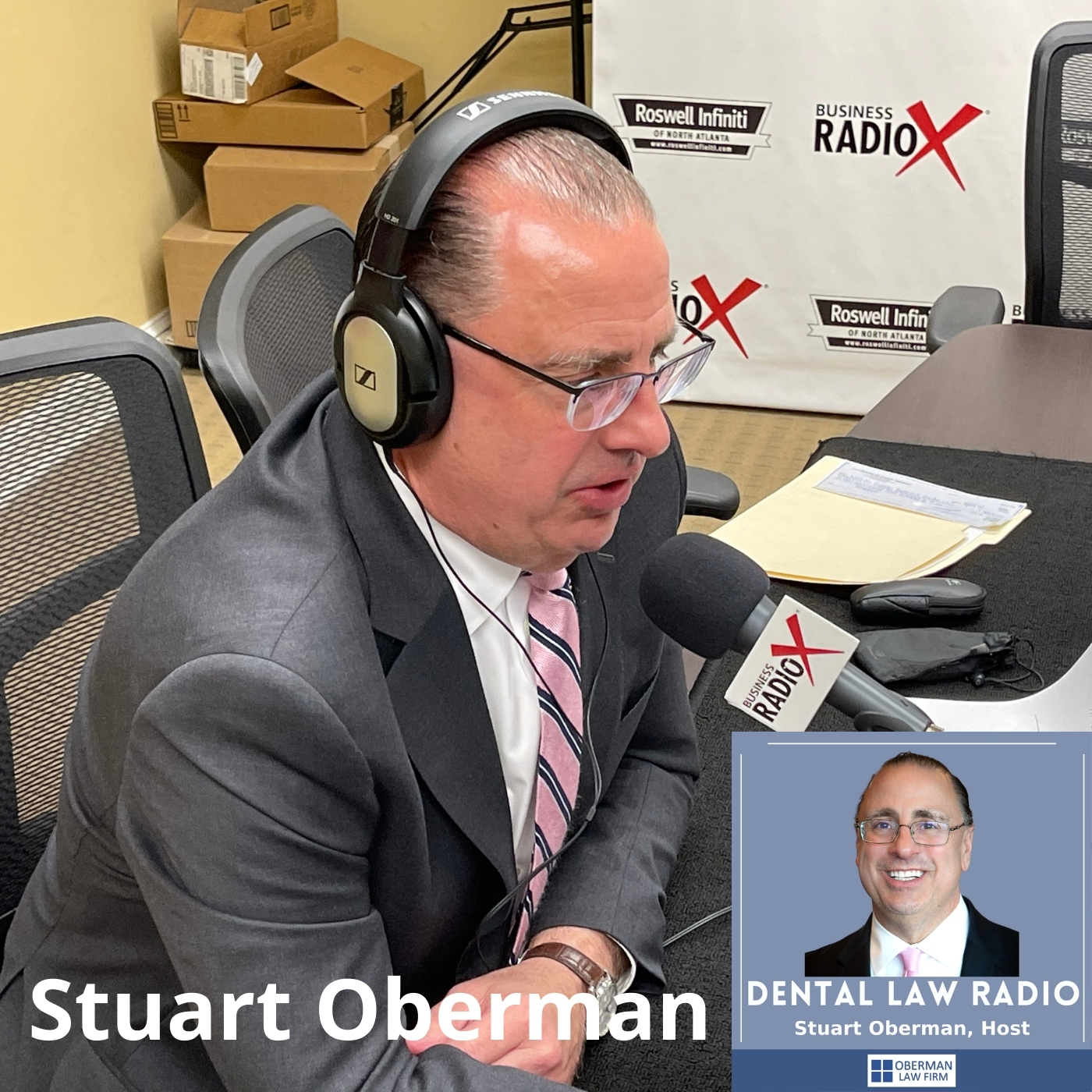
Tagged With: dental law, Dental Law Radio, Medicaid Audit, Oberman Law Firm, Stuart Oberman

DSOs and Governmental Investigations

June 4, 2021 by John Ray

DSOs
Dental Law Radio
DSOs and Governmental Investigations
Loading
00:00 /
RSS Feed
Share
Link
Embed

Download file

DSO

DSOs and Governmental Investigations (Dental Law Radio, Episode 7)

As DSOs grow and scale, they are coming under serious federal government scrutiny, in part because some have developed a reputation of being non-compliant. Host Stuart Oberman offers eight compliance-related matters you must get right to scale your DSO successfully and without regulatory setbacks. Dental Law Radio is underwritten and presented by Oberman Law Firm and produced by the North Fulton studio of Business RadioX®.


TRANSCRIPT

Intro: [00:00:02] Broadcasting from the Business RadioX Studios in Atlanta, it’s time for Dental Law Radio. Dental Law Radio is brought to you by Oberman Law Firm, a leading dental-centric law firm serving dental clients on a local, regional, and national basis. Now, here’s your host, Stuart Oberman.

Stuart Oberman: [00:00:25] Hello everyone, and welcome to the show. I want to talk about one of the hottest topics in the industry today, DSOs. I can’t tell you how many calls we get as a firm, how do we grow? How do we scale? How do we get to five practices? How do we get to ten? How do we get to 20? Now, I got 20 practices, how am I going to sell? What’s my multiples? What’s my EBITDA? What’s the calculations?

Stuart Oberman: [00:00:51] But what we’re not hearing a lot about, which is a lot of undertow right now, is DSOs are coming under serious governmental scrutiny. And what’s happened is that, as DSOs grow – now, we’ve got to say what DSOs are. So, I’m going to say the middle market where you have a doctor that owns maybe five to ten practices, that’s a middle market. And they want to grow to be the grandfathers, if you will, of the DSOs.

Stuart Oberman: [00:01:21] So, the DSOs c, if you will. So, what’s happened is that we are seeing an enormous uptick in regulatory investigations, especially those that accept Medicaid and all other state and federal health care programs. So, what’s happened is that, as the governmental payers, state and federal, start auditing the payments to the practices. The OIG, Office of Inspector General, who you never, ever want to get a letter from, is also investigating these particular matters.

Stuart Oberman: [00:02:06] And what’s happening is that we’re seeing a lot of issues regarding Anti-Kickback Statute, improper payments, improper billing, coding. And as the OIG and HHS combined forces for regulatory matters, it’s made it clear that DSOs are, in fact, a target. If you have not discussed with your counsel or advisors how and what the regulatory issues are and what OIG is looking for, then I would suggest that you have a strong conversation over lunch yesterday.

Stuart Oberman: [00:02:45] So, what’s happening is that, as governmental regulatory matters are being investigated further and further by OIG, HHS, we’re seeing more and more companies, DSOs, if you will, enter into what we call CIAs. Now, that doesn’t mean it’s a criminal agency. It stands for Corporate Integrity Agreements. Again, if you are a DSO, if you are a doctor that owns multiple practices, if you are a doctor that has Medicaid or receives other state or federal health care reimbursement, I would strongly suggest you understand what the OIG does, how it tracks with it’s fellow agency, HHS, and what the CIA is, a Corporate Integrity Agreement.

Stuart Oberman: [00:03:40] So, what’s happened is that, as private equity becomes more and more prevalent. They used to say the most expensive thing to get is money. But, now, it’s the cheapest thing to get. So, there’s a huge upswing right now in Medicaid spending for dentistry. And what we’re seeing is that it’s starting to draw a lot of fire. So, what do we do? How do we do it? This conversation is probably a 90 minute conversation, if not a day long compliance conversation. But I want to run through maybe about eight things that we need to take a look at if you are, in fact, a DSO or if you are a doctor looking to scale a DSO.

Stuart Oberman: [00:04:29] So, if you have one practice, you better get your house in order as far as payments go, coding goes. Because as practices grow, they get sloppier with compliance. So, what’s happened is that, again, the first thing we got to realize is that the government is looking hard at DSOs. It’s coming under scrutiny. A DSO has to build a culture of compliance. It’s got to start from the top down.

Stuart Oberman: [00:05:02] So, what does that look like? So, you have to have – third topic – an effective compliance program to begin with in order to implement the policies and procedures that focus on both the quality of care in adherence to governmental regulations. That is a tall task.

Stuart Oberman: [00:05:25] The fourth thing we want to take a look at is – without a doubt, I don’t care if you got one practice or 800 – you have to have a chief compliance officer. And that doesn’t mean that is your front desk person. It doesn’t mean that is your hygienist who moonlights as your office manager, as your front desk, as your consultant. You have to have a chief compliance officer. There’s absolutely no way that as a doctor, you will know what the proper coding is, what the correct procedures are for payment, what the OIG is looking at as far as guidance goes, as far as what the hot buttons are as far as audits go.

Stuart Oberman: [00:06:21] So, how do you do this? So, a lot of DSOs – again, I’m going to use, you know, our DSOs between 2 to 20 practices and maybe even 30 – they have to have a training program for policies and procedures in place. And they can’t do it once. They have to have a continuous review, training, and compliance program.

Stuart Oberman: [00:06:46] Now, I will say that the large-scale DSOs really have a good overall compliance program. But what happens is, that’s a lot of trial and error, that is a lot of missteps along the way. And our middle market guys have got to learn the trials and errors. So, again, this is an ongoing process. You cannot have a one meeting for sterilization and not know what in the world is required for compliance on the payment side, which is critical.

Stuart Oberman: [00:07:28] So, the next part is that – number six – you’ve got to respond to a compliance issue timely. So, when the government says we need this, we need that, you can’t get around to it whenever you need it or whenever you feel like it. We run into so many problems where our doctors do not promptly get under control the particular letter and issues that they’re concerned about. So, how do you have a system for compliance? This is where your chief compliance officer has to come into play.

Stuart Oberman: [00:08:08] If you get a notice that OIG is now sending you I love you letter and they have a probably seven or eight page non-compliance issue, and now they’re clawing back millions of dollars, how do you respond to that? Do you give it to your front desk? Do you give it to your hygienist? Do you give to your spouse who may be your office manager? So, you’ve got to have a system in place. You can never, ever delay a governmental notice.

Stuart Oberman: [00:08:40] So, one thing that has to be a balance is that – this is number seven – all compliance programs have to be designed to ensure quality and medical necessity. So, when your audit occurs and they want to claw back millions of dollars because they’re going back five years. They’re going to want to know where is your proof, where is your documentation, where is your quality of service, where is your code, and is there a medical necessity. That is absolutely critical to your defense. They’re also going to take a look at potentially your vendor relationships. If you’ve never heard of AKS, Anti-Kickback Statute, I would strongly recommend you have a meeting yesterday with your corporate attorney.

Stuart Oberman: [00:09:45] These are just some basic things that we’re looking at. Congress is even getting involved in this, which is never a good thing. Where they’ve made it clear that they are looking at DSOs as a corporate structure. And they are looking at the compliance issue, the reimbursement issue, the quality of care issue, the medical necessity issue very, very, very closely. And when Congress comes out and says this, you know there’s a problem.

Stuart Oberman: [00:10:20] So, the last thing you want to do – and I’ll say this is number eight and probably the final topic on this. Again, I could talk, probably, for hours and days on this particular compliance topic – you have to understand AKS, Anti-Kickback Statute, and you have to understand on the compliance side, audit side, OIG side, HHS side, the safe harbor provisions.

Stuart Oberman: [00:10:45] So, now, you’re thinking, what in the world is AKS and how does that apply to my DSO? Because all I do is I treat kids all day long and I’m looking forward to maximize my revenue through aggressive coding, aggressive treatment. And how does that even come into play with my vendors, my treatment, my care, my coding, my revenue? So, you’ve got to understand all these things.

Stuart Oberman: [00:11:19] And, again, what we’re seeing is that as our offices and doctors scale, this is the last thing they’re worried about is compliance, which this should absolutely be the first. Because if you get an audit and you’re trying to scale, and scale hard and, all of a sudden, you get a nice letter from OIG that says you owe a couple million dollars and you think you’re going to be growing, your practice just stopped dead in its tracks. Because you will spend months and years trying to get this squared away and thousands and thousands and thousands of dollars on attorneys fees, costs, trying to deal with this.

Stuart Oberman: [00:12:03] So, again, we’re getting a lot, a lot of calls all the time, how do I scale how do I grow, what do I need to do, and everything. It’s revenue based. But one of the key issues is revenue is great. And what’s my multiple? That’s great. But my question is, how in the world are you going to scale? Because when you do a transition – and I had a chance to talk about this probably about a month or two ago for the American Health Law Association, I did a speech on due diligence on acquisitions. And this was a huge topic because if you are in the midst of a governmental investigation and you’re trying to even remotely sell your practice, you’re dead in the water.

Stuart Oberman: [00:12:53] Because they’re going to want to know everything about what your risk is, whether or not you’re under a CIA, Corporate Integrity Agreement, what the terms are, and you’re, essentially, going to be untouchable. So, this one particular area could set you back for years and millions of dollars. That’s the last thing you want to do.

Stuart Oberman: [00:13:14] So, again, I could talk for forever on this topic, but this is becoming a hot topic. It’s been hot for a while. It’s getting even hotter as the markets scale. There’s more money than ever flowing into private equity. Compliance is getting sloppy and Congress got its antennas up. Because any time there’s money involved, Congress has got its ears up.

Stuart Oberman: [00:13:38] So, hopefully, this has been a little bit of a refresher if you’re familiar with this. And, hopefully, this has been an eye opening podcast if you’re looking to scale or you have scaled and you’re looking to sell, and then what’s the next steps. So, I’d like to thank everyone for joining us and we’re going to continue talking about our hottest topics in the dental industry. We want everyone have a fantastic day. Thank you.


About Dental Law Radio

Hosted by Stuart Oberman, a nationally recognized authority in dental law, Dental Law Radio covers legal, business, and other operating issues and topics of vital concern to dentists and dental practice owners. The show is produced by the North Fulton studio of Business RadioX® and can be found on all the major podcast apps. The complete show archive is here.

Stuart Oberman, Oberman Law Firm

Oberman Law Firm
Stuart Oberman, host of “Dental Law Radio”

Stuart Oberman is the founder and President of Oberman Law Firm. Mr. Oberman graduated from Urbana University and received his law degree from John Marshall Law School. Mr. Oberman has been practicing law for over 25 years, and before going into private practice, Mr. Oberman was in-house counsel for a Fortune 500 Company. Mr. Oberman is widely regarded as the go-to attorney in the area of Dental Law, which includes DSO formation, corporate business structures, mergers and acquisitions, regulatory compliance, advertising regulations, HIPAA, Compliance, and employment law regulations that affect dental practices.

In addition, Mr. Oberman’s expertise in the health care industry includes advising clients in the complex regulatory landscape as it relates to telehealth and telemedicine, including compliance of corporate structures, third-party reimbursement, contract negotiations, technology, health care fraud and abuse law (Anti-Kickback Statute and the State Law), professional liability risk management, federal and state regulations.

As the long-term care industry evolves, Mr. Oberman has the knowledge and experience to guide clients in the long-term care sector with respect to corporate and regulatory matters, assisted living facilities, continuing care retirement communities (CCRCs). In addition, Mr. Oberman’s practice also focuses on health care facility acquisitions and other changes of ownership, as well as related licensure and Medicare/Medicaid certification matters, CCRC registrations, long-term care/skilled nursing facility management, operating agreements, assisted living licensure matters, and health care joint ventures.

In addition to his expertise in the health care industry, Mr. Oberman has a nationwide practice that focuses on all facets of contractual disputes, including corporate governance, fiduciary duty, trade secrets, unfair competition, covenants not to compete, trademark and copyright infringement, fraud, and deceptive trade practices, and other business-related matters. Mr. Oberman also represents clients throughout the United States in a wide range of practice areas, including mergers & acquisitions, partnership agreements, commercial real estate, entity formation, employment law, commercial leasing, intellectual property, and HIPAA/OSHA compliance.

Mr. Oberman is a national lecturer and has published articles in the U.S. and Canada.

LinkedIn

Oberman Law Firm

Oberman Law Firm has a long history of civic service, noted national, regional, and local clients, and stands among the Southeast’s eminent and fast-growing full-service law firms. Oberman Law Firm’s areas of practice include Business Planning, Commercial & Technology Transactions, Corporate, Employment & Labor, Estate Planning, Health Care, Intellectual Property, Litigation, Privacy & Data Security, and Real Estate.

By meeting their client’s goals and becoming a trusted partner and advocate for our clients, their attorneys are recognized as legal go-getters who provide value-added service. Their attorneys understand that in a rapidly changing legal market, clients have new expectations, constantly evolving choices, and operate in an environment of heightened reputational and commercial risk.

Oberman Law Firm’s strength is its ability to solve complex legal problems by collaborating across borders and practice areas.

Connect with Oberman Law Firm:

Company website | LinkedIn | Twitter
Tagged With: Dental Law Radio, dental service organization, DSO, Oberman Law Firm, Stuart Oberman

How to Avoid HR Problems

May 28, 2021 by John Ray

HR Problems
Dental Law Radio
How to Avoid HR Problems
Loading
00:00 /
RSS Feed
Share
Link
Embed

Download file

HR Problems

How to Avoid HR Problems (Dental Law Radio, Episode 6) 

From an HR perspective, Covid-19 has changed everything for a dental practice; the issues, regulations, and consequences of non-compliance are more complicated than ever. Host Stuart Oberman reviews the “must have” processes needed to avoid HR problems.  Dental Law Radio is underwritten and presented by Oberman Law Firm and produced by the North Fulton studio of Business RadioX®.


TRANSCRIPT

Intro: [00:00:02] Broadcasting from the Business RadioX Studios in Atlanta, it’s time for Dental Law Radio. Dental Law Radio is brought to you by Oberman Law Firm, a leading dental-centric law firm serving dental clients on a local, regional, and national basis. Now, here’s your host, Stuart Oberman.

Stuart Oberman: [00:00:25] Hello everyone and welcome to Dental Law Radio. Oh, our topic today, H.R., H.R., H.R. So, near and dear to our hearts. So, through this whole process, COVID-19, I think it taught us a lot. It let us take a look at what our doctors were and were not doing. And it really exposed a lot of problems. So, you know, what happened in the last year? What happened in the last five years?

Stuart Oberman: [00:00:59] So, anyone who owns a dental practice, works in a dental practice, knows for a fact that H.R. is changing every single day. There are more rules and regulations for employees than we ever had before. There’s more regulatory matters. There’s more problem employees. Employees are harder to deal with. Our doctors are fed up, discouraged with H.R. They can’t find employees. Employees are quitting. Employees are complaining. Tight economic conditions.

Stuart Oberman: [00:01:30] So, you know, where are we at? So, we have to look back at what happened this past year. It really brought a lot of things to the forefront. So, I would tell you, 2020, COVID-19 changed everything in H.R. Pre-COVID-19, what was ignored is now absolutely mandatory. We have states that are getting involved in H.R. like we never seen before. Federal Law is changing daily, it seems like, National Labor Relations Board, EEOC, Federal guidance, IRS, tax changes. You know, it’s a wonder that a lot of our doctors who’ve been practicing for some time, we’ll get these calls and they’ll say, “I’m done. I don’t want to put up with OSHA. I don’t want to put up with HIPAA. I can’t handle the H.R. I’m out of compliance. I need to go.”

Stuart Oberman: [00:02:27] So, what happens is, is that they’re frustrated, and we get it. So, I want to offer a couple of things. We put out a mandatory checklist for our clients. And I would encourage you to send us an email and we’ll send that mandatory checklist for you to you if you email us and request it. So, that’s mandatory checklists review, what you need on a daily basis to review.

Stuart Oberman: [00:03:04] So, another thing that we looked at is the hiring process, H.R. This exposed a lot of things. We had some practices that had a 70 to 80 percent turnover rate. If you don’t have an H.R. process and onboarding process in place, and you’ve got turnover at 70, 80 percent, for whatever reason, you are in a world of hurt, as we say. You’ve got to have an onboarding process. So, what we’ve developed is a new employee checklist. Again, at the end of today’s podcast, I’ll give information out on how to reach out to us and get that from us requested. If you need it, it’s there for you. If you need a mandatory checklist, it’s there for you.

Stuart Oberman: [00:03:51] So, the H.R. process we talked about, you know, in prior podcasts is a simple, simple process. I don’t want our guys to – I say our guys – I want our dentists to really go out on a deep end because it’s simple things, small things. You eat an elephant one bite at a time. You can’t overhaul a massive system. You’ve got to have a guideline on how to do this.

Stuart Oberman: [00:04:19] So, one of the things we stressed before, employee manual, got to have it. There’s no question you’ve got to have it. We mentioned before, social media, cell phone, internet policy, nondisclosure agreements, non- solicitation agreements. If you think your employees, if you think your associates, if you think your hygienist won’t steal your information from you when you leave or when they leave the practice, you are sadly mistaken. Because I will assure you, those are the first things that go. So, all those have got to be buttoned up and they got to be tight.

Stuart Oberman: [00:04:53] Employee files – I can’t stress this enough – you got to keep track of your employee files, reviews, negative, positive, review process. Do you even have a process in place for reviewing employees? And I know I said this before and I’ll say it many times through this podcast series, employees should never ever, in a million years, have control of their personnel files. Because I will guarantee you, you get an employee fired, that file goes with them. You’ll never see that file again. You need to have a limited access on your personnel files.

Stuart Oberman: [00:05:32] And I say that because our doctors call us all the time, you know, “John left. Mary left. They were fired,” or “we terminated them.” Great. So, where’s their file? Let’s see it. “Well, we can’t find it. We don’t know where they all went to.” That’s a huge problem. You’ve lost a battle. Period.

Stuart Oberman: [00:05:54] So, what are your practice policies? Internal operations? What are your processes? Success? You have people, processes, and systems. What’s the process? Again, do you have a recruiting or hiring process? What does that look like? Do you have an on boarding process? How are you recruiting? How are you handling complaints? Do you have a reporting process? Do you have a mechanism for them to file complaints against you internally before it goes to a third party?

Stuart Oberman: [00:06:38] Classifications, we talked about this earlier, previous podcast. Are you an employee? Are you an independent contractor? You’ve got to know these classifications because they’re detrimental to your practice if you don’t. What are the benefits? How are they being distributed? Are they equal? What is your OSHA and HIPAA policy? Are your manuals out of date? All these are compliance issues. All those things that you absolutely need to know.

Stuart Oberman: [00:07:09] So, on our are mandatory checklists that we have for review – I’ll be glad to send them out. Just let us know if you want one – that’s a pretty detailed process for what you need to review internally and a new employee checklist. So, I want to touch on new employees real quick. So, we all hear about the dental practices that recycle employees. If you go to some websites and you type in a name today that you saw, you’re going to see that same name in a year, six months. There is a whole mechanism for employees that are really bad, but they’re being recycled. The problem with that is, you could see who’s hiring them is not doing their due diligence. They’re not doing the background checks.

Stuart Oberman: [00:07:59] We had a particular employee – I’m sorry – employer that we discovered they hired employee without coming in with a full background check. We said, “We came in too late. You need to do a background check and have a process in place.” So, they did a letter of offer. They went ahead and offered the person the position. Come to find out, three days later a report comes back, they got a bankruptcy, they got a couple of felonies, assaulting an officer, drugs. Now, what do you do? Do you tell the employee who just told their employer that I’m no longer offered a job. What do you do?

Stuart Oberman: [00:08:51] So, those are things you’ve got to control. You’ve got to have an on boarding process. You know, why have an employee that has embezzled four other practices and you’re hiring them for accounting? Check the resumes, check the resources, do the background checks. For $100 dollars, you can make your life very, very easy. And our doctors don’t do that. And they hire because they need a body and that’s a disaster waiting to happen. That’s an H.R. nightmare.

Stuart Oberman: [00:09:25] So, you know, I want to go off topic a little bit. But if you got a disgruntled employee that’s leaving, put that employee under wraps, if you will. That employee needs to be given a severance, especially if they got dirt on the practice. You need to get them to sign a release. So, once they are paid X, Y, Z, dollars, whatever it is, as a severance. “Well, they’re not due a severance.” I get that. But what are you going to do if they got dirt on the practice and all of a sudden they start making inklings that they’re going to go to OSHA, HIPAA, Department of Labor, because you’re not paying them for overtime, they’re misclassified, they’re not exempt, they’re exempt.

Stuart Oberman: [00:10:10] So then, what do you do? You need to shut down that employee. You need to go ahead and get them under release. So, once they have been compensated, they sign a release, they can’t go forward with any other claims. And if they have a claim that has been withdrawn, they can’t go on social media, provided that you even have a social media policy. If you don’t, then the release will cover that. These are things you’ve got to do. In today’s world, these are the check downs that you have to have. And if you don’t, then, all of a sudden, we get these calls, and the cycle starts. And then, it’s damage control. Then, we’ve got things going on the internet, which we’re going to talk about in subsequent podcasts. And it becomes a snowball effect.

Stuart Oberman: [00:10:58] So, these are the basic things. Again, before COVID-19, you know, our doctors weren’t necessarily exposed unless something happened. But COVID-19 hits, now, we’ve got all these regulatory issues. We’ve got all these problem employees. We’ve got employees refusing to come to work. Employees that quit. We’ve got turnover. We’ve got H.R. problems. And, now, it’s exposed. The curtains down. So, you’ve got to make sure that you’ve got all the stuff done, checked down, in compliance. Because we’re in a different world, we’re in different time, and it’s not going to get any better. It’s not going to get any better. And you have to have a system in place as we go forward. People, processes, and systems, got to have it to avoid trouble in today’s world. It’s getting tough. It’s getting tougher every day.

Stuart Oberman: [00:11:43] So, again, as I say, 10,000 foot view. You know, this is a whole topic for an hour discussion, but we’re going to break it down to some things we think that are really needed in today’s market. So, anyway, if you have any questions, please call us, 770-554-1400. Visit us online, obermanlaw.com, stuart@obermanlaw.com, S-T-U-A-R-T@obermanlaw.com. And reach out to us, ask for the checklist, we’ll be glad to send it out, get you on a mailing list, keep you up to date. So, I’d like to wish everyone a fantastic day. And we look forward to having you join us on subsequent podcasts. Thanks a lot. Bye.


About Dental Law Radio

Hosted by Stuart Oberman, a nationally recognized authority in dental law, Dental Law Radio covers legal, business, and other operating issues and topics of vital concern to dentists and dental practice owners. The show is produced by the North Fulton studio of Business RadioX® and can be found on all the major podcast apps. The complete show archive is here.

Stuart Oberman, Oberman Law Firm

Oberman Law Firm
Stuart Oberman, host of “Dental Law Radio”

Stuart Oberman is the founder and President of Oberman Law Firm. Mr. Oberman graduated from Urbana University and received his law degree from John Marshall Law School. Mr. Oberman has been practicing law for over 25 years, and before going into private practice, Mr. Oberman was in-house counsel for a Fortune 500 Company. Mr. Oberman is widely regarded as the go-to attorney in the area of Dental Law, which includes DSO formation, corporate business structures, mergers and acquisitions, regulatory compliance, advertising regulations, HIPAA, Compliance, and employment law regulations that affect dental practices.

In addition, Mr. Oberman’s expertise in the health care industry includes advising clients in the complex regulatory landscape as it relates to telehealth and telemedicine, including compliance of corporate structures, third-party reimbursement, contract negotiations, technology, health care fraud and abuse law (Anti-Kickback Statute and the State Law), professional liability risk management, federal and state regulations.

As the long-term care industry evolves, Mr. Oberman has the knowledge and experience to guide clients in the long-term care sector with respect to corporate and regulatory matters, assisted living facilities, continuing care retirement communities (CCRCs). In addition, Mr. Oberman’s practice also focuses on health care facility acquisitions and other changes of ownership, as well as related licensure and Medicare/Medicaid certification matters, CCRC registrations, long-term care/skilled nursing facility management, operating agreements, assisted living licensure matters, and health care joint ventures.

In addition to his expertise in the health care industry, Mr. Oberman has a nationwide practice that focuses on all facets of contractual disputes, including corporate governance, fiduciary duty, trade secrets, unfair competition, covenants not to compete, trademark and copyright infringement, fraud, and deceptive trade practices, and other business-related matters. Mr. Oberman also represents clients throughout the United States in a wide range of practice areas, including mergers & acquisitions, partnership agreements, commercial real estate, entity formation, employment law, commercial leasing, intellectual property, and HIPAA/OSHA compliance.

Mr. Oberman is a national lecturer and has published articles in the U.S. and Canada.

LinkedIn

Oberman Law Firm

Oberman Law Firm has a long history of civic service, noted national, regional, and local clients, and stands among the Southeast’s eminent and fast-growing full-service law firms. Oberman Law Firm’s areas of practice include Business Planning, Commercial & Technology Transactions, Corporate, Employment & Labor, Estate Planning, Health Care, Intellectual Property, Litigation, Privacy & Data Security, and Real Estate.

By meeting their client’s goals and becoming a trusted partner and advocate for our clients, their attorneys are recognized as legal go-getters who provide value-added service. Their attorneys understand that in a rapidly changing legal market, clients have new expectations, constantly evolving choices, and operate in an environment of heightened reputational and commercial risk.

Oberman Law Firm’s strength is its ability to solve complex legal problems by collaborating across borders and practice areas.

Connect with Oberman Law Firm:

Company website | LinkedIn | Twitter

Tagged With: Dental Law Radio, HR, Human Resources, Oberman Law Firm, Stuart Oberman

Stuart Oberman, Oberman Law Firm

April 27, 2021 by John Ray

Oberman Law Firm
North Fulton Business Radio
Stuart Oberman, Oberman Law Firm
Loading
00:00 /
RSS Feed
Share
Link
Embed

Download file

Oberman Law Firm

Stuart Oberman, Oberman Law Firm (North Fulton Business Radio, Episode 350)

Stuart Oberman of Oberman Law Firm represents dental practice owners across the US and is considered the go-to attorney for dental practices. He joined host John Ray to discuss current issues and trends in the industry and introduced his new show, Dental Law Radio. “North Fulton Business Radio” is produced virtually from the North Fulton studio of Business RadioX® in Alpharetta.

 Oberman Law Firm

Oberman Law Firm has a long history of civic service, noted national, regional, and local clients, and stands among the Southeast’s eminent and fast-growing full-service law firms. Oberman Law Firm’s areas of practice include Business Planning, Commercial & Technology Transactions, Corporate, Employment & Labor, Estate Planning, Health Care, Intellectual Property, Litigation, Privacy & Data Security, and Real Estate.

By meeting their client’s goals and becoming a trusted partner and advocate for our clients, their attorneys are recognized as legal go-getters who provide value-added service. Their attorneys understand that in a rapidly changing legal market, clients have new expectations, constantly evolving choices, and operate in an environment of heightened reputational and commercial risk.

Oberman Law Firm’s strength is its ability to solve complex legal problems by collaborating across borders and practice areas.

Company website | LinkedIn | Stuart’s LinkedIn | Facebook | Twitter

Stuart Oberman, Founder and President, Oberman Law Firm

Oberman Law Firm
Stuart Oberman, President, Oberman Law Firm

Stuart J. Oberman is the founder and President of Oberman Law Firm. Mr. Oberman graduated from Urbana University and received his law degree from John Marshall Law School. Mr. Oberman has been practicing law for over 25 years, and before going into private practice, Mr. Oberman was in-house counsel for a Fortune 500 Company.

Mr. Oberman is widely regarded as the go-to attorney in the area of Dental Law, which includes DSO formation, corporate business structures, mergers and acquisitions, regulatory compliance, advertising regulations, HIPAA, Compliance, and employment law regulations that affect dental practices.

In addition, Mr. Oberman’s expertise in the health care industry includes advising clients in the complex regulatory landscape as it relates to telehealth and telemedicine, including compliance of corporate structures, third-party reimbursement, contract negotiations, technology, health care fraud, and abuse law (Anti-Kickback Statute and the State Law), professional liability risk management, federal and state regulations.

As the long-term care industry evolves, Mr. Oberman has the knowledge and experience to guide clients in the long-term care sector with respect to corporate and regulatory matters, assisted living facilities, continuing care retirement communities (CCRCs). In addition, Mr. Oberman’s practice also focuses on health care facility acquisitions and other changes of ownership, as well as related licensure and Medicare/Medicaid certification matters, CCRC registrations, long-term care/skilled nursing facility management, operating agreements, assisted living licensure matters, and health care joint ventures.

In addition to his expertise in the health care industry, Mr. Oberman has a nationwide practice that focuses on all facets of contractual disputes, including corporate governance, fiduciary duty, trade secrets, unfair competition, covenants not to compete, trademark and copyright infringement, fraud and deceptive trade practices, and other business-related matters.

Mr. Oberman also represents clients throughout the U.S. in a wide range of practice areas, including mergers & acquisitions, partnership agreements, commercial real estate, entity formation, employment law, commercial leasing, intellectual property, and HIPAA/OSHA compliance.

Mr. Oberman is a national lecturer and has published articles in the U.S. and Canada. In addition, Mr. Oberman has received the Martindale-Hubbell Client Distinction Award, which is based on client review ratings of communications ability, responsiveness, and quality of service.

Questions and Topics in this Interview:

  • Stuart’s background
  • Why his firm has a focus on the dental industry
  • Pressures on dental practice owners
  • Selling a practice
  • Stuart’s new show, Dental Law Radio

“North Fulton Business Radio” is hosted by John Ray and produced virtually from the North Fulton studio of Business RadioX® in Alpharetta. You can find the full archive of shows by following this link. The show is available on all the major podcast apps, including Apple Podcasts, Spotify, Google, Amazon, iHeart Radio, Stitcher, TuneIn, and others.

Renasant Bank has humble roots, starting in 1904 as a $100,000 bank in a Lee County, Mississippi, bakery. Since then, Renasant has grown to become one of the Southeast’s strongest financial institutions with over $13 billion in assets and more than 190 banking, lending, wealth management and financial services offices in Mississippi, Alabama, Tennessee, Georgia and Florida. All of Renasant’s success stems from each of their banker’s commitment to investing in their communities as a way of better understanding the people they serve. At Renasant Bank, they understand you because they work and live alongside you every day.

Tagged With: dental industry, dental law, Dental Law Radio, dentists, Health care, healthcare industry, Oberman Law Firm, Stuart Oberman

  • « Previous Page
  • 1
  • 2

Business RadioX ® Network


Our Most Recent Episode

CONNECT WITH US

  • Email
  • Facebook
  • LinkedIn
  • Twitter

  • YouTube

Our Mission

We help local business leaders get the word out about the important work they’re doing to serve their market, their community, and their profession.

We support and celebrate business by sharing positive business stories that traditional media ignores. Some media leans left. Some media leans right. We lean business.

Sponsor a Show

Build Relationships and Grow Your Business. Click here for more details.

Partner With Us

Discover More Here

Terms and Conditions
Privacy Policy

Connect with us

Want to keep up with the latest in pro-business news across the network? Follow us on social media for the latest stories!
  • Email
  • Facebook
  • Google+
  • LinkedIn
  • Twitter

  • YouTube

Business RadioX® Headquarters
1000 Abernathy Rd. NE
Building 400, Suite L-10
Sandy Springs, GA 30328

© 2025 Business RadioX ® · Rainmaker Platform

BRXStudioCoversLA

Wait! Don’t Miss an Episode of LA Business Radio

BRXStudioCoversDENVER

Wait! Don’t Miss an Episode of Denver Business Radio

BRXStudioCoversPENSACOLA

Wait! Don’t Miss an Episode of Pensacola Business Radio

BRXStudioCoversBIRMINGHAM

Wait! Don’t Miss an Episode of Birmingham Business Radio

BRXStudioCoversTALLAHASSEE

Wait! Don’t Miss an Episode of Tallahassee Business Radio

BRXStudioCoversRALEIGH

Wait! Don’t Miss an Episode of Raleigh Business Radio

BRXStudioCoversRICHMONDNoWhite

Wait! Don’t Miss an Episode of Richmond Business Radio

BRXStudioCoversNASHVILLENoWhite

Wait! Don’t Miss an Episode of Nashville Business Radio

BRXStudioCoversDETROIT

Wait! Don’t Miss an Episode of Detroit Business Radio

BRXStudioCoversSTLOUIS

Wait! Don’t Miss an Episode of St. Louis Business Radio

BRXStudioCoversCOLUMBUS-small

Wait! Don’t Miss an Episode of Columbus Business Radio

Coachthecoach-08-08

Wait! Don’t Miss an Episode of Coach the Coach

BRXStudioCoversBAYAREA

Wait! Don’t Miss an Episode of Bay Area Business Radio

BRXStudioCoversCHICAGO

Wait! Don’t Miss an Episode of Chicago Business Radio

Wait! Don’t Miss an Episode of Atlanta Business Radio