Business RadioX ®

  • Home
  • Business RadioX ® Communities
    • Southeast
      • Alabama
        • Birmingham
      • Florida
        • Orlando
        • Pensacola
        • South Florida
        • Tampa
        • Tallahassee
      • Georgia
        • Atlanta
        • Cherokee
        • Forsyth
        • Greater Perimeter
        • Gwinnett
        • North Fulton
        • North Georgia
        • Northeast Georgia
        • Rome
        • Savannah
      • Louisiana
        • New Orleans
      • North Carolina
        • Charlotte
        • Raleigh
      • Tennessee
        • Chattanooga
        • Nashville
      • Virginia
        • Richmond
    • South Central
      • Arkansas
        • Northwest Arkansas
    • Midwest
      • Illinois
        • Chicago
      • Michigan
        • Detroit
      • Minnesota
        • Minneapolis St. Paul
      • Missouri
        • St. Louis
      • Ohio
        • Cleveland
        • Columbus
        • Dayton
    • Southwest
      • Arizona
        • Phoenix
        • Tucson
        • Valley
      • Texas
        • Austin
        • Dallas
        • Houston
    • West
      • California
        • Bay Area
        • LA
        • Pasadena
      • Colorado
        • Denver
      • Hawaii
        • Oahu
  • FAQs
  • About Us
    • Our Mission
    • Our Audience
    • Why It Works
    • What People Are Saying
    • BRX in the News
  • Resources
    • BRX Pro Tips
    • B2B Marketing: The 4Rs
    • High Velocity Selling Habits
    • Why Most B2B Media Strategies Fail
    • 9 Reasons To Sponsor A Business RadioX ® Show
  • Partner With Us
  • Veteran Business RadioX ®

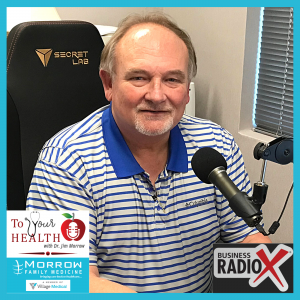
Dr. Morrow’s Personal Experience with Breakthrough Covid-19 Infection

August 27, 2021 by John Ray

North Fulton Studio
North Fulton Studio
Dr. Morrow's Personal Experience with Breakthrough Covid-19 Infection
Loading
00:00 /
RSS Feed
Share
Link
Embed

Download file

Breakthrough Covid

Dr. Morrow’s Personal Experience with Breakthrough Covid-19 Infection – Episode 60, To Your Health with Dr. Jim Morrow

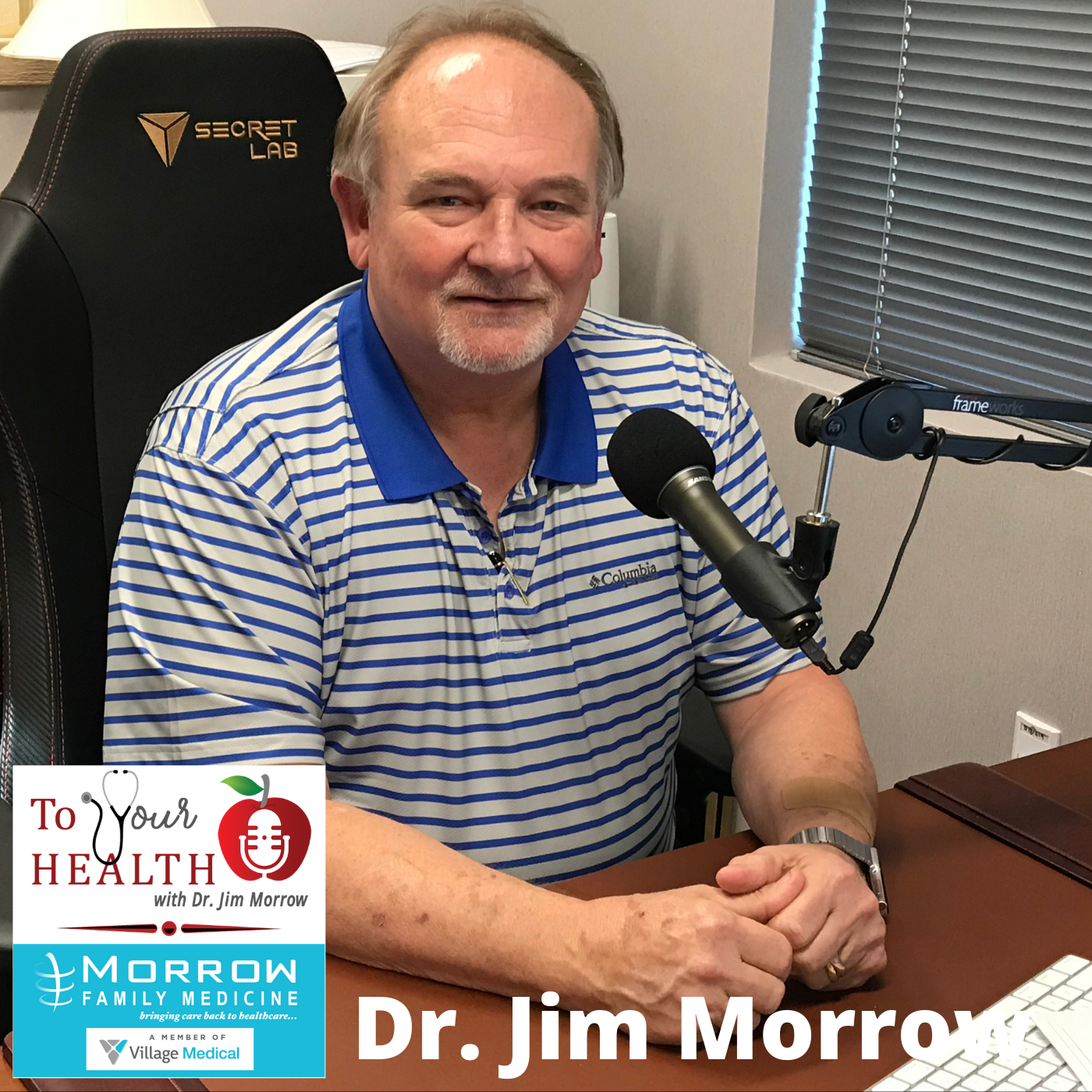
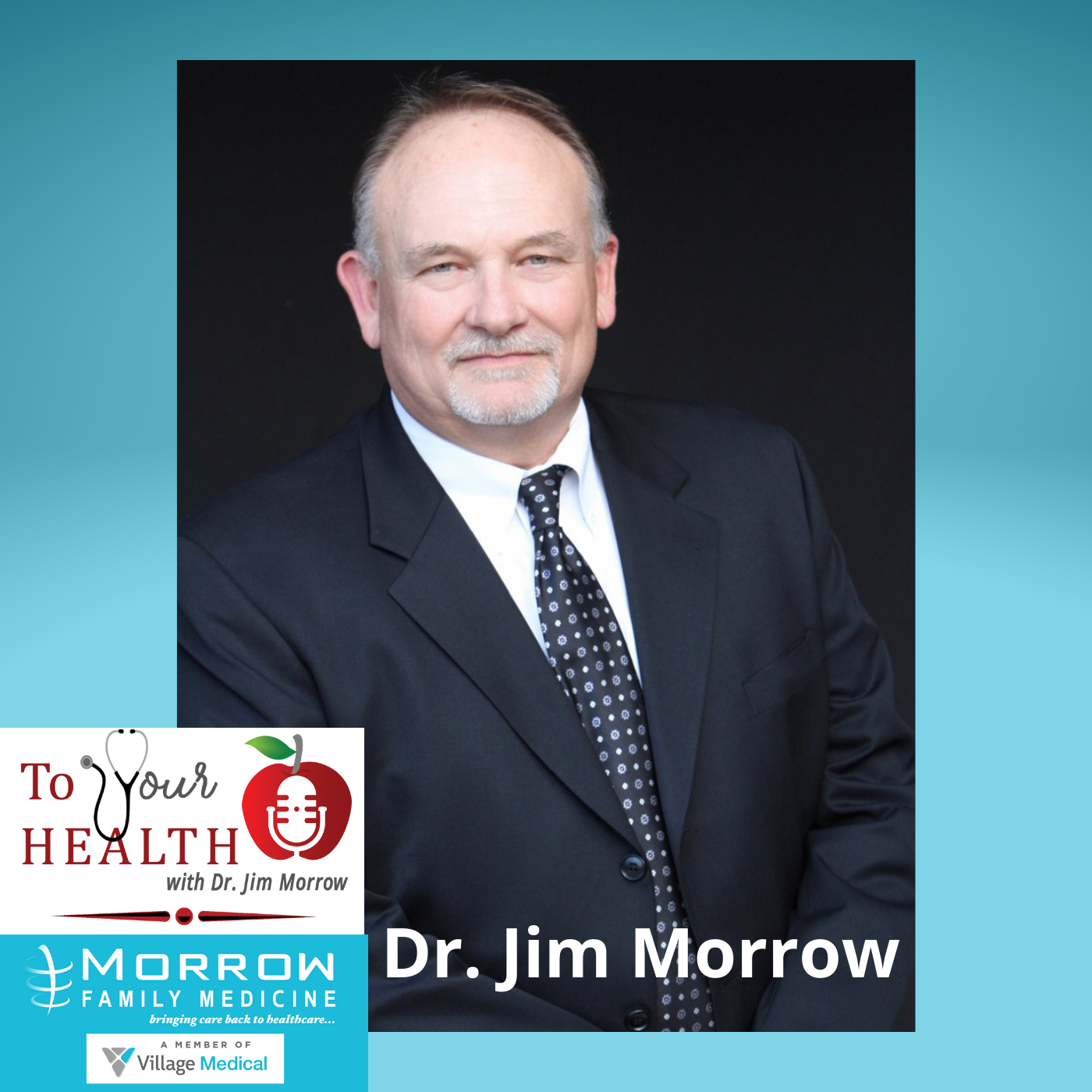
Dr. Jim Morrow is the guest on his own show as he shares with guest host John Ray his experience with a difficult breakthrough Covid-19 infection. Dr. Morrow recounts the initial symptoms and what led to a “kitchen sink” of treatments which landed him in Northside Forsyth Hospital ICU. You can read Dr. Morrow’s firsthand account in the Forsyth County News. To Your Health is brought to you by Morrow Family Medicine, which brings the care back to healthcare.

About Morrow Family Medicine, A Member of Village Medical

Morrow Family Medicine, a Member of Village Medical, is an award-winning, state-of-the-art family practice with offices in Cumming and Milton, Georgia. The practice combines healthcare information technology with old-fashioned care to provide the type of care that many are in search of today. Two physicians, three physician assistants and two nurse practitioners are supported by a knowledgeable and friendly staff to make your visit to Morrow Family Medicine, A Member of Village Medical one that will remind you of the way healthcare should be.  At Morrow Family Medicine, a Member of Village Medical, we like to say we are “bringing the care back to healthcare!”  The practice has been named the “Best of Forsyth” in Family Medicine in all five years of the award, is a three-time consecutive winner of the “Best of North Atlanta” by readers of Appen Media, and the 2019 winner of “Best of Life” in North Fulton County.

Village Medical offers a comprehensive suite of primary care services including preventative care, treatment for illness and injury, and management of chronic conditions such as diabetes, congestive heart failure, chronic obstructive pulmonary disease (COPD) and kidney disease. Atlanta-area patients can learn more about the practice here.

Dr. Jim Morrow, Morrow Family Medicine, and Host of To Your Health with Dr. Jim Morrow
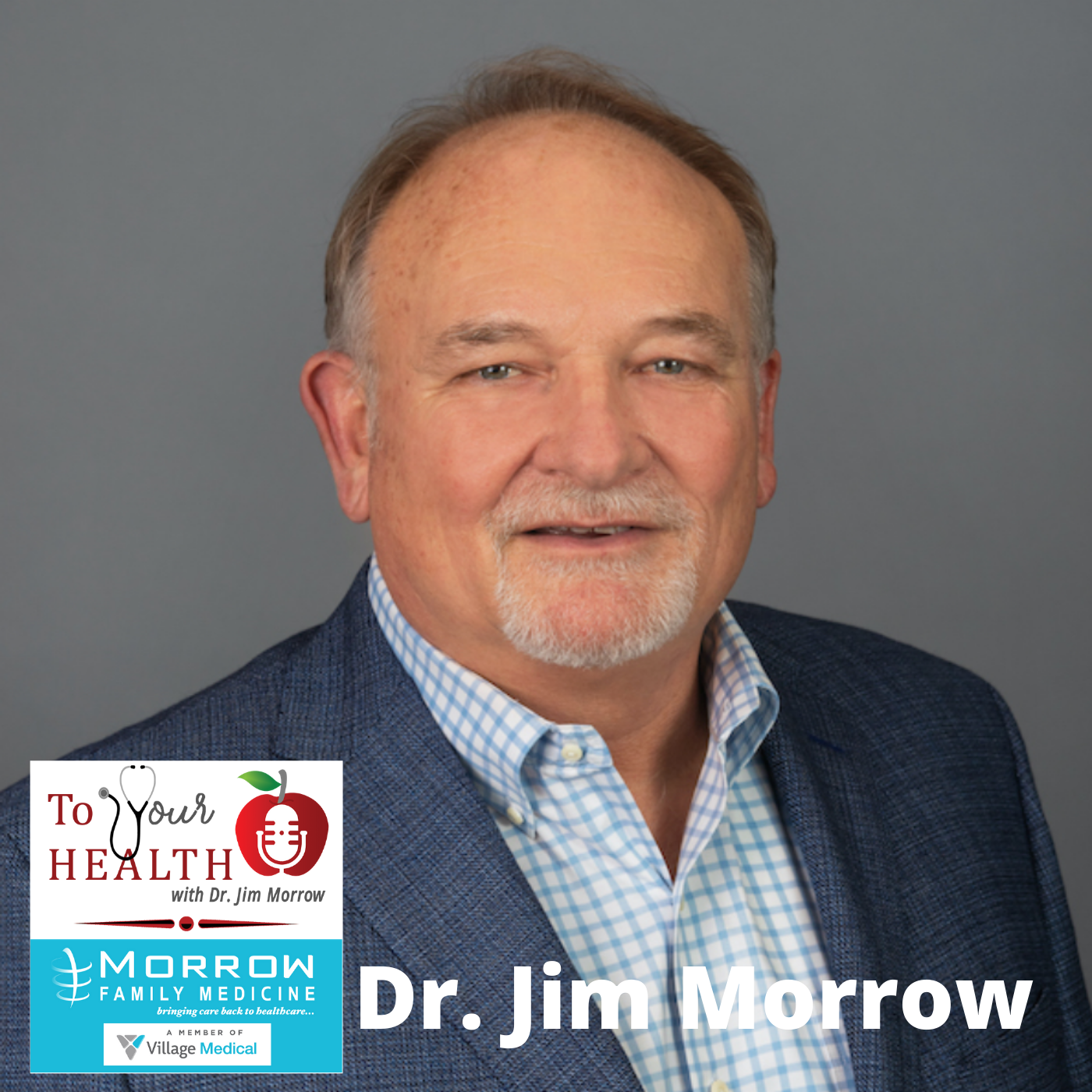
Covid-19 misconceptionsDr. Jim Morrow is the founder and CEO of Morrow Family Medicine. He has been a trailblazer and evangelist in healthcare information technology, was named Physician IT Leader of the Year by HIMSS, a HIMSS Davies Award Winner, the Cumming-Forsyth Chamber of Commerce Steve Bloom Award Winner as Entrepreneur of the Year and he received a Phoenix Award as Community Leader of the Year from the Metro Atlanta Chamber of Commerce.  He is married to Peggie Morrow and together they founded the Forsyth BYOT Benefit, a charity in Forsyth County to support students in need of technology and devices. They have two Goldendoodles, a gaggle of grandchildren and enjoy life on and around Lake Lanier.

Facebook: https://www.facebook.com/MorrowFamMed/

LinkedIn: https://www.linkedin.com/company/7788088/admin/

Twitter: https://twitter.com/toyourhealthMD

The complete show archive of To Your Health with Dr. Jim Morrow addresses a wide range of health and wellness topics, and can be found at www.toyourhealthradio.com.
Tagged With: Breakthrough Covid Infection, COVID-19, Covid-19 vaccine, Dr. Jim Morrow, Forsyth County News, John Ray, Morrow Family Medicine, Northside Forsyth Hospital, Village Medical

Preventing Falls and Fractures

July 15, 2021 by John Ray

preventing falls and fractures
North Fulton Studio
Preventing Falls and Fractures
Loading
00:00 /
RSS Feed
Share
Link
Embed

Download file

Falling

Preventing Falls and Fractures – Episode 59, To Your Health with Dr. Jim Morrow

On this episode of To Your Health, Dr. Jim Morrow discussed preventing falls and fractures associated with those falls. The risks associated with falls go beyond the fall itself and can lead to other health and mobility problems, particularly for the elderly.  To Your Health is brought to you by Morrow Family Medicine, which brings the care back to healthcare.

About Morrow Family Medicine, A Member of Village Medical

Morrow Family Medicine, a Member of Village Medical, is an award-winning, state-of-the-art family practice with offices in Cumming and Milton, Georgia. The practice combines healthcare information technology with old-fashioned care to provide the type of care that many are in search of today. Two physicians, three physician assistants and two nurse practitioners are supported by a knowledgeable and friendly staff to make your visit to Morrow Family Medicine, A Member of Village Medical one that will remind you of the way healthcare should be.  At Morrow Family Medicine, a Member of Village Medical, we like to say we are “bringing the care back to healthcare!”  The practice has been named the “Best of Forsyth” in Family Medicine in all five years of the award, is a three-time consecutive winner of the “Best of North Atlanta” by readers of Appen Media, and the 2019 winner of “Best of Life” in North Fulton County.

Village Medical offers a comprehensive suite of primary care services including preventative care, treatment for illness and injury, and management of chronic conditions such as diabetes, congestive heart failure, chronic obstructive pulmonary disease (COPD) and kidney disease. Atlanta-area patients can learn more about the practice here.

Dr. Jim Morrow, Morrow Family Medicine, and Host of To Your Health with Dr. Jim Morrow

Covid-19 misconceptionsDr. Jim Morrow is the founder and CEO of Morrow Family Medicine. He has been a trailblazer and evangelist in the area of healthcare information technology, was named Physician IT Leader of the Year by HIMSS, a HIMSS Davies Award Winner, the Cumming-Forsyth Chamber of Commerce Steve Bloom Award Winner as Entrepreneur of the Year and he received a Phoenix Award as Community Leader of the Year from the Metro Atlanta Chamber of Commerce.  He is married to Peggie Morrow and together they founded the Forsyth BYOT Benefit, a charity in Forsyth County to support students in need of technology and devices. They have two Goldendoodles, a gaggle of grandchildren and enjoy life on and around Lake Lanier.

Facebook: https://www.facebook.com/MorrowFamMed/

LinkedIn: https://www.linkedin.com/company/7788088/admin/

Twitter: https://twitter.com/toyourhealthMD

The complete show archive of To Your Health with Dr. Jim Morrow addresses a wide range of health and wellness topics, and can be found at www.toyourhealthradio.com.
Show Notes

Preventing Falls and Fractures

  • A simple thing can change your life—
    • like tripping on a rug or slipping on a wet floor.
    • If you fall, you could break a bone,
      • like thousands of older men and women do each year.
      • For older people, a break can be the start of more serious problems,
      • such as a trip to the hospital, injury, or even disability.
    • If you or an older person you know has fallen, you’re not alone.
      • More than one in three people age 65 years or older falls each year.
        • The risk of falling—and fall-related problems—rises with age.


Many Older Adults Fear Falling

  • The fear of falling becomes more common as people age,
    • even among those who haven’t fallen.
    • It may lead older people to avoid activities such as
      • walking,
      • shopping,
      • or taking part in social activities.
  • But don’t let a fear of falling keep you from being active.
    • Overcoming this fear can help you stay active,
      • maintain your physical health,
      • and prevent future falls.
    • Doing things like
      • getting together with friends,
      • gardening,
      • walking,
      • or going to the local senior center helps you stay healthy.
      • The good news is, there are simple ways to prevent most falls.


Causes and Risk Factors for Falls

  • Many things can cause a fall.
    • Your eyesight,
    • hearing,
    • and reflexes
      • might not be as sharp as they were when you were younger.
    • Diabetes,
      • heart disease,
      • or problems with your
      • thyroid,
      • nerves,
      • feet,
      • or blood vessels
        • can affect your balance.
        • Some medicines can cause you to feel dizzy or sleepy, making you more likely to fall.
        • Other causes include safety hazards in the home or community environment.
      • Scientists have linked several personal risk factors to falling,
        • including muscle weakness,
        • problems with balance and gait,
        • and blood pressure that drops too much when you get up from lying down or sitting (called postural hypotension).
        • Foot problems that cause pain
          • and unsafe footwear, like backless shoes or high heels,
            • can also increase your risk of falling.
  • Confusion can sometimes lead to falls.
    • For example, if you wake up in an unfamiliar environment, you might feel unsure of where you are.
    • If you feel confused, wait for your mind to clear or until someone comes to help you before trying to get up and walk around.
  • Some medications can increase a person’s risk of falling because they cause side effects like dizziness or confusion.
    • The more medications you take, the more likely you are to fall.


Take the Right Steps to Prevent Falls

  • If you take care of your overall health,
    • you may be able to lower your chances of falling.
    • Most of the time, falls and accidents don’t “just happen.”
    • Here are a few tips to help you avoid falls and broken bones:
      • Stay physically active.
        • Plan an exercise program that is right for you.
        • Regular exercise improves muscles and makes you stronger. I
        • t also helps keep your joints, tendons, and ligaments flexible.
        • Mild weight-bearing activities,
          • such as walking
          • or climbing stairs,
            • may slow bone loss from osteoporosis.
  • Have your eyes and hearing tested.
    • Even small changes in sight and hearing may cause you to fall.
    • When you get new eyeglasses or contact lenses, take time to get used to them.
      • Always wear your glasses or contacts when you need them.
      • If you have a hearing aid, be sure it fits well and wear it.
  • Find out about the side effects of any medicine you take.
    • If a drug makes you sleepy or dizzy, tell your doctor or pharmacist.
  • Get enough sleep.
    • If you are sleepy, you are more likely to fall.
  • Limit the amount of alcohol you drink.
    • Even a small amount of alcohol can affect your balance and reflexes.
    • Studies show that the rate of hip fractures in older adults increases with alcohol use
  • Stand up slowly.
    • Getting up too quickly can cause your blood pressure to drop.
    • That can make you feel wobbly.
    • Get your blood pressure checked when lying and standing.
  • Use an assistive device if you need help feeling steady when you walk.
    • Appropriate use of canes and walkers can prevent falls.
      • If your doctor tells you to use a cane or walker,
        • make sure it is the right size for you and the wheels roll smoothly.
        • This is important when you’re walking in areas you don’t know well or where the walkways are uneven.
        • A physical or occupational therapist can help you decide which devices might be helpful and teach you how to use them safely.
  • Be very careful when walking on wet or icy surfaces.
    • They can be very slippery!
    • Try to have sand or salt spread on icy areas by your front or back door.
  • Wear non-skid, rubber-soled, low-heeled shoes, or lace-up shoes with non-skid soles that fully support your feet.
    • It is important that the soles are not too thin or too thick.
    • Don’t walk on stairs or floors in socks or in shoes and slippers with smooth soles.
  • Always tell your doctor if you have fallen since your last checkup, even if you aren’t hurt when you fall.
    • A fall can alert your doctor to a new medical problem or problems with your medications or eyesight that can be corrected.
    • Your doctor may suggest physical therapy, a walking aid, or other steps to help prevent future falls.


What to Do If You Fall

  • Whether you are at home or somewhere else, a sudden fall can be startling and upsetting.
    • If you do fall, stay as calm as possible.
  • Take several deep breaths to try to relax.
    • Remain still on the floor or ground for a few moments.
    • This will help you get over the shock of falling.
  • Decide if you are hurt before getting up.
    • Getting up too quickly or in the wrong way could make an injury worse.
  • If you think you can get up safely without help,
    • roll over onto your side.
    • Rest while your body and blood pressure adjust.
    • Slowly get up on your hands and knees,
      • and crawl to a sturdy chair.
    • Put your hands on the chair seat and slide one foot forward so that it is flat on the floor.
    • Keep the other leg bent so the knee is on the floor.
    • From this kneeling position, slowly rise and turn your body to sit in the chair.
  • If you are hurt or cannot get up on your own,
    • ask someone for help or call 911.
    • If you are alone, try to get into a comfortable position and wait for help to arrive.
  • Carrying a mobile or portable phone with you as you move about your house could make it easier to call someone if you need assistance.
    • An emergency response system, which lets you push a button on a special necklace or bracelet to call for help, is another option.


Keep Your Bones Strong to Prevent Falls

  • Falls are a common reason for trips to the emergency room and for hospital stays among older adults.
    • Many of these hospital visits are for fall-related fractures.
  • You can help prevent fractures by keeping your bones strong.
    • Having healthy bones won’t prevent a fall,
      • but if you fall, it might prevent breaking a hip or other bone,
        • which may lead to a hospital or nursing home stay, disability, or even death.
        • Getting enough calcium and vitamin D can help keep your bones strong.
        • So can physical activity.
        • Try to get at least 150 minutes per week of physical activity.
  • Other ways to maintain bone health include
    • quitting smoking
    • and limiting alcohol use,
      • which can decrease bone mass and increase the chance of fractures.
    • Also, try to maintain a healthy weight.
    • Being underweight increases the risk of bone loss and broken bones.
  • Osteoporosis is a disease that makes bones weak and more likely to break.
    • For people with osteoporosis, even a minor fall may be dangerous.
    • Talk to your doctor about osteoporosis.

Credit:  cdc.gov

Tagged With: Dr. Jim Morrow, elderly, fractures, Morrow Family Medicine, Preventing falls, To Your Health, Villagel Medical

What is the Difference Between Stress and Burnout?

June 23, 2021 by John Ray

Burnout
North Fulton Studio
What is the Difference Between Stress and Burnout?
Loading
00:00 /
RSS Feed
Share
Link
Embed

Download file

Burnout

What is the Difference Between Stress and Burnout? (Episode 58, To Your Health with Dr. Jim Morrow)

In this episode, Dr. Jim Morrow addresses the characteristics of stress and burnout, the five stages of burnout, and how to tell the two conditions apart. “To Your Health” is brought to you by Morrow Family Medicine, a member of Village Medical, which brings the care back to healthcare.

About Morrow Family Medicine, A Member of Village Medical

Morrow Family Medicine, a Member of Village Medical, is an award-winning, state-of-the-art family practice with offices in Cumming and Milton, Georgia. The practice combines healthcare information technology with old-fashioned care to provide the type of care that many are in search of today. Two physicians, three physician assistants, and two nurse practitioners are supported by a knowledgeable and friendly staff to make your visit to Morrow Family Medicine, A Member of Village Medical one that will remind you of the way healthcare should be.  At Morrow Family Medicine, a Member of Village Medical, we like to say we are “bringing the care back to healthcare!”  The practice has been named the “Best of Forsyth” in Family Medicine in all five years of the award, is a three-time consecutive winner of the “Best of North Atlanta” by readers of Appen Media, and the 2019 winner of “Best of Life” in North Fulton County.

Village Medical offers a comprehensive suite of primary care services including preventative care, treatment for illness and injury, and management of chronic conditions such as diabetes, congestive heart failure, chronic obstructive pulmonary disease (COPD), and kidney disease. Atlanta-area patients can learn more about the practice here.

Dr. Jim Morrow, Morrow Family Medicine, and Host of “To Your Health with Dr. Jim Morrow”

Covid-19 misconceptionsDr. Jim Morrow is the founder and CEO of Morrow Family Medicine. He has been a trailblazer and evangelist in the area of healthcare information technology, was named Physician IT Leader of the Year by HIMSS, a HIMSS Davies Award Winner, the Cumming-Forsyth Chamber of Commerce Steve Bloom Award Winner as Entrepreneur of the Year and he received a Phoenix Award as Community Leader of the Year from the Metro Atlanta Chamber of Commerce.  He is married to Peggie Morrow and together they founded the Forsyth BYOT Benefit, a charity in Forsyth County to support students in need of technology and devices. They have two Goldendoodles, a gaggle of grandchildren and enjoy life on and around Lake Lanier.

Facebook: https://www.facebook.com/MorrowFamMed/

LinkedIn: https://www.linkedin.com/company/7788088/admin/

Twitter: https://twitter.com/toyourhealthMD

The complete show archive of “To Your Health with Dr. Jim Morrow” addresses a wide range of health and wellness topics, and can be found at www.toyourhealthradio.com

Dr. Morrow’s Show Notes

Covid-19 Update

“Check my antibodies” – says nothing about immunity – need a vaccine anyway

Variants – vaccine works well so far against these new and increasingly important viruses. Previous infection does nothing to prevent infection by these variants.

“The vaccine is not a vaccine, it is gene therapy.”

“I don’t want people to get the vaccine if they live with me because then I can get the virus from them.”

HCQ has been in the news again recently. Some REPORTS, not STUDIES, said that it might help those on a ventilator.  So far, All of the SCIENCE says that it does not stop this virus.

What is The Difference Between Stress and Burnout?

  • Stress
    • It is characterized by over engagement
    • The person’s emotions are overreactive
    • It gives one a feeling of urgency and hyperactivity
    • It leads to loss of energy
    • It leads to anxiety disorders
    • Its primary damage is physical
  • Burnout
    • It is characterized by disengagement
    • Blunted emotions
    • Feelings of helplessness and hopelessness
    • It makes one lose motivation, ideals, and hope
    • It leads to detachment and depression
    • Its primary damage is emotional
  • Burnout may be as a result of excessive stress but they do not mean the same thing.
  • Burnout is a cycle of
    • negative emotions,
    • paralysis
    • and withdrawal.
    • It is the body’s response to putting too much effort into something without taking in what you require to restore yourself.
    • It is mental, emotional and physical exhaustion that leads to diminished interest in performing tasks.
  • Physical symptoms of burnout include
    • having low energy,
    • headaches,
    • muscle tension,
    • digestive disorders,
    • frequent colds and changes in one’s sleep patterns.
      • Its mental symptoms include
        • feeling sad,
        • inadequate,
        • frustrated,
        • unappreciated
        • and irritable.
        • These symptoms can result in
          • withdrawal,
          • accidents,
          • increased sick days and crying.
          • Increased consumption of food or alcohol
  • Stress, on the other hand,
  • involves too many pressures that demand too much from you either physically or psychologically.
    • Stressed people though can still see a light at the end of the tunnel,
      • they just often can’t figure a way to get to it.
  • Stress is just a day-to-day experience
  • but burnout is a more serious consequence of the build-up of too much stress which causes the individual person to shut down.
  • If stress persists on a full scale for a long period of time, there are increased risks of burnout.
  • Although stress is an essential prerequisite for burnout,
    • burnout is not necessarily the result of too much stress.
    • For burnouts to occur there must be an additional psychological factor.
  • People who are stressed can often still function
  • and do all that the tasks or jobs required of them.
  • This is due to the fact that different people can bear different levels of stress for different lengths of time.
    • This is quite a contrast to people experiencing a burnout.
    • Burnout usually leads to a total shutdown of all systems in the body
      • and it causes a person to become completely nonfunctional.
      • Burnout causes people to experience long-term exhaustion

and diminished interest in life as a whole.

What are the Stages of Burnout?

Stage 1 – Honeymoon

  • marked by
    • high job satisfaction,
    • commitment,
    • energy,
    • and creativity,
      • the key issue is what coping strategies you begin to develop when facing the inevitable stresses of the job.
      • In theory, if the patterns of coping are positive, adaptive, then you will remain in the honeymoon stage indefinitely.
      • But few persons do.

Stage 2 – Balancing Act

  • as opposed to the unbridled optimism and positiveness of Stage 1,
    • you now are clearly aware that some days are better than others as far as handling stress on the job.
  • An awareness of a noticeable increase in the following is indicative of Stage 2:
    • job dissatisfaction
    • work inefficiency, including avoiding making necessary decisions,
    • “losing” stuff at work (even on your desk!), etc.
    • fatigue (a general fatigue, often accompanied by deep muscle fatigue)
    • sleep disturbances (often that you are so “busy” in your head that you can’t get to sleep)
    • escapist activities of choice (including eating, drinking, smoking, zoning out in front of the TV, etc.)

Stage 3 – Chronic Symptoms

  • marked by an intensification of some of the same indicators cited in Stage 2, including
    • chronic exhaustion
    • physical illness (remember that stress is a risk factor in many diseases)
    • anger
    • depression

Stage 4 – Crisis

  • the symptoms become critical
    • physical symptoms intensify and/or increase in number
    • obsessing about work frustrations increases
    • pessimism and self-doubt dominate your thinking
    • you develop an “escapist mentality”

Stage 5 – Enmeshment

  • The symptoms of burnout are so embedded in your life that you are more likely to be labeled as having some significant physical or emotional problem than you are to be called a burnout case.

Source:  Psychology Today

Tagged With: burnout, Dr. Jim Morrow, Morrow Family Medicine, stress, Village Medical

Dr. Clive Fields, Co-Founder and Chief Medical Officer, Village Medical

June 2, 2021 by John Ray

Village Medical
North Fulton Studio
Dr. Clive Fields, Co-Founder and Chief Medical Officer, Village Medical
Loading
00:00 /
RSS Feed
Share
Link
Embed

Download file

Village Medical

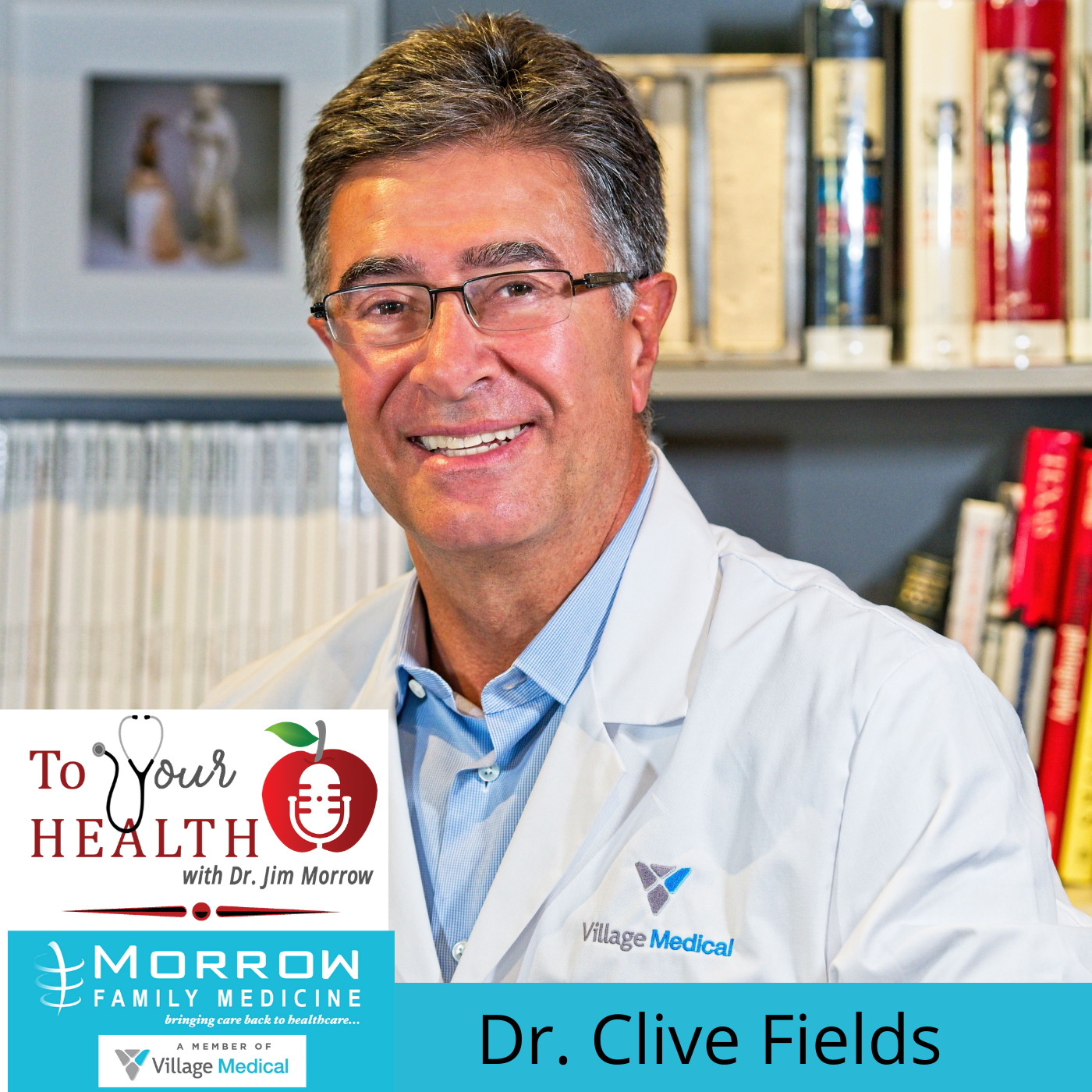
Dr. Clive Fields, Co-Founder and Chief Medical Officer, Village Medical (Episode 57, To Your Health with Dr. Jim Morrow)

Dr. Clive Fields, Co-Founder and Chief Medical Officer of Village Medical, joined Dr. Morrow to discuss the Village Medical model of care which utilizes state of the art technology, providing the best care for patients and keeping them well and out of the hospital. “To Your Health” is brought to you by Morrow Family Medicine, a Member of Village Medical, which brings the care back to healthcare.

Village Medical

Village Medical believes healthcare should be personal, accessible, and coordinated.

At Village Medical, the patient’s relationship with their primary care provider is the foundation to their health. Their doctors and staff partner with patients to understand their needs, and work together to focus not just on treatment, but also education and preventative care.

We combine the tools, technology, and people needed to help create healthier, happier patients. More connected care means more complete care.

With Village Medical at Home, they provide at-home visits designed to give eligible patients the attention they need, in a way that’s best for them and their caregivers.

At Village Medical, the future of healthcare is more personal than ever.

Company website | Facebook | Instagram | Twitter

Clive Fields, Co-Founder and Chief Medical Officer, VillageMD

Village Medical
Dr. Clive Fields, Founder and CMO, VillageMD

Dr. Fields is the co-founder and Chief Medical Officer of VillageMD. He has been a practicing primary care physician in the Houston area since 1991.

Dr. Fields has been recognized by Modern Healthcare as one of the country’s 50 Most Influential Clinical Executives and has received the American Academy of Family Practice’s Robert Graham Award for Physician Executive of the Year.

Dr. Fields oversees the clinical model at VillageMD.

LinkedIn

About Morrow Family Medicine, A Member of Village Medical

Morrow Family Medicine, a Member of Village Medical, is an award-winning, state-of-the-art family practice with offices in Cumming and Milton, Georgia. The practice combines healthcare information technology with old-fashioned care to provide the type of care that many are in search of today. Two physicians, three physician assistants and two nurse practitioners are supported by a knowledgeable and friendly staff to make your visit to Morrow Family Medicine, A Member of Village Medical one that will remind you of the way healthcare should be.  At Morrow Family Medicine, a Member of Village Medical, we like to say we are “bringing the care back to healthcare!”  The practice has been named the “Best of Forsyth” in Family Medicine in all five years of the award, is a three-time consecutive winner of the “Best of North Atlanta” by readers of Appen Media, and the 2019 winner of “Best of Life” in North Fulton County.

Village Medical offers a comprehensive suite of primary care services including preventative care, treatment for illness and injury, and management of chronic conditions such as diabetes, congestive heart failure, chronic obstructive pulmonary disease (COPD) and kidney disease. Atlanta-area patients can learn more about the practice here.

Dr. Jim Morrow, Morrow Family Medicine, and Host of “To Your Health with Dr. Jim Morrow”

Covid-19 misconceptionsDr. Jim Morrow is the founder and CEO of Morrow Family Medicine. He has been a trailblazer and evangelist in the area of healthcare information technology, was named Physician IT Leader of the Year by HIMSS, a HIMSS Davies Award Winner, the Cumming-Forsyth Chamber of Commerce Steve Bloom Award Winner as Entrepreneur of the Year and he received a Phoenix Award as Community Leader of the Year from the Metro Atlanta Chamber of Commerce.  He is married to Peggie Morrow and together they founded the Forsyth BYOT Benefit, a charity in Forsyth County to support students in need of technology and devices. They have two Goldendoodles, a gaggle of grandchildren and enjoy life on and around Lake Lanier.

Facebook: https://www.facebook.com/MorrowFamMed/

LinkedIn: https://www.linkedin.com/company/7788088/admin/

Twitter: https://twitter.com/toyourhealthMD

The complete show archive of “To Your Health with Dr. Jim Morrow” addresses a wide range of health and wellness topics, and can be found at www.toyourhealthradio.com.
Tagged With: Dr. Clive Fields, Dr. Jim Morrow, Morrow Family Medicine, preventative care, To Your Health With Dr. Jim Morrow, Village Medical, VillageMD

Revisiting Skin Cancer

May 12, 2021 by John Ray

Skin Cancer
North Fulton Studio
Revisiting Skin Cancer
Loading
00:00 /
RSS Feed
Share
Link
Embed

Download file

Skin Cancer

Revisiting Skin Cancer (Episode 56, To Your Health with Dr. Jim Morrow)

As the summer months approach, Dr. Jim Morrow revisited the topic of skin cancer, including visible signs in bumps and moles which should prompt a checkup by dermatologist, the dangers of tanning beds and sunlamps, and much more. He also answered listener-submitted questions. “To Your Health” is brought to you by Morrow Family Medicine, which brings the care back to healthcare.

About Morrow Family Medicine, A Member of Village Medical

Morrow Family Medicine, a Member of Village Medical, is an award-winning, state-of-the-art family practice with offices in Cumming and Milton, Georgia. The practice combines healthcare information technology with old-fashioned care to provide the type of care that many are in search of today. Two physicians, three physician assistants, and two nurse practitioners are supported by a knowledgeable and friendly staff to make your visit to Morrow Family Medicine, A Member of Village Medical one that will remind you of the way healthcare should be.  At Morrow Family Medicine, a Member of Village Medical, we like to say we are “bringing the care back to healthcare!”  The practice has been named the “Best of Forsyth” in Family Medicine in all five years of the award, is a three-time consecutive winner of the “Best of North Atlanta” by readers of Appen Media, and the 2019 winner of “Best of Life” in North Fulton County.

Village Medical offers a comprehensive suite of primary care services including preventative care, treatment for illness and injury, and management of chronic conditions such as diabetes, congestive heart failure, chronic obstructive pulmonary disease (COPD), and kidney disease. Atlanta-area patients can learn more about the practice here.

Dr. Jim Morrow, Morrow Family Medicine, and Host of “To Your Health with Dr. Jim Morrow”

Covid-19 misconceptionsDr. Jim Morrow is the founder and CEO of Morrow Family Medicine. He has been a trailblazer and evangelist in the area of healthcare information technology, was named Physician IT Leader of the Year by HIMSS, a HIMSS Davies Award Winner, the Cumming-Forsyth Chamber of Commerce Steve Bloom Award Winner as Entrepreneur of the Year and he received a Phoenix Award as Community Leader of the Year from the Metro Atlanta Chamber of Commerce.  He is married to Peggie Morrow and together they founded the Forsyth BYOT Benefit, a charity in Forsyth County to support students in need of technology and devices. They have two Goldendoodles, a gaggle of grandchildren and enjoy life on and around Lake Lanier.

Facebook: https://www.facebook.com/MorrowFamMed/

LinkedIn: https://www.linkedin.com/company/7788088/admin/

Twitter: https://twitter.com/toyourhealthMD

The complete show archive of “To Your Health with Dr. Jim Morrow” addresses a wide range of health and wellness topics, and can be found at www.toyourhealthradio.com.
Dr. Morrow’s Show Notes

What is skin cancer?

  • Skin cancer is the most common form of cancer in the United States.
    • Almost all skin cancers are the result of too much exposure to ultraviolet light.
      • This is found in sunlight,
      • tanning booths,
      • and sunlamps.
      • Skin cancer is usually one of the most curable types of cancer.
    • Basal cell carcinoma and squamous cell carcinoma are two of the most common forms of skin cancer.
      • They are very curable.
      • These cancers occur in the basal and squamous cell layers at the top of the skin.
      • They are almost always slow-growing.
        • If found early, they are easy to treat and do not spread.
      • Melanoma is a less common
        • but aggressive form of skin cancer.
        • It occurs in skin cells that make a skin color pigment called melanin.
          • If it is not found early, it will likely spread to other tissues.
            • It can spread through the whole body and may cause death.
            • Only 2% of skin cancer cases are melanoma.
            • But it causes the most deaths from skin cancer.

Symptoms of skin cancer

  • The main symptom of skin cancer is a new or changing
    • bump,
    • growth,
    • lesion,
    • mole,
    • or rough patch of skin.
      • Not all skin cancers look alike.
    • A normal mole is solid tan, brown, dark brown, or flesh-colored.
      • Its edges are well defined.
      • It’s usually smaller than 1/4 inch in diameter.
      • It has a round or oval shape.
      • It is flat or dome-like.
    • The ABCDE rule can help you remember what to look for when you’re checking for moles.
      • If you notice any of these signs, talk to your doctor right away.
    • A for asymmetry – Mole is not symmetrical.
      • This means it’s not the same on both sides.
        • If it was folded in half, the two halves wouldn’t match.
      • B for border –
        • Edges of the mole are blurry or jagged.
      • C for color –
        • Changes in the color of a mole.
          • This could be darkening, loss of color, spreading color, or multiple colors.
        • D for diameter –
          • A mole more than ¼ inch in diameter.
        • E for evolving –
          • Mole looks different from others or is changing in shape, size, or color.
  • Other signs of cancer could include:
  • A mole that itches or bleeds.
  • A fast-growing mole.
  • A scaly or crusted growth on the skin.
  • A sore that won’t heal.
  • A patch of skin that has changed color.
  • Most skin cancers occur on parts of the body that are repeatedly exposed to the sun.
  • For men, these areas include the
    • head,
    • neck,
    • face,
    • tips of the ears,
    • hands,
    • forearms,
    • shoulders,
    • back,
    • and chests.
  • For women, they occur most commonly on the back and the lower legs.
  • Melanomas can be anywhere on your body.
  • In men, they are most often on the chest, stomach, or back. In women, they are most often on the lower legs.
  • Moles also can grow in hidden areas of your body.
  • This include between toes, on your scalp, or under a nail.
    • If you notice a mole that has changed,
      • or if you have a new mole that doesn’t look like your other moles, see your family doctor right away.

What causes skin cancer?

Most cases of skin cancer are caused by too much exposure to ultraviolet (UV) radiation.

This comes from the sun, tanning beds, and sunlamps.

  • There are 2 types of UV rays:
  • UVA rays (long-wave) –UVA rays penetrate clouds and glass.
    • They penetrate the skin more deeply and damage the basal layer of the skin.
  • UVB rays (short-wave) –
    • UVB rays damage the upper layers of the skin. They are the main cause of tanning and sunburn.
  • Researchers used to believe that only UVB rays led to cancer.
    • But studies have shown that both UVA and UVB damage the skin and can cause cancer.
  • A tan is the body’s attempt to protect itself from the sun’s harmful rays.
    • Even if you don’t burn, being in the sun too often for too long can lead to skin cancer.
  • Tanning booths are just as dangerous as long periods of sunlight.


  • Some people are more at risk of developing skin cancer.
    • Things that could increase your risk include:
  • Having fair skin, blonde or red hair, and light-colored eyes.
  • Long-term sun exposure, such as working outside.
  • A history of bad sunburns, especially as a child or teenager.
  • Using indoor tanning beds.
  • Having a weakened immune system, including having an organ transplant.


  • Melanoma can occur anywhere on your body.
    • This includes places that aren’t exposed to the sun.
    • So there could be other factors that can cause it.
    • Risk factors for developing melanoma include:
      • Someone in your family has had cancerous moles or a melanoma.
      • You have many moles larger than a pencil eraser.
      • You have more than 50 moles of any size.
      • You got a bad sunburn that caused blisters when you were a child.
      • Your skin usually burns but doesn’t tan.

How is skin cancer diagnosed?

  • The first step to diagnosing skin cancer is usually through regular self-examination.
    • Use a full-length mirror and a handheld mirror to check every inch of your skin.
  1. Learn where your birthmarks, moles, and blemishes are and what they usually look like.
    1. Check for anything new, such as a change in the
      1. size,
      2. texture,
      3. or color of a mole,
      4. or a sore that doesn’t heal.
    2. Look at the front and back of your body in the mirror.
      1. Raise your arms and look at your left and right sides.
    3. Bend your elbows and look carefully at your palms and forearms,
      1. including the undersides, and your upper arms.
    4. Check the back and front of your legs.
    5. Look between your buttocks and around your genital area.
    6. Sit and closely examine your feet,
      1. including the bottoms of your feet and the spaces between your toes.
    7. Look at your face, neck, and scalp.
      1. You may want to use a comb or a blow dryer to move hair so you can see better.
  • By checking yourself regularly, you are familiar with what’s normal for your skin.
    • If you find anything unusual, see your family doctor.
      • The earlier skin cancer is found, the better.
    • Your doctor will examine your skin.
      • He or she will look at the size, shape, color, and texture of any concerning areas.
      • If you have skin changes that might be skin cancer, your doctor will do a biopsy.
      • During a biopsy, a small piece of your skin is removed and sent to the lab for testing.
        • If skin cancer is diagnosed, you may undergo more tests to see if the cancer cells have spread.
        • These tests could include a CT scan, MRI, or lymph node biopsy. 

Can skin cancer be prevented or avoided?

  • The key to preventing skin cancer is to avoid being in the sun or using sunlamps.
    • If you’re going to be in the sun for any length of time,
      • follow safe-sun guidelines.
      • These are ways to protect your skin and reduce your risk of skin cancer.
      • For the best protection, follow all of these guidelines every time you’re outside.
  1. Avoid the sun.
    • Avoid being in the sun in the middle of the day, between 10 a.m. and 4 p.m.
    • The sun is the strongest during these hours.
    • That’s when the most damage to your skin occurs.
    • Sunburns and suntans are signs that your skin is damaged.
    • The more damage, the more likely you are to have complications.
    • These include early wrinkles, skin cancer, or other skin problems.
  2. Use sunscreen.
    • Use a broad-spectrum sunscreen with an SPF of at least 15.
      • Use it on cloudy days, too.
      • Check the expiration date.
      • Some ingredients break down over time.
      • Use plenty of sunscreen.
        • Rub it in well.
        • Apply sunscreen at least 15 minutes before you go into the sun.
        • Apply the sunscreen everywhere your skin is exposed.
          • This includes your ears, the back of your neck, and any bald areas on the top of the head.
          • Apply more sunscreen at least every 2 hours and after swimming, sweating, or toweling off.
  • Remember, you’re not completely safe just because you’re wearing sunscreen.
    • Sunscreen cannot give you 100% protection against the sun’s harmful UV radiation.
  1. Wear a wide-brimmed hat, protective clothing, and sunglasses.
    • If you have to be out in the sun, cover up your skin.
      • A wide-brimmed hat will help protect your face, neck, and ears.
      • A hat with a 6-inch brim all around is the best.
      • Baseball caps don’t protect the back of your neck or the tops of your ears.
    • Wear protective clothing, such as long-sleeved shirts and long pants made of tightly woven fabric.
      • If the clothes fit loosely, you will feel cooler.
      • Special sun-protective clothes are available from several companies.
    • Wear sunglasses to protect your eyes.
    • Sun exposure increases your risk of getting cataracts.
      • Choose sunglasses that protect the sides of your eyes and block both UVA and UVB rays.
    • Remember that you are exposed to the sun while driving, especially your hands and arms.
      • Clouds and water don’t protect you.
      • UV rays can reach swimmers at least 1 foot below the surface of the water,
        • and 60% to 80% of the sun’s rays go through clouds.
        • The sun’s rays also can reflect off water, snow, white sand, and concrete.
  1. Don’t try to get a tan.
    • Don’t use tanning beds or sunlamps.
      • They damage your skin just like natural sunlight does.
  1. Protect your kids.
    • Sunburns in childhood are the most damaging.
      • Children younger than 6 months of age should never be outside in direct sunshine.
      • Children 6 months of age or older should wear sunscreen every day.
      • Getting numerous bad sunburns as a child increases your risk of developing skin cancer later in life.
    • The American Academy of Family Physicians (AAFP) advises talking to children, teens, and young adults, who are 10 to 24 years of age, about the dangers of too much sun exposure.
      • Teach them how to protect themselves and reduce their risk of skin cancer.

Skin cancer treatment

  • Treatment for skin cancer depends on several factors.
    • These include the
      • type of cancer,
      • where it is located,
      • how big it is,
      • how far it has spread,
      • and your general health.
      • Most cases of nonmelanoma cancers can be taken care of with surgical removal of the mole or lesion.
      • Other options include freezing, medicated creams, or laser therapy.
    • Treatment for melanoma is more complex.
      • When caught early, the cancerous tissue can be removed with surgery.
        • If it has spread beyond the skin, treatments could include:
          • Radiation – High-energy rays like X-rays shrink or kill the cancerous cells.
          • Chemotherapy – Powerful medicines, in pill form or injected into the veins, shrink or kill the cancer.
          • Biological therapy – Uses substances produced by living organisms. These can be made in the body or in a lab. They are used to boost your immune system to help your body fight the cancer. Some may suppress your immune system. This means you could more easily get sick.
          • Targeted therapy – Uses medicines that are designed to target specific weak spots in cancer cells.

Living with skin cancer

  • Skin cancer is treatable, especially when caught early.
    • Cancerous tissue can be removed with a minor surgical procedure.
      • In many cases, that is all the treatment needed.
      • Future lesions may occur.
      • You will need to continue checking your skin.
      • Call your doctor if you see changes.
    • For more advanced cases, living with cancer during treatment can be stressful.
      • Each treatment can have different side effects on your body.
      • Take good care of yourself.
      • Eat a healthy diet, get plenty of sleep, and try to keep your energy up by staying active.
    • Even after your cancer goes into remission, you are at higher risk of cancer returning to your body.
      • You will need to get regular follow-up care and check-ups for years after your treatment.


www.familydoctor.org

Tagged With: ABCDE Rule, Dr. Jim Morrow, Forsyth BYOT, melanoma, Morrow Family Medicine, skin cancer, sunburn, To Your Health, Village Medical

Matt Foltz, Champion Physical Therapy

April 30, 2021 by John Ray

Champion Physical Therapy
North Fulton Studio
Matt Foltz, Champion Physical Therapy
Loading
00:00 /
RSS Feed
Share
Link
Embed

Download file

Champion Physical Therapy

Matt Foltz, Champion Physical Therapy (Episode 55, To Your Health with Dr. Jim Morrow)

Matt Foltz, owner of Champion Physical Therapy, joined Dr. Jim Morrow to discuss his award-winning practice, why patients with back and neck pain make up such a sizable proportion of his business, newer therapies such as needling and cupping therapy, swing assessment for golfers, and much more.  “To Your Health” is brought to you by Morrow Family Medicine, which brings the care back to healthcare.

Champion Physical Therapy

Champion Physical Therapy, a locally owned private practice, services the North Atlanta region with two offices in Alpharetta and Cumming.

Injuries and pain can keep individuals from what they enjoy and keep them sidelined in sports and life. Champion Physical Therapy’s mission is to deliver the most up-to-date therapeutic care by highly trained caring physical therapists. They utilize treatments such as dry needling, manual techniques, therapeutic exercises, and advanced devices such as mild hyperbaric oxygen therapy, isokinetics, anodyne therapy, and anti-gravity treadmill.

Champion Physical Therapy will get its patients back in the game, whether they are pro athletes, weekend warriors, or someone who wants to enjoy life again. Live, play, and rehab like a Champion.

Company website | LinkedIn | Facebook

Matt Foltz, CEO, MPT, Champion Physical Therapy

Champion Physical Therapy
Matt Foltz, CEO, Champion Physical Therapy

Matt is a native of Roswell, Georgia, and has been practicing physical therapy for over 25 years in the Atlanta/North Metro, specializing in orthopedics and sports medicine.

Matt received his undergraduate degree in Exercise Sports Science from the University of Georgia and his Master of Physical Therapy degree from Emory University in Atlanta, Georgia. He received his Dry Needling Certification in 2011 from the American Dry Needling Association in Boulder Colorado.

During Matt’s 25 years in the field of physical therapy, he has assisted in numerous sports medicine venues including the SEC football championship, SEC basketball championship, ACC basketball championship, SEC gymnastics championship, World Wrestling Entertainment, Peach Bowl, Sarazen PGA tournament and area high school programs. Matt previously served as a vice president of operations of one of the nation’s largest outpatient rehabilitation corporations.

When Matt is not working, he is serving in his community and continually active with his family.

About Morrow Family Medicine, A Member of Village Medical

Morrow Family Medicine, a Member of Village Medical, is an award-winning, state-of-the-art family practice with offices in Cumming and Milton, Georgia. The practice combines healthcare information technology with old-fashioned care to provide the type of care that many are in search of today. Two physicians, three physician assistants, and two nurse practitioners are supported by a knowledgeable and friendly staff to make your visit to Morrow Family Medicine, A Member of Village Medical one that will remind you of the way healthcare should be.  At Morrow Family Medicine, a Member of Village Medical, we like to say we are “bringing the care back to healthcare!”  The practice has been named the “Best of Forsyth” in Family Medicine in all five years of the award, is a three-time consecutive winner of the “Best of North Atlanta” by readers of Appen Media, and the 2019 winner of “Best of Life” in North Fulton County.

Village Medical offers a comprehensive suite of primary care services including preventative care, treatment for illness and injury, and management of chronic conditions such as diabetes, congestive heart failure, chronic obstructive pulmonary disease (COPD), and kidney disease. Atlanta-area patients can learn more about the practice here.

Dr. Jim Morrow, Morrow Family Medicine, and Host of “To Your Health with Dr. Jim Morrow”

Covid-19 misconceptionsDr. Jim Morrow is the founder and CEO of Morrow Family Medicine. He has been a trailblazer and evangelist in the area of healthcare information technology, was named Physician IT Leader of the Year by HIMSS, a HIMSS Davies Award Winner, the Cumming-Forsyth Chamber of Commerce Steve Bloom Award Winner as Entrepreneur of the Year and he received a Phoenix Award as Community Leader of the Year from the Metro Atlanta Chamber of Commerce.  He is married to Peggie Morrow and together they founded the Forsyth BYOT Benefit, a charity in Forsyth County to support students in need of technology and devices. They have two Goldendoodles, a gaggle of grandchildren and enjoy life on and around Lake Lanier.

Facebook: https://www.facebook.com/MorrowFamMed/

LinkedIn: https://www.linkedin.com/company/7788088/admin/

Twitter: https://twitter.com/toyourhealthMD

The complete show archive of “To Your Health with Dr. Jim Morrow” addresses a wide range of health and wellness topics, and can be found at www.toyourhealthradio.com.

Tagged With: Champion Physical Therapy, Champion PT, Dr. Jim Morrow, dry needling, Matt Foltz, Morrow Family Medicine, physical therapy, sports medicine, To Your Health With Dr. Jim Morrow, Village Medical

How Do I Know If I Have Heart Disease?

April 15, 2021 by John Ray

Heart Disease
North Fulton Studio
How Do I Know If I Have Heart Disease?
Loading
00:00 /
RSS Feed
Share
Link
Embed

Download file

Heart Disease

How Do I Know If I Have Heart Disease? (Episode 54, To Your Health with Dr. Jim Morrow)

On today’s show, Dr. Morrow outlined who is at risk for heart disease and who should consider getting a Coronary Artery Calcium Scoring scan. “To Your Health” is brought to you by Morrow Family Medicine, which brings the care back to healthcare.

About Morrow Family Medicine, A Member of Village Medical

Morrow Family Medicine, a Member of Village Medical, is an award-winning, state-of-the-art family practice with offices in Cumming and Milton, Georgia. The practice combines healthcare information technology with old-fashioned care to provide the type of care that many are in search of today. Two physicians, three physician assistants, and two nurse practitioners are supported by a knowledgeable and friendly staff to make your visit to Morrow Family Medicine, A Member of Village Medical one that will remind you of the way healthcare should be.  At Morrow Family Medicine, a Member of Village Medical, we like to say we are “bringing the care back to healthcare!”  The practice has been named the “Best of Forsyth” in Family Medicine in all five years of the award, is a three-time consecutive winner of the “Best of North Atlanta” by readers of Appen Media, and the 2019 winner of “Best of Life” in North Fulton County.

Village Medical offers a comprehensive suite of primary care services including preventative care, treatment for illness and injury, and management of chronic conditions such as diabetes, congestive heart failure, chronic obstructive pulmonary disease (COPD), and kidney disease. Atlanta-area patients can learn more about the practice here.

Dr. Jim Morrow, Morrow Family Medicine, and Host of “To Your Health with Dr. Jim Morrow”

Covid-19 misconceptionsDr. Jim Morrow is the founder and CEO of Morrow Family Medicine. He has been a trailblazer and evangelist in the area of healthcare information technology, was named Physician IT Leader of the Year by HIMSS, a HIMSS Davies Award Winner, the Cumming-Forsyth Chamber of Commerce Steve Bloom Award Winner as Entrepreneur of the Year and he received a Phoenix Award as Community Leader of the Year from the Metro Atlanta Chamber of Commerce.  He is married to Peggie Morrow and together they founded the Forsyth BYOT Benefit, a charity in Forsyth County to support students in need of technology and devices. They have two Goldendoodles, a gaggle of grandchildren and enjoy life on and around Lake Lanier.

Facebook | LinkedIn | Twitter

The complete show archive of “To Your Health with Dr. Jim Morrow” addresses a wide range of health and wellness topics and can be found at www.toyourhealthradio.com.

Dr. Morrow’s Show Notes

Do YOU Have Heart Disease

·      Age

  • Men older than 45 years of age and women older than 55 years of age (or who have gone through menopause) are at greater risk for heart disease.
  • Also, the rates of heart attack over the last 20 years have been increasing for women 35 to 54 years of age.

·      Family history

  • It is important for you to know what diseases and conditions run in your family and to tell your doctor.
  • Talk to your parents, grandparents, siblings, aunts, and uncles.
  • Ask them who in your family has had a heart attack, stroke, or other serious health problem.
  • With this information, your doctor can recommend the best kinds of screening tests and preventive treatments.

·      Cholesterol

  • If you don’t know your cholesterol level, ask your doctor if you should have it checked.
    • There are good (HDL cholesterol) and bad (LDL cholesterol) types.
    • To reduce and prevent high levels of bad cholesterol, eat a healthy diet and exercise regularly.
    • Some people who have high cholesterol levels may also need to take medicine to keep their levels under control.

·      Blood pressure

  • If your blood pressure is high, there are things you can do to lower it.
    • Try:
      • Losing weight.
      • Not smoking.
      • Cutting down on sodium (salt).
      • Cutting down on alcohol.
      • Many people may also need to take medicine to control their blood pressure.

·      Smoking

  • Quitting smoking is the single best change you can make for your health.
    • Talk to your family doctor about how to quit and stay tobacco-free.
    • If you live with a smoker, breathing his or her smoke can also affect your health. Encourage the smoker to quit.

·      Diet

  • A healthy diet includes vegetables, fruits, lean meats, fish, beans, whole grains, and healthy fats.
    • Limit the amount of
      • processed foods (such as hot dogs),
      • white flour (such as crackers and white bread),
      • and sweet or sugary foods (such as soda and dessert foods) you eat.
    • You may also need to avoid foods that are high in sodium, which can increase blood pressure.
      • Sodium is found in table salt and many prepared foods, especially canned foods.
    • Although some research suggests alcohol can help protect against heart disease, moderation is the key.
      • Limit how much alcohol you drink.
      • This means no more than one alcoholic drink per day for women, and two alcoholic drinks a day for men.

·      Weight

  • Being overweight puts extra strain on your heart and blood vessels.
    • A healthy diet with portion control, wise food choices, and regular exercise can help you lose weight gradually and safely.
      • It can also help you keep it off.
      • Talk to your doctor about the best ways for you to lose weight.

·      Exercise

  • Exercise can help prevent heart disease and many other health problems.
  • You’ll also feel better and help keep your weight under control if you exercise regularly.
  • If you haven’t exercised for a while or have health problems, talk to your doctor before you start an exercise program.
  • Exercising 30 to 60 minutes, 4 to 6 times a week is a good goal, but any amount is better than none.


Coronary Artery Calcium Scoring

·       Why Get This Test?

  • The calcium that the scan is looking for is part of plaque.
  • This is not the stuff you get on your teeth,
    • but a different kind found in your arteries.
    • It’s made partly of fat and calcium, and it’s not good for your heart.
  • Plaque is waxy at first, and it builds up slowly.
    • But over time, it can harden.
    • You may hear doctors call this “calcified” plaque.
  • It’s a problem for two reasons.
    • First, hard plaque in your arteries is like a clog in a pipe.
      • It slows your blood
      • That means some parts of your body don’t get enough of the oxygen they need.
      • If plaque collects in your heart’s arteries, you may feel chest painand discomfort, called angina.
    • Second, that plaque can break open, which can lead to a blood clot.
    • That could cause a heart attack.
  • The coronary calcium scan tells you how much calcified plaque is in your heart’s arteries.
    • You and your doctor can take the results and decide if you need to make any changes to your medicine or lifestyle.

·       When Would I Get This Scan?

  • The coronary calcium scan isn’t for everyone.
  • Your body is exposed to radiationduring the test.
  • Because of that, you want to get this scan only if it can tell you something useful.
    • First, you need to know how likely you are to get heart disease.
  • Your doctor has ways to figure this out based on:
      • Your age
      • Your blood pressure
      • Your cholesterol level
      • Whether you smoke
      • Your gender
  • Heart scans make the most sense if you have a moderate, or medium, chance of heart diseasebased on these things.
  • If you have only a low chance, the test isn’t likely to show any calcium.
    • If you have a high chance, you won’t learn anything more that can help you.
      • In both of these cases, you’d be exposed to extra radiation for no good reason.
    • But if you have a medium chance, you may be able to take steps to avoid heart diseasebased on the scan results.
    • Insuranceusually doesn’t cover this kind of scan. So it’s a good idea to check on that before you get the test. The cost is usually around $100 to $400.

·       What Do the Results Mean?

  • The scan gives you a number called an Agatston score.
    • Your doctor may get your results the same day of the test, but it can take longer.
  • Zero means the test didn’t find any calcium.
    • The higher the number, the more important it is for you and your doctor to come up with a plan.
    • Your doctor can help you understand what your score means for you. Based on the results, you may need more tests. You might also make changes in:
        • How much exercise you get
        • What medicines you take
        • What you eat
  • Keep in mind that a high score doesn’t mean you’re sure to have a heart attack.
    • But it does signal you may need to make some heart-healthy changes to your lifestyle or consider starting a new medication.


Top three take-home points from the guideline 

  • When to consider CAC testing?

    • In intermediate-risk or selected borderline-risk adults,
      • if the decision about statin use remains uncertain,
      • it is reasonable to use a CAC score in the decision to withhold, postpone or initiate statin therapy.
    • Emphasis on “power of zero:” use of CAC testing to identify low risk patients.
      • As opposed to risk enhancers and screening tools that may be used to identify higher risk patients,
        • CAC testing is now mostly used for identifying lower risk patients among those who would otherwise be candidates for statin therapy but who have a preference to avoid such therapy.
    • Not everyone benefits from CAC testing: selective use encouraged.
      • Many individuals can be treated with statin therapy and do not require CAC testing.
      • However, when there is uncertainly about patient risk or a desire to defer statin therapy,
        • CAC testing may be used to enhance shared decision making.
    • CAC may also be useful in older individuals.
      • The new guideline also supports the utility of CAC measurement in identifying the absence of atherosclerotic plaque in older adults.
        • Specifically, the guideline states that in adults 76 to 80 years of age with an LDL-C level of 70 to 189 mg/dL, it may be reasonable to measure CAC to reclassify those with a CAC score of zero to avoid statin therapy.

·      Results

  • The score reflects the total area of calcium deposits and the density of the calcium.
      • A score of zero means no calcium is seen in the heart.
        • It suggests a low chance of developing a heart attack in the future.
    • When calcium is present, the higher the score, the higher your risk of heart disease.
      • A score of 100 to 300 means moderate plaque deposits.
        • It’s associated with a relatively high risk of heart attack or other heart disease over the next three to five years.
    • A score greater than 300 is a sign of very high to severe disease and heart attack risk.


References: mayoclinic.org and familydoctor.org

Tagged With: Coronary Artery Calcium Scoring, Dr. Jim Morrow, heart disease, Jim Morrow, Morrow Family Medicine, Village Medical

The Patient Experience at Morrow Family Medicine

March 24, 2021 by John Ray

Patient Experience
North Fulton Studio
The Patient Experience at Morrow Family Medicine
Loading
00:00 /
RSS Feed
Share
Link
Embed

Download file

Patient Experience

The Patient Experience at Morrow Family Medicine (Episode 53, To Your Health with Dr. Jim Morrow)

Excellence in patient care is the primary concern at Morrow Family Medicine. On today’s show, host Dr. Jim Morrow shares how communication is the foundation of their practice. He also shares the family recipe for ” The Best Homemade Vanilla Ice Cream EVER!” “To Your Health” is brought to you by Morrow Family Medicine, which brings the care back to healthcare.

About Morrow Family Medicine, A Member of Village Medical

Morrow Family Medicine, a Member of Village Medical, is an award-winning, state-of-the-art family practice with offices in Cumming and Milton, Georgia. The practice combines healthcare information technology with old-fashioned care to provide the type of care that many are in search of today. Two physicians, three physician assistants, and two nurse practitioners are supported by a knowledgeable and friendly staff to make your visit to Morrow Family Medicine, A Member of Village Medical one that will remind you of the way healthcare should be.  At Morrow Family Medicine, a Member of Village Medical, we like to say we are “bringing the care back to healthcare!”  The practice has been named the “Best of Forsyth” in Family Medicine in all five years of the award, is a three-time consecutive winner of the “Best of North Atlanta” by readers of Appen Media, and the 2019 winner of “Best of Life” in North Fulton County.

Village Medical offers a comprehensive suite of primary care services including preventative care, treatment for illness and injury, and management of chronic conditions such as diabetes, congestive heart failure, chronic obstructive pulmonary disease (COPD), and kidney disease. Atlanta-area patients can learn more about the practice here.

Dr. Jim Morrow, Morrow Family Medicine, and Host of “To Your Health with Dr. Jim Morrow”

Covid-19 misconceptionsDr. Jim Morrow is the founder and CEO of Morrow Family Medicine. He has been a trailblazer and evangelist in the area of healthcare information technology, was named Physician IT Leader of the Year by HIMSS, a HIMSS Davies Award Winner, the Cumming-Forsyth Chamber of Commerce Steve Bloom Award Winner as Entrepreneur of the Year and he received a Phoenix Award as Community Leader of the Year from the Metro Atlanta Chamber of Commerce.  He is married to Peggie Morrow and together they founded the Forsyth BYOT Benefit, a charity in Forsyth County to support students in need of technology and devices. They have two Goldendoodles, a gaggle of grandchildren and enjoy life on and around Lake Lanier.

Facebook: https://www.facebook.com/MorrowFamMed/

LinkedIn: https://www.linkedin.com/company/7788088/admin/

Twitter: https://twitter.com/toyourhealthMD

The complete show archive of “To Your Health with Dr. Jim Morrow” addresses a wide range of health and wellness topics, and can be found at www.toyourhealthradio.com.

Dr. Morrow’s Show Notes

The Patient Experience at MFM, a part of VM

  • We enjoy our work –
    • it’s a fun environment.
    • People get along and look out for each other.
    • Very collegial and family atmosphere.
  • Expectations –
    • We try to keep in mind what patients expect when coming to the doctor.
    • We know that many times you are not at your best,
      • you are sick or anxious or upset or something other than how you’d prefer to be,
        • or where you’d prefer to be.
        • So, it falls to the front desk and medical assistants to begin the process of making you feel better,
        • at least no worse for having come to the doctor.
  • Communication –
    • I built this practice by telling people that “we will respond to you in what YOU feel is a timely manner”,
      • and if we do not please tell us so that we can fix it.
      • I have been in practices where this was not a priority
      • and I was determined when I started MFM that this would be different and I believe that it still is.
      • We are not perfect.
        • But we try to be.
  • Listen to the patient –
    • listening doesn’t mean telling the pt what they want to hear.
      • Many times, in the exam room,
        • I will just roll away from the desk and lean back and listen.
        • You have to listen.
          • Let the patient take the time they need to tell you their story.
          • You need to know the story to make them better so listening then is critical.
  • Quality Measures – mammogram, colonoscopies, a1c –

This is how I met Village MD.

  • They have helped us with this for over three years.
  • Insurance companies have imposed upon practices the need to have patients get mammograms, colonoscopies, A1C tests (for diabetics).
  • Doing these will help us to prevent illness.
    • That’s a whole different aspect of medicine from what has been practiced since Hippocrates.
  • Utilizing advanced practice providers –
    • I have been blessed to work with many great PAs, NPs, etc. in my time in family medicine.
      • Currently, at MFM, we have the best group of these that I have ever seen under one roof.
        • They see patients independently, utilizing myself or Dr. Kindregan when needed,
          • we all talk as a group,
          • chat as a group,
          • consult as a group,
          • but they have patients who will ONLY see them.
        • Jaime Kutter, Mariann Simpson, and Emily Downs, our physician assistants, are incredibly bright, well-trained and women who have honed their skills over a total of probably 55 years or so.
        • And Jessica Kuhn, our nurse practitioner, brings an angle of care that is typical of nursing and clinical care, again seeing her own patients who request to see her.
  • Population Health –
    • refers to the health status and health outcomes within a group of people rather than considering the health of one person at a time.
      • For public health practitioners, improving population health involves understanding and optimizing the health of a population broadly defined by geography.
        • Components are:
          • Emphasis on primary care
          • Careful data-driven environment
          • Physician leadership
          • Off–the-radar disease management
          • Innovation
          • Portal
          • Village at Home
          • Digital marketing
          • Reviews

As we get closer to the warmer times, I want to share with everyone The Morrow’s favorite recipe:

The Best Homemade Vanilla Ice Cream EVER!

Ingredients:

1 Tbsp vanilla extract

1 – 14 oz can sweetened condensed milk

2 – 12 oz cans evaporated

2 cups white sugar

4 eggs

Whole milk

Salt

Ice

In an electric mixer, cream eggs and sugar. Add evaporated milk, condensed milk, and vanilla.  Beat well. Pour into an electric ice cream churn. Add whole milk to the fill line. Insert dasher. Assemble churn. Fill 1/3 with ice. Add a layer of rock salt. Repeat layering with ice and salt until full. When churn starts to labor, turn off. Fill with more ice and cover with a towel for 45-60 minutes. Remove ice cream to freezer containers and freeze for 4-5 hours. And enjoy!


Tagged With: Dr. Jim Morrow, Morrow Family Medicine, patient experience, To Your Health With Dr. Jim Morrow, Village Medical

Decision Vision Episode 108: Should I Have My Employees Return to the Workplace? – An Interview with Employment Attorney Jonathan Hyman and Physician Dr. Jim Morrow

March 18, 2021 by John Ray

Dr. Jim Morrow
Decision Vision
Decision Vision Episode 108: Should I Have My Employees Return to the Workplace? - An Interview with Employment Attorney Jonathan Hyman and Physician Dr. Jim Morrow
Loading
00:00 /
RSS Feed
Share
Link
Embed

Download file

Dr. Jim Morrow

Decision Vision Episode 108:  Should I Have My Employees Return to the Workplace? – An Interview with Employment Attorney Jonathan Hyman and Physician Dr. Jim Morrow

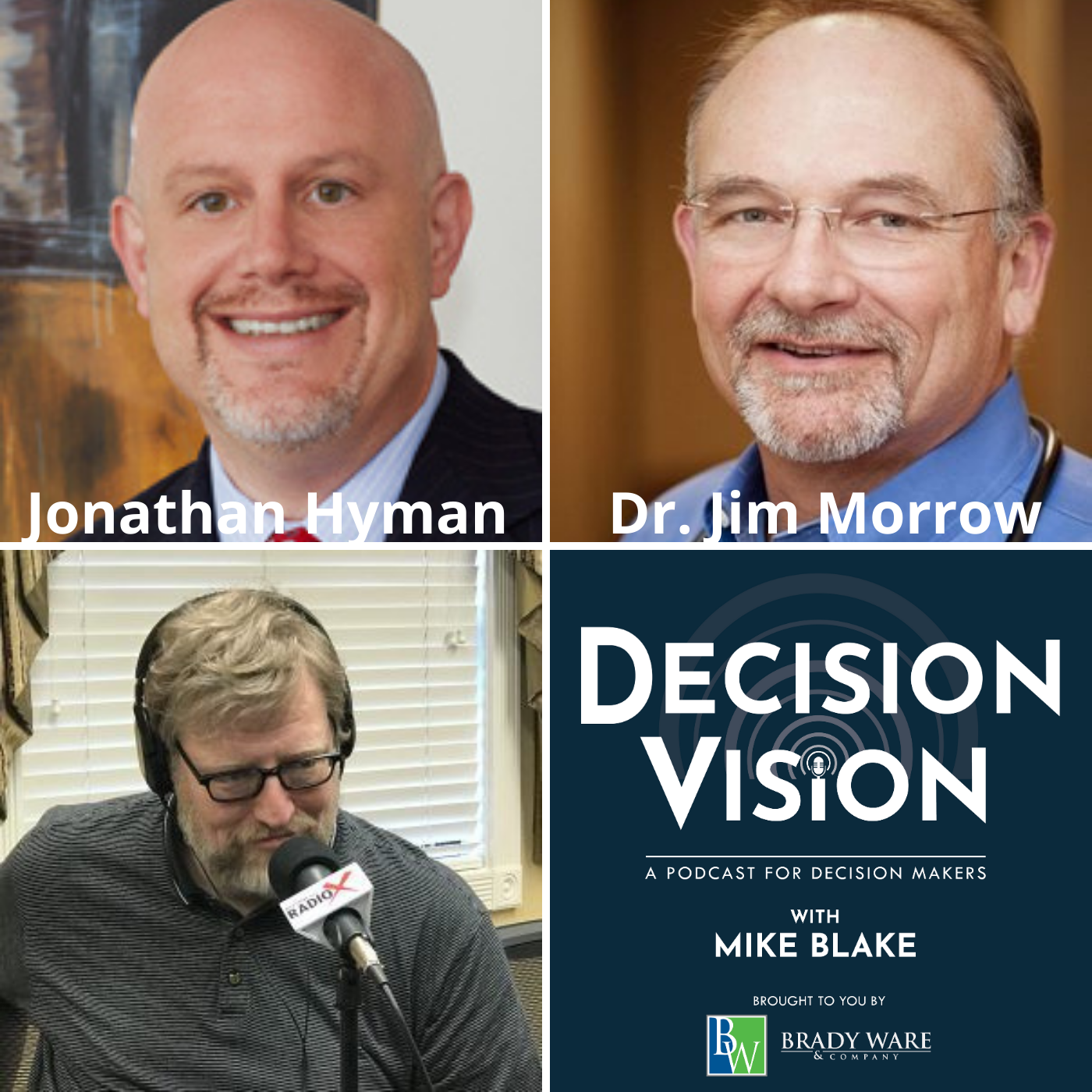
Jonathan Hyman, an attorney with Wickens Herzer Panza, and Dr. Jim Morrow of Morrow Family Medicine join host Mike Blake to consider “return to workplace” issues such as requiring a Covid-19 vaccination, safety-related accommodations, and other concerns both employers and their employees are currently wrestling with. “Decision Vision” is presented by Brady Ware & Company.

Jonathan Hyman, Attorney, Wickens Herzer Panza

Jonathan Hyman, Wickens Herzer Panza

Mr. Hyman is a member of the Firm’s Litigation Department and Employment & Labor practice group and serves on the Board of Directors. He focuses his practice on management-side labor and employment law, providing businesses proactive solutions to solve their workforce problems and reactive solutions when they find themselves litigating against an employee or group of employees.

Proactively, Mr. Hyman serves as outside in-house counsel for businesses. He is the voice on the other end of a phone when a business needs advice on firing an employee, a policy or agreement drafted, guidance on a leave of absence, disability accommodation, or internal complaint or investigation, or information on any number of other issues that plague human resources professionals and businesses daily. Mr. Hyman also has extensive experience on more specialized labor and employment law issues, such as wage and hour compliance, social media, cybersecurity, and other workplace technology concerns, affirmative action compliance, and union avoidance and labor relations.

Reactively, Mr. Hyman represents businesses in employment and labor litigation, including discrimination, retaliation, harassment, and claims, non-competition and trade-secret misappropriation disputes, wage-and-hour class and collective actions, and union certification and decertification matters.

He is also the author of the renowned and award-winning Ohio Employer Law Blog (www.ohioemployerlawblog.com, an American Bar Association Blawg Hall of Fame inductee), which he updates daily to provide businesses and human resources professionals breaking news and other updates on the ever-changing landscape of labor and employment law.

Wickens Herzer Panza has been committed to providing sound legal guidance to businesses of Lorain & Cuyahoga Counties since 1932. Wickens Herzer Panza provides legal counsel to family- and privately-owned businesses in the areas of Business Organizations & Tax, Probate & Estate Planning, Elder Law and Business Litigation. We’re more than legal counsel, too. We’re a business partnership, an advocate for our clients and advisors who support, give advice and protect those we work with. We are our clients’​ trusted advisor and make it our mission to be responsive, accountable, proactive and client-centered. Our Firm has offices in Avon, Ohio, and Sandusky, Ohio.

Mr. Hyman joined Wickens Herzer Panza in March of 2021, and was previously with Meyers, Roman, Friedberg & Lewis in Cleveland, Ohio. (Note:  this show was taped prior to Mr. Hyman’s change of firms.)

Wickens Herzer Panza website | Hyman LinkedIn

Dr. Jim Morrow, Morrow Family Medicine

Dr. Jim Morrow
Dr. Jim Morrow, Morrow Family Medicine

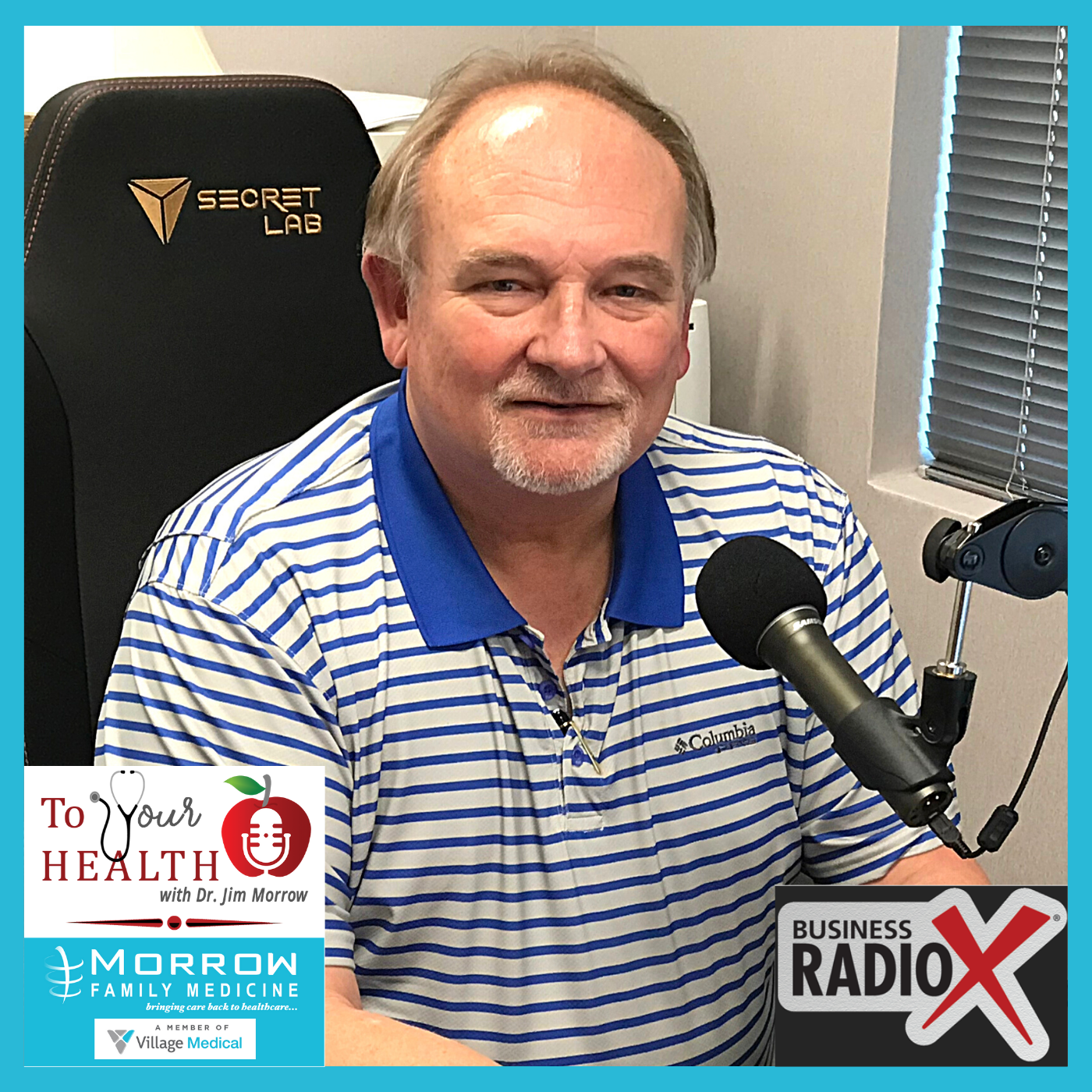
Dr. Jim Morrow was the first physician to practice on the Northside Hospital Forsyth campus in Cumming, Georgia. Opening the practice in November, 1998, his practice quickly became a “go-to” practice for Forsyth County residents.

As with that practice, Morrow Family Medicine will be known for its open access policy, same-day appointments and very popular morning walk-in hour. Dr. Jim Morrow’s special areas of interest in medicine are sports medicine, episodic care (care of acute problems and illnesses), chronic disease management and urgent care. He has served as team doctor for various high schools in his many years of practice, most recently at North Forsyth High School and Forsyth Central High School in Cumming.

Dr. Morrow graduated from Clemson University and the University of South Carolina School Of Medicine. He completed his residency in Family Medicine in Anderson, South Carolina in 1985. A 2004 winner of the Healthcare Information Management Systems Society’s (HIMSS) Davies Award for Excellence in EMR Implementation, he was also recognized as the 2006 Physician IT Leader of the Year by HIMSS. He served four years as a commissioner on the Certification Commission for Healthcare Information Technology (CCHIT). Dr. Morrow serves as Vice-Chairman of the Board of Directors of the Georgia Health Information Exchange (GHIE) and is a member of the Advisory Board for Health for the Technology Association of Georgia (TAG-Health). In 2014, Dr. Morrow was awarded the Steve Bloom Award by the Cumming-Forsyth Chamber of Commerce as Entrepreneur of the Year, and he also received a Phoenix Award from the Metro Atlanta Chamber as Community Leader of the Year.

Founded by Dr. Jim Morrow, Morrow Family Medicine, a Member of Village Medical, is an award-winning, state-of-the-art family practice with offices in Cumming and Milton, Georgia. The practice combines healthcare information technology with old-fashioned care to provide the type of care that many are in search of today. Two physicians, three physician assistants, and two nurse practitioners are supported by a knowledgeable and friendly staff to make your visit to Morrow Family Medicine, A Member of Village Medical one that will remind you of the way healthcare should be.  At Morrow Family Medicine, a Member of Village Medical, we like to say we are “bringing the care back to healthcare!”

Dr. Jim Morrow also hosts “To Your Health with Dr. Jim Morrow” on the Business RadioX® network, a radio show/podcast that addresses a wide range of health and wellness topics. It can be found at www.toyourhealthradio.com.
Company website | Facebook | LinkedIn | Twitter

Mike Blake, Brady Ware & Company

Mike Blake, Host of the “Decision Vision” podcast series

Michael Blake is the host of the “Decision Vision” podcast series and a Director of Brady Ware & Company. Mike specializes in the valuation of intellectual property-driven firms, such as software firms, aerospace firms, and professional services firms, most frequently in the capacity as a transaction advisor, helping clients obtain great outcomes from complex transaction opportunities. He is also a specialist in the appraisal of intellectual properties as stand-alone assets, such as software, trade secrets, and patents.

Mike has been a full-time business appraiser for 13 years with public accounting firms, boutique business appraisal firms, and an owner of his own firm. Prior to that, he spent 8 years in venture capital and investment banking, including transactions in the U.S., Israel, Russia, Ukraine, and Belarus.

Brady Ware & Company

Brady Ware & Company is a regional full-service accounting and advisory firm which helps businesses and entrepreneurs make visions a reality. Brady Ware services clients nationally from its offices in Alpharetta, GA; Columbus and Dayton, OH; and Richmond, IN. The firm is growth-minded, committed to the regions in which they operate, and most importantly, they make significant investments in their people and service offerings to meet the changing financial needs of those they are privileged to serve. The firm is dedicated to providing results that make a difference for its clients.

Decision Vision Podcast Series

“Decision Vision” is a podcast covering topics and issues facing small business owners and connecting them with solutions from leading experts. This series is presented by Brady Ware & Company. If you are a decision-maker for a small business, we’d love to hear from you. Contact us at decisionvision@bradyware.com and make sure to listen to every Thursday to the “Decision Vision” podcast.

Past episodes of “Decision Vision” can be found at decisionvisionpodcast.com. “Decision Vision” is produced and broadcast by the North Fulton studio of Business RadioX®.

Visit Brady Ware & Company on social media:

LinkedIn:  https://www.linkedin.com/company/brady-ware/

Facebook: https://www.facebook.com/bradywareCPAs/

Twitter: https://twitter.com/BradyWare

Instagram: https://www.instagram.com/bradywarecompany/

TRANSCRIPT

Intro: [00:00:01] Welcome to Decision Vision, a podcast series focusing on critical business decisions. Brought to you by Brady Ware & Company. Brady Ware is a regional full- service accounting and advisory firm that helps businesses and entrepreneurs make visions a reality.

Mike Blake: [00:00:20] Welcome to Decision Vision, a podcast giving you, the listener, clear vision to make great decisions. In each episode, we discuss the process of decision making on a different topic from the business owners’ or executives’ perspective. We aren’t necessarily telling you what to do, but we can put you in a position to make an informed decision on your own and understand when you might need help along the way.

Mike Blake: [00:00:39] My name is Mike Blake, and I’m your host for today’s program. I’m a director at Brady Ware & Company, a full-service accounting firm based in Dayton, Ohio, with offices in Dayton; Columbus, Ohio; Richmond, Indiana; and Alpharetta, Georgia. Brady Ware is sponsoring this podcast, which is being recorded in Atlanta per social distancing protocols. If you like this podcast, please subscribe on your favorite podcast aggregator, and please consider leaving a review of the podcast as well.

Mike Blake: [00:01:06] So, this week’s topic is, Should I have my employees return to the office? And we’re getting to a point now here, March 2nd of 2021, and this is about the time when everything really started to change. I was just noting that the last time I was in a restaurant was actually St. Patrick’s Day of last year. And in retrospect, I probably should not have done that. But I got away with that. But I have not been to a restaurant since. And in the interim, we’ve had this pandemic as a riding shotgun in our lives in some fashion for the last year. And it has had profound effects on families, our economy, and society, politics as everybody listening to this podcast, I think, knows. But there’s not a light at the end of the tunnel.

Mike Blake: [00:02:08] Now, four companies have had vaccines approved. I think three are in production. One is about to start. I think that’s the one with Johnson and Johnson, if I’m not mistaken. One of our guests who’s an actual doctor may correct me on that. But, you know, we’re seeing a light at the end of the tunnel. As of this date, something on the order of about 60 million Americans have received at least dose one of the vaccine. And the United States is currently fourth among all countries in terms of vaccinations per thousand people. So, in spite of a lot of the doom and gloom that’s been hanging over this issue, you know, we are making progress. And so, I don’t know when the pandemic is going to be behind us. I don’t know if it’s going to be behind us. So, I don’t know if I’m going to use the term post-pandemic decision or a trans-pandemic or co-pandemic decision, meaning that, you know, it’s taking place along either the transition or just, you know, the pandemic sort of being here to stay.

Mike Blake: [00:03:16] But we are coming to a point now where we have new tools to manage the pandemic. And, also, new tools are coming on to treat the pandemic for those of us who fall ill with it. I believe a brand new antiviral cocktail was approved by the FDA either last week or two weeks ago that is showing good promise. So, you know, we’re better treating this as well. Not there out of the woods, but it is appropriate to start thinking about what does this whole thing sort of look like after or as we move into this new phase of the coronavirus pandemic?

Mike Blake: [00:03:56] And one of those topics is, should I have my employees return to the office? And this is such a tricky question. You know, the whole notion of our relationship with labor, I think, to some extent has been called into question. And we’ve discussed this before on the podcast a little bit, what constitutes an essential worker? Should workers be paid hazard pay? And that issue is cropping up, you know, even at this late stage in the pandemic. You know, some employers were adding a hazard pay bonus early in the pandemic and some of them have stopped. And I’m not going to offer an opinion as to one way or the other. That’s just the facts of what’s happening.

Mike Blake: [00:04:51] Some companies have been very aggressive in effectively telling their employees, “Go away. I don’t want to see you at the office. It’s not open.” Others have not let their employees leave because they are not comfortable with their ability to manage such employees remotely. And then, there’s been some hybrid in between. At Brady Ware, for the most part, we’re observing at least our interpretation of best practices from a medical standpoint to keep our employees safe. But we’re also making the office – and we’re certainly providing everything we think is reasonably possible to enable our employees to work from home or some other place they deem safe. But we’ve also kept the offices open for people that want to come into the office. Some people really struggle with working from home. You know, imagine if you’re a single parent, have school aged children, and your schools are closed, and you live in an apartment, and you’re trying to get meaningful work done. I thank God that I am not in that particular position and I have nothing but admiration for anybody who is able to manage that.

Mike Blake: [00:06:00] But, now, we’re in a position where returning to the office is going to become a viable option sometime, I would guess, in the next six months or so, if not sooner. And this is a multifaceted question. I think, two facets in particular. And so, we’re going to have two guests today. One facet of this is, what are the legal ramifications of return to work? For those of us who work in offices, we historically have not had to think all that much about worker safety. Our main concerns would be drink bad coffee, or do we get a million papercuts. Or, worst case scenario, does a disgruntled employee or former employee come back to the office and start making trouble? But, now, we have this virus and people that could be working in close contact in a closed air circulation system that’s going to lead to its own challenges.

Mike Blake: [00:07:06] And then, on the medical side, you know, where do best practices from a medical side mesh with, interact with, or perhaps even contradict what is legally required? So, this is a multifaceted discussion. And there are business issues as well that we could get into. But we’re not going to have the time. But we do have a mini panel of two that can help us at least unwind this in the legal perspective and the medical perspective.

Mike Blake: [00:07:38] So, in no particular order, first joining us today is Jon Hyman, who is a partner at Meyers Roman Friedberg and Lewis up in Ohio. Jon is a nationally recognized author, speaker, blogger, and media source on employment and labor law. Jon’s legal practice provides proactive and results driven solutions to employer’s workforce problems. He also works with businesses to help position them to best combat the ongoing risks of cyber crimes. Jon serves as the outside in-house counsel role for businesses. In this role, he drafts policies and handbooks, audit human resources and technology practices and procedures, advise companies on day-to-day human resource issues, and successfully litigate employee disputes.

Mike Blake: [00:08:21] Jon has written two books, The Employer Bill of Rights: A Manager’s Guide to Workplace Law and Think Before You Click: Strategies for Managing Social Media in the Workplace. Jon has appeared in the Fox Business Network, National Public Radio and, locally, on WEWS – I think that’s in Cleveland. But Jon will correct me. He has also been quoted on workplace issues in publications such as The Wall Street Journal, National Public Radio, MSNBC.com, Business Insurance Magazine, Crain’s Cleveland Business, and The Cleveland Plain Dealer. Finally, Jon appeared on a November 1999 episode of Who Wants to Be a Millionaire? But sadly lacked the fastest fingers. Jon, welcome to the program.

Jon Hyman: [00:09:02] Thanks. It’s great to be here. Thanks for having me.

Mike Blake: [00:09:05] Also, joining us is Dr. Jim Morrow, and I will use the honorific of doctor only once per Jim’s request. Jim was the first physician to practice on the Northside Hospital Forsyth campus in Cumming, Georgia. Opening the practice in November 1998, his practice quickly became a go-to practice for Forsyth County residents. His special areas of interest in medicine are sports medicine, episodic care, i.e. care of acute problems and illnesses, chronic disease management, and urgent care. He has served as team doctor for various high schools in his many years of practice.

Mike Blake: [00:09:39] Jim graduated from Clemson University and the University of South Carolina School of Medicine. Does Clemson University have a football team? I think I’ve heard of them. In 2014, Jim was awarded the Steve Bloom Award by the Cumming-Forsyth Chamber of Commerce as Entrepreneur of the Year. And he also received a Phoenix Award from Metro Atlanta Chamber as Community Leader of the Year. Since 2015, Morrow Family Medicine has been voted Best of Forsyth in Family Medicine every year. The Milton location has been named best of North Atlanta every year since it opened. Jim is also host of the To Your Health podcast, a biweekly podcast produced by Business RadioX. Jim, also welcome to the program.

Dr. Jim Morrow: [00:10:17] Thank you very much. I’m glad to be here.

Mike Blake: [00:10:19] So, gentlemen, I think a question that’s on everybody’s minds, I think, is a subject to a lot of debate. And I’m probably leading off with the most unfair question I could possibly think of, but here it goes, it’s the Internet. How close do you think we are to mass return to offices or at least an option to return?

Jon Hyman: [00:10:42] That’s a hard question.

Mike Blake: [00:10:44] I told you it’s going to be unfair.

Jon Hyman: [00:10:47] I hate to give the stock lawyer answer, which is it depends, but I think it largely does. Because I think every business, I think, has to decide what’s right for it in its particular circumstances, with what its needs are, how it best operates, and what its employees are comfortable doing or not doing under the circumstances. So, I think for the, you know, run of the mill kind of white collar business office where people have been productively and effectively working remotely since the world shut down a year ago, the answer may be much further off in the future if ever the people return to the office full time. For the kind of widget maker manufacturer that needs to get people on a line in order to put out product and sell product and turn a profit, I think it’s a much different type of answer with a much different set of legal issues that business has to consider.

Mike Blake: [00:11:45] Jim, what do you think? As a physician, I’m sure you get asked this all the time. You know, one of our listeners has an office that’s been largely closed or skeleton staffed. How far along do we need to be in this vaccination program before you think it might be medically advisable? Or what condition need to be met for it to be medically advisable to open the gates and allow more people in?

Jim Morrow: [00:12:10] Well, as you started at the beginning talking about vaccines, we’re very fortunate now to have vaccines available. And I think that really is the thing that’s going to make all this possible. But the problem is, most of the people that are doing the work that you’re talking about are not old enough to get a vaccine yet. So, they’re not yet vaccinated. So, they are no different from what they were basically a year ago in that regard. But I think what we’ve got to do is get enough people vaccinated so that we can have herd immunity around the workplace. And that 75 percent of people probably vaccinated or with antibodies – and the problem with the antibodies from illnesses is it just doesn’t last long enough to give you much coverage.

Dr. Jim Morrow: [00:12:48] So, with Johnson and Johnson’s vaccine being approved over the weekend, we suspect that by the end of July, every American who will take a vaccine will have an opportunity to get one. And I think that’s what it’s going to take to get people back in offices, especially like the widget factory that you’re talking about, because, you know, they are next to each other. They are in close contact. They can’t close the door to their office in most cases and separate themselves. So, I think getting some form of immunity through a vaccine is what it’s going to take. I think by fall we’ll be there. I think we’ll be able to do that.

Jon Hyman: [00:13:26] I think the complicating factor is going to be how quickly we can get a vaccine approved for kids. Because part of the issue of getting people back to work is getting parents back to work, particularly if they’re at home managing younger children. And if those children can’t be vaccinated, it makes it difficult for the parents possibly to peel away from the home if schools aren’t open or there’s no child care otherwise available for the kids that they’re comfortable putting the kids in. So, I think part of the equation – I think an important part – is going to be just how quickly we can close out the clinical trials for the vaccines for teens and down so that they can get vaccinated, too, so schools can open up full time, daycare centers can open up full time, which allows kids to get back out of the house full time, which then allows their caregivers/parents to then get out of the home and return to work without worrying about who’s caring for their kids during the day.

Dr. Jim Morrow: [00:14:25] No doubt. And the trials for peds has really just barely started. So, I’m not sure when we’ll have that data. I think, it’s going to be a while now. And that certainly would push things for those people out past the end of the summer.

Mike Blake: [00:14:40] So, I’d like to get both your perspective on the following question, obvious to the seats to what extent they match up or not. When workers do start to return on mass – I understand that’s an amorphous term, but let’s roll with it anyway. When workers do return sort of in sufficient numbers, how would you advise offices to look or change in order to maximize safety or at least balance safety with the business objectives of the business?

Jim Morrow: [00:15:18] From a health standpoint, if you think about the company that has an entire floor – an office building full of cubicles – it makes me wish once again that I’d been in the plexiglass business when this thing started – because I can just envision plexiglass from the top of the cubicle to the ceiling or at least another five feet up and creating a cocoon where these people will sit. I don’t know that that’s something that’s going to be feasible. I don’t know that it’s something that companies are going to want to do or be able to do. And I could just see employees balking at the whole idea. They’re going to be sticking their head around the cubicle, talking to Joe next door. So, the company is going to be wondering why they spend these thousands of dollars on all this stuff? But I think that’s something you may very well see in that situation. I don’t know how you can bring people back into that until you do have the vaccines. I don’t know that you can really prepare for that.

Dr. Jim Morrow: [00:16:18] In the factory setting, the same thing. I mean, you’re not going to put plexiglass between all these people. It’s just not going to happen. And, again, if you did, they would, you know, ignore it pretty much, I’m sure. So, I think, really, it comes down to getting people immune. I don’t see any good way to change things in the work environment that’s going to allow this to happen without people being immune.

Jon Hyman: [00:16:46] I think we’ll be living with masks for a while as well. I think that we will be seeing masks in public, in general, and on a smaller scale in the workplace for the foreseeable future until we have – I’m not sure if there’s ever going to be a magic switch where the CD says, “Masks off today.” So, I think gradually over time, we’ll see a reduction in use. But I think for now, in the foreseeable future, at least through the end of this year, for certain, masks is just something we’re just going to have to to deal with, particularly as people are coming back to work.

Jim Morrow: [00:17:21] Or the employees are going to push back on that and say, “You can’t make me wear a mask.”

Jon Hyman: [00:17:25] I’ll tell them, “You don’t have to work here then.” I mean, we’re at will employees and so my rules. You know, “Go find a job somewhere else.” And there are lots of stories over the last year of employees who have pushed back on that or employers who have pushed back on it, who have had – there was a story I read just the other day of a beer hall in Columbus that had all of their employees walk out in masks. They said, “We feel this is an unsafe workplace. You’re not taking COVID seriously. You’re not protecting our safety adequately.” And every employee quit and they’ve been shut down since.

Jon Hyman: [00:18:07] So, I think one of the lasting stories, I think, that’s going to come out of the pandemic will be, sadly, we know that not every business is going to survive COVID. Some will never reopen. What I hope is that, if karma and the universe works the way I think it should work is that those businesses that don’t survive the pandemic and don’t reopen are the ones that didn’t take COVID seriously, denied that it was a reality, bosses who called it the China virus, didn’t enforce mask rules, didn’t enforce social distancing. Otherwise, didn’t do everything that they needed to do to protect the health, safety, and welfare of their employees, their customers, people they interacted with their business on a day-to-day basis, they’ll be the ones that close. And the ones that are able to open up and thrive in a post-COVID world, whenever that is, are the ones that took the virus seriously and did the things necessary to protect the health and safety of their employees.

Jim Morrow: [00:19:11] And I agree that the masks are going to be around to some degree for the rest of my life probably. But, you know, if just masking was going to be enough to get these people back to work, we could have done that before. So, I think the combination of being smart, getting a vaccine, being smart, wearing a mask, acting like you care about the people around you, and that kind of thing – which is a huge part of this – just that little bit, I think if we can find a way to get those things in combination together, I think, people could go back to work.

Jon Hyman: [00:19:45] Yeah. I agree. That’s the other lasting lesson of this whole thing is just how freaking selfish people are. It’s just appalling the selfishness that this has exhibited in people.

Jim Morrow: [00:19:56] People tell me all the time, you know, “You can’t make me wear a mask. I have a right not to wear a mask.” And I tell them, “Your right stops when your spittle hits me in the face.”

Jon Hyman: [00:20:05] Exactly right. Exactly right.

Mike Blake: [00:20:08] Well, Jon, I want to pause on that because I’m curious. Where is the law right now in terms of does it tend to favor employees right now, or employers, or is it all over the map? What is the posture of the law right now in terms of responsibilities of employers versus freedom to operate versus at will employment?

Jon Hyman: [00:20:37] Yeah. It’s a bit all over the map. There has not yet been a uniform national standard that’s been issued to govern COVID safety in the workplace. OSHA, the Occupational Safety and Health Administration, the federal agency that governs workplace safety, has not issued a uniform national standard on COVID or pandemic safety. They have issued a series of kind of informal best practice guidance to say this is what we think you should be doing in order to provide a safe and healthy workplace for your employees. Employers, even without a COVID standard, have under OSHA a general duty to provide a safe and healthy workplace for their employees.

Mike Blake: [00:21:31] And so, a lot of people, including myself, interpret that general duty as encompassing kind of the best practices that OSHA says employers should do, which is, you know, masking, social distancing, not coming to work when you’re sick, sanitizing surfaces, and things like that. All the things that we think of when we think about COVID safety in public spaces. But there isn’t a uniform national standard. State rules are all over the map. Some states have, for example, uniform masking requirements. Some states don’t. And some states are in the middle.

Jon Hyman: [00:22:12] And then, I think what is really driving a lot of what employers are doing or a lot of what is protecting employees is the PR hit that businesses are suffering when they get called out for not doing this the right way. When the employees quit in masks, when the employee complains about, you know, you’re allowing people to come in without masks, and they complain, and then they’re fired. And then, they hire a lawyer and the lawyer files a lawsuit and issues a press release. And now, you know, that employer has the scarlet letter for not taking COVID seriously. So, a lot of it is PR driven or reputationally driven. Some of it is driven by lawsuits that employees can file for things like, you know, whistleblower protections when they’re fired for raising safety issues. And a lot less of it is driven by what the government has said employers must do, because those rules are, frankly, kind of fuzzy.

Mike Blake: [00:23:07] And what about protections for people that are specifically vulnerable? I had an idea or thought, and I say this as completely a non-lawyer so I’m probably entirely off the reservation. But could we see something along the lines of where employees start to claim that they’re covered effectively under the Americans with Disabilities Act because of their particular vulnerability to COVID and, therefore, employers have a duty to go to extraordinary lengths to protect such individuals, particularly if coronavirus is going to be one of these things like the flu which is going to be with us for a long time.

Jon Hyman: [00:23:44] You’re in the ballpark. You’re in the ballpark. Yes, employees who are at high risk for complications from COVID-19 are protected by the Americans with Disabilities Act. The employer’s obligation is, once they become aware that an employee may need a reasonable accommodation, and that’s the standard. The standard is a reasonable accommodation, not extraordinary lengths. So, once the employer becomes aware of the employee’s need or potential need for a reasonable accommodation for a physical or mental impairment, the employer has to engage in what the law refers to as an interactive process with the employee. That’s a dialogue, a discussion, a conversation. Talk to the employee about how can we accommodate your medical issue.

Jon Hyman: [00:24:34] And then, the accommodations can really run the gamut as long as it’s reasonable and doesn’t impose an undue hardship on the employer. So, it could be a work from home arrangement on a temporary basis. It could be, we will put you in a different work area where you’re not near people, where you’re more isolated from people or where you might not be exposed to the virus from other people. It might be, we’re going to get you a different – instead of a mask, we’re going to get you a respirator or some other kind of gear to wear that’s going to better protect you from an airborne virus.

Jon Hyman: [00:25:09] It may be that the only accommodation you can offer someone is a temporary unpaid leave of absence. And so, you know, there’s no way to restructure your job. We have nowhere else to put you. This isn’t something that can be done remotely. So, the best we can do for you is say go sit on the sidelines for 30 day increments and we’ll revisit this in 30 days. And we’ll see if, at that point, we’re in a situation where you feel comfortable coming back. And in that case, it’s not an indefinite leave. It’s kind of short term temporary. And it may ultimately result in that employee no longer being employed because this thing is just stretching out. Now, it’s stretched out for a year. If somebody went on a temporary leave of absence a year ago because they were at high risk for COVID complications, if they contracted the virus, the employer’s responsibility to accommodate that employee would have expired months ago.

Mike Blake: [00:26:04] So, gentlemen, let me turn back to the medical side. Somebody has an employee that is at particular risk, whatever reason, maybe they’re diabetic, maybe they have one of the other comorbidities. From a medical standpoint, what would be your advice? And let’s assume that working from home is not an option. And I imagine the easiest thing to do is just send people home. We get that. But if sending somebody home to work is not a viable option, in your mind, what are some reasonable and effective steps that emplacing an office environment might be able to take to protect that employee?

Jim Morrow: [00:26:48] That’s really tough because I don’t know that there is a really good way to protect them. Going back to something I said earlier, I think if people could protect them, they would have been working all along. So, if you were going to do anything, I think isolating them, Jon mentioned putting them in a different part of the office or something like that where they’re not around everybody else, if that’s feasible, that can be good. They still got to get in and out of the building without spending much time conversing so that could be a problem.

Jim Morrow: [00:27:18] But, again, in a in a masked world, if everybody is wearing a mask in that situation, it shouldn’t be too bad. But I think isolation, basically, or separation is probably the only way to go about doing that. I can’t think of how else you’d pull that off.

Mike Blake: [00:27:38] Let me ask another question about the vaccines, because the vaccines are great. They’re, in many ways, a miracle of modern medicine. We weren’t supposed to be able to make vaccines like this in a short period of time. Literally, I think that it rivals the moonshot in terms of a technological advance. It’s that big a leap forward in that short period of time. But the numbers I’m seeing is that, the vaccine promises something on the order of 90 percent immunity. And, to me, 90 percent immunity is great. But that’s not a get out of jail free card. That’s not the same thing as a vaccine for measles or polio, which have a much higher immunity, right? And I’m curious, (A) do you see the same data that I do? And (B) do you agree that that requires an additional level of caution that 90 percent is great, but that doesn’t mean you just get a jail free card and go back to normal?

Jim Morrow: [00:28:50] No, it doesn’t. And people don’t think about that a lot of times. The Pfizer and Moderna report 94 or 95 five percent. But that’s still five or six percent chance of getting it. And if you’re in that group of people who could have a really terrible outcome, although anyone can, that you might expect a bad outcome, then that’s a pretty decent risk. And with the J&J vaccine that was just approved, they really show closer to 60 percent preventing infection, but above 90 for preventing severe illness and hospitalization, that kind of thing, which is very important, obviously. But it’s important to remember that this is not 100 percent. And that’s why we still have to distance. We still have to mask. We still have to be smart, use hand sanitizer, and do the things that we don’t like doing that we’ve gotten kind of accustomed to doing. And that’s going to, hopefully, take care of the other five percent of that. But it’s very true that these people are still going to be at risk to some degree. And so, they’re going to have to be careful.

Mike Blake: [00:29:51] I think about that from a personal standpoint. I’m a big baseball fan. I used to go to a lot of Gwinnett Stripers games. And you know, if you’re only 90 percent immune, if you’re surrounded by thousands of people, statistically speaking, that virus is still there, right?

Dr. Jim Morrow : [00:30:09] That’s exactly right.

Mike Blake: [00:30:09] And then, you’re banking on your nine shots out of ten or 19 shots out of 20 that you’re not going to get it. And to me, as much as I love baseball, the numbers don’t add up. If I did 20 games a year, my expected infection rate is one time a year just going to 20 games.

Jon Hyman: [00:30:34] And the numbers add up even worse when we consider that there’s a large percentage of the population that say they’re not going to get the vaccine anyway, what’s available to them. So, when we start adding vaccine hesitancy into the equation, that 95 percent number might be 95 percent for you, but it’s not going to be 95 percent among the population, because 100 percent is not going to get the vaccine. And so, if we’re looking at north of 75 or 80 percent to reach herd immunity, but 40 percent say they’re not going to get the vaccine, there’s going to be a huge gap that may prevent us from ever reaching herd immunity, particularly as these variants ramp up and the virus might becoming more virulent and more contagious. It’s a legitimate concern as we try and navigate our way out of this thing.

Jim Morrow: [00:31:19] Well, more virulent – I mean, more contagious but no sign yet that it’s more virulent.

Jon Hyman: [00:31:24] Correct. Correct.

Jim Morrow: [00:31:25] And that’s been a blessing. That’s been a blessing.

Mike Blake: [00:31:28] So, Jon, you jumped in to a question I want to make sure that I cover. And I think it’s going to be one of the hardest questions in the podcast. And that is, as an employer, can I make you showing proof of vaccination a condition of continued employment for the sake of my other employees or just for the sake of the continuity of my own operations?

Jon Hyman: [00:31:50] The short answer is yes. But the longer answer is, it’s yes, but you must make allowance for those people that cannot get the vaccine either because they have an underlying physical or mental impairment or disability for which the vaccine is contraindicated. They say, “I have a medical issue, so you need to provide me an accommodation for that medical issue to your mandatory vaccination policy.” Or, for an employee that holds a sincerely held religious belief observance or practice for which they can’t get a vaccine, an employer has to consider an accommodation for that as well.

Jon Hyman: [00:32:36] And, you know, in both those cases, the accommodation doesn’t have to be and probably shouldn’t be, “Come to work anyway. We’re requiring proof of vaccination to work. You know, come to work even though you can’t meet this policy.” But you have to go through the same interactive process, as we talked about earlier, talk to the employee, figure out what accommodation you can make. And the accommodation, at the end of the day, might be, “We just can’t accommodate this because we have a legitimate business interest in protecting our other employees from the vaccine. And you just can’t come back to work.” But you have to at least go through the process with the employee to figure out whether there is an accommodation you can make.

Jon Hyman: [00:33:23] But let me also add, I think, what uncomplicates the equation is, I don’t think the question is as easy as, can you require vaccine or proof of a vaccine as a condition of employment? Because I think just because you can do it – the law says you can – doesn’t necessarily mean that you should. I think if you look at the data that’s out there, as I mentioned earlier, we know about 60 percent say they will absolutely under every set of circumstances get the vaccine when they’re able to do so. There’s another 20 percent or so that say they will not get the vaccine, whether it’s because of a medical issue, or a religious belief, or because they wear tinfoil on their heads and they think the government is implanting 5G trackers in them through the vaccine, or for whatever reason.

Mike Blake: [00:34:11] Bill Gates doesn’t have enough money, right? He needs to track what I’m doing here in Chamblee, Georgia.

Jon Hyman: [00:34:16] Exactly. And then, there’s 20 percent that are kind of undecided on the fence. And, to me, I think if an employer has a mandatory policy, “Thou shalt get the vaccine when you can,” I think you are going to lose the 20 percent that are never going to get the vaccine, whether the reason is legitimate or illegitimate. You’re going to lose them as employees. You’re going to risk alienating some percentage of your employees are going to get the vaccine anyway because they’re going to view you as too intrusive, up in their medical business, invading their privacy, what have you. So, you risk alienating a percentage of employees that are going to get the shot anyway.

Jon Hyman: [00:34:54] And so, what I think employers should be doing is, rather than pissing off a whole bunch of your employees and, at the end of the day, not changing any of their behaviors, what you should be focusing on is that 20 or so percent in the middle. And arm them with education, resources, information as to the safety and efficacy of the vaccine and why it’s in theirs and everybody’s best interest for them to get the vaccine. And try and push some of them over to the, “Yeah. We’re going to get vaccinated” side of the equation.

Mike Blake: [00:35:25] Okay. Good. That segues nicely. So, Jim, you know, we all know there’s a big anti-vax movement. It existed before coronavirus, like so many things as just swamped it up. You’re a medical educator as well as a practitioner of medicine, and I’m sure you run into this directly. What have you found is the best way to educate people about vaccines so that, at least, they remain open minded to it? Or conversely, in your experience, once people walk in, they say they’re anti-vax, that conversation’s already over, and you move on?

Jim Morrow: [00:36:09] Well, I think it’s very clear cut. There are very little gray area that I’ve seen in having that conversation. If you’re talking to a patient and they’ve never done vaccines and they certainly aren’t going to do this one, that was developed in one year, which, like you said, is a world record in many, many ways. I don’t think there’s anything that I’m going to say to these people that’s going to convince them to get a vaccine. They’re not going to walk into my office totally against it and me say anything at all that’s going to make them leave and they’re thinking it’s a good idea to go get this. I can’t imagine. I’ve never turned anybody around yet, whether it was about tetanus, diphtheria, it didn’t matter. And I don’t think it’s going to be about this.

Jim Morrow: [00:36:53] And if it were going to be about a vaccine, it wouldn’t be about a vaccine that came out in 12 months. So, I don’t think that’s a problem. But I do think that education is the key to all of this. And all I can do and what I try to do is to let them understand the science as I understand it. And explain it to them as best I can. And then, they leave and don’t get the vaccine anyway.

Mike Blake: [00:37:19] So, an idea might be, maybe a turn around. If we accept the fact that there is going to be a material portion of the population that simply will not get the vaccine, end of discussion. Right? Is instead then maybe the educational path to educate those who are vaccinated, or even those who aren’t vaccinated, to just enable people to protect themselves. At least if you’re not going to get the vaccine, if you’re going to do something that runs against medical advice anyway, at least stack the cards in your favor as much as you can, even though you’re making a decision that is questionable from an evidence based perspective.

Jon Hyman: [00:38:16] Although I would bet you that the anti-vaxxers have a pretty substantial overlap with the anti-maskers, so that’s my gut anyway. I haven’t looked at any data. But my gut tells me the anti-vaxxers and the anti-maskers, if they’re a Venn diagram, it’s going to be pretty close to a circle – just one circle.

Mike Blake: [00:38:33] Well, I do think there’s a lot of overlap. There is certainly a lot of overlap. But, for example, as we just talked about, these vaccines, while miraculous, are only 90 or 95 percent effective. And when I say that, it reminds me, I used to work in Russia and I had a friend who worked for Brink’s in Russia. Brink’s is the armored car company. He told me that, you don’t realize how little of your body a bulletproof vest protects until you put one on. And you don’t realize how little a vaccine protects you until you kind of run the math and you see what 90 or 95 percent is. Now, I get a jail free card.

Mike Blake: [00:39:12] So, maybe the education process is, the people who are not going to mask, who are not going to vaccinate, have simply made a choice. Have simply made a choice that they’re just going to run that risk. And for good or ill, you can judge them if you want, but they’re going to make that choice on behalf of other people that they encounter too. Rightly or wrongly, that’s just the mechanics. We’re not going to lock up 30 million Americans. We don’t have the capacity to do it.

Mike Blake: [00:39:42] So, is then the best ROI and education to just continue to educate the people that are willing to abide by the protocols and listen to advice to say, “Hey, look. This is out there.” Just keep wearing the mask, and keep putting up barriers, and keep socially distancing, and keep being OCD about washing your hands. Is that the path to education that has a chance of being effective?

Jim Morrow: [00:40:10] I think it is. And like Jon mentioned, you’ve got that group that you need to continue to educate and try to push towards a vaccine. But the whole thing is, we’ve got this huge inoculum of coronavirus floating around us. And if we do get a ton of people – whatever percentage it is – vaccinated, then we’re going to reduce that entire inoculum. And so, the amount of virus being spewed at the Gwinnett Stripers game – and they really could have come up with a better name than that, I do think.

Mike Blake: [00:40:40] A different podcast. But I like the Gwinnett Braves as they were.

Jim Morrow: [00:40:46] I did too. But the whole inoculum of virus floating around you is less at that ball game. And that’s what this is all about, it’s about trying to be exposed to this virus. And so, if we can get people to do it, the ones we need to concentrate on, I think, are the ones that have a little bit of a chance are going to get it. And I think it’s enough of a percentage that we’re going to be able to be safe doing things, albeit potentially with masks in the future.

Mike Blake: [00:41:14] So, Jim, a question I have from a legal and business standpoint is, it occurs to me that employers might be a little bit of a no win situation. Because you can’t make people vaccinate. Frankly, I think if you’re really trying to force them, they’ll just falsify the documentation. If it really came down to that, they’d print out something on the Internet. You have no way of verifying it. They’ll say, “Yeah. I’m vaccinated. I’m good.”

Mike Blake: [00:41:42] So, employers have a duty to protect the minority. They have a duty to protect all their employees to some extent. But make special accommodations and also protect, for lack of a better term, human rights. I mean, where’s the part of that Venn diagram where they’re safe? I mean, if I’m an employer, I’m kind of thinking, “You know what? Shut the whole damn thing. Then, everybody can work from home or Starbucks or do whatever we do. And then, we’ll get together for an outdoor picnic once a year if we need to.” I mean, as an employer, where do you find that safe harbor?

Jon Hyman: [00:42:18] I can’t disagree with you. I mean, what I preach to at least my clients that listen to me over the last year is, being as flexible as possible, meeting employees where they are, and just doing the best you can with, you know, being as flexible as you can. And in that case, you might be right. It might be shut the whole thing down if you can shut it down and having people work remote. And then, whenever the CDC says pandemic over, we can talk about how we kind of put the remote genie back into the bottle, if that’s what businesses want to do. Otherwise, I think in large part, it’s never going to go fully back in.

Jon Hyman: [00:42:58] But I think you’re right, employers are in a very tough spot here in terms of, you know, no mandate from the government in terms of what to do or largely no mandates. A lot of employees who are scared to death to come in to work and businesses need to operate if you can operate without operating in person. I see very little downside of doing that, at least in the short term.

Mike Blake: [00:43:25] So, in addition, I mean, are there other kind of tools that companies can manage this? I mean, one of the things has been exposed in the insurance industry – I know you do some work there – is, does a pandemic lead to a legitimate business interruption claim, for example? Is that risk potentially insurable? Does it go through workmans’ comp? Does it go through something else? Get to buy a special kind of insurance? Do you self-insure the captive? Are there financial tools available to do this? Or is that still a work in progress? Or is that just crazy talk?

Jon Hyman: [00:44:06] No. It’s a work in progress. I think the insurance companies will spend, you know, hundreds of millions or billions in legal fees over the next half decade to decade sorting out the issue of to what extent COVID closures fall under business interruption policies. Because there’s a ton of those claims out there. It’s largely unknown. And it’s going to take the court years to sort it out with lawyers. Really, the only ones who get rich in that equation trying to answer that question.

Jim Morrow: [00:44:38] On the workers’ comp side, while a workplace exposure of someone got sick from COVID and they could prove that they got it at work, that would be a coverable claim under workers’ compensation insurance for the employee. But I question, how do you prove that something happened at work? Well, if you look at how widespread this virus is in the community, we’re only at work so many hours a day. They should presumably have protective measures in place in the workplace. And so, you know, if somebody gets sick, how do you establish that that exposure happened at work? Such you can establish the causal connection for purposes of establishing one’s eligibility to collect workers’ compensation.

Jim Morrow: [00:45:19] And so, you know, maybe if there’s 20 people in a conference room and all 20 of them come down with COVID in the span of a couple of days or a week, maybe that’s easier from a causation standpoint. Maybe not. But just the employee who gets sick and then says, “Well, I was at work last week and so-and-so had COVID a week ago. And, now, I have COVID and so I got it at the workplace. But I was also at the grocery store, in Starbucks, at my kid’s little league game. And then, I went to Target three times last week too.” You know, how do you prove where that exposure came from to establish the causation necessary to collect workers’ compensation? So, there’s really no easy answers here, unfortunately.

Mike Blake: [00:46:03] So, I mean, that leads into another question. We’re talking with Jim Morrow and Jon Hyman. And the topic is, Should I have my employees return to the office? Jim, is contact tracing something that, in an ideal world, would be advisable for companies to encourage and implement? Let’s just take Amazon, for example, they certainly have the capacity to build a contact tracing app if they chose to. You know, should companies have a contact tracing app that might help them identify exactly what Jon is discussing? Where is the vector of an infection into an office to establish did it come from the office or someplace else?

Jim Morrow: [00:46:49] I think contact tracing is one of the most important parts of trying to control this entire thing. I’m glad I don’t have to answer the legal question of how do you do that without infringing on people’s rights, and I’ll leave that to Jon. But if you look at the way that we can control the spread is testing and contact tracing. And if we’re doing that right – if we have done that right nine months ago – then we’d have had a lot lower cases and fewer deaths and so forth. I think contact tracing is critical, whether it’s in the work environment or school environment or wherever it might be. I think it’s one of the most important part.

Jim Morrow: [00:47:28] So, we need to be able to do that. People need to allow that to happen. Because this pandemic is really a training ground for the next pandemic. Because it might not be in my lifetime – I’d like to think I’d still be here for the next one. But I don’t want to be here for the next one. If you know what I mean? Kind of a double edged sword there. But I think contact tracing is everything when it comes to trying to control this.

Mike Blake: [00:47:57] So, Jon, again, the hard question to you, if I’m asking my employees to return to the office, but I say, “You can only do it if you agree to put in this contact tracing app,” that at least it’s going to track you while you’re in the office – or maybe not, I’m not sure – is that something a company can impose?

Jon Hyman: [00:48:16] They can and a lot have. As long as it’s done with disclosure and consent. There’s really no privacy concerns. The employee can always choose not to have the app installed and then not return to the office. And if it’s 100 percent in-person work environment, that might mean they’re looking for work elsewhere. But in a country that has at will employment, that’s just the name of the game. So, perfectly within an employer’s right to require it. An employee’s right to agree to accept it or not accept it. And then, live with the consequences that flow from that decision.

Mike Blake: [00:48:52] And we are running out of time and we could easily have made this a two parter or even a three parter. So, obviously, it’s a multilayered question but, you know, the answers are difficult and evolving. If people would like to contact you, maybe those questions that we didn’t cover or follow up, can they do that? And what’s the best way to do that? Jon, let me let you go first.

Jon Hyman: [00:49:14] The best way to find me is through my blog, which really kind of collects all my contact info. I’m not really hard to find. You could just Google Jon Hyman, Employment Lawyer, and you’ll find me everywhere, on Twitter, and LinkedIn, and my law firm, and everywhere else. But if people want information or how to contact me, they can just go to ohioemployerlawblog.com and all the information is collated there.

Mike Blake: [00:49:40] Jim?

Dr. Jim Morrow [00:49:41] You can get me, probably, email is the better way to do it. That’s drjim@toyourhealth.md. Or on Twitter, @ToYourHealthMD.

Mike Blake: [00:49:52] That’s going to wrap it up for today’s program. I’d like to thank Jon Hyman and Jim Morrow so much for joining us and sharing their expertise with us. We’ll be exploring a new topic each week, so please tune in so that when you’re faced with your next business decision, you have clear vision when making it. If you enjoy these podcasts, please consider leaving a review of your favorite podcast aggregator. It helps people find us that we can help them. Once again, this is Mike Blake. Our sponsor is Brady Ware & Company. And this has been the Decision Vision podcast.


Tagged With: COVID-19, Dr. Jim Morrow, employment law, Jonathan Hyman, Morrow Family Medicine, Village Medical, Wickens Herzer Panza, workplace law

  • « Previous Page
  • 1
  • 2
  • 3
  • 4
  • 5
  • 6
  • …
  • 9
  • Next Page »

Business RadioX ® Network


Our Most Recent Episode

CONNECT WITH US

  • Email
  • Facebook
  • LinkedIn
  • Twitter
  • YouTube

Our Mission

We help local business leaders get the word out about the important work they’re doing to serve their market, their community, and their profession.

We support and celebrate business by sharing positive business stories that traditional media ignores. Some media leans left. Some media leans right. We lean business.

Sponsor a Show

Build Relationships and Grow Your Business. Click here for more details.

Partner With Us

Discover More Here

Terms and Conditions
Privacy Policy

Connect with us

Want to keep up with the latest in pro-business news across the network? Follow us on social media for the latest stories!
  • Email
  • Facebook
  • Google+
  • LinkedIn
  • Twitter
  • YouTube

Business RadioX® Headquarters
1000 Abernathy Rd. NE
Building 400, Suite L-10
Sandy Springs, GA 30328

© 2025 Business RadioX ® · Rainmaker Platform

BRXStudioCoversLA

Wait! Don’t Miss an Episode of LA Business Radio

BRXStudioCoversDENVER

Wait! Don’t Miss an Episode of Denver Business Radio

BRXStudioCoversPENSACOLA

Wait! Don’t Miss an Episode of Pensacola Business Radio

BRXStudioCoversBIRMINGHAM

Wait! Don’t Miss an Episode of Birmingham Business Radio

BRXStudioCoversTALLAHASSEE

Wait! Don’t Miss an Episode of Tallahassee Business Radio

BRXStudioCoversRALEIGH

Wait! Don’t Miss an Episode of Raleigh Business Radio

BRXStudioCoversRICHMONDNoWhite

Wait! Don’t Miss an Episode of Richmond Business Radio

BRXStudioCoversNASHVILLENoWhite

Wait! Don’t Miss an Episode of Nashville Business Radio

BRXStudioCoversDETROIT

Wait! Don’t Miss an Episode of Detroit Business Radio

BRXStudioCoversSTLOUIS

Wait! Don’t Miss an Episode of St. Louis Business Radio

BRXStudioCoversCOLUMBUS-small

Wait! Don’t Miss an Episode of Columbus Business Radio

Coachthecoach-08-08

Wait! Don’t Miss an Episode of Coach the Coach

BRXStudioCoversBAYAREA

Wait! Don’t Miss an Episode of Bay Area Business Radio

BRXStudioCoversCHICAGO

Wait! Don’t Miss an Episode of Chicago Business Radio

Wait! Don’t Miss an Episode of Atlanta Business Radio