Business RadioX ®

  • Home
  • Business RadioX ® Communities
    • Southeast
      • Alabama
        • Birmingham
      • Florida
        • Orlando
        • Pensacola
        • South Florida
        • Tampa
        • Tallahassee
      • Georgia
        • Atlanta
        • Cherokee
        • Forsyth
        • Greater Perimeter
        • Gwinnett
        • North Fulton
        • North Georgia
        • Northeast Georgia
        • Rome
        • Savannah
      • Louisiana
        • New Orleans
      • North Carolina
        • Charlotte
        • Raleigh
      • Tennessee
        • Chattanooga
        • Nashville
      • Virginia
        • Richmond
    • South Central
      • Arkansas
        • Northwest Arkansas
    • Midwest
      • Illinois
        • Chicago
      • Michigan
        • Detroit
      • Minnesota
        • Minneapolis St. Paul
      • Missouri
        • St. Louis
      • Ohio
        • Cleveland
        • Columbus
        • Dayton
    • Southwest
      • Arizona
        • Phoenix
        • Tucson
        • Valley
      • Texas
        • Austin
        • Dallas
        • Houston
    • West
      • California
        • Bay Area
        • LA
        • Pasadena
      • Colorado
        • Denver
      • Hawaii
        • Oahu
  • FAQs
  • About Us
    • Our Mission
    • Our Audience
    • Why It Works
    • What People Are Saying
    • BRX in the News
  • Resources
    • BRX Pro Tips
    • B2B Marketing: The 4Rs
    • High Velocity Selling Habits
    • Why Most B2B Media Strategies Fail
    • 9 Reasons To Sponsor A Business RadioX ® Show
  • Partner With Us
  • Veteran Business RadioX ®

Decision Vision Episode 28: Should I Raise Angel Capital? – An Interview with Charlie Paparelli, Paparelli Ventures

August 15, 2019 by John Ray

Decision Vision
Decision Vision
Decision Vision Episode 28: Should I Raise Angel Capital? – An Interview with Charlie Paparelli, Paparelli Ventures
Loading
00:00 /
RSS Feed
Share
Link
Embed

Download file

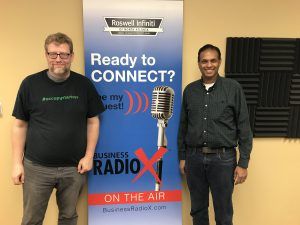
Mike Blake and Charlie Paparelli

Should I Raise Angel Capital?

What are the steps involved in raising angel capital? What traits are angel investors looking for in the founder of a startup? Noted angel investor and startup mentor Charlie Paparelli answers these questions and more in a wide-ranging interview with host Mike Blake. “Decision Vision” is presented by Brady Ware & Company.

Charlie Paparelli, Paparelli Ventures

Charlie Paparelli, Paparelli Ventures

Charlie Paparelli is a twenty-five year professional angel investor focused on helping entrepreneurs achieving their dream of starting and growing their own company. Five years ago, he began sharing his experiences in a twice-weekly blog to entrepreneurs and angel investors at paparelli.com. In addition to his writing, he is a speaker and a coach helping founders and their new teams build enormously valuable companies.

He invested in over 35 entrepreneurs over the last 25 years. He is the Angel in Residence at Georgia Tech’s Atlanta Technology Development Center. He is also a mentor at the Atlanta Tech Village. He is Chairman of the Atlanta High Tech Prayer Breakfast. The Breakfast is in its 28th year. It is the largest networking event in Atlanta technology, and it is an evangelical outreach. He has held many community leadership roles during his 40 year career in Atlanta technology.

Charlie is married to Kathy for 42 years. They have four children and three grandchildren with another on the way. They are members of Church of the Apostles in Atlanta. Charlie is an avid motorcyclist whose current ride is a 2019 BMW R1250RT.

Michael Blake, Brady Ware & Company

Mike Blake, Host of “Decision Vision”

Michael Blake is Host of the “Decision Vision” podcast series and a Director of Brady Ware & Company. Mike specializes in the valuation of intellectual property-driven firms, such as software firms, aerospace firms and professional services firms, most frequently in the capacity as a transaction advisor, helping clients obtain great outcomes from complex transaction opportunities. He is also a specialist in the appraisal of intellectual properties as stand-alone assets, such as software, trade secrets, and patents.

Mike has been a full-time business appraiser for 13 years with public accounting firms, boutique business appraisal firms, and an owner of his own firm. Prior to that, he spent 8 years in venture capital and investment banking, including transactions in the U.S., Israel, Russia, Ukraine, and Belarus.

Brady Ware & Company

Brady Ware & Company is a regional full-service accounting and advisory firm which helps businesses and entrepreneurs make visions a reality. Brady Ware services clients nationally from its offices in Alpharetta, GA; Columbus and Dayton, OH; and Richmond, IN. The firm is growth minded, committed to the regions in which they operate, and most importantly, they make significant investments in their people and service offerings to meet the changing financial needs of those they are privileged to serve. The firm is dedicated to providing results that make a difference for its clients.

Decision Vision Podcast Series

“Decision Vision” is a podcast covering topics and issues facing small business owners and connecting them with solutions from leading experts. This series is presented by Brady Ware & Company. If you are a decision maker for a small business, we’d love to hear from you. Contact us at decisionvision@bradyware.com and make sure to listen to every Thursday to the “Decision Vision” podcast. Past episodes of “Decision Vision” can be found here. “Decision Vision” is produced and broadcast by the North Fulton studio of Business RadioX®.

Visit Brady Ware & Company on social media:

LinkedIn:  https://www.linkedin.com/company/brady-ware/

Facebook: https://www.facebook.com/bradywareCPAs/

Twitter: https://twitter.com/BradyWare

Instagram: https://www.instagram.com/bradywarecompany/

Show Transcript

Intro: [00:00:01] Welcome to Decision Vision, a podcast series focusing on critical business decisions, brought to you by Brady Ware & Company. Brady Ware is a regional, full-service, accounting and advisory board that helps businesses and entrepreneurs make vision a reality.

Michael Blake: [00:00:20] And welcome to Decision Vision, a podcast giving you, the listener, clear vision to make great decisions. In each episode, we discuss the process of decision making on a different topic. Rather than making recommendations because everyone’s circumstances are different, we talk to subject matter experts about how they would recommend thinking about that decision.

Michael Blake: [00:00:37] My name is Mike Blake, and I’m your host for today’s program. I’m a Director at Brady Ware &Company, a full service accounting firm based in Dayton, Ohio, with offices in Dayton; Columbus, Ohio; Richmond, Indiana; and Alpharetta, Georgia, which is where we are recording today. Brady Ware is sponsoring this podcast. If you like this podcast, please subscribe on your favorite podcast aggregator, and please also consider leaving a review of this podcast as well.

Michael Blake: [00:01:01] Our topic today is seeking angel capital. And for those of you who don’t know me, most of you don’t because you’re out somewhere on the internet, I’ve been a cheerleader and advocate in the angel capital world for really as long as I can remember. My first job out of school actually was helping entrepreneurs in the former Soviet Union and in Russia. And at that time, there wasn’t even a term for angel capital. It’s kind of fascinating because the whole business vocabulary was evolving at that time.

Michael Blake: [00:01:34] And  when I moved to Atlanta about 15 years or so ago, I got a taste of the early stage capital scene here. And the one theme that was recurring was you can’t get a deal done here, there’s no angel capital, et cetera, et cetera, et cetera. If you live in Atlanta, it’s tedious. If you don’t, this is news to you. And the thing I, sort of, thought was, well, I saw people making investments in Minsk. And I can’t imagine that investing in Atlanta is harder than investing in Minsk. Maybe I’m wrong, but I can’t imagine it’s that big a difference. There’s got to be something kind of going on here. And as it kind of got more into the community, I was very fortunate, the community embraced me very quickly. I started to learn about the gears and cogs about this.

Michael Blake: [00:02:21] And as I start to learn more about angel capital and early stage investing, in general, and with the travels I’ve had abroad, I came to a conclusion that for all the things that we, as Americans, think make us unique, I’m not sure anything makes us more unique than the angel and venture capital sectors. I’m not sure anything makes us more unique than the way that we support startups. And if you look at at the word “entrepreneurship” in other languages, if you directly translate them, they almost have a sense of doing something semi-devious. If you’re enterprising, that’s not necessarily a good thing. But in the United States, we have a unique cultural facet where the entrepreneur is folk hero. And I can’t think of any other place in the world where we elevate the entrepreneur to that status.

Michael Blake: [00:03:13] And one of the things that makes the entrepreneurial sector go is angel capital. You can’t bootstrap a new car company. You can’t bootstrap a new airplane company, right. And many of the largest companies, the most important inventions in the world that we think of today, at some point, were funded by angel capital. Columbus’s expedition to the new world was funded by Angel Capital called The Royal Family of Spain. Thomas Edison-

Charlie Paparelli: [00:03:53] Queen Isabella.

Michael Blake: [00:03:53] King Ferdinand, who’s with Queen Isabella, right?

Charlie Paparelli: [00:03:56] Yeah.

Michael Blake: [00:03:56] I was going to say King Ferdinand. I knew that was not right, so I choke. It’s Queen Isabella. Thank you. Thomas Edison was funded for the light bulb and for General Electric by a guy named JP Morgan. And so, angel capital pervades almost everything that we think about in terms of the American economic story. And I think if you don’t understand angel capital, you don’t understand a big part about how American business works.

Michael Blake: [00:04:24] And so, here to talk about that is somebody that I’ve known, and, for a long time, I’ve come to respect. He doesn’t even know this, but he’s a spiritual mentor to me. If you don’t ― if you haven’t listened to his or read his emails, get on his email list. There’s how many? I think three times a week. They’re just phenomenal. Not good – great. Required reading. And his name is Charlie Paparelli.

Michael Blake: [00:04:47] Charlie is a 25-year professional angel investor focused on helping entrepreneurs in achieving their dream of starting and growing their own company. Five years ago, he began sharing his experience at a twice-weekly blog – so, it’s twice weekly, just assuming – to entrepreneurs and angel investors at paparelli.com. In addition to his writing, he is a speaker and a coach helping founders and their new teams build enormously valuable companies. He invested in over 35 entrepreneurs over the last 25 years. And we’re going to come back to that.

Michael Blake: [00:05:16] He is the Angel-in-Residence at Georgia Tech’s Atlanta Technology Development Center. He is also a mentor at the Atlanta Tech Village. He is chairman of the Atlanta High Tech Prayer Breakfast, which is the largest pre-6:00 a.m. start event on the Atlanta calendar. Now, that may be a small list, but it is a big deal. That breakfast is in its 28th year. It is the largest networking event in Atlanta technology, and it is an evangelical outreach. And as an aside, whenever I remember, I’ve been to about three or four of those, and one of them was an executive from Apple. Charlie will remind his name. But he’s an executive from Apple who had to come on and talk, I think, a day or two after Steve Jobs passed away, as I recall. And that was some powerful stuff. That was as raw as it gets.

Michael Blake: [00:06:11] Charlie has helped many community leadership roles during his 40-year career in Atlanta technology including Angel Lounge, which is an offshoot of Startup Lounge that serves to educate current and aspiring angel investors in the Atlanta community. Charlie is married to Kathy for 42 years. They have four children and three grandchildren, with another on the way. They are members of Church of the Apostles in Atlanta. And Charlie is an avid motorcyclist whose current ride is a 2019 BMW R125. Nope, that’s wrong. R1250 RT. Got it. That’s a lot of letters and numbers.

Charlie Paparelli: [00:06:46] That’s what it is, yeah.

Michael Blake: [00:06:48] Charlie, thank you so much for coming on the program. I’ve been looking forward to this since we started talking about it several weeks ago.

Charlie Paparelli: [00:06:53] Same here, Mike. I always love the work that you were doing. We started Angel Lounge as an offshoot, as you said, a startup lounge. I wanted to be a part of what you were doing. You’re saying we’re missing this piece. And that’s where we came up with the idea of Angel Lounge.

Michael Blake: [00:07:06] And I think due to that, I think there’s more capital available in Atlanta than there has been because I think you’re making people feel safer and more confident about making those commitments.

Charlie Paparelli: [00:07:17] Yeah. Angel Lounge, we focused Angel Lounge instead of trying to march more companies in front of people, it took us a while to get to the right formula. But the formula that we’re using is, really, our mission is to just help angel investors or those who are interested in becoming angel investors to help make them better investors by sharing each other’s stories and experience with them.

Michael Blake: [00:07:39] So, I’d like to start this podcast with the basic vocabulary question, because I think not everybody knows what angel investing is. They may think it’s venture capital, but angel investing and venture capital are related, but they’re not quite the same, are they?

Charlie Paparelli: [00:07:53] No, they’re very different. If you think about when we ― venture capital, basically, is mutual funds for high-risk investments, all right. So, if you know how mutual funds work, I mean, you have a mutual fund manager, and he has partners, and they raise money to, then, invest that money for other people in mostly public stocks. Public stocks, things that you can get in and out of pretty quickly. So, they might put in 1% to 5% of their own money into that big mutual fund. So, venture capitalists, the difference between them is they’re investing in companies that are privately held companies. And as privately held companies, you can’t get in and out of them quickly. Once you’re in, you’re in forever, okay.

Michael Blake: [00:08:47] Right. That door makes a loud slamming noise.

Charlie Paparelli: [00:08:48] It does, yeah. It’s all ― so, we’re all excited to get in. And then, next thing we’re doing is looking for exits, and we’re driving along the highway, and there are none. You’re just on there, and you hope you don’t run out of gas till you get to that last exit. So, venture capitalists, hopefully, people put money in venture capitalists, and big pension funds put money there simply because it’s a high-risk, high-reward alternative. So, you’ll find some of these big pension funds who will put in maybe up to 3% to 5% of their total fund into high-risk alternatives, of which venture is one of those.

Charlie Paparelli: [00:09:23] Angel investing, on the other hand, that’s like your own money. So, it’s like running your ― it’s like taking whatever money that you thought you wanted to put into higher risk ventures, whether it be $100,000, or $250,000, or some cases, it could be multiple millions of dollars, and you say, “No, I want to be an angel investor. I want to be on the ground. I want to invest in these early-stage startups. I want to work with these entrepreneurs. And I’m willing to risk my personal fortune on this one segment.” So, you have a lot less people, a lot less company — fewer companies that you’ll be spreading that risk across. And so, that makes the risk even higher as an angel investor versus venture capital.

Michael Blake: [00:10:08] Now, I want to clarify one thing just because you happen to be the guest, it only happens to be called an angel investor because that’s a term of art. It has nothing to do with a religious affiliation. Even though you happen to be very open about your faith, there are plenty of people who aren’t that way that are angel investors, right? There’s not a a Christian element to it, necessarily.

Charlie Paparelli: [00:10:28] There’s no Christian element to it. In fact, the term angel investor goes back to people in New York on Broadway who actually wanted to get their shows funded, their new ideas for Broadway shows. And people would come in, and they would ― very wealthy people would liked the idea, and they would fund the show. And those people were called by the producers of those shows angel investors. And that’s where the term ― that’s the genesis of the term angel investor.

Michael Blake: [00:11:00] I had no idea. I did not know that. And the producers, the people who funded Springtime for Hitler were actually angel investors.

Charlie Paparelli: [00:11:07] Oh, you would bring up that example, but, yes, that’s true. Yeah.

Michael Blake: [00:11:10] Well, my wife is Jewish. She’s a big Mel Brooks fan. And I will say, as an aside, by the way, the funniest six minutes in cinema is Springtime for Hitler. Only Mel Brooks can make the Nazis funny. So, we often hear about friends and family as investors. Do they qualify as angels too, or are they sort of a different animal?

Charlie Paparelli: [00:11:29] No, I would call — friends and family, there’s a term called the 3Fs, okay? Family, friends, and fools, okay, are those very, very early stage investors. And when you’re — when an entrepreneur is raising money, the first thing that he’s raising money around or on, as a foundation, is his credibility. Well, the first people that find the person, the entrepreneur, to be credible, especially if it’s his first time being an entrepreneur, is his family. If his family doesn’t think that he or she could do it, then why should anybody else think they should — they’d be able to do it?

Charlie Paparelli: [00:12:11] So, I think that the first round is always friends and family, because they’re other people that say, “Oh, my God. If Mike Blake is starting this company, and Mike is so smart, and I think he’s going to be able to build something great. I have no idea what his idea is. I don’t know what the market is. I don’t know anything. But I know Mike, and I’ll put money behind Mike.” So, I think they are angels. They’re the — they’ve been called fools, but I think what they’re doing — I know what they’re doing. They’re betting on the individual because they have a very deep and long personal relationship with them.

Michael Blake: [00:12:44] So, you bring something up that I want to make sure that we cover because there’s a timeline of maturity here, right? And that friends and family round, if you will, that investment is really banking on the credibility, which means there isn’t a business yet, right. There’s there’s a hope, an idea, right? A story, I guess-

Charlie Paparelli: [00:13:05] Yeah. Just somebody-

Michael Blake: [00:13:05] … in most cases?

Charlie Paparelli: [00:13:06] Most of the time, somebody will come to you and say, “Yeah, this is something that I’ve been doing. I’ve been working for such and such a company for a while.” These are the kind of people that I’ve gotten — I’m attracted to. “I’ve been working in this industry for a while, working for this company for a while. I’m 35 years old. I’ve been through… ” — either “I developed an expertise as a programmer” or “I developed an expertise as a salesperson,” or whatever. “But I know this industry, and I have this idea, and I brought it to my bosses, and no one’s interested in it. And I just can’t let loose of it. And I really want to start a company around it, but I have no idea how to do that. But I think a lot of people will buy whatever I’m going to build or sell.” And that’s kind of how it gets started.

Charlie Paparelli: [00:13:56] And then, the first place they have to go is they have to go to somebody. So, that’s all they have. They have this story. There’s interest and that they — it’s this passion. It’s, sort of, like a God-given idea they can’t let loose of, but they need to be able to feed — they’re 35. They need to be able to feed their family, and they need to start putting money away for college, and all this for the kids, and everything that we all do. They have houses, cars. They’ve got it all. How do they survive? Well, that’s where the angel comes in and says, “We can help you meet your personal expenses at the beginning while you develop — while you unhook from the corporation and your salary,” which is step one. And then, you start building out this idea.

Michael Blake: [00:14:38] You brought something up. I’m going to deviate from a script here because I think that’s — I think it’s important. That 35-year-old, the most — the iconic entrepreneur is somebody who’s in their 20s. To us, they’re basically kids, right. But they actually don’t start most companies, do they?

Charlie Paparelli: [00:14:57] No. You say iconic. What do you mean the iconic?

Michael Blake: [00:14:59] An iconic. Iconic, like the Mark Zuckerbergs, the Bill Gates of the world, Steve Jobs.

Charlie Paparelli: [00:15:05] Oh, I see what you’re saying, yeah.

Michael Blake: [00:15:05] In some case, they actually drop out of school, so they can start whatever it is they’re going to start. But actually, most entrepreneurs look like that 35-year-old, don’t they?

Charlie Paparelli: [00:15:14] Yeah, I think the statistics proved out that it’s somewhere between 35 and 38. And my statistics actually prove out this companies that were successful for me that I invested in, that’s exactly how old people were. So, they have enough. Really, like when I got out of college, I grew up, my father was a middle — he was a train man on the Jersey Central Railroad for 38 years. When I sat around the dinner table, we didn’t talk about business. In fact, I remember I was the first one in my family, first male in my family to actually get a degree from college. And I was getting an accounting degree, and they told us we need to read The Wall Street Journal. I’m reading The Wall Street Journal, and I didn’t even know what I was reading. It didn’t make any sense to me because I had no context or understanding of basic business.

Charlie Paparelli: [00:16:01] So, it’s really, when you come out of school, what do you know about business? What do you know about building a company? What do you know about the disciplines of building a product, the disciplines of launching a product? How to gain — how to hire people? How to do business reviews or reviews for people? Okay. How to properly give a presentation? You don’t know any of this stuff. You have to learn it. And so, that’s why I think those 15 to 18 years out of college, that’s the foundation where you have to prove out your functional expertise, as well as your management expertise.

Michael Blake: [00:16:38] I think the only thing I knew about business was what I remembered from watching that Michael J. Fox movie, The Secret of My Success. That was pretty much it.

Charlie Paparelli: [00:16:46] I don’t remember that.

Michael Blake: [00:16:47] Yeah, nor does anybody else. That’s-

Charlie Paparelli: [00:16:49] Okay.

Michael Blake: [00:16:49] Yeah. So, let’s, sort of, then, now get into the seat of that person that thinks they’ve got that idea, right, and they’re convinced that idea’s got legs, and the company they’re working for is not going to buy it. They sit down, they take you out to lunch, or they sit down for your own office hours at the ATDC. What do you tell them in terms of they’re if going to embark on a venture — I’m sorry, angel capital raising process, what should that entrepreneur be prepared to do?

Charlie Paparelli: [00:17:21] In order to?

Michael Blake: [00:17:24] To raise capital? I’ve got an idea. I need somebody to write me a bigger check than I can write myself. What is that process going to look like?

Charlie Paparelli: [00:17:34] All right. So, I’m going to speak beyond the friends and family.

Michael Blake: [00:17:37] Yeah.

Charlie Paparelli: [00:17:37] So, friends and family is going to provide that bridge to get you from a weekly payroll or weekly salary, if you will, to being an entrepreneur or starting your own business, in effect, okay. So, now, your future and your family’s future is dependent upon you making money. So, tell me again, what are you looking for in this?

Michael Blake: [00:18:03] I’m just looking for the process of raising angel capital, right. I’ve decided I’m going to raise angel capital. What do those steps look like to get from want to raise angel capital to having a check in the bank?

Charlie Paparelli: [00:18:18] All right. Part of this myth, I mean, you talked about entrepreneurs as folk heroes. And there’s a myth around the folk hero that soon as I come up with an idea, the next step is to actually raise capital, okay? Really, the next step is to start building a business. Capital is attracted to businesses. Capital isn’t just attracted to purely ideas, all right. I look back at Facebook, for example. So, when Zuckerberg — what happened with Zuckerberg, he started Facebook, basically, as a freshman at Harvard, I believe was Harvard.

Michael Blake: [00:18:58] I think so, yeah.

Charlie Paparelli: [00:18:59] Yeah. And, sort of, a nerdy guy, wanted to meet people, introvert. He didn’t want to meet people. He want to meet girls. So, what he did is he put together this little site to have people meet each other over this internet. And it was only open to the freshman class at Harvard. And he started to gain traction because there’s a lot of nerds, I guess, that go to Harvard.

Michael Blake: [00:19:30] I think that’s fair.

Charlie Paparelli: [00:19:31] Yeah. And they don’t-

Michael Blake: [00:19:32] I only drove by Harvard when I lived up in Boston, but I think that’s correct.

Charlie Paparelli: [00:19:35] Yeah, all right. Well, they needed to meet each other. So, they didn’t know how to do it. So, they started doing it over the web, this new medium, if you will. And then from there, it started to kind of take off. So, he met people. He became, sort of, a little bit of a rock star in his freshman class and other people in the college. And Harvard said, “Well, what about us as sophomores, and juniors, and seniors, and all that?” And, of course, we always know that seniors always like to pick up freshmen girls, right? That’s kind of how that works. And so, he opened it up, and it just became for Harvard. And then from Harvard, other people started to contact him, and said, “Hey, we’re at MIT. We want to do the same thing. Can you open it up?” So, he started to open up these silos where they couldn’t talk to each other. You can only talk within your educational institution. And from there, it’s sort of just expanded.

Charlie Paparelli: [00:20:27] At some point, people said — he said, “I need to — this thing is so popular now. I need to kind of get some money here, so I can live on and continue to build it out.” And that’s when he got his first venture capital. And by then, he had exposed — he had expanded to high schools, again, siloed. And when he first got some capital in there, it was probably angel money to start with, is they said to him, “Look, why are you doing this siloed approach? Why don’t you just kind of open it up horizontally to anybody who wants to be part of this?” And that was the beginning of Facebook.

Charlie Paparelli: [00:21:00] And that so — he started to build out the attractiveness of the idea and the business model, and that’s what it was. And he had no idea what the business model was going to be when he started. But later, it came about that it was going to be advertising-based because he had captured all of our data, and he was able to sell it to all of the advertisers.

Michael Blake: [00:21:18] Yeah.

Charlie Paparelli: [00:21:19] It worked out really well for him. But the first step, really, is for these — is to think, “I have to build a business.” Don’t think, “I have to raise capital. I have to build a business.” If you build something that looks like it’s going to be a business, that, actually, there’s some buyers out there for whatever service or product that you’re selling, then an angel investor like myself can come in and say, “It looks like this can turn into a big business,” or “This can turn into a $500,000 business, max,” or “Maybe it’s going to be a $5 million business,” then we can size what type of investment it would require. And then, we could figure out what kind of returns that we might possibly get based on the investment we put in.

Michael Blake: [00:22:00] And you and I, I think, both know and have met entrepreneurs that, I think, I’ve gotten that backwards where their business seems to be raising capital.

Charlie Paparelli: [00:22:09] Yeah.

Michael Blake: [00:22:11] That doesn’t work very well, does it?

Charlie Paparelli: [00:22:12] Yeah. One of the things I worry about in our community and other communities is we don’t celebrate. We don’t seem to celebrate the progress that a company makes in their marketplace. But what the news covers is how much money they raised on the last round. Money doesn’t build companies, people build companies.

Michael Blake: [00:22:34] Yeah.

Charlie Paparelli: [00:22:34] So, we should be celebrating, “Oh, my gosh, they did a deal with AT&T.” That should be the news, not that they raised $50 dollars in the last round at a $200 million valuation.

Michael Blake: [00:22:48] Yeah, I agree with that.

Charlie Paparelli: [00:22:50] Yeah, you’re right. So, the end point, what we celebrate is some milestone in the process as opposed to the business successes themselves.

Michael Blake: [00:23:03] So, to  raise money for a small business, angel capital is not necessarily the only game in town. It’s not necessarily the best route to go, right? You could — for example, you might be able to obtain a small business loan, right, or you may be to finance things through credit cards. Can you talk a little bit about what differentiates one opportunity that makes it appropriate for angel capital and what maybe makes another opportunity more appropriate for a small business loan kind of scenario?

Charlie Paparelli: [00:23:34] Yeah. Small business loans and credit cards, they all kind of fall in the same bucket. They’re probably 25% interest type loans.

Michael Blake: [00:23:43] Yeah.

Charlie Paparelli: [00:23:43] So, you’ve got to think of them more like working capital loans. So, I need some — I’m invoicing my — I’m doing a service company, so I’m invoicing my customers. I’ve got a 45 to 60-day, sort of, window before that money comes back in. So. maybe I can use credit cards, and I can use these business loans, if you will, to kind of finance that. But for longtime financing, 25% interest is gonna be quite a burden as you go forward. So, I see those as working capital loans.

Charlie Paparelli: [00:24:17] The angel, the other side is banking. Can I go to a bank and get a loan? Well, if you’ve got enough assets, enough collateral, and enough money in the bank, they’re willing to give you a loan. But most of these people don’t have the credit worthiness to get any meaningful sized loan that’s going to kind of move the needle for the business. So, it forces you into selling stock in your company as opposed to just accumulating debt to kind of go forward. So, with stock, you don’t have debt. You have — you’ve sold off a piece. But, now, you have a partner. And that’s what an angel investor is. They’re a financial partner in the company. So you’ve sold off 30%, or 50%, or whatever the number might be depending upon how early stage you are of your company to this investor who’s now going to be hanging out with you for a very long time.

Michael Blake: [00:25:12] And the timing issue, I think, is so important that an angel investor, if they’re experienced – and not all of them are – understands that doors are slammed shut, and you’re on a highway for a while, right? The bank, maybe they understand the door’s slammed shut, but if you’re going to be on that highway for a long time, that meter runs really quickly, right, as that interest kind of piles up. And it takes cash out of the business. But if you can pay that back fairly quickly, maybe that does make sense. If you have enough cash flow initially to kind of — as you said, as you sell through your inventory or whatnot, maybe it makes sense to do that.

Charlie Paparelli: [00:25:54] Yeah. It depends upon — I guess there’s a couple of things to consider is, what kind of business am I building? If I have to spend a lot of time in order to build out a product, a bank loan is probably not gonna be a good way to go. But if I’m doing a services company, or if I’m a reseller of some type of other products, so I’m really looking to just buy product, and then resell product, bank loans make a heck of a lot of sense because you can keep moving them. You can pay them back, you can take them down, you can do it that way. But if I have this long-term investment that I have to make in order to get set up to build my company, well, bank loans, like you said, accrued interest kind of grows very, very rapidly. And then, you’re kind of under water.

Charlie Paparelli: [00:26:44] The other thing to consider is that, do you know enough about what you’re doing to build a company? So, this is where angels come in too. They’re just not people who come with money, but they come with expertise and network. So, if you could find those kind of what I’ll call smart money angels, then they could bring a lot of value to the business to increase your chances of success and mitigate your risk.

Michael Blake: [00:27:11] I want to drill down on that because I know in your model, I think, your smart money is involved. I think you are involved with a greater degree because you do fewer deals, right? I think, in the intro, I think it said you did 30 deals over 25 years, something of that nature, right?

Charlie Paparelli: [00:27:28] Right.

Michael Blake: [00:27:28] So, you are not — you, yourself, you’re not spreading thin. You are going deep into one or two deals at any given point in time. And correct me if I’m wrong, but I think that’s, sort of, on the deeper end of the spectrum. Not all angels are as involved on a day-to-day basis as an intimate partner as are you. Is that fair?

Charlie Paparelli: [00:27:50] That’s very fair.

Michael Blake: [00:27:52] And then, there’s a spectrum. And then, on the other side — and I’ll just share with the listeners some insider baseball. We often call those doctor and dentist deals, right? Nothing against doctors or dentists, but there’s a stereotype that they have money but not the experience of being angel investors. Often, they’ll make an investment but not be involved, right.

Charlie Paparelli: [00:28:16] But the other side of the reason that doctors and dentists get involved too is there’s a jealousy that the business guys are making all the money.

Michael Blake: [00:28:26] Okay.

Charlie Paparelli: [00:28:26] So, they want to become a business guy and that becomes an easy, sort of, on-ramp angel investing, but it’s a quick way to kind of lose some of their hard-earned, sort of, cash flow too.

Michael Blake: [00:28:37] Yeah. Yeah. Oh, sure. That’s a great way to lose money, right?

Charlie Paparelli: [00:28:40] Yeah.

Michael Blake: [00:28:40] But as somebody who’s seeking angel capital, right, on the one hand, what you’re offering, you’re offering experience, you’re offering expertise, you’re offering support. The other edge of that sword is I got to share the steering wheel, right? There’s built-in, day-to-day, in-your-face accountability with which not everybody in the world is necessarily comfortable, right? And some capital seekers will say, “You know what? You’re telling me this dumb money is just going to write me $100,000 check, and then not bother me? Great. Where do I sign?” What does that funding seeker not getting right? What are they overlooking or what are — yeah. What are they failing to see because they see that “free money?”

Charlie Paparelli: [00:29:29] Yeah. I have people — I had a call just the other day, in fact, somebody who was saying to me this is their third time, actually, starting a company. And, actually, the first two companies, they had exits. So, they figured they had the formula down, they’re just going to be successful. So, this is a guy that has total exits that were equal to $37 million in exit. So, this is a pretty successful guy in health care, in the health care vertical. And he’s saying to me, “You know and understand. You understand how to price these deals out. I don’t have revenue yet in this one. I do have a lot of experience. I’ve got good track record. I think that people should pay a much higher amount of money as angel investors for the stock than I’m going to sell in this company at this stage.”

Charlie Paparelli: [00:30:16] And I said, “Well, you’ve got a choice. If you want people who are going to come in, who are going to add to the credibility of your new company, your idea, and also lock arms with you for any future, sort of — be of value add for any future funding that you’re going to do,” I said, “you’re going to have to — you’re selling to professional angel investors who are going to be asking for — they’re looking for good returns, and they understand how hard it is to build companies. So, you’re going to be pricing your company lower than you would with inexperienced – the doctors and dentists.” You go to doctors and dentists, and they say, “Oh, well, I’m pricing this brand new company, never raised money before, has no revenue, hasn’t built the product yet. We’re going to price it at $10 million.” Okay. And from the outside, you might say, “Wow, that’s a really good deal, $10 millions because I look at the stock market and all those companies have billion dollar valuations. So, this is a great deal.”

Charlie Paparelli: [00:31:14] Whereas an angel investor would probably say, “What did you raise money on your last deal for that first round?” He said, “Well, they got an outsized return because I priced it at $2 billion pre-money.” And I said, “Well, that’s what it was worth. And they didn’t get a ridiculously high sign.” I said, “What was the returns they got?” He said, “They got a 10-time return on their money.” I said, “So, what? So, what? Why does that bother you? You were a success. You made millions of dollars because of these people that put this money in.” He said, “Well, I think that I could make even more.” I said, “Well, how much more money do you want to make?” And he said, “Well, it’s not about the money. It’s about fairness.” And I said, “Oh, so it’s about greed, but it’s not about the money.” You know what I mean? It’s like a ridiculous conversation. So, I would say-

Michael Blake: [00:32:00] This is why I don’t argue with you, by the way.

Charlie Paparelli: [00:32:02] So, what do you like? Yeah. So, what you’re missing out on if you get what we’ll call as inexperienced money as opposed to using the pejorative term, is you’re missing out on the experience. I mean, I’ve been an entrepreneur in my earliest days. We built companies from scratch. We did exits. I worked for corporations. I know what it is to to build leaders. I know how to hire people. I know to help. I have a network of people I can bring to the company. I can make introductions to executives. That’s very valuable. Well, if you’ve got a doctor, and he’s not going to do any of that, he’s going to call you up and say, “So, what happened last week?”

Michael Blake: [00:32:44] Right.

Charlie Paparelli: [00:32:44] You know.

Michael Blake: [00:32:44] Unless somebody faints at the board meeting, that’s great. But otherwise, he’s not going to bring that much to the table, right?

Charlie Paparelli: [00:32:49] Exactly.

Michael Blake: [00:32:49] So-

Charlie Paparelli: [00:32:49] So, that’s what you miss out.

Michael Blake: [00:32:51] And you said something that  I want to touch on because I think this is really important. That 10x return, I don’t think that’s really an outsized return when you consider the risk that’s being taken, right? So, I just posted two days ago on my chart of the day, when you look at venture returns, which is more mature than angel, right, 65% of those deals don’t make their money back, right?

Charlie Paparelli: [00:33:14] Right.

Michael Blake: [00:33:14] So, it’s up to a 1.0x return, which means that’s cash and cash. Best scenario, you get your money back, which means that two-thirds of deals lose money, right?

Charlie Paparelli: [00:33:27] Right.

Michael Blake: [00:33:27] Two-thirds of deals in the S&P 500 do not lose money if you’re just sort of in a broad index, right?

Charlie Paparelli: [00:33:32] Right.

Michael Blake: [00:33:32] So, it’s kind of like drilling for oil that the deals that are successful also kind of got to pay for the deals that weren’t, right? The well that strikes oil also has to pay for the drills you put in that didn’t strike oil.

Charlie Paparelli: [00:33:46] Right.

Michael Blake: [00:33:47] And so, if you’re successful, perhaps you’re thinking, “Boy, you know, 10x returns seems rather greedy.” But from the investor’s standpoint, you got to have that, or you’ve got to have that aspirationally. You have to hit it once in a while or the economics, given the risk and the failure rate, just don’t work out, right?

Charlie Paparelli: [00:34:06] Yes. So, what you wind up with, I think that the average angel that has been doing it for some — let’s say, a 10-year period, I think their returns are somewhere — somebody — this is somebody that presented at Angel Lounge. I think those returns were somewhere around 3% to 6% as an internal rate of return.

Michael Blake: [00:34:26] Oh, my gosh.

Charlie Paparelli: [00:34:26] Well, that’s an awful lot of risk and an awful lot of work, okay, to get those kind of returns. And what happens is when you’re speaking with entrepreneurs, every entrepreneur know his company is going to be a great success, and it’s going to be worth a lot of money. What he doesn’t have is any kind of context to say, “As an angel investor, I’m looking at 20 people that look like you, okay, and I’m seeing — I really understand where the risk is because I’ve talked to people at all different levels. You seem to be the most attractive, but there’s no guarantee that you’re going to be successful.”.

Charlie Paparelli: [00:35:05] That guy I talked about in health care, I said, “You’ve got millions of dollars.” He says — I said, “Why don’t you put your money into this thing if it’s such a good deal?” And he said, “Well, I’ve already put $200,000 in.” And I said, “Well, $200,000 to you is nothing based on the exits that you had. So, you’ve got to be worth more than $15 million.” He goes, “Well, I’m not going to tell you what I’m worth, but you’re not far off.”

Charlie Paparelli: [00:35:28] And then I said, “Well, if this is such a great deal, if it’s so low risk that you’re going to be a success, why would you want to share it with anybody?” And he said, “Well, there’s always a chance that it’s going to fail.” I said, “Well, you didn’t say that in the first 20 minutes of our conversation, you know.” But you see, this is the reality of it. So, I want to take no risk, and I want all the risk to be put on the investors. And I don’t think they should get more than a three-time return if it works.” And I said to him, “Would you invest in that deal?” And he didn’t answer me. But you see, it’s crazy the way these deals get positioned.

Michael Blake: [00:36:06] Well, you know, I think in fairness, it’s sort of in a symmetry of kind of how you look at it. From the entrepreneur’s deal, they have one deal, and that’s it, right? But I want to build on something that you said. Even the deals you invest in, let’s say — I know you don’t do this, but let’s say you’re an angel that’s got money in six deals, right?

Charlie Paparelli: [00:36:26] Yeah.

Michael Blake: [00:36:28] When you put money in those six deals, you didn’t think any of them were going to fail individually. You wouldn’t have put your money in, right? You think that all of them are going to be successful when you put your money in, but you know that four of them are not, or five of them are not, or maybe all six of them are going to lose. You just don’t know which ones.

Charlie Paparelli: [00:36:45] You know, it’s funny that you say that, the four of the six will not be okay. There is such a deep sense of denial. Even me who has been through this that I still think I’ll be six for six. Okay? That’s why we do these deals. You know, I mean, you can’t be an angel investor, and not be idealistic, outsized, idealistic, and outsized hopeful. Otherwise, you wouldn’t do these things.

Michael Blake: [00:37:10] Right.

Charlie Paparelli: [00:37:11] So, that’s what happens.

Michael Blake: [00:37:11] Nobody would ever enlist for the army if they thought they’re the one that’s going to get shot.

Charlie Paparelli: [00:37:15] That’s right. That’s right.

Michael Blake: [00:37:16] You got to have that going in. It just doesn’t make any sense, right? So, how much lead time? I mean, how long do you think — how long does it normally take? Let’s say there’s a successful angel funding process that takes place. As an entrepreneur is thinking about their business plan, how long does that process usually take?

Charlie Paparelli: [00:37:39] Well, it’s a hard question to answer, but if I’d say in general terms, I would say 90 days.

Michael Blake: [00:37:47] Okay.

Charlie Paparelli: [00:37:47] Okay. But it’s highly dependent. If we’re speaking to entrepreneurs and business people here, it’s highly dependent upon the quality of your business. If you are sitting here, and you don’t really have anything, and the idea doesn’t really even solve a clear business problem, you can spend the next two years trying to find the first person that’s going to put money behind that. And in that two years, you’re going to change, change, change, improve, do better until you hit on some business that makes sense based on your expertise. And then, the 90 days will kick in.

Michael Blake: [00:38:23] Right.

Charlie Paparelli: [00:38:23] All right. So, it could be forever to never, okay? Or if you really do, in fact, have something, it could be as quick as 30 days, okay? That happens if you get the first person who has high credibility as an angel in the deal, then it’s a pile-on. Everybody’s got to be in the deal, right, because the credibility went up. If Charlie thinks that Mike has got a really good shot at this, and Charlie’s done a lot of these deals, I’ll put money in that deal. Well, what’s the deal? I don’t even know what it is, but Charlie’s on the deal. I’m going to do the deal. You know, that’s the old thing that we had about the t-shirt for Sig Mosley, right, who was sort of the godfather of angel investing in Atlanta that said “Sig said no.”

Michael Blake: [00:39:08] Yeah.

Charlie Paparelli: [00:39:10] Right? If Sig said no, you were dead.

Michael Blake: [00:39:12] That was already a horse head in your bed, basically.

Charlie Paparelli: [00:39:13] Yeah, exactly. That’s what it was. But if he said yes, everybody wanted in on the deal. They don’t even know what they were investing.

Michael Blake: [00:39:20] Right.

Charlie Paparelli: [00:39:21] That’s the [crosstalk].

Michael Blake: [00:39:22] It could have been alpaca as a service. And if Sig was in, you’re in.

Charlie Paparelli: [00:39:26] That’s it.

Michael Blake: [00:39:26] Now,  saddle me up, right.

Charlie Paparelli: [00:39:28] That was it.

Michael Blake: [00:39:29] So, what do you think about angel groups? There are angel groups out there. We have won the Atlanta Technology Angels, which, as my editorializing, some years are great; some years, you don’t quite know where they are. I don’t think you’ve ever been a very active member as an investor of angel groups, if I’m — correct me if I’m wrong, obviously. But do you have an opinion of angel groups as a place for somebody to go to look for capital?

Charlie Paparelli: [00:39:55] Yeah, I think that angel groups have been — angel groups have been through a process here over the last, I would say 20 years. And it’s taken them that long to get to a model that actually works. And what they’re serving is not entrepreneurs. What they’re serving as passive investors. And passive investors, I always say that wealthy — the passive investors are independently wealthy people. And my definition, personal definition of independently wealthy is I can do whatever I want, whenever I want, which means I have complete control over my time. Well, I might say as a wealthy individual, “I want to be an angel investor.” Well, if all of a sudden, I create a relationship with the entrepreneur, and I put money in, and he sees value in me, well, I might start getting calls like on Saturday morning, which is when I play golf, that this guy lost a big deal, and he just has to meet me for breakfast.

Charlie Paparelli: [00:41:00] Well, what happens is we have all these people that want to do it, but they don’t want to put time in. So, they need somebody to kind of represent them. So, what happened is over the years, these models went from sort of loosely-goosey, “Let’s have a meeting and see who wants to invest,” to actually putting putting in paying dues and paying a group of people to actually vet the deals, present the deals, do the due diligence on the deals, put the terms sheets together, negotiate the term sheets, and then present them to these passive investors. That’s where these groups have gone now. So, if you look at AIM, A-I-M-

Michael Blake: [00:41:38] Yeah, familiar with them.

Charlie Paparelli: [00:41:38] Right? Down in Birmingham. And then, you look also at Matt Dunbar Venture South in Greenville, they have adopted that model. It took them a while to get there, but they’ve adopted the model, and it works because it satisfies the needs and interests of the passive angel investors. So, they have these huge networks of people.

Michael Blake: [00:42:02] And they are funding deals. I know AIM would probably be one of the most active angel investors in Georgia, I think.

Charlie Paparelli: [00:42:10] They are one of. In fact, they started a group here in Atlanta.

Michael Blake: [00:42:16] Oh, okay. I didn’t know that.

Charlie Paparelli: [00:42:17] Yeah, they have their own group. And ATA, the Atlanta Technology Angels, like you said, they’ve had their ups and downs. And so, they haven’t quite had the leadership to kind of build something out longer term. So, they have ebbed and flowed, but they’ve been at a few good deals, you know. Even with this sort of loosey-goosey unstructured model that they have.

Michael Blake: [00:42:38] So, I want to ask you a question I get asked a lot. And that is, from your perspective, how much do business plans and financial models matter? Are they overrated? Are they underrated?

Charlie Paparelli: [00:42:52] Well, I’m a very early stage investor.

Michael Blake: [00:42:55] Right.

Charlie Paparelli: [00:42:55] Right? So, for me, they’re not rated, all right? So, what I look for is my business plan, where we kind of get started, is to say, “Let’s do a three-month forecast. Let’s start with how much money you’re going to spend over that three months.”

Michael Blake: [00:43:11] Got it.

Charlie Paparelli: [00:43:11] “And is there any opportunity for any kind of revenue in that time?” So, really, we’re very granular, okay?  But to sit here and say, “Well, here’s my five-year plan,” I say, “The first thing we need to do is we need to be able to get to cash-flow positive. Then, we can have a plan going forward. But if we can’t get the cash flow positive, that deficit is going to be make up by investors, and investors are going to be part of this drag on you as you try to kind of go forward.” So, I don’t know.

Michael Blake: [00:43:43] And that’s why you like — I mean, in your model, you like to kind of be the only guy, because I think it’s less of a distraction, right?

Charlie Paparelli: [00:43:50] Well, what I’ve done is always — it’s been me and maybe two or three other guys.

Michael Blake: [00:43:56] Okay.

Charlie Paparelli: [00:43:56] But they’re people that I trust. People don’t even know they exist. But I bring them along in some cases. Like one guy, I invite invested in a sales tax business that was selling to telecom, and there was a sales tax prep business, who I called it the ADP of sales tax. Well, I didn’t know telecom buyers. Well, I brought a fellow that’s a very good friend of mine who was a telecom executive, worked for AT&T, fast track guy. I brought him in. He walked me into two deals. Just walked in. One call, boom, we went in, they bought the stuff. Well, that’s really high value.

Michael Blake: [00:44:31] Yeah.

Charlie Paparelli: [00:44:31] So, he knew telecom, and he knew the buyers. So, I understand how to build companies from scratch, and I understand building leadership teams. He was on the other hand. He was the industry expertise that kind of brought us, and he had network like that. Sometimes, I’ll bring in somebody who’s a sales expert in the particular channel, and that would be another guy to kind of bring along that would be very helpful in the deal. So, everybody I bring along has got to be additive to the deal-

Michael Blake: [00:44:59] Okay.

Charlie Paparelli: [00:44:59] … to mitigate the risk and increase chances of success.

Michael Blake: [00:45:04] All right. So, we’re running out of time, but I have two questions I want to ask before we get you out of here and get you back to doing your angel investing. Three founder traits that turn you on?

Charlie Paparelli: [00:45:16] Three founder traits that turn me on. One is that this is the time for this company to start in this person’s life. So, I look at an idea as an arc, and I look at a person’s life as an arc, okay? So, I look at this intersection between where you are in your life as an entrepreneur, and this idea, and where it is in the marketplace. And if there looks like there’s an intersection, I call that, it’s almost like a God moment. It’s a miracle has happened, okay? It’s not artificial. It’s like it had to happen. And I think if we look back at companies like Apple, and Amazon, and Facebook, those are all those kind of moments. And I’m not saying I’ve ever invested in billion-dollar kind of companies, but that’s what I look for in an entrepreneur because it’s very personal. So, it’s not just, “Oh, I was walking down the street, and I came up with this idea.” It has to fit in their life.

Charlie Paparelli: [00:46:12] Secondly is they have to have — for me, they have to have the industry expertise. So, they are 35. So, they do have expertise in a particular functional area. And they also have a lot of experience in that marketplace. So, they have customers they can call on. They have employees who would like to come along with them because they respect them. So, that mitigates risk.

Charlie Paparelli: [00:46:35] And then, lastly, I look for character. And the character I look for, for me, which has been easy to just look for somebody who has a Christian foundation. And the reason for that is, at least, I know what they are supposed to stand for, all right?

Michael Blake: [00:46:54] I know why you’re saying it like that. Okay.

Charlie Paparelli: [00:46:55] There is some level. We’re all hypocrites, we’re all sinners, okay? But there has to be some level of integrity that we can count on. There’s a reason for your [indiscernible]. I say there’s two types of entrepreneurs. There’s those entrepreneurs who believe that there is a God, and it’s them. And there’s other entrepreneurs who realize there is a God, and it’s not them. I invest in the people who know there’s a God, and it’s not them. So, there’s higher level moral authority effect that speaks into their life. When everything’s going well, everybody’s honest, and everybody’s hard working, and everybody believes in helping the other guy. When things get tough, that’s when the values show up. So, I try to get — that last piece of character is very important to me.

Michael Blake: [00:47:41] That’s a great note to kind of wrap things up on. Can people contact you if they have more questions about this angel investing thing?

Charlie Paparelli: [00:47:50] They could write me. That would work.

Michael Blake: [00:47:52] How would they write you?

Charlie Paparelli: [00:47:53] They could send an e-mail to charlie@paparelli.com.

Michael Blake: [00:47:57] Okay.

Charlie Paparelli: [00:47:58] But sign up for the blog at paparelli.com.

Michael Blake: [00:48:03] Yeah.

Charlie Paparelli: [00:48:03] That would be great.

Michael Blake: [00:48:04] Do sign up for it. I kid you not, when it comes out, I read it. I don’t — I can’t remember the last time. It was late. It may have been late once or twice. And when it is, I miss it. So, keep doing. I’m very glad that you do it. It’s very inspirational.

Charlie Paparelli: [00:48:16] Thank you for your support.

Michael Blake: [00:48:16] So, that’s going to wrap it up for today’s program. I’d like to thank Charlie Paparelli so much for joining us and sharing his expertise with us today. We’ll be exploring a new topic each week. So, please tune in, so that when you’re faced with your next business decision, you have clear vision when making it. If you enjoy this podcast, please consider leaving a review with your favorite podcasts aggregator. It helps people find us, so that we can help them. Once again, this is Mike Blake. Our sponsor’s Brady Ware & Company. And this has been the Decision Vision Podcast.


Tagged With: CPa, CPA firm, Dayton accounting, Dayton business advisory, Dayton CPA, Dayton CPA firm, Decision Vision, early stage startups, investing in startups, Michael Blake, Mike Blake, Paparelli Ventures, Startup, startup investing, startups, Venture South

Decision Vision Episode 25: Should I Enter a Business Plan Competition? – An Interview with Cory Hewett and Evan Jarecki, Gimme

July 25, 2019 by John Ray

Decision Vision
Decision Vision
Decision Vision Episode 25: Should I Enter a Business Plan Competition? - An Interview with Cory Hewett and Evan Jarecki, Gimme
Loading
00:00 /
RSS Feed
Share
Link
Embed

Download file

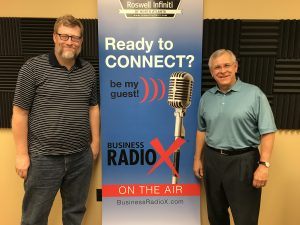
“Decision Vision” Host Mike Blake, and Evan Jarecki, and Cory Hewett with Gimme

Should I Enter a Business Plan Competition?

What’s the value of entering a business plan competition? Should I spend the time and effort necessary to win such a contest? What are the benefits to participating even if I don’t win? Cory Hewett and Evan Jarecki, co-founders of Gimme, answer these questions and more as they are interviewed by “Decision Vision” host Michael Blake.

Cory Hewett and Evan Jarecki, Co-Founders of Gimme

Cory Hewett and Evan Jarecki, Gimme

Cory Hewett and Evan Jarecki are the Co-Founders of Gimme. Gimme won the 2015 TAG Business Launch Competition conducted by the Technology Association of Georgia, Venture Atlanta, and the Metro Atlanta Chamber of Commerce.

Gimme transforms the way companies service micro markets, vending, and grocery by automatically identifying products, their placement, and inventory levels using computer vision verified by humans. Gimme’s software and wireless hardware eliminates errors and manual effort from warehouse staff and route drivers. Gimme empowers Route drivers to focus on delivering amazing customer experiences, and operators to focus on cash accountability, inventory tracking, and machine status data. Gimme’s solutions prevent stockouts, accelerate warehousing and restocking, and streamline product planning. For more information, visit http://www.vending.ai or connect with Gimme on Twitter.

Cory Hewett
Evan Jarecki

Michael Blake, Brady Ware & Company

Mike Blake, Host of “Decision Vision”

Michael Blake is Host of the “Decision Vision” podcast series and a Director of Brady Ware & Company. Mike specializes in the valuation of intellectual property-driven firms, such as software firms, aerospace firms and professional services firms, most frequently in the capacity as a transaction advisor, helping clients obtain great outcomes from complex transaction opportunities. He is also a specialist in the appraisal of intellectual properties as stand-alone assets, such as software, trade secrets, and patents.

Mike has been a full-time business appraiser for 13 years with public accounting firms, boutique business appraisal firms, and an owner of his own firm. Prior to that, he spent 8 years in venture capital and investment banking, including transactions in the U.S., Israel, Russia, Ukraine, and Belarus.

Brady Ware & Company

Brady Ware & Company is a regional full-service accounting and advisory firm which helps businesses and entrepreneurs make visions a reality. Brady Ware services clients nationally from its offices in Alpharetta, GA; Columbus and Dayton, OH; and Richmond, IN. The firm is growth minded, committed to the regions in which they operate, and most importantly, they make significant investments in their people and service offerings to meet the changing financial needs of those they are privileged to serve. The firm is dedicated to providing results that make a difference for its clients.

Decision Vision Podcast Series

“Decision Vision” is a podcast covering topics and issues facing small business owners and connecting them with solutions from leading experts. This series is presented by Brady Ware & Company. If you are a decision maker for a small business, we’d love to hear from you. Contact us at decisionvision@bradyware.com and make sure to listen to every Thursday to the “Decision Vision” podcast. Past episodes of “Decision Vision” can be found here. “Decision Vision” is produced and broadcast by the North Fulton studio of Business RadioX®.

Visit Brady Ware & Company on social media:

LinkedIn:  https://www.linkedin.com/company/brady-ware/

Facebook: https://www.facebook.com/bradywareCPAs/

Twitter: https://twitter.com/BradyWare

Instagram: https://www.instagram.com/bradywarecompany/

Show Transcript

Intro: [00:00:02] Welcome to Decision Vision, a podcast series focusing on critical business decision, brought to you by Brady Ware & Company. Brady Ware a regional, full-service, accounting advisory firm that helps businesses and entrepreneurs make vision a reality.

Michael Blake: [00:00:21] And welcome to Decision Vision, a podcast giving you, the listener, clear vision to make great decisions. In each episode, we discuss the process of decision making on a different topic. Rather than making recommendations because everyone’s circumstances are different, we talk to subject matter experts about how they would recommend thinking about that decision.

Michael Blake: [00:00:39] My name is Mike Blake, and I’m your host for today’s program. I’m a Director at Brady Ware & Company, a full-service accounting firm based in Dayton, Ohio, with offices in Dayton;  Columbus, Ohio; Richmond, Indiana; and Alpharetta, Georgia, which is where we are recording today. Brady Ware is sponsoring this podcast. If you like this podcast, please subscribe on your favorite podcast aggregator and please also consider leaving a review of the podcast as well.

Michael Blake: [00:01:03] Our topic today is Should I Enter a Business Plan Contest? And this topic is is interesting, I think, really on the forefront of the minds of many people who are listening to this program because, if nothing else, the business plan pitch contest, if you will, has been made famous by ABC’s Shark Tank, a show which I still have not seen to this day, by the way. But I’m familiar with what it does.

Michael Blake: [00:01:31] And pretty much, every city with a venture community of any size has some kind of business plan competition in it. And in Georgia, we’ve had a number of them. Some have come and gone. Some have stayed for the long term. And there are national business plan contest as well. Sometimes, alumni groups of universities hold them. I know Georgetown University, my graduate alma mater, has them. Venture firms, sometimes, hold them as a way of generating deal flow. Business incubators often have them.

Michael Blake: [00:02:10] And to do one right, to be a participant, it is a time-consuming exercise. In fact, I’ve been assigned teams when I’ve coached and mentored them through the programs, and we’ll get one or two weeks into the process, and say, “You know what? I don’t have the time to do this. I’m out,” which is perfectly fine. Rather, you do that on week two than a week before you’re supposed to kind of finish the thing.

Michael Blake: [00:02:36] And so, I think it’s a fair question to say, why do you put yourself through that? Because the business plan contest has a fair amount of of time that you have to invest. Typically, a business plan contest sponsor will have a mentoring – excuse me – or training program that leads up to the podcast — I’m sorry, that leads up to the competition itself, where they want to make sure the teams are all prepared. And that requires some time.

Michael Blake: [00:03:04] And then, somewhere along the way, you have a bunch of people that have never met you, that you don’t know who they are. And the public forum, they’re going to ask you tough, invasive questions about your business, right? And it’s fair to say, who needs that? Well, why would I put myself through that? I might as well go on Shark Tank and are willing to do that in front of an audience, television audience of 30 million people, even though we know a lot of that stage is basically WWE for business, but anyway.

Michael Blake: [00:03:34] But I have a couple of people here who have not been through the WWE version. They have been through, at least, one business plan contest. And I had the privilege of being there, of being their coach, and they were successful enough to overcome my coaching and winning that contest, which was the TAG Business Launch Contest back in 2016 or 2017. I’m trying the year. I think it’s 2016 now.

Michael Blake: [00:04:01] And so, joining us are Cory Hewett and Evan Jarecki, who are co-founders of Gimme Vending. Gimme transforms the way companies service micro markets, vending, and grocery by automatically identifying products, their placement and inventory levels using computer vision verified by humans.  software and wireless hardware eliminate errors and manual effort from warehouse staff and root drivers. Gimme empowers route drivers to focus on delivering amazing customer experiences, and operators to focus on cash accountability, inventory tracking, and machine status data. Gimme solutions prevent stock outs, accelerate warehousing and restocking, and streamline product planning. For more information, visit www.vending.ai or connect with Gimme on Twitter, @gimmevend.

Michael Blake: [00:04:52] Cory and Evan both are graduates of Georgia Tech, and both worked at Gulfstream Aerospace before creating Gimme Vending. And maybe we’ll get some of that background in the interview today. But we have some work to do in terms of covering this topic. So, Cory and Evan, thanks for coming on the program.

Cory Hewett: [00:05:08] Hey, thank you, Mike. And good to see you again.

Evan Jarecki: [00:05:10] Thanks, Mike.

Michael Blake: [00:05:10] So you are looking well, and you’ve had some pretty good success since we last worked together closely. And I’m very happy for you. So, let’s go back to sort of what I think was was something of a turning point for you guys, but I don’t want to put words in your mouth. Talk about the business planning contest you won, sort of a high level. What was it? And why did you decide that you wanted to take part in it?

Evan Jarecki: [00:05:36] So, back when we were getting involved with just starting the business, we were trying to get more involved with the Atlantic community and learn what were ways that Gimme could continue to get exposure and who can we meet through that process. And the Technology Association of Georgia was one of those places that seemed like they were everywhere. The BusinessX — the business lunch competition.

Michael Blake: [00:06:06] That’s a good idea. BusinessX is going to do a lot of contests.

Evan Jarecki: [00:06:08] BusinessX contest, there you go.

Cory Hewett: [00:06:09] Business RadioX Launch Competition.

Evan Jarecki: [00:06:11] There we go.

Michael Blake: [00:06:11] So, if you want to have a business lunch competition through Business RadioX, just an email to info@businessradiox.com We’ll get right on that.

Evan Jarecki: [00:06:19] That’s right. No. It was when we decided to go for this competition, the business launch, we made it our total team effort. This was everything for us when we first got involved with the opportunity.

Cory Hewett: [00:06:36] Well, it’s certainly attractive to consider working on the business competition because it came with a quarter million dollars worth of prize money and services. $50,000 and nondilutive cash, that’s important to a startup that’s just getting off the ground. And then, another $200,000 in products and services that we’d be able to use to benefit the business as well.

Cory Hewett: [00:06:55] And like you mentioned before, we had to balance that against this idea that if we want to have a real business, at the end of the day, these types of things won’t give you a business. Great products, great customers, focusing on those two things is what build a business. The business competition, though, maybe gives you the fuel in the car to take you to where you need to go or, at least, maybe get you there a little quicker. So, the idea of cash, the idea of services, and the idea of credibility and some exposure within the Atlantic community, that could be very, very valuable.

Cory Hewett: [00:07:25] So, like Evan said, once we decided that we’re going to do it, we went all in that we were going to focus and put everything into it to maximize our probability of success to winning the competition.

Michael Blake: [00:07:37] So, get in, I forget how many companies. I think, at the outset, there are something like 30 companies. At what point did you start to think you might win? Or did you think you would win day one?

Cory Hewett: [00:07:52] I don’t think we thought we were going to win day one.

Evan Jarecki: [00:07:54] Right.

Cory Hewett: [00:07:54] We knew that we’re going to try really hard to become a winner in the program, but there were a lot of rounds. So, I remember the first round, Evan and I hadn’t really done an elevator pitch before or had to go on stage to pitch our business, but the one time when we were leaving Georgia Tech, and we pitched it to the community there. So, we hadn’t done it in a televised, or WWE setting, or even in front of just an audience of people that didn’t include, at least, a couple of friendlies.

Cory Hewett: [00:08:18] And so, the first round was a couple hundred businesses. And it was more of an informal dinner meet and greet where we had to talk to different investors and judges who were there. You had to go find them. They would write down how you were doing. And if you made an impression, they wrote your name down after you just gave them the cocktail hour elevator pitch of the business. Then, you got to make it past that 300-round to maybe the top 30 round.

Michael Blake: [00:08:42] I didn’t know that. That is wild.

Evan Jarecki: [00:08:43] Yes, it was a speed-dating around. Yeah.

Michael Blake: [00:08:45] That is wild.

Evan Jarecki: [00:08:46] A couple hundred.

Cory Hewett: [00:08:46] So, the couple of days leading up to it, and even in the car driving over there, I remember in the car driving over there, we took what we had written. We’re like, “It’s all wrong. We have to redo it. Let’s redo our elevator pitch.” And getting there and talking to judges. And you asked, did we know that we’re going to win? Our answer to that is no, but we tried hard.

Cory Hewett: [00:09:06] And it wasn’t until that very last night, that very final round, we still had no idea. It was all this effort for not or is it going to turn into something? And I remember the moment where we had made it to the top two, and it was me and Stanley Vergilis of another great company called Hux, and we came out there with a lot of theatrics. We had worked with the art department at the SCAD studio where we were presenting. We had sound. We had rented this very expensive high motion camera to capture our competitor’s product exploding. So, that happened on stage. We showed that big screen video of the product exploding. We came out high energy, high theater, and did the best possible pitch that we could while we were there. And Stanley came out with a very different approach.

Evan Jarecki: [00:09:55] Complete opposite.

Cory Hewett: [00:09:56] Complete opposite. And his performance was so strong that as soon as I left the stage and saw his, I felt good about what we had done. It was the best job we could do. But then, when I saw his and the radically different approach, up until the moment that they unveiled the check to say who won, it was not clear.

Evan Jarecki: [00:10:13] Right.

Michael Blake: [00:10:14] So, let let me follow up on that experience, even though it’s not in our script. But in the final four, you may remember, another company had gone on, and they had banked on video, and it failed.

Cory Hewett: [00:10:27] It failed.

Michael Blake: [00:10:27] Do remember that?

Cory Hewett: [00:10:28] The live.

Michael Blake: [00:10:28] Did that make you at all nervous about what was going to happen with you guys, or were you so tight, you didn’t even think of it. You just knew it’s going to work?

Cory Hewett: [00:10:36] No, we knew it was a risk. Another mentor of ours warned us, you never do live demos.

Evan Jarecki: [00:10:42] Yeah, I think it was through the coaching and the practice that had us try to maximize for a more guaranteed success with the presentation style. And so, that was one of those pieces, avoiding it.

Michael Blake: [00:10:54] And I think that’s a good lesson, though, is that mentors and coaches are just that, right. They’re not your boss. They’re not your mom. They’re not your board of directors. At the end of the day, it’s your company, right. And if you’re going to take a risk, you’re going to take a risk. And look, especially at that time, you’re in a risky business as a startup, right. So, I can see from a certain perspective, look, we’re already here, man. We’re already here. We’re already living with risk on a day-to-day basis. Why are we going to stop now, right?

Cory Hewett: [00:11:27] Right.

Evan Jarecki: [00:11:27] Yeah.

Michael Blake: [00:11:27] Is that as a fair way to kind of characterize it?

Evan Jarecki: [00:11:29] Oh, yeah.

Cory Hewett: [00:11:29] I think it’s a risk/reward thing. We knew that there was going to be risk. The more things that we introduce that we didn’t have total control over, like we avoided a live demo that relied on cellular connection because those can go down, and since we violated that rule, and it’s burned us. So, it’s a rule for a reason. If you rely on cellular and you do live demo, it could go poorly. So, we had made sure that everything that we were showing was, at least, local.

Cory Hewett: [00:11:52] And the reward for us is if it played correctly, and we tested it before in the theater to make sure that it would, but we knew that if we got it to play correctly, that the value that it would generate for the audience would hopefully help them get that emotional feeling of what we are trying to do in our space. And maybe it’s helpful for the audience.

Cory Hewett: [00:12:09] Before we got involved, the technology in our space was really, really old. And the people who were forced to use it had so much pent-up frustration that when they got to watch the competitor’s product explode, you could see them light up. And maybe, if we were back in the horse and buggy days, and you hated your buggy after a while, you got to watch it just get set on fire and replace with the car. You’d be like, “This is great.” And we knew that if we could create that emotional response for our audience, our customers, and if that appealed to the judges as well, then we thought it would be worth the risk of maybe the chance of a tech error.

Cory Hewett: [00:12:43] And I feel terrible for the guy that that tried to do the live demo, and it didn’t work for him, because, you know, they’re kind of like us. They’re working hard to make it work, and nobody wants their demo not to work.

Michael Blake: [00:12:56] And they were doing well up until that absolute up until that.

Evan Jarecki: [00:12:59] Absolutely.

Michael Blake: [00:12:59] Up until that point, right. They’re a very strong competitor.

Cory Hewett: [00:13:01] Yes.

Michael Blake: [00:13:03] Yeah. And that emotional component, I think, is really important on two levels. It is tried and true. It reminds me of the Macintosh commercial from years, and years, and years ago where they smashed a PC in the middle of a commercial, right. And the whole Macintosh value proposition was the PC is just designed to frustrate you, right, and the Macintosh is not right. But everybody wanted to take a sledgehammer to their PC. Every single person, except for maybe somebody working at Microsoft wanted to do that. And I think you sort of captured on that.

Michael Blake: [00:13:40] And then second, it seems to me, and tell me if you think I’m wrong, you can only educate an audience so much about your business, right. And preventing stock-outs and vending machines and, now, at the retail level, it’s a great business, right. But it’s not the kind of thing that you go to the Thanksgiving table and everybody gets all fired up. That’s not like you’ve paid the college-

Evan Jarecki: [00:14:00] Hey, Cory, how’s that inventory on the [crosstalk] going?

Michael Blake: [00:14:02] That’s right. You’re not making call of duty, right?

Cory Hewett: [00:14:04] Right, right.

Michael Blake: [00:14:06] But if you can connect on that emotional level, everybody gets it. And you don’t even have to be in the business. If you’ve just ever been frustrated by technology, or laser printing in work, your Wi-Fi crapped out, you get it, right. I think that’s what really helped.

Cory Hewett: [00:14:21] I think that one other special component that was — I think our secret sauce to the presentation was probably bringing a customer onstage. This was something a little bit later in the practicing and the presentation style where we actually were able to include our first customer as a part of the presentation midway through the numerous stages. But along the way, that set us apart and, we think, had led to some of the success and the understanding from the audience that this is a real opportunity. And this customer has helped us understand exactly what Gimme does.

Michael Blake: [00:15:01] I think that was very dramatic. I don’t think I’ve ever seen that done in a pitch before. And in the minds of those judges, whenever they’re looking at those companies, “Okay, it’s great what technology they have, Is there actually a market for it?” And the fact that you brought the market with you on the stage, I think, that won it for you frankly. I mean, the video was great, and I think that got you to the top two, But the customer, they’re saying, “Yeah, I’m buying this. It’s going to save my business,” how do you sort of say no to that? And I’m sure the other competitors are like, “We should have done that.” They look at their coaches like, “Why didn’t you tell us to do that?” So, other than that kind of the speed dating part, what part surprised you about the process, if anything?

Evan Jarecki: [00:15:54] I think the biggest surprise were the different changes that needed to be made throughout each round. Round one was speed dating with 300 companies. Very quick pitches. No presentation. Just you verbalizing it. Round two was a an eight-minute pitch. I think, it was.

Cory Hewett: [00:16:16] Eight minutes right before St. Patrick’s Day.

Evan Jarecki: [00:16:18] Right before — on St. Patrick’s Day, I think it was.

Cory Hewett: [00:16:20] On St. Patrick, that’s right. We were working that.

Evan Jarecki: [00:16:22] Yeah, exactly. That was an eight-minute pitch. And there was an audience involvement in that one. And then, it moved to a 20-minute pitch. And that was where we brought in the customer. And that was in front of the theater in the auditorium. And then, from there was the final four, which was a three-minute solo CEO/Founder pitch. It was changing and preparing for each of those, that was a big surprise for us, not just one.

Cory Hewett: [00:16:50] Each one was different.

Evan Jarecki: [00:16:51] Each was different.

Cory Hewett: [00:16:52] You had to make it through the screening round of each one. So, it required so much creativity.

Evan Jarecki: [00:16:56] Right.

Cory Hewett: [00:16:56] You couldn’t just use the same presentation. “Oh, we’ll just dress it up or make some tweaks.” It was brand new every single time to appeal to a different — within a different environment, different audience, different levels of theater and energy. At least, in our case, bring the customer on stage.

Evan Jarecki: [00:17:12] Right.

Cory Hewett: [00:17:12] So, each one required its own set of problem solving. The other thing that surprised me, not just the rounds, was, if you will, a little bit of the stress and the time consumption. So, we knew, with your help, you’re like, “Hey, I’d rather you quit right away than at the end,” I think we got the same advice back then too, “because this is going to be really tough.” So, we knew it’s going to be tough and time consuming. And when we got into it, it was tough and time consuming, and it still is a surprise how much we are spending in time.

Cory Hewett: [00:17:40] And then the stress, I remember the eight-minute on the St. Patrick’s Day. It stuck out to me because I got up there to start speaking, and young in your career with public speaking, I made it up to the stage. My tongue got so dry. I couldn’t form words. I’m just trying to make noises with this stick of sandpaper in my mouth, and I’m watching the timer go down. Just physically, I lacked the ability to speak properly and just trying to force my way through it.

Cory Hewett: [00:18:06] So, the stress was just a little bit surprising. And I think that you’ll get that on your entrepreneurship journey. No matter who you are or what the circumstances, you’ll go through that too. But that was a bit of a surprise.

Michael Blake: [00:18:19] Okay. And is there a part that you thought was the hardest to address? Was it the stress? Was that the hardest part, or the time you had to put in, or was there something else that stood out as a challenge of being a participant in something like this?

Evan Jarecki: [00:18:33] Well, I think Cory had mentioned this in the beginning was the focus of, as a business owner, putting everything into your customers and your product. And because of the time consumption, it was highly distracting towards being able to focus on product and on customers because there were days that would go by where the entire day was spent preparing for the next presentation, or just creating the slide deck, or whatever it might have been, and that can distract from the main goal. And sometimes, it would just be challenging to say that the purpose, why we’re in this competition is for customers, is for the business, and just kind of reassuring that. Even though you may not be developing or making that very next feature in the moment, that serves a very important purpose. So, just making sure that balance was maintained between both throughout the time.

Michael Blake: [00:19:28] I want to stop and highlight that because I think that’s very important and very instructive that if you walk into this process thinking that’s going to, kind of, be the side gig that you spend a couple hours a week, you’re not going to be very successful. You’ll probably be eliminated in the first round, certainly, and are unlikely to win.

Michael Blake: [00:19:47] And I didn’t realize, as you really took the perspective, this was not a side gig. This is part of executing your business, right. And the fact that you are willing to hold days off from the “core operations” of your business to pursue that exercise, I did not know that. And I think that if you’re listening to this, and you’re thinking about being in this kind of program, and you have designs of being successful, are you in a position to make that kind of commitment? Because if you aren’t, maybe this isn’t the right time to do it. So I think that’s a very important bullet.

Cory Hewett: [00:20:26] And that’s okay to do too.

Evan Jarecki: [00:20:28] Right.

Cory Hewett: [00:20:28] Through that exercise, we’ve become pretty selective-

Evan Jarecki: [00:20:31] Yes.

Cory Hewett: [00:20:31] … in what we choose to do because we can lose the competition and win at the business. But winning at the competition does not necessarily guarantee, in any way, that you’re going to win a business.

Evan Jarecki: [00:20:44] Right.

Cory Hewett: [00:20:44] So, you have to focus on the business first. And if you do take a day, or two days, or three days off for the competition, you have to keep in mind it’s, in many ways, a vanity. It doesn’t change your core business, it won’t make your customers happier necessarily, and your product won’t be any more mature, or better tested, or better evolved at the end of the process.

Michael Blake: [00:21:02] But you had a goal of starting to build a network and starting to get your name out there, right.

Evan Jarecki: [00:21:08] Exactly.

Michael Blake: [00:21:08] I think that was part of the justification that — I mean, yeah, you also want the money and the prize. We’ll get to that in a second, but you’re students at Georgia Tech at the time or recently graduated?

Evan Jarecki: [00:21:19] Myself, recently graduated.

Michael Blake: [00:21:24] Okay.

Cory Hewett: [00:21:24] Yeah, I appreciate the intro at the beginning, but I actually left with a couple of classes left my senior year to found this company.

Michael Blake: [00:21:30] I didn’t know that.

Cory Hewett: [00:21:31] So, I’m not a graduate of Georgia Tech.

Michael Blake: [00:21:32] The secret is out.

Cory Hewett: [00:21:33] I’m a, yeah, senior year drop out of Georgia Tech that left to pursue this. I went full time.

Michael Blake: [00:21:39] Well, you’re like a bunch of other loser dropouts like Mark Zuckerberg and Bill Gates. So, what did they ever do, right? Yeah, I’m sure they’ll be happy to have you back at your leisure. So, talk-

Cory Hewett: [00:21:54] You’re bringing up what — we had just left Georgia Tech, and with the value going to be that we could get more credibility in addition to the cash and services. And the answer was we had to be somewhat calculative. And we knew that as very junior members of the entrepreneurship community in Atlanta, we’d have to be willing to spend a little bit more time to get that exposure.

Cory Hewett: [00:22:15] And we knew that we were going to have to raise. We’re a company that has smart software, as well as hardware. So, we knew that raising money, fundraising would be on the horizon. And actually, the investment and the time within the pitch could be recycled just in benefiting the education to young entrepreneurs, and all the materials and presentations we’re preparing for these pitches could be recycled in the future outside of the competition as well. And actually, consolidating it, getting the mentor help, for instance, from you.

Cory Hewett: [00:22:44] And one of the things that you did that really helped us out was when you brought together that Shark Tank style, other community people-

Michael Blake: [00:22:50] Oh, yeah. I forgot about that

Evan Jarecki: [00:22:52] Right.

Cory Hewett: [00:22:52] I remember that so well because it gave us that raw, critical feedback that mom, and dad, and friends, and even people that you know in the community may not be willing to tell you, “That’s a terrible side. Oh, no, that I didn’t understand you at all. I would never invest in you.” I mean, you need that feedback. And you helped give it to us. So we were able to make the decision, not just hopefully we win some money, but even — we set out to do our best to win, but we knew even if we didn’t, we could recycle that effort and turn it into something positive for the business down the road.

Michael Blake: [00:23:25] I forgot about that. Even at that point, we’ve been working together for, I don’t know, about 10 weeks or so.

Cory Hewett: [00:23:30] Right.

Evan Jarecki: [00:23:31] Right.

Michael Blake: [00:23:31] And by that time, as a mentor, I’m starting to drink the Kool-Aid, which means that my ability to be that effective sounding board on myself was starting to become impaired, frankly. So, that probably is a good lesson that if you’re in a program and your, and your mentor isn’t setting that up, set that up for yourself, right, because.

Cory Hewett: [00:23:52] If your mentor is too nice, that’s a problem.

Michael Blake: [00:23:54] It can be, it can be. So, you received cash, and services, and prizes. I’ve heard people sort of kind of thumb their nose at $50,000 in cash, but 50 grand for a startup, actually, you can get a lot done with that.

Evan Jarecki: [00:24:10] Right.

Cory Hewett: [00:24:11] That actually really helped to one of our first full-time employee hires.

Michael Blake: [00:24:15] Really?

Cory Hewett: [00:24:15] We talked with contractors and part time. But you bring on that first FTE, you want to make sure that you don’t have a couple of weeks of salary in the bank. You want a couple months that you can play this.

Michael Blake: [00:24:24] You’re not laying off in three weeks.

Cory Hewett: [00:24:26] Right. “You’re hired. Oh, just kidding.” This is-

Michael Blake: [00:24:29] Thanks for everything. There’ll be no severance.

Cory Hewett: [00:24:30] So, the $50,000 cash made a difference to us because we are bootstrapping as hard as we could. As young entrepreneurs at the very beginning of their journey, you’re hustling, and you’re putting everything together that you can. And to bring that first person on board full time, that’s the difference it made for us, along with a couple other things.

Cory Hewett: [00:24:51] So, that’s what we saw in our mind. If we win this, we can earmark the funds to grow the team. And I don’t know if I’m skipping ahead on how you wanted us to talk about it.

Michael Blake: [00:25:02] Go ahead. Keep going.

Cory Hewett: [00:25:02] I’m speaking on chronologically, but that was a big moment for us. We did win the competition. That was a proud moment. And then, we immediately put up our first job ad for a full-time employee and and brought them on. And that was another huge victory. And that really helped the product and the customers. And so, it turned into something really positive for us.

Michael Blake: [00:25:26] And on the other side, you also won some services. I’ve always kind of wondered how much do the winners actually take advantage of the services? I think my firm offered business valuation, and somebody is offering legal services, accounting services, I don’t know, manicures, mani and ped. I have no idea. Did you find yourself taking advantage of those?

Cory Hewett: [00:25:48] We printed out that Excel spreadsheet, and we went down the list, and we contacted every single one, and we are going to extract 100% of the value that we could out of it.

Evan Jarecki: [00:25:57] Right.

Cory Hewett: [00:25:57] And it actually turned into some pretty neat relationships that we still have today. At the time, you were working for HA&W.

Michael Blake: [00:26:04] Yeah, Arpio now. Yeah.

Cory Hewett: [00:26:04] Right. We now continue to work with Aprio.

Michael Blake: [00:26:08] Good.

Cory Hewett: [00:26:08] We were able to work with a PR team called the Carabiner.

Evan Jarecki: [00:26:13] Yeah, we worked with Carabiner still to this day. And that was where we had been introduced to them was from the business launch competition.

Michael Blake: [00:26:20] So, you’re working with them. I’ll go ahead and give them some free ads. I’m a big fan of Peter Baron’s and Carabiner, so.

Cory Hewett: [00:26:25] So, we love working with them. And we wouldn’t have had that relationship without them participating and giving their services. And we were able to spread out the dollar amount, so it lasted us about a year of being able to work with Peter and his team to benefit the company. I mean, Evan, you’re still working with our account rep there pretty much daily, right?

Evan Jarecki: [00:26:45] Yeah. In a week-to-week basis, but participating in some of the things that we plan for on the day to day. Like most recently, one of the biggest events that we’ve done was a livestream product launch. This is something that Carabiner was heavily involved in and actually participated in person for some of the event planning. So, the introduction has been extremely valuable to the growth of our team and of our product.

Cory Hewett: [00:27:16] One of the services that really stood out was with the management psychology group and-

Michael Blake: [00:27:20] No kidding.

Cory Hewett: [00:27:21] Yeah. And it’s exactly what it sounds like. Evan and I probably wouldn’t have chosen to do this if we had to pay cash out of pocket to do this, but having gone through the experience, now, I see that there’s a lot of value in this, especially if you’re head hunting for a founder level role or an executive level role.

Cory Hewett: [00:27:37] But it was a two-day process, two half days where Evan and I went in, and they tested all parts of our psychology. They had quizzes for intelligence, et cetera, et cetera, to try to see how people would work together. And I don’t think we would have done it because we already knew — Evan and I already knew we worked well together because we were great together.

Cory Hewett: [00:27:55] But we went through the process, and it was so fascinating to have a broken down for why that was. And when we got the results back of this management psychology test, Evan and I at the core groups, the big categories, were highly, highly similar. But when they broke it down to the subgroups, the reason why and the little things that make people unique, he and I were extremely dissimilar.

Cory Hewett: [00:28:19] So, it was like we shared common big goals, but we had lots of compliments where I was weak, he was strong; where he was strong, I was weak. And it played really nicely to to see how that worked out. And we wouldn’t have got that either without the services. And that’s just an example to me that stands out. I still remember it today, like, “How do you work so well with Evan?” Like, ” Actually, it’s fascinating. I have a diagram that shows that.”

Evan Jarecki: [00:28:42] We kept it [crosstalk].

Michael Blake: [00:28:43] Those are my strengths.

Evan Jarecki: [00:28:43] And they’re really neat. I mean, yeah, it was very in-depth and something we’ve kept, and I think it hold — I mean the exact same thing holds true to this day. It’s very interesting. And, yeah, it was fun experience.

Michael Blake: [00:28:59] It’s weird how sometimes topics come together. Right after this one, we’re going to be recording a podcast about executive leadership basically from another kind of industrial psychology company. I may kind of bring that up with them and see kind of what their view is on those kinds of approaches. One thing that also struck me about when you guys won, you both have family there to think, right?

Evan Jarecki: [00:29:24] Yeah.

Cory Hewett: [00:29:25] Yes, yes.

Evan Jarecki: [00:29:25] And both the public pitches we had family.

Michael Blake: [00:29:28] You did, okay. And I’ve never asked you this question. It’s a little off topic. So, if you don’t want to answer, we’ll edit it out. But was there a sense of kind of validation? I don’t know if you have entrepreneurial families or not. If you don’t, sometimes, they’re kind of looking weary. You’ve got this great education. Why aren’t you going and getting a job? You’re Gulfstream. You could have had a great career there, six figures, right?  Was there any kind of validation, maybe, to family members that were worried about the risk you took that this is sort of an external validation that you guys are going to be okay and really onto something? Or am I playing Dr. Phil, and I should knock in the psychology business?

Cory Hewett: [00:30:15] I don’t know if Evan would share this necessarily.

Evan Jarecki: [00:30:19] Yeah.

Cory Hewett: [00:30:19] So, I hope you don’t mind if I do.

Evan Jarecki: [00:30:21] Yeah, yeah, go for it.

Cory Hewett: [00:30:21] But Evan did have the job lined up when he was graduating. So, he’d already accepted the job offer from Gulfstream. He had already selected his apartment. He was ready to go make that transition in his life when we started talking about Gimme. And my pitch to him is, “Hey. we should work a hundred a week. And we can’t pay each other any number of dollars probably the first year or so. And it would involve you not going down to Savannah, and you’d have to quit your job that you haven’t started yet. And maybe make sure that your parents are comfortable leaving you on health insurance and stuff a little longer. How does that sound?” And-

Michael Blake: [00:30:56] I guess it sounded all right.

Evan Jarecki: [00:30:58] Well, I think the way I describe it is that it unlocked a — I had some sort of limiter on where I thought a career — what I thought a career meant. And I don’t think I had ever considered entrepreneurship as a career path until there was an opportunity presented to me and, actually, think about what that could mean. And so, it just totally removed the limiter and said, “There is no reason not to take this opportunity,” is what it became. So, I just had to put the pieces together to make it work.

Cory Hewett: [00:31:31] So, I remember when Evan told me, “Yeah, I talked to my parents about it. They’re a little concerned, but they’re supportive. And they’re really good people. So, they were supportive, but I could tell that mom’s eyes got real big when she’s like, ‘Oh, he’s he’s quitting the Gulfstream job that he hasn’t started yet.'”

Michael Blake: [00:31:46] That’s nice.

Cory Hewett: [00:31:47] “What’s the new salary?”

Evan Jarecki: [00:31:48] “What’s the plan here?”

Cory Hewett: [00:31:48] “Oh, it’s nothing.” “Oh, good luck.” And she’s

Evan Jarecki: [00:31:53] Right, not another job that pays you. No, it was totally different.

Cory Hewett: [00:31:57] So, I remember for them, they were in the audience when we made it through that first round. And I don’t know, the look on their face. And my parents were there too, and I think they were proud. But I know for your parents, that was a first entrepreneurship, big endeavor that you’ve done, the big first external validation.

Evan Jarecki: [00:32:14] Yes, yes.

Cory Hewett: [00:32:15] You could just see the pride, and you could see a lot more confidence. Like, “Wow! Our son is not just ‘trying to be an entrepreneur’ but people believe in him too.” And the next thing happened on that final round, we didn’t just invite mom and dad. We invited grandma, grandpa. And then, we also invited a couple of our customers and a couple of the other people that have been rooting us along along the way. Evan, I know you took a valet job at the very beginning of Gimme-

Evan Jarecki: [00:32:41] Yes.

Cory Hewett: [00:32:41] … to pay the bills while we’re making the company work. Did you invite one of your top valet customers there, too?

Evan Jarecki: [00:32:47] Yeah, yeah. That may have been my first — actually, that experience is a big failure that turned into a really happy valet customer, if you will. I didn’t own. I just worked for the valet company, but there was an experience we had with just a car parking situation where I was able to diffuse the whole situation. I caused it, and I diffused it, and it became a really happy repeat customer. And they actually got involved with what we were working on at Gimme, and they participated in the TAG, the business lunch competition as well. So, we brought in, yeah, people from kind of everywhere during the first year’s journey.

Michael Blake: [00:33:30] I remember that. You had a lot of fans in that room. And when you won, it looked like kind of the end credits of, sort of, Family Feud. I mean, they swarmed the stage. And I thought they put you up on their shoulders. But it was great to see. Have you done anything like that since? Have you been in any other contests, or did you just retire after one championship?

Cory Hewett: [00:33:53] Quite like that. No, we haven’t been in any multi-round pitch kind of situations quite like that.

Evan Jarecki: [00:34:00] That’s true. That’s true.

Cory Hewett: [00:34:00] And most of it had to do with we extracted a lot of the value that we could. And like we mentioned, a lot of it was getting in front of the right people, in addition to cash and services, getting a name for ourselves in the Atlanta community. And thankfully, it helped us do that. So, now, I don’t know if the reward for doing that again would be as profound or pronounced for us. But we have competed in a couple other competitions since like-

Evan Jarecki: [00:34:22] Actually, the TAG Business Launch unlocked many opportunities in the area. We were invited to Venture Atlanta, one of the largest now that we’ve seen and participated in. And actually, it speaks to — this kicked off and falls in right in line with us as one of our core values. The number one is fiercely driven to win.

Cory Hewett: [00:34:49] That’s our top core value in the team.

Evan Jarecki: [00:34:51] That’s our top core value. And it’s related to customers, and it’s related to making sure that we are working for them. But it also does speak to the competitive nature of applying ourselves in these areas. So, we do participate in other contests and competitions. Recently, we won Best B2B Startup in Atlanta. There would be-

Cory Hewett: [00:35:14] We had a number of good competitors in that category.

Evan Jarecki: [00:35:15] [Crosstalk] is in that one. So. we’ve won, and we’ve lost, but we do participate. And when we do, we like to do a good job.

Cory Hewett: [00:35:25] I remember one of the ones that we lost actually right after the TAG Business Launch competition, we were kind of on a high feeling of, “Wow! If we set our minds to it-”

Evan Jarecki: [00:35:35] Like, how big can we take this thing? Where can we go with it?

Cory Hewett: [00:35:37] And our very next big thing that we applied for was actually the first season of Apples TV show called Planet of the Apps-

Evan Jarecki: [00:35:43] Right.

Cory Hewett: [00:35:44] … where they were going to look at software startup founders and how their journey is going. And we made it past the first round. And then, they unceremoniously dropped us and let us know that we didn’t make it past the second round. And so, yeah, we’re trying and failing. But we try to be selective, so that we continue to keep our top focus on products and customers. But like Evan said, we’ve just recently been named Atlanta’s Best B2B Startup. We were named recently as well to Atlanta’s 50 on Fire. We’re proud of that accomplishment. That was just a couple of weeks ago.

Cory Hewett: [00:36:15] Within the industry, our team as a whole has been named Pros to Know. And some of the individuals have been named, individually, the Pro to Know on separate years as well. Each one of our products, and we have three now, each one of our products has been named the number one product in vending the years that it has been released. So, we’re super proud of that as well. So, yeah, we’re trying, sometimes failing, but we’re continuing to try and apply that fiercely driven to win mentality.

Michael Blake: [00:36:43] Well, these are harder to win. It’s not like a basketball game. It’s more like a golf tournament, right. Basketball game, you have one opponent. That’s it, right. But you have to be in the field, right.

Evan Jarecki: [00:36:54] Right.

Michael Blake: [00:36:55] Even Tiger was in his heyday, right, only one 20% of his tournaments, right. And arguably the best that ever played. So, I think you’re doing all right.

Evan Jarecki: [00:37:07] Thank you.

Michael Blake: [00:37:07] I think you’re doing just fine. So, since the competition, tell us the story now. How are you guys doing? You, obviously, want a lot of awards award. You’re expanding. You guys able to pay yourselves now? You’re not [crosstalk]-

Cory Hewett: [00:37:23] I’m not at all free anymore.

Evan Jarecki: [00:37:25] Right.

Michael Blake: [00:37:25] You’re not working for free anymore. Good, good. You have the most up to date max, I assume.

Cory Hewett: [00:37:29] Yeah, we do. The tool kit we actually advertise as part of our recruiting tool, everyone gets a brand new Apple products to be able to get their job done well. So, yeah, we’re expanding. We have about 20 people on the team now. We’ve got great offices. This year, we’ve just added 401(k) to our suite of benefits.

Michael Blake: [00:37:50] Wow. Yeah, you’re really growing up.

Cory Hewett: [00:37:52] And I think that we have a team culture that has attracted serious top players. So, we’re really proud of that accomplishment. I know that maybe people don’t speak to those metrics first, but a team of people that we have to work with now is just incredible. When you work at, if you will, alone, and then you hire that first one, if you can surround yourself with other people who are willing to match that and just put in so much effort to help the business succeed, it’s something special. It’s a different feeling than when you first started the company. So, that would be my top metric of success is the team right now is just crushing it. And we’re so proud of them.

Cory Hewett: [00:38:27] Outside of the team as well, we’ve seen our products and services grow. We started with the one. We talked about, we exploded our competitors product. That’s how we started. That was one product. But now, we’ve seen it expand from just a field service tool to — you mentioned it at the very beginning. Now, we’re managing the products and their inventories for the entire warehouse, the schedules of the people that service. Our software has expanded.

Cory Hewett: [00:38:53] And then, earlier this year, we announced that we could handle not only an entire warehouse of inventory and field services, but we could do that through computer vision and a neural network training. And to see that start to take off has opened up our customer base from just vending operators to, now, vending operators, micro market operators, and people who deliver to grocery stores. And for the first time, that means that, now, some of our customers are publicly traded, and we’re just thrilled at the growth that we’ve seen even as recently as this year that’s taken us to a new level.

Michael Blake: [00:39:31] So, I’m curious, to get to that point, have you raised any outside money? Are you still just self-funded?

Cory Hewett: [00:39:37] We did raise money. After the TAG Business Launch competition, we raised an angel round. We’re able to include David Cummings and John Lally, which were introductions that were either directly or indirectly helped, actually, from the competition. That’s where we raised our first half million. And since then, we’ve added a couple other institutional and larger people on our cap table as well. So, today, we’ve raised just over $2 million. And then, we have our sightline to a couple more exciting things in the near future.

Michael Blake: [00:40:08] Very good. So, I promise I won’t keep you here too long. So I’m going to wrap it up. But if people are kind of thinking about getting into a competition of their own, they want to know if they should do it, or get some advice, can they contact you guys?

Evan Jarecki: [00:40:23] Yeah, absolutely. Best way to reach out to us is, first, through our website, www.vending.ai, and go to our team page there. You’ll see Cory and my own, our bios and profiles. And you can get connected with us there. We’ve actually love participating in the Atlantic community, especially as mentors, and volunteers, and programs we’ve been a part of in the past. And then, look, of course, for any individuals, one on one. Cory will give anyone’s slide presentation good judging, that’s for sure. And it’s worth it. Trust him with that one. He’s got a knack for it, so.

Michael Blake: [00:41:02] All right. Well, that’s going to wrap it up for today’s program. I’d like to thank Evan Jarecki and Cory Hewett of Gimme Vending so much for joining us and sharing their expertise with us.

Cory Hewett: [00:41:12] Thank you, Mike.

Evan Jarecki: [00:41:12] Thank you.

Michael Blake: [00:41:12] We’ll be exploring a new topic each week. So, please tune in so that when you’re faced with your next business decision, you have clear vision when making it. If you enjoy this podcast, please consider leaving a review through your favorite podcast aggregator. It helps people find us so that we can help them. Once again, this is Mike Blake. Our sponsor’s Brady Ware & Company. And this has been the Decision Vision Podcast.
Tagged With: Cory Hewett, Dayton accounting, Dayton business advisory, Dayton CPA, Dayton CPA firm, early stage startups, Evan Jarecki, Georgia Tech, Gimme, Gimme Vending, in-kind services, Metro Atlanta Chamber of Commerce, Michael Blake, Mike Blake, pitch competition, pitch contest, startup company, startup competition, startups, Technology Association of Georgia, Venture Atlanta

Decision Vision Episode 16: Should I locate my business in an incubator or accelerator? – An Interview with Sanjay Parekh, Prototype Prime

May 23, 2019 by John Ray

Decision Vision
Decision Vision
Decision Vision Episode 16: Should I locate my business in an incubator or accelerator? – An Interview with Sanjay Parekh, Prototype Prime
Loading
00:00 /
RSS Feed
Share
Link
Embed

Download file

Michael Blake, Host of “Decision Vision,” and Sanjay Parekh, co-founder of Prototype Prime

Should I locate my business in an incubator or accelerator?

What’s the difference between an incubator and an accelerator? Should I locate my business in an incubator? What are the factors I should consider? On this episode of “Decision Vision,” Host Michael Blake speaks with Sanjay Parekh, co-founder of Prototype Prime, on these questions and more.

Sanjay Parekh, Prototype Prime

Sanjay Parekh, Prototype Prime

Sanjay Parekh is a co-founder of Prototype Prime. Prototype Prime is a 501(c)3 non-profit hardware & software startup incubator. Their mission is to provide startup companies with the support they need to launch and scale. Funded by the City of Peachtree Corners. Prototype Prime is a regional affiliate of the Advanced Technology Development Center (ATDC) at Georgia Tech, and is located just 30 minutes north of Atlanta.

Sanjay Sanjay a co-founder of Prototype Prime, a non-profit incubator and a serial technology entrepreneur. In addition to co-founding Prototype Prime, Sanjay is a co-founder of MailMosh, a startup focused on making email a better experience. He is also the co-host of Tech Talk Y’all, a self-proclaimed tech comedy podcast.

Previously Sanjay launched Startup Riot, a conference for startups which pioneered the three minute, four slide presentation format. Prior to founding Startup Riot, Sanjay was the founding CEO of Digital Envoy and the inventor of the company’s patented NetAcuity IP intelligence technology. At Digital Envoy, Sanjay led the company to raise $12 million in angel and venture funding. Digital Envoy was acquired by Landmark Communications in June 2007.

Sanjay holds an electrical engineering degree from the Georgia Institute of Technology and an MBA from Emory University’s Goizueta Business School.

Michael Blake, Brady Ware & Company

Mike Blake, Host of “Decision Vision”

Michael Blake is Host of the “Decision Vision” podcast series and a Director of Brady Ware & Company. Mike specializes in the valuation of intellectual property-driven firms, such as software firms, aerospace firms and professional services firms, most frequently in the capacity as a transaction advisor, helping clients obtain great outcomes from complex transaction opportunities. He is also a specialist in the appraisal of intellectual properties as stand-alone assets, such as software, trade secrets, and patents.

Mike has been a full-time business appraiser for 13 years with public accounting firms, boutique business appraisal firms, and an owner of his own firm. Prior to that, he spent 8 years in venture capital and investment banking, including transactions in the U.S., Israel, Russia, Ukraine, and Belarus.

Brady Ware & Company

Brady Ware & Company is a regional full-service accounting and advisory firm which helps businesses and entrepreneurs make visions a reality. Brady Ware services clients nationally from its offices in Alpharetta, GA; Columbus and Dayton, OH; and Richmond, IN. The firm is growth minded, committed to the regions in which they operate, and most importantly, they make significant investments in their people and service offerings to meet the changing financial needs of those they are privileged to serve. The firm is dedicated to providing results that make a difference for its clients.

Decision Vision Podcast Series

“Decision Vision” is a podcast covering topics and issues facing small business owners and connecting them with solutions from leading experts. This series is presented by Brady Ware & Company. If you are a decision maker for a small business, we’d love to hear from you. Contact us at decisionvision@bradyware.com and make sure to listen to every Thursday to the “Decision Vision” podcast. Past episodes of “Decision Vision” can be found here. “Decision Vision” is produced and broadcast by Business RadioX®.

Visit Brady Ware & Company on social media:

LinkedIn:  https://www.linkedin.com/company/brady-ware/

Facebook: https://www.facebook.com/bradywareCPAs/

Twitter: https://twitter.com/BradyWare

Instagram: https://www.instagram.com/bradywarecompany/

Show Transcript

Intro: [00:00:01] Welcome to Decision Vision, a podcast series focusing on critical business decisions, brought to you by Brady Ware & Company. Brady Ware is a regional, full-service, accounting and advisory firm that helps businesses and entrepreneurs make vision a reality.

Michael Blake: [00:00:20] And welcome back to another episode of Decision Vision, a podcast giving you, the listener, clear vision to make great decisions. In each episode, we discuss the process of decision making on a different topic. Rather than making recommendations because everyone’s circumstances are different, we talk to subject matter experts about how they would recommend thinking about that decision.

Michael Blake: [00:00:37] My name is Mike Blake, and I am your host for today’s program. I am a Director at Brady Ware & Company, a full-service accounting firm based in Dayton, Ohio, with offices in Dayton; Columbus, Ohio; Richmond, Indiana; and Alpharetta, Georgia, which is where we are recording today. Brady Ware is sponsoring this podcast. If you like this podcast, please subscribe on your favorite podcast aggregator, and please also consider leaving a review of the podcast as well.

Michael Blake: [00:01:03] So, today’s topic is about co-working spaces, accelerators, incubators, and there are probably three or four other names for these kinds of places that I’m not even familiar with yet. I can’t speak for the rest of the country, but they have popped up like dandelions all over Atlanta in the last five years. And even in my hometown of Chamblee that has, I think, a population of about 30,000 people, we have, at least, two co-working spaces, accelerators, of which I’m aware. And I happen to be a member of one of them. It’s a nice place to kind of hang out. It’s at the airport, and a place we’re allowed to have meetings. They do a good job.

Michael Blake: [00:01:42] But for the most, it’s very likely that if you can listen to this podcast, there is a co-working space, an accelerator, an incubator near you. And you might be kind of wondering, does it make sense for me to be in one of these places? What’s it all about? Why are they generating the interest and the buzz they are? Why are some of my competitors there? Why are a lot of startups there? And is it right for me, whether I’m a startup or a more mature company?8

Michael Blake: [00:02:11] And today, we are joined by my pal, Sanjay Parekh, who is one of the true OGs of the startup community here in the Atlanta area. Unlike me, who’s basically been one of the world’s ugliest cheerleaders for about 12 years or so, he has actually started companies, had exits, ran a very important organization called Startup Riot about the same time as we were doing Startup Lounge. And I’m proudly wearing one of the Startup Riot T-shirts here today. And Sanjay has been about as active as anybody for as long as anybody in the startup community.

Michael Blake: [00:02:50] And one of the hats that he is wearing at this point is he is co-founder of Prototype Prime. He is a serial technology entrepreneur. He’s currently founder of MailMosh, a startup focused on making e-mail a better experience. And maybe we’ll get some information about that. As I mentioned before, he’s co-founder of the startup — not really so much a startup anymore, but an accelerator – I guess. Sanjay will probably correct me – called Prototype Prime that is in the northern Atlanta Metro area, about three miles north of where I live.

Michael Blake: [00:03:21] He’s also the co-host of his own podcast called Tech Talk Y’all, a podcast covering technology with a Southern flair. And if you haven’t, I listened to a couple of episodes. If you’re into technology, and you want to understand the local, sort of, southern, the Southeastern startup scene, because it is different from other places in the country, you really ought to give it a listen.

Michael Blake: [00:03:41] Previously, Sanjay launched Startup Riot, a conference for startups, which pioneered the three-minute, four-slide presentation format. And that was an extremely important event. I think they got up to hundreds of attendees and was eventually holding these things downtown. And the thing I loved about it was that Sanjay was not afraid to use the vaudeville hook either. If you went 301, you are done. And think about pitches that if they drag, man, they are tedious. And Sanjay made sure that didn’t happen.

Michael Blake: [00:04:12] Prior to founding Startup Riot, he founded Founder Fables, an off-the-record conference for founders. He was also the founding CEO of a company called Digital Envoy, and the inventor of the company’s patented NetAcuity IP intelligence technology. At Digital Envoy, Sanjay led the company to raise $12 million in angel and venture funding. Digital Envoy was acquired by Landmark Communications in June 2007.

Michael Blake: [00:04:36] He holds an Electrical Engineering degree from Georgia Tech and an MBA from Emory University’s Goizueta Business School. And weren’t you on also one of those special European study grants? Was it called the MacArthur grant? I’m trying to remember.

Sanjay Parekh: [00:04:50] No. It was actually the Marshall Memorial Fellowship.

Michael Blake: [00:04:52] That’s what it is, okay.

Sanjay Parekh: [00:04:53] Yeah, yeah. So, that was in ’04, and it was a month-long trip. It’s a fantastic trip. They take Americans to Europe for a month, and Europeans come to the US for a month. And, really, it’s about building better transatlantic relations between. It’s really, kind of, a gift back to us. It’s from the German Marshall Fund of the United States. It’s a gift back to us from the people and government of Germany for the help that we gave them during the Marshall Plan post-World War 2.

Michael Blake: [00:05:17] I wonder if that program’s still going on today?

Sanjay Parekh: [00:05:20] It is, yeah.

Michael Blake: [00:05:21] Okay.

Sanjay Parekh: [00:05:21] And it’s still a pretty strong program because it’s an important thing. I think between Europeans and Americans, we need to understand each other better.

Michael Blake: [00:05:28] More than ever today, right?

Sanjay Parekh: [00:05:30] Yeah. And you realize as you travel that Europeans are different, right? You’ve got the Eastern European, versus Western, versus Southern. It’s all very different in their mentality. I had a very different experience based on the places I went to.

Michael Blake: [00:05:44] Yeah. As you know, I lived in Eastern Europe for a number of years.

Sanjay Parekh: [00:05:47] Yeah.

Michael Blake: [00:05:47] And that kind of experience does change you, I think.

Sanjay Parekh: [00:05:51] Yeah, absolutely.

Michael Blake: [00:05:52] And for me, that kind of experience led me to look at kind of what is the other person thinking.

Sanjay Parekh: [00:05:59] Right.

Michael Blake: [00:05:59] Not just sort of have my mouth open, which is what I normally would have done before I went over there. But instead, what is the other person’s viewpoint. And the best way to do that is to actually kind of be in that room, right.

Sanjay Parekh: [00:06:10] Right, exactly. And be receptive to the feedback and their perspective of what you’re doing. Like, we got railed on. I mean, if you can imagine 2004, and the things that we were doing, and what was going on in the world, we got kind of blamed for a bunch of stuff that we didn’t necessarily agree with, and because our country and our government was doing those things. And so, it was hard.

Michael Blake: [00:06:30] Yeah.

Sanjay Parekh: [00:06:30] I will say when we went to Poland, that was a nice respite from all of that because those Poles, they love us.

Michael Blake: [00:06:37] They do. They do. I’ve been to Poland a little bit. And you’re absolutely right. They roll out the red carpet.

Sanjay Parekh: [00:06:42] That is a great country for Americans. I really love my time there.

Michael Blake: [00:06:47] So, let’s jump in. So, we were talking, and I was talking in the intro about this advent of co-working, and accelerators, and incubators. And so, Prototype Prime was not the first in by any stretch of the imagination.

Sanjay Parekh: [00:07:05] Absolutely not, yeah.

Michael Blake: [00:07:05] So, you saw all these other co-working spaces, all these other — I’m just going to call them spaces because it just takes too long to go slash, slash, slash.

Sanjay Parekh: [00:07:15] Right.

Michael Blake: [00:07:16] Right. All these spaces, what made you think that we needed frankly another one? What’s the differentiator? What was the market need?

Sanjay Parekh: [00:07:23] Yeah. Well, so, for me, I definitely saw a need on the northern arc of Atlanta. There’s a lot of stuff going on inside the city, inside the perimeter, but not as much around the kind of northern arc. But honestly, I was not really looking to start one of these. I was on a panel that ATDC was doing probably about three years ago now.

Michael Blake: [00:07:43] That’s the Advanced Technology Development Center at Georgia Tech.

Sanjay Parekh: [00:07:46] Right. And our mutual friend, Jen Bennett, was running it then. She was GM. And they’d been asked by the City of Peachtree Corners to come up and do a panel to, kind of, figure out the appetite of doing an incubator there. And Jen was like, “I know you live up that way. Would you mind doing this?” And as most things, when somebody asks me to come and speak, I’m always happy to do it, with the caveat that they should know that, look, I’m going to tell you things that you’re probably not going to agree with or be happy about me saying, but it’s because that’s what I believe. You don’t have to listen to what I say. You don’t have to do what I have to say. It’s just that’s what I believe.

Sanjay Parekh: [00:08:21] And so, I did exactly that on this panel. And then, afterwards — and I laid it out. I told them like, “These are the things that are wrong here, and these are the things that you need to fix to make this all work.” The mayor’s wife, Debbie Mason, came up to me and said, “I love what you had to say. Let me introduce you to the Mayor.” Introduced to Mike Mason, who is still currently the mayor of Peachtree Corners. And we started this series of breakfast, and it was really just me unloading on him all the ideas that I had that he should go do.

Michael Blake: [00:08:48] That sounds like your dream conversation.

Sanjay Parekh: [00:08:50] Absolutely. Like, “Let me tell you everything you should do, and I’m not going to do any of it. You execute it, and I’m going to just cheer from the sidelines.” But by the end of that, he was basically going, he’s like, “Well, obviously, I want you.” And it wasn’t obvious to me. “Obviously, I want you to come in, and help with this thing, and help start it up.” And so, I actually have never told him yes. I told him no a bunch. I even went to his house and told him no because I was busy at Georgia Tech at that point. And somehow, still, I ended up managing to be involved with this thing and helping found it.

Sanjay Parekh: [00:09:21] So, that’s how that whole thing happened. And I’ll tell you, it’s been a great experience. The city — it’s a non-profit. Prototype Prime is a nonprofit, standalone. The city funds it. So, funds the budget every year. And they let me do a lot of crazy things. I believe a few things strongly about Atlanta that we’ve got great art, great music, great film, great startups, great corporates, great non-profits, but these things don’t talk to one another.

Sanjay Parekh: [00:09:44] And I think that’s a challenge in almost every city out there where you have got these great silos of stuff, but they don’t cross-pollinate. And so, if anybody is out there in another city, if you’re thinking about what you can do better for your city, it’s trying to figure out ways for that to happen, that cross-pollination happen.

Sanjay Parekh: [00:10:00] So, one of the things that I did is I engaged with Atlanta artist to come and do artwork on the walls, right. So, when we started, it was a depressing building. It was white walls everywhere, very echoey, nobody was there. And now, there’s a lot of artwork. People walk in and they feel the energy. They feel the vibe of the place. And it’s been great for us. That’s not the right answer for every place, but it was the right answer for us.

Michael Blake: [00:10:23] So, when you were telling the mayor of Prototype Prime and-

Sanjay Parekh: [00:10:28] Peachtree Corners.

Michael Blake: [00:10:30] Sorry, Peachtree Corners, what they needed to fix what, were some of the top three or four things you thought needed to be fixed and done differently?

Sanjay Parekh: [00:10:39] Yeah. One of my top things was, and still is, is transportation. So, we’re in Gwinnett County. We have MARTA. The closest MARTA stop is Doraville, which is maybe a 10 or 12-minute ride.

Michael Blake: [00:10:52] It’s closer to me in Chamblee than it is to you in Peachtree Corners.

Sanjay Parekh: [00:10:55] Right, exactly. Now here’s the thing. So, there is a Gwinnett County bus, that is in Tech Park, that will take you to Marta. So, I said it’s a 10 to 12-minute ride by car. It will take you over an hour on that bus.

Michael Blake: [00:11:07] And you just had a referendum, unfortunately, on joining MARTA. And it was surprisingly strongly defeated actually.

Sanjay Parekh: [00:11:15] Yeah. There’s a lot of discussion about that, and why that happened, and the timing of it, and all these kinds of things but-

Michael Blake: [00:11:20] Read the editorials in ajc.com for that.

Sanjay Parekh: [00:11:23] Right, exactly. But I think that will eventually change down the line because the makeup of Gwinnett County is changing. And it’s the largest county in the Metro area, and there’s so many jobs, there’s so many people commuting in and out of that county that if we’re going to actually fix and address the transportation issues across Metro Atlanta, it’s got to involve Gwinnett County and be a part of that puzzle.

Sanjay Parekh: [00:11:42] So, that was one of the major things that I told them that needs to be it. But the other parts were we’re really kind of being engaged with the startups and really helping out in a lot of stuff. So, one of the things that I asked them to do is something that passed in the City of Atlanta where we did this thing, or the City of Atlanta did this thing where the business licenses for early stage startups are waived for the first couple of years. And so, that’s an ordinance in the City of Atlanta.

Sanjay Parekh: [00:12:11] I think it’s absolutely great. I think all of the cities and municipalities in Metro Atlanta should pass the same exact thing. I asked the Mayor and the City Council of Peachtree Corners to pass that. They basically took the text of the City of Atlanta ordinance and passed it as well.

Sanjay Parekh: [00:12:24] So, that was one of those things like, okay, I understand you’re going to do this, and you’re going to put money behind it, but you’ve got to show more of that support than just, “Hey, we set up this thing, start companies, and have them be here,” right. It’s got to be that whole messaging. And a couple hundred dollars a year is really not going to change the calculus of a startup failing or succeeding, but it sends the message.

Sanjay Parekh: [00:12:46] And so, right along with that, having City Council folks and the Mayor in the space, around the space, just around, even if they’re not meeting with teams, it’s important because it sends that message that this is something that they care about, and this is something that they support.

Michael Blake: [00:13:01] Now, you mentioned the geography. And geography is important everywhere. But Atlanta has a strange geography. There’s this emotional barrier of our Ring Road 285.

Sanjay Parekh: [00:13:11] Right.

Michael Blake: [00:13:11] You feel like you need a passport to kind of cross over. I sold my company and joined a firm that’s up in Alpharetta. So, I live inside the perimeter now. I occasionally commute outside the perimeter. And the thing you don’t realize until you do it, and you probably do know this, I’m sure you know this, is that it’s actually very different communities. Like if I go to startup events in Buckhead, Midtown, the usual suspects, you know most of the people in the room.

Sanjay Parekh: [00:13:39] Yeah.

Michael Blake: [00:13:39] Alpharetta, I know two people in a room full of a hundred. And until you do that, you don’t realize how different those communities are, and how important that geographic segmentation is.

Sanjay Parekh: [00:13:51] Yeah. And that kind of goes back to that same idea of we need these things to cross-pollinate, right. As a metro city, we’re not going to continue to improve our startup community unless those communities are cross-pollinating, right. I mean, we should be able to go into an event in Alpharetta or wherever and know more than two people. That’s not good.

Michael Blake: [00:14:12] Yeah. And yeah, that’s right. So, you’re trying to fix this a little bit now with Prototype Prime. Other than the geographic location and the message you’re trying to send, what are some of the other differentiating features in your mind?

Sanjay Parekh: [00:14:26] Yeah. So, number one, it’s a nonprofit. So, my view on this was this is not something that is associated with me as a name. This is something that I’m building to be a long-term asset in the community. So, I often talk about as of this year, the 81-year plan. How do we get to the year 2100 with what we’re doing right now? I don’t really care about the next couple of years. I really care about Prototype Prime being around at the turn of the next century and still helping people.

Sanjay Parekh: [00:14:57] So, that is my focus. I have a concern about other facilities in and around town, and even across the US that are these for-profit places. I don’t really know that they’re going to be around at the turn of the next century. Is Prototype Prime going to be? I don’t know. I hope so. That’s what we’ve been building for. And that’s the message that I keep sending that we’re focused on the year 2100. So, we’re trying to make decisions that are based on the long-term, not on the short-term with the space.

Michael Blake: [00:15:25] And how do those kinds of decisions differ? How would a decision maybe you’re faced with, if you’re thinking of a five-year horizon versus a 2100 horizon, what’s the difference?

Sanjay Parekh: [00:15:38] Yeah. So, I think part of it is being a nonprofit. That builds in that idea that this is going to pass from hand to hand. It’s not going to start with a founder. And then, when they’re tired of it, it’s going to shut down. This is definitely going to live on.

Sanjay Parekh: [00:15:51] The other part of it is some of the moves that we’ve made. So, recently, we got granted $1.8 million by the Federal Government to buy the building that we’re in. We were leasing it from a landlord, which was not the city. We, now, own that building completely. So, 25,000 square feet owned by the organization. So, it has a home. It’s not going to go away from that home, or maybe down the road, it well when it sells that building and moves into another building.

Sanjay Parekh: [00:16:15] Alongside of that, we’ve been forging these partnerships. So, we’re building this advanced autonomous test track. So, a vehicle test track, 1.4-mile loop inside of Tech Park, where vehicle companies can come and test out their vehicles on this dedicated track that is dedicated, but it still interacts with the public. So, there’s that interaction. Alongside of that, Sprint is coming in and doing a 5G deployment inside of Tech Park, starting from our building. So, it’s called Curiosity Lab. And that’s an opportunity for this next stage of startups to be able to use next-generation communication technologies.

Sanjay Parekh: [00:16:50] So, it’s trying to build in all of these things that really create an excitement. And the fact that we’re in Tech Park, which used to be the hotbed of telecom, kind of, innovation in Atlanta that’s kind of gone away, but we’re trying to bring it all back. So, it’s not just telecom. It’s a bunch of other things. It’s vehicles, it’s software startups, it’s all of these things. And hopefully, they’ll graduate from our place, and then move close by, and so we can still be involved with them.

Michael Blake: [00:17:15] So, a common theme that I can hear from, at least, the Sprint and the car track exercise is that those are prototyping resources.

Sanjay Parekh: [00:17:23] Yeah. Essentially, yeah.

Michael Blake: [00:17:24] What do you know, Prototype Prime, prototyping resource.

Sanjay Parekh: [00:17:27] Right, Prime being the first place that you do your prototype, right. That’s your call.

Michael Blake: [00:17:30] Is that deliberate? Are there other prototyping resources as well, maker spaces, things of that nature?

Sanjay Parekh: [00:17:35] Yeah, exactly. So, we’re one of only two spaces – the other one being a TDC in Atlanta – that has a design and development lab. So, we’ve got a lab. We’ve got a handful of teams that use that lab. One of them has grown tremendously with us. Trellis started with two people. They’re now, I think, 16. And they build all their products in our lab. So, we’ve got 3D printers. We’ve got soldering stations. I mean, you name it, we’ve got it.

Michael Blake: [00:18:01] So, I want to come back to this 2100 description because I think that’s fascinating. So, I’m going off script a little bit. The typical space model is you help a company for some period of time.

Sanjay Parekh: [00:18:19] Yeah.

Michael Blake: [00:18:20] And then they “graduate”, right?

Sanjay Parekh: [00:18:22] Right.

Michael Blake: [00:18:22] You slash encourage them to leave, kick them out, whatever.

Sanjay Parekh: [00:18:25] Yeah, yeah.

Michael Blake: [00:18:27] Is the fact that you’re, kind of, designed for longevity from day one, does that mean that that part of the model changes too, or maybe you’d love it if a company stayed there for 10 years?

Sanjay Parekh: [00:18:37] Yeah. So, no. We don’t want companies to stay there for long term.

Michael Blake: [00:18:41] Okay.

Sanjay Parekh: [00:18:41] Really, the goal is to help them early, early stage when they’re just fledgling companies, get them to the point where they’re starting to scale. So, our three tag lines are dream it, build it, scale it. That’s what we help entrepreneurs do. So, dream it when they’re just starting out, figuring out what to do. Build it when they’re starting to build their company, and then when they’re starting to scale. But as they start to scale, that’s the time for them to get pushed out.

Michael Blake: [00:19:01] Okay.

Sanjay Parekh: [00:19:02] So, we actually had one team, that was our second team in. So, Trellis was our first team in, grew from two people to 16 now. Our second team in site grew from a single founder to, now, I think, it’s about 18 or 20 people. And they were actually getting to the size where I was starting to talk to them about it’s going to be time to leave soon. And the founder said, “Yeah, we’re not going to leave.” And I said, “”No, no. I’m not kidding. I’m serious that you guys are just getting too big.” And this was only when we had the downstairs. And so, they said, “No. We like it here too much. We don’t want to leave.”

Sanjay Parekh: [00:19:35] And so, with the upstairs, City Hall used to upstairs, and they left, that opened up the possibility for us to take over the upstairs. So, we ended up taking a third of the space upstairs dedicating it to them. And so, we have a different relationship with them now. But I think that was a one-off. I don’t think we’re going to do that again. When they leave in a couple of years, that space is probably going to get reclaimed and be just regular startup space that people are coming in, there for a little while.

Sanjay Parekh: [00:20:01] My plan has always been three to four years, at the most, that we would hold onto a team. We want teams to graduate from us, and then move on to the Atlanta Tech Village, Switch Yard, Flat Iron, Strongbox, Atlanta Tech Park — Park Tech — Tech Park Atlanta. Tech Park Atlanta.

Michael Blake: [00:20:20] Yeah.

Sanjay Parekh: [00:20:20] Yeah. I always get that confused, 22TechPark. Like any of those places. The Alpharetta. Any of those places. We really view ourselves as the early, early stage. And we’re going to help the companies get their feet under them and get going, so that they can graduate to these other places. And the other places don’t have to worry about the viability of those teams. They know that they’re going to come in. They know what they’re doing. They’re going to continue to grow. And they’ll probably, at some point, outgrow those spaces as well. But I think that’s good.

Sanjay Parekh: [00:20:49] And the reason why we view ourselves that way is that, again, to that 2100 view, this was an area that I saw was lacking, and all of those places that I mentioned are run by friends of mine. And I didn’t ever want to compete with friends of mine because we have so many challenges and every city has challenges. Like why try to compete over the same things over and over again. Figure out something new and something different. And that’s what we decided to do with Prototype Prime.

Michael Blake: [00:21:16] In that respect, it’s like Startup Riot and Startup Lounge all over again, right?

Sanjay Parekh: [00:21:19] Yeah. No, exactly.

Michael Blake: [00:21:19] We need to be careful that we weren’t marginalizing somebody else inadvertently.

Sanjay Parekh: [00:21:24] Right.

Michael Blake: [00:21:24] Because the goal for both of our organizations was put ourselves out of business-

Sanjay Parekh: [00:21:28] Yeah.

Michael Blake: [00:21:28] … which, thankfully, we did.

Sanjay Parekh: [00:21:29] Yeah. Exactly, yeah.

Michael Blake: [00:21:30] So-

Sanjay Parekh: [00:21:30] Although everybody still keeps telling me that they wish that Startup Riot would come back. And I tell them that that boat has sailed at this point.

Michael Blake: [00:21:37] I have to say the same thing about Startup Lounge.

Sanjay Parekh: [00:21:39] Yeah.

Michael Blake: [00:21:39] But everybody wishes it would come back, but they also wished that I would do it. And that’s not happening.

Sanjay Parekh: [00:21:44] Yeah. I say the same thing. I’m like, “Yeah, if you want to do it, I’m happy to give you all the stuff. I got stickers still. I would cheer you on.”

Michael Blake: [00:21:52] We’ll give you the nuclear launch codes to the website, everything.

Sanjay Parekh: [00:21:55] Exactly.

Michael Blake: [00:21:55] No, man, I got too much stuff going on.

Sanjay Parekh: [00:21:56] No, no, no, I’m too busy. I e-mailed 3000 people saying, “Who wants take it over?”

Michael Blake: [00:22:01] I remember that.

Sanjay Parekh: [00:22:01] Crickets.

Michael Blake: [00:22:03] I remember that. And that’s the evolution of the market.

Sanjay Parekh: [00:22:08] It is. And truth to be told, like you know this as well, events are hard to do. And I don’t blame anybody for not taking it up because it’s a painful exercise, and I don’t wish that on anybody.

Michael Blake: [00:22:19] Yeah. I mean, you got to love it. And neither of us got paid for it either.

Sanjay Parekh: [00:22:24] No, exactly. Yeah. Labor of love for both of them.

Michael Blake: [00:22:26] Definitely. So, where does Prototype Prime fit, in your mind? It doesn’t sound like it’s really co-working space. Is it an accelerator? Is it an incubator? Is it a hybrid? Is it something else? Maybe the distinction is not meaningful. What bucket would you put it into?

Sanjay Parekh: [00:22:45] So, we call ourselves an incubator. So, to me, an incubator is a place that helps companies like this but doesn’t put money in. To me, an accelerator is a place where you have a structured program, as well as money that’s going in as an investment.

Michael Blake: [00:22:59] Okay. So, GT Flashpoint, for example, was an accelerator.

Sanjay Parekh: [00:23:03] That’s an accelerator.

Michael Blake: [00:23:04] Because they had money in the wings kind of for-

Sanjay Parekh: [00:23:05] Absolutely, absolutely.

Michael Blake: [00:23:06] Okay.

Sanjay Parekh: [00:23:06] Yeah. And it might not be money that’s directly from the program, but it might be a side fund, which is what Flashpoint was. And I don’t know if that’s changed now. But Atlanta Tech Village, to me, is more of a co-working space than it is an incubator-

Michael Blake: [00:23:21] I agree.

Sanjay Parekh: [00:23:22] … or an accelerator. So, for us, an incubator is that we’re still pretty heavily involved with teams. So, we’re around, we’re meeting with teams. I was just there yesterday chitchatting with a handful of teams, talking about their problems, giving them ideas, things like that; whereas, in a co-working space you don’t necessarily have that.

Sanjay Parekh: [00:23:39] And all of these though, you do have the serendipity, the casual kind of interaction that ends up happening. You’re running into folks and you might find the aha solution to whatever problem you’ve been struggling with. So, that’s, I think, the benefit of doing any one of these. But as an incubator, I think we’re a little bit different. We don’t have a deadline that says, “You’ve got to get out by then.”

Michael Blake: [00:24:00] Right, okay. So, what kinds of companies do you think incubator — I’ll focus on incubator and accelerators. What kinds of companies you think do best in those kinds of environments?

Sanjay Parekh: [00:24:13] Yeah. So, for an accelerator, they usually have a target kind of market niche that they can help with. So, I would focus on that. Incubators are, often, the same way as well. So, we are a hardware and software incubator. We are not a lifestyle business incubator or anything else like that. So, if you’re starting up dry cleaning stores or barbershop, you should not come to Prototype Prime. We are not going to be able to help you. And it’s not that we don’t love you, it’s just that we don’t have the skills to help in that environment.

Michael Blake: [00:24:38] That’s not your thing.

Sanjay Parekh: [00:24:39] Yeah.

Michael Blake: [00:24:39] You don’t know anything about running a dry cleaning business.

Sanjay Parekh: [00:24:40] No, not at all. I have no idea. I don’t know the issues you’re going to face or anything else like that. Your best to go to a place where you’re served and helped by people that understand your space. So, that’s, I think, number one that you should think about.

Sanjay Parekh: [00:24:55] The other thing is that somebody that’s actually willing to be coachable and listen to feedback. All the feedback is not going to be dead-on accurate. You’ve got to figure out for yourself what’s right and wrong, but you’ve got to be, at least, open and willing to listen to it.

Sanjay Parekh: [00:25:10] And I’ll give you an example. I was interviewing an entrepreneur just not too long ago. So, we screen all the companies coming into Prototype Prime to make sure that, first of all, we’re a good fit for them, that we can help them with the things that they’re working on, but that they are also a good fit for us, that they’re going to be somebody that we want to have in the space, that makes sense, that we’re going to actually be able to help because they’re listening.

Sanjay Parekh: [00:25:31] This particular entrepreneur, I said something, they only had a handful of customers. and I said, “You know what? I think what you need to do is probably go out, and get some more customers first, and drive revenue before you start deciding to build custom products because I don’t know that you necessarily know what your customers want.” Well, this ticked off the entrepreneur, stood up halfway through the meeting. At that point, shook my hand, and said, “Well, thank you very much.” And stormed out of the meeting.

Sanjay Parekh: [00:25:56] That’s not the right personality. Even generally, if you’re gonna be an entrepreneur, you’ve got to have a thick skin. People are going to call your baby ugly. That’s just what it is. And so, you’ve got to have that conviction. You’ve got to have that understanding and that drive to be able to take it, and take that criticism, prove them wrong, but do it in a way that doesn’t burn bridges either. Like that entrepreneur, if he ever asked me for help, I’m going to be like, “Yeah, no.” Because I’m not going to introduce somebody like that to somebody I know and burn the bridge that I might have with them.

Michael Blake: [00:26:26] All right. I got to share this story with you.

Sanjay Parekh: [00:26:30] Yeah.

Michael Blake: [00:26:30] So, as you know, I’ve done office hours for a decade or so.

Sanjay Parekh: [00:26:34] Yeah, absolutely.

Michael Blake: [00:26:34] And years ago, a guy came and wanted my opinion on his business. In fact, I didn’t say it was even a baby, it’s more of like a wombat. I mean, they’re just so far off in left field. And he was upset, got up, left, and didn’t even paid his check. I wanted him to cover his check.

Sanjay Parekh: [00:26:54] Okay.

Michael Blake: [00:26:54] And then, about six months later, I got a handwritten note. And basically, he shut down his business. And he wrote me a note apologizing, had a $20 bill in it, cash, and said, “I’m so sorry. You were the one person who was honest with me. All my friends and family were cheerleading because they thought I was the supportive thing to do. They would have helped me more had they said my baby was really a wombat. And I wouldn’t waste all this time and money.” So, sometimes, you get that sort of delayed gratification, but for people that invest so much, it’s so hard for them to hear that.

Sanjay Parekh: [00:27:33] It is.

Michael Blake: [00:27:35] And maybe the first time somebody has ever said that to them.

Sanjay Parekh: [00:27:37] Right, absolutely. And I always try to be honest with entrepreneurs, and probably just like you, in a nice way.

Michael Blake: [00:27:43] Yeah.

Sanjay Parekh: [00:27:43] Right. We’re not going to do it ruthlessly, but-

Michael Blake: [00:27:46] We don’t go Simon Cowell on them.

Sanjay Parekh: [00:27:47] Exactly. But we try to do it in a way that is helpful to the entrepreneur because I agree with you. And this is why I always ask people when I do presentations or anything else, I want you to tell me what I did wrong. That’s all I care about. I don’t want to know how I did right because, obviously, I tried my best. I wouldn’t have come here and done anything if I wasn’t trying my best. So, I want you to tell me all the wrong things.

Sanjay Parekh: [00:28:10] And I think a lot of times, people need that permission from you to be able to tell you what you did wrong. But that’s generally what I do. That’s did on that panel for Peachtree Corners. I’m going to tell you what I think is wrong, like what you’re going to mess up on, and what you’re messing up on right now because that’s the only way to get better.

Michael Blake: [00:28:28] So, you’ve had a long entrepreneurial journey.

Sanjay Parekh: [00:28:32] I think you just called me old.

Michael Blake: [00:28:34] Nope. You called yourself old. You’ve had a long and storied entrepreneurial journey. And a lot of these places just did not exist back in ’07, ’08, and the ATL

Sanjay Parekh: [00:28:45] Yeah, yeah/

Michael Blake: [00:28:47] How would your journey have been different? Wouldn’t it have been different if there had been things like this available back when you were a pup?

Sanjay Parekh: [00:28:54] Yeah, I think it absolutely would’ve been different. I remember starting my first company. So, I came up with the idea for Digital Envoy in ’99, went full time in 2000. There, basically, was nobody as a mentor for me. There was nobody to learn from. Went to a few events that were technology-oriented around town, but they were basically wall-to-wall service providers just trying to sell me stuff. There was nobody trying to actually help.

Sanjay Parekh: [00:29:19] And so, I think, from kind of the capital of perspective, if there had been places like this, my costs would have been a lot less. I probably could have raised a lot less money, and been a lot more effective. But on the other side of it, I think I could have gotten to a point of solving things and getting the right answers quicker.

Sanjay Parekh: [00:29:39] I’ll give you an example. It’s kind of a minor example, but when we had our first office, me and my two co-founders, we’d never started a company before. This is the first -time starting a company. I was, at this point, 20 — having our first office, 25 years old, 26 years old, something like that. And a guy from the Better Business Bureau came in to sign us to operate. We’re like, “Oh, yeah. We’ll sign.” It was free. So, we’re like, “Yeah, sure. We can do that.” And so, he’s filling out the paperwork right there, and then he asked us – and we’d been in this office for a couple months at this point – “So, yeah. So, where’s your business license?” We’re like, “It must be in the mail. We haven’t got any yet. It’s in the mail. We’ll let you know that once we get it.”

Michael Blake: [00:30:19] Of course, you have business license

Sanjay Parekh: [00:30:21] Yeah. So, that very same day, our CFO ran to the City of Duluth and got our first business license because we didn’t know we needed one. Nobody tells you that. And look, it was a minor issue, even if we’d gotten caught and fined, it probably wouldn’t have been that outrageous. But, still, it’s those little things that just helped you along that process and speed you up in terms of making things happen that had we been in a space like that, we would have just not had to worry about some of those things. We wouldn’t have to worry about which accounting firm are we’re going to go with, or which law firm are we going to go with, or who do we use for X, Y, and Z, or how do we do benefits. Like all of that stuff would’ve been solved, and all that stuff is just the cruft garbage stuff that you have to do in starting a company, but it adds no value. It’s not the thing that you’re around for.

Michael Blake: [00:31:08] It’s like stock options valuations.

Sanjay Parekh: [00:31:09] Yeah. You’ve got to do it, but it doesn’t add any value.

Michael Blake: [00:31:15] No, it does not. I mean, it’s a distraction.

Sanjay Parekh: [00:31:17] It is, absolutely.

Michael Blake: [00:31:19] So, one last question. I know we got to get you out of here. I know you got some other stuff you got to do today, as you always do. But I want to ask you one other question, as a new — I don’t know that it’s a new concept but a new term called a colliding space. Have you heard that term before?

Sanjay Parekh: [00:31:33] I’ve heard that term people talk about. Yeah. Serendipity, collisions, and things like that. I don’t know exactly what a colliding space is and how that’s different from a co-working space, but I think all of us are essentially built for that.

Michael Blake: [00:31:47] Yeah.

Sanjay Parekh: [00:31:47] I was at Prototype Prime yesterday and randomly happened to see – you might know – CBQ, Charles Brian Quinn, with Greenzie, the robotic lawnmowing company.

Michael Blake: [00:31:56] I know of them, but don’t know him.

Sanjay Parekh: [00:31:58] Okay. So, CBQ has been around Atlanta for quite some time, and I was surprised to see him there. He was like, “Oh, yeah, we’re going to be doing some,” because we’ve got the autonomous advanced vehicle stuff. It’s like, “We’re going to be doing some autonomous lawn mowing alongside of all that.” I was like, “That’s kind of cool,” right.

Sanjay Parekh: [00:32:17] And having those random collisions. And then, I saw he was meeting with the Trellis team, which is monitoring water usage for farmers in their crop fields. And so, having those kind of serendipity, kind of collisions happening, I think, that’s a great thing. That’s a great thing for Atlanta. It’s a great thing for any city. And so, if governments are listening to this, anybody that’s in a municipality, if there’s one thing that you want to try to help do is create those collisions between people that are doing innovative stuff because you never know how they might be able to help one another.

Michael Blake: [00:32:49] So, we’re just about out of time, but we, obviously, can have a three-hour conversation on this, and then some. But if somebody wants to ask you a question, maybe follow up, can they reach out to you? And if so, how best can they contact you?

Sanjay Parekh: [00:33:02] Yeah. The best place always, for me, is on Twitter. So, I’m @Sanjay, that’s S-A-N-J-A-Y. I’m pretty responsive on Twitter. You can @ me, and my DMs are open, so you can private message me if it’s something you don’t want to plaster publicly on Twitter.

Michael Blake: [00:33:17] Okay. Well, very good. That’s going to wrap it up for today’s program. I’d like to thank Sanjay so much for joining us and sharing his expertise with us.

Michael Blake: [00:33:25] We’ll be exploring a new topic each week. So, please tune in, so that when you’re faced with your next business decision, you have clear decision when making it. If you enjoyed this podcast, please consider leaving a review through your favorite podcast aggregator. That helps people find us, so that we can help them. Once again, this is Mike Blake. Our sponsor’s Brady Ware & Company. And this has been the Decision Vision podcast.

Tagged With: coworking, Dayton accounting, Dayton business advisory, Dayton CPA, Dayton CPA firm, early stage startups, incubator, Michael Blake, Mike Blake, Non Profit, non-profit incubator, peachtree corners, startup accelerator, startup incubator, startups, Tech Park, Technology, vehicle test track

Business RadioX ® Network


Our Most Recent Episode

CONNECT WITH US

  • Email
  • Facebook
  • LinkedIn
  • Twitter
  • YouTube

Our Mission

We help local business leaders get the word out about the important work they’re doing to serve their market, their community, and their profession.

We support and celebrate business by sharing positive business stories that traditional media ignores. Some media leans left. Some media leans right. We lean business.

Sponsor a Show

Build Relationships and Grow Your Business. Click here for more details.

Partner With Us

Discover More Here

Terms and Conditions
Privacy Policy

Connect with us

Want to keep up with the latest in pro-business news across the network? Follow us on social media for the latest stories!
  • Email
  • Facebook
  • Google+
  • LinkedIn
  • Twitter
  • YouTube

Business RadioX® Headquarters
1000 Abernathy Rd. NE
Building 400, Suite L-10
Sandy Springs, GA 30328

© 2025 Business RadioX ® · Rainmaker Platform

BRXStudioCoversLA

Wait! Don’t Miss an Episode of LA Business Radio

BRXStudioCoversDENVER

Wait! Don’t Miss an Episode of Denver Business Radio

BRXStudioCoversPENSACOLA

Wait! Don’t Miss an Episode of Pensacola Business Radio

BRXStudioCoversBIRMINGHAM

Wait! Don’t Miss an Episode of Birmingham Business Radio

BRXStudioCoversTALLAHASSEE

Wait! Don’t Miss an Episode of Tallahassee Business Radio

BRXStudioCoversRALEIGH

Wait! Don’t Miss an Episode of Raleigh Business Radio

BRXStudioCoversRICHMONDNoWhite

Wait! Don’t Miss an Episode of Richmond Business Radio

BRXStudioCoversNASHVILLENoWhite

Wait! Don’t Miss an Episode of Nashville Business Radio

BRXStudioCoversDETROIT

Wait! Don’t Miss an Episode of Detroit Business Radio

BRXStudioCoversSTLOUIS

Wait! Don’t Miss an Episode of St. Louis Business Radio

BRXStudioCoversCOLUMBUS-small

Wait! Don’t Miss an Episode of Columbus Business Radio

Coachthecoach-08-08

Wait! Don’t Miss an Episode of Coach the Coach

BRXStudioCoversBAYAREA

Wait! Don’t Miss an Episode of Bay Area Business Radio

BRXStudioCoversCHICAGO

Wait! Don’t Miss an Episode of Chicago Business Radio

Wait! Don’t Miss an Episode of Atlanta Business Radio