Business RadioX ®

  • Home
  • Business RadioX ® Communities
    • Southeast
      • Alabama
        • Birmingham
      • Florida
        • Orlando
        • Pensacola
        • South Florida
        • Tampa
        • Tallahassee
      • Georgia
        • Atlanta
        • Cherokee
        • Forsyth
        • Greater Perimeter
        • Gwinnett
        • North Fulton
        • North Georgia
        • Northeast Georgia
        • Rome
        • Savannah
      • Louisiana
        • New Orleans
      • North Carolina
        • Charlotte
        • Raleigh
      • Tennessee
        • Chattanooga
        • Nashville
      • Virginia
        • Richmond
    • South Central
      • Arkansas
        • Northwest Arkansas
    • Midwest
      • Illinois
        • Chicago
      • Michigan
        • Detroit
      • Minnesota
        • Minneapolis St. Paul
      • Missouri
        • St. Louis
      • Ohio
        • Cleveland
        • Columbus
        • Dayton
    • Southwest
      • Arizona
        • Phoenix
        • Tucson
        • Valley
      • Texas
        • Austin
        • Dallas
        • Houston
    • West
      • California
        • Bay Area
        • LA
        • Pasadena
      • Colorado
        • Denver
      • Hawaii
        • Oahu
  • FAQs
  • About Us
    • Our Mission
    • Our Audience
    • Why It Works
    • What People Are Saying
    • BRX in the News
  • Resources
    • BRX Pro Tips
    • B2B Marketing: The 4Rs
    • High Velocity Selling Habits
    • Why Most B2B Media Strategies Fail
    • 9 Reasons To Sponsor A Business RadioX ® Show
  • Partner With Us
  • Veteran Business RadioX ®

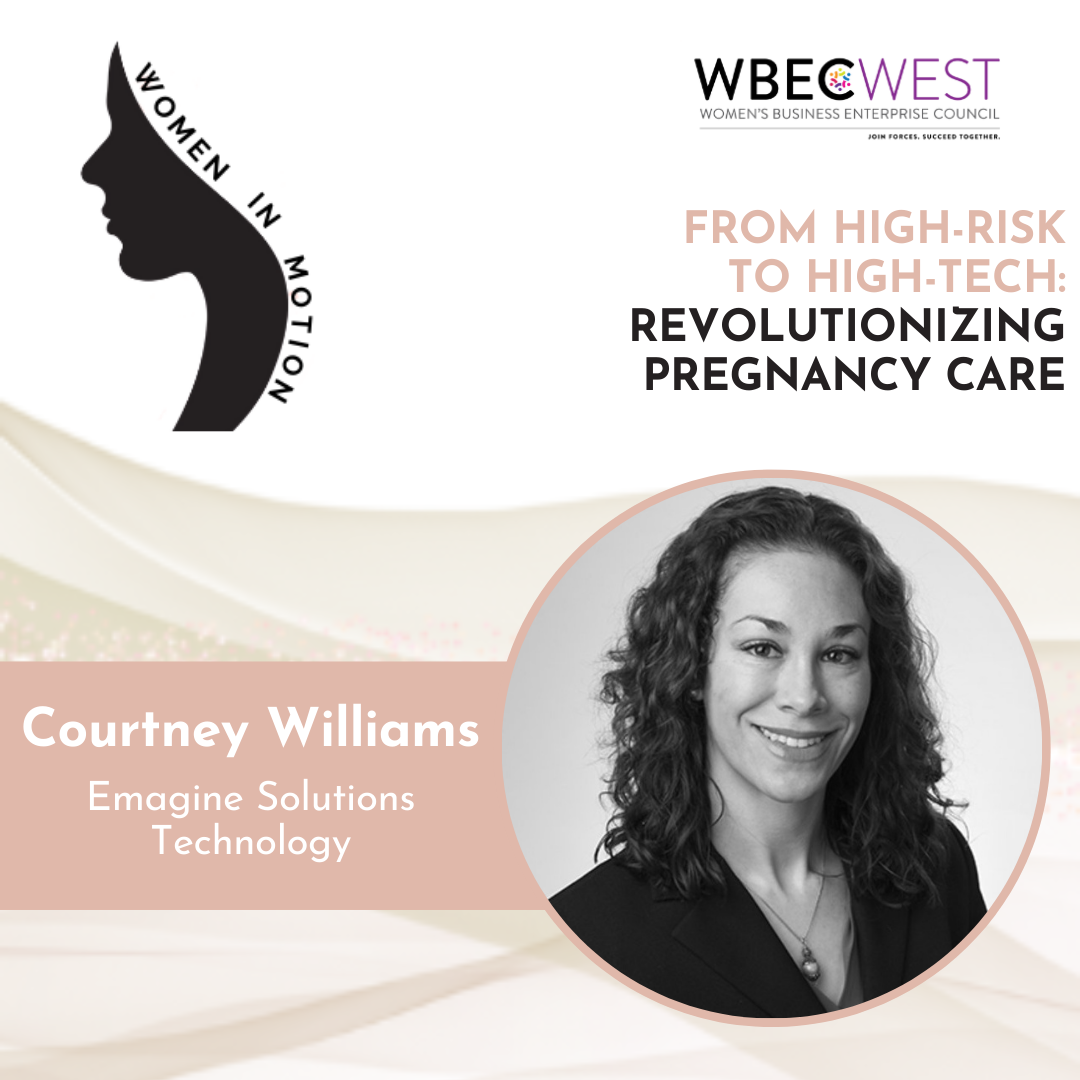
From High-Risk to High-Tech: Revolutionizing Pregnancy Care

December 20, 2024 by angishields

WIM-Emagine-Feature
Women in Motion
From High-Risk to High-Tech: Revolutionizing Pregnancy Care
Loading
00:00 /
RSS Feed
Share
Link
Embed

Download file

In this episode of Women in Motion, Lee Kantor welcomes Courtney Williams, co-founder of Emagine Solutions Technology. Courtney discusses her company’s mission to tackle the U.S. maternal health crisis through innovative technologies. Inspired by personal experiences, including her sister’s difficult pregnancy and her own high-risk pregnancy, Courtney highlights the development of products like “The Journey Pregnancy” app, remote patient monitoring software, and a handheld ultrasound device. The conversation also covers the importance of securing grants, building a strong team, and the challenges of managing a startup while balancing family life.


Emagine-Solutions-Technology-logo

Courtney-WilliamsCourtney Williams is co-founder and CEO of Emagine Solutions Technology. Emagine is tackling the U.S. maternal health crisis with technology to make pregnancy safer, lower cost, and improve outcomes. We’re your companion for a safe pregnancy. Courtney developed her company’s technology after developing preeclampsia in the postpartum period.

Emagine has been awarded the Arizona Innovation Challenge, Flinn Bioscience Entrepreneurship Grant, 2nd Prize in Pharrell Williams’s Black Ambition, and Department of Health and Human Services Postpartum Racial Equity Challenge and Hypertension Innovator awards. Emagine is also a National Science Foundation SBIR Awardee.Emagine-Solutions-Technology-logo

Courtney is a Marketing graduate from University of Arizona and received her MBA from Thunderbird School of Global Management. She has a background in customer analytics in Fortune 500 companies and international business experience in Africa and Latin America.

For five years, she served on the board of Open Windows Foundation in Guatemala, a public health and education organization.

Follow Emagine Solutions Technology on LinkedIn, Facebook, Instagram, X and TicTok.

Music Provided by M PATH MUSIC

Transcript-iconThis transcript is machine transcribed by Sonix


TRANSCRIPT

Intro: Broadcasting live from the Business RadioX Studios, it’s time for Women In Motion. Brought to you by WBEC-West. Join forces. Succeed together. Now, here’s your host.

Lee Kantor: Lee Kantor here, another episode of Women In Motion and this is going to be a good one. But before we get started, it’s important to recognize our sponsor, WBEC-West. Without them, we couldn’t be sharing these important stories. Today on Women In Motion, we have Courtney Williams with Emagine Solutions Technology. Welcome.

Courtney Williams: Thank you so much for having me. It’s great to be with you, Lee.

Lee Kantor: Well, I’m so excited to get caught up with what you got going on. For those who aren’t familiar, can you share a little bit about Emagine Solutions Technology? How are you serving folks?

Courtney Williams: Sure. So, my company is Emagine Solutions Technology as you mentioned, we are on a mission to tackle the U.S. maternal health crisis with technologies to make pregnancy safer, lower cost, and improve outcomes. So, we have a few technologies that we’re working on that all integrate together to make the pregnancy care journey safer for patients and make it easier for providers to take care of them along the way. We have a patient app called the Journey Pregnancy. We have remote patient monitoring software for clinicians. And then, we also have our FDA cleared handheld ultrasound that works on cellphones and tablets.

Lee Kantor: So, what’s your backstory? How’d you get involved in this line of work?

Courtney Williams: So, originally, I got involved in this line of work, I was working a corporate job, and my sister had a really difficult pregnancy, and it really opened my eyes up to the fact that, wow, okay, maternal health can be dangerous, going on a pregnancy journey can actually be a dangerous endeavor, and I didn’t know that before. Luckily, my sister had a great outcome and she and her son are driving today.

Courtney Williams: But, you know, not everybody is so lucky. And the more I dug into this problem, the more sort of obsessed I got with just how the maternal health crisis in the U.S., we’re the most dangerous and expensive place in the developed world to give birth. And as the years go by, it’s actually getting worse. And believe it or not, Arizona – where I am located – is actually the top ten most difficult state in terms of maternal mortality in our nation. And so, being being located here, I wanted to develop technologies to help with this problem.

Lee Kantor: So, your background is in technology, not in kind of maternal care or health?

Courtney Williams: My background is actually in customer analytics. I mean, I worked in customer analytics and finance for Fortune 500 companies when all this started happening. And then, I left the corporate world to sort of start my own business. So, my background is on the business side much more than I’m not a provider at all.

Lee Kantor: So, how did you kind of build the team? Because you needed the technology people, you needed the maternal health care people, how did you kind of weave together the people to build your vision?

Courtney Williams: Absolutely. So, I am fortunate, an avid networker. And I have also a co-founder that he and I founded our company together, and he is the tech expert, so he worked at Google, Roche, Siemens, Philips on the software engineering side. So, I came with all these ideas, like, “Can we do this? Can we build a handheld ultrasound?” And then, we went through the process, found engineers that have this really deep expertise in how to make these ideas come to life.

Courtney Williams: And so, I got together a team and built our advisory board, et cetera, of people that are medical device industry experts as well as on the software side. And I shared my vision with them and they share the same vision, and so together we all have this idea that we want to make maternal health better for patients and for the providers that take care of them. And so, with the shared vision, we’re able to move faster and start developing these products and bring them to market.

Lee Kantor: When there’s such a challenge in the marketplace, how did you prioritize what to attack first?

Courtney Williams: Well, we started with our first technology, which was this handheld ultrasound working on cellphones and tablets because access to radiology can be such a challenge. Something like 50 percent of the world, I think it’s a little more now, I think it’s more like 55 or maybe 60, but no more than that, 60 percent of the world has access to radiology, and we sort of step back and think like, “Oh, my gosh. There are so many communities that are underserved.” And so, initially, when you think of maternal health, one of the first things that you think of is making sure that people have ways to track and and monitor fetal development and growth as a pregnancy journey goes on is an important part of making pregnancy safe, so that was the first technology that we decided to tackle.

Courtney Williams: We interviewed hundreds and hundreds of providers what pain points do they have. I got a National Science Foundation Grant to be able to research the pain points of providers regarding ultrasound. And we developed our solution based on our learnings and then we got our FDA clearance. And then, COVID hit and all of a sudden I was myself in a high risk pregnancy, and I developed preeclampsia in the postpartum period. And I had no way to communicate my condition, my blood pressure, my symptoms, or anything like that with my provider or my care team. And so, that personal experience that I had opened my eyes up to the fact that there is a missing link here between connecting the patient with the provider better. And that was the impetus to start our patient app and our remote patient monitoring technology.

Courtney Williams: And that, to be honest, has really been what’s really been taking off because given this personal experience and then having the experience of working with providers, et cetera, it helped us to develop the technology faster and better because we had built those relationships and we’re able to learn where the pain points were. Does that make sense?

Lee Kantor: Yeah, absolutely. But it’s interesting, the device came first, but it was your pregnancy that really spurred kind of this other side to the coin of working with the patient directly to just get better outcomes with better communication.

Courtney Williams: Absolutely. I don’t know if this is a result of COVID or if this is just how our our med tech industry is trending, but people really want to have more of a role in their healthcare now than they have in years past and in seasons past. And so, having more visibility into our healthcare data and trying to understand the insights so that we can ask better questions of our doctors – because we have so little time with our doctors. The doctors are overworked. They’ve got so many patients. They’ve got their plates full – figuring out how we, as patients, can kind of advocate for ourselves better and have more data going into our doctor’s appointments actually helps our providers. And so, that was one of the things that I learned as a patient. I got to come to my appointments better prepared and ask better questions, because otherwise I’m not going to come away with the knowledge that I need.

Lee Kantor: So, how does your technology help the patient ask better questions and, number one, have access to be able to do that, but also to know what to even ask? Because a lot of patients, you know, they just do what they’re told or they want to avoid the doctor altogether, one or the other, both of which are not great.

Courtney Williams: Right, right. Well, the interesting thing is, with pregnancy, it’s sort of a different setup because for many people going through pregnancy, it’s their first time really dealing with interacting with the medical system, and having to navigate and go to scheduled appointments, et cetera. So, as sort of an entree into the medical system, we, as patients, I’m speaking for myself, we don’t know what we don’t know.

Courtney Williams: So, the way that our app works is, you know, this is a free app and you download it. It’s available on iOS and on Android. And the idea is that in just a few minutes a day, you log and track your maternal health, your pregnancy health, your blood pressure, your blood glucose, your mood, your weight, any number of factors. And then, you have trending data over your pregnancy that you can share with your provider.

Courtney Williams: Why is this important? First, so many apps today that serve pregnant patients are for entertainment, essentially. For example, you’re 30 weeks and your baby is the size of a cantaloupe. That’s great, and that’s entertaining and that’s fun, and that’s helpful to some degree, but it has no way of helping you with your maternal health. And maternal health is the problem that we’re all facing today. There’s a shortage of OB GYNs. The rates of preeclampsia and gestational diabetes, two main complications that can arise, those are going up, 19 percent and 16 percent respectively.

Courtney Williams: And so, the idea here is that this is a tool to give you insights about your health. It gives you a space to log all your questions for your doctor so that you have those ready when you go into your appointment. This is something where you can ask a virtual doula questions on the app, and it will give you immediate answers to any pregnancy, or postpartum, or newborn child rearing question that you might have, that you might not have time to ask your doctor or you might be embarrassed to ask, so these are resources that are available.

Courtney Williams: One more piece here is that you can integrate your Fitbit and/or your blood pressure cuff, if you have a Withings blood pressure cuff. That way, you’re taking your blood pressure and it’ll come right into the app. And if your number is out of the CDC recommended range for pregnancy, it’ll give you an immediate notification, and Say, “Hey, it looks like your numbers are out of range. You should follow up with your doctor.” So, things like preeclampsia, like what happened to me, don’t come up as a surprise to a patient.

Lee Kantor: Right. It seems amazing in today’s time where people have access to a lot more data in real time, that more devices and apps don’t play nicely together to communicate kind of the important things and to help you prioritize this is something to pay attention to. Because when you have data, sometimes the data is overwhelming and you stop seeing it after a while because you see it all the time.

Courtney Williams: Definitely. Yeah. That’s one of the things that, actually, when we’ve been working with the healthcare providers, like doctors, midwives, some of the things that they’ve been saying is – especially doctors – they’re like, “We get alarm fatigue.” If there’s something that’s telling us that there’s something wrong and we get notifications day in and day out that there’s an issue, it kind of leads to you kind of get glazed over, like you were just saying.

Courtney Williams: And so, we built our platform for providers so that they can see their patient’s data in real time, but we’re only letting them know if there’s something really, really urgent that’s happening. And it’s always on the onus of the patient to follow up with their doctor is the way that we have set up our technology to really improve the communication between patient and doctor, and not add more burden to doctors who already kind of don’t have enough time on their plate.

Lee Kantor: So, now, is this up and going? Where are you at in the growth of the business? Is this an ongoing concern or is this an idea that you’ve just launched or are you at a startup? Like, where are you at in your kind of life cycle?

Courtney Williams: Definitely. This is live. Thousands of people have downloaded our app, The Journey Pregnancy, and are using it this year. Right now, we’ve provided hundreds and hundreds of blood pressure alerts to patients whose blood pressure have gone above that recommended range for pregnancy, of that 140 over 90. And that means more patients have been more informed about their risks in pregnancy and have followed up with their doctors. We have a number of different clinics that are already onboard and using this technology with their patients. We’re just getting ready to onboard a new federally qualified health center. And this is something that is actively helping both patients and their providers have safer pregnancies.

Lee Kantor: So, what was it like when you launched and it was live in all of the app stores, and people were downloading it and they’re using it, and you got that first signal where somebody has now just been signaled that something’s up, and then they’re going to react, what was that like for your team to see it actually helping someone?

Courtney Williams: The first sign that we had that was like maybe this is some good product market fit, that magic thing that all startups are looking for was, my husband was at the movies with some friends, and he texted me, he’s like, “Oh, my gosh. You will not believe what happened. I was in the theater and I looked over, and there was somebody on their phone and they were using the app.” And I was just like, all right, wow, that right there shows you that this is something that is helping people. People are finding it. It’s striking a chord in a sense of giving a tool to somebody to be able to manage their pregnancy. So, that was the first sign like, oh, things are starting to click.

Lee Kantor: Now, you mentioned having a robust network and networking is important to you, how was that in terms of getting funding for the startup? Because the venture you’re doing is not something that a lot of people can bootstrap, like this requires a lot of resources.

Courtney Williams: Oh, definitely. Right. So, there’s sort of two different ways to go about building – well, I saw two different ways to go about building this. So, first, we have been bootstrapping for as long as humanly possible. We are extraordinarily careful with how we deploy the capital that we have invested. So, bootstrapping was the first way. But then, you can only get so far with bootstrapping, like you’re indicating, especially for something that’s in digital health where you’re having to deal with regulatory systems or software development. Unless you have the expertise and the specific time to do it, a software development can be a huge cost driver.

Courtney Williams: So, we saw two paths. One, venture funding, and two, non-dilutive capital. And as much as I would have loved to just go right to an angel group and say here’s my ask, here’s how much I need, this is what I want to build, that would have been a great route to start off with, but actually I chose the non-dilutive funding route. So, going after as many grants as possible to fund our innovation. I did that for two reasons, and we continue to be grant funded right now actually.

Courtney Williams: I’ve done this for two reasons, because first, getting grants provides credibility through the organization. We’ve gotten grants through Department of Health and Human Services, through National Science Foundation. And I believe that the credibility and the knowledge that those organizations bring to us is invaluable. And so, that then raises the level of our startup, I do believe.

Courtney Williams: Secondly, we’ve gone after grants and non-dilutive funding because, as I’ve mentioned, we’ve been really, really careful about how we deploy our capital, because when you’re doing digital health, there are all these unexpected surprises that come along the way anytime you have a software project. So, I think that grant reporting is very strenuous and it’s very exacting. And I think that discipline that working with grants brings makes us a more valuable company, and it makes us more frugal in the areas that we need to be frugal. And it helps for the overall longevity of a company like ours that can take some time to take off.

Lee Kantor: Right. And it seems like when you’re working with a grant, it’s almost like an endorsement from them when they give you a grant. So then, you can use that as that social proof you need that we must be onto something, these people have given us a grant for it.

Courtney Williams: Absolutely. Yes, 100 percent. Especially getting federal funding, it’s extraordinarily competitive to get these grants that are called SBIR, Small Business Innovation Research. And we’ve gotten phase one grants through National Science Foundation for SBIR. We’re now in a phase two grant SBIR. And each of these has been an important milestone to validate what we’re doing, so that’s absolutely the case.

Lee Kantor: Now, who is your ideal customer? Are they hospitals or just the general public to download the app? Who do you need more partnerships with?

Courtney Williams: Yes is the answer. Our thesis, really, in growing our company is that we want to partner with as many different entities in the spectrum of maternal health as possible, because no one entity is going to make the U.S. maternal health crisis go away. We’re going to have to partner for this issue to be tackled. So, our first primary focus is on the patients with our patient app, making it accessible to people, making our patient app free, a tool that anybody can use if they so choose.

Courtney Williams: The primary people that use our app are first time pregnant parents as well as those with a risk profile. So, somebody like me, for example, I know I have predisposition to preeclampsia and hypertension and pregnancy. This is the app. I’ve used my own app in my own pregnancy to be able to monitor my health. So, somebody like that.

Courtney Williams: Secondarily, also, our target is innovative OB-GYNs and healthcare providers that want to have more visibility into how their patient’s health is between visits. And so, our technology is enabling those doctors to see between these visits, how their patient’s blood pressure is, how their mood is, what symptoms they’re experiencing, et cetera. So, those are the main focuses.

Courtney Williams: Down the line, we hope to make more connections with hospitals and more integrated delivery networks, and eventually the insurance folks that provide the payer plans. But that’s down the road. And right now, we’re really just focusing on serving patients the best that we can to have them feel safe in their pregnancies.

Lee Kantor: Now, why was it important for you to become part of the WBEC-West community? What did you hope to get out of it and what have you gotten out of it?

Courtney Williams: So, first of all, going through the certification process is, I think, an important activity and an important milestone for any verified business. The rigor of getting certified, I think, is a great exercise for leveling up your business. And these were all steps that we needed to do anytime we apply for a federal grant is to to go through something similar to the certification process. So, we’ve already been through this sort of rigor, I would say, for the startup and we’re ready for this.

Courtney Williams: And we serve women and their families, and an organization that certifies women in their businesses so that they can have access to more opportunities, there’s a lot of alignment there. There are a lot of businesses that see the value of women-led teams, women-owned businesses as value drivers. There’s lots of different publications out about how women-owned businesses deploy capital in a really, really strategic way compared to their counterparts, and I believe that we reflect that.

Courtney Williams: WBENC has all sorts of different opportunities to connect with other types of industries, and it has given me an opportunity to think differently about my business and how we can serve women that go through the pregnancy journey that maybe aren’t in the healthcare space. So, for example, offering this as a workplace benefit. There’s so many different ways that this networking has opened my mind as a business owner and has helped me learn from others who are excelling in their businesses in different industries.

Lee Kantor: Now, any advice for the listener out there who might be thinking of starting their own business? Like, how do you balance being a founder and having a family, and kind of creating that equilibrium that allows you to live a fruitful life?

Courtney Williams: I’m learning that as I go. Through my startup journey since I started my business, I’ve actually had two high risk pregnancies, and I’ve gotten preeclampsia twice, and given birth twice. And so, having really super young kids and newborns while being a startup founder, while managing sort of being chief medical officer of my family, but also being chief executive officer of my company, managing my time has been the most important piece that I can figure out. So, I’m extraordinarily careful about how I block my time. And I literally set calendar reminders on my calendar for everything, not just business appointments, but personal things as well.

Courtney Williams: I set a reminder to myself, a calendar invite to myself to do yoga, to go to the gym, for family events so that I am present both for my business and I am also present for my family, and I’m also present for myself, and make sure to work in time to take care of my own health. Because if I don’t take care of my health, nobody will. That’s on us. But us, as women founders, we often have a lot of other hats that we’re carrying, so my strategy has been to manage my calendar so that I can be sure to manage these priorities.

Lee Kantor: Now, if somebody wants to learn more about the app or Emagine Solutions Technology, the website, what’s the best way to connect?

Courtney Williams: There are lots of ways that you can connect with us. We are on the web at emaginest.com. You can find us on TikTok, @thejourneypregnancy. We’re also on Instagram, @emaginestech. One plug I’ll say is, we’re actually embarking on a really exciting and innovative research project right now where we are recruiting folks that are currently pregnant to participate in a research study that’s funded by National Science Foundation. They can get all sorts of blood pressure monitoring technology and a free Fitbit, as well as a digital gift card for participating and, really, being a part of the cutting edge of some new technology that’s coming out. And so, if you know anybody that’s currently going through the pregnancy journey, if you please refer them to our website or even to send us a direct message on Instagram or on TikTok to participate in the study, we would love to connect.

Lee Kantor: And they can be at any stage of the pregnancy, like halfway through or just starting, it doesn’t matter?

Courtney Williams: Yeah, that’s absolutely the case. Yeah, we’re recruiting particularly during the first trimester, but we have bandwidth to to accept people that are further along.

Lee Kantor: Well, congratulations on all the success and the momentum. You’re doing such important work and we appreciate you.

Courtney Williams: Well, thank you so much for shining a light on maternal health. This is an issue that touches all of us. Maternal health isn’t just for people that are pregnant, but it’s also for a reflection of our community. We’ve got to take care of the people that are bringing on the next generation in order for us to have a healthy society. So, thank you for shining a light on maternal health and for giving me the opportunity to meet with you today.

Lee Kantor: All right. Courtney, thank you for sharing your story. All right. This is Lee Kantor, we’ll see you all next time on Women In Motion.

 

Tagged With: Emagine Solutions Technology

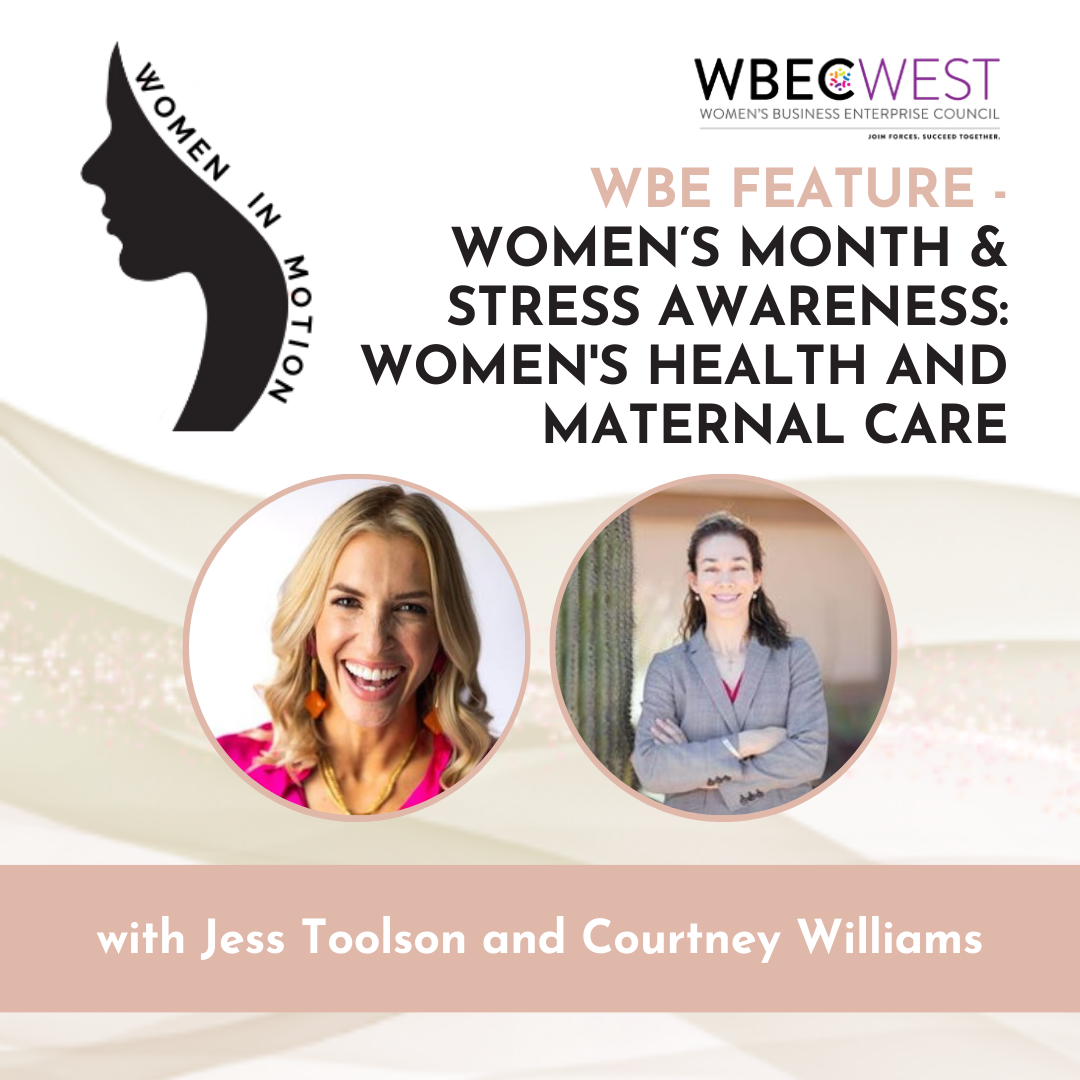
WBE Feature – Women’s Month & Stress Awareness: Women’s Health and Maternal Care

April 30, 2024 by angishields

WBE Feature – Women’s Month & Stress Awareness: Women's Health and Maternal Care
Women in Motion
WBE Feature – Women’s Month & Stress Awareness: Women's Health and Maternal Care
Loading
00:00 /
RSS Feed
Share
Link
Embed

Download file

In this episode of Women in Motion, hosts Lee Kantor and Dr. Pamela Williamson talk with Jess Toolson, Founder of Mixhers and Courtney Williams, Co-Founder and CEO of Emagine Solutions Technology. They share their entrepreneurial journeys, focusing on women’s health and maternal care. Jess discusses her company’s supportive culture and the importance of self-care, while Courtney emphasizes research and passion in business and talks about her pregnancy app, The Journey Pregnancy, which offers health tracking and wellness coaching.

Mixhers-logo

Jess-ToolsonJess Toolson is a mother of three and the CEO of Mixhers. She started Mixhers while living in Europe and moved back stateside in 2020.

Mixhers was launched in 2019 and has been growing ever since with over 25,890% growth in 4 years.

Follow Mixhers on Facebook and Instagram.

Courtney-WilliamsCourtney Williams is co-founder and CEO of Emagine Solutions Technology. Emagine is tackling the U.S. maternal health crisis with technology to make pregnancy safer, lower cost, and improve outcomes. We’re your companion for a safe pregnancy. Courtney developed her company’s technology after developing preeclampsia in the postpartum period.

Emagine has been awarded the Arizona Innovation Challenge, Flinn Bioscience Entrepreneurship Grant, 2nd Prize in Pharrell Williams’s Black Ambition, and Department of Health and Human Services Postpartum Racial Equity Challenge and Hypertension Innovator awards. Emagine is also a National Science Foundation SBIR Awardee. Emagine-Solutions-Technology-logo

Courtney is a Marketing graduate from University of Arizona and received her MBA from Thunderbird School of Global Management. She has a background in customer analytics in Fortune 500 companies and international business experience in Africa and Latin America.

For five years, she served on the board of Open Windows Foundation in Guatemala, a public health and education organization.

Follow Emagine Solutions Technology on LinkedIn, Facebook, Instagram, X and TicTok.

About Our Co-Host

Pamela-Williamson-WBEC-WestDr. Pamela Williamson, President & CEO of WBEC-West,  is an exemplary, dedicated individual, and has extensive experience as a senior leader for over twenty years.

She has served as the CEO of SABA 7 a consulting firm, overseen quality control at a Psychiatric urgent care facility of a National Behavioral Health Care Organization where she served as Vice President and Deputy Director,and has served as the CEO of WBEC-West, since 2008.

Her extensive experience in developing and implementing innovative alliances with key stakeholders has enabled the organizations to reach new levels of growth and stability. Her ability to lead and empower staff members creates a strong team environment which filters throughout the entire organization.

She takes an active role in facilitating connections between corporations and women business enterprises and sees a promising future for WBENC Certified women-owned businesses.

Dr. Williamson holds a Doctorate in Healthcare Administration, a Master’s degrees in Business Administration, and bachelor degrees in both Psychology and Sociology.

Connect with Dr. Williamson on LinkedIn.

Music Provided by M PATH MUSIC

Transcript-iconThis transcript is machine transcribed by Sonix


TRANSCRIPT

Intro: [00:00:07] Broadcasting live from the Business RadioX Studios, it’s time for Women In Motion. Brought to you by WBEC-West. Join forces. Succeed together. Now, here’s your host.

Lee Kantor: [00:00:27] Lee Kantor here with Dr. Pamela Williamson. Another episode of Women In Motion, and this is going to be a good one. Dr. Pamela, how are things?

Dr. Pamela Williamson: [00:00:36] Things are fabulous over here. How about with you, Lee?

Lee Kantor: [00:00:39] I am doing well. I was so excited when I saw this group come into the queue for these shows. Women taking care of themselves is the theme this month and we got an interesting group today.

Dr. Pamela Williamson: [00:00:52] We do. I am so excited because we have two women that are both crushing it in their industries. And I am excited to hear their stories and their journey, and I am sure that they are going to have lots of tips and conversations about how they take care of themselves. Because, as you know, as women, stress is a huge issue with us because we’re balancing everything. And just how do these women manage being so successful in their business life and their personal lives? It is truly a mystery to me, and we’re hoping to unravel that with these ladies.

Dr. Pamela Williamson: [00:01:25] So, I am excited to talk with today, Jess Toolson from Mixhers and also Courtney Williams from Emagine Solutions Technology. Hello, ladies.

Courtney Williams: [00:01:37] Hello.

Jess Toolson: [00:01:40] Hello.

Dr. Pamela Williamson: [00:01:40] Hi. So, I want to kick off with just learning about you. So, let’s talk about your journey, how did you start your business? And I’m going to start with Jess.

Jess Toolson: [00:01:51] Awesome. Hi everyone. I’m so happy to be here today. I am Jess Toolson. I’m based out of Utah. And I started my business, Mixhers, almost five years ago. In a few months, we’ll celebrate our fifth birthday. And my business was started because I was a woman in need of support with my hormone imbalance. I didn’t know years ago that that’s what I was struggling with. I was dealing with all sorts of symptoms when I was postpartum with my twins, and I had never dealt with in my life previously, such as hormonal acne, menstrual migraines, bloating, cramping, and all the debilitating symptoms that women don’t want to experience each and every month.

Jess Toolson: [00:02:32] So, I set out on a health journey which led me down all different paths. And finally, a friend gave me a formula that she had been mixing in her very own home. She was taking Chinese herbs and mixing them together and helping one woman at a time. This formula completely changed my life. And I approached her and said, this is something that we have to get into the hands of all women and have them know that there is a solution for PMS symptoms outside of some of the prescriptions and things out there that aren’t actually helping with hormone imbalance.

Jess Toolson: [00:03:06] So, we set off onto our journey starting our business. We launched in 2019, starting with that product that we now call Hertime, that is helping tens of thousands of women each and every month. And we now have 15 different products that we offer health support for women on everything from anxiety, insomnia, their greens product, their focus product. And we specialize in always being hormone friendly for women and it’s so fun.

Jess Toolson: [00:03:40] Obviously, I appreciate this conversation so much because there is a lot that comes along with running a business, and the stresses that can come up with that, and the pressure, and all the things. And so, I appreciate this conversation so much that we can kind of open up the topic of how to take care of ourselves amidst all of the pressures. And I lead a company of 35 women, and I hope to always be leading a business that is actually health-focused, not just saying that we are health-focused. So, that is a bit about Mixhers, and I’m so excited to learn more about everyone else on this podcast.

Dr. Pamela Williamson: [00:04:21] Thanks. Courtney, how did you start your journey?

Courtney Williams: [00:04:26] So, I’m Courtney Williams. It’s so nice to be here. Thank you so much for having me. I started Emagine Solutions Technology out of a need actually. My sister had a really difficult pregnancy, and it was the first time that it opened up my eyes to the fact that pregnancy is not solely safe and that it can be a dangerous time in the health lifespan of a woman. And seeing her be bedridden for months as she was going through her high risk pregnancy, it was dangerous for her to get to her appointments.

Courtney Williams: [00:04:58] It made me think like there’s got to be a better way. There’s got to be technology that’s applied to pregnancy, that’s applied to other areas of the medical world. So, I teamed up with a team, actually, to develop a handheld ultrasound that could be used on cellphones and tablets to help people, like my sister, in a situation where, you know, she has the best access to the best medical care, but getting to her appointments is dicey. That was our first technology.

Courtney Williams: [00:05:24] Fast forward to the pandemic, I had myself a high risk pregnancy, and I ended up developing preeclampsia in the postpartum period. So, right as we were getting ready to launch our handheld ultrasound, we developed this, I found myself in a medical situation where I needed technology and I didn’t have access to it. So, in the middle of the pandemic, I was getting chest pain. It was five days after giving birth. I got chest pain. I had just terrible headache that wouldn’t go away. And I ended up getting this fluid line on my leg a couple days after coming home from the hospital. And I was like, this is not right. This is not normal. And my mom’s like, “Go to the hospital. Go to the hospital.” And it turned out I had preeclampsia postpartum period.

Courtney Williams: [00:06:09] And so, through that experience and being in the hospital and going through that, I realized we are not applying remote patient monitoring in a way that we are to maternal health as we are to cardiology and kidney care, all these other conditions that really affect men a lot more than women necessarily.

Courtney Williams: [00:06:30] And so, I ended up developing an app called The Journey Pregnancy. And that was the app that I needed. It’s a way for women that are in pregnancy to log and track their maternal health. And they can do this from their positive pregnancy test all the way through their postpartum recovery. And this is connected to their doctor so their doctor can see their health journey in real time. And this really fits the need of a lot can happen between appointments in maternal health, and so this provides that visibility that can be super critical and actually almost life saving for folks between appointments. So, that’s how I got my start based on going through, you know, personal and maternal health struggles in my family.

Dr. Pamela Williamson: [00:07:14] No, thank you for that. Both of your industries are pretty stressful and it sounds like both of them at times have been pretty male dominant. And so, I’m curious, I just read an article a couple of days ago about imposter syndrome and just how stressful that can be. I’m just curious if either of you have experienced that and if you’d be willing to share what that was like for you and provide some tips on what you did to overcome it. And so, I’ll start with Courtney again.

Courtney Williams: [00:07:54] Sure. So, being in the health care industry and developing med tech products, and a medical device that we’ve gotten through FDA clearance, et cetera, a very, very male dominated industry in general. Even though we are part of the subset of digital health called Femtech – which is to say, I don’t love that term, but that’s sort of the industry term right now that’s being thrown around to refer to any medical technology that really applies to the health spectrum of females throughout their life, whether that’s pregnancy periods, anything to do with menopause and thereafter, and elder care for women – is a big, you know, $50 billion industry, but even though it is about women’s products and women’s needs and women’s health, it’s still really dominated by men.

Courtney Williams: [00:08:40] Being a startup in this space is also male dominated because we have to go through applying for funding, and looking for non-dilutive opportunities, and eventually looking for venture capital. We’ve all heard about the statistics of women going out and doing fundraising are definitely at a disadvantage compared to their male counterparts. And that’s particularly exacerbated for any women of color or folks that are in the LGBT community.

Courtney Williams: [00:09:06] I know how these statistics impact my business. I know that I need capital, obviously, to grow, especially being in a more capital intensive industry, software and medical device and med tech. And so, one of the ways that I’ve actually been able to address this is going for non-dilutive funding. So, funding my business is through grants. We’ve been really successful. So, I don’t have to deal with as much the VC – I don’t want to say challenges that a lot of women face in this field, but knowing that that can be a hurdle for folks, especially in my industry, I’ve decided I’m really going to focus on the non-dilutive route. So, we’ve been really successful getting grants from National Science Foundation, Department of Health and Human Services, Pharrell, Pharrell and his Black Ambition competition. We’ve been a winner in that.

Courtney Williams: [00:10:00] And so, I think that a lot of women when they go through a fundraise feel, this sense of imposter syndrome, like “I have a great business. I’m working sometimes three, four, or five times as hard as males in my space. Why am I not making traction with fundraising?” And so, I’ve seen cohorts and counterparts in my industry going through that, and I’ve seen what a toll it can take. And so, that’s actually specifically how I’ve dealt with imposter syndrome is to not go that route and go a different route so I can keep my business growing in a way that feels authentic and gives me the validation I know I’ll need when it comes time to go for venture funding.

Dr. Pamela Williamson: [00:10:39] Thanks. Jess.

Jess Toolson: [00:10:43] Yeah. I love that, Courtney. First of all, thank you so much for sharing. I think something that I have experienced within Mixhers and imposter syndrome is, first and foremost, when I first started my business, I had been a stay at home mom for 12 years. And I had no experience in the corporate space. I hadn’t actually had much of a career outside of like a high school job, and got married really young and started having kids.

Jess Toolson: [00:11:17] And so, first with Mixhers, what I had to overcome was realizing that I was going to be entering this space already feeling like an underdog having no work experience, not being a previous entrepreneur, and not knowing how to manage people right out of the gate. However, something I have learned since is that actually my experiences as a mother in the home actually has contributed so much to my leadership skills and things that I have developed and been able to contribute to the workplace.

Jess Toolson: [00:11:52] And so, yeah, I still haven’t been back to school. I didn’t graduate with an MBA. I haven’t furthered my college experiences, but I have been in just the school of learning as I go. And I think something that I’ve loved is that I am learning that it’s okay to do things in an entirely unique way than anyone else.

Jess Toolson: [00:12:16] And so, when women are joining the workplace here at Mixhers, the most frequent thing I hear is that this is unlike any other job I’ve ever had. The fact that there is unlimited paid time off, the fact that women are nurturing one another in the workplace, the fact that there is a breastfeeding room that I can bring my newborn to work. I am just totally confident doing things in a unique way because I don’t have experiences that tell me otherwise, and so I’m just going to do things off of what I feel is best for my business.

Jess Toolson: [00:12:49] I think another thing in the health and supplement space for us that we’re overcoming is most testing for the health space has been done on males. And so, when we’re looking at certain ingredients and credentials behind certain ingredients and formulating specifically for women, we are fighting also this battle of making sure that Mixhers is starting to do some of the very first testing of supplements being used specifically on women.

Jess Toolson: [00:13:26] And so, there’s all these statistics out there, 90 percent of people say that they’re sleeping better when using this ingredient. Well, those 90 percent of people are men. Women are not the same. We’re not built the same. And there’s no problem with not being the same. Men need their specific products and we want them to be thriving. And women, we need our specific products, but we need to understand how things are working best for us.

Jess Toolson: [00:13:53] So, I think for us, something that we’ve been definitely trying to overcome is we’re not just another supplement business playing in the men’s space. We are a female specific supplement business, formulating specifically and only for women and women’s hormone health. And so, there’s a little bit of constantly gaining our momentum, gaining our traction, and gaining our footing, and being credible having our own science backed testing done, and showing that, in fact, Mixhers has tested on women specifically.

Jess Toolson: [00:14:31] Anyway, I just think that we relate in some of the male dominant spaces and recognizing that there’s an entire category completely missing.

Courtney Williams: [00:14:47] I’ll say one more thing also on the imposter syndrome piece. That was a really great experience that you added there and I understand and I empathize. One of the things that I’ve dealt with in terms of imposter syndrome as a founder was you don’t really often see very many examples of pregnant founders that are entrepreneurs, and then having their babies and continuing with their business. There’s this mentality if somebody is growing their family or whatever or if they have a newborn, they’re in the startup space, there might be this mentality of like, “Oh. Well then, they’re going to not be effective. They’re not going to be able to grow. They’re not going to be able to focus on the business,” et cetera.

Courtney Williams: [00:15:29] And when I had my son, who’s a toddler now, I remember feeling so nervous on Zoom calls that my baby was going to cry, and then I was going to not be able to be effective on the call or not be taken seriously or not be credible as a businesswoman. And that, I think, has been one of the biggest personal challenges I needed to get through as both an entrepreneur as well as being a first time parent because you have this business persona and then you have this home persona. And sometimes with Zoom, and especially as we were moving through the pandemic and even now, we’re all cognizant of our work and our home lives blending. And that can be really uncomfortable, especially for people that have a certain level of maybe credibility that they’re trying to build. And so, that was one of the biggest challenges that I dealt with as we were starting to build our technology.

Dr. Pamela Williamson: [00:16:27] I love the one thing that you both said differently, was, just basically be yourself. And you’ve brought your full, authentic selves into your work life, which I find fascinating, because I grew up in an era in business where it was very segregated, you had to look and talk and walk the specific way. And both of you are just who you are, and it’s beautiful listening to you guys.

Dr. Pamela Williamson: [00:16:56] And just having our audience gleam this perspective that it’s okay if you don’t have an MBA, you can still be successful in your business and grow it. I’m at awe that you have 32 female employees. I just am so curious, what is that like? That’s such a rarity today to have 32 female employees.

Jess Toolson: [00:17:18] Yeah. And we do have our first two men that have joined the team within the last month. We’ve been taking our own warehousing onsite, and so we now have 32 women and our first two Mixhers men, which is really fun.

Jess Toolson: [00:17:33] But I think one of my favorite things about leading a very dominant strong female team is that one of the most frequently asked questions I get is, the workplace, is it full of drama? Are people, they’re just crying all the time? And it is so offensive to me because I work in a place of women that show up to work so incredibly ready to just get after it. They are so talented. They’re so hungry to learn new things, teach themselves new things, collaborate as an effective team.

Jess Toolson: [00:18:17] And on top of their skillset and their roles being incredibly impressive, we’ve created the most beautiful culture where women are coming to the business from all different walks of life, all different personal experiences, current, past, we all have our individual stories and our individual journeys that we’ve been on. Some women have come from very traumatic workspaces where, like Courtney mentioned, feeling nervous about having their babies. And I have women on my team that the second that they did start their families, they were demoted and their pay was dropped, and just all sorts of things that come with a lot of workplace trauma.

Jess Toolson: [00:19:04] And I have loved being able to take part in building a culture where women come and we’ve created a safe haven for one another. It doesn’t mean that all of our lives look the same, that we have to exactly relate to one another, but we allow one another to be. We celebrate one another. We create safety for one another. We show up for one another in our personal lives.

Jess Toolson: [00:19:31] One of the favorite things I’ve heard from a team member is that every day when she comes to work, it’s like how happy she would get going to elementary school every day and seeing her best friends in the morning at school. And she was like, I get giddy driving into work every day because I know that I’m going to get to see my friends and I’m going to enjoy the hours ahead.

Jess Toolson: [00:19:55] And I love to live by this. I am a stay at home mother turned to fulltime working mother, and I always say, if we’re going to be spending most of our day doing this, we might as well be enjoying it. And so, I want to scale a very, very impressive business and continue to do that, which we have done, but I want to be providing an enjoyable experience for myself and my entire team while we do that.

Dr. Pamela Williamson: [00:20:29] I love that. Thanks. The other question I have is just around how do you manage stress? Both of you have busy lives. We know that stress is the number one killer. It’s the number one predicator. So, what tips do you have for someone who is thinking about starting a business? I think stress is one of the things that gets overwhelming and it stops people from completing their goal of starting a business. What is some of the best practices tips that you want to share?

Courtney Williams: [00:21:12] I’ll start. So, stepping back, I think it’s really important to remember why you start your business. And in my case and with my team – bare with me – we’re really pretty much in love with the problem that we’re trying to solve. We’re not in love necessarily with the technology that we’re developing. I mean, we are. We think it’s great. But we’re really focused on what is the market need, what is happening in the world that needs our technology.

Courtney Williams: [00:21:40] So, to give you an example, the reason that we’re doing what we’re doing is that U.S. is in a maternal health crisis and the U.S. is currently the most dangerous and expensive place in the developed world to give birth. And that is especially bad for Black and indigenous women who actually are dying at two to three times the rate of their white counterparts. And when we look at this, the numbers are actually getting worse. They’ve gotten worse over the last few years. The rates of preeclampsia are going up 19 percent over a five year period. Rates of gestational diabetes are going up 16 percent.

Courtney Williams: [00:22:11] I say all this to say that our business operates in a context that is really stressful. You know, we’ve spent years interviewing women about their maternal health experiences, and what went wrong, and where they needed support, and where technology could have filled in those gaps, and then developed our solutions around that. And so, we’re really, really focused, like hyper focused on the problem that we are trying to solve.

Courtney Williams: [00:22:39] And I believe that when you’re really focused on the problem that you’re out to solve, the mission that you’re out to solve, we’re on a mission to reduce the maternal mortality rate and make pregnancy safer with better outcomes and lower costs, when you have that hyper focus on the mission that you have, then that helps eliminate some of the stress because you know the people that you’re trying to serve, you know what you’re waking up to do every morning, and that is very, very motivating.

Courtney Williams: [00:23:06] That isn’t to say that building a business is not stressful. And for us, you know, the different grants that we’ve applied for have been very high stress, very ridiculously competitive on a national level, and yet you persevere because, again, you’re focused on who you’re serving and how, in our case, our technology can make lives better for people.

Courtney Williams: [00:23:29] And so, in terms of the day-to-day hiring and making sure that our team are all aligned, those can all be stressors as well. But one of the things that we’ve done is I’ve made sure that I hire people that are the smartest that I can access in our industry. I have people that are, like, 30 year veterans that have worked in multinational corporations like Philips and Sonosite and other places that have this amazing experience that we can work together and I can learn from them, and that helps me build my business. That helps reduce stress by hiring people that are amazing with the amazing knowledge that they bring to elevate the level of our team. So, that’s been one thing that I’ve done to reduce stress.

Courtney Williams: [00:24:13] Another thing from a personal level is I never really believed in the power of yoga. I was always more of like a dance person or cardio person. But, truly, yoga has been a transformational force in my life and my business life and my personal life in terms of maintaining my stress and my health. I’ve actually seen a numeric metric value to adding yoga to my life in terms of lowering my blood pressure and improving other health metrics. And so, I think between surrounding yourself with a really good team and taking care of yourself physically, making sure you just make the time – I make the time to do yoga every night at like 9:30 or 10:00 at night because I know that I’ll sleep better and feel better – I think that those two things have made a major impact for me.

Lee Kantor: [00:25:01] Jess.

Jess Toolson: [00:25:02] Courtney, I love that you brought up the yoga. Because while I don’t practice yoga, I have found the power in self-care and making sure that that is a priority as I grow my business. Because I did find in the first couple of years it was such a hustle. It was such a grind. It was eat, sleep, breathe my business. But that started to take a toll. I started to lose my energy for what I was doing. I started to not enjoy what I was doing. It felt like every day was so daunting ahead. And it just was becoming this beast I needed to face every day.

Jess Toolson: [00:25:44] And instead of continuing to live that way, I decided to reprioritize. And when I reprioritized, I prioritized my health again. And I have now put in my business that every woman has – every team member – sorry. Now I have men – one hour of their workday to have free time, whether it’s meditation, yoga, they can exercise, we have a gym in the office. And I offer that to my team members to have an hour outside of their lunch hour.

Jess Toolson: [00:26:21] And I know that there’s all sorts of things where people have been like, “Oh. What about productivity? What about meetings that need to take place?” I think it’s worth it to invest in my team members and my own health to allow us to have an hour to work on personal development and make sure that we’re functioning as best as we can as individuals, because when we’re all functioning at our best as individuals, that’s when the team can really excel and achieve large goals.

Jess Toolson: [00:26:52] And I’ve seen nothing but even more productivity with allowing that free time in the workday. And they get to choose when they take it. A lot of women just go out on a walk. A lot of women will take a nap. We have a lot of women with newborn babies and that hour to just take a nap and recover from sleepless nights means the world to them.

Jess Toolson: [00:27:15] For me, it’s taking that hour and being able to get in movement and exercise and reprioritizing. My health has been a huge shift in growing my business because I feel like it helps moods, it helps energy, it helps me think more clearly. And, yeah, so I love that you brought up your self-care with your yoga.

Jess Toolson: [00:27:39] I also feel like in the first couple of years, like I mentioned, I really did feel this pressure that everything is ticking and you either run and you either figure out how to do it or someone else is going to do it, and they’re going to do it faster than you. It’s not from a place of only I can succeed, no one else can do it. It’s more I do have a unique business and I do want to move as quickly as I can, but I hope that other people succeed as well.

Jess Toolson: [00:28:08] So, it’s not like I feel like there is always plenty to go around, but I stopped sleeping enough, and I kept working late, and waking up early, and working from the second that I woke up, and I would check my phone the second I woke up to get caught up on emails and respond to team, and all the things. And it was like I was never able to put the business aside to just be able to think about kids in the morning, or just to be able to think about making breakfast. It felt like everything was just a hustle and I did not enjoy it.

Jess Toolson: [00:28:48] And so, I shifted also, I think something that I have changed for self-care is knowing that I clock in and I clock out. And I do not work my business 24 hours a day, seven days a week. And I emphasize that with my team as well. When we clock out at 5:00, everyone has personal lives, people have families, people have interests and hobbies outside of the workplace, and so we have boundaries. Unless it’s an emergency, everything can wait until tomorrow at 9:00 a.m.. I promise it will be there tomorrow and everything will be okay in the meantime. And so, I’ve tried to really instill personal and professional boundaries within my team just to be able to allow team members to truly clock into the workplace and clock out and set it aside until the next workday.

Lee Kantor: [00:29:43] Now, each of your businesses started from something personal that was going on in your lives. Do you have any advice for female founders or potential aspiring female founders out there on how do you know if the problem you’re trying to solve is just a problem you’re having or it’s a problem that there is a market for it?

Lee Kantor: [00:30:07] Courtney, can you share a little bit about how kind of that happened in your industry with your product that you’re marketing? And any advice you have for an aspiring entrepreneur? Or maybe they have a corporate job and they have this problem that they think they have a solution for, but they don’t know if it’s really a business.

Courtney Williams: [00:30:26] Good point. So, I’m a little bit different. So, I come from the corporate angle 100 percent. I mean, I am the person that went and got my MBA, et cetera, and was working a corporate job when I experienced what happened with my sister and then kind of moved forward from there. One of the most important things for me was I definitely stayed in my corporate job until I felt like what we were doing had legs, frankly. So, I’m a big researcher. I’ve done tons of tons of research on this.

Courtney Williams: [00:31:02] There’s a certain program which I can recommend to entrepreneurs if they have an inkling as to a science or technology that they want to research and they want to see if this is a viable technology, there’s a program with National Science Foundation called I-Corps. It’s a grant program, essentially, that provides you the opportunity to go out and interview the people that have the problem that you want to solve.

Courtney Williams: [00:31:28] So, it’s usually based with a university program. So, I’m affiliated with University of Arizona Center for Innovation. So through there, I got this grant. And my team and I, we went out and interviewed just dozens and dozens and dozens of people to understand their maternal health situation, the industry, the problems, et cetera.

Courtney Williams: [00:31:50] Basically, the program enables you to apply the scientific method to customer interviewing. And so, having gone through that, we’re like, “All right. We think we have something here.” So, I applied for a pitch competition and I won that, and that was amazing. And then, I applied for another one and then we won first prize and we got funded. It was the biggest pitch competition in Southern Arizona. And so, I was like, “All right. This is giving me some validation that I need to be able to pursue this more seriously and more completely.” So, that was the impetus and that was what enabled me to determine whether this was a viable business or not.

Courtney Williams: [00:32:29] But we haven’t stopped doing that. I mean, our first product was a handheld ultrasound, that I alluded to. But then, we developed a patient app, which I also mentioned. It’s called The Journey Pregnancy, and that’s the maternal health app. And so, we actually applied that same process before I had my experience with preeclampsia. But how many other people have preeclampsia? Well, quite a few. But I wanted to ensure that logging and tracking maternal health was a thing that people wanted to do. So, again, I went out and I embarked on that program again through National Science Foundation, but at a bigger scale, with a bigger grant, to interview more people, to ensure that we really, really understood as a team that this was a need.

Courtney Williams: [00:33:07] So, we’ve continued to do that. We did that again with remote patient monitoring, which is our third product that we have, which is for clinicians, and went out and interviewed just hundreds of clinicians that we thought maybe had a need, but we weren’t sure.

Courtney Williams: [00:33:21] So, through the research angle, that’s how we’ve been able to tackle whether it made sense to leave a corporate job, take this risk, and then move forward. It’s a big risk and it’s an important one to take because that’s the only way you’ll really know. So, that’s been my approach. I’ll pass it off. I’d like to hear how others have handled this.

Jess Toolson: [00:33:46] I think for me, I knew that I had an opportunity to create a business because through my own health journey, searching for solutions for my hormone imbalance, I had already had dozens and dozens, like you said, of conversations with women that were experiencing the exact same situation that I was. And so, when this formula worked for me and was solving for my health issues, I knew that I had to help the women that were right around me as fast as I could.

Jess Toolson: [00:34:16] And I think that’s one of the most amazing things that I’ve seen in building Mixhers, is how quick women are to want to solve one another’s problems, and wanting to share the good information about there being solutions. And so, yeah, for for me, once I have found a solution that was helpful to my health, I knew that I could think back to all of the many women that I had already had discussions with about the frustrating health issues that we were facing. And if I find a solution, I’ll let you know. And if you find a solution, let me know.

Jess Toolson: [00:34:51] And so, I knew that there were so many women searching for solutions for hormone imbalance that it was more about for us, it was more about normalizing the topic through social media and emails and things like that. Because talking about hormone health is and was very taboo at the time. Talking about low libido, talking about PMS symptoms and solutions, talking about insomnia, all these topics that women, we have felt in the past that we have to tiptoe around a little bit. And so, for us, it’s more so normalizing the topics and allowing women to have conversation around hormone imbalance and then also providing the solution in our products.

Jess Toolson: [00:35:40] I think the last thing, too, is I would recommend for women that are wondering if they have an opportunity on their hands is I think women are fantastic problem solvers. And I believe that starting a business is incredibly hard. It’s going to test you to your core. But when you are personally passionate about your product and what you’re offering, and maybe it’s changed your life or it’s changed a family member’s life, and it’s something that you believe so strongly in, just like Courtney had mentioned, that is the fulfillment that you will need on the days that your business is challenging you and testing you.

Jess Toolson: [00:36:20] You will know that it’s worth pushing through because you have people that you have already helped. You have people that have already seen the benefits of using the app or using our products. And you think to those people that are utilizing what you offer and needing those resources. I think that a lot of times it’s like passion and how much I believe in my products that gets me through the stressful days.

Jess Toolson: [00:36:48] And so, I feel like I would recommend to women if what you believe you may have at your fingertips is an opportunity, make sure that it is something that you will be passionate about even on the days that have been sleepless, even on the days when cash is tight, things like that. Passion will continue to fuel you and I believe that that opens up opportunities.

Lee Kantor: [00:37:14] Now, you both mentioned the importance of a culture in your organization. Jess, can you explain how you kind of mindfully put in place this type of corporate culture that you’ve established in your organization? A lot of companies give it lip service. And if you don’t kind of proactively do things a certain way, a culture is going to form whether you are intentional or not. And it sounds like you were very intentional around the type of organization you wanted to build.

Jess Toolson: [00:37:51] I love that you said that I did this very mindfully. I’m actually not sure that I did. I did I wanted to create a workplace that I was enjoying personally and that I was seeing women thriving. And I wanted there to be friendship. I wanted there to be connection. And I wanted it to feel like I was surrounded by my friends every day at work.

Jess Toolson: [00:38:14] And so, I don’t know, other than I feel like creating time to connect with one another, we make sure to have plenty of company activities. We have a lot of celebrations for one another. We have birthday parties. We have baby showers. We have moving parties if someone’s leaving the state. And I feel like the goal of mine has always been that women that join this company need to know that they have friendship in their peers at work. And it really has naturally taken place. And it’s been almost five years, and we did just win an award in Utah. We were voted Best Place To Work For in the State of Utah, which I feel very proud of.

Jess Toolson: [00:39:08] And I appreciate that you said that I did this mindfully. I think it’s more so been efforts as a team to just nurture relationships and actually see one another as humans, not just robots working in a business. We’re humans that also get to contribute to a workplace. And I believe that it’s the team that is naturally wanting to create a very family feeling culture.

Lee Kantor: [00:39:40] Courtney, can you share? I mean, you’ve worked a lot in corporate settings, so you understand culture doesn’t just happen. The leadership has to really kind of lean into this and it’ll form around that. Can you speak to that a little?

Courtney Williams: [00:39:54] Yeah. In my corporate life, I definitely saw lead by example. That was the biggest takeaway that I saw in the different Fortune 500s that I worked in. And that was important to me to then translate to my company.

Courtney Williams: [00:40:09] So, I’ll give you an example. In terms of hierarchy, we have a culture in our company that is very focused on I as CEO and co-founder, I do not have all the answers. And I am very, very forthright about saying I want my team to work together with me collaboratively, like we’re very collaborative to find the answers. So, there’s no necessarily I’m the CEO, but that doesn’t mean that I’m necessarily the last word with a lot of this stuff.

Courtney Williams: [00:40:41] Another piece of our culture is we serve women or folks that give birth, we serve folks that are on a maternal health journey, and we’re all about making that journey as safe and supported as possible with our technology. And so, that translates to our meetings, for example, when we have our collaborative meetings, our all hands or our team meetings, it’s important to include a service element in that because we are serving other people with our technology. And so, we always have a service activity anytime we have an all hands meeting. And that is a really important component of our work, and that helps bring together folks on our team around our mission, and it helps recenter us before we go and dig in and get our work done. But we feel like service project is also part of our work.

Courtney Williams: [00:41:33] The other piece is that we are a very diverse team, diverse in terms of talents and also in terms of where people are located. And so, for me, it’s really, really important to not restrict folks in terms of where they’re located. So, we’ve always been remote, and I foresee us being remote for our future as we grow. And that is one of the satisfaction drivers that I see on our team. People can work when they want, when they need, when it works for them. And that is important to me to continue, because if we’re all going to be working together on a common goal, you have to be comfortable in your environment. And so, being able to do that remotely has been important especially for the folks that are on our software development team. So, those are some of the elements that we’ve put in place just in terms of building our culture, and I plan to continue that as we continue to grow.

Lee Kantor: [00:42:26] So, is there —

Jess Toolson: [00:42:27] Courtney, I love that — oh. I’m sorry. I’m sorry.

Lee Kantor: [00:42:30] No. Go ahead, Jess.

Jess Toolson: [00:42:31] I just wanted to tell Courtney that I love that she brought up this working remote. We have a very hybrid schedule. We’re in office about three days a week and the other days are remote. And all of winter, we’ve given Fridays completely off for people to go and enjoy the ski season and to spend the holidays with family and things like that.

Jess Toolson: [00:42:57] And I think it just helps people. People want freedom. People want to be able to make choices, have opinions about when they’re working, how they’re working. And I appreciate the freedom personally. And so, we also have a very, very flexible schedule and I feel like it it definitely contributes positively to the company culture.

Lee Kantor: [00:43:23] Now, Jess, is there anything new coming up? Is there anything we could be doing? Do you need anything from us and the listeners?

Jess Toolson: [00:43:33] Yeah. So, Mixhers has actually been working for about a-year-and-a-half at this point on an entire company rebrand. So, we’ve been getting ready to have our products be more shelf stable for retail. We’ve redone all of our packaging. The company name will still be Mixhers, but we’ve redone our logos, our icons, everything. And so, this month in April, we’ll be announcing this rebrand. We’re really excited about that. And we’re launching two new products that have been heavily, heavily requested by our customers. So, we would appreciate everyone coming over, following along, engaging with what they think of the rebrand. And, also, if you are interested in the products, we would obviously appreciate a purchase. The website is just mixhers.com, M-I-X-H-E-R-S.

Lee Kantor: [00:44:24] Courtney, any news or anything we could be doing for you?

Courtney Williams: [00:44:31] Definitely. Yes. Thank you. I appreciate that. So, if you know anybody that is getting ready to go on a pregnancy journey, please tell them about our app, The Journey Pregnancy. It’s really important as a parent, not just to be entertained with some of the other pregnancy apps out there. For example, knowing that you’re 30 weeks pregnant and your baby’s a size of a watermelon or a cantaloupe, that’s entertaining and that’s helpful, but that does not help your maternal health.

Courtney Williams: [00:44:57] And so, downloading our app can. You can log and track your blood pressure, your blood glucose, your moods, your symptoms, all the way from your positive pregnancy test through your postpartum recovery. And if your numbers go out of range, our app will let you know immediately when the result is something that you need to follow up with your doctor. So, if you know somebody that’s pregnant, have them download our app. It’s a free download on the iOS and Android store.

Courtney Williams: [00:45:23] The other thing that we have coming along down the line is we just launched Pregnancy Wellness Coaching. And so, if you are somebody that feels like you want extra support, you want more than that 7 or 15 minutes that you get with your doctor each time at a prenatal visit, we’ve got somebody for you. We’ve got qualified nurse practitioners that are certified in maternal mental health as well as maternal wellness. And if you need that support, we can provide that through an elevated subscription of our app.

Courtney Williams: [00:45:52] So, I would just say, you can follow us on Instagram, @emaginestech. As well as on TikTok, we’ve got lots of different educational videos that we put out and informational pieces that will help people that are looking for research backed information as they go through pregnancy. And we’re @thejourneypregnancy on TikTok.

Lee Kantor: [00:46:12] And the website?

Courtney Williams: [00:46:14] And our website is emaginest, E-M-A-G-I-N-E-S-T,.com.

Lee Kantor: [00:46:20] Good stuff. Dr. Pamela, what a show.

Dr. Pamela Williamson: [00:46:24] You know, I think I say this a lot, but this was incredible. I took so many notes. I was blown away by some of the information you provided that is easily applied. These women founders start their business even if their years in business, even if they have had years in business, some of the information you provided is life changing. And so, I want to thank you both for participating today. Lee, any parting words?

Lee Kantor: [00:46:57] It’s just really great to see people with an idea take the leap into entrepreneurship. And they each went through it their own way and their own time. And they built their team accordingly and the culture. I think it’s so inspirational for the listeners, especially the people, there are so many people that have great ideas that are sitting on the fence who are afraid to take the leap. And to have you to share your story about how you were able to do that.

Lee Kantor: [00:47:26] And you get up every morning knowing there’s a lot of people to help and that’s what gets you going and you know the importance of what you’re doing is that you are helping others. So, thank you for sharing your story. You’re both doing such important work and we appreciate you. All right. This is Lee Kantor for Dr. Pamela Williamson. We’ll see you all next time on Women In Motion.

 

Tagged With: Emagine Solutions Technology, Mixhers

Business RadioX ® Network


Our Most Recent Episode

CONNECT WITH US

  • Email
  • Facebook
  • LinkedIn
  • Twitter
  • YouTube

Our Mission

We help local business leaders get the word out about the important work they’re doing to serve their market, their community, and their profession.

We support and celebrate business by sharing positive business stories that traditional media ignores. Some media leans left. Some media leans right. We lean business.

Sponsor a Show

Build Relationships and Grow Your Business. Click here for more details.

Partner With Us

Discover More Here

Terms and Conditions
Privacy Policy

Connect with us

Want to keep up with the latest in pro-business news across the network? Follow us on social media for the latest stories!
  • Email
  • Facebook
  • Google+
  • LinkedIn
  • Twitter
  • YouTube

Business RadioX® Headquarters
1000 Abernathy Rd. NE
Building 400, Suite L-10
Sandy Springs, GA 30328

© 2025 Business RadioX ® · Rainmaker Platform

BRXStudioCoversLA

Wait! Don’t Miss an Episode of LA Business Radio

BRXStudioCoversDENVER

Wait! Don’t Miss an Episode of Denver Business Radio

BRXStudioCoversPENSACOLA

Wait! Don’t Miss an Episode of Pensacola Business Radio

BRXStudioCoversBIRMINGHAM

Wait! Don’t Miss an Episode of Birmingham Business Radio

BRXStudioCoversTALLAHASSEE

Wait! Don’t Miss an Episode of Tallahassee Business Radio

BRXStudioCoversRALEIGH

Wait! Don’t Miss an Episode of Raleigh Business Radio

BRXStudioCoversRICHMONDNoWhite

Wait! Don’t Miss an Episode of Richmond Business Radio

BRXStudioCoversNASHVILLENoWhite

Wait! Don’t Miss an Episode of Nashville Business Radio

BRXStudioCoversDETROIT

Wait! Don’t Miss an Episode of Detroit Business Radio

BRXStudioCoversSTLOUIS

Wait! Don’t Miss an Episode of St. Louis Business Radio

BRXStudioCoversCOLUMBUS-small

Wait! Don’t Miss an Episode of Columbus Business Radio

Coachthecoach-08-08

Wait! Don’t Miss an Episode of Coach the Coach

BRXStudioCoversBAYAREA

Wait! Don’t Miss an Episode of Bay Area Business Radio

BRXStudioCoversCHICAGO

Wait! Don’t Miss an Episode of Chicago Business Radio

Wait! Don’t Miss an Episode of Atlanta Business Radio