Business RadioX ®

  • Home
  • Business RadioX ® Communities
    • Southeast
      • Alabama
        • Birmingham
      • Florida
        • Orlando
        • Pensacola
        • South Florida
        • Tampa
        • Tallahassee
      • Georgia
        • Atlanta
        • Cherokee
        • Forsyth
        • Greater Perimeter
        • Gwinnett
        • North Fulton
        • North Georgia
        • Northeast Georgia
        • Rome
        • Savannah
      • Louisiana
        • New Orleans
      • North Carolina
        • Charlotte
        • Raleigh
      • Tennessee
        • Chattanooga
        • Nashville
      • Virginia
        • Richmond
    • South Central
      • Arkansas
        • Northwest Arkansas
    • Midwest
      • Illinois
        • Chicago
      • Michigan
        • Detroit
      • Minnesota
        • Minneapolis St. Paul
      • Missouri
        • St. Louis
      • Ohio
        • Cleveland
        • Columbus
        • Dayton
    • Southwest
      • Arizona
        • Phoenix
        • Tucson
        • Valley
      • Texas
        • Austin
        • Dallas
        • Houston
    • West
      • California
        • Bay Area
        • LA
        • Pasadena
      • Colorado
        • Denver
      • Hawaii
        • Oahu
  • FAQs
  • About Us
    • Our Mission
    • Our Audience
    • Why It Works
    • What People Are Saying
    • BRX in the News
  • Resources
    • BRX Pro Tips
    • B2B Marketing: The 4Rs
    • High Velocity Selling Habits
    • Why Most B2B Media Strategies Fail
    • 9 Reasons To Sponsor A Business RadioX ® Show
  • Partner With Us
  • Veteran Business RadioX ®

Five Sections in Your Employee Manual Which Should Be Overhauled

February 3, 2023 by John Ray

Five Sections in Your Employee Manual Which Should Be Overhauled
Advisory Insights Podcast
Five Sections in Your Employee Manual Which Should Be Overhauled
Loading
00:00 /
RSS Feed
Share
Link
Embed

Download file

Five Sections in Your Employee Manual Which Should Be Overhauled

Five Sections in Your Employee Manual Which Should Be Overhauled (Advisory Insights Podcast, Episode 29)

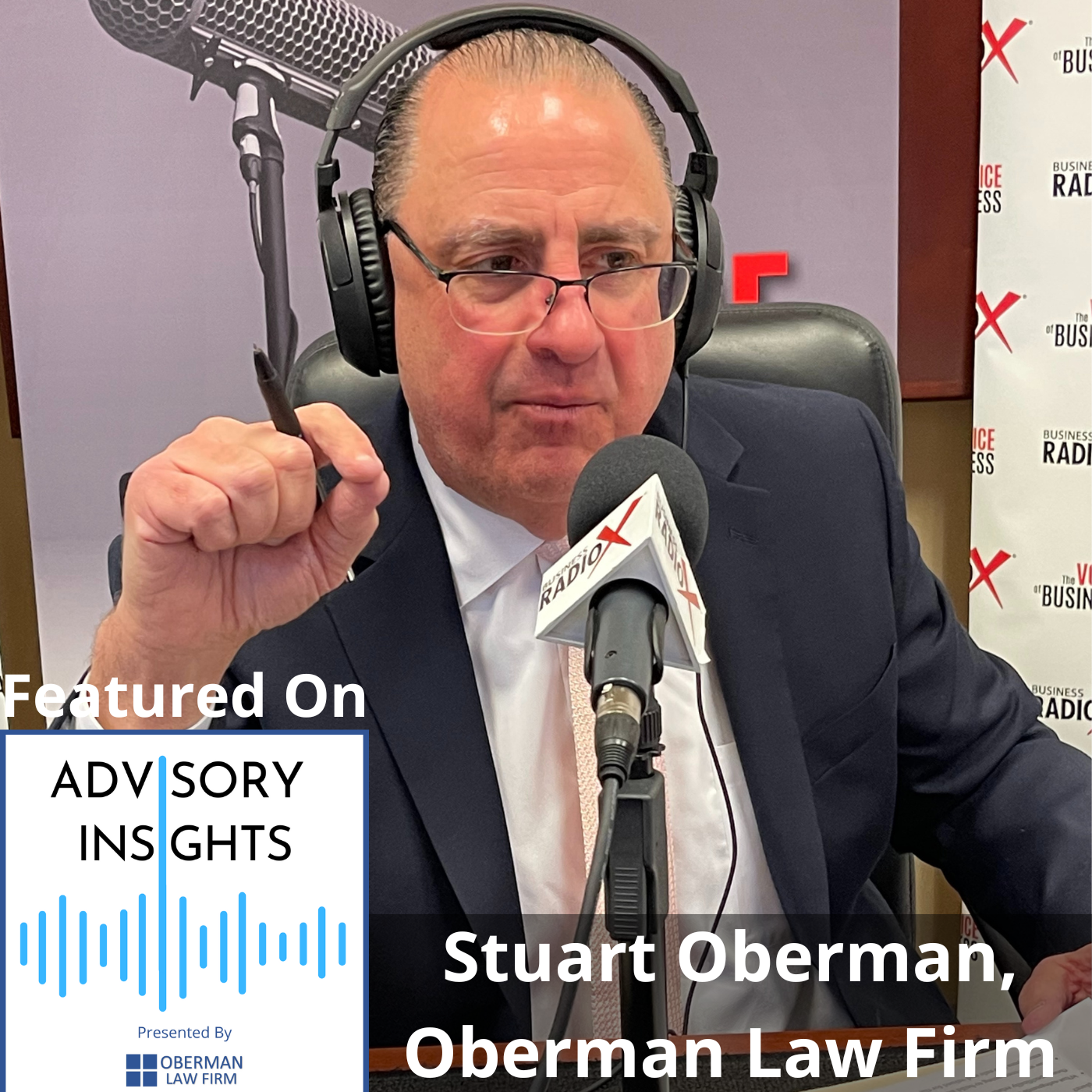
On this episode of Advisory Insights, Stuart Oberman of Oberman Law Firm discussed the five sections of your employee manual that should be overhauled to comply with changing laws. He covered topics such as regulating employee appearance, work arrangements, and communication.

Advisory Insights is presented by Oberman Law Firm and produced by the North Fulton studio of Business RadioX®. The series can be found on all the major podcast apps. You can find the complete show archive here.

TRANSCRIPT

Intro: [00:00:01] Broadcasting from the studios of Business RadioX, it’s time for Advisory Insights. Brought to you by Oberman Law Firm, serving clients nationwide with tailored service and exceptional results. Now, here’s your host.

Stuart Oberman: [00:00:20] Hello and welcome to Advisory Insights Podcast. Stuart Oberman here, your host. Well, I want to talk about H.R. I know that’s a topic I talk a lot about, but until I stop getting calls regarding H.R. compliance matters, I’m going to keep harping on this.

Stuart Oberman: [00:00:37] Today’s topic, five sections that should be overhauled in your employee manual. First and foremost, do you have an employee manual to start with? So, for those that do not have an employee manual, I want you to write this down on each sections we’re going to look at.

Stuart Oberman: [00:00:55] Get an employee manual. If you have an employee manual that is 15 pages, shred it and get another one. If you have an employee manual that is probably less than 40 pages, I’m going to recommend you really have someone take a look at that manual and make sure it’s good because the law is changing constantly.

Stuart Oberman: [00:01:12] Let’s take a look at our sections. First and foremost, I’m going to say that you need to regulate appearance. Now, what each employer does with appearance and what they allow is not for me to comment. But what’s happening is, is that you must have, got to have written policies regarding appearance to take into account.

Stuart Oberman: [00:01:37] And why do I say this? Because what’s happening is we’re seeing legislation all over the country regulating appearance. We have legislation – and I’ve said this before but I want to stress this again – regulating hair. What is professional hair? So, for those that don’t really follow H.R. items, I want to bring into account where a particular state brought in the Crown Act.

Stuart Oberman: [00:02:05] For example, what is the Crown Act? It essentially bans race-based hair discrimination in the workplace. So, the Crown Act or similar legislation has been enacted in 19 states. Folks, I’ll repeat that, has been enacted in 19 states. How many people listening to this podcast have any idea whether or not their state even is included in that kind of legislation or has a bill pending for that legislation at the Federal level, which sits at the Senate right now? So, again, number one appearance. Again, I can’t make up this legislation.

Stuart Oberman: [00:02:50] Work arrangements. I will tell you, folks, depending on your region, people aren’t going back to the offices. Now, we see that in different regions, different mobilities. We’re talking to a law firm the other day that had 200 people. None of them are back to the office. I don’t know what that rent is, but it’s got to be expensive. So, I want to make sure you know this, that your organization, I don’t care what you do, you have to have expectations around communication.

Stuart Oberman: [00:03:23] First off, do you even have a policy in place that regulates a hybrid? Do you have a policy in place that outlines what is strategically your employer’s information, when they’re coming in, when they’re speaking to members of the office, when they’re supposed to answer the phones, when they report deadlines? Again, I want you to make sure that you are regulating work arrangements. And, also, I want to make sure that you have a policy that goes into a place and regulates remote conduct and what should or should not be taking place.

Stuart Oberman: [00:04:02] So, again, technology is at the forefront of all this. Things change. I know we constantly look at software improvements, where this technology is going. Everything today is outdated in six months, it seems like. So, I want to make sure, number three, technology. That you have policies in place in your handbook that regulate and mention remote work and hybrid.

Stuart Oberman: [00:04:33] Are you using multifactor authentication? Are employees using their own devices? How do you regulate that? Is there a standard? What happens if that cell phone is lost? Other shutdown mechanisms? Are you allowing employees to purchase their own technology on your technology? What happens if you have a computer that is specifically for you and your employee, and, all of a sudden, you have an employee downloading stuff on your software, on your hard drive, or a laptop? Do you have stuff that regulates that? What does that look like?

Stuart Oberman: [00:05:08] So, you’ve got to decide what’s regulated, what’s work related, who pays for these expenses? What does it look like in the employee manual, if you even have an employee manual? I would encourage you to do these. Again, write down these items.

Stuart Oberman: [00:05:23] Number four, sick leave. So, what happened is, before the pandemic many states and localities lacked sick leave laws. But now what we’re seeing, we’re seeing an active, a very, very active legislative agenda for states that are manipulating and approving certain leave acts that go way beyond what the employers indicate for that state.

Stuart Oberman: [00:05:55] So, I want you to make sure you know what you’re sick leave is. How many employees do you have? Do you have reasonable accommodations? What happens if you don’t have reasonable accommodations? You know, again, I want to make sure that under the sick leave, you have the Family Medical Leave Act in place, all those things.

Stuart Oberman: [00:06:16] You know, I keep going back to this topic because it’s just a crazy topic. Number five, marijuana usage and testing. I can’t stress this enough. I know I talked a lot about this in 2022. We’re going to talk about this in 2023. A couple of states come to mind, New York and California.

Stuart Oberman: [00:06:43] So, first and foremost, I don’t want to rehash what we did on a previous podcast or what we’re going to do coming forward. But don’t forget Federal Law, still, marijuana is illegal. But many states protect workers. You’ve got to make sure you know what states protect you as an employer or your workers. Now, we’ve got to worry about other things that are coming into play regarding – I’ll use the term – magic mushrooms. We’re going back to the ’60s. Here we go, folks. Again, with the prevalence of states enacting laws regarding this, this has got to be at the forefront of issues.

Stuart Oberman: [00:07:20] So, employers, you need to be out in the forefront of the trend. You’ve got to make a decision on what you’re doing. You can’t put your head in the sand on these issues because every one of these five issues are going to come up at some point in your workplace. It’s not a question of if. It is a question of when. And you’ve got to be prepared. It’s got to be in writing. And your employees have got to know what their outlines are. You’ve got to know what your outlines are. You’ve got to know what your deadlines are, and what you’re going to accept and not accept.

Stuart Oberman: [00:07:53] Folks, the top five, you got to know it. You got to know it. Employee manual, top five sections you’ve got to overhaul. Again, I’m going to run through this real quick, real quick. Appearance, work arrangements-remote/hybrid, technology-remote/hybrid, sick leave, and last but not least – the favorite topic that I like talking about – marijuana usage and testing.

Stuart Oberman: [00:08:21] Folks, it’s been a pleasure. Thanks for joining us on Advisory Insights Podcast. If you have any questions, please feel free to give us a call, 770-886-2400, or email, stuart, S-T-U-A-R-T, @obermanlaw.com. Folks, have a fantastic day and thanks for listening to Advisory Insights Podcast.

Outro: [00:08:45] Thank you for joining us on Advisory Insights. This show is brought to you by Oberman Law Firm, a business-centric law firm representing local, regional, and national clients in a wide range of practice areas, including healthcare, mergers and acquisitions, corporate transactions, and regulatory compliance.

About Advisory Insights Podcast

Presented by Oberman Law Firm, Advisory Insights Podcast covers legal, business, HR, and other topics of vital concern to healthcare practices and other business owners. This show series can be found here as well as on all the major podcast apps.

Stuart Oberman, Oberman Law Firm

Oberman Law Firm

Stuart Oberman is the founder and President of Oberman Law Firm. Mr. Oberman graduated from Urbana University and received his law degree from John Marshall Law School. Mr. Oberman has been practicing law for over 25 years, and before going into private practice, Mr. Oberman was in-house counsel for a Fortune 500 Company. Mr. Oberman is widely regarded as the go-to attorney in the area of Dental Law, which includes DSO formation, corporate business structures, mergers and acquisitions, regulatory compliance, advertising regulations, HIPAA, Compliance, and employment law regulations that affect dental practices.

In addition, Mr. Oberman’s expertise in the healthcare industry includes advising clients in the complex regulatory landscape as it relates to telehealth and telemedicine, including compliance of corporate structures, third-party reimbursement, contract negotiations, technology, health care fraud, and abuse law (Anti-Kickback Statute and the State Law), professional liability risk management, federal and state regulations.

As the long-term care industry evolves, Mr. Oberman has the knowledge and experience to guide clients in the long-term care sector with respect to corporate and regulatory matters, assisted living facilities, continuing care retirement communities (CCRCs). In addition, Mr. Oberman’s practice also focuses on health care facility acquisitions and other changes of ownership, as well as related licensure and Medicare/Medicaid certification matters, CCRC registrations, long-term care/skilled nursing facility management, operating agreements, assisted living licensure matters, and health care joint ventures.

In addition to his expertise in the health care industry, Mr. Oberman has a nationwide practice that focuses on all facets of contractual disputes, including corporate governance, fiduciary duty, trade secrets, unfair competition, covenants not to compete, trademark and copyright infringement, fraud, and deceptive trade practices, and other business-related matters. Mr. Oberman also represents clients throughout the United States in a wide range of practice areas, including mergers & acquisitions, partnership agreements, commercial real estate, entity formation, employment law, commercial leasing, intellectual property, and HIPAA/OSHA compliance.

Mr. Oberman is a national lecturer and has published articles in the U.S. and Canada.

LinkedIn

Oberman Law Firm

Oberman Law Firm has a long history of civic service, noted national, regional, and local clients, and stands among the Southeast’s eminent and fast-growing full-service law firms. Oberman Law Firm’s areas of practice include Business Planning, Commercial & Technology Transactions, Corporate, Employment & Labor, Estate Planning, Health Care, Intellectual Property, Litigation, Privacy & Data Security, and Real Estate.

By meeting their client’s goals and becoming a trusted partner and advocate for our clients, their attorneys are recognized as legal go-getters who provide value-added service. Their attorneys understand that in a rapidly changing legal market, clients have new expectations, constantly evolving choices, and operate in an environment of heightened reputational and commercial risk.

Oberman Law Firm’s strength is its ability to solve complex legal problems by collaborating across borders and practice areas.

Connect with Oberman Law Firm:

Company website | LinkedIn | Twitter
Tagged With: Advisory Insights, Advisory Insights Podcast, employee handbook, employee law, Employee Manual, employment law, Oberman Law, Oberman Law Firm, Stuart Oberman

Employee Handbook Sections to Overhaul in 2023

December 23, 2022 by John Ray

Employees Handbook
Advisory Insights Podcast
Employee Handbook Sections to Overhaul in 2023
Loading
00:00 /
RSS Feed
Share
Link
Embed

Download file

Employees Handbook

Employee Handbook Sections to Overhaul in 2023 (Advisory Insights Podcast, Episode 23)

On this episode of Advisory Insights, Stuart Oberman of Oberman Law Firm discussed which sections in your employee handbook to overhaul in 2023. He stressed addressing changing technology, making changes to account for alternate work arrangements, modifying sick leave policies, and more.

Advisory Insights is presented by Oberman Law Firm and produced by the North Fulton studio of Business RadioX®. The series can be found on all the major podcast apps. You can find the complete show archive here.

TRANSCRIPT

Intro: [00:00:01] Broadcasting from the studios of Business RadioX, it’s time for Advisory Insights. Brought to you by Oberman Law Firm, serving clients nationwide with tailored service and exceptional results. Now, here’s your host.

Stuart Oberman: [00:00:20] Hello everyone, and welcome to Advisory Insights. Stuart Oberman here as your host. All right, folks, it’s 2023. HR is in the house. Now is the time. I want to go over a couple of things. Today’s topic, Employee Handbook Sections to Overhaul in 2023.

Stuart Oberman: [00:00:40] We have some clients that have not overhauled their employee manuals for ten years. Now, it’s time to rethink the entire process, especially in today’s world, in today’s economy. Look, what’s happening is we have the workers of today. The new workers are clashing with the old employer policies and procedures. And what’s happening is that the employers are losing.

Stuart Oberman: [00:01:05] So, I want to run through a couple of things that seem to be sticking out as sort of a poke in the ribs, if you will, as to where things are going and what needs to be looked at and changed.

Stuart Oberman: [00:01:17] Number one, I know a lot of our clients have very, very strict appearance rules. So, if you have a particular rule or policy that you are wanting to enforce, folks, you’ve got to get it in writing. And another thing you got to take a look at in today’s world is the new reality as far as appearance goes.

Stuart Oberman: [00:01:43] One particular thing I want to bring up is you have to look at legislation and where things are at today. So, let me give you an example.

Stuart Oberman: [00:01:50] The Crown Act, for example, bans race-based hair discrimination in the workplace. So, the CROWN Act or similar legislation has been enacted – get this – 19 states. And a bill is currently pending before Congress. Who knows what will happen as far as Federal legislation goes? And it’s set at the Senate level to regulate hair and appearance. So, you better jump on the bandwagon now. Adjust things that you need to adjust knowing what we know as far as hair discrimination. The next thing you know, we’re going to work on tattoos and everything else.

Stuart Oberman: [00:02:31] So, look, at the end of the day, what people do with their bodies is up to them. If you’re going to have a policy and procedure, be ready for some pushback on it, be ready to explain why you need it, and be ready to review federal and state law as it comes down the pike.

Stuart Oberman: [00:02:47] Let’s take a look at number two, the work arrangements. Folks, we’re in a different world. We’re in a hybrid workplace. Our communications have changed. Our performance has changed. Everything about what we do on the work side has changed. So, what does that mean? That means your HR teams have to provide opportunity, tools, guidelines, and make it easier. Do you have a remote policy? Do you have a nondisclosure policy? Are your employees working with sensitive data along with the same computer that they’re using for their kid’s recreation facility and baseball teams? So, you’ve got to look at all these things.

Stuart Oberman: [00:03:28] Now, another area – huge – technology. So, policies have to outline technology and how a company’s handbook should be remote workplace. Does your technology require multifactor authentication for employees to use their own devices? Your data, your confidential data that could literally sink you as a company is now on your employees cellphones. What do you do if the cellphone is lost? What do you do if the cellphone is hacked? What do you do if data is lost? What is the policy and procedure for that? Does your company provide the cellphones? Does your employer or employee have an automatic shutdown and wipe out on their cellphones if you lose it?

Stuart Oberman: [00:04:25] So, I think you’ve got to address safety and technology concerns along with security now as the technology grows and as the workplace becomes blended between work, play, and family.

Stuart Oberman: [00:04:41] One of the things we’re looking at now is sick leave. And there’s a lot of discussion regarding this. States now are mandating certain leave policies. Certain companies are now being subject to jurisdictional issues that they never thought they would be before. The localities are now handling sick leaves. So, you really have got to take a look at where your states are, what’s on a local basis, what’s the trends.

Stuart Oberman: [00:05:11] You know, if you’re in Georgia or if you’re in North Carolina or if you’re in Massachusetts, what’s coming down the pike as far as from Cleveland, Ohio, or from California, or from Texas, where are these things coming from? Because everything trends and you’ve got to know the trends.

Stuart Oberman: [00:05:31] Next one – I’ve talked about this over and over and over again – marijuana use and testing. So, the law hasn’t changed. Marijuana is still illegal on the federal law. But what’s happening is, is that the states are adding protection for workers use of marijuana. Folks, I can’t make this up.

Stuart Oberman: [00:05:53] So, example in California, for instance, employers cannot discriminate against employees for legal marijuana use outside of work. Now, what do you do if on the way to work, an employee is toking on the way to work and they’re not a health safety welfare hazard to other employees? How do you address that? You know, they’re inebriated, but they’re in no danger to other employees.

Stuart Oberman: [00:06:25] So, you’ve got to understand what the trends are. So, you’ve got to get out in front of this. You’ve got to have descriptions as to what’s acceptable, what’s not acceptable. You’ve got to have safety concerns. The use of marijuana is not a carte blanche on the workplace. There are restrictions. There are protocols that employers can follow. And we have to get ahead of this, because I always say what happens in the West comes East. It’s just a matter of what direction it comes.

Stuart Oberman: [00:06:59] So, again, these are a couple of things that we want to take a look at. We’ve got communication issues. We’ve got technology issues. We’ve got employee handbook issues. We have appearance issues, work arrangements. We have remote responsibilities now that employers have to really be aware of. So, I don’t think any of this is earth shattering. There’s been a lot of commentary on these issues.

Stuart Oberman: [00:07:25] But, again, we keep seeing the same problems over and over and over, which is in summary, (1) employers are not addressing appearance; (2) employers are not revising the work arrangement, policies, procedures; (3) employers are not getting ahead of technology; (4) employers are not modifying their sick leave; and (5) marijuana usage, employers are not adjusting what they need to do.

Stuart Oberman: [00:08:00] Folks, there’s a lot of things that really, really we need to look out for 2023. We’re going to have some more discussion on this. If you have any questions, please let me know, Stuart Oberman, Oberman Law Firm, stuart, S-T-U-A-R-T, @obermanlaw.com, phone number 404-630 – excuse me – 770-886-2400. Again, 770-886-2400. Please stay tuned for other issues of Advisory Insights. Have a fantastic day.

Outro: [00:08:36] Thank you for joining us on Advisory Insights. This show is brought to you by Oberman Law Firm, a business-centric law firm representing local, regional, and national clients in a wide range of practice areas, including health care, mergers and acquisitions, corporate transactions, and regulatory compliance.

About Advisory Insights Podcast

Presented by Oberman Law Firm, Advisory Insights Podcast covers legal, business, HR, and other topics of vital concern to healthcare practices and other business owners. This show series can be found here as well as on all the major podcast apps.

Stuart Oberman, Oberman Law Firm

Oberman Law Firm

Stuart Oberman is the founder and President of Oberman Law Firm. Mr. Oberman graduated from Urbana University and received his law degree from John Marshall Law School. Mr. Oberman has been practicing law for over 25 years, and before going into private practice, Mr. Oberman was in-house counsel for a Fortune 500 Company. Mr. Oberman is widely regarded as the go-to attorney in the area of Dental Law, which includes DSO formation, corporate business structures, mergers and acquisitions, regulatory compliance, advertising regulations, HIPAA, Compliance, and employment law regulations that affect dental practices.

In addition, Mr. Oberman’s expertise in the healthcare industry includes advising clients in the complex regulatory landscape as it relates to telehealth and telemedicine, including compliance of corporate structures, third-party reimbursement, contract negotiations, technology, health care fraud, and abuse law (Anti-Kickback Statute and the State Law), professional liability risk management, federal and state regulations.

As the long-term care industry evolves, Mr. Oberman has the knowledge and experience to guide clients in the long-term care sector with respect to corporate and regulatory matters, assisted living facilities, continuing care retirement communities (CCRCs). In addition, Mr. Oberman’s practice also focuses on health care facility acquisitions and other changes of ownership, as well as related licensure and Medicare/Medicaid certification matters, CCRC registrations, long-term care/skilled nursing facility management, operating agreements, assisted living licensure matters, and health care joint ventures.

In addition to his expertise in the health care industry, Mr. Oberman has a nationwide practice that focuses on all facets of contractual disputes, including corporate governance, fiduciary duty, trade secrets, unfair competition, covenants not to compete, trademark and copyright infringement, fraud, and deceptive trade practices, and other business-related matters. Mr. Oberman also represents clients throughout the United States in a wide range of practice areas, including mergers & acquisitions, partnership agreements, commercial real estate, entity formation, employment law, commercial leasing, intellectual property, and HIPAA/OSHA compliance.

Mr. Oberman is a national lecturer and has published articles in the U.S. and Canada.

LinkedIn

Oberman Law Firm

Oberman Law Firm has a long history of civic service, noted national, regional, and local clients, and stands among the Southeast’s eminent and fast-growing full-service law firms. Oberman Law Firm’s areas of practice include Business Planning, Commercial & Technology Transactions, Corporate, Employment & Labor, Estate Planning, Health Care, Intellectual Property, Litigation, Privacy & Data Security, and Real Estate.

By meeting their client’s goals and becoming a trusted partner and advocate for our clients, their attorneys are recognized as legal go-getters who provide value-added service. Their attorneys understand that in a rapidly changing legal market, clients have new expectations, constantly evolving choices, and operate in an environment of heightened reputational and commercial risk.

Oberman Law Firm’s strength is its ability to solve complex legal problems by collaborating across borders and practice areas.

Connect with Oberman Law Firm:

Company website | LinkedIn | Twitter
Tagged With: Advisory Insights, Advisory Insights Podcast, Dental Practice, employee handbook, employment law, Oberman Law, Oberman Law Firm, Stuart Oberman

Must Have Covid-19 Policies for Employers

August 27, 2021 by John Ray

Covid-19 policies
Dental Law Radio
Must Have Covid-19 Policies for Employers
Loading
00:00 /
RSS Feed
Share
Link
Embed

Download file

Must Have Covid-19 Policies for Employers (Dental Law Radio, Episode 17)

How should you handle Covid-19 policies for employees in your dental practice? Can you institute a mandatory vaccination policy? What accommodations can you (or should you) have? Whatever you decide, you’d best not be cutting and pasting what you find on a Google search in your employee handbook, as host Stuart Oberman explains in this episode. Dental Law Radio is underwritten and presented by Oberman Law Firm and produced by the North Fulton studio of Business RadioX®.

TRANSCRIPT

Intro: [00:00:01] Broadcasting from the Business RadioX studios in Atlanta, it’s time for Dental Law Radio. Dental Law Radio is brought to you by Oberman Law Firm, a leading dental-centric law firm serving dental clients on a local, regional and national basis. Now, here’s your host, Stuart Oberman.

Stuart Oberman: [00:00:26] Hello, everyone, and welcome to Dental Law Radio. The hot topic: Covid-19: What You Need to Know. I have a feeling that this is going to be going on, going for a while. Now, this is going to be sort of the second segment, if you will, of what we’ve done before, and we have probably two more segments to cover because, again, we can probably have this kind of segment speaking for eight hours on this topic.

Stuart Oberman: [00:00:59] So, last podcast, we covered COVID-19, Delta variant, mandates and legal liability. So, we covered the good, the bad, the ugly, and the mandates, the commendations, must-have policies. But now, we’re going to jump into and we’re going to drill down a little bit deeper on COVID-19 must-have policies. So, what does that mean? From a legal standpoint, I will tell you must have a policy mandatory or nonmandatory. You can’t just sort of trade defense on this. You’ve got to be all in either way. Either you’re going to mandate it and set guidelines. And then, policies and procedures, if it is not done, draw that line in the sand or you’re going to have nonmandatory policies, and then that’s a whole set of concerns.

Stuart Oberman: [00:01:59] So, what do we do? One, you’ve got to have a mandatory vaccination policy. Two, you got to have a non-mandatory vaccination policy. You got to have one or the other. If you have a mandatory policy for shots, if you will, you have to have a accommodation procedure. As we said in our previous podcast, there are some very, very stringent guidelines for mandatory matters. You have OSHA, you have CDC, you have EEOC, you have EEO, and then you have the FDA. So, on your mandated policies, you have to have a request for a medical exemption or an accommodation that is related to the vaccination. Then, you’ve got to have a request for religious exemption. And then, the accommodation related to the vaccination.

Stuart Oberman: [00:03:04] Now, I want to drill down specifically in policies. So, I want to outline things that have to be and should be in a policy. Now, I will urge you, do not go on the Internet, and cut and paste a vaccination policy because when you’re dealing with OSHA, CDC guidelines, EEOC, EEO and the FDA, that is an absolute trap that I will tell you will not be covered in the things you get on the Internet for cutting and pasting.

Stuart Oberman: [00:03:46] So, basically, basics, basics here, COVID-19 vaccination policy, what does that have to do? Okay. Purpose. You got to outline a purpose. That’s basic. You got to outline a scope. You have to have the policy which sets forth the deadline with which the employees have to have the policy or they have to do an exemption. Okay. So, those two things right there will dictate what forms you use, what forms you do not use.

Stuart Oberman: [00:04:23] So, now, I want to get into a little bit on the request for an exemption. Accommodation, if you will. Again, we’re back into — I know I keep stressing this, but any exemption that you have or receive has to be in guidance with OSHA, CDC, EEOC, EEO or FDA, because here’s why. So, what happens is the exemptions assist employees with disabilities who may be pregnant, who may be nursing, who actually have a qualified medical condition as to why they object to receiving the vaccination. And also, they have to outline that they have a sincerely held religious belief or practice.

Stuart Oberman: [00:05:14] Now, those are the requests for an exemptions. Okay. So, that’s an interactive process between you, the employee and HR. So, they have to show that one, it follows as an exemption; but two, the request has to show that it does not impose a undue hardship on the employer. And that has to be in writing in your document. And it also has to have or should have specific writing that the accommodation can be done and a request can be done without fear of retaliation. You retaliate against an employee who does not want to receive a vaccination, and you got all kind of federal law problems.

Stuart Oberman: [00:06:10] So, let’s take a little bit deeper dive into the request for a religious exemption or accommodation that’s related to the vaccination. So, first and foremost, you need to state very clearly that your practice, or for those who are not dental owners but maybe other business owners, that your business is committed to complying with all laws that protect employees’ religious beliefs. And that you will provide an exemption on a reasonable accommodation for employees’ religious beliefs and practices who prohibit the employee from receiving a COVID-19 vaccination. That is language that needs to be included, along with multiple sections of other exemptions.

Stuart Oberman: [00:07:12] Now, the language has the state — again, I would urge you to seek legal advice if you’re implementing these policies. Do not cut and paste. Now, the policy has to state that for religious exemption, you’re going to provide a reasonable accommodation – here’s the key – that does not create an undue hardship or pose a direct threat to the health or safety of others within the workplace, including the requested employee. So, those are just a small segment of things that have to be listed and outlined on the exemption accommodation.

Stuart Oberman: [00:07:59] So, now, we’ve got a whole another request. Okay. Request for a medical exemption or an accommodation related to COVID-19 vaccination. Again, key, key, key, key, your practice or business is committed to complying with all laws protecting individual rights with disabilities or medical conditions. And you, as employer, will provide an exemption for any medical condition or disability that prevents the employee from getting a COVID-19 vaccination.

Stuart Oberman: [00:08:43] Now, you can’t just go anywhere and get this. This is not like an excuse from your mom or dad, “I need to get out of school early.” This has to be a qualified medical exemption. So, you have to get, or should get, or mandated to receive written certification from a licensed treating physician or a DO – now, depending on your state, nurse practitioner or physician’s assistant, a PA. And there’s a specific outline, it must be noted in their medical report, if you will, as to why they should not receive the vaccination. Again, it has to be documented, meant medically that you are not entitled or required to receive the vaccination. That is a huge, huge burden to lift.

Stuart Oberman: [00:09:50] So, again, I’m going to refresh a little bit on a couple of things. So, mandated policies, okay, vaccination policies, it’s got to be in writing. You can’t just say, “Do this.” Nonmandatory vaccination policy, in writing. Not required. There’s whole steps for that that we’ll go into a little bit more detail. So, then if you have a mandated policy, you’ve got to have an accommodation request for either medical or religious reasons because you have to cover – it’s not optional – you’ve got to cover OSHA, CDC, EEOC, EEO and the FDA.

Stuart Oberman: [00:10:31] So, then, we just covered one of the basic things that have to be in an mandated policy. We covered specific things that have to be in the request for an exemption, for religious beliefs or for disabilities. So, again, I would urge you to seek counsel if you do not have these policies and procedures. And I will tell you, and I’ve said this before and I said this last year in 2000 when all this was taking place, if it’s not COVID-19, it’s going to be something else. We already got the Delta variant popping up that is creating a whole another set of issues. And there’s going to be something after COVID-19 because there always is. You got the swine flu. You got a million things that have happened. So, you got to get it in place now because, otherwise, you are asking for a recipe for disaster.

Stuart Oberman: [00:11:33] As a law firm, we’re going to be covering some areas in our newsletter, Constant Contact. If you have any questions or concerns, please feel free to email me directly, stuart@obermanlaw.com. You can certainly request that we schedule consults. You could certainly request that you be put on our newsletter. We’re trying to be out as a law firm out in front of this because we see where things are going. We have clients in Spokane, Washington, in Tampa, Florida, and up to Maine. So, we’ve got a pretty good idea where these things are going.

Stuart Oberman: [00:12:11] So, mandates, non-mandates, have a procedure in place. Folks, that is all for today. We’re going to go back, and we’re going to jump into two segments that are going to be following regarding COVID-19, because it is just that much of a serious issue that we need to address. Have a great day and thank you everyone for listening.


About Dental Law Radio

Hosted by Stuart Oberman, a nationally recognized authority in dental law, Dental Law Radio covers legal, business, and other operating issues and topics of vital concern to dentists and dental practice owners. The show is produced by the North Fulton studio of Business RadioX® and can be found on all the major podcast apps. The complete show archive is here.

Stuart Oberman, Oberman Law Firm

Oberman Law Firm
Stuart Oberman, host of “Dental Law Radio”

Stuart Oberman is the founder and President of Oberman Law Firm. Mr. Oberman graduated from Urbana University and received his law degree from John Marshall Law School. Mr. Oberman has been practicing law for over 25 years, and before going into private practice, Mr. Oberman was in-house counsel for a Fortune 500 Company. Mr. Oberman is widely regarded as the go-to attorney in the area of Dental Law, which includes DSO formation, corporate business structures, mergers and acquisitions, regulatory compliance, advertising regulations, HIPAA, Compliance, and employment law regulations that affect dental practices.

In addition, Mr. Oberman’s expertise in the health care industry includes advising clients in the complex regulatory landscape as it relates to telehealth and telemedicine, including compliance of corporate structures, third-party reimbursement, contract negotiations, technology, health care fraud and abuse law (Anti-Kickback Statute and the State Law), professional liability risk management, federal and state regulations.

As the long-term care industry evolves, Mr. Oberman has the knowledge and experience to guide clients in the long-term care sector with respect to corporate and regulatory matters, assisted living facilities, continuing care retirement communities (CCRCs). In addition, Mr. Oberman’s practice also focuses on health care facility acquisitions and other changes of ownership, as well as related licensure and Medicare/Medicaid certification matters, CCRC registrations, long-term care/skilled nursing facility management, operating agreements, assisted living licensure matters, and health care joint ventures.

In addition to his expertise in the health care industry, Mr. Oberman has a nationwide practice that focuses on all facets of contractual disputes, including corporate governance, fiduciary duty, trade secrets, unfair competition, covenants not to compete, trademark and copyright infringement, fraud, and deceptive trade practices, and other business-related matters. Mr. Oberman also represents clients throughout the United States in a wide range of practice areas, including mergers & acquisitions, partnership agreements, commercial real estate, entity formation, employment law, commercial leasing, intellectual property, and HIPAA/OSHA compliance.

Mr. Oberman is a national lecturer and has published articles in the U.S. and Canada.

LinkedIn

Oberman Law Firm

Oberman Law Firm has a long history of civic service, noted national, regional, and local clients, and stands among the Southeast’s eminent and fast-growing full-service law firms. Oberman Law Firm’s areas of practice include Business Planning, Commercial & Technology Transactions, Corporate, Employment & Labor, Estate Planning, Health Care, Intellectual Property, Litigation, Privacy & Data Security, and Real Estate.

By meeting their client’s goals and becoming a trusted partner and advocate for our clients, their attorneys are recognized as legal go-getters who provide value-added service. Their attorneys understand that in a rapidly changing legal market, clients have new expectations, constantly evolving choices, and operate in an environment of heightened reputational and commercial risk.

Oberman Law Firm’s strength is its ability to solve complex legal problems by collaborating across borders and practice areas.

Connect with Oberman Law Firm:

Company website | LinkedIn | Twitter
Tagged With: COVID-19, Covid-19 Policies for Employers, employee handbook, Oberman Law Firm, Stuart Oberman, vaccination policy

Overview of Potential Employer Violations

June 11, 2021 by John Ray

employer violations
Dental Law Radio
Overview of Potential Employer Violations
Loading
00:00 /
RSS Feed
Share
Link
Embed

Download file

employer violations

Overview of Potential Employer Violations (Dental Law Radio, Episode 8)

Does your employee manual have a cell phone use policy? What about a social media policy? Do you realize that an increasing number of employees and employment candidates are secretly recording conversations with employers? If your answer to any of these questions is “no,” then you’d better listen to this episode as host Stuart Oberman addressed potential employer violations in these questions and more. Dental Law Radio is underwritten and presented by Oberman Law Firm and produced by the North Fulton studio of Business RadioX®.

TRANSCRIPT

Intro: [00:00:02] Broadcasting from the Business RadioX studios in Atlanta, it’s time for Dental Law Radio. Dental Law Radio is brought to you by Oberman Law Firm, a leading dental-centric law firm serving dental clients on a local, regional and national basis. Now here’s your host, Stuart Oberman.

Stuart Oberman: [00:00:27] Hello, everyone, and welcome. Today’s topic, employer violations, one of the biggest areas that we see problems with in our dental practices day in and day out is employer violations. And what’s happening is employees are getting smart. With the advent of the Internet, they are well aware of compliance issues, what our dental practice owners are and are not allowed to do and where are the pitfalls. And what’s happening is this is evolving so quickly that I just want to run through some basic, basic things that from an employment law standpoint, where do our owners need to be as far as common problems?

Stuart Oberman: [00:01:19] So, one of the most obvious things that we’re seeing is that potential employment candidates are now recording conversations during interviews. So, what’s happening is, is that you have to be very, very, very careful and trained as to the questions you are asking people you are now hiring. I don’t care whether it is a hygienist, your front desk, your office manager, your chief operating officer, your technology person, it doesn’t matter. So, when you interview potential candidates, you have to have a list of questions that you know are in compliance with state and federal law, specifically with federal law. You also should be prepared that you have to have a list of questions that you cannot ask and you cannot go down.

Stuart Oberman: [00:02:27] So, an issue comes up, well, what happens if a candidate opens that door? I always say that if you have to ask whether or not it is correct or not, or I should ask that question or not, it probably is not a question you want to answer, because there’s nothing worse than having a candidate come back to you and say, “Well, you know, I didn’t get the job. I certainly appreciate your time. But the questions that you’re asking me are now in violation of state and federal law. And I think you should be reported.” How are you going to respond to that?

Stuart Oberman: [00:03:05] Also, this is sort of jumping off topic, but what you have to be careful of is that employees, existing employees, are now recording your conversations one on one, whether it’s in staff meetings, whether it’s in huddles, whether it is in disciplinary matters. You have to be very, very careful what you say, how you say it, and who is witnessing what you are saying. I would stress out, always have a particular person in there with you, whether it’d be your office manager or consultant, whoever you choose, to be in the interview with you. And I would be very careful who you’re training to do your interviews.

Stuart Oberman: [00:03:52] So, one thing that we were seeing a little bit of scrutiny of, also, we’ve got a little bit of guidance from the National Labor Relations Board, is that not allowing employees to discuss their pay with co-workers. This is a hot topic because everyone wants to know what everyone else is paid. Obviously, if you are a small company, and you’re overpaying one employee and underpaying another, and all of a sudden, employees find out what their pay structure is, that becomes sort of a mutiny, if you will. And then, the worse part is, is that if you are knowingly has something in writing regarding this particular matter.

Stuart Oberman: [00:04:30] So, there is ways to curtail certain conduct, certain speech, if you will. But if you have a blanket policy in your employee manual that says you are prohibited from discussing pay with your fellow employees, and if you do, you’re going to be fired, I would urge you to have your counsel take a look at that, because that may be in violation of state and federal law and maybe outside the guidance of the National Labor Relations Board. So, you have to be very, very careful.

Stuart Oberman: [00:04:59] So, on a side note, again, going off topic for a second, one of our clients actually owns a couple of dental practices, and they purchased a system of employee manuals that are about five volumes. Well, after I picked myself off the floor when I heard that, there is no way in the world that a dental practice or multiple dental practices are going to, in any way, comply with five volumes of internal regulations. I will tell you this. If you have that many employee manuals, I would shred every manual, and I would get something smaller, condensed, that is thorough, because if you got that kind of manual, that kind of broad compliance that you are complying with, I think you’re asking yourself for trouble.

Stuart Oberman: [00:05:59] Another area is failing to pay overtime. Big, big issues are coming out now. Fair Labor Standards Act. The federal government is part of Labor issuing guidance on this and has has done so in January. There’s a big push now to scrutinize employee versus contractor. This is go back to the IRS rules, I think, from 1987, I believe, where they sent out 20 guidelines, time, place and manner. So, you’ve got to take a look at what’s going on.

Stuart Oberman: [00:06:29] Also, you’ve got to take a look at whether or not you are still conducting working interviews, which are an absolute no-no. If you have a candidate is actually working through a working interview and they’re injured, or you do not to renew their contract, if you will, after a couple of days, or a couple of weeks, or a couple of months of working, you probably have the Department of Labor issues where they’re going to be eligible for unemployment. So, you’ve got to really take a look at that.

Stuart Oberman: [00:07:00] Again, you got to take a look at your end of the contract, you got to take a look how you’re paying your associates, how you’re paying your how hygienists. Are they 1099s? W2s? I think most of CPAs are going to say err on the side of caution, put them under W2. If they are under a 1099, I would urge you to pay their entity and not them directly. We’ve had auditors that have basically said to us in audits that if we are paying an entity and not an individual on a 1099, we wouldn’t be sitting here.

Stuart Oberman: [00:07:33] One thing under this world of of social media, if you will, is that disciplining an employee for complaining about their work on social media. Can you curtail that speech? Yes. Is it a tricky path? Yes. Are you allowed to have regulations? Yes, but it is a very, very fine line as to what social media conduct you can curtail. First and foremost, every employee that you have, I don’t care how long they’ve been there, who they are, they need a nondisclosure agreement because what happens is, is that on the social media part, when you got an employee who leaves, or fired, or discharged, they’re going straight on social media. They’re going to talk about what you do, how you do it, all the good, the bad and the ugly in the practice. There’s not a thing you can do about it, potentially, if you don’t have a nondisclosure agreement.

Stuart Oberman: [00:08:28] So, there’s three things you really need – social media policy, cell phone policy, and internet policy. So, you can curtail certain conduct, you can curtail certain speech if it is detrimental to the practice. Again, you’ve got to be very, very careful what that compliance looks like. And in today’s world, you have to have a policy and procedures for anti-discrimination and anti-hostile working environment. That’s got to be in writing. That has to be outlines as to how that takes place, what the procedures are if it’s violated, whether it is a probationary matter, whether it is a regulatory matter, whether it is a immediate termination.

Stuart Oberman: [00:09:14] So, you’ve got to look at all those things as far as a hostile work environment. And that’s a moving target. So, I would urge you to take a look at your employee manuals, and that has to be in there.

Stuart Oberman: [00:09:28] So, let me tell you one other thing that I think that is becoming critical in today’s cell phone texting world. So, most employees, at some point in their employment career, will be texting you as a practice owner or supervisor, whoever may be listening to the podcast, something about the work, the workplace, what they’re doing, what other people are doing, and you’re going to have some confidential information on your employees cell phone and text messages about your practice.

Stuart Oberman: [00:10:08] So, my question to you is, what happens if that employee is fired or leaves? Where is that information going to go? If you are an employee and it’s on your cell phone, what happens if that employee is fired, and all of a sudden, you’ve got discussions on that particular employee cell phone regarding workers, pay, compliance issues? That’s going public. So, how do you prevent that? Again, non-disclosure agreements.

Stuart Oberman: [00:10:45] Also, one recommendation would be to have a cell phone information destruction policy that if that employee leaves, you, in writing from the employee, certify that they will destroy your information on their cell phone. So, there’s a push right now in technology and employment issues that an employer mandates an app that they create, is installed on an employee’s cell phone. And when that employee is discharged, fired, quits, resigns, whatever it is, that that program will destroy all the information regarding your practice on that employee cell phone.

Stuart Oberman: [00:11:37] I’m going to tell you from a practical standpoint, if I’m an employee, there’s no way you’re putting an app on my cell phone. It’s not going to happen. It’s just not going to happen. So, there needs to be some policy procedure in place that will certify the destruction, specifically with a non-disclosure agreement. Things are shifted by accident to third parties that are potentially detrimental to your practice.

Stuart Oberman: [00:12:07] So, those couple of things are a very, very brief overview to a very complex issue regarding employment law, but I think if you could take the six or seven things, apply them, take a look at what your policies are, take a look what’s your internal operations are, take a look at what you have employee manual-wise, do you have the nondisclosures? Do you have the cell phone, social media, Internet policies? Do you have the employee cell phone destruction data information? How do you have that? Do you have a policy and procedures in place that your employees have to return to you within 48 hours of their termination, quit, resignation, everything that they have that belongs to you? Because I will tell you, if it gets into wrong hands, there’s a lot of governmental regulations that come into play here, and there’s a lot of potential exposure.

Stuart Oberman: [00:12:58] Again, hot topics where we had an employer issues, employee, all this really come about in the last year or two as technology is becoming more and more used in a dental field, as employees are becoming more and more technology savvy, if you will, they understand what’s going on. So, our doctors are going to understand what’s going on now to be one step ahead of that.

Stuart Oberman: [00:13:19] So, again, simple steps, simple things. Take a look at it, take a look where you’re at, policy procedures, take a look at where you need to go implement it, talk to your counsel. If you haven’t talked to your counsel or advisors about this, I would strongly recommend that you do ASAP, because what happens is if you delay, time goes on and things never get better as time goes on. So, hopefully this has helped. And we’ll look forward to seeing you in our next podcast. Have a great day.


About Dental Law Radio

Hosted by Stuart Oberman, a nationally recognized authority in dental law, Dental Law Radio covers legal, business, and other operating issues and topics of vital concern to dentists and dental practice owners. The show is produced by the North Fulton studio of Business RadioX® and can be found on all the major podcast apps. The complete show archive is here.

Stuart Oberman, Oberman Law Firm

Oberman Law Firm
Stuart Oberman, host of “Dental Law Radio”

Stuart Oberman is the founder and President of Oberman Law Firm. Mr. Oberman graduated from Urbana University and received his law degree from John Marshall Law School. Mr. Oberman has been practicing law for over 25 years, and before going into private practice, Mr. Oberman was in-house counsel for a Fortune 500 Company. Mr. Oberman is widely regarded as the go-to attorney in the area of Dental Law, which includes DSO formation, corporate business structures, mergers and acquisitions, regulatory compliance, advertising regulations, HIPAA, Compliance, and employment law regulations that affect dental practices.

In addition, Mr. Oberman’s expertise in the health care industry includes advising clients in the complex regulatory landscape as it relates to telehealth and telemedicine, including compliance of corporate structures, third-party reimbursement, contract negotiations, technology, health care fraud and abuse law (Anti-Kickback Statute and the State Law), professional liability risk management, federal and state regulations.

As the long-term care industry evolves, Mr. Oberman has the knowledge and experience to guide clients in the long-term care sector with respect to corporate and regulatory matters, assisted living facilities, continuing care retirement communities (CCRCs). In addition, Mr. Oberman’s practice also focuses on health care facility acquisitions and other changes of ownership, as well as related licensure and Medicare/Medicaid certification matters, CCRC registrations, long-term care/skilled nursing facility management, operating agreements, assisted living licensure matters, and health care joint ventures.

In addition to his expertise in the health care industry, Mr. Oberman has a nationwide practice that focuses on all facets of contractual disputes, including corporate governance, fiduciary duty, trade secrets, unfair competition, covenants not to compete, trademark and copyright infringement, fraud, and deceptive trade practices, and other business-related matters. Mr. Oberman also represents clients throughout the United States in a wide range of practice areas, including mergers & acquisitions, partnership agreements, commercial real estate, entity formation, employment law, commercial leasing, intellectual property, and HIPAA/OSHA compliance.

Mr. Oberman is a national lecturer and has published articles in the U.S. and Canada.

LinkedIn

Oberman Law Firm

Oberman Law Firm has a long history of civic service, noted national, regional, and local clients, and stands among the Southeast’s eminent and fast-growing full-service law firms. Oberman Law Firm’s areas of practice include Business Planning, Commercial & Technology Transactions, Corporate, Employment & Labor, Estate Planning, Health Care, Intellectual Property, Litigation, Privacy & Data Security, and Real Estate.

By meeting their client’s goals and becoming a trusted partner and advocate for our clients, their attorneys are recognized as legal go-getters who provide value-added service. Their attorneys understand that in a rapidly changing legal market, clients have new expectations, constantly evolving choices, and operate in an environment of heightened reputational and commercial risk.

Oberman Law Firm’s strength is its ability to solve complex legal problems by collaborating across borders and practice areas.

Connect with Oberman Law Firm:

Company website | LinkedIn | Twitter
Tagged With: employee handbook, employer violations, Oberman Law Firm, Stuart Oberman

Business RadioX ® Network


Our Most Recent Episode

CONNECT WITH US

  • Email
  • Facebook
  • LinkedIn
  • Twitter
  • YouTube

Our Mission

We help local business leaders get the word out about the important work they’re doing to serve their market, their community, and their profession.

We support and celebrate business by sharing positive business stories that traditional media ignores. Some media leans left. Some media leans right. We lean business.

Sponsor a Show

Build Relationships and Grow Your Business. Click here for more details.

Partner With Us

Discover More Here

Terms and Conditions
Privacy Policy

Connect with us

Want to keep up with the latest in pro-business news across the network? Follow us on social media for the latest stories!
  • Email
  • Facebook
  • Google+
  • LinkedIn
  • Twitter
  • YouTube

Business RadioX® Headquarters
1000 Abernathy Rd. NE
Building 400, Suite L-10
Sandy Springs, GA 30328

© 2025 Business RadioX ® · Rainmaker Platform

BRXStudioCoversLA

Wait! Don’t Miss an Episode of LA Business Radio

BRXStudioCoversDENVER

Wait! Don’t Miss an Episode of Denver Business Radio

BRXStudioCoversPENSACOLA

Wait! Don’t Miss an Episode of Pensacola Business Radio

BRXStudioCoversBIRMINGHAM

Wait! Don’t Miss an Episode of Birmingham Business Radio

BRXStudioCoversTALLAHASSEE

Wait! Don’t Miss an Episode of Tallahassee Business Radio

BRXStudioCoversRALEIGH

Wait! Don’t Miss an Episode of Raleigh Business Radio

BRXStudioCoversRICHMONDNoWhite

Wait! Don’t Miss an Episode of Richmond Business Radio

BRXStudioCoversNASHVILLENoWhite

Wait! Don’t Miss an Episode of Nashville Business Radio

BRXStudioCoversDETROIT

Wait! Don’t Miss an Episode of Detroit Business Radio

BRXStudioCoversSTLOUIS

Wait! Don’t Miss an Episode of St. Louis Business Radio

BRXStudioCoversCOLUMBUS-small

Wait! Don’t Miss an Episode of Columbus Business Radio

Coachthecoach-08-08

Wait! Don’t Miss an Episode of Coach the Coach

BRXStudioCoversBAYAREA

Wait! Don’t Miss an Episode of Bay Area Business Radio

BRXStudioCoversCHICAGO

Wait! Don’t Miss an Episode of Chicago Business Radio

Wait! Don’t Miss an Episode of Atlanta Business Radio