

Business RadioX ®

  • Home
  • Business RadioX ® Communities
    • Southeast
      • Alabama
        • Birmingham
      • Florida
        • Orlando
        • Pensacola
        • South Florida
        • Tampa
        • Tallahassee
      • Georgia
        • Atlanta
        • Cherokee
        • Forsyth
        • Greater Perimeter
        • Gwinnett
        • North Fulton
        • North Georgia
        • Northeast Georgia
        • Rome
        • Savannah
      • Louisiana
        • New Orleans
      • North Carolina
        • Charlotte
        • Raleigh
      • Tennessee
        • Chattanooga
        • Nashville
      • Virginia
        • Richmond
    • South Central
      • Arkansas
        • Northwest Arkansas
    • Midwest
      • Illinois
        • Chicago
      • Michigan
        • Detroit
      • Minnesota
        • Minneapolis St. Paul
      • Missouri
        • St. Louis
      • Ohio
        • Cleveland
        • Columbus
        • Dayton
    • Southwest
      • Arizona
        • Phoenix
        • Tucson
        • Valley
      • Texas
        • Austin
        • Dallas
        • Houston
    • West
      • California
        • Bay Area
        • LA
        • Pasadena
      • Colorado
        • Denver
      • Hawaii
        • Oahu
  • FAQs
  • About Us
    • Our Mission
    • Our Audience
    • Why It Works
    • What People Are Saying
    • BRX in the News
  • Resources
    • BRX Pro Tips
    • B2B Marketing: The 4Rs
    • High Velocity Selling Habits
    • Why Most B2B Media Strategies Fail
    • 9 Reasons To Sponsor A Business RadioX ® Show
  • Partner With Us
  • Veteran Business RadioX ®

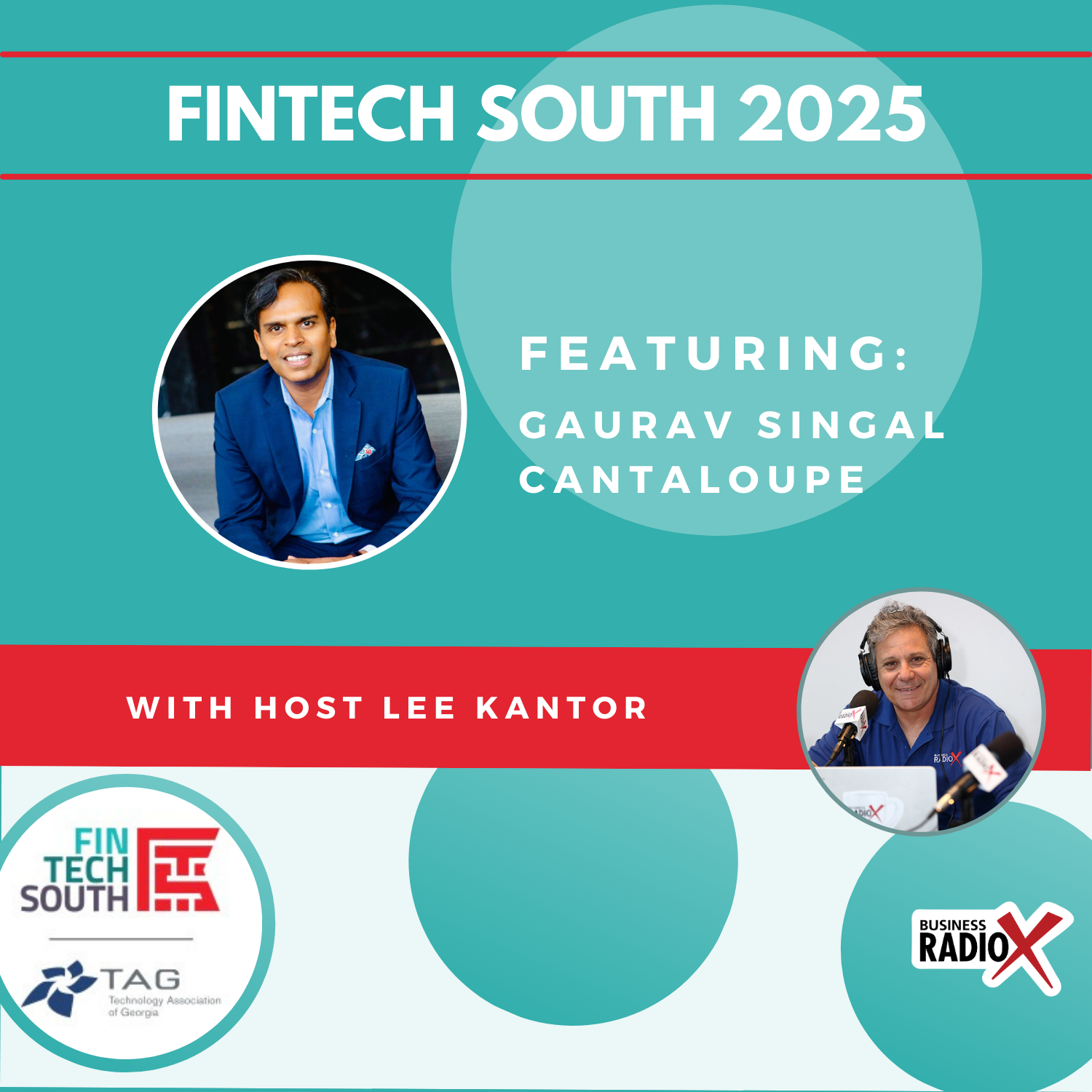
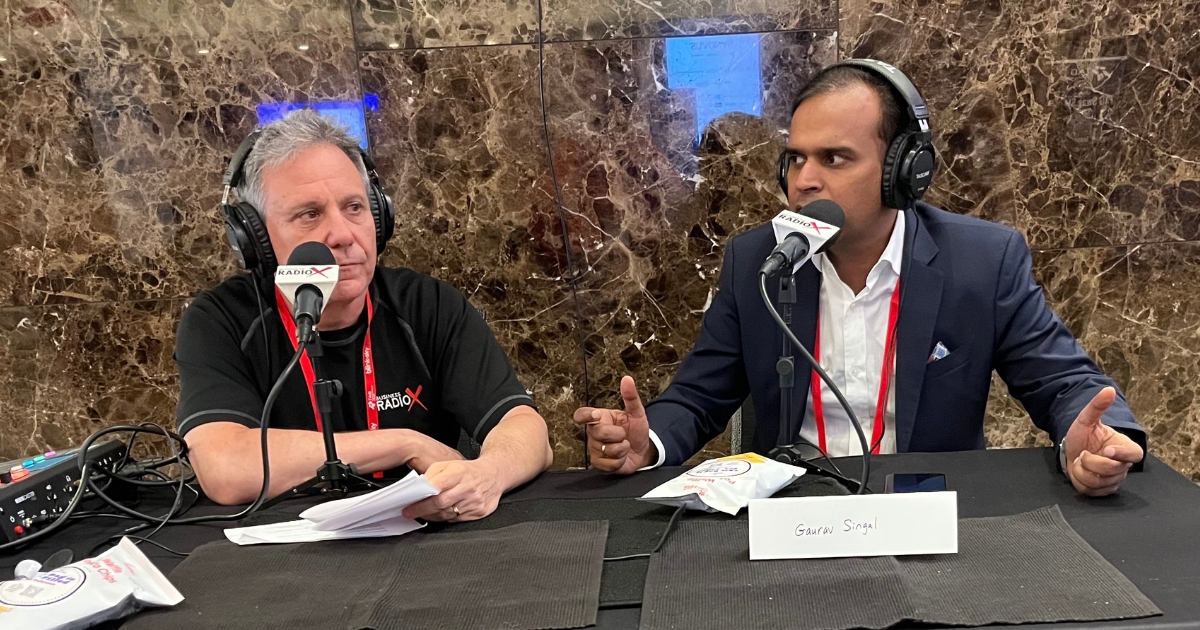
Fintech South 2025: Gaurav Singal with Cantaloupe

September 2, 2025 by angishields

ABR-Cantaloupe-Fintech-South-2025-Feature
Atlanta Business Radio
Fintech South 2025: Gaurav Singal with Cantaloupe
Loading
00:00 /
RSS Feed
Share
Link
Embed

Download file

Fintech-South-2025-Cantaloupe-Banner

Fintech-South-TAG

Gaurav SingalGaurav Singal was named Chief Technology Officer in September 2022. Singal has over 20 years in experience scaling technology companies and driving product innovation.

Prior to joining Cantaloupe, Singal served as the executive Vice President and Chief Information Officer of the Georgia Lottery Corporation, where he led the organization through a successful digital transformation.

His previous experience includes serving as the Chief Product Officer for Last Mile at XPO Logistics, a Vice President of technology at Goldman Sachs, and as a former technology startup founder.

Singal holds an undergraduate degree in Chemical Engineering from the Indian Institute of Technology at Delhi and a Master’s degree in Computer Science from the University of Illinois, Chicago.

Connect with Gaurav on LinkedIn.

Transcript-iconThis transcript is machine transcribed by Sonix.


TRANSCRIPT

Intro: Broadcasting live from Fintech South 2025 at the Woodruff Arts Center in Atlanta, Georgia. It’s time for Atlanta Business Radio. Now. Here’s your host.

Lee Kantor: Lee Kantor here, broadcasting live from Fintech South 2025. So excited to be talking to my next guest, Gaurav Singal with Cantaloupe. Welcome.

Gaurav Singal: Thank you so much for having me here.

Lee Kantor: For folks who aren’t familiar. Can you tell us a little bit about Cantaloupe?

Gaurav Singal: For sure. So we are the biggest unattended retail software company. So for folks, especially in North America, if you are going to a location and trying to buy something from a vending machine using your credit card, you’re going to a gas station and buying it in vacuum, going to Dave and Buster trying to play a clogging machine massage chair. You’re paying by credit card, a gas station, any of these locations, wherever there is not an attendant and you’re paying by credit card. It is actually going through our point of sale through our payment systems. And I have over 1.2 million IoT locations in North America that is providing that experience to end consumers to buy a product or a service.

Lee Kantor: So what was kind of the genesis of the idea? How did this business get launched?

Gaurav Singal: So essentially how it launched was I think some, you know, I think somebody’s family or their kids, they said, hey, dad, we want to make some money. Can we put like maybe a vending machine in our school so I can actually manage it while I’m at school and make some money? And that’s how the vending machine business started. And then when the kids did not have the money and they wanted their, you know, maybe a credit card to use or with Covid, we saw a huge leap and leapfrogging into people using credit cards on these vending machine and unattended locations. That’s where we saw a huge uptake in using credit cards at these locations.

Lee Kantor: So was cantaloupe going store to store and and converting all of these locations into customers.

Gaurav Singal: So what we did is, you know, we partnered with OEM partners, which are essentially the vending machine makers like cranes and Dixie, narco and other machine types. So they by default put our credit card into their machines. So that way, you know, they’re retrofitted and it is available for any of their operators to use. But we also did like, you know, social media campaigns. We reached out to people like, you know, our salespeople will contact the phone numbers on the vending machines and kind of do a cross-sell or upsell opportunity for them to be able to buy these credit card readers.

Lee Kantor: But the brand is kind of hidden from the.

Gaurav Singal: Yes. So that’s the beauty of technology, is when you don’t notice it and it happens in the background, or you’re getting an amazing experience and, you know, and the beauty of technology is, is when it doesn’t work, then you really see the impact, right? Everybody, you know, it sucks all the oxygen out of the room. So my real the beauty of my job or the beauty that I’m doing my job really well is when nobody notices that cantaloupe is actually in the ecosystem.

Lee Kantor: But it’s a double edged sword, though, right? Because you want to be known by your customers that, hey, cantaloupe is the solution that we should choose.

Gaurav Singal: Yeah, yeah. So in unattended retail, we are a big brand. So we are the biggest brand in North America that do unattended retail. So anywhere any of the, you know, merchants, they want to do a micropayments. They want to accept any payments below $25, they will naturally come to cantaloupe because we have made a name in making that payment possible at a very good acceptance rate. So cantaloupe is a big brand in the industry now. So while an end consumer may not know, but all the people who are running these businesses, you know, either they know us or they know it from word of mouth from their friends who are already in the business.

Lee Kantor: So what brings you to Fintech South? Why is it important for you and your team to be here?

Gaurav Singal: Yeah, as I said, you know, Atlanta is the transaction valley, not a Silicon Valley, but a transaction valley. So obviously, you know, coming to fintech South, it has given me an opportunity to look at various sponsors, various collaborators, various partnerships. I have met, you know, a lot of people who are also looking for jobs as well. So and access to talent as well. So it’s kind of a mix of all this, which keeps me, you know, excited to come back every year at Fintech South.

Lee Kantor: So, um, looking ahead, what do you see as trends or technology that you should be paying attention to or the consumer should be paying attention to?

Gaurav Singal: Yeah. Awesome. So basically, you know, as you see, right today we are seeing a healthy collision between attended retail and unattended retail. So anywhere if you’re going to a Costco or a Walmart, you see, you know, more and more unattended locations where the shift of checkout process is now more on the end consumer versus a Costco worker or a Walmart worker. So we are seeing a trend that unattended payments and unattended checkouts are going to grow and grow, right? Because of the shortage of labor, rising wages. Right. And the merchants want to give you the better cost of acceptance without increasing that burden for people who are actually just doing checkout. So what we are pivoting on is we are leveraging AI in our smart pending. So we are actually we have solutions today which have AI camera, you know, camera vision and AI vision that is built on smart vending. So you can actually go to those smart vending locations, use your credit card to open that, pick up any bag or bag of chips or a Coke or a beer and just walk out. And automatically, those AI vision camera will detect what you took and will automatically charge you.

Lee Kantor: Now, is there a customer adoption issues with that kind of technology? Because I saw that some large brands tried that and didn’t work as well as maybe they anticipated.

Gaurav Singal: So as with any technology right there is always going to be adoption gap, right? A lot of times I see people overestimate things in the short run and underestimate in the long run. There are some concerns, legit concerns from consumers, but what we are doing is we are actually kind of providing that feedback to the customer that hey, there is. There are cameras that are in use. They’re only used to detect the product. We are not recording them. And that has helped us generate the trust in the customer that hey, by the way, this is really operating in a private way. Secondly, you know, what we are also doing is, you know, given, you know, we are using AI sensors as well as, you know, AI based cameras. We have we can 100% detect that this is the product that you have taken. So that has also increased trust in the transaction that customers know that your technology or our control technology will charge them for the right product at the right time.

Lee Kantor: So now, um, are you seeing kind of other countries leading more in this area, especially like when it comes to vending? Is there opportunities for America to really kind of get more out of vending than other countries maybe have already embraced?

Gaurav Singal: Yeah, no, for sure, I think I don’t know if you have been to Japan, but if you go to Japan, right. I think everything is available in a vending machine, right? With food, whether it’s a consumer product, whether it’s electronic, anything you can think of, it’s actually in a vending machine at different locations. So I still feel I think we are like not a traditional vending machine. But I think the more and more I’ve been thinking about it, I think the world is going to converge into smart vending, where you’re going to see all of these locations pop up, whether it’s in a retail store, airport, gym, school, college, wherever you are at. But, you know, with our technology will be automatically able to detect what you have taken. And there would not be a need for an attendant to be there. They will only be needed to restock, and all of that would be happening through technology and unattended location and self-service commerce.

Lee Kantor: Yeah, I would think there’s a big opportunity because America has the space, but it may not have the employees to do the kind of work. And this kind of solves both of those problems?

Gaurav Singal: Absolutely. I think we are definitely getting these are definitely tailwinds for us. You know, with the as I said, with the rising, uh, you know, wages and, uh, you know, labor shortage, this is you know, as I said, this is a strong trend for unattended to grow and grow.

Lee Kantor: So if somebody wants to learn more about cantaloupe and partner with you, uh, what is the website? What’s the best way to connect?

Gaurav Singal: Yes. So the best way to connect with me is always on LinkedIn. So I’m the chief technology officer at cantaloupe. The fruit cantaloupe, because we couldn’t get the other fruit name, which was apple. Our website is WW cantaloupe.com.

Lee Kantor: Well thank you so much for sharing your story today, doing such important work. And we appreciate you.

Gaurav Singal: Thank you so much for having me here.
 

Tagged With: Cantaloupe, Fintech South 2025

Fintech South 2025: Shanthi Shanmugam with Casap

September 2, 2025 by angishields

ABR-Casap-Fintech-South-2025-Feature
Atlanta Business Radio
Fintech South 2025: Shanthi Shanmugam with Casap
Loading
00:00 /
RSS Feed
Share
Link
Embed

Download file

Fintech-South-2025-Casap-Banner

Fintech-South-TAG

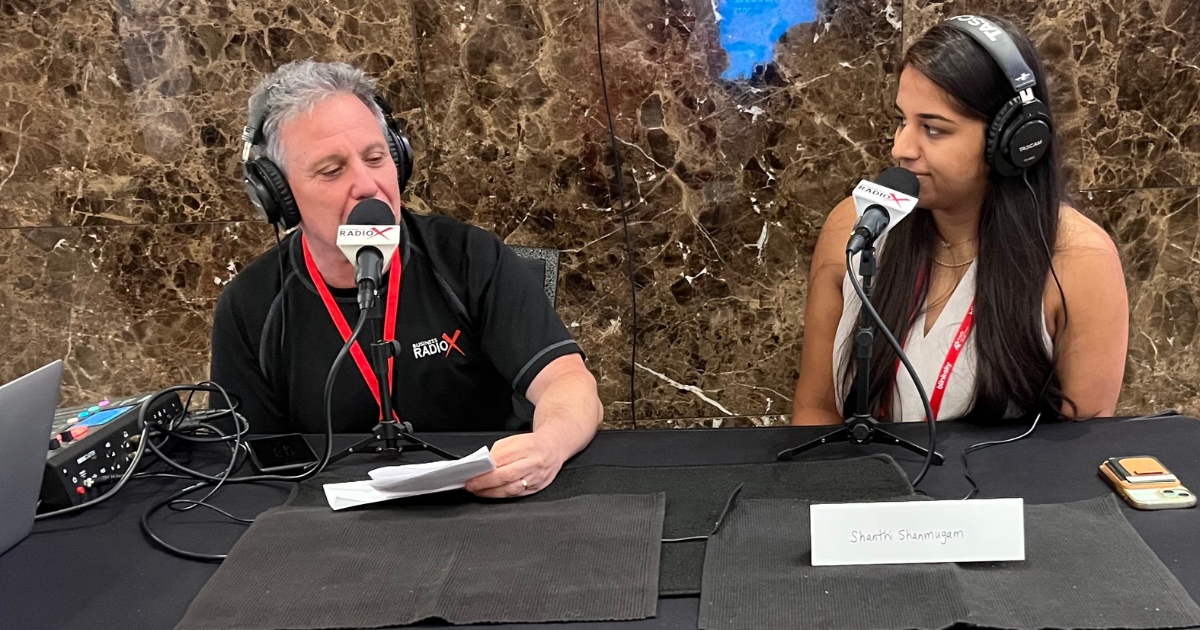
Shanthi-Shanmugam-Fintech-South-2025Shanthi Shanmugam is CEO and Co-Founder of Casap. Casap is a copilot & collaboration platform to automate disputes, reduce fraud loss, and create loyalty building opportunities.

Casap’s mission is driven by cutting-edge technology, client success, and a deep sense of empathy.

We are committed to creating innovative solutions that expedite resolution and provide financial peace of mind. We win when our clients win.

Casap safeguards your bottom line with a dual shield—exceptional automated compliant operations that don’t just reduce fraud loss, they delight your cardholders in the process.

Connect with Shanthi on LinkedIn.

Transcript-iconThis transcript is machine transcribed by Sonix.


TRANSCRIPT

Intro: Broadcasting live from Fintech South 2025 at the Woodruff Arts Center in Atlanta, Georgia. It’s time for Atlanta Business Radio. Now. Here’s your host.

Lee Kantor: Lee Kantor here broadcasting live from Fintech South 2025. So excited to be talking to my next guest, Shanthi Shanmugam with Casap.

Shanthi Shanmugam: Hi, Lee. Thanks for having me here.
Lee Kantor: Well, I’m excited to learn what you’re up to. Tell us about Casap. How are you serving folks?

Shanthi Shanmugam: Yeah. So Casap, I started the company a couple of years ago. We help banks transform disputes, card disputes from something that sucks to something that actually keeps their customers happy.

Lee Kantor: Wow. How do you how were you able to flip the script like that?

Shanthi Shanmugam: Well, I mean, think about it. If you see a transaction on your account that wasn’t you, you’d be pretty upset. Then you go to your bank and you say, please help me out. Please give me my money back. That’s what you’re here for.

Lee Kantor: They’re known for their high level of customer service.

Shanthi Shanmugam: Exactly, exactly. You get it, you get it. So it’s really about. I mean, you don’t really expect them to make it easy to get your money back, but what if they gave you your money back immediately because they knew you were telling the truth?

Lee Kantor: Hey, I would.

Shanthi Shanmugam: Help them do that. We helped them do that.

Lee Kantor: So how do you help them do that?

Shanthi Shanmugam: Well, so let’s say let’s take that situation. Let’s say you’re looking at your account. You see a $2,000 TV from Best Buy. That wasn’t you wasn’t your family. It was no one. You know you. Instead of having to drive to a branch or call someone during business hours, you can go right in your app. You can pick that transaction. You say, that wasn’t me at that point. Csat we use AI to figure out based on your history. Do you tend to buy TVs at Best Buy?

Lee Kantor: Do you o’clock in the morning at 2:00 in the morning?

Shanthi Shanmugam: Exactly that. That. Well, look at all that stuff. We’ll ask you a set of questions that the best fraud investigator would ask you. And at the end of asking these questions in the app, we will have a win score. So we’re going to figure out do we think Lee’s telling the truth or not? And even if you are telling the truth, can we actually get the money back from BestBuy? Will they cough it up because we know how to win chargebacks against Best Buy. So based on all of this data, we’ll have this win score. Let’s say it’s like an 80% chance we’re going to get your money back. We will immediately give you that money. The moment you submit your dispute and close out your case. And if we can give it to you immediately, we’ll give you a status tracker. Think of it like the Domino’s Pizza tracker. You order a pizza, tells you when you have toppings on your pizza. We’ll do the same thing with your dispute. Make sure you always know what’s going on.

Lee Kantor: So how are banking institutions embracing this new technology?

Shanthi Shanmugam: You know they love it. And I’ll tell you why. I’ll tell you why. They do care about the customer experience, which is great. What they also really care about is the bottom line. Today, most banks have to outsource their disputes to someone there. It could be a processor.

Lee Kantor: So they’re not doing it. They didn’t say, hey, maybe we should solve this problem.

Shanthi Shanmugam: Some of them have tried and some of them have tried. No, don’t get me wrong, a lot of them have tried. It’s hard because you got regulations, you got Régie and regs that tell banks, if you’re not 1,000% sure that Lee is lying of right now, I made you a fraudster. Yeah, Yeah. Yeah. So if we’re not a thousand, you know, is innocent until proven guilty for not 1,000% sure Lee is lying. And you can’t figure that out in the first ten business days, you got to give him his money back. So with all the volume. Because now there’s TikToks and YouTubes telling everyone, hey, did you know if you’re slightly inconvenienced by someone, instead of talking to the merchant about it, you can just use your bank like a concierge and get them to handle the refund. So now the disputes volume is increasing 100% year over year, and the banks are getting overwhelmed. And then they have this rule that says, hey, if you don’t figure it out in ten days, give the money back. So they’re losing a lot of money, $100 billion to first party fraud. So it’s not a hacker out in a different country stealing your information on the dark web. It’s actually your neighbor, your friendly next door neighbor that’s buying a TV, having a little buyer’s remorse and pretending they didn’t. And that’s the kind of fraud that’s really eating away at banks today. So when they embrace us, they say, cool, you’re going to make your customers happy and keep them longer because you’re going to help us show up in these moments that matter, gonna help us cut fraud in half. That’s what we do. We cut fraud losses by 51% for our institutions, and we’re going to keep them compliant and enable their teams to be five times more productive than they are today, because we’re a one stop shop for everything about disputes.

Lee Kantor: So who is your client? Is it the mega bank? Is it the community bank? Like all.

Shanthi Shanmugam: Of the.

Lee Kantor: Above? Well, it sounds like every bank could use you. But who are the ones that are actually, you know, paying to use you?

Shanthi Shanmugam: Yeah, so. But we don’t give it away for free, so all of our customers are paying us. But. Yes. Well, well, we’ve got banks that are in the top 25. We’ve got community financial institutions. We’ve also got public fintechs. So, Emily, you didn’t ask me how I got into disputes, but I did not come out of the womb wanting to solve disputes. So this.

Lee Kantor: Was.

Shanthi Shanmugam: A.

Lee Kantor: Childhood dream.

Shanthi Shanmugam: It was not. It was not. I did not think. Mom, dad. One day, one day, one a silly card dispute.

Lee Kantor: Solving this problem.

Shanthi Shanmugam: Right before I become president. Um, no, no, no, I was I was the second product hire at Robinhood. Um, and I had honestly, I spent a lot of time doing a lot of things there. I added crypto to the app, I helped redesign the app, but the most important thing was after that whole GameStop thing, if you guys remember that.

Lee Kantor: Yes.

Shanthi Shanmugam: I had to figure out how to rebuild trust. And that’s when I started thinking about these moments that matter. And then my co-founder had this kind of parallel life at chime fixing disputes. And then we looked at each other and we realized we spent three years building something that was comically the same, so decided to make it a company.

Lee Kantor: And then were you based?

Shanthi Shanmugam: We’re based in New York.

Lee Kantor: And then why are you here? Fintech. So.

Shanthi Shanmugam: Well, you know, transaction alley, if you heard that phrase, I’ve.

Lee Kantor: Heard.

Shanthi Shanmugam: It 20 times today. No. But actually, though I think it’s such a beautiful, beautiful community here, everyone know and everyone, all these processors all together. And honestly, this is especially when fighting fraud. We’ve got to work together. The fraudsters are hanging out, they’ve got a little group chat going on, like we got a collaborated places like this and help each other out. So that’s that’s why I’m here. I spoke a little bit earlier today and now I’m speaking with you.

Lee Kantor: So what is your take on the Atlanta ecosystem?

Shanthi Shanmugam: It’s warm. It’s fuzzy. It’s. No, I’m getting to learn it a bit better. But I think what’s what’s really amazing is that when it comes to financial infrastructure, how are money? When I bought my bagel at the airport today that was running on infrastructure created by the institutions here, and whether I bought my bagel here or in London or in India, where my family’s from, it’s actually running on this infrastructure. So I to answer your question, I think this ecosystem is beautiful and I’m excited to be a part of it.

Lee Kantor: So how do you see you and your firm kind of leaning into the Atlanta fintech ecosystem? In addition to Fintech South, obviously this great event, but also tagging Technology Association of Georgia, D.C. and the opportunities there for your company to benefit from that community.

Shanthi Shanmugam: I definitely do, and I think the best way to benefit from a community is to give to it. So I, I mean, when when I saw the Fintech Academy and all of these young professionals looking to figure out how to make their mark on this amazing ecosystem. I would love to share some of the insights I’ve learned the last two years. Building something that’s pretty, you know, touching, pretty critical fabric of of our infrastructure. And then the second thing is, I’d love to work with a lot of these companies, I think, I mean, I have the benefit of getting to build case up the same week ChatGPT came out. We’ve got to have a fundamentally different set of first principles that’s enabled us to do things in a very different way. And sometimes I think we’re it’s better working together than trying to rebuild what everything’s doing in separate companies like my co-founder and I were doing for a bit.

Lee Kantor: So what do you need more of? How can we help you?

Shanthi Shanmugam: Honestly, visibility with the right, with the right folks. Like, we’ve got some really amazing folks in Atlanta. We’ve got canned decent, right? You know, digital banking and like how customers are interacting with their banks. We’ve got processors such as, you know, Fiserv and FIS with some presence here. And now visa is opening up, uh, some presence here. But just, I think awareness around how important it is to show up in moments that matter, and how disputes is, is exactly one of those moments.


Lee Kantor: Moments that matter.

Shanthi Shanmugam: Moments that matter.

Lee Kantor: And, um, I can’t wait to see more and more banks embracing that, that line of thought.

Shanthi Shanmugam: Yes. Me too. I mean, why are you laughing? Me?

Lee Kantor: I’ve been to the bank before. You have? Oh.

Shanthi Shanmugam: I’m so sorry.

Lee Kantor: We’ll rebuild that trust. We’ll get.

Shanthi Shanmugam: You back.

Lee Kantor: Well, um, if somebody wants to learn more and connect with you and learn more about KSAT, what is the best way to do that?

Shanthi Shanmugam: Yes. Well, find me on LinkedIn. I talk a lot about first party fraud stories, some of them not so safe for work, but we see a lot come through when customers are saying they didn’t do something, they totally did. So yes, definitely find me on LinkedIn. Shanthi Shanmugam. My name is a little hard to spell so you could also email me Shanti sh a and t h i@ksat.com.

Lee Kantor: And can you spell KSAT?

Shanthi Shanmugam: Yes, I can see ASAP see ASAP.

Lee Kantor: Good stuff. And then before we wrap, is there a story you can share with maybe, uh, don’t name the company, but maybe a company you work with that illustrates how effective your system is at, um, you know, solving this problem and creating more moments of manner.

Shanthi Shanmugam: Absolutely. I will give you two really quick ones. All right. So we have we have a customer who who started seeing a very large volume of disputes. There was a TikTok video floating around saying, hey, did you know if you go to this customer, the bank will not be named and file a dispute under 45 bucks? They’re just going to give you your money back. You got all these 44.99 transactions. And in there there are a few. Um, there are a few folks that really needed their dispute resolved quickly. It was this it was this really innocent customer who saw it. It was actually that’s why I came up with the TD example, a $2,000 Best Buy TV on his debit card, and he had rent due at the end of the month and he was freaking out. There was no money left, so our platform one enabled them to figure out all the people that were abusing this policy and make sure that we were closing out invalid dispute cases and enabling the team to handle cases five times faster than they were doing before. And because of our win score, we realized we were going to help. Let’s call him Timmy. We were going to help Timmy pay rent at the end of the month, whereas if we if they didn’t have case up by the time they got around to Timmy’s case, his rent would have been due and who knows what his landlord would have done. So that’s that’s the way we’re really showing up in a moment that matters. And then on the other side, not just these folks that are saying, oh, file something less than 45 bucks, you’ll get your money back. We’ve got folks that are really abusing disputes. We saw a family fraud subscription ring. Let me describe it to you.

Lee Kantor: Family. It’s a family business.

Shanthi Shanmugam: Family business, a first party fraud. It’s. Imagine. Jane Smith reports a dispute for John Smith at the same house for a magazine subscription that she didn’t get. Then John Smith does one for Rhonda Smith, and Rhonda Smith does one for James Smith. So now in each dispute is worth 300 bucks. So that’s like $900 of disputes that they’re just winning before this institution had case up every month. It’s free money. It’s free money that’s going to the customer. And that’s honestly coming out of all of our wallets at the end of the day, because these are fraud losses that we’re paying for in fees and all of that. So KSAT was able to figure out this family fraud subscription. Ring had this home address in common. We’re able to deny all of these cases.

Lee Kantor: Good stuff. Well, the impact is real. And congratulations on all the success in the momentum. That sounds like you have a great solution.

Shanthi Shanmugam: Appreciate it. Thank you so much for.

Lee Kantor: Having me one more time on the website. Before we.

Shanthi Shanmugam: Wrap. Yes ksat hq.com see ASAP HQ and you could find some time with me and I’ll give you a demo of the product and show you how we cut fraud in half.

Lee Kantor: All right. Well, Chauncey, thank you so much for sharing your story, doing such important work. And we appreciate you.

Shanthi Shanmugam: Thank you. Appreciate you, thank you. Lee.


Tagged With: Casap, Fintech South 2025

Fintech South 2025: Charles Potts with ICBA

September 2, 2025 by angishields

ABR-Charles-Potts-Fintech-South-2025-Feature
Atlanta Business Radio
Fintech South 2025: Charles Potts with ICBA
Loading
00:00 /
RSS Feed
Share
Link
Embed

Download file

Fintech-South-2025-ICBA-Banner

Fintech-South-TAG

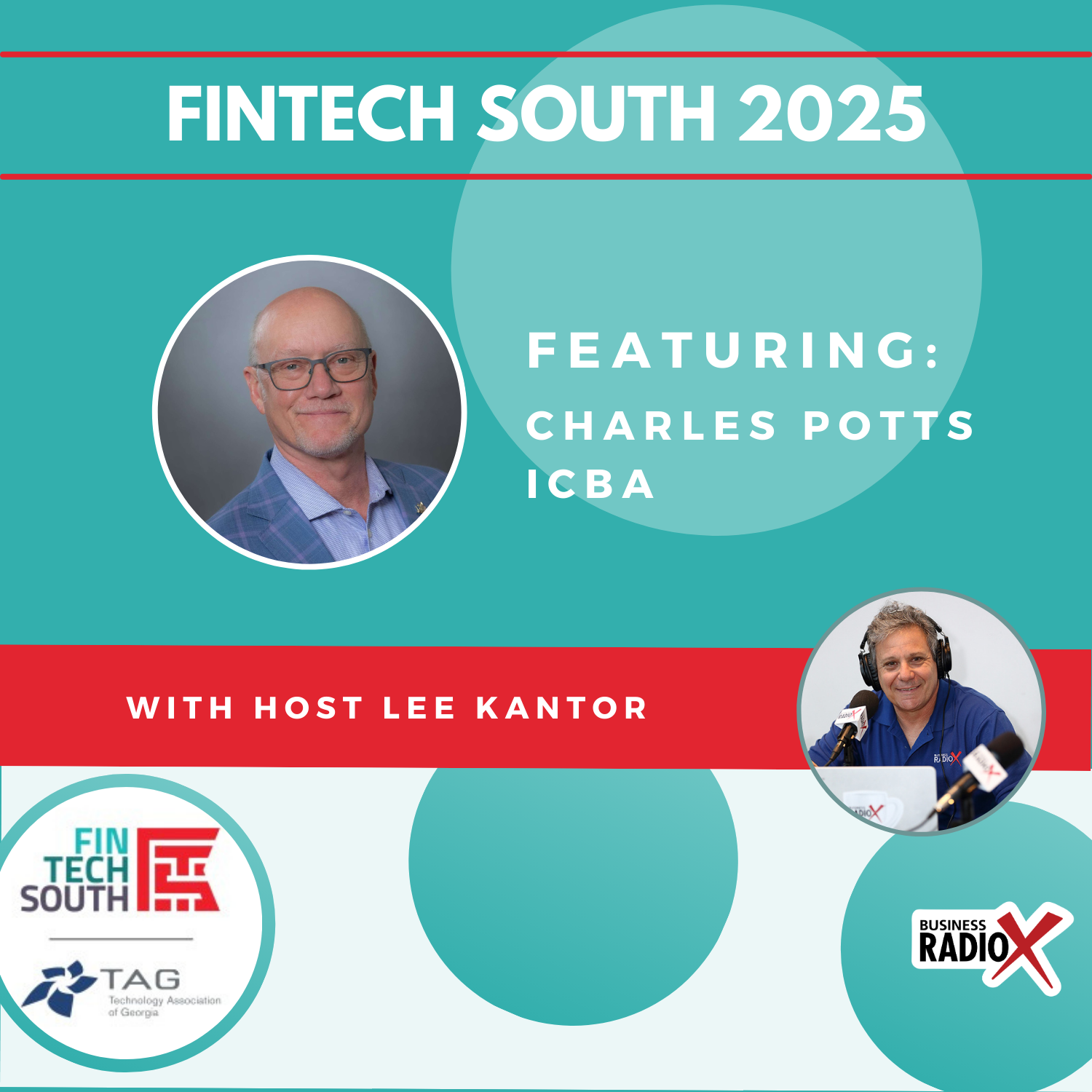
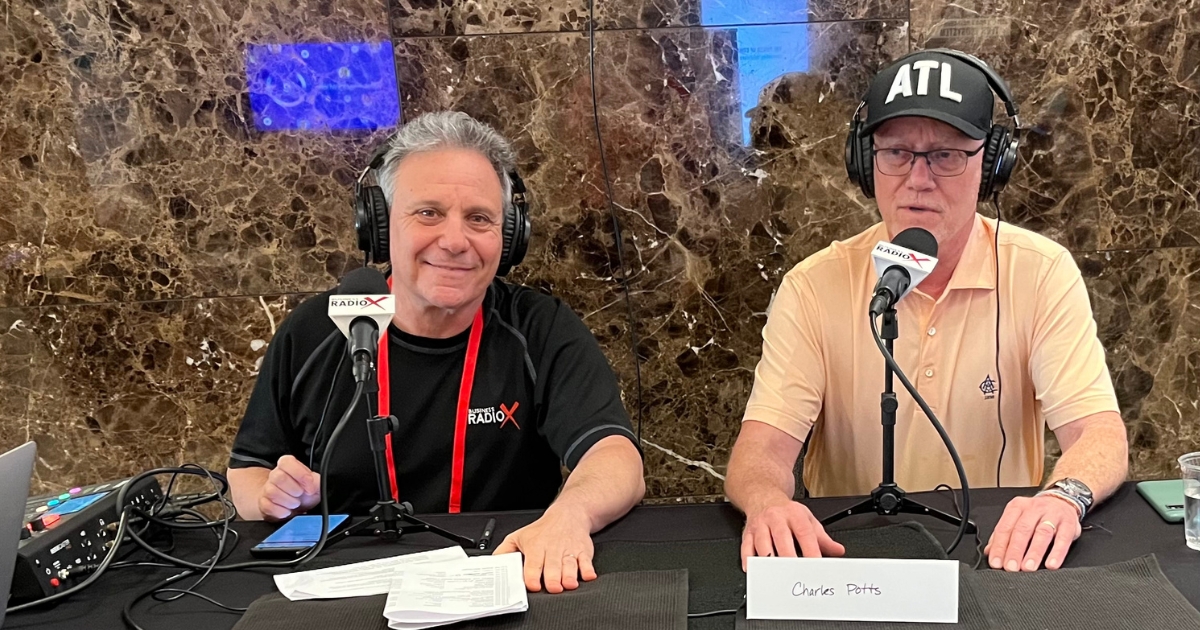
Charles-Potts-Fintech-South-2025Charles E. Potts is Executive Vice President, Innovation for the Independent Community Bankers of America® (ICBA).

In this role Potts drives ICBA’s innovation initiatives, and financial technology strategies, working with ICBA leadership to develop impactful, value-added solutions that help community banks seize new market opportunities to meet customers’ evolving financial services’ needs.

Potts’ extensive experience in banking and financial service firms provided the background Potts needed to start, co-found or lead various fintech start-ups including digital banking, mobile engagement, financial management and payments providers. Many had successful exits via IPO’s or acquisition via strategic acquirers.

A frequent speaker at national trade shows and conferences, Potts previously served as executive managing director at First Performance Global, where he led international business and corporate development activities for its card-control and fraud alert platform. Before that he served as CEO for NetClarity, a start-up in the University of Florida’s Business Incubation Hub. Prior to ICBA, he worked at the Advanced Technology Development Center (ATDC), leading the fintech practice where he mentored startups as part of the Georgia Tech-based incubator.

Charles attended the Georgia Institute of Technology, did his graduate studies at Georgia State University in Atlanta and attended the Graduate School of Banking at LSU. Potts, an avid masters runner, cyclist and soccer fan, lives with his wife in Atlanta, GA. They have a daughter who recently graduated from the University of North Carolina at Chapel Hill where she was a nationally ranked pole vaulter on the Track and Field team.

Transcript-iconThis transcript is machine transcribed by Sonix.


TRANSCRIPT

Intro: Broadcasting live from Fintech South 2025 at the Woodruff Arts Center in Atlanta, Georgia. It’s time for Atlanta Business Radio now. Here’s your host.

Lee Kantor: Lee Kantor here, broadcasting live from Fintech South 2025. So excited to be talking to my next guest Charles Potts with ICBA. Welcome.

Charles Potts: Thank you Lee. Glad to be here and I appreciate you guys giving us this chance.

Lee Kantor: Well, for folks who aren’t familiar, can you share a little bit about ICBA? Uh, who are you serving? And, uh, why is it so important to learn more about what you guys got going on?

Charles Potts: Yeah, absolutely. ICBA is the independent community banks of America. We are the Washington DC based trade association or lobbying firm, if you will, for the community banks here in the United States, a little over 4000 community banks. We are their primary voice and advocate in DC, with with the legislative body and all the policy people. And we have been around for over 90 years looking out after the interest of the community banks and why this is critically important. Well, I have a unique role in the organization and why Fintech South is is again part of what we, um, immerse ourselves in. As I’m the chief innovation officer, I lead an arm of the organization that helps our community banks, um, address the real needs of their communities through the types of fintechs that that we see here, and taking advantage of the new technology to really service those customers. And this is more and more important because, you know, what we know is almost two thirds of all small business lending comes from a community bank in the United States, and 80% of all farm loans comes from community banks. And so in this very dynamic marketplace, we need to ensure that our community banks have the best tools and solutions to keep them competitive, to keep them on par with the biggest banks and biggest fintechs, and make sure they’re meeting the needs of the small businesses and customers that they serve in their communities.

Lee Kantor: Now, I’m a big fan of community banks, but for folks who aren’t familiar with maybe the difference between a community bank and one of those stadium banks that might be in a given community, um, can you share kind of what how they’re different and why it’s so important that each community has a thriving community bank ecosystem in their neighborhood?

Charles Potts: Well, look, it’s it’s not that far in our rearview mirror. What we dealt with in 2020 with the Payroll Protection Program, uh, and ultimately, Small Business America recognized once again that they needed a banker, Are not just a bank. And so the relationship model that is critical to the success of these communities, knowing who you’re doing business with. Uh, you know, knowing, uh, who is looking out after your interest in these communities is one of the biggest differentiators in community banks. They take local deposits, they make local loans. They really serve the needs of the community and the businesses that they that they’re part of. And they do this with their local leadership. So probably that relationship, knowing who you’re banking with, I tend to say, is one of the most critical differentiators in what, uh, what makes a community bank and, and ultimately, you know, you, you, you tend to know, um, what the pain points are and what the needs are of the community that you serve because you are part of it. You grew up in it. You have multi generations, uh, that have served it. And um, and that is a huge differentiator and for the customers in that community. You know, these are people that their kids go to school with. They play little league ball together with. And so there is a there’s a set of relationships there that are ingrained. Um, you know, very, very deeply.

Lee Kantor: And then when you as a customer go into a community bank, there’s a higher probability they’re going to remember you and know your name as opposed to you walk into some of these larger mega banks where it’s going to be a different person every time you go in there. They’re not going to know who you are. You’re a name on a spreadsheet.

Charles Potts: Well, and and look, as I said, um, you know, businesses particularly want to know who they’re doing business with. And, and the business owners and the operators of those banks understand that critical symbiotic relationship. And those are those are job creators in those communities. And so it is incumbent upon the community bank to know and understand the needs of that small business Operator.

Lee Kantor: And it’s also it’s it’s symbiotic, though. I mean, the community has to embrace the community bank as well. Oh, and they can’t take it for granted.

Charles Potts: Absolutely. And, you know, there’s a there’s a long, deep, rich history there that, uh, that that frankly, uh, plays out very, very well when you look at, as I said before, uh, the growth in the growth in jobs in the United States in general comes from small businesses, and small businesses rely upon community banks as their primary source of funding.

Lee Kantor: So now when you come to an event like a fintech South, um, how do you and your team, uh, attack it to make sure that you’re getting the most value out of it? Is it the education or is it the, uh, connectivity where you’re interacting and meeting new folks? Uh, how do you get the most out of something as important as a fintech south?

Charles Potts: Yeah. So. So, uh, our relationship, uh, from the innovation arm of ICB, and we really have three different pillars. We have the traditional advocacy, the lobbying side, if you will. We have a very robust education arm that works with hundreds of thousands of bankers every year to make sure that they’re trained on all aspects of banking, from compliance to lending and everything in between. And then our innovation arm sits at this really interesting intersection between the bankers themselves and these fintechs and these fintech entrepreneurs. And so an event like Fintech South is really as much as, um, our ability to promote and highlight what these companies are doing and how they’re helping community bankers, as well as it’s helping the community banks that are in attendance understand what these companies can do for them. So we, you know, we we kind of jokingly play matchmaker, if you will. And so our job is to continue to evangelize for all the great work that our community banks are doing. And at the same time, the great work a lot of these companies are doing to help our community banks. So we’re, you know, we’re, uh, we’re in oftentimes an extension of a lot of these companies at these kind of events where we’re helping highlight and promote what they’re doing. And we’re also always actively recruiting for new early stage and growth stage companies to be part of our programs. And one of our cornerstone programs is our Think Tech Accelerator, where twice a year we have six companies in a ten week program that is, uh, Community Banking 101. It is an immersive ten weeks where they, they learn and know and understand the community banking world, and we help bring them to market to solve real world problems that our community banks have. So this kind of event like Fintech South gives us all facets of really the business development side of our innovation arm.

Lee Kantor: So now, has there been any technology or trend that you’ve kind of picked up from being here that you’re bringing back to your folks.

Charles Potts: We know we’ve gone. We’ve gone this long and we haven’t said AI. But of course, anything artificial intelligence related, which in our world is more about operational efficiencies, sometimes backroom operations, uh, applying those tools and technologies to address some of the more redundant labor, intense repetitive practices. So there are a number of solution providers here that we know and work with very closely, who have tools and services and capabilities that can help our banks and those kinds of functions. There are a number of participants here who are longtime, um, corporate members and supporters of what we do, uh, sponsors of our programs. And so we’re constantly staying on top of what they’re doing and looking at their new initiatives. And as we’re starting to explore, I say we the industry, not just we ICB how things like stablecoins can be applied to to to banking opportunities and use cases, as well as all all types of other payments vehicles. Those are the things that we continue to look at in an environment like Fintech South.

Lee Kantor: Now, um, where are you when it comes to physical checks? Oh, good. Like, well, a lot of the a lot of the consumers have kind of moved to digital. And then a lot of the, uh, maybe legacy companies are.

Speaker4: A little smaller.

Charles Potts: Um, you know, this is this is not for attribution to my employer, ICB. This is Charles Potts personal opinion. But the biggest problem we’ve had in the last couple of years has been the increase in check fraud in the. And it is a well known, uh, issue in our industry. We have a task force that has been, uh, spun up to focus on this. We, we spend a lot of our efforts also inside of DC and Capitol Hill, the legislative bodies and regulatory agencies working to make sure that the policies are addressing the right ways for our community banks to address this this burgeoning check fraud world that’s happened over the last couple of years and one of the largest, I guess, drivers of that was, frankly, the Treasury Department and the federal government sending out, you know, millions of stimulus checks that brought a whole bunch of new bad actors into the world to figure out new ways to go back old school and, and steal checks and wash checks and sell checks on the dark web. So that issue of checks, I mean, we we we have a check zero mindset. One of our policy guys came up with that term check zero. We want we want no checks.

Lee Kantor: And but and the consumer seems to want no check.

Speaker4: No consumer wants no jail.

Charles Potts: Look for everybody out there. Please tell your your congressional representatives to tell the Department of Treasury that’s to the part of jigsaw.

Lee Kantor: It’s like a disconnect. Like some industries are just, like, still look like holding on to this.

Charles Potts: Like the businesses, B2C, um, rebates, refunds, um, those kinds of companies that are in those businesses, telecom insurance, so forth, they still produce a a massive amount of checks that go out to consumers. It is not consumer. Consumers are not writing checks. Small businesses aren’t writing checks. It is, uh, it’s some of the big players who are in those kinds of small business.

Lee Kantor: It’s more trouble than it’s worth.

Charles Potts: It’s it’s I mean, my my daughter is a small business operator, and, uh, and she, she and I talk about this far too often.

Lee Kantor: So, um, if somebody wants to learn more about the community bank in their community or learn more about what eBay is doing in their community.

Charles Potts: Um, find me Charles Potts on LinkedIn. I’m happy to share and connect. Uh, we have a, we have a very robust, uh, uh, world of, of partners and affiliates at all the state levels as well. And, uh, we’d love for, uh, businesses are looking for a good community bank in their marketplace to serve their needs. We’d love to connect you as well. And that is that is a critically important part of keeping and growing a vibrant communities, making sure that businesses have capital to grow. They have a good capital, partners who support them and, uh, and go create jobs.

Lee Kantor: Well, Charles, thank you so much for sharing your story. You’re doing such important work and we appreciate you.

Charles Potts: Well, thank you so much, Lee, and I appreciate what you guys do here at Business Radio. And, uh, and for all of our listeners out there, uh, I want to make sure that, uh, you know, you go use a community bank when you can.


Tagged With: Fintech South 2025, ICBA

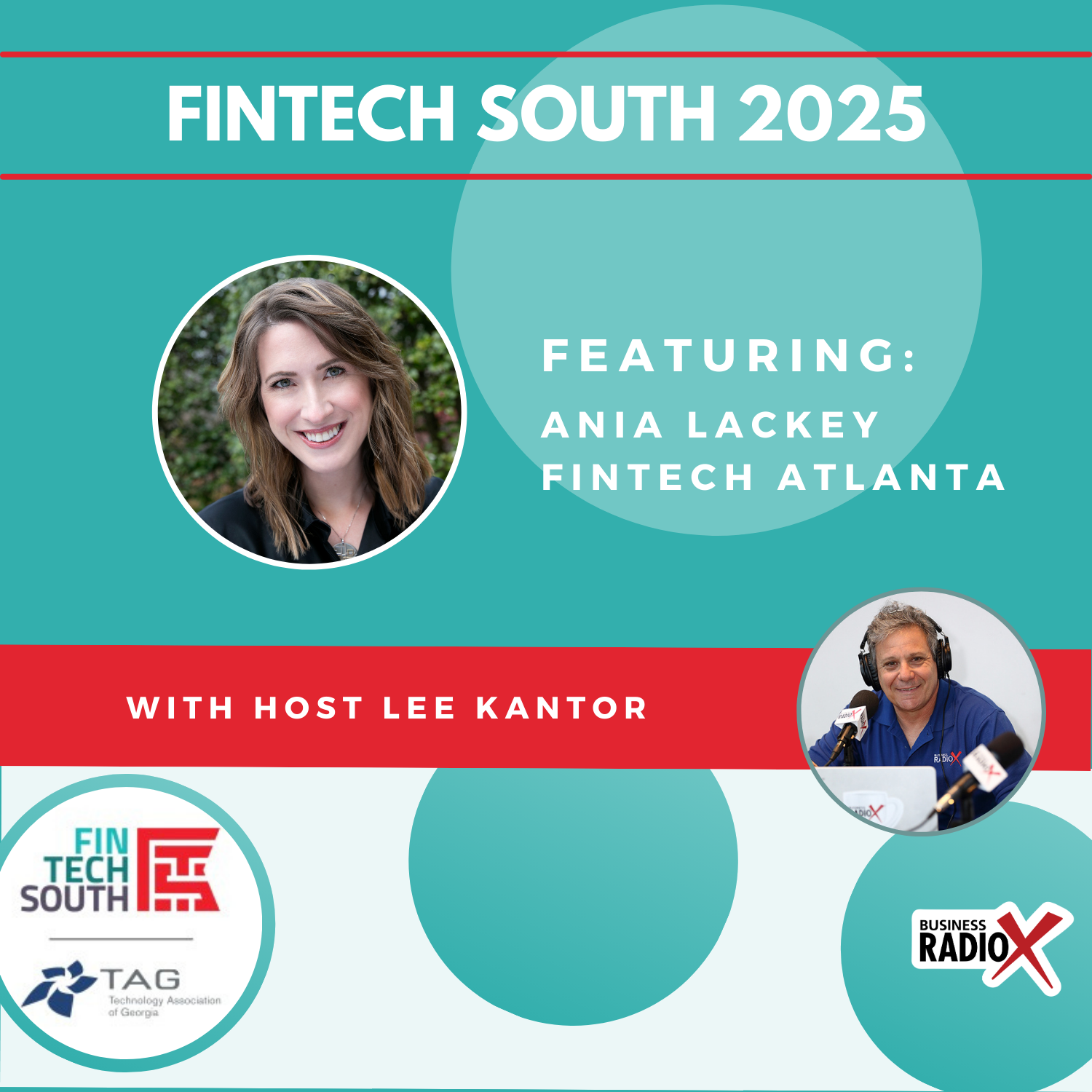
Fintech South 2025: Ania Lackey with FinTech Atlanta

September 2, 2025 by angishields

Atlanta Business Radio
Fintech South 2025: Ania Lackey with FinTech Atlanta
Loading
00:00 /
RSS Feed
Share
Link
Embed

Download file

Fintech-South-TAG

Ania-Lackey-Fintech-South-2025Ania Lackey is the Executive Director of FinTech Atlanta.

FinTech Atlanta is a coalition of companies working to advance Atlanta as the recognized global capital of financial technology.

Led by seasoned industry executives, the group’s priorities are to drive fintech industry growth, talent expansion, innovation acceleration, and public policy influence in Atlanta and across the state of Georgia.

Transcript-iconThis transcript is machine transcribed by Sonix.


TRANSCRIPT

Intro: Broadcasting live from Fintech South 2025 at the Woodruff Arts Center in Atlanta, Georgia. It’s time for Atlanta Business Radio. Now. Here’s your host.

Lee Kantor: Lee Kantor here broadcasting live from Fintech South 2025. So excited to be talking to my next guest, Ania Lackey with Fintech Atlanta. Welcome.

Ania Lackey: Thank you for having me.

Lee Kantor: Well, for those who aren’t familiar, tell us a little bit about Fintech Atlanta. How are you serving folks?

Ania Lackey: We have been around for almost ten years working to advance, um, the fintech ecosystem in Atlanta by working with many, many companies in this space. We focus on four major areas. Um, one is just the general industry growth. Um, another one, talent expansion, uh, making sure that we influence the public policy and then also innovation acceleration. We’ve got a ton of companies that work with us to make that happen.

Lee Kantor: So what was kind of the start? How did this begin? Fintech Atlanta.

Ania Lackey: Listen, I am brand new to this wall. And one of the very surprising things to someone like me was the fact that this ecosystem has been around for decades. I mean, we’re going back to the 50s and 60s. So Atlanta has been always positioned to be the capital for payments and transactions. Um, so ten years ago, a group of organizations and people in the industry, including Metro Atlanta Chamber Technology Association of Georgia at EPC, decided that it’s time to have a common voice, one organization speaking for the industry to make sure that it’s, uh, the well-known fact for them, which is we process a ton of payments that are US payments going through a node in Atlanta. That’s a fact that’s known not just in Atlanta, but also in the United States and globally.

Lee Kantor: So what kind of is your role? What’s your day to day look like?

Ania Lackey: Ah, every day is different, as they say. Um. I mean, first of all, you know, it’s been an easy transition. Thank you to my predecessor, Hilary Champagne. Um, so I focused on that for the last few months, but now it’s really a deep dive into the programing and things that we have done very, very well and then things we have committed to doing even better in the future. So we focus on scaling startups and companies in Atlanta, giving them an opportunity to get in front of enterprise companies for potential future pilots and opportunities to work together. Uh, we work alongside Laura Gibson, la mothe with the Georgia Fintech Academy to make sure that, um, the talent pipeline for fintech, uh, is is healthy and ripe with opportunities. As I talked to companies here at Fintech South this year. Talent, as always, is top of mind. Um, so we tried to focus on those things with our partners and companies.

Lee Kantor: So how do you kind of marry the challenge of dealing with enterprise level organizations that have certain needs and then kind of brand new startups that have a totally different set of needs and try to satisfy each one of those constituents.

Ania Lackey: That’s a great question. But honestly, in Atlanta, it’s not as difficult as it may seem. As you probably know, Atlanta has a ton of enterprise presence. We rank number 3 or 4 in the United States as far as the number of fortune 501,000 companies. Plus, we have this history of of business community engaging heavily and collaborating across the board. So for those enterprise partners, working with scaling companies is nothing new. They see a lot of benefit and sort of uplifting others coming behind them. So it’s a culture. And so that makes it much easier. But then on, on on the side of our company, on our organization, um, we have a program called Run It by the Buyers. And that’s sort of the vehicle and how we get those scaling companies in front of the enterprise partners, we get them on stage. It’s a pitch event. Um, they have an opportunity to tell your banks and payments companies why they could be great in their ecosystem and sort of their infrastructure. And we tracked what happens after that. That’s the success for us.

Lee Kantor: So, um, what are the activities or what are the wins for you where you’re high fiving your team at the end of the week? What what are kind of those key, um, metrics for you that you’re looking at?

Ania Lackey: That’s another great question. You know, for us, five months in, in this role, um, any new company that’s a payments fintech, um, coming to Atlanta, whether from another part of the US or from another country, that’s a huge win. And it’s not just fintech Atlanta to do that. We collaborate with economic development organizations with others in the ecosystem. So it’s always a big high five moment for for many partners. Um, from the fintech Atlanta’s perspective, you know, we want to grow. That’s my big goal for the next few years. Um, so adding new members, making sure that when they join and they commit to support, you know, we keep them busy and they see the ROI on their end. So not only signing up new members, but then taking the time to develop, plug them in and potentially develop new opportunities for them. Um, that’s that’s where when we get excited.

Lee Kantor: So a new member for you, like, say an enterprise organization joins. Does that mean all their employees join or is I mean, the one leader joins, like, what is a member? Uh, you know, how are you defining the.

Ania Lackey: Company joins, and we typically want one rep for the board. But really, the reason why they join is because that second, third layer of their colleagues wants to be involved, wants to be plugged in. And that’s who I want to work with.

Lee Kantor: So you want them as members to. Right? Those are the people who are kind of boots on the ground.

Ania Lackey: That is.

Lee Kantor: Correct.

Ania Lackey: But they don’t pay the membership fees at that point. They they come with the company. And then I will take anybody who wants to be involved and don’t promise if you don’t meet.

Lee Kantor: It, but you don’t want to. I mean, you’ll take anybody, but you want them to be active and engaged, not just to sign the and just have a line on their LinkedIn that says.

Ania Lackey: That is correct. Listen, I spend the last three and a half years at the Atlanta Tech Village, and I’m sure you’re familiar with Ali Merritt and the great work that she does. And one thing that she often says is rising tide raises old boats. And then we also talk a lot about serendipity and serendipitous interactions. So for me, creating opportunities to sort of put people in one room and give them an opportunity to talk and figure it out, that’s another success, right?

Lee Kantor: Creating those collisions.

Ania Lackey: 100% collision was the word I was looking.

Speaker1: For.

Lee Kantor: And so more of those the better. So, um, so how are you finding this event? Is it what you expected? Are you looking for more collisions yourself? Like, what would you consider a win at the end of this event?

Ania Lackey: You know, for us, the goal was to show up as fintech Atlanta here in Support Technology Association of Georgia. Larry Williams is on my executive committee. And we want to make sure that he and Tag are successful. So showing up um, again, rising tide, uh, along those lines. Um, we also wanted to give some exposure to our board members. So we were holding, um, a small content studio here at the event and gathering a little bit of content that we then post on LinkedIn. So giving them a little bit more visibility, telling the story of the ecosystem, uh, sharing that story to make sure more people are aware. Um, the panels and content, uh, have been great. Um, and then really just gospel of Fintech Atlanta, making sure people know who we are now.

Lee Kantor: Um, we were talking to Larry earlier. There was a mention of maybe, um, the footprint of Tag expanding beyond not physically expanding beyond, uh, in Georgia, but touching maybe the southeast as a region and looking at kind of the, the whole of the region rather than just Georgia. How do you see that fitting into your mission and what you’re trying to accomplish?

Ania Lackey: Fintech Atlanta is focused on Atlanta. So I would love to work on the community level with the idea that we want to tell that story globally. So there’s definitely sort of this tug and pull between local and global, but we have so much work that needs to be done here. I mean, there are new companies joining this ecosystem literally every day and big names. You know, we all know about stripe opening in the office. So it’s building connections takes time. Um, you know, I definitely avoid the surface level connection. Um, so, so and that takes time. People do business with people that they like and enjoy, and that’s sort of what I live by.

Lee Kantor: And then for folks who want to learn more, what is the best way to connect the website? What’s the best? That’s correct.

Ania Lackey: So our website is Fintech Atlanta. Org. You’re going to find the basic information about our programing and how to find me. You can find us on LinkedIn. We try to push a lot of content through LinkedIn.

Lee Kantor: All right. Well Ania, thank you so much for sharing your story, doing such important work. And we appreciate you.

Ania Lackey: I appreciate you guys. Thank you so much for having me.


Tagged With: Fintech Atlanta, Fintech South 2025

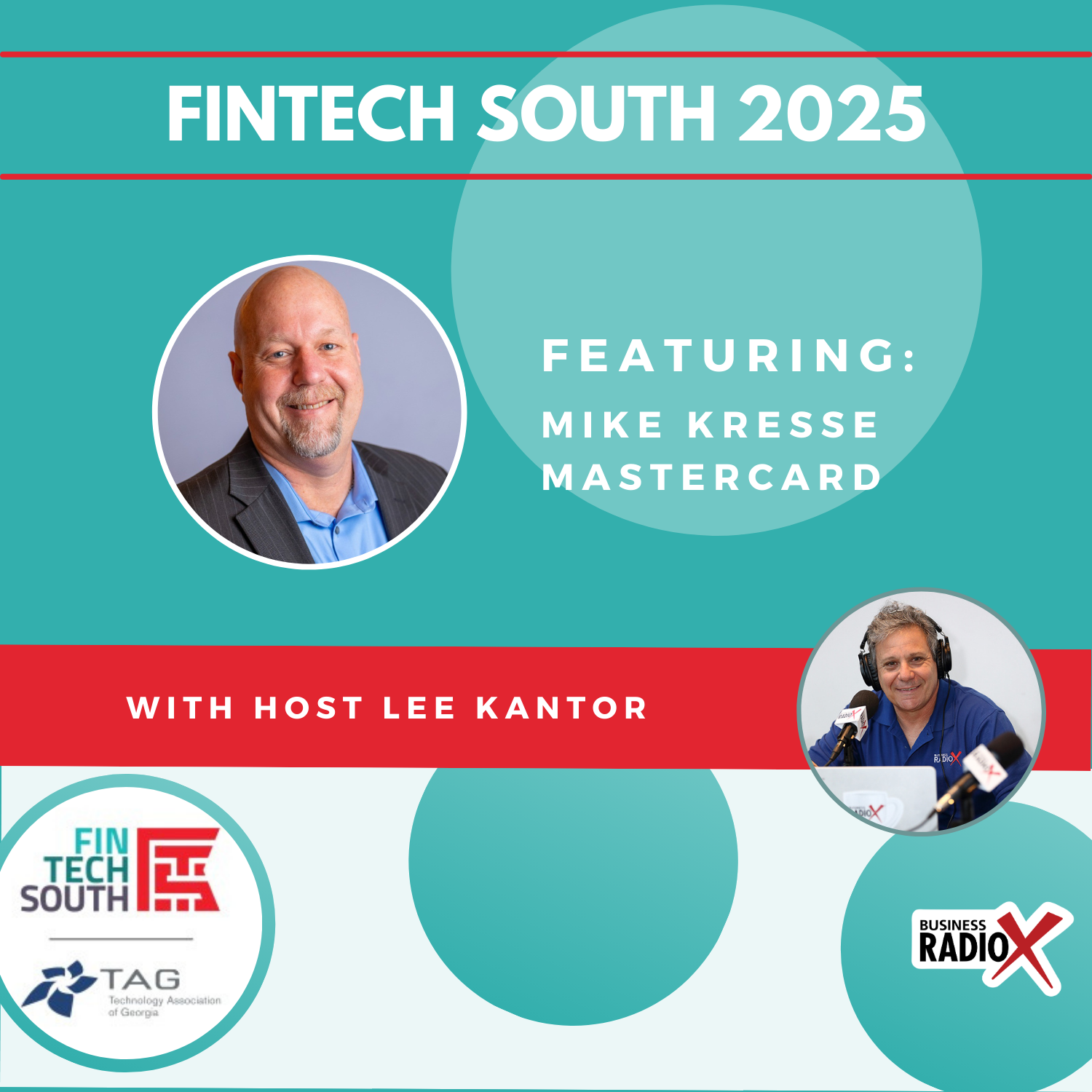
Fintech South 2025: Mike Kresse with Mastercard

September 2, 2025 by angishields

ABR-Mike-Kresse-Fintech-South-2025-Feature
Atlanta Business Radio
Fintech South 2025: Mike Kresse with Mastercard
Loading
00:00 /
RSS Feed
Share
Link
Embed

Download file

Fintech-South-2025-Mastercard-Banner

Fintech-South-TAG

Mike-Kresse-Fintech-South-2025Mike Kresse is Executive Vice President of Commercial and New Payment Flows at Mastercard, North America. In this role, he leads the go-to-market strategy for a diverse set of commercial products and services, spanning large corporate, middle market, SMB, healthcare, and money transfer solutions.

Mike oversees a cross-functional team that’s helping to scale innovation, accelerate market expansion, and drive revenue across customer segments. His leadership centers on unlocking growth through collaboration, customer-centricity, and the seamless commercialization of products that make money movement faster, smarter, and more inclusive.

With more than 25 years of experience in commercial payments, B2B commerce, fintech, and financial services, Mike brings a strategic mindset and deep operational expertise to every challenge.

Prior to joining Mastercard, he spent eight years at FIS, where he led P&Ls across key platforms including accounts payable and receivable, bill pay, card processing, embedded finance, and global money movement. Throughout his career, Mike has delivered results by aligning product and sales teams around customer value and future-ready innovation—fueling long-term business growth and digital transformation.

Mike is known for his optimistic, energetic leadership style and his ability to connect across teams and industries. He is passionate about the evolving role of finance and payments in powering opportunity—whether it’s helping a CFO better manage working capital, enabling small businesses to build credit, or reducing friction in cross-border payments.

Outside of work, he’s an advocate for mentorship, inclusion, and continuous learning.

He holds a Bachelor of Arts degree from the University of California, Santa Barbara.

Connect with Mike on LinkedIn.

Transcript-iconThis transcript is machine transcribed by Sonix.


TRANSCRIPT

Intro: Broadcasting live from Fintech South 2025 at the Woodruff Arts Center in Atlanta, Georgia. It’s time for Atlanta Business Radio. Now. Here’s your host.

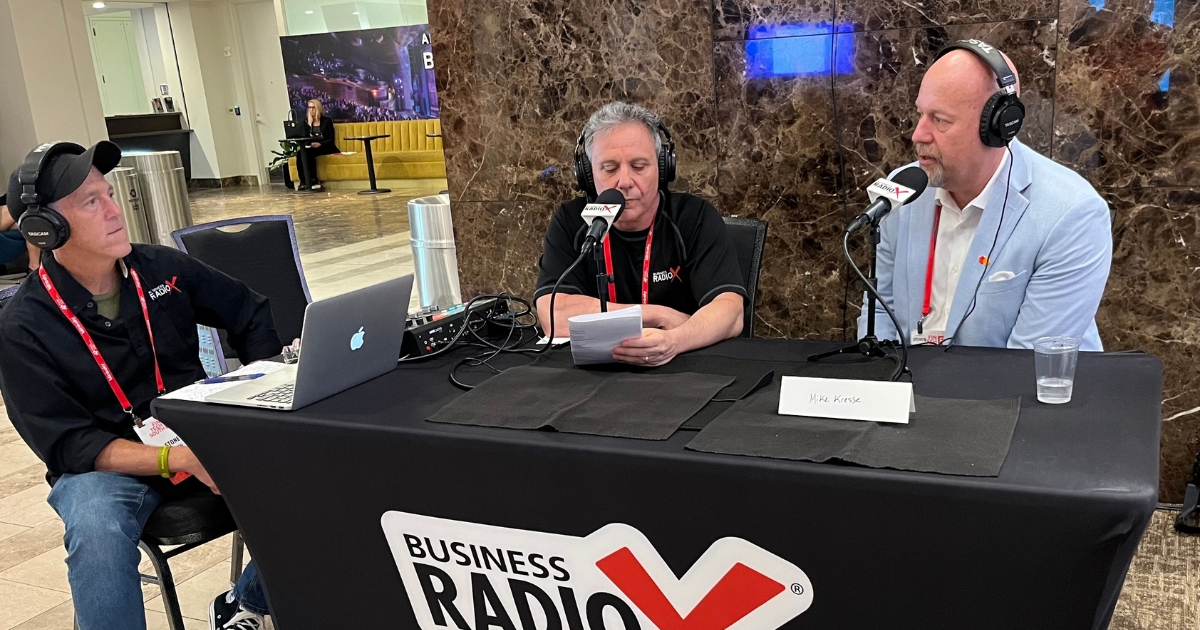
Lee Kantor: Lee Kantor here broadcasting live from Fintech South 2025. So excited to be talking to my guest, Mike Kresse with Mastercard. So Mike, tell us a little bit about why Mastercard decided to sponsor and partner with Fintech South Fintech.

Mike Kresse: There’s just a tremendous amount of innovation that’s happening in fintech right now. And ultimately events like Fintech South. The types of investments that tag is making. Create a forum and an opportunity for us to gather together and do an idea exchange. Financial technology isn’t about market dominance. It’s about collaboration. It’s about looking at all the players that are in the ecosystem. Everyone is bringing good ideas to the table, and it’s about figuring out how can we enable success for all the constituents and stakeholders, whether those are consumers and small businesses that are now being included in the financial ecosystem? Through financial technology players, whether that’s large corporates that are looking for innovation and efficiencies, there’s just a tremendous amount of opportunity for financial institutions. So we’re here because it’s great. It’s an exchange of ideas. It’s collaboration, it’s ideation, and it’s really where the latest ideas are talked about.

Lee Kantor: So when you come here with your folks from Mastercard here in Atlanta, how do you recommend they take advantage of an event like Fintech South and the organization tag?

Mike Kresse: Yeah, I think there’s a there’s a few vectors that you look at. The first is of course education. There’s is opportunities here to learn about the latest breakthroughs on artificial intelligence, the latest happenings with crypto and stablecoins a big topic right now. And so I think first and foremost, there’s an opportunity for education. But the fast follow on that is building relationships. And of course, the the type of business development and networking that you expect would happen at an event like this. We encourage our team to come in very open minded, to not only be looking for the folks that we’re thinking we want to talk to and partner with, but to be available to be approached by organizations that we may not know that are actually out there in the ecosystem or doing something phenomenally interesting. So it’s come in, be ready to learn, be ready to build relationships and be open to the possibility of of meeting the the next big company that is going to do incredible things.

Lee Kantor: So Mastercard is so ubiquitous. Um, it’s probably in everybody’s wallet here. How do you stay relevant and current with all the advent of what’s happening in fintech digitally.

Mike Kresse: I really love that question. Ultimately, for us, it’s about keeping our attention focused on the customer. Is that customer a consumer cardholder? Is it a small business? Is it a large corporate? Is it someone that’s trying to send money home? Is it a financial institution? Is it the government and what are their needs? What are the needs that they actually have? What are problems that are getting in their way from growing, from being efficient, from having secure payment transactions so that fraud is not creeping into the mix. If we keep our eye on solving for the needs that are in the market, that’s how we stay relevant. Because if everything comes from need, everything comes from solving for the ecosystem as a whole, then we’ll know that we’re innovating in the right way.

Lee Kantor: So, um, how do your people communicate with each of those constituents? Like like what is how do they stay, you know, up to date with what’s happening and what those needs are, because it seems like they’re changing so rapidly.

Mike Kresse: Yeah. The the good news about a company like Mastercard is we’re very, very focused on the various end constituents that are benefiting via inclusion via, again, better security, via faster payments that are benefiting from the ecosystem. So not only do we spend a lot of time in consumer forums and doing small business and small town takeovers for small businesses and for consumers, but we spend a lot of time at conferences like Fintech South, where we can actually get the the real coalface information about what is those, what are those needs and what actually is taking place. So I’d love to give you some what seems like revelatory answer, but at the end of the day, it’s just about spending time with people with an open mind and with an open heart to hear what it is that they’re dealing with, and then to jointly solution and jointly solve around that.

Lee Kantor: Now, the the part that I’m struggling with is and maybe you’re not struggling with it is that Mastercard everyone’s heard of but have has everyone had a conversation with somebody from Mastercard, or do they have conversations with other people you know, on your behalf?

Mike Kresse: Yeah. So the question that you’re asking really gets back to what’s our our go to market model and what’s the what’s the way in which we impact our end constituents. You could you could say, well, no, no one talks to Mastercard. They just talk to the bank who’s issued the Mastercard card, like in just the plainest of contexts. Right. But the reality is our employees, um, are our trust in our brand and the experience that a consumer is able to have at the point of sale or at the time that they’re booking a trip that ends up getting facilitated because of Mastercard’s network, they actually are touching Mastercard, and they’re interacting with Mastercard in that context. And we’re able to look at that experience. We’re able to see what it is that we were able to bring to that consumer, to that small business and say to ourselves, how can we make that more elegant? How can we make that safer, faster, more efficient? So really, I mean, obviously we all talk to people all throughout our day in and day out. We have over 35,000 employees, but we’re touching people in all walks of life every day, just by the technology that’s in their hands that they’re capable of using.

Lee Kantor: And you’ve been able to build a brand that does, um, kind of garner that much trust in the ecosystem that allows people to feel comfortable and safe using, uh, Mastercard. So that kudos to you for doing that, because a lot of these newer, uh, digital, uh, choices haven’t, you know, done that from a branding standpoint and developed that level of trust with their end user? So, I mean, that has to be a huge advantage in the marketplace moving forward as even as the digital landscape evolves, it it.

Mike Kresse: It’s an advantage, but it’s also an opportunity. So what I’m going to be talking about on stage later today is we’re here as a scale player for all of the innovators that are here at Fintech South to leverage, to bring their unique user experience, their unique use case to fruition and to market. And by partnering with Mastercard and going through the process of onboarding, they then become a trusted provider of services to their clients. So we don’t see it as a, hey, we’ve built this trusted brand, so that’s that’s a moat and people can’t touch that. It’s very different than that. We’ve built this trusted brand so that it can be leveraged, and our capabilities can be leveraged to bring all sorts of new use cases, disruption and experiences out to the world.

Lee Kantor: So how do you partner with kind of that emerging, Innovative new brand.

Mike Kresse: There’s a number of ways that we do it. I mean, we have, um, our, uh, our fintech accelerator investments where people can get on our start path to really help start plugging into what Mastercard offers. Uh, we offer a lot of small business advisory services and forums where folks can engage. Our platforms are built with developer portals and ecosystems, so people can sandbox and play with Mastercard capabilities and how they would embed them into their overall ecosystem. We have dedicated account teams that are at events like this, looking and being being open to those companies, approaching Mastercard, looking for help or looking for how we can assist. And then we’re messaging out very actively, very actively through multiple channels in the market on what it is that we can help do for these customers. So it really is I got to tell you guys, like one of the things I love about fintech because I happen to love people is it’s not, um, it’s not a competition from the standpoint of only certain people can play. It’s a giant collaboration, and the term cooperation is fintech. We compete on some things, we cooperate on other things, and it’s a very, very healthy ecosystem that continues to drive innovation at pace.

Lee Kantor: So how do you find the Atlanta, um, technology and fintech community as compared to maybe other places around the country or the world that you work with?

Mike Kresse: So I did my entire career in Silicon Valley until about five years ago when I relocated out, and I’ve been on the East Coast now for about those five years. I was southeast for five years and in the northeast now for for eight months. So I’ve traveled around the country, I’ve traveled around the world. It lanta has just this unique dynamic of having major payment companies headquartered here, with very capable universities feeding into those employers and incredible organizations like Tag and others that are directly addressing financial technology innovation and creating forums for collaboration that doesn’t exist everywhere. Does it exist in San Francisco? You have some of it as it exists in New York. Yes, of course you have some of it. But Atlanta has this uniqueness of having major players headquartered here and having been the switching city for for decades, right, of where so many transactions come in and are switched. So I think that Atlanta just creates a very great environment for ideation, for collaboration, and transparently as people move from one company to the other and or start and found their own companies, it just creates a positive flywheel effect of accelerating innovation overall. And that for me personally, is really exciting. And it’s a differentiated aspect of Atlanta.

Lee Kantor: How do you see the talent pipeline that comes out of here? You mentioned universities, but there’s also fintech academies. There’s some other things that are happening here. Um, is this a healthy kind of thriving? Um, pipeline that we have here, or is this something that we’re going to have to be bringing in people from other places in order to really, um, you know, generate the talent that’s necessary to keep this a thriving fintech community.

Mike Kresse: So that’s a I get to answer the fun. Yes and yes answer. So what I would tell you is it’s a very thriving community. The point I was just making previously is that people move from company to company here, and they go from large, and then they try it as small, and they’re bringing those experiences in, and then they go back out to a large where they’ve learned to be really nimble and innovative at a small. All that back and forth between the companies, even just based here in Atlanta, are great. But I would, of course, always encourage any local economy, any local ecosystem to be importing talent as well and exporting talent, right, because that’s what creates a healthy ecosystem. So I think this is a phenomenal place. You’ve got the fintech academies, you’ve got I think Georgia was one of the first places that had actual financial technology sales as a major at one of the universities. Right. So there’s there’s a lot of innovation that’s happened here from a curriculum standpoint. And then of course, all the experience from the various employers that are here, but very vibrant market, very strong talent, uh, very much a place where having a strong footprint like we do as Mastercard is important.

Lee Kantor: So what do you need more of? How could our listeners help you?

Mike Kresse: I think first is, and I don’t know that we need more of it. I think what we need less of is, uh, thinking about, uh, Mastercard as it’s just a Cartoon Network and they’re not going to want to talk to us. I think when you look at a lot of the big players that are out there, and you could call us a big scaled player, there might be a hesitancy to want to see, like what it is that we could do for that small company that’s just getting started or for that founder. We want to help. We want to ideate, we want to really engage. So what we could do more of is really making Mastercard accessible to every one of the folks that are here, every one of the folks that are in the Atlanta market or are associated with Tag and letting them know, hey, come engage with Mastercard because we can help you get to market within a unique differentiation that only you can bring.

Lee Kantor: So the more fintech startups that called you, the happier you’d be.

Mike Kresse: 1,000%.

Lee Kantor: Good stuff. So if somebody wants to connect with you and, you know, get on your calendar or explain what they got going on, what is the website, what’s the best way to connect?

Mike Kresse: I mean, obviously you can go through WW, Mastercard, com, you can of course reach out to me at Mike, which is Cressey, my last name at Mastercard. And gents, I really appreciate you having me on the show. This has just been a great discussion and it’s really, really great to be here with you.

Lee Kantor: All right. This is Lee Kantor. We’ll see you all next time at Fintech South 2025.


Tagged With: Fintech South 2025, Mastercard

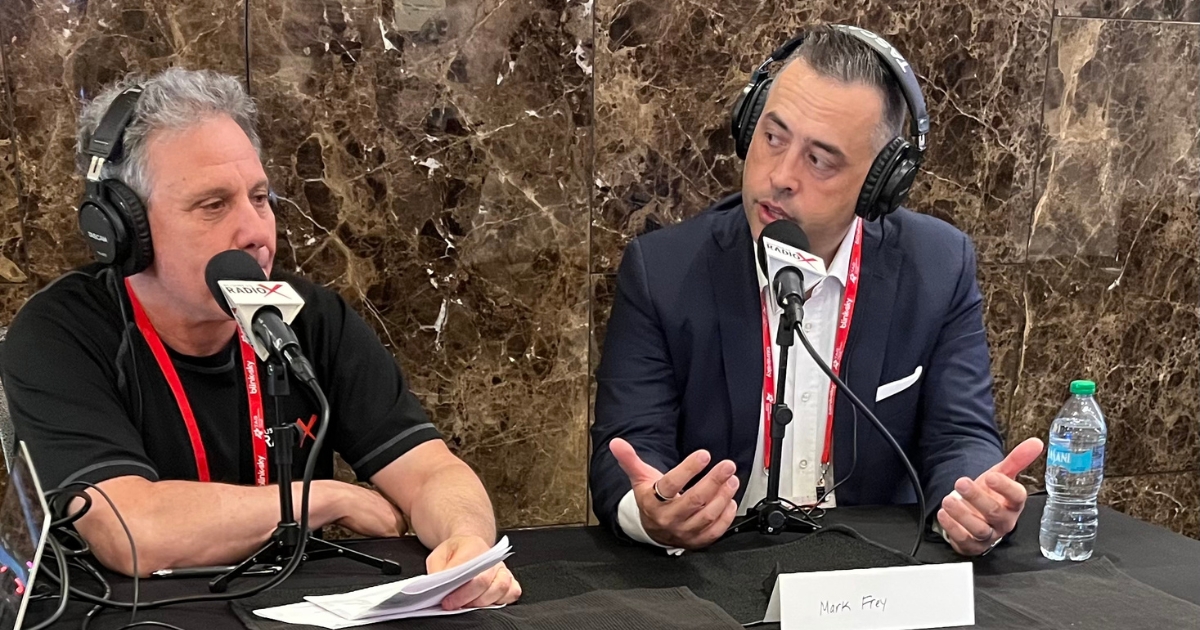
Fintech South 2025: Mark Frey with Corpay

September 2, 2025 by angishields

ABR-Mark-Frey-Fintech-South-2025-Feature
Atlanta Business Radio
Fintech South 2025: Mark Frey with Corpay
Loading
00:00 /
RSS Feed
Share
Link
Embed

Download file

Fintech-South-2025-Corpay-Banner

Fintech-South-TAG

Mark-Frey-Fintech-South-2025Mark Frey has established Corpay as a market leader in cross-border payments and currency risk management since being appointed Group President of Corpay Cross-Border Solutions in March 2022.

A proven leader with over 20 years’ experience in trading and treasury operations, Mark has been with us for over a decade. He led the successful acquisitions and integrations of AFEX and Global Reach in recent years.

Prior to Corpay, Mark was with Western Union.

Connect with Mark on LinkedIn.

Transcript-iconThis transcript is machine transcribed by Sonix.


TRANSCRIPT

Intro: Broadcasting live from Fintech South 2025 at the Woodruff Arts Center in Atlanta, Georgia. It’s time for Atlanta Business Radio now. Here’s your host.

Lee Kantor: Lee Kantor here. Live from Fintech South 2025. So excited to be talking to my next guest, Mark Frey with Corpay. Welcome.

Mark Frey: Thank you. It’s a pleasure to be here.

Lee Kantor: For folks who aren’t familiar. Can you share a little bit about Corpay? How are you serving folks?

Mark Frey: So Corpay is effectively a business payments company. We help three key segments of customers, those who are tied to vehicle mobility payments in North America, Europe, Anzac Region and South America as well. We also provide lodging solutions, both workforce solutions as well as airline and distressed passenger solutions. And then I run our global cross-border payments business, which is really about moving money across borders and helping companies individuals manage foreign exchange risk.

Lee Kantor: So why is it important for Corpay to be involved with Fintech South and with Tag?

Mark Frey: So Fintech South is a very important organization for us. We’re an Atlanta based company. Our head office is here in Atlanta. This is a show that we take part in every year. I think it’s an important networking opportunity. We meet with customers, partners and and colleagues alike here, and it’s just a fantastic way to network and be a part of the ecosystem ultimately that we’re a contributor to.

Lee Kantor: So how do you communicate to the people at Core Pay to get involved with organizations like Tag and Fintech? Stuff like what’s your recommendation in order to kind of wring the most juice out of an out of an event like this?

Mark Frey: Yeah, we certainly try to encourage its much participation as we possibly can for our team, not just in events like this, but throughout the calendar year as well. We’ve got a strong contingent of core folks here that participate in sessions that are part of the panel interviews, speaking engagements, and also have a booth at the show to try and just meet as many people as we possibly can.

Lee Kantor: Now, um, how do you see, from what you’ve learned to today and what your experience is in, uh, in fintech? What kind of trends are you seeing when it comes to, uh, fintech, whether it’s technology, whether it’s, um, just payments. What are kind of what’s in the crystal ball for you guys?

Mark Frey: I think the key theme that we see in our market is the ability to move money fast, ubiquitously, and as cost and frictionless as we possibly can.

Lee Kantor: And safely.

Mark Frey: Yes, safely and secure is obviously a key part of it as well. So our customers are are are looking for solutions. They’re somewhat technology agnostic as to how. So whether that’s a real time payment network or it’s stablecoin or it’s a blockchain enabled payment or even more traditional means of payments that we’ve managed to find ways to to speed up and accelerate. Our customers are really just looking for a solution for their business. They don’t care what the technology is that underlines that.

Lee Kantor: Are they, um, looking forward to a day when, you know, physical checks go away?

Mark Frey: Well, I think everybody is looking forward to that. No, no, it’s the rest of the world is already at that stage. So. So as someone who, uh, I hail from Canada, uh, we run a global business. We don’t issue checks anywhere in the world like we do have a tendency to do so in the United States. So that is is something that I think is somewhat unique to this market and is still a tremendous business opportunity. If you can provide solutions that help businesses conduct their business in a way that is secure, they feel comfortable with and can move away from paper based payments, there’s a world of opportunity.

Lee Kantor: So how do you kind of rationalize why America is a leader in so many areas and places, but is a laggard when it comes to physical track?

Mark Frey: You know, I think it’s a it’s a function of the sort of the fractured banking system in the United States versus other markets. To a certain extent. Uh, I think there has been a focus It’s historically on card and and and as a solution. And that certainly is a viable solution in terms of making card based payments versus checks. But I don’t think there’s been the same ubiquitous adoption of real time payment rails in the United States that we’ve seen in other markets, and that is beginning to change now. We are certainly seeing more of a push in the marketplace and greater adoption and sort of a demand from customers to be able to move money more, more seamlessly than with old big paper based payments.

Lee Kantor: Because it seems like there is adoption from a consumer standpoint for digital.

Mark Frey: Well.

Lee Kantor: Like that’s already happened. Like no one is clamoring for me to write them a check. Like if I do a transaction with a friend of mine.

Mark Frey: It’s it’s a Venmo or it’s an accounting account.

Lee Kantor: We’re comfortable with that.

Mark Frey: It’s a crypto.

Lee Kantor: Payment. But for business, it seems like.

Mark Frey: We’re absolutely.

Lee Kantor: Five steps behind.

Mark Frey: Here. So this is a common recurring theme in the United States. I think that that the personal consumer market leads the business market. And we all, as business leaders and, and managers of our enterprises get used to that consumer like experience, and then that begins to become the de facto standard that we want to apply to our business organizations as well.

Lee Kantor: So how does your customer come to you? Like what is the first pane that that you all saw for your customers?

Mark Frey: So we do three key things for our customers. We exchange from one currency to another and in a seamless fashion, and provide risk management solutions to manage the risk of doing business internationally and multiple currencies. We can move money anywhere in the world without checks. Real time to to.

Lee Kantor: What a concept.

Mark Frey: To to Nigeria or Kenya or Malaysia, anywhere in the world. And then we also provide real time bank account solutions in many countries around the world so that if you’re a US based company and you want to expand to the UK or Germany or Canada, rather than having to establish local banking relationships in each of those markets, core pay can be your financial institution of choice everywhere.

Lee Kantor: So if I partner with Core Pay, that’s kind of that solution is built into the service that you’re offering.

Mark Frey: It’s all one tech stack, all the same piece of technology that deploys all of our solutions everywhere in the world.

Lee Kantor: And then what’s kind of the pain that your customer is having right before they hire you?

Mark Frey: So it it it is oftentimes someone who has, you know, doing business internationally. And foreign exchange rates have shifted, um, unfavorably for them. And then they’re looking to find a way to remediate that within their business, either their export market or their supplier that they’re importing from is no longer economic. And it sort of disrupted their business model. And they’re looking for a solution to manage that foreign exchange risk. The next ancillary solution is, well, how do you move that money? Either you’re getting paid from your foreign customers or you need to pay foreign vendors. How do you do that as efficiently as possible without a check? And then can can you actually receive those funds internationally with a foreign bank account?

Lee Kantor: And so then they come to you and you’re able to kind of create this holistic system that’s solving all those problems.

Mark Frey: Yeah. What we effectively do is we help US based businesses go global, ultimately to to find customers and vendors around the world and to move money and to establish bank accounts that allow it to be easier for them to sell in international markets and collect money in foreign currency from their customers and then remit back to the US.

Lee Kantor: So if there’s a US company listening that is thinking about kind of going international, they should contact you before doing it. So they put all the appropriate things in place in order to make that transition seamless.

Mark Frey: Couldn’t have said a better myself.

Lee Kantor: So if somebody wants to learn more about Corp, what’s the best way to connect Corp.

Mark Frey: Com. You always find me on social media on LinkedIn as well. Mark Frei uh, happy to have a conversation, engaging with anyone that we think we can help them grow their business globally.

Lee Kantor: Well, Mark, thank you so much for sharing your story today. You’re doing such important work and we appreciate you.

Mark Frey: Thank you so much.


Tagged With: Corpay, Fintech South 2025

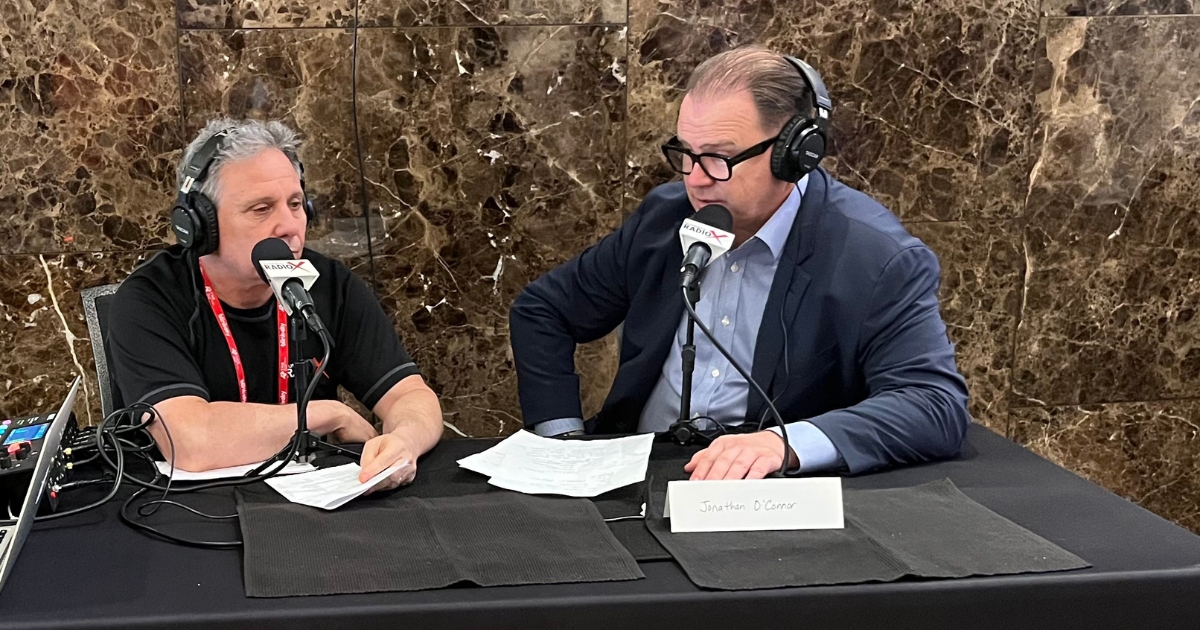
Fintech South 2025: Jonathan O’Connor with Synovus

September 2, 2025 by angishields

ABR-Synovus-Fintech-South-2025-Feature
Atlanta Business Radio
Fintech South 2025: Jonathan O'Connor with Synovus
Loading
00:00 /
RSS Feed
Share
Link
Embed

Download file

Fintech-South-2025-Synovus-Banner

Fintech-South-TAG

Jonathan-OConnor-Fintech-South-2025Jonathan O’Connor, Fintech South 2025 Chair; Division President, Third-Party Payments, Synovus.

Jonathan is a results-oriented Executive, with 25+ years of experience leading sales teams, driving revenue, and identifying operational improvement strategies. Expert knowledge of global payment solutions, e-commerce, risk mitigation, digital currencies, merchant processing, mergers and acquisitions.

Adept at effective communication with internal executive leaders and external partners, building strategic relationships to drive corporate objectives and profit margin expectations. Forward thinker, with unique ability to collaborate with stakeholders driving innovative strategies and product offerings.

Dedicated team leader, with a passion for fostering an inclusive culture for teams and clients, prioritizing effective communication, team production, collaboration and respect. Unlocked staff potential with motivational mentoring and ownership techniques, leveraging inter-company resources to exceed project completion timelines.

Connect with Jonathan on LinkedIn.

Transcript-iconThis transcript is machine transcribed by Sonix.


TRANSCRIPT

Intro: Broadcasting live from Fintech South 2025 at the Woodruff Arts Center in Atlanta, Georgia. It’s time for Atlanta Business Radio now. Here’s your host.

Lee Kantor: Lee Kantor here, broadcasting live from ten Tech South 2025. So excited to be talking to my next guest, Jonathan O’Connor with Synovus.

Jonathan O’Connor: Welcome, Lee. Great to be here. And great to have you guys here. It’s such a great event.

Lee Kantor: Yeah. So we chatted a little bit before the conference started. Now that the conference is in is going full bore here, uh, what have you learned?

Jonathan O’Connor: Look, it’s been an amazing, you know, day and a half. I’ve been here as emcee as well. So trying to convince people I’m not from Dublin, Georgia, but from Dublin, Ireland has been an adventure. But it really has been a great, uh, you know, you know, building our team around the power of connection and the innovation of finance in the future. Ai has been central to everything, and it’s amazing to go around to all of our exhibitors and see the amount of Atlantic AI signs. You know, it really is the the power horse of change as we go through. And and we’ve had some amazing speakers as well, you know, as Sean Neville has been here, uh, you know, hoo hoo circle guy who’s now going to, you know, take on the financial, traditional financial institution banks and have an AI agent driven financial institution. So, you know, the innovation has been amazing. Uh, you know, having a lot of our students here as well to the Georgia Fintech Academy has been very beneficial to see the generation, you know, that’s going to come up after all of us, like the Pepsi ad, the next generation. And, uh, you know, we’ve had also some Hall of Fame inductees as well. And, you know, it’s generally been a great, great two days.

Lee Kantor: So now, uh, you you talk about the power of connection and community. Why is it important for Synovus this to be the kind of the lead sponsor of this event. And and and how is this, uh, fintech south and tag kind of really play into the Synovus mission?

Jonathan O’Connor: Yeah. Look, you know, first of all, let’s talk about Georgia and Atlanta itself for fintech. You know, over 300 billion in transactions flowed through it through Atlanta, with 70% of all global payments flowing through the city. In that we’ve got about 260 fintechs and six out of ten of every international large processor as a presence here and as Synovus, we’re we’re you know, we’re glad to be part of the fintech ecosystem in Atlanta. You know, we’re our community is very important to us. And we play a great role there, helping not only the the fintechs, you know, established banking relationships, but also, you know, working with some larger processors as well as they look at their financial needs from a students perspective. You know, Synovus and the third party payments team were very engaged with mentoring some students. In fact, we have four students now from UGA who have launched a pay by bank product, and we’ve mentored those guys and are launching now second week of September in Athens, Georgia, with a coffee store. And we’re immensely proud of that because that’s what it’s all about. It’s all about community at the end of the day and passing back a little bit of knowledge. You know, the older folks in payments have to the next generation.

Lee Kantor: So how does you and your team encourage the Synovus folks, um, to get involved with organizations like Tag or conferences like Fintech South? Like, how is that kind of integrated into the DNA of your organizations?

Jonathan O’Connor: Yeah. Look, I’ve been very lucky from a from a leadership perspective to have our, our, our COO and CTO, both, uh, board members of Tag, uh, Zach Bishop and Vikram Ramani. So having those two great leaders in Tag and then giving me the opportunity to represent Synovus as headline sponsor at Fintech 2025. In addition to the MC has truly been great. In addition to that, Synovus has always supported not only Fintech Atlanta, uh, but also the ATC, where we’re we try to be influential from a policy perspective. You know, we’ve we’ve had representation for interchange, the interchange debates we’ve had we’ve also spoken and and also tried to influence around surcharges. So, you know, the bank itself is is always here to support and payments is is so critical to our relationship with our customers. You know, the bank will primarily drive loans and deposits. But you know it’s it’s like businesses like third party payments that we we drive merchant services and sponsorship. We drive non-interest revenue for the bank. And that’s a key component as well.

Lee Kantor: So what would you say to the folks out there, maybe the young people out there that are considering a career in finance, in fintech? Um, are you bullish about the opportunities for the next generation of, uh, you know, leaders?

Jonathan O’Connor: Absolutely. As I said, mentoring some some students recently was really an eye opener for me to to get involved. And I suppose the next generational turn in payments, we’re at a pivotal pivot point again, where a lot of the payment tools will reformat itself with AI, for example, the payment page, uh, you know, the the shopping carts and e-commerce, you know, we now see a gigantic AI. Ah, you know, we’re all blessed with these new terms, ambient commerce they’re also talking about. But we really feel that, you know, the new frontier of payments with AI will bring a new skill set. And I think an amazing challenge and opportunity for the next generation.

Lee Kantor: Now, what about the, you know, the slowness of some of the enterprise organizations and these, um, legacy companies to adopt digital payments and, uh, you know, move away from, you know, hard checks when their consumers have seemingly already pivoted towards a comfort with digital.

Jonathan O’Connor: Yeah. Look, I think people are people are happy and people are creatures of routine. So I think, you know, people who like checks will use checks. People who like ACH will use ACH. People who take out money from ATMs will take money out from ATMs. But as we think about payment acceptance, we think about everything moving to our phone, we carried around and unfortunately we look at it for so much during the day. You know, payment is now part of a digital wallet, and I really believe the future will see everything move to a digital wallet. It’ll move away from a plastic instrument or a paper instrument, and you’ll have everything through your digital wallet. So, you know, it always amazes me as well. When I used to watch my kids play video games and all they do is collect coins all the time. They’re they’re already trained for digital coins. And we have to mention stablecoin. We have to mention crypto Because as you marry at digital wallets with digital coins, you know that is the future. And I think we will see a huge uptake in digital wallet usage over the next, the next 2 to 4 years.

Lee Kantor: So do you. So you think that this is going to be kind of a a gradually then suddenly experience, or is this going to be just slow kind of drip until, uh, you know, I guess it just changes formally.

Jonathan O’Connor: Yeah. I think it’s already happening. If you, if you, you know, when you, when you go to to shop now or go to go to eat out, people are using contactless payments. So they’re already touching their phones. They’re trying to get over the terminals to make it connect. And that’s the first evolution here. The next will be, you know, the wallet will recognize you’re in the store and you’ll be able to connect things. And then we get into the scary side where the AI agent will be online, and we’ll do all the shopping for you, and we’ll select the best payment type to use in your wallet. And hopefully we’ll have some involvement there. And but I think it’s all happening. So you know. Certainly I think the train has left the station.

Lee Kantor: So now in, um, how does Synovus kind of, um, serve their different clientele? So you mentioned, like there’s obviously banking clients where you have people coming in and, and using banking services, but then you have these other kind of services in and around fintech. Are those customers kind of lead gen for the other services like, like which comes first, you know, the chicken or the egg when it comes to a Synovus customer?

Jonathan O’Connor: Absolutely. So, you know, we we primarily you know, our CEO is very passionate about people buying off people. And we lead with our commercial bankers. We lead with our branches. And, you know, we’re very much a community people driven bank. So by doing that the the relationship normally starts with a loan or a deposit or some type of, you know, commercial relationship. And then we’re probably what I position a value added service to that relationship. The banker will introduce the merchant services team and then we will We will hopefully earn the right for their business to enable their payment acceptance online, or even in a store or restaurant or shop.

Lee Kantor: So it starts with though the human to human interaction, maybe at a branch or a call from somebody from a branch.

Jonathan O’Connor: Absolutely. I’m a big believer in people buy off people. And I think if we if we stick to that simple mantra, you know, you earn the right for business and you you earn trust. And, you know, I also believe in the power of community. Since I’ve since I’ve started my career at Synovus.

Lee Kantor: So now you mentioned, um, stablecoin and crypto and things like that. Um, are you seeing an adoption and a comfort with that, or are we still at the beginning stages of that?

Jonathan O’Connor: I think we’re at early stages. You know, I what’s happened, probably the most positive elements is regulation. You know, we’ve had some large movements in regulation this year with the Unity Act and the Genius Act. So regulatory environments need to catch up with the technology. That’s the first thing that needs to happen. But I think there’s already snippets of where crypto or a stablecoin can be effective. We think international payments is one area you’ll be able to make payments a lot faster internationally with a particular coin and and around not only the coin or the stablecoin or the crypto. If you married out with a blockchain, you’ve got a lot stronger security. You’ve got a lot more, um, you know, control around the transaction and knowing where the funds are moving. What we need to happen now is in parallel that that the AML, BSA compliance regulatory environment kind of catches up with the technology because it’s not effective unless we can, particularly for for a financial institution, we need to minimize residual risk, operational risk and reputational risk.

Lee Kantor: Right. It’s one of these things where the consumer is just expecting speed, and then there’s so much you have to take care of when it comes to compliance and security.

Jonathan O’Connor: Absolutely.

Lee Kantor: And to marry that and balance that is tricky. I mean, the bad guys are paying attention to, right?

Jonathan O’Connor: They really are. As we evolve here, the bad guys are normally one step ahead. Yeah.

Lee Kantor: So if, um, when it comes to tag, what do you see kind of in the future of maybe this event or just in tag in general as, uh, tags looking to expand beyond just Georgia, but maybe be a leader within the the southeast region?

Jonathan O’Connor: Yeah. Look, I think there’s a couple of things. One is to, you know, continue supporting the next generation, our students. It was great to have such a great presence of our students here this year. I think they’re the they’re the DNA of what we all do for the future. Collaboration is key as well. We’ve we’ve had some, you know, representation here from the UK and Europe, which was great to see. And also for some other states. I met some people from Canada and, and also from, you know, out west. What really struck me as well was how do we glue the payment innovation in Silicon Valley with the traditional payment rails in Atlanta? And that’s something I’m going to have a good conversation with Larry about, because I think that’s something we should think about for next year. Is there you know, there’s so much great innovation on the West Coast around payments. How do we tag and fintech Marriott, maybe for some of our event next year now?

Lee Kantor: And also the opportunities kind of marrying some of the stuff that’s happening in Asia and internationally as well. I mean, it’s a big world out there.

Jonathan O’Connor: It really is. I agree. And, you know, from a regulatory standpoint. You know, Europe probably has they have their own AI act now and their crypto act has been in play. And there’s also some very interesting stuff happening here in Georgia. There’s the merchant acquiring limited charter uh license which the state issues. And that’s attracting a lot of fintechs into Atlanta. Fiserv was just granted that stripe was just granted that. And what that allows is it allows a company essentially process Visa and Mastercard without having a bank, but they can’t be a bank, so it gives them a lot more control on their payment ecosystem. I would I expect to see a lot more international inbound company setting up to avail of this license. So I think from an international perspective, we should see a lot of that movement over the next 12 months.

Lee Kantor: And then what do you see or hear from the folks you know internationally? How do they feel about Atlanta? Are they as bullish about Atlanta as the folks here in this room?

Jonathan O’Connor: Look, they love our airport. Number one. We can go anywhere. We can arrive anywhere. So that’s the first thing I love about Atlanta. Atlanta is a great transient city. And you know you’ve got a great mix of cultural people. In fact, my team, you know, if I look at the I’ve got four leaders and three of those are are not from Georgia. And sometimes I’ll be at a meeting said I work for snow was Bank and they’re saying is that the bank in Georgia. They’re confused. So you know I like that there’s such an internationalization feel here. Uh, you know, we’ve got good taxes, we’ve got great support systems. You know, we’ve got all of these great associations to help people get set up here. So I feel very confident. Only to see, you know, what’s going on recently with the amount of land purchased by Amazon for data centers. And, you know, some of the some of the larger companies setting up, um, headquarters here. You know, we we definitely are pivoting back into a leadership position here.

Lee Kantor: So if somebody wants to learn more about Synovus, uh, where should they go?

Jonathan O’Connor: Sure. You can go to our website, Synovus Comm, or you can also email me at Jonathan O’Connor at Synovus. Com.

Lee Kantor: Well, Jonathan, thank you so much for all you do for this event. And and your work with Tag and what you do in the community. It’s very important and we appreciate you.

Jonathan O’Connor: Thank you very much. And everyone have a great day.


Tagged With: Fintech South 2025, Synovus

Fintech South 2025: Monika Mueller with Softensity

September 2, 2025 by angishields

ABR-Monika-Mueller-Fintech-South-2025-Feature
Atlanta Business Radio
Fintech South 2025: Monika Mueller with Softensity
Loading
00:00 /
RSS Feed
Share
Link
Embed

Download file

Monika-Mueller-Fintech-South-2025v2

Fintech-South-TAG

Monika-Mueller-Fintech-South-2025Monika Mueller has over 23 years of experience, bringing innovative solutions to her clients. Monika has focused on business and technology management at entrepreneurial, Fortune 500, and consulting companies.

She has a depth of experience in management consulting, information management, process optimization, and customer relationship management. Monika has served in leadership roles at Ernst & Young, PriceWaterHouseCoopers, OnStar, and Daugherty Business Solutions.

At her prior employer, Monika held P&L responsibility for the Atlanta Business Office, which included Sales Solutioning, Delivery, Recruiting and Operations for a team of over 200 consultants. During her 4 year tenure, the company doubled in size and created a team-based culture winning 12 awards and increased employee morale to its highest levels.

While at the Big 4, Monika was a Senior Leader helping to drive growth and innovation with exciting technology and telecom clients including Sprint, Global One, AstroLink, OnStar and many others Monika received her B.B.A. in Management from Cleveland State University and her Masters in Business Administration from the University of Missouri at Kansas City.

Monika sits on the Board of Women in Technology, the CIS Advisory Board and the Professional Services for the Technology Association of Georgia. Monika enjoys spending time with her two children in the outdoors, traveling and jogging.

Transcript-iconThis transcript is machine transcribed by Sonix.


TRANSCRIPT

Intro: Broadcasting live from Fintech South 2025 at the Woodruff Arts Center in Atlanta, Georgia. It’s time for Atlanta Business Radio now. Here’s your host.

Lee Kantor: Lee Kantor here broadcasting live from Fintech South 2025. So excited to be talking to my next guest, Monika Mueller with Softensity. Welcome.

Monika Mueller: Thank you. Happy to be here.

Lee Kantor: Well, I’m excited to learn what you’re up to. Tell us about Softensity. How are you serving folks?

Monika Mueller: We are a 27 year old management consulting organization, and over those 27 years, we’ve grown to about 25 geographical locations, about 3000 very smart consultants across the globe. And what we really do is bring data and software solutions to life for organizations, and use technology to help them solve their business problems.

Lee Kantor: Is there a niche when it comes down to your ideal client, or is it kind of industry agnostic.

Monika Mueller: Um, any companies that are having issues, I don’t know if you know any of them.

Lee Kantor: Issues?

Monika Mueller: No. Pain points? Challenges? Um, no. Our strengths are truly in sort of the fintech manufacturing, automotive space.

Lee Kantor: So, um, why was it important for you to be here at Fintech South? Is it Atlanta? One of the markets you’re in?

Monika Mueller: We are headquartered in Atlanta, so we are all about supporting the local communities, the local nonprofits, the local organizations. We have been a premier member of Tag for many years. I’m on the board of Tag myself a very passionate about this organization, and this is one of the premier events in Atlanta, bringing together not only thought leaders, but people that need to hear the thought leadership. And so it’s a great consolidation of our community in one space with the purpose of learning.

Lee Kantor: So how does soft density kind of recommend it’s people, uh, attack a conference like fintech. So.

Monika Mueller: Oh, by preparing for it, by really taking the opportunity to to understand the speakers, the presenters, the panels, the topics from our unique vantage point of working with a variety of customers. We’ve got a pretty good idea of what challenges our clients are dealing with, and we come to places like fintech and other conferences to help learn what is cutting edge as well, so we can bring that back to our clients. So we’re looking and planning and have chosen speakers that we want to be making sure we’re listening to. Right. We’re also on some panels ourselves. So it’s a really great opportunity for our team to be here.

Lee Kantor: So what are you seeing from a technology or trend standpoint that you’d like to share with our audience?

Monika Mueller: Well, I mean, I could say AI, but you probably have heard that all day. I never heard of I never heard of that. I think it’s spelled AI.

Lee Kantor: Well, I’ll write that down.

Monika Mueller: I would say that, um, the uniqueness of this particular session here, there’s a lot of talk around compliance, you know, cybersecurity and how does AI enable that. And one of the the unique perspectives that we have is that the cybersecurity compliance, all of that can not only be Enabled by AI, but AI in itself is a threat when it comes to those things. But from an organizational perspective, we really want our clients to start thinking about, um, compliance and security as a product, not something to to have to check a box on to something that we can actually use to differentiate clients, services, products in the marketplace by weaving compliance and security into a positive experience for customers. So that’s one of the the positions that we have is that we should look at this from a perspective of product, to enhance loyalty of customers to an organization and not have it be the four legged word that it’s become in terms of compliance requirements in an oracle.

Lee Kantor: So is a soft density customer typically coming to you because something bad happened? Or are they coming to you because they want to proactively grow?

Monika Mueller: I would say it’s probably a blend, right? A lot of organizations are are have a lot of smart people leading them and managing the day to day operations of them, and they’ve got roadmaps that we can come in and help them enable, right, with expertise that we have. And we’re not experts in everything, but where we are, we can help to provide sort of that proactive view of how solutions can be implemented, um, in the quickest fashion while, you know, meeting their vision, managing budgets, etc.. But then of course, there are situations that happen, right, where clients are experiencing imminent issues currently and they need extra capability and extra set of hands, uh, you know, group of people that have been there and done that to help them manage through situations that they’re in as well. So I would say it’s a blend of the both.

Lee Kantor: So what do you need more of? How can we help you?

Monika Mueller: Um, I think continuing to bring awareness to topics like this, right, in terms of making sure that we’re getting knowledge out to as many people in our communities that will listen to it so they can benefit from it. They can take the knowledge at conferences that you guys do such a good job broadcasting, right. Bringing together leaders in this a community so that we can take that back not only to service clients organizations, but for those companies to service their clients. So continue to shine a light on the thought leadership. I think you guys do a great job.

Lee Kantor: Now, what about the kind of talent situation we have here in the metro Atlanta area? Where do you see opportunities when it comes to growing that talent base?

Monika Mueller: I think Atlanta has become a hub of talent attraction. Like I think we really rival, you know, San Francisco and all the the West Coast vibe where, you know, we’re a friendlier place to live. We’re a less expensive place to live. And we have an amazing infrastructure, not only professionally. We have, you know, a huge consolidation of fortune 1000 companies here, but we have the educational infrastructure with the Georgia Tech, Georgia State, other universities that really, um, that we can grab talent from. But families moving here can send their kids to. Right. So we’ve got I feel the whole package in terms of attracting talent, really great talent into the Atlanta marketplace. And I see that I see more people coming into Atlanta because I experienced the traffic every day. And if you guys have any issues with that, but I would like them to pace, uh, infrastructure, city infrastructure growth with the massive movement and migration to Atlanta. That would be nice.

Lee Kantor: So if somebody wants to learn more, uh, where should they go? What’s the website? What’s the best way to connect with you or somebody on the.

Monika Mueller: Team’s o t e n t y or anybody can reach out to me and LinkedIn. Monika with a k. I don’t know why my parents did that. Made my life complicated. Uh, the last name is Mueller. M u e l l e r.

Lee Kantor: Well, Monika, thank you so much for sharing your story, doing important work and we appreciate you.

Monika Mueller: I appreciate you too as well. Thank you so much.


Tagged With: Fintech South 2025, Softensity

Fintech South 2025: Thomas Priore with Priority Commerce

September 2, 2025 by angishields

ABR-Thomas-Priore-Fintech-South-2025-Feature
Atlanta Business Radio
Fintech South 2025: Thomas Priore with Priority Commerce
Loading
00:00 /
RSS Feed
Share
Link
Embed

Download file

Fintech South 2025 Priority Commerce Banner

Fintech-South-TAG

Thomas-Priore-Fintech-South-2025Tom Priore co-founded Priority in 2005, and has served as the company’s chairman and chief executive officer since 2018.

Under his direction, Priority has grown from a founder-financed technology startup to be the fifth largest non-bank merchant acquirer in the U.S. by volume.

Tom has steered Priority from an organization focused on payments processing to a solutions provider across payments and banking, operating at scale with nearly one million active customers across its SMB, B2B and Enterprise channels.

Priority processes $120 billion in annual transaction volume and provides administration for nearly $1 billion in deposits.

Tom has an MBA from Columbia University and a bachelor’s degree from Harvard University.

Connect with Tom on LinkedIn.

Transcript-iconThis transcript is machine transcribed by Sonix.


TRANSCRIPT

Intro: Broadcasting live from Fintech South 2025 at the Woodruff Arts Center in Atlanta, Georgia. It’s time for Atlanta Business Radio. Now. Here’s your host.

Lee Kantor: Lee Kantor here broadcasting live from Fintech South 2025. So excited to be talking to my next guest Thomas Priore with Priority Commerce. Welcome.

Thomas Priore: Thanks, Lee. It’s good to be here.

Lee Kantor: Well, I’m excited to learn what you’re up to. Tell us about Priority Commerce. How are you serving folks?

Thomas Priore: Yeah, sure. Uh, you know, Lee, we’re a payments and banking fintech. Uh, we bring solutions that cover everything from small businesses to enterprise customers. Um, and we provide software solutions that, um, help them move money faster. Uh, collect, store, lend and send money, as we like to say, and make it as efficient as possible to accelerate it through their business and optimize their working capital.

Lee Kantor: So what was the genesis of the idea? Had this business get launched?

Thomas Priore: Well, it’s interesting timing, in fact. Yesterday was our 20th anniversary, and we first started the business really with the idea that software and payments would be something that businesses needed to operate in a single platform. Right. And we think that’s already happened.

Lee Kantor: Got feeling there?

Thomas Priore: Yeah. 20 years ago that was, believe it or not, a novel idea.

Lee Kantor: Was it a novel idea?

Thomas Priore: So, uh, so we really launched the business with that in mind, built technology to help resellers who were serving small merchants to do just that. And, uh, on the success of that, we’ve continued to evolve. Uh, now we’re, you know, just shy of $1 billion of run rate revenue, uh, 225 million of of EBITDA 1200 employees. So we operate at scale, and we’ve added a banking capability so that not only are we using software and payments in an integrated fashion, but software, payments and banking solutions that are all threaded together that help that accelerated cash flow experience. I referred to kind of a few minutes ago.

Lee Kantor: So is the small merchant still important to your firm?

Thomas Priore: Uh, very, very important. We’re a couple hundreds, uh, small businesses. Uh, we probably on board, uh, anywhere from 4 to 4000, 4500 a month. Uh, and we try and help them, you know, really, across the the key areas of operating their business. Uh, certainly payments at the point of sale, that’s that’s core to what we do. Uh, but not only, um, getting that money in, but as we do give them tools to invest our excess working capital and get better yield and then use our tools that are also embedded in our solutions to make payments to vendors, uh, so that they’re making best use of their working capital.

Lee Kantor: Now, are your merchants, are they? Uh, is it industry agnostic, or do you have niches that you’re in? Is it e-commerce or is it brick and mortar?

Thomas Priore: We definitely have some areas where we think we excel. Uh, but it would certainly represent the broader, um, uh, diversification of, of of the small business, um, population in the US. I would say we probably do less on the hospitality side that, you know, let’s say that’s 30% of 35% of small businesses, maybe a bit more. You know, our portfolio is probably down below 20, but we do very, very well with, uh, business services, law firms, accounting firms. Uh, also in the medical profession, doctors offices and other, uh, retail trade sectors, uh, small manufacturing, things like that, that we have some unique tools that that really help us excel in those areas. Um, and we’re probably a little bit overrepresented in those spots.

Lee Kantor: Now, why was it important for your firm to sponsor fintechs house?

Thomas Priore: Look, we you know, we think this is, uh, a very important venue for promoting business. And in the Atlanta area, uh, we’ve we formed here 20 years ago. We’ve been an important part of the evolving and growing business population in the US. Uh, excuse me, in Atlanta. Uh, I’m sure you’ve seen it in your lifetime. This this whole area has just really grown, especially from a fintech standpoint. And, look, we we consider ourselves a, uh, you know, no longer an emerging company, but but now really taking a thought leadership in, in fintech. And because of that, this is the right place to be to, uh, you know, to discuss the things that are important to, to businesses of all sizes as it relates to, to fintech.

Lee Kantor: So obviously getting involved with Tag and Fintech South, that, um, shows your dedication to immersing yourself in the community. Is there anything else that you all do in the Atlanta market.

Thomas Priore: Well, this has been our operating headquarters for those for those 20 years. So we we’ve really built around this. Um, and our, uh, our staff is, uh, you know, has a number of things that, you know, we, we devote ourselves to in the, in the Atlanta area, whether it’s, um, uh, mentoring programs for, for students, internships, uh, as well as, um, you know, volunteering at, at, uh, uh, food banks and elsewhere. We’ve got an incredibly generous population of employees that, um, support their communities. And in a host of regards. So, you know, for those that are out in the Atlanta area listening, be on the lookout for, uh, you know, for for folks on priority, um, because they, they bring their best.

Lee Kantor: Now, what are you looking ahead, looking ahead in the future? Are there trends or things that we should be paying attention to that have got your interest.

Thomas Priore: Well, you know, there’s a there’s a trend. I’m sure it’s it’s it’s going to be broadly spoken about here at Fintech South which is embedded finances. Uh, this whole nature of, of, um, financial tools being embedded into software. Um, and we think that that’s a slightly different narrative. We like to call it connected commerce. Um, it’s not just about embedded financial tools, but it’s connecting that payments and banking experience that really is, um, largely built on legacy technology where things are temporal. Right. When you get money into your bank account, like, you know, you may not see it for a couple of days. Um, you certainly won’t have access to it over the weekend. Well, for a small business, if you could unlock that value because you’re part of a a solution that not only accepts money in, but then gets it into an account where you have utility for it on a weekend or a holiday. That’s really valuable to a business and that’s that’s what we do. That is the underpinnings of embedded finance. And we think that aspect that’s going to be table stakes. And as you solve that money in problem, well hey, now you’ve got a lot of flexibility for how you move money out. So.

Thomas Priore: Areas that are that are difficult problems to solve like construction and paying contractors, which is probably the poster child for, you know, I’ll call it slow money. Well, if I’m a a large contractor and, you know, I’m getting money in from my lender or I’m getting money in from my equity holder, and I’m able to qualify all the liens that, that I need to to get money out to my contractors. Guess what? That’s going to keep them on the job, right? That’s going to keep them motivated. And when that contractor gets their money, if they could push it down to their subs or to their employees in a smooth way, that’s going to keep them motivated and that’s just going to speed up the rate of commerce, and it’s going to make it a better experience for everyone, all the stakeholders in that. Those are the kind of problems we’re looking to solve that in fact, that’s what we’re solving today. And that’s just one example. There’s a host of industries where that that same dynamic exists that could create a better employee experience, a better operator experience, a better investor experience. So that’s where we’re set to work on. And, and um, you know, we’re excited about it.

Lee Kantor: So if your firm is cashing your writing checks, that’s probably a sign that they should be talking to you or somebody on your team.

Thomas Priore: Oh, yeah. Give us a call. You know what? It’s it’s funny, people ask, what’s your biggest, you know, who’s your biggest competitor? What are you what are you competing against? Some checks. And anyway, there’s checks, right? Uh, because there’s, there’s a lot of embedded costs in, in, uh, processing checks. Um, not to mention some of them are nefarious fraud. Others, um, that, um, uh, that really increase the cost of operating in that way. And it makes, you know, as we continue to refine these tools of and bringing together that payment and banking experience to create lower costs, better opportunities to keep money invested, which is implicitly lower cost, right, because I’m making return on my money. Um, suddenly the differential between digital acceptance and that checks, they look very, very different. In fact, not only do they converge, I would submit that that digital experience actually is of greater value. Uh, so educating, uh, population about that, that that’s, that’s where spending a lot of time doing and which is another reason to be down here at Fintech South.

Lee Kantor: So what percentage of companies are still using checks. Is it. It’s surprisingly high, right?

Thomas Priore: Uh, you know, depending on the sector. But yeah, I mean, the way you, uh, I kind of noted it. It absolutely is. So, uh, to put it into context in the consumer to business payments, like, that’s that’s pretty much been digitized, uh, about 80% of all consumer payments are are digital. Think of all the things we do in app on our phone or, you know, certainly we just pull our card out when we’re in a store. Um, so that’s largely been, um, been digitized, but the big area and that’s about a $6 trillion market. But in the US, the B2B market is nearly 20 trillion, and over half of that still happened, or just about half. It still happens on a check. So that that’s probably the biggest population of opportunity is getting businesses to, you know, start to start to look at the utility of managing cash differently. Um, and that’s probably the most exciting spot.

Lee Kantor: And that’s where, like you said, that’s the opportunity. And it’s strange because if they’re in their own personal life, they’re not doing it. You know, why are they continuing to do it in their business?

Thomas Priore: Yeah. No doubt. Uh, it’s it’s interesting, though, I think one of the dynamics that is a catalyst. Is that generational shift, right? Folks that have, uh, long tenured in their job. But, you know, they came into a world that was less digital and they’re exiting a world that they think of less digitally, but they’re being replaced by folks that that’s that’s just how they live right there.

Lee Kantor: Natives.

Thomas Priore: Yeah. Of course, of course. So, um, so that’s a catalyst to change the other. That was a big one, which is somewhat ironic. Um, but you’ll appreciate the utility of this was Covid, right? People weren’t in the office. It’s really hard to sign checks from your home. And especially if you need two signatures.

Lee Kantor: Right.

Thomas Priore: Yeah. Banks closed. So, uh, there’s there’s been, um, some interesting momentum from unexpected sources. And in that arena, I would, I would submit, I think we are at an inflection point because of the recognition of these trends.

Lee Kantor: Now, you think it’ll happen kind of gradually, then suddenly, kind of. All of a sudden it’ll just be adopted. More and more are going to just flip the switch. Or is this something that’s going to exist over? It’s going to take years and years to get everybody to switch over.

Thomas Priore: You know, I’ve always liked to say that in payments we don’t have, um, it’s not a revolution. It’s an evolution. And so I do think it’ll continue to be an evolution. Now the rate of evolution may, may pick up, but but I do still think it’s, it’s, it’s got to be an evolution. And a big part of that is look there are systems that businesses have invested in intelligently. So in their their core accounting systems, their, you know, enterprise reporting systems that are relied on day to day. And they were not necessarily built for the experience that you and I are talking about. So to have them pivot to it, just take some nuance. It it takes some sophistication, elegance and, um, you know, that’s why we’ve built a tool called our Priority Commerce Engine that is designed to work in coordination and collaboration with systems that are already in place to create a digital experience, but not through wholesale change, where you have to make substantial investments or tear something down. So the reason I believe it’ll be an evolution, getting to the point here is because it needs to contemplate what’s already in place and then work in coordination with it, not displace it. And and that’s a process.

Lee Kantor: And then like, how long does that process take. If somebody says, okay, Tom, I’m all in. I believe in what you’re saying. And I think we should make that change. Like, is this something that happens over, you know, months or years? Like, how long does it take for an organization to make that shift? Well, depending.

Thomas Priore: On size and motivation, as you might expect, there’s you know, we’ve had people who have made the decision and been stood up in a month and others that, you know, it’s, uh, depending on how embedded they need to become in our systems, which require some, some technical development that, you know, needs to be architected and thought through. You know, that could take six months, but it’s not. It’s in weeks and months, not years. And then the evolution of their base of payments from non-digital to digital, that’s a process as well because it requires education. So, you know, it’s a journey. And then, um, as you’re getting what exists today in place, well, you have new procurement activities that are occurring. So you want to get on the front end of, of that procurement process. So all of those things are just they, they they point towards long term partnerships and managing a long term partnership. And this I’ll call it this evolutionary mindset. Um, so, uh, the nice thing is you see results really quickly, right? And then when you start seeing those results and it’s hitting the bottom line that accelerates and, uh, you know, through that, call it that 12 month evolution, a lot of change can take place. It’s pretty, pretty fun to see.

Lee Kantor: So if somebody wants to learn more, have more substantive conversation with you or somebody on the team, what’s the best way to connect?

Thomas Priore: Just, uh, contact us. Yeah. Priority. Com. Um. And, uh. And connect. Um. We’re right. Uh, we’re right up in Alpharetta, and, um, we’ve got, you know, a a super motivated group of people, um, looking forward to to spreading the word, if you will.

Lee Kantor: Well, Tom, thank you so much for sharing your story. Um, you’re doing important work, and we appreciate you.

Thomas Priore: Well, I appreciate the opportunity to talk.


Tagged With: Fintech South 2025, Priority Commerce

  • 1
  • 2
  • Next Page »

Business RadioX ® Network


Our Most Recent Episode

CONNECT WITH US

  • Email
  • Facebook
  • LinkedIn
  • Twitter
  • YouTube

Our Mission

We help local business leaders get the word out about the important work they’re doing to serve their market, their community, and their profession.

We support and celebrate business by sharing positive business stories that traditional media ignores. Some media leans left. Some media leans right. We lean business.

Sponsor a Show

Build Relationships and Grow Your Business. Click here for more details.

Partner With Us

Discover More Here

Terms and Conditions
Privacy Policy

Connect with us

Want to keep up with the latest in pro-business news across the network? Follow us on social media for the latest stories!
  • Email
  • Facebook
  • Google+
  • LinkedIn
  • Twitter
  • YouTube

Business RadioX® Headquarters
1000 Abernathy Rd. NE
Building 400, Suite L-10
Sandy Springs, GA 30328

© 2025 Business RadioX ® · Rainmaker Platform

BRXStudioCoversLA

Wait! Don’t Miss an Episode of LA Business Radio

BRXStudioCoversDENVER

Wait! Don’t Miss an Episode of Denver Business Radio

BRXStudioCoversPENSACOLA

Wait! Don’t Miss an Episode of Pensacola Business Radio

BRXStudioCoversBIRMINGHAM

Wait! Don’t Miss an Episode of Birmingham Business Radio

BRXStudioCoversTALLAHASSEE

Wait! Don’t Miss an Episode of Tallahassee Business Radio

BRXStudioCoversRALEIGH

Wait! Don’t Miss an Episode of Raleigh Business Radio

BRXStudioCoversRICHMONDNoWhite

Wait! Don’t Miss an Episode of Richmond Business Radio

BRXStudioCoversNASHVILLENoWhite

Wait! Don’t Miss an Episode of Nashville Business Radio

BRXStudioCoversDETROIT

Wait! Don’t Miss an Episode of Detroit Business Radio

BRXStudioCoversSTLOUIS

Wait! Don’t Miss an Episode of St. Louis Business Radio

BRXStudioCoversCOLUMBUS-small

Wait! Don’t Miss an Episode of Columbus Business Radio

Coachthecoach-08-08

Wait! Don’t Miss an Episode of Coach the Coach

BRXStudioCoversBAYAREA

Wait! Don’t Miss an Episode of Bay Area Business Radio

BRXStudioCoversCHICAGO

Wait! Don’t Miss an Episode of Chicago Business Radio

Wait! Don’t Miss an Episode of Atlanta Business Radio